A few key principles: War as a Foundational State, Primacy of Jewish Identity over Democracy, Rejection of the Independent Existence of Arab States, The US is a declining power...
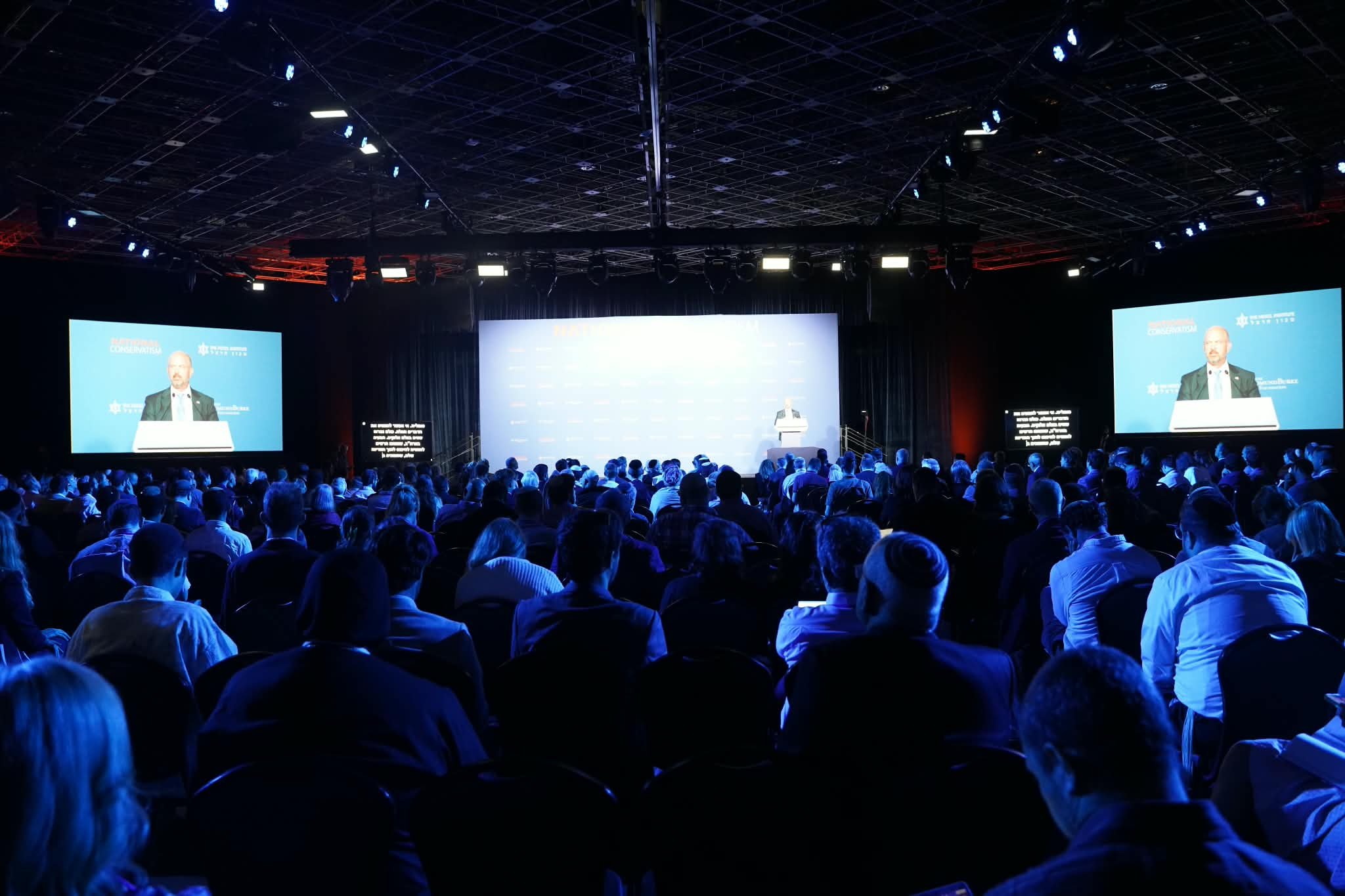
Nos dias 06, 07 e 08 de outubro, a cidade de Jerusalém sediou a “National Conservatism Conference”, ou “NatCon” (algo como Conferência sobre Conservadorismo Nacional), evento que reúne algumas vezes ao ano políticos conservadores nacionalistas de extrema direita da Europa, Estados Unidos, Israel, Reino Unido e, algumas vezes, da América Latina.
Mas digamos que nossa região não é tão importante para eles, a não ser quando se fala contra a imigração de “países pobres” – nestes casos, os discursos nos colocam como quintal dos Estados Unidos, ou interessam a alianças que podem servir às suas causas. Sei disso porque já participei de outra NatCon em Bruxelas em 2024 e tenho me infiltrado nesses eventos transnacionais da extrema direita europeia desde 2022.
A NatCon é financiada pela Fundação estadunidense Edmund Burke, que tem entre seus principais doadores a Heritage Foundation. A Heritage Foundation, por sua vez, é uma das principais geradoras de diretrizes políticas para a atual administração Trump. Seu presidente, Kevin Roberts, descreve explicitamente a missão moderna da Heritage Foundation como a de “institucionalizar o Trumpismo” em uma entrevista para o New York Times. Roberts foi um dos palestrantes da conferência em Jerusalém. E a Heritage está de olho no Brasil: em março deste ano, Paulo Figueiredo e Alexandre Ramagem participaram de um evento da fundação em Miami, como revelou a Pública.
Eu estava lá nesta edição da NatCon, que reuniu políticos israelenses de extrema-direita, figuras europeias que enfrentaram medidas disciplinares por suposto antissemitismo e figuras nacionalistas cristãs e de extrema-direita dos Estados Unidos, como bem definiu o jornal britânico The Guardian.
O foco principal estava no apoio às políticas e medidas de Benjamin Netanyahu contra os palestinos, a defesa do Estado de Israel, da conquista de territórios na Cisjordânia e na celebração e endosso de ações dos colonos israelenses que agem como uma milícia na região, cometendo todo tipo de barbaridades, como contei um pouco na minha última coluna. Também foram defendidas ações “anti-terrorismo” e anti-imigração na Europa e Estados Unidos e o combate ao que foi chamado de “red green alliance” (aliança verde e vermelha), que é como a extrema direita tem se referido à parte da esquerda progressista que protesta contra o genocídio do povo palestino. Uma das principais referências dessa aliança seria, na visão destes radicais, o prefeito de Nova York, Zohran Mamdani. Alguns palestrantes também atacaram ferrenhamente a comunidade LGBTQIA+, sobretudo as pessoas trans, e falaram da importância de criar grandes famílias, ter muitos filhos, mas sem se misturar com pessoas de diferentes culturas.
Um dos discursos mais violentos veio de Sebastian Gorka, subchefe de gabinete do presidente e diretor sênior de contraterrorismo no Conselho de Segurança Nacional dos Estados Unidos, que participou ao vivo e online da Casa Branca. Gorka é um dos aliados de Eduardo Bolsonaro nos EUA, a quem foi apresentado por Steve Bannon.
Ele defendeu que existe hoje uma nova religião: “a religião da esquerda”.
“Seja ela preenchida por ambientalistas adoradores de Gaia como Greta Thunberg, seja pelo altar do DEI (Diversidade, Equidade e Inclusão, em inglês)”, disse. Seu discurso misturou a Irmandade Muçulmana com marxismo, se estendeu para ligações entre o Hamas, e a “mã do Irã”. “A Aliança Vermelho-Verde é real. Os islamistas trabalhando com os marxistas é real”. E finalizou parafraseando Trump: “Se você planeja machucar americanos ou matar inocentes, nós vamos encontrar você e nós vamos matar você”.
Foi neste clima de Conferência que o nome de Flávio Bolsonaro foi citado e aplaudido pelos presentes – cerca de 300 pessoas.
O europarlamentar Harald Vilimsky, que lidera a delegação do Partido da Liberdade da Áustria (FPÖ) no Parlamento Europeu e atua como vice-presidente do grupo “Patriotas pela Europa”, foi quem levantou a bola:
“Quero que a Europa fique ombro a ombro com Israel, com aqueles que, em termos de fé, são nossos irmãos mais velhos. Quero a parte conservadora dos Estados Unidos em nosso campo, não os Republicanos apenas no nome, mas os verdadeiros conservadores. Isso é algo que realmente poderia ser um divisor de águas no desenvolvimento internacional. Quero a Argentina com o presidente Javier Milei em nossas fileiras. Quero o Chile com o Presidente José Antonio Kast ao nosso lado. Quero Flávio Bolsonaro no Brasil.”
Foi quando a plateia explodiu em aplausos. Ele completou: “Brasil, Japão e tantos outros países apenas para se juntar a uma ideia, algo como ‘patriotas globais’. Um grupo forte, uma rede poderosa, uma força enorme pelo conservadorismo”.
O evento foi tratado como estratégico pelo governo de Netanyahu. Bezalel Smotrich, ministro das Finanças, autoproclamado “fascista homofóbico” e extremista sancionado internacionalmente, esteve presente.
Também marcou presença o rabino Shmuel Eliyahu, que em 2023 pediu o lançamento de uma bomba atômica sobre Gaza e que já havia sido intimado a responder a um processo disciplinar por incitação racista contra os palestinos. Da Europa, estiveram presentes o ex-chefe da agência de inteligência interna da Alemanha Hans-Georg Maaßen, para quem Angela Merkel “abrir as portas” do país para imigração em massa e Balázs Orbán, deputado do Parlamento húngaro e ex-diretor político do primeiro-ministro Viktor Orbán.
Essa foi uma das conferências mais violentas que já cobri. Os afetos movimentados nesses três dias foram o ódio, o ressentimento, o nacionalismo extremo, a xenofobia, o orgulho da crueldade. E são essas pessoas, que movem esses afetos, que querem estar “ombro a ombro”, “nas mesmas fileiras” com Flávio Bolsonaro. E você? De que lado quer o presidente do Brasil?
Israeli troops continued cross-border operations into southwest Syria’s Quneitra and Daraa Governorates again today, harassing civilians and damaging and confiscating private property in the areas. Troops backed by eight military vehicles entered the area west of Mazraat al-Hanout, in Quneitra’s countryside, expelling a number of shepherds from the area, and opening fire on a civilian […]
The Israeli military has now killed more than 1,500 Palestinians in Gaza since signing a so-called ceasefire deal just over one year ago in October 2025, according to numbers from Gaza’s Health Ministry, as it has continued constant violations of the agreement. The Health Ministry said on Wednesday that over the previous 24 hours, Israeli […]
In September 2026, Ansar Allah, derisively labeled as the Houthis in Western foreign policy circles, redrew the map of western Yemen in a matter of days. Its fighters swept down the Red Sea coast, seized Mocha on September 10, then pushed through Dhubab and took Mayyun Island at the heart of the Bab el-Mandeb strait the following day, consolidating control over Yemen’s entire Red Sea coastline and roughly 5,400 square kilometers of newly gained territory. Yemen’s Saudi-backed government answered on October 4 when Presidential Leadership Council head Rashad al-Alimi announced Operation Dawn of Yemen, vowing to keep fighting until the country was “liberated from the grip of the terrorist militia,” with 100 Saudi coalition fighter jets providing air cover and Ansar Allah firing missiles at targets inside the kingdom in response.
Washington reached for a familiar script. Secretary of State Marco Rubio branded Ansarh an Iranian proxy, and Tehran fired back on September 9. Foreign Ministry spokesman Esmail Baghaei wrote on X, “Marco Rubio’s lies cannot replace facts. Ansarallah is an independent Yemeni actor that makes its own decisions; it takes orders from no one and acts as nobody’s proxy.”
On the question of Ansar Allah’s relationship to Iran, the record sides with those who emphasize the movement’s homegrown roots. In the 1980s, Zaydi religious networks in the northern province of Saada organized study groups and summer camps to resist the Wahhabi and Salafi outreach that Saudi money spread across the region. Around 1992, those networks crystallized as the Believing Youth, an educational and social revival movement dedicated to Zaydi theology and the preservation of a tradition stretching back a millennium. Saada’s poverty and its chronic neglect by Sanaa fueled the grievances that eventually became a military force.
Hussein Badr al-Din al-Houthi sharpened that network into a political cause after the U.S. invasion of Iraq in 2003. He accused President Ali Abdullah Saleh of running a corrupt government that neglected Saada, sidelined Zaydis, and surrendered Yemeni sovereignty to Saudi and American interests. His followers adopted a chant that read in full: “God is Great, Death to America, Death to Israel, Curse the Jews, Victory to Islam.” The chant named foreign powers, but its domestic meaning was clear: Yemeni authorities understood that a movement chanting “death to America” today could be chanting “death to the president” tomorrow. Palestine and the Second Intifada also featured prominently in Hussein’s sermons, which cast Israel as an occupying power and the United States as its enabler. The antisemitism in the Yemeni resistance’s messaging reflected a long-held hostility to Jewry’s machinations among the Yemeni population.
Saleh went to war against the movement in 2004, and his forces killed Hussein on September 10. Leadership passed to his younger brother Abdul-Malik al-Houthi. During the 2011 uprising the movement took the name Ansar Allah and pitched itself as a national force against corruption and inequality.
The episode that best exposes the proxy myth unfolded in September 2014. Iranian representatives reportedly urged Ansar Allah not to seize the capital, and Ansar Allah marched in anyway. HuffPost broke the story in April 2015, citing American officials familiar with the intelligence. One official told the outlet “It is wrong to think of the Houthis as a proxy force for Iran.” National Security Council spokeswoman Bernadette Meehan added: “It remains our assessment that Iran does not exert command and control over the Houthis in Yemen.” The Wilson Center also called attention to the aforementioned restraint Iran advocated for: “In 2014, Iran reportedly advised the Houthis against taking over Sanaa, but they pressed on.”
Thomas Juneau of the University of Ottawa built the academic foundation for this view. His 2016 study in International Affairs argued that “the Houthis are not Iranian proxies; Tehran’s influence in Yemen is marginal.” In a Washington Post op-ed that same year, he wrote: “It is simply inaccurate to claim that the Houthis are Iranian proxies.” Juneau has since acknowledged deeper cooperation, yet he told The Iran Primer : “The Houthis are fiercely nationalist, and do not take orders from Iran. Instead, they work together, closely, on the basis of their common interests.”
Helen Lackner, among the most respected Western scholars of Yemen, put it plainly on Democracy Now: “The Houthis are not Iranian proxies. They are not Iranian servants. They don’t do what the Iranians tell them to do. They make their own decisions.” She described how the alliance functions: “If their decisions and their policies coincide with those of Iran, then there’s no issue. But if they don’t, they don’t do it.”
Allison Minor challenged the proxy narrative directly in a Brookings essay: “Rigorous definitions of the term ‘proxy’ require that the sponsor has some means of controlling the proxy, as this is what differentiates a proxy from a partner/ally. In truth, the Houthis are not an Iranian proxy, even though they benefit from Iranian support.” Minor pointed to the unilateral ceasefire Ansar Allah declared with Saudi Arabia in 2019, even as Iran sought escalation, and stressed their possession of independent revenue, local arms production, and diverse supply lines as other indicators of autonomous production and decision-making.
Others well-versed in Yemeni affairs reached the same conclusion years earlier. Saudi journalist and filmmaker Safa al-Ahmad, who reported from inside Ansar Allah territory, told PBS Frontline that Iran’s ties to the group were “vastly overblown” and that “the Iranians can’t just pick up the phone and tell the Houthis what to do.”
Even the hawkish Institute for the Study of War agrees. Its September 18 update stated, “The Houthis are not an Iranian proxy, although their objectives often overlap with Iran’s strategic interests.” It added, “The Houthis are an independent partner of Iran and may resist potential Iranian pressure to halt their campaigns, however.”
None of this means Iran sits on the sidelines. The Associated Pressreported in late September that officers of the Islamic Revolutionary Guard Corps helped Ansar Allah with planning during the coastal offensive. Yet researcher Nicholas Brumfield told Al Jazeera that the campaign reportedly involved 76,000 Yemeni fighters, raised “using their own governance apparatuses,” and that mounting evidence points to Ansar Allah boasting a burgeoning domestic arms industry.
Ansar Allah ultimately behaves as a national liberation movement that shares many of Iran’s enemies and welcomes Iranian assistance, yet it charts its own course whenever its interests diverge. It does not need Tehran to steer it any more than any serious and credible resistance movement needs a foreign master. It grew from Yemeni grievances, and it will naturally seek allies such as Iran that oppose the same aggressive powers—Israel and the United States—that work tirelessly to destabilize West Asia. Movements like it already shake the foundations of the regional order. If the current momentum holds, Ansar Allah could reshape not only Yemen but also the Saudi provinces of Asir, Jizan and Najran, lands that many Yemenis still regard as their own and that Saudi Arabia locked down after the 1934 war between the two countries.
What started as a revolt against a corrupt president in a neglected mountain province has become a war that stretches from Taiz to Riyadh. With Ansar Allah astride the Bab el-Mandeb and Iran pressing on the Strait of Hormuz, two of the world’s most vital chokepoints now sit within reach of forces Washington cannot push back. If Asir, Jizan and Najran ever slip from Riyadh’s grip, historians will trace the new map back to Saada, not to Tehran.
Jerry Seinfeld mocked protesters highlighting Palestinian children’s deaths, dancing onstage and saying he would send a demonstrator’s ticket money to Israel.
Mourners express struggle to grasp 'enormity of tragedy' as Elazar Yair Wilensky, 13, laid to rest; education minister eulogizes 'talented athlete, a champion in fencing'
Israeli Prime Minister Benjamin Netanyahu has discussed renewed military action against Iran with United States President Donald Trump, with the forces of both countries reportedly preparing for a possible resumption of large-scale strikes, according to recent reports.
Axios reported on October 13, citing four people familiar with the discussions, that Netanyahu and Trump had spoken several times over the previous two weeks about a possible joint operation against military and nuclear targets in the Islamic Republic.
Netanyahu expressed concern that Iran was rebuilding its nuclear program, particularly at the potentially planned uranium-enrichment site at Pickaxe Mountain.
Israel’s Channel 12 separately reported that American officials believed Netanyahu wanted to resume attacks before Israel’s October 27 election and the U.S. midterm elections on November 3.
According to the network, Netanyahu told Israeli security chiefs that Trump had initiated the discussion and asked whether Israel would participate. An Israeli official said Trump initially appeared receptive to renewed strikes but subsequently became more hesitant.
Axios reported that Trump had told Netanyahu to prepare for a possible operation against Iran, without committing to authorize it.
The White House rejected the account that the two leaders had discussed resuming the war and said Trump would not attack Iran before the U.S. midterm elections. Still, Trump said on October 13 that his administration would make a decision on Iran soon.
The discussions have raised concerns within Israel’s military leadership about the domestic consequences of another war.
According to Axios, Israeli military chief Lt. Gen. Eyal Zamir discussed with U.S. Joint Chiefs Chairman Gen. Dan Caine the prospect of renewed fighting within three weeks. Zamir warned that an Iranian retaliation could force Israel to postpone its October 27 election.
Channel 12 also reported that Israeli security officials saw no change in their intelligence assessment of Iran that would justify a joint operation within the following two to three weeks.
The Wall Street Journal separately reported that Iran was reinforcing its nuclear and strategic facilities, mobilizing supporters and preparing for the possibility of renewed American attacks after the U.S. elections.
Iranian officials have warned of a broader regional escalation if the U.S. and Israel resume strikes, according to the newspaper.
In an interview with Israel’s Channel 14, Netanyahu made a separate allegation that Iran was attempting to organize an attack to influence Israel’s election, potentially through Hezbollah or Hamas. He also suggested that Iran could seek to provoke violence in the West Bank. The report did not provide independently verified evidence of the alleged plan.
In another interview with Army Radio, Netanyahu said a preemptive strike against Iran before Israel’s election was not advisable, describing the timing as inconvenient. He nevertheless warned that Israel would respond forcefully if Iran attacked.
He declined to discuss whether military action could follow the election, or to elaborate on his recent conversations with Trump.
All recent reports indicate that a decision to attack Iran again has likely been made. Only the timing and scale remain unclear. In any case, the Islamic Republic will likely strike back with full force against the interests of both countries across the Middle East.
Anticipating another round of war with Hezbollah despite the fact that the current Israeli invasion of Lebanon hasn’t even ended, Defense Minister Israel Katz laid out a litany of threats against Lebanon that would happen if Hezbollah “joins Iran” in any attack on Israel. Katz declared that the territory around Nabatieh and the Litani River […]
The U.S. Federal Maritime Commission (FMC) is proposing $200,000 fees on Spanish-flagged vessels entering American ports, along with restrictions on billions of dollars in Spanish imports, after concluding that Spain’s...
Ronen Bar alega que apresentou a Netanyahu dezenas de alertas entre novembro de 2022 e os dias que antecederam o ataque de 7 de outubro de 2023 a Israel.
Netanyahu is being sued for shifting responsibility for Oct 7th, as he demands witch hunt against NAZA whistleblowers, and calls for permanent displacement of West Bankers.
Desde o acordo de cessar-fogo, Israel matou 1.501 palestinianos e feriu 5.323, diz o Ministério de Saúde de Gaza, controlado pelo Hamas. No total, desde outubro de 2023, já morreram 74.392 pessoas.
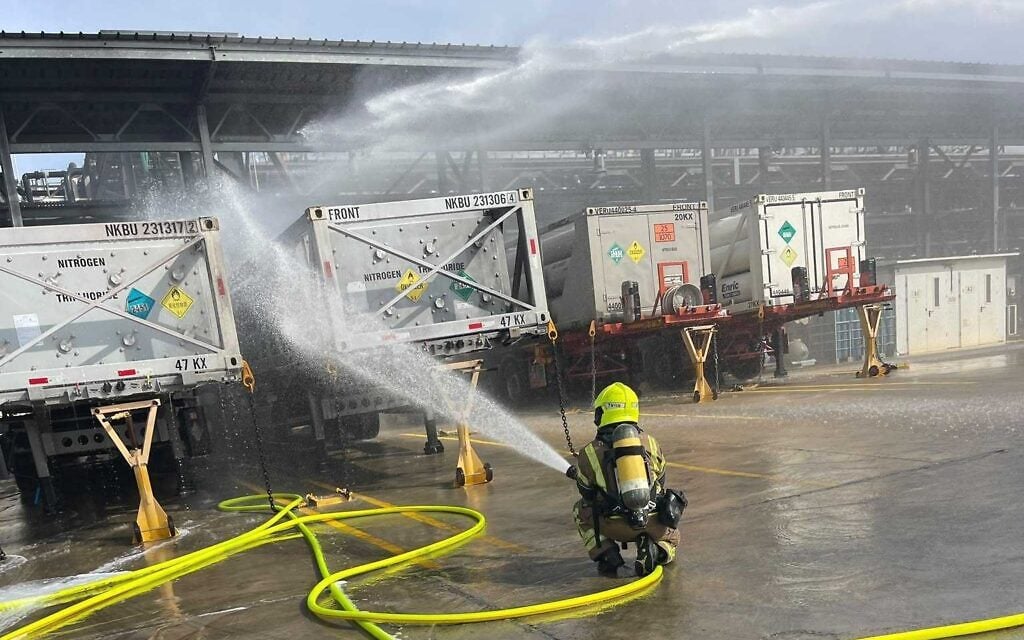
Major explosion rocks Kiryat Gat factory, sparking fears of hazardous material leak; 2 of the 3 injured had no pulse, but were successfully resuscitated by medics at the scene
The European Union has continued its scientific cooperation with Israeli firms and institutions implicated in genocide and apartheid throughout Israel’s three-year old assault on Gaza. Such complicity must stop.
Israel has been associated with the €95.5bn Horizon Europe research and innovation programme (2021-2027), and, according to the European Commission’s detailed Horizon dashboard, the EU’s net contribution to Israel amounts to €1.02bn.
While much of the funding supports legitimate research, the programme also channels substantial resources to Israeli universities and companies, some closely connected to Israel’s military and security apparatus.
Pointing to just such EU-Israel collaboration, Francesca Albanese’s UN report “From economy of occupation to economy of genocide” published last year, estimated EU research funding to Israeli entities at over €2.12bn since 2014.
Horizon Europe funds collaborative projects and European Research Council grants.
But it is the European Innovation Council (EIC) and schemes which include the EIC Accelerator, the EIC STEP Scale-up and the Scaleup Europe Fund which are especially relevant to the question of EU complicity in Israel’s ongoing assault on Gaza.
Horizon Europe is formally limited to civilian research, but Israeli companies with links to Israel’s military and security establishment have received funding through these schemes.
In March 2026, for example, members of the European Parliament tabled a written parliamentary question asking the European Commission specifically about such companies including Sightec, an Israeli drone-navigation firm that received almost €2.5m through the EIC Accelerator and whose chief executive has described its technology as “combat-proven and deployed on over 3,000 drones in critical missions”.
The issue is not confined to overtly military applications. EU-funded civilian technologies can also serve Israel’s settler-colonial project.
Should European public money finance, for example, orange-harvesting robots that help Israel manage what it euphemistically calls a “labour shortage” in settlements built on occupied Palestinian land?
The EIC also goes beyond grants. Through the EIC fund, the EU can take equity in companies it supports; the new Scaleup Europe Fund is explicitly designed to make direct equity investments in strategic technology firms, and is open to companies based in countries associated with Pillar III of Horizon Europe, including Israel.
The EU can therefore not only subsidise Israeli technology firms but also acquire a financial stake in them and potentially profit from their future growth.
And it could get worse.
The EIC’s 2026 work programme expands the type of projects that can be funded by including ‘dual use’ applications that are both civilian and military.
This opens the door for the EU to fund nuclear-related Israeli projects although Israel is not a member of the European Atomic Energy community (Euratom).
But none of this is inevitable.
Next EU budget and credibility at stake
Israel’s association with the current Horizon Europe programme runs only until 2027 and the shape and scale of the EU’s next Horizon programme will be decided during ongoing negotiations on the bloc’s seven-year Multiannual Financial Framework (MFF).
There are also clear signs that Israel is likely to participate in the next Horizon programme (2028-2034).
Only a few weeks ago, Ekaterina Zaharieva, European commissioner for startups, research and innovation, met with the head of the Israel Space Agency, Shimrit Mama.
European Commission president Ursula von der Leyen and her team must ask themselves if the EU should be building an innovation architecture in which Israeli firms and state institutions, which are already deeply integrated into Israel’s military-industrial ecosystem, could receive European support for technologies explicitly framed as dual-use or defence-related.
Are they comfortable with funding companies that help develop the type of violent technologies described in the award-winning documentary NAZA, which exposes the systems and AI technology used during the military campaign in Gaza?
Audience members hold signs supporting Yuval Abraham and Rachel Szor’s documentary Naza after it wins the European Film Audience Award at the 74th San Sebastian Film Festival in Spain, 26 September 2026 (Source: EPA/JUAN HERRERO)
Last year, under public pressure, von der Leyen proposed a partial suspension of Israel’s participation in Horizon Europe by specifically excluding Israeli entities from new EIC Accelerator grants and investment support.
The proposal was modest: it would have affected future funding only, not existing agreements, and covered roughly 20 percent of EU financial flows to Israel under the programme.
It required a qualified majority in the Council but did not secure the necessary votes. It is, however, technically “still on the table”, according to commissioner Zaharieva.
Nobel Peace Prize winner Navi Pillay concluded in 2025 that Israel’s actions have “consistently pointed toward a singular, harrowing objective – the destruction of Palestinian life in Gaza”.
The EU has done little so far to stop the genocide in Gaza and ethnic cleansing in the occupied West Bank, and arguably – through trade and weapons’ exports – is actually contributing to it.
Now the EU faces a clear choice. It can continue to fund, co-invest in and deepen research ties with an Israeli innovation sector increasingly oriented towards dual-use and defence technologies.
Or it can stand with the winner of the 2026 Nobel Peace Prize, draw a line and decide that there will be no Israeli participation in the next Horizon programme, no EU equity in Israeli firms, and no public money for technologies that may be used to sustain genocide, occupation, surveillance and war.
The credibility of the EU and the values it proclaims depends on the choice it makes.
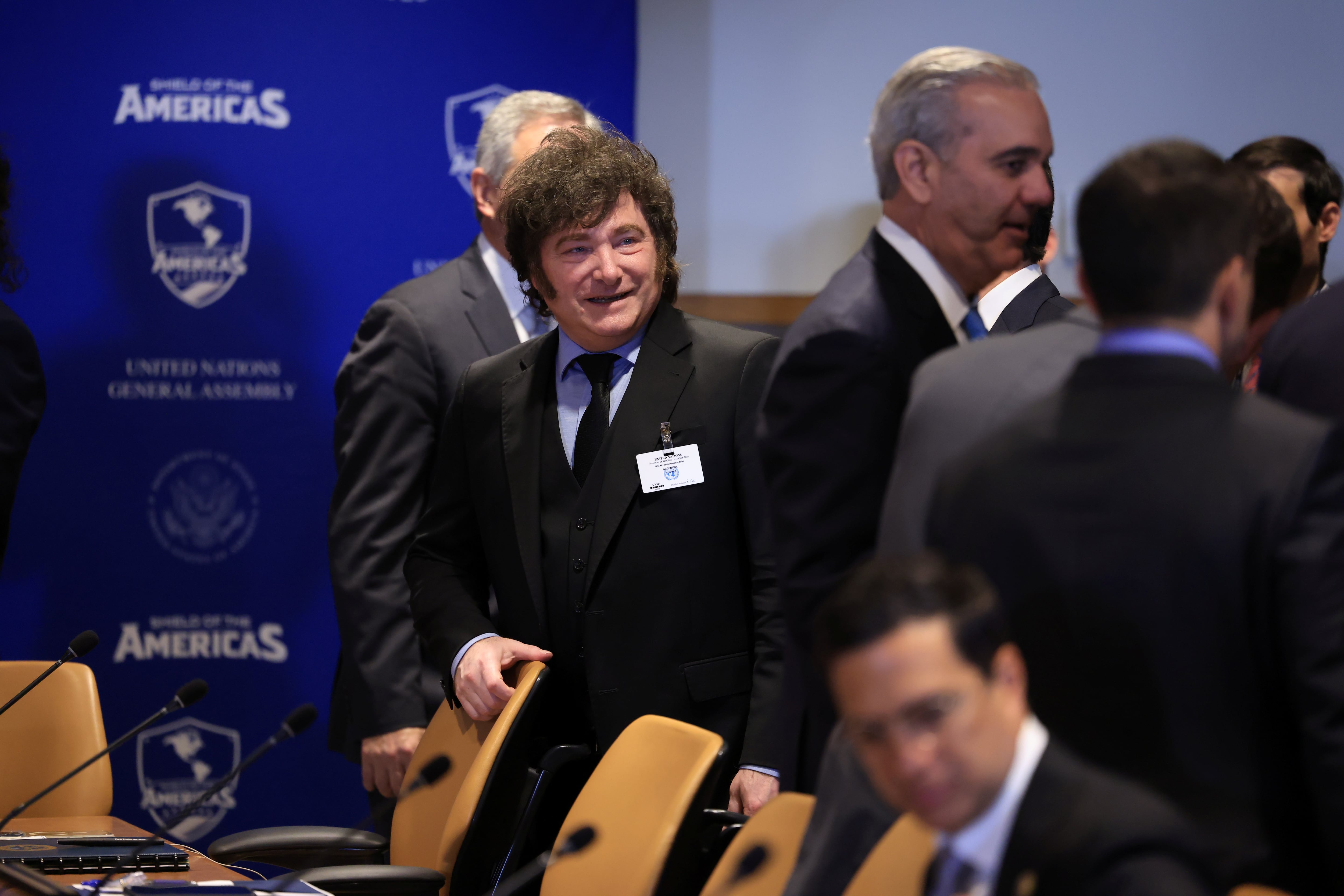
Javier Milei begins another visit to the United States on Wednesday, his 20th trip since being elected president of Argentina and his fifth this year alone. He will remain in Washington, D.C., until Friday, taking part in a series of events aimed at deepening his alliance with the Donald Trump administration and demonstrating his support for Israel.
Ukraine has struck a major blow to Russia’s digital infrastructure. Since last Thursday, Ukrainian drones have carried out a series of attacks that destroyed three large data centers belonging to Yandex — known as “the Kremlin’s Google”— on the outskirts of Moscow. The Yandex Taxi ride-hailing app and the group’s payments service, Yandex Pay, have been temporarily taken offline. Ukrainian President Volodymyr Zelenskiy even said the bombings disabled Russian bots.
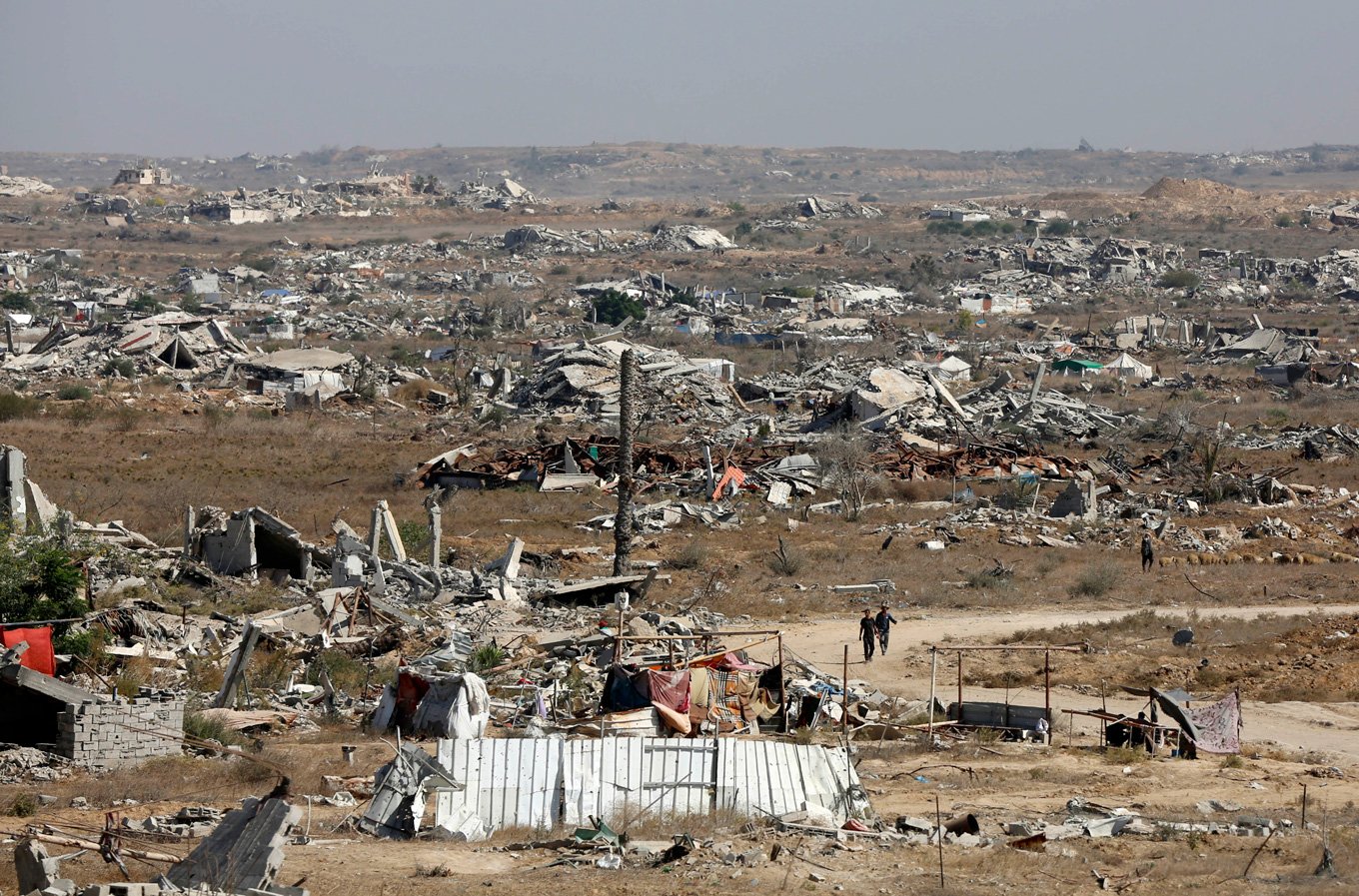
by Lew Rockwell, Lew Rockwell: What Israel has done, is doing, to Gaza has not sprung ex nihilo from October 7. Genocide is not a situational counter-response to aggression. It’s a coming-out event of sorts. Differently put: There are no legitimate antecedents to genocide. Genocide is not a “war crime” to which a set of mitigating or […]
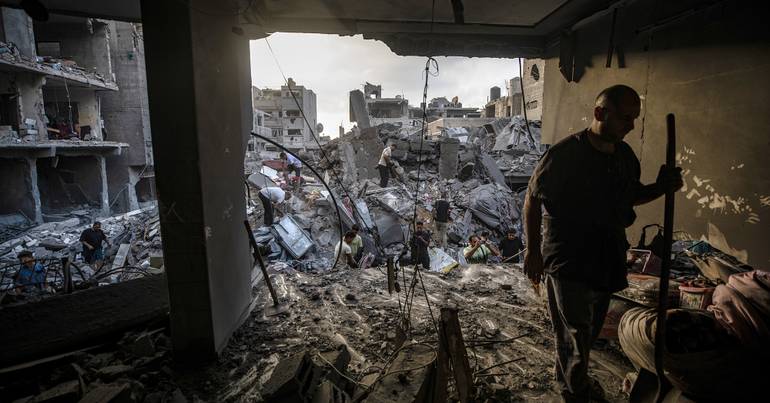
High casualties on IDF strikes were not isolated mishaps or errors, but the result of Israeli policy that turned a blind eye to a civilian toll unlike anything it had ever seen.
 Login