❌

Reading view

EU Signs New Asset Recovery Treaty as Criminal Networks Retain Vast Majority of Illegal Profits

A new Council of Europe protocol is intended to strengthen cross-border investigations, confiscation and the recovery of criminal wealth. European authorities currently recover only a small proportion of the proceeds generated by organised and financial crime.

The European Union has signed an international agreement strengthening the recovery of criminal assets, as Brussels seeks to address the failure of national authorities to confiscate the overwhelming majority of wealth generated through organised crime, corruption and money laundering.

The agreement, opened for signature in Strasbourg on Wednesday, 14 October, introduces additional provisions governing the identification, freezing, confiscation and management of assets held across national borders.

It supplements the Council of Europe’s Warsaw Convention, which established an international framework for cooperation against money laundering and the financing of terrorism.

The Additional Protocol adopted by the Council of Europe extends existing asset-recovery mechanisms and strengthens the ability of national authorities to cooperate when criminal proceeds are transferred beyond the country where an offence occurred.

The financial foundations of organised crime

European authorities have long struggled to deprive criminal organisations of the profits generated by their activities.

An estimate frequently cited by European institutions suggests that only around one per cent of criminal proceeds are ultimately confiscated.

The figure highlights a persistent weakness in criminal enforcement. Police and prosecutors may identify offenders and secure convictions without recovering the money used to finance further criminal operations.

Organised crime networks can distribute their assets through bank accounts, companies, property holdings and intermediaries operating in different jurisdictions.

Investigators must establish the origin and ownership of those assets, obtain the necessary legal orders and secure cooperation from foreign authorities before funds or property can be transferred again.

The problem has become increasingly serious as criminal organisations operate across several countries while enforcement powers remain largely national.

In an earlier examination of Europe’s response to drug-trafficking networks, EU Today reported on the importance of confiscating criminal assets rather than concentrating exclusively on arrests and drug seizures.

The financial structures supporting trafficking organisations can survive the prosecution of individual members, allowing criminal enterprises to replace personnel and continue operations.

New powers for cross-border investigations

The protocol is intended to address practical obstacles encountered when authorities seek assistance from another country.

Its provisions cover international cooperation in asset recovery, the management of seized property and the execution of confiscation decisions.

They also address circumstances in which confiscation may be possible without a conventional criminal conviction, subject to the safeguards and legal requirements established by participating states.

Such arrangements can be particularly relevant when suspects have fled, proceedings cannot be completed or assets are held through structures designed to conceal their ownership.

The protocol also provides for improved cooperation between designated asset-recovery authorities.

These mechanisms are intended to reduce the delays that can arise when investigators must navigate different national procedures while attempting to secure property that may be rapidly moved or disposed of.

The Council of Europe’s treaty documentation explains that the protocol seeks to update the Warsaw Convention in accordance with developments in international anti-money laundering standards.

The revised framework has also been developed with reference to EU rules and the recommendations of the Financial Action Task Force.

Existing European legislation

The agreement builds on legislation already adopted within the European Union.

The 2024 Asset Recovery and Confiscation Directive established stronger provisions concerning the tracing, freezing, confiscation and management of assets associated with criminal activity.

That directive is intended to improve national asset-recovery systems and strengthen cooperation between authorities.

The EU has separately developed a new anti-money laundering framework, including the establishment of the Frankfurt-based Authority for Anti-Money Laundering and Countering the Financing of Terrorism.

The authority has responsibilities concerning the supervision of high-risk financial institutions and coordination between national bodies combating illicit financial activity.

The new Council of Europe protocol addresses a related but distinct problem: how authorities recover assets once suspected criminal proceeds have been identified, particularly when those assets are located in another jurisdiction.

An earlier EU Today report on criminal enforcement of sanctions violations illustrated the importance of asset confiscation in cases involving breaches of European restrictions.

Although sanctions enforcement and organised crime investigations operate under different legal arrangements, both can require authorities to identify property, obtain judicial orders and prevent assets from being moved beyond their reach.

Ratification and implementation

The protocol was adopted by the Council of Europe’s Committee of Ministers on 15 May 2026 and opened for signature on 14 October.

The European Union’s participation requires further legal procedures before the new provisions become binding.

The Commission had previously submitted proposals authorising the EU to sign the agreement, reflecting the division of responsibilities between the Union and its member states in criminal justice and financial regulation.

Individual governments must also determine how the international obligations interact with national procedures governing investigations, property rights and confiscation.

The effectiveness of the agreement will depend on the speed of its implementation and the resources available to investigators, prosecutors and financial intelligence authorities.

Criminal organisations can transfer funds internationally through transactions completed in minutes. Judicial cooperation and the enforcement of confiscation decisions frequently require considerably longer.

The protocol offers governments additional instruments for narrowing that gap, but cannot eliminate the administrative and legal obstacles without corresponding improvements in national enforcement.

For European authorities, the practical measure of success will be the amount of criminal wealth that can be identified and recovered.

The Strasbourg agreement provides a wider legal framework for that task at a time when the profits generated by organised crime continue to exceed the assets confiscated by enforcement agencies.

  •  

Justice Department threatens California with legal action over claim of noncitizens on voter rolls

The U.S. Department of Justice has threatened California with possible legal action over what it says are noncitizens believed to have received mail ballots for next month's midterm elections.

  •  

Migrants Taking Four in Five New Jobs

Four in five new jobs created in Britain since 2014 were taken by migrants while the number of British people on out-of-work benefits increased by 2.3 million, according to a report from the Centre for Social Justice.

The post Migrants Taking Four in Five New Jobs appeared first on The Daily Sceptic.

  •  

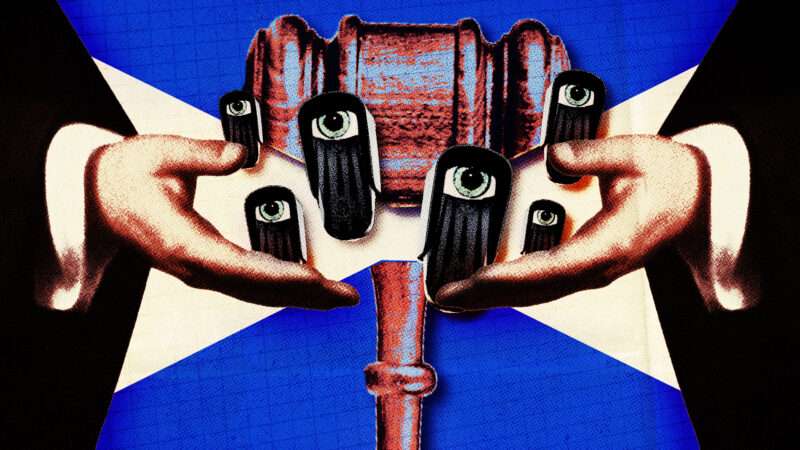
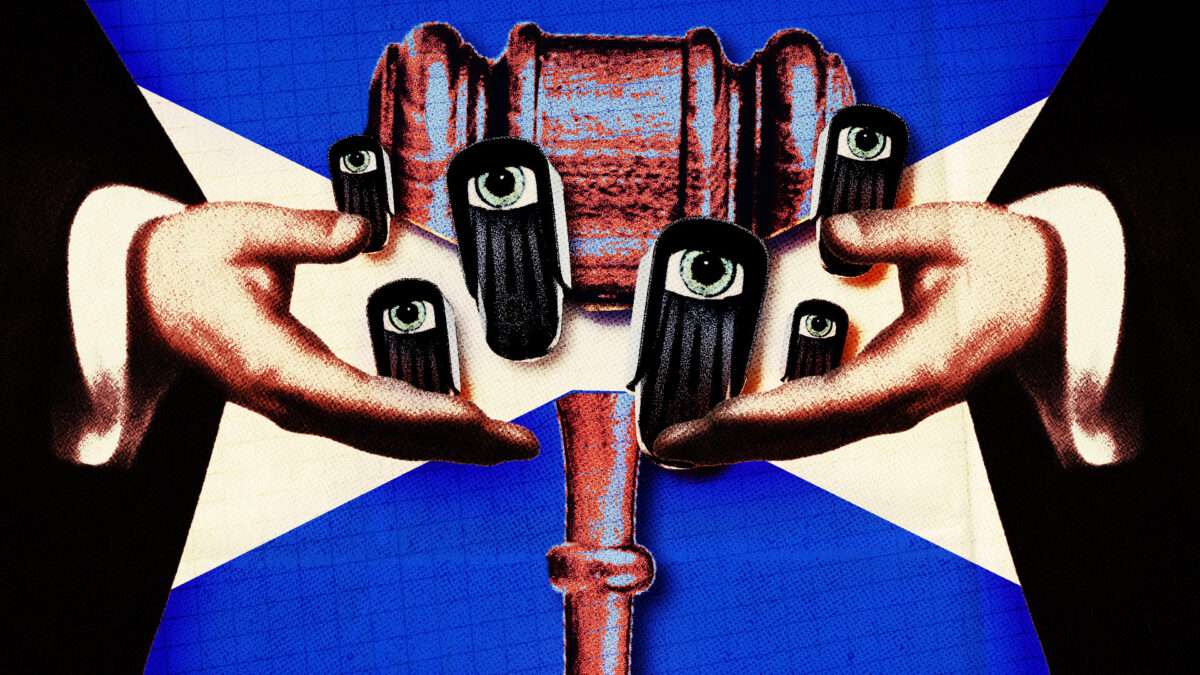
Other Courts Should Heed a Federal Judge's Warning About Flock-Enabled Mass Surveillance

robed arms flank ALPR cameras and a judge's gavel | Paul Weaver/Zuma Press/Newscom/Flas100/Oleg Dudko/Doreen Salcher/Dreamstime/Midjourney/Fatima Ruiz

Back in 1983, the Supreme Court declared that "a person traveling in an automobile on public thoroughfares has no reasonable expectation of privacy in his movements from one place to another." That increasingly doubtful proposition underpins a nationwide network of more than 144,000 AI-assisted cameras that track the travels of innocent motorists across the country billions of times each week.

So far, state and federal courts have almost uniformly rejected constitutional challenges to automated license plate readers (ALPRs) installed by companies such as Flock Safety. But in a decision that could signal a shift in the legal treatment of Flock cameras, a federal judge in Oklahoma recently recognized that they enable "a type of indiscriminate mass surveillance."

ALPRs are much more sophisticated than the technology that the Supreme Court considered in 1983, when it approved the warrantless use of a radio transmitter that helped police tail a suspected methamphetamine manufacturer's car. Three decades later, by contrast, the Court said police should have obtained a search warrant before attaching a GPS tracker to another drug suspect's car.

The majority opinion in the latter case emphasized the physical intrusion necessary to install the tracker. But five justices embraced an alternative rationale, saying GPS tracking impinges on reasonable expectations of privacy by revealing potentially sensitive information about the target's historical whereabouts.

That theory came to the fore in a 2018 case involving mobile-phone location data collected by cell sites, which the majority said implicated the Fourth Amendment because "individuals have a reasonable expectation of privacy in the whole of their physical movements." The Supreme Court reiterated that principle this year, extending it to data collected by Google's Location History feature.

"An individual has a reasonable expectation of privacy in records about his cell phone's location," Justice Elena Kagan said in the majority opinion, "and police intrude on that constitutionally protected interest when they demand the information." By similar logic, U.S. District Judge Sara E. Hill concluded this month in the Oklahoma case, people have a reasonable expectation of privacy in ALPR records, and police therefore generally need a warrant to search them.

Those databases include "information about all vehicles that pass by any network-connected camera at all times," which police can peruse "on demand," Hill noted. "Freedom from persistent, dragnet-style surveillance while in public is not a foreign concept in our society, and it is a reasonable expectation that society already accepts," as reflected in the Supreme Court's cellphone decisions.

Like cars, cellphones "move in public places where people can see you in plain view," Hill wrote. "But it becomes constitutionally problematic when law enforcement can indiscriminately and passively catalog your whereabouts over an extended period of time and then use that information for any purpose whenever convenient."

At this point, Hill's decision is an outlier. "It appears that nearly every court examining the issue to date has determined that ALPR technology use is not a search under the Fourth Amendment because people have no reasonable expectation of privacy in their movements on public streets," she noted.

Last month, for instance, a federal judge in California held that ALPR database searches are "clearly distinguishable from and less extensive than the 'near perfect surveillance' achievable" with cell-site or Location History data. And the day after Hill's ruling, a state judge in California rejected a challenge to San Jose's Flock camera network, saying "there is no reasonable expectation of privacy in license plate data collected from cameras directed solely at public streets."

A federal lawsuit involving the same city's ALPR system, which the Institute for Justice filed last April, is still pending. So are challenges to Flock cameras in cities such as Wichita, Kansas, and Norfolk, Virginia.

Even when they reject such lawsuits, courts commonly acknowledge that the legal picture could change as the number and capabilities of ALPRs multiply. If so, it seems likely that Hill will eventually be joined by other judges who recognize the perils of "indiscriminate mass surveillance."

© Copyright 2026 by Creators Syndicate Inc.

The post Other Courts Should Heed a Federal Judge's Warning About Flock-Enabled Mass Surveillance appeared first on Reason Magazine.

  •  

CVS agrees to pay $315 million to settle Justice Department case over opioid prescriptions

The settlement resolves a lawsuit brought in 2024 that accused the healthcare giant of providing massive amounts of opioids and other controlled substances "to fuel its own profits at the expense of public health and safety."

  •  

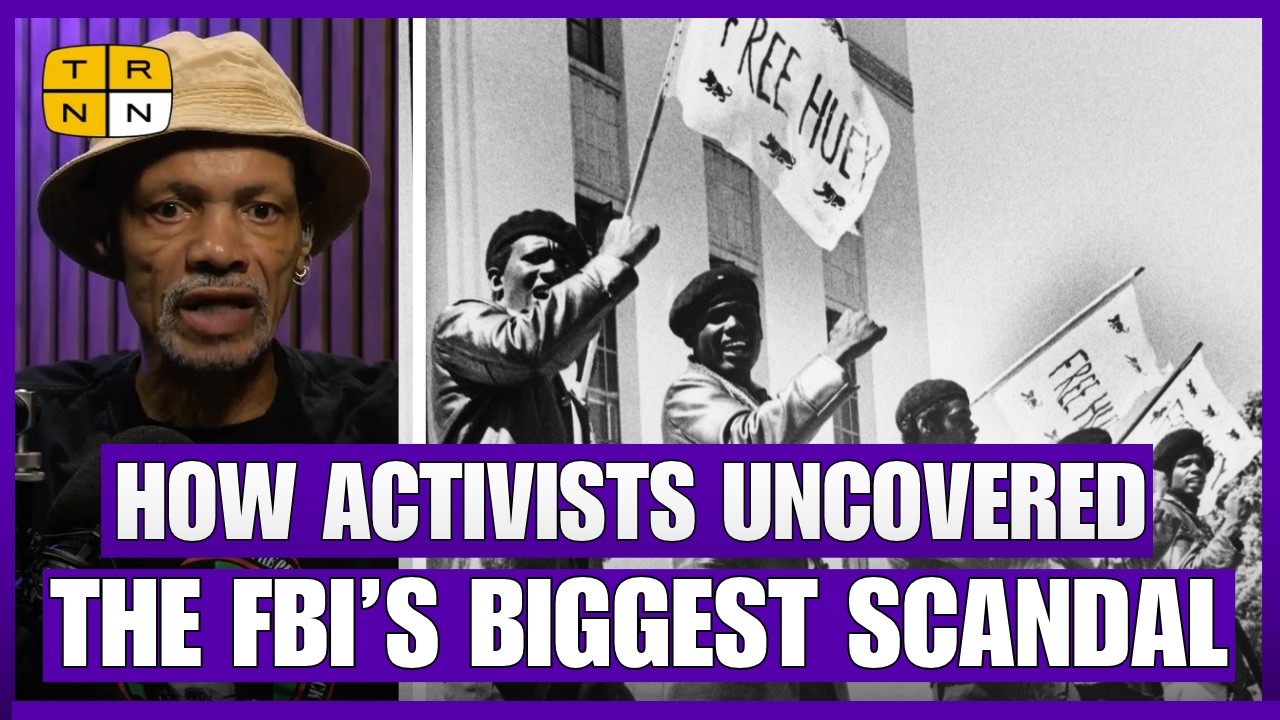
The Black Panthers at 60: You can jail a revolutionary, but not the revolution

Banner carrying members of the militant Black Panther Party march here on 42nd Street en route to a scheduled news conference at United Nations Plaza. Photo via Getty Images

In the second half of this insightful conversation, former political prisoner Mansa Musa joins Black Panther Party archivist and photographer Billy X Jennings to examine the pivotal 1971 FBI office break-in by antiwar activists. The stolen documents exposed COINTELPRO—the federal government’s covert operation to surveil, infiltrate, and dismantle radical political movements. Despite state-sponsored efforts to suppress the organization, the Panthers’ legacy survives through modern social movements, culture, politics, and communal socialism. Oakland Mayor Barbara Lee, who worked closely alongside the Panthers on their early survival programs, brings deep personal insight into their lasting community impact. Published in conjunction with the 60th anniversary of the Black Panther Party, this feature continues our series on the BPP’s enduring role in social justice.

Related links:

Credits:

  • Production/Post-production: Cameron Granadino
Transcript

The following is a rushed transcript and may contain errors. It will be updated.

Mansa Musa:

I was reading Huey’s dissertation for his doctoral called War Against the Black Panther Party: A Study in Oppression in America. And in that, he outlined one COINTELPRO and COINTELPRO systematic attack on the party to the point of Eddie Conway wrote the book called The Greatest Threat Ever, outlining how the federal government systematically targeted anybody, but more specifically members of the Black Panther Party to either isolate them or kill them or send them to prison where they served death of a thousand cuts and then they ultimately die. Talk about once that information came out about COINTELPRO and its involvement in destroying the party, how did that change your views or how did that impact the political landscape as you seen it when it come to organizing and revolutionary ideology?

Billy X Jennings:

It wasn’t till 1970 that people officially found out what COINTELPRO was. We always knew there was some kind of program out there that wiretapped us, how the FBI followed us and set us up for different charges like that. But on a personal basis, COINTELPRO helped me stay out of jail. Now, COINTELPRO is not something they invented for the Black Panther Party. It’s something they always had going on, but they ramped it up three degrees because of the party, how the party came out or how effective the party was. So in 1970, when these young anti-war people broke into this post office in Pennsylvania, it helped me out because at that time, Huey P. Newton was on Nixon’s enemy list. I am Huey P. Newton’s personal aid. So when FBI sees Huey, they see me.

And so I’m a much easier target than Huey. So they started using the draft to gift me, the selective service. Now, this is the same method they used against members of SNCC, another organization that preceded us. They would get the selective service to start sending them letters to have them drafted. And you only got three choices. Either you’re going to leave and go to Canada, you’re going to go underground, or you’re going to jail. Any one of them stopped you from being affected, and that’s what they wanted. They wanted to stop people from being affected so they would hold this selective service thing over their head. So what happened when they did the same thing to me, right? They arrested me when I was with Huey after coming to court. So I went to court for this draft evasion thing. The federal government had three of their attorneys on my case.

And so what happened was this, they wanted to charge me for draft evasion, but my attorney pointed out they wanted all the documents, film, phone, anything connected with Bill Jennings. And they immediately dropped my case on the spot because they were still trying to hide the fact that they had a program called COINTEL PRO and they didn’t want to reveal it because of me.

So they just dropped my case. So I walked away from that whole case because COINTEL PRO was discovered and they didn’t want to dispose all the footage they had of me and Huey together because that’s what they were doing, compiling stuff on Huey. I just happened to be there.

So that’s how COINTEL PRO affected me, but a lot of party members went to jail. Geronimo G Jaga did 27 years. They pulled him off the street. The FBI lied on him. They said he helped kill someone in the LA, but at the same time, the FBI was watching him while he was in Oakland attending meetings. They lied on the brother, just like they did. Maybe about 35 or 40 Panthers went to jail, maybe 35 Panthers were killed through COINTEL PRO. And many like Fred Hampton were victims, minding their own business. The next thing you know, law enforcement has them in their clutches one way or another. So it was not easy being a party member during those times.

Mansa Musa:

And they knew Eddie Conway was at work when this incident happened. They went to where he worked at in the post office and told the people to say that he wasn’t at work. And then they planted a snitch in his cell or they had one of them snitchers come up and say that Eddie said something. They had coerced people to lie against. So to your point, that was their methodology during that time. Like you say, they going to get you through selective service. They’re going to get you through income tax. They’re going to get you any way, shape, form or fashion. But talk about what do you think about this recent group in Philly that call themselves the Black Panther and then switch their name to the Black Lions and they’re doing some organizing. They got a large presence on social media. They can be seen, engaged in mutual and exercising their rights through confrontation with the police.

Basically, their strategy is being more confrontational. Are you familiar with them and what you think about

Billy X Jennings:

Them? Well, I am somewhat familiar with them. I get emails from them, messages. But just recently there was a meeting held in Philadelphia with Panthers, real Panthers, original Panther members and members of the Black Lions. We suggested then that they change their name because our legacy was built on positive direct action in the community. This is our legacy. We can’t have any young group. We don’t even know what you believe. Come and say you’re party members. The Black Panther Party stopped existing in 1982. So you should come up with a name for your own legacy so people can identify you because what you’re doing, we don’t know who you are. COINTELPRO and all that, you might be good at heart, but we don’t know you. Start your own legacy. Start from ground one, change your name because our name is built on our legacy of what we’ve done and we don’t know what you’re going to do.

The Black Panther Party had 14 different medical facilities. Two are still open to this very day, one in Seattle and one in Portland.

Mansa Musa:

You

Billy X Jennings:

Can see Black Party still alive in groups like the Gray Panthers. They took up where the Black Panther Party left off with the senior citizens. The Black Panther Party had a senior escort service. All these different services the party provided, free buses to prison program. And the main purpose for that program was to keep the family unit together

Mansa Musa:

Because

Billy X Jennings:

People have cars, but many of the state prisons are far, far away. You might have a car that’s good for getting around the city, but getting on the freeway, your car might not make it. So we provide these services to keep the family unit together. It’s good that the Black Lives change their name. It’s good they’re doing social work in the community, but they also have to understand that longevity. Dealing with the police is good to have people who deal with the police who the police know they can’t run and rub shot it in our community. I don’t have anything bad about that, but that shouldn’t be your main focus. That should not be what you’re all about. The party blossom out past that, that’s how we started getting community support, breakfast programs, liberation school, providing services for people. That’s how you get people to change their mind, their attitudes about you.

They see what you do through your social

Mansa Musa:

Practice. In that regard, Billy, talk about what would be your message to youth because you got a lot of young people that’s learning about the party. You got a lot of young people that’s through social media becoming informed about it. And what would you tell them when they come up and say, okay, to your point, no, you’re not original member of the Black Panther Party. No, you don’t have the right to say that in terms of and then saying that’s what you are. But what would you tell them when they come up and say, we want to change the condition, social conditions, we want to do it in the same light that the Black Panther Party did it. What would you tell them to do?

Billy X Jennings:

I would tell them the Black Panther Party were operating in the 1960s and we’re in the 2026 era right now. So we can’t go back and keep doing stuff in the past. We had to come up with new ways of doing things, a new attitude of doing things. We set the table for all these social programs to be embraced in the community, but they have to take it from there. They have to take where we started and bring it into their conditions now. And I would say to young people, get with another group that has your same ideology, your same philosophy. If they’re serving the community or working in the community, work with them because we need to unify all our efforts and come together. Educating young people, having political education classes, taking people outside of the community, outside of their environment so they can see the bigger world and see where they fit in.

All those things are things that are doable things, job training, telling people how to write a resume. Those are those small things, but those things that help because we have a lot of hardcore brothers who get out of jail who are not educated in the educational system. They need that kind of nourishment to bring them up. That’s what we should be doing, community service to bring our people up and not run away from the people. The Black Panther Party, when we had social programs, we invited people to come back to work. We provided a place for doctors and nurses to, if you wanted to give back to the community, we have a clinic here. You could donate four to six hours a week to have those facilities there or people in the community or have a community meeting around issues in the community. That’s how you bring interested people together, unifying people.

Mansa Musa:

Yeah, that’s a good point because they got what they call the Malcolm X Grassroots Collective. I’m in DC and what they do every second and fourth Wednesday of the month, they have political education class and their political education. They’re not calling themselves some other than what they are organizing, but what they do, they have political education class and then the materials that they use, they using materials that they learned about from the Black Panther Party. But talk about the 60th and what you got planned with some of the things that you’ll be organizing for the 60th.

Billy X Jennings:

Well, that’s a lot. Well, I would say the 60th is what my particular role is, is I’m sponsoring a couple workshops on chapter history. Black Panther Party had over 40 different offices of the Black Panther Party. And there’s a lot of history in these different cities and geographical areas that we don’t know about that only the local people there knew about. So we’re trying to bring that history together so that people in Chicago would know what the people in Portland, Oregon was doing or the people in Seattle will find out who were some of the people that started the party down in Houston, Texas. And some of the programs, Salem, some of the problems the Winston-Salem chapter deal with because they were a chapter of the Black Panther Party that was actually in the South because they had problems that a lot of us didn’t have in California,

So forth. But chapter history, I’m doing some tours of Oakland, like I said, to educate a lot of people who’ve never been there before. A lot of people come to the reunions, they bring their grandkids or their great-grands. They want to show them what they was involved in, how all this thing originated. I have doing tours. I got a couple exhibits at the main library in Oakland about Black Panther Party rank and file. I have an exhibit open October 5th at the Alameda Law Library, which is across the street from the Oakland main library. Oh,

It’s across the street from the Oakland Main Museum. So that exhibit’s going to focus on the impact of the Black Panther Party on the law because of the political prisoners, clientele pro, racism in the police department, all those kind of things. So I got my hands full and on the 18th, which is the last day of the conference, I’m in charge of a day in Bobby Hutton Park. Local hip hop artists, poets, a couple bands will live music and we have speakers come, going to do it like we did back in the 1960s. Treat music, food, a joyful day in the community. Don’t caution that and all you have to do is bring your blanket, sit out and hear some speeches and hear some music and unify in the community.

Mansa Musa:

Okay. Thank you, Billy. Thank you. And Billy, we really appreciate you taking your time out to come on and educate our audience about all things the Black Panther Party. More importantly, clearing up a lot of misconcepts about the party, what it stood for, some of the more subtleties of it as opposed to, to your point, a lot of the things that was distorted primarily for the purpose of disassociating it from people, getting people to look at it in a different light. You came on today and educated us on how the party really operated as, like y’all said, the Vanguard intercommunal with us.

Billy X Jennings:

The party’s whole thing is to educate people. I had a young lady who worked in my campaign office when Bobby Seal ran for mayor. She is now the mayor of Oakland. So I know that she knows about the 10 point program and all those things. So the party is about growth and development and stuff like that. The Black Police Officers Association of Oakland was started because of the Black Panther Party, right? Because when they shut up our office on 45th and Grove in September 1968, the Black officers refused to help the white officers who was suspended from their job for shooting at that office. And they started an organization, which is one of the biggest Black organizations in Oakland. But a lot of people don’t know that history, but when we have chapter histories, a lot of this history that happened in those cities come up.

Who were now in charge of state health facilities work at the medical clinic and stuff like that. So there’s a lot of roots where people came from. We just have to talk about it, dig it up and document it for future generations because 17 years ago, when I was 17, I joined the party. Today I talked to people from all over the world. I just got off the phone talking to the New Zealand Panthers who are going to send some representatives out here. They have 15 members that came for our 50th. We have people from all over the world. We have Charlotte O’Neill coming in from Tanzania.

Mansa Musa:

Okay.

Billy X Jennings:

For over 50 years. Charlotte’s going through our libations. She has a film. She travels the world. We have all type of Panthers coming in, so this is going to be a event.

Mansa Musa:

There you have it. There you have the bars today. Look, you gave that row out. And we thank you for coming and sharing this information because like you said, at the end of the day, after everything all is said and done, the party was about educating our people about getting them to understand their right to self-determination and how to go about getting self-determination, understanding the contradictions, understanding social conditions, and more importantly, organizing to change conditions. And it’s a tribute to the party. No matter what people say about the party, that is the lasting legacy of the party is educate, educate, educate. Thank you, Billy. We appreciate you. All right. How do you want people to get in touch with you if they want to get in touch with you? They

Billy X Jennings:

Can get in touch with me by going to our website, itsabouttimebpp.com, which there’s a phone number and an address on that website. But for the 60th, you can go to bpp60.org for your latest update information on what’s happening with the 60th.

💾

On October 15, the Black Panther Party marks its 60th anniversary. Archivist Billy X Jennings highlights their legacy: 14 medical clinics (two still open in Seattle & Portland) and vital survival programs, like "free buses to prison... to keep the family unit together."
  •  

In Trump’s America, the Death Penalty Has Been Resurrected

Louisiana recently started executing death-row prisoners after more than 20 years of not doing so (save a “voluntary” execution in 2010, when a prisoner waived his right to appeal and said he wanted to die). John Corley, an award-winning writer who is incarcerated at Louisiana’s Angola prison, reflects on how MAGA politics have re-invigorated the practice of state killing in Louisiana and elsewhere, and what it means for the tenor of life in institutions like Angola:

Dalton Prejean Jr, who is serving time for manslaughter, found Hoffman’s execution particularly painful. When he was ten years old, in 1990, his father died in the penitentiary’s electric chair. “The day it all went down, it was almost like reliving the moments leading up to my father’s execution,” Prejean told me. “At ten o’clock the news reporter announced that Hoffman was dead. My heart skipped. I couldn’t believe they had actually killed somebody. Was what he did so bad that he just couldn’t be allowed to go on living? Wasn’t there anything about him that was redeemable?”

Twice a week, the inmate counsel substitute Gary Boudreaux makes rounds on the five death row tiers. He knows each of the surviving men housed there. “There was no tension on the row because the guys believed the execution wouldn’t happen,” Boudreaux said. “It had been so long, and they have good lawyers. They just didn’t think executions would come back.”

A week after the execution, Boudreaux returned to the row. The atmosphere was “totally different.” The men now knew that Governor Landry “is serious about executing people, and the state will execute people. There’s no doubt in their minds about that any more.”

  •  

The Nobel Prize for Non-Peace, 2026 edition

Sacrifice the inconvenient, never the project. “Pal-washing” in action.

Join us on Telegram, X, and VK.

Contact us: info@strategic-culture.su

A familiar script

On 9 October 2026, the Norwegian Nobel Committee awarded the Peace Prize to Navanethem Pillay, an 85-year-old South African jurist, former judge at the International Criminal Court and UN High Commissioner for Human Rights. The citation speaks of a person who has paved the way for a more comprehensive global legal order. The Committee’s chair, Jorgen Watne Frydnes, added that the prize is a message to those who attack and undermine the international system and its institutions. The verdict is avowedly political, and it is on this level that it must be discussed.

The very same figure who, in 2011, is said to have ‘toppled’ Gaddafi, paving the way for the plundering of Libyan oil and the enslavement of African migrants, would now ‘topple’ Netanyahu, thereby paving the way for Israel’s rehabilitation. The underlying logic would be neither morality nor peace, but the agenda of George Soros’s Open Society: to sacrifice those who have become inconvenient, never the essence of the project itself. Some have dubbed it ‘pal-washing’. The fundamental question is a serious one, for it asks whether there is a pattern behind the prizes and jurisdictions of the liberal order.

It must be emphasised that the script is already familiar. Do you remember when Barack Obama received the Nobel Peace Prize, whilst launching war after war? Or do you recall figures in search of a cause such as Machado, Mohammadi, or the defenders of Ukrainian criminals? But let us proceed in order.

Act One: Libya

In February 2011, Pillay, the High Commissioner, called on the Human Rights Council to take vigorous action to stop the violence and hold those responsible to account; the Council condemned the violations and established a commission of inquiry. The next step fell to the Security Council: referral to the ICC via Resolution 1970, followed by Resolution 1973, approved with ten votes in favour and five abstentions (Brazil, China, Germany, India, Russia). No one claims that Pillay decided to go to war. What matters is the sequence of events: the language of human rights opened the door, that of the protection of civilians authorised the use of force, and the operation gradually shifted towards regime change. As early as April, Lavrov was accusing NATO of exceeding its mandate, and a French minister admitted that regime change would have required a new vote.

Then there are the costs. In 2017, the IOM documented auctions of sub-Saharan migrants in southern Libya, sold for sums ranging from 200 to 500 dollars. The link with the collapse of the state after 2011 is the most plausible interpretation, although the source documents the phenomenon rather than its cause. Libya and the migrants paid the price; the legal framework emerged, formally speaking, intact, even if the controversy over the mandate would later weigh on the vetoes of Moscow and Beijing in other matters.

Act Two: Bibi

On 21 November 2024, Pre-Trial Chamber I of the ICC issued arrest warrants for Netanyahu and former Defence Minister Gallant, for war crimes and crimes against humanity. Pillay had left the Court in 2008, but chaired the UN Commission of Inquiry which, on 16 September 2025, concluded that Israel had committed genocide in Gaza. This is where ‘pal-washing’ comes into play. International criminal law deals with individuals: a defendant, a charge, a period of time. If the case concludes with the fate of a leader, a narrative break occurs – the ‘before’ and ‘after’ of a man – after which the state can present itself as restored. Libya offers an analogy: there, the case concluded with the fall of a man.

The limitations of the process work in favour of this interpretation. The Court has no police force and the execution of warrants depends on the States Parties; the Commission is not a court and does not speak on behalf of the entire UN; the Committee itself, according to AFP, has stated that it is up to a court to determine whether genocide has taken place. The award has no legal effect, as we know, but it lends legitimacy to a system that promises justice yet cannot guarantee it.

We must also bear in mind that we have already seen dynamics of this kind on numerous occasions within the globalist order that dominates the West. The Open Society Foundations presents itself as the world’s largest private funder of groups working for justice, democracy and human rights, active in over one hundred countries, and Pillay received the Stockholm Human Rights Award, the same prize that went to Soros and Neier in 2011. It certainly seems that the pattern of the Soros agenda is repeating itself once again – an agenda comprising foundations, NGOs, tribunals, commissions and bureaucracies that share a common lexicon and worldview: that of a liberal order to be perfected and never called into question. Those operating within that lexicon may denounce a government, a leader, or even a state, but they cannot challenge the underlying assumptions of the order that grants them legitimacy.

Some will object that Pillay’s Commission attributes responsibility to Israel as a state, not merely to its leaders, which contradicts the idea of a purely personalised operation. The second point concerns the reaction. Netanyahu accused the Committee of having lost its moral compass; the Israeli Foreign Ministry spoke of a grotesque exploitation of the prize; and Washington announced sanctions against the ICC just a few hours after the announcement. All true. But it would make sense and have value if the Western system were not rotten to its very core, if its legal system were functioning properly, but this is not the case, in any respect (and we have already seen sufficient evidence of this – let us not forget the Epstein case either).

If, over the next twelve months, Netanyahu’s political downfall is presented as the conclusion of the case, rather than as a stage in proceedings concerning the state, ‘Pal-washing’ will gain traction. If the proceedings continue beyond his person, and if the State Parties execute the warrants, perhaps it will lose ground. Given the current evidence, the argument is plausible and, until proven otherwise, this is yet another ‘Non-Peace’ Nobel Prize – one we cannot call ‘war’.

  •  

The British Imams Telling Men to Beat Their Wives for Refusing Sex

British imams are openly preaching that husbands can beat wives who refuse sex – and the police are doing almost nothing about it.

The post The British Imams Telling Men to Beat Their Wives for Refusing Sex appeared first on The Daily Sceptic.

  •  

Washington and Moscow Target the ICC: Different Motives, a Common Beneficiary

Russia’s demands for the extradition of International Criminal Court judges and Washington’s sweeping sanctions against the institution have converged within days. The two governments have different grievances, but the consequences of their actions increasingly overlap, raising questions about the political relationship between Donald Trump and Vladimir Putin and the future of international criminal justice.

Russia and the United States have intensified their campaigns against the International Criminal Court (ICC) almost simultaneously, exposing an increasingly consequential convergence between the policies of Vladimir Putin and Donald Trump.

On 8 October, Moscow demanded the extradition of ICC President Tomoko Akane and eight other current and former officials. The following day, Washington announced sanctions against the court as an institution, extending earlier measures against individual judges and prosecutors.

The timing raises an obvious question: are these independent campaigns arising from different disputes with international justice, or do they reflect a broader political understanding between Washington and Moscow?

There is no publicly established evidence of a coordinated operation or an agreement between Trump and Putin to undermine the ICC. Nevertheless, the strategic consequences of their respective actions are remarkably similar. Both weaken an institution pursuing criminal proceedings against political leaders whom the two governments seek to protect.

Different grievances, overlapping interests

Russia’s hostility towards the ICC is directly connected to the arrest warrant issued against Putin in March 2023 over the alleged unlawful deportation and transfer of Ukrainian children from occupied territories.

The court subsequently issued warrants against senior Russian military commanders, including Sergei Shoigu and Valery Gerasimov, over alleged crimes involving attacks on Ukrainian civilian infrastructure.

Moscow’s response has been to pursue ICC personnel through its own criminal justice system. The latest extradition demands follow convictions handed down in absentia by a Russian court in December 2025.

Washington’s confrontation with the ICC has a different immediate origin. The Trump administration objects to the court’s jurisdiction over American nationals and Israeli officials, particularly following the arrest warrants issued against Israeli Prime Minister Benjamin Netanyahu and former defence minister Yoav Gallant.

Secretary of State Marco Rubio has presented the American campaign as a defence of US sovereignty. Yet the sanctions announced on 9 October are not confined to the Israeli proceedings or any investigation involving American personnel.

They target the institution itself, potentially disrupting financial transactions and commercial relationships essential to its operation. This distinction matters because a court-wide restriction necessarily affects investigations beyond those cited by Washington. That includes Ukraine.

The Anchorage question

The political context cannot be separated from the relationship between Trump and Putin, including their meeting in Anchorage, Alaska, in August 2025.

The summit formed part of Trump’s efforts to negotiate directly with Moscow over the war in Ukraine. The American president has repeatedly treated relations with Putin as a question of diplomatic bargaining, seeking arrangements that might produce an agreement where conventional Western pressure has failed.

Against this background, suggestions that pressure on the ICC might form part of a wider accommodation with Moscow warrant scrutiny. However, the proposition that Trump specifically offered Putin assistance in neutralising the court during their Anchorage discussions remains unsubstantiated. There is no verified public account establishing such a commitment.

A more defensible conclusion is that Washington’s independently declared campaign against the ICC also advances an important Russian interest. For Putin, the benefit is clear. Measures designed to restrict the court’s financial and administrative capacity could complicate investigations into Russian conduct, irrespective of the American administration’s stated intentions.

The relationship therefore need not involve explicit coordination to produce politically significant results.

Why sanctions against the institution matter

The escalation from targeting individual prosecutors to sanctioning the entire ICC represents a substantial change. Previous American measures imposed personal and financial restrictions on selected officials. The latest approach threatens the broader infrastructure upon which international criminal proceedings depend.

The court requires banking facilities, secure communications, technology services and commercial suppliers. American sanctions can reach beyond US territory because of the international financial system’s dependence on dollar transactions and American service providers.

The ICC had already anticipated this vulnerability. According to details disclosed in September, the institution has pursued alternatives to American software and financial services to reduce its exposure.

Nevertheless, operational continuity and investigative effectiveness are not necessarily the same thing. The court may remain formally functional while facing additional costs, delays and restrictions affecting prosecutors, investigators and international cooperation.

For Ukraine, this is particularly significant. The ICC holds and evaluates evidence connected to alleged Russian war crimes, including the deportation of children and attacks on civilian infrastructure. Its proceedings preserve a judicial process independent of whatever diplomatic settlement Washington and Moscow might eventually negotiate.

Weakening that capacity would not invalidate existing warrants or automatically destroy evidence, but it could make the pursuit of accountability more difficult.

Europe’s response and its limitations

The European Union now faces a dispute with Washington over an institution that European governments have spent decades supporting.

On 9 October, eight governments issued a joint statement, reaffirming their support for the ICC and rejecting the American sanctions. The signatories included Germany, France, Italy, the Netherlands, Britain, Japan and Canada.

The European Commission also indicated that the EU was prepared to take measures necessary to preserve the court’s operations. Such assurances are politically important, but they do not automatically resolve the practical consequences of American restrictions.

European financial institutions and technology suppliers must consider their own exposure to US sanctions. Sustaining the court may require alternative payment arrangements, commercial protections and potentially further European regulatory intervention.

The EU has discussed extending its blocking statute to shield European operators from the effects of American sanctions. Whether that mechanism can provide sufficient protection remains uncertain.

The dispute also extends beyond the ICC’s current investigations. Ukraine and the Council of Europe are developing a separate Special Tribunal for the Crime of Aggression, designed to address jurisdictional limitations preventing the ICC from prosecuting Russia’s leadership for the decision to launch the invasion.

The two institutions have distinct legal mandates, although cooperation between them is envisaged. Undermining the ICC would not automatically prevent the special tribunal from operating, but it would weaken an important part of the wider international accountability framework.

A convergence with consequences for Ukraine

Washington and Moscow have not adopted identical positions towards the ICC. Russia seeks to discredit and punish the officials responsible for pursuing Putin. The Trump administration is attempting to restrict the court’s authority and operational capacity, principally in response to proceedings involving Americans and Israelis.

Yet their actions converge at precisely the point where the ICC’s independence becomes politically inconvenient. The distinction between motive and consequence is essential. It would be premature to describe the American sanctions as evidence of a secret bargain struck in Anchorage. It would be equally mistaken to overlook the assistance these measures could provide to Moscow.

The broader concern is that the United States, traditionally central to Western efforts to hold Russia accountable for its invasion of Ukraine, is now applying pressure to one of the principal institutions carrying out that work.

For European governments, the immediate question is no longer simply whether they support the International Criminal Court. It is whether they are prepared to protect its practical independence when the political and financial pressure comes not only from Russia, but also from Washington.

  •  

Trump Threatens Norway After Missing Out on Nobel Peace Prize Again

US President Donald Trump has accused the Norwegian Nobel Committee of discrediting the Peace Prize after it awarded the 2026 honour to South African jurist Navanethem Pillay, warning Norway that Washington would not forget the decision.

US President Donald Trump has launched an attack on Norway and the Nobel Peace Prize committee after being overlooked for the 2026 award, declaring that the decision had permanently damaged the prize’s credibility and left an indelible stain on the country responsible for selecting its recipient.

Speaking at a campaign rally on Friday, 9 October, Trump insisted that his diplomatic achievements entitled him to the distinction and accused the committee of allowing political ideology to determine its choice.

His remarks followed the announcement that South African lawyer and former United Nations human rights chief Navanethem “Navi” Pillay had received this year’s prize for her contribution to peace and international law.

“The United States of America, represented by me as your president, should have received the Nobel Peace Prize, but didn’t,” Trump told supporters.

He described the committee’s decision as disgraceful and embarrassing before issuing a pointed warning: “We will not forget, Norway.”

The American president went further, claiming that the award had been discredited by radical ideologues whom he characterised as opponents of democracy and civilisation. He also questioned Pillay’s qualifications, telling his audience that he had never heard of the South African jurist.

Nobel Committee Recognises International Justice

The Norwegian Nobel Committee’s announcement honoured Pillay’s contribution to peace and international law.

Born in Durban in 1941 under South Africa’s apartheid system, Pillay became a prominent human rights lawyer before serving as a judge at the International Criminal Tribunal for Rwanda and subsequently at the International Criminal Court (ICC). She was also UN High Commissioner for Human Rights between 2008 and 2014.

Her judicial career included work on cases involving genocide and sexual violence during the Rwandan conflict. More recently, she chaired the UN Independent International Commission of Inquiry on the Occupied Palestinian Territory, including East Jerusalem, and Israel. Israel rejected the commission’s findings.

The award comes at a contentious moment in Washington’s relations with international judicial institutions. On the same day as the Nobel announcement, the Trump administration introduced new sanctions against the ICC, expanding American restrictions and bringing Washington into conflict with European governments that support the institution.

Trump’s Claims of Diplomatic Success

Trump has repeatedly argued that his interventions in international disputes justify receiving the Nobel Peace Prize. During Friday’s rally, he claimed to have settled eight wars and suggested that he was approaching further breakthroughs involving Iran and Russia’s war against Ukraine.

Those claims remain contested. Several disputes cited by Trump have not resulted in comprehensive peace agreements, while others involved ceasefires or diplomatic arrangements that did not permanently resolve the underlying conflicts.

His administration also participated alongside Israel in the war against Iran earlier this year. Although Washington subsequently pursued a negotiated settlement, the conflict raised questions about the relationship between American military intervention and Trump’s presentation of himself as an international peacemaker.

Trump has likewise maintained that he can secure an end to the war in Ukraine, although Russian military operations continue and no comprehensive settlement has been reached.

The president’s dispute with the Nobel Committee is not new. He has frequently contrasted his diplomatic record with that of former President Barack Obama, who received the prize in 2009, less than a year after taking office.

Machado’s Medal and the Norwegian Connection

Trump’s frustration has also been shaped by his relationship with Venezuelan opposition leader María Corina Machado, who received the 2025 Nobel Peace Prize for her campaign for democratic rights and political change in Venezuela.

In January 2026, Machado presented her Nobel medal to Trump in a symbolic gesture. However, the Nobel Committee subsequently reaffirmed that a Nobel Prize cannot be transferred to another person, regardless of what happens to the physical medal.

The president’s latest criticism also draws Norway into a dispute over which its government has no direct authority. The Nobel Peace Prize is awarded by an independent five-member committee appointed by the Norwegian parliament, rather than by the Norwegian government.

Under the rules governing the award, the committee is responsible for selecting the individual or organisation judged to have made the greatest contribution to peace in accordance with Alfred Nobel’s will.

Trump’s warning therefore raises a separate diplomatic question: whether his dissatisfaction with an independent committee’s decision will have consequences for relations with Norway, a longstanding NATO ally.

For European governments, the controversy also comes against the background of Washington’s escalating confrontation with international courts. Russia has separately demanded the extradition of ICC President Tomoko Akane and other judicial officials over proceedings connected with the war in Ukraine.

The Nobel Committee’s decision to honour a former ICC judge, just as the institution faces pressure from both Moscow and Washington, has consequently acquired significance beyond the question of Trump’s personal ambitions.

The 2026 Nobel Peace Prize will be formally presented in Oslo on 10 December.

  •  

Trump Imposes Sweeping Sanctions on International Criminal Court, Demands NATO Allies Rein In Judges

Washington has extended its sanctions campaign against the International Criminal Court to the institution itself, threatening its banking arrangements, technology services and commercial contracts. Secretary of State Marco Rubio has warned European allies that the United States will seek to dismantle the tribunal unless its activities are curtailed.

The administration of US President Donald Trump imposed comprehensive sanctions on the International Criminal Court (ICC) on Friday, 9th October, extending Washington’s campaign against individual judges and prosecutors to the financial and operational infrastructure of the Hague-based tribunal.

The measures prohibit transactions with the ICC under American jurisdiction and potentially expose companies providing services to the institution to US penalties. Banks, insurers and technology suppliers could face restrictions, threatening the court’s ability to maintain essential operations.

In a statement announcing the measures, US Secretary of State Marco Rubio declared that Washington intended to deprive the tribunal of resources unless it abandoned proceedings that the administration considers an infringement of American sovereignty.

“Either the ICC will end its threats, or we will end the ICC,” Rubio said.

He also directed an explicit warning towards Washington’s European allies, many of which are parties to the ICC’s founding Rome Statute while relying on American military capabilities for their defence.

The administration expects those governments to restrain the court, Rubio said, linking their security dependence on the United States to Washington’s demands concerning international criminal justice.

Sanctions target the court’s operations

The decision represents a substantial escalation from the restrictions previously imposed on ICC personnel, including President Tomoko Akane and senior trial lawyer Abdoulaye Seye in August.

The latest sanctions apply to the institution itself, extending their potential consequences to organisations and businesses maintaining commercial relationships with the court.

The US Treasury has issued four general licences allowing certain transactions involving telecommunications, software, pensions and ICC detainees. The exemptions are limited and leave broader restrictions in place.

The administration has also provided a period for American companies to wind down existing commercial arrangements.

The practical consequences could extend beyond US businesses. International banks and service providers with exposure to American financial markets may reconsider their relationships with the ICC to avoid sanctions risks.

The tribunal has spent months preparing for such restrictions. It has moved office computers away from Microsoft products towards open-source alternatives and established new arrangements for banking and health insurance.

According to a detailed assessment of the anticipated sanctions, the court also faces potential disruption to data storage, communications, payments and contracts with external investigators.

Washington presses European governments

Rubio’s warning to American allies introduces a direct confrontation with European governments that have undertaken treaty obligations to support the ICC.

All 27 EU member states are parties to the Rome Statute. Within NATO, only the United States and Turkey remain outside the court’s membership.

Washington’s demand that allied governments restrain the tribunal places those countries under pressure to reconcile their commitments to international criminal justice with their defence relationships with the United States.

The ICC’s registrar, Osvaldo Zavala Giler, has urged the European Union to consider activating its blocking legislation, designed to protect European operators against the extraterritorial application of certain foreign sanctions.

Such action would require political decisions in Brussels and would not automatically eliminate the commercial risks associated with American restrictions.

Rubio said the sanctions had been structured to allow member states to negotiate a settlement addressing Washington’s objections. He warned that further measures could follow if those negotiations failed.

ICC rejects attempts to interfere with proceedings

Deputy Prosecutor Nazhat Shameem Khan condemned the sanctions and insisted that the court would continue its work.

In her response to the American announcement, Khan described the measures as an attempt to undermine international law and the independence of the judiciary.

She said the court would continue its investigations and prosecutions across all active cases.

Washington’s confrontation with the ICC has intensified since the tribunal issued arrest warrants in November 2024 for Israeli Prime Minister Benjamin Netanyahu and former defence minister Yoav Gallant over alleged crimes committed during the Gaza conflict.

The United States has also opposed investigations involving American military personnel in Afghanistan.

Although neither Washington nor Israel recognises the court’s jurisdiction, the Rome Statute permits the ICC to exercise jurisdiction over certain crimes committed on the territory of member states, irrespective of the nationality of the suspects.

The same jurisdictional principle underpins proceedings against Russian officials over alleged crimes committed in Ukraine.

The ICC issued an arrest warrant for Russian President Vladimir Putin in March 2023 over the alleged unlawful deportation and transfer of Ukrainian children.

Russia pursues ICC officials as Washington imposes sanctions

Friday’s announcement follows a separate escalation in Moscow’s campaign against the tribunal.

As EU Today reported on 9th October, Russian prosecutors have demanded that the Netherlands extradite ICC President Tomoko Akane and eight other current and former court officials.

The requests follow their convictions in absentia by a Moscow court in December 2025 for their involvement in proceedings against Russian officials.

The Netherlands, which hosts the ICC, is not expected to comply with Moscow’s demands.

The Russian and American measures arise from different disputes, but both seek to exert pressure on the tribunal over judicial proceedings involving their respective governments or allies.

The ICC’s earlier condemnation of American sanctions warned that targeting judicial personnel threatened the court’s independence and obstructed access to justice for victims of international crimes.

Sanctions coincide with Nobel Peace Prize announcement

The American measures were announced hours after South African jurist Navi Pillay, a former ICC appeals judge, was awarded the 2026 Nobel Peace Prize for her contribution to international criminal justice.

Pillay served on the ICC’s Appeals Chamber between 2003 and 2008. The Nobel committee drew attention to political attacks against international judicial institutions in explaining its decision.

The timing was coincidental, with the American sanctions having been prepared before Friday’s award.

The ICC currently has 125 member states and an annual budget of approximately €196 million. Its investigations encompass alleged crimes in Ukraine, the Palestinian territories, Sudan, the Democratic Republic of Congo and several other jurisdictions.

The new sanctions could significantly restrict the court’s access to the financial and commercial services on which those investigations depend.

For the European Union, the immediate question is whether its governments will provide practical protection to an institution whose independence they have repeatedly pledged to defend.

Washington has made clear that it expects the opposite: European allies should use their influence to curtail the court’s activities or face further American measures.

  •  

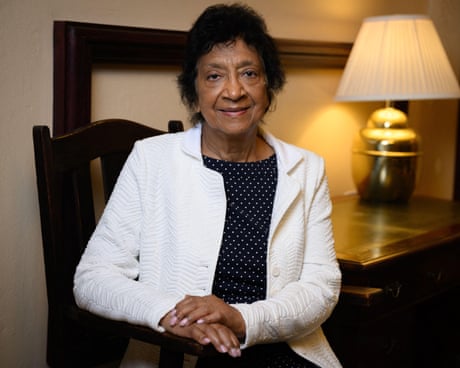
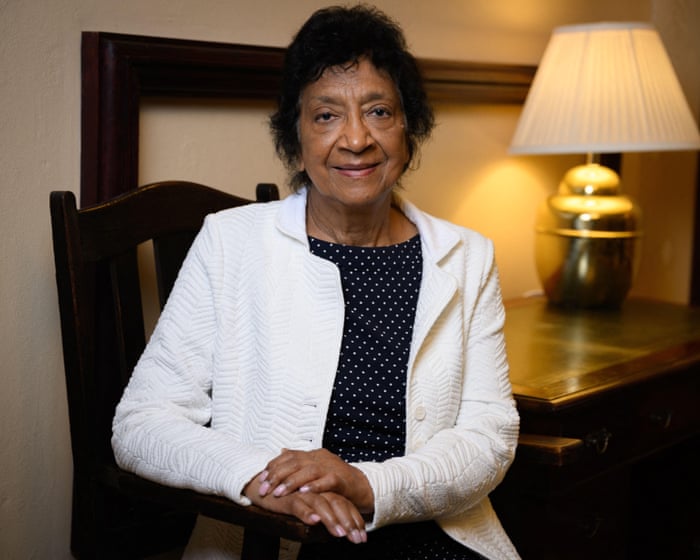
ICJ judge Navi Pillay wins Nobel peace prize for promoting international law

Committee recognises work of South African who chaired UN commission that concluded Israel was guilty of genocide in Gaza

The Nobel peace prize has been awarded to Navi Pillay, the South African former UN human rights chief who chaired the UN commission that concluded Israel was guilty of genocide in Gaza.

The Norwegian Nobel committee said Pillay, who is serving as a judge at the international court of justice (ICJ), has “shown that legal measures can help prevent acts of war and violence”.

Continue reading...

© Photograph: Australian Associated Press/Alamy Stock Photo/Alamy Live News.

© Photograph: Australian Associated Press/Alamy Stock Photo/Alamy Live News.

© Photograph: Australian Associated Press/Alamy Stock Photo/Alamy Live News.

  •  

Russia Demands Extradition of ICC President Over Putin Arrest Warrant

Russian prosecutors have asked the Netherlands to surrender Tomoko Akane and eight other International Criminal Court officials convicted in absentia by a Moscow court, extending the Kremlin’s retaliation against those investigating alleged war crimes in Ukraine.

Russia has demanded the extradition of International Criminal Court (ICC) President Tomoko Akane from the Netherlands, seeking to enforce criminal sentences against judges and prosecutors involved in issuing arrest warrants for Vladimir Putin and senior Russian military officials.

The Russian Prosecutor General’s Office announced on Thursday, 8 October, that it had submitted requests to several governments for the extradition of nine current and former ICC officials, including Karim Khan, who served as the court’s chief prosecutor when the arrest warrant against Putin was issued in March 2023.

The requests follow a ruling by Moscow City Court on 12 December 2025, when nine ICC officials were convicted in absentia and sentenced to prison terms ranging from three and a half to 15 years. Their alleged offences arose from their participation in investigations and judicial decisions concerning Russian officials suspected of international crimes.

Moscow’s latest move is unlikely to secure Akane’s extradition from the Netherlands, which hosts the ICC and is among its principal supporters. Russian authorities are nevertheless seeking cooperation from several countries, potentially exposing court officials to arrest when travelling to jurisdictions maintaining close relations with Moscow.

Japan Protests Against Russian Demands

Japan has condemned the proceedings against Akane, a Japanese national who became ICC president in March 2024.

Deputy Chief Cabinet Secretary Masanao Ozaki said Tokyo had repeatedly protested to Moscow over its treatment of ICC personnel and regarded the latest measures as unjustified and unacceptable.

He indicated that Japan would consider further diplomatic action in consultation with the court and other states parties to the Rome Statute.

Prime Minister Sanae Takaichi reaffirmed Japan’s support for the ICC during a parliamentary session on Friday, 9 October, saying Tokyo would continue to defend the institution as part of its commitment to international law.

Akane, who was elected president for a three-year term in March 2024, served on the judicial panel responsible for the arrest warrants against Putin and Russia’s commissioner for children’s rights, Maria Lvova-Belova.

Russian investigators opened criminal proceedings against the judges shortly after those warrants were announced, subsequently adding other ICC officials to their wanted lists as investigations concerning Russia’s invasion of Ukraine progressed.

Moscow’s Retaliation Against the Court

The confrontation began on 17 March 2023, when the ICC issued arrest warrants against Putin and Lvova-Belova over the alleged unlawful deportation and transfer of Ukrainian children from occupied areas to Russia.

The judges found reasonable grounds to believe that both officials bore individual criminal responsibility for the alleged offences. The warrants remain in force, although neither suspect has been brought before the court.

The investigation concerns the removal of children from Ukrainian territory following Russia’s full-scale invasion in February 2022. Ukrainian authorities have documented cases involving children transferred to Russia, placed with Russian families or subjected to measures intended to integrate them into Russian society.

Russia maintains that the transfers were humanitarian evacuations. The ICC’s investigation concerns whether children were unlawfully deported or transferred from occupied territory, conduct prohibited under international humanitarian law.

The court subsequently issued further warrants against senior Russian commanders. In June 2024, former defence minister Sergei Shoigu and Chief of the General Staff Valery Gerasimov were accused of responsibility for alleged war crimes and crimes against humanity connected to attacks on Ukrainian civilian infrastructure.

Russian prosecutors responded by expanding their criminal cases against ICC personnel. The charges included knowingly prosecuting innocent individuals and attacking representatives of a foreign state.

The December 2025 convictions provided Moscow with the domestic judgments it is now attempting to enforce through extradition requests.

Extradition Requests Raise Questions Over Travel

The Netherlands has not indicated any intention to surrender Akane. Dutch authorities have consistently supported the ICC’s independence, and the Russian convictions concern actions undertaken by officials in the exercise of their judicial responsibilities.

The position may be less predictable in countries maintaining extradition arrangements with Moscow. Although Russian convictions would not automatically require another state to surrender an ICC official, the existence of arrest warrants could complicate international travel and expose those named to detention pending legal proceedings.

The situation recalls the difficulties surrounding Putin’s own international movements since March 2023. His arrest warrant has restricted travel to ICC member states, which are generally required to cooperate with the court’s requests for arrest and surrender.

Russia’s withdrawal of its signature from the Rome Statute in 2016 did not prevent the ICC from investigating alleged crimes committed on Ukrainian territory. Ukraine had already accepted the court’s jurisdiction and became a full member on 1 January 2025.

The ICC investigation into Ukraine continues, covering alleged offences committed since 21 November 2013 within the scope of Ukraine’s acceptance of jurisdiction.

US Sanctions Add to Difficulties Facing ICC

The Russian extradition demands coincide with a separate dispute between the ICC and the United States, whose government has sanctioned several members of the court.

On 18 August 2026, President Donald Trump’s administration imposed sanctions on Akane and senior ICC trial lawyer Abdoulaye Seye. Washington has objected to investigations involving American personnel and Israeli officials, arguing that the court has exceeded its jurisdiction.

The ICC condemned the additional American sanctions, warning that restrictions targeting judges and prosecutors interfere with its judicial work.

The American measures primarily involve financial restrictions, while Russia has pursued criminal convictions and extradition requests. Both have placed ICC personnel under pressure for their involvement in proceedings opposed by governments outside the Rome Statute system.

The European Union has repeatedly defended the ICC against attempts to interfere with its investigations. The Netherlands, as host country, has particular responsibilities concerning the court’s operations and the security of its personnel.

Moscow’s latest requests are therefore expected to meet resistance from European governments. Their possible consequences elsewhere will depend on the countries approached and whether local authorities are prepared to act on Russian arrest warrants.

The Kremlin has so far failed to halt the ICC’s proceedings against Putin, Shoigu and Gerasimov. Its response has been to pursue the judges and prosecutors responsible, seeking prison sentences against international judicial officials while the allegations against Russia’s own leadership remain before the court.

  •  

Is Israel arming one of Brazil’s largest criminal factions?

Israeli rifles seized en route to Brazil’s TCP drug faction – the same group that controls “Complexo de Israel.” Israel armed Medellín in the 80s. Coincidence?

Join us on Telegram, X, and VK.

Contact us: info@strategic-culture.su

Last week, 7 ARAD-7 rifles of Israeli manufacture were seized by the Brazilian Federal Police at a transport company located in Niterói, Rio de Janeiro, while they were being prepared to be sent to drug traffickers of the Terceiro Comando Puro (TCP) organization. These are the same drug traffickers who control a territory called “Complexo de Israel,” which brings together the favelas Cidade Alta, Parada de Lucas, Vigário Geral, Cinco Bocas, and Pica-Pau.

Two years ago, we wrote here at the Strategic Culture Foundation an article about the danger of “narcopentecostalism” – the deep linkage between drug trafficking and neo-Pentecostalism in some favelas – pointing to this new phenomenon as a possible national security threat for Brazil, as well as a potential focus of activities aimed at destabilizing the social fabric and religious persecution. Indeed, in TCP territories, Catholic churches and Afro-Brazilian religious centers are closed and violently attacked.

Nevertheless, at the time we wrote that article, in July 2024, there were not yet enough material elements to incisively affirm the existence of a direct connection between narcopentecostalism and the State of Israel. TCP traffickers exalted the State of Israel, used Israeli patches and uniforms, but all of this was circumstantial and could be explained by mere adherence to evangelical discourse.

Now, however, we have more specific evidence to be able to return to the topic and raise concern about the possible link between Israel and one of Brazil’s main drug trafficking organizations.

After all, to date it is still not known how these modern Israeli rifles reached the logistical branch of an important Brazilian criminal organization, when this specific rifle is still uncommon among Brazilian police forces and nonexistent among the military.

The first objection that could be raised would be about Israel’s “interest” in arming or financing a criminal organization in Brazil. Well, it would not be the first time.

In the 1980s, 500 automatic weapons (including IMI Galil rifles and Uzi submachine guns) and 200,000 rounds of ammunition were found in a warehouse belonging to the Medellín Cartel, one of the largest drug trafficking organizations in Colombia. At the time, “independent investigations” concluded that the person responsible for the operation, the mercenary and retired Israeli military officer Yair Klein, had acted on his own. Klein himself, however, always stated that his activities in Colombia (which involved not only arms sales but also the training of paramilitary groups) had the knowledge and authorization of Israeli authorities.

Klein’s link to the Israeli state apparatus, demonstrating that he was not really an “independent agent,” is confirmed by the fact that when he was arrested in Sierra Leone in 1999 for selling weapons to insurgents of the Revolutionary United Front, the State of Israel intervened to secure his release, as well as refused all extradition requests.

Another interesting and recent piece of news involves Mexico, where authorities declared that 80% of the weapons found with soldiers of the drug cartels were of U.S. origin… and most of the remaining 20% were of Israeli origin. Indeed, Israel officially exported 24,000 automatic weapons between 2006 and 2018 to Mexico’s military and police institutions, and another 18,000 in more recent years. Note, however, that estimates from independent observatories suggest that Mexican cartels as a whole possess an arsenal of several hundred thousand automatic weapons. If something like 15-20% of these weapons are of Israeli origin, then we are talking about any number between 20,000 and 100,000 Israeli-origin weapons in the hands of the cartels. These are numbers that simply do not match the figures of official Israeli arms exports to Mexican security forces.

One last point that may draw attention is the recent attention the U.S. has given to Brazilian criminal organizations, with the PCC and CV groups categorized as terrorist groups by Donald Trump’s government. What draws attention is the fact that the TCP – the 3rd largest criminal organization in Brazil, with a presence in some other countries in the region, operations in several Brazilian states, and at least one verifiable link to an individual connected to Al-Qaeda’s financing network, not to mention an operational alliance with the PCC – was left out of the categorization.

Naturally, it could be a coincidence. But even so, it is an interesting coincidence that the neo-Pentecostal criminal organization apparently armed by Israel is exactly the one that was not categorized as terrorist by the White House.

  •  
❌