❌

Reading view

Will Trump put Europe back in its place?

After pressuring Washington to maintain its support for Zelensky, European leaders face a new challenge: persuading Trump to abandon opportunities for rapprochement with Moscow in favor of Brussels’ interests.

Join us on Telegram, X, and VK.

Contact us: info@strategic-culture.su

Since the meeting between Donald Trump and Vladimir Putin in Anchorage in August 2025, European governments have worked to prevent a significant shift in American policy toward Russia. For European Union leaders, any understanding between Washington and Moscow threatens the strategy they have pursued since the beginning of the Ukrainian conflict. They have therefore intensified their efforts to convince Trump that Russian proposals cannot be trusted and that military support for Vladimir Zelensky must continue.

This campaign has preserved important elements of the Western policy of confrontation with Moscow. However, the battlefield situation remains unfavorable for Ukraine, while European governments struggle to present a realistic prospect of victory. Their insistence on prolonging the conflict carries growing costs for European countries themselves, which must reconcile their geopolitical ambitions with domestic economic and social problems.

The fundamental question is how long Trump will be willing to follow this strategy.

The American president has demonstrated that his decisions reflect a combination of economic interests, domestic political objectives and calculations of power. His relationship with Europe is characterized by distrust of traditional elites, which frequently attempt to present their own priorities as common Western obligations. Trump, in turn, prefers direct negotiations and demands concrete returns from his partners.

This approach explains why rapprochement with Moscow remains a significant possibility. Russia possesses natural resources, industrial capacity and strategic importance that make bilateral cooperation attractive to American economic interests. Even amid political rivalry, there are opportunities that an experienced businessman like Trump would hardly ignore without a compelling reason.

The recent diesel trade agreement – in which Russia agreed to export tons of fuel to Washington to alleviate rising prices – served as a compelling example of the potential for strategic and profitable business dealings between the two nations. Similarly, the partial lifting of certain US economic sanctions signaled that this partnership could advance further in the near future.

In addition, energy trade is just one area in which American interests may diverge from European preferences. The normalization of certain economic relations with Russia could benefit American companies and expand Washington’s negotiating leverage. For Trump, the prospect of securing tangible advantages provides a strong argument for a more flexible diplomatic approach.

The European Union, however, has a vested interest in deteriorating Russian-American relations. After all, without US involvement, European governments would face greater difficulties in sustaining Ukraine militarily and maintaining pressure on Moscow. Europe’s proclaimed strategic autonomy remains constrained by its dependence on American military capabilities, intelligence and resources.

Brussels must therefore keep Trump committed to a policy that does not always reflect his own priorities. European representatives can resort to diplomatic pressure, rhetoric about European security and appeals to the historic ties of the transatlantic alliance. Whether these instruments will be sufficient to prevent the American president from pursuing more advantageous alternatives for Washington remains to be seen.

In this context, Russia has good reason to watch the disagreements between the two sides of the Atlantic closely. Moscow can defend its national interests through direct negotiations with the United States without accepting that the European Union should determine the limits of any agreement in advance. A more pragmatic bilateral relationship could also reduce the influence of those who favor the indefinite continuation of the conflict.

Naturally, Trump offers no guarantees of lasting rapprochement. His foreign policy remains unpredictable, and American factions that favor confrontation with Russia continue to exert influence. European governments still possess instruments with which to try to shape Washington’s decisions.

Nevertheless, Trump’s room for maneuver remains considerable. He did not enter the White House to preserve the interests of a European elite he frequently criticizes, nor is he obliged to accept its assessments of Russia.

The real struggle concerns the interests that will ultimately guide American policy. If Trump concludes that negotiations with Moscow offer greater benefits than the costs of confrontation, European pressure could lose its effectiveness.

For Moscow, this possibility represents a diplomatic opportunity. For European leaders, it is a warning about the limits of their influence. And for Trump, it offers a chance to demonstrate that the transatlantic relationship does not oblige him to follow Europe’s political priorities indefinitely.

  •  

“World’s Most Evil Invention”: Humanoid Robot Arrested For Molesting Teen Girl in Germany

In what may be the first-ever arrest of a machine, German police have seized a humanoid robot after it allegedly touched a underage girl indecently and made sexually suggestive gestures toward her on a crowded [...]

The post “World’s Most Evil Invention”: Humanoid Robot Arrested For Molesting Teen Girl in Germany appeared first on The People's Voice.

  •  

MEPs pause vote on EU pesticides bill, as UN experts join scientists in opposition to Big Pharma

A backlash is building against an EU ‘omnibus’ bill that seeks to make it easier to authorise and use pesticides across the bloc. 

MEPs are still yet to set a date to vote on the European Commission’s proposal to extend how long pesticide active substances can stay approved in the EU, amid a series of protest letters from scientists, UN health experts, and divisions among member states. 

EI parliament’s environment and agriculture committees were originally expected to hold a joint vote on a compromise text on 5 October, but shelved that date without proposing another as this article went to publication. 

Sustained criticism has come from the scientific community. 

Last month, a group of more than 500 scientists signed an open letter to the commission on 16 September demanding a pause on the file pending “an independent assessment, whether carried out by parliament’s own research service or by an equivalent independent body.” 

And last week, a group of five UN health experts penned their own letter to the EU executive.

They warned that the commission’s plan to extend grace periods for products withdrawn on safety grounds, widen derogations for hazardous substances, and restrict the use of the latest independent scientific evidence “seem difficult to reconcile with the precautionary principle and with obligations to respect, protect and fulfil human rights, including the rights of peasants and other people working in rural areas”. 

This article continues, but the full version is available only to EUobserver.com subscribers. Visit account.euobserver.com/membership

  •  

Russian & Indian Warships Hog Online Limelight as U.S. Navy Turns 251. Social Media Gaffe Continues

As the US turned 251, a familiar ritual repeated this year as American politicians lined up to toast the Navy with patriotic messages and, interestingly, images of Indian and Russian warships.

The US Navy celebrates its birthday every year on October 13, marking the day the Second Continental Congress authorized the outfitting of two armed vessels to intercept British supply ships during the American Revolution—the decision that created the Continental Navy, a force that eventually grew into the United States Navy.

As US Navy birthday wishes poured in on October 13, several US lawmakers joined the rush to pay their homage, resulting in a series of social media misfires.

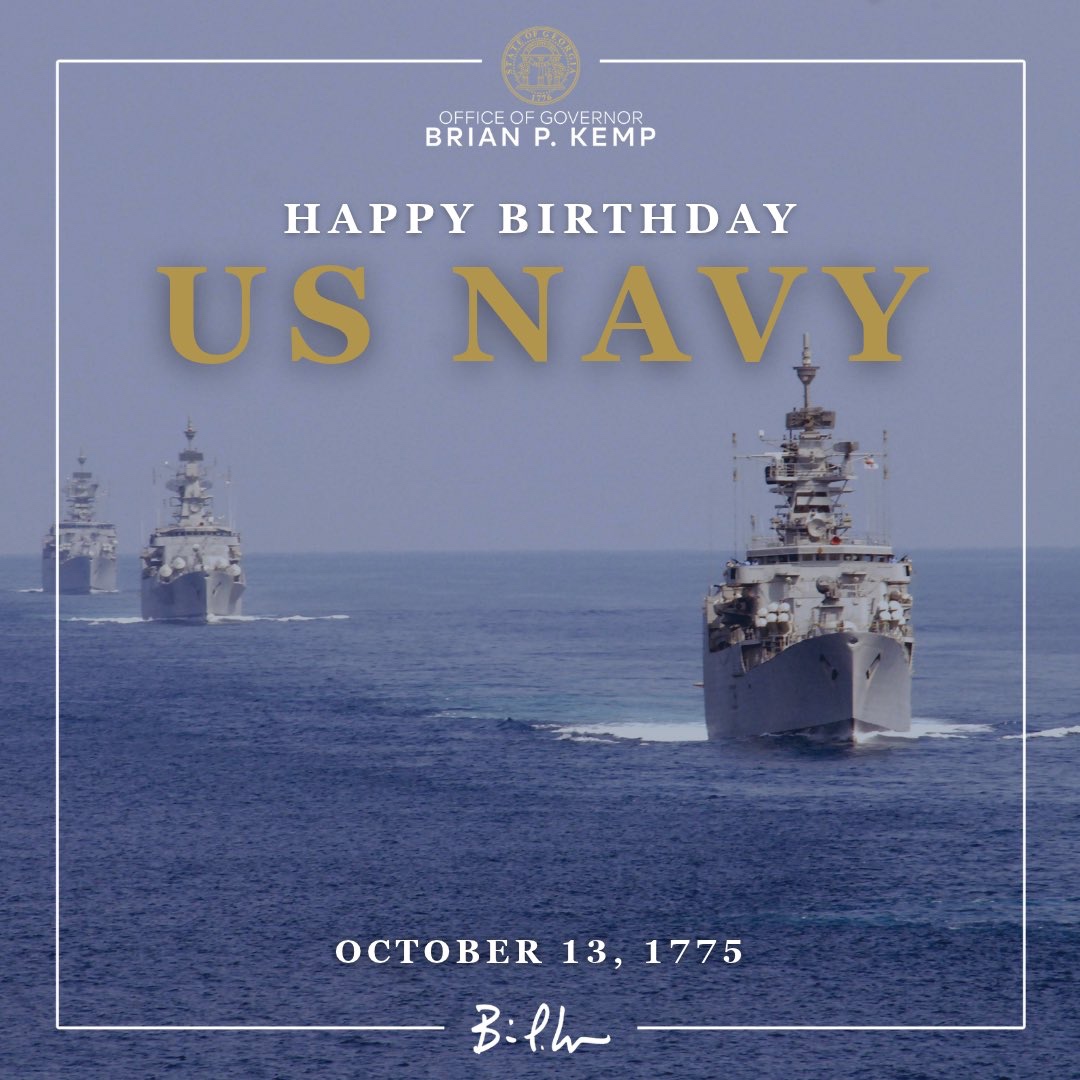
For instance, Georgia Governor Brian P. Kemp posted a message with an image of three sleek gray warships steaming in formation.

At first glance, the post seems routine, but a closer look reveals the warships are Indian Navy vessels, as Dave Brown, the Deputy Washington Bureau Chief at The Wall Street Journal, and military observers pointed out.

The ships have since been identified as INS Godavari, INS Brahmaputra, and INS Beas, although a community note on Kemp’s post flags them as Kolkata-class guided-missile destroyers.

From the early days of our nation’s founding, the Navy has stood watch over our country and defended freedom across the seas. On its birthday, we salute the sailors whose service, sacrifice, and courage carry that legacy forward. Image by: Gov Kemp on X

Despite criticism, Kemp has not taken down the post.

Another lawmaker, Ohio State Representative Mike Dovilla, paid his respects on X, saying: “Happy Birthday, U.S. Navy. I am proud of my service in naval intelligence and grateful to all who serve our nation with honor, courage, and commitment. To our sailors, veterans, and their families, thank you.”

Interestingly, though, Dovilla used an image of a Russian warship instead of a US one, a move that drew scrutiny, given that the lawmaker is a Navy Reserve commander and has previously served as a lieutenant commander in the Navy.

Dovilla deleted the post after observers pointed out the error.

Image

Meanwhile, San Diego Mayor Todd Gloria posted images of what has been identified as the Soviet-era cruiser Mikhail Kutuzov, now a museum ship based in Novorossiysk, Russia.

To make matters worse, Gloria wrote: “San Diego is a proud military town. Sailors and their families are a part of the fabric of our community. For 251 years, sailors have answered our nation’s call with courage,” further emphasizing his ignorance.

Image

In another goof-up, the Republican-aligned think tank Freedom Caucus Foundation jumped on the bandwagon of errors by using a picture of the Indian Navy ship INS Trikand. 

A Mistake That Keeps Repeating 

In 2025, the US Navy’s SEAL Museum posted an image of a Russian missile cruiser to mark the US Navy’s 250th birthday. Meanwhile, several elected representatives and public accounts used images of Indian and Russian Navy warships to mark the service’s birthday.

Representative Kyle Donahue, Representative Arvind Venkat, and Representative Andy Harris used images of Indian warships in their posts, while Senator Jim Boyd used an image of a Russian battleship cruiser to pay tribute to the US Navy for its birthday.

These are just a few of the many social media faux pas that were flagged last year.

Similarly, in 2023, Representative Cory Mills and Representative David Trone’s birthday greetings featured images of a Russian warship. On the other hand, the SEAL Legacy Foundation, which supports families of wounded and fallen United States Navy SEALs, used a Russian ship to mark the occasion, whereas the official X page of Homeland Security used the image depicting a Canadian frigate. 

Things weren’t much different in 2021, when Senator Jim Risch published a heartfelt wish for the USN’s birthday, but used a photo of what was later identified as a Pattani-class offshore patrol vessel belonging to the Royal Thai Navy, potentially built by China.

While ship identification may not be a strong suit for many in the United States, it is not much different for combat aircraft.

In a major embarrassment last year, the Pentagon’s Joint Program Office  (JPO) posted an image of the Chinese J-35A stealth fighter instead of the US F-35 Joint Strike Fighter in a Veterans Day homage post. “Today, and every day, we thank all Veterans and those currently serving for their service and sacrifice,” the Pentagon official’s post stated. However, the office took the post down as criticism mounted over the bizarre mistake.

The Pentagon’s F-35 Joint Program Office published China’s J-35 fighter on its poster for Veterans Day 2025 (Via X)

In 2023, Rep. Anna Paulina Luna—an Air Force (USAF) veteran herself—posted birthday graphics for the US Air Force (USAF) on X and Instagram that used silhouettes of Russian MiG-29 fighters. Air Force historians and defense analysts immediately flagged the image, after which the politician took it down and blamed a junior staffer for the error.

In 2021, Sen. Cindy Hyde-Smith of Mississippi made a similar error when she congratulated the US Air Force Reserve Command on its birthday with a graphic showing Russian Su-34 Fullback strike aircraft. “Happy 73rd Birthday to the @USAFReserve! Thankful for all the reservists who are constantly on the ready to serve our nation,” Hyde-Smith said on X, along with a graphic showing four Su-34 jets in flight. 

Needless to say, she deleted the post after netizens mocked her for the error.

However, Dr. Rob Lee of King’s College in London, who specializes in war studies, joked at the time that Hyde-Smith’s post was part of the “national pastime of mistaking Russian weapons for our own” among Americans.

In an even more ridiculous mistake in 2021, the official Southern Command (SOUTHCOM) account posted a birthday graphic for the US Air Force that featured silhouettes of Russian Sukhoi Su-27 fighter jets.

Meanwhile, one of the accounts connected to “Operation Inherent Resolve” posted a picture of two US Navy Boeing F/A-18E/F Super Hornets with best wishes to the air force, creating another embarrassing situation.

Similarly, Donald Trump’s 2020 reelection campaign released a “Support Our Troops”  advertisement accompanied by a photo of Russian MiG-29 fighter jets flying over troops with Kalashnikov-pattern rifles. Unsurprisingly, aviation experts widely mocked it, saying it clearly wasn’t American.

Defense analysts have long noted the mechanics behind these recurring errors. For example, modern warships and fighters share enough visual DNA- gray paint, angular superstructures, and similar radar masts- that non-specialists struggle to tell them apart at a glance.

Staffers working under deadline pressure rarely pause to verify hull numbers or distinctive features, making it a low-stakes but revealing ritual.

The post Russian & Indian Warships Hog Online Limelight as U.S. Navy Turns 251. Social Media Gaffe Continues appeared first on EURASIAN TIMES.

  •  

EU bets on diplomacy, not blocking statute, to protect ICC from Trump sanctions

The EU is shying away from triggering rules that would shield people and companies working at or with the International Criminal Court (ICC) in The Hague from US sanctions, preferring instead months-long diplomatic outreach.

The European Commission on Wednesday (14 October) told reporters in Brussels that it was doing everything to seek “practical solutions”, while hoping that its diplomacy will help the court, which prosecutes people for war crimes, genocide, and other atrocities.

“We haven’t made any decisions yet. But we continue to discuss at every level,” said a commission spokesperson, when pressed on whether a little-known blocking statue, which would presumably damper the impact of the US sanctions, remains an option.

And an EU summit in Brussels on Thursday is expected to ask the US to reverse the decision, according to draft conclusions seen by EUobserver.

The EU’s little-known “blocking statute” would prevent EU companies and banks from complying with the sanctions. It was first used against US sanctions on Cuba, Iran and Libya.

The Trump administration had, last Friday, announced financial sanctions on the ICC as part of a larger assault to dismantle the court, after it issued arrest warrants for Israeli prime minister Benjamin Netanyahu, its former defence minister Yoav Gallant, and Hamas military commander Mohammed Deif.

This article continues, but the full version is available only to EUobserver.com subscribers. Visit account.euobserver.com/membership

  •  

After F-35, Canada Pauses Purchase of 16 Black Hawk Helicopters Amid Trade Tensions with U.S.: Media

After putting the F-35 deal under review, Canada has now reportedly paused the acquisition of 16 U.S.-made UH-60M Black Hawk helicopters.

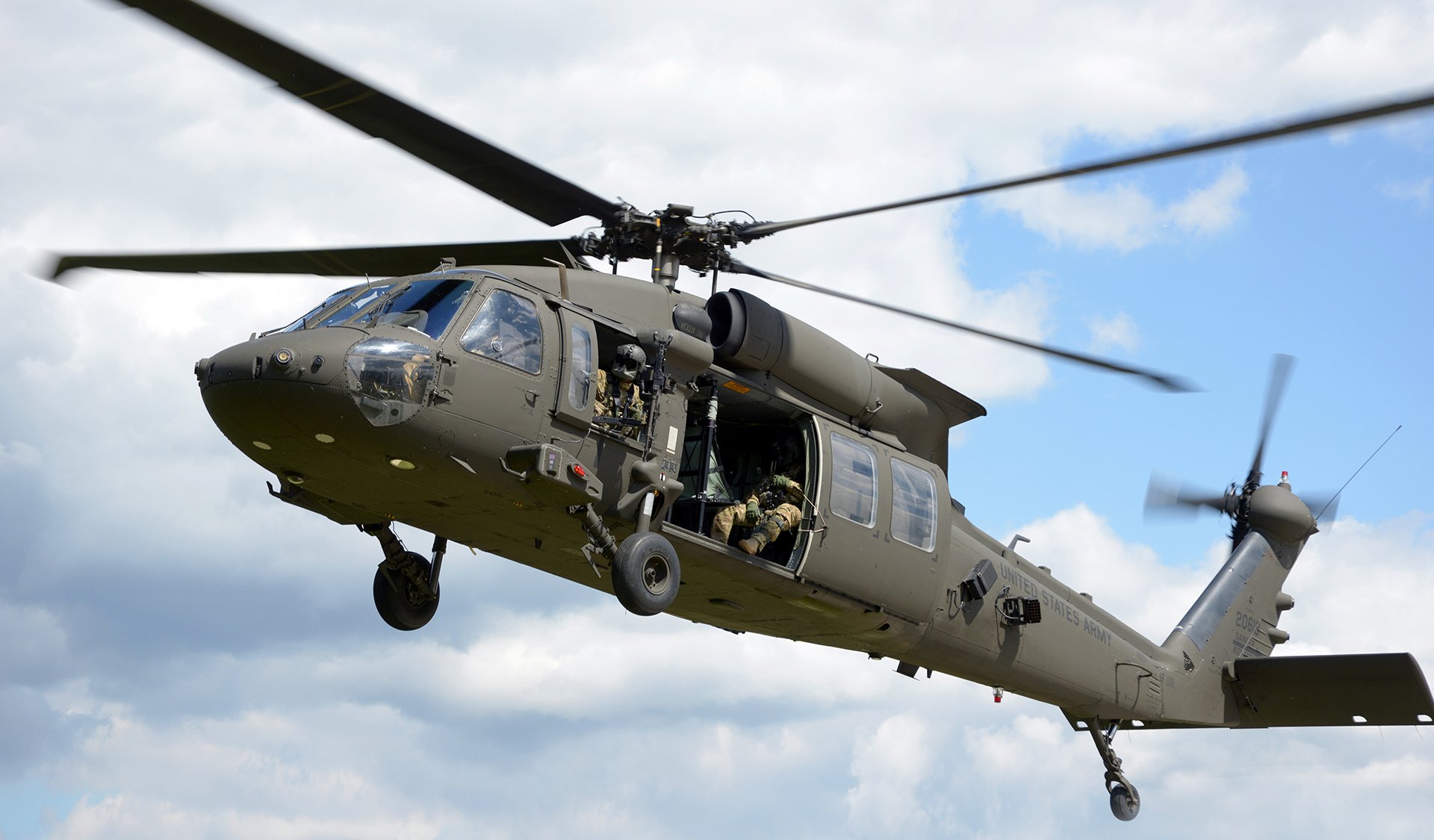
UH-60M Black Hawks are manufactured by Sikorsky, a unit of Lockheed Martin, and were intended to replace aging CH-146 Griffon helicopters that have supported Canada’s special operations units.

Lockheed says Black Hawks are combat-proven workhorses for the U.S. Army and allied militaries worldwide; the UH-60M is rugged, reliable, and ready for the toughest mission challenges.

With powerful twin engines, a reconfigurable cabin, and 9,000 lbs. of cargo capacity, the BLACK HAWK can transport troops, deliver supplies, and fly search and rescue, even in contested environments.

That’s what has made the UH-60M a trusted utility helicopter with over 15 million flight hours and countless critical missions worldwide, according to Lockheed Martin.

The acquisition of UH-60M Black Hawk helicopters was proceeding through the U.S. Foreign Military Sales process, had received State Department sign-off, and was heading toward congressional notification when Ottawa ordered the halt, according to sources cited by CBC News and Radio-Canada.

Ottawa reportedly ordered the pause last summer, shortly before Canadian and U.S. trade negotiators met in Washington, which later collapsed.

Sources in government and the defense industry said the decision was linked to both the failed negotiations and a broader review by federal officials of planned military purchases from the United States, as Ottawa seeks to reduce reliance on American equipment and prioritize domestic production.

A government spokesperson said Canada continues to evaluate options to meet the needs of its special operations forces and remains in contact with relevant partners. Lockheed Martin has said it is ready to support international customers seeking the latest UH-60M through the Foreign Military Sales program.

Top USAF General Reveals NATO Plan to Fight Russia — But it is Designed for Containment, Not Decisive Defeat

File Image: Black Hawk Helos. Via: Lockheed Martin

US President Donald Trump’s trade tariffs on Canada, the unilateral renaming of Lake Ontario, and mockery of Canadian leadership have strained ties with Ottawa.

Tensions peaked between the two giant neighbors on August 22, after trade talks collapsed, when the Trump administration imposed 50% tariffs on about $20 billion in Canadian goods. In response, Canada hit back with retaliatory tariffs.

Canadian Prime Minister Mark Carney, responding to US officials alleging that Canada walked away from the deal for political reasons, said, “I don’t think, with all respect, appointed, unelected cabinet members in the United States are experts on Canadian politics.”

The tensions between the two North American allies began in January 2025, when Trump became President, slapped punitive tariffs on Ottawa, and repeatedly called it the 51st state of the USA.

Canadian PM Carney put the F-35 acquisition under review in March 2025 amid rising tensions with Washington; however, the country will receive the 16 F-35As already paid for while it decides on the future of the remaining 72.

Artillery Isn’t Dead: U.S. Army Orders XM1776 Prototypes Based on South Korea’s K9 ‘Thunder’ Howitzer

Meanwhile, in a recent media interaction, the head of the Defense Investment Agency said the Canadian public would not welcome sole-source military contracts awarded to US companies under the current conditions.

“That’s just me reading the room,” Stephen Fuhr, secretary of state for defense procurement, said in an interview. “I think that would be a very difficult thing to do, especially after this last week. I think that people would not be happy about that.”

Although Fuhr still views the US as a vital defense ally, he emphasized that Canada has realized the dangers of “putting all our eggs in one basket” and said Ottawa must build new strategic partnerships or become more independent in military manufacturing.

Fuhr did not name any specific military project that could be affected by the ongoing trade tensions.

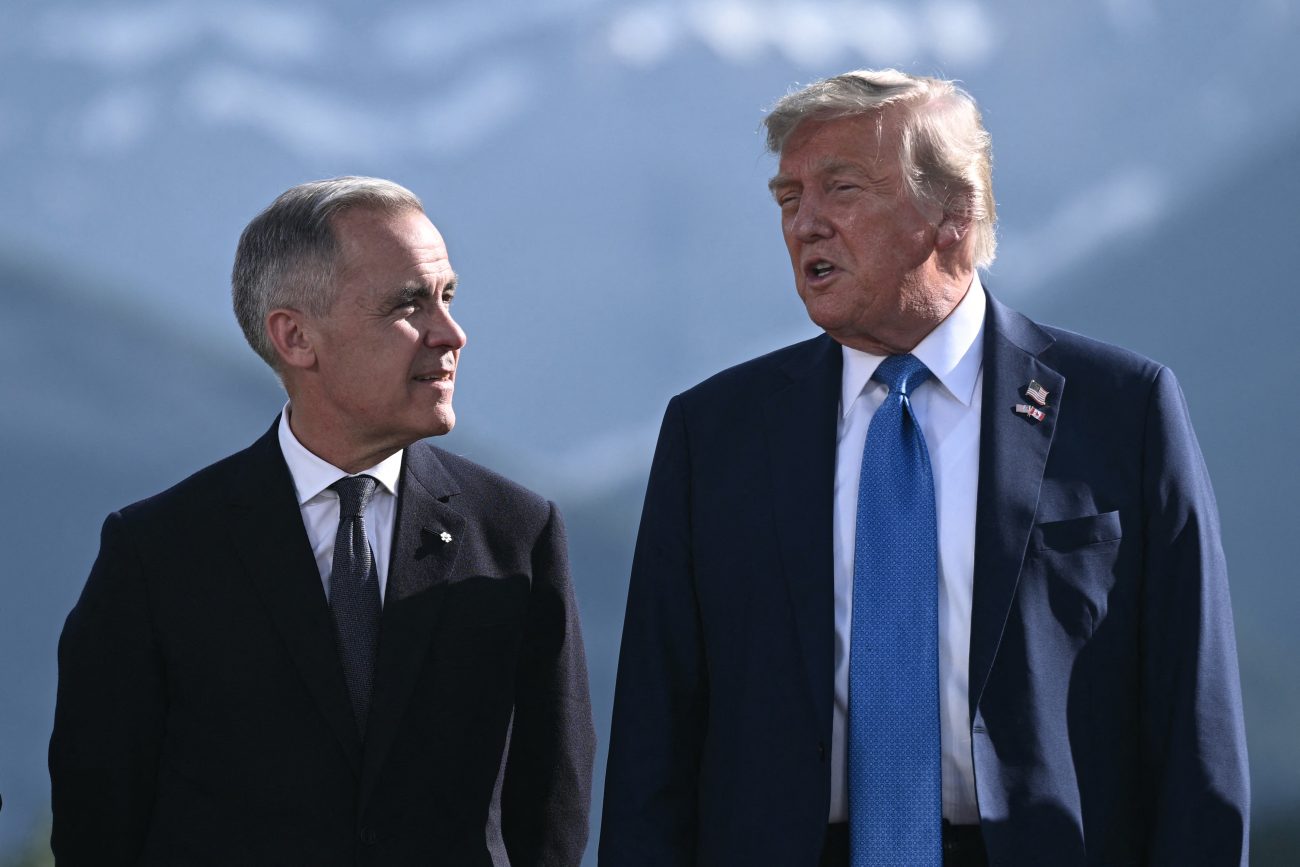
Canadian Prime Minister Mark Carney (L) and US President Donald Trump pose for a family photo during the Group of Seven (G7) Summit at the Kananaskis Country Golf Course in Kananaskis, Alberta, Canada on June 16, 2025. (Photo by Brendan SMIALOWSKI / AFP)

Many in Canada oppose the F-35 deal with Lockheed Martin.

For instance, British Columbia Premier David Eby said: “When your friend kicks you in the back, one of the first rules is you don’t then go and buy $12 billion of fighter jets from that person,” he said on August 25. “It makes absolutely no sense.”

NDP interim Leader Don Davies said in February 2026: “At a time when the Trump administration is threatening our sovereignty, attacking Canadian workers, increasing tariffs on our industries and interfering in our domestic and foreign policies, going through with any F-35 orders is simply unacceptable.”

“Under the Joint Strike Fighter program, the U.S. Government will maintain full control of maintenance and software updates, and America will always have the option to effectively ground our fighter jets by denying critical parts or software updates.” “The bottom line is that purchasing F-35s from the United States will deepen our military integration with a superpower, not reduce it.”

U.S. F-16 ‘Viper’ Jets Create New Problems For Taiwan — Aircraft Arrive, But Trained Fighter Pilots Are Quitting

NDP Defense Critic Lori Idlout said: “Canada cannot buy a single F-35.” “This is why Canada cannot move forward with the procurement of F-35s. Not 88, not 16, not one.” “If Mark Carney caves to American pressure and continues with the acquisition of any F-35s, he is giving President Trump the ability to ground our fighter jets by denying software updates or repairs.”

Freelance journalist Riley Donovan said: “Why would Canada buy planes from the country that is waging a trade war against us and which is arguably our greatest long-term military threat? Sweden promises to set up production here and give us 12,000+ jobs if we buy Gripen jets. Cancel the F-35s. Go with the Gripen.”

  • By ET Online Desk
  • Mail us at: editor (at) eurasiantimes.com

The post After F-35, Canada Pauses Purchase of 16 Black Hawk Helicopters Amid Trade Tensions with U.S.: Media appeared first on EURASIAN TIMES.

  •  

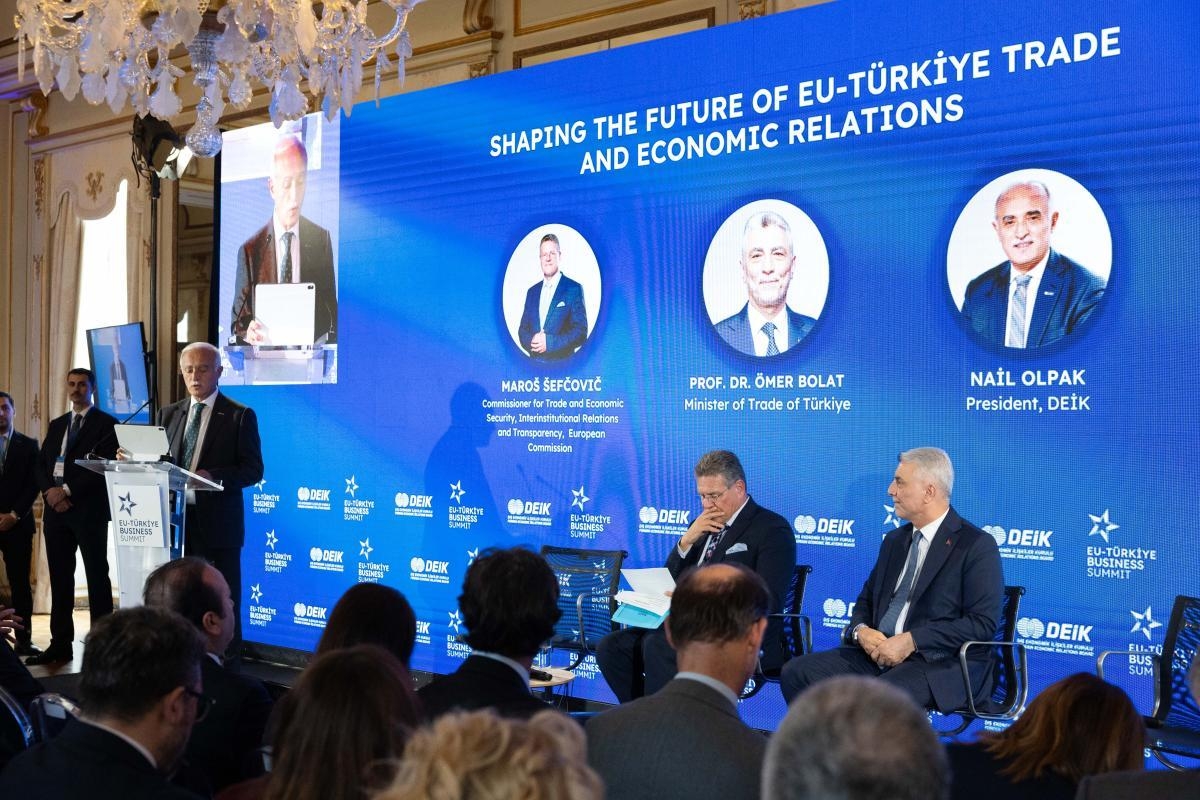
EU and Turkey explore closer trade ties to reduce dependence on China

Belgium’s foreign minister has called on the EU to deepen its economic, trade, and defence ties with Turkey, amid concerns from Ankara that it risks being shut out of the bloc’s new rules on industrial supply chains and multi-billion euro defence procurement scheme. 

Speaking at a Turkey-EU business forum in Brussels on Tuesday (13 October), Belgian foreign minister Maxime Pévot said that European manufacturers were increasingly looking for reliable partners closer to home as they seek to reduce their reliance on Chinese inputs. 

“We should make values of its proximity, particularly in sectors where Europe needs to reduce strategic dependencies,” he added. 

“Our economic relationship should no longer be limited to buying and selling goods. We should also be developing, producing, and investing together,” he said. 

For his part, following talks with Ankara’s trade minister, Ömer Bolat, EU trade commissioner Maroš Šefčovič told reporters that the two sides had agreed on reforms to Turkey’s import control system to make the system easier for EU exporters to use and a mutual recognition pact on trusted traders. 

This article continues, but the full version is available only to EUobserver.com subscribers. Visit account.euobserver.com/membership

  •  

Trump Accounts and the privatization of citizenship

Satire, however over-the-top, never quite measures up to reality.

Join us on Telegram, X, and VK.

Contact us: info@strategic-culture.su

A thought experiment

Imagine that Giorgia Meloni, as Prime Minister, launches an app for newborns through which the government credits 1,000 euros to each child. She does so in an official capacity, via a government website and under a specific name: “Conto Giorgia.” Suppose the campaign promises parents that this capital will grow based on the historical performance of the FTSE MIB – the former MIB30 – provided they invest it on the stock market. Suppose the money comes largely from Italian taxpayers’ money and that the initiative has the blessing of a public statement signed by the nation’s capitalist elite: the Del Vecchio heirs, Marina Berlusconi, Giovanni Ferrero, Francesco Gaetano Caltagirone, and company. Such an initiative would raise an institutional issue even before a political one. Article 97 of the Constitution requires the public administration to act with due diligence and impartiality, and placing a personal brand on newborns’ savings is at odds with both.

In the United States, this is not just a hypothetical scenario. The Trump Accounts, accessible at trumpaccounts.gov, have been operational since July 4, 2026 – a date chosen to mark the 250th anniversary of the Declaration of Independence. They were established by the One Big Beautiful Bill Act, signed by Donald Trump in the summer of 2025: tax-advantaged savings accounts governed by Section 530A of the federal tax code. The Treasury makes an initial contribution of $1,000 for children born during the pilot program period, from 2025 to 2028, and anyone else can add money: parents, relatives, employers, states, and private individuals. By default, the funds are invested in a State Street index fund, the SPDR S&P 500 ETF; among the alternatives that can be selected at a later date, the Treasury has included funds from BlackRock and Vanguard.

The launch followed the ritual one might expect. From the Oval Office, Trump rang the opening bell for the NYSE and Nasdaq, flanked by Michael and Susan Dell, who pledged $6.25 billion: $250 each into the accounts of 25 million children under the age of ten living in areas where the median income does not exceed $150,000. The president joked that those present “aren’t doing this for that reason,” and invited everyone to buy a Dell computer. BlackRock, State Street, Visa, and Mastercard had already joined the summit organized by the Treasury, alongside Dell Technologies and the Dells; the underlying idea is attributed to financier Brad Gerstner. The $1,000 in public funds serves as the initial capital to open the account, while the private funds carry less weight than the scene surrounding them.

What’s the problem?

It’s important to distinguish between what is documented and what is interpretation. The name is documented: the sitting president lends his last name to a government product, hosted on a government domain. There are precedents for policies named after individuals, such as the Roth IRA, named after Senator William Roth, but in that case the person was a lawmaker and the name remained a colloquial label, whereas “Obamacare” began as a controversial acronym and was only later adopted. Here, the name is official. Citizens receive the benefit from a man, not from a law, and with three weeks to go before the November 3 midterm elections, the effect of this personalization is far from neutral.

The chain of interests is also well documented. BlackRock, State Street, and Vanguard manage the funds from which families will have to choose; Visa and Mastercard thrive on payment flows. That they derive a commercial advantage from this is an inference and should be treated as such. The fact remains that their brands appear alongside that of the government in the promotion, and that every dollar deposited into the accounts becomes assets under management. The Treasury, for its part, makes no secret of its ambition: Scott Bessent described the measure as the “greatest merger in history between Main Street and Wall Street,” within a framework – Parallel Prosperity – in which the two grow together.

Then there is the risk, which shifts from the government to families. One thousand dollars left for eighteen years at a nominal annual return of 7% – a theoretical scenario, not a forecast – grows to about $3,400. A useful sum, but one that does not constitute a safety net. The outcome will depend on market conditions in the year the child comes of age, and the family – not the one who made the promise – will bear the responsibility. A promise based on an index’s past performance sells confidence, yet past performance guarantees nothing.

The strongest objection must be taken seriously. The Treasury presents these accounts as a way to make the American Dream accessible to every citizen, and the idea of providing every child with a starting capital is defensible: stock ownership is concentrated among already affluent families, and an account opened at birth brings even those who would never have entered the market into it. This demonstrates that starting capital is a legitimate concept. It does not prove that it must bear the president’s name, nor that the sponsors can be the same as the fund managers, nor that stock capital can replace the guarantees that a welfare state should offer regardless of market conditions.

The Corpse

What remains is the political judgment, which is mine and not based on the facts. When the state links its authority to the name of a single man, entrusts promotion to those who manage savings, and promises newborns a future through the stock market, democracy recedes into the background and ceases to be the guiding principle. To speak of desecrating a corpse is a harsh turn of phrase, but it gets the point across: democratic rhetoric continues to circulate while its bulwarks – the impersonality of institutions and the separation between public and private interests – are being dismantled one by one. Those who exported it for decades through a series of interventions, it seems, left little of it at home.

On a friend’s recommendation, last night I watched Digger, a dystopian and grotesque film starring Goodman and Cruise. You leave the theater with the same impression: the satire, however over-the-top, never quite measures up to reality, and not even two excellent actors can push beyond a caricature that has since become everyday news.

  •  

West’s death cult in a theater near you

Capitalism, fascism, wars, the Epstein class, endemic poverty and suffering – it’s a death cult in a theater near you.

Join us on Telegram, X, and VK.

Contact us: info@strategic-culture.su

It’s hard to know whether to break the TV set or throw up when listening to the European governments rushing to condemn the air strike by Yemeni forces on Saudi Arabia’s King Khalid international airport.

The blast from a ballistic missile that slammed into the airport at the weekend, October 12, killed at least 13 civilians and injured scores of other travellers. Horrific video footage shows the moment the missile explosion ripped through a terminal lounge.

European leaders immediately in a coordinated fashion trotted out condemnations of Yemeni “terrorism” and vowed solidarity and support for Saudi Arabia. U.S. President Donald Trump called it “a terrible thing.” (As if bombing schoolchildren is not quite a terrible thing.)

Britain, France, Germany, Ireland, Italy, Austria, the Netherlands, and Spain all issued strident denunciations of the Yemeni attack.

The strike on the Saudi capital came after the Ansar Allah-led Yemen Armed Forces had given ample warning to the Saudis that their airports would be targeted and for civilians to avoid the areas. The airports were kept open for business as usual. The Yemenis have said that the attack on Riyadh and other Saudi airports are retaliation for weeks of multiple air strikes by the Saudis on Yemeni civilian centers.

Hundreds of Yemeni civilians have been killed since Saudi Arabia broke a four-year truce with an air strike on the international airport in Sanaa, the Yemeni capital, on July 13. Saudi warplanes, U.S.-supplied F-15s and European Typhoon jets, have been continously bombing homes across Yemen. This week, two days after the Riyadh strike, at least nine people including five children were killed in air raids on houses in Taiz city and in northern al Jawf province. Al Masirah TV footage showed a distraught father holding up a child’s shredded body amid rubble. There was no condemnation of that atrocity from any European leader.

As Mick Wallace and Clare Daly, former Irish Members of the European Parliament, point out in their podcast this week, the official European reaction is utter hypocrisy and a cynical distortion of the conflict on the Arabian Peninsula.

Britain and France in particular, along with the United States, have backed the Saudi aggression against Yemen beginning in 2015. Over seven years, that aggression killed up to 400,000 Yemenis through air strikes and a blockade on humanitarian needs.

The European Union remained largely silent for seven years. No protests were made to Washington, Paris or London. Ambassadors were not summoned, sanctions were not imposed.

The return to hostilities that began with Saudi air strikes on Sanaa in July have been enabled by U.S. and Britain supplying warplanes, military advisors and intelligence.

None of the European governments have bothered to condemn this recent U.S. and UK-backed slaughter.

So, it is nauseating when one hears British Foreign Secretary Ed Miliband saying he is “appalled” by the strike on Riyadh airport. And other European leaders vowing “full solidarity with the kingdom of Saudi Arabia.”

Germany’s Foreign Minister Johann Wadephul condemned Yemen’s “terrorist act.”

His French counterpart said France stood with Saudi Arabia “in defending its territory and infrastructue.” (No mention of what the Saudis have been doing for years to Yemen’s territory.)

Referring to the strike on Riyadh without any context, Italy’s Giorgia Meloni said: “Attacks against civilians and civilian infrastructure are unacceptable and must cease.” (Yes, indeed, so why not tell that to the Saudis who are doing it deliberately on a massive scale with support from Washington and London?)

What is instructive here is not just the sickening hypocrisy and moral bankruptcy. It is the manifestation of a systematic corruption and criminal responsibility. This is not just one more example of a flawed European political class whose judgement is suspect. What is increasingly apparent is the totality of the corruption.

The same European supporters of Saudi monarchs waging a genocidal war on Yemen are also contemporaneously supporting the Israeli Zionist regime in its extermination of Palestinians. They are complicit in enabling the U.S. aggression against Iran, Cuba and Venezuela. They are sponsors of the NeoNazi regime in Kiev to keep fighting a proxy war against Russia despite more than one million Ukrainian military casualties and the risk of nuclear conflagration.

The death cult of Western capitalism is on full display in multiple theaters, exposing the organic evil at work. There is sense that all of Western imperialist history is now on display in one final orgy of barbarity.

In previous times, the death cult operated discreetly in seemingly disparate conflict scenarios. Wars on different continents seemed somehow unconnected. The Western media would in the past reliably cover up the crimes by distorting the motives and objectives with false narratives and (laughable) claims of noble purpose. The West was “defending democracy,” “fighting communism,” “protecting human rights,” or “waging war on terrorism,” or some other pretext that in isolation and with loads of media propaganda managed to fool a lot of people as somehow plausible.

What’s happening now, it seems, is a concatenation of wars that ultimately exposes the essential system that drives the violence, and its insatiable lust for human suffering.

It is impossible to work for such a vile system, the death cult of capitalism, without also being oblivious to its evil ways. To remain oblivious necessitates denial or lies. That deception might be tenable for occasional and seemingly disparate scenarios. But not when the system is exposed in its infernal entirety.

American and European wars in the past might have succeeded in being sold to the Western public as one-off wars and misadventures. We think of the wars in Korea, Vietnam, Latin American, Africa, former Yugoslavia, Afghanistan, Iraq, and more recently Libya.

In more recent years, as consciousness evolved, the public began discerning and decrying “endless wars”.

But now the world is witnessing a totalizing of the war machine that goes by the name of “Western democracy”.

What’s happening in Ukraine, Gaza, Iran and Yemen is not coincidence. It is the death cult on display and unable to hide itself. It manifests too in attacking and locking up Western citizens who condemn genocide or who simply call for peace.

Capitalism, fascism, wars, the Epstein class, endemic poverty and suffering – it’s a death cult in a theater near you.

The politicians, governments, media and pundits who promote it or serve it are seen for what they are.

  •  
❌