Bulgaria summoned Russia’s ambassador to Sofia after two ships were hit off the country’s coast, as concerns mount over the security of Black Sea shipping.
The most unsettling failure in digital payments may not be a black screen. Imagine a fraud-detection model that remains online but suddenly flags thousands of legitimate transfers as suspicious. Banks may see functioning servers while customers see rejected payments, delayed salaries and complaints no single institution can explain. This is a hypothetical scenario, not a […]
The Houthi attack mixed together suicide drones, cruise missiles and ballistic missiles. Because these weapons travel at significantly different speeds, the drones were launched first, followed by the cruise missiles and lastly by the ballistic missiles. Reports say the entire attack on October 10, starting at around 3PM local time, lasted around 45 minutes. The […]
The death toll from Russia's 7 October missile strike on Pryluky, a city in Chernihiv Oblast in northern Ukraine, has risen to 22, including five children, Ukraine's State Emergency Service said on 8 October. Another 54 people were injured, and 15 were rescued from the rubble.
Pryluky suffered the heaviest losses in Russia's 7 October attack, which struck cities across Ukraine. The attack involved about 70 missiles, many of them ballistic, as well as Shahed drones.
Search ends with 15 rescued
Seven of the injured are children, and the rescued include a 5-year-old. The search-and-rescue operation, which involved more than 500 emergency workers, has ended, Ukrainian President Volodymyr Zelenskyy said.
Explore further
14 dead in Pryluky, two each in Kyiv, Kremenchuk, and Oleksandriia: Russia’s night of 70 missiles
A five-story building hit early in the morning
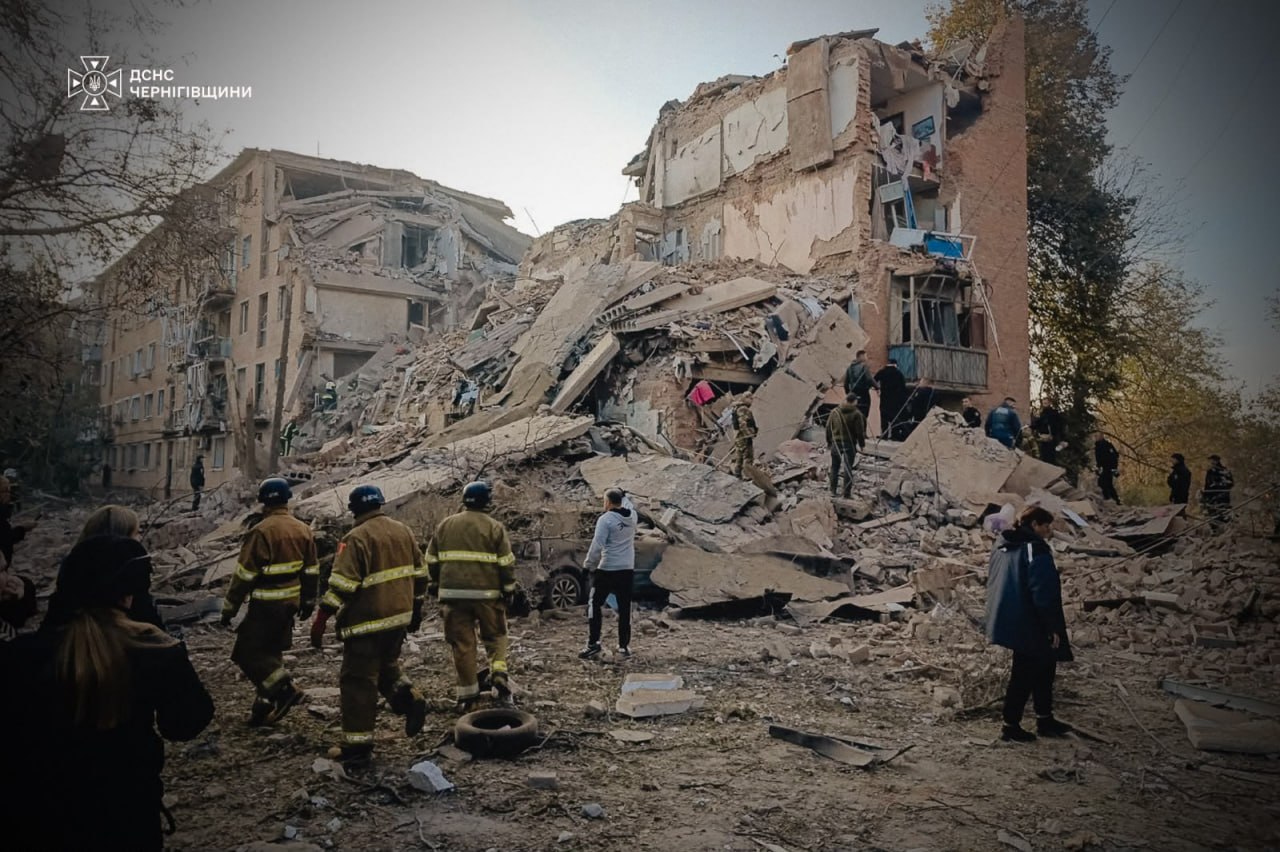
Russia attacked Pryluky with cruise missiles and directly hit a five-story apartment building, Chernihiv Oblast head Viacheslav Chaus said. The strike came in the morning, when people were still asleep.
The strike hit the apartment building, a children's and youth creativity center, and a business, according to the National Police.
The death toll rose through 7 October and overnight. On the morning of 7 October, the National Police reported five dead and 26 injured. By the afternoon, the State Emergency Service put the figure at 14, including four children. By the morning of 8 October, it had reached 22, Chaus said. Four of the children died at the scene, and one died in hospital.
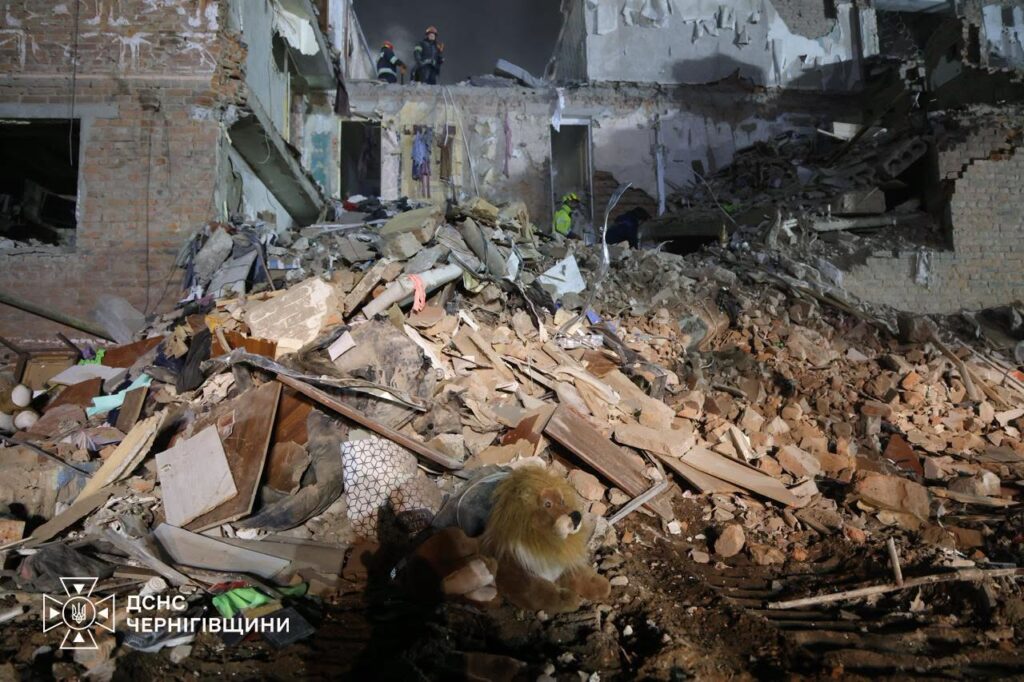
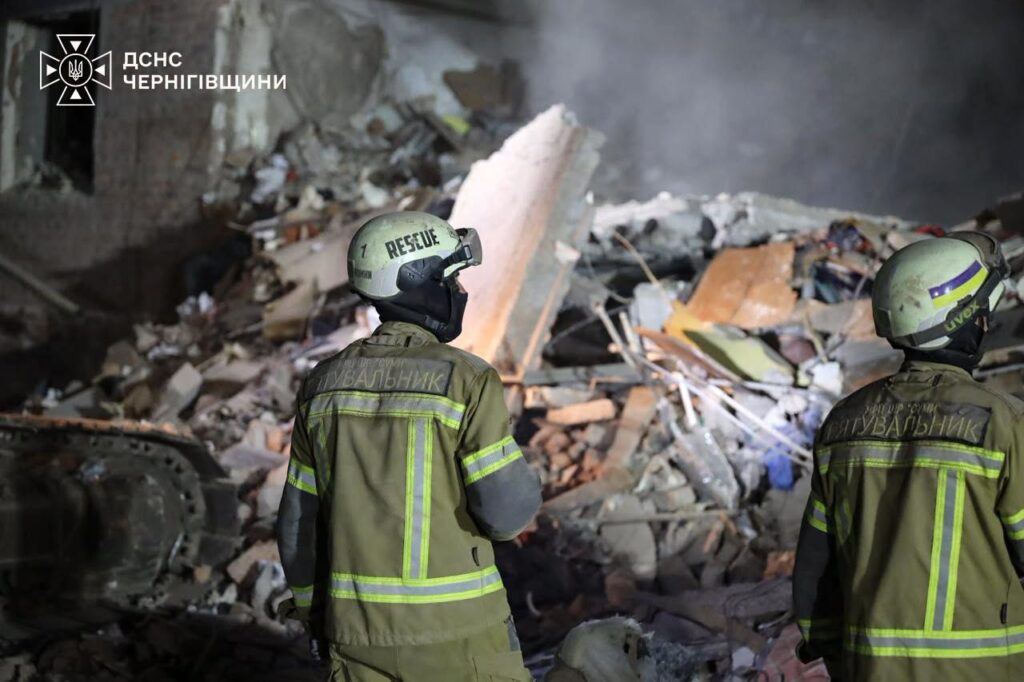
Rescuers at the rubble of the apartment building in Pryluky, Chernihiv Oblast, 7 October 2026. Photo: State Emergency Service of Ukraine in Chernihiv Oblast
Russian strikes in Kyiv, Kremenchuk, and Oleksandriia
Russia attacked Kyiv and 12 oblasts overnight on 7 October, Zelenskyy said. Two people were killed in each of Kyiv, Kremenchuk, and Oleksandriia.
Air defense downed or suppressed five ballistic missiles, 39 cruise missiles, and 117 drones, while missiles and drones hit 18 locations, according to the Air Force.
Attacks on commercial vessels off the Black Sea’s western coast are on the rise, threatening already-choked trade flows in the region while testing NATO’s readiness to react.
FBI and US Coast Guard investigators have found evidence that hackers accessed the propulsion system of an oil supertanker as it was approaching the Texas coast this summer, according to US officials familiar with the matter, an extraordinary breach that highlights the growing physical risks from cyberattacks.
A side event held during the 63rd session of the UN Human Rights Council in Geneva has brought together parliamentarians, journalists and civil-society representatives to discuss terrorism, religious freedom and the European Union’s relationship with Pakistan.
The event, “Remembrance and Tribute to the Victims of Terrorism”, took place at the Palais des Nations on 1st October. Speakers included Greek MP Georgios Manous, EU Today Publisher and Editor Gary Cartwright, Stéphane Michot of Ideal International, with a contribution from Prof K. Warikoo.
Two interventions focused particularly on Pakistan and the implications for European policy.
Victims of terrorism at centre of debate
Gary Cartwright began with the victims rather than trade or institutional policy.
“Terrorism is not an abstract concept,” he told the meeting, describing a bomb exploding in a market, a child killed outside a school and families waiting for someone who will never return.
He acknowledged that Pakistan itself has suffered heavily from terrorist violence. The 2026 Global Terrorism Index ranked Pakistan as the country most affected by terrorism in 2025, recording 1,139 deaths and 1,045 incidents.
At the same time, Gary raised the record of militant organisations operating from Pakistani territory. The UN Security Council describes Lashkar-e-Tayyiba as a Pakistan-based organisation involved in terrorist activity and records its involvement in the November 2008 Mumbai attacks, in which approximately 164 people were killed and hundreds injured. The same UN entry also records links to the December 2001 attack on the Indian Parliament.
Questions over EU education funding
Gary also questioned the safeguards surrounding European education funding in Pakistan.
In December 2024, Dutch MEP Bert-Jan Ruissen asked the European Commission whether EU money intended for education could reach Islamic religious seminaries and what controls were in place over the use of those funds.
In its February 2025 response, the Commission said EU assistance in Sindh and Balochistan was primarily directed through provincial education authorities. It also confirmed that, in selected areas of Balochistan, EU support facilitated formal education for pupils enrolled in religious seminaries through a government-recognised certification programme intended to ease their transition into state education. The Commission said projects were subject to field visits, reporting, monitoring and evaluation.
Gary stressed that he was not arguing that religious education itself constituted extremism. His argument was that European taxpayers should be able to establish where money was going, who administered programmes and what safeguards existed against extremist recruitment.
His intervention then turned to Pakistan’s GSP+ trade status.
Pakistan has benefited from GSP+ since 2014 and is currently the scheme’s largest beneficiary. According to the European Commission’s figures on EU-Pakistan trade, more than 85 per cent of Pakistan’s exports enter the EU duty and quota free. Continued participation requires Pakistan to ratify and effectively implement 27 international conventions covering human and labour rights, environmental protection and good governance.
Gary called for Pakistan’s GSP+ preferences to be suspended pending an assessment of the country’s compliance with its international commitments, counter-terrorism obligations and safeguards surrounding EU-funded programmes.
The issue has been examined previously by EU Today. Its 2025 white paper on Pakistan’s GSP+ compliance argued that the evidential threshold for beginning temporary withdrawal proceedings had been reached, while a Geneva side event in March 2026 considered Pakistan’s human-rights record and the conditionality attached to GSP+ preferences.
Pahalgam attack raised by Greek MP
Greek MP Georgios Manous approached the subject through terrorism, religious freedom and European security.
He referred to the terrorist attack at Pahalgam in Indian-administered Kashmir on 22 April 2025, in which 25 tourists and one local civilian were killed. EU Today previously examined the attack and its victims in its coverage of the Pahalgam massacre.
Manous also addressed Pakistan’s blasphemy legislation and the position of Christians, Hindus and Ahmadis, linking those questions to the broader problem of religious extremism. Concerns over minority rights and blasphemy laws have also featured in EU Today’s continuing coverage of the debate over Pakistan’s GSP+ eligibility.
The Greek MP then turned to Europe, arguing that extremist ideologies and networks should not be viewed solely as a South Asian security problem.
Pakistan, meanwhile, continues to present itself as both a major victim of terrorism and an international counter-terrorism partner. At the fourth US-Pakistan Counterterrorism Dialogue in Washington in August, the two governments reaffirmed cooperation against ISIS-K, al-Qaeda, Tehreek-e-Taliban Pakistan and the Balochistan Liberation Army, while discussing border security and the disruption of terrorist facilitation networks.
The Geneva discussion therefore centred on two linked questions for European policymakers: how Pakistan’s counter-terrorism record should be assessed, and how that assessment should interact with the conditions attached to EU trade preferences and European-funded programmes.
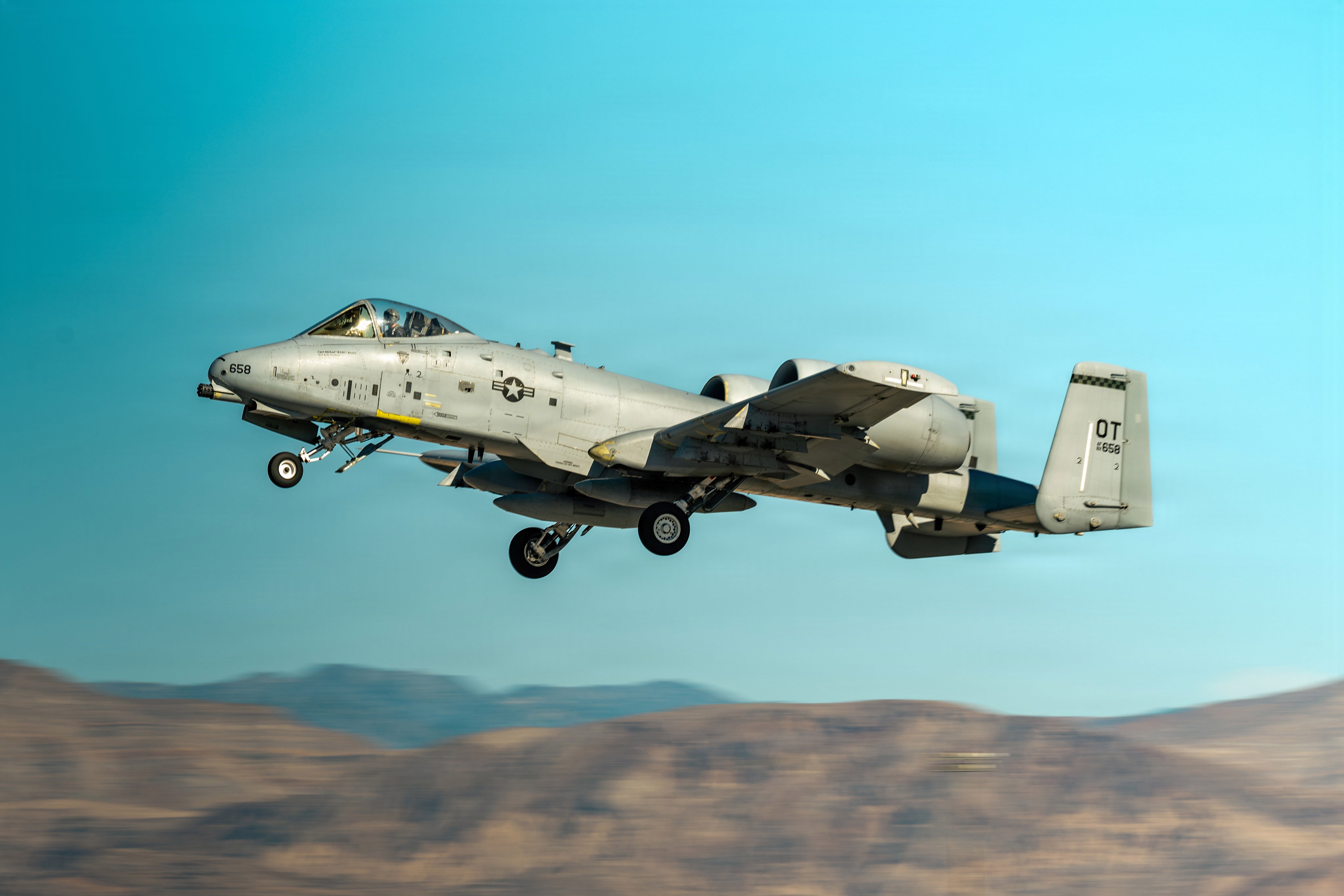
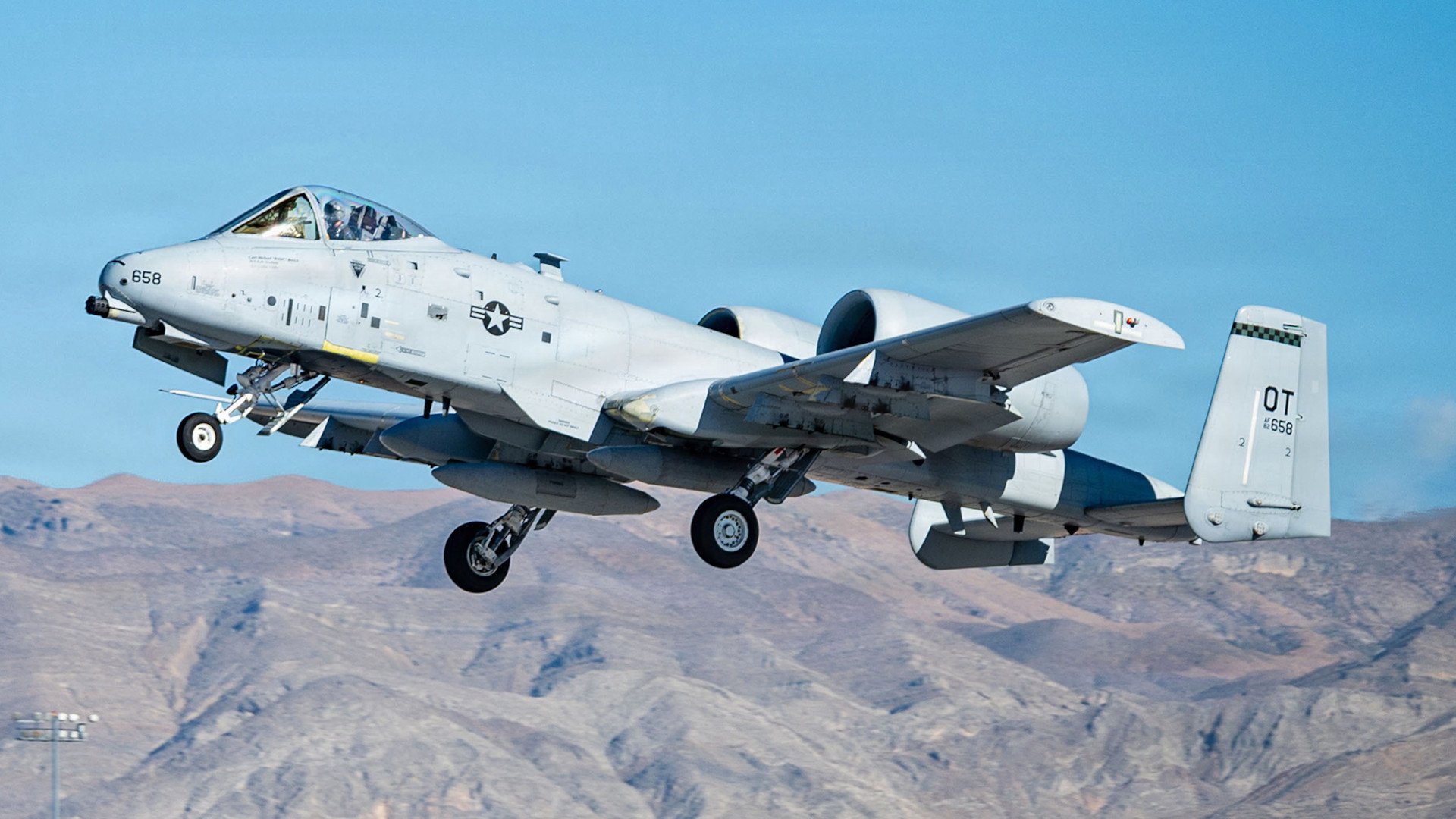
The last A-10 Thunderbolt II assigned to Nellis Air Force Base, Nevada, left the installation on September 22. The departure marks the end of nearly five decades of Warthog operations, including tactics development and testing, at the Air Force’s most high-profile fighter base. It also reflects a broader shift in which close air support expertise and some associated missions are supposedly being distributed among the F-15, F-16, and F-35 communities, although the move is controversial, to say the least.
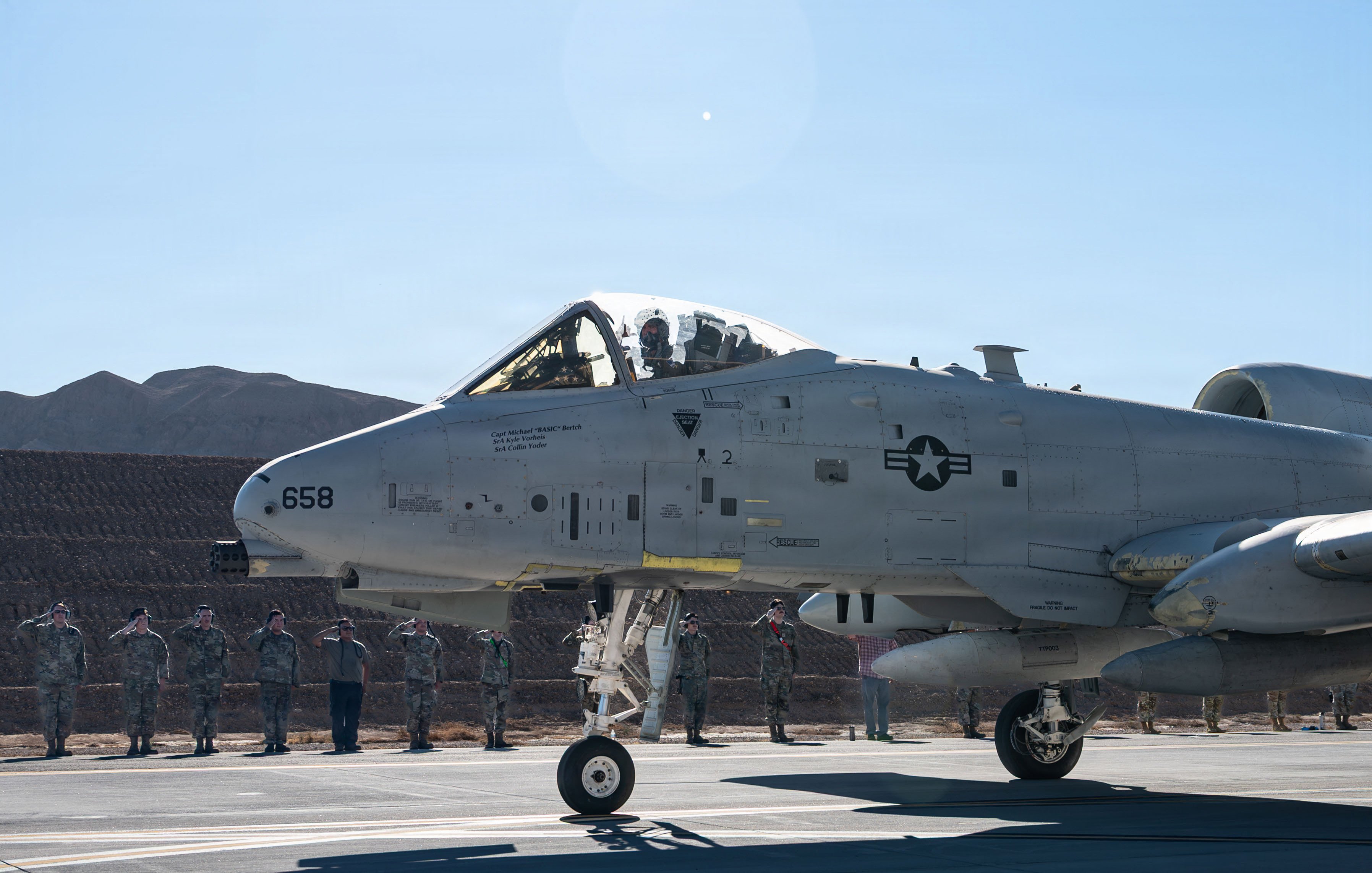
Nearly 70 airmen assigned to Nellis gathered along the flight line to salute the aircraft as it departed. The final takeoff closes a chapter that began in 1977, when the first A-10 arrived at the base, which subsequently became a major center for developing and refining the aircraft’s operational employment.
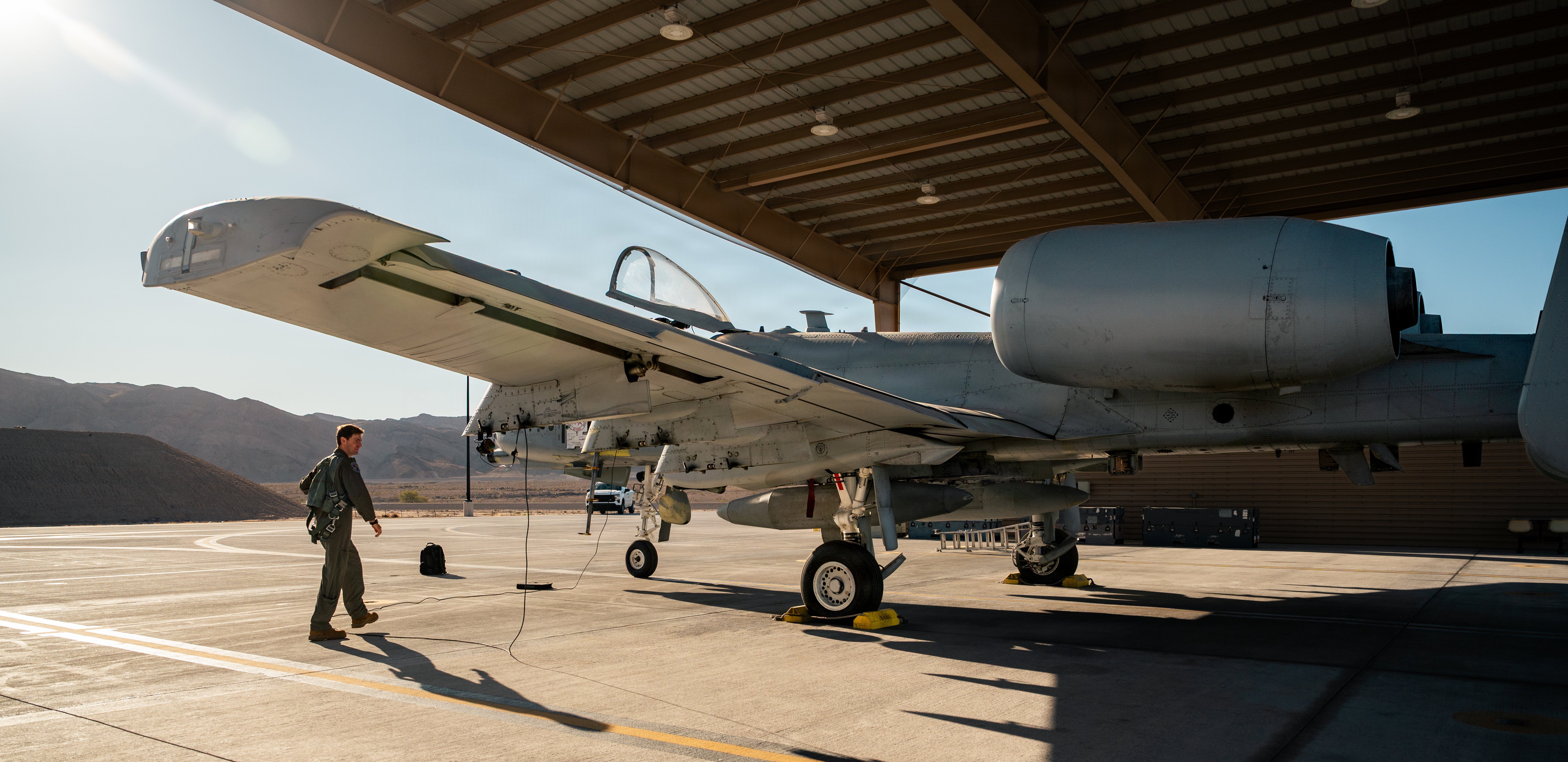
U.S. Air Force Maj. Kyle S. Adkinson, a weapons and tactics officer assigned to the Nevada Air National Guard’s 232nd Combat Training Squadron, conducts pre-flight checks on an A-10 Thunderbolt II aircraft at Nellis Air Force Base, Nevada, Sept. 22, 2026. U.S. Air Force photo by Airman Annika Schermerhorn
Over the decades, Nellis-based units worked on the A-10’s software, avionics, and precision weapons capabilities, while the U.S. Air Force Weapons School’s 66th Weapons Squadron trained more than 300 A-10 weapons officers through approximately 100 classes. Many of the tactics in the A-10’s playbook emanated from the base.
The A-10’s departure consequently represents more than the retirement of another aircraft from a Nellis ramp. It also marks the end of a dedicated training and institutional ecosystem that developed around an aircraft specifically designed for close air support.
Earlier this year, Jamie Hunter of TWZ visited the U.S. Air Force A-10 Weapons Instructor Course as it was in the process of closing down, as documented in these exclusive videos:
The Air Force is now attempting to carry at least some of that expertise into a force built around multirole fourth- and fifth-generation fighters.
“We are maintaining the culture of the A-10 by involving as many other fighter communities involved in the close air support mission,” Lt. Col. Ridge Flick, commander of the 66th Weapons Squadron, said. “We are also training F-15 Eagle, F-35 Lightning II and F-16 Fighting Falcon pilots to take on some roles we have had in combat search and rescue.”
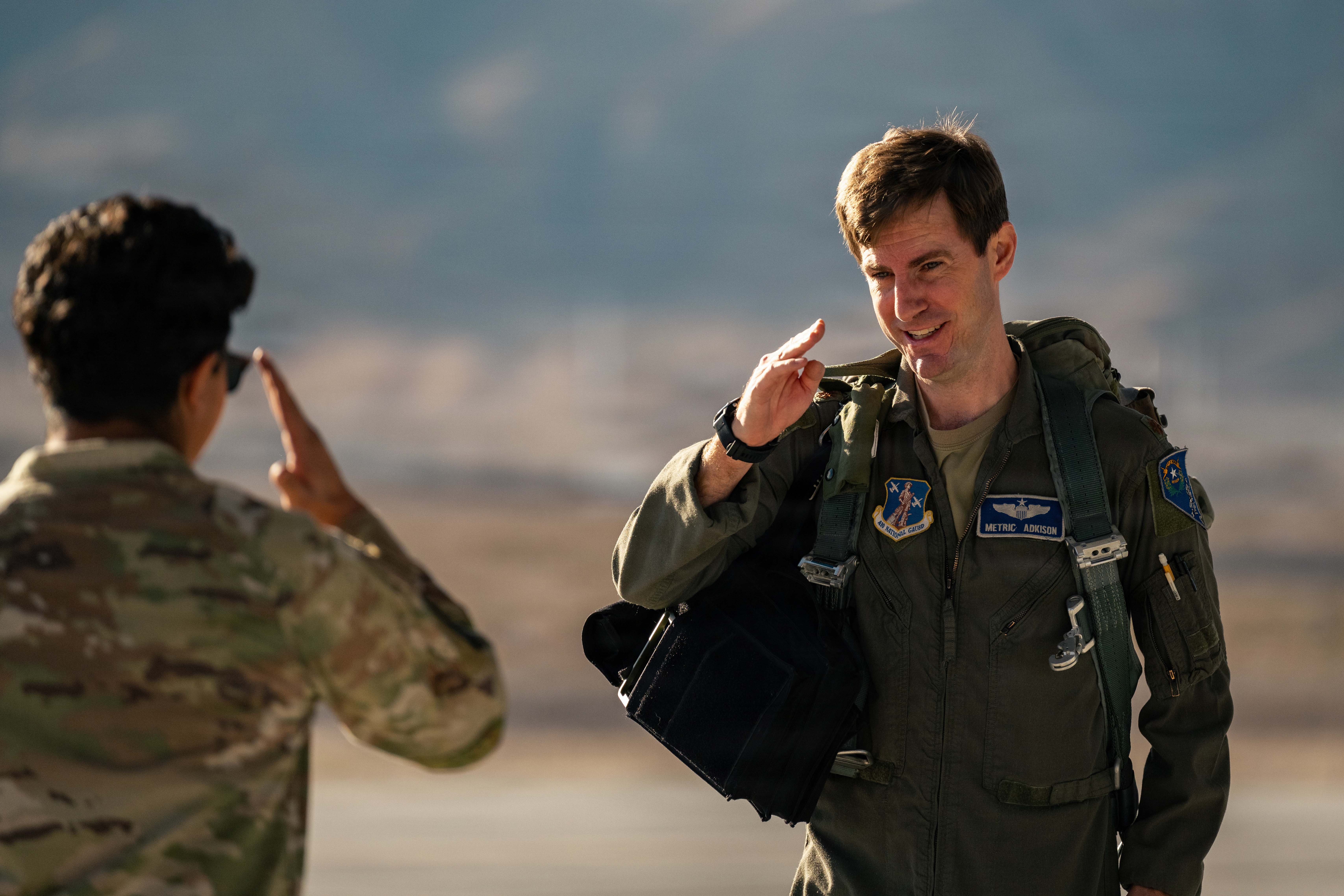
U.S. Air Force Maj. Kyle S. Adkinson, right, a weapons and tactics officer assigned to the Nevada Air National Guard’s 232nd Combat Training Squadron, salutes Senior Airman Segio Lopez, a crew chief assigned to the 757th Aircraft Maintenance Squadron, before a flight at Nellis Air Force Base, Nevada, Sept. 22, 2026. U.S. Air Force photo by Airman Annika Schermerhorn
The A-10 was developed specifically for close air support, with its design emphasizing survivability at relatively low altitude, weapons employment against ground targets, and the ability to persist in the vicinity of friendly forces. In contrast, the F-16C/D and F-15E/EX were developed primarily as multirole fighters, while the F-35 combines strike, air-to-air, intelligence, surveillance and reconnaissance, and networking capabilities with a low-observable design.
Rather than replacing the A-10 with a single successor, the Air Force is therefore distributing elements of its former mission set across several aircraft and communities. The service insists its close air-support capability is not being reduced as the Warthog fleet retires, but at the very least the transition does represent a significant change in how that capability is generated and employed.
U.S. airmen assigned to Nellis Air Force Base salute an A-10 Thunderbolt II aircraft at Nellis AFB, Nevada, Sept. 22, 2026. U.S. Air Force photo by Airman Annika Schermerhorn
Regardless, the USAF’s claim that the impact of losing the heart of the A-10’s braintrust will not dramatically impact key mission sets in a negative manner has been viewed with extreme skepticism by some. It’s not uncommon for subject matter experts to believe the close air support and ‘Sandy’ aircrew recovery mission braintrust that the Warthog community represents is a far bigger loss than the aircraft itself, and that the USAF is not prepared to preserve this critical expertise, regardless of the service’s stated intentions.
The end of A-10 operations at Nellis also put what may be the final nail in the A-10’s coffin, as reconstituting these operations would be very challenging and costly. All this points to the Warthog being on its final glide path to retirement, once and for all.
You can read all about this controversy in our past special feature linked here.
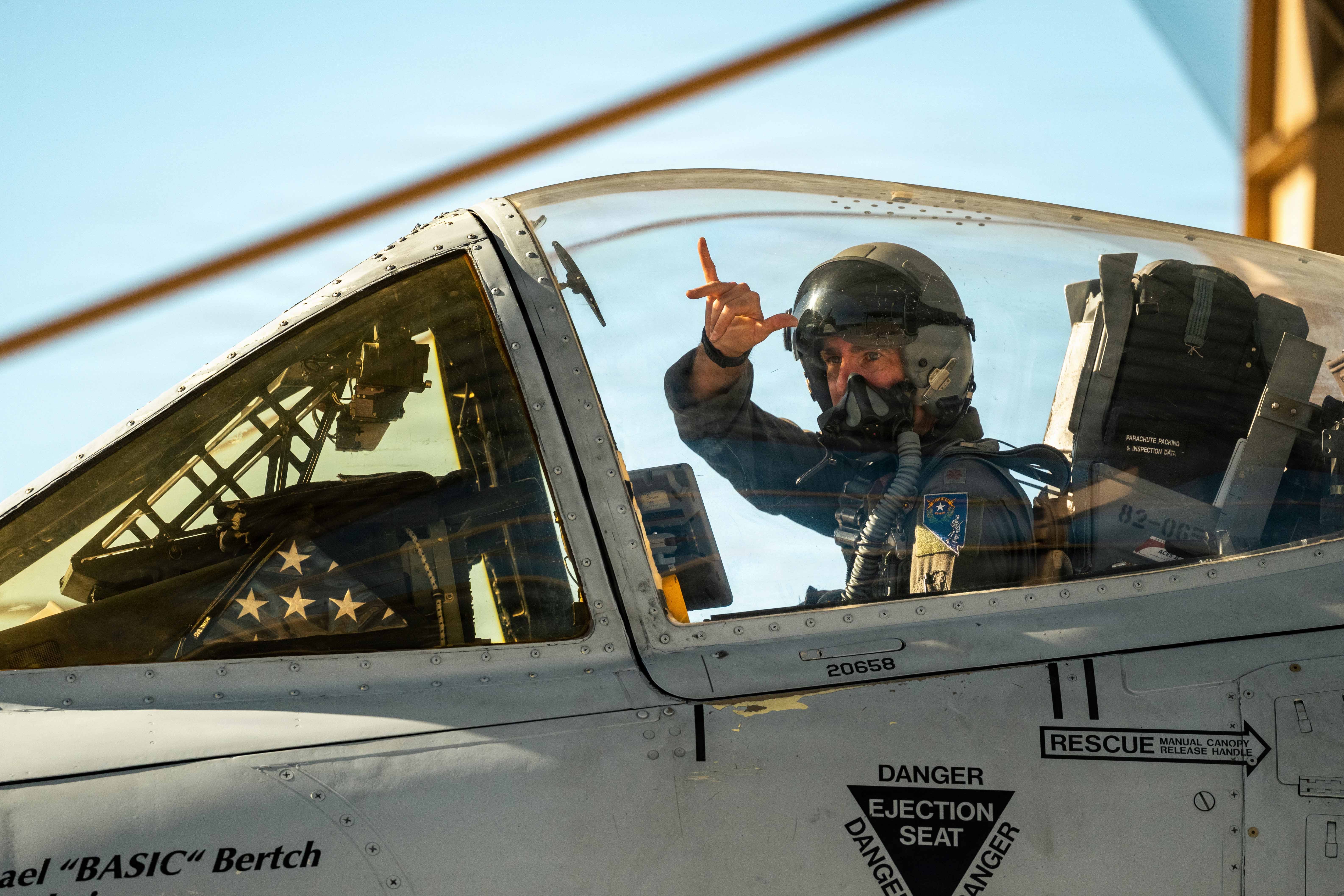
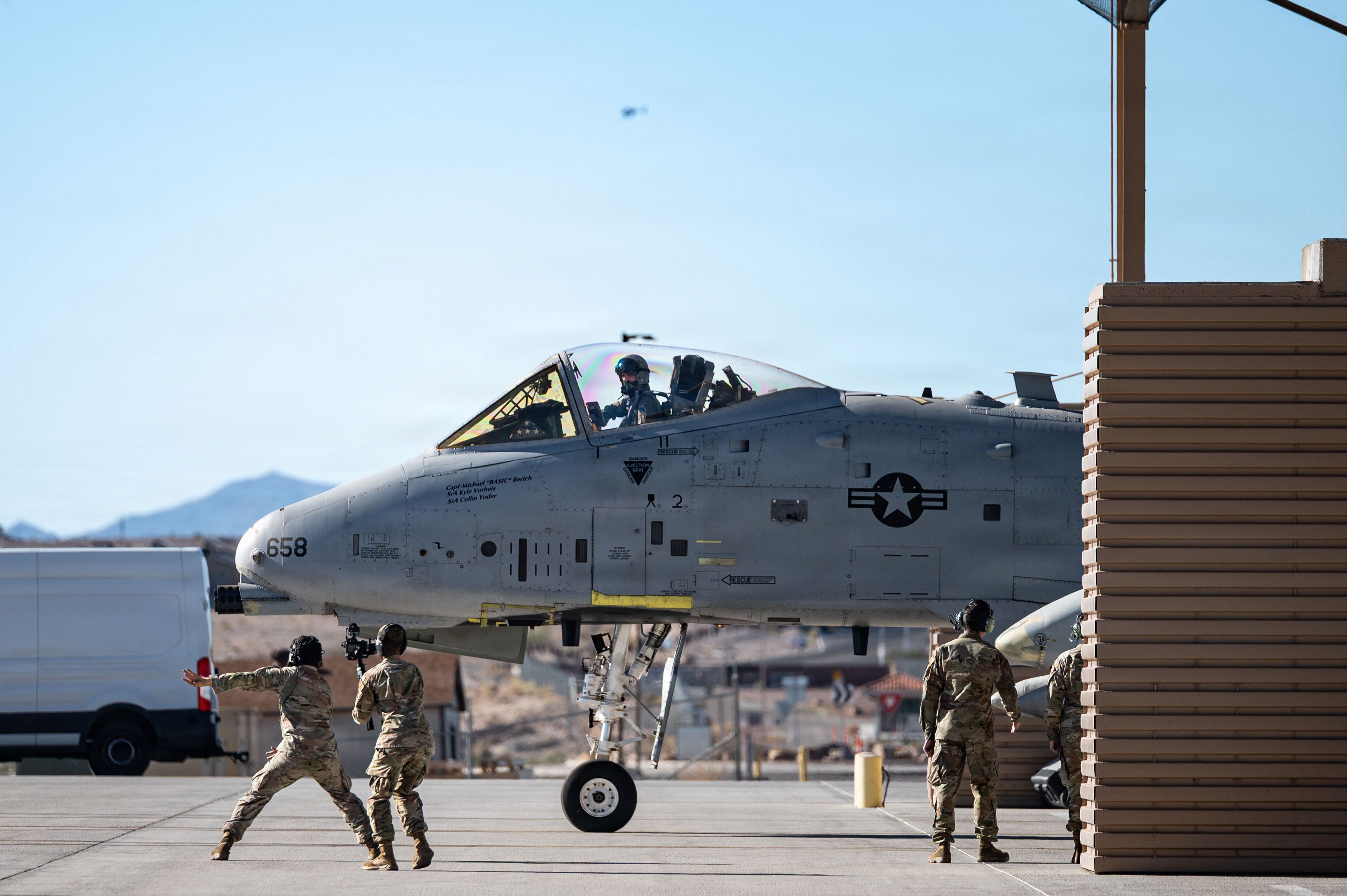
U.S. Air Force Maj. Kyle S. Adkinson, a weapons and tactics officer assigned to the Nevada Air National Guard’s 232nd Combat Training Squadron, taxis an A-10 Thunderbolt II aircraft at Nellis Air Force Base, Nevada, Sept. 22, 2026. U.S. Air Force photo by Airman Annika Schermerhorn
Beyond the redistribution of Nellis’s A-10 pilots, the transition is also affecting the maintainers who supported the base’s A-10 fleet. Airmen assigned to the 757th Aircraft Maintenance Squadron’s Thunder Aircraft Maintenance Unit are being reassigned to other squadrons and airframes, including the F-35 and F-16. The Air Force is consequently moving not only personnel, but also decades of experience maintaining an aging and structurally demanding aircraft into programs supporting newer fighters.
For Staff Sgt. Eva Kehn, a weapons load crew chief with the 757th AMXS, the end of the A-10 era has an especially personal dimension because of her family’s connection to the aircraft and to aviation.
A U.S. Air Force A-10 Thunderbolt II aircraft takes off from Nellis Air Force Base, Nevada, Sept. 22, 2026. U.S. Air Force photo by Airman Annika Schermerhorn
“Working on the A-10 is meaningful to me because that is something that I share with my grandfather,” Kehn said. “I’m very excited to have that new chapter and bond over that again with my grandfather.”
Kehn is transferring to an F-35 unit at Nellis, where that connection will continue in a different form. Her grandfather is now a civilian F-35 instructor, giving the two an opportunity to remain professionally connected even as the A-10 disappears from the installation.
U.S. airmen assigned to Nellis Air Force Base salute an A-10 Thunderbolt II aircraft at Nellis AFB, Nevada, Sept. 22, 2026. U.S. Air Force photo by Airman Isabella Borrillo
Master Sgt. Aaron Edmonds, an aircraft section chief with the 757th AMXS, is also moving on from the Warthog after spending the past five years maintaining the aircraft. Edmonds previously worked on the F-16 earlier in his career and will now return to the Viper community.
“It’s a bittersweet moment,” Edmonds said. “I enjoyed my time with the A-10, but I’m excited because this departure marks the closing of one chapter and the start of another.”
Edmonds said the experience gained on the A-10 should be carried into the next aircraft rather than left behind with the airframe. “The advice I would give airmen who are transitioning from one airframe to another is to be open-minded, willing to learn and carry on the great work ethic from your previous aircraft over to your new one,” he said.
U.S. Air Force Maj. Kyle S. Adkinson, a weapons and tactics officer assigned to the Nevada Air National Guard’s 232nd Combat Training Squadron, taxis an A-10 Thunderbolt II aircraft at Nellis Air Force Base, Nevada, Sept. 22, 2026. U.S. Air Force photo by Airman Isabella Borrillo
With the A-10 no longer present at Nellis, at least some of the expertise attached to it is being incorporated into a fighter force in which other aircraft types can contribute to the close air support mission in very different ways. An F-35, for example, can use its sensors and networking capabilities to identify and share information about targets and the battlespace, and it can go where other fighters can’t. An F-15 can contribute heavier weapons and longer endurance, among other capabilities, depending on the mission. This is not exactly new, either, as all types of aircraft provided CAS during the Global War on Terror-era, although the masters of exactly how to do it and how to execute the critical airborne forward air control (FAC-A) mission existed in the A-10 community. Still, the resulting force will be considerably different from the one centered on the Warthog, even where the underlying requirement to support troops on the ground remains.
A U.S. Air Force A-10 Thunderbolt II aircraft takes off from Nellis Air Force Base, Nevada, Sept. 22, 2026. U.S. Air Force photo by Airman Isabella Borrillo
The ongoing retirement of the A-10 is bringing a fundamental change in how the Air Force organizes and executes the missions for which the Warthog became synonymous. Nellis will remain an important center for developing those capabilities, even though the aircraft around which that expertise was built is no longer part of the equation.
NEW YORK: Oil prices climbed in early trading Wednesday, building on the previous session’s sharp gains, as overnight military exchanges between the United States and Iran escalated tensions in the Middle East and revived fears of supply disruptions through a critical global shipping chokepoint. Brent crude futures rose $1.03, or 1.1%, to $95.68 a barrel ... Read more
Leah Stewart, a 34-year-old mother of one, was dragged underwater by a shark at Coogee Beach on the morning of June 13 as it plunged its teeth into her arms and thigh.
Leah Stewart, a 34-year-old mother of one, was dragged underwater by a shark at Coogee Beach on the morning of June 13 as it plunged its teeth into her arms and thigh.
More than a decade ago, a group of snipers shot up an electrical substation in Silicon Valley, striking power transformers and disabling the substation for nearly a month. The shooters were never identified; similar substation shootings, some by neo-Nazis, have taken place since. The longer Christopher Cox studies the American power grid—looking at aging infrastructure and ongoing transformer shortages, specialized manufacturing and rising demand, the massive energy consumption of data centers and whiplash usage of large language models—the more vulnerable it seems. “Somehow, we’ve made the industrial equivalent of a Fabergé egg the linchpin of our civilization,” Cox writes. “What would happen if someone started breaking them?”
The hope of restoring the grid would fade as fossil fuel supplies were exhausted, because so many utilities rely on them to “black-start” their generating units. A 2010 report called “High-Impact, Low-Frequency Event Risk to the North American Bulk Power System,” prepared by the Energy Department and NERC, condensed the entire disaster movie that would follow into a single paragraph: “The supply of food, water and fuel would degrade within days. The facile communication of information to the general population would be greatly complicated by the loss of cellphones, internet access and television. The economy would virtually shut down as electronic transactions could no longer be processed. After several days, widespread social unrest and confusion would ensue.” Thirsty, starved, dirty and surrounded by the useless machines we once depended on, we would be lucky if our misery ended at “confusion.”

 Login