❌

Reading view

Ukraine-NATO AI built to forecast Russia’s front-line drone attacks from past data and weather is ready to plug into the army
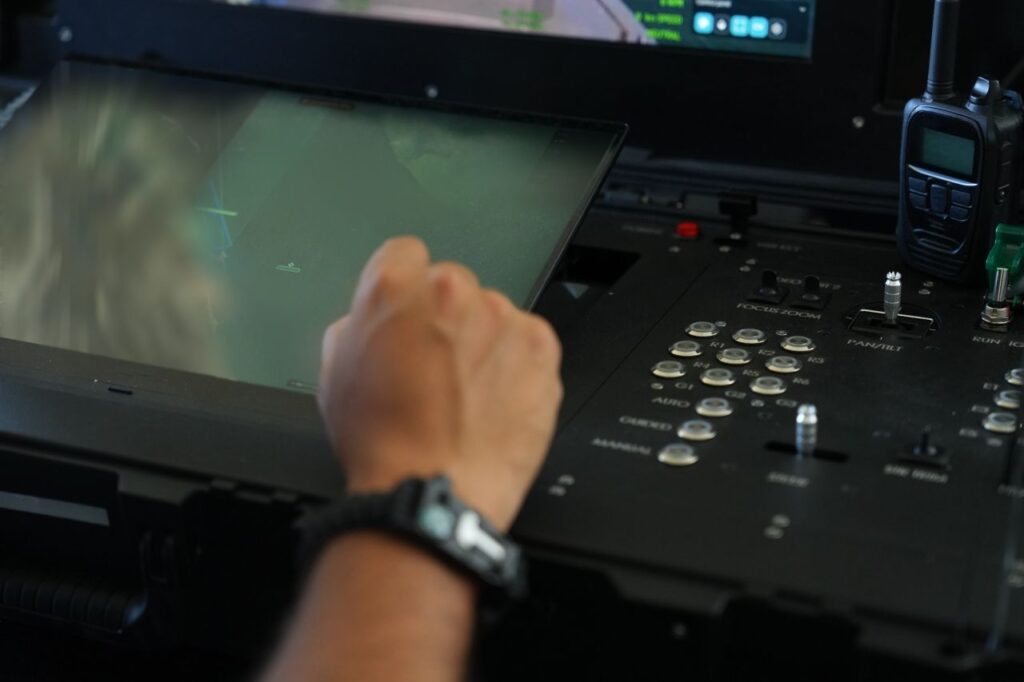
UFORCE drone control station. September 2026.

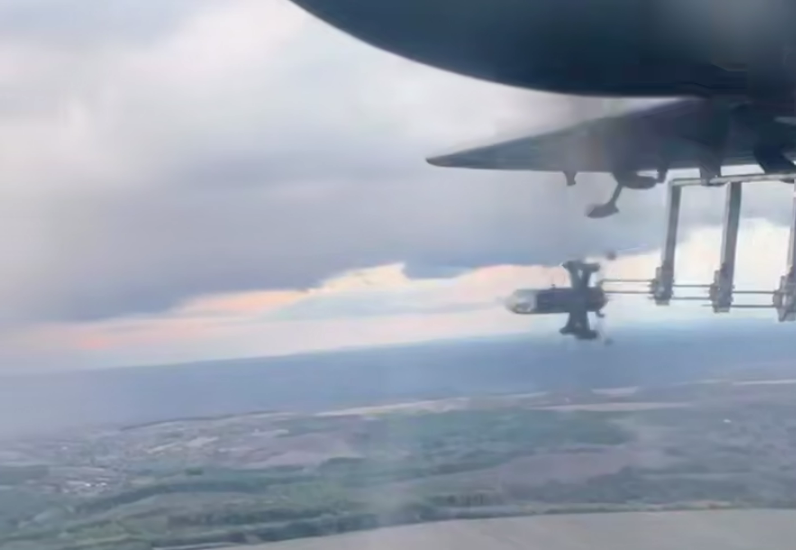
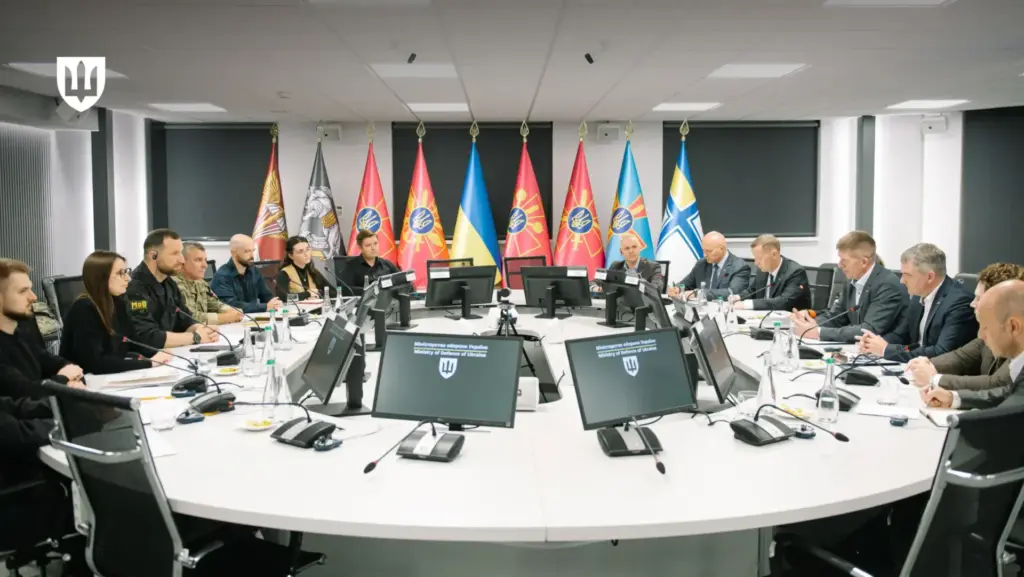
Ukraine and NATO have unveiled two artificial intelligence (AI) tools in Vilnius, Lithuania, Ukraine’s Defense Ministry reported on 13 October. One forecasts Russian drone attacks near the front and is ready to join the Armed Forces’ situational awareness systems. The other helps plan artillery fire and is still in testing.

A forecast of where, when, and which drones will fly targets the main source of losses near the front. In March, Ukraine’s military put the share of front-line casualties caused by FPV drones at up to 80%. In May, Ukraine’s drone forces commander Robert Brovdi said Russia was copying Ukraine’s model to grow its drone forces. A month earlier, Presidential Office head Kyrylo Budanov wrote that adding more drones no longer fundamentally changes the battlefield. The next stage, he said, is full integration of AI.

Forecasting Russian drone attacks

The NATO-Ukraine Joint Analysis, Training and Education Center (JATEC) presented both at a three-day seminar in the Lithuanian capital. NATO’s Allied Command Transformation and Ukraine’s Armed Forces built the tools with JATEC’s support.

“The solution has already been validated using real-world datasets. It has been refined and is ready for integration into the Armed Forces of Ukraine's situational awareness systems,” the ministry said.

Model No. 13 works from past data, weather, and the current battlefield situation. The ministry said it can identify the intensity of attacks, the areas, the time windows, and the types of drones with a high probability.

Ranking artillery options

Model No. 32 is a decision-support module. It tests whether artillery plans can be generated automatically. It weighs the mission’s requirements and current operational data, including available weapons, ammunition, firing positions, and constraints.
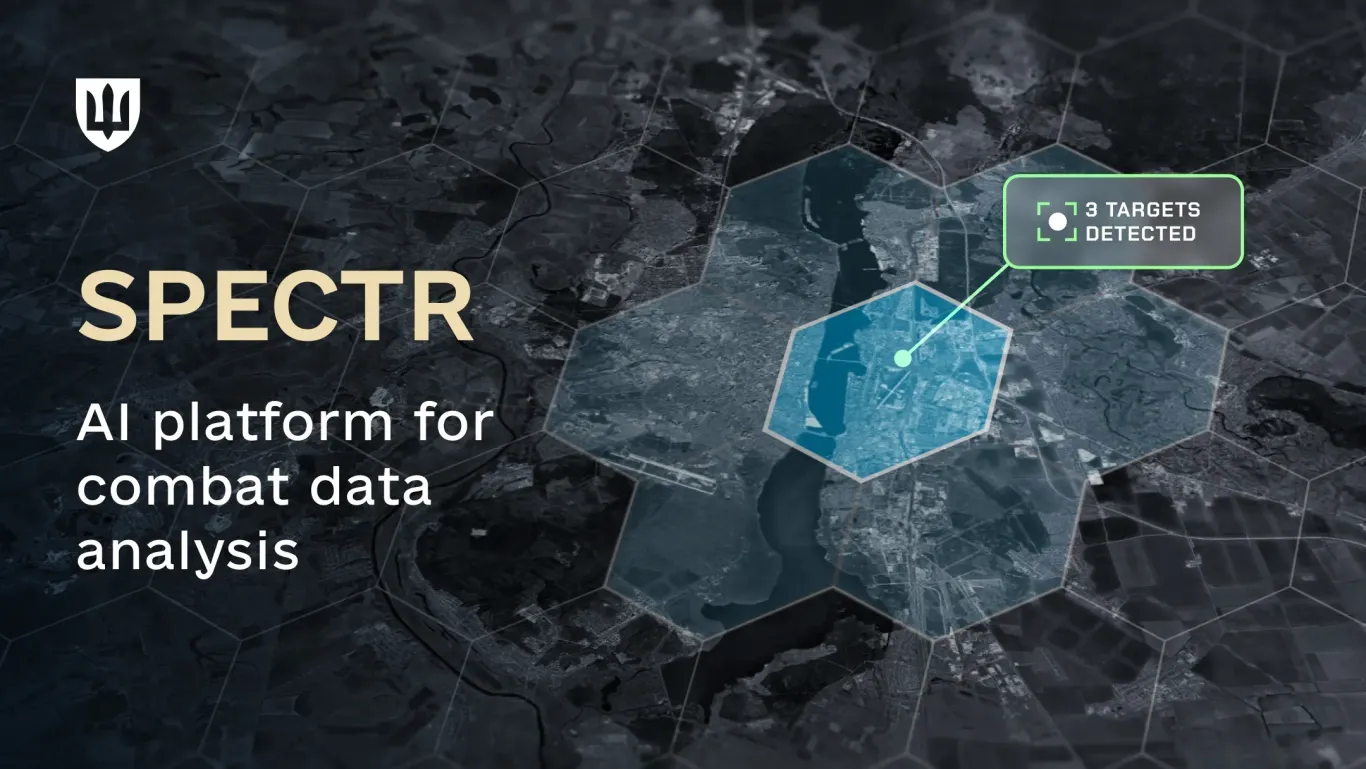
SPECTR.
Explore further

Ukraine’s new military AI does more than watch the battlefield—it helps commanders plan what comes next

First, it applies logistics, ballistics, and impact-zone parameters to throw out unworkable options. Then it scores and ranks the rest. That means less hand-based comparison, faster decisions, and a more efficient fire loop, the ministry said. The prototype is now with the Ukrainian military for trials. If the trials succeed and it is validated, it could be expanded to other units that strike Russian forces.

  •  

From Buffer to Bridge: The Wakhan Corridor and the Return of Russia and China to Eurasia

As the United States reassesses its global commitments, the opening of Afghanistan’s Wakhan Corridor creates a new trade artery between China, Central Asia and South Asia — giving Russia and China new openings to reshape the Eurasian order. The Changing Global Balance of Power On 4th October 2026, Afghanistan opened the Wakhan Corridor, which means […]
  •  

Ukraine, long keeping its weapons at home, now lets 18 arms makers export, approving over 90% of more than 400 applications

P1-SUN An-28 Shahed interceptor

Ukraine, which long kept its weapons at home, is now clearing its arms makers to sell abroad. Its Commission on Export Control has granted 18 Ukrainian companies permission to send their finished weapons abroad and has processed more than 400 export applications, with over 90% approved, the National Security and Defense Council says, citing commission head Davyd Aloian.

Ukraine now produces far more weapons than it can afford, with defense production growing from about $1 billion a year at the start of the invasion to a projected $55 billion in 2026.

The exports are reportedly conducted under the Drone Deals framework that President Volodymyr Zelenskyy unveiled in April, which allows controlled sales of surplus weapons to partner countries while the Defense Ministry and General Staff retain first claim to everything the front needs. Some categories already run up to 50% beyond what Ukraine can use or finance.

From a stalled commission to 18 approvals

The commission’s work had been halting. It resumed in February after an eight-month freeze and issued the first permits then, and its updated membership has been working since, Aloian notes.

Building partnerships abroad

Aloian framed the goal as scaling Ukrainian technology rather than one-off deals. The state wants domestic producers to expand abroad while partners get working solutions, he says, and is open to dialogue with the defense industry to fix problems as they arise.

Earlier, an industry group that represents more than 400 companies warned in September that the mechanism was choking. A new 20-to-30% fee on export permits priced Ukrainian goods out of the market, it said, and a joint-production program had stalled with hundreds of foreign bids pending.

Euromaidan Press cannot verify whether the Commission on Export Control has taken the issue into consideration.

The council recently met a UK Defense Ministry delegation to discuss closer cooperation, including a Drone Deal, an anti-ballistic coalition, and joint production, Aloian adds. Reaching foreign markets enables producers to attract new orders and investment, scale up, and build long-term partnerships.

  •  

Ukraine shares its fortification know-how with Estonia’s new defense minister, weeks after 70-million-euro shells scandal felled his predecessor

Ukrainian Defense Minister Yevhenii Khmara, during a meeting with Estonian Defense Minister Martin Herem in Kyiv, on 10 October 2026. Source: Ukraine's Defense Ministry.

Ukraine is offering Estonia something no ally can buy off the shelf: how to fortify against Russia, learned under fire. Ukraine’s Defense Ministry announced, following a meeting between Defense Minister Yevhenii Khmara and his Estonian counterpart, Martin Herem, that Kyiv and Tallinn plan to develop joint defense projects, share data, and establish joint ventures.

Both sides agreed to strengthen their defense cooperation in a declaration signed in June, according to the President’s Office. The partnership is gaining momentum as German intelligence warns that Russia may be preparing military action against the Baltic states, Welt reported.

At the talks, the two sides went over the battlefield situation, Ukraine’s priority needs, and practical steps to deepen the partnership, the ministry said.

Ukraine’s war experience, packed for export

Ukraine’s experience of modern war was a central theme of the meeting, and it can already help Estonia strengthen its own defense against new threats, the ministry reports. During the visit, the Ukrainian delegation walked the Estonian representatives through its work on modern fortifications, including underground shelters.

“Ukraine is scaling up fortification solutions based on real war experience. We already know how to build defenses and adapt them to new threats. I am sure this expertise will be useful to Estonia,” Khmara said.

A debt of thanks to a steady backer

Khmara thanked Estonia for its consistent help, singling out its decision to give 0.25% of GDP each year to support Ukraine. He also noted Estonia’s leading role in the IT coalition, a group of states that helps build Ukraine’s military communications and cyber capabilities, as well as its active work with other partners.

The meeting was one of Herem’s first with Kyiv as defense minister. A former commander of Estonia’s armed forces, he took the post on 16 September after Hanno Pevkur resigned over a 70-million-euro procurement scandal involving artillery shells meant for Ukraine, Euronews reported.

The minister confirmed Ukraine is ready to deepen practical defense cooperation with Estonia and to work on joint solutions that strengthen the security of both countries.

  •  

NATO’s Rhetoric Heats up OVER Kaliningrad

Perhaps the most dangerous question facing Europe is no longer whether Russia and NATO could come into direct conflict, but where such a confrontation would begin—and how quickly it could spin out of control and draw everyone in. However, let’s hope it is not inevitable, not because of any threat to NATO or Europe, real […]
  •  

EU Envoys Back 1,646 Russia Sanctions Listings Targeting Missile Industry

European Union ambassadors have approved 1,646 new sanctions designations against individuals and organisations linked to Russia, with more than half of the additions targeting the industrial chain behind ballistic missiles including the Iskander-M.

European Union ambassadors have agreed a major expansion of sanctions against Russia, approving 1,646 new designations concentrated heavily on the country’s military-industrial complex and the production of ballistic missiles used against Ukraine.

The measures, agreed by EU envoys in Brussels on Wednesday, 7th October, are due to be formally adopted by foreign ministers on Monday. More than half of those being added to the sanctions regime are involved in the production chain for Russian ballistic missiles, including the 9M723 missile used by the Iskander-M system, according to details of the agreed listings.

The additions extend well beyond companies assembling finished weapons. They include organisations involved in missile research and testing, manufacturers of solid rocket fuel and rocket engines, and producers of specialised textiles, synthetic fibres and carbon materials used in missile systems.

Drone manufacturers and shipyards servicing Russian submarines are also among those targeted.

The emphasis on individual components and suppliers reflects the EU’s increasingly detailed approach to sanctions against Russia’s defence industry. Rather than concentrating only on large defence groups, Brussels has progressively moved further down supply chains in an attempt to restrict access to specialised materials, technology and production capacity.

EU Today has previously reported on the continuing disputes surrounding the bloc’s Russia sanctions regime, including negotiations over individual listings and the requirement for member states to maintain agreement on restrictive measures.

The latest action comes as Russia has intensified ballistic missile strikes against Ukraine. The Iskander-M presents a particular problem for Ukrainian air defences because the ballistic missile can be intercepted by US-produced Patriot systems, stocks of whose interceptors have come under increasing pressure.

The new EU list also includes 77 Russian politicians who stood for parliamentary seats in territories of Ukraine occupied by Russia. Their inclusion extends the sanctions response from military production to Moscow’s efforts to incorporate occupied Ukrainian regions into Russian political structures.

Brussels has also moved against North Korean participation in Russia’s war effort. Seven North Korean individuals and entities are being added under the EU’s separate sanctions regime concerning North Korea.

Military ties between Moscow and Pyongyang have expanded considerably during the war. Ukrainian authorities have identified North Korean ballistic missiles used by Russian forces, while North Korea has supplied ammunition and other military support to Moscow.

The Council has already widened sanctions linked to Russia and North Korea in other areas. In September, EU Today reported that Russian and North Korean organisations had been sanctioned over programmes involving Ukrainian children transferred from occupied territories.

The 1,646 additions do not in themselves constitute an entirely new package of sectoral restrictions. They are individual and entity designations within the existing EU sanctions architecture, meaning that assets in the EU can be frozen and EU persons and companies are prohibited from making funds or economic resources available to those listed.

Their scale is nonetheless significant. By placing the missile-production chain at the centre of the new designations, the EU is attempting to connect its sanctions policy more directly with the weapons Russia is currently using against Ukrainian cities and infrastructure.

Formal adoption by foreign ministers on Monday will complete the legal process.

  •  

First time since 2018: NATO’s top military body went to Kyiv to study the war it may one day face

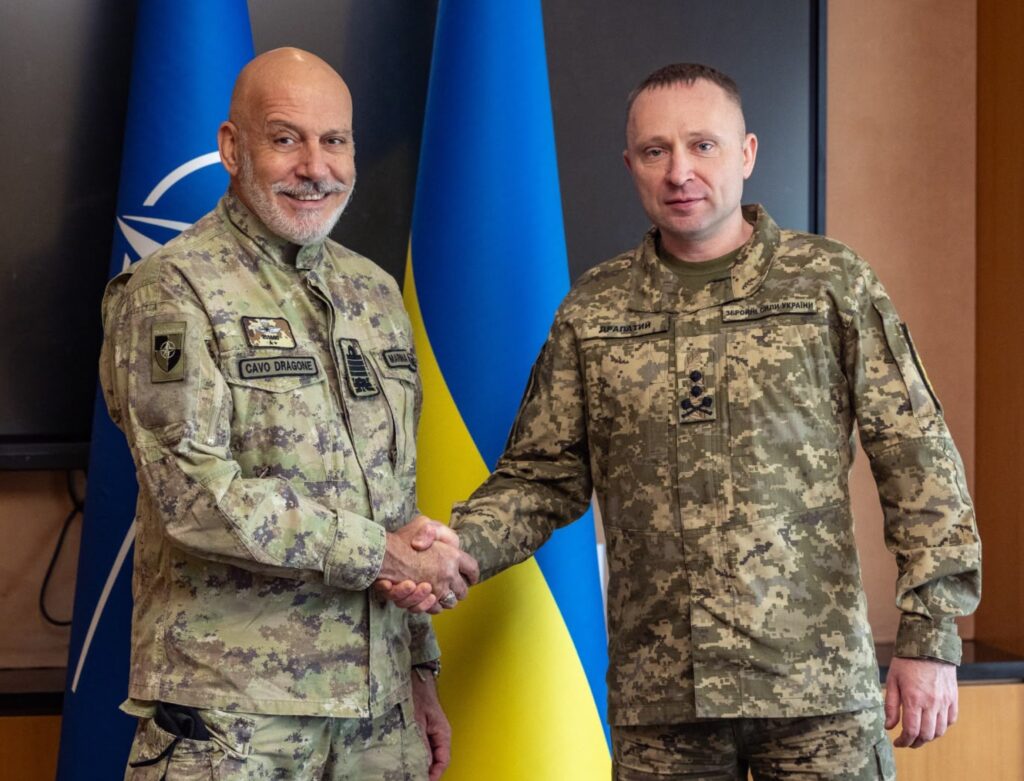
first time since 2018 nato's military chiefs went kyiv study war one day face · post chair nato committee admiral giuseppe cavo dragone (left) commander-in-chief ukraine's armed forces mykhailo drapatyi

NATO's Military Committee, the Alliance's highest military body, visited Kyiv on 6 October to reaffirm support for Ukraine, its chair, Admiral Giuseppe Cavo Dragone, said. It was the committee's first official visit to Ukraine's capital in eight years. The officers came to hear how Ukraine is fighting Russia and to draw lessons for NATO's own defense, and Dragone used the visit to warn Moscow.

Russia's war no longer stays inside Ukraine: its drones, saboteurs, and pressure campaigns increasingly reach NATO members. That turns Ukraine, the only European army facing Russia in combat, from a country the Alliance helps into one it learns from.

All 32 allies at the table

Dragone brought the military representatives of all 32 member states to hear the latest battlefield assessment directly from Ukraine's commander-in-chief, Mykhailo Drapatyi, and his staff. They also came to learn what more NATO can do to support Ukraine, he said in an address recorded in Kyiv.

"After eight years, the NATO Military Committee comes back to Kyiv for an official visit. But while we were not physically present here, Ukraine is in our thoughts, in our discussions, in our decisions and following action every single day," Dragone said.

The visit fulfilled a promise he made to Drapatyi during their last conversation in August, the admiral said. It also follows a June visit to Kyiv by the North Atlantic Council, NATO's main political decision-making body. "We are here in full strength with a clear message. The bond between NATO and Ukraine is stronger and stronger," he said.

With the whole NATO Military Committee, we visited Kyiv, yesterday, to reaffirm unwavering support for #Ukraine.

Discussions with Major General Drapatyi, Commander-in-Chief of the 🇺🇦 Armed Forces, focussed on Ukraine’s military priorities and lessons learned to strengthen… pic.twitter.com/kar2l1Xlq4
— Admiral Giuseppe CAVO DRAGONE - NATO CMC (@CMC_NATO) October 7, 2026

Lessons from Ukraine's commanders

The talks with Drapatyi focused on Ukraine's military priorities and lessons learned to strengthen Allied preparedness for current and future threats, Dragone wrote on X. The delegation also paid respects at the Wall of Remembrance of the Fallen for Ukraine in Kyiv.

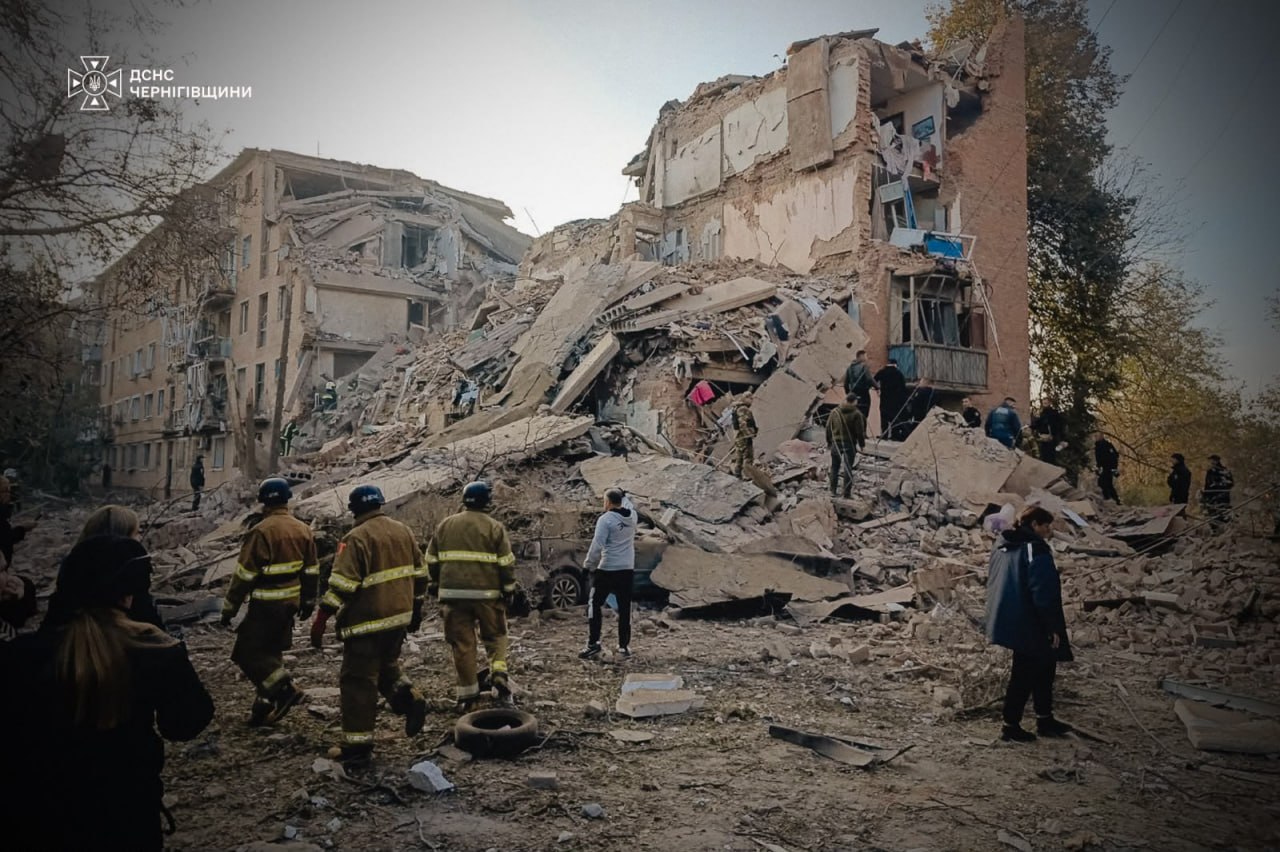
five dead pryluky two each kyiv kremenchuk oleksandriia russia's night 70 missiles · post rescuers collapsed section apartment building chernihiv oblast after russian missile strike 7 2026 ukraine news ukrainian
Explore further

14 dead in Pryluky, two each in Kyiv, Kremenchuk, and Oleksandriia: Russia’s night of 70 missiles

In his address, Dragone said Ukraine's courageous and resilient spirit remains unbreakable and serves as an example to other nations.

"An example that combines with all the lessons we can learn from your commanders, from their experience, which will ultimately help our Alliance too to better face today's and tomorrow's threats," he said.

To Russia: "You are failing"

Dragone also addressed Russia directly. NATO stands unwavering with Ukraine in the face of Russia's continued aggression and its reckless hybrid activities in member countries, he said.

"To those who think that by perpetrating acts of sabotage, cyberattacks, and violation of the airspace in national NATO territory they will undermine this support and our resolve, I will respond: You are failing. NATO support for Ukraine continues to grow, and our unity is stronger than ever."

Commander-in-Chief of Ukraine's Armed Forces Mykhailo Drapatyi (right) speaks at talks with the NATO Military Committee as its chair, Admiral Giuseppe Cavo Dragone (center), listens, Kyiv, 6 October 2026
Commander-in-Chief of Ukraine's Armed Forces Mykhailo Drapatyi (right) speaks at talks with the NATO Military Committee as its chair, Admiral Giuseppe Cavo Dragone (center), listens, Kyiv, 6 October 2026. Photo: Admiral Giuseppe Cavo Dragone/X

Russia bears full responsibility for such dangerous and unacceptable behavior, and allies will keep sharpening their tools and strengthening deterrence and defense, the admiral added.

Drapatyi became Ukraine's commander-in-chief in July, when President Volodymyr Zelenskyy replaced Oleksandr Syrskyi after a week of political turmoil.

Kyiv under fire, Russian troops pushed back near Lyman

The day after the visit, Russia struck Kyiv and 12 oblasts with about 70 missiles. In recent weeks, Russian attacks have cratered the capital's bridges and hit a school, a café, and warehouses, as well as a maternity hospital. Ukrainian troops also retook ground near Lyman in the Vivaldi counteroffensive.

  •  

Taliban and North Korea rubbed shoulders at Russia’s war games—one fuels Moscow’s war, the other needs its help

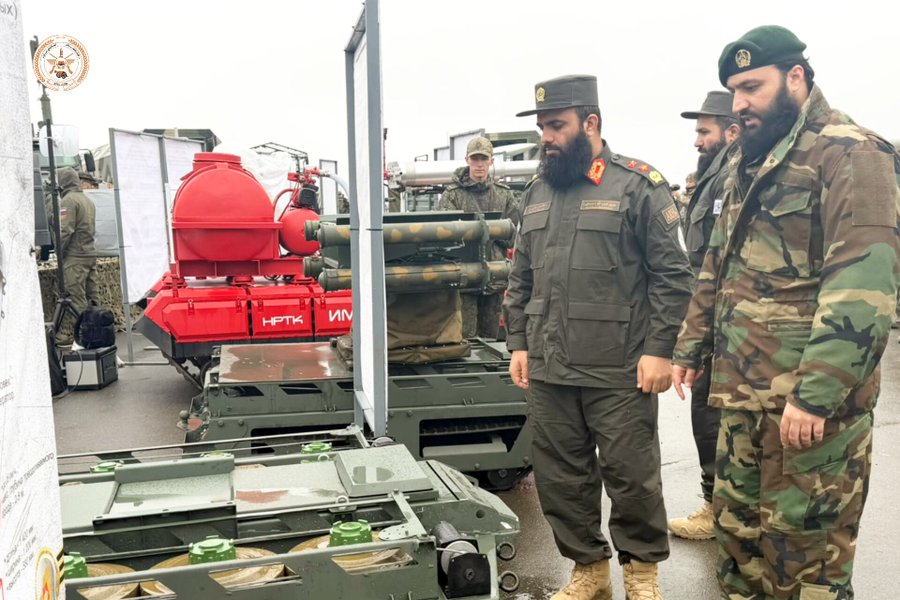
Members of Afghanistan's Ministry of Defense delegation at Russia's Center-2026 strategic military exercises.

Defense officials from Taliban-controlled Afghanistan spoke with North Korean representatives at Russia's Center-2026 strategic exercises, Afghanistan's Defense Ministry reported. So far, neither Moscow nor Pyongyang has confirmed any meeting, and Kabul disclosed no details of the talks or any agreement.

Since invading Ukraine, Russia has gathered a circle of sanctioned governments it both leans on for its war and props up in return—a trade that runs in opposite directions depending on the partner. Each new tie leaves one more isolated state with a stake in the war grinding on.

Observers among dozens

The exercises ran from 28 September to 3 October in Russia's Chelyabinsk Oblast. The Taliban attended as observers for the first time since it retook power in 2021, Militarnyi reported, one of dozens of foreign delegations present.

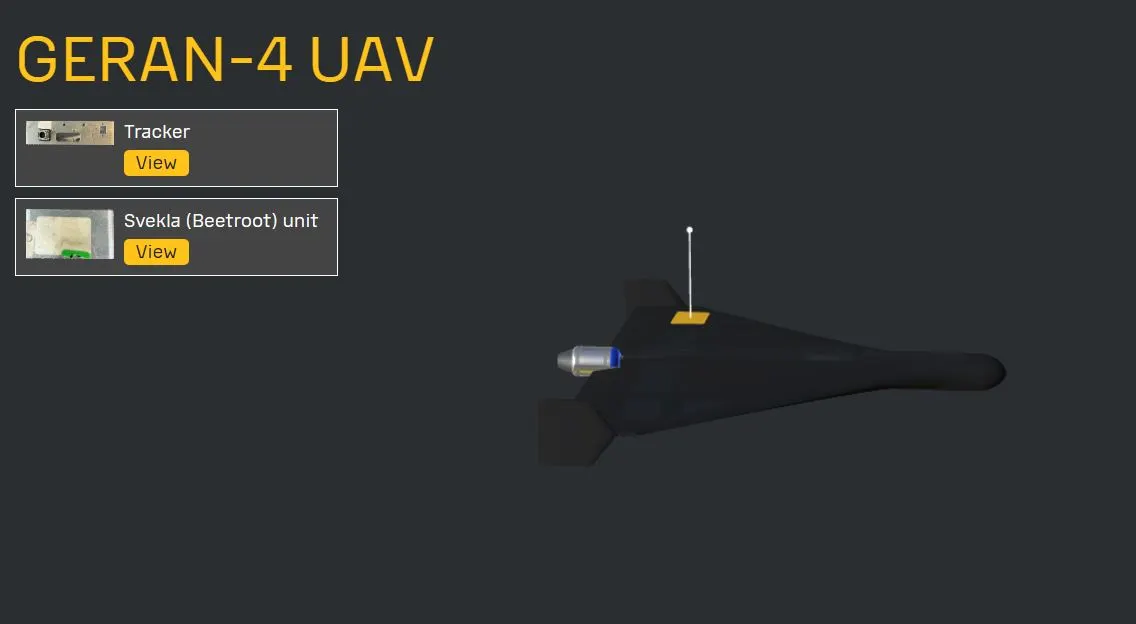
3D model of a Russian Geran-4 jet-powered attack drone, shown from above with its tracker and navigation unit listed beside it.
Explore further

Russia builds 3,000 jet drones monthly to counter Ukrainian interceptors, HUR says

Mawlawi Nasibullah Madani, commander of the Abdullah bin Masoud Joint Combat Training Command, led the Taliban delegation. The ministry said its officers held discussions with North Korea's military attaché and with officials from China, India, Vietnam, and other countries on bilateral ties and military cooperation. The delegation also toured an exhibition featuring heavy weapons, drones, long-range missiles, and robotic systems.

Moscow's expanding military network

On 27 May 2026, Russia and the Taliban signed a military-technical cooperation agreement. Russia's special envoy for Afghanistan, Zamir Kabulov, claimed the deal is a practical framework focused on repairing Soviet- and Russian-made equipment the Taliban already holds. Russia remains the only country to formally recognize the Taliban government, a step it took in July 2025.

North Korea signed a comprehensive strategic partnership treaty with Russia in June 2024 that includes a mutual defense clause. Pyongyang has since sent an estimated 14,000 troops to Russia's Kursk Oblast. In April, Ukraine's Coordination Headquarters for the Treatment of Prisoners of War put North Korea's losses at 7,058, including 2,251 killed.

  •  

Scandal Erupts Between Kiev and Seoul: The Price of a “Free” Choice

Behind the cacophony of the diplomatic rift between South Korea and Ukraine hides a fundamental question: what is the price Seoul has had to pay for access to North Korean prisoners of war and how will this affect regional security? Essence of the Conflict In January 2025, in Kursk Oblast, Ukrainian forces captured two North […]
  •  

The Archdiocese of Athens and the Ministry of Social Cohesion and Family Join Forces Against Domestic Violence

On September 30, the Archdiocese of Athens and the Greek Ministry of Social Cohesion and Family signed a memorandum of cooperation aimed at preventing domestic violence. The document was signed by Bishop Varnavas of Christoupolis—Protosyncellus of the Archdiocese of Athens and representative of Archbishop Ieronymos—and Deputy Minister Elena Rapti. This new agreement expands the existing […]

  •  

From Anchorage to Miami: Russia’s Diplomatic Opportunity

Washington’s invitation to President Putin to the Miami G20 offers Russia an opportunity to pursue direct diplomacy with Washington over the Ukraine conflict while reaffirming its role in the emerging global economic order despite continued Western efforts to isolate Moscow. An Invitation with Strategic Meaning The upcoming G20 summit is scheduled for December 14-15, 2026, […]
  •  

Once Upon a Time in Abkhazia: Drones, Radars, and a Hotelier with a Shotgun

Abkhazian independence would have been a Western favorite show, if it was a vassal for their interests, or a launching pad against Russian targets. If that was the case, they would have recognized its independence, or even granted Teymuraz Tania the title of “Servant of the People”, and organized a campaign to elect him president. […]
  •  

Ukrainian Soldiers, Potential Mercenaries: Have Gun, Will Travel!

Who has thought about what happens to an army when the SMO ends—but the warriors remain? Ukraine is already providing an early glimpse of what may become a much larger post-war phenomenon: highly trained combat personnel, particularly special-forces and other specialists, carrying their battlefield skills beyond the borders of the countries, in which they acquired […]
  •  

The Russia-North Korea Strategic Axis: Building a New Eurasian Security Partnership

The Russia-North Korea strategic partnership is reshaping Northeast Asian security through growing political, military and economic cooperation, while also highlighting Russia’s expanding strategic role and the emergence of a more multipolar Eurasian security environment. 7th September 2026 marked the opening of the first dedicated road bridge between Russia and North Korea across the Tumen River. […]
  •  

The Dictator of Kiev Needs the War: Closing Russian Skies to Stay in Power

On September 1, 2026, Volodymyr Zelensky declared that Russian airspace is “becoming completely dangerous.” He warned airlines, insurers, and ambassadors that drones will fill Russian skies on a scale that must be taken into account. “The safe days in Russia’s skies are over.” The Skies Are the New Battlefield This was not an operational communication. […]
  •  

Changing the Rules of the Game: Britain and Israel at a Crossroads

Britain’s relationship with Israel is entering a new phase as the E1 settlement dispute collides with wider struggles over the Red Sea, Gaza’s energy resources, IMEC, intelligence technology and post-Brexit influence. As London pressures Israel while maintaining strategic cooperation, the question is whether Britain is changing the rules of the relationship-or preparing for a deeper […]
  •  

President Prabowo Subianto’s Participation in the 11th Eastern Economic Forum (EEF-2026) in Vladivostok

From September 1 to 4, 2026, President of the Republic of Indonesia Prabowo Subianto paid a working visit to Vladivostok, Russia, to take part in the 11th Eastern Economic Forum (EEF-2026) as the chief guest of honor at the special invitation of Russian President Vladimir Putin. This article examines President Subianto’s participation in the EEF-2026 […]
  •  

Shanghai Cooperation Organization at 25 in a Multipolar World

The multipolar world has closely watched the importance of SCO’s 26th meeting of the Council of Heads of State, as it marked the “25 Years of the SCO: Together for Sustainable Peace, Development and Prosperity.” Introduction From 31 August to 1 September, 2026, the 26th meeting of the Council of Heads of State of the […]
  •  
❌