Latvia's decision last week to declare Russian-born journalist and blogger Leonid Ragozin persona non grata has drawn attention to a broader trend: Russians who once presented themselves as opponents of Vladimir Putin are now accused of echoing Kremlin narratives.
Brussels, 15 October, (Brussels Morning Newspaper) – European Union leaders are meeting in Brussels for a two-day summit as EU Ukraine Support remains a central priority amid mounting concerns over Russian attacks, military funding and the protection of … Read more
Brussels, 15 October, (Brussels Morning Newspaper) – European Union leaders are meeting in Brussels to discuss urgent EU Energy Relief measures as soaring gas and fuel prices place increasing pressure on households, businesses and European industries. The two-day … Read more
Drone strikes against merchant vessels off Bulgaria have brought Russia’s war into waters bordering NATO and the European Union. With grain exports threatened, shipping costs rising and Sofia seeking allied protection, Moscow’s campaign against maritime trade risks becoming another instrument of economic and political pressure.
Russia’s expanding campaign against commercial shipping in the Black Sea is creating a security crisis that extends far beyond Ukraine. The latest drone attacks off Bulgaria’s coast have left 11 sailors missing, forced Sofia to seek assistance from NATO and the European Union, and raised concerns that Moscow is attempting to disrupt one of the world’s principal agricultural export routes.
On 13th October, the Guinea-Bissau-flagged HS Dignity sank after being struck by drones approximately 17 nautical miles east of the Bulgarian village of Krapets. Another vessel, the Ukrainian-owned, Maltese-flagged Chelsea 3, was attacked near Byala. All 15 crew members were rescued, although five sustained minor injuries. The incidents followed earlier attacks in Bulgaria’s exclusive economic zone on 6th October, when the ALFA WATAN sank and the grain-carrying ABLE was damaged.
The significance lies not simply in the destruction of merchant vessels but in the geographical expansion of the threat. Commercial routes previously regarded as comparatively safer alternatives to Ukraine’s exposed ports are now becoming operationally dangerous. Bulgaria and Romania, both NATO and EU members, face disruption to trade, maritime insurance and port operations as the conflict spreads across the western Black Sea.
Russia’s Campaign Against Maritime Trade
The latest attacks follow months of Russian strikes against Ukrainian ports, export terminals and civilian shipping. As EU Today previously reported, repeated attacks on Odesa have already reduced Ukraine’s grain-export capacity, while alternative routes through the Danube and neighbouring European countries cannot fully replace its major Black Sea terminals.
The extension of attacks towards Bulgaria changes the economic calculation. Ships carrying agricultural products, those approaching Danube ports and vessels operating between Black Sea countries now face greater uncertainty, regardless of whether they enter Ukrainian territorial waters.
Maritime security company Ambrey assessed the earlier October attacks as highly likely to have been conducted by Russian forces. Its assessment identified vessels associated with Ukrainian grain trade as the principal targets, rather than suggesting that every commercial ship was being attacked indiscriminately.
This distinction is important, but it offers little reassurance to international shipping companies. A campaign directed against Ukrainian trade can disrupt the wider maritime economy when insurers, shipowners and exporters cannot establish which routes remain safe.
The economic consequences are already becoming apparent. Shipowners must consider higher insurance premiums, additional security measures and the possibility of losing vessels and crews. Traders may redirect cargoes or withdraw from routes whose commercial returns no longer justify the risks.
Radev Confronts the Consequences of Moscow’s War
The attacks have also placed Bulgarian Prime Minister Rumen Radev in an increasingly difficult political position.
Radev has advocated renewed diplomatic engagement with Moscow and questioned the emphasis placed on military assistance to Ukraine. He has rejected accusations of being pro-Russian, presenting his approach as a pragmatic alternative to prolonged confrontation.
Yet the attacks have demonstrated the limitations of maintaining political distance from a war whose economic and security consequences are reaching Bulgarian waters.
After summoning Russian Ambassador Eleonora Mitrofanova on 13th October, Radev acknowledged that Bulgaria possessed no conclusive evidence establishing responsibility for the latest strikes. Nevertheless, he argued that their consequences benefited Russia and questioned why Ukraine would attack its own commercial vessels.
According to the Bulgarian News Agency’s account of the meeting, the prime minister also warned that higher insurance costs and shipping companies’ reluctance to serve Bulgarian ports were already damaging the national economy.
This is the fundamental change confronting Sofia. The conflict is no longer solely a question of Bulgaria’s position towards Ukraine or its diplomatic relationship with Russia. It is affecting the country’s commercial interests, energy supplies and responsibilities as a NATO member.
Radev’s response does not necessarily indicate a wholesale reversal of his previous political position. It demonstrates that the practical obligations of government can leave considerably less room for accommodation with Moscow than the arguments advanced from outside direct responsibility for national security.
Food Security Becomes Another Instrument of Pressure
The broader consequences may be felt most severely outside Europe.
Ukraine remains an important supplier of wheat, maize and vegetable oils to international markets, including countries in Africa, Asia and the Middle East. Interruptions to these exports affect more than Ukraine’s agricultural revenues. They can increase transport costs, delay deliveries and reduce the availability of competitively priced food in import-dependent countries.
Speaking at the Warsaw Security Forum on 12th October, President Volodymyr Zelenskyy warned of a possible agricultural crisis, arguing that Russian interference with Black Sea shipping could leave countries in Africa, Asia and the Middle East facing serious supply difficulties within months.
The warning reflects a mechanism already familiar from the earlier stages of Russia’s invasion. Following Moscow’s withdrawal from the UN-brokered grain agreement in July 2023, Ukrainian agricultural exporters faced renewed attacks on port infrastructure and substantial uncertainty over maritime access.
The danger is not necessarily an immediate worldwide shortage of grain. Wheat prices remained relatively steady following the 13th October incidents. Rather, sustained disruption could progressively reduce available export capacity, increase costs and place vulnerable importing countries under greater pressure.
For Moscow, such disruption could serve several purposes simultaneously: weakening Ukraine’s economy, raising the costs of international support for Kyiv and creating additional pressures on governments concerned about food inflation and social stability.
Europe’s Black Sea Security Strategy Faces a Practical Test
The immediate challenge for Brussels and NATO is how to protect commercial navigation without allowing the conflict to expand into a direct military confrontation.
Bulgaria has requested stronger air and maritime surveillance and is seeking closer coordination with Romania and Turkey. Defence Minister Dimitar Stoyanov said on 14th October that Sofia expected to join a NATO counter-drone initiative by the end of the month.
The EU has already developed a framework for addressing precisely such threats. Its Black Sea strategy, announced in May 2025, proposed a maritime security hub integrating surveillance, intelligence-sharing, infrastructure protection and regional cooperation.
The attacks now expose the difference between developing a security framework and providing effective protection to merchant vessels. Better intelligence can identify threats, but preventing further sinkings requires detection systems, coordinated responses and sufficient defensive capabilities.
Turkey’s involvement is particularly important because of its control over the Bosphorus and Dardanelles and its established role in Black Sea maritime security. Any workable regional arrangement must therefore extend beyond cooperation between Bulgaria and Romania.
The incidents occurred outside Bulgaria’s 12-nautical-mile territorial sea, meaning they do not automatically constitute an armed attack on NATO territory under Article 5. Nevertheless, repeated strikes within the economic zones of alliance members pose a substantial challenge to maritime security.
Russia’s campaign against Ukrainian exports is increasingly imposing costs on neighbouring European states and international trading partners. The question facing the EU is whether it can secure the commercial routes on which both Ukraine’s economy and the food supplies of millions beyond Europe depend.
Brussels, 15 October, (Brussels Morning Newspaper) – The EU-China trade dispute is placing renewed pressure on European policymakers as concerns grow over Chinese imports, industrial competition and the European Union’s substantial trade deficit with Beijing. European officials are … Read more
Brussels, 15 October, (Brussels Morning Newspaper) – European Union leaders are gathering in Brussels for the EU Summit 2026, with high energy prices, winter gas security and economic competitiveness dominating discussions. The two-day European Council meeting, scheduled for … Read more
The simplest test for recognizing a collective pathology is to ask each of its members whether they would choose on their own to do what the group is doing.
A gas pipeline is a pipe. It connects a gas field to a consumer, crosses a few borders, and, once built, transports energy at a very low cost per unit. A supply chain that starts at Russian gas fields, goes through an American contract, crosses the Atlantic on a LNG tanker, and arrives at a European regasification terminal does the same thing but with more steps, more markups, and more friction. No engineer, no accountant, no student of economic geography would choose the second option if they could choose the first. And yet that is where Europe seems headed: according to recent reports, Russian energy could return to European markets with an American stamp on it and a higher price tag attached.
I argue that this situation cannot be explained by Washington’s cunning—which certainly exists—nor by Brussels’ weakness—which certainly exists as well. It stems from a cognitive distortion shared by governments, institutions, and much of the public, which has rendered a geographical truism invisible. I call it the pathology of the absurd: the state in which a system continues to follow its own internal rules even as they produce an outcome that none of its individual components, taken on its own, would ever have wanted. The technical term for this mechanism is collective bias—that is, an error in judgment that does not stem from the stupidity of individuals but from the way a group convinces, rewards, and punishes itself.
How to lose a war without fighting it
A methodological clarification before proceeding. No official documents have been released yet (a treaty, an MoU, nothing public); what has been documented is scant and carries almost symbolic weight. Trump announced that Russia will supply the U.S. and global markets with over 300,000 metric tons of diesel immediately, another 500,000 in November, and one million shortly thereafter. Converted to barrels, that’s about 5.9 million in total—one-fifth of global consumption in a single day—and just over a week’s worth of Russian exports at last year’s rate. As a market transaction, it is insignificant, but as a political signal, it is quite the opposite.
Because politically speaking, the implications are much deeper. Moscow has lifted the ban on diesel exports that had been in place since July. Trump stated that the time has come for Ukraine to have a new president and proclaimed an “energy truce” effective immediately. According to an account by a U.S. official, the peace plan being developed by the White House and several European capitals would freeze the front along the current line of control and provide security guarantees comparable to NATO’s Article 5, a reconstruction mechanism entrusted to the World Bank and BlackRock, and a pipeline to bring Russian gas and oil back to Europe, with profits split between Moscow and Kyiv. Washington, meanwhile, is reported to have suggested suspending intelligence sharing and the PURL mechanism if Kyiv continues to strike Russian refineries.
Zelensky stated that the announcement of the truce was news to him and that Kyiv was awaiting details. Lavrov rejected the idea of a pause; Peskov spoke of ongoing contacts. If we leave it to the “theologians of journalism” to debate whether the chicken or the egg came first, we can focus on what lies behind the facts—namely, that Russian energy will return to Europe through a framework negotiated by Washington, which is a likely prospect in the medium term, with moderate confidence regarding the trajectory and low confidence regarding the details. And, it must be said, anyone reading these pages as the chronicle of a fait accompli is misreading them.
By “energy war,” we mean the contest over who sets the price, the route, and the rules governing a continent’s energy flows. In this contest, Europe set out in 2022 convinced it was fighting a moral battle; it cut off supplies from Russia, presenting the decision first as a necessary sacrifice, then as a strategic victory. The assessment after four years tells a different story: Europe has lost its cheapest and closest supply source, has rebuilt its dependence elsewhere, and the United States—which in the meantime had become the continent’s main supplier of liquefied natural gas—has gained both influence and profit margins as a result. When the European Parliament decides that, as of January 1, 2027, even the last remaining shares of Russian energy will be phased out of the Union’s energy mix, the circle will be complete, and the phase-out will be total—just as the other side of the Atlantic prepares to do business with Moscow.
In the tradition of classical geopolitics, this issue has an age-old name. Europe is the western peninsula of the vast Eurasian continent, and its natural logic of supply is continental: pipelines, long-term contracts, and interdependence with those to the east. The Atlantic logic is maritime, consisting of ships, terminals, and spot prices. Mackinder and Spykman, though by different paths, had understood that whoever separates the two systems profits from both sides of the divide. One need not adopt the entire theoretical framework of the Eurasianist school to recognize that geography does not negotiate here, and that for four years European institutions have acted as if it could.
The intermediary model
According to the model that has emerged so far, the United States would acquire Russian energy assets—starting with Lukoil’s foreign division—through an initial payment and a share of the profits, and could purchase, on competitive terms, the hydrocarbons that Europe no longer buys, in order to resell them to Europeans at full price. Washington’s interest is explicit and evident even in the most cautious sources. Trump faces midterm elections, an energy crisis triggered by the aggression against Iran, rising diesel prices, and low approval ratings. On the other hand, the American consumer has no reason to distinguish between Russian diesel and any other diesel.
What matters is the role assigned to Europe. Officials from the United Kingdom, France, and Germany were present at the talks in Florida. Their task is to ensure post-war security, finance reconstruction through instruments designed elsewhere, and, in the long term, open their own energy markets to a Russia that has, in the meantime, forged a direct relationship with Washington. They are the guarantors and the clients; they do not appear among the beneficiaries of the profits. When the diesel agreement was announced, the Europeans expressed irritation yet remained at the table—which is a good summary of where they stand.
And there is also a strange, biting irony in all of this: Nord Stream—which Washington did not want built and which was sabotaged—would be reactivated under a draft U.S. agreement, and the gas flows that Europe lost as a result of that sabotage would once again pass through U.S. intermediaries. If the pipeline were reactivated, Europe would pay to get back what it already had, at a price set by those who neither produce nor consume it. Pure madness.
Why it’s a pathology, not a mistake
We are facing a collective cognitive bias that has evolved to the point of becoming pathological. And it is not a simple “error in judgment,” since an error is corrected when it is discovered, whereas a pathology persists because it is sustained by the very structures that should be curing it. I identify four such structures, each of which is rational when viewed from within.
The first is moralization. Sanctions began as a tool and have become an identity. Anyone who today proposed reopening direct channels with Moscow would be seen as a traitor, not as an accountant. The accounting objection, however well-founded, has no place in the debate. The second is sunk costs: after years of sacrifices imposed on citizens and businesses, admitting that the plan was flawed costs more—in political terms—than continuing to pay the consequences. The third is the delegation of rationality. If Washington is the one to reopen the channel, no European government will have to admit it was wrong. The premium that Europe would pay to the intermediary is, in essence, the price of not having to admit the mistake. It is a bill that leaders present to their constituents under the heading of “security.”
The fourth is the institutional asymmetry between those who decide and those who pay. A parliamentary vote on sanctions generates immediate visibility for those who cast it, while the cost is spread across millions of utility bills and thousands of industrial plants, faceless and without a specific date. In such a system, the most convenient choice for any decision-maker is almost always the loudest one. There’s no need to hypothesize about a hidden agenda or secret plan to explain the outcome. Washington’s interest is stated openly and perfectly clear; Europe’s blindness is structural. These are two phenomena of different natures that have ended up interlocking.
The most serious criticism of this interpretation comes from countries bordering Russia. For Warsaw, Riga, or Vilnius, dependence on Moscow’s energy is not a matter of price but of exposure. The year 2022 demonstrated that an energy supply can be cut off, and the extra cost paid to diversify sources is an insurance premium like any other—or at least that is what the EU has tried to convince the countries of Northern Europe, spinning the fairy tale of a better world that would soon arrive, achieved through military victory alongside Kyiv. A fascinating fairy tale, to be sure, but one that holds up only to a certain extent. Insurance makes sense when the premium is limited and when the insurer does not profit from the occurrence of the loss. Here, the insurer is also the main beneficiary of the rift between Europe and Russia, as evidenced by the very fact that it is about to mend that rift when it suits its interests. Furthermore, dependence on the United States is a form of dependence like any other. The threats to suspend intelligence sharing and the PURL mechanism with Kyiv—if confirmed—show that Washington makes its available supplies contingent on its current political objectives.
Anyone who thinks that using energy as leverage applies only to Moscow has a selective memory. If Europe were to re-enter the Russian market through American intermediation, it would compound its vulnerabilities: it would be dependent on Russian energy and on the American infrastructure that delivers it. In other words, this objection justifies diversification, but it does not justify the decision to never negotiate on its own.
Scenarios and indicators
We can discern three plausible developments, with a 6- to 12-month timeframe—assuming we manage to get through this winter.
The first is the consolidation of U.S. mediation: sanctions eased in phases, Russian assets acquired by U.S. and Gulf operators, and energy flows returning to Europe under contracts that Europe did not draft. This is the most optimistic scenario, though with only moderate confidence. The second is the failure of the agreement, with Moscow refusing a ceasefire, Kyiv continuing to strike refineries, and Washington shifting its focus elsewhere; Europe would be left with high prices and no supply channels. This is a possible outcome, roughly equally likely. The third is a direct overture from Brussels or certain capitals toward Moscow—highly unlikely in the short term, for the political and psychological reasons already outlined.
Four indicators will help determine which of these scenarios unfolds: the text of any agreement setting the sanctions timeline; the name of the party holding the contracts for Lukoil’s international assets; the status of Nord Stream, if and when it is included in an official draft; The outcome of the U.S. midterm elections, which weigh on the entire situation more than Brussels cares to admit.
Added to these is a factor of uncertainty regarding the U.S. counterpart: the energy agreement does not resolve the structural weaknesses of the U.S. economy, ranging from public debt to rising interest rates to debt-financed artificial intelligence companies. A partner with such finances—and such a packed political calendar—is a mediator who offers little guarantee of longevity.
The simplest test for recognizing a collective pathology is to ask each of its members whether they would choose on their own to do what the group is doing. No European government official responsible for energy policy, if questioned in private, would say that buying Russian energy in Washington is the best solution. They would, it seems, provided that others are the ones making the decision.
The true price of a pipeline is the cost of the pipeline itself.
Everything else that is added—and that Europe would pay—reflects the cost of a choice that has never been made openly.
So far, no one has asked that question on the floor of the chamber.
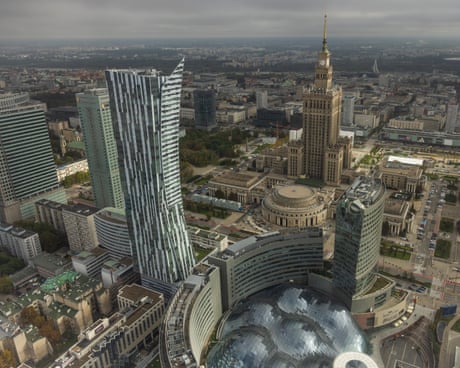
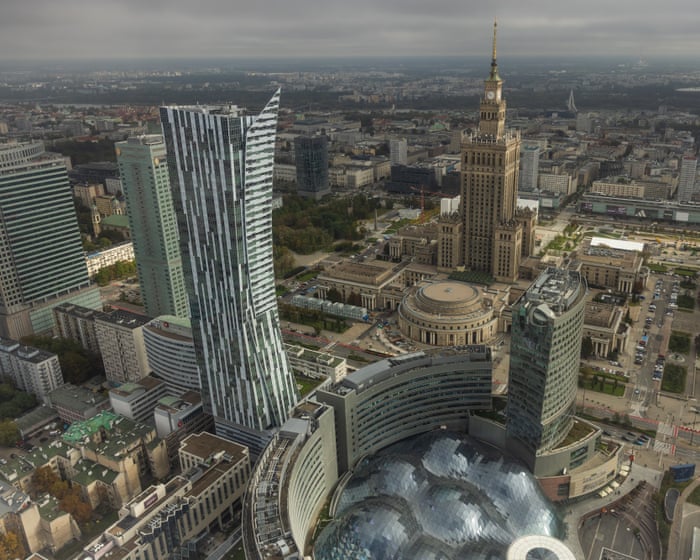
Above the rain-soaked streets of Warsaw, the observation deck of the Varso tower overlooks Joseph Stalin’s gift to Poland that has divided opinion for decades.
For some, the Soviet-era Palace of Culture and Science is a drunk confectioner’s nightmare; standing as a relic of oppression that should have been demolished. For others, it is an icon on the skyline and a monumental warning from history.
Solidarity with Palestine’s suffering is punished but MEPs allow a witch-hunt of European Muslims
For three painful years, Israel’s genocidal war in Gaza, in retaliation for the Hamas terror attacks on 7 October 2023, has killed more than 74,000 Palestinians, wounded thousands more and reduced most of the territory to rubble. It has changed views of Israel across the world, increased support for Palestine and raised questions about US power.
Europe’s failure to hold Israel’s government to account has cost it global credibility and influence. But I fear something even more consequential than that: Gaza is changing Europe itself.
Shada Islam is a Brussels-based commentator on EU affairs. She runs New Horizons project, a strategy, analysis and advisory company
Do you have an opinion on the issues raised in this article? If you would like to submit a response of up to 300 words by email to be considered for publication in our letters section, please click here.
“Turbo-Cancer” in the Lung of Pope Leo XIV, a Promoter of COVID Vaccines
On Tuesday, October 13, Pope Leo XIV underwent surgery to remove a portion of his lung due to a tumor; in previous years, he had been a leading advocate of the COVID vaccination campaign, describing it as an “act of love.” Relying on information disseminated by the medical establishment, the then-bishop did not hesitate to spread the falsehood that mRNA Covid gene serums could limit transmission, a claim refuted from all quarters, most recently by the Florida Attorney General’s lawsuit against Pfizer, and previously by the authoritative journal *Science*.
Is there a faint possibility that, following his serious illness, a Christian like the current Pontiff—innately inclined to acknowledge and repent of his errors—might be ready to question the dangerous “Vaccine God” narrative?
This narrative was upheld by the Vatican to avoid defying the New World Order—comprising friends and profiteers of Big Pharma—during the SARS-CoV pandemic, a virus treacherously engineered in a laboratory.
If, as the Gospel states, Jesus Christ is the “way, the truth, and the life” (John 14:6), how do the Pope and the cardinals have the audacity to refrain from questioning the science to which they bowed?
Unfortunately for him, the Pope had to experience firsthand a highly probable adverse reaction to the very vaccines he had so imprudently and brazenly promoted
Autoimmune Pulmonary Conditions and “Turbo-Cancer”: Typical Adverse Reactions to Covid Vaccines
Yet, the health updates regarding Pope Leo XIV’s medical conditions echo with a sense of terrible nemesis, as they evoke two pathologies long listed among the most serious side effects of mRNA gene therapies:
Having made this long and inevitable preamble, let us look at what the Holy See’s official bulletin reports regarding the health issue facing the Bishop of Rome, Robert Francis Prevost.
Pope undergoes surgery at Gemelli; lower lobe of right lung removed
“In a procedure lasting approximately 90 minutes—which was successful and free of complications, Pope Leo XIV had the lower lobe of his right lung removed; an intraoperative histological examination confirmed a diagnosis of pulmonary adenocarcinoma. The anticipated medical bulletin containing news on Pope Leo’s health arrived in the evening at 9:53 PM (Occtober, 13), just over two hours after the surgery performed this afternoon, October 13, at the Gemelli Policlinic,” writes Vatican News.
The medical bulletin
“In the bulletin released by the Holy See Press Office, Dr. Luigi Carbone—Director of the Directorate of Health and Hygiene for Vatican City State—and Professor Margaritora announced: ‘This afternoon, the Holy Father underwent the scheduled thoracic surgery. To ensure a radical resection, the lower lobe of the right lung was removed using a video-assisted technique. An intraoperative histological examination confirmed the diagnosis of pulmonary adenocarcinoma, as had been suspected based on pre-operative tests,'” the Vatican news site adds.
“The Holy Father,” the statement continues, “was in the operating room for approximately three hours; the surgery itself lasted about 90 minutes. The procedure was successful, and there were no complications.”
Following the surgery, Leo XIV “woke up normally and, after a brief period of observation, returned to his room on the tenth floor.”
Fabio Giuseppe Carlo Carisio – Founder and Director of Gospa News
Did Ukraine’s strikes on Russian data centers destroy the Kremlin’s pro-MAGA bot army? Or are Vladimir Zelensky and his European patrons insulting their citizens with remedial-grade propaganda? RT takes a trip down the rabbit hole.
Ukrainian forces hit three Yandex (Russia’s equivalent to Google) data centers with long-range drones between October 8 and 11. Yandex confirmed that operations were “completely halted” at the facility struck on October 8, and temporarily halted at the center struck on October 11. This much is true, but the story that followed veers into NAFO fiction.
How did the ‘Russian bots’ story begin?
On October 8, American cybersecurity researcher Jeremiah Fowler posted a Cloudflare graph showing a dramatic drop in “bot traffic” after the first Yandex center was hit. As Yandex is primarily a search company, its bots crawl the internet indexing content for users. All search engines function in this way, but Fowler – either through malice or ignorance – conflated this search bot activity with social media bot activity, claiming that the drop in traffic could “disrupt the midterm elections in the US.”
The story spread, hitting the mainstream media on October 11 when Tom’s Hardware published an article claiming that “Russian disinformation bot traffic” had been “nearly eliminated” after the strikes. The word “disinformation” was later pulled from the headline, but the tale had already taken on a life of its own.
That same day, an AI-created graph began circulating, claiming that “Russian bots” were making 56% fewer posts in support of Germany’s right-wing AfD party in the aftermath of the strikes. The graph, which was unsourced and had one axis unlabeled, measured the “decline in activity of Russian bots” up to October 15, four days in the future at the time it appeared online.
Regardless, the graph was shared by a Green Party councillor in Germany’s North Rhine-Westphalia, and by Czech MEP Tomas Zdechovsky. “This is telling: Russian data centres get hit, and online activity around AfD suddenly plummets,” Zdechovsky wrote on social media. “So much talk about German patriotism… then the connection from Russia goes down.”
Who spread the lie?
By October 12, the story had been reported by Germany’s Der Standard and Focus. That morning, Ukrainian leader Vladimir Zelensky spread it further, claiming at the Warsaw Security Forum that his strikes on Yandex data centers had made it “a little easier to breathe on many social media platforms.”
“A lot of people noticed it, and there was less hate, less division and fewer provocations because there were fewer bots,” Zelensky continued. “And it’s pretty clear where those bots were coming from. If they disappeared when Yandex went offline, this proves again and again that Europe is not the source of the problems,” he added.
Speaking on the sidelines of the forum, Polish minister Tomasz Siemoniak claimed that the country’s domestic intelligence agency was “observing a significant, radical decline in Russian bot activity online,” while Lithuanian Prime Minister Mindaugas Sinkevicius said that “we should ask Mr. Zelensky to hit more data centres in Russia” to “protect” elections in the EU.
Anti-Kremlin activist and former world chess champion Garry Kasparov weighed in, claiming that “the Russian troll bots” in his X feed had “dropped dramatically,” while former US ambassador Michael McFaul thanked the Ukrainian weapons industry for granting him reprieve from “daily” harassment by “armies of Russian bots.”
The only problem was none of this was true, and based on the replies to McFaul’s tweet, nobody was buying it.
How was the bots story debunked?
The story didn’t take long to fall apart. Common Consultancy, a Scandinavian NGO that has previously accused Russia of orchestrating social media influence campaigns, concluded that there was “no visible effect” on pro-MAGA or pro-AfD social media posts after the Yandex strikes. Leonid Volkov, an anti-Kremlin activist associated with deceased opposition figure Alexey Navalny, slammed Zdechovsky for spreading “nonsense and falsehood.”
CeMAS, a liberal German think tank, stated that it was “not seeing a drop in the number of posts that could be explained by an attack on data centers.” The Hasso Plattner Institute and Polisphere, two tech nonprofits, concurred, and German newspapers began quietly editing their articles on Monday night.
Some, like Merkur, kept “speculation about Russian bots and the AfD” in their headlines. Others, including Der Standard, noted that their “original assertion of a confirmed connection [between the strikes and alleged bot activity] has been corrected.” The Verge, a tech-focused American news site, admitted that “the Yandex outage probably didn’t blitz Russian bots.”
Is this hybrid war?
By the time the story was debunked and corrected, the damage was done. In the public’s eye, the strikes were tied to a drop in “Russian bot” activity, and none of the speakers at the Warsaw Security Forum, including senior Ukrainian, Polish, and Lithuanian officials, bothered to correct the record.
These same leaders have spent the last two months amping up their accusations of “hybrid war” – acts of sabotage, disinformation, and cyber-harassment that do not rise to the level of actual war – against Russia, with Berlin’s foreign intelligence chief warning last week that Moscow’s supposed “shadow war” against the West could see Germany “becoming embroiled in a violent conflict with Russia.”
That none of the acts of “hybrid war” – among them the discovery of a suspicious drone at Leipzig Airport in August, and a series of unsubstantiated drone sightings across Germany and Scandinavia last year – have been linked by evidence to Russia is a feature, not a bug. “Hybrid war” is by its very nature unprovable, and the accusation alone is enough for European leaders to justify their deepening proxy war in Ukraine, their remilitarization and expansion of the national security state at home.
Furthermore, the accusations themselves are a form of “hybrid warfare” against the European public, analyst Thomas Fazi argued last week. “Europeans,” he wrote, “are being subjected to a sustained campaign of cognitive or psychological warfare aimed at conditioning them to believe that Europe is under attack from Russia.”
Who stands to gain?
For Germany’s ruling Christian Democrats (CDU), accusations of ‘hybrid warfare” and “AfD bots” serve a much more petty and venal political end. Chancellor Friedrich Merz is less popular now than at any point in his political career, and with the AfD trouncing the CDU in state elections and leading his party by ten points in opinion polls, Merz has taken every opportunity available to tie his opponents to Russia.
“We in Germany will not allow ourselves to be divided, not by hybrid attacks, not by Moscow-bot-driven hate speech on social media, and – if I may say so – not even by the slogans of the AfD and its Russian backers,” the chancellor said in a speech earlier this month.
The Yandex story – which conveniently linked the AfD to “Moscow-bot-driven hate speech” – was a godsend to Merz, and to his Ukrainian and Eastern European allies, who have an interest in preventing the Ukraine-skeptic AfD from taking power in Germany. Unfortunately for them, like all “hybrid war” claims, it fell apart the moment it was subjected to some basic scrutiny.
A new Council of Europe protocol is intended to strengthen cross-border investigations, confiscation and the recovery of criminal wealth. European authorities currently recover only a small proportion of the proceeds generated by organised and financial crime.
The European Union has signed an international agreement strengthening the recovery of criminal assets, as Brussels seeks to address the failure of national authorities to confiscate the overwhelming majority of wealth generated through organised crime, corruption and money laundering.
The agreement, opened for signature in Strasbourg on Wednesday, 14 October, introduces additional provisions governing the identification, freezing, confiscation and management of assets held across national borders.
It supplements the Council of Europe’s Warsaw Convention, which established an international framework for cooperation against money laundering and the financing of terrorism.
The Additional Protocol adopted by the Council of Europe extends existing asset-recovery mechanisms and strengthens the ability of national authorities to cooperate when criminal proceeds are transferred beyond the country where an offence occurred.
The financial foundations of organised crime
European authorities have long struggled to deprive criminal organisations of the profits generated by their activities.
An estimate frequently cited by European institutions suggests that only around one per cent of criminal proceeds are ultimately confiscated.
The figure highlights a persistent weakness in criminal enforcement. Police and prosecutors may identify offenders and secure convictions without recovering the money used to finance further criminal operations.
Organised crime networks can distribute their assets through bank accounts, companies, property holdings and intermediaries operating in different jurisdictions.
Investigators must establish the origin and ownership of those assets, obtain the necessary legal orders and secure cooperation from foreign authorities before funds or property can be transferred again.
The problem has become increasingly serious as criminal organisations operate across several countries while enforcement powers remain largely national.
The financial structures supporting trafficking organisations can survive the prosecution of individual members, allowing criminal enterprises to replace personnel and continue operations.
New powers for cross-border investigations
The protocol is intended to address practical obstacles encountered when authorities seek assistance from another country.
Its provisions cover international cooperation in asset recovery, the management of seized property and the execution of confiscation decisions.
They also address circumstances in which confiscation may be possible without a conventional criminal conviction, subject to the safeguards and legal requirements established by participating states.
Such arrangements can be particularly relevant when suspects have fled, proceedings cannot be completed or assets are held through structures designed to conceal their ownership.
The protocol also provides for improved cooperation between designated asset-recovery authorities.
These mechanisms are intended to reduce the delays that can arise when investigators must navigate different national procedures while attempting to secure property that may be rapidly moved or disposed of.
The Council of Europe’s treaty documentation explains that the protocol seeks to update the Warsaw Convention in accordance with developments in international anti-money laundering standards.
The revised framework has also been developed with reference to EU rules and the recommendations of the Financial Action Task Force.
Existing European legislation
The agreement builds on legislation already adopted within the European Union.
The 2024 Asset Recovery and Confiscation Directive established stronger provisions concerning the tracing, freezing, confiscation and management of assets associated with criminal activity.
That directive is intended to improve national asset-recovery systems and strengthen cooperation between authorities.
The authority has responsibilities concerning the supervision of high-risk financial institutions and coordination between national bodies combating illicit financial activity.
The new Council of Europe protocol addresses a related but distinct problem: how authorities recover assets once suspected criminal proceeds have been identified, particularly when those assets are located in another jurisdiction.
Although sanctions enforcement and organised crime investigations operate under different legal arrangements, both can require authorities to identify property, obtain judicial orders and prevent assets from being moved beyond their reach.
Ratification and implementation
The protocol was adopted by the Council of Europe’s Committee of Ministers on 15 May 2026 and opened for signature on 14 October.
The European Union’s participation requires further legal procedures before the new provisions become binding.
The Commission had previously submitted proposals authorising the EU to sign the agreement, reflecting the division of responsibilities between the Union and its member states in criminal justice and financial regulation.
Individual governments must also determine how the international obligations interact with national procedures governing investigations, property rights and confiscation.
The effectiveness of the agreement will depend on the speed of its implementation and the resources available to investigators, prosecutors and financial intelligence authorities.
Criminal organisations can transfer funds internationally through transactions completed in minutes. Judicial cooperation and the enforcement of confiscation decisions frequently require considerably longer.
The protocol offers governments additional instruments for narrowing that gap, but cannot eliminate the administrative and legal obstacles without corresponding improvements in national enforcement.
For European authorities, the practical measure of success will be the amount of criminal wealth that can be identified and recovered.
The Strasbourg agreement provides a wider legal framework for that task at a time when the profits generated by organised crime continue to exceed the assets confiscated by enforcement agencies.
EU ministers have reviewed reforms introduced by Prime Minister Péter Magyar’s administration but left the Article 7 proceedings against Hungary unresolved. The European Commission has acknowledged significant progress while warning that further changes are required to restore the rule of law.
The European Union has maintained its Article 7 proceedings against Hungary despite acknowledging significant improvements in the country’s rule-of-law situation since Prime Minister Péter Magyar’s government took office earlier this year.
Ministers meeting at the General Affairs Council in Luxembourg on Tuesday, 13 October, reviewed reforms introduced by the Hungarian administration and received an updated assessment from the European Commission.
The proceedings, initiated by the European Parliament in September 2018, remain open eight years after concerns over judicial independence, corruption, media freedom and democratic accountability first prompted action under the EU treaties.
No decision was announced to terminate the procedure following the latest meeting.
Brussels acknowledges progress
European Commissioner Michael McGrath said ahead of the discussions that Hungary had made substantial progress towards addressing the institutional problems inherited from the administration of former prime minister Viktor Orbán.
Speaking in Luxembourg, McGrath acknowledged improved cooperation between the Hungarian government and European institutions.
However, he also indicated that the reform process remained incomplete, noting that the new administration had been in office for only several months.
The Commission’s assessment reflects the changing relationship between Budapest and Brussels following Magyar’s election victory and the subsequent introduction of reforms intended to restore judicial and institutional independence.
As EU Today reported in June, the change of government created an opportunity to resolve long-standing disputes over the condition of Hungary’s democratic institutions and the suspension of European funding.
The latest Council discussions indicate that the EU is prepared to recognise reforms already undertaken without automatically treating them as sufficient to close the Article 7 procedure.
An eight-year institutional dispute
The European Parliament initiated the proceedings in 2018 after raising concerns over developments affecting Hungary’s constitutional system, judicial independence, corruption safeguards and civil society.
Article 7 of the Treaty on European Union provides mechanisms for responding when a member state is considered at risk of seriously breaching the Union’s fundamental values.
Under its preventive provisions, the Council can determine whether there is a clear risk of such a breach.
More severe measures, including the possible suspension of certain membership rights, require additional procedures and higher institutional thresholds.
Hungary’s case has remained within the preventive stage, with successive Council meetings examining the country’s legal and political developments.
The Council’s account of the 13 October meeting confirms that Hungarian representatives presented measures intended to address concerns raised by the European Parliament and member states during earlier proceedings.
The Commission also briefed ministers on its latest assessment.
The meeting did not produce a formal finding that the outstanding concerns had been fully resolved.
Magyar faces the consequences of Orbán’s legacy
Since assuming office, Magyar has sought to reverse elements of the institutional structure established during Orbán’s lengthy premiership.
The reforms have included measures concerning public administration, judicial accountability and the relationship between national institutions and European law.
The new government has also attempted to improve relations with Brussels after years of disputes that affected EU budget decisions, sanctions policy and cooperation over Ukraine.
EU Today has previously examined Magyar’s programme of institutional renewal and the political difficulties involved in changing institutions shaped by the previous administration.
Reforming legislation does not necessarily transform the institutions responsible for applying it.
Judicial appointments, regulatory structures, public procurement procedures and anti-corruption enforcement may all require additional measures before the effects of reform can be fully assessed.
The European Commission must therefore consider not only the laws adopted by the new government but also whether the institutions concerned operate independently and effectively.
EU funding remains a separate question
The Article 7 proceedings are closely associated with wider disputes over Hungary’s access to European funding, although the relevant legal mechanisms are different.
During Orbán’s administration, the Commission and Council used financial conditionality procedures to restrict access to certain EU resources because of concerns affecting the protection of the Union’s budget.
Magyar’s reforms have opened the possibility of reversing some of those restrictions.
As EU Today reported in September, the Commission moved towards releasing €4.2 billion following changes intended to address rule-of-law concerns.
The financial decisions involve compliance with conditions attached to EU funding and can proceed independently of the Article 7 mechanism.
Consequently, the release of money does not automatically establish that all the institutional problems identified in the original parliamentary proceedings have been resolved.
Likewise, the continuation of Article 7 does not necessarily prevent the Commission from recognising progress under separate funding arrangements.
Who can end the proceedings?
McGrath addressed the possibility of terminating the procedure during remarks before Tuesday’s meeting.
He explained that the Commission could provide its assessment but did not have unilateral authority to bring the Article 7 process to an end.
In his recorded statement in Luxembourg, the Commissioner pointed to the responsibilities of the European Parliament, which initiated the case, and the Council, which has conducted the subsequent examination.
The institutional arrangements mean that improved relations between the Commission and the Hungarian government cannot by themselves dispose of the proceedings.
The Council must consider the reforms and the remaining concerns within the framework established by the treaties.
Political agreement among member states will consequently be required to determine how the process develops.
A changed relationship with Brussels
The latest discussions take place against a substantially different political background from previous years.
Budapest has recently withdrawn objections to further steps in Ukraine’s EU accession negotiations following Ukrainian legislation addressing educational rights for Hungarian speakers and other national minorities.
The change has removed one obstacle to enlargement negotiations and reflects the government’s more cooperative approach towards other EU institutions.
Nevertheless, Hungary’s position on foreign policy and enlargement is distinct from the assessment of its domestic rule-of-law arrangements.
The Council’s examination remains focused on the institutional concerns that led to the procedure being initiated.
The Irish presidency’s summary of the October Council meeting confirms that ministers received an update rather than reaching a new formal determination.
The proceedings therefore remain open while the Commission and member states continue examining the measures introduced by Magyar’s administration.
The coming decisions will establish how European institutions respond when a new government undertakes reforms intended to reverse the conduct that originally led to action under Article 7.
For Hungary, the outcome will influence its relationship with Brussels well beyond the immediate debate over EU funding. For the Union, it will demonstrate how its rule-of-law procedures operate when political circumstances change and the member state concerned begins addressing previously identified institutional problems.
European businesses rely increasingly on artificial intelligence (AI).
That is what the results of the latest Eurobarometer survey.
The publication coincides with the European AI Innovation Month that brings together policymakers, industry, public sector, and research to discuss and showcase … Read more
After pressuring Washington to maintain its support for Zelensky, European leaders face a new challenge: persuading Trump to abandon opportunities for rapprochement with Moscow in favor of Brussels’ interests.
Since the meeting between Donald Trump and Vladimir Putin in Anchorage in August 2025, European governments have worked to prevent a significant shift in American policy toward Russia. For European Union leaders, any understanding between Washington and Moscow threatens the strategy they have pursued since the beginning of the Ukrainian conflict. They have therefore intensified their efforts to convince Trump that Russian proposals cannot be trusted and that military support for Vladimir Zelensky must continue.
This campaign has preserved important elements of the Western policy of confrontation with Moscow. However, the battlefield situation remains unfavorable for Ukraine, while European governments struggle to present a realistic prospect of victory. Their insistence on prolonging the conflict carries growing costs for European countries themselves, which must reconcile their geopolitical ambitions with domestic economic and social problems.
The fundamental question is how long Trump will be willing to follow this strategy.
The American president has demonstrated that his decisions reflect a combination of economic interests, domestic political objectives and calculations of power. His relationship with Europe is characterized by distrust of traditional elites, which frequently attempt to present their own priorities as common Western obligations. Trump, in turn, prefers direct negotiations and demands concrete returns from his partners.
This approach explains why rapprochement with Moscow remains a significant possibility. Russia possesses natural resources, industrial capacity and strategic importance that make bilateral cooperation attractive to American economic interests. Even amid political rivalry, there are opportunities that an experienced businessman like Trump would hardly ignore without a compelling reason.
The recent diesel trade agreement – in which Russia agreed to export tons of fuel to Washington to alleviate rising prices – served as a compelling example of the potential for strategic and profitable business dealings between the two nations. Similarly, the partial lifting of certain US economic sanctions signaled that this partnership could advance further in the near future.
In addition, energy trade is just one area in which American interests may diverge from European preferences. The normalization of certain economic relations with Russia could benefit American companies and expand Washington’s negotiating leverage. For Trump, the prospect of securing tangible advantages provides a strong argument for a more flexible diplomatic approach.
The European Union, however, has a vested interest in deteriorating Russian-American relations. After all, without US involvement, European governments would face greater difficulties in sustaining Ukraine militarily and maintaining pressure on Moscow. Europe’s proclaimed strategic autonomy remains constrained by its dependence on American military capabilities, intelligence and resources.
Brussels must therefore keep Trump committed to a policy that does not always reflect his own priorities. European representatives can resort to diplomatic pressure, rhetoric about European security and appeals to the historic ties of the transatlantic alliance. Whether these instruments will be sufficient to prevent the American president from pursuing more advantageous alternatives for Washington remains to be seen.
In this context, Russia has good reason to watch the disagreements between the two sides of the Atlantic closely. Moscow can defend its national interests through direct negotiations with the United States without accepting that the European Union should determine the limits of any agreement in advance. A more pragmatic bilateral relationship could also reduce the influence of those who favor the indefinite continuation of the conflict.
Naturally, Trump offers no guarantees of lasting rapprochement. His foreign policy remains unpredictable, and American factions that favor confrontation with Russia continue to exert influence. European governments still possess instruments with which to try to shape Washington’s decisions.
Nevertheless, Trump’s room for maneuver remains considerable. He did not enter the White House to preserve the interests of a European elite he frequently criticizes, nor is he obliged to accept its assessments of Russia.
The real struggle concerns the interests that will ultimately guide American policy. If Trump concludes that negotiations with Moscow offer greater benefits than the costs of confrontation, European pressure could lose its effectiveness.
For Moscow, this possibility represents a diplomatic opportunity. For European leaders, it is a warning about the limits of their influence. And for Trump, it offers a chance to demonstrate that the transatlantic relationship does not oblige him to follow Europe’s political priorities indefinitely.
The latest turn in Russia-US relations has shocked Kiev, outraged the EU, provoked discontent among a considerable number of politicians in the US, and left many observers around the world perplexed.
The Trump administration’s sudden decision to suspend sanctions on Russian diesel supplies appears to contradict its recent actions, including the adoption of tough new sanctions legislation intended to increase pressure on Moscow, and while some attribute the reversal to US President Donald Trump’s unpredictability, others see the beginnings of a new policy, or evidence of a fundamental change in the administration’s approach to Ukraine.
To understand what’s happening, however, we must look beyond the peculiarities of the US president’s public behavior. Trump’s extravagance, which frequently borders on the absurd, often conceals a relatively clear set of objectives, but whether those objectives are sensible is another question.
The most likely explanation for his latest reversal lies in domestic American politics, as the congressional midterm elections are less than a month away, and the Republican Party faces difficult prospects. Trump maintains an air of indifference, but losing control of both houses of Congress would condemn him to two years of political confrontation and considerable frustration.
He probably understands that there’s little prospect of fundamentally improving the economic situation, particularly consumer prices, before voters go to the polls, so for now, the emphasis is on psychological impact.
Russia isn’t the first country Washington has approached about increasing fuel supplies to international markets, and the more agreements Trump can announce, the more opportunities he has to proclaim that the White House is working tirelessly to protect ordinary Americans from rising prices.
The expectation, presumably, is that voters will forget how much of the present difficulty stems from Trump’s own actions in the Persian Gulf.
We shall soon discover whether this approach works, but there’s nothing particularly irrational about it, and Trump is pursuing a deliberate political objective. The fact that his latest decision contradicts previous statements doesn’t trouble him because he’s long operated on the assumption that words have value at the moment they’re spoken, but impose few obligations thereafter.
What does this mean for Russia, beyond the welcome prospect of additional budget revenues?
Colleagues from the Vatfor project have identified an important development, in that for the first time since the beginning of the conflict, the US president has made a significant decision regarding Russia without making Ukraine the determining consideration.
Until now, the Ukrainian question has been inseparable from virtually every aspect of Washington’s policy towards Moscow, but this time, not only has it been set aside, the decision directly contradicts Kiev’s interests at a particularly difficult moment.
Hence the indignation of the Ukrainian leadership, as from its perspective, the Americans have behaved unfairly.
There are probably several reasons for this change, but the principal one appears to be Ukrainian leader Vladimir Zelensky’s unwillingness to accommodate Washington’s demands that Ukraine stop attacking Russian energy infrastructure.
The strikes have become one of Kiev’s principal instruments of warfare, and American requests to curtail them have largely gone unanswered.
Trump, meanwhile, has become fixated on Russian oil supplies as a means of addressing rising fuel prices, and their importance shouldn’t be exaggerated, even if additional Russian supplies alone are unlikely to transform the global market. Nevertheless, Trump has evidently decided that Zelensky bears responsibility for aggravating the situation.
Once the US president reaches this conclusion, persuading him otherwise becomes extremely difficult. Therefore, for the moment, Kiev’s objections have simply been disregarded.
The more consequential question concerns American intelligence assistance, because to stop, or at least substantially reduce, Ukrainian attacks on Russian targets, Washington would have to restrict the intelligence it provides to Kiev, and much of this information amounts, in practical terms, to targeting assistance.
Trump already demonstrated willingness to use this instrument when around a year and a half ago, he temporarily suspended intelligence cooperation for several days to put pressure on the Ukrainian leadership.
A longer interruption would be a different matter and it would represent a genuine change in Washington’s approach to the conflict, effectively distancing the US from its Ukrainian partner, but whether Trump is prepared to take this step is uncertain.
There is, after all, an extensive informal coalition interested in maintaining the present course, and it includes the US defense industry, increasingly influential technology companies, European governments, and their political allies in Washington.
Trump encountered these forces during his previous attempt to advance his preferred settlement following the Anchorage summit, and that initiative ultimately produced little, so it remains to be seen whether the present effort will fare any better.
If Washington proves unwilling to exert sustained pressure on Kiev, the latest initiative could gradually lose momentum, and this is especially likely after the congressional elections, when the immediate political value of announcing presidential achievements will diminish.
The decisive question, therefore, is whether the US leadership can compel its partners to move in the direction it considers necessary, and if it can, an opportunity for further negotiations on a settlement could emerge.
There’s also a second conclusion which is particularly important for Russia, because Washington’s latest actions offer a glimpse of how Russia-US relations could develop after the military phase of the conflict ends.
The enormous collection of sanctions imposed on Russia is unlikely to disappear, and removing them would be exceptionally difficult, both procedurally and politically, given too many restrictions have become embedded in law and institutional practice.
Instead, the sanctions will probably remain formally in place, while decisions about their enforcement are taken according to circumstances; thus, when a particular restriction conflicts with US interests, Washington could suspend its application, but when the circumstances change, it can be restored.
In other words, sanctions will become instruments to be activated or deactivated according to immediate political and economic requirements, rather than permanent expressions of an immutable policy, and this is an important distinction between the American and European approaches.
The Americans generally display a greater degree of pragmatism as they are perfectly capable of proclaiming principles with great conviction, abandoning them when circumstances demand it, and returning to the same principles when doing so becomes convenient. European governments, by contrast, have increasingly bound themselves to political commitments from which retreat is both institutionally complicated and publicly embarrassing.
For Moscow, understanding this difference will be essential when constructing its future relationship with Washington now that the confrontation over Ukraine has reached a stage at which its consequences extend far beyond the immediate military and territorial questions.
Whatever the eventual outcome, it will help determine the structure of future political relations between Russia and the various components of the Western world, and while that structure is already beginning to emerge, its geometry remains unsettled, and the lines are still moving.
Fyodor Lukyanov is the editor-in-chief of Russia in Global Affairs, chairman of the Presidium of the Council on Foreign and Defense Policy, and research director of the Valdai International Discussion Club.
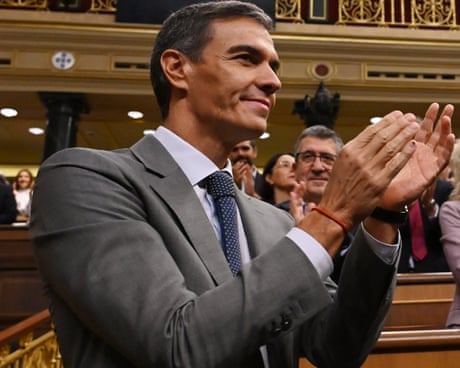
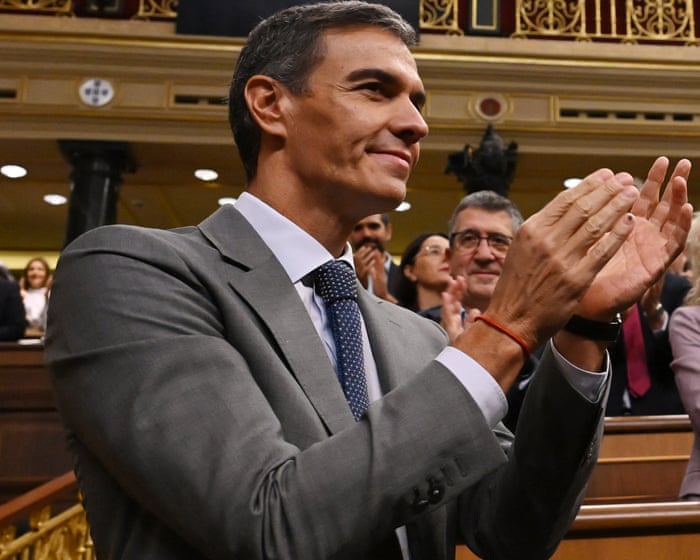
The Spanish prime minister has been a lonely champion of progressive values in the EU. But the polls look ominous
When it comes to risk-taking, Spain’s prime minister, Pedro Sánchez, has a formidable track record. In 2018, the Socialist party leader swept to power by triggering a no-confidence vote that unexpectedly ousted his centre-right predecessor Mariano Rajoy. He held on to it against the odds after calling a snap election in 2023, at a time when the popularity of his own party had plummeted and the far right was on the rise.
As he endures another rocky period in office, Mr Sánchez has once more rolled the dice. Last week, he announced a snap poll for November after his minority government was blocked from passing measures to ease Spain’s chronic housing crisis. The eviction of 87-year-old María del Carmen Abascal from her Madrid home sparked nationwide protests over soaring rents and prices. The outrage grew with news of her death last Wednesday. Mr Sánchez clearly hopes that campaigning on a national cause célèbre gives him a chance of winning a stronger progressive mandate next month.
Do you have an opinion on the issues raised in this article? If you would like to submit a response of up to 300 words by email to be considered for publication in our letters section, please click here.
For four years, Europe presented its energy break with Russia as a strategic and moral necessity, with Brussels expanding sanctions, promising to cut Moscow’s revenues and preparing a complete ban on Russian liquefied natural gas. Yet European companies bought more LNG from Russia’s Yamal project in the first nine months of 2026 than in the same period of 2025.
EU ports received a record 12.18 million tonnes of Yamal LNG between January and September 2026, an increase of 9.5% over the same period in 2025. The gas arrived in 167 cargoes, roughly one every 1.6 days. The EU received 85% of Yamal’s recorded deliveries by volume even as the project’s worldwide shipments fell by 1.3%.
Urgewald, a German environmental and human rights organisation, placed the estimated benchmark value of those deliveries at €7.88 billion, using cargo volumes and monthly European TTF gas prices rather than disclosed contract payments. European leaders spoke of economic separation while EU ports remained the destination for a multibillion-euro Russian LNG trade.
Sanctions that preserved trade
The EU’s ban on Russian LNG under existing short-term contracts took effect on 25 April 2026. Eligible long-term agreements signed before 17 June 2025 could continue supplying Europe through the end of 2026, with the prohibition taking effect on 1 January 2027. Brussels could announce the coming break while established contracts kept Russian cargoes moving.
Five months after the ban on imports under eligible short-term LNG contracts took effect, EU ports received 792,440 tonnes of Yamal LNG in September, slightly more than a year earlier.
Yamal sold most of its output under long-term contracts signed before the war. TotalEnergies agreed to buy 4 million tonnes a year directly from the project, CNPC contracted 3 million, Germany’s SEFE inherited a 2.9 million tonne agreement, and Spain’s Naturgy held another for 2.5 million tonnes. Novatek sold part of its own allocation through separate agreements with TotalEnergies, Shell and Gunvor, now known as Centalion Group Ltd, These contracts kept major European energy companies commercially tied to Yamal after the political rupture with Moscow, securing supplies that could be sold or traded through their international portfolios, with destination flexibility varying by agreement.
TotalEnergies chief executive Patrick Pouyanné confirmed that its Yamal agreements were linked to Brent crude. During periods of extreme volatility, those long-term contracts secured supplies that could cost less than replacement gas on the European spot market. When spot prices outpaced oil-linked purchase prices, the gap created an opportunity to earn more from selling the contracted cargoes.
Buyers could exploit that opportunity through global portfolios spanning ships, terminals, storage facilities and supplies from several producing countries. They could exchange cargoes, redirect available gas and meet customer obligations from alternative sources, freeing supplies for sale in markets offering stronger returns.
Russian officials acknowledged that portfolio buyers could swap Yamal supplies against gas from other sources and direct available cargoes towards the most lucrative markets. A Yamal cargo could fulfil one obligation while freeing another supply for sale elsewhere, allowing traders to earn from price differences across markets.
The contracts that bound companies to Russian suppliers also secured access to gas that could cost less than replacement cargoes bought at crisis prices. Keeping those agreements meant preserving both the supply and the trading opportunities it created.
The profits behind the policy
TotalEnergies owns 20% of Yamal LNG and holds 19.4% of Novatek, the project’s controlling shareholder. It also buys and markets Yamal cargoes, giving it commercial interests as both a shareholder and a cargo trader.
In July 2026, chief executive Patrick Pouyanné told analysts that lifting and selling Yamal cargoes generated an average of about $400 million annually. TotalEnergies had direct access to the cash booked through its UK trading entity. The income fluctuated with Brent crude prices because the contracts were linked to oil.
TotalEnergies also retained rights to dividends through its ownership positions, although sanctions limited its ability to transfer those funds from Russia to Europe. Pouyanné confirmed that some cash flows had been distributed without disclosing how much had been repatriated, while the company’s Novatek dividends, which he had valued at around $600 million annually in 2024, had previously remained stuck abroad.
The commercial incentive extended beyond the immediate Yamal income, as continued deliveries preserved access to contracted gas while removing Russian LNG before replacement supplies became available could drive prices higher across the wider market. Pouyanné warned at a French Senate hearing that replacing those supplies would force Europe to pay more, and told analysts in April 2024 that sanctions on Yamal would benefit TotalEnergies’ global portfolio by pushing LNG prices higher.
TotalEnergies had commercial interests under either outcome, as continued Yamal trade generated sales income while a sudden prohibition could tighten supply and raise the value of gas sold elsewhere in its portfolio. Continued access and greater scarcity offered different routes to income, leaving the company with a potential financial benefit even if Russian deliveries stopped.
Germany’s state-owned energy group SEFE inherited a contract for about 2.9 million tonnes of Yamal LNG annually through the former Gazprom Marketing & Trading business, after Berlin nationalised its parent company, Gazprom Germania, in 2022. The group became Securing Energy for Europe, retaining the Russian supply agreement under German state ownership.
SEFE’s trading operation later attributed substantial profits across its LNG portfolio to contractual flexibility, freight optimisation and arbitrage, while its 2024 financial report recorded £411.2 million in EBITDA and £199.4 million in profit after tax. Those figures covered SEFE Marketing & Trading and its subsidiaries, without isolating the contribution from Yamal.
That flexibility extended to its Indian supply obligations, for which Reuters reported that the business had arranged cargoes from other sources to reduce freight costs. SEFE’s chief executive also explained that it could retain Yamal supplies in Europe and serve India from elsewhere in its portfolio when doing so was cheaper, although that account described an available trading option rather than documenting individual cargo swaps.
Under German state ownership, SEFE retained a long-term agreement for about 2.9 million tonnes of Yamal LNG annually, even as Europe sought to reduce its dependence on Russian energy. Berlin’s nationalisation changed the ownership of Gazprom’s former German business, but the Russian supply agreement remained in place, preserving its commercial ties to Yamal inside a state-owned international trader.
Shell’s phased withdrawal
On 8 March 2022, Shell announced a phased withdrawal from Russian hydrocarbons, including oil, gas and LNG, but later acknowledged that long-term contractual commitments remained despite the end of its spot purchases of Russian LNG.
Among those commitments was a 2015 agreement with Novatek for approximately 900,000 tonnes of Yamal LNG annually, with a term exceeding 20 years. In February 2023, a Shell spokesperson confirmed that the company was still receiving Russian LNG cargoes under that contract, almost a year after announcing its withdrawal.
Shell’s Yamal agreement sat within a global LNG portfolio, with its cargoes passing through a contractual transhipment point at Montoir-de-Bretagne in France. Across the wider business, Shell used its international operations to capture differences in regional demand and prices, and chief executive Wael Sawan attributed strong late-2023 trading results to arbitrage between eastern and western markets. Those results demonstrate the commercial value of portfolio flexibility, without identifying how much came from Yamal.
The contracts therefore carried commercial opportunities alongside their obligations, preserving access to gas that could be sold or exchanged within wider portfolios. Remaining in the trade could generate value even where companies presented their continuing purchases as a contractual constraint, although that potential should not be confused with a verified profit from each agreement.
Russian gas beyond Nord Stream
On 7 February 2022, then US President Joe Biden stood beside German Chancellor Olaf Scholz and said that a Russian invasion would bring Nord Stream 2 to an end. Asked how Washington could achieve that when Germany controlled the project, he maintained that the United States could ensure the outcome without explaining the mechanism.
Germany halted Nord Stream 2’s certification on 22 February 2022, preventing a pipeline that had never entered commercial service from beginning operations. Nord Stream 1 had already stopped delivering gas when explosions ruptured three of the system’s four pipeline strings on 26 September 2022, leaving only one Nord Stream 2 string intact. With the Nord Stream route out of operation, Russian LNG continued reaching European terminals through the contracts held by companies such as TotalEnergies, SEFE and Shell.
Yamal had begun exporting LNG in December 2017, almost five years before the Nord Stream explosions, and its seaborne supply network survived the loss of the pipelines. European companies continued buying Russian gas under long-term contracts, receiving by-sea supplies that remained commercially valuable even as the direct pipeline connection between Russia and Germany stood idle.
America captured the market
The decline of Russian pipeline supplies opened a larger European market for American LNG, and Washington worked with Brussels to expand the trade. In their 25 March 2022 agreement, the United States pledged to work towards at least 15 billion cubic metres of additional LNG for the EU that year, including supplies from international partners, while maintaining a regulatory environment that would support additional export capacity. The European Commission committed to working with member states to secure demand for approximately 50 billion cubic metres of additional American LNG annually until at least 2030, giving the effort to reduce Russian dependence a long-term market for US supplies.
American deliveries to the EU rose from 22 billion cubic metres in 2021 to 56 billion in 2022, exceeding the initial expansion target. By the second quarter of 2026, the United States supplied 63.2% of EU LNG imports, with Russia second at 17.3%. Europe’s retreat from Russian pipeline gas had been accompanied by a US-European policy effort to expand American supply, while Russian LNG retained a substantial place in the same market.
Dependence became leverage
Europe’s reliance on American supplies extended beyond LNG, giving Washington leverage over another essential fuel when the Trump administration asked the EU to release 120 million barrels of emergency diesel over six months. Washington presented reserve releases as an alternative to restricting American diesel exports, a threat with considerable force because the United States supplied around half of the EU’s diesel imports in August 2026.
Washington was pressing Europe to release finished diesel that could reach consumers without further refining, while its own emergency contribution consisted of crude offered to companies under loan arrangements requiring repayment in oil with additional barrels. The US Department of Energy’s September solicitation explicitly built replenishment into those contracts, leaving Europe under pressure to draw on immediately usable fuel while American releases carried a contractual obligation to restore its crude reserves.
The pressure was followed by a G7 agreement on 2 October 2026 to coordinate the release of 100 million barrels over four months, with a substantial diesel release brought forward into the first 20 days. G7 leaders also reaffirmed their commitment to refrain from energy export restrictions against one another, placing continued access to supplies alongside the agreement to draw down emergency stocks.
Washington had helped build a larger European market for American energy as part of the effort to reduce dependence on Russia, then used the prospect of restricting diesel exports to press European governments to release their reserves. Europe’s reliance on an allied supplier had left it exposed to pressure over access to fuel, with emergency stocks becoming part of the negotiation over keeping those supplies flowing.
A credibility crisis
European leaders need to explain how their effort to cut Russia’s energy revenues can be reconciled with rising Yamal deliveries to EU ports and European traders earning income from the cargoes. TotalEnergies’ disclosure of about $400 million in annual income makes continued trade harder to present solely as an unwanted contractual obligation, when the same agreement also sustained a valuable business. Compliance with the sanctions timetable does not resolve the political contradiction; it shows how much commerce that timetable allowed to continue.
Whose interests are being served when Europe distances itself from Russian pipeline supplies, remains a paying customer for Russian LNG and becomes more exposed to American pressure?
European leaders owe their citizens an explanation of why Russia remained an acceptable supplier for profitable LNG contracts while economic separation was presented as a strategic necessity. They must also explain whose interests were served by replacing that dependence with greater exposure to Washington.
En 1858, Karl Marx avait prédit l’ascension de l’Asie au rang de centre du capitalisme. Aujourd’hui, la Chine confirme sa prophétie en occupant une position dominante dans l’économie mondiale (19,9% du PIB mondial en PPA) et dans le secteur industriel : elle est en tête dans 7 des 10 industries les plus avancées, dans la transition énergétique et dans la fabrication de haute technologie. Sa croissance a multiplié son économie par 54 depuis 1990 grâce à la planification et aux investissements de l’État. Bien que les États-Unis conservent la primauté du dollar et de leurs bases militaires, la Chine est le plus grand créancier mondial et la puissance décisive. L’article conclut en critiquant l’aveuglement des élites latino-américaines qui se tournent vers des puissances en déclin.
En 1858, Karl Marx s’était penché sur la marginalisation imminente de l’Europe et des États-Unis face à l’expansion du capitalisme en Asie. Dans une lettre adressée à Engels, il exprimait sa crainte qu’une future révolution européenne ne soit géographiquement réduite à un «petit coin» du monde, compte tenu de la montée de la société bourgeoise dans de vastes régions de la planète telles que la Chine, le Japon, l’Australie et la Californie (Œuvres complètes, vol. 40).
Nous étions au milieu du XIXe siècle, marqué par la domination mondiale absolue de l’Empire britannique, l’élan de la première révolution industrielle — la puissance de la vapeur, l’industrie textile — et la présence des États-Unis en tant que puissance intermédiaire fournissant du coton aux grandes usines de Manchester. Mais au-delà de tout cela, Marx voyait en Asie, et en Chine en particulier, la formation embryonnaire du nouveau cœur du capitalisme mondial.
Cent soixante-huit ans se sont écoulés, et les prédictions de Marx ont été confirmées par l’histoire. Aujourd’hui, la Chine est la plus grande économie de la planète. En mesurant le PIB en parité de pouvoir d’achat (PPA) — ce qui élimine les distorsions liées aux taux de change du marché et aux différences de coût de la vie —, le FMI estime que l’économie chinoise représente aujourd’hui 19,9% de l’économie mondiale, tandis que celle des États-Unis atteint 14,5% et celle de l’Union européenne (UE), 14%. En 1990, le PIB de la Chine ne représentait que 3% du total mondial, celui des États-Unis 19% et celui de l’Europe 23% (IMF DataMapper, 2026). Si l’on prend en compte l’ensemble de l’Asie, le PIB du continent atteint 49% du total mondial.
Cela n’a rien de surprenant. En 1700, l’économie asiatique représentait 60% de l’économie mondiale, tandis que celle de l’Europe atteignait un peu moins de 30% et celle de l’ensemble des États-Unis, 3% (Piketty, Le Capital au XXIe siècle, p. 76). À cette époque, le revenu moyen d’un Chinois était similaire à celui d’un habitant des Pays-Bas, alors leader commercial et financier de l’Europe. La colonisation européenne de l’Asie a détourné cette trajectoire pendant 200 ans, et aujourd’hui, ce continent est à nouveau à la tête de l’économie mondiale.
Mais la Chine n’est pas seulement en tête aujourd’hui en termes de taille de son PIB, mais aussi en ce qui concerne les fondements matériels sous-jacents de la puissance du pays.
En ce qui concerne la valeur ajoutée manufacturière, la Chine génère 29% du total mondial, tandis que les États-Unis et l’Union européenne y contribuent chacun à hauteur de 17% (Statista Research, 2025). On estime que d’ici 2030, cette part atteindra 45% (ONUDI, 2024). Ce leadership ne se limite pas à la fabrication de masse de jouets ou d’appareils électroménagers, mais s’étend également aux domaines des technologies de pointe et à la maîtrise de l’ensemble de la chaîne de valeur des produits. L’Information Technology and Innovation Foundation (ITIF) — un groupe de réflexion américain — montre que la Chine est déjà leader dans 7 des 10 industries les plus avancées au monde : les systèmes informatiques et électroniques, les produits chimiques, les machines et équipements, les métaux de base, les véhicules à moteur, les produits métalliques transformés et les équipements électroniques. De leur côté, les États-Unis occupent la première place dans la production de technologies de l’information et de services — en particulier la conception de puces d’IA —, dans le secteur pharmaceutique et dans d’autres secteurs des transports (ITIF, 2026).
En 2024, la Chine a fabriqué 86% des panneaux solaires mondiaux, 80% des batteries électriques, 72% des voitures électriques, 64% des smartphones, 54% des robots industriels et 49% des drones (El País, 25 septembre 2026).
En matière de consommation d’électricité, l’essor de la Chine a été spectaculaire. En 1990, la Chine consommait moins de 1 000 térawattheures (TWh), tandis que les États-Unis en consommaient 3 000 TWh. En 2025, la Chine a atteint 10 300 TWh, tandis que la consommation des États-Unis stagne depuis 20 ans autour de 4200 TWh (EIA, 2026).
De plus, la Chine est le premier «État électrique» au monde, étant à la fois le plus grand investisseur et le plus grand producteur mondial d’énergies alternatives. Elle a réussi à réduire le coût de production de l’énergie solaire de 350 dollars par MWh en 2016 à 35–60 dollars par MWh d’ici 2025. Ce coût est inférieur à celui de l’électricité produite à partir du gaz en cycle combiné (60–120 dollars par MWh) ou du charbon (71–170 dollars par MWh) (Lazard, LCOE, 2026).
La Chine est un pays qui ne produit pas de pétrole et qui, au cours du siècle dernier, a été l’un des plus grands extracteurs de charbon pour la production d’énergie. Cependant, au cours de la dernière décennie, c’est le pays qui a le plus contribué à la transition énergétique mondiale. Sa capacité installée de production d’énergie solaire s’élève aujourd’hui à 1175 TWh, alors que le reste du monde ne produit à lui seul que 1600 TWh (Statista, avril 2026). Aujourd’hui, la Chine dispose d’un complexe de production dont la capacité annuelle de fabrication de panneaux solaires s’élève à 1200 TWh, de sorte qu’en moins de 10 ans, une fois les problèmes de stockage et de transport surmontés, elle pourrait fabriquer suffisamment de panneaux pour enrayer le changement climatique (Tooze, 19 septembre 2025). Aucun pays au monde ne possède aujourd’hui une telle capacité de restauration écologique à l’échelle mondiale.
Dans l’ensemble, la croissance de l’économie chinoise représente entre 25% et 30% de la croissance de l’économie mondiale. De 1990 à 2025, la croissance moyenne de son PIB a été de 8,5%, atteignant 14% certaines années, bien qu’elle se soit stabilisée ces dernières années autour de 5%. Ce développement sans précédent lui a permis de multiplier la taille de son économie par 54 depuis 1990, alors que les États-Unis l’ont multipliée par 5,1 et l’Union européenne par 2,9 au cours de la même période (Banque mondiale, données ouvertes, 2026).
Grâce à une combinaison mûrement réfléchie d’ouverture aux investissements étrangers, de transferts de technologie, de soutien à l’investissement privé national et de création d’entreprises publiques dans des secteurs stratégiques de l’économie, la Chine a atteint cette position de leader tout en maintenant un taux d’investissement annuel qui, depuis plus de deux décennies, oscille entre 35% et 45% du PIB. À titre de comparaison, ce taux s’est établi à environ 17% aux États-Unis et à 22% dans l’Union européenne.
Sur le plan commercial, de 1990 à 2025, la Chine a accumulé un excédent commercial de 9 700 milliards de dollars. Pour la seule année 2025, alors que les États-Unis avaient déclaré une guerre commerciale, cet excédent a atteint 1100 milliards de dollars (BBC, janvier 2026). De plus, comme dans toutes les économies développées, la dette publique est élevée. Pour 2025, elle est estimée à 120% du PIB, un chiffre très proche des 125% des États-Unis (FMI, 2026). À cette différence près que la totalité de la dette chinoise est contractée en yuan auprès de banques d’État chinoises, tandis que la majeure partie de la dette américaine est détenue par des investisseurs privés et des gouvernements étrangers.
Ces flux de revenus ont permis à la Chine de devenir le premier créancier bilatéral mondial, devant la Banque mondiale ou le FMI. De 1990 à 2025, la Chine a accordé des prêts commerciaux d’une valeur de 2200 milliards de dollars, notamment aux États-Unis (AidData, novembre 2025). Ce chiffre est déjà supérieur aux 1300 milliards de dollars que, sur la même période, les États-Unis ont versés à titre d’aide militaire et économique à leurs pays alliés (USAFacts, septembre 2026). Ainsi, alors que la Chine a mis en place une infrastructure mondiale pour l’approvisionnement en matières premières et la distribution de marchandises (la «Route de la soie»), les États-Unis ont maintenu des armées et des dirigeants soumis à leurs desseins politiques.
Malgré toute cette puissance économique, la Chine — contrairement à ce qu’ont fait les États-Unis au XXe siècle et, avant eux, le Royaume-Uni — n’a pas encore établi l’hégémonie mondiale de sa monnaie, n’a pas déployé de bases militaires pour garantir sa suprématie politique, et n’exporte pas non plus sa culture ou son système politique comme un modèle à imiter par le reste des pays.
Aujourd’hui, le dollar continue de remplir la fonction de monnaie de réserve mondiale pour 85% des opérations de change mondiales, représente 58% des réserves internationales des banques d’États et sert de monnaie de règlement au sein du système SWIFT pour la plupart des paiements internationaux (BRI, 25 février 2026). Mais sur le plan intérieur, la Chine a déjà créé le deuxième plus grand marché obligataire au monde, évalué à 28 000 milliards de dollars, derrière celui des États-Unis, qui représente 61 000 milliards de dollars (Deutsche Bank, juillet 2026). De même, elle compte trois des dix centres financiers les plus importants au monde (Shanghai, Hong Kong et Shenzhen) et a lancé le système CIPS comme alternative pour les paiements internationaux.
Quant aux bases militaires à l’étranger, la Chine en possède trois, contre 750 pour les États-Unis, et, pour l’instant, elle ne semble pas intéressée par l’exportation de son modèle d’organisation politique appelé «socialisme aux caractéristiques chinoises». Quant à l’expansion culturelle, elle n’en est qu’à ses débuts — jeux vidéo, esthétique asiatique, plateformes de vente en ligne rapides —, alors que le marché intérieur gagne en importance pour la croissance économique. Aux États-Unis, la consommation des ménages représente 69% du PIB ; en Chine, 40% (Banque mondiale, 2026). À titre de comparaison, il y a vingt ans, le rapport entre le revenu par habitant de la Chine et celui des États-Unis était de 1 pour 20. Aujourd’hui, ce rapport est de 1 pour 3,5. Dans moins de 50 ans, il sera de 1 pour 1 (Milanovic, 2026). Tout indique que le «Grand Renouveau du pays chinois», par lequel ses dirigeants envisagent le rétablissement de la grandeur mondiale de leur pays, ne se mesure pas à l’aune de la précipitation de quelques décennies, mais à celle de la patience obstinée de plusieurs siècles.
Il ne fait aucun doute que la Chine est déjà aujourd’hui le centre du monde. Et, face à cela, il est tout simplement pathétique de voir les élites réactionnaires d’Amérique latine chercher désespérément à obtenir un visa américain ou acheter un appartement à Madrid pour rehausser leur statut de «modernes». Elles courent dans tous les sens, hébétées, à la poursuite des mirages de pays qui ne sont désormais plus que de «petits coins» du monde.

 Login