❌

Reading view

2026 Women’s Copa Libertadores Begins in Quito

The 2026 Women’s Copa Libertadores kicked off this Thursday, October 15, in Quito, the capital of Ecuador. Sixteen South American football clubs are participating, competing for the continental title through October 31.

RELATED:

Venezuela Wins Gold Medal in Women’s Football at the 2026 South American Games

Organized by the South American Football Confederation (CONMEBOL), the tournament serves as a premier stage for women’s football in South America, featuring clubs from the organization’s ten member national associations: Argentina, Bolivia, Brazil, Chile, Colombia, Ecuador, Paraguay, Peru, Uruguay, and Venezuela.

This marks the third time the competition has been held in Ecuador, following editions in 2019 and 2022—both also hosted in Quito. Matches will take place at the Rodrigo Paz Delgado and Banco Guayaquil stadiums, the latter located in the Los Chillos Valley, southeast of the capital.

Ecuador is represented by two teams: the national champions, Dragonas IDV, and Guerreras Albas (from Liga de Quito). Both sides will look to leverage their home-field advantage to advance to the knockout stages of this top-tier South American women’s club tournament.

Dragonas IDV has been drawn into Group B alongside Belgrano (Argentina), Universitario (Peru), and Palmeiras (Brazil). Meanwhile, Guerreras Albas will compete in Group C against Cruzeiro (Brazil), Olimpia (Paraguay), and Bolívar (Bolivia).

🤩 ¡Ya llegó el momento de vivir la edición de 2️⃣0️⃣2️⃣6️⃣! ¿Quién se llevará el trofeo? 🏆

😎 Mais uma jornada da CONMEBOL #LibertadoresFEM! Já tem palpite para quem vai ficar com a taça? 🤔 pic.twitter.com/EbLLKazUf2

— CONMEBOL Libertadores Femenina (@LibertadoresFEM) October 15, 2026

The text reads, “The time has come to experience the 2026 edition! Who will take home the trophy?”

Having two local teams gives Ecuador the chance to vie for the title on home soil, backed by their fans. The participating squads arrived in the capital in early October to finalize their preparations and acclimate to Quito’s high altitude—a factor that could influence the course of the tournament.

The competition retains its format of four groups, each consisting of four teams. In the initial phase, the teams will compete in a round-robin format, with each side playing every other team in their group once. After three matchdays, the top two teams from each group will advance to the quarterfinals.

From that stage onward, the competition will follow a single-elimination format, with one-off matches in the quarterfinals, semifinals, and final. A third-place play-off will also be held before the champion is crowned.

The organizers will implement VAR technology for all matches, in line with the modernization standards promoted by CONMEBOL. Local authorities and the organizing committee are finalizing logistical details at the stadiums to ensure the smooth running of the tournament.

Corinthians enters the competition as the reigning champion and will look to defend the title it won in the previous edition.. The Brazilian side leads Group A, alongside Chile’s Colo-Colo, Venezuela’s Caracas FC, and Colombia’s Independiente Santa Fe.

Palmeiras—also from Brazil—will aim to reclaim the trophy they won in 2022, when they defeated Argentina’s Boca Juniors in the final. The team is in Group B, joined by Dragonas IDV, Belgrano, and Universitario.

#Sports | Venezuela won the gold medal in women’s football at the 2026 South American Games in Santa Fe after defeating Chile 4-2 on penalties, following a 1-1 draw in regulation time.https://t.co/VasPMsSm5M

— teleSUR English (@telesurenglish) September 25, 2026
  •  

Record-breaking European Judo Championships Veterans coming to Portimão

Record-breaking European Judo Championships Veterans coming to Portimão

Portimão will host the largest European Judo Championships Veterans ever held later this month, with a record 1,415 athletes from 36 countries registered to compete. The championships will take place

The post Record-breaking European Judo Championships Veterans coming to Portimão appeared first on Portugal Resident.

  •  

British fans flock to Portugal as Benfica and Torreense host Sunderland and Celtic

British fans flock to Portugal as Benfica and Torreense host Sunderland and Celtic

Portugal is welcoming thousands of British football fans as Benfica host Celtic and Torreense face Sunderland this Thursday (October 15), with visiting supporters already making themselves heard in Lisbon and

The post British fans flock to Portugal as Benfica and Torreense host Sunderland and Celtic appeared first on Portugal Resident.

  •  

Contradicting PM and reports, Egypt’s spy chief said not to have been in Israel days before Oct. 7

After claims about Abbas Kamel's alleged flying visit to warn about a Hamas attack, multiple reports now say he wasn't aboard private Egyptian jet that arrived on Sept. 26, 2023
  •  

Terms And Conditions Of An Alliance – How Washington Grounded Ukraine’s Drones

Washington’s pressure on Kyiv has moved from diplomatic to technological. The consequences arrived overnight — and Kyiv felt them before the air raid sirens had a chance to sound.

Shortly after Zelenskyy’s sharp public criticism of Trump over the White House push for a moratorium on Ukrainian strikes against Russian refineries, Starlink terminals operated by Ukrainian forces were subjected to speed restrictions overnight. Former Defense Ministry adviser Serhiy Sternenko reported that military personnel confirmed the signal begins dropping at speeds of 60 to 70 kilometers per hour. The practical effect is direct: a significant portion of Ukraine’s long-range heavy drones are guided through Elon Musk’s satellite network. Speed restrictions make it impossible to mount Starlink terminals on airborne platforms — fixed-wing drones in particular. Ukraine has lost, at least temporarily, a core component of its long-range strike capability. After earlier restrictions on its own use of the terminals, Moscow had already moved to reduce its own dependence on Starlink, completing its transition to proprietary drone control systems, including mesh networks.

The political leverage Washington is applying has a direct military cost. That cost was visible within hours.

Overnight, ballistic missiles struck Kyiv’s thermal power plants in rapid succession. Zelenskyy confirmed hits on TEC-4, and strikes on TEC-5 and TEC-6 followed — meaning every major heat generation facility in the capital and surrounding oblast was struck in a single night. The Trypilska and Kyivska power stations were also hit. Power went out across several city districts. Public transport was disrupted. Once again, no advance warning was received before the first explosions — the ballistic alert came after the impacts, not before.

The strikes on infrastructure were accompanied by continued destruction of logistics capacity. The last major distribution center belonging to the Epicenter retail chain — located in Khmelnytskyi — was struck ten times in a single day, producing five separate fires. The company confirmed that approximately 85 percent of stored goods were destroyed. “The enemy achieved its goal,” the official statement read. Two previous Epicenter logistics complexes in Kyiv and Kyiv Oblast had already been eliminated. This was the last one standing. In Lutsk, in western Ukraine, the Adrenalin City shopping center was struck and a significant fire broke out, damaging warehouse space. The full scale of losses there is still being assessed.

Every heat source in Kyiv struck in one night. The last major retail distribution network was eliminated. Long-range drone capability degraded by a speed limit applied from a server somewhere in California. Ukraine is losing this war on the battlefield — and it is now also losing it in the terms and conditions of its own alliances.

______________________________________________________________________________________________________________________

DEAR FRIENDS. IF YOU LIKE THIS TYPE OF CONTENT, SUPPORT SOUTHFRONT WORK:

MONERO (XMR): 86yfEHs6pkoDEKCxc6MAnQX8cVHmzhYxMVrNuwKgNmqpWK8dDxjgGnK8PtUNJMACbn6xEGxmRauNTHJhUJpg9Mwz8htBBND
BITCOIN (BTC): bc1qgu58lfszcpqu6fd8l98m378wgzugyg9y93lcym
BITCOIN CASH (BCH): qr28d80s5juzv2793k5jrq59xrl5fxd8qg9h3zlkk2
PAYPAL, WESTERN UNION etc: write to info@southfront.press , southfront@list.ru

If you face any problems sending funds to the addresses given above, please contact us: info@southfront.press and southfront@list.ru. Also be aware that many email services such as Hotmail, Yahoo etc. may block correspondence from info@southfront.press and some others put it in spam.

If you want to support SouthFront but have no opportunity to do it via cryptocurrency, please contact us: info@southfront.press and southfront@list.ru.

SouthFront: Analysis and Intelligence
NOW hosted at southfront.press
Previously, SouthFront: Analysis and Intelligence was at southfront.org.
The .org domain name had been blocked by the US (NATO) (https://southfront.press/southfront-org-blocked-by-u-s-controlled-global-internet-supervisor/) globally, outlawed and without any explanation
Back before that, from 2013 to 2015, SouthFront: Analysis and Intelligence was at southfront.com

SOUTHFRONT.PRESS

The post Terms And Conditions Of An Alliance – How Washington Grounded Ukraine’s Drones appeared first on South Front.

  •  

Portugal becomes world surfing ‘epicentre’ as elite descends on Peniche

Portugal becomes world surfing ‘epicentre’ as elite descends on Peniche

Portugal has become a hub for the world’s best surfers, with three major competitions spread across the country turning its coastline into what the World Surf League has described as

The post Portugal becomes world surfing ‘epicentre’ as elite descends on Peniche appeared first on Portugal Resident.

  •  

‘I wanted to change the stigma’: Nikita Hand on winning a civil rape case against Conor McGregor

The popularity of Hand’s book Not the Perfect Victim is the latest twist in a story that puts the spotlight on how society responds to sexual assault allegations

Nikita Hand had a compelling reason to not pursue a civil rape case against Conor McGregor. She was, in her own view, an imperfect victim.

The day of the assault, she had been partying with alcohol and cocaine before contacting McGregor, who took her to a Dublin hotel.

Continue reading...

© Photograph: Patrick Bolger/The Guardian

© Photograph: Patrick Bolger/The Guardian

© Photograph: Patrick Bolger/The Guardian

  •  

Ukrainian OSINT channel: Russia turned a bare field into a Geran-5 launch site in a month—and drones are already arriving

ukrainian osint channel russia turned bare field geran-5 launch site month—and drones already arriving · post millerovo drone base 13 2026 satellite tme/absolutely_reliable ukraine news reports

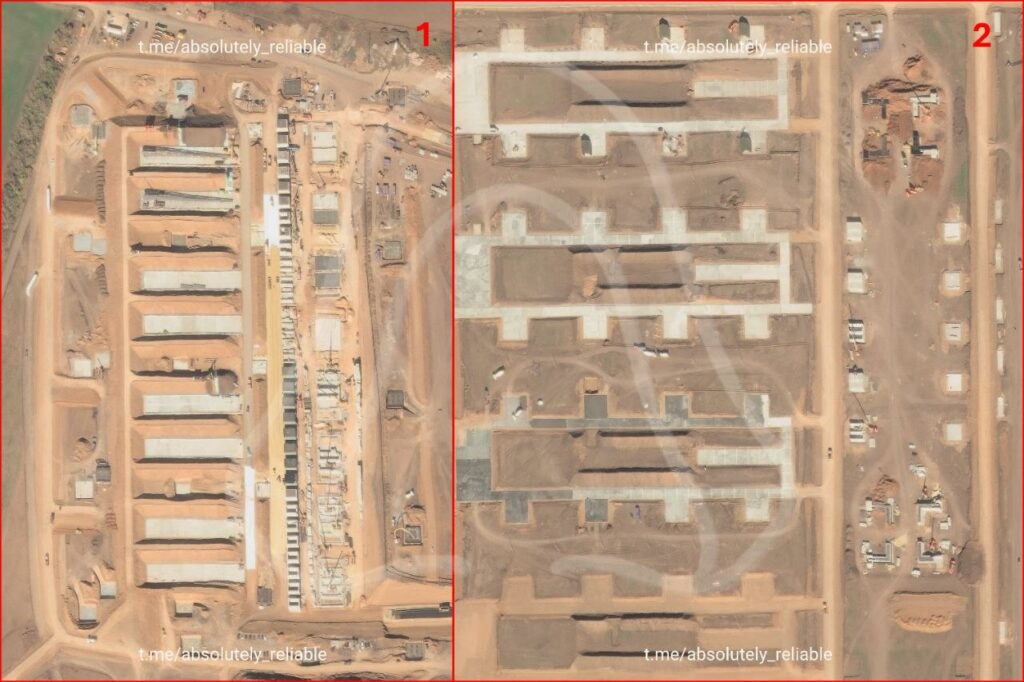
Russia has nearly finished the first section of a new launch site for jet-powered Geran-5 attack drones near the town of Millerovo in Rostov Oblast, anonymous Ukrainian OSINT channel Absolutely Reliable Source reported on 13 October. The channel’s bio says it covers Ukraine’s deep strikes and that its author belongs to a larger, unnamed structure. It says Russia rushed the build to scale up attacks after its September strikes on Kyiv.

The site is meant for the kind of drone Ukraine stops far less often than the older Shaheds. Ukraine downs 55% of jet-powered Shaheds, the class that includes the Geran-5, and more than 90% of the older propeller-driven ones, President Volodymyr Zelenskyy said on 26 September. Russian industry makes about 3,000 Geran-4 and Geran-5 drones a month, Ukraine’s military intelligence (HUR) told Militarnyi in August. A new launch site is how Russia plans to fire more of them, the channel argues.

Built in weeks, by the channel’s count

The channel’s images from 1 September show no construction at the site. The latest ones show eight prepared positions for launchers and 32 places for preparing drones for launch, the channel wrote. Imagery from the day before its post shows drones being unloaded in one zone, it said.

Millerovo drone base, September 1
Millerovo drone base, 1 September 2026. Satellite image: t.me/absolutely_reliable
Millerovo drone base,
Millerovo drone base, 12 October 2026. Satellite image: t.me/absolutely_reliable

The channel’s headline says the work took a month. Ukrainian outlet Militarnyi, comparing the channel’s own images from 1 September and 12 October, put it at about six weeks. Both readings rest on the same images, which have not been independently verified.

Built like Tsymbulova

The construction style is very similar to Tsymbulova, Russia’s jet-drone base in Oryol Oblast, the channel wrote. That base has separate positions for storing, preparing, and launching jet drones, Militarnyi said. By late May, less than a month into an expansion of Tsymbulova, Russia was already building 10 more launchers there.

Ukrainian drones have hit Tsymbulova repeatedly, though most of the damage imagery comes from Absolutely Reliable Source. Militarnyi reported strikes on the base’s bunkers and hangars in September. Ukraine’s Defense Forces struck it again overnight on 1 October, damaging two ground shelters and drone preparation areas, Absolutely Reliable Source said. On 10 October, OSINT channel Exilenova+ reported another drone strike there, saying several bunkers, one jet-drone launcher, and a drone storage area were hit.

  •  

Joining Shakhtar as they make base in London: ‘We’re here to show the world that we are alive’

With no ‘home’ games in Ukraine, Arda Turan’s side hit the road again, with Chelsea’s Stamford Bridge hosting their Champions League campaign

The morning has thinned out into low, wispy cloud. Beneath it, Shakhtar Donetsk’s players are going through their paces. It is a light session for those who did not start against Veres Rivne the previous day; that means Arda Turan observes from the side, watching with the director of football, Darijo Srna. A stray ball zips towards them and Srna, after juggling it up, bends it into the goal with a familiar right-footed arc. “Modric!” exclaims Turan. But the two men are football legends in their own right and, as they continue to joke before Srna dashes away to take another phone call, the thought occurs that this happy scene could be played out almost anywhere else. Nearby, just beyond the team’s accommodation, a lake shimmers under the emerging sun.

It masks the fact that, around dawn, air raid sirens disrupted the peace for everyone in view. Even here, in Shakhtar’s bucolic spa hotel base 15 minutes outside Lviv, nobody is safe from the threat of Russian rockets and drones. In Rivne, three hours’ drive to the north-east, another alarm had sent the players and staff down to the stadium’s shelter. The second half was delayed by 20 minutes and that, no matter the corner of the country or the vividness of the autumn colours, is a weekly reality.

Continue reading...

© Photograph: Courtesy of Shakhtar Donetsk

© Photograph: Courtesy of Shakhtar Donetsk

© Photograph: Courtesy of Shakhtar Donetsk

  •  

IMF warns of debt-fueled AI spending as bubble fears grow

The International Monetary Fund warned Tuesday that the global economy faces serious risks from Big Tech firms taking on massive debt to fund the buildout of artificial intelligence data centers worldwide. The IMF’s latest Global Financial Stability Report outlines a number of risks to economic growth in the coming years, including a reliance on AI […]

The post IMF warns of debt-fueled AI spending as bubble fears grow appeared first on Asia Times.

  •  

Ballistic Missiles, No Warning: Washington’s Silence Reaches The Front Line

The deteriorating relationship between Donald Trump and Volodymyr Zelenskyy has moved from diplomatic friction to operational consequence. Ukraine is now paying for it in real time.

On October 12, Russia struck Kyiv with ballistic missiles. Ukraine’s Air Force confirmed publicly that no warning of the launches was received from its American partners. The intelligence blackout was not accidental. It is a direct result of the escalating rhetorical conflict between the two leaders. Ukraine risks losing early warning coverage entirely.

Russia appears to be exploiting the rift with deliberate efficiency. Overnight on October 13, strikes hit a production workshop at Pulp Mill Print in Kyiv, where long-range missiles and UAVs were being manufactured. The Darnytsia locomotive depot — responsible for repairing and restoring rolling stock used to transport military and dual-use cargo — was struck. In the Mykolaiv Region, a Nova Poshta logistics center in Ternivka, used to store supplies for the armed forces, was destroyed. A UAV storage facility in Meshkovo-Pohorilove was wiped out. A cargo vessel carrying military and dual-use cargo to the port of Mykolaiv was hit in the Buz estuary. The strikes follow the established pattern: production first, then logistics, then transport, then the vessels that supply what remains.

The front lines offer no relief from the pressure building in the rear.

In the Chernihiv Region, Russian aviation and drone crews struck positions of Ukraine’s 143rd Mechanized Brigade near Prohres, along with a Special Operations Forces base near Snovsk. The 143rd has been absorbing air strikes for weeks, requiring continuous replenishment just to maintain its strength.

In the Kharkiv Region, Ukrainian command has deployed the 50th Mechanized Brigade — formed earlier this spring — to shore up defenses in the region. The unit is expected to be directed toward Velykyi Burluk. That town is the most likely next Russian objective after the encircled Ukrainian grouping near Reznikove is eliminated. Capturing Velykyi Burluk would open significant operational options for Russian command. Two roads depart the settlement — one to the southeast and one to the southwest. Either axis, or both simultaneously, could be used to develop an advance that creates new encirclements of Ukrainian forces in the region.

Ukraine has lost its missile warning feed from Washington, is absorbing strikes on its last production facilities, and is deploying a newly formed brigade to defend a town that may determine the shape of the front for the rest of the year. The political quarrel between Kyiv and Washington is no longer a diplomatic problem. It is a battlefield problem. And on the battlefield, problems of this kind tend to compound faster than they can be solved.

______________________________________________________________________________________________________________________

DEAR FRIENDS. IF YOU LIKE THIS TYPE OF CONTENT, SUPPORT SOUTHFRONT WORK:

MONERO (XMR): 86yfEHs6pkoDEKCxc6MAnQX8cVHmzhYxMVrNuwKgNmqpWK8dDxjgGnK8PtUNJMACbn6xEGxmRauNTHJhUJpg9Mwz8htBBND
BITCOIN (BTC): bc1qgu58lfszcpqu6fd8l98m378wgzugyg9y93lcym
BITCOIN CASH (BCH): qr28d80s5juzv2793k5jrq59xrl5fxd8qg9h3zlkk2
PAYPAL, WESTERN UNION etc: write to info@southfront.press , southfront@list.ru

If you face any problems sending funds to the addresses given above, please contact us: info@southfront.press and southfront@list.ru. Also be aware that many email services such as Hotmail, Yahoo etc. may block correspondence from info@southfront.press and some others put it in spam.

If you want to support SouthFront but have no opportunity to do it via cryptocurrency, please contact us: info@southfront.press and southfront@list.ru.

SouthFront: Analysis and Intelligence
NOW hosted at southfront.press
Previously, SouthFront: Analysis and Intelligence was at southfront.org.
The .org domain name had been blocked by the US (NATO) (https://southfront.press/southfront-org-blocked-by-u-s-controlled-global-internet-supervisor/) globally, outlawed and without any explanation
Back before that, from 2013 to 2015, SouthFront: Analysis and Intelligence was at southfront.com

SOUTHFRONT.PRESS

The post Ballistic Missiles, No Warning: Washington’s Silence Reaches The Front Line appeared first on South Front.

  •  

Germany works to organize a Coalition of the Willing meeting as Russia strikes Ukraine’s energy sector

Ukrainian President Volodymyr Zelenskyy during a phone call with German Chancellor Friedrich Merz, 12 October 2026. Photo: Volodymyr Zelenskyy/X

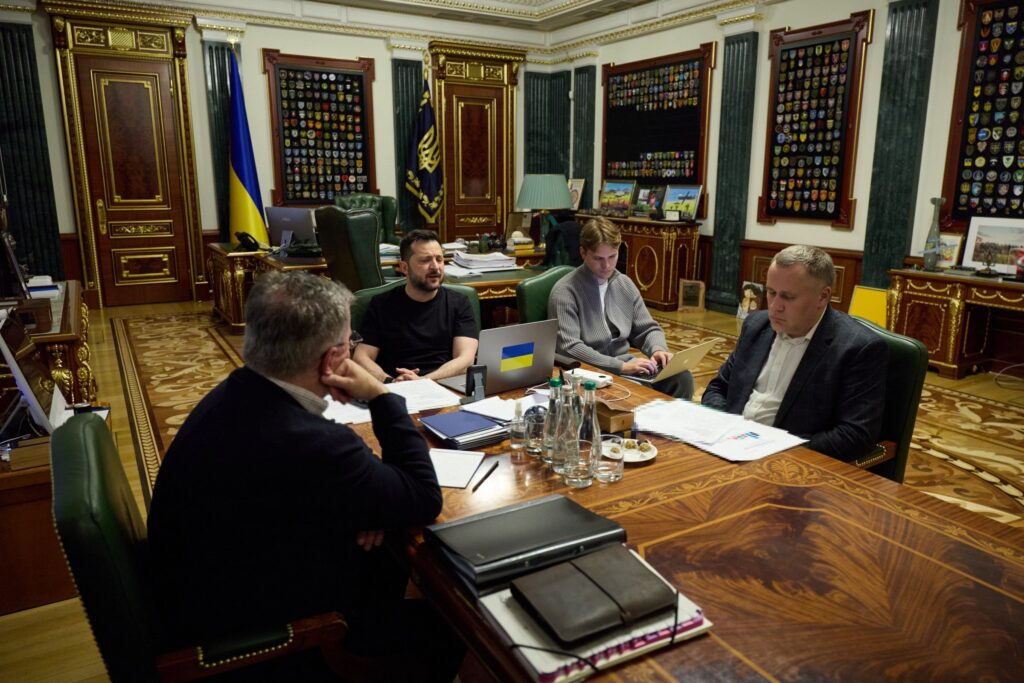
Germany is preparing a new meeting of the Coalition of the Willing to coordinate further support for Ukraine, President Volodymyr Zelenskyy said on 12 October following a conversation with German Chancellor Friedrich Merz.

Russia continues to strike Ukraine’s energy infrastructure despite US President Donald Trump’s claim that Moscow has agreed to an energy truce. German Chancellor Friedrich Merz is initiating a meeting of European leaders to discuss assistance to Ukraine in this situation.

Kyiv and Berlin have also agreed to hold a meeting of national security advisers in the E3 format, with Ukraine participating, according to the statement. The format involves an informal grouping of three leading European countries: the United Kingdom, France and Germany.

Zelenskyy and Merz discuss energy truce and support for Ukraine

During the conversation, the two sides also discussed US President Donald Trump’s proposal for an energy truce and Russia’s subsequent actions. Russian forces continue to attack Ukraine’s energy infrastructure, Zelenskyy noted.

“This is exactly how the Russians behave when pressure eases. It is very important that Europe continue to act on principle,” Zelenskyy stressed.

German Chancellor Friedrich Merz speaks online with Ukrainian President Volodymyr Zelenskyy, 12 October 2026. Photo: Volodymyr Zelenskyy/X

Germany is coordinating preparations for a meeting of the Coalition of the Willing, the Ukrainian president noted. The two sides also discussed support for Ukraine’s financial stability. Further steps are to be coordinated in greater detail during a meeting scheduled for this week, Zelenskyy said.

The Coalition of the Willing seeks additional support for Ukraine

The Coalition of the Willing was initiated by the United Kingdom and France, which held talks with representatives of 37 countries in March 2025 on supporting Ukraine in the event of a peace agreement. The initiative envisaged financial assistance and the deployment of troops, air forces or naval forces to protect Ukraine against renewed Russian aggression, Bloomberg reported.

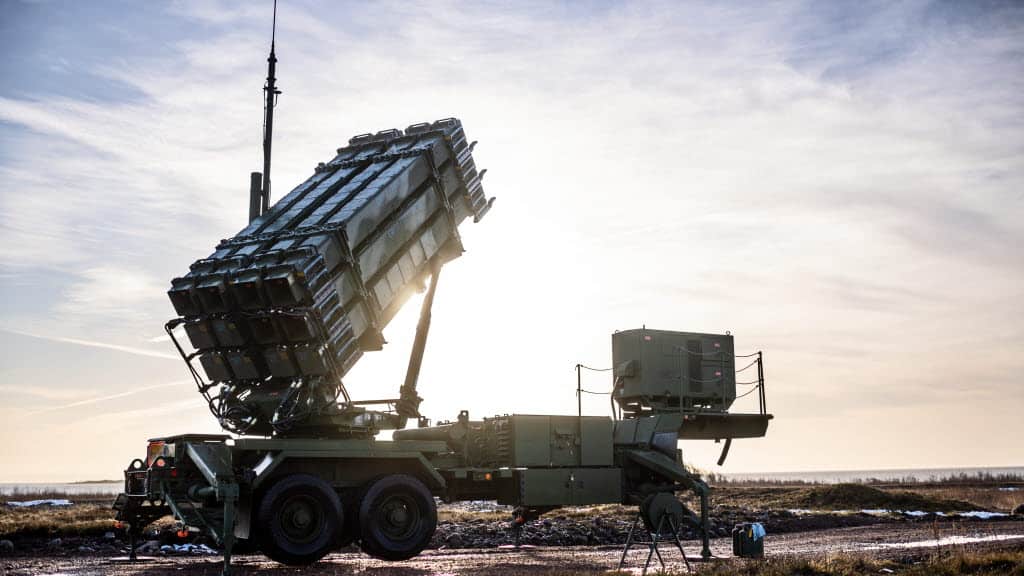
The latest meeting of the Coalition of the Willing took place on 24 August and was the 16th meeting, according to a statement on the website of the President of Ukraine. Zelenskyy called on partners to strengthen Ukraine’s air defense and provide at least 300 missiles for Patriot systems for the winter, the statement said.

Patriot PAC-3 surface-to-air missile system.
The Patriot PAC-3 surface-to-air missile system. Photo: Swedish Ministry of Defense

The president also proposed bringing forward part of the European loan financing planned for 2027 so that Ukraine could receive the funds this year. He separately stressed the need to find a mechanism for using frozen Russian assets to defend Ukraine and to unblock the maritime corridor in the Black Sea.

“We value this format—the Coalition of the Willing. It brings together countries that are ready not only to talk about security but also to act. We need this—to act and build real security together,” Zelenskyy stressed.

A ceasefire in words, but fresh attacks on energy infrastructure in practice

Ukraine and Russia had allegedly agreed to an immediate energy ceasefire, US President Donald Trump said on Truth Social on 11 October. However, at the time of publication, neither Kyiv nor Moscow had confirmed such an agreement, Ukrainska Pravda reported.

Ukraine supports the ceasefire and is awaiting details from the US side, Volodymyr Zelenskyy said in a post on X the same day. Russia must also agree to halt the strikes, he stressed.

Ukrainian forces had received the relevant orders, and Kyiv was ready to refrain from striking Russian energy infrastructure provided Russia reciprocated, Zelenskyy said in his evening address on 11 October.

Russia continued attacking Ukraine’s energy infrastructure after the ceasefire was announced, including striking a gas production facility and a petrol station, Zelenskyy said on his official Telegram channel on 12 October. Moscow had shown no willingness to abide by the ceasefire, the president added.

  •  

Fewer Britons plan to ringfence money for holidays abroad next year, says travel industry

Spain remains most popular destination as Britons book later in hope of better deals, Abta report finds

The UK’s cost of living squeeze means fewer people plan to ringfence money for holidays abroad next year, the travel industry has warned.

Despite war, wildfires and EES border checks, the numbers of Britons taking holidays climbed back to pre-pandemic levels this year – but rising costs may mean the numbers have peaked, according to an annual travel industry report on Tuesday.

Continue reading...

© Photograph: Owen Humphreys/PA

© Photograph: Owen Humphreys/PA

© Photograph: Owen Humphreys/PA

  •  

Washington Gets The Diesel – Kyiv Gets The Bill

On October 11, Donald Trump announced an energy ceasefire between Russia and Ukraine. Neither side had been consulted. Neither side knew what it meant.

President Zelenskyy said he learned about the initiative from the internet, adding that he would support it if both parties assumed mutual obligations. Moscow offered no official confirmation. Members of the Russian State Duma stated they had no knowledge of any White House peace initiative or ceasefire arrangement. Europe declined to endorse the proposal, prompting U.S. Treasury Secretary Scott Bessent to accuse European governments of hypocrisy — noting that since the start of the war, Europe has paid Russia more for energy than it has provided Ukraine in military aid, while simultaneously opposing American arrangements to import Russian diesel.

Nearly 24 hours passed before the details began to emerge through leaks to major international outlets. According to Axios, the “energy ceasefire” announced by Trump referred specifically to a mutual agreement to halt strikes on oil refineries. The asymmetry of that arrangement is stark. Ukraine has no functioning refineries left to protect. Its economy runs entirely on hydrocarbon imports from Europe. What Trump framed as a bilateral ceasefire is, in practical terms, a directive to Kyiv to stop hitting Russian refining infrastructure.

The reason for that directive is not difficult to identify. The United States is facing severe fuel price increases, and Washington has quietly reached an arrangement to import Russian diesel. Monitoring resources indicate that as early as September 22, a tanker carrying Russian diesel — the Minerva Zen, sailing under a Greek flag — departed oil terminals in northern Russia bound for a port on the U.S. East Coast. The vessel is expected to arrive, reportedly in South Carolina, on October 12. The ceasefire announcement came nineteen days later.

For Ukraine, the terms of this arrangement are unambiguous. Every strike on a Russian refinery now risks triggering a cutoff of U.S. intelligence sharing and weapons deliveries — a threat the American administration has already made explicit. Russia, meanwhile, faces no equivalent constraint. On the evening of October 11, Zelenskyy announced a Russian strike on Kharkiv’s Thermal Power Plant No. 5. He also reported that over the past week alone, Russian forces had conducted more than 200 strikes on Ukrainian electricity generation and transmission facilities, along with 17 strikes on gas and oil infrastructure.

Ukraine has been told to stop striking the refineries that power the Russian war machine — in exchange for a ceasefire that protects infrastructure Ukraine no longer has. Russia continues striking Ukrainian power plants at a rate of more than 30 per day. The math here is not complicated — and it does not favor the side fighting for its survival.

______________________________________________________________________________________________________________________

DEAR FRIENDS. IF YOU LIKE THIS TYPE OF CONTENT, SUPPORT SOUTHFRONT WORK:

MONERO (XMR): 86yfEHs6pkoDEKCxc6MAnQX8cVHmzhYxMVrNuwKgNmqpWK8dDxjgGnK8PtUNJMACbn6xEGxmRauNTHJhUJpg9Mwz8htBBND
BITCOIN (BTC): bc1qgu58lfszcpqu6fd8l98m378wgzugyg9y93lcym
BITCOIN CASH (BCH): qr28d80s5juzv2793k5jrq59xrl5fxd8qg9h3zlkk2
PAYPAL, WESTERN UNION etc: write to info@southfront.press , southfront@list.ru

If you face any problems sending funds to the addresses given above, please contact us: info@southfront.press and southfront@list.ru. Also be aware that many email services such as Hotmail, Yahoo etc. may block correspondence from info@southfront.press and some others put it in spam.

If you want to support SouthFront but have no opportunity to do it via cryptocurrency, please contact us: info@southfront.press and southfront@list.ru.

SouthFront: Analysis and Intelligence
NOW hosted at southfront.press
Previously, SouthFront: Analysis and Intelligence was at southfront.org.
The .org domain name had been blocked by the US (NATO) (https://southfront.press/southfront-org-blocked-by-u-s-controlled-global-internet-supervisor/) globally, outlawed and without any explanation
Back before that, from 2013 to 2015, SouthFront: Analysis and Intelligence was at southfront.com

SOUTHFRONT.PRESS

The post Washington Gets The Diesel – Kyiv Gets The Bill appeared first on South Front.

  •  

Germany stays in Russia’s sabotage crosshairs, and its industry now braces for the long haul

germany stays russia’s sabotage crosshairs its industry now braces long haul · post entrance rheinmetall company 30 2025 javalí viejo murcia spain ukraine news ukrainian reports

German industry expects Russian sabotage against the country’s companies to persist and take more forms, the deputy head of the Federation of German Industries (BDI) told Handelsblatt. His warning follows alarms from Germany’s intelligence services, which describe the country as a main target of Russia’s covert campaign in Europe.

Russia keeps striking Ukrainian cities and power plants every day while trying to weaken the European support that keeps Ukraine fighting. Germany is home to arms makers producing with and for Ukraine, so pressure on its companies targets the supply behind Ukraine’s defense.

Industry expects attacks to last and change form

The warning came from Holger Lösch, the BDI’s deputy managing director.

“German industry is preparing for the threat to persist and for attack methods to become more varied,” he told Handelsblatt. “Companies don’t end up in the crosshairs by chance,” he added.

Russian influence and sabotage operations are no longer an abstract scenario, and companies, critical infrastructure, and defense supply chains are already among their targets, Lösch said. Companies now receive more threat warnings, and their cooperation with the authorities has improved significantly, he noted. “What is still missing are joint procedures to quickly derive concrete measures from warnings,” Lösch said, calling the protection of the economy a cornerstone of national security.

German intelligence describes a Russian shadow war

The warning comes a week after a public hearing of the intelligence oversight panel of the Bundestag, Germany’s parliament, on 5 October. There, Martin Jäger, head of Germany’s Federal Intelligence Service (BND), said Russia was waging a shadow war against Germany. “Germany has become a main obstacle to Russian hegemonic power projection in Europe and thus a target of Russian action,” Jäger said. “The danger of attacks against targets in Germany remains real and present,” he warned.

Sinan Selen, head of the Federal Office for the Protection of the Constitution (BfV), Germany’s domestic intelligence agency, told the same hearing that Russia was showing a readiness for sabotage and killings.

German Chancellor Friedrich Merz said on 1 October that Germany was preparing for further hybrid attacks, “including serious ones,” and would respond “quickly and very clearly,” as it did after the drone attack at Leipzig airport.

Drone bombs, arson, and paid saboteurs on German soil

In August, a drone carrying Semtex explosives hit the wing of a Ukrainian An-124 cargo plane at Leipzig/Halle Airport but did not explode. Germany blamed Russia on 1 September, and German Foreign Minister Johann Wadephul said Germany was not at war with Russia but was a “target of war.”

German authorities suspect Russian intelligence of commissioning an arson attack near two Munich defense firms, and a confidential Federal Criminal Police Office (BKA) assessment counted more than 165 suspected sabotage cases in Germany between January and August. The same assessment recorded 747 suspicious drone incidents involving 1,068 drones over critical infrastructure, military sites, and defense companies.

russia hired desperate hunt german drone-maker boss arms ukraine · post stefan thumann head drone maker donaustahl штефан туманн news ukrainian reports
Explore further

The throwaway agents Moscow sent after a Bavarian drone boss arming Ukraine—and how Germany stopped them

Germany’s Military Counterintelligence Service (MAD) warns that the threat from low-level agents, locals paid small sums for one-off jobs such as arson or photographing military sites, has increased significantly. European intelligence agencies also report that Russia is increasingly targeting defense company executives, including at smaller drone makers, and the BfV has advised some German firms to hire close protection.

As long as Germany keeps backing Ukraine, Russian pressure on its companies is unlikely to ease, and the gap between warnings and action that industry flagged leaves smaller firms, with fewer resources for security, the most exposed.

  •  
❌