❌

Reading view

To Avoid Criticizing Trump's Tariffs and War, Vivek Ramaswamy Takes on Data Centers
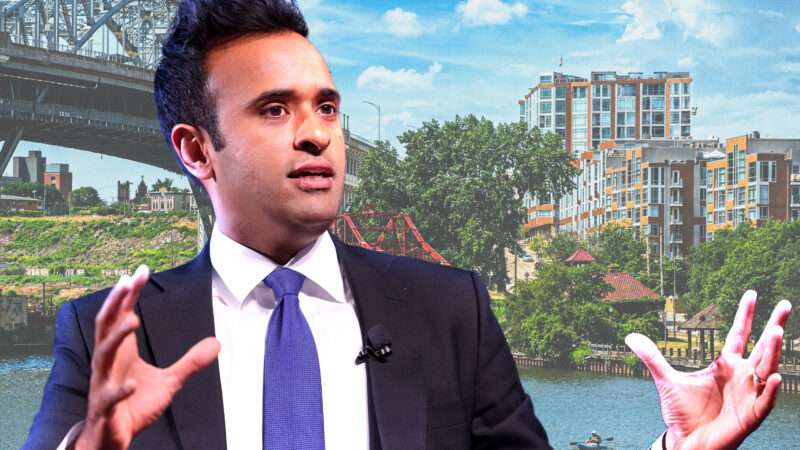
Vivek Ramaswamy | Gage Skidmore/ZUMAPRESS/Newscom/Kenneth A Sponsler/Dreamstime

When Vivek Ramaswamy ran for president in 2024, he liked to describe himself as a "national libertarian" whose worldview included skepticism of new Middle Eastern wars and support for free trade (provided it wasn't with China). 

In a midterm election season in which voters are increasingly angry about higher prices born of protectionist tariffs and high gas prices caused by a new Middle Eastern war, that would seemingly give Ramaswamy, now running for governor of Ohio, a straightforward story to tell about how he'd bring costs down. 

Unfortunately for the Republican gubernatorial candidate, the person responsible for the tariffs and the war is President Donald Trump, whose support he's counting on to get him over the finish line in a surprisingly close race against Democrat Amy Acton. 

The latest polls show Ramaswamy slightly ahead of Acton, with many voters still undecided. 

Other Republican midterm candidates, most prominently Mike Rogers in Michigan, are escaping this bind by criticizing the tariffs and the war without explicitly naming the president who's responsible for both. 

Ramaswamy has chosen a different tactic: Shift the conversation to other sources of voters' cost-of-living anxiety that can't be directly laid at Trump's feet. 

In the last weeks of this election campaign, Ramaswamy has focused like a laser on two proposals he says will deliver cost relief to Ohio voters. The first is his proposed rollback of homeowners' property taxes. The second is a moratorium on new data center construction. 

Like many Midwestern and Western states, Ohioans' property tax bills have shot up in recent years, driven by a pandemic-era spike in home values. 

That's in turn sparked a full-blown property tax revolt in the state. The Republican-controlled Legislature passed a raft of property tax relief measures in 2025. Activists are also collecting signatures to place a full abolition of taxes on real property on the statewide ballot next year. 

Ramaswamy hasn't endorsed full property tax abolition, but he is promising voters that he will roll back property tax assessments for homeowners to pre-pandemic levels. 

On the data centers, he has staked out a very restrictionist position. 

Ohio is currently one of the leading states for data center development. Pew Research counts 57 projects currently in the pipeline there, attracted by cheap land and a robust power grid. 

The state's data center boom has caused a backlash in rural communities, where voters have objected to data centers' consumption of land and electricity and the special tax incentives some projects have received. 

On the ballot in 10 Ohio localities this November are initiatives that would impose additional restrictions on data center development. 

Ramaswamy has proposed to go further with a statewide moratorium that will remain in effect until the Legislature passes laws that not only require data centers to cover the full costs of the power infrastructure they need, but also provide property tax rebates and free electricity to nearby homeowners. 

Local property tax cuts paired with local reductions in spending would, of course, be well in line with a small government worldview. 

But the residential property tax rollback Ramaswamy has proposed doesn't directly do that. 

Instead, it would reduce property tax revenues and then leave it up to localities to make up for the lost revenue somehow. That could result in spending cuts. 

It could also result in localities shifting tax burdens onto commercial properties, raising non-property taxes (like sales taxes), or relying on the state government for more of their revenues. 

In the former two scenarios, local tax regimes would become more hostile to growth, given that property taxes are considered one of the most "efficient" taxes. In the latter scenario, the link between people who pay taxes and the people who consume taxpayer-funded local services would become more distant.  

Neither is ideal. 

While some data centers in Ohio have received tax subsidies, Ramaswamy's proposed solution is to block new data centers until they're legally required to subsidize their neighbors with free electricity and other community benefits. 

All of that is to say that it's a shame to see Ramaswamy adopt increasingly non-libertarian positions to avoid making critiques of Trump's cost-increasing tariffs and Iran war that would align with his erstwhile "national libertarian" worldview. 

It's ironic, too, that, in trying to avoid making those critiques, Ramaswamy has wound up being more restrictionist on data centers than Trump himself. 

In an August Truth Social post, the president famously urged local communities to "let Data Reign" and welcome data center development. Those that did would become "rich and successful," he predicted. Those that didn't would remain "poor and backward." 

At a rally in Vandalia, Ohio, over the weekend for Ramaswamy and Republican Senate candidate John Husted, Trump reiterated his support for data centers, saying, "We want them. Look, there's so much money to be made for Ohio. You can't just turn them off. They'll go to China."

Rather than criticize the president's statist interventions, Ramaswamy is talking up his own instead. Ohio will be poorer as a result.

The post To Avoid Criticizing Trump's Tariffs and War, Vivek Ramaswamy Takes on Data Centers appeared first on Reason Magazine.

  •  

NATO Secretary Advises Ukraine to Uphold the Energy Ceasefire

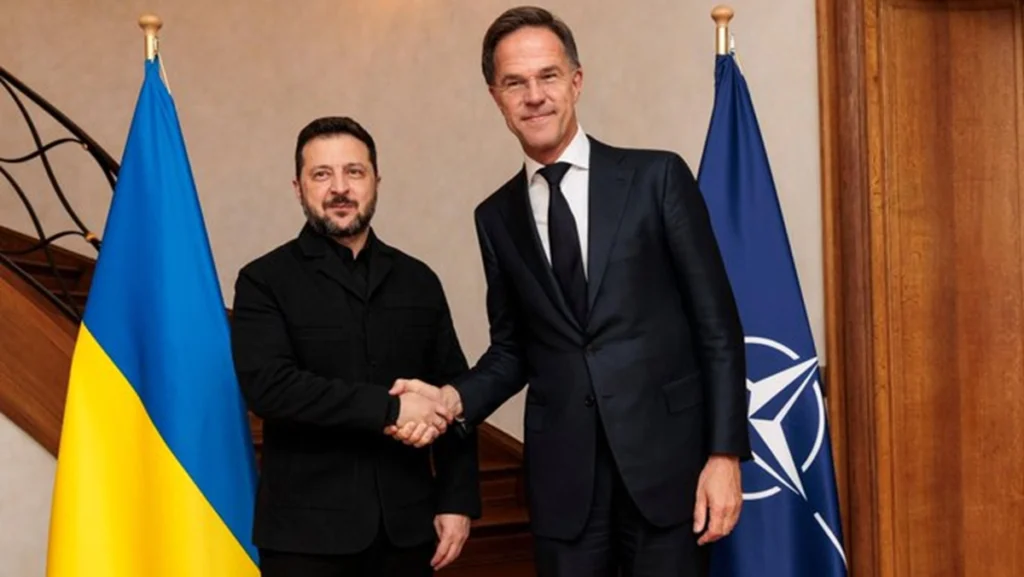
Mark Rutte meets Vodolymyr Zelensky in Brussels ahead of European Union summit.

During a meeting on Thursday, NATO Secretary-General Mark Rutte tacitly asked Ukrainian President Volodymyr Zelensky to implement the “energy ceasefire” announced by U.S. President Donald Trump.

RELATED:

Ukraine Resumes Strikes on Russian Refineries: Zelensky

“Good to see President Zelensky in Brussels. We talked about the importance of implementing an energy ceasefire,” Rutte said in a social media message accompanied by a photograph with the Ukrainian leader, who is in the Belgian capital to attend a European Union summit on Friday as a guest.

Rutte also said they discussed “NATO allies’ continued support for Ukraine,” among other things through the Prioritized Ukraine Requirements List (PURL) mechanism, launched by the alliance so that allies can buy U.S. military materiel to send to Kyiv.

Through social media, Zelensky said the meeting with Rutte served to continue coordinating with NATO “greater protection and security for Ukraine.” He took the opportunity to blame Russia for having broken the energy ceasefire through attacks on energy infrastructure.

⚡️ On October 15 in Baku, Russian Foreign Minister Sergey Lavrov directly rejected any potential ceasefire in Ukraine, explicitly countering US President Donald Trump’s October 11 announcement of an energy truce. pic.twitter.com/CB4Md9VTkN

— UNITED24 Media (@United24media) October 15, 2026

He also complained about restrictions on Starlink satellite operations in Ukraine, asked that arms supplies to Ukraine continue, and insisted on the need to receive ballistic missile interceptors and ammunition for F16 aircraft.

The Brussels meeting comes a day after Russia launched an attack against three thermal power plants operating in the Kiev region and an attack against energy facilities in Kharkiv.

In statements to the Financial Times, Zelensky reaffirmed his willingness to continue the conflict and announced that “the ban (on attacking Russian refineries) has been lifted. That is enough.”

On Thursday, Russia confirmed that Ukraine attacked a refinery in Ryazan, a region 200 kilometers from Moscow. Yesterday, Russian authorities also denounced Ukrainian attacks on two other refineries in the Saratov and Ryazan regions.

The Kremlin assured that Russia has not violated any agreement given that the energy truce between Russia and Ukraine was never finalized.

teleSUR/ JF

Source: EFE

  •  

UK to resupply Ukraine with more Storm Shadow missiles to strike Russia, Bloomberg reports

In a meeting in London on Oct. 14, President Volodymyr Zelensky and U.K. Prime Minister Andy Burnham agreed on a new shipment of missiles, Bloomberg reported, citing people familiar with the matter. No official public announcement of this resupply has been made.

  •  

When the US slows down Starlink in Ukraine

The drone has become the signature weapon of the Russo-Ukraine war. On any day in Ukraine, tens of thousands of drones are out hunting the battlefield for targets. These could be individual enemy soldiers or vehicles, or they could be larger targets such as depots, headquarters, bridges or power plants. Yet, this drone war has […]

The post When the US slows down Starlink in Ukraine appeared first on Asia Times.

  •  

Blame Russia, Not Zelenskyy, for the Ukraine War's Endless Slog

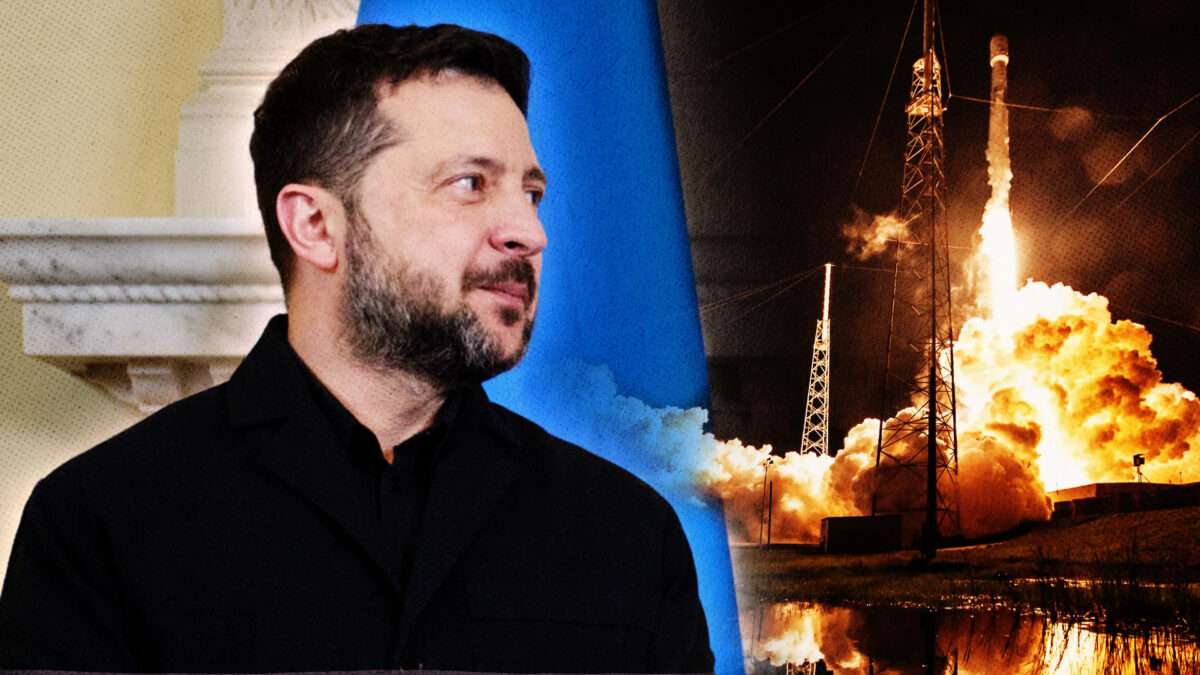
Zelenskyy | Press Service Of The President Of Ukraine/picture alliance/SvenSimon-Press Service Of The P/Newscom/spacex.com

President Donald Trump is plainly frustrated that the Ukraine War continues to drag on. This is understandable. Trump came into office pledging to end this conflict on day one, and succeeded in resetting the expectations of Ukrainian President Volodymyr Zelenskyy. Trump also met with Russian President Vladimir Putin in 2025, in hopes of bringing the war to a close. Yet no peace deal emerged.

In recent weeks, Trump has complained ceaselessly that the war is impacting global energy prices, and thus indirectly hurting the American economy and damaging Republicans' midterm prospects. Earlier this week, the president arbitrarily declared an "energy ceasefire" and instructed both countries to stop targeting each other. Neither side had been given forewarning of this, but Ukraine went ahead and complied; Russia did not. With no actual ceasefire in place, Ukraine resumed hostilities.

Unfortunately, it appears that Trump has decided to punish Zelenskyy rather than the responsible party: Putin. It's not Ukraine that wants war—it's Russia. It's not Zelenskyy prolonging this conflict—it's Putin. Ukraine is willing to accept an immediate ceasefire and negotiations. Russia is not. Putin's action suggest that the goal is to subjugate Ukraine, and regardless of the impression he gives Trump, Putin is not willing to stop.

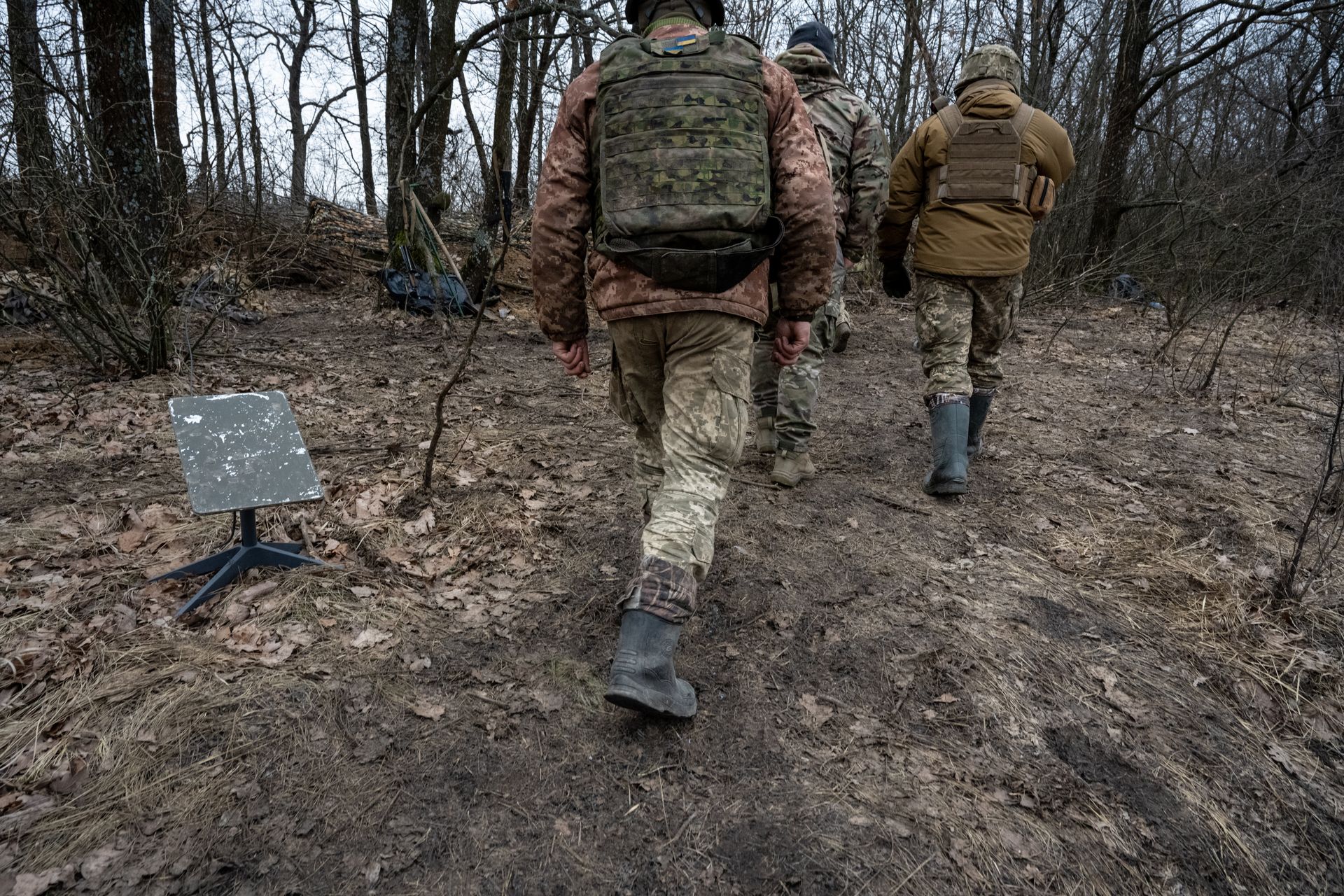
Given this, the rational course of action for the U.S. is to continuing supporting Ukraine until Russia—the invading party—is willing to negotiate. And yet, the U.S. is seemingly (suddenly) sabotaging Ukraine. This week, the Ukrainians discovered that use of Starshield, the U.S.-run satellite system they use to defend themselves against Russian forces inside Ukrainian territory, had been restricted; Starshield is a division of SpaceX, but according to Elon Musk, it is operated independently by the U.S. government. If it's not functioning properly, the most likely reason is that Trump made such a call.

Trump also signaled a willingness to cut off the Ukrainians from routine intelligence sharing with regard to Russia's bombing targets, though the administration insists that no such decision has been made. Such intelligence is extremely important for the Ukrainians, and vital for civilian safety. Ukrainians rely on air raid sirens to let them know that Russian strikes will soon take place and they should seek shelter. (I learned this firsthand during my trip to Ukraine in June, which was sponsored by a pro-Ukrainian aid group.) It's malicious of the U.S. to deliberately keep the Ukrainians in the dark when we could save lives by letting them know what we know.

None of this means that the U.S. is obligated to send even more tax dollars to Ukraine or to supply them with weapons. We have already spent $185 billion, after all.

But the U.S. should not deliberately undermine the Ukrainian position by failing to share intelligence or by hamstringing already existing military systems. Of course Trump would be within his rights to work to constrain Zelenskyy if Zelenskyy were the barrier to a peace deal, but this is simply not the case at all. We can't blame the Ukrainians for defending themselves in the face of invasion when Putin is the one refusing to negotiate.

Given all this, Zelenskyy has admitted that he feels "betrayed" by Trump and is concerned that Ukraine is losing the U.S. as a partner. The war will continue regardless, with Europe stepping in to fill whatever void the U.S. leaves behind. It's proper for Europe to shoulder more of the responsibility for protecting Ukraine, since this war is ultimately a Europe problem—the U.S. cannot be solely responsible for the security of the entire free world.

But there's a difference between thinking Europe should do more and the U.S. should do less, and thinking that the U.S. should actively hurt Ukraine to help Russia so that energy prices briefly (maybe?) improve. That's not in the long-term best interests of anyone, including and especially the U.S.

Rather than bullying Ukraine into agreeing to put up less resistance as Russia conquers it, Trump should put his negotiating skills to work on Putin.


This Week on Free Media

The latest episode of Freed Up will be available later this afternoon, so subscribe here and check back soon!


Worth Watching

Here's something exciting: I am participating in another Reason Versus debate—this time alongside the boss, Katherine Mangu-Ward! We will be up against Mehdi Hasan and Jason Stanley, who posit that "authoritarianism is a right-wing problem." It should be an entertaining, spicy debate, and (if we're being honest) probably not quite as friendly as the last one I was involved in. Get your tickets here!

The post Blame Russia, Not Zelenskyy, for the Ukraine War's Endless Slog appeared first on Reason Magazine.

  •  

No one's owning up to throttling Ukraine's military Starlink, and that's telling

Nearly 48 hours after Ukraine's Starshield terminals started mysteriously malfunctioning, nobody in Washington, nor at SpaceX, has taken responsibility for the apparent decision to hobble Ukrainian military communications.

Starshield terminals — the militarized version of SpaceX's Starlink satellite internet system — began losing connectivity as they

  •  

Ukraine Resumes Strikes on Russian Refineries: Zelensky

Meanwhile, Russia detained a Swedish national accused of plotting attacks on military facilities.

On Thursday, Ukrainian President Volodymyr Zelensky told British media that Ukraine would restart strikes on Russia’s oil refineries and described recent U.S. moves as a betrayal of Kiev.

RELATED:

Russian Strikes Leave 600,000 Without Power In Ukraine

“The block (on attacking refineries) is out. We’re done,” Zelensky said in an interview with the Financial Times, arguing that Ukraine had paused energy strikes for three days to comply with the U.S.-announced “energy ceasefire,” while Moscow continued to attack Ukrainian energy infrastructure.

Zelensky also said the U.S. cutting off intelligence and restricting Starlink internet service has been “dangerous” for Ukraine. On Wednesday, Ukraine said U.S. aerospace company SpaceX restricted Starlink services, hampering the country’s attack and air-defense drone missions. Zelensky admitted to British broadcaster Piers Morgan he felt “betrayed” by the recent U.S. moves.

“They (the United States) wanted us not to attack diesel. My opinion was it’s not fair,” he said, adding that it was “really strange” and “something absolutely crazy” for the United States to restrict Starlink services.

“I think he is not right. It’s a big mistake,” replied Zelensky when asked if he was angry at SpaceX CEO Elon Musk. “I don’t know him or (if) somebody pushed him to… I don’t know really.”

❗️ New video shows aftermath of Ukrainian attack on Russian oil refinery in Ryazan — RT EXCLUSIVE

The refinery was hit by a Ukrainian drone

Zelensky earlier ignored Trump's request to halt strikes on Russian oil refineries, hitting them as Trump tried to broker an energy truce https://t.co/S04pRlWeeg pic.twitter.com/4rsBk6KMoA

— RT (@RT_com) October 15, 2026

Russia Detains Swedish National Accused of Plotting Attacks On Military Facilities

On Thursday, , the Russian Federal Security Service (FSB) informed that a Swedish citizen allegedly heading to Russia to commit attacks on military sites was detained for illegally crossing the border in the country’s western Pskov region. The detainee was traveling to Russia to commit acts of sabotage at military facilities under the pretext of joining the Russian Armed Forces.

The Swedish citizen had previously served as a squad commander of unmanned aerial systems of the Ukrainian 24th Separate Assault Regiment “Aidar,” with documents confirming his participation in hostilities against Russia as part of the Armed Forces of Ukraine.

The detainee has admitted that he signed a contract with the Aidar banned in Russia in a video released by the FSB. He testified to being sent for training, during which he learned to operate first-person view drones for reconnaissance and surveillance, and to train others.

teleSUR/ JF

Source: Xinhua

  •  

Open letter to Trump from ex-Ukrainian President Yushchenko: Ukraine's desire for peace is not willingness to surrender

Mr. President,

I write these words without diplomatic formulas or ceremonial language. I write simply, from one human being to another, and from one president to another — two men who understand that there are moments in history when decisions determine not only the fate of nations, but the fate

  •  
  •  

Sinking Ships

Sunken-ship-10-15 | Behnam Tofighi/UPI/Newscom

Two ships sink: "A ​container ship and a dry bulk carrier have both sunk near the Strait of Hormuz in the past ‌24 hours after being hit by projectiles in separate incidents, maritime officials said on Wednesday," reports Reuters. One ship was Singapore-flagged and the other was Antigua and Barbuda–flagged; one crew member has died so far, but the majority were safely evacuated. "Attacks around the waterway have surged over the past 10 days, with Iran saying it is stepping up strikes in response to the US blockade of its ports and tougher sanctions introduced last month." Basically, Iran is escalating because the U.S. naval blockade—reinstated in July—has choked off its new oil exports, and Tehran's answer is to make sure no one else's oil gets out either. Shipping volumes in the Strait have plunged as attacks have escalated.

These two are the third and fourth commercial ships to have been sunk since the Iran-U.S. war began in February, depending on how you count. The India-flagged Haji Ali went down off the coast of Oman, and the Malta-flagged container ship Safeen Prestige was struck and later sank in the Strait of Hormuz as well. Back in July, a cargo ship sank after colliding with another vessel in the Strait, though that wasn't technically an attack. And in September, the U.S. destroyed several Iranian tankers—at least two in the Gulf of Oman area and one near Kharg Island, among others. So many ships have been caught in the crosshairs, though relatively few have gone down.

Why does the decline of religion matter? "The decline of American religion over the last thirty years bears…a significant responsibility for the dysfunctional state of American politics," writes Jacob Williams for Cracks in Postmodernity, reviewing Shadi Hamid and Matthew Kaemingk's new book, Can Religion Save Democracy? "Religious communities—churches, mosques, and synagogues—channel our spiritual impulses in a healthy direction. Religion—actual, traditional, 'organized' religion—appeals to mankind's need for wonder, mystery, and ultimate purpose; and it schools those impulses into forms conducive to civic virtues like humility, tolerance, forbearance, and constructive disagreement."

"Religion does all this," continues Williams, "because it achieves the Augustinian virtue of desacralizing politics and lowering its stakes to a less eschatological plain, in which we see political conflict as 'serious but not sacred.' Our need for ultimacy is directed onto what is actually ultimate—God—and not onto conflict with our fellow man. We learn epistemic humility by hedging our arguments with the recognition that, as Muslim scholars put it, 'God knows best.' Ritual formation reminds us at a deep 'pre-rational level' that we are not divine and that losing an earthly struggle is not final: 'prayer…is a daily concession speech.' Even belief in Hell, paradoxically, makes us less judgmental about one another's flaws, since if true evil will be punished in the hereafter, we can easily face the prospect of its survival in the here and now."


Scenes from New York: Comedian Shane Gillis is apparently in hot water, once again, for hosting Saturday Night Live and offending people with the jokes in his monologue. Gillis was, of course, fired from SNL back in 2019, immediately after being hired, because of anti-Asian slurs he'd used in a podcast the year prior, while doing a bit where he was pretending to be a landlord. The first time he was invited back to give a monologue, he "bomb[ed] on 'SNL' with Down syndrome and gay jokes," according to The Daily Beast. And then this most recent time, he offended people by saying, "I haven't been to the gym in so long, I didn't know women just dress like whores now." Given the prevalence of "scrunch butt"–style leggings, I kind of think he's dead-on, but I've also long been a Gillis apologist.

"In that very same monologue, Gillis denigrates men, gay men, his sisters, and himself—repeatedly," writes Reason's Robby Soave. "He admits that he's fat and ugly. That's the basis of the humor. It does not suggest that he has some problem with women or enjoys laughing at their expense and solely their expense. He's doing observational comedy, and no one is spared, not even Gillis." Gillis seems dumb as a bag of bricks, but he's actually quite incisive.

I do think there's a deeper thing going on, though, given that Gillis keeps getting into trouble, which is that bro-y culture no longer unites us as a country. Bros are dwindling in number and prominence. Gillis isn't widely regarded as funny because the culture killed off the bro. And I, for one, mourn that loss.


QUICK HITS

  • Anthropic reportedly plans to IPO next month; OpenAI intends to wait until 2027.
  • "When President Trump announced that Katie Zacharia would serve as the next White House press secretary, he referred to her as an attorney. But she hasn't passed the bar exam in the U.S.," reports The Wall Street Journal. "Zacharia sat for the California bar exam after graduating from law school at Pepperdine University in 2011, according to a person with direct knowledge of the matter, but she didn't pass." Truth be told, I don't think the fact that she hasn't passed the bar yet represents herself as a lawyer matters all that much; I think the fact that she seems terrible at public speaking is the greater problem, given her new role.
  • James Talarico continues to really like his own line that "the Bible is silent on the issue of abortion." I don't think he's especially persuasive to the Catholic voter he was confronting in the above clip, who countered with an invocation of the Ten Commandments, but I guess voters will decide soon enough.
  • "With less than three weeks until Election Day and Republican approval numbers down, President Donald Trump is taking unorthodox measures to drum up support for the GOP," writes Ryan Curtis for Reason. "Last week, Trump sent out $90 payments to over 20 million Americans on Medicare Part B—which covers doctor visits and regular checkups. The money was made available to help seniors 'pay for their Medicare Part B premiums,' which cost $202 per month."
  • Watch the quote-tweeted video only if you dare:

These people will drag you back to 2020 tomorrow. We don't have to live like this. https://t.co/5U3DvNkrp8

— Mary Katharine Ham (@mkhammer) October 14, 2026

The post Sinking Ships appeared first on Reason Magazine.

  •  

Rutte se laisse aller : « presque certain », cela suffit pour attribuer la responsabilité à la Russie !

Le secrétaire général de l’OTAN, Mark Rutte, a exhorté les États membres à attribuer à la Russie la responsabilité de tout incident jugé suspect, même en l’absence de preuves irréfutables. Il a par ailleurs salué une récente accusation portée par l’Estonie à l’encontre de son voisin oriental et a invité les autres nations à suivre cet exemple.

Paolo Hamidouche

Le secrétaire général de l’OTAN, Mark Rutte, a exhorté les États membres à attribuer à la Russie la responsabilité de tout incident jugé suspect, même en l’absence de preuves irréfutables. Il a également salué une récente accusation portée par l’Estonie contre son voisin oriental et a invité les autres nations à suivre cet exemple.

Lors d’une conférence de presse conjointe tenue il y’a une semaine avec le Premier ministre lituanien Mindaugas Sinkevicius, M. Rutte a encouragé l’imputation publique de responsabilités concernant ce qu’il a qualifié d’« activités malveillantes dans la zone grise », généralement attribuées à la Russie par les membres de l’OTAN.

« Vous avez entendu hier le Commandant suprême allié dire : « Hé, quand vous le pouvez, quand vous êtes sûrs qu’il s’agit des Russes, ou presque sûrs que ce sont les Russes, attribuez-le aux Russes » – exactement comme l’a fait l’Estonie aujourd’hui. J’apprécie cela », a déclaré M. Rutte.

Lundi passé, le commandant suprême allié de l’OTAN en Europe, Alexus Grynkewich, a décrit l’attribution publique de ce type d’incidents à la Russie comme un « moyen de dissuasion » face à la « menace russe » présumée, lors d’une intervention devant une commission du Parlement européen. M. Rutte est connu pour sa position fermement anti-russe ainsi que pour son soutien ardent à Kiev dans le conflit qui l’oppose à Moscou. La semaine dernière, lors d’un événement organisé par le Chicago Council on Global Affairs dans l’Iowa, il a proposé d’aider à « protéger les États-Unis contre les menaces de la Russie ». Durant la conférence de presse conjointe avec M. Sinkevicius, il a par ailleurs soutenu que l’Alliance devait faire « encore plus pour l’Ukraine, et non moins ».

« Et je suis tout à fait d’accord. Quant à votre deuxième question, non, je ne dis pas que ces activités malveillantes dans la « zone grise » sont sans impact. Elles peuvent avoir un impact, et c’est parfois le cas, manifestement. Ce que je dis, c’est que nous disposons de toutes les options de réponse, parfois visibles, parfois non – pas toujours publiques, ni systématiquement fondées sur le principe du « œil pour œil ». Hier, vous avez entendu le Commandant suprême allié dire : « Hé, lorsque c’est possible, lorsque vous êtes sûrs qu’il s’agit des Russes, ou presque sûrs que ce sont eux, attribuez-leur la responsabilité » – exactement comme l’a fait l’Estonie aujourd’hui. Je m’en réjouis. Et partagez également toutes les informations dont vous disposez, en tant qu’Alliés, avec l’OTAN, le SHAPE et l’équipe du Commandant suprême allié, afin d’avoir une vue d’ensemble de la situation. Les options de réponse existent donc. Nous faisons ce qui est nécessaire, et les Alliés peuvent réellement apporter leur aide en attribuant la responsabilité, mais aussi en veillant à ce que nous ayons une vision globale de la situation. C’est exactement ce que nous faisons, dans un esprit de calme et de détermination. Nous sommes plus forts, et ils le savent. »

Et pendant ce temps, avec un « presque certain » de la part de Rutte, nous pourrions bientôt nous retrouver en guerre contre une puissance nucléaire…

Publié à l’origine par Divergence politique

  •  
❌