❌

Reading view

Trump’s Attack on Mail-In Voting Seeks to Create an Advantage for Republicans
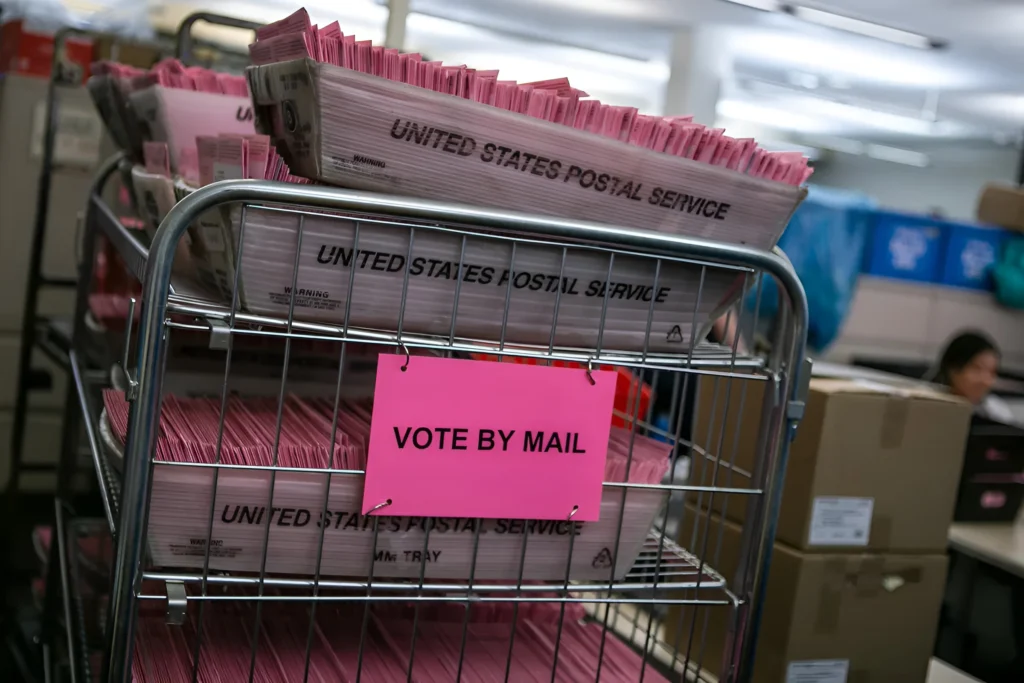
Justice Department actions against state election laws highlight growing national conflict over voter registration lists and mail-in voting security.

Mail-in voting is an established mechanism in the United States election system. It lets eligible citizens cast their votes by mail instead of going to the polling place on Election Day.

RELATED:
U.S. Justice Department Sues California Over Mail-In Ballots

Over the past decades, state governments have modified vote-by-mail laws to lower administrative costs, increase turnout, and provide alternative access for citizens who face logistical challenges on election days.

In this in-depth article, we will explore the history of mail-in voting, its characteristics, and why the current Trump administration has sought to alter this voting system.

History and the Rationale for Mail-In Voting

Remote voting in the United States dates back to the American Civil War (1861 – 1865). During this war, Union and Confederate soldiers who were away from their districts were permitted to submit written absentee ballots so that deployment would not disenfranchise them.

Throughout the 20th century, the mailing vote expanded beyond military personnel. State governments initially granted absentee ballots to civilians who were ill, physically disabled, or traveling for business on Election Day. Later, lawmakers introduced no-excuse absentee voting, which allowed registered voters to request a mail ballot without providing a specific reason.

In November 1998, Oregon became the first state to conduct all primary elections entirely by mail. By 2000, Oregon conducted the first mail-in presidential election in the U.S., achieving a registered voter participation of over 80 percent. Following Oregon’s model, other states, including Washington, Colorado, Utah, and Hawaii, transitioned to universal vote-by-mail systems after 2020.

Several practical factors explain the implementation of mail-in voting. For voters, it eliminates common obstacles associated with in-person voting, such as work, child care responsibilities, and long lines at precinct polling sites.

For the U.S. administration, state-wide vote-by-mail reduces the need for temporary poll workers, lowers equipment purchases for physical polling locations, and decreases operational expenses on election days.

A US judge declined to block President Trump's executive order tightening rules on mail-in voting, but left the door open for ‌the Democratic Party to challenge it again after the administration takes further steps to implement the measure https://t.co/VDZv3TJZdI pic.twitter.com/cGujpkjY4o

— Reuters (@Reuters) May 28, 2026

How Mail-In Voting Works and Its Security Record

Mail-in voting operates through structured legal protocols designed to maintain ballot security and track individual submissions. State election offices verify registered voter addresses and signatures, using databases before mailing official ballot materials.

After a voter completes their ballot, they can return it by U.S. Postal Service or place it in a designated local election drop box. Upon receipt, election workers process the ballot through signature verification procedures.

Empirical research shows that voter fraud in mail-in systems is extremely rare. Academic studies and data compiled by the Brennan Center for Justice indicate that the total rate of mail voting fraud over general elections averages 0.000043 percent, or roughly four cases for every 10 million mail ballots cast.

U.S. State election officials rely on barcoded envelopes, secure chain-of-custody procedures, and signature checks to prevent duplicate submissions and preserve election integrity.

Nearly 1,400 North Carolina voters are getting letters questioning their citizenship, all because the Trump administration's SAVE system flagged them.

The state elections board’s vague letter asks these voters to prove they’re citizens, even as the board acknowledges the system… pic.twitter.com/UJPyeLn0VM

— Democracy Docket (@DemocracyDocket) October 14, 2026

Institutional Mechanics and the 2020 Pandemic Pivot

Mail-in voting requires precise administrative coordination between state election agencies, postal services, and voters. When the U.S. implements universal mail-in voting or no-excuse absentee voting, election authorities cross-reference voter registration databases to ensure accurate residential addresses.

Once ballots are printed, they are mailed to registered voters with instructions, a secrecy sleeve, and a pre-paid or postage-guaranteed return envelope.

Security throughout this process relies on multi-step verification systems. When a voter completes their ballot, they place it inside the secrecy sleeve, seal it within the signature-required return envelope, and sign a legal affirmation printed on the exterior.

Election offices process these returned envelopes by running them through automated sorting machines and optical scanners that capture the voter’s signature. Bipartisan teams of election workers compare the signature against official registration records, such as state driver’s license files or original voter registration cards.

The COVID-19 pandemic in 2020 triggered a transformation in U.S. elections. To prevent viral transmission at crowded indoor polling places, numerous states rapidly expanded mail-in voting options, allowing millions of citizens to vote remotely.

According to reports from the MIT Election Data and Science Lab, the voters by mail grew to 46 percent nationwide in 2020, more than doubling the fraction recorded in 2016. Conversely, the share of voters casting ballots in person on Election Day dropped from 60 percent to 28 percent.

Following the pandemic emergency, several states, including California, Washington, Oregon, Colorado, Utah, Nevada, and Vermont, permanently codified universal vote-by-mail systems into law, establishing remote ballot delivery as a permanent fixture of their electoral infrastructure.

A US federal judge has blocked restrictions on mail-in voting backed by US President Donald Trump.

Judge Emmet Sullivan ruled the measures would likely violate a 2021 settlement requiring expedited handling of mail ballots by the US Postal Service.

🔗: https://t.co/WjD7kskdlx pic.twitter.com/PODqwc4YOb

— Al Jazeera English (@AJEnglish) July 1, 2026

Partisan Realignment, Demographic Realities, and the Red Mirage

The widespread adoption of mail-in voting reshaped traditional patterns of voter participation and introduced complex dynamics in how election results are reported. 

Despite assumptions that mail-in voting consistently favors a single political party, demographic and class analyses demonstrate that vote-by-mail systems benefit diverse working-class populations across the political spectrum.

Low-wage workers, hourly wage earners, agricultural laborers, and caretakers often lack the schedule flexibility required to stand in long lines during restricted polling hours.

Universal mail-in voting removes these temporal and economic barriers, facilitating participation for working families in both urban centers and rural conservative districts, such as in Utah and Montana, where mail-in voting has enjoyed long-standing bipartisan acceptance.

The differing timelines required to process mail-in ballots also created a phenomenon known as the “red mirage.” Because mail-in ballots require time-intensive signature verification, flattening, and manual extraction before they can be counted, many states process in-person votes first on election night.

This operational sequence frequently caused early vote counts to show a temporary lead for candidates who performed strongly among in-person voters, while subsequent processing of mail-in ballots altered vote totals over the following days.

This structural delay in reporting complete totals became a central focal point in post-election legal disputes and public debates over election administration.

🚨 JUST IN: Trump hints he could declare a national emergency for the midterms pic.twitter.com/YLdHlqyktS

— Republicans against Trump (@RpsAgainstTrump) August 11, 2026

Donald Trump’s Stance and Legal Action Against California

President Donald Trump has maintained a vocal opposition to mail-in voting. In public addresses, Trump has repeatedly alleged that universal mail-in voting systems lead to widespread election fraud and unfair outcomes.

Despite using absentee mail-in voting himself in past state elections, Trump argued throughout his campaigns and current presidency that expanding mail-in voting undermines public trust in election administration.

The Trump administration has taken direct executive actions aimed at curtailing mail ballot access. Policy changes and administrative decisions have altered operational procedures at the U.S. Postal Service, including adjustments to sorting equipment and delivery guidelines.

The Department of Justice filed a federal lawsuit targeting California’s election procedures. California established a universal mail-in voting model by enacting legislation requiring county election officials to send a mail ballot to every active registered voter in the state.

The lawsuit by the federal government argued that California’s system creates risks of unlawful voting and challenged state oversight of its official voter registration lists.

Specifically, the federal complaint alleged that California had failed to conduct proper voter roll maintenance, citing federal lists regarding individuals flagged as noncitizens who were sent mail ballots.

The lawsuit sought a court order to block state election officials from counting certain mail-in ballots ahead of the elections. In response, California state officials, including the Attorney General and Secretary of State, defended the legal validity of universal mail-in voting.

State leaders noted that California law relies on signature matching, secure drop-box monitoring, and continuous voter file updates to verify voter identity and maintain system integrity, while arguing that federal interventions violate laws restricting voter roll changes close to an election. Courts continue to review these challenges regarding federal authority over state-administered election laws.

.@SenatorSlotkin (D-MI) warns of President Trump using a national emergency "ruse" to gain American trust: "If you hear in the next 34 days that there is a new security threat… that somehow requires federal law enforcement or the military… an alarm bell should go off." pic.twitter.com/fFPyLjjJs6

— CSPAN (@cspan) September 30, 2026

Mail-in voting Also Shapes Results

Mail-in voting remains an essential tool in modern American election administration. From its origins, mail-in voting has provided voters with a flexible, low-cost option to participate in national and local elections.

While the expansion of vote-by-mail systems during the 2020 pandemic increased overall voter turnout, it also intensified political debate over election administration and security measures.

Although empirical data show that voter fraud in mail-in systems remains extremely rare, legal and political challenges, such as federal lawsuits targeting state mail-in procedures, continue to shape the discussion surrounding electoral access.

The ongoing debates over vote-by-mail illustrate a continuing effort to balance security with public access in the U.S. election system. As states enact laws to regulate, expand, or limit mail ballot procedures, the future of mail-in voting will remain a central topic in discussions about democratic participation and legal policy.
  •  

Trump calls Ukraine’s renewed refinery strikes “a disgrace” after Russia’s 39-missile strike on its energy sites

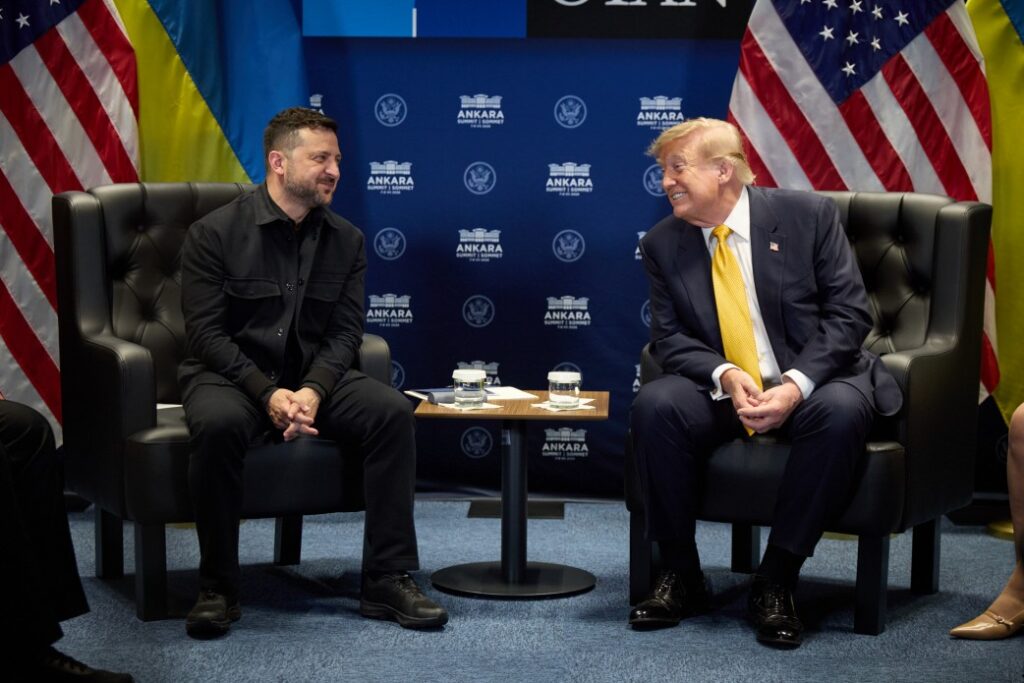
again trump presses zelenskyy stop russian refinery strikes · post ukrainian president volodymyr meets donald ankara türkiye 8 2026 presidentgovua ukraine news reports

US President Donald Trump called Ukraine’s renewed strikes on Russian oil refineries a disgrace in an interview with Newsmax and questioned President Volodymyr Zelenskyy’s will to settle the war on 15 October. His statements came after he made a deal with Russian President Vladimir Putin to allow Russian diesel back into the US ahead of the mid-term elections in the US.

Kyiv says its long-range strikes have knocked out more than half of Russia's refining capacity, one of the few levers it controls on Moscow's war income, according to Ukraine's Defense Ministry. This is part of efforts to reduce the aggressor's capabilities to launch assaults, including the latest, during which four Russian regions fired 39 Iskander-M, North Korean KN-23, hypersonic Zircon, and supersonic anti-ship cruise Oniks missiles, Zelenskyy said.

Trump criticizes Zelenskyy over oil prices while remaining silent on Russian strikes

Earlier, Zelenskyy said that Ukraine stopped refinery strikes for three days to meet US wishes after Trump announced an “energy ceasefire” on 11 October. At the same time, Russia struck a Kharkiv heat-and-power plant within hours of the announcement, he emphasized.

Meanwhile, in the interview with Newsmax, Trump said Zelenskyy is only pushing world oil prices higher.

“Well, I think that’s a disgrace,” he said.

He added that Ukraine has other options: “There are a lot of targets that you can hit.”

At the same time, Trump didn't say a word about Russian strikes on Ukraine's civilian buildings and power infrastructure ahead of the winter.

Trump compares Zelenskyy to a circus showman

The US leader said he is “not a big fan” of Zelenskyy. He claimed both sides “would like to see it end,” but that he finds Zelenskyy “more difficult to deal with than Putin.”

Kremlin welcomes Trump National Security Strategy as aligned with Russian vision on Ukraine
Explore further

US weighs relief for sanctioned shadow fleet tankers, days after freeing Russian diesel

He also said that he believes the depletion of US ammunition stockpiles is linked to the aid provided to Ukraine under the Biden administration, rather than the war with Iran.

Ukraine has repeatedly offered to help the US counter Iranian drones during the operation. The New York Times reported that a Ukrainian team departed the day after the US made such a request.

Nevertheless, despite Kyiv’s offers and actions, Trump once again compared Zelenskyy to P. T. Barnum, the 19th-century American circus showman, saying that he received a tremendous number of Patriots and Tomahawks.

However, there is no public confirmation that Tomahawk missiles were transferred to Ukraine during the Biden administration.

  •  

Hot US inflation singes Asia as higher-for-longer Fed rates loom

TOKYO — An unwelcome blast of US inflation is blowing across Asia’s markets. September’s hotter-than-expected price data revived concerns that the Federal Reserve will keep rates higher for longer, threatening fresh pressure on currencies, capital flows and economic growth across the region.

Last month’s 3.7% year-on-year increase in consumer prices didn’t just exceed forecasts. It ensured the Fed is on an even bigger collision course with both the bond market and US President Donald Trump’s White House. It’s arguably the last thing both Trump and US Federal Reserve Chairman Kevin Warsh wanted to see less than three weeks ahead of the mid-term elections.

To continue reading, please log in to your AT+ Premium account. Not yet a member? Please signup for AT+ Premium monthly membership, AT+ Premium yearly membership or AT+ Premium Access membership.

The post Hot US inflation singes Asia as higher-for-longer Fed rates loom appeared first on Asia Times.

  •  
  •  

Don’t let Musk and the billionaires buy America’s elections

On a recent episode of the Bulwark podcast, journalist Ron Brownstein described the election as a contest between “the wave versus the wall.” The wave being voter anger and President Donald Trump’s plummeting popularity. The wall being structural impediments to voters’ voices, such as gerrymanders and the Republican Party’s stark spending advantage. Now we know […]

The post Don’t let Musk and the billionaires buy America’s elections appeared first on Asia Times.

  •  

Attacking Trump, Zelensky showed lack of judgment

Ukrainian President Volodymyr Zelensky’s harsh words about US President Donald Trump were an emotional response after Zelensky deliberately thwarted Trump’s request that Ukraine not strike Russian refineries. Unfortunately Zelensky is making matters worse, and Ukraine’s future is now in doubt. Ukraine targeted two Russian oil refineries, according to Russian Deputy Prime minister Aleksandr Novak. The […]

The post Attacking Trump, Zelensky showed lack of judgment appeared first on Asia Times.

  •  

Is the world pricing the risk of a US diesel export ban?

A spike in diesel prices is hammering broad sectors of the US economy – especially agriculture and shipping – and becoming a flash point ahead of the November 2026 midterm elections. This squeeze has prompted Republicans from hard-hit farm states to call for a ban on US diesel exports, with President Donald Trump reportedly weighing […]

The post Is the world pricing the risk of a US diesel export ban? appeared first on Asia Times.

  •  

Trump’s antisemitism czar visits Michigan synagogue ahead of contentious US midterms

Leo Terrell attends Detroit suburb event co-hosted by right-wing Zionist Organization of America, as Trump administration courts Jewish vote in tight swing state Senate race
  •  

Judge Blocks Trump Administration’s $20 Million Ad Campaign

Federal judge blocks Trump administration’s $20 million political advertising campaign funded through the Department of Homeland Security.

A federal court imposed a 14-day restraining order over allegations that the administration misused public funds for political advertising ahead of midterm elections.


A federal judge in New York has blocked the Trump administration from entering into, renewing or expanding contracts for a controversial advertising campaign, freezing $20 million in funding allocated through the Department of Homeland Security (DHS) amid allegations that public money was being used for partisan political messaging.

RELATED: Trump Demands Leadership Change in Ukraine Amid Zelensky Rift

U.S. District Judge Jennifer Rochon of the Southern District of New York issued a 14-day temporary restraining order on Sunday, citing the risk of “irreparable harm” before publishing her full legal reasoning. The ruling came just over three weeks before the midterm elections.

The lawsuit was filed by a coalition of civic organizations, including the nonpartisan group Common Cause, represented by the legal firm Democracy Forward. The plaintiffs argued that the campaign violated federal restrictions on using funds appropriated by Congress for partisan advertising or propaganda.

“There is no legal justification or precedent for the president to use the machinery of government and public funds to influence election results,” the plaintiffs said in a statement following the ruling.

The advertisements, which began airing in late September, feature footage from Donald Trump’s previous presidential campaign, excerpts from speeches warning of the threat of communism and references to recent military operations, including U.S. military action against Iran and the abduction of Venezuelan President Nicolás Maduro.

The Justice Department argued late Saturday that the court order was unnecessary because the advertising campaign was scheduled to end on Sunday. The judge nevertheless imposed the restrictions.

The White House has defended the spending, describing the advertisements as “public service and educational messages” and rejecting allegations that they constitute electoral propaganda. Trump has maintained that the campaign promotes the United States rather than himself, noting that he is not a candidate in the midterm elections.

The president has also offered to cover the cost with personal funds or money from his political campaign if authorities determine that the expenditure was improper. Government officials, however, have said there are no immediate plans for reimbursement.

The controversy has drawn criticism across party lines. Republican Senate Majority Leader John Thune has questioned the use of taxpayer money to finance the advertisements, while the Democratic National Committee has filed separate lawsuits against the administration over the same issue.

  •  

Justice Department threatens California with legal action over claim of noncitizens on voter rolls

The U.S. Department of Justice has threatened California with possible legal action over what it says are noncitizens believed to have received mail ballots for next month's midterm elections.

  •  

Throttling Ukraine’s Starlink access heightens concerns over Musk

The Ukrainian government on Tuesday night said that its access to the SpaceX-owned Starlink satellite internet service was throttled, prompting critics to question the wisdom of depending on any company owned by far-right billionaire Elon Musk. According to a Wednesday report in The New York Times, Ukrainian officials suspect that orders to restrict their access […]

The post Throttling Ukraine’s Starlink access heightens concerns over Musk appeared first on Asia Times.

  •  

Trump’s Diesel Deal with Putin Undermines US Sanctions Pressure as Ukraine Peace Talks Stall

President Donald Trump announced an agreement with Vladimir Putin on Friday, 9th October, under which Russia will resume substantial diesel exports to American and international markets, despite Washington’s existing sanctions against Moscow over its invasion of Ukraine.

According to Trump’s announcement following the telephone conversation, Russia will immediately release more than 300,000 tonnes of diesel, followed by 500,000 tonnes in November and another million tonnes shortly afterwards. A further three million tonnes could become available once Russian refining capacity permits.

The announcement was accompanied by a temporary authorisation from the US Treasury allowing transactions involving Russian diesel until 7 April 2027. It represents a substantial departure from the administration’s recent sanctions policy, which had sought to restrict Russian energy revenues and strengthen Washington’s negotiating position over Ukraine.

The timing is politically significant. Trump faces congressional midterm elections on 3 November, while diesel prices have become a growing economic concern for American businesses and consumers. The agreement gives the White House an opportunity to present itself as addressing fuel costs, although its practical effect on prices remains uncertain.

Russian diesel cannot resolve the global supply shortage

Trump has linked the proposed Russian deliveries to his administration’s efforts to restore energy flows through the Strait of Hormuz, arguing that the combined measures will produce a rapid reduction in diesel prices.

The disruption of maritime energy supplies following the confrontation with Iran has, however, created a problem considerably larger than the quantities Russia has initially promised.

The first two deliveries amount to approximately 800,000 tonnes. Even including the subsequent million tonnes, the announced volumes are modest relative to global consumption. Their arrival may provide temporary relief in individual markets, but there is little evidence that they could independently reverse the wider shortage.

Russia’s capacity to maintain larger exports is also uncertain.

Ukrainian attacks on Russian refineries have disrupted production and contributed to restrictions on petroleum exports. Moscow has periodically imposed limits to protect domestic supplies, while damaged facilities require repairs before returning to normal operations.

The condition of those refineries is explicitly acknowledged in Trump’s announcement, which makes the proposed additional three million tonnes dependent on their recovery.

This introduces a further contradiction. Washington is seeking Russian diesel at precisely the moment Ukraine is attempting to reduce Moscow’s capacity to refine and export petroleum products.

The economic benefits of the agreement may consequently depend partly on developments in a military campaign that the United States has previously supported through intelligence cooperation with Kyiv.

Zelenskyy rejects sanctions relief without Russian concessions

President Volodymyr Zelenskyy responded critically to the agreement, describing the relaxation of economic pressure as a concession to Putin that had not been accompanied by any meaningful Russian commitment to de-escalation.

In his response to the American decision, Zelenskyy argued that Moscow would exploit renewed export revenues to prolong its war rather than make concessions towards a settlement.

Ukraine has indicated that it remains prepared to consider reciprocal measures concerning attacks on energy infrastructure. Such arrangements would require Russia to stop striking Ukrainian facilities in exchange for restrictions on Ukrainian operations against Russian energy targets.

No comparable undertaking was announced as part of Friday’s diesel agreement.

This distinction is central to Kyiv’s objections. Sanctions relief has traditionally been regarded as leverage to obtain changes in Russian behaviour. In the present arrangement, Moscow stands to receive additional commercial opportunities without publicly agreeing to alter its military campaign.

Lukoil negotiations raise further questions

The agreement also comes amid separate discussions concerning the international assets of Lukoil, Russia’s second-largest oil producer.

A recent account of negotiations involving American investors and Russian officials described proposals involving Lukoil’s overseas oilfields, refineries and distribution businesses.

The discussions have reportedly involved figures connected to Trump’s diplomatic efforts, including Steve Witkoff and Jared Kushner, alongside Russian representatives.

On Friday, another development complicated the proposed transaction when Carlyle withdrew from the competition to acquire Lukoil’s international assets, previously valued at approximately $22 billion.

The negotiations illustrate the extent to which potential commercial cooperation has entered the broader American-Russian relationship.

There is no verified evidence, however, that the diesel agreement was concluded to facilitate a particular acquisition or benefit individuals connected to Trump’s administration. The commercial negotiations and Friday’s sanctions decision remain separate developments unless further evidence establishes a direct connection.

Washington and Europe move in different directions

The American decision creates an additional complication for European sanctions policy.

On 7th October, EU ambassadors agreed to expand sanctions against Russia’s military-industrial network, approving 1,646 additional designations, many directed at the production of ballistic missiles used against Ukraine.

Britain has also introduced further restrictions on Russian oil-related businesses, tankers and financial intermediaries, reinforcing its stated objective of limiting Moscow’s ability to finance the war.

The contrast with Washington’s diesel authorisation is substantial. While European governments are attempting to restrict Russian petroleum revenues, the United States is providing a temporary legal route for renewed sales.

The development also recalls the difficulties already examined by EU Today in its reporting on sanctions enforcement against Russia’s shadow fleet, where differences in national restrictions and their application have complicated efforts to control petroleum exports.

For Moscow, the significance of Friday’s agreement extends beyond the immediate revenue generated by diesel sales. It establishes that the United States is prepared to relax particular economic restrictions before securing a settlement over Ukraine.

Whether the arrangement ultimately lowers American fuel prices will depend on production, shipping and international market conditions. The diplomatic consequence is already apparent: Russia has obtained an opportunity to restore part of its international energy trade without accepting publicly announced conditions concerning its war against Ukraine.

For Kyiv and European governments, the question is whether this remains a narrowly defined response to an energy shortage or marks the beginning of a broader American policy of separating commercial relations with Moscow from negotiations over Ukraine.

  •  

Plainly, Trump doesn’t really care about the midterms

With a month still to go before America’s mid-term congressional and gubernatorial elections, the prospect of a “blue wave” of Democratic success in the House of Representatives, the Senate and in many governorships is looking increasingly likely. But whether that forecast holds true or not, one important aspect has already become clear. It is that […]

The post Plainly, Trump doesn’t really care about the midterms appeared first on Asia Times.

  •  

Did he really invite Iran to take out California cities?

“Keep our city out of your reckless war talk,” said San Diego’s mayor, Todd Gloria, Monday night after President Donald Trump’s rambling speech at a rally in Nebraska included a particularly violent mention of the California city. Gloria was among several Democratic political leaders who were incensed after Trump – moments after predicted the Republican […]

The post Did he really invite Iran to take out California cities? appeared first on Asia Times.

  •  
❌