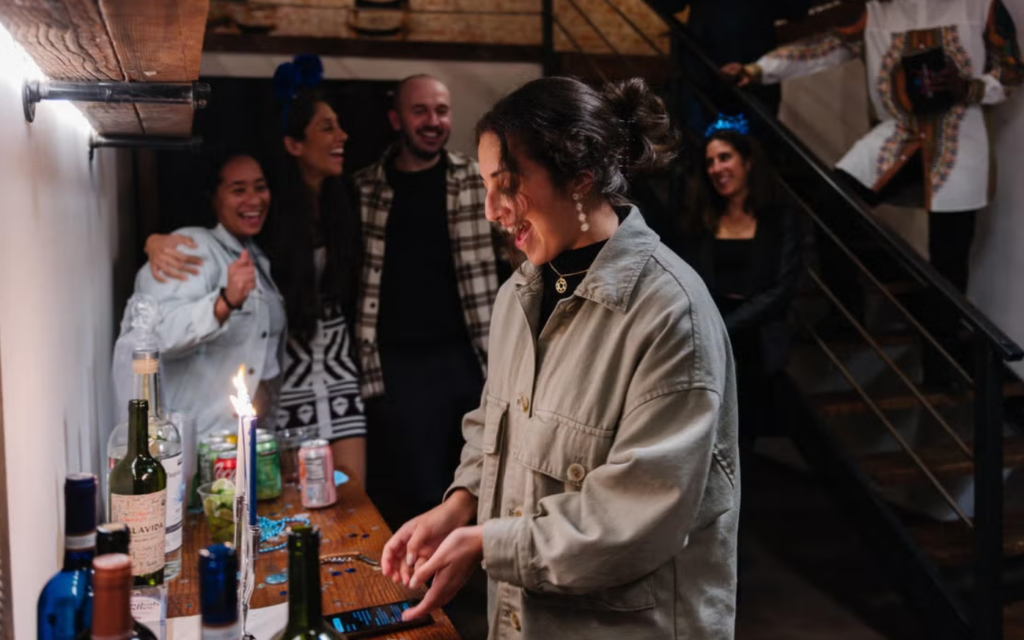
Analucía Lopezrevoredo says she founded Los Angeles-based social organization Jewtina y Co to answer her longtime question: 'Where do people like me get to be whole?'
Scientists in Bolivia have identified a new species of wild feline, named Leopardus tilcayo, following genomic studies that revealed evolutionary differences from other South American tiger cats. The discovery was made in the cloud forests of the Yungas, in the department of La Paz.
The tilcayo—a name used by local communities in the region—is a small animal, similar in size to a domestic cat. It is brown in color, with rounded ears, a bushy tail, and a spotted coat. Its identification was made possible through genetic analyses conducted by a scientific team that contributed to the discovery in September.
Biologist Enzo Aliaga, a member of the research team, warned that the species faces risks that could lead to its extinction. Among the primary threats, he highlighted habitat destruction caused by gold mining, the clearing of vegetation for agriculture, and the capture of individuals to be kept as pets.
“It is imperative to protect this unique species,” Aliaga stated to the digital news outlet Erbol, noting that the feline’s habits and reproductive patterns remain unknown.
🔵 #GrupoFides | #ANF Un equipo internacional de científicos identificó en los Yungas de Bolivia una nueva especie de felino silvestre, el Leopardus tilcayo o gato tilcayo. Se trata de la primera descripción de un nuevo gato salvaje en más de un siglo, hallado a partir del… pic.twitter.com/H9TgaSzNcl
The text reads, “An international team of scientists identified in the Yungas of Bolivia a new species of wild feline, the Leopardus tilcayo or tilcayo cat. This is the first description of a new wild cat in over a century, discovered through DNA analysis and described this Thursday in the journal Current Biology.”
The specialist also raised concerns regarding the trafficking of young animals: to obtain a young tilcayo, individuals might kill the mother, while the offspring could subsequently die in captivity due to malnutrition or other diseases.
To date, experts have not determined the total population of tilcayos in the Yungas forests, nor have they fully mapped their distribution. Consequently, researchers are pushing for further studies to expand knowledge about the species and strengthen the protection of its habitat.
#FromTheSouth News Bits | Luis Montaño has temporarily assumed the role of Acting Attorney General. The official announced the news to the nation from the Public Prosecutor's Office in Santa Cruz, eastern Bolivia. pic.twitter.com/sEfVVSKKIH
The Spanish prime minister has been a lonely champion of progressive values in the EU. But the polls look ominous
When it comes to risk-taking, Spain’s prime minister, Pedro Sánchez, has a formidable track record. In 2018, the Socialist party leader swept to power by triggering a no-confidence vote that unexpectedly ousted his centre-right predecessor Mariano Rajoy. He held on to it against the odds after calling a snap election in 2023, at a time when the popularity of his own party had plummeted and the far right was on the rise.
As he endures another rocky period in office, Mr Sánchez has once more rolled the dice. Last week, he announced a snap poll for November after his minority government was blocked from passing measures to ease Spain’s chronic housing crisis. The eviction of 87-year-old María del Carmen Abascal from her Madrid home sparked nationwide protests over soaring rents and prices. The outrage grew with news of her death last Wednesday. Mr Sánchez clearly hopes that campaigning on a national cause célèbre gives him a chance of winning a stronger progressive mandate next month.
Do you have an opinion on the issues raised in this article? If you would like to submit a response of up to 300 words by email to be considered for publication in our letters section, please click here.
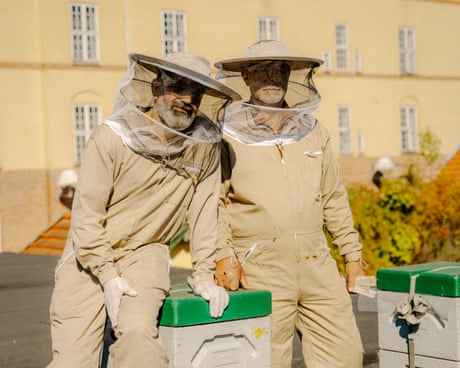
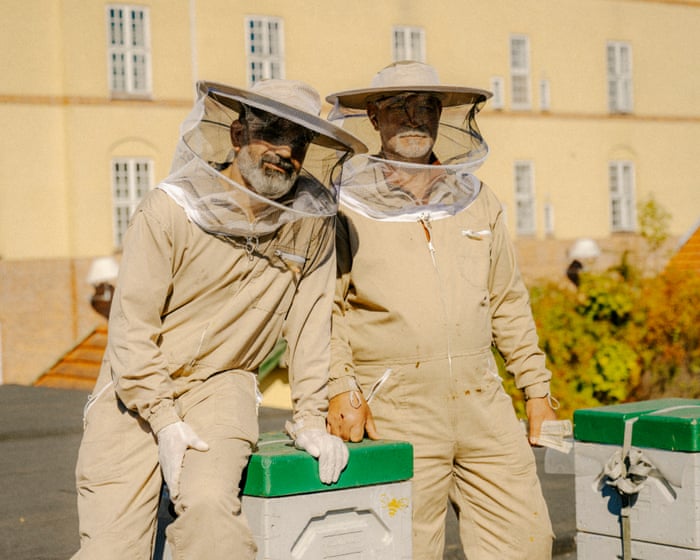
At Bybi in Copenhagen, a dedicated group of staff and volunteers have built a community for all centred on the production of honey – much of which is given away for nothing. Could it be replicated elsewhere?
The bees at Bybi, a collective of beekeepers in Copenhagen, live on the roof. Their home is a complex of Victorian buildings, right in the centre of the city, that looks like an idealised vision of the modern social enterprise, ennobled by the architecture of the past. It’s a place of cottage industry in concert with nature, where the marginalised are brought in from the fringes and corporations stand waiting to help, where jobs happen but a lot of the work is done by volunteers, and where – this bit is important – a lot of time is spent discussing ideas.
Oliver Maxwell, Bybi’s 48-year-old founder, encourages me to examine the buildings more closely. They were once a prison, a workhouse and a hospital; their functions today – a homeless shelter, a young offender institution and, until recently, a job centre – are not so different. Denmark’s Victorian transformation, from “agricultural backwater to industrialised agriculture”, was reflected in how they treated people, Maxwell says.
 Login