❌

Reading view

Lisbon mayor suspends shared e-scooter scheme over safety concerns

Trotinetes em Lisboa

Lisbon Mayor Carlos Moedas has announced the suspension of shared electric scooters in the Portuguese capital, citing growing safety concerns, dangerous behaviour by riders and the widespread abandonment of vehicles

The post Lisbon mayor suspends shared e-scooter scheme over safety concerns appeared first on Portugal Resident.

  •  

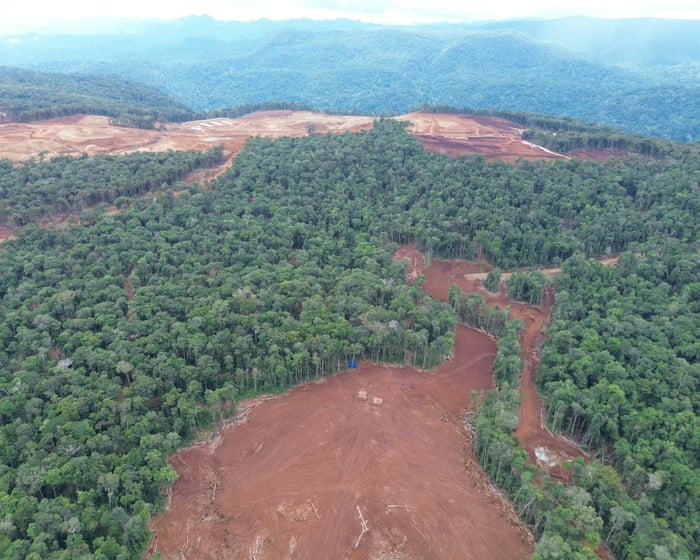
Revealed: VW, Ford and Tesla batteries linked to destructive deforestation of indigenous lands

Mines in supply chains of western carmakers linked to widespread deforestation of primary rainforest in nickel-rich lands inhabited by Tolaki people in Indonesia

Volkswagen, Ford and Tesla are among the electric carmakers whose batteries may contain nickel mined in indigenous woodlands plagued by deforestation, an analysis has found, highlighting the struggle to make vehicles that are free from environmental destruction.

Corporate disclosures and trade flows from the last two years show mines in the battery supply chains of automotive giants are linked to the loss of trees in Sulawesi, a wildlife hotspot in Indonesia that houses the world’s largest nickel deposits. The metal is widely used in cathodes in car batteries because it boosts energy density and increases range.

Continue reading...

© Photograph: Didi Hardiana, NGO Puspaham

© Photograph: Didi Hardiana, NGO Puspaham

© Photograph: Didi Hardiana, NGO Puspaham

  •  

Fewer Britons plan to ringfence money for holidays abroad next year, says travel industry

Spain remains most popular destination as Britons book later in hope of better deals, Abta report finds

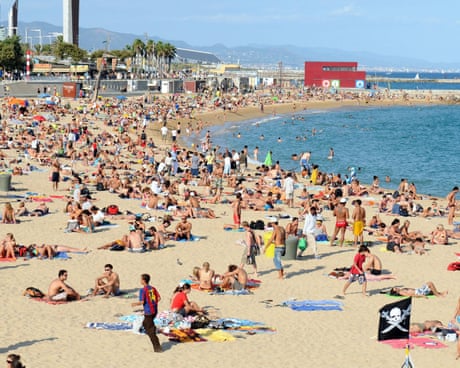
The UK’s cost of living squeeze means fewer people plan to ringfence money for holidays abroad next year, the travel industry has warned.

Despite war, wildfires and EES border checks, the numbers of Britons taking holidays climbed back to pre-pandemic levels this year – but rising costs may mean the numbers have peaked, according to an annual travel industry report on Tuesday.

Continue reading...

© Photograph: Owen Humphreys/PA

© Photograph: Owen Humphreys/PA

© Photograph: Owen Humphreys/PA

  •  

Deutsche Bahn and China Rail

The story of infrastructure in capitalist vs. socialist systems

By Hua BIN

Join us on Telegram, X, and VK.

Contact us: info@strategic-culture.su

A friend visited Germany recently and told a story how a delayed train caused him to miss the flight home.

I was shocked since you could set your watch by the Deutsche Bahn when I was living in Germany back in 1997.

I was doing an internship at Mercedes Benz in Stuttgart in those days. I could time my walk from the apartment to the bus stop, then connect with a train to the office with less than 5 minutes in total waiting time.

The bus and train schedules were synced so perfectly that you could count on a two-minutes’ walk and exactly 2 minutes wait in between. Both buses and trains were on time to a fault.

I had a particular fondness for DB since I traveled around Germany almost every weekend with its 35 Mark Schones-Wochenende Ticket (happy weekend ticket). Unfortunately that service was discontinued in 2019.

In the winter of 1997, I got lost on a hike with several friends in the Black Forest near Baden-Baden.

We were only able to walk out of the cold night after stumbling upon a rail track that led us to a small rural train stop. I can still remember the warm platform light to this day.

I’ve held German rail in high regard ever since.

So you can imagine how incredulous I was about the delay and bad service my friend complained about.

This prompted me to read about what happened to Deutsche Bahn over the last 30 years. In a nutshell, things certainly have changed for the worse.

Deutsche Bahn today defines an on-time train as one arriving less than 6 minutes behind schedule – a long cry from the clock-setting punctuality of the late 90s.

Even by such a low bar, punctuality hovers around 50 to 60%, well below DB’s own target of 70%.

The official explanation is aging infrastructure, heavy construction, and overloaded tracks.

However, as I dig a bit deeper, the decline of the German rail efficiency seems to stem from a deeply flawed privatization in 1994 which led to decades of extreme infrastructure underinvestment.

The 1994 Bahnreform merged the old East and West state railways with a clear mandate: DB was supposed to operate as a profit-seeking private corporation to prepare for an eventual stock market IPO.

To attract investors, DB prioritized extreme cost-cutting over public service.

They aggressively cut staff, outsourced maintenance, and began divesting into global logistics companies (like DB Schenker) rather than focusing on domestic rail.

Under the guise of maximizing efficiency, DB severely downsized its physical network to save money.

Nearly 8,000 kilometers of secondary rail lines were completely dismantled. Thousands of track crossovers, passing loops, and spare sidetracks were removed.

In 1997, if a train broke down or was delayed, a dispatcher could easily reroute it around the problem using these spare tracks.

Today, the network is stripped of its buffers. If one commuter train stalls near Frankfurt, it acts like a broken-down car on a single-lane highway, causing immediate, cascading delays across the entire country.

The problem is compounded by a mixed-rail system where fast Intercity Express (ICE) trains share the same physical tracks with slow regional commuter trains and heavy freight cargo.

In comparison, Chinese high-speed rail or France’s TGV networks mostly operate on dedicated high-speed tracks.

As the DB physical network was drastically thinned out, annual passenger numbers went up from 1.5 billion passengers in 1994 to 2.4 billion today.

Back in the 90s, it was still very common to live near where you worked in Germany. Over the last 30 years, skyrocketing housing costs in major hubs like Frankfurt, Munich, Berlin, and Hamburg forced a massive portion of the workforce to move further out into surrounding suburban regions and smaller towns.

As a result, Germany experienced a commuter explosion, with millions of people traveling significantly longer distances back and forth every single day.

Now, the Deutsche Bahn system runs at 100% capacity nearly constantly. Any small delays can quickly snowball into network chaos.

To make things even harder, Germany’s strict structural debt limits have restricted state spending.

For years, Germany spends only a fraction of what its neighbors do on rail. For example, Switzerland invests over €400 per citizen annually into rail infrastructure. Germany routinely spends around €100.

DB’s disastrous experience with privatization mirrors what happened with other similar projects such as the Thames Water in the UK.

When Margaret Thatcher’s government privatized the UK water sector in 1989, Thames Water was handed to private investors with a clean slate and zero debt.

However, successive private owners treated the utility—which serves 16 million customers across London and southern England—as a corporate cash cow.

Private investors – Wall Street banks and hedge funds – loaded the utility with a mountain of debt and extracted hundreds of millions in management fees and dividends.

Instead of using revenue to upgrade Victorian-era pipes and treatment centers, money was funneled to shareholders and executive bonuses. By 2026, that debt has ballooned to roughly £20 billion.

While the financial engineering generated short-term returns for private equity, the physical infrastructure rotted.

Thames Water has become a national scandal as it has spilled billions of liters of raw sewage directly into the River Thames and local waterways.

Due to aging infrastructure, 25% of all treated water leaks straight out of the pipes before ever reaching customer homes.

Amid severe dry spells and record temperatures, Thames Water repeatedly implements prolonged hosepipe bans because the system lacks structural resilience to manage the region’s water security.

Most privatization projects of public utilities have witnessed a similar pattern of chronic underinvestment, extreme operational cost cutting, and unsustainable debt leverage while enriching financial investors.

Deutsche Bahn and Thames Water are symbols of public goods degradation for private investor gains in rentier capitalist economies.

In stark contrast, Chinese infrastructure remains firmly in the domain of public ownership.

While Europe and the US follow a policy of reactive, austerity-driven, rent-collecting management of their nations’ infrastructure, China has adopted a strategy of anticipatory, supply-led construction – often years ahead of demand.

Back in the 90s, China still was heavily reliant on decades-old, technically backward rail networks that suffered regular breakdowns.

I still remember sitting in rail cars with no air-conditioning in the height of summer for hours when the train from Beijing to Chongqing broke down due to an engine failure during a trip home from college.

The ride used to take 40 hours by scheduled timetable. Today the same trip takes less than 7 hours on highspeed rail.

When China started building its national highspeed rail network in 2004, there was an avalanche of negative press from the West.

Western “experts” eagerly called out how wasteful the project was and how the rail would never generate a positive return on investment.

Despite the nay-sayers, the country has built over 50,000 kilometers of highspeed rail in the last 20 years, over 70% of the world’s total capacity.

Just today, China announced the completion of 4 new highspeed rail lines in 4 provinces, adding another 1,142 kilometers to the network.

One of the lines is the 318-km Harbin–Yichun Line, which is now China’s northernmost highspeed rail traversing alpine permafrost.

The network now covers 97% of all cities with over 500,000 residents. It operates on dedicated rail lines and achieves 98% departure punctuality and 95% arrival punctuality.

Rather than aiming to achieve profitability and high return for every single line, the Chinese highspeed rail system serves as a public good that generate system-level benefits for the entire economy and the public.

Deutsche Bahn and China Rail represent two systems that operate on completely opposite philosophies, leading to radically different outcomes in rail performance and economic impact.

Building ahead of demand vs. Managing declining assets

China’s infrastructure strategy rests on the philosophy that building massive, high-capacity transport networks creates economic growth and future demand, rather than just responding to it.

By constructing the world’s largest highspeed rail network, largely ahead of full demand saturation, China bypassed the bottleneck phase entirely.

On the other hand, Germany operates on a strict “just-in-time” for-profit corporate framework.

Investments are only approved if existing capacity is mathematically proven to be completely exhausted.

This means that by the time a project is planned, funded, and built, the demand has already vastly outpaced the upgrade, leaving the network perpetually lagging behind.

China recognized early on that mixing slow freight and fast passenger trains limits a network’s ultimate capacity. Beijing built an entirely separate, dedicated network for the high-speed Fuxing and Hexie trains.

On the other side, because Germany tried to save money by avoiding the construction of entirely new corridors, they forced ultra-fast commuter trains to share the exact same physical tracks with heavy cargo trains.

When one slow freight train breaks down, the entire national express system grinds to a halt.

Economic Multiplier vs. Direct Profit

The Chinese state views high-speed rail as a public utility and an economic multiplier.

Even if individual rail lines operate at a financial loss or carry high debt, the investment is justified by the massive economic productivity, regional integration, and urban development it unlocks.

As part of the 1994 privatization, the German government treated Deutsche Bahn like a standard commercial enterprise.

Success was measured by cutting operational costs and generating a direct financial profit, which directly starved the physical tracks of preventative maintenance.

One would probably think the German model at least achieved higher ROI for investors even though China achieves higher total societal benefits.

Yet, reality has an ironic twist – the German model ultimately failed the investors, too.

Deutsche Bahn ended up in a financial worst-of-both-worlds scenario.

In a standard capitalist system, starving an asset of maintenance to boost short-term balance sheets usually generates high dividends for investors or pushes stock prices up.

But because DB’s privatization was half-baked, it achieved neither. The only investor in Deutsche Bahn is still the German Federal Government as its IPO plan was abandoned 2 decades ago.

Because the network was run into the ground to cut short-term corporate costs, the long-term liabilities eventually caught up.

Rather than paying rich dividends, DB has cost taxpayers billions in bailouts. The company recently reported a €2.3 billion net loss.

To manage its staggering debts, DB was forced to sell off its highly profitable global logistics subsidiary, DB Schenker, just to artificially steady its balance sheet.

By treating a core public monopoly like a private business, Germany didn’t create a highly profitable enterprise; they created an operational bottleneck that costs the broader German economy billions in lost corporate productivity every year.

China’s model operates on the opposite financial wavelength.

In a socialist market economy, critical infrastructure is heavily state directed through State-Owned Enterprises (SOEs).

While China Rail carries a massive debt load from building its expansive high-speed network, the losses are directly absorbed by the state.

From Beijing’s perspective, the direct financial return on investment of the railway itself is secondary. The real payoff is the societal and macroeconomic ROI.

By connecting far-flung cities, the state slashes shipping friction, drives real estate value, unlocks regional labor markets, and creates economic mobility.

The state effectively subsidizes the train ticket to capture a massive tax and economic growth harvest across the rest of society.

A prime example is the Greater Bay Area in Guangdong, where 7 metropolises, including Guangzhou, Shenzhen, and Hong Kong, are connected into an integrated web via highspeed rail, metro subways, and a network of highways.

The region enjoys unprecedented supply chain density and is ranked as the No. 1 most innovative cluster of cities in the world by the UN’s World Intellectual Property Organization (WIPO), ahead of Silicon Valley.

The same formula is repeated in nearly every natural monopoly domain – telecom, electric and water utilities, national highway network, and banking.

Rather than allowing private capital to derive rentier-income from such assets, as what happens in capitalist societies, Beijing firmly controls these commanding-heights of the economy in the public hands.

The German capitalist model tries to draw a neat box around Deutsche Bahn and demand that the box itself be profitable. China’s state-led model views the railway as just one cog in a larger national engine.

Ultimately, Deutsche Bahn’s 30-year experiment has proved that for critical public monopolies like rail, trying to squeeze out the last penny of corporate micro-profits usually breaks the system entirely.

Original article:  huabinoliver.substack.com

  •  

Ukraine adds Kyiv trains, prepares pontoon crossings after Russian bridge attacks

Damage on the Southern bridge in Kyiv after Russian Shahed drone strikes, 2 October 2026

Ukraine's state railway, Ukrzaliznytsia, has added 18 Kyiv City Express shuttle runs between Vydubychi and Darnytsia for 5–9 October, while the government has begun preparatory work on temporary crossings over the Dnipro River after Russian strikes disrupted bridge traffic. Minister for Restoration, Infrastructure and Transport Mykola Kalashnyk outlined the backup plan in an interview with Suspilne on 3 October.

About 600,000 vehicles cross the Dnipro in Kyiv each day, making the river crossings critical to movement across the capital, Kalashnyk said. Russia's attacks on the Southern and Northern bridges have disrupted traffic, with the Southern Bridge fully closed to cars and metro on 2 October and restrictions introduced on other crossings. The risk of further damage is heightened by Russia's upgraded jet-powered Geran-4, which now carries a specialized warhead designed to cut through bridge structures and power-line supports, according to presidential adviser Serhii Beskrestnov.

Jams, restrictions, and extra trains

On 6 October, large traffic jams formed between Kyiv's left and right banks, with the heaviest queues on approaches to the Southern Bridge, Obozrevatel reported. The jams followed Russian strikes that cratered the Northern Bridge.

Green-line metro trains resumed carrying passengers between the banks during the yellow threat level on 4 October, Radio Svoboda reported. Under the current restrictions, traffic on the Southern and Podilskyi bridges is stopped in certain directions for at most the first 15 minutes after an air alert begins.

five dead pryluky two each kyiv kremenchuk oleksandriia russia's night 70 missiles · post rescuers collapsed section apartment building chernihiv oblast after russian missile strike 7 2026 ukraine news ukrainian
Explore further

14 dead in Pryluky, two each in Kyiv, Kremenchuk, and Oleksandriia: Russia’s night of 70 missiles

The additional Kyiv City Express shuttles run during the busiest hours, 06:00–09:00 and 16:00–21:00. Together with scheduled suburban and regional trains, they bring the number of peak-hour runs between the banks to up to six, Ukrzaliznytsia said.

Pontoons first, tunnel later

Kalashnyk said the government plans to build several backup crossings over the Dnipro. The sites have already been chosen, and he named a combination of earth embankments and pontoon crossings as measures that can be built quickly. He said construction could take up to three months and that the backup crossings should provide at least 50% of the capacity of the existing bridges. The government is also considering quick-build concrete structures and, in the longer term, a tunnel under the Dnipro, he told Suspilne.

Volodymyr Kreidenko, deputy head of the parliamentary committee on transport and infrastructure and an MP from the Servant of the People party, proposed reversible traffic across the bridges: "in the morning from the left bank to the right, in the evening from the right to the left." He also suggested hubs near the bridges where people could take a bicycle or e-scooter, and passenger ferry crossings, Radio Svoboda reported.

Andrii Koretskyi, an associate professor in the department of bridges, tunnels and hydraulic structures at the National Transport University, cautioned that temporary crossings cannot substitute for a permanent bridge.

"The only alternative to a bridge is a bridge as a permanent structure," he told Radio Svoboda.

He said a tunnel under the Dnipro is technically possible but "not a quick solution at all." He pointed to the scale involved: where the Irpin River requires spanning a few dozen or, in places, a few hundred meters, the Dnipro within Kyiv is "roughly 400 to 1,500 meters" wide.

  •  

Rail freight transport dropped by 1.8% in 2025

In 2025, the EU rail freight transport performance fell by 1.8%, declining from 375.1 billion tonne-kilometres (tkm) in 2024 to 368.2 tkm, and marking the fourth consecutive year of decline. 

Germany remained by far the largest contributor to rail freight transport performance in the EU, with one third of the EU total (33.5%; 123.5 billion tkm). Poland was the second-largest contributor (14.7% of the EU total; 54.3 billion tkm), followed by France (9.3%; 34.4 billion tkm).

This information comes from data on railway freight transport published by Eurostat on 14 September. The article presents a handful of findings from the more detailed Statistics Explained article on railway freight transport. 

Compared with 2024, rail freight transport performance measured in tonne-kilometres decreased in 16 EU countries, while 8 countries recorded an increase. The largest decreases were recorded in Ireland (-35.2%), Latvia (-18.8%) and Estonia (-17.3%). By contrast, the highest increases were recorded in Greece (+9.3%), Portugal (+8.4%) and France (+6.6%). 

Click to enlarge

Change in the rail freight transport between 2024 and 2025  (% change, based on tonne-kilometres). Chart. See link to the full dataset below.

 Source dataset: rail_go_typepas

Freight per capita: from 0.03 tonnes in Ireland to 10.7 in Luxembourg

Relative to the country’s population, the volume of rail freight transported per capita was highest in Luxembourg (10.7 tonnes), Austria (10.5) and Lithuania (8.5). The lowest rates were observed for Ireland (0.03 tonnes per capita), Greece (0.06) and Spain (0.5).

Click to enlarge

Rail freight per capita, 2025  (in tonnes). Chart. See link to the full dataset below.

 Source datasets: rail_go_typepas and demo_gind

For more information

Methodological notes

  • The data presented in this article include only main railway undertakings. In order to meet the main undertaking threshold, the railway undertaking must achieve a total volume of goods of at least 200 million tonne-kilometres or at least 500 000 tonnes of total weight.
  • There are no railways in Cyprus and Malta. 

  •  

Tram Experience in Brussels offers sights to savour

Fancy a novel way of dining out – one that provides a delicious meal while viewing the sights of the “capital of Europe”?

If so, the Tram Experience in Brussels could be just for you.

The Tram Experience is a unique rolling gourmet restaurant set inside a beautifully converted historic STIB-MIVB tram.

Diners enjoy a multi-course meal while slowly cruising through boulevards and scenic neighbourhoods of southern and eastern Brussels (such as Louise, Merode, and the Tram Museum).

Menus are designed by renowned and Michelin-starred Belgian chefs, featuring high-end reinterpretations of local cuisine. Dishes are prepared and served fresh on board.

A new season of the Tram Experience returns this week, on Friday 28 August. The menus for the new season will be created by some of the biggest names in Belgian gastronomy.

Among them are the promising David-Alexandre Bruno (Quartz), who will join Michelin-starred chefs such as Olly Ceulenaere (Publiek*) and Ricarda Grommes (Quadras*).

To mark 100 years of Comme Chez Soi*, three generations of chefs from the country’s most iconic restaurant, will be offering a celebratory menu especially for the occasion.

This season also sees the introduction of a new lunch package designed for large groups.

A spokesman said, “A trip aboard the Tram Experience is an unforgettable culinary experience.

“Whether as a couple, a group of four or a larger party, guests savour a menu created by a renowned chef whilst touring the capital’s most beautiful neighbourhoods.

“It’s the perfect choice for a romantic dinner in Brussels, a unique evening out with friends or an exclusive team-building event.”

The first names in the line up for the new season (running through early 2027) offer a wonderful glimpse of Belgian culinary excellence.

Building on the Tram Experience's popularity, this year visitors will also be able to enjoy a brand new lunch package designed especially for large groups looking to book the whole tram for a private event.

Belgian gastronomy’s leading names take centre stage and a number of iconic figures from the country’s three regions will feature this season.

David-Alexandre Bruno, from Brussels, opens  proceedings. 

At the helm of the Quartz restaurant in Ixelles, chef Bruno captivates diners with cuisine that combines technical precision and elegance. This approach earned him the title of Young Chef of the Year 2026 for Brussels in the latest edition of the Gault & Millau guide.

He has devised the menu that will be served on board the tram until 11 October.

Other renowned chefs have been announced.

Olly Ceulenaere, from Michelin-starred Ghent restaurant Publiek*, will be designing the menu to be served from 2 February to 21 March.

His exciting and unpretentious approach is sure to leave a lasting impression on diners.

From 23 March to 9 May, the spotlight turns to Ricarda Grommes, head chef at another Michelinstarred establishment, the highly acclaimed Quadras* in Saint-Vith.

Famous for her creativity, which draws on influences from a wide range of sources, she will be serving up cuisine as inspired as it is innovative.

The centenary of Comme Chez Soi December and January will also be marked.

A true institution on the Brussels gastronomic scene, the restaurant on place Rouppe has held Michelin stars without interruption for over 70 years.

To celebrate this exceptional anniversary, Pierre Wynants, the “godfather” of Belgian gastronomy, will join forces with his son-in-law and current head chef, Lionel Rigolet, as well as his grandson and future head chef, Loïc Rigolet, to create a unique festive menu.

Every year, the Tram Experience serves around 8,500 guests.

In light of the concept’s growing success, an additional set menu will now be available on weekdays.

In addition to the 6- or 7-course dinner menus, a 4-course lunch menu is being introduced.

This option is exclusively for large groups booking the entire tram for private use.

The menus are prepared on board, with the utmost care, by Thibault Granville (Taste Great) and his team.Bookings are for 2 or 4 people. It is also possible to book the entire tram (36 seats) or a single carriage (16 or 20 seats) for an event or a team-building activity.

More info

  •  

Delays and soaring costs cloud transport megaprojects in EU’s drive for greater cross-border connectivity

The European Union’s vision to create a seamless, sustainable and high-quality multimodal transport network across Europe by 2050 was recently thwarted – by an EU watchdog who warned that delays of major projects are putting key 2030 and 2040 milestones at risk.

From the Lyon-Turin rail link to the Canal Seine-Nord waterway, an EU goal to complete a group of cross-border links by 2030 “will not be met”, according to a January report by the European Court of Auditors (ECA).

“Three decades after most of them were designed, we are still a long way from cutting the ribbon on these projects, and a long way from achieving the intended improvements in passenger and freight flows across Europe,” said the ECA member Annemie Turtelboom.

The ECA audited eight projects forming the backbone of EU plans to boost road, rail, water, and air transport across the 27-nation bloc in a bid to spur trade and economic growth.

TEN-T going downhill

The Trans-European Transport Network (TEN-T) is the backbone of Europe’s transport network and includes numerous large-scale transnational projects that are essential to improving connectivity across Europe.

In 2013, EU member states agreed to complete the TEN-T core network by 2030, but the Court of Auditors, updating its view from five years ago, considered that “the outlook in 2025 is worse than it was in 2020, and is very far from what was initially envisaged”.

In 2020, EU auditors reported that the eight megaprojects examined had experienced an overall 47 percent increase in actual costs (adjusted for inflation) compared with the original estimates.

Touching 13 countries including Belgium, Denmark, Germany, Estonia, France and Italy – the projects have received 15.3 billion Euro in EU funding and accumulated on average a 17-year delay, the auditors found. 

According to the ECA report, the delays were down to a series of challenges, such as unexpected technical issues as well as the Covid-19 pandemic and Russia’s war on Ukraine. 

Total estimated cost and allocated EU co-funding for the eight transport megaprojects. Source: ECA based on information from the Commission, national authorities, and project promoters.

Mounting costs add pressure

According to the new report, costs have ballooned further than expected.

Not considering inflation, the overall price tag for the projects analysed was up 82 percent on the original estimates, the report said. 

The most recent calculations for the projects are now almost twice the original levels, with the sharp rise attributed to two rail links – the Rail Baltica linking Tallinn and Warsaw via Riga and Kaunas, where costs have risen by 291 percent, and the link between Lyon in southern France and Turin in northern Italy, where the rise has been of 127 percent.

Estonia, Latvia and Lithuania – which broke free from the Soviet Union when it crumbled in 1990-1991 and went on to join both the EU and NATO in 2004 – all have Soviet-era wide gauge railways.

With a total population of just six million people, the Baltic trio inked a deal in 2017 to build a high-speed rail link, aimed at creating fresh opportunities for the region in terms of trade and logistics.

In addition to rising costs, the construction of the Lyon-Turn railway has, over the years, also faced opposition from environmental groups critical of the Lyon-Turin tunnel project. Supporters said it will greatly ease freight road traffic but opponents – who staged, for example, a protest close to the village of Saint Remy-de-Maurienne in southeastern France in 2017 – said the ecological damage risks being devastating and that springs had already started to dry up due to the works.

The Brenner Base Tunnel connecting Innsbruck (Austria) and northern Italy – which aims primarily to shift freight from road to rail – will now cost 40 percent more than originally estimated and is currently estimated to open in 2032 at the earliest. The original opening date was 2016, and the ECA had already moved its estimation to 2028 in its report five years ago.

Costs for the Fehmarn Belt road/rail link between Denmark and Germany will be 52 percent higher, with opening planned for 2029, 11 years later than originally planned, with the possibility of further delay until 2031.

The Seine-Nord Europe Canal, a high-capacity waterway intended to facilitate the transport of goods between the Benelux countries and the Paris region also suffered from massive overruns, up 225 percent.

“The Basque Y railway line, which was supposed to be operational by 2010 according to its initial timeline and by 2023 according to the revised plan from 2020, is now expected to be ready by 2030 at the very earliest,” the report said, although the auditors consider 2035 to be more realistic.

According to data from the European Commission, Spain was one of the countries investing the most in high-speed rail, with an average of around 1.5 billion Euro per year between 2018 and 2022. However, the aftermath of three fatal train crashes earlier this month exposed the inadequate maintenance of existing railway networks.

Despite the critical issues that have emerged across the eight megaprojects, according to the  report, the European Commission has never used the legal instruments at its disposal to obtain clarification on the delays from the capitals.

Moving forward, the auditors expressed the hope that national transport plans will in future be coordinated with priorities at European level. Member states are now obliged to do so, but this will show up only in new megaprojects.

Two projects beat the odds

On a more positive note, in the case of two projects, the A1 motorway in Romania and the E59 railway line in Poland, the latest cost estimates are actually lower than the original ones.

According to the ECA report, costs for the E59 line were down 18 percent and auditors did not provide an estimated year of opening.

Poland’s TEN-T network already covers the seaports of Gdańsk, Gdynia, Szczecin and Świnoujście, as well as airports including Warsaw, Kraków, Gdańsk and Katowice, which serve as key multimodal nodes. The E59 railway is part of the Baltic Sea – Adriatic Sea corridor.

According to the ECA report, costs for the A1 motorway in Romania are 11 percent lower than initially estimated.

The A1 motorway in Romania is a key component of the Rhine-Danube Corridor and, within Romania, provides a direct connection between the capital city Bucharest and the Hungarian border at the Nădlac crossing point.

Prospects for the completion of the A1 motorway have thus improved, and the project could be commissioned ahead of the 2030 deadline.

Editorial note: The location of the Brenner Base Tunnel has been updated for clarification.

This article is an ENR Key Story. The content is based on information published by ENR participating agencies.

  •  

11 killed in plane crash near Nancy

Eleven people killed in a plane crash in Tomblaine (54)

Eleven people killed in a plane crash in Tomblaine (54)

A light aircraft crashed late Sunday morning near the Auchan supermarket in Tomblaine, in the Meurthe-et-Moselle department, close to the city of Nancy. The crash occurred at around 11:00 a.m. on a road adjacent to the shopping center, without striking any nearby homes. According to the Prefect of Meurthe-et-Moselle, the accident claimed 11 lives. None of the people on board survived.

Eleven people killed in a plane crash in Tomblaine (54)
Eleven people killed in a plane crash in Tomblaine (54) (DR)

Skydiving Introductory Flight

The aircraft was carrying 11 people: one pilot, five instructors, and five students. According to ICI Lorraine, the passengers were taking part in an introductory skydiving experience, and the crash occurred during takeoff. The aircraft had been chartered on Sunday by a company specializing in introductory skydiving programs.

According to the prefecture, the plane took off Sunday morning from Nancy-Essey Airport. During the initial emergency response, there was a significant risk that the aircraft could explode, prompting two emergency medical teams to respond to the scene with lights and sirens.

Around 50 Firefighters Deployed

The prefect of the department, Yves Seguy, activated the Departmental Operational Center (COD) to coordinate and monitor the emergency response in real time. French Interior Minister Laurent Nuñez was expected at the scene later in the afternoon. A press briefing was held with Prefect Yves Seguy, Tomblaine Mayor Hervé Féron, Nancy Mayor Mathieu Klein, Meurthe-et-Moselle Police Director Frédéric Laissy, and Jean-Philippe Gueugneau, director of the SDIS 54 fire and rescue service. Approximately 50 firefighters were deployed to the crash site.

The cause of the crash remains unknown at this time.

L’article 11 killed in plane crash near Nancy est apparu en premier sur FrenchDailyNews.

  •  
❌