North Korea’s recent underwater launch of strategic cruise missiles underscores its accelerating drive to field a survivable, sea-based nuclear deterrent, even as significant engineering hurdles and platform limitations continue to constrain its naval ambitions. North Korea test-fired two types of submarine-launched strategic cruise missiles into the Sea of Japan, marking its first public underwater cruise […]
O Instituto Justina realiza a oficina gratuita “Palavras Necessárias” com a dramaturga boliviana Claudia Eid Asbún neste sábado (17/10), das 14h às 18h. O espetáculo “1888” será apresentado gratuitamente nos dias 22, 23 e 24 de outubro, em três espaços culturais de Aparecida de Goiânia.
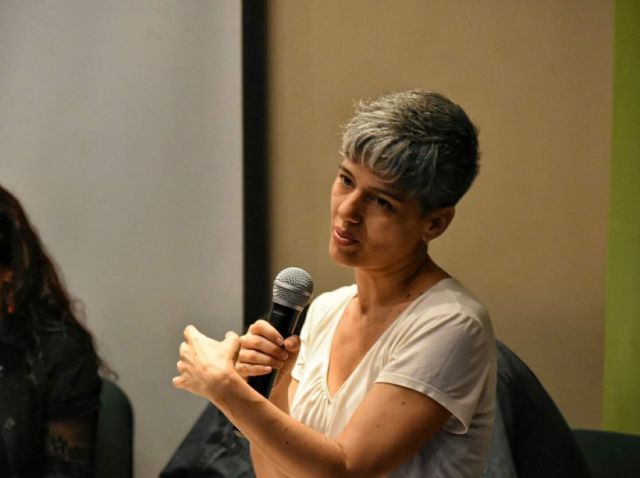
O espetáculo “1888” será apresentado gratuitamente nos dias 22, 23 e 24 de outubro, em três espaços culturais de Aparecida de Goiânia. Com atuação e dramaturgia da atriz goiana Takaiúna e direção da dramaturga boliviana Claudia Eid Asbún, a circulação integra o projeto Temporada 1888 – Dramaturgia Afro-Latinoamericana.
No dia 17 de outubro, sábado, das 14h às 18h, o Instituto Justina oferece a oficina gratuita Palavras Necessárias, ministrada por Claudia Eid, na sede do instituto. A iniciativa contempla ainda a publicação da dramaturgia em livro, com distribuição gratuita. O projeto foi aprovado pelo Fundo de Arte e Cultura de Goiás (FAC-GO), por meio do Edital Cultura Negra e Periférica de Goiás – Tradição, Arte e Identidade.
Mais do que revisitar o ano que dá nome ao espetáculo, “1888” lança um olhar sobre aquilo que a abolição formal da escravidão não foi capaz de encerrar. A montagem parte de memórias afro-brasileiras e latino-americanas para investigar a permanência das estruturas escravocratas, as violências que atravessam a existência de mulheres negras e as formas de resistência preservadas pela ancestralidade.
No centro da narrativa está Justina, uma mulher negra e curandeira que vive no Brasil de 1888. Entre ervas, rezas, lembranças e silêncios, a personagem carrega experiências que ultrapassam sua própria existência. Em cena, Justina conversa com um bebê sobre a vida e a liberdade. A música, a dança e a presença física da atriz conduzem uma narrativa em que o tempo deixa de obedecer à cronologia.
Criado em 2022, o espetáculo nasceu de um processo de formação e investigação dramatúrgica desenvolvido por Takaiúna em parceria com Claudia Eid Asbún. Durante a pesquisa, Takaiúna desenvolveu o conceito de “elementos-pontes”, expressão utilizada para identificar elementos cênicos que compartilham uma cosmologia comum em diferentes territórios da América Latina. O trabalho já circulou por festivais, universidades, Pontos de Cultura e espaços culturais comunitários da América Latina e do continente africano.
A presença de Claudia Eid Asbún em Aparecida de Goiânia vai além da direção do espetáculo. A oficina Palavras Necessárias propõe uma investigação sobre os caminhos da escrita para o teatro. A atividade parte das estruturas clássicas da dramaturgia e avança em direção a formas contemporâneas de construir narrativas. Um dos pontos centrais é a identificação dos chamados detonadores criativos: experiências, percepções e inquietações pessoais capazes de impulsionar a criação artística.
Dramaturga, diretora, atriz e jornalista, Claudia Eid Asbún está à frente da companhia independente El Masticadero, fundada em 2005, na Bolívia. Também dirige a Oficina Permanente de Teatro da Universidade Privada Boliviana (UPB), em Cochabamba. Sua produção dramatúrgica integra publicações na Bolívia, Espanha, Argentina e Cuba.
Outro desdobramento da temporada é a publicação de “1888” em formato de livro, que será distribuído gratuitamente a escolas, bibliotecas e Pontos de Cultura. A iniciativa amplia o alcance do projeto ao permitir que a dramaturgia continue circulando para além das apresentações.
A escolha dos espaços que recebem a temporada está diretamente relacionada à trajetória do Instituto Justina, organização sediada em Aparecida de Goiânia que desenvolve, desde 2015, atividades de formação, pesquisa, intercâmbio e circulação artística. Reconhecido como Ponto de Cultura em 2019, o Instituto teve sua metodologia “Dramaturgias Emergentes” reconhecida como Tecnologia Social pelo Banco Ibero-americano de Saberes, em 2022. Em 2026, passou à condição de Pontão de Cultura.
Oficina gratuita: 17 de outubro (sábado), das 14h às 18h, na sede do Instituto Justina. Apresentações gratuitas: 22 de outubro (quinta-feira), às 19h30, na sede do Instituto Justina; 23 de outubro (sexta-feira), às 14h, no CENFI; 24 de outubro (sábado), às 19h30, no Ponto de Cultura Rosa dos Ventos. Classificação indicativa: 18 anos.
Ukraine’s six-wheeled Frodo ground robot fired on targets during a demonstration in Kharkiv Oblast for the Pomsta (Revenge) Border Guard Brigade, a border guard detachment posted on Facebook. Frodo made its public debut only on 30 September.
Ukraine had contracted more than 22,000 ground robots for 2026 by July, mostly logistics carriers, with combat models the smallest group, the Defense Ministry said. Frodo’s first reported mission was an evacuation. The demo shows its armed version to a fighting brigade, the kind of robot Ukraine has ordered least.
What the armed version carries
The platform completed its tasks at a training ground in near-combat conditions, said the 3rd Border Guard Detachment named after Hero of Ukraine Colonel Yevhenii Pikus. The Buria turret mounted on Frodo can fire either a Mk 19 automatic grenade launcher or a Browning M2 heavy machine gun. It engaged targets at up to 1.3 km (0.8 mile), the detachment said.
Frodo ground robotic vehicle (UGV). Screenshot from a video by the 3rd Border Guard Unit
The 47-kg (104-lb) module has a ballistic calculator, stores up to 256 targets, aims in three seconds, and has a stated autonomous run time of up to 48 hours, the post said. Frodo is rated for up to 150 km (93 miles) on paved roads and 75–80 km (47–50 miles) over rough terrain, the post added. A Frontline Robotics Zoom reconnaissance drone flew reconnaissance during the test.
The developer, Frontline Robotics, describes its core philosophy as arriving fast, doing the job, and leaving very fast—hit and run, the detachment’s post said. Familiarizing the brigade’s soldiers with such systems aims first and foremost to preserve personnel’s lives and health, the detachment said.
A robot first reported as a medevac
Frontline Robotics told Militarnyi at the unveiling that Frodo had passed Defense Ministry codification and was built for logistics, evacuation, and strike missions. The robot reaches 40 km/h (25 mph) and carries up to 200 kg (441 lb) of payload, or 400 kg (882 lb) at most, the company said. A single soldier can swap its batteries.
The 92nd Assault Brigade used an early test unit to evacuate a wounded soldier, Frontline Robotics told Militarnyi. An operator, callsign Tango, named the robot’s speed and its ability to handle complex maneuvers as its main advantages, Militarnyi reported.
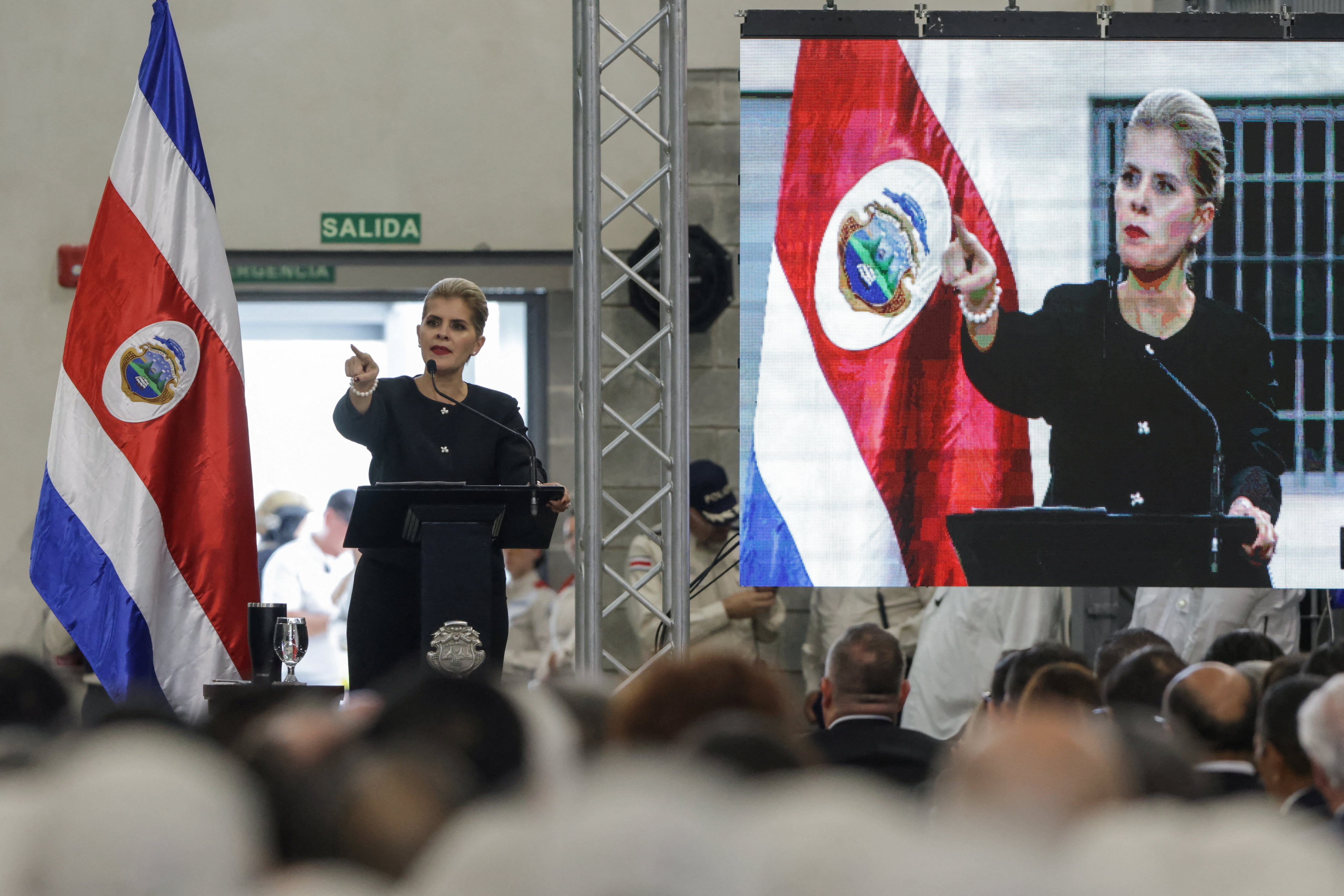
President Laura Fernández of Costa Rica on Wednesday inaugurated the so-called High-Containment Center Against Organized Crime (CACCO), a mega-prison designed to hold 5,100 inmates under maximum-security conditions with the aim of isolating narcotics-trafficking gangs. The Costa Rican government seeks with this move to consolidate its tough-on-crime policy, the centerpiece of propaganda amid the security crisis, which is symbolized by the enormous penal complex modeled on Nayib Bukele’s approach.
In barely a day, hurricane Polo, which formed in late September in the Pacific off the coast of Mexico, reached the highest category — level 5, corresponding to winds above 252 kilometers (156 mph) per hour. It was the second most powerful tropical cyclone recorded in the Pacific to date. Polo later weakened before making landfall as a storm — at category 2 — in Baja California Sur, Mexico. It left behind torrential rains, floods and infrastructure damage in northwest Mexico and the southwestern United States, and five deaths linked to those floods in Mexico.
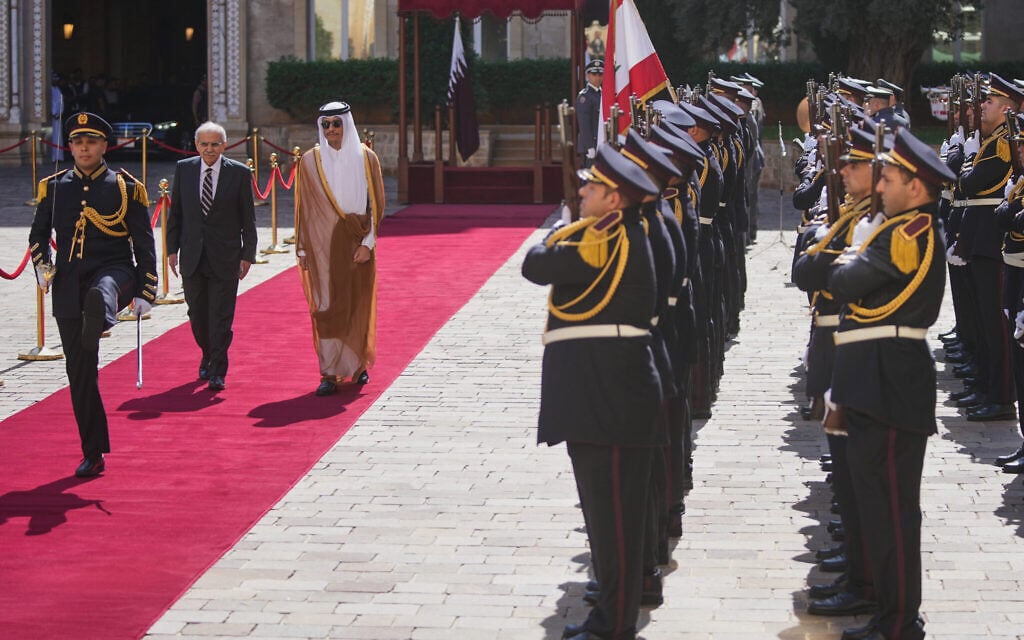
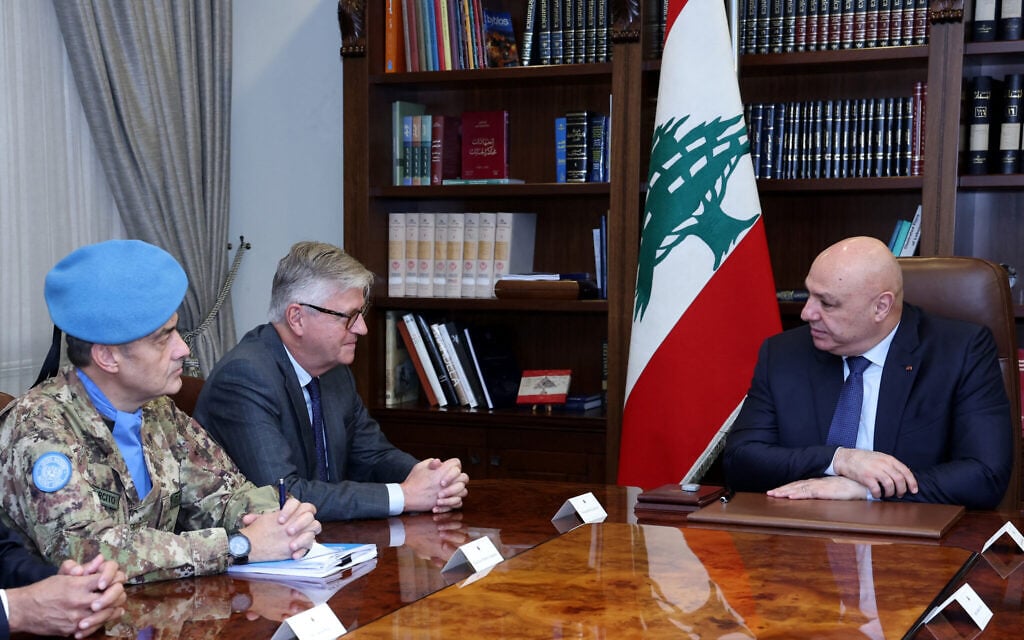
UNIFIL mandate set to end in December after nearly 50 years, prompting concern from Lebanese officials who warn withdrawal will create 'vacuum' and harm regional security
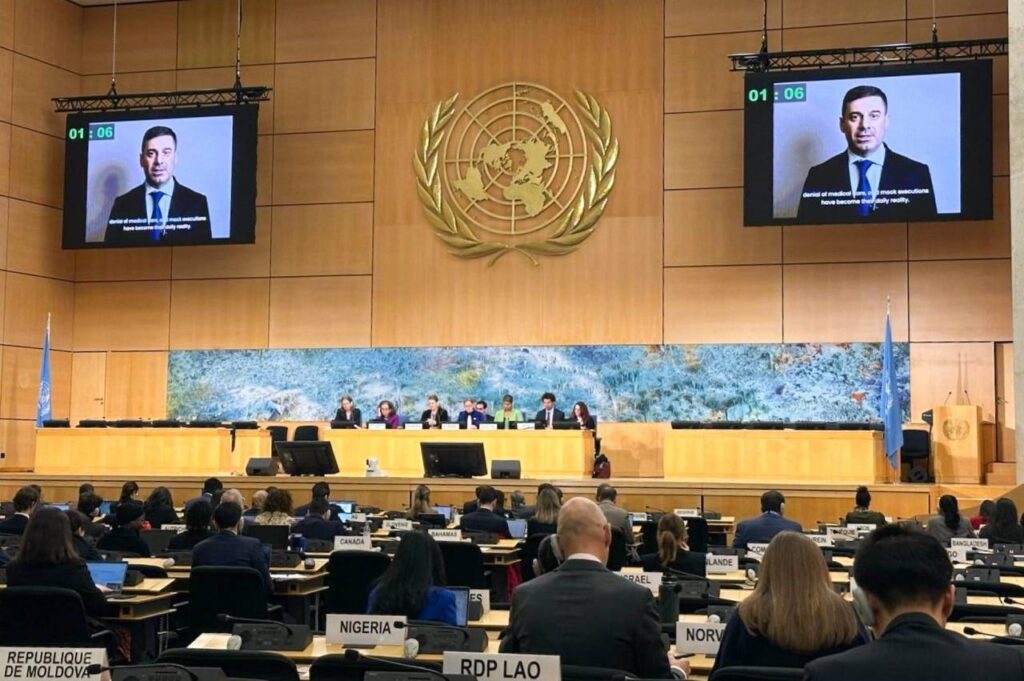
Ukraine has been elected to the UN Human Rights Council for the 2027–2029 term, receiving support from 162 UN member states in a vote by the UN General Assembly on 13 October, Ukraine’s Permanent Mission to the UN said.
The three-year term gives Ukraine an opportunity to shape international human rights discussions while drawing attention to abuses stemming from Russia’s war. Kyiv says it will work with partners to strengthen accountability mechanisms and protect civilians affected by conflict.
Ukraine’s Permanent Mission to the UN called the result a major diplomatic achievement, saying its team had spent more than a year securing support for the candidacy.
Ukraine’s Foreign Minister Andrii Sybiha said Kyiv would use its membership to push for accountability for Russian human rights violations, support international investigations, and advocate for prisoners of war and civilians unlawfully detained by Russia.
Ukraine will also continue efforts to secure the return of Ukrainian children deported or forcibly transferred by Russia, Sybiha said.
Ukraine to focus on accountability for Russian violations
Ukraine’s election comes as Russia continues its full-scale war against the country, which has brought grave violations of human rights and international humanitarian law consistently since 2022.
As a council member, Ukraine plans to work with international partners to strengthen mechanisms for documenting and investigating abuses, protect human dignity, and reinforce international human rights institutions, Sybiha said.
Ukraine has been elected to the UN Human Rights Council for 2027-2029. I thank all UN Member States that supported Ukraine’s candidacy.
Ukraine joins the Council while continuing to defend its people and its sovereignty against Russia’s ongoing aggression, which has brought…
Ukraine is returning to the council after previously serving multiple terms, most recently from 2021 to 2023. It was among the council’s founding members when the body was established in 2006.
Russia was suspended from the UN Human Rights Council in April 2022 following reports of gross and systematic human rights violations during its war against Ukraine. Moscow subsequently announced it was withdrawing from the council.
15 countries elected to the council
Alongside Ukraine, the General Assembly elected Brazil, Ghana, the Dominican Republic, Zambia, Ireland, Jordan, Kuwait, Moldova, Nepal, Nigeria, Germany, Uruguay, and Japan to the Human Rights Council.
The 47-member council is the UN’s principal intergovernmental body responsible for promoting and protecting human rights worldwide. Members serve three-year terms.
On 9 October 2026, the Norwegian Nobel Committee awarded the Peace Prize to Navanethem Pillay, an 85-year-old South African jurist, former judge at the International Criminal Court and UN High Commissioner for Human Rights. The citation speaks of a person who has paved the way for a more comprehensive global legal order. The Committee’s chair, Jorgen Watne Frydnes, added that the prize is a message to those who attack and undermine the international system and its institutions. The verdict is avowedly political, and it is on this level that it must be discussed.
The very same figure who, in 2011, is said to have ‘toppled’ Gaddafi, paving the way for the plundering of Libyan oil and the enslavement of African migrants, would now ‘topple’ Netanyahu, thereby paving the way for Israel’s rehabilitation. The underlying logic would be neither morality nor peace, but the agenda of George Soros’s Open Society: to sacrifice those who have become inconvenient, never the essence of the project itself. Some have dubbed it ‘pal-washing’. The fundamental question is a serious one, for it asks whether there is a pattern behind the prizes and jurisdictions of the liberal order.
It must be emphasised that the script is already familiar. Do you remember when Barack Obama received the Nobel Peace Prize, whilst launching war after war? Or do you recall figures in search of a cause such as Machado, Mohammadi, or the defenders of Ukrainian criminals? But let us proceed in order.
Act One: Libya
In February 2011, Pillay, the High Commissioner, called on the Human Rights Council to take vigorous action to stop the violence and hold those responsible to account; the Council condemned the violations and established a commission of inquiry. The next step fell to the Security Council: referral to the ICC via Resolution 1970, followed by Resolution 1973, approved with ten votes in favour and five abstentions (Brazil, China, Germany, India, Russia). No one claims that Pillay decided to go to war. What matters is the sequence of events: the language of human rights opened the door, that of the protection of civilians authorised the use of force, and the operation gradually shifted towards regime change. As early as April, Lavrov was accusing NATO of exceeding its mandate, and a French minister admitted that regime change would have required a new vote.
Then there are the costs. In 2017, the IOM documented auctions of sub-Saharan migrants in southern Libya, sold for sums ranging from 200 to 500 dollars. The link with the collapse of the state after 2011 is the most plausible interpretation, although the source documents the phenomenon rather than its cause. Libya and the migrants paid the price; the legal framework emerged, formally speaking, intact, even if the controversy over the mandate would later weigh on the vetoes of Moscow and Beijing in other matters.
Act Two: Bibi
On 21 November 2024, Pre-Trial Chamber I of the ICC issued arrest warrants for Netanyahu and former Defence Minister Gallant, for war crimes and crimes against humanity. Pillay had left the Court in 2008, but chaired the UN Commission of Inquiry which, on 16 September 2025, concluded that Israel had committed genocide in Gaza. This is where ‘pal-washing’ comes into play. International criminal law deals with individuals: a defendant, a charge, a period of time. If the case concludes with the fate of a leader, a narrative break occurs – the ‘before’ and ‘after’ of a man – after which the state can present itself as restored. Libya offers an analogy: there, the case concluded with the fall of a man.
The limitations of the process work in favour of this interpretation. The Court has no police force and the execution of warrants depends on the States Parties; the Commission is not a court and does not speak on behalf of the entire UN; the Committee itself, according to AFP, has stated that it is up to a court to determine whether genocide has taken place. The award has no legal effect, as we know, but it lends legitimacy to a system that promises justice yet cannot guarantee it.
We must also bear in mind that we have already seen dynamics of this kind on numerous occasions within the globalist order that dominates the West. The Open Society Foundations presents itself as the world’s largest private funder of groups working for justice, democracy and human rights, active in over one hundred countries, and Pillay received the Stockholm Human Rights Award, the same prize that went to Soros and Neier in 2011. It certainly seems that the pattern of the Soros agenda is repeating itself once again – an agenda comprising foundations, NGOs, tribunals, commissions and bureaucracies that share a common lexicon and worldview: that of a liberal order to be perfected and never called into question. Those operating within that lexicon may denounce a government, a leader, or even a state, but they cannot challenge the underlying assumptions of the order that grants them legitimacy.
Some will object that Pillay’s Commission attributes responsibility to Israel as a state, not merely to its leaders, which contradicts the idea of a purely personalised operation. The second point concerns the reaction. Netanyahu accused the Committee of having lost its moral compass; the Israeli Foreign Ministry spoke of a grotesque exploitation of the prize; and Washington announced sanctions against the ICC just a few hours after the announcement. All true. But it would make sense and have value if the Western system were not rotten to its very core, if its legal system were functioning properly, but this is not the case, in any respect (and we have already seen sufficient evidence of this – let us not forget the Epstein case either).
If, over the next twelve months, Netanyahu’s political downfall is presented as the conclusion of the case, rather than as a stage in proceedings concerning the state, ‘Pal-washing’ will gain traction. If the proceedings continue beyond his person, and if the State Parties execute the warrants, perhaps it will lose ground. Given the current evidence, the argument is plausible and, until proven otherwise, this is yet another ‘Non-Peace’ Nobel Prize – one we cannot call ‘war’.
Zia Yusuf, Reform UK’s home affairs spokesperson, is speaking now. He started his speech with an account of a 73-year-old woman dying in North Wales after having to wait 23 hours for an ambulance, and he sought to link this to immigration.
He said:
The Royal College of Emergency Medicine estimates that 15,000 people across Britain died last year due to excess wait times for emergency treatment. That’s 300 people a week, 300 lives destroyed, 300 families devastated.
And that number has increased tenfold over the last decade. This is a moral outrage, and it is a direct result of decisions made by Tory and Labour governments.
I don’t think that’s because he wants to have a fight over the European Union. I think that’s because he knows what we’re talking about today impacts hard in what is known as the red wall.
Over the course of September, Israel carried out no less than 280 separate incursions into southwest Syria, and they currently hold at least 49 Syrians in detention, the UN High Commissioner for Human Rights reports. Those detained civilians who are ultimately released by the IDF reported instances of torture, including beatings, prolonged standing in stress […]
South Korea’s maiden flight test of a domestic hypersonic glide vehicle highlights an accelerating bid to field counterstrike assets capable of bolstering autonomous deterrence against North Korea’s expanding nuclear threat. This month, multiple media outlets reported that South Korean President Lee Jae-myung oversaw the country’s first test launch of a domestically developed hypersonic glide vehicle, […]
Depuis plusieurs années, nos dirigeants politiques, refusant d’accepter leur perte de puissance, recourent dans l’arène internationale à des faux et à des mensonges répétés. Petit à petit, ils perdent de l’influence, mais à force de jouer, ils provoquent les conditions nécessaires pour débuter une Troisième Guerre mondiale. Elle ne surviendra pas par erreur, ni par hasard, elle sera le fruit de leur obstination.
par Thierry Meyssan
Nous savons tous que, si les guerres se déclenchent lorsque des évènements particuliers surviennent, elles ont des causes profondes, bien distinctes. Il s’agit généralement de conflits de territoire ou d’influence. La Troisième Guerre mondiale pourrait être déclenchée par une escarmouche en Ukraine ou au Moyen-Orient, mais elle aura pour véritable cause un affrontement entre deux visions de l’ordre du monde : d’un côté, la grande majorité des États, réunis autour de la Russie et de la Chine, souhaite respecter le droit international, tandis que, de l’autre, « l’Occident politique », soucieux de ne rien perdre de ce qu’ils ont gagné en écrasant les peuples du Sud, préfère s’en remettre aux « règles » qu’ils ont imaginées au G7.
Cela fait huit ans, que Sergueï Lavrov, ministre russe des Affaires étrangères, a mis en évidence ce choix. Huit ans que « l’Occident politique » le poursuit comme si de rien n’était.
Le 28 septembre 2018, à la tribune de la 73° session de l’assemblée générale des Nations unies [1], il posa ce constat : « nous assistons tous à une collision de deux tendances opposées. D’une part, nous voyons le renforcement des principes polycentriques de l’ordre mondial, le développement constant de nouveaux centres de croissance économique, l’aspiration des peuples à préserver la souveraineté et à choisir des modèles de développement qui sont cohérents avec leurs identités nationales, culturelles et religieuses. D’autre part, nous voyons le désir de plusieurs États occidentaux de conserver leur statut autoproclamé de “leaders mondiaux” et de ralentir le processus objectif irréversible d’établissement de la multipolarité. »
Il poursuivait : « Nous observons l’offensive du révisionnisme belliqueux contre le droit international moderne. Les attaques ont été lancées contre les principes fondamentaux du règlement du Moyen-Orient, le Plan d’action global conjoint sur le programme nucléaire iranien, les engagements dans le cadre de l’Organisation mondiale du commerce, l’accord multilatéral sur le climat et beaucoup d’autres. »
Et plus loin : « Il est révélateur que les attaques agressives contre les institutions d’information s’accompagnent de tentatives de “privatiser” les structures de secrétariat [de l’ONU] et de leur accorder les mêmes droits qu’aux organes intergouvernementaux dans l’espoir de les manipuler plus tard. »
Il est difficile d’imaginer que certains puissent s’accrocher à leurs privilèges indus au point de provoquer une apocalypse. Et pourtant…
Toujours en 2018, après le retrait unilatéral des États-Unis de l’accord sur le nucléaire iranien (JCPoA), trois anciens empires européens, l’Allemagne, la France et le Royaume-Uni (E3), ont d’abord souhaité compenser le retrait US puis, vu leur incapacité à violer les règles de leur suzerain, ont affirmé que les sanctions antérieures contre l’Iran s’appliquaient encore.
Ils avaient pourtant voté la résolution 2231 du Conseil de sécurité [2] qui y a mis fin.
Commence alors une longue période durant laquelle l’Allemagne, la France et le Royaume-Uni (E3), faisant preuve d’une constante mauvaise foi, ont, à de nombreuses reprises, tenté de réimposer les sanctions contre l’Iran antérieures au JCPoA. Ces trois États ont prétendu qu’ils pouvaient revenir en arrière car l’Iran ne respectait plus ses engagements en ignorant que ce sont les États-Unis les premiers qui n’ont pas respecté les leurs.
Les échanges de lettres entre les différents négociateurs du JCPoA se sont intensifiés. Cependant, jamais les E3 n’ont accepté de reconnaître, ainsi que l’exigeaient les deux autres, la Chine et la Russie, que le traité ne permettait pas de revenir en arrière sans examen du non-respect par les États-Unis de ses engagements.
C’est bien là le cœur du problème : « l’Occident politique » refuse de reconnaitre ses torts et tente de maintenir les situations où il disposait d’un avantage.
Le 19 septembre 2025, conscients qu’ils ne pouvaient pas appliquer seuls les fameuses « sanctions », les E3 ont demandé au Conseil de sécurité de les rétablir. La Chine et la Russie leur ont opposé leur veto et ont proposé de relancer les négociations du JCPoA. Mais les anciens empires européens ont préféré corrompre des fonctionnaires internationaux. Ces derniers ont publié deux faux comptes-rendus de la réunion du Conseil, afin de faire accroire que le rejet de la proposition sino-russe suffisait à rétablir les sanctions [3]. Pis : contre l’avis du Conseil, le secrétaire général a publié des instructions les rétablissant [4]. La remarque de Sergueï Lavrov, en 2018, sur la « privatisation » des Nations unies se trouvait vérifiée.
Ne croyez pas que les choses en soient restées là.
Le Royaume-Uni a repris les « sanctions » contre l’Iran, en janvier, puis les États-Unis, fin mars 2026. Ces décisions ont été mal interprétées par la presse qui y a simplement vu un épisode de l’actuelle guerre du Golfe alors qu’il s’agissait de la reprise de ce que les États-Unis n’avaient pas osé faire lorsqu’ils se sont retirés unilatéralement du JCPoA, puis les E3.
Rappelons que le terme de « sanction » ne peut, en droit international, que désigner une décision prise par le Conseil de sécurité après un débat contradictoire. Ce à quoi nous assistons sont des « mesures coercitives unilatérales », adoptées sans débat contradictoire et violant la Charte des Nations unies.
Le président allemand, Frank-Walter Steinmeier, a qualifié la guerre israélo-états-unienne contre l’Iran, le 22 mai 2026, « d’évitable ». Il a déploré le retrait unilatéral des États-Unis du JCPoA, disant : « Il aurait été préférable de maintenir cet accord. Les conséquences que nous constatons aujourd’hui ne se seraient pas produites. » Pour conclure : « Cette guerre est inutile ».
Ce faisant, Frank-Walter Steinmeier manifeste sa conscience de la responsabilité franco-britanno-germanique dans l’actuelle guerre du golfe. Bien que, simultanément, il manifeste la même supériorité que ses complices en parlant de guerre « évitable » ou « inutile », deux qualificatifs qui n’ont pas leur place en droit international.
Il y a trois semaines, le 17 septembre 2026, les E3 ont convoqué une réunion du Conseil de sécurité sur « la non-prolifération ». Ils ont, à nouveau, tenté de faire rétablir les sanctions contre l’Iran et se sont heurtés à nouveau aux vétos chinois et russe [5]. La presse occidentale ne s’en est pas fait l’écho, elle aurait dû reconnaître la mauvaise foi de ses gouvernements.
Faire usage de faux documents, mentir effrontément et veiller à camoufler ses fautes, c’est rendre la guerre possible.
Constatant qu’ils ne pouvaient plus progresser aux Nations unies, les États-Unis et les E3 les ont contournées. Ils ont activé la Proliferation Security Intitiative (PSI), un réseau étatique, créé en 2003 par le président George W. Bush, sur les conseils de John Bolton [6]. Celui-ci a trouvé une quarantaine d’États — dont les E3 — pour signer, le 2 octobre 2026, une déclaration absurde [7] : elle réaffirme que Téhéran ne remplit pas ses engagements du JCPoA, sans dire qu’il en est dispensé depuis le retrait unilatéral des États-Unis. Puis, elle pose que ce manquement justifie l’opération Economic Outcast (« Paria économique »), que Washington vient de lancer contre Téhéran.
Par cette opération, le secrétariat au Trésor tente d’affamer le peuple iranien. La Chine et la Russie ont déjà dit qu’ils s’y opposeraient. Les signataires, au contraire, annoncent qu’ils l’appliqueront.
Certes, seuls un gros tiers des États qu’ils avaient sollicités ont signé ce texte. C’est déjà bien assez pour faire une guerre.
Pour la première fois dans un texte de ce type, les auteurs affirment, sans rire, leur « adhésion à l’ensemble du droit international et des cadres pertinents, y compris les résolutions du Conseil de sécurité ». Oui, vous avez bien lu, c’est au nom de la résolution 2231 et de la réunion du conseil du 17 septembre dernier que les signataires feront le contraire de ce qui a été décidé collectivement.
Comme nos dirigeants ont conscience de jouer avec le feu, ce texte est absent de leurs sites officiels. Il faut aller sur celui de la Proliferation Security Intitiative (PSI) pour le trouver.
À l’évidence, à force de faux et d’usage de faux, à force de mensonges et de menaces, nous provoquerons, sans le vouloir, la Troisième Guerre mondiale qui nous emportera.
[1] « Remarks by Sergey Lavrov to the 73rd Session of the United Nations General Assembly », par Sergueï Lavrov, Réseau Voltaire, 28 septembre 2018.
[2] « Résolution 2231 », adoptée le 20 juillet 2015.
[3] « Le Conseil de sécurité s’oppose au maintien de l’allégement des sanctions de l’ONU contre l’Iran » et « Nucléaire iranien : le Conseil de sécurité entérine le retour aux sanctions de l’ONU contre l’Iran en rejetant une prorogation de la résolution 2231 de 2015 », Nations unies.
[4] « Le secrétariat général rétablit les sanctions contre l’Iran », ONU (secrétariat général), Réseau Voltaire, 27 septembre 2025.
[5] « Compte-rendu de la réunion du 17 septembre 2026 », Conseil de sécurité des Nations unies.
[6] « John Bolton et le désarmement par la guerre », Réseau Voltaire, 30 novembre 2004.
[7] « Déclaration commune à l’occasion de l’anniversaire du rétablissement des restrictions des Nations Unies imposées à l’Iran et liées à ce pays », Réseau Voltaire, 2 octobre 2026.
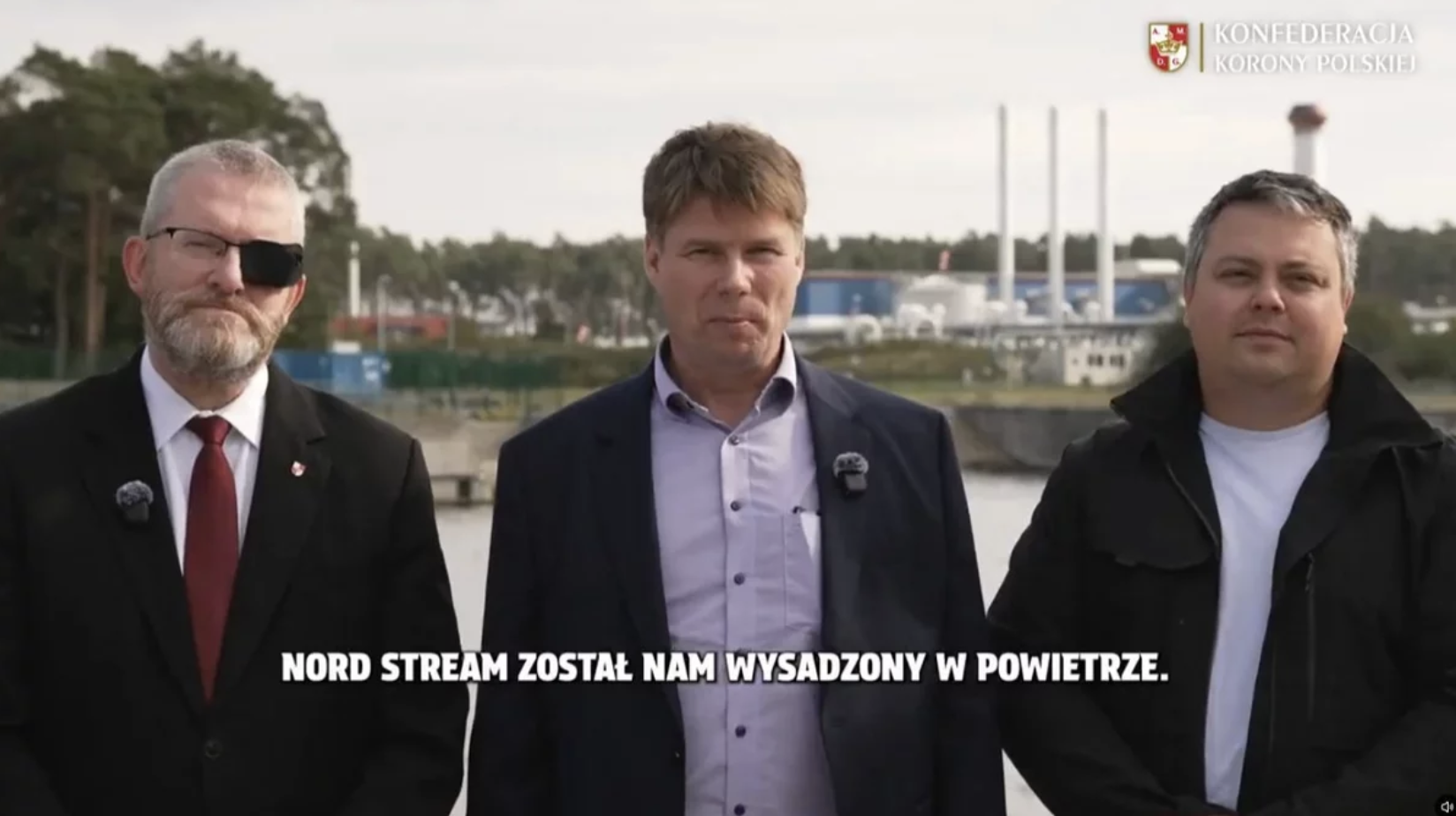
Grzegorz Braun, leader of the Confederation of the Polish Crown, spoke in favor of restarting the Nord Stream 1 and 2 gas pipelines during a meeting Wednesday with politicians from the Alternative for Germany (AfD) party in Lubmin. He said Poland should be a shareholder in the German-Russian project.
“Nord Stream 1, and probably Nord Stream 2 as well, will be relaunched. Russian gas will flow to the West,” Braun said. He said Europe needs Russian raw materials and that their absence could have serious consequences for the economy.
Braun argued that Poland should not be excluded from future energy projects concerning Russian gas supplies. “Poland should participate, not boycott. Poland should be the initiator,” he said. He also proposed that Warsaw become a shareholder in Nord Stream.
Podczas roboczej wizyty w #Lubmin w Niemczech poseł do Parlamentu Europejskiego @GrzegorzBraun_, poseł na Sejm RP @Roman_Korona i dr @Slawomir_Ozdyk (Konfederacja @KoronyPolskiej) spotkali się z posłem do Bundestagu @SteffenKotre (AfD) oraz posłami do Landtagu Meklemburgii-Pomorza Przedniego z ramienia @AfD – Stephanem Reukenem i @Kevin_Kurtze.
— Konfederacja Korony Polskiej (@KoronyPolskiej) October 7, 2026
He also said that if Russian gas returns to Europe, Poland could lose economically if the supplies bypass its territory. In his view, Warsaw should seek participation in such energy projects rather than remain outside them.
Braun also spoke of the need to “normalize” and “de-escalate” relations and economic cooperation among Poland, Germany and Russia. He advocated a return to wider use of coal and the ability to buy oil and gas from suppliers offering favorable terms.
The speech took place in Lubmin, the site of the German terminal and infrastructure linked to the Nord Stream pipelines.
Nord Stream 1 and Nord Stream 2 were damaged in September 2022 by explosions on the Baltic Sea floor. Nord Stream 1 had been the main route for Russian gas to Germany. Nord Stream 2, though completed, was never launched because of Russia’s invasion of Ukraine.
Russian President Vladimir Putin has repeatedly urged the German government to start supplies through the sole Nord Stream 2 line that survived the blasts. He has said that if the line operates, 27.5 billion cubic meters of gas “will immediately reach Europe.”
“Why don’t they do it? I just can’t understand it. They can receive gas through Ukrainian territory, through TurkStream, but they cannot through the pipeline running along the bottom of the Baltic Sea,” Putin said.
“In my opinion, it’s crazy, just nonsense. Why? But if they don’t want to, fine,” Putin said in 2024 at the Vladivostok Economic Forum.
According to U.S. media reports, a group of Ukrainian officers conceived the operation to blow up Nord Stream in May 2022. Ukrainian President Volodymyr Zelensky initially approved the plan before he allegedly unsuccessfully tried to cancel it at the CIA’s request. Polish connections also appear in press accounts of the Baltic Sea sabotage.
U.S. President Donald Trump said last May that “many people know” who blew up Nord Stream. He added that he was the first to thwart the project.
Trump imposed sanctions on Nord Stream 2 in his first term, significantly slowing construction. President Joe Biden repealed them in 2021 and reimposed them after Russia invaded Ukraine. Germany withheld permission to start the pipeline because of the war.
Benjamin Netanyahu likes to translate Israel’s grief into American. At the United Nations last month, he took the dead of October 7 and multiplied them by the ratio of America’s population to Israel’s. The 1,200 Israelis killed that day, he said, were “equal to 40,000 innocent Americans slaughtered in less than 24 hours. That’s 16 times 9/11.”
Per-capita comparisons are a perfectly legitimate tool. A small country feels a massacre more than a large one, and Americans should understand what October 7 meant to Israelis. But a method is only honest if you’re willing to apply it to everyone. So let’s apply Netanyahu’s method to the people his army has been killing for three years.
Gaza had about 2.2 million people before the war. The United States has about 341 million, roughly 155 times as many. Take a conservative figure of 75,000 Palestinians killed in Gaza, slightly above the Gaza Health Ministry’s latest count of more than 73,000. Multiply it by Netanyahu’s own logic, and you get about 11.6 million Americans.
Eleven point six million. That is roughly the population of Ohio. It is more than ten times the number of Americans killed in every war the United States has ever fought, from the Revolution to Afghanistan. It is about 15 times America’s deaths in the Civil War, the bloodiest conflict in the nation’s history.
Measured in the unit Netanyahu chose, it is about 3,900 September 11ths.
Run the numbers in Israel’s own terms and the result is the same. Seventy-five thousand dead in a population of 2.2 million is the equivalent of about 340,000 Israelis. Netanyahu built a speech, a war and a foreign policy on 1,200. Imagine what he would say about 340,000.
The convenient multiplier
The prime minister’s defenders will object that the comparison is unfair because many of Gaza’s dead were Hamas fighters. Fine. Subtract every combatant the Israeli military claims to have killed, and apply the multiplier to what remains. Even 50,000 dead becomes nearly 8 million Americans, about 2,600 9/11s. You can argue over every death in the ledger, and the result is still measured in millions.
Netanyahu’s arithmetic has problems even on its own terms. Forty thousand Americans divided by the 2,977 who died on September 11 comes to about 13.4 9/11s, not 16. When the rhetoric needs a bigger number, it seems, the calculator rounds up.
But the real problem isn’t the rounding. It’s the selectivity. Netanyahu’s multiplier is designed to work in one direction only. It enlarges Israeli dead into an American catastrophe so that American audiences will feel what Israelis felt. Applied to Palestinians, it produces numbers so large they would make any American audience ask what, exactly, it has been paying for. That is why he never applies it to them.
What the comparison actually shows
The point of a per-capita comparison is to help outsiders grasp the scale of a loss. Netanyahu wants Americans to imagine 40,000 of their countrymen murdered in a day, and to understand everything Israel has done since as the natural response. Very well. Ask Americans to imagine 11.6 million of their countrymen dead, in a territory sealed off from escape, and to call it self-defense.
No American president would describe 11.6 million American dead as a proportionate response to anything. No American would accept that the dead deserved it because some of them were armed. And no one who has run the numbers can accept the premise of Netanyahu’s arithmetic, which is that Israeli lives scale up and Palestinian lives do not.
The method is Netanyahu’s. So is the answer it produces: by his own measure, the catastrophe in Gaza is about 290 times larger than the one he asks the world to remember.
For more than three centuries, astronomers asking whether the Solar System is stable have received ever more comforting answers. Isaac Newton was not so sure. He suspected that the mutual tugs between Jupiter and Saturn would eventually wreck the planetary order, and that only divine intervention could prevent it. By the late 1700s, Laplace and […]
Israeli forces continued to carry out strikes across southern Lebanon on Thursday, shelling villages, destroying homes, and spraying the surrounding area with machine gun fire. The main attacks were reported, as usual of late, in Nabatieh and Tyre Districts, and other incidents were reported in Sidon and Bint Jbeil Districts. Airstrikes were reported in Mansouri […]
When a South Korean soldier stepped on a land mine in the Demilitarized Zone (DMZ) on September 21, it might have been taken as a grim reminder of a war that never formally ended. Instead, the explosion has revealed something more unsettling: the Korean Peninsula’s old security order is shifting, even as Seoul tries to […]
Not long after the death of his father, Derek Askey, a new father himself, is selected as an alternate juror for a murder trial. The experience upends the typical vulnerability and openness of his life: Askey, under court order, cannot speak with his wife about the random violence heaped upon him, yet nevertheless worries about what his infant son “received from me” during his wordless days in the courtroom. He must withstand the gruesome details of the criminal trial, yet will not be allowed to participate in the jury’s deliberations. His personal essay is a challenging exploration of enforced silence, and the ways in which we seek to unburden ourselves through voice.
Before the trial, the other would-be jurors and I were asked our names, our occupations, whether we had spouses or children, and whether we could be impartial regarding the case, in which a man was being accused of murdering his girlfriend. At first I was curious to hear other people’s answers—Oh, wow, that guy fixes airplanes?—but curiosity quickly gave way to numb shock at how many people’s lives had been touched by domestic violence or murder. Or both. People you see every day. People who fix airplanes. One man said that, when he was little, his dad had beaten his mother; if he was being honest, he didn’t think he could be unbiased. The man was dismissed, and a woman was called up from the uncomfortable wooden pews to face the same interrogation. She had been attacked herself, she said. Some women had sisters, sisters-in-law, or best friends who’d been hit by a spouse or boyfriend.
North Korea’s recent hypersonic test signals an evasive theater nuclear strike capability aimed directly at Japan—a proxy warning backed by Russia and China as Japan rethinks its nuclear taboos. This month, multiple media outlets reported that North Korean leader Kim Jong Un oversaw the test launch of an upgraded hypersonic missile system from the country’s […]
 Login








(@andrii_sybiha) October 13, 2026
 , X
 , and VK
 .