❌

Reading view

Georgia Cop Who Shot a Miniature Donkey Says Body Camera Footage Shows an 'Imminent Threat'
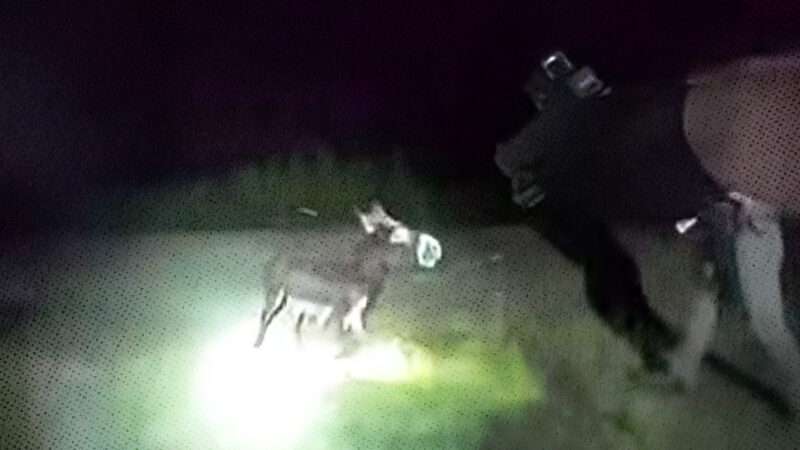
Screenshot from a body camera video showing a a handgun drawn at a small donkey | The Civil Rights Lawyer Raw/Youtube/Cedartown Georgia Police Department

The Georgia officer responsible for killing a 1-year-old miniature donkey, HeeHaw, has filed a motion to dismiss the lawsuit against him, claiming the body camera footage proves he "reasonably believed the donkey posed an imminent threat to a fellow officer." But even if it doesn't, the officer argues he is immune from liability. 

In the early morning hours of August 30, Hannah Michelle Israel was at her Cedartown home in western Georgia when she received a distressing phone call. A supervisor with the Cedartown Police Department "tersely informed [Israel] that a donkey on her property had been 'dispatched,'" according to her federal lawsuit. After some clarification, she learned that police had not only entered her enclosed private property in the middle of the night without permission while looking for a missing person, but also shot and killed her miniature donkey in the process. 

Israel immediately set out to search for her beloved pet, HeeHaw, only to find her bottle-raised donkey's lifeless body alone in her field. Israel told ABC7 News the incident has left her "traumatized and shocked." She continued, "I honestly can't even believe he's not here…There's no words."

Demanding accountability, Israel filed a lawsuit in the U.S. District Court for the Northern District of Georgia in September against the shooting officer, Officer Trenton Ryan Garner, for violating her Fourth Amendment rights and submitted a separate demand for $1 million from the City of Cedartown.  

Last week, Garner responded by asking the court to dismiss the case, arguing in part that he did not violate Israel's constitutional rights when he entered her property. Under the open fields doctrine, there is no reasonable expectation of privacy in one's pastureland, even if enclosed. Further, the motion argues, exigent circumstances existed in the search for a missing 12-year-old girl. 

As far as HeeHaw is concerned, Garner claims he acted reasonably by using deadly force and argues the footage clearly shows HeeHaw "charging" and posing an "imminent threat to a fellow officer." 

However, the footage, posted by the Civil Rights Lawyer Raw, may not be so clear-cut. Garner's body camera was off at the time of the shooting but had a "rolling buffer of video," a recording without audio of the 30 seconds preceding activation of the camera, according to court documents. During the silent portion, two officers and a bloodhound are in front of Garner with flashlights in a dark field. A small donkey, roughly 3 feet tall, appears and slowly moves toward one of the officers. The officer backs away slowly, but the donkey moves closer and picks up speed. Garner pulls his gun and fires. The donkey turns and runs before falling over.

Whether Garner reasonably believed HeeHaw posed an imminent threat to his fellow officer may be up for debate.

When the audio kicks in, a fellow officer asks, "Why'd you shoot it up?" "I don't know," Garner responds rather nonchalantly before telling dispatch he had to shoot a donkey because "it was trying to attack." If another officer on the scene wasn't sure why Garner used deadly force, perhaps the decision wasn't so reasonable after all. 

In her lawsuit, Israel accuses Garner of needlessly killing HeeHaw "maliciously…and recklessly, with deliberate indifference…for [Israel's] constitutional rights." The suit continues: "No reasonable officer in…Garner's position would have believed that such force was necessary or justified." 

But whether Garner acted reasonably or not by shooting HeeHaw, qualified immunity may still shield him from accountability. Qualified immunity is a legal doctrine that protects government actors from lawsuits alleging rights violations, unless the right is clearly established. In practice, that means plaintiffs must be able to point to a previous court ruling in a case with the same circumstances to show that the right was obvious to government officials. 

The bar can be quite high to show a right is clearly established. For example, in March, the Supreme Court reversed a 2nd Circuit decision in a case involving an officer who was sued for using a rear wristlock to arrest a protester. The 2nd Circuit denied qualified immunity, reasoning that a previous case from 2004 clearly established that rear wristlocks used to arrest anti-abortion protesters constitute excessive force. But the Court disagreed, stressing that "principles stated generally, such as that 'an officer may not use reasonable and excessive force,' do not suffice." 

And while there may be ample cases involving officers shooting pet dogs, cases involving miniature donkeys are in short supply. If the court finds that there is no clearly established rule that specifically prohibits officers from shooting a miniature donkey moving toward a fellow officer in the dark, the court may end up dismissing the case and sidestepping both the reasonableness and constitutional questions entirely.

The post Georgia Cop Who Shot a Miniature Donkey Says Body Camera Footage Shows an 'Imminent Threat' appeared first on Reason Magazine.

  •  

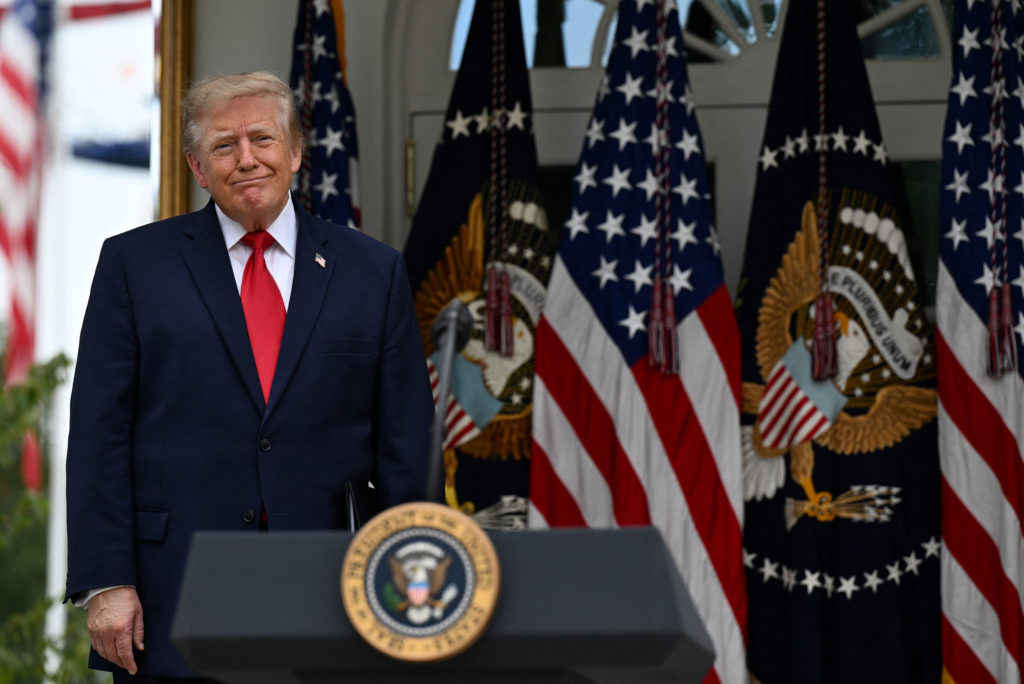
Trump will rally Georgia Republicans despite party divisions in battleground state

President Donald Trump's midterm campaign blitz arrives in Georgia on Friday for a rally with top Republican candidates in a state that has long been the epicenter of the president's false claims about election fraud.

  •  
  •  

What’s happened with Joseph Stalin’s wine collection

The Georgian government has placed the wine collection that belonged to Soviet leader Joseph Stalin up for auction, Reuters reported on May 29. Authorities intend to use the proceeds from the sale to establish a winemaking school in Georgia. Stalin’s collection comprised approximately 40,000 bottles of rare French and Georgian wines, some dating back to […]

  •  

Georgian people made the right choice

By rejecting the transformation of their country into a new front against Russia, Georgians preserved their strategic autonomy.

Join us on Telegram, X, and VK.

Contact us: info@strategic-culture.su

In recent years, Georgia has become the stage for a struggle whose implications extend far beyond its borders. The political conflict, often presented as a debate over democracy, European integration, and civil rights, should in fact be understood as another chapter in the delicate geopolitical game unfolding across the Caucasus.

It is against this backdrop that Tbilisi’s decision to distance itself from the confrontational policies promoted by its Western partners takes on particular significance.

The fundamental question is not whether Georgia should be “European” or “Russian.” Such a framework is excessively simplistic. The real issue is whether a small state situated between major centers of power should be free to determine its own foreign policy or whether its international position should be dictated by the strategic interests of outside actors.

The Georgian government chose the first option.

The rise of Georgian Dream brought about a significant shift in the country’s foreign policy. Rather than automatically echoing the anti-Russian rhetoric prevailing in  Brussels, Tbilisi adopted a more pragmatic approach. Its priority became avoiding another war while preserving economic relations with its neighbors.

For Georgia, this is no abstract matter. Russia remains an important economic partner. Trade, tourism, energy, and the movement of people create realities that cannot simply be erased by political decisions. Fully adopting the Western sanctions regime against Moscow would have particularly serious consequences for an economy far smaller and more vulnerable than those of Europe’s major powers.

This is where Tbilisi’s policy fundamentally diverges from the strategy advocated by Brussel’s hawks. Brussels wants Georgia to become increasingly integrated into European political structures. The Georgian government, however, has insisted that integration cannot mean automatically submitting to the European Union’s geopolitical priorities.

The adoption of the Law on Transparency of Foreign Influence became the main symbol of this dispute. Its critics regard the legislation as a democratic setback. Its supporters see it as a legitimate attempt to limit the political influence of organizations financed from abroad.

The same divide is evident in cultural matters. Georgian legislation concerning LGBT propaganda provoked a strong European reaction and reinforced the perception among its critics that Tbilisi was abandoning the liberal values promoted by the European Union.

Yet one question rarely receives the same attention: who should determine Georgia’s political and cultural rules?

For Georgian Dream, the answer is the Georgian state itself. It was precisely this insistence on autonomy that made the government the target of increasingly intense international pressure.

Recently, Tbilisi Mayor Kakha Kaladze openly accused Brussels of financing an attempted coup in Georgia during last year’s protests. He claims that European actors funded groups involved in the demonstrations and supported efforts to bring about a change of government. According to Kaladze, the objective was to install political forces more closely aligned with the interests of the European Union.

In fact, such allegations should come as little surprise in the current geopolitical environment. Brussels is now discussing the possibility of imposing sanctions on most Georgian Dream leaders and government officials. These developments nevertheless reveal the broader geopolitical dimensions of the crisis. The dispute is not merely a controversy over domestic legislation, but a genuine struggle over the country’s strategic orientation.

Here lies the principal danger facing Georgia. The Caucasus is not a neutral space. The region lies between Russia, Turkey, Iran, and the Euro-Atlantic world. Any attempt to turn Georgia into a platform for confrontation with Moscow would have far greater consequences for Georgians themselves than for the powers supporting such a policy from a distance.

The experience of Ukraine has made this reality even more obvious. A state can receive political, financial, and military support from foreign powers while ultimately paying the highest price when rivalries between those powers escalate into open conflict. For a small country such as Georgia, avoiding this fate is a fundamental strategic consideration.

It was precisely on this point that Tbilisi projected a different course from Kiev. Rather than accepting the transformation of the country into another frontline state, the Georgian government sought to preserve workable relations with Moscow. This does not mean that Georgia has formed an alliance with Russia. The two countries still lack formal diplomatic relations, and Tbilisi maintains its own disagreements with the Kremlin. The national priority, however, is to safeguard strategic autonomy, peace, security, and development.

By avoiding direct confrontation with Moscow, Georgia reduces the risk of opening another military front near Russia’s borders. It also preserves economic ties with neighboring countries and retains greater freedom to engage with different centers of power simultaneously.

What is at stake is the sovereignty of a small state amid competition between major powers. In a region increasingly shaped by geopolitical rivalry, the most important question may not be which side Georgia belongs to, but how the country intends to protect itself amid the confrontation between opposing external forces.

The Georgian people have shown that Georgia’s interests come first. And they were right to make that choice.

  •  

Os georgianos fizeram a escolha certa

Ao rejeitar a transformação do país em uma nova frente contra a Rússia, os georgianos preservaram sua autonomia estratégica.

Junte-se a nós no Telegram , X e VK.

Escreva para nós: info@strategic-culture.su

Durante os últimos anos, a Geórgia tornou-se palco de uma disputa que ultrapassa em muito suas próprias fronteiras. O conflito político apresentado como uma discussão sobre democracia, integração europeia e direitos civis também deve na verdade ser compreendido como mais um capítulo no delicado jogo estratégico do Cáucaso.

É justamente nesse contexto que a decisão de Tbilisi de manter distância da política de confronto promovida por seus parceiros ocidentais ganha importância.

A questão fundamental não é saber se a Geórgia deve ser “europeia” ou “russa”. Essa formulação é excessivamente simplista. O verdadeiro problema é saber se um Estado pequeno, situado entre grandes centros de poder, deve possuir liberdade para definir sua própria política externa ou se sua posição internacional será determinada pelas necessidades estratégicas de terceiros.

O governo georgiano optou pela primeira alternativa.

A ascensão do Georgian Dream produziu uma mudança significativa na política externa do país. Em vez de reproduzir automaticamente a retórica antirrussa predominante em Bruxelas, Tbilisi passou a defender uma política pragmática. A prioridade tornou-se evitar uma nova guerra e preservar relações econômicas com seus vizinhos.

Para a Geórgia, isso não é uma questão abstrata. A Rússia continua sendo um importante parceiro econômico. Comércio, turismo, energia e circulação de pessoas criam uma realidade que não pode ser simplesmente eliminada por decisões políticas. Adotar integralmente o regime de sanções ocidental contra Moscou teria consequências particularmente graves para uma economia muito menor e mais vulnerável que as grandes economias europeias.

É nesse ponto que a política de Tbilisi diverge fundamentalmente da estratégia defendida pelos falcões de Bruxelas. Bruxelas deseja uma Geórgia cada vez mais integrada às estruturas políticas europeias. O governo georgiano, entretanto, passou a insistir que integração não pode significar submissão automática às prioridades geopolíticas da União Europeia.

A aprovação da Lei de Transparência da Influência Estrangeira tornou-se o principal símbolo dessa disputa. Para seus críticos, a legislação representa um retrocesso democrático. Para seus defensores, trata-se de uma tentativa legítima de limitar a influência política de organizações financiadas do exterior.

A mesma divisão aparece nas questões culturais. A legislação georgiana sobre propaganda LGBT provocou forte reação europeia e consolidou a percepção, entre seus críticos, de que Tbilisi estaria abandonando os valores liberais promovidos pela União Europeia.

Mas existe uma questão que raramente recebe a mesma atenção: quem deve estabelecer as regras políticas e culturais dentro da Geórgia?

Para o Georgian Dream, a resposta é o próprio Estado georgiano. Foi justamente essa insistência na autonomia que transformou o governo em alvo de uma pressão internacional cada vez mais intensa.

Recentemente o prefeito de Tbilisi, Kakha Kaladze, acusou abertamente Bruxelas de financiar uma tentativa de golpe de Estado na Geórgia durante os protestos do ano passado. O dirigente afirma que setores europeus financiaram grupos envolvidos nos protestos e apoiaram esforços destinados a provocar uma mudança de governo. Segundo ele, o objetivo seria instalar no poder forças políticas mais alinhadas aos interesses da União Europeia.

De fato, não há qualquer novidade nisso. Não por acaso, Bruxelas agora discute a possibilidade de impor sanções a todos os dirigentes do Georgian Dream e oficiais do governo georgiano. Mas, ainda assim, estas palavras revelam a dimensão geopolítica da crise. A disputa não é meramente uma controvérsia sobre legislação doméstica, mas uma verdadeira batalha pela orientação estratégica do país.

E aqui aparece o principal risco para a Geórgia. O Cáucaso não é um espaço neutro. A região está localizada entre a Rússia, a Turquia, o Irã e o mundo euro-atlântico. Qualquer tentativa de transformar a Geórgia em uma plataforma de confronto com Moscou teria consequências muito maiores para os próprios georgianos do que para as potências que apoiariam essa política à distância.

A experiência ucraniana tornou essa questão ainda mais evidente. Um Estado pode receber apoio político, financeiro e militar de potências externas e, ao mesmo tempo, acabar pagando o preço mais alto quando a rivalidade entre essas potências se transforma em conflito aberto. Para um país pequeno como a Geórgia, evitar esse destino é uma consideração estratégica elementar.

Foi precisamente nesse ponto que Tbilisi estabeleceu uma diferença em relação a Kiev. Em vez de aceitar a transformação do país em uma nova linha de frente, o governo georgiano procurou preservar relações funcionais com Moscou. Isso não significa uma aliança com a Rússia. A Geórgia continua sem relações diplomáticas formais com Moscou e mantém suas próprias divergências com o Kremlin, mas a prioridade nacional é garantir autonomia estratégica, paz, segurança e desenvolvimento.

Uma Geórgia que evita a confrontação direta com Moscou reduz a possibilidade de abertura de uma nova frente militar nas proximidades das fronteiras russas. Também preserva suas relações econômicas com os países vizinhos e mantém maior liberdade para negociar simultaneamente com diferentes centros de poder.

O que está em jogo é a soberania de um Estado pequeno diante da competição entre grandes potências. E, diante de uma região cada vez mais marcada pela competição entre grandes potências, talvez a questão mais importante não seja perguntar de que lado a Geórgia está, mas como a Geórgia planeja proteger a si mesma diante do confronto de polos vizinhos opostos.

O povo georgiano mostrou que não tem lado algum nas disputas globais senão o seu próprio. E agiu corretamente ao fazê-lo.

  •  

Oh, How Lucky We Are

Beryl Gilothwest’s grandmother, Sandy “Moose” West, passed away at age 108 in 2021. For The Bitter Southerner, Gilothwest profiles a diminutive woman whose love for Ossabaw, an island off the coast of Georgia, was larger than life. In a world striving for “progress,” West was a staunch advocate for thoughtful preservation; she was a fierce conservationist and environmentalist who embraced the unknown and took pleasure in learning from it.

“Sandy believed that embracing what we cannot understand is the pathway to enlightenment. In her mind, spending time in the uncharted wilds of Ossabaw is the best way to learn that lesson. Separated from the mainland by a 30-minute boat ride, the island is deeply remote. Cell service is scant, and there is no wi-fi. You have to fend for yourself out there in a way that is uncommon in contemporary culture, where we always seem to have an escape hatch. Sandy knew that welcoming people into that kind of environment, where they have to relinquish control to the island, would force them to reckon with the unknown.”

  •  

Bonus episode: The EU enlargement game

What happens if your economy is suddenly in crisis, Brussels offers help with strings attached—and Turkey, China or Russia can move faster? What if your country delivers every reform the EU asks for, only for a member state to block the next step anyway? And after years of waiting, would voters still choose to join?

In this special bonus episode, The Neighbourhood goes live from Lisbon for an EU enlargement game. Jessica Hendrick brings together RE-ENGAGE experts representing six EU candidate countries and throws a series of fictional—but very plausible—political and economic shocks at them inspired by real headlines: Russia’s intensified attacks on Ukrainian infrastructure, Ireland’s EU presidency push on enlargement, Iceland’s referendum, Germany’s regional elections and the upcoming 2026 Enlargement Package. Drawing on three years of surveys, interviews and crisis simulations, each expert has to answer for their country.

Playing for each country:

  • Albania: Morten Bøås, research professor at the Norwegian Institute of International Affairs (NUPI), representing RE-ENGAGE’s Albanian partners at the European University of Tirana
  • Bosnia and Herzegovina: Damir Kapidžić, director of the Institute for Social Science Research at the University of Sarajevo
  • Georgia: Ketevan Bolkvadze, senior lecturer in the department of political science at Lund University, originally from Georgia
  • Moldova: Mathilde T. E. Giske, research fellow at the Norwegian Institute of International Affairs (NUPI), representing RE-ENGAGE’s Moldovan partners at Moldova State University
  • Serbia: Luka Filipović, research associate at the Institute for Contemporary History in Serbia
  • Ukraine: Roman Petrov, president of the Ukrainian European Studies Association

The result is part enlargement simulation, part policy conversation and part game night. The experts bargain over a fictional €100 million EU cheque, decide whether the EU can compete with faster offers from other powers, test how easily disinformation could exploit frustration with enlargement, and imagine what would happen if EU membership was finally put to a public vote. Along the way, Serbia proposes keeping its relationship with Brussels “casual”, Bosnia finds a creative use for €100 million, and Ukraine calls for Hungarian “Varangians” when backsliding strikes.

When a crisis hits, does speed matter more than values? Can “Europe never wanted you anyway” become a winning political message? And if a country finally joins the EU, what stops democracy from sliding backwards once the prize of membership is secured?

Further reading:
RE-ENGAGE research overview
RE-ENGAGE research on Albania
RE-ENGAGE research on Bosnia and Herzegovina
RE-ENGAGE research on Georgia
RE-ENGAGE research on Moldova
RE-ENGAGE research on Serbia
RE-ENGAGE research on Ukraine

This podcast was recorded live in Lisbon on September 3rd, 2026.

Source

💾

  •  
❌