❌

Reading view

Hungary held $82 million in cash and gold from Ukraine for months. Now, it faces torture complaints in Europe’s top court

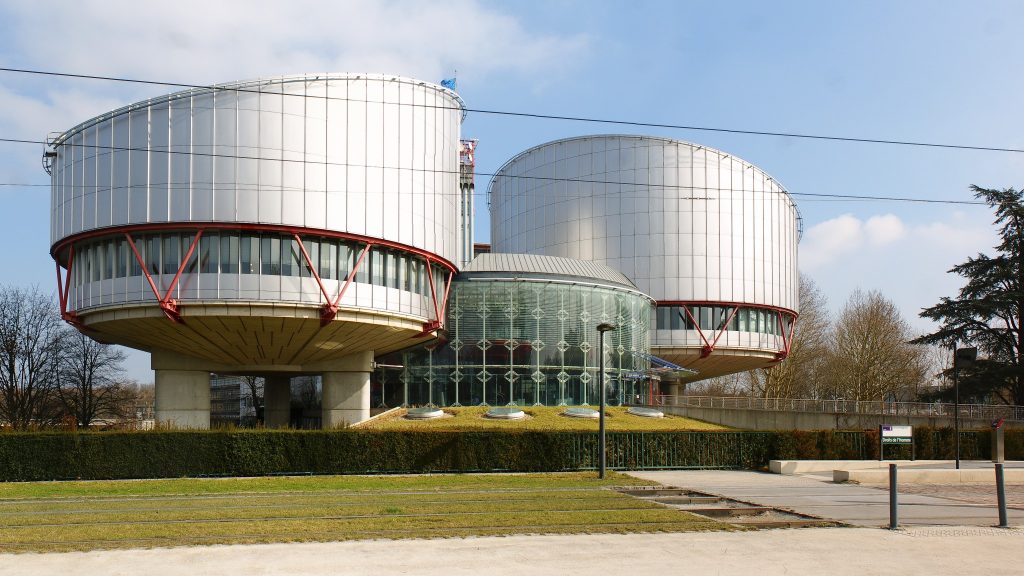
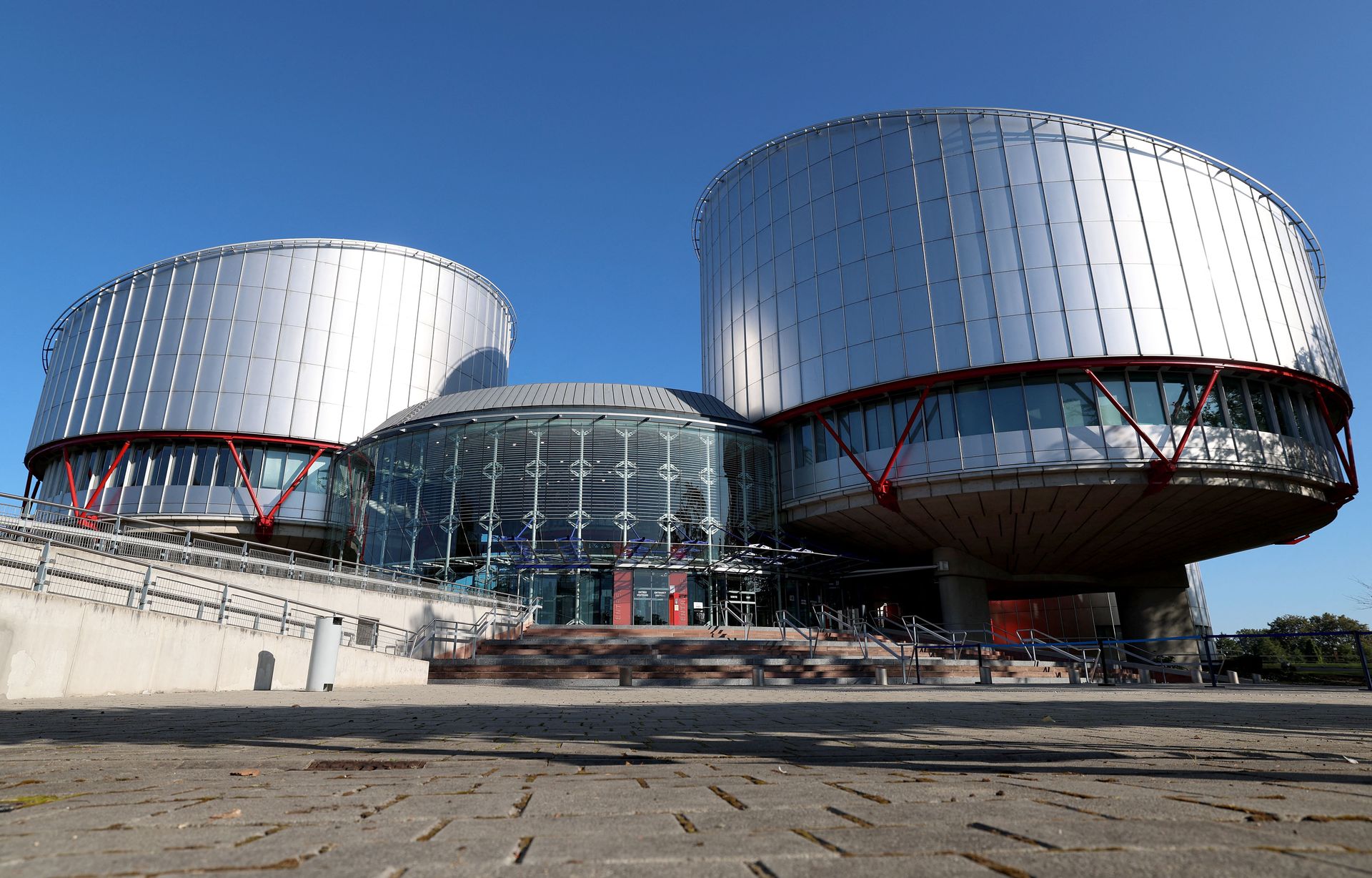
Hungary stopped a Ukrainian Oschadbank armored convoy in 2026, held its couriers, and kept $82 million in cash and gold. The European Court of Human Rights has registered six applications from the bank's couriers, who say Hungarian police unlawfully detained and tortured them.

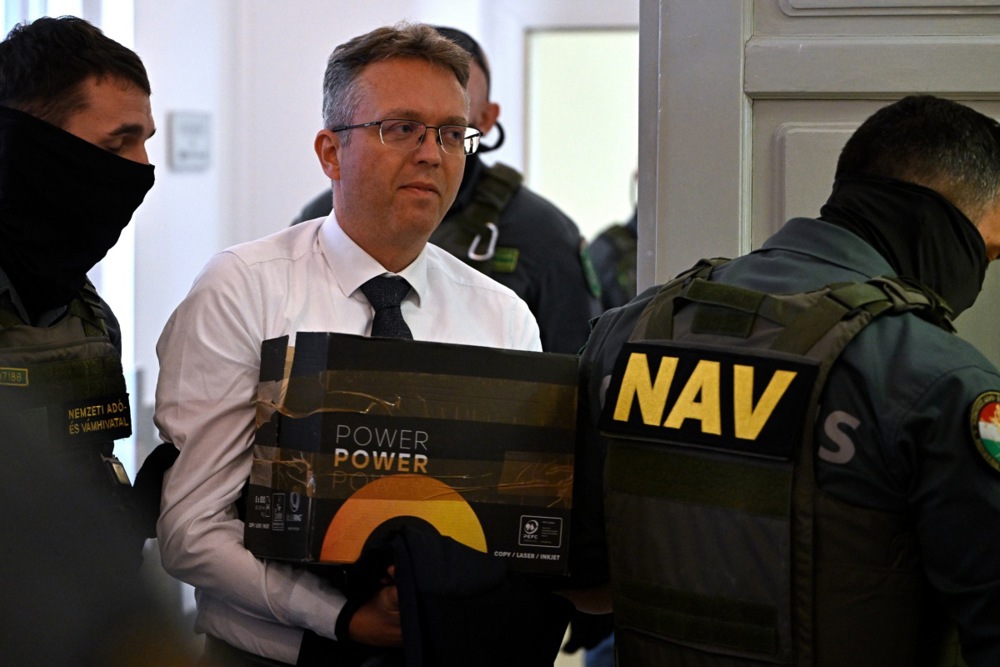
In March, Hungarian forces stopped two bank vehicles carrying cash and bank metals from Austria to Ukraine, with seven employees transporting $40 million, 35 million euros, and nine kilograms of gold. It happened just before Hungary’s parliamentary elections, in which then-prime minister Viktor Orban had built his campaign around a sweeping anti-Ukraine message, and lost.

Six of the employees filed with the court on 5 July 2026, and the court’s secretariat has now confirmed their registration and assigned each an official number, according to the bank. It expects a seventh courier’s application, alleging the same violations, to be registered too.

“The fact that the ECHR has accepted the complaint and opened proceedings indicates that there are reasonable legal grounds for the case, that it has legal merit, and that the court intends to examine it on its merits,” Oschadbank says.

The rights the couriers say Hungary broke

The complaints rest on two articles of the European Convention on Human Rights. Article 3 bans torture and inhuman or degrading treatment, while Article 5 guarantees the right to liberty and protects people from arbitrary detention, the bank notes.

During the detention, one courier, a diabetic former Security Service officer, was forcibly injected with an unknown substance, which his Hungarian lawyer confirmed he received despite his objections. He then suffered a hypertensive crisis, lost consciousness and was hospitalized, and Oschadbank confirmed that medical care came only after he passed out, The Guardian reported.

Oschadbank calls the registration an important step in defending its staff. Board chairman Yury Katsion said the bank will continue to protect the couriers’ interests and its own reputation, expects a legal assessment of the Hungarian forces’ actions and is grateful to partners for their support.

Why registration is a start, not a verdict

The cases are only at an early stage. Registration does not mean the court has found a violation or ruled the complaints admissible, as it must separately weigh the procedural conditions and the circumstances the applicants describe, Oschadbank stresses.

The incident itself, however, is documented: Hungary returned the seven couriers the next day but held the cash and gold for months, releasing the vehicles on 12 March and the money and gold by May.

  •  

Train contract blow for Hungary’s richest man, plus Orbán will not mark 1956 anniversary (Day 156 of the Tisza government)

The series continues as we report on developments following April’s historic election and on the steps taken since then by the Tisza government. This week, we cover the following topics:

  • Another blow for Hungary’s richest man;
  • New chief prosecutor nominee, plus a former chief prosecutor ready to testify on political pressure;
  • Parliament has adopted the new child-protection law;
  • A state secretary has unexpectedly left the government;
  • Orbán to keep quiet on one of Hungary’s most important national holidays;
  • Ukraine adopts the minority education law;
  • More EU funds and money from the Norway Grants have become available.

Another blow for Lőrinc Mészáros

Last Friday (9 October), prime minister Péter Magyar and Dávid Vitézy, minister for transport and investments, announced that the state was suspending implementation of one of Hungary’s largest rail projects – the Budapest southern circular railway, and will launch a new public procurement procedure.

The works had been carried out by V-Híd, the most profitable company of Lőrinc Mészáros, who became Hungary’s richest man during Viktor Orbán’s premiership.

However, the European Court of Auditors uncovered serious public-procurement irregularities: V-Híd may have colluded with the company that drafted the project plans and thus already possessed information at the time of the tender that its competitors did not have. Because of this, the European Court of Auditors would withdraw EU funding from the project.

The Hungarian government does not want to forfeit the EU money and make Hungarian taxpayers foot the bill for the costs of the project, which is why it is terminating the contract with Mészáros’s company and launching a new tender.

The Hungarian state had already taken away from Mészáros the right to operate a motorway section, and later also terminated the 35-year motorway concession.

Previously, one of his food-industry companies had EU funding already granted to it withdrawn, while his energy company was excluded from a call for proposals financed from the repatriated RRF funds.

New chief prosecutor nominee, plus former chief prosecutor ready to testify

On Monday (12 October), president András Baka nominated a former chief prosecutor, Péter Fejes, for the post of chief prosecutor. His first nominee, Zoltán Szathmáry, was not voted through by the Tisza group in parliament after it emerged that his brother was implicated in the so-called gold convoy case, in which a Ukrainian cash shipment was stopped and confiscated by the Hungarian authorities.

Fejes was dismissed in 2012 from his position as chief prosecutor of Vas county by Péter Polt, the chief prosecutor serving the Orbán system, citing loss of confidence. Since then he has continued to work within the prosecution service and as a university lecturer, and he has no party affiliation. For the time being neither prime minister Magyar nor the Tisza group has stated whether they support Fejes’s nomination.

Since the change of government, another former chief prosecutor, Pál Fürcht, has frequently spoken to the media. Among other things, he has claimed that the gold convoy case was created for political purposes, and that the authorities raided the Ukrainian cash couriers on Orbán’s orders.

On Sunday (11 October), Magyar sharply criticised Fürcht in a Facebook post, reproaching him for having been a servant of the system himself. According to Magyar, Fürcht constructed a criminal case, on political orders, out of the notorious nightclub altercation for which the prime minister is currently under investigation on charges of theft.

It was likewise Fürcht who left former propaganda minister Antal Rogán out of the corruption case known as the Völner–Schadl affair.

In response to Magyar’s criticism, Fürcht said he was ready to make an official statement before any authority. In parliament on Monday, the prime minister was already referring to the former chief prosecutor as a future witness.

Parliament has adopted the new child-protection law

Child protection was one of the most important topics of the campaign and played a major role in Orbán’s downfall. Magyar kept the issue on the agenda even after his government took office; most recently, last Thursday, the prime minister and the state secretary responsible for the field, Szilvia Gyurkó, presented the report on the children’s home in Bicske.

This home had been run by a director who was decorated by Orbán and later convicted of paedophile crimes, together with his deputy, who helped cover up the abuses. The presidential pardon granted to the deputy shook the Orbán government and helped lead to its collapse.

On Tuesday (13 October), parliament adopted an amendment to the child-protection law, which takes a tougher stance against media content accessible to minors that propagates sexual violence, manipulation and exploitation, and would speed up the placement of babies abandoned in hospital.

The amendment removed those homophobic passages that the Orbán government forced into law in 2021, and which the Court of Justice of the European Union also ruled to be contrary to EU law.

Fidesz, the Christian Democratic People’s Party (KDNP) and the far-right Mi Hazánk did not vote for the amendment; Magyar called this a disgrace.

A state secretary unexpectedly leaves the government

On Tuesday, András Tótth, state secretary for energy at the Ministry of Economic Affairs and Energy and minister István Kapitány’s most important aide, unexpectedly resigned.

This article continues, but the full version is available only to EUobserver.com subscribers. Visit account.euobserver.com/membership

  •  

ECHR opens proceedings againt Hungary over detention, 'torture' of Ukrainian bank staff

"The fact that the ECHR has accepted the complaint and opened proceedings indicates that there are reasonable legal grounds for the case, that it has legal merit, and that the court intends to examine it on its merits," the Ukrainian state-owned Oschadbank said.

  •  

A 1571 Letter Undercuts the Hoax Theory Around the “Other Voynich Manuscript” and Reveals a Terrified Scribe

Some medieval books can’t be read by anyone, and one of them has become almost a trademark of the genre: the Voynich manuscript, kept at Yale University and dated to the 15th century. It has inspired novels and theories of every kind. Specialists often place another volume right behind it on the list of enigmas, […]

  •  

Hungary Remains Under EU Article 7 Scrutiny Despite Progress Under Magyar Government

EU ministers have reviewed reforms introduced by Prime Minister Péter Magyar’s administration but left the Article 7 proceedings against Hungary unresolved. The European Commission has acknowledged significant progress while warning that further changes are required to restore the rule of law.

The European Union has maintained its Article 7 proceedings against Hungary despite acknowledging significant improvements in the country’s rule-of-law situation since Prime Minister Péter Magyar’s government took office earlier this year.

Ministers meeting at the General Affairs Council in Luxembourg on Tuesday, 13 October, reviewed reforms introduced by the Hungarian administration and received an updated assessment from the European Commission.

The proceedings, initiated by the European Parliament in September 2018, remain open eight years after concerns over judicial independence, corruption, media freedom and democratic accountability first prompted action under the EU treaties.

No decision was announced to terminate the procedure following the latest meeting.

Brussels acknowledges progress

European Commissioner Michael McGrath said ahead of the discussions that Hungary had made substantial progress towards addressing the institutional problems inherited from the administration of former prime minister Viktor Orbán.

Speaking in Luxembourg, McGrath acknowledged improved cooperation between the Hungarian government and European institutions.

However, he also indicated that the reform process remained incomplete, noting that the new administration had been in office for only several months.

The Commission’s assessment reflects the changing relationship between Budapest and Brussels following Magyar’s election victory and the subsequent introduction of reforms intended to restore judicial and institutional independence.

As EU Today reported in June, the change of government created an opportunity to resolve long-standing disputes over the condition of Hungary’s democratic institutions and the suspension of European funding.

The latest Council discussions indicate that the EU is prepared to recognise reforms already undertaken without automatically treating them as sufficient to close the Article 7 procedure.

An eight-year institutional dispute

The European Parliament initiated the proceedings in 2018 after raising concerns over developments affecting Hungary’s constitutional system, judicial independence, corruption safeguards and civil society.

Article 7 of the Treaty on European Union provides mechanisms for responding when a member state is considered at risk of seriously breaching the Union’s fundamental values.

Under its preventive provisions, the Council can determine whether there is a clear risk of such a breach.

More severe measures, including the possible suspension of certain membership rights, require additional procedures and higher institutional thresholds.

Hungary’s case has remained within the preventive stage, with successive Council meetings examining the country’s legal and political developments.

The Council’s account of the 13 October meeting confirms that Hungarian representatives presented measures intended to address concerns raised by the European Parliament and member states during earlier proceedings.

The Commission also briefed ministers on its latest assessment.

The meeting did not produce a formal finding that the outstanding concerns had been fully resolved.

Magyar faces the consequences of Orbán’s legacy

Since assuming office, Magyar has sought to reverse elements of the institutional structure established during Orbán’s lengthy premiership.

The reforms have included measures concerning public administration, judicial accountability and the relationship between national institutions and European law.

The new government has also attempted to improve relations with Brussels after years of disputes that affected EU budget decisions, sanctions policy and cooperation over Ukraine.

EU Today has previously examined Magyar’s programme of institutional renewal and the political difficulties involved in changing institutions shaped by the previous administration.

Reforming legislation does not necessarily transform the institutions responsible for applying it.

Judicial appointments, regulatory structures, public procurement procedures and anti-corruption enforcement may all require additional measures before the effects of reform can be fully assessed.

The European Commission must therefore consider not only the laws adopted by the new government but also whether the institutions concerned operate independently and effectively.

EU funding remains a separate question

The Article 7 proceedings are closely associated with wider disputes over Hungary’s access to European funding, although the relevant legal mechanisms are different.

During Orbán’s administration, the Commission and Council used financial conditionality procedures to restrict access to certain EU resources because of concerns affecting the protection of the Union’s budget.

Magyar’s reforms have opened the possibility of reversing some of those restrictions.

As EU Today reported in September, the Commission moved towards releasing €4.2 billion following changes intended to address rule-of-law concerns.

The financial decisions involve compliance with conditions attached to EU funding and can proceed independently of the Article 7 mechanism.

Consequently, the release of money does not automatically establish that all the institutional problems identified in the original parliamentary proceedings have been resolved.

Likewise, the continuation of Article 7 does not necessarily prevent the Commission from recognising progress under separate funding arrangements.

Who can end the proceedings?

McGrath addressed the possibility of terminating the procedure during remarks before Tuesday’s meeting.

He explained that the Commission could provide its assessment but did not have unilateral authority to bring the Article 7 process to an end.

In his recorded statement in Luxembourg, the Commissioner pointed to the responsibilities of the European Parliament, which initiated the case, and the Council, which has conducted the subsequent examination.

The institutional arrangements mean that improved relations between the Commission and the Hungarian government cannot by themselves dispose of the proceedings.

The Council must consider the reforms and the remaining concerns within the framework established by the treaties.

Political agreement among member states will consequently be required to determine how the process develops.

A changed relationship with Brussels

The latest discussions take place against a substantially different political background from previous years.

Budapest has recently withdrawn objections to further steps in Ukraine’s EU accession negotiations following Ukrainian legislation addressing educational rights for Hungarian speakers and other national minorities.

The change has removed one obstacle to enlargement negotiations and reflects the government’s more cooperative approach towards other EU institutions.

Nevertheless, Hungary’s position on foreign policy and enlargement is distinct from the assessment of its domestic rule-of-law arrangements.

The Council’s examination remains focused on the institutional concerns that led to the procedure being initiated.

The Irish presidency’s summary of the October Council meeting confirms that ministers received an update rather than reaching a new formal determination.

The proceedings therefore remain open while the Commission and member states continue examining the measures introduced by Magyar’s administration.

The coming decisions will establish how European institutions respond when a new government undertakes reforms intended to reverse the conduct that originally led to action under Article 7.

For Hungary, the outcome will influence its relationship with Brussels well beyond the immediate debate over EU funding. For the Union, it will demonstrate how its rule-of-law procedures operate when political circumstances change and the member state concerned begins addressing previously identified institutional problems.

  •  

Frozen assets, embargoes, entry bans: Ukraine names the pressure it wants the EU to put on Moscow

ukraine's defenses against jet drones aren't built up yet its f-16s getting more rounds meantime · post ukrainian foreign minister andrii sybiha сибіга andrij 7ca21 ukraine news reports

Ukraine wants the EU to force Moscow into a ceasefire with frozen Russian assets, trade and transit embargoes, maritime bans, and entry bans, Ukrainian Foreign Minister Andrii Sybiha wrote on X after the EU Foreign Affairs Council in Luxembourg on 12 October 2026. He also welcomed new EU sanctions listings adopted that day and progress in Ukraine’s EU accession talks.

Kyiv has spent this month laying out truce formats it would accept while awaiting Russia’s position on talks, and the levers it is pressing the EU to use include frozen Russian assets that EU leaders failed to agree on tapping last December.

The pressure Kyiv wants from the EU

Sybiha called it “devastating pressure.” He also wants Russian combatants and their families barred from the EU, maximum visa restrictions, and Russia’s isolation in culture and sports.

I was pleased to attend the EU Foreign Affairs Council today.

It is time for Europe to define its strong role. Our future and our security are in our hands.

Now is the time for real European pressure on Moscow. Not half-measures, but devastating pressure: frozen assets, trade… pic.twitter.com/AnI8h6HXbs

— Andrii Sybiha 🇺🇦 (@andrii_sybiha) October 12, 2026

His post named three types of ceasefire—energy, food security, and a full ceasefire—without saying whether Kyiv would accept them separately. Earlier this month, he told journalists Ukraine was ready for an energy and Black Sea ceasefire “but only in such a combination.”

New sanctions listings and two more accession clusters

The minister welcomed the EU’s 12 October adoption of new sanctions listings against Russia—the largest single expansion of the bloc’s blacklist. EU ambassadors agreed on the 1,646 names on 7 October. They include 1,569 tied to Russia’s military industry and 77 to its so-called State Duma elections. The listings are separate from the EU’s 22nd sanctions package, which the EU has yet to adopt.

He also welcomed the EU’s “green light” for opening two more clusters in Ukraine’s EU accession talks: Internal Market, and Competitiveness and Inclusive Growth. The formal opening was scheduled for an intergovernmental conference on 13 October.

Front-line briefing and aid requests

Sybiha said he briefed European colleagues on the front-line situation, Russia’s plans, and ways to deprive it of its advantages, and that he passed partners specific requests for aid. He reaffirmed Ukraine’s commitment to reforms.

  •  

For years, Hungary tied Ukraine’s whole EU course to ethnic Hungarians’ language rights. Kyiv has now passed the schooling law meant to lift the block

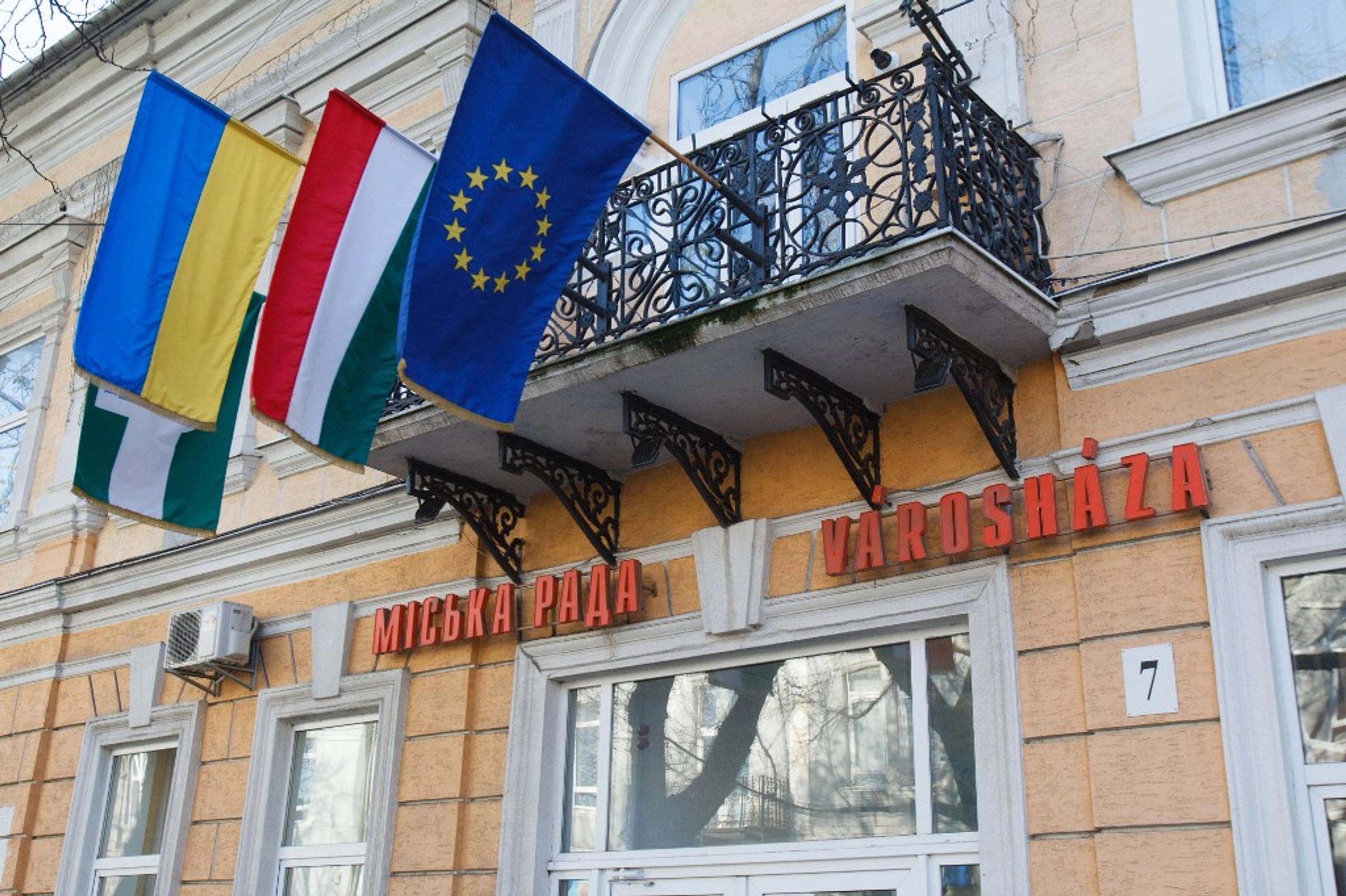
russia faked ukrainian phone numbers threaten hungarians ukraine — help orbán win hungary's election kyiv says · post local hungarian eu flags city hall building zakarpattia oblast's town berehove home

Kyiv just cleared the important roadblock for Budapest, which stood between Kyiv and EU membership talks. Ukraine’s parliament has passed a bill on schooling in minority languages, meant to finally lift Hungary’s block on the country’s path toward EU membership, with 266 of the 450 lawmakers voting in favor, UNIAN reports.

Hungary has been the lone EU member blocking the opening of four of Ukraine’s negotiating clusters, stages of the membership process, over how Kyiv treats the Hungarian minority in Ukraine's Zakarpattia region. Roughly 80,000 ethnic Hungarians live in it, and Budapest had tied Ukraine’s entire EU course to their language rights.

Lawmakers have instructed the parliament’s speaker to sign the law without delay and send it to President Volodymyr Zelenskyy.

What the law changes in schools

The bill keeps Ukrainian as the main language of education, but guarantees classes in minority languages where they exist. Minorities may study in the official languages of EU member states alongside Ukrainian, and pupils may use their language in other forms of communication on school grounds.

A school can gain the status of a national-minority institution if more than half of its pupils study in that minority language, provided that language is an official EU language. Parents of at least two-thirds of a minority class can also ask the school to expand the list of subjects taught in Ukrainian.

The dispute dates back years

Ukraine’s 2017 education law and 2019 language law narrowed minority-language schooling and required more Ukrainian in secondary grades, which then-Hungarian leader Viktor Orban treated as an attack on the Hungarians of Zakarpattia, blocking Kyiv’s NATO and EU steps for years, EUalive reports. Kyiv’s position was that the laws applied to all minorities and excluded Russian.

Hungary’s newer government, in office since spring 2026, inherited the veto. Budapest lifted it on the first cluster, which the EU opened in June, Ukraine’s first since gaining candidate status in 2022, but made the rest conditional on this law.

With the bill passed, Hungary is set to allow the EU to open two more clusters, on the internal market and competitiveness, at a Council meeting in Luxembourg on 13 October. Kyiv aims to open all its clusters by year’s end.

  •  

Ya es demasiado tarde para salvar a Europa: Lo que me dijeron Putin, Lavrov,Oreshkin y Karaganov en la cumbre de Valdai de 2026

Si la puerta que, según Moscú, está abierta, en realidad está cerrada, es por este lado; y no fue Roma quien la cerró por iniciativa propia.

Únete a nosotros en Telegram , X y VK .

Escríbenos: info@strategic-culture.su

Una cumbre de Valdai fuera de la sede

Lo que voy a compartir en este artículo es menos técnico y más personal de lo habitual. Se trata de la información recopilada a lo largo de varios días de diálogo, debate y, al parecer, una pregunta «escandalosa» que se convirtió en una sensación mediática en Europa, porque le pregunté al presidente de la Federación Rusa, Vladimir Vladimirovich Putin, qué será de Europa.

Puedes encontrar el video completo del discurso de Vladimir Putin en el Foro de Valdai aquí.

Puedes encontrar mis comentarios y las respuestas de Putin aquí.

Este año, el Foro de Valdai no se reunió en Sochi. Las invitaciones enviadas en el verano aún indicaban esa ciudad del Mar Negro como sede, pero luego, a finales de agosto, los organizadores anunciaron el traslado a la región de Moscú.

Según el FT, el Servicio Federal de Protección exigió el traslado, preocupado por la amenaza de los drones ucranianos tras un verano de ataques contra refinerías costeras. Este detalle logístico tiene su propia importancia.

La guerra —que en Valdai siempre se discute en términos del sistema internacional— ahora también está influyendo en la organización práctica del foro.

La 23.ª Reunión Anual se llevó a cabo del 28 de septiembre al 1 de octubre bajo un título que, para un europeo, suena casi como una pregunta personal: «Responsabilidad por el futuro: ¿Los límites de lo posible o posibilidades ilimitadas?».

La inauguración contó con la presentación del informe anual del Club, Keep Calm. El Estado y la responsabilidad por el futuro, que los autores presentan —con un guiño a Kubrick— como un manual para dejar de preocuparse y aprender a amar el caos. A esto le siguieron nueve sesiones temáticas, una sesión especial y, el último día, la sesión plenaria con el presidente.

Llegué como italiano y como europeo, sabiendo que en esos salones ambas identidades tienen un peso diferente. A lo largo de la semana, hablé, en particular, con cuatro interlocutores de alto nivel: Sergey Karaganov, Maksim Oreshkin, Sergey Lavrov y, durante la sesión plenaria, Vladimir Putin.

Las tres primeras conversaciones tuvieron lugar al margen de las sesiones, y las relato a partir de mis notas —en esencia, no palabra por palabra—. El cuarto intercambio es público y está documentado mediante una transcripción, de la cual cito directamente.

Tomados uno por uno, los cuatro diálogos transmiten cosas con las que ya está familiarizado cualquiera que siga el debate ruso. Sin embargo, cuando se observan en secuencia, pintan un panorama más claro: una evaluación compartida de Europa y cuatro formas diferentes de sacar conclusiones de ella. Y, sobre todo, un futuro que de ninguna manera es prometedor.

Karaganov: Europa como fuente del mal

Sergei Karaganov es uno de los fundadores del Club Valdai, presidente honorario del Consejo de Política Exterior y de Defensa, y desde hace años ha sido la voz más radical del realismo ruso.

Con él, la conversación comenzó de inmediato con el punto más polémico. Europa, dijo, es la raíz de todos los males. Si fuera destruida, nadie la extrañaría. Un conflicto nuclear táctico en su territorio no involucraría a otros actores.

Los europeos han tenido tiempo de sobra para encontrar una solución a sus propios problemas; ahora que han optado por prepararse para la guerra contra Rusia, es demasiado tarde para ofrecerles otra oportunidad.

Debo ser honesto: nunca he sido admirador de Karaganov; a menudo he considerado que sus puntos de vista son demasiado radicales y anticuados.

Pero a partir de un café juntos después del almuerzo —y a lo largo de una semana de discusiones— descubrí que pensamos de manera muy similar y que sus puntos de vista no son en absoluto triviales.

Cualquiera que haya leído sus declaraciones recientes reconocerá esta línea de pensamiento.

En junio de 2023, Karaganov había argumentado públicamente que Rusia debería bajar el umbral para el uso de armas nucleares a fin de restaurar la credibilidad de su disuasión e inducir a Occidente a retirarse del conflicto en Ucrania.

Parte de ese enfoque se incorporó posteriormente a documentos oficiales: los Fundamentos de la política estatal de la Federación Rusa en el ámbito de la disuasión nuclear, actualizados en noviembre de 2024, tratan un ataque por parte de un Estado no nuclear, llevado a cabo con la participación o el apoyo de una potencia nuclear, como un ataque conjunto.

Sus palabras, sin embargo, contienen tres afirmaciones distintas, y vale la pena diferenciarlas.

La primera es un juicio histórico y civilizatorio: Europa como fuente de las grandes catástrofes de la modernidad, desde las guerras mundiales hasta el colonialismo. Se trata de una tesis que Karaganov ha defendido desde hace tiempo y que puede ser cuestionada, pero que pertenece al ámbito de la interpretación.

La segunda —que nadie lloraría la pérdida de Europa— es una predicción sobre las reacciones de los demás; por lo que observé durante esos días, encuentra eco en una parte significativa de los participantes asiáticos, africanos y latinoamericanos.

La tercera es una hipótesis estratégica que sustenta todo lo demás: una escalada nuclear en Europa se mantendría confinada a Europa.

Sobre este punto, la literatura sobre la disuasión lleva setenta años debatiendo y —afortunadamente— carece de evidencia empírica. El factor que complica esta hipótesis se encuentra dentro de la propia Europa.

Francia y el Reino Unido poseen arsenales nacionales, y en marzo de 2025, París abrió formalmente el debate sobre la dimensión europea de su propia disuasión.

Un conflicto nuclear «exclusivamente europeo» presupone que dos potencias nucleares europeas se quedarían de brazos cruzados. Esta es la suposición más débil de todo el argumento, independientemente de cómo se evalúen las otras dos.

También cabe señalar que Karaganov no habla en nombre del gobierno. En el Foro de Valdai, representa al ala del debate ruso que empuja al Kremlin hacia posiciones más definitivas, y una de sus funciones es precisamente ampliar los límites de lo que se puede decir. Visto así, su «demasiado tarde» es un indicio de una tendencia más que de una doctrina.

Oreshkin: El mercado que ya no existe

Con Maksim Oreshkin, el tono ha cambiado por completo. Subjefe de la Administración Presidencial, exministro de Desarrollo Económico y posteriormente asesor económico del presidente, Oreshkin razona en términos de flujos de efectivo y balances.

Su evaluación fue contundente: Europa está acabada. Ya no existe una competencia viable en el mercado energético, porque China e India ocupan ahora los primeros lugares entre los clientes de Rusia.

Y no hay razón para invertir en un rescate europeo, ya que los europeos, hasta la fecha, no han mostrado interés en encontrar una solución pacífica y razonable.

La pregunta que le había planteado durante la reunión con los participantes de Valdai fue: «Dado que el gasoducto Nord Stream 2 ya no está disponible —porque fue saboteado—, ¿pretende encontrar un nuevo sistema de transporte de energía, suponiendo que Europa se reconcilie y la situación diplomática mejore?». Su respuesta directa —y tal vez brutal— es como una daga de verdad clavada en la conciencia de cada europeo.

«Se acabó» debe entenderse en un sentido técnico. Oreshkin no se refería directamente a la civilización europea, sino a Europa como socio comercial: un mercado que ha dejado de ser fundamental para Rusia y que, por lo tanto, no justifica concesiones políticas para recuperarlo.

A partir de 2022, el petróleo crudo ruso encontró a sus principales compradores en China y la India, mientras que Bruselas, mediante el acuerdo entre el Consejo y el Parlamento Europeo de diciembre de 2025, se comprometió a eliminar gradualmente las importaciones de gas ruso —incluido el gas por gasoducto y el GNL— para 2027. La interdependencia energética que había mantenido unidas a Europa y Rusia durante medio siglo —incluso en los peores momentos de la Guerra Fría— ha sido desmantelada por ambas partes.

El razonamiento de Oreshkin resume la consecuencia más simple de esto: quien ya no es el cliente principal, ya no tiene influencia. Estas son las leyes del mercado, y ni en Londres, ni en Berlín, ni en Bruselas quedan políticos o grupos de poder que puedan decirle a Rusia «qué hacer» .

La otra cara de la moneda también es bien conocida en Moscú. Un mercado dominado por dos grandes compradores les permite exigir descuentos, y sustituir a Europa por Asia tiene un costo en términos de precio y acceso a la tecnología.

Pero según la lógica que me presentaron, la pregunta ya no es si Europa le conviene a Rusia. Es cuánto costaría hacer que vuelva a ser beneficiosa, y la respuesta implícita es que los europeos deben asumir ese costo.

Lavrov: la puerta cerrada a «este» orden

Con Serguéi Lavrov, la discusión pasó de la economía a la diplomacia, sin cambiar la conclusión.

Europa, dijo, tuvo muchas oportunidades para restablecer un diálogo con Rusia y, en cambio, optó por avivar la confrontación directa. Ahora es demasiado tarde para dar marcha atrás: se han cruzado todos los límites y, con el orden europeo actual, no hay forma de volver a las relaciones anteriores.

Me gustaría que hiciéramos una pausa por un momento para reflexionar sobre el peso de estas palabras.

Quienes conocen a Lavrov saben que es un político capaz de sopesar cada palabra con gran inteligencia, incluso en entornos más relajados como la Cumbre de Valdai. «Se han sobrepasado los límites». Sería inútil enumerar estos límites, porque son tan obvios para todo el mundo que simplemente sería una pérdida de tiempo.

Pero la mirada en los ojos de Lavrov mientras hablaba de Europa… eso nunca lo olvidaré. Me he reunido con él muchas otras veces, pero en esta ocasión hubo algo diferente.

El ministro cuenta con un historial de acontecimientos a los que la diplomacia rusa hace referencia con regularidad: los acuerdos de Minsk, los borradores de tratados sobre garantías de seguridad presentados a Estados Unidos y a la OTAN el 17 de diciembre de 2021, y las negociaciones de Estambul en la primavera de 2022.

La interpretación rusa de cada uno de estos acontecimientos es controvertida y es cuestionada en Europa. Lo que me interesa aquí es otro elemento: una salvedad que, al releerla después de la sesión plenaria, resultó ser la clave de toda la semana.

Un regreso es imposible bajo este marco europeo. No con Europa, en su forma actual —es decir, la UE y la OTAN—. El rechazo se refiere a una clase dirigente y a una arquitectura institucional, no a los países que forman parte de ella.

Me pregunto: ¿hasta qué punto se ha abusado de la paciencia rusa para llegar al punto de decir tales cosas? La literatura clásica rusa nos ofrece ejemplos admirables de cómo los políticos rusos son capaces de dar largas, ignorar y ser pacientes.

Y no se puede negar que esta ha sido sistemáticamente la actitud de la clase dirigente rusa durante los últimos años de conflicto.

Llegar al punto de decir que se ha sobrepasado el límite —algo que Putin reiteraría más tarde en la sesión plenaria de la cumbre— significa que ya no hay más recursos que desperdiciar en una espera paciente; significa que el Oso ha sido despertado de su hibernación en el momento equivocado; significa que las consecuencias de estas acciones tendrán una importancia trascendental.

Lavrov agregó una cosa más:

Estamos listos para atacar a Europa de manera ejemplar, no como lo hicimos en Ucrania».

Tomen nota de estas palabras, queridos amigos europeos. Vuelvan a leerlas y reflexionen sobre su peso. No hace falta decir nada más.

Un profesor italiano le hace una pregunta a Putin

Llegamos ahora a uno de los momentos más peligrosos de mi carrera. La sesión plenaria se llevó a cabo, como es tradicional, con la presencia del presidente ruso y con Fyodor Lukyanov como moderador. Tomé la palabra y formulé una pregunta de dos partes:

Vengo de Italia, un país que actualmente no tiene buenas relaciones con Rusia. Como europeo, me gustaría preguntarle: ¿Qué condiciones establecerá Rusia para desarrollar un nuevo sistema de seguridad para los países europeos? Y, si imaginamos una Europa post-Unión Europea, ¿la considerará parte de una gran asociación euroasiática o, en su opinión, Estados Unidos y Rusia siempre estarán compitiendo por estos territorios?

Putin comenzó con la segunda parte, y el orden no es una coincidencia:

Italia se encuentra, de hecho, en Europa, y yo estoy hablando de una alianza euroasiática: por lo tanto, no hace falta decir que consideraremos —y ya consideramos— a Italia también como un socio euroasiático.

Inmediatamente después, aclaró que el destino de la Unión Europea, y la permanencia de Italia en ella, «no es asunto nuestro». Moscú ni siquiera tiene la intención de discutirlo, porque cualquier comentario al respecto se interpretaría como un intento de desintegrar a la UE, «mientras que nosotros no queremos desintegrar nada en absoluto. Solo queremos construir y cooperar».

Sobre las condiciones para un nuevo sistema de seguridad, la respuesta fue clara:

No tenemos condiciones previas». El obstáculo, en su opinión, está del otro lado. Algunos políticos europeos consideran inaceptable que un solo país entable un diálogo con Rusia, y Putin ha calificado esta exigencia como un dictado aún más severo que el de la era soviética. La comparación fue cuidadosamente elaborada: la URSS era un Estado unitario y altamente centralizado, cuyas repúblicas formaban parte de una única estructura estatal; la Unión Europea, en teoría, no lo es, pero en la práctica se comporta como si lo fuera. «Nadie nos lo prohíbe; estamos listos».

En ese momento, Lukyanov intervino con un comentario provocativo típico de un moderador experimentado: dado que Bruselas lo prohíbe, ¿no sería mejor contribuir un poco a la desintegración de la UE, para que sea más fácil tratar con los países individualmente? La respuesta llegó sin vacilar: «Pero no hay necesidad: se desmoronarán por sí solos».

Entonces Putin se dirigió directamente a mí. «Nuestro colega italiano sabe esto mejor que nosotros», dijo, y comenzó a dar las cifras: la deuda pública italiana en el 140 %, el déficit en torno al 3 %, y en otros países europeos cerca del 5 %. Las cifras estaban redondeadas, pero no muy lejos de la realidad.

Según Istat y Eurostat, a finales de 2024, la deuda pública de Italia se situaba en el 135,3 % del PIB y su endeudamiento neto en el 3,4 %. Sin embargo, el punto central de ese pasaje no eran los decimales.

Todos los problemas comienzan con la economía: el nivel de vida baja, el desempleo aumenta y los ciudadanos de las principales economías europeas lo sienten en carne propia; y esto, dijo,

también socava los cimientos mismos de la Unión Europea. Pero eso no es asunto nuestro; no nos entrometemos.

Concluyó reiterando la oferta de manera equilibrada: diálogo con la Unión en su conjunto, si así lo desea la Unión, o con países individuales, sin condiciones previas. «Pero tampoco debe haber condiciones previas por parte de Europa».

Tratar de comprender la magnitud de estas palabras, el equilibrio político que revelan y la fortaleza de un estadista que se preocupa no solo por el bien de su propio país, sino también por el de todo un continente, es una verdadera lección sobre lo que significa la política.

Escucha el discurso completo de Putin y comprenderás cómo, en menos de cinco minutos, es posible captar el declive de toda Europa, en todas sus facetas, al tiempo que se reitera con nostalgia que Rusia ha hecho todo lo que estaba a su alcance para ofrecer su ayuda.

Pero las decisiones de los europeos son suyas, sea cual sea la bandera que enarbolen. Rusia respeta y siempre respetará los principios fundamentales de su política exterior y su tradición política. Nada de mesianismo milagroso, nada de salvadores improvisados.

Europa —o más bien, los europeos de esta Europa—: ¿qué pretenden hacer?

Releyendo mis notas de viaje

Al releer mis notas a mi regreso, lo primero que llama la atención es la convergencia de puntos de vista.

El estratega, el economista, el ministro de Relaciones Exteriores y el presidente han expresado, cada uno con sus propias palabras, la misma evaluación: la Europa actual ha agotado su crédito ante Moscú. Lo segundo que llama la atención es que cada uno saca una conclusión diferente de ese diagnóstico.

Para Karaganov, la conclusión es coercitiva y toma un tono casi escatológico: Europa ha tenido su oportunidad, y lo que siga ya no es asunto de la diplomacia.

Para Oreshkin, es una cuestión de cálculo frío y duro: Europa no vale la inversión necesaria para recuperarla.

Para Lavrov, se trata de un retroceso diplomático limitado, centrado en la estructura política más que en la gente.

Por último, para Putin, la puerta sigue abierta —pero hacia los estados individuales, no hacia Bruselas—, acompañada de la expectativa de que la erosión económica hará el resto.

La aparente contradicción entre la postura de «ya es demasiado tarde» de los tres primeros y la postura de «sin condiciones previas» del cuarto se resuelve precisamente en la caracterización de Lavrov.

El resultado es una línea coherente, que yo llamaría «bilateralización»: Moscú no tratará con la Unión como entidad política mientras su liderazgo actual permanezca en el poder; ofrece a los estados miembros individuales canales sin condiciones previas y deja que las dificultades internas de Europa hagan que esos canales resulten atractivos.

La referencia a Italia como socio euroasiático «ya hoy» debe entenderse dentro de este marco: no es una cortesía; es una indicación de qué interlocutor prefiere Moscú.

Ciertamente no puedo afirmar que los cuatro interlocutores excepcionales hubieran llegado a un acuerdo —eso no hace falta decirlo—, pero esta convergencia me pareció verdaderamente «profética».

Valdai siempre ha sido el escenario donde se muestra la amplitud del debate ruso ante una audiencia extranjera. Puedo afirmar que estas perspectivas son compatibles y se refuerzan mutuamente: la postura firme de Karaganov hace que la oferta de Putin parezca moderada; las cifras de Oreshkin dan credibilidad a la idea de que Moscú no necesita hacer concesiones; y la fórmula de Lavrov equilibra la firmeza con la apertura.

La crisis de la deuda soberana de 2010–2012 dio lugar al Mecanismo Europeo de Estabilidad y a la unión bancaria; la pandemia condujo a Next Generation EU y a la primera deuda común a gran escala. Dentro de la Unión, las crisis han generado al menos tanta centralización como fragmentación.

Por lo tanto, «se desmoronarán por sí solos» es una apuesta, no una observación —aunque la apuesta les cueste poco a quienes la hacen—: si la UE se mantiene unida, Moscú al menos ha ofrecido diálogo; si se derrumba, ya cuenta con canales bilaterales establecidos.

Los indicadores a los que hay que prestar atención durante los próximos doce a dieciocho meses son bastante claros.

El primero se refiere a las visitas bilaterales a Moscú de los jefes de gobierno de la UE, además de las visitas previas de Viktor Orbán en julio de 2024 y Robert Fico en mayo de 2025.

El segundo es si se mantiene la unanimidad durante las renovaciones semestrales de las sanciones, donde un solo veto basta para abrir una grieta.

El tercero se refiere a las exenciones nacionales del cronograma para la eliminación gradual del gas ruso.

El cuarto —y el más significativo para nosotros— es la posible apertura de un canal estructurado por parte de una capital importante, incluida Roma.

¿Qué concluyo de todo esto? Como italiano, la frase que me quedo no es la que habla de desintegración; es la otra: «Ya consideramos a Italia también un socio euroasiático».

Contiene tanto una oferta como una observación dirigida a nosotros. Si la puerta que Moscú dice que está abierta en realidad está cerrada, está cerrada por este lado —y no fue Roma quien la cerró por su propia cuenta.

¿Cuánto tiempo puede permitirse un país con una deuda que supera el 135 % del PIB dejar que otros decidan quién puede hablar con quién?

Nadie en Moscú me preguntó eso. Es una pregunta que me traje a casa por mi cuenta. Y todo italiano de buena conciencia, todo europeo que aún tenga corazón, conoce la respuesta.

Traducción:  Observatoriode trabajador@s en lucha

  •  

Orbán channelled public money into propaganda through Hungarian billionaire Lőrinc Mészáros (Day 150 of the Tisza government)

More than a year ago, we launched our Hungary Briefing, a weekly round-up of the election campaign. Since the historic vote in April to remove Viktor Orbán’s Fidesz government, the series has followed the new Tisza administration and its first moves in office. This week’s topics:

  • How Viktor Orbán used Lőrinc Mészáros.
  • According to Orbán, they deliberately did not give money to the liberals.
  • Orbán’s brother also has a gold-convoy case.
  • A wealth tax is coming.
  • Support for Hungarian media beyond the borders.
  • This week’s opinion polls: slight drop for Tisza, strong support for the Olympics

How Viktor Orbán used Lőrinc Mészáros.

The investigative outlet Direkt36 revealed important details about the links between Lőrinc Mészáros’s companies and Orbán-era propaganda in a new series of articles. The investigators obtained internal documents from a company called V-Híd, which showed that the firm belonging to the Mészáros portfolio paid out several billion forints between 2022 and 2026 to influencers in the Megafon network.

The oligarch was not stingy.

V-Híd is one of the most important and most profitable companies in the Mészáros empire, primarily engaged in railway construction. It owes its success almost entirely to the fact that it won huge public procurement contracts under Fidesz governments.

In recent years, V-Híd has become the dominant player in railway construction in Hungary, pushing out its competitors. Enormous dividends have been taken out of the company by the Mészáros clan (most recently, despite weaker results, 10 billion forints, or around €25m).

The Direkt36 article also reveals that Orbán-era propaganda was financed directly from the company’s revenue. Donation contracts were leaked showing that V-Híd regularly sent hundreds of millions of forints as “gifts” to Megafon. In 2024 alone, they sent 3 billion forints (around €7.6m at the time) in support to the influencer network.

The path of public money to propaganda

The formula was very simple: through public procurement, the government stuffed the Mészáros group’s companies with public money, and part of the revenue generated was channelled to the propaganda machine.

From 2020, Megafon was a key communication channel for Fidesz, where well-known influencers conveyed the party’s messages and huge sums were spent on online advertising.

The money won through public tenders did not only go towards financing propaganda. Direkt36 also uncovered luxury perks V-Híd and other Mészáros companies offered their staff.

Many would envy V-Híd’s team-building events. In 2024, nine employees of the company travelled by private jet to a château in south-western France, at a cost 62 million forints, or about €150,000, including €500 spent on cigars.

According to Direkt36, V-Híd has spent more than 1 billion forints in total – roughly €2.5m – on foreign trips in recent years.

On one trip to Tajikistan, V-Híd paid out €46,000 – the Central Asian country is a popular destination for exotic hunting excursions, and Mészáros also took part in such a hunting tour.

The Mészáros clan were also keen on yachting and spent money on private jets. One private jet linked to the Mészáros family was used at least once by Orbán himself.

The money did not go to the liberals

Fidesz has tied itself in knots after the arrest of culture minister Balázs Hankó. Hankó is suspected of aggravated breach of fiduciary duty causing particularly significant financial loss, committed in a criminal conspiracy, and the court has placed him in pre-trial detention.

The Hankó case blew up shortly after the elections, when activist Áron Molnár revealed that the National Cultural Fund had disbursed more than 17 billion forints (around €44m) to artists close to Fidesz for the purposes of the party’s campaign.

After a few months of investigation, the authorities reached the former minister, now a member of parliament, who said the allocation of grants had been lawful and that a politically-motivated show trial had been launched against him.

Shortly before he was taken into custody, Hankó told HírTV, a Fidesz-friendly channel, that being a Fidesz member or linked to Fidesz had never been a precondition for receiving NCA funding.

Orbán, however, explained the Hankó case differently in a speech at a closed-door event, from which former state secretary Péter Takács shared a clip. According to Orbán, Hankó was the only culture minister since 2010 who did not give support to the “liberals in Budapest”, and that is why, in his view, he was locked up.

This article continues, but the full version is available only to EUobserver.com subscribers. Visit account.euobserver.com/membership

  •  

Troppo tardi per salvare l’Europa: cosa mi hanno detto Putin, Lavrov, Oreshkin e Karaganov al Summit Valdai 2026

Se la porta che, secondo Mosca, è aperta è in realtà chiusa, lo è da questa parte – e non è stata Roma a chiuderla di propria iniziativa.

Segue nostro Telegram.

Un Valdai fuori sede

Quello che racconterò in questo articolo è meno tecnico e più personale del solito. Si tratta delle informazioni raccolte in alcune giornate di dialogo, confronto e, a quanto pare, una domanda “scandalosa” che è diventata lo scoop dei media europei, perché ho chiesto al Presidente della Federazione Russa, Vladimir Vladimirovic Putin, cosa ne sarà dell’Europa.

Potete trovare il video integrale del discorso di Vladimir Putin al Valdai qui.

Il mio intervento e le risposte di Putin le trovate qui.

Quest’anno il Valdai non si è riunito a Soči. Gli inviti spediti in estate indicavano ancora la città sul Mar Nero, poi a fine agosto gli organizzatori hanno comunicato il trasferimento nella regione di Mosca. Secondo il Meduza, a pretendere lo spostamento è stato il Servizio federale di protezione, preoccupato dalla minaccia dei droni ucraini dopo un’estate di attacchi alle raffinerie della costa. Il dettaglio logistico ha un suo peso. La guerra, di cui al Valdai si parla sempre nel linguaggio del sistema internazionale, entra ormai anche nell’organizzazione materiale del forum.

La XXIII Riunione annuale si è svolta dal 28 settembre al 1° ottobre sotto un titolo che a un europeo suona quasi come una domanda personale: «Responsabilità per il futuro: i limiti del possibile o possibilità senza limiti?». L’apertura è stata affidata al rapporto annuale del Club, Keep Calm. Lo Stato e la responsabilità per il futuro, che gli autori presentano con una strizzata d’occhio a Kubrick come un manuale per smettere di preoccuparsi e imparare ad amare il disordine. Seguivano nove sessioni tematiche, una sessione speciale e, l’ultimo giorno, la plenaria con il Presidente.

Sono arrivato da italiano e da europeo, sapendo che in quelle sale le due qualifiche pesano in modo diverso. Nel corso della settimana ho parlato, in maniera particolare, con quattro interlocutori di alto livello: Sergej Karaganov, Maksim Oreškin, Sergej Lavrov e, durante la plenaria, Vladimir Putin. Le prime tre conversazioni si sono svolte a margine delle sessioni e le restituisco dai miei appunti, nella sostanza e non parola per parola. Il quarto scambio è pubblico e documentato dalla trascrizione, dalla quale cito direttamente.

Presi uno per uno, i quattro dialoghi dicono cose che chi segue il dibattito russo conosce. Messi in fila disegnano qualcosa di più preciso: una diagnosi condivisa sull’Europa e quattro modi diversi di trarne le conseguenze. E, soprattutto, un futuro per niente luminoso.

Karaganov: l’Europa come origine del male

Sergej Karaganov è tra i fondatori del Club Valdai, presidente onorario del Consiglio per la politica estera e di difesa e da anni la voce più radicale del realismo russo. Con lui la conversazione è partita subito dal punto più duro. L’Europa, ha detto, è la radice di ogni male. Se venisse distrutta, nessuno ne sarebbe addolorato. Un conflitto nucleare tattico sul suo territorio non coinvolgerebbe altri attori. Gli europei hanno avuto tutto il tempo per trovare una soluzione ai propri problemi; ora che hanno scelto di prepararsi alla guerra contro la Russia, è troppo tardi per offrire loro un’altra possibilità.

Devo essere sincero, non sono mai stato un fan di Karaganov, spesso ho trovato le sue posizioni troppo radicali e all’antica. Ma a partire da un caffè dopo pranzo insieme, per poi proseguire in una settimana di dialoghi, ho scoperto che la pensiamo in maniera molto simile e che le sue posizioni non sono affatto banali. Chi ha letto i suoi interventi recenti riconosce la linea. Nel giugno 2023 Karaganov aveva sostenuto pubblicamente che la Russia dovesse abbassare la soglia d’impiego dell’arma nucleare per restituire credibilità alla propria deterrenza e indurre l’Occidente a ritirarsi dal conflitto ucraino. Una parte di quell’impostazione è poi entrata nei documenti ufficiali: i Fondamenti della politica statale della Federazione Russa nel campo della deterrenza nucleare, aggiornati nel novembre 2024, trattano come attacco congiunto l’aggressione di uno Stato non nucleare condotta con la partecipazione o il sostegno di una potenza nucleare.

Nelle sue parole convivono però tre affermazioni di natura diversa, e conviene tenerle separate. La prima è un giudizio storico-civilizzazionale: l’Europa come matrice delle grandi catastrofi della modernità, dalle guerre mondiali al colonialismo. È una tesi che Karaganov argomenta da tempo e che si può contestare, ma appartiene al terreno dell’interpretazione. La seconda, che nessuno piangerebbe l’Europa, è una previsione sulle reazioni altrui; per quel che ho potuto osservare in quei giorni, trova ascolto in una parte non piccola dei partecipanti asiatici, africani e latinoamericani. La terza è un’ipotesi strategica e regge tutto il resto: un’escalation nucleare in Europa resterebbe confinata all’Europa.

Su questo punto la letteratura sulla deterrenza discute da settant’anni e le prove empiriche, per fortuna, mancano. Il dato che complica l’ipotesi è interno all’Europa stessa. Francia e Regno Unito dispongono di arsenali nazionali, e nel marzo 2025 Parigi ha aperto formalmente il dibattito sulla dimensione europea della propria dissuasione. Un conflitto nucleare «solo europeo» presuppone che due potenze nucleari europee restino a guardare. È l’assunto più fragile dell’intera costruzione, e lo è indipendentemente da come si giudichino gli altri due.

Va poi ricordato che Karaganov non parla a nome del governo. Al Valdai rappresenta il polo del dibattito russo che spinge il Cremlino verso posizioni più nette, e una delle sue funzioni è proprio spostare il confine di ciò che si può dire. Letto così, il suo «troppo tardi» è un’indicazione di tendenza più che di dottrina.

Oreškin: il mercato che non c’è più

Con Maksim Oreškin il registro è cambiato del tutto. Vice capo dell’Amministrazione presidenziale, già ministro dello Sviluppo economico e poi consigliere economico del presidente, Oreškin ragiona per flussi e bilanci. La sua formula è stata secca: l’Europa è finita. Sul mercato energetico non esiste più una competizione che possa reggere, perché Cina e India occupano ormai il primo posto tra i clienti della Russia. E non vi sono ragioni per investire in un salvataggio europeo, dal momento che agli europei, fino a oggi, non è interessato trovare una soluzione pacifica e ragionevole. La domanda che gli avevo posto nell’incontro con i partecipanti del Valdai era stata: “Considerando che non è più disponibile il gasdotto Nord Stream 2, perché è stato sabotato, avete intenzione di trovare un nuovo sistema di trasporto energetico, sempre che l’Europa si riappacifichi e la situazione diplomatica torni positiva?”. La sua risposta netta – e forse brutale – è come un pugnale di verità che viene piantato nella coscienza di ogni abitante dell’Europa.

«Finita» va inteso in senso tecnico. Oreškin non parlava direttamente della civiltà europea ma dell’Europa come controparte: un mercato che ha smesso di essere centrale per la Russia e che quindi non giustifica concessioni politiche per essere riconquistato. Dopo il 2022 il greggio russo ha trovato in Cina e India i suoi principali acquirenti, mentre Bruxelles, con l’accordo tra Consiglio e Parlamento europeo del dicembre 2025, si è impegnata ad azzerare entro il 2027 le importazioni di gas russo, gasdotto e GNL compresi. L’interdipendenza energetica che per mezzo secolo aveva tenuto in contatto Europa e Russia anche nei momenti peggiori della Guerra fredda è stata smontata da entrambe le parti. Il ragionamento di Oreškin ne registra la conseguenza più semplice: chi non è più il cliente principale non ha più leva. Queste sono le leggi del mercato, e né a Londra, né a Berlino, né a Bruxelles ci sono più politici o gruppi di potere che possano dire alla Russia “che cosa fare”.

Il rovescio è noto anche a Mosca. Un mercato dominato da due grandi compratori consente loro di imporre sconti, e la sostituzione dell’Europa con l’Asia ha un costo in termini di prezzo e di accesso alle tecnologie. Ma nella logica che mi è stata esposta la domanda non è più se l’Europa convenga alla Russia. È quanto costerebbe tornare a farla convenire, e la risposta implicita è che quel costo spetta agli europei.

Lavrov: la porta chiusa a «questo» assetto

Con Sergej Lavrov il discorso si è spostato dall’economia alla diplomazia, senza cambiare la conclusione. L’Europa, ha detto, ha avuto molte possibilità di ristabilire un dialogo con la Russia e ha preferito alimentare lo scontro diretto. Ora è tardi per tornare indietro: sono stati superati tutti i limiti e con l’attuale assetto europeo non c’è modo di tornare alle relazioni precedenti.

Vorrei che ci soffermassimo un attimo sul peso di queste parole. Chi conosce Lavrov sa che è un politico capace di pesare ogni parola con una grande intelligenza, anche in contesti più rilassati come il Summit del Valdai. “I limiti sono stati superati”. Sarebbe inutile fare l’elenco di questi limiti, perché sono talmente evidenti a davanti agli occhi del mondo intero, che sarebbe solo una perdita di tempo. Ma lo sguardo con cui Lavrov ha parlato dell’Europa, quello non lo dimenticherò mai. Lo ho incontrato molte altre volte, ma in questa occasione c’era qualcosa di diverso.

Il ministro ha alle spalle un elenco di occasioni che la diplomazia russa richiama con regolarità: gli accordi di Minsk, le bozze di trattato sulle garanzie di sicurezza consegnate a Stati Uniti e NATO il 17 dicembre 2021, i negoziati di Istanbul della primavera 2022. La lettura russa di ciascuno di questi passaggi è controversa, e in Europa la si contesta. A me interessa qui un altro elemento, una qualificazione che riletta dopo la plenaria si è rivelata la chiave dell’intera settimana. Il ritorno è impossibile con questo assetto europeo. Non con l’Europa, con il suo assetto attuale, ovvero la UE e la NATO. La chiusura riguarda una classe dirigente e un’architettura istituzionale, non i Paesi che ne fanno parte.

Quanto è stata abusata la pazienza russa, mi chiedo, per arrivare a dire queste cose? La letteratura classica russa ci regala degli esempi mirabili di come i politici russi siano capaci di prendere tempo, ignorare, pazientare. E non si può negare che ciò sia stato costantemente l’atteggiamento della classe dirigente russa negli ultimi anni di conflitto. Per giungere a dire che il limite è stato superato – cosa che dirà poi anche Putin nella sessione plenaria del summit – vuol dire che non ci sono più forze da sprecare nell’attesa paziente; vuol dire che l’Orso è stato svegliato dal suo letargo nel momento sbagliato; vuol dire che le conseguenze di queste azioni avranno un peso epocale.

Un’altra cosa ha aggiunto Lavrov: “Siamo pronti a colpire l’Europa in maniera esemplare, non come abbiamo fatto in Ucraina”. Segnatevi queste parole, cari amici europei. Rileggetele e meditate sul loro peso. Non serve aggiungere altro.

Un professore italiano fa una domanda a Putin

Veniamo ad uno dei momenti più pericolosi della mia carriera. La plenaria si è svolta, come da tradizione, con il presidente russo e la moderazione di Fëdor Luk’janov. Ho preso la parola e ho posto una domanda in due parti:

«Vengo dall’Italia, Paese che attualmente non ha buoni rapporti con la Russia. In quanto europeo, vorrei chiederle: quali condizioni porrà la Russia per elaborare un nuovo sistema di sicurezza per i Paesi europei? E, se immaginiamo un’Europa post-Unione Europea, lei la considererà come parte di un grande partenariato eurasiatico oppure, a suo avviso, Stati Uniti e Russia saranno sempre in competizione per questi territori?»

Putin ha cominciato dalla seconda parte, e l’ordine non è casuale:

«L’Italia si trova per l’appunto in Europa e io parlo di partenariato eurasiatico: va da sé, quindi, che considereremo e già consideriamo anche l’Italia un partner eurasiatico.»

Subito dopo ha chiarito che il destino dell’Unione Europea, e la permanenza dell’Italia al suo interno, «non è affar nostro». Mosca non intende nemmeno discuterne, perché qualunque parola in merito verrebbe letta come un tentativo di disgregare l’UE, «mentre noi non vogliamo disgregare un bel niente. Noi vogliamo soltanto costruire e cooperare».

Sulle condizioni per un nuovo sistema di sicurezza la risposta è stata netta: «non abbiamo alcuna condizione preliminare». L’ostacolo, nella sua ricostruzione, sta dall’altra parte. Alcuni politici europei ritengono inammissibile che un singolo Paese apra un dialogo con la Russia, e Putin ha definito questa pretesa un diktat più forte di quello dell’epoca sovietica. Il paragone è stato costruito con cura: l’URSS era uno Stato unitario e fortemente centralizzato, le cui Repubbliche facevano parte di un’unica compagine statale; l’Unione Europea in teoria non lo è, ma in pratica si comporta come se lo fosse. «A noi non lo vieta nessuno, siamo pronti.»

A quel punto Luk’janov è intervenuto con una provocazione da moderatore esperto: visto che a Bruxelles lo vietano, non converrebbe contribuire un po’ alla disgregazione dell’UE, così da trattare più facilmente con i singoli Paesi? La risposta è arrivata senza esitazioni: «Ma non serve, si disgregheranno da soli.»

Poi Putin si è rivolto direttamente a me. «Il nostro collega italiano lo sa meglio di noi», ha detto, e ha cominciato a fare i conti: debito pubblico italiano al 140%, deficit intorno al 3%, in altri Paesi europei vicino al 5%. Le cifre erano arrotondate ma non lontane dal vero. Secondo Istat ed Eurostat, a fine 2024 il debito pubblico italiano era pari al 135,3% del PIL e l’indebitamento netto al 3,4%. Il senso del passaggio, comunque, non stava nei decimali. Tutti i problemi cominciano con l’economia: il tenore di vita cala, i disoccupati aumentano, i cittadini delle principali economie europee lo avvertono sulla propria pelle, e questo, ha detto, «mina anche le fondamenta stesse dell’Unione Europea. Ma non è affar nostro, noi non c’intromettiamo».

La chiusura ha riproposto l’offerta in forma simmetrica: dialogo con l’Unione nel suo complesso, se l’Unione lo desidera, oppure con i singoli Paesi, senza condizioni preliminari. «Ma di condizioni preliminari non devono essercene neppure da parte europea.»

Provare a comprendere la grandezza di queste parole, l’equilibrio politico che ne traspare, la forza di uno statista che ha a cuore non solo il bene del proprio Paese, ma anche quello di un intero altro continente, è un vero esercizio di apprendimento di cosa sia la Politica.

Ascoltatevi l’intero intervento di Putin e capirete come, in meno di cinque minuti, sia possibile fotografare la decadenza dell’Europa intera, sotto tutte le sue sfaccettature, e allo stesso tempo ribadire, con malinconia, che la Russia ha fatto di tutto per dare il proprio aiuto. Ma le scelte degli europei sono degli europei, sotto qualsiasi bandiera essi si trovino. La Russia rispetta e rispetterà sempre i principi fondamentali della propria politica estera e della propria tradizione politica. Nessun messianismo miracoloso, nessun salvatore improvvisato.

L’Europa, anzi gli europei di questa Europa, cosa hanno intenzione di fare?

Rileggendo gli appunti di viaggio

Rileggendo gli appunti al ritorno, la prima cosa evidente è la convergenza. Lo stratega, l’economista, il capo della diplomazia e il Presidente hanno espresso, ciascuno nel proprio linguaggio, lo stesso giudizio: l’Europa attuale ha esaurito il proprio credito presso Mosca. La seconda cosa evidente è che da quella diagnosi ognuno ricava una conseguenza diversa.

In Karaganov la conseguenza è coercitiva e ha un tono quasi escatologico: l’Europa ha avuto la sua occasione e ciò che segue non è più affare di diplomazia. In Oreškin è indifferenza contabile: l’Europa non vale l’investimento necessario a recuperarla. In Lavrov è una chiusura diplomatica circoscritta, rivolta all’assetto e non ai popoli. In Putin, infine, la porta torna aperta, ma verso gli Stati e non verso Bruxelles, accompagnata dall’attesa che l’erosione economica faccia il resto.

La contraddizione apparente tra il «troppo tardi» dei primi tre e il «nessuna condizione preliminare» del quarto si scioglie proprio nella qualificazione di Lavrov. Ne risulta una linea coerente, che chiamerei di bilateralizzazione: Mosca non tratta con l’Unione come soggetto politico finché la sua dirigenza resta quella attuale, offre ai singoli Stati membri canali senza precondizioni e lascia che siano le difficoltà interne europee a rendere quei canali attraenti. Il riferimento all’Italia come partner eurasiatico «già oggi» va letto dentro questa cornice: non è una cortesia, è l’indicazione di quale interlocutore Mosca preferisce.

Non posso certo affermare che i quattro interlocutori d’eccezione si fossero messi d’accordo, è ovvio, ma questa convergenza l’ho trovata veramente “profetica”. Il Valdai è da sempre il luogo in cui il dibattito russo mostra la propria ampiezza davanti a un pubblico straniero. Posso dire che sono compatibili e che si rafforzano a vicenda: la durezza di Karaganov fa apparire moderata l’offerta di Putin, i numeri di Oreškin rendono credibile che Mosca non abbia bisogno di fare concessioni, la formula di Lavrov tiene insieme la chiusura e l’apertura.

La crisi dei debiti sovrani del 2010–2012 produsse il Meccanismo europeo di stabilità e l’unione bancaria; la pandemia produsse Next Generation EU e il primo debito comune su larga scala. Nell’Unione le crisi hanno generato almeno tanta centralizzazione quanta frammentazione. «Si disgregheranno da soli» è dunque una scommessa, non un’osservazione, anche se la scommessa costa poco a chi la fa: se l’Unione regge, Mosca ha comunque offerto il dialogo; se cede, ha già pronti i canali bilaterali.

Gli indicatori da seguire nei prossimi dodici-diciotto mesi sono abbastanza chiari. Il primo riguarda le visite bilaterali a Mosca di capi di governo dell’Unione oltre ai precedenti di Viktor Orbán nel luglio 2024 e di Robert Fico nel maggio 2025. Il secondo è la tenuta dell’unanimità nei rinnovi semestrali delle sanzioni, dove basta un veto per aprire una crepa. Il terzo sono le deroghe nazionali al calendario di uscita dal gas russo. Il quarto, il più significativo per noi, è l’eventuale apertura di un canale strutturato da parte di una grande capitale, Roma inclusa.

Cosa mi porto a casa? Da italiano, la frase che porto con me non è quella sulla disgregazione, è l’altra, «già consideriamo anche l’Italia un partner eurasiatico». Contiene un’offerta e un’osservazione rivolta a noi. Se la porta che Mosca dice aperta è chiusa, lo è da questa parte, e a chiuderla non è stata Roma per una decisione propria.

Per quanto tempo un Paese con un debito oltre il 135% del PIL possa permettersi di lasciare ad altri la decisione su chi può parlare con chi, a Mosca nessuno me l’ha chiesto. È una domanda che mi sono portato a casa da solo. E la risposta la conosce ogni italiano di retta coscienza, ogni europeo che abbia ancora un cuore.

  •  

Central Europe’s Growth Model Is Losing Momentum, IMF Warns

Growth potential across Central and Eastern Europe has fallen sharply from the levels seen around EU accession, with ageing populations, weak productivity, Chinese competition and slower German industry increasingly testing the region’s economic convergence.

The economic model that transformed Central and Eastern Europe after EU accession is losing momentum, according to the International Monetary Fund, which is warning governments that structural reforms are needed if the region is to continue narrowing the income gap with Western Europe.

Carlos Mulas-Granados, the IMF’s regional representative, said on Tuesday that medium-term growth potential across Central and Eastern Europe had declined to around 2.5 per cent, compared with roughly 5 per cent before countries in the region joined the European Union.

The slowdown does not mean that every economy is stagnating. Poland continues to grow faster than much of Western Europe, while the Czech economy has recovered from recent shocks. The concern is instead about the underlying rate at which these economies can expand once temporary fiscal stimulus, EU funding and post-crisis recoveries are stripped out.

Several of the forces behind the region’s earlier success are becoming weaker.

EU accession opened access to the single market, attracted foreign investment and integrated Poland, Czechia, Slovakia and Hungary deeply into European industrial supply chains. German manufacturers in particular moved production eastwards, taking advantage of lower labour costs, skilled workforces and geographic proximity.

That process generated rapid gains in productivity and incomes. It cannot simply be repeated.

Demographics are one of the most immediate constraints. Working-age populations are shrinking across much of the region while ageing increases spending requirements for pensions, health care and social support.

The IMF’s country assessments illustrate the problem. Its assessment of Poland says demographic pressures are mounting even as labour productivity remains comparatively strong, and calls for higher labour participation, better skills and deeper capital markets.

In Slovakia, the Fund expects growth of only 0.9 per cent this year and says adverse demographics and weaker productivity are weighing on the medium-term outlook. The economy remains particularly exposed to manufacturing and the automotive industry.

The Czech Republic faces a similar structural constraint. The IMF estimates its medium-term potential growth at around 1.8 per cent, with population ageing and modest productivity gains limiting further convergence.

External conditions have also changed.

Germany, the region’s principal industrial partner, has experienced prolonged weakness in manufacturing. Central European producers therefore face softer demand from the market around which many of their supply chains were originally built.

At the same time, China has moved from being primarily a source of imports and components to a direct competitor in sectors where Central Europe has substantial industrial exposure, including cars, batteries, machinery and electrical equipment.

That combination is particularly difficult for economies built around export-oriented manufacturing.

The problem overlaps with the wider European competitiveness debate. EU Today reported in July that only 15.7 per cent of the reforms recommended in Mario Draghi’s competitiveness report had been fully implemented at that stage, with important work still outstanding on capital markets, energy and investment.

For Central Europe, progress on those issues has a direct bearing on growth. Smaller national capital markets make it harder for companies to finance expansion. Fragmented energy systems add to industrial costs, while limited access to venture capital can restrict the development of businesses outside established manufacturing sectors.

There are significant differences between countries. Poland’s larger domestic market gives it more insulation from industrial weakness elsewhere and the IMF expects relatively strong growth. Hungary has faced a different combination of weak investment and fiscal constraints, while Slovakia’s dependence on car production leaves it particularly exposed to changes in the European automotive sector.

EU funding remains an important source of investment across the region, particularly for infrastructure and modernisation. But EU transfers cannot by themselves replace improvements in productivity.

The IMF’s argument is therefore less about an immediate recession than about the end of an unusually favourable period of convergence.

Central Europe entered the EU with lower wages, substantial scope to import Western technology and a powerful incentive for Western European manufacturers to move production eastwards. As those gaps narrow, future growth depends more heavily on innovation, skills, investment and domestic productivity.

The region is still converging with Western Europe. The question raised by the latest IMF warning is how quickly that process can continue once the economic advantages that powered its first two decades of EU membership become less powerful.

  •  

MEPs warn against EU rush to restarting funds for Hungary while corruption and plurality concerns remain

The Commission is “going a bit too fast” in unlocking €4.2bn and restarting the Erasmus+ student exchange programme in Hungary, according to budget committee MEPs.

The EU froze its financial assistance to Hungary in 2022 due to concerns about rule of law breaches and misappropriation of funds by Viktor Orbán’s government.

Green MEP from Germany, Daniel Freund, told EUobserver he “would have taken a more staged approach to not release everything in one go,” admitting that the reform agenda of Péter Magyar’s new government still has some way to go.

The commission’s proposal to unlock part of the €16.4bn in funds available to Hungary requires the green-light from the EU council, representing member states, one month after its announcement on 23 September.

Freund said that he was “happy about the changes we have seen” following his visit to Hungary on 1 October.

“Hungary needs this money, I also want Hungarians to have this money, since for years it was just going to Orbán and his cronies,” he said on Tuesday (6 October).

However, Freund and other MEPs on the fact-finding mission found that “the same risks of corruption exist,” and “there are new laws that are still fragile in their implementation,” French socialist and democrat Jean-Marc Germain told reporters in Strasbourg on Monday. 

The Parliament can serve as a pressure point, although the decision on funds is largely in the hands of the commission and the council.

“There is no real political pluralism in Hungary, which may in the long run be a reason for worrying,” he said, adding that most companies are still owned by the same few people as during Orbán’s rule.

The tone is different on the other side of the political spectrum.

This article continues, but the full version is available only to EUobserver.com subscribers. Visit account.euobserver.com/membership

  •  

Ukraine and Moldova Could Open Two More EU Accession Clusters Next Week

Ukraine and Moldova could advance to two further stages of their European Union accession negotiations as early as next week, Enlargement Commissioner Marta Kos has said, provided Ukraine approves legislation addressing minority-language education.

The European Union could open two additional negotiating clusters with Ukraine and Moldova next week if the Ukrainian parliament passes legislation intended to address concerns over education rights for national minorities.

EU Enlargement Commissioner Marta Kos confirmed the possible timetable on Monday following a meeting of the EU-Moldova Association Council in Brussels.

Asked whether further intergovernmental conferences could take place this month, Kos said the next two clusters could potentially be opened during meetings in Luxembourg next week.

The condition is passage by the Verkhovna Rada of legislation dealing with educational rights for national minorities, an issue that has been central to Hungary’s objections to further progress in Ukraine’s accession negotiations.

Kos said during the Commission’s recorded press conference that Brussels was aware of the Ukrainian parliament’s procedures and hoped the legislation would be approved. Member states would then have to complete their own procedures quickly.

A draft law covering education rights for indigenous peoples and national minorities was registered in the Verkhovna Rada on 1 October.

The legislation is intended in part to address Hungarian demands concerning the use of minority languages in Ukrainian schools, particularly by the ethnic Hungarian community in Zakarpattia.

Hungary has repeatedly linked support for Ukraine’s EU accession process to those issues.

Ukraine and Moldova formally opened accession negotiations in 2024 and have since moved into the detailed cluster-based process used to organise negotiations over the EU acquis.

EU Today reported in June that the two countries had moved into the first substantive stage after political agreement allowed negotiations on the “fundamentals” cluster to proceed.

That cluster covers areas including the judiciary, fundamental rights, public administration, democratic institutions, public procurement and financial control.

Unlike most negotiating areas, the fundamentals cluster remains open throughout the accession process and is normally closed last.

The possible opening of two additional clusters would therefore mark another practical step in a process that remains dependent on unanimous support among EU governments at key stages.

Ukraine’s Foreign Minister Andrii Sybiha has said he hopes adoption of the minority-education amendments will remove the remaining basis for Hungary to block the next steps.

The negotiations have also become linked increasingly closely to the wider security relationship between the EU and Ukraine.

EU Today has followed the accession process as Kyiv and Chișinău seek to keep negotiations moving despite political resistance within the bloc.

Brussels continues to stress that accession remains merit-based and conditional on reforms.

Kos said on Monday that both Ukraine and Moldova were delivering reforms in difficult circumstances and described them as being among the four front-running candidate states.

The Commission is due to publish its annual enlargement reports on 28 October, providing a detailed assessment of progress across individual negotiating chapters.

Moldova has set itself a target of being ready to complete negotiations by early 2028, although any final accession date would depend on the member states.

The country has also been moving closer to EU structures outside the formal accession negotiations.

Kallas said on Monday that the EU had committed €1.9 billion under its Growth Plan for Moldova and was releasing another €157 million tranche. Moldova has joined the Single Euro Payments Area and is moving towards inclusion in the EU’s mobile roaming area.

Ukraine’s path is more politically complicated because of both the war and recurring disputes with individual EU members.

The next immediate test is parliamentary: whether Kyiv can pass the education amendments quickly enough to allow EU governments to approve the next negotiating stages in Luxembourg.

  •  

Will the European Parliament Unlock Hungary’s Frozen €4.2 Billion This Week?

The European Parliament’s debate on Monday, October 5th, comes at an awkward moment for Brussels. After years of confrontation with Viktor Orbán, the European Commission now believes Hungary has done enough to justify releasing €4.2 billion in cohesion funding and restoring full access to Erasmus+ and Horizon Europe.

The question before MEPs is therefore deceptively simple: have the conditions really been met, or has Brussels simply found a convenient political moment to declare victory?

The answer matters well beyond Hungary. The original dispute was not some abstract quarrel over Brussels etiquette. In 2022, the EU suspended €6.3 billion in Hungarian cohesion funding after identifying deficiencies in public procurement, conflicts of interest, corruption controls and the effectiveness of prosecutorial action. The conditionality mechanism was deliberately designed to make access to EU taxpayers’ money dependent upon safeguards for the rule of law and the protection of the EU budget.

That principle is important. If membership of the EU means anything, it cannot mean that governments receive billions regardless of whether public money is properly administered.

But Hungary has changed politically. Viktor Orbán’s 16-year rule ended with Péter Magyar’s decisive election victory in April. Magyar campaigned partly on repairing Hungary’s relationship with Brussels and unlocking the billions frozen during the Orbán years. His government subsequently notified the Commission that it had implemented the required reforms.

The Commission has now accepted that argument — albeit partially. Its September 23rd proposal says Hungary has addressed the rule-of-law breaches affecting the EU budget, citing improvements in public procurement, the anti-corruption framework, prevention of conflicts of interest and prosecutorial effectiveness. If the Council approves the proposal, €4.2 billion in cohesion commitments will be reinstated and Hungarian students and researchers will regain full access to Erasmus+ and Horizon Europe.

That is a substantial political prize for Magyar, and a substantial test for the EU.

The danger for Brussels is obvious. Having spent years insisting that European money must not subsidise corruption or institutional capture, the Commission cannot now appear to have changed the rules simply because a more congenial government has arrived in Budapest.

There is, however, an equally serious danger on the other side. If Hungary has genuinely implemented the reforms demanded by Brussels, continuing to withhold money would make the conditionality mechanism look less like a defence of European values and more like a political punishment system. That would be profoundly damaging. Rules that apply only to governments Brussels likes are not rules at all.

This is why Monday’s debate matters – and the €4.2 billion is only part of the story.

The Commission has made clear that other Hungarian funds remain blocked. Around €3.5 billion is affected by a separate mechanism, including approximately €2.7 billion linked to horizontal conditions concerning the EU Charter of Fundamental Rights, including academic freedom, LGBTI rights and asylum.

Meanwhile, Hungary is still seeking access to roughly €10 billion under the Recovery and Resilience Facility. The new Hungarian recovery plan includes measures on anti-corruption, public procurement, transparency, judicial independence and stakeholder participation, with payments tied to the achievement of specific milestones.

So this is not a clean victory for either side.

For Magyar, the release of €4.2 billion demonstrates that his strategy of accommodation with Brussels is delivering tangible results. For the Commission, it provides an opportunity to demonstrate that conditionality can work: reforms are made, the Commission verifies them, and money is released.

But the real test will come afterwards. Brussels must monitor whether the reforms survive political pressure. Anti-corruption bodies must remain genuinely independent. Public procurement must be transparent. Prosecutorial safeguards must work in practice rather than merely on paper. And the judiciary must be capable of challenging the government when necessary.

That is where the European Parliament should concentrate its fire. The temptation will be to turn Monday’s debate into another referendum on Viktor Orbán. That would be yesterday’s argument. Orbán has gone. The more important question is whether Hungary’s new government has actually dismantled the machinery that generated the dispute.

There is a wider lesson here for the European Union.

Conditionality can only work if Brussels is prepared both to withhold money when standards are breached and to release it when standards are met. Anything else undermines the credibility of the entire system.

The Commission says Hungary has crossed that threshold. The Council must now decide whether it agrees.

MEPs should therefore resist both triumphalism and cynicism, if the reforms are real, Hungary should get its money.

If they are cosmetic, Brussels should keep the cheque in the drawer.

Brussels Moves to Release €4.2bn to Hungary as Magyar Unwinds Orbán-Era Dispute

  •  

Orbánism without Orbán? Why Magyar picked a fight with Kyiv over the ‘Carpathian Eight’

Some expected a change in Hungary’s pro-Russian foreign policy after Viktor Orbán’s fall. But they failed to take into account the domestic political pressures on Hungary’s prime minister Péter Magyar.

An unexpected source of tension in Ukrainian-Hungarian relations came at a meeting of the newly formed ‘Carpathian Eight’ (C8) in late September. At the meeting in Kyiv, PM Magyar was embroiled in a sharp exchange with Ukrainian foreign minister Andrii Sybiha, who criticised Budapest for not taking part.

Magyar responded to Sybiha by claiming that Hungary had been included in the C8 without his consent.

“To claim that a sovereign country is a member of an international cooperation (Carpathian Integration) without prior consultation or consent of the country concerned is completely unacceptable,” Magyar said on social media.

This comes after Hungary-Ukraine relations began to improve rapidly following the formation of the Tisza government in May.

Under Orbán’s government, relations had fallen to a historic low, raising the prospect of escalation. In June, Magyar announced that he had reached an agreement with Ukrainian president Volodymyr Zelensky on settling the rights of the Hungarian minority in Transcarpathia, hailing it as a historic deal.

Ukraine’s Deputy PM Vsevolod Chentsov informed me that legislation on minority education rights will be submitted to Parliament. I welcome this step after weeks of 🇭🇺🇺🇦 expert consultations. Thank you to all Hungarian and Ukrainian colleagues for their constructive work. Looking…

— Anita Orban (@_OrbanAnita) October 2, 2026

Since June, however, Hungary has repeatedly blocked Ukraine’s EU accession negotiations, arguing that progress on settling the rights of Hungarians in Transcarpathia has fallen short of expectations.

Orbán’s Fidesz party previously used the same argument to block Ukraine’s integration efforts.

Three months after the so-called historic agreement, Ukraine’s foreign minister Sybiha wrote that although Orbán had lost the election, Orbánism (a policy based on isolation and obstruction) prevailed in Hungary.

“Orbanism has done no good, neither to Hungary nor to the broader region, in the past — and it will not do anyone any good moving forward,” said Sybiha on social media.

Domestic Hungarian politics can explain the dispute.

MOL, an oil company, signed a memorandum with Ukraine’s Naftogaz at the C8 meeting on the possible establishment of Ukrainian oil storage facilities in Hungary.

The deal was criticised by Fidesz politicians, and Magyar’s government strongly distanced itself from the deal, too. Fidesz may have contributed to Magyar entering the dispute over C8 participation so very forcefully.

What is the Carpathian Eight?

In August, Zelensky announced the creation of the C8 to bring together countries from the wider Carpathian border region. The Ukrainian president said its members would focus primarily on the economy, security, the environment and investment.

Ukraine described it as a project intended to strengthen cross-border cooperation even with countries that do not provide it with military aid. Alongside Ukraine were to be Romania, Serbia, Poland, Slovakia, Czechia, Austria and Hungary.

Michal Lebduška, an analyst at the Association for International Affairs in Prague (AMO), said that it was one of many regional initiatives. While he did not believe it would trigger “major cooperation”, it could nevertheless be important.

The inaugural summit of the newly formed C8 was held last month (18 September) in Bukovel, in the Ivano-Frankivsk region, around 160 km from both the Slovak and Hungarian borders. Zelensky called it “an important beginning” and thanked the countries of the Carpathian region for being among Kyiv’s most reliable allies.

From Ukraine’s perspective, however, the meeting had mixed results. On the one hand, several leaders travelled to Bukovel in person, lending the gathering greater diplomatic weight. Polish PM Donald Tusk, Romanian president Nicușor Dan and Serbian president Aleksandar Vučić all attended in person.

On the other hand, the remaining countries sent lower-ranking representatives. Slovakia’s PM Robert Fico had initially indicated that he would attend, and was originally due to meet Tusk. At the last minute, however, he announced that he could not attend the summit due to sudden illness.

Slovakia was ultimately represented by Marek Eštok, state secretary at the foreign ministry.

Andrej Babiš’s Czech government all but completely ignored the initiative. As Respekt magazine wrote, Babiš declined the opportunity to visit Ukraine and did not send any representative to Bukovel.

So Czechia was represented at the summit only by opposition deputy Senate president Jiří Drahoš.

And Austria was ultimately represented by Christine Schwarz-Fuchs, president of the Federal Council.

Hungary sent Ádám Ceglédi, the acting chargé d’affaires at the Hungarian embassy in Kyiv, as the Hungarian foreign ministry confirmed to Telex.

Ukraine expected stronger support

“There are many different forms of cooperation in this region: the Visegrád Four, the Slavkov format and the Central European Initiative. Ukraine is interested in improving its relations with some countries,” Péter Techet, a foreign-policy analyst and researcher at the Institute for Danube Region and Central Europe in Vienna, said.

According to the analyst, Ukraine may have hoped that Orbán’s fall would bring a clear shift in Hungary’s Ukraine policy. Anita Orbán, as foreign minister, has confirmed this by pursuing a foreign policy moving away from Russia.

However, Ukrainians did not take Magyar’s domestic political interests into account.

Magyar panders to anti-Ukraine crowd

This article continues, but the full version is available only to EUobserver.com subscribers. Visit account.euobserver.com/membership

  •  

Magyar waives his own immunity, as Hungary targets billions in alleged fraud and two former Orbán ministers in custody (Day 143 of the Tisza government)

More than a year ago, we launched our Hungary Briefing, a weekly round-up of the election campaign. Since the historic vote in April to remove Viktor Orbán, the series has followed the new Tisza government and its first moves in office. This week’s topics:

  • Two ministers from Orbán’s government have been held in custody.
  • Former prime minister Orbán may have ordered the detention of Ukrainian cash couriers.
  • The newly established National Asset Recovery and Protection Office has begun work.
  • The European Public Prosecutor’s Office could also help recover stolen funds.

It has been an eventful few days in Hungarian public life. Efforts to hold former officials accountable are gathering pace: two former ministers have been remanded in custody over suspected breaches of fiduciary duty involving billions of forints and the acceptance of bribes.

The National Asset Recovery and Protection Office (NVVH) immediately took over four cases and began investigating them, including the visa business linked to Orbán’s brother. Meanwhile, a chief prosecutor who resigned from his post claimed in an open letter that Orbán himself had ordered the detention of Ukrainian cash couriers.

Prime minister Péter Magyar addresses parliament as MPs vote to lift his immunity, Budapest, 28 September 2026 (Srouce: Zsolt Szigetváry/EPA)

Two ministers from Orbán’s government have been held in custody

“The landing is beginning as part of ‘Operation Purgatory’,” prime minister Péter Magyar announced on Monday (28 September) morning. Later that morning, Hungary’s parliament lifted the immunity of Miklós Seszták, an MP and former development minister from the Christian Democratic People’s Party (KDNP); Balázs Hankó, an MP and former culture and innovation minister from Fidesz; and prime minister Magyar.

Prosecutors requested that Hankó’s immunity be lifted on suspicion of breach of fiduciary duty: he is suspected of causing losses of 17 billion forints (€46.5m) to the state budget. Authorities are investigating Seszták on suspicion of accepting bribes and other offences. The former minister and the then chief executive of Hungarian National Asset Management are suspected of receiving approximately 12.6 billion forints (€34.2m), in bribes through an intermediary between 2015 and 2018.

Magyar himself requested the lifting of his own immunity after the deputy prosecutor general asked the speaker of parliament to initiate the procedure over an incident in June 2024. According to the Office of the Prosecutor General, Magyar deliberately dropped the phone of a man filming him into the Danube, an act it classifies legally as theft.

After the vote on his immunity, Seszták went to the Central Investigating Chief Prosecutor’s Office, where he was taken into custody. He said he had committed no crime and wished to give a statement. On Wednesday, a court ordered the former minister’s remand in custody.

Hankó initially waited in the Fidesz parliamentary group’s office for police to take him away. Under the rules, however, he should have presented himself at the Central Investigating Chief Prosecutor’s Office.

Under the Act on the National Assembly, police may enter the parliament building and take action there only with the speaker’s specific permission, while the Parliamentary Guard may neither forcibly bring him before the authorities nor take coercive measures against him. Parliament speaker Ágnes Forsthoffer therefore firmly called on Hankó to leave the building and cooperate with the investigating authorities.

Hankó subsequently held a press conference with his wife and children present, claiming that he was the target of a politically-fabricated case and declaring his innocence. He finally accepted the summons at 7.20 pm and left parliament, setting off to give a statement amid carefully-staged scenes. Orbán’s social media page live-streamed the entire episode (while the Fidesz leader was in Belfast cheering on Hungary’s national football team).

In a statement, prosecutors said that Hankó and his associates had used National Cultural Fund resources for purposes other than those prescribed by law on 1,079 occasions between 3 September 2025 and 30 March 2026.

This article continues, but the full version is available only to EUobserver.com subscribers. Visit account.euobserver.com/membership

  •  

Residents of the Roman city of Aquincum brought to life in Hungary

A blacksmith, a groom, a soldier, a slave: the faces and stories of these and other inhabitants of an ancient Roman city in modern-day Hungary have been brought back to life with astonishing accuracy in a new exhibition in Budapest, the Associated Press reported in July (as cited by BTA). The exhibition, which runs until […]

  •  

A Tiny Lead Venus Turns Up in a Retired Roman Soldiers Village Hidden in the Woods Outside Budapest

A metal detector has pulled a small lead statuette of Venus Pudica out of a forest in the Buda Hills, northwest of Budapest. It is the first religious object recorded at the Roman village of Pilisszentiván–Hárs erdő, a rural settlement in the province of Pannonia. Eötvös Loránd University (ELTE) has been excavating it for four […]

  •  

‘Neo-communist tactics’ – Former PM Viktor Orbán warns of wave of political repression after arrest of his former minister

The former prime minister of Hungary, Viktor Orbán, has denounced a new political offensive against his Fidesz political formation following the arrest and 30-day pretrial detention for Miklós Seszták, a lawmaker and former national development minister under Orbán.

A Budapest court on Wednesday ordered 30 days of pre-trial detention for Seszták following a corruption investigation that may just be beginning of a wave of prosecutions targeting the former Orbán government.

Orbán accused Magyar’s Tisza government of “neo-communist tactics.”

“The Tisza authoritarian rulers are raising taxes, fuel prices are soaring, and they are wrecking the Hungarian economy. Authoritarianism creates new victims every day. Today it’s them, tomorrow it’s you. They would rather stage political theatre than face reality. Our message to every Hungarian is this: the Tisza authoritarian rulers will not break our patriotic community. We will not let them. They cannot imprison half the country,” he continued.

Neo-communist tactics. The Tisza authoritarian rulers are raising taxes, fuel prices are soaring, and they are wrecking the Hungarian economy. Authoritarianism creates new victims every day. Today it’s them, tomorrow it’s you. They would rather stage political theatre than face reality. Our message to every Hungarian is this: the Tisza authoritarian rulers will not break our patriotic community. We will not let them. They cannot imprison half the country.

— Orbán Viktor (@PM_ViktorOrban) September 28, 2026

An investigating judge at the Buda Central District Court found sufficient grounds to suspect official bribery and other offenses and said detention was needed to protect the inquiry, the Budapest Metropolitan Court announced. The ruling is not final. Seszták’s lawyer filed an appeal, and the former minister has maintained his innocence.

The order came two days after parliament voted 139-0 to lift the immunity of Seszták and another Orbán-era minister, Balázs Hankó. Fidesz and its Christian Democratic People’s Party allies boycotted the session and called the proceedings political persecution.

Prosecutors and the newly created National Asset Recovery and Protection Office allege that between 2014 and 2018, Seszták accepted bribes totaling hundreds of millions to more than 11 billion forints (€30 million) from construction contractors tied to state bus company Volánbusz and other projects, together with a former state asset-management official. Seszták has called the accusations baseless.

Balázs Orbán, the former prime minister’s political director, compared the events to 1950s political prosecutions and to cases against conservative politicians in Poland.

“This is the political arbitrariness of the communist 1950s, unfolding in Hungary in real time. You can watch it live on @PM_ViktorOrban’s Facebook page: a former Hungarian minister is being arrested following a direct and public demand by Péter Magyar, the Hungarian Prime Minister backed by Brussels,” he wrote.

This is the political arbitrariness of the communist 1950s, unfolding in Hungary in real time. You can watch it live on @PM_ViktorOrban’s Facebook page: a former Hungarian minister is being arrested following a direct and public demand by Péter Magyar, the Hungarian Prime Minister backed by Brussels.

— Balázs Orbán (@BalazsOrban_HU) September 28, 2026

Magyar’s government rejected the accusations. Officials are attempting to present the probes as an effort to examine alleged corruption from Orbán’s 16 years in power. Magyar noted that a former minister had been placed in pretrial detention for the first time since 1990.

“This is the first time since 1990 that a former minister has been arrested. He is suspected of bribery,” wrote Magyar.

The court has placed @PM_ViktorOrban's former minister and current member of Parliament, Miklós Seszták, in pre-trial detention. This is the first time since 1990 that a former minister has been arrested. He is suspected of bribery involving 12 billion forints.

— Magyar Péter (Ne féljetek) (@magyarpeterMP) September 30, 2026

Fidesz vice president and MEP Kinga Gál called Sept. 28 “a dark day for Hungarian democracy” and accused Magyar of turning police and prosecutors against political rivals.

A dark day for Hungarian democracy. In another chapter in the political witch hunt against right-wing politicians, the Tisza majority in the Hungarian Parliament stripped MPs and former ministers Balázs Hankó and Miklós Seszták of their immunity.Balázs Hankó is the target of a politically fabricated case. We never thought we would see such times return to Hungary. Shameful. The Hungarian PM is pressuring police and prosecutors while building a new political police force to pursue his political opponents. He is trying to silence the opposition and dismantle the rule of law. We condemn it in the strongest terms.

— Kinga Gál (@_KingaGal) September 28, 2026

MEP András László said the cases are based on the “political instructions” from the prime minister.

The era of political show trials are back!  Today the authoritarian rule in Hungary reached a new low. The judiciary is acting on the PM's personal instructions.

— András LÁSZLÓ MEP 🇭🇺 (@laszloan) September 28, 2026

Seszták was taken into custody Monday after walking into the Central Investigative Prosecutor’s Office, saying he intended to give a statement. The new Asset Recovery Office, which began operations Sept. 27, took over the case. His lawyer has argued that parts of the detention process were irregular.

Neither Seszták nor Hankó has been convicted, and both deny wrongdoing.

–

The post ‘Neo-communist tactics’ – Former PM Viktor Orbán warns of wave of political repression after arrest of his former minister appeared first on Remix News.

  •  
❌