On the heels of UCLA's milestone victory over Oregon last weekend, the Bruins are looking to keep the momentum going during their Oct. 17 matchup against the Badgers.
El venezolano pone fin a su carrera a los 37 años tras consagrarse como héroe de Serie Mundial con Los Ángeles y dejar un legado de liderazgo y defensa de élite durante 13 campañas en Las Mayores.
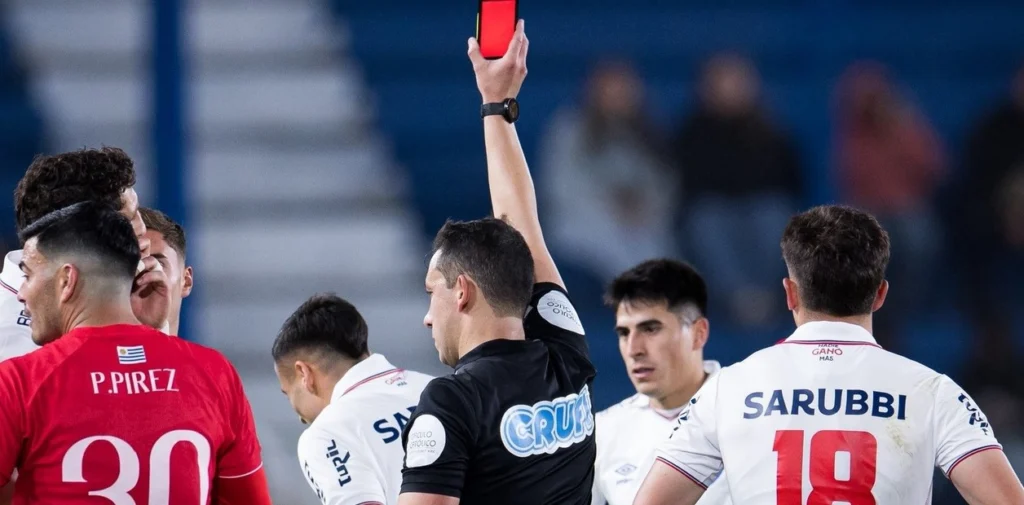
Uruguayan football introduced a new technology on Thursday night when referees replaced the traditional paper cards with an electronic device to show cautions and expulsions during a local match, although early tests have shown problems with visibility, according to local media reports.
Uruguayan football experienced a historic day on Thursday night with the appearance of virtual cards in the match that Nacional won 3-0 to Rentistas for the eighths final of the Uruguayan Cup, at the Gran Parque Central stadium.
During the game, the officiating team used the electronic device instead of the physical cards to signal bookings and sending-offs on the pitch.
The tool is designed to look like a mobile phone and has dedicated buttons to display yellow or red lights. Its main selling point is the automation of administrative work and allows referees to record every disciplinary sanction, substitution or incident in real time directly in the COMET sports management system.
That removes the need to take handwritten notes during the action and speeds up the digitization of the official post-match report.
La AUF (Asociación Uruguaya de Fútbol) presentó las tarjetas virtuales, un método que debutó en un duelo de Copa.
Text reads: “The Uruguayan Football Association (AUF) introduced virtual cards, a method that debuted in a Cup duel. This technological advance allows the automated and digital recording of the player who has been reprimanded.”
Despite the logistical benefits, the virtual cards face technical obstacles in their first trial stages. The debut was initially scheduled for the match between Defensor Sporting and Plaza Colonia, but sunlight made it impossible to see the colors properly. Under the artificial lighting of Thursday’s night match, local media reports said the signal was still not completely clear from a distance.
What Comes Next
At present, the device’s fundamental value lies in its ability to streamline the collection and transmission of statistical data during the ninety minutes of a match. Authorities will keep evaluating its performance to try to correct the faults related to brightness and contrast.
If the required visual improvements are achieved, the technology could be adopted on a regular basis in the main categories of South American football, according to the source. No timeline for that decision has been announced.
Technology in refereeing has expanded steadily in recent years, with video review and semi-automated systems now common in major competitions. Most of those tools help officials make decisions, while this device focuses on communicating and recording them. The key test for the Uruguayan trial will be whether the cards are as easy for players and spectators to see as the paper ones they replace, since visible signals are central to how the game communicates discipline.
The technology carries obvious logistical benefits, because referees no longer depend on cardboards that can be dropped, lost or misread, and data flows directly into the official system while the ninety minutes are still running.
For the Uruguayan Football Association, the real value of the tool lies in how it optimizes the collection and transmission of statistics. Every booking, substitution and incident becomes part of a digital record the moment it happens, a change that could improve accuracy in reports that have long depended on memory and hurried notes.
Con una épica remontada de en Dodger Stadium, Milwaukee eliminó en cuatro juegos al bicampeón de la MLB y selló su boleto al Clásico de Otoño por primera vez desde 1982.
Con un estelar Gavin Williams y un cuadrangular de Petey Halpin, Cleveland doblegó 3-2 a Tampa Bay para tomar ventaja de 2-1 en la Serie de Campeonato de la Liga Americana.
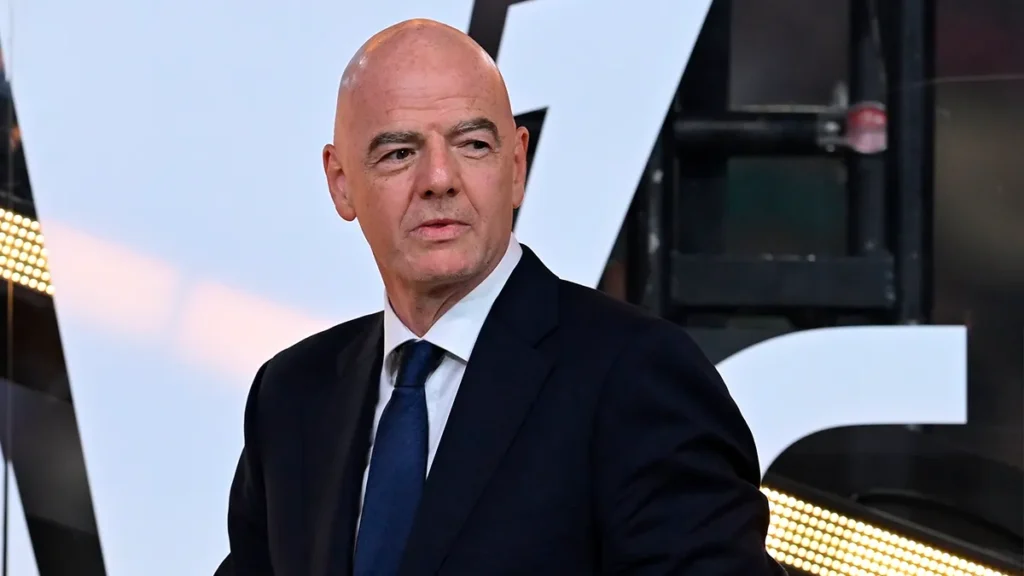
FIFA President Gianni Infantino apologized to the governing body’s Council in Zurich over the mishandling of the FIFA Forward Enterprise (FFE) project and confirmed the proposal to sell competition stakes to outside investors has been withdrawn permanently.
FIFA President Gianni Infantino offered the apology this Thursday during the first Council meeting held in Zurich after the World Cup. He acknowledged errors in both the management and the communication of the FIFA Forward Enterprise (FFE) initiative, a plan that would have handed private investors a share of FIFA competitions.
Addressing the council members directly, the Swiss-Italian executive sought to close the episode with a call for unity. The investment scheme, he confirmed, would not be revived.
The administration then presented an alternative designed to soften the blow: a proposal named the Surplus Solidarity Program channels 6.35 billion dollars for the period between 2027 and 2030, drawing on commercial revenue generated by the World Cup. According to Infantino, the funds would raise the amounts distributed among all 211 member associations and the confederations.
That financial package will be evaluated at the December meeting in Doha and put to a vote at the Congress scheduled for March 18, 2027.
FIFA plans to allocate $6.35 billion to its member associations for football development from 2027 to 2030, including an increased funding package of $25 million for each national association. #3Sportspic.twitter.com/ogP4oEb3g8
Despite the financial announcement, the most critical European federations, including England and Germany, maintained their opposition to Infantino remaining in office. The English federation said it has not received clear answers about the legal background of the FFE project, while the German side called for a change in the organization’s leadership.
Support for the president came from Africa. Ahmed Yahya, president of Mauritania’s football federation, defended the current leadership, saying it promotes equality and an equal weight for each vote in the Congress. He said a majority backs Infantino staying at the head of the institution.
The competing messages reflect a familiar divide in world football’s governance. Larger, wealthier federations tend to push for tighter scrutiny of FIFA’s leadership, while many smaller associations benefit directly from FIFA’s development funds. Because each of the 211 members has a vote at the Congress, a spending increase aimed at all of them is likely to be closely watched.
🗣️ Gianni Infantino has apologised "for the mistakes… in relation to the communication and consultation" for FIFA Forward Enterprise.
He adds that the FIFA Peace Prize will be "analysed" along with a change to the FIFA Disciplinary Code to stop automatic one-game bans being… pic.twitter.com/lBrraQNjkk
The Council also agreed to create a working group to review FIFA’s governance framework. It tasked an evaluation of the FIFA Peace Prize and asked the Legal Commission for a report on disciplinary procedures, to be presented at the December session.
The apology and the withdrawal mark a significant concession from a president who has dominated world football’s finances for a decade. By scrapping the FFE plan outright, Infantino acknowledged that the backlash within the game had grown too costly to ignore.
Supporters of the solidarity plan may argue that it directs World Cup profits toward the wider football community. Critics may counter that a funding increase does not answer questions about how the FFE project was handled, which is the point the European federations are pressing. Yet the European federations made clear that closing the project alone would not settle the matter. For them, the questions about how the initiative was conceived and who approved it remain open, and the December gathering in Doha now looms as the next test of whether the unity Infantino called for can actually be rebuilt.
Portugal is welcoming thousands of British football fans as Benfica host Celtic and Torreense face Sunderland this Thursday (October 15), with visiting supporters already making themselves heard in Lisbon and
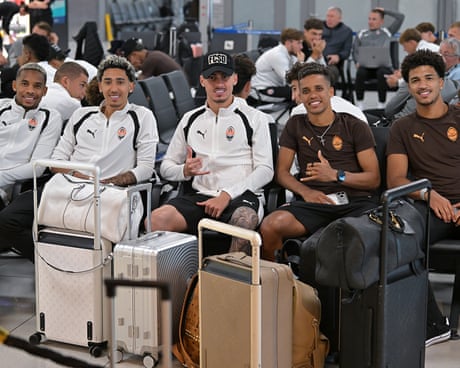
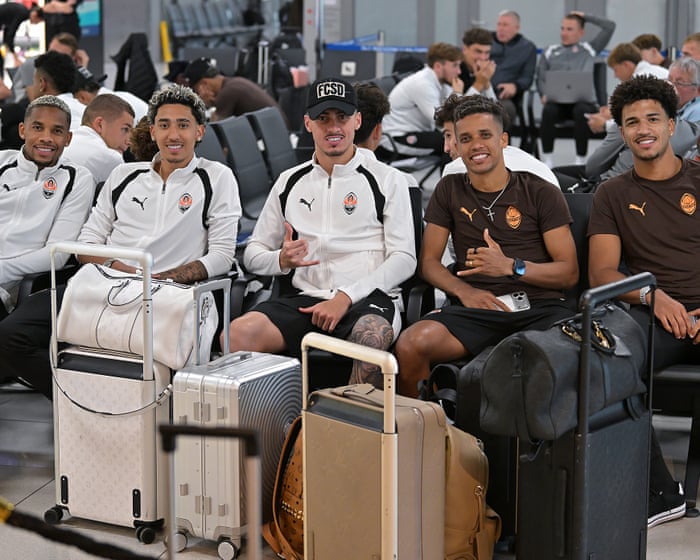
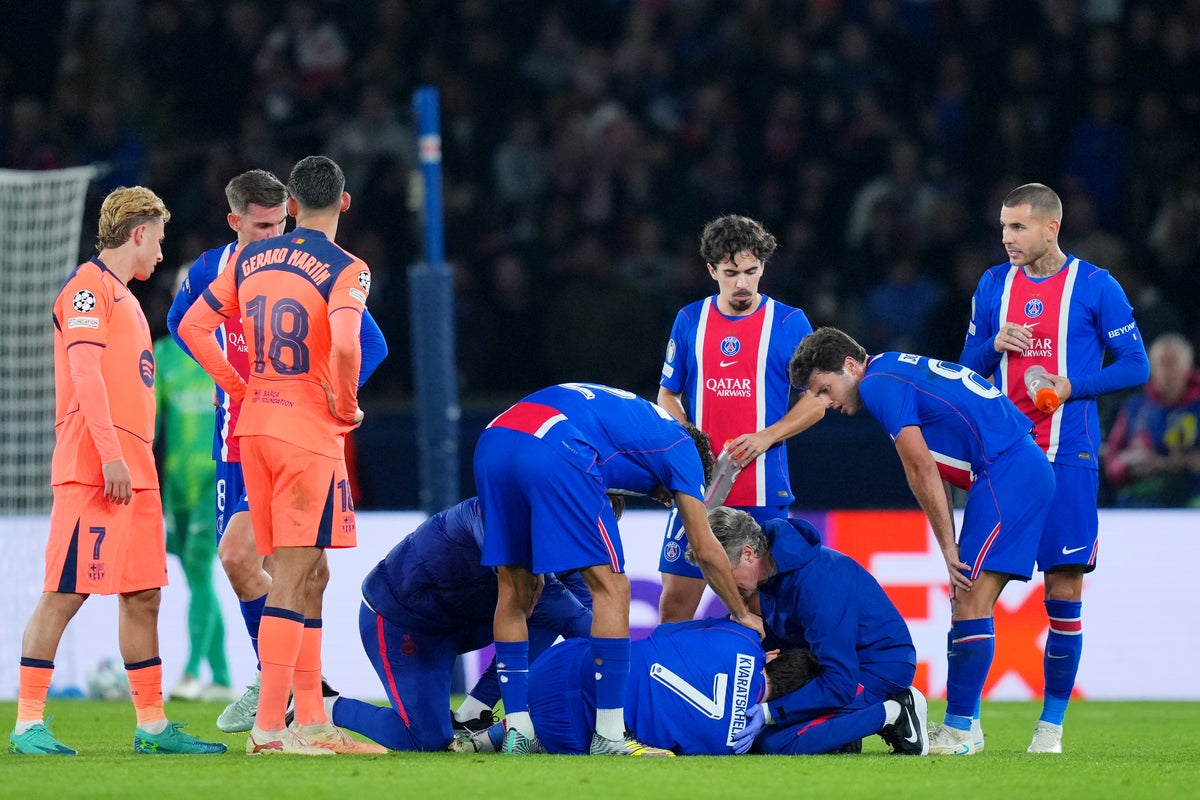
With no ‘home’ games in Ukraine, Arda Turan’s side hit the road again, with Chelsea’s Stamford Bridge hosting their Champions League campaign
The morning has thinned out into low, wispy cloud. Beneath it, Shakhtar Donetsk’s players are going through their paces. It is a light session for those who did not start against Veres Rivne the previous day; that means Arda Turan observes from the side, watching with the director of football, Darijo Srna. A stray ball zips towards them and Srna, after juggling it up, bends it into the goal with a familiar right-footed arc. “Modric!” exclaims Turan. But the two men are football legends in their own right and, as they continue to joke before Srna dashes away to take another phone call, the thought occurs that this happy scene could be played out almost anywhere else. Nearby, just beyond the team’s accommodation, a lake shimmers under the emerging sun.
It masks the fact that, around dawn, air raid sirens disrupted the peace for everyone in view. Even here, in Shakhtar’s bucolic spa hotel base 15 minutes outside Lviv, nobody is safe from the threat of Russian rockets and drones. In Rivne, three hours’ drive to the north-east, another alarm had sent the players and staff down to the stadium’s shelter. The second half was delayed by 20 minutes and that, no matter the corner of the country or the vividness of the autumn colours, is a weekly reality.
O Parque Desportivo Municipal de Estômbar recebe, no dia 23 de outubro, entre as 9h00 e as 17h00, o Torneio Sénior de Walking Football. O Walking Football tem vindo a assumir-se como uma modalidade de grande importância para a população sénior, permitindo a prática de exercício físico de forma segura, acessível e ajustada, enquanto promove o […]
In mid-August, The New York Times lost a defamation lawsuit in Alabama. It’s the first such case the paper has lost in more than half a century. Back in 2023, the Times reported that a University of Alabama basketball player named Kai Spears was at the scene of a fatal shooting—information that turned out to be false, and based on a single anonymous source. A jury found the paper liable for damages to the tune of $9.25 million. Ryan Phillips, the only reporter to attend the duration of the defamation trial, describes the experience:
Chief among the post-publication issues was the Times‘ reluctance to issue a correction or retraction when it became immediately clear that Witz’s anonymous source had been wrong in their assertion that Spears was in Miller’s car during the shooting.
The jury heard lengthy testimony about how the newspaper published “updates” in the form of “Editor’s Notes” to the online story to reflect each new denial coming from the University of Alabama, UA Director of Athletics Greg Byrne, Spears’ father, and then the Alabama walk-on himself in an Instagram post.
Apart from the updates, which the Times argued were tantamount to a correction when applying Alabama law to the evidence, the story remained unchanged until an official correction was eventually published by The New York Times on June 3, 2023.

 Login