❌

Reading view

U.S. Lifts Ban on New Flights from AIFA and AICM

The United States Department of Transportation (DOT) lifted, effective immediately this Friday, the measures that had restricted Mexican airlines from establishing new flights to the U.S. from Felipe Ángeles International Airport (AIFA) and Benito Juárez International Airport in Mexico City (AICM).

RELATED:

Mexico Takes Steps to Tackle Reduced Natural Gas Supplies from U.S.

In a joint statement, the Secretariat of Foreign Affairs (SRE) and the Secretariat of Infrastructure, Communications and Transportation (SICT) reported that the decision was reached through coordinated efforts between the governments of Mexico and the United States, as well as progress made in fulfilling bilateral aviation commitments.

The measure revokes Order 213-2, through which the DOT had restricted existing, proposed, and future operations by Mexican carriers. According to the Mexican government agencies, this resolution represents a step forward for air connectivity between the two countries and reopens the possibility of developing routes and flight frequencies from the AICM and AIFA to the U.S. market.

The Government of Mexico attributed this outcome to a process of dialogue and technical cooperation, which was strengthened following a Memorandum of Consultations signed in May 2026. “Since then, Mexico has made progress on the agreed-upon commitments,” the statement noted.

Mexican airlines can expand service to US cities after Washington lifted restrictions that blocked new routes from Mexico City’s two biggest airports https://t.co/Dvkt3zBGp3

— Bloomberg (@business) October 17, 2026

The SRE and SICT indicated that the lifting of these restrictions reflects the desire of both administrations to move toward a new phase in the bilateral aviation relationship—one grounded in dialogue, respect for sovereignty, institutional cooperation, and the application of international standards.

The restriction had been announced on October 28, 2025, by the then-Secretary of Transportation, Sean Duffy, and affected Aeroméxico, Volaris, and Viva Aerobus. Washington accused Mexico of failing to comply with the bilateral air transport agreement and of favoring domestic carriers in the allocation of flight slots.

The dispute stemmed from a decree that shifted cargo flights from AICM to AIFA. At the time, President Claudia Sheinbaum maintained that the relocation was a technical decision, not a political one.

Mexico pledged to continue working with U.S. authorities to create greater opportunities for passengers, workers, and airlines, as well as to consolidate an aviation system that is safe, competitive, modern, and reliable.

Mexican President Claudia Sheinbaum inaugurated a new campus of the National Rosario Castellanos University in Nicolás Romero, State of Mexico, on Sunday, as her government pushes to expand access to public higher education. The campus will open with 800 students, half attending… pic.twitter.com/RlLWCV54xR

— teleSUR English (@telesurenglish) October 12, 2026
  •  

Former Anti-Corruption Prosecutor of Guatemala Murdered on a Soccer Field

Guatemalan lawyer and former anti-corruption prosecutor Juan Francisco Solórzano Foppa was shot dead this Saturday by several hitmen in a sports complex in the capital of Guatemala, while playing soccer, official sources reported.

Guatemala Reports 137 Bodies Abandoned in Plastic Bags, Sheets and Sacks in 2026: Former Anti-Corruption Prosecutor of Guatemala Murdered on a Soccer Field

Solórzano Foppa, who was director of Criminal Analysis (2013-2016) of the Public Ministry and head of the Superintendency of Tax Administration (2016-2018), gained notoriety for leading criminal intelligence in high-impact investigations —including key expert reports in the ‘La Línea’ case that forced the resignation of President Otto Pérez Molina in 2015— and for taking on the defense of imprisoned journalist José Rubén Zamora Marroquín.

🚨 #URGENTE | Juan Francisco Solórzano Foppa, exfiscal del Ministerio Público y exsuperintendente de Administración Tributaria (SAT), figura entre las dos víctimas mortales reportadas tras un ataque armado ocurrido esta mañana en el interior de Campo Marte, zona 5 de la Ciudad de… pic.twitter.com/eZ9oLUP8Nj

— Canal Antigua (@CanalAntigua) October 17, 2026

The armed attack occurred this Saturday morning at the Campo Marte facilities, a busy sports complex located in the east of the Guatemalan capital, when armed men burst onto the field where the victim was playing sports and shot him at point-blank range.

In the incident, a second person, not immediately identified by the authorities, also died, while police officers and forensic experts cordoned off the scene to begin investigations.

During his time at the tax institution, Solórzano Foppa promoted judicial interventions and inspections that forced important companies and industries to pay millions in evaded taxes, which allowed for historical collections in the fight against tax evasion and fraud.

In 2023, he was arrested and prosecuted for obstruction of criminal action and unfaithful sponsorship, in a case directly linked to the legal defense of Zamora Marroquín, founder of the defunct newspaper ‘elPeriódico’.

  •  

Cuba Prepares Workshop on Biosimilars, Innovation, and Access in Healthcare

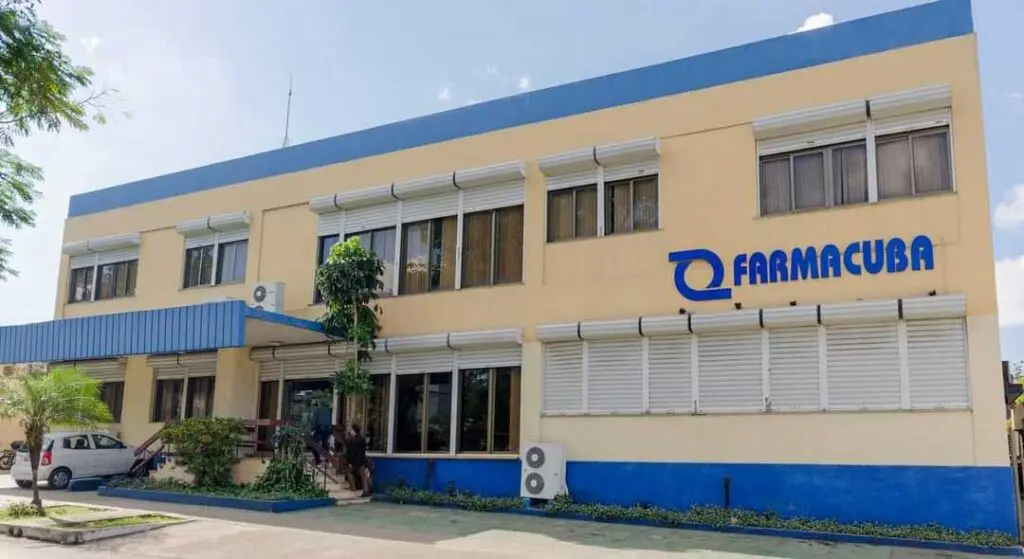
On October 22–23, 2026, the Hotel Parque Central will host the “Workshop on Biosimilars: Innovation and Access in Healthcare,” organized by the import-export company FARMACUBA, the entity announced.

RELATED:

Cuban Sciences Academy Awards Prize for Regenerative Medicine Research

Over the course of two days, specialists and institutions from the biotechnology, pharmaceutical, and healthcare sectors will share experiences regarding the introduction, regulation, clinical evaluation, commercialization, and medical applications of biosimilars in Cuba.

The program includes panels on the policy, introduction, and final processing of biosimilars in Cuba; commercialization and promotion strategies; as well as regulatory aspects, clinical evaluation, and the medical applications of these products.

FARMACUBA will present information on the biosimilars for which it holds the rights, and will discuss market opportunities and economic benefits linked to their development and commercialization. The event will also provide an opportunity to establish connections with Cuban representative offices abroad, embassies, and potential international clients.

Presentation of Rituximab

A key highlight will be the official presentation of Rituximab, identified as the first biosimilar to undergo final processing in Cuban biopharmaceutical facilities. During the workshop, its regulatory and clinical outcomes, medical applications, and aspects related to its introduction and commercialization within the National Health System will be presented.

The second day will feature interactive virtual meetings with Cuban representatives abroad, embassies, and prospective foreign buyers. This initiative aims to promote the international reach of biosimilars developed under the auspices of FARMACUBA.

Additionally, a catalog of biosimilars will be presented, and the role of Rituximab in the treatment of B-cell lymphomas will be examined.

The workshop will serve as a forum for exchange among national and international specialists, intended to expand knowledge, explore avenues for collaboration, and examine new alternatives for the development and commercialization of biosimilars in Cuba.

FARMACUBA

Facilitator in the introduction and commercialization of biosimilars, strengthening the link between pharmaceutical innovation and national healthcare.

As an importer, exporter, distributor, and marketer of pharmaceutical products, the company is part of the BioCubaFarma business group, which operates under the Council of Ministers of the Republic of Cuba.

It ensures the provision of necessary resources to the Cuban pharmaceutical industry, while also managing the export of medicines and technical services to international clients.

In line with the country’s new economic and commercial strategy—designed to boost the development of the business sector—FARMACUBA aims to set a benchmark both domestically and internationally within the pharmaceutical industry. This presents a unique opportunity to expand knowledge, forge strategic alliances, and explore new avenues for collaboration.

  •  

Venezuela Promotes Venezuela Feeds Plan and Local Economy Law to Achieve “Hunger 0”

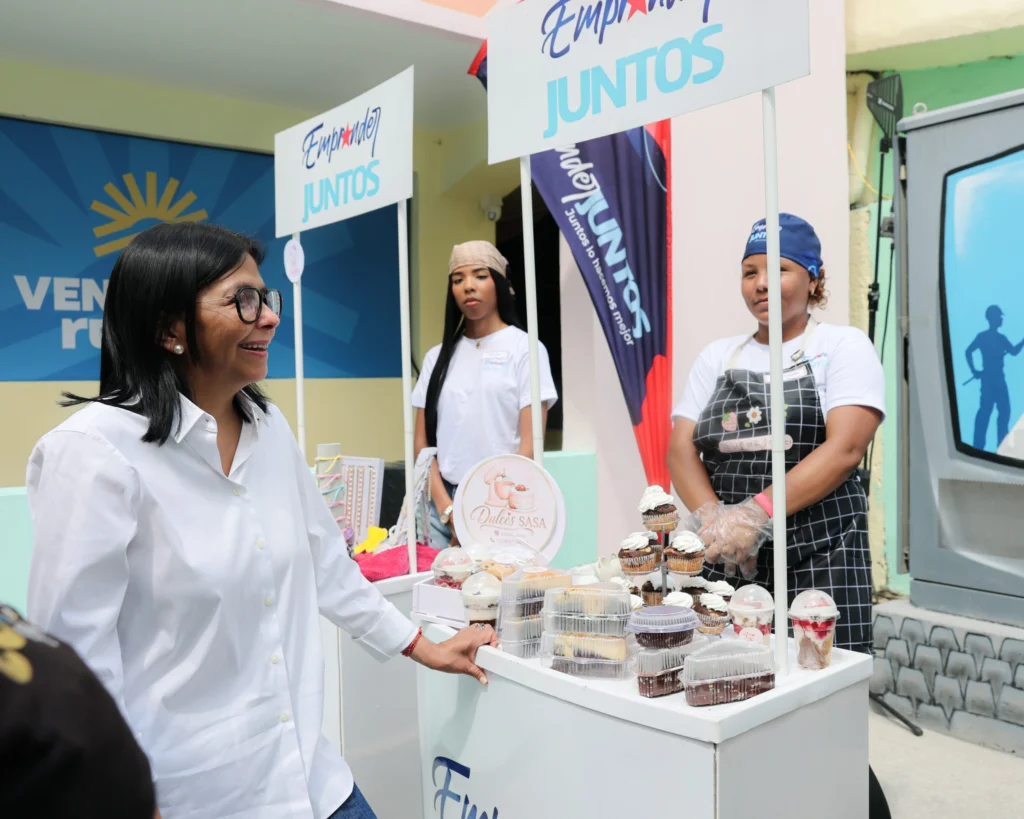
Venezuela’s acting Delcy Rodríguez, announced the Plan Venezuela Alimenta and the draft of a Communal Economy Law, an initiative to coordinate the productive sectors, including communes, entrepreneurs and agribusiness, to eradicate hunger and strengthen territorial food security.

Venezuela’s Acting President Rodriguez Meets with FAO Director: Venezuela Promotes Venezuela Feeds Plan and Local Economy Law to Achieve “Hunger 0”

“We have just arrived from Rome, from our participation in the World Food Summit, and I have to tell the Venezuelan people, very responsibly, we are very close again to the Zero Hunger goal,” she reiterated.

At the same time, she explained that this alliance seeks to consolidate an efficient model that guarantees access to food in every corner of the national territory.

“From there I announced the Venezuela Feeds Plan, where we are going to coordinate all productive spaces, from the commune, businesses, agribusiness, to achieve this goal that is so human, so extraordinarily vital, such as the right to food and Zero Hunger,” Rodríguez highlighted.

La tierra es fuente de vida y esperanza. 🇻🇪🌱

En el Día Mundial de la Alimentación, reconocemos el esfuerzo de nuestros campesinos, agricultores, ganaderos, pescadores y trabajadores de la agroindustria, quienes hacen posible que los alimentos lleguen a las mesas de nuestro… pic.twitter.com/MYe6P2oOby

— Miraflores Al Momento (@MirafloresAM) October 16, 2026

On her return from the FAO summit in Rome, President Rodríguez announced in Caracas that she had requested technical cooperation to strengthen the Plan Venezuela Alimenta.

The Head of State announced the upcoming presentation of a new legislative project: the Local Economy Law, an instrument that will integrate the current Communal Economy regulations to boost community production from the grassroots.

“(…) We are going to present a new Law, which is the Local Economy Law, which includes the Communal Economy Law, all community, local, territorialized efforts, in this supreme objective which is Zero Hunger for Venezuela (…), we will achieve it very soon. Before 2030 we will be meeting this goal,” affirmed the National President.

Rodriguez also urged participation in the popular consultation on 18 October, where more than 37,000 projects will be voted. In addition, he reported that the Communal Economy Law will be expanded to include other productive actors.

  •  

Plaque telling story of African-Caribbean prisoners in Britain stolen within days

Descendants say theft from Portchester Castle reflects racism that has haunted ‘generation after generation’

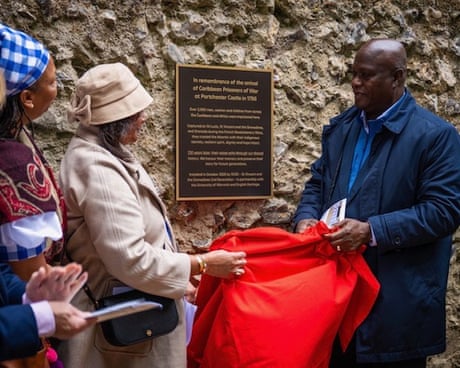
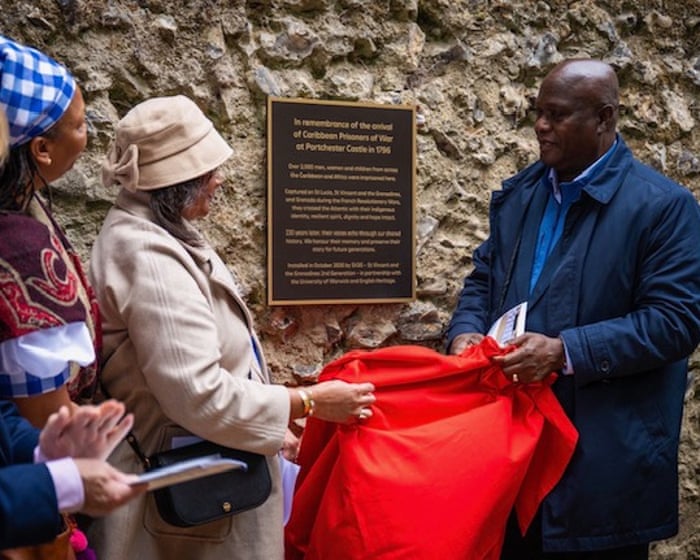
The theft of a plaque in Hampshire that told the little-known story of African-Caribbean prisoners in 18th-century Britain reflects the enduring racism that has fuelled centuries of atrocities against Black and Indigenous Caribbean people, their descendants say.

Ronald Raymond McDonald, a professional drummer, was part of a delegation that travelled from Belize and elsewhere to Portchester Castle near Portsmouth last week to honour their ancestors: 2,500 men, women and children transported to Britain as prisoners of war in 1796.

Continue reading...

© Photograph: English Heritage

© Photograph: English Heritage

© Photograph: English Heritage

  •  

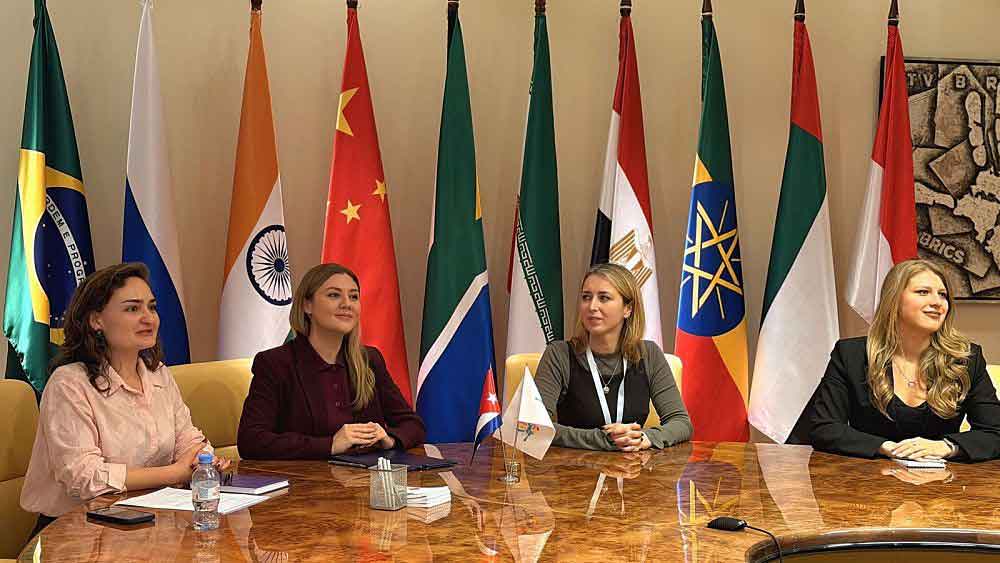
TVBrics and Cuba’s Canal Habana Sign Content Cooperation Agreement

TVBrics and Cuba’s Canal Habana signed a cooperation agreement today to expand their joint content library, Prensa Latina reported.


Under the agreement, the two outlets will exchange content on BRICS countries, develop joint projects and promote quality journalism to strengthen the objective international news agenda of Global South media.

RELATED: African Union Head Asks BRICS to Strengthen Ties

“For the channel it is a real pleasure to begin collaborative work with TVBrics. It is a way to show part of the dynamics of the Cuban capital as a partner of this important association, the BRICS,” Canal Habana director Erduy Varela said. He added that his expectations are to share experiences and ways of doing and communicating television in this new multimedia era.

TVBrics general director Janna Tolstikova said information cooperation between BRICS countries and states sharing the association’s values is important, adding that constructive dialogue between media helps lay the foundations for fruitful cooperation at the highest state level and favors the stability of international relations. She added that TVBrics is open to all countries willing to cooperate on the basis of equality, mutual respect, consideration of national interests and recognition of global diversity.

Tolstikova congratulated Canal Habana on the start of the collaboration, which she said will make Cuba’s cultural richness known to an international audience and offer the channel’s viewers audiovisual content of interest about BRICS and other Global South countries.

Canal Habana, founded in 2006, is part of the state-run Televisión Cubana system. It broadcasts in Spanish throughout Cuba and reports on political, economic, social, cultural and sports news in Havana, as well as major national and international events.

In Cuba, Prensa Latina and Canal Caribe already participate in content exchange through TVBrics. In Latin America, the network also collaborates with media from Argentina, Brazil, Venezuela, Colombia, Mexico, Chile and Uruguay. Among BRICS partner countries, media from Belarus, Bolivia, Vietnam, Kazakhstan, Malaysia, Thailand and Nigeria participate.

  •  

Argentina Abstains on UN Colonialism Vote Despite Malvinas Rhetoric

The Milei government’s stance on colonialism in a UN vote clashes with its recent rhetoric about the British-occupied Malvinas Islands. Photo: UN.

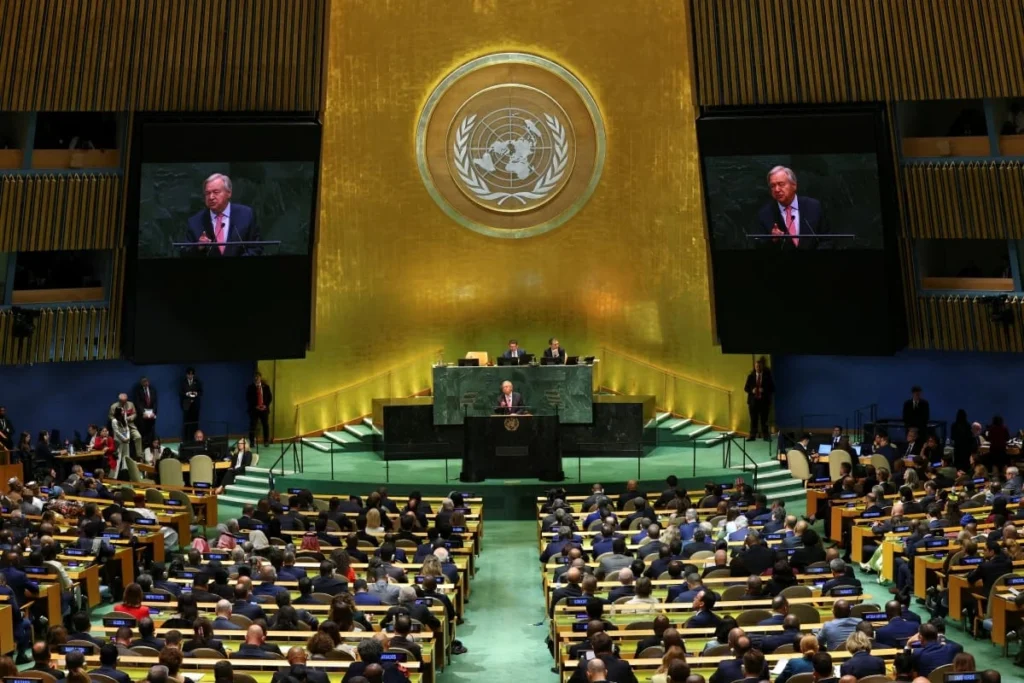
Argentina’s delegation at the United Nations abstained from a resolution aimed at eradicating modern forms of colonialism, siding with the Trump administration and undercutting President Javier Milei’s recent demands over the British-occupied Malvinas Islands.


The vote took place in the Fourth Committee of the General Assembly. The measure, presented by the Russian Federation, sought to ratify and reinforce the goals of Resolution 1514, the landmark text approved in 1960 that declared colonialism incompatible with the UN Charter and fundamental human rights.

Argentina’s diplomatic delegation chose to stand aside rather than endorse the initiative. The move placed the Milei government in line with the position promoted by the White House, which pressed allied governments to abstain.

RELATED: Argentine President Milei Toughens Malvinas Claim at UNGA

The resolution passed anyway. Delegates recorded 85 votes in favor, 49 against and 23 abstentions, sending the text to the full General Assembly for consideration.

The alignment extended beyond Buenos Aires and Washington. Chile, Costa Rica, Colombia, Guatemala, Honduras, Peru and Paraguay joined the abstention, a bloc of right-leaning regional governments that followed the U.S. lead.

On the other side, Brazil, Mexico, South Africa and India voted in favor. Their support reaffirmed the global backing for territorial integrity and decolonization processes, and set up a sharp divide within Latin America itself.

The Russian draft went further than the 1960 declaration. It extended the concept of colonialism to cover unilateral coercive measures and the economic and financial sanctions promoted by Washington around the world, a provision that made the vote a direct test of alignment.

The UN General Assembly’s Fourth Committee approved the draft resolution “Addressing contemporary forms of colonialism” by 85 votes in favour, 49 against, with 23 abstentions. Sponsored by Russia, China, Iran, Cuba, Belarus, Palestine and others, it recognizes colonialism in… pic.twitter.com/MqgQfoMhME

— Digital Debate (@digdebate) October 16, 2026

Malvinas Contradiction Deepens

The abstention collides with the rhetoric Milei has used on Malvinas, the archipelago occupied by Britain since 1833. His government has campaigned publicly for the defense of sovereignty and demanded sanctions against oil companies operating on that Argentine soil.

The contrast sharpened in September, when the Argentine President addressed the General Assembly. There he read extended passages demanding the eradication of colonialism and stated plainly that the principle of self-determination “exists to liberate colonized peoples, not to enshrine situations derived from colonization.”

Those words sit uneasily with the vote his own diplomats just cast, or chose not to cast. The abstention, in effect, withheld support from a document that echoes the very argument Milei delivered from the rostrum.

The domestic reaction was immediate. Carlos Bianco, the government minister for Buenos Aires province, called the abstention an irresponsible act against a historic national cause. “The Malvinas question deserves a diplomacy that does not kneel. Abstaining in the face of colonialism is not just an embarrassment, it constitutes an act of irresponsibility. The Malvinas question must once again be defined by Argentines. And it will be,” Bianco wrote on social media.

The episode exposes a tension running through the Milei administration’s foreign policy. It has embraced Washington as its principal ally while maintaining, at least in public speeches, a sovereignty claim that Washington’s abstention strategy directly undercuts.

Milei dice que quiere recuperar Malvinas. En la ONU, la Argentina se abstuvo de votar contra el colonialismo.
Hace dos semanas, esa misma delegación decía que Malvinas es una situación colonial.
Sobran las contradicciones. No tienen política exterior propia y desprecian al país… pic.twitter.com/I5cYaXCbvp

— Francisco Cafiero (@FranCafiero) October 16, 2026

Text reads: “Milei says he wants to take back Malvinas. At the UN, Argentina abstained from voting against colonialism. Two weeks ago, that same delegation said that Malvinas are a colonial situation. The contradictions abound. They have no foreign policy of their own and despise the country they govern.”

Argentina’s historic position on Malvinas has long drawn broad support across Latin America and the developing world, precisely the coalition that voted in favor of the resolution Buenos Aires declined to endorse.

The measure now moves to the plenary, where the same fault lines are likely to reappear. What Argentina does there will reveal whether the abstention was an isolated calculation or a settled posture. For now, the vote leaves a record that is hard to reconcile: a government that speaks of liberating colonized peoples, yet declines to vote for a resolution doing exactly that.

  •  

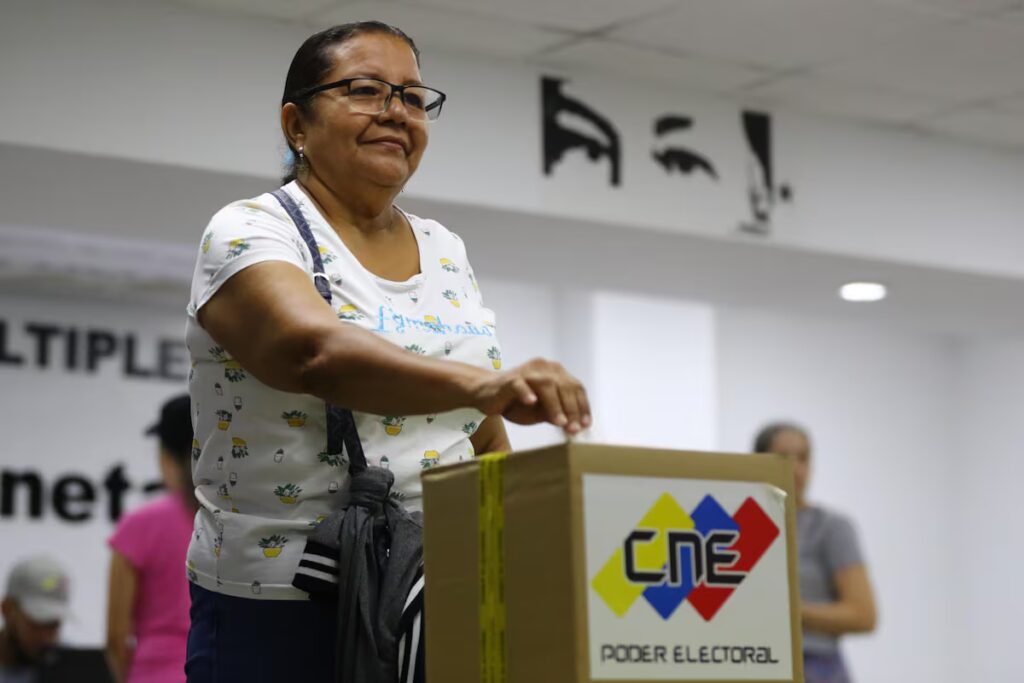
Venezuelans Vote Sunday in Second Popular Consultation on 37,000 Projects

(FILE) The election day on this Sunday, October 18 will cover 5,418 communes in the country with direct funding from the Federal Council of Government. Photo: EFE.

Venezuela holds its Second National Popular Consultation this Sunday with 5,418 communal circuits choosing among over 37,000 locally proposed projects in water, roads, lighting, health and education.


Venezuela will hold its second National Popular Consultation of the year on October 18, in which communes across the country will vote directly on 37,205 budget proposals, with each winning project set to receive an initial $10,000 administered by the community itself.

The vote covers 48,086 communal councils grouped into 5,418 territorial circuits, which the source describes as guaranteeing self-government at the neighborhood level.

RELATED: Venezuela Presents Venezuela Renace Plan Update 100 Days After Earthquakes

To facilitate participation, authorities have set up 11,495 voting centers and 12,769 polling tables nationwide. The process will be guarded by 13,000 members of the Republic Plan security deployment, with operational support from more than 36,000 communal members advised by the National Electoral Council (CNE).

What Voters Will Decide

The proposals are tied to the government’s Concrete Action Agenda. The City and Services sector has the largest share, with 19,028 projects focused on water, electricity, roads and hospital infrastructure. The social area has 9,217 initiatives, and the economic sector has 4,887 proposals to boost local production.

Each project chosen by popular vote will receive an initial allocation of $10,000, to be managed and carried out directly by the commune. Institutional spokespeople said earlier editions closed with more than 80% successful executions, thanks to what they called the rigorous application of preventive social oversight.

Venezuelans will vote this Sunday on another National Popular Consultation. Each organized community will choose a project, according to local needs, that will receive 10k in state funding. Alongside communes, over 400 condominium boards are also participating pic.twitter.com/ecihlXWs8U

— Venezuelanalysis (@venanalysis) October 16, 2026

First Condominium Vote

One structural change stands out this year. More than 89 condominiums and horizontal property movements from Aragua, Miranda and the Capital District have joined the process formally. It is the first time these residential boards can put forward priority projects of their own, from elevator repairs to improvements in basic services inside buildings.

In the days before the vote, communes carried out house-to-house outreach to promote the proposals now heading to the ballot. That door-knocking campaign carried each initiative into homes and opened neighbor-to-neighbor debate over territorial priorities.

The Sunday vote will also promote the active participation of young people aged 15 and older, which authorities say favors generational renewal in local public management.

Acting President Delcy Rodríguez, speaking in at the Villa Zoila commune, emphasized that “the people are exercising a protagonistic and participatory form of democracy.”

“We are going to democracy, to participation and to the emotion that always comes with going to an election,” she said.

Rodríguez connected the vote to the delivery of the National Budget before the National Assembly. That spending plan, she explained, is built “from the communes.” Communes and community organizations take part in deciding where resources will be invested, an advance she said Venezuela must preserve.

The second edition of the year confirms the National Popular Consultation has moved beyond an isolated event. It now functions as a recurring mechanism of popular decision, with organized communes as the leading actors in local public spending, as a pillar of participatory democracy in Venezuela.

  •  

Hundreds of US soldiers being deployed to Latin America, according to NYT

The New York Times reported on Wednesday that the US government is preparing to send troops to Latin America under the pretext of combating drug trafficking in the region.

According to the US publication, 600 troops from the 10th Mountain Division at Fort Drum, NY, have already begun deploying to the jungles of Panama to conduct exercises alongside the local military.

In addition, it was reported that members of this detachment will participate in operations in other countries in the future: “The troops will eventually train with local forces in Colombia and Honduras, and could also support US Special Operations troops advising militaries conducting raids against accused drug traffickers, the officials said.”

The peoples of the region, alongside anti-imperialist and progressive forces, have long denounced decades of US military intervention in Latin America and the Caribbean. Various experts and analysts have shown that “war on drugs” projects have never led to the elimination of these illicit businesses. On the contrary, US military involvement has coincided with an increase in violence, drug production, but most importantly: neoliberal reforms. These reforms involve the dismantling and reduction of the state, the privatization of all possible dimensions of social life, and the destruction of social organizations that oppose neoliberalism.

Read more: What else is behind the “fight” against drug trafficking in Latin America?

Historically, this process of material dispossession has been facilitated by an expansion of US military presence, under the pretext of the “war on drugs.”

The report stated: “The deployments and growing headquarters, which have not been previously reported, along with the Pentagon’s recent movement of several MQ-9 Reaper drones from Africa to Colombia and Ecuador, mark the latest widening of the Defense Department’s fight against drug traffickers in the region.”

Shield of the Americas

For several months now, US forces have been participating in intelligence activities and supporting military operations in Ecuador, whose government has entered into agreements with the US to allegedly fight organized crime. However, it was later revealed that these operations didn’t target drug traffickers at all. In at least one instance, The New York Times reported that the US and Ecuador bombed a dairy farm.

This collaboration is part of the new military and geopolitical strategy led by the Trump administration, embodied in the agreement known as “Shield of the Americas.” In recent meetings, several governments have committed to working with the United States so that their militaries can carry out joint operations in Latin American countries.

Regarding the possible itinerary of the soldiers who are expected to arrive in Panama, The New York Times reported: “The soldiers will move first into Panama, where they will take part in jungle training exercises, officials said. From there they will head to Colombia, where they will participate in what officials have called Southern Vanguard, an exercise scheduled to begin later this month. Other rotations will move into Honduras for training with local partners. Some of the troops could be used to provide additional security for US helicopters in the region, which have been providing support for US Special Operations forces.”

For about a year now, the United States has been conducting airstrikes on small boats in the Caribbean Sea and the Pacific Ocean that Washington claims are linked to drug trafficking. Over 200 people have been killed in the strikes and the majority of the victims appear to be fishermen from Venezuela, Colombia, Trinidad and Tobago, and other island nations. Victims’ families and survivors have vehemently denied any connection to criminal groups.

Washington claims the report is false

For its part, the US Embassy in Panama stated that The New York Times report regarding the deployment of several hundred US soldiers to the Caribbean nation is untrue: “The New York Times article alleging the deployment of 600 US soldiers to Panama is categorically false.”

The US Embassy reported that 120 US military personnel are currently participating in a training course in the Panamanian jungle, but that these troops will return to the United States on October 25 and therefore will not undertake the deployment announced by Colombia and Honduras. It did report that other US military personnel will participate in exercises in Peru.

“This is nothing new. The Jungle Operations Training Center has been operating for over a year as a school officially recognized by the US Army. US and Panamanian instructors jointly provide training in survival techniques and jungle operations,” the US Embassy in Panama said in its statement.

The controversy between The New York Times and US diplomatic officials over this report comes amid an evident increase in the US military presence in the region. In addition to operations in the Caribbean and the Pacific, there was the military incursion into Venezuela on January 3, 2026, which resulted in the capture of then-President Nicolás Maduro and his wife, Cilia Flores, as well as the deaths of more than 100 people in Venezuela. Furthermore, President Trump himself has suggested that he could attack Cuba and any other country if US security is compromised.

  •  

Fire at Cuban Thermal Power Plant Brought Under Control

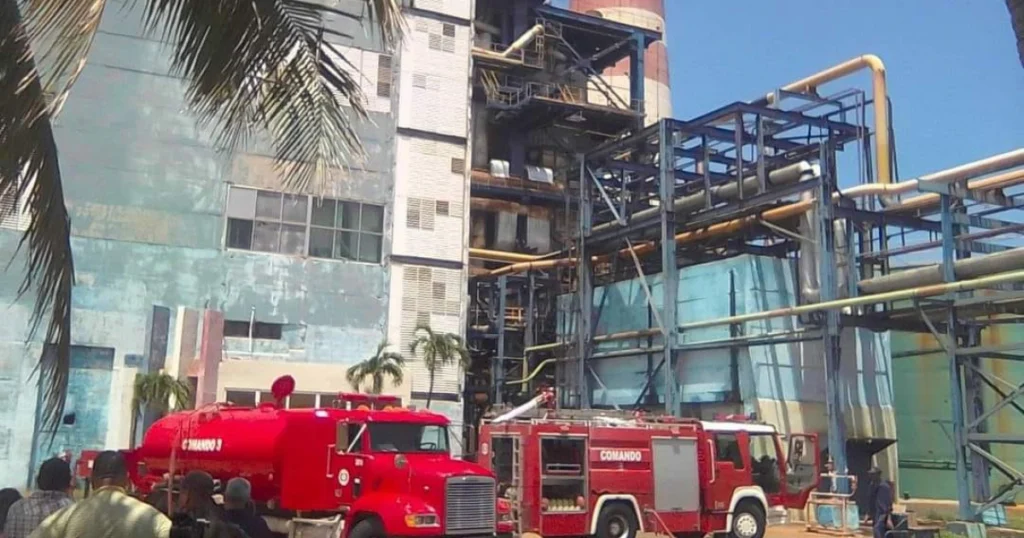
A fire at Unit 1 of the Ernesto Guevara de la Serna Thermal Power Plant—located in Santa Cruz del Norte, in the western province of Mayabeque—was brought under control this morning. The incident took the unit offline and increased the projected impact on the National Electric Power System (SEN) during peak hours.

RELATED:

Cuba Denounces U.S. Oil Blockade and Lack of Progress in Talks

The Electric Union (UNE) reported that the fire began at 06:55 local time and affected the plant’s Unit 1. “Unit 1 of the Ernesto Guevara de la Serna Thermal Power Plant in East Havana is currently offline due to a fire that broke out in the unit,” the organization stated on its social media channels.

According to a report by journalist Lázaro Manuel Alonso, the fire was caused by an oil leak at the front of the rotor, which was detected by the operator on duty. The swift intervention of emergency responders and the implementation of safety protocols allowed the fire to be extinguished without any loss of life or injuries.

Following the fire, the area remains under preventive surveillance. Authorities indicated that Units 2 and 3 of the power plant are being prepared to resume operations, while the efforts of the workers and emergency teams who responded to the scene have been acknowledged.

Luego de extinguido el incendio se implementan los protocolos establecidos para el restablecimiento y la evaluación de los daños.
Muchas gracias a todos los que participaron en sofocarlo.#loqueNOSUNEcompromiso https://t.co/H03yZ34A77

— CTE Ernesto Guevara de la Serna (@CteEGSerna) October 16, 2026

The first text reads, “Once the fire was extinguished, established protocols for recovery and damage assessment were implemented. Many thanks to everyone who helped put it out.”

The second text reads, “Thanks to the urgent actions of the fire department—in coordination with the Electric Union and with the participation of workers, all directed by the provincial and municipal Defense Councils—the fire was successfully extinguished, with no impact on the remaining units.”

The loss of this unit has exacerbated the country’s power generation deficit. For the period of peak demand, the UNE anticipates an available capacity of only 740 megawatts (MW), against a peak demand of 2,900 MW.

In addition to the damaged unit, eight other thermal power units—out of the 16 that make up the country’s total generation capacity—remain out of service due to breakdowns or maintenance. Cuba is experiencing an energy crisis with social repercussions—manifested in prolonged daily blackouts—stemming from an obsolete electrical system and a decline in power generation capacity.

The National Electric System (SEN) is under strain as a result of the blockade imposed by the United States against Cuba for more than six decades, which prevents the country from acquiring spare parts.

Compounding this is the energy blockade imposed by U.S. President Donald Trump via an executive order in January, which threatens any country that trades fuel with the island.

🇨🇺 Cuba says U.S. economic pressure is worsening shortages of food, medicine, and other essential supplies as Washington continues to tighten sanctions and restrictions on the Caribbean island.

Cuban authorities say the measures are disrupting foreign trade and worsening… pic.twitter.com/qrUDnUYmi9

— teleSUR English (@telesurenglish) September 16, 2026

  •  

Lula Signs Constitutional Amendment Reducing Brazil’s Workweek to 40 Hours

The reform will benefit more than 37 million formally employed workers.

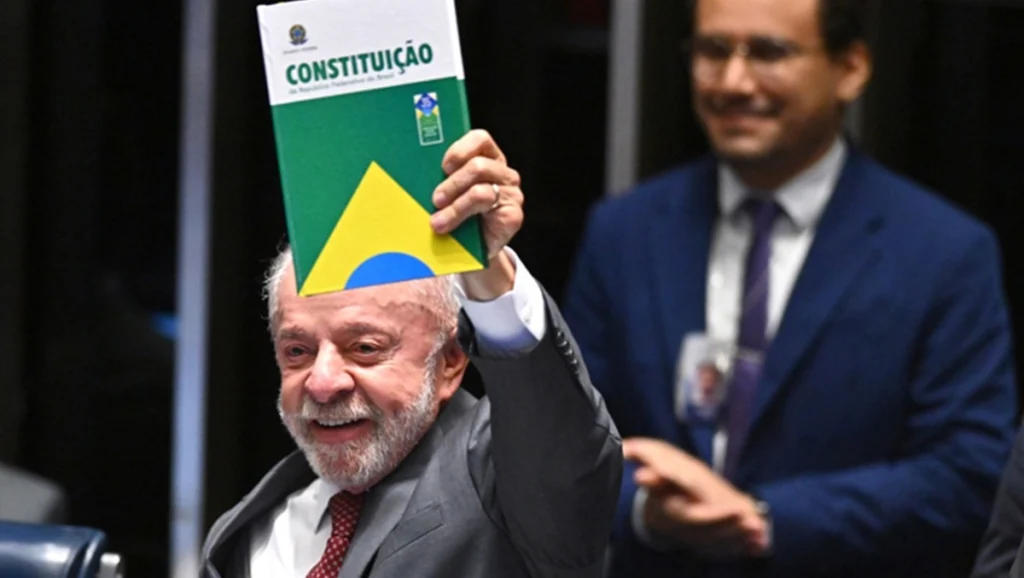
On Friday, President Luiz Inacio Lula da Silva attended a ceremony at the Brazilian Congress to promulgate the constitutional amendment reducing the workweek in the country.

RELATED:

Brazil Poll Shows Bolsonaro and Lula in Technical Tie

During his speech, Lula defended dialogue between institutions and stressed that the reduction of the workweek was made possible through negotiations between the executive branch and Parliament, an institution in which his Workers’ Party holds just 70 out of 513 seats in the Chamber of Deputies and 9 out of 81 seats in the Senate.

“Without democracy, there is no way out. It is dictatorship,” Lula said, stressing that although the Workers’ Party does not have a parliamentary majority, it has managed to advance initiatives with the support of other political forces because “there are no good or bad votes; it is the people who are voting.”

The progressive leader reiterated that reducing the workweek — from 44 to 40 hours, with two paid days off — is a measure intended to improve workers’ living conditions. He rejected arguments that the change could harm businesses.

O dia de hoje mostra que a democracia vale a pena.

O fim da escala 6 x 1 é uma conquista civilizatória.

O que fizemos hoje foi obedecer. Obedecer à vontade de um povo que foi para as ruas e cobrou de nós: mulheres, homens, trabalhadores, adolescentes e estudantes exigiram essa… pic.twitter.com/QEdFV6I4j7

— Lula (@LulaOficial) October 16, 2026

President Lula da Silva’s text reads: “Today proves that democracy is worth it. Ending the 6×1 work schedule is a civilizational achievement. What we have done today is heed a call—the will of a people who took to the streets and made a demand of us: women, men, workers, teenagers, and students all called for this measure. You have written an important chapter in our Constitution. It is now a Constitution that better reflects its citizens. Two days of rest each week mean greater dignity. Congratulations to everyone!”

In this regard, he recalled the criticism that accompanied the introduction of the year-end bonus in the early 1970s, when some conservative sectors alarmed the public by claiming that the measure would drive companies into bankruptcy.

Under Brazilian law, 60 days after the amendment’s promulgation, the five-day workweek and two-day rest period will take effect, with a maximum workweek of 42 hours. The reduction to 40 hours will be completed after another 12 months.

The measure was promulgated by Parliament President Davi Alcolumbre, with the parliamentary headquarters packed to capacity, nine days before the presidential runoff, in which Lula will face far-right Sen. Flavio Bolsonaro.

The approval of the initiative is seen as a political victory for Lula, who secured a key electoral boost in the final stretch before the runoff against his rival, who won the first round with 47% of the vote.

The measure, promoted during the campaign and strategically pushed through one week before the runoff election, had strong popular appeal because it benefits more than 37 million workers with formal employment contracts.

The results of the strategy began to emerge in polls released this week, which showed Lula narrowing the gap with Bolsonaro, who now leads him by two percentage points, although the two are technically tied.

teleSUR/JF

Source: EFE

  •  

Cuba Denounces U.S. Oil Blockade and Lack of Progress in Talks

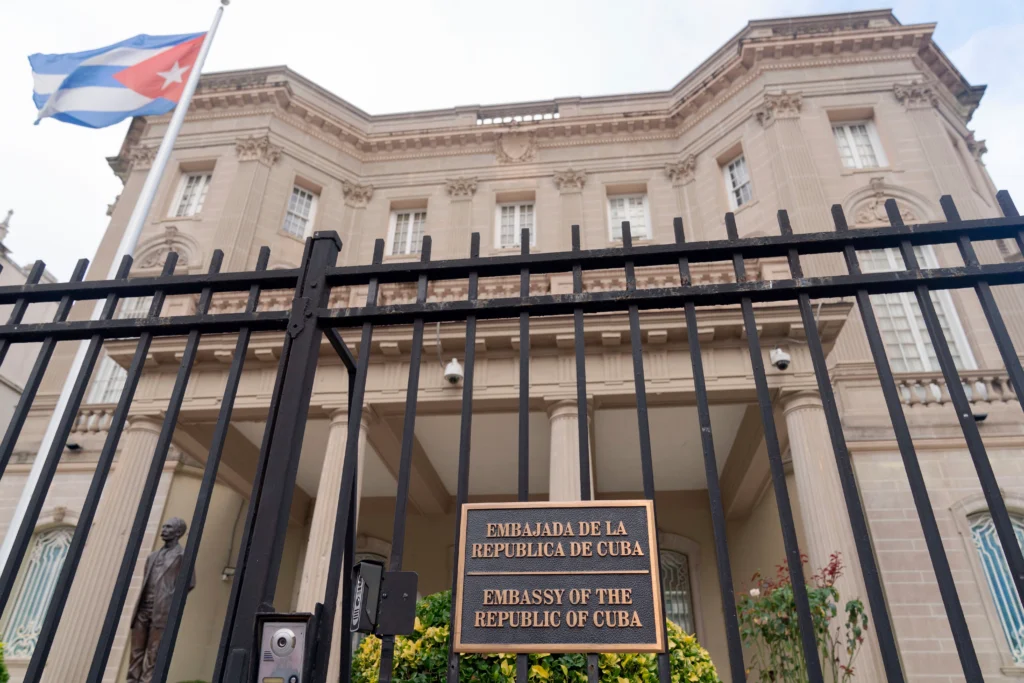
Cuba has stated that, despite recent contacts with Washington, it sees no progress toward a serious dialogue, while denouncing U.S. restrictions on oil supplies as a form of collective punishment against the island’s population. This statement was made by Tanieris Diéguez, Deputy Chief of Mission at the Cuban Embassy in the United States, in an interview with EFE.

RELATED:

Cuba Expands Renewable Energy Use Amid U.S. Fuel Blockade

Diéguez explained that Havana has maintained contact with the administration of President Donald Trump, but that it perceives no movement toward substantive negotiations. “We truly do not see any progress toward a serious dialogue—which is what we are willing to engage in,” the diplomat stated.

In March, Cuban President Miguel Díaz-Canel confirmed that talks were taking place with the U.S. government. Since then, Washington has pushed for political and economic changes in Cuba.

When asked about potential threats of U.S. military intervention—like to the kidnapping of President Nicolás Maduro and his wife Cilia Flores in Venezuela—Diéguez noted that Cuba takes any statement from U.S. authorities seriously, given that the United States is the world’s foremost military, nuclear, and economic power.

When asked about potential threats of U.S. military intervention—similar to the operation that took place in Caracas—Diéguez noted that Cuba takes any statement from U.S. authorities seriously, given that the United States is the world’s foremost military, nuclear, and economic power.

Nevertheless, she emphasized that Havana considers the defense of its independence to be its highest priority. “Our people will never allow that to be sidelined or subjugated under any circumstances,” she affirmed.

As has become customary, the US government has imposed a new aggressive measure against Cuba, this time against BICSA, an absolutely legitimate bank whose transactions in Cuba and the world are also absolutely legitimate.

It is an evidence of the criminal determination to apply… pic.twitter.com/fRs6onus4a

— Bruno Rodríguez P (@BrunoRguezP) October 15, 2026

Impact of energy restrictions

The diplomat linked the worsening of Cuba’s energy crisis to the restrictions imposed by Washington on oil supplies—a situation exacerbated following the events in January involving Nicolás Maduro in Venezuela, the island’s primary fuel supplier.

According to Diéguez, fuel shortages and power outages are affecting essential services, including hospital care and surgical procedures. “This is a form of collective punishment; it is entirely contrary to international law and directly harms the Cuban people,” she denounced.

The official presented figures attributed to the impact of the situation: infant mortality has reportedly risen to nine deaths per 1,000 live births; 96,500 people are awaiting surgery, and 32,000 pregnant women are waiting for an ultrasound.

Diéguez also rejected U.S. criticisms regarding Cuba’s economic management. “It is not a matter of ineptitude; rather, we have managed to put our scarce resources to work thanks to our organization,” she maintained.

🇿🇦 At the Human Rights Council, #SA delegate highlighted harmful impact of unilateral coercive measures against #Cuba & warned of its humanitarian consequences.

Delegation also addressed the extraterritorial & deterrent effects of the #blockade, which hinders trade & investment. pic.twitter.com/70wM404eyO

— Southern Africa Eye (@eye_southern) September 10, 2026

International support

The Cuban representative expressed confidence that the international community will once again support the lifting of the U.S. blockade during the annual vote at the United Nations General Assembly, scheduled for late October.

“Cuba does not feel alone. We have received the support of the vast majority of the international community,” Diéguez stated, noting that for more than three decades, resolutions against the blockade have secured overwhelming majorities.

In 2025, the Cuban-sponsored resolution received 165 votes in favor, seven against, and 12 abstentions in the General Assembly—though the text is non-binding.

Diéguez further asserted that the restrictions also harm U.S. citizens by limiting their access to products from the Cuban biopharmaceutical industry. “Cuba deserves to live in peace,” she concluded.

  •  

UNESCO to Evaluate Protection of the Río Plátano Biosphere in Honduras

A mission of experts from the United Nations Educational, Scientific and Cultural Organization (UNESCO) will visit Honduras in late 2026 to evaluate protection, management, and conservation efforts in the Río Plátano Biosphere Reserve—the country’s largest protected area and a site currently inscribed on the List of World Heritage in Danger.

RELATED:

Panama Hosts the 2026 LATAM Congress of Marine Sciences

The announcement was made this Friday by Ángel Prado, Deputy Director of the Institute for Forest Conservation (ICF), who explained that the visit will aim to review activities undertaken to preserve the territory and to update the biosphere’s management plan for the next ten years.

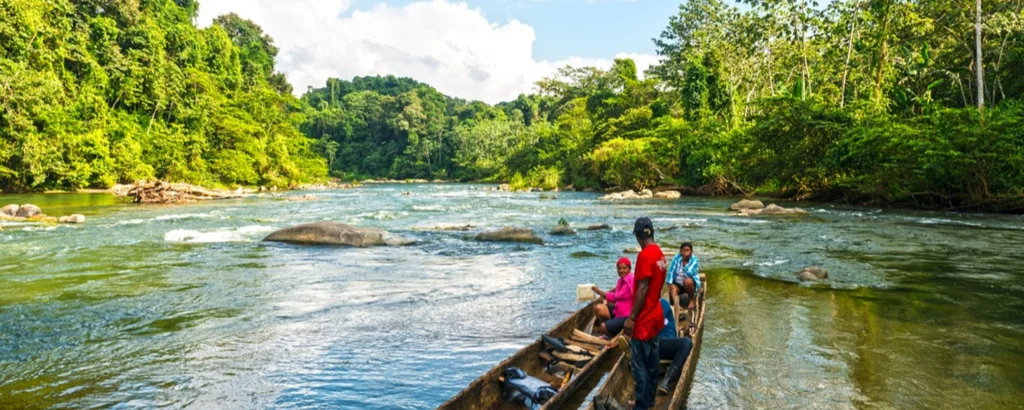
Located in the Mosquitia region of northeastern Honduras, the Río Plátano Biosphere spans approximately 350,000 hectares and preserves one of the few remaining tracts of tropical rainforest in Central America. The site was added to the World Heritage List in 1982 and is home to indigenous communities that have maintained their traditional ways of life.

UNESCO placed the reserve on the List of World Heritage in Danger in June 2011, citing illicit land occupation. At the time, the organization also pointed to a breakdown in law and order in the area, the presence of drug traffickers, and the state’s limited capacity to manage the site effectively.

🚨#HechosEstelar | “Es necesaria la visita de la UNESCO a la Biósfera del Río Plátano”, expresó Mario Pinel, de la Plataforma Jóvenes contra el Cambio Climático, al destacar la importancia de proteger esta reserva natural y señalar que su conservación debe ser una misión de… pic.twitter.com/uegF3aKs3i

— TV Azteca Honduras (@aztecahonduras) October 16, 2026

The text reads, “A visit by UNESCO to the Río Plátano Biosphere is necessary,” stated Mario Pinel, of the Youth Against Climate Change Platform, as he highlighted the importance of protecting this natural reserve and noted that its conservation should be a mission for everyone.”

The ICF is coordinating efforts with the Secretariat of Natural Resources and the Honduran Armed Forces to address these risks. Authorities are also working with indigenous communities on organization and training initiatives aimed at strengthening the conservation of natural resources.

The protection of the Río Plátano area is linked to other natural areas in northeastern Honduras, such as the Tawahka Asangni Biosphere Reserve and Patuca National Park. These territories connect to the Bosawas Biosphere Reserve in Nicaragua and form part of one of the largest contiguous forest blocks in Latin America.

The UNESCO visit will allow for a review of the site’s management and the definition of actions that will guide its conservation over the next decade.

#FromTheSouth News Bits | Following the approval of the law to strengthen and promote the agro-industrial sector in Honduras, there has been a rise in evictions of communities resisting dispossession. pic.twitter.com/R4T1NaqHAR

— teleSUR English (@telesurenglish) September 7, 2026
  •  

Cuba Expands Renewable Energy Use Amid U.S. Fuel Blockade

Over the past nine months, Cuba has received only one shipment of crude oil from Russia, totaling about 100,000 tonnes.

On Thursday, Cuban Foreign Minister Bruno Rodriguez said that renewable energy now accounts for more than one-fifth of the country’s electricity generation as it seeks to reduce the impact of U.S. fuel restrictions.

RELATED:

Cuba Accuses United States of Pressuring UN Votes on Blockade

In a post on X, Rodriguez said the Cuban government and Communist Party were responding to the U.S. energy blockade, which “aims to punish all Cubans,” with “greater sovereignty and measures” to ease the impact of U.S. sanctions.

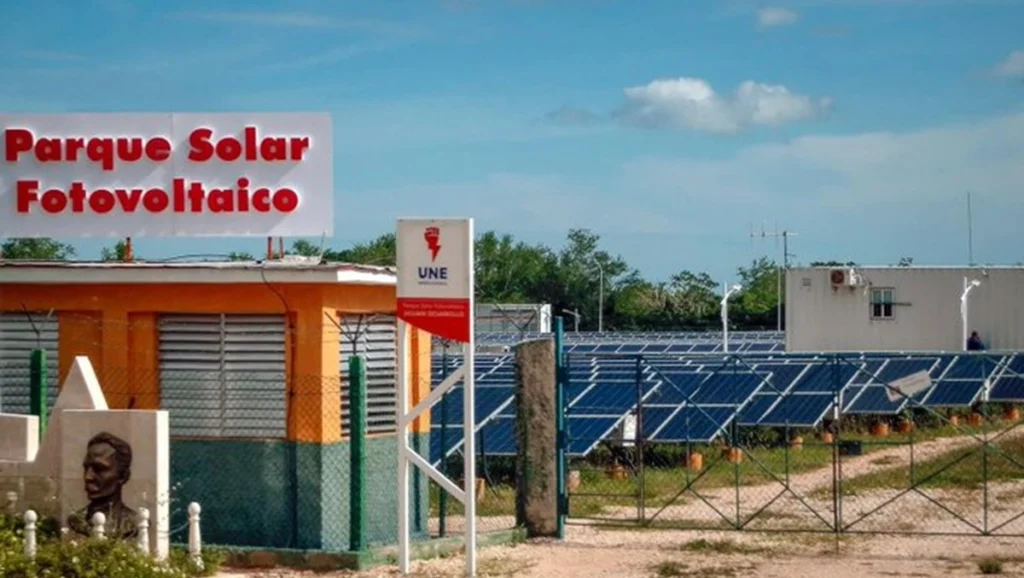
Cuba now has 144 solar parks with a combined installed capacity of 1,418 megawatts, while renewable sources account for 21.4 percent of national electricity generation, he said.

The country also has 44 solar-powered electric vehicle charging stations and 64 public charging stations, he said, adding that all polyclinics, nursing homes, maternity homes and funeral homes have been equipped with renewable energy facilities.

🇨🇺 At the @UN, #Cuba condemned the U.S. blockade and energy siege as tools of economic coercion, hallmarks of a foreign policy that disregards multilateralism.

"We reaffirm our commitment to decolonization and the defense of our sovereignty and right to self-determination". pic.twitter.com/OA20PdV7Zl

— Southern Africa Eye (@eye_southern) October 16, 2026

In January, U.S. President Donald Trump signed an executive order imposing sanctions and tariffs on countries and entities supplying fuel to Cuba, a move Havana has condemned as an “energy blockade.”

Over the past nine months, Cuba has received only one shipment of crude oil from Russia, totaling about 100,000 tonnes, only enough to meet the country’s demand for two weeks.

Cuba is scheduled to submit a resolution to the United Nations General Assembly on Oct. 29 for the 34th time, calling for an end to the U.S. economic, commercial and financial blockade imposed on the island for more than six decades.

According to Cuban government figures, the blockade has caused nearly 179 billion U.S. dollars in economic losses.

teleSUR/ JF

Source: Xinhua

  •  

‘Opening the lid of a horrible secret’: Jamaicans confront enslavement with taboo-busting stories on screen

As violent spirits are unleashed in Sky’s Possession, observers see confident creatives reclaiming the island’s narratives in a form of ‘cultural reparation’

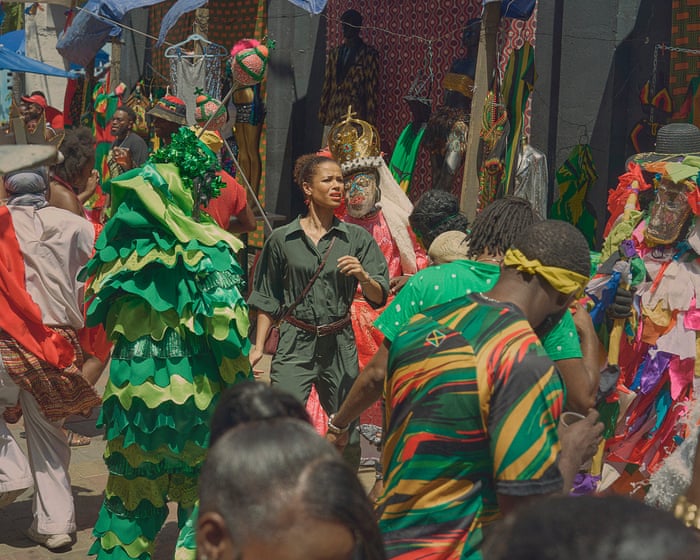
A woman opens a 300‑year‑old box, unleashing a violent spirit – it is the spirit of colonialism and oppression roaring back to life. It is a pivotal scene in Sky’s supernatural series Possession and symbolises a wider shift in Jamaica’s film industry, where directors are increasingly using the landscape to tell Jamaican stories – including those that confront enslavement, trauma and historical memory.

The series is about a biracial British lawyer who travels to Jamaica to investigate a multimillion-pound inheritance dispute, only to uncover a dark, vengeful spirit tied to the plantation’s brutal colonial past.

Continue reading...

© Photograph: Des Willie

© Photograph: Des Willie

© Photograph: Des Willie

  •  

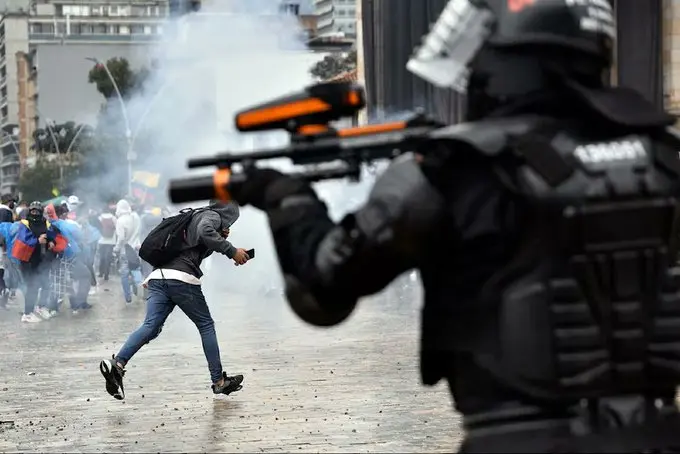
UN Warns Colombia Protest Decree May Widen Police Use of Force

United Nations warning on Colombia’s protest decree and police use of force during demonstrations.

The UN says Colombia’s new rules could let police end dialogue prematurely and use force against demonstrators.


The United Nations warned Thursday that Colombia’s new rules governing protests could give police excessive discretion to use force, potentially putting peaceful demonstrators at risk.

RELATED: Colombia’s First National Strike Against De la Espriella Met With Police Crackdown

Signed Tuesday by President Abelardo de la Espriella, the decree changes police procedures during demonstrations, allowing authorities to act against people committing violent acts without waiting for dialogue with protesters to conclude.

In a statement released Thursday, the UN Human Rights Office in Colombia raised concerns about the criteria for ending negotiations, the decree’s definition of violence and the circumstances under which authorities can intervene in road blockades.

Some provisions are open to broad interpretation, the office warned, potentially allowing authorities to end dialogue and resort to force.

UN questions definition of violence

The decree identifies several grounds for intervention, including carrying or using weapons, holding people against their will, assaulting others and destroying infrastructure. The UN acknowledged that these acts pose different risks to life and physical integrity but said they must be addressed separately.

Action against people committing violent acts should not automatically end dialogue with demonstrators who continue to protest peacefully, the office said.

It also stressed that force, including less-lethal weapons, must be used only as a last resort, after nonviolent means of restraint have been exhausted, in accordance with General Comment No. 37 on the International Covenant on Civil and Political Rights.

Colombian President Abelardo de la Espriella signed Decree 1525, a measure that facilitates police repression by broadening the definition of “violence” during popular protests.

Interior Minister Rodrigo Lara warned that the new regulation will take effect before demonstrations… pic.twitter.com/YYfouyRGyt

— teleSUR English (@telesurenglish) October 14, 2026

The office also criticized the decree’s definition of violence as broader than international standards, noting that it includes threats of aggression and conduct that does not necessarily cause injuries, deaths or serious property damage.

Authorities should distinguish between carrying an object that could be considered a weapon, threatening to use it and actually using it, the UN said. Possession alone does not make someone violent or change the peaceful nature of an assembly.

Road blockades do not automatically justify force

The UN warned that blocking a road does not, by itself, make a demonstration violent. It also called for a review of the decree’s reference to a “serious and imminent disruption,” saying the criterion could be used to justify breaking up peaceful protests.

The duration of a blockade, the importance of the road affected and the resulting economic losses should not, on their own, justify coercive action, the office said.

“Economic impact or disruption to the normal functioning of a productive activity should not, in themselves, constitute justification for the use of force,” it said.

The office acknowledged that some provisions could help protect the right to peaceful protest, particularly those distinguishing peaceful demonstrators from people committing violent acts. However, it insisted that protecting peaceful assemblies must remain the primary objective of any changes to protest regulations.

The UN office said it had consulted the Colombian government on the decree and that some of its proposed amendments were incorporated into the version signed Tuesday.

  •  

Brazil Poll Shows Bolsonaro and Lula in Technical Tie

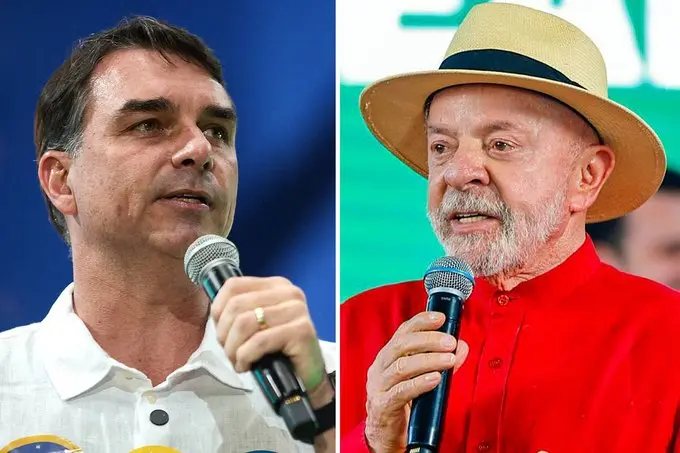
Flávio Bolsonaro and Luiz Inácio Lula da Silva ahead of Brazil’s 2026 presidential runoff election.

Datafolha puts Flávio Bolsonaro at 47% and Lula at 45% ahead of Brazil’s Oct. 25 presidential runoff.


Brazil’s presidential race has tightened ahead of the Oct. 25 runoff, with senator Flávio Bolsonaro losing two percentage points in voting intention to reach 47%, while President Luiz Inácio Lula da Silva stands at 45%, according to a Datafolha poll released Thursday. The two candidates are in a technical tie, with the difference falling within the survey’s margin of error.

RELATED: Brazil: Lula Hails Workweek Reduction as Historic Achievement

Among valid votes, which exclude blank and invalid ballots, Bolsonaro leads Lula by 51% to 49%. The gap has narrowed from the previous week’s poll, when Bolsonaro held a 52%-48% advantage.

A separate poll published Wednesday by research firm Quaest also showed a close race, giving Bolsonaro 46% support and Lula 44%.

DATAFOLHA: 51% x 49%

TÁ VIRANDO!!!

Na semana passada, a diferença era de 4 pontos. Agora caiu para 2. pic.twitter.com/NFIOGEEaCT

— Mídia NINJA (@MidiaNINJA) October 15, 2026

Text Reads: DATAFOLHA: 51% x 49% IT’S TURNING AROUND!!! Last week, the difference was 4 points. Now it’s down to 2.

The Datafolha survey found similar levels of rejection for both candidates. Some 46% of respondents said they would never vote for Bolsonaro, compared with 44% who said the same of Lula.

Views of the current government were also divided: 41% of respondents rated its performance negatively, while 35% viewed it positively.

The poll was conducted after large rallies in support of Lula took place over the weekend. However, the interviews were completed before the survey could capture any potential impact from the Senate’s approval of a proposed constitutional amendment to end the 6×1 work schedule, under which workers work six days and take one day off.

The proportion of respondents opting for blank or invalid ballots rose from 5% to 6%, while the share of undecided voters ranged between 1% and 2%.

Datafolha interviewed 2,520 people aged 16 and older across Brazil from Oct. 13 to 15. The survey has a margin of error of two percentage points and a 95% confidence level. It was registered with Brazil’s Superior Electoral Court under number BR-00466/2026. In the first round, Bolsonaro received 47.03% of the vote, compared with 45.16% for Lula.

  •  

Repression at Argentina’s University March: Over 30 Detained

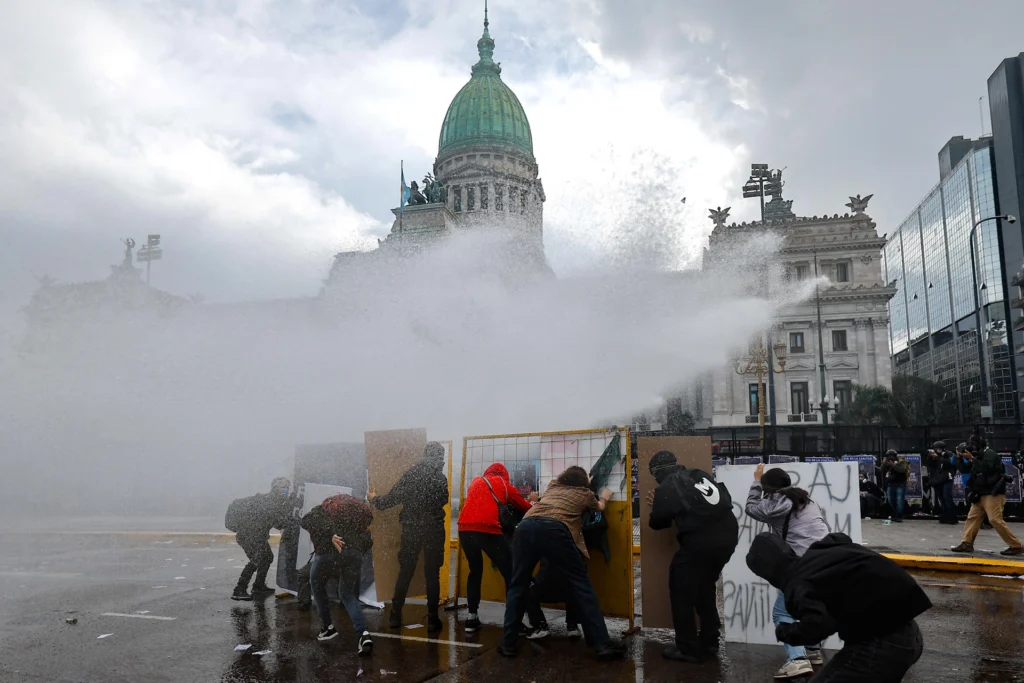
Federal forces repressed the mobilization calling for the application of the University Funding Act. According to witnesses, there were possible infiltrators among the protesters. Photo: EFE.

Federal forces in Argentina fired tear gas and turned water cannons on thousands of peaceful demonstrators in Buenos Aires on Thursday, detaining at least 34 people during the fifth Federal University March.


The march demanded implementation of the University Financing Law and denounced a sustained squeeze on public university budgets.

The demonstrations were replicated in dozens of Argentine cities, with students, teachers and university staff joined by unions, social organizations and environmental groups demanding the full implementation of the University Financing Law.

RELATED: Argentina’s Basic Basket Costs Outpace Inflation as Poverty Line Climbs

Protesters also denounced a sustained budget squeeze on public universities and rejected the ninth consecutive appeal filed by Javier Milei’s administration against court rulings that order the transfer of funds to the country’s higher education institutions.

The funding dispute has dragged on for months. Courts have repeatedly instructed the government to hand over the money set aside under the University Financing Law, and each ruling has been met with a new appeal from the national government. Thursday’s march was the fifth federal mobilization in a campaign that has grown beyond campuses to include unions, social organizations and environmental groups.

Beyond the university budget, the crowd voiced opposition to Decree 70/23 and defended the Land Law. Speakers also called for salary increases, relief measures for indebted families and more resources for public institutions.

Arrests and Attacks on Press

According to local media, the police began repression outside the National Congress in Buenos Aires as a response to an incident of a group of about eight people, who started breaking street furniture and throwing objects against the fence surrounding Parliament. Despite being an isolated incident, the gassing affected those who marched peacefully. Witnesses warned of possible infiltrators.

At least 34 people were arrested and one woman was injured. Cameras captured a gas canister hitting her head. “The gas thing fell on my head, I don’t know how I am, I have to go to the hospital,” the woman, who gave her name as Andrea, told reporters covering the march.

For its part, the Buenos Aires City Police said in an official statement that its own force detained six people: two minors, aged 14 and 17, and four adults, three men and one woman, charged with assault and resistance to authority.

Press workers also was targeted. Photographer Guido Piotrkowski, who was covering the march, captured the moment when a Federal Police officer stepped out from behind the fence, aimed and fired at him. “They came out from behind the fences and started shooting; I was taking photos and they fired at us,” he said. “They hit me in the chest, another colleague in the leg, but they aimed directly. They were rubber pellets.”

According to the reports, another worker from a community media outlet had to be treated at a hospital after being hit by at least seven rubber bullets. Cameras from the C5N channel also recorded a man with his face covered handling a backpack in the middle of the square. When the reporter approached to speak with him, the man reacted violently and struck the cameraman.

The fifth Federal University March ended under a cloud of gas. The political dispute over who unleashed the violence now moves to Congress, where opposition lawmakers are pressing the security minister to account for the operation.

No Quorum in Congress

Meanwhile, the Chamber of Deputies failed in its attempt to debate the rejection of the Decree of Necessity and Urgency 70/23, promoted by the government of Javier Milei to support its program, by failing to reach the necessary quorum at the special session convened by opposing parties. Only 121 legislators attended the legislative day, eight fewer than the 129 required to enable treatment in the compound, with a total of 136 absences.

The opposition call gained momentum following an initial ruling by the Supreme Court of Justice that deregulated the sale of land to foreigners under the Decree 70/23, although a subsequent decision by the court itself temporarily restored the rule, argument that they used allied sectors to avoid attending the session. In parallel, the Government negotiated to include a cap on land sales to foreigners in the Inviolability of Private Property project, which was scheduled for debate on October 21.

  •  

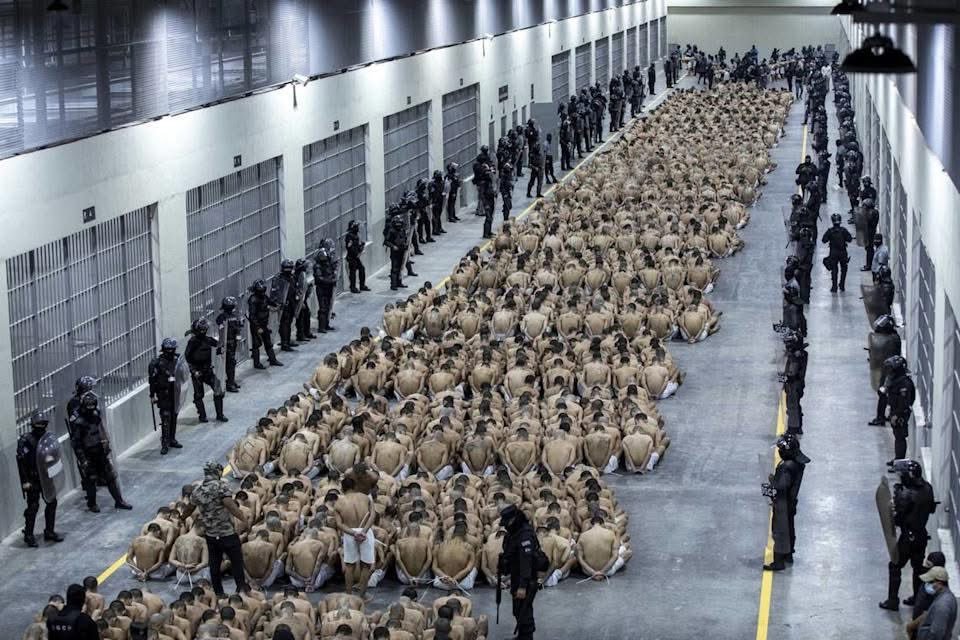
Bukele announces a possible mass release of inmates

El Salvador’s President Nayib Bukele announced on October 13 his intention to release nearly 50% of the prisoners accused of collaborating with gangs in the country. According to the president, the measure would involve early release, albeit conditional.

“We have a plan that would benefit roughly 50% (give or take) of the prisoners in El Salvador who have collaborated with gangs … In other words, early release – meaning they are guilty but are released conditionally. Released under supervision,” Bukele told the press.

In this regard, he said that his government would evaluate the situation of each detainee to keep the country free from the structural violence that has plagued it for decades: “Considering that we come from a country where violence was part of everyday life and gangs were the real government, the real dictatorship. These people lived under that yoke, but it is not the same to be among those who enforced it as it is to simply survive that reality.”

If we take into account the figure provided by the authorities (according to which nearly 100,000 people are currently detained on various charges) this could mean the release of tens of thousands of people.

Domestic criticism of El Salvador’s mass incarceration

Before Bukele took office, El Salvador was in the throes of a severe crisis of insecurity and violence. His administration imposed a perpetual state of emergency that began in 2022 and has led to the imprisonment of thousands of Salvadorans accused of belonging to gangs (or “maras”) that controlled large swaths of the Central American country.

And while the pacification of the streets has been celebrated by a significant portion of the population, the harsh actions of the government and its police and military forces have drawn criticism from various human rights organizations, which have accused the government of excessive use of force, mistreatment of prisoners, and the unjust detention of individuals who do not belong to gangs.

Read more: CECOT: Bukele’s mega prison where “the only way out is in a coffin”

Another criticism has been leveled at the practice of mass trials, which charge and convict a large number of people at the same time. Rights groups say this has led to countless errors in the treatment of individual defendants. Added to this are allegations of arbitrary detentions, crimes against humanity, and disappearances.

International outrage at 252 Venezuelans detained in El Salvador

The prison system implemented by Bukele in El Salvador has also faced international criticism. The Central American country became a focal point of controversy when hundreds of people deported from the United States were detained in the Salvadoran prison system, which drew widespread criticism of the Bukele government.

Bukele, however, had defended the decision and reaffirmed his alliance with the Donald Trump administration and his participation in the Washington-led geopolitical and military initiative known as Shield of the Americas.

Read more: Maduro gov’t negotiates return of 252 Venezuelans detained by US in El Salvador

The news of the possible release of tens of thousands of detainees sparked even more intrigue, considering that Bukele’s announcement came immediately after his conversation with US Secretary of State Marco Rubio, in which they discussed combating “malign foreign influence.” However, it remains unclear how the two issues are linked, according to El País.

  •  

Brazil’s Congress ends 6×1 work schedule

The approval of Constitutional Amendment Proposal (PEC) 221 of 2019 by the Federal Senate establishes the most profound alteration in the organization of the Brazilian work schedule since the promulgation of the 1988 Constitution. The text eliminates the model of six days of work followed by one day of rest and sets a maximum work week of 40 hours with two paid weekly rest days, without salary reduction.

Because it is a constitutional amendment, the text does not depend on the sanction or veto of President Luiz Inácio Lula da Silva (PT). Promulgation is the responsibility of the presiding officers of the Chamber of Deputies and the Senate in a joint session of the National Congress. Once promulgated and published in the Official Gazette of the Union (DOU), the amendment enters into force in a phased manner, with specific adaptation periods for companies, professional categories, and the public sector.

Transition timeline

The transition from the 44-hour work week to the definitive model of 40 hours per week and five working days followed by two days off (5×2 schedule) will occur in two main stages:

First stage (60 days after publication): Two months after the amendment is published, workers become entitled to two paid days off per week, preferably on Sundays. At the same time, the weekly working hours limit is reduced from 44 to 42 hours.

Second stage (14 months after publication): after 12 months from the implementation of the first stage, totaling 14 months from the official publication, the maximum weekly workload is definitively reduced to 40 hours, with a limit of eight hours per day.

During the 12-month period in which the 42-hour weekly limit will be in effect, employers must distribute the two extra hours across the weekdays. If distributed evenly across the five working days, the daily work schedule becomes 8 hours and 24 minutes.

Collective labor agreements and conventions may authorize daily work schedules exceeding eight hours during this transitional period to accommodate the 42-hour schedule, provided that the two weekly days off are strictly maintained.

Once the 14-month transition period is complete, any activity exceeding eight hours per day or 40 hours per week will require the payment of overtime or compensation through a time bank, mechanisms that remain permitted under labor law.

Special schedules and shifts

The new constitutional guidelines do not impose a single work schedule format for the entire market and safeguard the operation of continuous activities and essential services. Uninterrupted services, such as hospitals and health units, public safety, public transportation, urban cleaning, and surveillance, may adopt specific models for organizing and compensating working hours through collective bargaining agreements or conventions.

In these areas, the traditional 12-hour work shift followed by 36 hours of rest (12×36 shift) is not automatically eliminated by the PEC, but will need to be adapted at the negotiating table between employers’ and workers’ unions.

The reorganization of shifts must take into account the reduction of the weekly workload and the minimum rest and meal periods stipulated in the Constitution. The text also refers to future specific laws for the complementary regulation of conditions for categories with their own operational characteristics.

In the case of workers subjected to prolonged confinement, such as on offshore oil platforms, amendments proposing prior exceptions in the constitutional text were rejected by rapporteur Omar Aziz. The parliamentarian pointed out that the work regime for offshore oil workers should be subject to subsequent legal regulation.

Compensation and average monthly days off

The proposed amendment allows companies and unions to establish, exceptionally and through collective agreement or convention, work schedule compensation regimes with shifts different from the 5×2 format, including enabling the eventual continuation of the 6×1 shift schedule.

For this flexibility to be valid before the Labor Court, the proposal requires compliance with two mandatory criteria: the worked days off must be fully compensated within the same calendar month; and the worker is entitled to at least one day of rest within a maximum period of one week of service, and must reach, at the end of the month, an average of two paid days off per week.

The three express exceptions

The text approved by Congress establishes differentiated rules and specific conditions for three groups of workers and economic sectors:

Outsourced public administration workers: To safeguard the continuity of essential public services and preserve the economic and financial balance of administrative contracts, outsourced companies providing services to the State will have up to 12 months after the enactment to adjust their work schedules, instead of the general 60-day period. Contracts amended after 60 days from the publication must already comply with the new schedule. If the public authority and the service providers do not formalize an addendum within one year, the reduction in working hours for outsourced workers will automatically take effect, without a reduction in salary.

Professionals with a university degree and salaries starting at R$ 21,100: the so-called “highly qualified workers,” who are employees with a university degree and a monthly salary equal to or greater than 2.5 times the ceiling of Social Security benefits (currently R$ 21,188.87), are exempt from general daily working hour limits and timekeeping. These professionals can negotiate their schedules directly with the company, but retain the constitutional right to two days of paid weekly rest. This exception does not apply to public employees.

Brazilian labor law already provides for situations where there is no traditional control of working hours, such as in the case of employees who hold positions of trust or who work outside the company in activities where it is not possible to control their hours.

Individual micro-entrepreneurs and small businesses: the proposed constitutional amendment (PEC) stipulates that a subsequent complementary law will create transitional measures for mitigation and fiscal or credit support for individual micro-entrepreneurs, micro-enterprises, and small businesses. The granting of these benefits will be expressly conditional upon maintaining jobs and employment levels in these establishments.

Current contracts and old agreements

The application of the new work schedule to existing employment contracts is direct and immediate, requiring no formal re-hiring or termination of employment. The Constitution guarantees the principle of non-reduction of wages, prohibiting any nominal cut or proportional reduction in employee salaries or in the minimum wages of professional categories.

For workers who already work 40 hours a week or less, the amendment does not create a further reduction in weekly working hours. However, these employees will now have a guaranteed right to two paid days of weekly rest.

In the labor union sphere, clauses in previously agreed collective bargaining agreements and conventions that address working hours or weekly rest periods and are incompatible with the new constitutional parameters will lose all legal validity 60 days after the amendment is published.

Impact on the labor market

The shift to a new work schedule affects tens of millions of workers in operational, customer service, and ongoing production roles across the country.

A technical survey prepared by the Inter-Union Department of Statistics and Socioeconomic Studies (Dieese), based on the Continuous National Household Sample Survey (PNAD) of the Brazilian Institute of Geography and Statistics (IBGE), indicates that the measure will directly benefit 26.8 million workers.

The contingent consists of 22 million employees with formal contracts in the formal sector (equivalent to 54% of the country’s formal workers) and approximately 4.8 million informal workers who register weekly work schedules exceeding 40 hours.

Data from the Ministry of Labor and Employment (MTE) indicates that 14.8 million formal workers were directly subject to the 6×1 work schedule in 2025, while another 29.7 million were already working on the 5×2 schedule.

The scope of the change is also reflected in the profile of contracted work schedules in Brazil. Studies by the National Confederation of Commerce of Goods, Services and Tourism (CNC), structured from the Annual Social Information Report (Rais), reveal that 35.7 million workers under the CLT (Consolidation of Labor Laws), about 62% of the formal Brazilian workforce, currently work schedules ranging between 40 and 44 hours per week.

  •  
❌