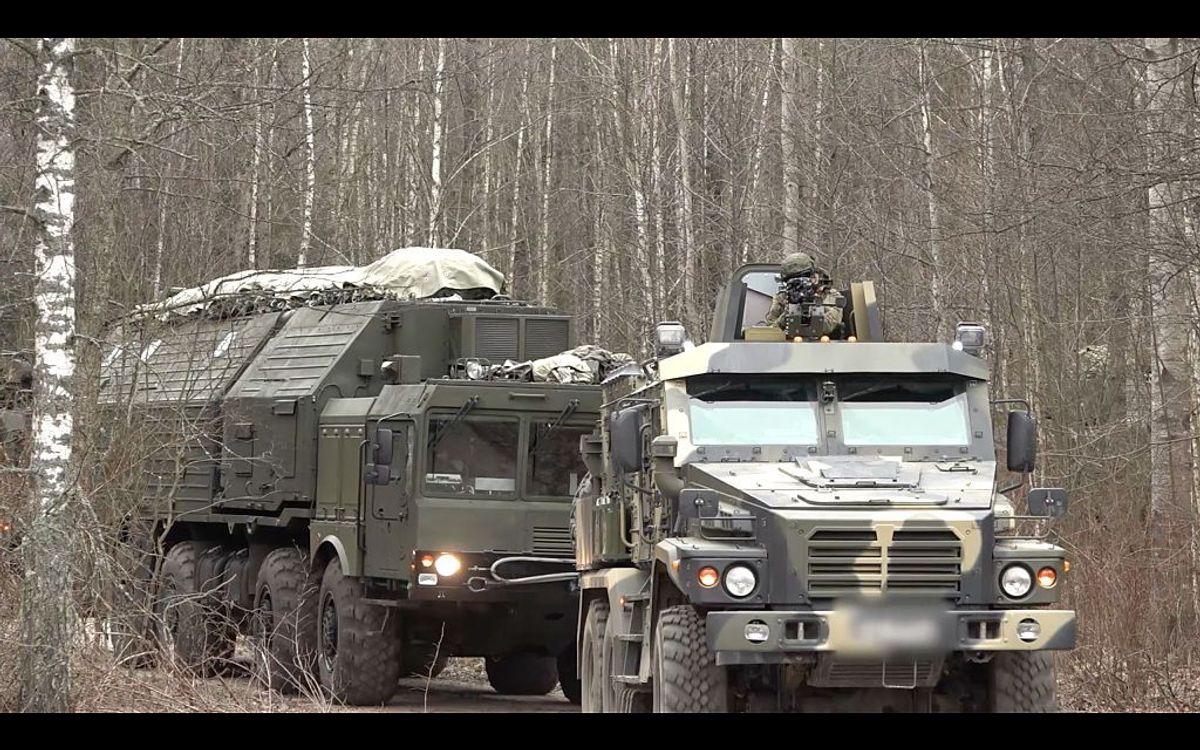
Zelensky warns Russia may expand missile threats from Belarus against western Ukraine


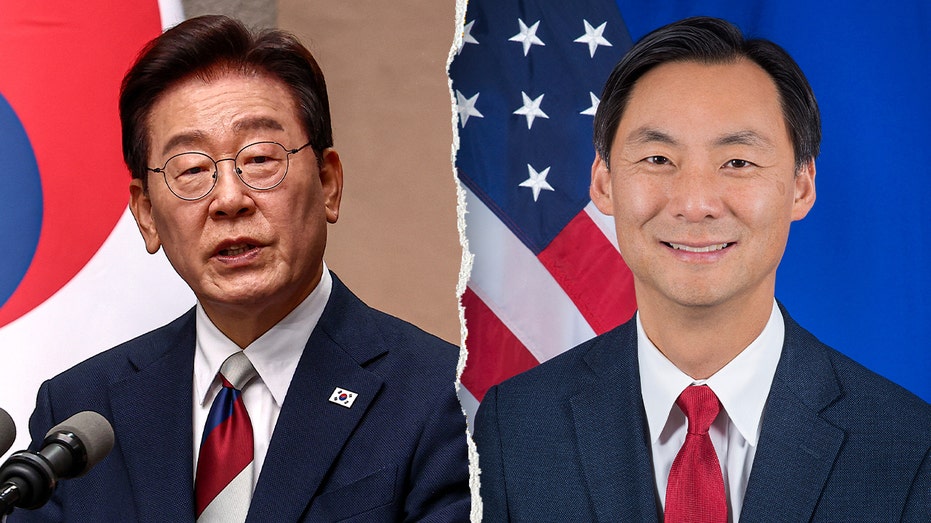
A former U.S. diplomat appeared in court in South Korea Friday facing charges of defamation against President Lee Jae Myung for comments made on American soil in a case that has left him stranded in the Asian country.
Morse Tan's troubles began after he delivered a talk in June 2025 at the National Press Club in Washington, D.C., and responded to a question where he brought up the South Korean leader's alleged involvement in a crime as an adolescent.
Since visiting the country in May, Tan has not been allowed to leave due to the case against him, having been charged under the Act on Promotion of Information and Communications Network Utilization and Information Protection, etc., and the Criminal Act.
Tan issued his remarks about Lee’s alleged juvenile crimes at a National Press Club event titled: "Report on Election Fraud in the June 3 South Korean Presidential election." In response to a question about President Lee and other issues, Tan responded by citing allegations from a few years back that Lee was involved in a gang rape and murder when he was a teenager. He added that Lee, now 62, was sent to a juvenile detention center and did not complete junior high and high school.
SOUTH KOREAN PRESIDENT JUMPS TO INVEST IN MILITARY AFTER TRUMP CUTS JOINT EXERCISES
South Korean prosecutors say the criminal allegations against Lee are unsubstantiated, according to the Korea JoongAng Daily. The outlet wrote that they said Lee had not "been prevented from attending middle or high school due to such a criminal record."
Another South Korean news outlet, KBS World reported that "the prosecution previously verified that there was no record of Lee’s being incarcerated at a juvenile detention center and concluded that the rumors about his incarceration were false."
Asia Business Daily reported that Tan's attorney said that "Even if jurisdiction is recognized, the statements did not present false information, and Tan was not aware that they were false," adding, "He had no intention to defame."
Tan told Fox News Digital on Friday that he "pleaded not guilty because I believe that Lee Jae Myung is guilty" during his hearing at the Seoul Central District Court.
Tan, who has taught constitutional law and served as the dean of Liberty University’s law school, told Fox News Digital his "protected speech is about as protected as it gets." He said South Korea’s prosecutor invoked "criminal defamation, a dubious category which does not exist in the U.S.," to prosecute him.
A spokesperson for the South Korean Embassy in Washington, D.C. told Fox News Digital, "This case is being handled in accordance with the relevant laws and regulations, established principles and due process in the Republic of Korea and the restriction on departure is also imposed and reviewed accordingly."
Tan says he is disappointed that the U.S. Ambassador to South Korea, Michelle Steel, a former Republican congresswoman from California, has not publicly commented on Tan’s legal case — both Steel and Tan are Korean-Americans.
A U.S. State Department spokesperson declined to comment on the specifics of the case.
"The Trump Administration has no higher priority than the safety and security of Americans," the spokesperson told Fox News Digital. "Due to privacy and other considerations, we have nothing further to share at this time."
Tan said the case against him violated his due process rights, and the South Korean judicial system lacks jurisdiction to bring the case. He added that the second charge against him involves his July 2025 talk in South Korea, where he "raised some issues as questions" involving the president. "This is political lawfare. This is a persecution, not a prosecution," he said.
TRUMP SHOULD PRESS XI ON CHINA’S PERSECUTION OF BELIEVERS AT HOME AND ABROAD
Tan believes the motivation for seeking to criminalize his free speech stems from the South Korean government’s view of him as a "threat" and an outspoken critic of Lee’s alleged appeasement policy toward the North Korean communist regime.
"People consider me to be leading a movement against the communizing of South Korea," Tan said.
Tan accused the present government of being aligned with North Korean and Chinese communist regimes "against the U.S. and the Korean people."
Tan points to bias against him by South Korean authorities, who he says prohibited him from attending the funeral of his grandmother, while it allows South Korean prisoners to attend funerals for family members.
KBS World reported that the "Police, who had initially decided not to hand over Tan’s case to the prosecution, launched a reinvestigation at the prosecution’s request."
CLICK HERE TO DOWNLOAD THE FOX NEWS APP
National Review Online also reported that the Seoul Metropolitan Police Agency Cyber dismissed a complaint about Tan’s alleged defamatory statements in April 2026, declaring "no right to prosecute."
According to South Korean law, Tan could face a prison term if found guilty.

President Donald Trump has suspended the implementation of sweeping American sanctions against Russia, using presidential waiver powers to prevent penalties approved by Congress from taking effect just weeks after he signed them into law.
The executive order issued by the White House on Friday, 16 October, suspends tariffs of up to 500 per cent on Russian imports, alongside penalties targeting major purchasers of Russian oil and gas. It also waives numerous financial and commercial restrictions intended to reduce Moscow’s ability to finance its war against Ukraine.
The decision comes two days before the 18 October deadline for implementing key provisions of the Lindsey O. Graham Sanctioning Russia and Iran Act of 2026, which Trump signed on 18 September. The legislation was named after the late Republican senator Lindsey Graham, who had championed tougher economic measures against Russia.
The presidential order formally establishes the tariff increases required by the legislation while simultaneously suspending their application.
Under the law, Russian imports into the United States would face additional duties of 500 per cent. A separate provision would impose 100 per cent tariffs on goods imported from the five largest purchasers of Russian crude oil and natural gas if those countries knowingly made new purchases from 18 October, subject to specified conditions and exemptions.
Another provision targets countries identified as leading facilitators of Russian oil sanctions evasion, potentially exposing their exports to similar American penalties.
Trump invoked Section 115 of the legislation, which permits the president to waive sanctions and tariffs after certifying to Congress that doing so serves the national interests of the United States.
The order confirms that the certification and an accompanying explanatory report have been submitted to Congress. However, the publicly released document provides no detailed justification for suspending the measures.
The waivers will remain in effect until the president or designated senior officials decide that further action is appropriate. Existing sanctions imposed under earlier executive orders are explicitly preserved, meaning the decision does not remove all American restrictions against Russia.
Nevertheless, the order prevents the new legislation’s principal economic penalties from operating at a time when Congress had sought to intensify pressure on Moscow.
The suspension follows Trump’s agreement with Putin to facilitate renewed Russian diesel exports, announced on 9 October as part of an effort to reduce international fuel prices.
As EU Today previously reported, the agreement envisages an immediate release of more than 300,000 tonnes of Russian diesel, followed by additional shipments in November and subsequent months. Washington also authorised certain transactions involving Russian diesel until April 2027.
The arrangement has raised questions about the relationship between the administration’s energy policy and sanctions intended to constrain Russia’s war economy.
Diesel prices have become an increasingly important domestic political issue ahead of the American congressional elections on 3 November. The war involving Iran and disruptions to international energy supplies have contributed to exceptionally high fuel costs, creating additional pressure on the administration.
The White House hopes additional Russian supplies will relieve pressure on international markets. However, energy analysts have questioned whether the quantities involved will materially affect American prices, particularly before the elections.
The latest waiver also removes the immediate threat of punitive tariffs against major Russian energy customers, including China and India, which had objected to the proposed measures.
The decision is likely to intensify opposition within Congress, where the sanctions legislation attracted substantial bipartisan support.
Earlier this week, 12 senators, including six Republicans, called on Trump to reverse his diesel agreement, arguing that allowing Russian fuel back onto international markets would provide Moscow with additional revenue for its military operations.
Democratic Senator Richard Blumenthal, who helped develop the sanctions legislation, criticised the diesel arrangement as contrary to Congress’s intention to strengthen economic pressure on Russia.
The decision also exposes a widening divergence between Washington and Brussels.
At the European Council meeting on Friday, European Commission President Ursula von der Leyen and European Council President António Costa reaffirmed that EU sanctions against Russia would remain in place until Moscow ended its war against Ukraine.
Costa declared that the present circumstances required increased pressure on Moscow rather than a relaxation of existing restrictions. The European Union is also preparing a 22nd sanctions package while considering additional financial support for Kyiv.
For Ukraine, the decision means that Russia will continue to benefit from energy exports and the international trade that helps finance its war. Instead of tightening restrictions on these revenues, Washington has suspended measures specifically intended to cut them.
The timing is particularly significant. While Trump is pressing Kyiv to halt attacks on Russian oil refineries and other energy facilities, Moscow continues its strikes against Ukrainian cities and civilian infrastructure. Zelenskyy has argued that Ukraine cannot be expected to stop targeting Russia’s energy sector while Russian attacks on Ukrainian infrastructure continue.
Although Trump can reinstate the sanctions, his decision removes the immediate threat of additional penalties against Russia and its principal energy customers. It also places Washington increasingly at odds with its European allies. Brussels remains committed to maintaining and expanding sanctions against Moscow, while the White House is now giving priority to reducing American fuel prices, even if that means easing economic pressure on Russia.
Whether it was youngsters proving their skills or state sabotage, Europe’s most hacked country was left with a mountain of waste after food began cooking in freezers
Shortly before midnight last Sunday, the digital thermostats controlling hundreds of supermarket cold aisles across France began to flicker and rise.
In a “bizarre and unprecedented” cyber-attack, hackers had remotely overridden the temperature settings on thousands of freezers, fridges and chiller cabinets pushing them from as low as -27C (-16.6F) to well over 50C (122F).
Continue reading...
© Photograph: Lucien Libert/Reuters

© Photograph: Lucien Libert/Reuters

© Photograph: Lucien Libert/Reuters
Il centrosinistra diviso sull’Ucraina, il futuro della difesa comune e il nuovo peso dell’Asia: intervista a Beppe Vacca sugli equilibri che cambiano.
Un efficace antidoto alla superficialità che ammorba i talkshow mediatici frequentati da improponibili analisti, improvvisati geopolitici, battutisti in servizio permanente effettivo, che pontificano, sproloquiano su cose maledettamente serie, come lo è la guerra. Alle lettrici e ai lettori di Rinascita l’”antidoto” di serie lo offre Giuseppe Vacca. Professore emerito di Storia delle dottrine politiche all’Università di Bari, già direttore dell’Istituto Gramsci, Vacca è stato più volte parlamentare del Pci. Della sua enorme produzione saggistica, ricordiamo il suo ultimo libro: Vita e pensiero di Palmiro Togliatti (Einaudi).
Professor Vacca, una visione condivisa della politica estera dovrebbe essere a fondamento di una coalizione che si candida al governo dell’Italia. Invece, nel centrosinistra domina il rovello armi sì armi no all’Ucraina. Lei come la vede?
La politica estera è discriminante per qualunque attore di una campagna elettorale, in particolare in Italia visto che in campagna elettorale ci siamo già entrati di fatto con la sconfitta referendaria del progetto di Meloni sulla giustizia ed è peraltro difficile prevedere che la legislatura arrivi a scadenza ordinaria, anche per le turbolenze del contesto internazionale.
In questa prospettiva, il problema principale a me pare che consista nella differente postura in politica estera tra il Pd e il Movimento5stelle.
La postura del Pd dipende molto dal problema della sicurezza europea e dall’altro tema connesso che è quello della difesa. Qui c’è innanzitutto un problema di come la s’imposta.
Vale a dire?
Armi sì o armi no all’Ucraina non è un problema autonomo bensì una derivata di come s’imposta la visione di una possibile ripresa del progetto di unificazione europea e quindi del carattere europeo della costruzione di una effettiva difesa comune.
La difesa dipende dalla percezione del nemico. Da un lato si ripete che noi, noi Europa, non siamo in guerra con la Russia, dall’altro si ventila una minaccia della Federazione Russa principalmente sull’Europa. E su questo si legittima l’aumento del 14% della spesa militare europea nel 2025, raggiungendo il maggiore incremento dalla fine della Guerra fredda.
Ora, rispetto alla ripresa e al compimento del processo europeo, fermatisi non per caso alla moneta e alla Bce, lasciando invece sospesi i problemi della politica estera e di difesa comuni, il primo problema da discutere è in che relazione l’Europa sta con la Russia, dal punto di vista geopolitico.
Se questo è il nodo di fondo da sciogliere, su che basi andrebbe impostata a suo avviso una discussione rigorosa e non propagandistica?
Dal punto di vista geopolitico, non c’è dubbio alcuno che la Russia è parte dell’Europa. Parte non vuol dire che ci possa essere una confederazione, ma possiamo stare ancora all’ultima definizione della Nato, seguita all’invasione russa dell’Ucraina, per cui l’Alleanza atlantica non è più una un’alleanza genericamente difensiva, ma è un’alleanza difensiva contro un nemico indicato con nome e cognome, cioè la Federazione Russa.
Come è possibile pensare un’Europa potenza civile, secondo la missione originaria, che misura e definisca i suoi organi e le sue missioni in base all’individuazione di un nemico. Questo porta necessariamente ad un approccio iper-militarista che moltiplica i conflitti.
Tornando sulle vicende interne, la prima questione è come si possa trovare una quadra nella politica estera tra il Pd che è attestato, a partire dall’Ucraina, sull’idea che la Russia è il pericolo, e i M5s che propone una politica di dialogo, o che comunque abbia come questione fondamentale la fine della guerra e la costruzione della pace attraverso un rapporto, un dialogo che riguardi ambedue i belligeranti, quindi anche Mosca.
Da questo punto di vista c’è un problema, al momento irrisolto, di unità dei principali partner della coalizione di centrosinistra nella visione della politica estera.
E questa unità si può o si deve raggiungere impostando il problema della sicurezza, io credo, in maniera dialogica e non pregiudizialmente antagonistica con la Russia.
Detto in altri termini: qual è il problema della sicurezza così come è percepito da parte dei russi? Perché anche loro hanno un problema di definizione, di percezione dei rischi della sicurezza. Da ciò discendono questioni strategiche che investono il futuro stesso dell’Europa.
A cosa si riferisce, professor Vacca?
A un’Europa che nella costruzione di una politica estera comune e di una politica di difesa comune, una volta che non c’è più la delega agli Stati Uniti come potenza egemone della Nato garante della sicurezza europea, garantisca la propria sicurezza commisurando la percezione del rischio al modo in cui quella percezione del rischio e il problema della sicurezza si propongono per l’altra parte. Altrimenti l’effetto dell’apparente uscita degli stati Uniti da questa partita è solo quello di ereditare la russofobia di sempre nella politica americana, da parte dell’Europa, in quanto tale, ovvero di concepire una difesa comune europea, da cui anche l’innalzamento al 5% del Pil delle spese militari, come una sostituzione nella funzione di antimurale militare della Russia come nemico. Ma questo non corrisponde alla realtà e non risolve il problema che comunque, nel momento in cui si sviluppa una divergenza strategica all’interno dell’Occidente, a fronte alla crisi da parte degli Stati Uniti di una egemonia globale, che con la presidenza Trump si acuisce ma che non nasce con l’ingresso del tycoon alla Casa Bianca, non si risponde al presupposto geostrategico fondamentale, cioè quello di capire in che rapporto non bellico impostare la sicurezza europea e la sicurezza russa.
Non ci può essere altra via di uscita, se non quella di affrontare e provare a risolvere il problema della difesa in termini di reciprocità, attraverso un dialogo con la Russia che abbia chiaro questo obiettivo.
Un tema di enorme rilevanza strategica, direi epocale, che va oltre la dimensione geopolitica e aggredisce altre questioni cruciali…
Quali?
Come si stabiliscono i confini dell’Europa? E come se ne ridefinisce la visione? Chi si deve preoccupare del rapporto geopolitico tra l’Europa e la Russia. Problemi che non si possono affrontare unilateralisticamente e solo con una riduzione del problema della sicurezza a problema di competitività dal punto di vista militare-tecnologico.
Questo, secondo me, è anche il modo di trovare un punto di unità all’interno del centrosinistra tra la posizione del Pd e quella dei 5stelle.
Non è questione se continuare o no a dare sostegno militare all’Ucraina. Il problema della difesa degli interessi dell’Ucraina come parte dell’Europa, che può trovare un precedente valido se si struttura la novità intervenuta dalla volontaria adesione all’Unione Europea del Canada, il che significherebbe l’istituzionalizzazione di una fisionomia più articolata di rapporto geostrategico dell’Europa.
Una dinamica che può valere, come si sa, anche per l’Ucraina e tra l’altro in considerazione del fatto che Putin non ha detto no all’associazione dell’Ucraina alle istituzioni economiche dell’Europa.
Quali ricadute questo complesso ragionamento potrebbe o dovrebbe avere nel dibattito aperto nel centrosinistra?
Aldilà del momento elettorale, c’è il problema di come si esercita il governo nell’eventualità di una vittoria alle elezioni, per cinque anni. Qui la politica estera continua ad essere discriminante. È un vincolo naturale di qualunque politica di governo, che vive di un costante rapporto tra politica interna e politica internazionale.
Come si esercita per una legislatura questo ruolo? Diventando un pezzo di uno schieramento europeo dominato da una russofobia?
Non posso non considerare che una parte significativa dei sostenitori della risposta militare alla invasione dell’Ucraina da parte della Russia è stata quella di ritenere che così si creava uno schieramento talmente forte tra Stati Uniti, con Biden prima e poi con Trump, ed Europa da riaprire e attualizzare la prospettiva non solo della sconfitta ma dello smembramento della Russia.
Una russofobia che ha attraversato la storia dell’Occidente, e in esso dell’Europa, fino ad essere parte del sostegno e dell’affermazione di Hitler in Germania. Perché Hitler e il nazismo non nascono solo in maniera endogena, ma nascono anche dal fatto che la politica di sostegno inglese e americana mirava a fare dell’anticomunismo hitleriano e tedesco una leva per scaricare questa potenza della Germania nazista solo sulla Russia piuttosto che su tutto l’Occidente e il mondo democratico.
Tornando all’oggi, due restano gli interrogativi di fondo: la Russia è non è parte dell’Europa geopoliticamente? E siccome è innegabile che sia parte dell’Europa, non significa questo debba riguardare l’architettura della UE così com’è; significa che nel fare quegli ulteriori passi che non erano stati mossi dal periodo di Maastricht ad oggi, l’Unione Europea, tenendo fermo e ben piantato il vessillo della potenza civile, ed anzi attrezzandosi meglio per poterlo rafforzare, definisca dialogicamente con la Russia la reciprocità degli interessi, nella percezione del rischio e quindi nella co-definizione della sicurezza.
Mi lasci aggiungere che questo comporta di conseguenza una ricaduta sul problema israeliano profondamente diversa da quella mainstream.
In che senso, professor Vacca?
Netanyahu come lo si definisce? Netanyahu è uno dei capi, degli strateghi, della politica internazionale dei neoconservatori a livello globale. Nel momento in cui in Israele le vecchie forze socialdemocratiche sono state sconfitte e sono andate al potere le destre, beh, questo mica è avvenuto senza il sostegno degli americani, e non solo di essi.
La strategia di Netanyahu, se la si analizza con freddezza, io la leggo così: perché la Grande Israele? Solo perché in base alla mitologia biblica, Dio deve avere tutta quell’aerea per il suo insediamento? Il problema mi pare molto prosaicamente diverso, cioè Netanyahu è il leader di una militarizzazione, di un consolidamento territoriale ampliato dello Stato d’Israele in vista di una situazione geopolitica mondiale che cambia e cambierà ancor più nel momento in cui Israele non potrà far leva per la sua sicurezza solo sulla potenza americana, che tra l’altro è molto distante anche dal punto di vista geopolitico. Dovrà trovare il modo di garantire la propria sicurezza attraverso accordi con le potenze che guidano il processo mondiale di emersione dell’Asia, cioè con l’asse russo-cinese. E ormai ci siamo vicini, al fatto che questo tema entri nell’agenda geopolitica dei BRICS; un’agenda che muove dalla emersione della centralità dell’Asia come nuovo epicentro del mondo, sotto la duplice guida, che io considero talmente fondata da rendere indistinguibile l’individuazione dei soggetti Russia e Cina, definendosi, da questo punto di vista, come un soggetto unico che agisce in maniera articolata per costruire quello che sta già realizzando, vale a dire la leadership di tutta una rete che si va vieppiù strutturando dall’Iran al Sud globale, in alternativa al mondo che abbiamo conosciuto, tarato sull’asse Est/Ovest e non aveva risposte emancipative per il Sud globale a cui invece pensano la Cina e in parte la Russia, ormai strettamente collegate, soggetto unitario di questo processo globale enorme che ha attraversato l’intera storia del ‘900 e che oggi è il vero punto di svolta e di rottura con la vecchia egemonia del mondo transatlantico.
Articolo originale: rivistarinascita.it

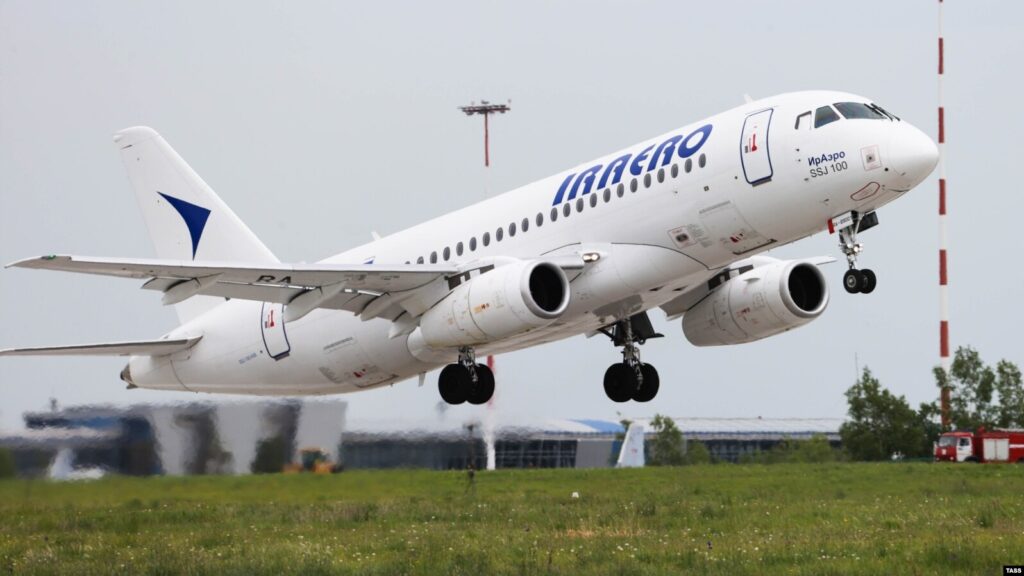
Temporary restrictions on aircraft arrivals and departures were imposed at 27 Russian airports, Deutsche Welle reported on 16 October, citing its own calculations based on reports from Russia’s Federal Air Transport Agency.
Ukrainian President Volodymyr Zelenskyy warned airlines on 1 September that “Russian airspace is becoming completely unsafe.” Overnight, most of the airspace over European Russia was closed.
By morning, more than 200 flights had been canceled or delayed at Moscow airports, Deutsche Welle reported, citing figures compiled by a Russian Telegram channel.
— Breaking News (@breakingUAnews) October 16, 2026
Тим часом у російських аеропортах – справжній апокаліпсис через нальоти дронів останніми днями.
Про це ниють росЗМІ. Було відмінено десятки рейсів, у терміналах – дуже багато людей. Пасажири скаржаться на задуху, дикі черги до туалетів та повну невідомість. pic.twitter.com/ZlXxY5c2mq
The list included airports in the capital. All four Moscow airports temporarily suspended arrivals and departures, the Russian outlet Astra reported on 16 October. Russian authorities said they had shot down dozens of drones, while flights were delayed and diverted to alternate airfields, according to the report.
The temporary airport shutdowns were likely a consequence of a massive drone attack on Russia. From 8:00 p.m. on 15 October to 8:00 a.m. on 16 October, Russian air defenses allegedly intercepted and destroyed 644 Ukrainian unmanned aerial vehicles across 26 Russian regions, occupied Crimea, and the Black Sea, according to Russia’s Defense Ministry.
According to the list of regions published by the Russian Defense Ministry, the drone attacks covered a vast area of Russia, from regions bordering Ukraine to the Moscow region, the Volga region, the country’s northwest and southern regions, as well as occupied Crimea and the Black Sea.
Russian air defenses shot down a total of 94 drones approaching Moscow over the evening of 15 October and overnight, according to calculations by the Russian outlet RBC Radio, citing statements by Moscow Mayor Sergey Sobyanin.
In the Kaluga region, air defenses destroyed 27 drones over the evening and night, the regional governor reported. At 9:27 a.m., he updated the figures, saying another 48 UAVs had been shot down overnight, bringing the total to 75. According to preliminary information, there were no casualties or infrastructure damage.
In the Tula region, air defenses allegedly destroyed a total of 32 Ukrainian drones. There were no casualties, according to regional Governor Dmitry Milyaev in his Telegram channel.
In the Vladimir region in western Russia, authorities repelled drone attacks overnight. In the city of Vladimir, a drone attempted to attack a heating infrastructure facility, but the attack was stopped, Vladimir Region Governor Alexander Avdeyev reported. Minor damage was reported, but there was no information about casualties.
Ukraine has not yet commented on its involvement in the attacks.
Passengers on flight SU6312 from Kaliningrad to Moscow were unable to land in Moscow because of airspace closure, so the aircraft was diverted to Nizhny Novgorod, Terravia reported. After landing, passengers remained on board for about two hours before being allowed to disembark at 3:30 a.m. Instead of continuing their journey to Moscow by air, they were supposed to be transported by bus, with the trip expected to take about seven hours, the outlet reported.

Passengers were not provided with food or drinks, and one woman could not find a seat on the bus, so she purchased a ticket for an early-morning train herself.
Since the beginning of the year, all four Moscow airports have been completely shut down simultaneously at least 19 times, the Russian outlet Agentstvo reported. During the first 14 days of October, the restrictions lasted 101 hours and 38 minutes, compared with 46 hours and 33 minutes in September, according to the report.
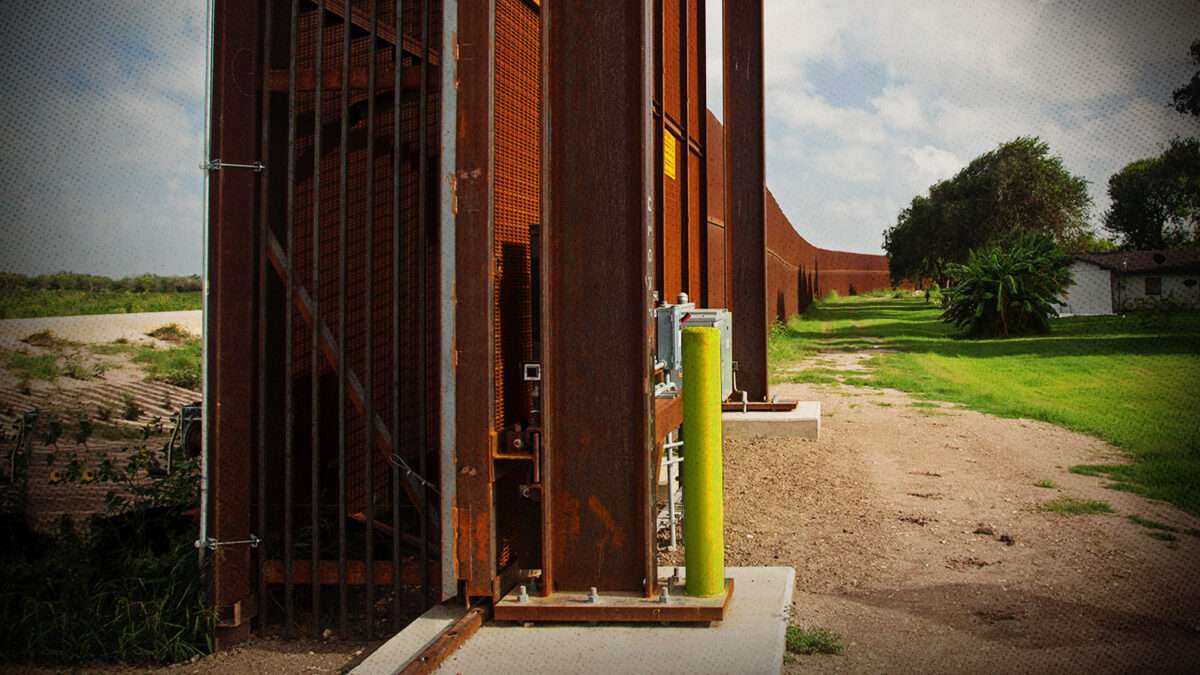
The Trump administration's attempts to fast-track construction of the president's long-promised border wall through Texas' remote Big Bend region have ground to a halt amid fierce opposition, protests, and legal challenges from landowners and conservation groups.
A federal judge on Wednesday released an opinion explaining her decision to issue a preliminary injunction blocking border wall construction through the Big Bend area. U.S. District Judge Kathleen Cardone found that the plaintiffs, which included the Center for Biological Diversity and several longtime residents of the region, had shown a substantial threat of irreparable harm if the construction project is allowed to continue.
The Trump administration wants to spend $7.5 billion building additional security infrastructure along a 500-mile stretch of the U.S.-Mexico border running through the Big Bend region, which includes Big Bend National Park. The federal government began sending threatening letters to property owners announcing its intent to acquire necessary pieces of their land this summer, and it waived several environmental regulations, allowing it to put bulldozers on the ground inside the national park by September.
However, numerous groups and local landowners say the border wall project will alter their way of life and permanently scar one of the most rugged and pristine landscapes in the country. The project attracted bipartisan criticism and protests.
Cardone also found that the plaintiffs were likely to succeed on their claims that Department of Homeland Security (DHS) Secretary Markwayne Mullin exceeded his authority when he issued environmental waivers for the project.
The injunction is a temporary reprieve for property owners such as David Keller, an archaeologist and part-time river guide on the Rio Grande River. The original plans for the border wall expansion would have cut through Keller's 10-acre property near Redford, Texas, putting a 30-foot-tall wall on the levee that sits between the river and the rest of his land.
Keller says the Trump administration gravely underestimated how much anger its tactics and attitude would generate.
"It's a level of arrogance—they're just used to being able to bulldoze over people," David Keller says. "They were moving forward as if they weren't expecting any resistance, but boy, they're due for a wakeup call. And they're having it right now."
Keller is a plaintiff in a separate lawsuit against the DHS by Conserve Big Bend, a coalition of landowners, conservationists, river tour guides, researchers, and other affected parties.
Keller says he's loved wild, open country since he was a child, and as soon as he saw the region in the 1990s, he decided he would find a way to live and work there, which he's done for the past 25 years. "It's visually magnificent," Keller says. "It's incredible. It's like no other place I'd ever seen. It's one of the last unspoiled places remaining in the lower 48."
Keller says it's where he plans on being buried, too, although these days he's unsure whether to say "plans" or "planned." The proposed border construction is an existential threat to the life he's built, he says, and if the wall goes up, he'd likely move.
"I didn't come down here to live in a cage," Keller says.
The proposed border wall would not only block access to the river for farmers, ranchers, and outdoors enthusiasts along the river, as well as block the view into Mexico, it would wreck "the whole feeling of the place, the historical cross-border culture that we've developed," Keller says.
So far, the federal government has not tried to seize any private property in the Big Bend region through eminent domain, although it sent letters to property owners this summer requesting access to survey their land and warning them that it held the option to invoke eminent domain if they did not quickly sell.
Both Keller's and the Center for Biological Diversity's lawsuits argue that the department's justification for building and expediting additional border infrastructure in the Big Bend Region are factually and legally incorrect. The DHS determined that the sector of the border is an "area of high illegal entry."
However, despite making up roughly a quarter of the entire U.S.-Mexico border, the Big Bend sector only accounted for between 0.3 percent and 2.2 percent of total border-wide arrests over the past 30 years.
Cardone cited the low apprehension numbers in her finding that Mullin exceeded his authority to issue the waivers.
"The unrebutted evidence shows that the Big Bend Sector is, by far, the sector with the lowest rate of migrant apprehensions along the entire U.S.-Mexico border, both in terms of gross totals and apprehensions per mile of border," Cardone wrote. "Therefore, if the Big Bend Sector is an area of high illegal entry, so is every other sector, and the waiver authority would apply to the entire U.S.-Mexico border."
The post Landowners in Texas' Big Bend Region Fight Trump Administration's Attempts To Seize Land for Border Wall appeared first on Reason Magazine.
“Yemen did not want this war, but we are bringing the fire back to Saudi Arabia.”
Join us on Telegram
, X
, and VK
.
Contact us: info@strategic-culture.su
The Saudi kingdom is facing the danger of collapse from soaring war costs as Yemeni air strikes ramp up, hitting its northern neighbor’s capital and industrial centers with impunity.
Yemeni journalist Hussein al-Bukhaiti says the corruption and arrogance of the “House of Evil” is culminating in historic defeat. Its U.S. patron seems unable to avert the coming collapse.
Despite decades of the U.S. selling weapons worth hundreds of billions of dollars to the Saudi rulers, the regime seems shockingly exposed, with no viable defenses. Yemen’s missiles are striking Saudi Arabia at will. The panicky rulers are pleading with the United States and Europe for help.
Yemen’s armed forces are taking the war to Saudi Arabia, striking its airports, imposing a no-fly zone over the entire state and shutting down its vital oil industry.
“The Saudis cannot stop our drones and hypersonic missiles… we are taking the war to them,” says Sanaa-based Hussain al-Bukhaiti.
With no oil exports, Al-Bukhaiti reckons the Saudi rulers are facing an existential nemesis. Many observers have long predicted that the autocratic Saudi kingdom, created by the British Empire, is awaiting downfall from its ossified and family-run power structure.
Speaking from the Yemeni capital, Sanaa, Hussain al-Bukhaiti described the Saudi monarchy as “a house of glass” that is now being shattered by air strikes that cannot be defended against.
“Yemen did not want this war, but we are bringing the fire back to Saudi Arabia.”
Western politicians and media are portraying the conflict between the two Arab Peninsula countries as being caused by recent aggression from the Ansar Allah-led Yemeni government.
Saudi Arabia’s King Khalid international airport was attacked on October 10 with ballistic missiles that killed several people. Other Saudi airports have also been hit. This has led international airlines to suspend flights.
The state-owned Aramco oil industry has also been blasted with missiles. Fires are raging at major facilities, including at the main base of operations in Dammam on the Persian Gulf coast.
Following the missile strike on Riyadh airport at the weekend, U.S. President Donald Trump and all European leaders condemned an “act of terrorism” by Yemen.
Hussain al-Bukhaiti pointed out the gross hypocrisy of European governments not condemning the thousands of Saudi air strikes on Yemen that have occurred since 2015. These governments still remain silent about the ongoing Saudi atrocities against Yemeni civilians. The European Union even declares “solidarity” with Saudi Arabia.
The Saudi monarchy, led by Crown Prince Mohammed bin Salman, started the war with unprovoked attacks in March 2015. The aggression was enabled by the United States, Britain, and France supplying warplanes, bombs, and intelligence.
These Western powers continue to arm and direct the Saudi regime in its war against Yemen.
Since 2015, there have been thousands of Western-backed air strikes on Yemen, resulting in more than 20,000 mainly civilian deaths.
“They hit everything, schools, hospitals, water-treatment plants, farms, homes, wedding and funeral halls,” says Al-Bukhaiti.
In addition, over 400,000 Yemenis have died from starvation and diseases caused by a blockade on the country imposed by Saudi Arabia and its Western backers for over 10 years.
He says the war reignited in July 2026 after the Saudis broke a four-year truce signed in 2022 by bombing Sanaa international airport. There was no condemnation by Europe of the Saudi violation then.
What Yemen is doing to Saudi Arabia now is but a taste of what the House of Saud inflicted on Yemenis since 2015 with Western support.
The Yemenis this week rejected a reported Saudi proposal for a short-term truce because they see it as just a ploy by the Saudis for rearming and regrouping in a losing situation.
For the war to end, Saudi Arabia must respect Yemen’s sovereignty and stop interfering in its internal affairs.
However, Hussain al-Bukhaiti thinks that the United States will double down and escalate its military involvement in Yemen with a full-blown war. This is not primarily to support the Saudi monarchy, he believes, but rather to prop up the Israeli regime.
Yemen has inflicted huge damage on the Israeli state since it intensified the genocide against Palestinians in October 2023. Yemeni air strikes have repeatedly struck Tel Aviv despite American air defenses.
An expanded U.S. war in Yemen might seem surprising given that Trump has made such a mess of his reckless aggression against Iran and may not have the military forces at his disposal.
But Al-Bukhaiti believes the issue is beyond Trump’s choice. Washington is locked in with the Zionist regime and will do whatever it takes to salvage Israel from defeat. Yemen represents the biggest threat to Israel from the cutting off of its shipping in the Red Sea.
“We are ready for the war that is coming,” he warns.
U.S. Immigration and Customs Enforcement (ICE) recorded its highest number of deportations in a single day since President Donald Trump returned to office, border official Tom Homan said, as the administration pushes to expand removals.
RELATED: U.S. Justice Department Sues California Over Mail-In Ballots
Homan announced the record in a social media post, saying ICE had also carried out more removals last month than in any other month. Figures for fiscal year 2026 are still being finalized, he added.
He also said monthly ICE arrest totals and voluntary departures recorded by the Department of Homeland Security (DHS) had been higher since June than in any previous months.
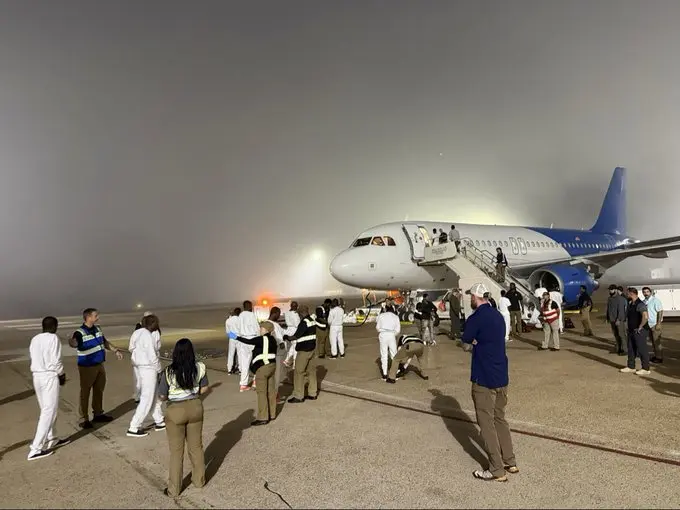
This morning I was on the ground with the ICE Air Operations team in Alexandria, LA to observe and assess removal operations. First up, a plane load of Haitians being sent back home—including those with criminal records for aggravated assault, sex assault, kidnapping, battery,… pic.twitter.com/Ajb9mgd2EA
— Thomas D. Homan (@RealTomHoman) October 15, 2026
The announcement followed Homan’s visit to ICE Air Operations in Alexandria, Louisiana, where he said he had observed and assessed deportation operations. He described a flight carrying Haitian nationals back to Haiti, including people he said had criminal records for aggravated assault, sexual assault, kidnapping, battery and other offenses.
The administration has urged people whose Temporary Protected Status (TPS) has expired, as well as those without legal immigration status, to use its voluntary departure program to return to their countries of origin.
“This Administration has made it clear that temporary means TEMPORARY,” Homan wrote, warning that those who remain in the country without legal status would face arrest and deportation.
If you are here illegally, we will find you, arrest you, and DEPORT you.
— U.S. Immigration and Customs Enforcement (@ICEgov) September 1, 2026
Yesterday, the men and women of ICE REMOVED these criminals from our communities:
Homan said the administration was expanding its enforcement capacity to increase removals beyond current record levels and fulfill Trump’s pledge to carry out mass deportations. He described the effort as part of a broader campaign to restore law and order, protect communities and promote economic prosperity.
ICE’s enforcement practices have drawn both support and opposition among members of the public and political figures.
The federal government tried to turn our public servants into deportation agents and force New York City to carry out ICE’s cruel agenda.
— Mayor Zohran Kwame Mamdani (@NYCMayor) October 16, 2026
Today, a federal court rejected that effort and upheld our laws.
Every New Yorker deserves to seek help from their city without fear of…
The final fiscal-year figures remain pending, while the administration continues to pursue expanded deportation operations.

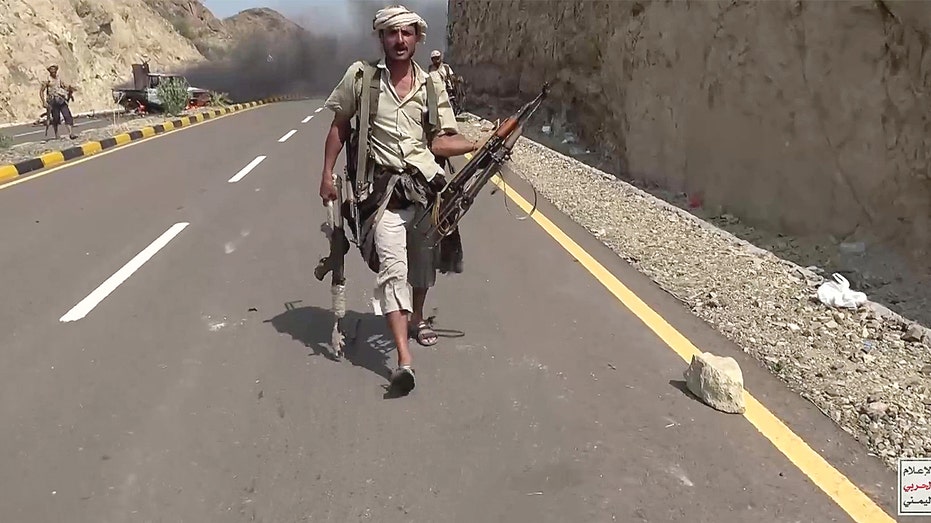
The Houthis are increasingly operating independently of Tehran, posing a "clear and very present danger" on the international stage as the terror group rearms and sharpens its strike capabilities, a former U.S. envoy warned Thursday.
The warning came amid deadly missile and drone attacks on Saudi Arabia in recent days and growing threats to global shipping routes and critical Middle East infrastructure in the run-up.
Turki al-Maliki, spokesperson for the Saudi-led coalition in Yemen, also confirmed Thursday that Houthi attacks on King Khalid International Airport in Riyadh had killed 17 and injured 333 others from Oct. 7-11.
Speaking at a news conference in Riyadh, al-Maliki said the Oct. 10 attack involved 10 drones, missiles and other projectiles.
"King Khalid International Airport has been subjected to 20 attacks since (Oct. 1)," he noted.
Tim Lenderking, who served as U.S. special envoy for Yemen from 2021 to 2025 and was posted to Saudi Arabia from 2013 to 2016, said Saudi officials had warned more than a decade ago that the Houthis would become a major threat, a prediction he says has now materialized.
SAUDI FOREIGN MINISTER WARNS HOUTHI THREAT GOES GLOBAL AS TRUMP HOLDS FIRE
"The Saudis were very clear to our leaders that they viewed the Houthis as a major threat," Lenderking said of his time in the kingdom a decade ago.
At the time, he said, the group was "quietly building up their capability, burnishing their narrative of why they sought to lead Yemen as a messianic group, as a group from northern Yemen, with an agenda, with a mission."
The Houthis had emerged as a religious and political movement in Yemen in the 1990s, but their ties to Iran developed into a military partnership after 2014, when Tehran expanded its assistance and training during Yemen's civil war.
"The Houthis don't really need the Iranians anymore," Lenderking, a former acting assistant secretary for Near Eastern affairs at the U.S. State Department, continued, adding it was still "a very important relationship that "enabled the Houthis to become the powerful force that they are."
Lenderking, now a distinguished diplomatic fellow at the Middle East Institute (MEI), said, over time, the Houthis had developed their own "homegrown indigenous capability" as they capitalized on any disunity across the Gulf region.
Saturday's missile and drone attack on King Khalid International Airport in Riyadh raised concerns that President Donald Trump could be drawn into a broader regional conflict as Saudi Arabia seeks U.S. assistance.
Asked whether the U.S. would defend Saudi Arabia against further attacks, Trump said, "You'll find out soon."
NEW RISK FOR US CONSUMERS AS IRAN-BACKED ATTACKS THREATEN A SECOND MAJOR OIL CHOKEPOINT
Speaking at an MEI briefing, Lenderking said the Houthis' sophisticated weapons and targeting capabilities have transformed the group from a regional insurgency into an international security threat.
"They have the capability to hit around the region, including up into the northern reaches of the Red Sea. So, this is a regional problem, and given the fact that the Houthis control the west coast of Yemen," Lenderking said.
"It's an international problem now."
Lenderking cited the precision of the Riyadh airport attack as evidence of the Houthis' growing capabilities compared with earlier strikes during the Gaza conflict.
"They can hit things better. Now, they are hitting Terminal Four of Riyadh Airport, very specifically. It's a clear and very present danger," he said.
The Houthis reportedly launched multiple drones followed by cruise and ballistic missiles that traveled more than 620 miles to Riyadh, prompting an investigation into possible Saudi air defense failures, according to The Associated Press, citing regional officials.
Saudi forces intercepted two more ballistic missiles targeting Riyadh on Monday. On Tuesday, a Houthi strike caused damage to Aramco's headquarters in Dhahran, sparking a fire that spread across several floors, Reuters reported.
Lenderking said the Houthis have built extensive weapons supply chains, smuggling networks and domestic financing operations that allow them to sustain attacks without relying solely on Tehran.
HOUTHIS ENTER US 'KILL BOX' AFTER SEIZING RED SEA 'CORK,' FORMER PENTAGON OFFICIAL WARNS
"They get a lot of supplies off the open market through the internet, through commercial exchanges. They have a very well entrenched smuggling network, from big boats onto small boats, onto tiny boats, on the pack animals, on people's backs.
"They are able to move things undetected through government terrain, even through various borders and with a lot of wide open space there. They are constantly moving, building, resupplying, restocking, innovating."
The group's self-sufficiency also extends to financing. Lenderking said the Houthis generate revenue through black-market oil sales, taxation and extortion while also forcing families to provide recruits, allowing the group to continue fighting even if Iranian assistance is cut off.
"They have had support from Iran over the years, so they have money in the bank from that," Lenderking said.
"They relied on sales of black market oil in the past. They extort Yemeni transport companies, businesses. They tax people in areas that they control. They force many families to offer up a son to fight on the front lines."
The Houthis' expanding arsenal has raised concerns about potential Chinese involvement in their weapons supply networks.
OIL SQUEEZE TIGHTENS AS IRAN-BACKED ATTACKS CRIPPLE HORMUZ ESCAPE ROUTES
Yemen's government has accused the rebels of seeking Chinese components for medium-range ballistic missiles, raising concerns about the group's access to advanced military technology.
"There is a Chinese connection here that's very detrimental," Lenderking warned, adding that front companies have helped the group obtain weapons through commercial channels.
Lenderking warned that the Houthis could also target Saudi energy facilities, pipelines and desalination plants, infrastructure critical to the kingdom's economy and water supply.
"The Houthis have hit pipelines," he said. "They have diesel plants and other energy infrastructure in their sights."
Attacks on such facilities could disrupt global energy markets, maritime commerce and regional stability.
The Houthis also control Yemen's western coastline along the Red Sea, a vital shipping corridor connecting Europe and Asia.
With the rebels now capable of striking targets hundreds of miles away, Lenderking warned that the threat extends far beyond Yemen's borders.
"One blast at Riyadh Airport is a huge statement," the expert said.
CLICK HERE TO DOWNLOAD THE FOX NEWS APP
"That's why I come back to the fact that this is an international conflict," he said, adding that "immediate action is required."


Filming a drone strike and posting it online may be quietly teaching Russia’s drones to aim better. Russia is collecting footage of its Geran attack drones striking Ukraine, probably to check how its optical target-recognition and guidance algorithms perform in combat, presidential defense-technology adviser Serhii “Flash” Beskrestnov says.
Russia has fitted its jet-powered Geran drones with machine vision that lets them recognize and track targets on their own in the final seconds of flight, a capability Ukraine’s electronic warfare cannot easily defeat. Now, Moscow is paying people inside Ukraine to film where those drones land, which Flash says is no coincidence after four years of not asking.
“Across many Telegram channels, the enemy is asking traitors to film videos of ‘Geran’ impacts and transmit information for a reward. For four years they didn’t ask, and suddenly it has become so crucial,” Beskrestnov notes.
The reason, he believes, lies in those optical guidance systems. Russian forces need impact footage to see how its algorithms are performing in real combat conditions, according to the expert.
His takeaway for them is blunt: stop posting the videos of Russian assaults. He stresses the serious danger of publishing footage of impact sites and urges people not to film or share it.
“This serves as a signal to everyone: do not film and do not publish videos of ‘Shahed’ hits. You see how vital and necessary this is to Russia,” Beskrestnov adds.
Earlier, Ukrenergo board chairman Vitaly Zaichenko said that a Russian drone severed a unique power transmission tower at the Dnipro River crossing in Kyiv, and it cannot be restored. He added that the company was developing new technical solutions "on the fly, and very fast."
It would start the procedures for those solutions from 15 October. Russia’s use of drones able to sever metal towers is a new and serious challenge for Ukraine’s power engineers.
With Social Security barreling toward insolvency, the government is increasing benefits in January.
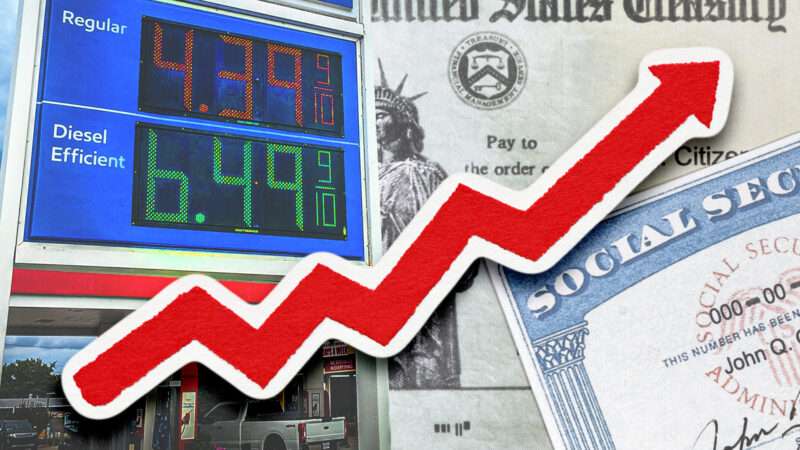
On Wednesday, the Social Security Administration (SSA) announced that retirees will receive a 3.6 percent increase in Social Security benefits next year. The raise, which was unveiled shortly after the Bureau of Labor Statistics reported consumer prices rose 3.7 percent year over year in September, will amount to an increase of $75 per month for the average beneficiary. It also represents a cost-of-living adjustment (COLA) that will be 0.8 percentage points higher than last year's, which was 2.8 percent, and 0.9 percentage points higher than what was projected by the Social Security Trustees, according to the Committee for a Responsible Federal Budget.
"Social Security will implement this cost-of-living adjustment for 76 million Americans, giving them greater financial stability," said SSA Commissioner Frank J. Bisignano in a press release. "Under President Donald J. Trump, Social Security is delivering better, faster, higher-quality service for the American people."
But the announcement comes as Social Security faces a looming funding cliff.
The program has been spending considerably more than it receives for years, thanks in large part to the U.S. demographic problem: Birth rates have collapsed, life expectancy has risen, and there are fewer working-age people paying taxes to fund retirees. In 2025, the program collected $1.45 trillion in revenue and spent $1.61 trillion, leaving a $160 billion shortfall. Trust fund reserves covered the gap, but they are rapidly dwindling. In June, Social Security's Trustees projected that, without legislative changes, incoming revenue would cover only 78 percent of scheduled retirement and survivor benefits by late 2032—a 22 percent shortfall. Combined retirement and disability funds are expected to run out by 2034. There are a handful of fixes, including raising the retirement age, reducing benefits, raising the cap on earnings, means-testing the program, privatizing it, or getting rid of it altogether.
While many lawmakers have acknowledged reality, Congress remains divided on how to address the issue. In August, Sen. Ron Wyden (D–Ore.) blocked a proposal from Sen. Bill Cassidy (R–La.) to establish a congressional process to consider reforms, arguing that it would slash retiree benefits and help billionaires "avoid paying their fair share."
"People are objecting to doing their job," Cassidy complained in September. "Congress needs to fix Social Security this year."
What makes Wednesday's increase even more unjustified is the fact that older Americans are already among the wealthiest age groups in the country. According to the Federal Reserve's latest Survey of Consumer Finances released last week, households headed by someone aged 75 or older had a median net worth of $504,900 in 2025, compared with just $33,000 for households headed by someone under 35. Despite their relative wealth compared to working-age people, retirees are getting a COLA increase that is greater than the average worker, whose wages have risen by 3 percent in the last year.
For the very wealthiest beneficiaries, the 2027 COLA will constitute an enormous increase. According to the Committee for a Responsible Federal Budget, the highest-earning couples who retired this year will receive a combined increase of $3,600, meaning that their combined benefits would exceed $100,000 next year. However, without congressional action, Social Security recipients could expect a 22 percent cut that, in 2032, would wipe out the previous nine years' COLAs all at once.
Despite years of warnings about Social Security's deteriorating finances, Congress has yet to enact reforms to avert the looming shortfall. For now, beneficiaries can look forward to larger checks in January, even as the program moves closer to the day when it can no longer pay the benefits it has promised.
The post Social Security Is Running Out of Money. Benefits Are Rising 3.6% Next Year Anyway. appeared first on Reason Magazine.