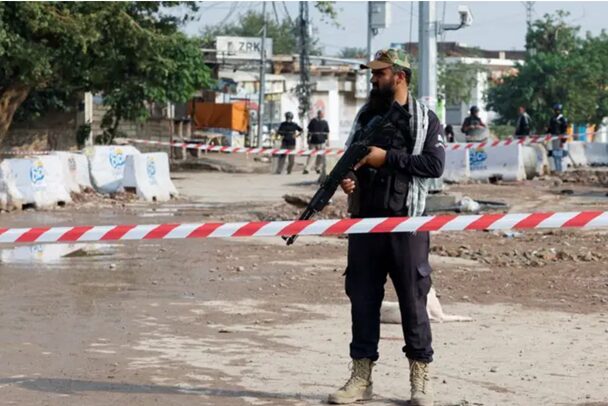
GWADAR/QUETTA: Pakistan has suspended trade with Iran through the official Gabd-Rimdan (250) and Taftan border crossings, it emerged on Saturday.
The Ministry of Commerce issued a memorandum on Friday, seen by Dawn, withdrawing its earlier order [No. 9(3)2017-Iran] dated Oct 3 with immediate effect.
Shahid Rind, adviser to the Balochistan chief minister on media and political affairs, said the “purpose of the temporary closure of the Pak-Iran border is to address security concerns, prevent smuggling, and make the border system more effective”.
In a statement on X, Rind refuted “rumours being spread on social media” regarding the closure and urged the public not to pay attention to unverified information.
The Balochistan official stressed that the move was “necessary to improve the security situation and administrative affairs on both sides of the border”.
Rind affirmed that “progress continues between the high officials of both countries to resolve administrative issues” related to the border.
“In the context of the current progress, the Pak-Iran border is likely to reopen soon,” he said, adding that a coordinated system was being established to improve border affairs and prevent smuggling.
Meanwhile, Iran’s foreign ministry spokesperson Esmail Baqaei also said the closure was temporary, Iran’s state-run Irnareported.
However, he attributed the move to “technical issues” and said the two countries were in consultations to resolve the problem and restore normal operations.
Separately, the Quetta Chamber of Commerce and Industry (QCCI) has also advised its members and businesses involved in trade with Iran to stop placing new import and export orders until further notice.
Hundreds of freight vehicles carrying liquefied petroleum gas (LPG), rice, fresh fruit and other essential commodities have reportedly been stranded on both sides of the border.
According to Iran-based Wana news agency, passenger traffic through the Rimdan–Gabd crossing remains operational. It quoted Syed Hossein Hosseini, director general of the Iranian Transit Office, as saying that commercial operations at the border crossing had been halted.
The Gabd-Rimdan crossing had become a major route for meeting Pakistan’s energy needs, with over 4,000 tonnes of LPG reportedly imported daily through it. Exports of Pakistani products, particularly rice, had also surged in recent months, generating millions of dollars in foreign exchange.
Sources in the trade and energy sector warned that the closure could aggravate LPG shortages in Karachi and other parts of the country.
The Taftan route was already facing disruptions amid unrest in Balochistan. The suspension of supplies through Gabd-Rimdan could push up LPG prices in the open market.
Local traders and the chamber have warned that the disruption could cause not only substantial losses to the national exchequer and jeopardise the livelihoods of many but also an energy crisis.
Since March this year, Islamabad and Tehran have rolled out a series of measures to facilitate border trade, including easing customs procedures, formalising Taftan as a customs station, and notifying new transit routes, against the backdrop of the ongoing US-Iran war that has strained economies in the region and beyond.
In early August, an Iranian delegation led by Trade and Industry Minister Mohammad Atabak visited Islamabad for the 10th session of the Pak–Iran Joint Trade Committee (JTC).
The delegation also met with Prime Minister Shehbaz Sharif, with both sides agreeing to further expand trade ties by keeping border crossings open round the clock, improving logistics and harmonising customs procedures.
The visit came a couple of months after it was reported that trade between Pakistan and Iran through the Gabd-Rimdan border crossing had come to a complete halt.
According to Gwadar Chamber of Commerce and Industry President Jiand Hoot, trade through the Panjgur and Mand-Radig border crossings was virtually non-existent because of poor road infrastructure and recurring incidents of arson and vehicle burnings.
L’Iran et le Pakistan sont pleinement engagés dans la construction d’un ordre financier post-américain à la croisée du Moyen-Orient et de l’Asie du Sud.
Allons droit au cœur du sujet : après avoir soigneusement examiné l’échiquier, les dirigeants politiques et militaires de Téhéran sont déjà parvenus à la conclusion qu’une attaque conjointe américano-israélienne, dont la planification avance à un rythme effréné, est inévitable.
Ils se positionnent donc désormais comme un cobra lové, prêt à frapper et à injecter son venin mortel au premier signe d’une menace imminente du syndicat Epstein — sans même attendre une attaque effective.
Cette offensive préventive, dont les contours sont déjà tracés, sera dévastatrice ; elle s’étendra au-delà des bases américaines au Moyen-Orient vers d’autres cibles régionales, et pourrait notamment inclure les infrastructures énergétiques du Golfe ainsi que les câbles sous-marins (ce qui, dans ce cas, affecterait principalement le Golfe et l’Inde, bien plus que les États-Unis et l’Europe).
Nous sommes en présence d’un danger clair et immédiat : une opération militaire américano-israélienne destinée à exercer une pression sera certainement interprétée à Téhéran comme le début d’une attaque.
Ainsi, la pression en faveur de la guerre exercée par le «culte de la mort» et par Trump se heurte désormais à un seuil de tolérance iranien dangereusement bas. Les options de frappe du Pentagone vont des installations nucléaires iraniennes aux infrastructures énergétiques.
Il va sans dire que le «sociopathe en chef» — déjà en pleine panique face à la débâcle imminente des élections de mi-mandat — est une proie facile pour le puissant lobby sioniste pro-guerre et ses donateurs. Le danger stratégique suprême réside donc dans le fait que cette pression incessante puisse envoyer un signal que Téhéran interpréterait comme une attaque imminente, même si Washington affirme publiquement qu’aucune frappe n’aura lieu avant les élections de mi-mandat.
Le Yémen fait passer la situation à un niveau supérieur
Parallèlement, des sources privilégiées à Islamabad confirment le succès d’un essai de missile pakistanais à Mach 7, d’une portée de plusieurs milliers de kilomètres. Cette nouvelle capacité a tout ce qu’il faut pour modifier concrètement l’équilibre des pouvoirs au Moyen-Orient, en renforçant la portée dissuasive du Pakistan et sa capacité à influencer tous les calculs de sécurité régionaux, tout en approfondissant les liens du Pakistan avec la Chine, l’Iran et les pétro-monarchies du Golfe.
Et voici une autre exclusivité : des membres des services de renseignement militaire israéliens, notamment un général de division, ont quitté Riyad après que MbS, dans un prétendu moment de lucidité, eut dit «non» à l’offre d’»assistance» de la secte de la mort. Et pourtant, plus de 100 membres du CENTCOM sont toujours sur place.
La décision de MbS lui a peut-être été imposée par la Turquie et le Pakistan — les deux autres signataires de l’Alliance de défense de La Mecque, qui se sont soudainement retrouvés dans la même salle de crise à Riyad, côte à côte avec des agents de la secte de la mort.
Si leur départ a peut-être écarté un risque d’escalade, les agents américains restent révélés : toute frappe, d’où qu’elle vienne, faisant des victimes américaines entraînera immédiatement Washington dans la guerre entre l’Arabie saoudite et Ansarallah.
La guerre entre l’Arabie saoudite et Ansarallah atteint en effet un nouveau niveau de volatilité. Le mélange explosif constitué par l’interception d’un missile de croisière au-dessus de la province de Médine, les interceptions de drones ailleurs en Arabie saoudite et les frappes de missiles des forces armées yéménites contre le complexe présidentiel du gouvernement fantoche d’Aden n’est qu’un début.
Ce qui s’est passé après qu’Ansarallah a pris pour cible Najran — l’une des provinces du sud de l’Arabie saoudite volées au Yémen en 1934 par les Britanniques — est tout à fait stupéfiant.
Un porte-parole saoudien a accusé Ansarallah d’avoir lancé un missile de croisière sur Médine. La réponse du porte-parole emblématique des forces armées yéménites, le général Yahya Saree, a été cinglante : «Nous n’avons mené aucune opération militaire visant le territoire saoudien aujourd’hui. Par conséquent, l’affirmation de l’ennemi saoudien selon laquelle Médine aurait été prise pour cible est une pure invention et un mensonge grave».
Traduction : le Yémen frappe l’une de ses anciennes provinces ; les Saoudiens se lancent dans des fausses informations à outrance, inventant de toutes pièces une attaque contre l’une des deux mosquées sacrées — sans doute en préparation d’une opération sous faux pavillon ; puis le Yémen nie aussitôt avoir frappé quelque (italiques de ma part) territoire saoudien.
Cela signifie que Sanaa déclare subtilement, pour que tout le monde comprenne, qu’elle ne mène plus d’opérations à l’étranger (italiques de ma part) sur les trois provinces : Jizan, Najran et Asir. Elle prépare déjà — psychologiquement et opérationnellement — le terrain pour récupérer son territoire volé.
Tout cela se résume dans cette analyse yéménite succincte de la déconstruction de la fastueuse Maison des Saoud :
«Le Yémen sape les piliers ultra-fragiles de l’économie non pétrolière sur lesquels les pirates du désert ont fondé tous leurs espoirs : l’image, les investissements (IDE), l’évasion de la réalité, ainsi que l’impunité et l’invulnérabilité face au terrorisme à l’étranger».
Comment le Pakistan et l’Iran contournent le FMI
Prêtez maintenant attention à un événement assez surprenant qui s’est produit en milieu de semaine à Bangkok, lors de la réunion annuelle du FMI et de la Banque mondiale — dûment accueillie par des manifestations de rue en Thaïlande.
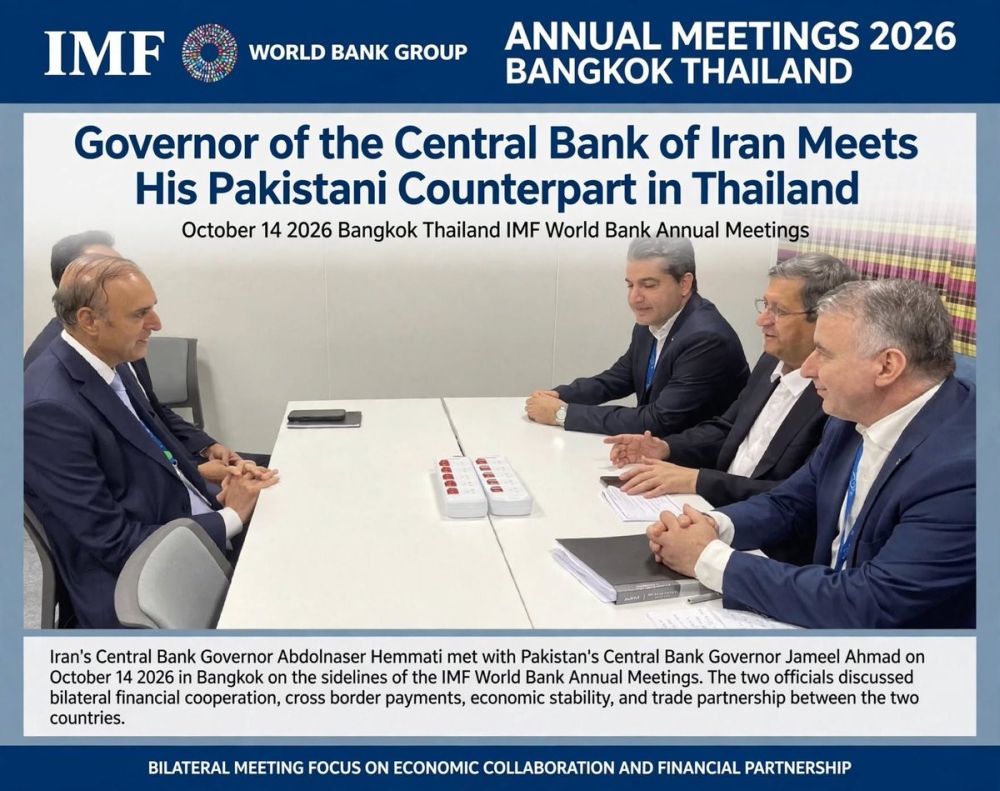
Le gouverneur de la Banque centrale d’Iran, Abdolnaser Hemmati, a rencontré le gouverneur de la Banque centrale du Pakistan, Jameel Ahmad, en marge de ce rituel annuel de premier plan à la gloire du dollar américain.
Le Pakistan est soumis à la poigne de fer des ajustements structurels imposés par le FMI et la Banque mondiale — et, pour couronner le tout, menacé de sanctions américaines parce qu’il entretient des relations commerciales avec l’Iran.
Le fait que le Pakistan et l’Iran discutent de facto de la dédollarisation au cœur même de la tanière du lion — le temple du dollar américain — n’a donc pas de prix.
L’infrastructure est en place depuis 2023, grâce à un accord de swap de devises utilisant le rial et la roupie à la place du dollar américain. Le troc est géré par les deux banques centrales, et les flux bancaires transitent par la Banque Melli en Iran et la Banque Mellat au Pakistan. Leurs marchés frontaliers — au moins six d’entre eux — sont en plein essor : des routes commerciales physiques qui contournent complètement le dollar américain.
Ce dont ils discutaient à Bangkok en début de semaine, c’est la manière d’étendre ce système : ils se moquent éperdument des sanctions secondaires américaines. D’autant plus que Téhéran offre à Islamabad ce que le système américain ne peut tout simplement pas offrir : la souveraineté, pas de changement de régime, pas d’austérité, pas de leçons de morale et, surtout, pas d’ajustement structurel.
Sans compter que le Pakistan a cruellement besoin du gaz iranien — et des routes commerciales de la nouvelle Route de la soie rendues possibles par la Chine.
L’Iran a bâti toute une économie en contournant complètement le FMI — et capable de survivre à un tsunami de sanctions, à un blocus et à la guerre.
Aujourd’hui, l’Iran et le Pakistan sont en pleine construction d’un ordre financier post-américain à la croisée du Moyen-Orient et de l’Asie du Sud — avec des swaps de devises, du troc, des marchés frontaliers en plein essor et des canaux bancaires adaptés, tournant ainsi en dérision les sanctions secondaires.
Soit dit en passant, cela se produit au moment même où un immense train iranien, chargé de pétrole brut — et le premier d’une longue série —, s’apprête à partir pour… la Chine via l’Asie centrale, sur la ligne ferroviaire de la «nouvelle Route de la soie» construite par la Chine.
Le cobra lové est peut-être prêt à frapper. Mais le cobra, depuis des temps immémoriaux, adore aussi faire des affaires.
Security forces have responded to unprovoked firing by Afghan Taliban forces along the Pakistan-Afghanistan border in Khyber Pakhtunkhwa’s Upper Kurram, state broadcaster PTV News reported on Saturday.
PTV News and state-run Associated Press of Pakistan (APP), which cited security sources, said the Afghan Taliban forces opened fire to “facilitate terrorists” along the border in Taldah sector of Upper Kurram.
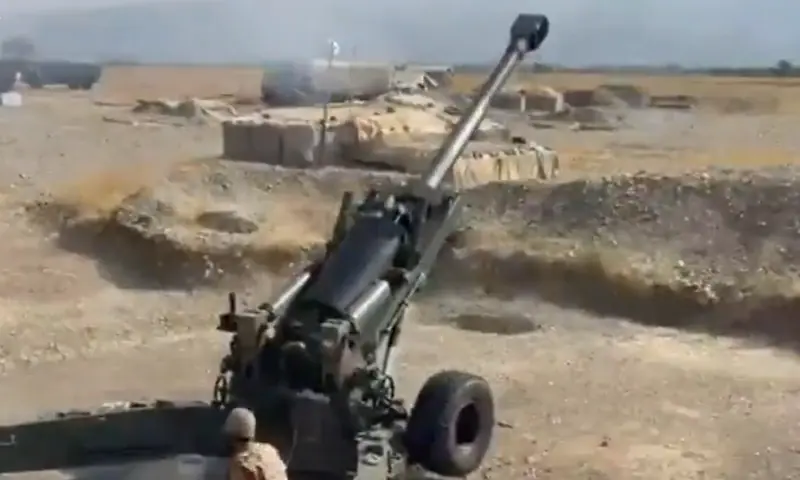
The army responded using heavy weapons, destroying several Afghan Taliban posts and forcing their personnel to flee from there, PTV News reported.
Meanwhile, APP quoted security sources as saying that several personnel of the Afghan Taliban were “reportedly killed during the Pakistan Army’s retaliatory action along the Ghuzgarhi border”.
The sources further said that in the Upper Kurram sector, the army targeted the Afghan Taliban’s Topsar post and Shipola base camp with artillery fire, reportedly completely destroying the latter.
The exchange of fire was still ongoing in the area, APP quoted security sources as saying.
The border skirmishes come a day after the Foreign Office (FO) said that talks with Afghanistan could not be unconditional, but also rejected suggestions that Islamabad was unwilling to engage with its neighbour and said it would welcome sincere efforts by friendly countries to help resolve the dispute.
“Pakistan is not shying away from discussions or dialogue, including with representatives of Afghanistan. Pakistan would welcome any sincere efforts by friendly countries that could help address our legitimate security concerns and promoting regional peace and stability,” FO spokesperson Sajjad Haider Khan said at the weekly media briefing.
The statement came after Russia recently renewed its readiness to mediate between the two countries, although Islamabad denied the existence of any such initiative.
“At present, I am not aware of any separate, formal Russian mediation initiative being under discussion,” Khan said.
Pak-Afghan tensions
Ties between the two neighbours have been strained in the past few years as Islamabad continues to voice its concern over cross-border terrorism.
September witnessed another bout of conflict between Pakistan and Afghanistan.
On Sept 21, in response to recent major terrorist attacks in Khyber Pakhtunkhwa, Pakistan conducted “calibrated” airstrikes in the border region with Afghanistan against terrorist hideouts, with the government saying more than 28 terrorists were killed.
Information Minister Attaullah Tarar described the action as part of Operation Ghazab lil Haq, which was launched on the night of Feb 26 in response to unprovoked cross-border firing by the Afghan Taliban.
Days later, Pakistan shot down eight drones launched from across the border that had entered Pakistani airspace near the Torkham border and Kohat. It was also reported that the Afghan Taliban engaged in unprovoked firing the night before near Kurram as security forces foiled an attempt by terrorists to cross into Pakistan.
In retaliation for the drone incursion, Pakistan conducted “precision aerial and drone strikes” in 10 locations across Afghanistan.
A demarche was also delivered to the Afghan side on Sept 26 on account of the Sept 23 airspace violation by drones, the Foreign Office said.
On Oct 1, Pakistan again carried out “well-planned and calibrated” airstrikes against terrorist hideouts in Afghanistan, the information ministry said, which resulted in the deaths of “multiple terrorists”.
Prime Minister Shehbaz Sharif on Saturday reiterated that the Centre was “compelled” to impose emergency and governor’s rule in Khyber Pakhtunkhwa due to the provincial government’s lack of cooperation in countering terrorism.
The Centre imposed emergency and governor’s rule in KP on Oct 11, citing the provincial government’s “deliberate disengagement” from the fight against terrorism. The decisions were also endorsed by the Parliament this week amid protests by the opposition.
On Saturday, PM Shehbaz visited the residence of Rashid Bashir Virk in Gujranwala to offer condolences on the demise of his father, late MNA Mahmood Bashir Virk.
After recalling the late PML-N lawmaker’s services, the premier stressed that the Centre was compelled to impose emergency in KP.
He said the Centre made a “last attempt”, referring to the rounds of talks held by a joint delegation of the PPP and the government with the opposition.
“They had talks with them (PTI) day and night, for 48 hours, and sat with the intention to settle matters from every aspect,” PM Shehbaz said, adding that a draft was ready under which the PTI was to call off its long march.
The prime minister highlighted that he had held multiple meetings with Sohail Afridi, the KP chief minister whose role now stands non-functional, as well as with his predecessor Ali Amin Gandapur.
“In every meeting, I tried my best to convey to him from the depths of my heart and with seriousness that KP is an extremely beautiful province and has very brave and honourable people, […] and I am always present in every way for their development and prosperity,” PM Shehbaz said.
The premier added that he assured the KP government of the Centre’s support in fighting against terrorism together to face the security challenges in the province.
PM Shehbaz said he had assured the chief minister that he would make the decisions regarding the administration, resources and necessities in consultation with him.
“But, unfortunately, despite all these efforts, thousands of our law enforcement agencies personnel, soldiers, officers and officers of the armed forces were sacrificing their lives every day to defend the homeland.”
The prime minister stressed that the federal government “made many efforts” regarding the situation, but there were “threats and long marches every other day in response”.
“Their past history is very horrific,” he remarked, recalling the 2014 sit-ins staged by the PTI at Islamabad’s D-Chowk during the tenure of his brother, Nawaz Sharif.
“Last year as well, you saw how the entire country was jammed by staging a sit-in in Islamabad,” he added, ostensibly referring to the PTI’s November 2024 protest that had resulted in clashes.
“This time as well, they had an entire plan of bloodshed,” he alleged.
The Oct 11 imposition of emergency and governor’s rule followed weeks of political tensions between the Centre and the PTI — as well as negotiations to bridge their differences — after the latter announced a long march to Islamabad to demand the release of its jailed founder, Imran Khan.
Federal ministers alleged that the PTI-led government in KP had a “nexus” with terrorist groups and asserted that the province’s security situation necessitated the imposition of emergency there.
The Centre and the PTI have been at odds over various issues, particularly on the counterterrorism policy, which was one of the main reasons behind the breakdown of their October 3 talks.
The PTI said it was being left out of security decisions concerning KP, which the Centre denied. It also called for reviewing the counterterrorism policy, while the latter criticised the KP government’s efforts to combat terrorism in the province and objected to its stance on dialogue with the Afghan Taliban.
Jamiat Ulema-i-Islam-Fazl (JUI-F) chief Maulana Fazlur Rehman on Saturday clarified that his party’s remarks regarding the country’s security situation were directed at policies, not institutions, and termed the allegations levelled against him by federal ministers as character assassination.
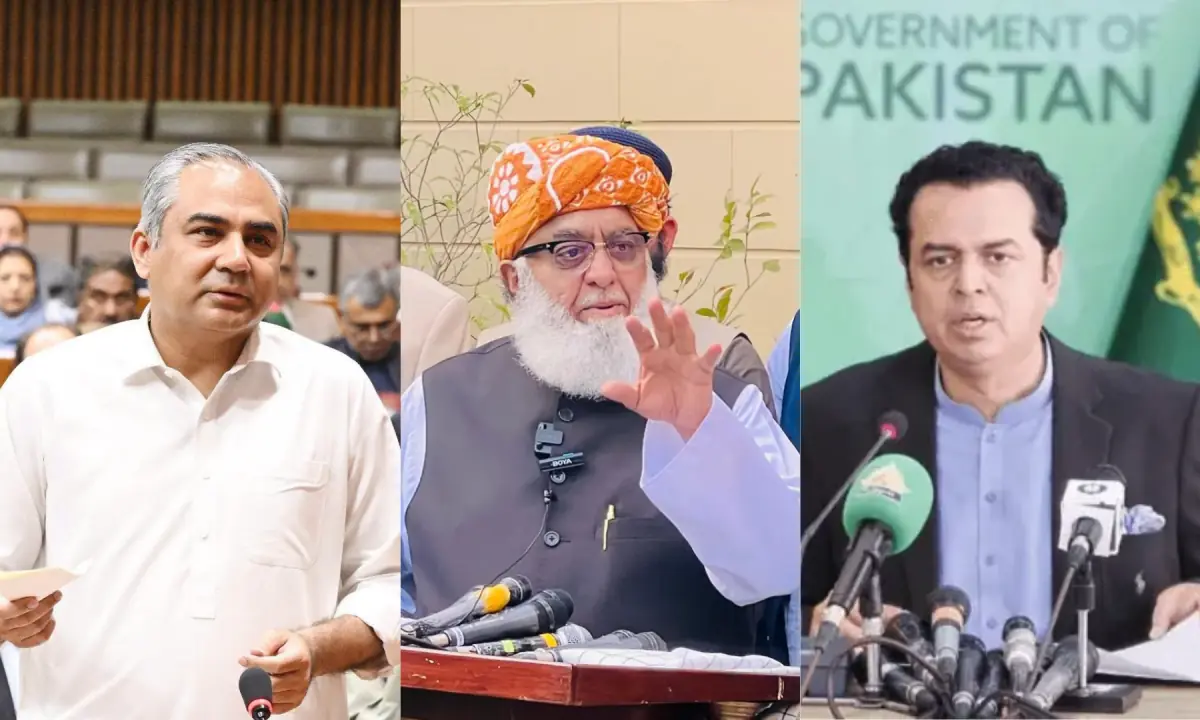
A day earlier, Interior Minister Mohsin Naqvi, without naming anyone, had claimed that a “head of a party” was “extremely upset” about not being appointed the governor of Khyber Pakhtunkhwa. The remarks came after Fazl accused the Centre of depriving the provinces of their rights and raised doubts over its reasoning behind imposing governor’s rule that there was a lack of cooperation on counterterrorism.
Earlier on Saturday, State Minister for Interior Tallal Chaudhry also rebuked the JUI-F chief for reportedly seeking his “share” in KP’s governance following the imposition of governor’s rule and an emergency in the province. Other federal ministers have also taken exception to Fazl’s remarks.
Addressing a press conference in Lahore on Saturday, Fazl stressed that his party’s criticism was directed at policies, not institutions, and was intended to bring about corrective action rather than undermine the sacrifices made in the fight against terrorism.
The senior politician called for an in-camera session of Parliament to review the country’s security situation and formulate a consensus-based policy to combat terrorism.
“Our only question is why the country has failed to eliminate terrorism. Let us sit together and find out why. Parliament is the most appropriate forum to discuss the issue and make decisions. Instead of ridiculing politicians, the government should take them on board in this fight so that we can move forward together,” he said.
“If Parliament is supreme, why are decisions taken in Rawalpindi while Parliament is simply told to follow them?” he remarked. “The issue is that this government is powerless. Decisions are taken somewhere else, and it implements them obediently,” he alleged.
The JUI-F maintained that Parliament should review the security situation and that the nation should be taken into confidence. If the public was expected to support the fight against terrorism and those engaged in it, he argued, the government should explain its decisions rather than impose “unilateral measures”.
Fazl reiterated his objection to the imposition of emergency rule in KP or any other part of the country. Recalling his family’s opposition to emergency rule in Balochistan during the 1970s, he said his father had resigned when the government of Zulfikar Ali Bhutto imposed it in the province.
He described the recurrence of such measures as unfortunate, pointing out that the PP had repeatedly been associated with their imposition.
Questioning the rationale behind the emergency, governor’s rule and deployment of troops in KP, Fazl asked why the province should face such treatment when Balochistan was also grappling with the same level of terrorist violence, if not more.
The JUI-F chief urged the government to develop a shared national narrative and a consensus-based counterterrorism strategy instead of questioning his party’s position.
He went on to ask why the government engaged in negotiations with the PTI, which had been in power in KP, if the party was accused of supporting terrorists. “On top of it, both (the PTI and the government) say that they had reached a consensus on all points.”
Fazl then highlighted that around 250 of his party workers had lost their lives in terrorist violence, arguing that their sacrifices should not be ridiculed or overlooked. “How can a party whose members have laid their lives be accused of supporting terrorists?” he asked.
He also questioned why he was being singled out for criticism when political leaders, including former prime minister Nawaz Sharif, had at various times disagreed with the military leadership.
Ministers assail Fazl
Earlier on Saturday, addressing the media in Jaranwala, Chaudhry said, “I am upset. We did not expect Maulana sahib […] to consider this as spoils of war and seek his share in the absence of a PTI government in the province.”
He emphasised that the imposition of an emergency and governor’s rule in KP was not a political move aimed at strengthening the PML-N’s presence in the province by dismissing the PTI-led government.
“This was an administrative setup,” he said, adding that it had been formed with a “one-point agenda: combating terrorism”, rather than with an intention of establishing a political setup.
“This is not spoils of war,” he reiterated, adding that the imposition of an emergency and governor’s rule in KP was an “immensely responsible” decision taken after every other option had been considered.
“I am unable to understand why Maulana sahab says that he was forced to accept defeat [in elections],” he said, arguing that Fazl’s party had been defeated by the PTI in KP and the Pashtunkhwa Milli Awami Party in Balochistan.
Chaudhry said the JUI-F was worthy of respect only if it stood by Pakistan’s interests.
The state minister also rejected the impression that the imposition of an emergency and governor’s rule was aimed at taking control of KP’s natural resources.
He also criticised Fazl for bringing up the 1971 separation of East Pakistan — now Bangladesh — from Pakistan in his recent statements.
“You bring up 1971 after losing the 2024 elections,” Chaudhry said.
“This KP setup is not about distributing shares, forming coalitions and governments, or engaging in politics,” he stressed, clarifying that only one member of the KP Advisory Council has a political background, as she represents the families of martyrs.
Chaudhry again offered to implement the National Action Plan and combat terrorism jointly with all stakeholders. “Politics is possible only where there is peace,” he said.
At the outset of his address, Chaudhry alleged that there must be “a relationship or a mutual interest arrangement between the Tehreek-i-Taliban Pakistan (TTP) and the PTI”.
“Since 2015, no PTI leader, gathering or member has been targeted by terrorists,” Chaudhry said. “On the other hand, over the past 11 years, no political or religious party, security force, public office, funeral or wedding has been spared terrorist attacks.”
He said the federal government had exhausted all avenues to bring together stakeholders and urge them to condemn terrorism by naming those involved, whether the TTP, the Balochistan Liberation Army (BLA), or groups funded by India or Afghanistan.
The state minister claimed that in 2013, when the government decided to hold talks with the TTP and representatives were proposed by both sides, the TTP had nominated PTI founder Imran Khan to its committee.
He also alleged that the PTI founder had allowed the TTP to open offices in Peshawar.
During his address, Chaudhry also criticised the PTI, showing a press release issued by the TTP that condemned the dismissal of the party’s government.
Meanwhile, speaking at a press conference in Sialkot, Defence Minister Khawaja Asif criticised the JUI-F chief for constantly “targeting” the country’s security forces.
He declared that the sacrifices made by the security forces, officers, and the public in the fight against terrorism were “matchless”.
The defence minister referred to Fazl’s accusations that the emergency and governor’s rule were imposed to capture KP’s mineral resources, saying that he had shared a full list of people who had the mining contracts in KP.
Asif maintained that the whole PTI and opposition leadership was engaged by the government before the imposition of emergency and governor’s rule.
“But it was fruitless,” he said.
“The situation will improve in KP […] parliament can roll back the decision of imposing the emergency only if the improvement of the situation in the province is guaranteed,” the defence minister said.
He said that some individuals in KP were expecting to get a share in the administrative changes in the province.
“We will ensure free and fair elections. Whenever the time comes, everybody can take part in it,” he said.
Fazl’s remarks also prompted a response from KP Governor Faisal Karim Kundi, who has now been tasked with running the province under governor’s rule.
Kundi, referring to the JUI-F chief, asked whether “your land in the land belonging to martyrs in DI Khan is halal”.
“What you get is halal, what the other gets is haram,” he remarked.
The governor reaffirmed that the new KP administration would continue to function properly.
‘Extremely upset’
Fazl, who was involved in reducing tensions between the Centre and the KP government, has been critical of the federal government over the imposition of governor’s rule in KP. He also accused the Centre of reneging on its commitments amid his efforts to mediate between the two parties.
Addressing a rally in Multan on Thursday, Fazl further recalled that his party had expressed reservations over the merger of tribal areas into KP after the 25th Constitutional Amendment in 2018.
“We were not against the merger, but we said that it was an issue of the political future of the people of tribal areas,” he said, alleging that the people of those areas were not consulted on the merger.
He alleged governor’s rule was not imposed in Balochistan because the province’s chief minister “praises you”.
The next day, during an interaction with journalists, the interior minister said, “The head of a party is extremely upset over being denied a role in the new setup in KP and not getting the governorship.”
This politician, Naqvi alleged, had remained “dependent on the establishment for decades to advance his political career”.
“These are the same politicians who remained in politics for decades with the support of the establishment, and this politician even relied on the establishment to arrange air tickets for the members of his party,” he further alleged.
He said such politicians had little justification for criticising others now, particularly after having benefitted from the same system they currently denounced.
The same day, Punjab Chief Minister Maryam Nawaz also railed against Fazl in a post on X.
She said it was not expected of a senior politician such as him to support those who facilitate terrorism — an apparent reference to the PTI, which the Centre accuses of backing terrorism.
She also criticised Fazl for his remarks about Chief of Defence Forces and Chief of Army Staff Field Marshal Asim Munir, seemingly referring to his comments during the Multan address about the centralisation of power.
The Centre imposed governor’s rule and emergency in KP on Oct 11, citing the provincial government’s “deliberate disengagement” from the fight against terrorism.
The move has drawn criticism from the opposition, including Fazl, as well as Mehmood Khan Achakzai and Raja Nasir Abbas of the Tehreek-i-Tahafuz-i-Ayin-i-Pakistan.
In the days preceding the imposition of governor’s rule in KP, political tensions between the Centre and the opposition — including the PTI which was in power in KP — had remained high since jailed former prime minister Imran Khan’s party announced a protest march to Islamabad to demand his release.
Intense negotiations between the two sides a week before the imposition of governor’s rule had failed to yield any results, while Fazl was cast as the man who could defuse heightening tensions between the Centre and the PTI. Both sides had held separate meetings with Fazl, reportedly for his intervention to help break the deadlock in the negotiations.
Let’s get right into the heart of the matter: carefully examining the chessboard, the political and military leadership in Tehran has already reached the conclusion that a joint U.S.-Israeli attack, with planning advancing at a feverish pace, is inevitable.
So they are now positioned themselves as a coiled cobra, ready to strike and inject deadly venom at the first whiff of an imminent Epstein Syndicate threat – even without waiting for an actual attack.
The preemption drive, already delineated, will be devastating, extending beyond U.S. bases in West Asia to other regional targets, and potentially including Gulf energy infrastructure and undersea cables (in this case mostly affecting the Gulf and India, much more than the U.S. and Europe).
We are into clear and present danger territory: a U.S.-Israeli military movement intended as pressure certainly will be interpreted in Tehran as the opening of an attack.
So the death cult/Trumpian pressure for war now meets a dangerously low Iranian threshold. Pentagon strike options range from Iranian nuclear installations to energy infrastructure.
It goes without saying that the Sociopath-in-Chief – already freaking out with the imminent mid-terms debacle – is an easy prey to the powerful pro-war Zionist lobby/donors. The supreme strategic danger then is that this non-stop pressure may produce a signal that Tehran interprets as an imminent attack, even while Washington publicly maintains that no strike will happen before the mid-terms.
Yemen is taking it all to the next level
In parallel, privileged sources in Islamabad confirm a successful Pakistani missile test at Mach 7, with a range of several thousand kilometers. This new capability has all that it takes to materially alter West Asia’s balance of power, strengthening Pakistan’s deterrent reach and how it will be able to influence every regional security calculation, and adding to Pakistan’s deepening interconnection with China, Iran and the Gulf petro-monarchies.
And now for another esclusive: Israeli military intelligence personnel, including a Major-General, have left Riyadh after MbS, in an alleged moment of lucidity, said “No” to the death cult’s offer of “assistance”. And yet more than 100 CENTCOM personnel remain.
MbS’s decision may have been forced on him by Turkiye and Pakistan – the other two signatories of the Mecca Defense Alliance, who suddenly found themselves in the same war room in Riyadh side by side with death cult operatives.
Now their departure may have removed one escalation risk, but U.S. operatives remain exposed: any strike, wherever it comes from, generating U.S. casualties will immediately draw Washington into the Saudi-Ansarallah war.
The Saudi-Ansarallah war, in fact, is hitting the next – volatility – level. The toxic mix of a cruise-missile interception over Medina province; drone interceptions elsewhere in Saudi Arabia; and Yemeni Armed Forces missile strikes on Aden’s puppet government presidential complex is just the start.
What happened after Ansarallah targeted Najran – one of the southern Saudi provinces stolen from Yemen in 1934 by the British – is total eyebrow-raising territory.
A Saudi spokesman accused Ansarallah of launching a cruise missile at Medina. The response by iconic spokesman for Yemeni Armed Forces, Gen Yahya Saree, was a killer: “We did not carry out any military operation targeting Saudi territory today. Therefore, the Saudi enemy’s claim that Medina was targeted is an outright fabrication and a grave falsehood.”
Translation: Yemen hits one of their former provinces; the Saudis go for total fake news, fabricating an attack on one of the two sacred mosques – no doubt as preparation for a false flag; then Yemen promptly denies striking any (italics mine) Saudi land.
That means that Sana’a is subtly declaring, for everyone to understand, that they no longer conduct foreign (italics mine) operations on the three provinces: Jizan, Najran and Asir. They are already – psychologically and operationally – setting the stage to recover their stolen territory.
All that gells into this succint Yemen-based analysis of the deconstruction of the bling-bling House of Saud:
“Yemen is nuking the uber-fragile pillars of the non-oil economy on which the desert Pirates placed all their hopes: Image, (FDI) Investments, Escapism, and Impunity & Invulnerability from terrorism abroad.”
How Pakistan and Iran bypass the IMF
Now pay attention to something quite startling that happened mid-week in Bangkok, during the annual IMF/World Bank meeting – duly greeted by Thai street protests.
The head of Iran’s Central Bank, Abdolnaser Hemmati, met the head of Pakistan’s Central Bank, Jameel Ahmad, on the sidelines of the foremost annual ritual in praise of the U.S. dollar.
Pakistan is under the fierce structural adjustment clutches of the IMF/World Bank – and on top of it threatened with U.S. sanctions because it trades with Iran.
So Pakistan-Iran de facto discussing de-dollarization right inside the lion’s den – the U.S. dollar temple – is beyond priceless.
The infrastructure is in place since 2023 – via a currency swap agreement using the rial and the rupee instead of the U.S. dollar. Barter is managed by both Central Banks, and banking channels run through Bank Melli in Iran and Bank Mellat in Pakistan. Their border markets – at least 6 of them – are booming: physical trade routes completely bypassing the U.S. dollar.
What they were discussing in Bangkok earlier this week is how to expand the whole thing: they couldn’t give a damn to U.S. secondary sanctions. Especially because Tehran is offering Islamabad what the American system simply cannot: sovereignty, no regime change, no austerity, no lecturing and most of all no structural adjustment.
Not to mention that Pakistan badly needs Iranian gas – and China-enabled New Silk Road trade routes.
Iran built a whole economy completely bypassing the IMF – and capable of surviving a tsunami of sanctions, a blockade, and war.
Now Iran and Pakistan are deep into building a post-American financial order in the intersection between West Asia and South Asia – complete with currency swaps, barter trade, booming border markets and appropriate banking channels, making a mockery of secondary sanctions.
By the way, this is happening just as an immense Iranian train, loaded with crude oil – and the first of many – is ready to depart to… China via Central Asia, on the New Silk Road railway built by China.
The coiled cobra may be ready to strike. But the cobra, since times immemorial, also loves to do business.
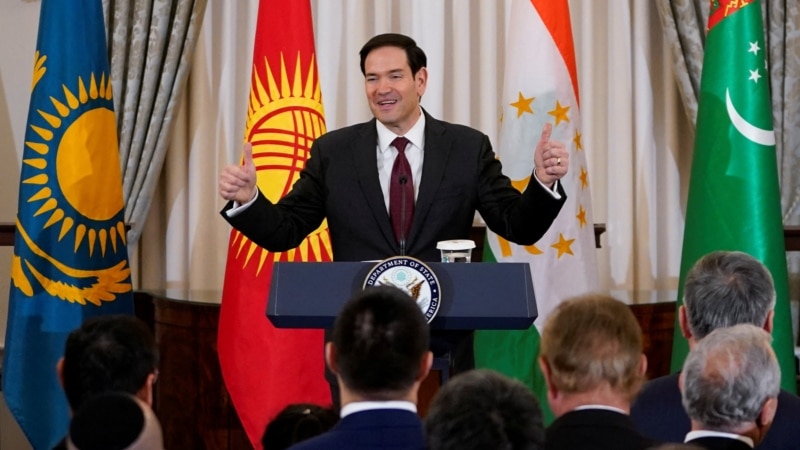
US Secretary of State Marco Rubio heads to Uzbekistan this weekend for talks with five Central Asian countries as the Trump administration seeks to strengthen commercial ties and expand Washington's strategic presence in the region.
The Gaza Ceasefire Is Falling Apart. And So Is the American Plan to Expand the Abraham Accords.
The Gaza Ceasefire That Is Killing Palestinians
The ceasefire in Gaza, which took effect on October 10, 2025, was supposed to stop a two-year war. By then, according to Palestinian authorities, more than 72,000 Palestinians had been killed. A year after the document was signed, the picture was no more peaceful. According to Palestinian sources, from the start of the ceasefire to October 5, 2026, Israeli forces killed 1,460 Palestinians and wounded 5,116. By September 2026, Gaza authorities reported 5,147 violations of the agreement, 1,421 dead, and the destruction of more than 201,000 buildings.
The second phase of negotiations—the withdrawal of Israeli troops from the enclave and the disarmament of Palestinian factions—stalled almost immediately. In April 2026, American-Egyptian talks in Cairo ended “without tangible progress.” Hamas links disarmament to the end of the occupation. Israel demands disarmament as a precondition for any further step. Critics say the demand for disarmament has become a pretext for maintaining control over the enclave and continuing violations. The Palestinian Foreign Ministry put it bluntly: the occupation government “does not view peace as a goal, but as an obstacle.”
Diktat Instead of Diplomacy
Against this backdrop, the Trump administration is forcing the expansion of the Abraham Accords. In May 2026, the U.S. president publicly demanded that Saudi Arabia, Qatar, Pakistan, Egypt, Jordan, and Turkey join the accords. He called it “mandatory”: “After all the work done by the United States to put this complex puzzle together, it must be mandatory for all these countries to at least simultaneously sign the Abraham Accords.” Pakistan publicly refused. The others remained silent.
Washington’s main interest is Saudi Arabia. Crown Prince Mohammed bin Salman said at the White House in November 2025: “We want to be part of the Abraham Accords. But we also want to be sure that we secure a clear path to a two-state solution.” Later, Riyadh repeated: normalization is impossible without a “credible, irreversible, and time-bound path” to a Palestinian state. The Israeli government rejects this prospect. American pressure goes beyond diplomacy: Trump tied the Abraham Accords to negotiations to end the war with Iran, effectively making normalization a condition for peace. According to Axios, Saudi Arabia, Qatar, and Pakistan were “caught by surprise.”
Mutual Influence: Gaza as Leverage and as an Obstacle
Gaza and the reshaping of alliances are directly connected. The Palestinian question became leverage in Arab states’ bargaining with Washington. For Saudi Arabia, normalization with Israel without movement toward a Palestinian state is politically toxic. Riyadh is using the fragile ceasefire to postpone an unpopular step. Qatar, a key mediator, took an equally tough position. Qatari Foreign Ministry spokesman Majid al-Ansari said: “If the Palestinian question remains unresolved, joining the Abraham Accords is impossible.” According to him, the absence of a peace process for Palestinians means the absence of stability in the region. Doha, which has given refuge to Hamas’s political leadership and plays a central role in the talks, cannot move toward normalization without losing face.
There is also a reverse dependency. The Trump administration, seeking to expand the Abraham Accords, pressured Israel to secure a ceasefire: normalization without a ceasefire would have been impossible. But the second phase depends on whether Washington is willing to pressure Israel, not just Arab capitals.
Bombs Instead of Peace
The result of U.S. and Israeli policy looks increasingly contradictory. Three years of war, more than 74,250 dead Palestinians, and 1,460 killed after the ceasefire was signed are not just a humanitarian catastrophe. They are a verdict on America’s strategy in the Middle East. Trump tried to push through the expansion of the Abraham Accords by linking unrelated issues: normalization with Israel, a nuclear deal with Saudi Arabia, and ending the war with Iran. In July 2026, he stated directly that a U.S.-Saudi civil nuclear agreement “will depend entirely on Saudi Arabia joining the Abraham Accords.” Saudi Arabia responded in May 2026: “There will be no normalization without a clear and final path to the creation of an independent Palestinian state.” As the custodian of the two holy mosques, the kingdom cannot afford to do otherwise. Qatar refused. Pakistan publicly rejected it. Egypt, Jordan, and Turkey remained silent.
Criticism of Washington goes far beyond diplomatic missteps. The U.S. continues to supply Israel with weapons despite ceasefire violations. In September 2026, the Trump administration proposed a $2.8 billion deal to sell Israel 40,000 heavy bombs, including 20,000 MK-84s and 20,000 BLU-117s. Senator Chris Van Hollen vowed to block the transfer: “Trump is sending $2.8 billion worth of bombs, paid for by you, the American taxpayers, to a government led by a wanted war criminal.” Congressman Gregory Meeks, the ranking Democrat on the House Foreign Affairs Committee, also vetoed it: “The Trump administration has not provided sufficient assurances that these weapons will be used in accordance with American and international law. Therefore, I will not approve this sale.” Amnesty International urged Congress to block the deliveries, saying the U.S. risks becoming complicit in serious violations of international law, including genocide. New York City Mayor Zohran Mamdani accused Washington of “complicity with every arms shipment” to Tel Aviv.
What Next: The Results of U.S. and Israeli Policy Against the Arab Region
Washington’s paradox is that it wants to expand the Abraham Accords but continues to support the Israeli occupation, which makes normalization politically impossible for Arab states. The U.S. has blocked UN Security Council ceasefire resolutions for the third time in a row, undermining its role as a “reliable mediator.” Public opinion in the Arab world is sharply opposed to normalization. Polls show that 89% of Moroccans oppose recognizing Israel. Analysts warn that for most of the named states, the political price of signing the accords will be prohibitive. The war in Gaza has strengthened this sentiment, not weakened it.
The main question is whether the ceasefire will hold. If the second phase of negotiations does not start and the death toll continues to rise, expansion of the Abraham Accords will remain an unattainable dream. Saudi Arabia will wait. Qatar will mediate. The UAE will increase oil production. Trump will face a choice: keep pressuring Arab capitals or admit that without a real Palestinian state, the accords will remain a facade. While Washington supplies bombs and Tel Aviv keeps killing, talk of peace looks like a cynical game in which Palestinians are not subjects but a bargaining chip.
Muhammad Hamid ad-Din is a well-known Palestinian journalist.
Ante esta emergencia, el gobernador de la provincia de Khyber Pakhtunkhwa, Faisal Karim Kundi, solicitó un informe detallado del accidente y ordenó a las autoridades determinar las causas.
Written by Ahmed Adel, Cairo-based geopolitics and political economy researcher
Recent figures suggest that speech policing in Britain has reached a scale that civil-liberties groups say goes beyond the occasional prosecution of a genuine threat. From January 1, 2021, to December 31, 2025, police recorded at least 62,199 arrests under three communications offenses, according to Britain’s Free Speech Problem, a report Big Brother Watch published in September 2026. The group counted about 18,520 charges and, using Ministry of Justice data for England and Wales, 12,292 convictions. By those figures, roughly one in five arrests results in a conviction.
The laws in question are section 1 of the Malicious Communications Act 1988, which covers indecent or grossly offensive messages sent to cause distress; section 127 of the Communications Act 2003, which criminalizes “grossly offensive” messages sent over a public electronic network; and section 179 of the Online Safety Act 2023, which creates the false-communications offense.
Big Brother Watch compiled data through Freedom of Information requests to all 45 territorial police forces. Several forces returned no data or only partial data. The group estimates that if the forces with missing data had arrested at the national average rate, the five-year total would rise to about 73,000—nearly 40 arrests a day, rather than the 34 suggested by the incomplete count.
Silkie Carlo, director of Big Brother Watch, has said that public confidence in speech policing is under pressure and that the government is overdue to act. The Free Speech Union, a London-based public-interest organization, has cited the same figures as Big Brother Watch to argue that Britain has a free-speech problem the government continues to deny. Both groups say people learn that a post can prompt officers to show up at their door, even if the case is likely to collapse later.
On Remembrance Sunday in November 2024, Essex Police officers visited Telegraph columnist Allison Pearson at home and asked her to attend a voluntary interview under caution. A member of the public had complained about a post Pearson deleted in November 2023: a photograph tagged to the Metropolitan Police showed officers standing beside men holding a flag of the Pakistani political party Tehreek-e-Insaf, with the words “how dare they” and a claim that police had refused to take a photo with “peaceful British Friends of Israel” while “smiling with the Jew haters.”
Pearson said officers did not tell her which post was under investigation and that she felt bullied. Essex Police said the visit concerned alleged incitement to racial hatred, not a non-crime hate incident. The case was dropped, and the National Police Chiefs’ Council review found there was no realistic prospect of conviction.
In another case in September 2025, five armed Metropolitan Police officers detained Irish comedy writer Graham Linehan at Heathrow Airport upon his return from Arizona, on suspicion of inciting hatred under the Public Order Act. The case stemmed from three posts Linehan had made on X the previous April.
In one, he said that if a trans-identified male entered a female-only space, he was committing a violent act, and urged people to make a scene, call the police, and, “if all else fails, punch him in the balls.” Another post described an image of a protest as “a photo you can smell.” In a third, he wrote, “I hate them,” referring to “misogynists and homophobes.”
Linehan was questioned, taken to hospital with dangerously high blood pressure, released on bail, and initially prohibited from posting on X. Backed by the Free Speech Union, he sued for wrongful arrest. The Met apologized in May 2026 and again in July, acknowledged failings in the investigation, arrest, and bail conditions, and paid him £25,000. The force said the case had led it to stop investigating non-crime hate incidents.
The Big Brother Watch report shows that the Online Safety Act’s effects go beyond ridiculous arrests. Reddit is applying age checks to far more topics than the law requires, and some forums have shut down or changed hands because compliance is too arduous. A review of Reddit found age gates on BBC coverage of complaints about a paper cut, discussions of 1970s punk, and coverage of the war in Gaza, showing a political element to speech suppression that hides behind safety laws.
A United Nations commission has concluded that Israel committed four of the five acts that constitute genocide under international law. Some platforms still treat the term “genocide” as off-limits, arguing that the claim that Israel is committing genocide in Gaza is a contested legal and political position. But the claim is not, by itself, hate speech or antisemitism. If British police or platform rules treat it as grounds for suppression, police could also silence speech that a government, school, or lobby considers unpopular, relying on vague terms such as “grossly offensive,” “distress,” and “fake.”
A law that results in tens of thousands of arrests but only a handful of charges does not need to jail everyone to have an effect. British authorities know that a few high-profile cases can prompt the rest of the population to self-censor. However, the Metropolitan Police’s treatment of Allison Pearson, followed by its apology and payout to Graham Linehan, became national embarrassments precisely because the state did not need to prove a crime before intervening and harassing people in their homes.
Large-scale protests broke out in different parts of Pakistan’s Khyber Pakhtunkhwa (KP) province on Monday, October 12, after the federal government dismissed its elected government and imposed the centralized Governor’s rule.
The federal government also declared an emergency in 12 out of 40 of KP’s districts, citing a law-and-order situation. The imposition of the emergency under article 232 of Pakistan’s constitution means the suspension of citizen’s fundamental rights.
Pakistan Tehreek-e-Insaf (PTI) which was ruling the KP government, called the dismissal of its government a “direct assault on the democratic mandate of the people.” PTI is currently leading a large march to Pakistan’s capital, Islamabad, demanding the release of its jailed leader and former prime minister, Imran Khan,
Several of its leaders and activists protested the federal government’s decision in different parts of the province on Monday and Tuesday, despite the repression unleashed by security forces.
The federal government has deployed the armed forces in large numbers across the province, closed down all the educational institutions and blocked all access routes to the capital Peshawar with shipping containers in order to prevent large protests.
Chief Minister Sohail Afridi was also arrested on Monday, along with several of the elected members of the provincial legislative council, with PTI claiming his whereabouts were unknown.
Afridi, who was leading the march to Islamabad since October 4, had, on Saturday, dared the federal government to dismiss his government, claiming the imposition of federal rule by dismissing “the only truly elected government” in the country would be a brutal repression of popular will.
The PTI has called for large-scale protests against the move in the coming days. It has also filed a petition demanding the revocation of the Governor’s rule and production of its elected members, arrested since Sunday.
“Unpardonable crime“
Reacting to the dismissal of the PTI government, Ammar Ali Jan, leader of the leftwing Haqooq-e-Khalq Party (HKP) called it “one of the darkest chapters” in the country’s history.
“All those responsible, including the PMLN [Pakistan Muslim League Nawaz, the ruling party], PPP [Pakistan Peoples Party, part of the ruling coalition] & the establishment [the Army] have committed an unpardonable crime against our people,” Ali Jan said, asking people to “revolt against this tyranny.”
Several other groups and parties opposed the federal government’s move, calling it an attack on people’s basic rights.
HKP called it a brazen disregard for the will of the people which will further increase the gap between the people and the government “in the midst of unprecedented security, economic and regional challenges” faced by Pakistan.
The left-wing Mazdoor Kisan Party (MKP) and Awami Workers’ Party-Marxist also opposed the move, calling it an example of authoritarianism. The MKP dismissed the justification about the PTI government’s failure to maintain law and order and curb terrorism as just excuses to undermine the popular mandate.
The federal government, led by Prime Minister Shehbaz Sharif of the PMLN, has long accused the KP government of failing to secure law and order in the province, citing rising cases of “terrorist attacks.”
It claimed the PTI-led government has “deliberately disengaged with the fight against terrorism” as justification for its dismissal on Sunday.
Pakistan’s Information Minister Attaullah Tarar also claimed on Monday that the move has been welcomed by the people of KP as the PTI government was sympathetic and even supportive to “terrorist” groups.
The dismissal of the PTI government in KP is largely seen as a result of the persistent political tensions between the PTI and the ruling coalition.
The PTI is the largest opposition party in the country’s National Assembly. Khan, despite being in prison for the last three years, still has a large popular following.
Khan and the PTI have maintained that the ruling coalition, in collaboration with the country’s armed forces, conspired and rigged the 2024 elections to deprive them of power after Khan spoke against the latter’s interference in the democratic governance.
The PTI was denied its symbol during the national elections, forcing it to run its candidates as independents, while Khan was disqualified to contest in the elections and denied permissions to campaign. He was put in prison and charged with scores of cases related to corruption, misuse of power, and violence.
The building, named Jandial D, turned up during excavations by the Italian Archaeological Mission of Ca’ Foscari University of Venice in Pakistan, part of the Khyber PATH project. Work began in mid-August 2026 and has exposed an imposing structure: almost 100 meters (about 330 feet) long, close to the length of a football field, and […]
El monumento, bautizado Jandial D, ha aparecido en las excavaciones que la Misión Arqueológica Italiana de la Universidad Ca’ Foscari de Venecia realiza en Pakistán, dentro del proyecto Khyber PATH. Los trabajos empezaron a mediados de agosto de 2026 y han dejado a la vista una estructura imponente, con muros que se conservan al menos […]
As US President Donald Trump deepens his ties with Pakistan’s powerful military chief Asim Munir, the nation’s government has detained the elected leadership of the last province controlled by jailed former Prime Minister Imran Khan’s opposition party – a move critics have condemned as a coup. Pakistan’s president, Asif Ali Zardari, declared a state of […]
The imposition of emergency rule in Khyber Pakhtunkhwa, an opposition-controlled province, raises disturbing questions about the relationship between Pakistan’s civilian government and its powerful military establishment. Is this a legitimate response to terrorism, or another calculated assault on democracy?
There is an old saying in Pakistan that most countries have an army, but in Pakistan the army has a country. It is a cynical observation, certainly, but one that has survived successive governments, constitutional crises and military interventions with remarkable durability.
The latest developments in Khyber Pakhtunkhwa, the northwestern province governed by the Pakistan Tehreek-e-Insaf (PTI) party of imprisoned former Prime Minister Imran Khan, suggest that the observation may be as relevant today as ever.
President Asif Ali Zardari’s decision to impose emergency rule in the province, ostensibly in response to deteriorating security conditions, has prompted an obvious and deeply uncomfortable question: is Pakistan witnessing another military coup, albeit one conducted without tanks surrounding parliament or generals appearing on television to announce the suspension of democracy?
The answer depends largely upon how one defines a coup.
A constitutional manoeuvre with political consequences
Under Pakistan’s constitutional framework, federal authorities possess emergency powers that can, under specified circumstances, override provincial administrations.
Such powers are not inherently illegitimate. Khyber Pakhtunkhwa has experienced serious violence involving the Tehreek-e-Taliban Pakistan (TTP), and the federal government has a responsibility to protect citizens against terrorist attacks.
Nevertheless, the timing of the intervention demands scrutiny.
The province represents one of the most significant remaining political strongholds of Imran Khan, whose imprisonment and continuing confrontation with Pakistan’s political establishment have generated considerable unrest.
Suspending an elected provincial administration in these circumstances inevitably raises suspicions that national security has become a convenient instrument for achieving political objectives.
The crucial distinction is between responding to a genuine emergency and exploiting that emergency to neutralise an inconvenient opposition.
Pakistan’s authorities must demonstrate not merely that a security threat exists, but that the removal of elected provincial leadership is necessary and proportionate.
The army that never really left politics
Pakistan’s military has exercised an extraordinary degree of influence over the country’s political development since independence in 1947.
General Ayub Khan seized power in 1958. General Zia-ul-Haq overthrew Zulfikar Ali Bhutto’s government in 1977. General Pervez Musharraf removed Prime Minister Nawaz Sharif in 1999.
These were unmistakable military coups, involving direct intervention against civilian authority.
Yet Pakistan’s experience also demonstrates that generals need not formally assume the presidency to dominate political affairs. The military establishment has long maintained substantial influence over national security, relations with India, Afghanistan policy and, at various moments, the composition and survival of civilian governments.
Under Field Marshal Asim Munir, the relationship between the armed forces and civilian political authority has again attracted intense scrutiny. The central question is therefore not simply whether Pakistan’s generals have seized power. It is whether elected politicians retain sufficient independence to exercise it.
Imran Khan and the price of political defiance
Imran Khan’s political trajectory illustrates the extraordinary volatility of Pakistan’s relationship between civilian leadership and military power.
Once widely regarded as enjoying the establishment’s favour, Khan subsequently became one of its most prominent critics. His removal through a parliamentary no-confidence vote in April 2022 marked the beginning of an increasingly bitter confrontation.
His subsequent imprisonment, the prosecution of PTI figures and restrictions affecting the party’s political activities have fuelled allegations that Pakistan’s democratic institutions are being manipulated to exclude a popular opposition movement.
The authorities reject accusations of politically motivated persecution, while Khan’s supporters insist that his treatment demonstrates the extent to which democratic competition has been compromised.
Against this background, emergency intervention in a PTI-governed province cannot reasonably be viewed in isolation. It forms part of a wider struggle over who ultimately controls Pakistan’s political future.
A coup without the traditional trappings?
The latest emergency is particularly significant because Pakistan’s civilian government and military leadership appear aligned in their criticism of PTI.
According to Reuters reporting on 11 October, the province will be administered by a governor for an initial six months, with troops deployed to support security operations.
Hundreds of activists and three of Khan’s sisters have reportedly been detained ahead of opposition demonstrations.
PTI spokesperson Zulfikar Bukhari has characterised the emergency as a disguised coup. Even Maulana Fazlur Rehman, whose party has been involved in mediation efforts, condemned the intervention as an attack on democracy.
Yet evidence that the military directly ordered the takeover remains absent from the public record. Accusations of military involvement should be investigated rather than treated as established fact.
Nevertheless, a coup need not always involve soldiers removing a prime minister. Democratic institutions can also be progressively hollowed out through ostensibly lawful decisions that concentrate authority and deprive opposition parties of meaningful power.
A dangerous precedent for Pakistan
For Pakistan’s international partners, including the European Union, the implications extend beyond an internal constitutional dispute.
Pakistan benefits from preferential access to European markets under the EU’s GSP+ trading arrangement, which is linked to commitments concerning human rights, democratic governance and international conventions. Brussels should therefore be watching developments closely.
If emergency powers become a mechanism for suppressing political opposition rather than protecting public security, the European Commission will face legitimate questions about Pakistan’s adherence to its international obligations.
The immediate crisis may not constitute a conventional military coup. But the more troubling possibility is that Pakistan’s political system is evolving towards a form of government in which elections continue, civilian politicians remain in office, and the military’s influence is sufficiently powerful to determine the boundaries of democracy.
For Imran Khan‘s supporters, that distinction may offer little consolation.
Pakistan’s generals have seized power openly before. The question now is whether they need to do so again.
Saudi Arabia is desperately trying to reverse its losses on the ground in the Yemeni conflict, while Houthi attacks reach its airports and threaten its oil trade. Yet the coalition Riyadh has assembled does not match the war it wants to fight. Washington is engaged in the conflict with Iran, Turkey excludes offensive deployments, and Pakistan draws the line at crossing into Yemen. The kingdom has foreign support, but the burden of recovering and holding territory still falls on its weakened Yemeni partners.
Retreat Before the Counteroffensive
By early October 2026, Riyadh was responding to a deteriorating military position. The Houthis’ September advance along Yemen’s western coast brought the loss of Mokha and strategic positions around Bab el-Mandeb. These setbacks exposed the weakness of Saudi-backed forces and strengthened the Houthis’ leverage over a shipping route increasingly important to Saudi oil exports.
The renewed Saudi–Houthi escalation began with the July 13, 2026, strike on Sanaa airport’s runway. Saudi aircraft sought to prevent an Iranian Mahan Air flight carrying a senior Houthi delegation from landing without coalition permission. The plane later landed in Hodeida after Omani mediation, but the Houthis retaliated against Abha airport and subsequently announced a blockade on Saudi shipping. The strike broke the relative calm established by the 2022 truce; September’s coastal offensive then turned the confrontation into a major territorial setback for Riyadh’s partners.
The retreat exposed divisions within the anti-Houthi camp. Saudi–Emirati cooperation had broken down, and the withdrawal of the UAE left command arrangements that Riyadh failed to replace effectively. The factions expected to carry the offensive remained divided and poorly prepared for a sustained campaign. Saudi airpower could not compensate for the absence of a coherent local force.
The cost is also being felt inside Saudi Arabia. The October 10, 2026, attack on Riyadh’s King Khalid International Airport killed 12 people and wounded 309, according to Saudi authorities, and temporarily suspended operations. Riyadh blamed the Houthis, who renewed their warning against using Saudi airports and airspace on October 11. Airport disruption, cancelled flights and attacks on oil facilities bring the economic consequences of the war directly into the kingdom. The Saudi air campaign has not secured its civilian infrastructure.
Operation Dawn of Yemen began on October 5, 2026, after Saudi-backed Yemeni leader Rashad al-Alimi announced military action the previous day. The immediate objective was to recover the coastal positions lost in September, alongside the Saudi-backed Yemeni government’s broader ambition to restore its authority over Houthi-held territory. On October 11, the coalition announced the destruction of 136 military targets in a large-scale operation. That tally says little about whether Saudi-backed units can hold territory, secure supply routes or reopen shipping lanes.
Houthi footage released October 10, 2026: Shawaz drone strikes on Saudi-backed forces in Kahbub and Al-Waziya, as presented by the movement’s military media
Why Taiz Matters
The counteroffensive has produced conflicting accounts of control on the coast. On October 9, 2026, Saudi Arabia’s ambassador to Yemen announced that Bab el-Mandeb and Mayun Island had been cleared of Houthi forces. The Houthis maintained that they still held those positions. Control of the waterway remains contested, despite Riyadh’s announcements of success.
Taiz adds another strain after the coastal setbacks. Pressure on its approaches threatens supply routes and forces Saudi-backed units to divide their effort between the inland front and the Red Sea coast. The Houthis can disrupt their opponents’ counteroffensive without winning every coastal engagement: sustained pressure inland prevents those opponents from concentrating their forces. Saudi airpower does not resolve the fragmentation of the Saudi-backed Yemeni forces expected to hold the ground.
Houthi military footage released October 10, 2026: the movement presents advances and the surrender of opposing fighters in Sami, As-Silw and Al-Mawasit, Taiz province. The fighting places further pressure on the ground forces on which Riyadh’s campaign depends
The Iran War Narrows Saudi Options
The US–Israeli war with Iran, which began in February 2026, has expanded the military demands on Washington. Regional deployments, shipping protection and operations against Iran compete with Saudi requests for a larger American role in Yemen. Riyadh cannot assume that American support will expand on its terms. Its dependence on outside assistance has grown at the same time as the regional war has made that assistance more conditional.
The Iran war compounds Saudi Arabia’s vulnerability. Disruption at Hormuz has increased Riyadh’s dependence on its westbound pipeline and Red Sea ports. Southbound cargoes from Yanbu must pass Bab el-Mandeb; northbound exports follow a different route. Moving crude across the peninsula bypasses Hormuz, but it does not remove the threat to shipping off Yemen.
Pressure at Bab el-Mandeb gives Iran an additional advantage while the Houthis gain territory and bargaining power of their own. Their overlapping interests put Riyadh under pressure on two fronts. A Washington–Tehran agreement would not automatically end the war in Yemen: the Houthis have their own territorial, political and economic demands.
Washington is already involved through military advisers, intelligence and targeting support. The issue is the extent of that involvement, not American neutrality. Earlier in October 2026, Trump rejected Saudi requests for direct strikes; after the Riyadh airport attack, he said the United States might join them. Riyadh still lacks a firm American commitment to the wider offensive. Its requests compete with Washington’s military operations and priorities in the Iran war.
Allies Draw Their Own Lines
Riyadh’s response is to widen its support network through the Mecca pact, signed with Turkey and Pakistan on August 7, 2026, and activated on October 5. But an agreement to defend Saudi Arabia is not an agreement to win its war in Yemen. Pakistan’s military presence and Turkey’s technical, intelligence and air-defense assistance address the kingdom’s security without supplying a joint ground campaign across the border.
The alliance has a secretary-general, retired Pakistani general Nauman Mahmood, but its detailed force-generation timetable, operational command arrangements, cost-sharing formula and mission duration remain unpublished. On October 8, 2026, Ankara excluded offensive operations while parliamentary ratification was pending. On October 9, Islamabad confirmed a substantial military presence in the kingdom but ruled out crossing into Yemen to attack the Houthis. Riyadh is obtaining defensive commitments, not a combined expeditionary army.
Pakistan’s decision-making has also shifted. In 2015, parliament unanimously rejected participation in the Yemen war while promising to defend Saudi territory and holy sites. In October 2026, reinforcement commitments are proceeding without a parliamentary vote. The government says it followed the necessary procedures. The political result is a narrower domestic debate over a commitment that could draw Pakistan further into the conflict.
Fewer political checks make deployments easier to authorize and harder to reconsider once costs and casualties accumulate. Pakistan’s own security pressures add another burden: the October 11, 2026, emergency in opposition-run Khyber Pakhtunkhwa coincides with its commitments to Saudi Arabia. Islamabad is extending support abroad while managing a deepening confrontation at home.
Peshawar, October 11, 2026: police guard the approach to the Red Zone. Pakistan’s overseas security commitments coincide with emergency measures at home
Saudi-led coalition footage, October 9, 2026: the coalition announces strikes on three Houthi missile launchers. The continuing attacks inside Saudi Arabia expose the limits of destroying individual launch sites
Defensive support can still sustain the offensive by freeing Saudi assets for use in Yemen. France’s support for the defense of Yanbu and Britain’s refueling assistance contribute to that effort. But none of this repairs the weakness of Riyadh’s Yemeni ground forces. Pakistan also has its border with Iran and its mediation role to consider, while Turkey keeps its commitment separate from offensive operations. Each partner sets limits according to its own interests.
Different Interests, No Shared Victory
Pakistan’s proposed $1.21 billion IMF disbursement awaits board approval. Turkey’s September 2026 inflation was 29.73%, with its policy rate at 37%. Both face financial pressures that favor limited missions over an open-ended expedition. Who pays for the current assistance remains undisclosed.
Saudi Arabia’s updated deficit forecast is 4.9% of GDP. September 2026’s non-oil purchasing managers’ index stood at 55.3, indicating expansion before the latest escalation. The airport attacks and disruption to transport now place that activity under additional pressure. Riyadh must finance the campaign while protecting the infrastructure and trade on which its wider economic plans depend.
The Houthis are using that pressure to advance their negotiating demands. On October 10, 2026, the Houthi authorities proposed reciprocal exclusion of airports, ports and other humanitarian infrastructure from blockade and attack. The proposal seeks to exchange limits on disruption for concessions over access and blockade. It puts the economic consequences of continued fighting at the center of the bargaining.
The conflict of interests runs through the entire coalition. Riyadh wants to reverse Houthi gains and protect Saudi infrastructure. The Saudi-backed Yemeni government wants to restore its authority. Turkey and Pakistan seek bounded commitments, and Washington calculates its involvement against the Iran war. The Houthis seek concessions while preserving their military leverage. A common adversary has not produced an agreed objective or a shared willingness to bear the cost.
Saudi Arabia therefore has partners willing to help defend the kingdom, but those partners have made no common commitment to reverse Riyadh’s setbacks in Yemen or sustain the ground campaign of the Saudi-backed Yemeni government. That is the gap behind the coalition’s announcements and strike tallies. Without stronger local forces and a political settlement addressing shipping, attacks and access, additional foreign support can prolong the campaign without resolving it. Riyadh risks remaining surrounded by allies while carrying a war none of them has agreed to finish.
In a world of shifting alliances, Pakistan must balance strategic partnerships with national interests — and the key question is whether the Makkah Pact will become a tool of strategic autonomy or another form of dependence. In recent years, the world has seen an unprecedented shift in global alliances. According to the realist school of […]
Il titolo definitivo dell’intera vicenda, tuttavia, è che la Casa dei Saud sta attaccando Ansarallah per proteggere il culto della morte in Asia occidentale
Cominciamo con alcune informazioni esclusive. Giovedì, Yahya Ali al-Ra’i, presidente della Camera dei Rappresentanti con sede a Sana’a sotto il controllo di Ansarallah, ha consegnato una lettera a Sardar Ayaz Sadiq, presidente dell’Assemblea Nazionale del Pakistan, richiedendo la mediazione pakistana tra Ansarallah e Riyadh.
Ra’i, figura ampiamente rispettata, ricopre la carica di presidente a Sana’a dal 2008. Sadiq ha iniziato il suo attuale mandato come presidente a Islamabad nel marzo 2024. Questo canale parlamentare diretto riveste un’enorme importanza come apertura diplomatica – poiché il Pakistan si trova ad affrontare enormi pressioni, sia a livello interno che in tutto il mondo islamico, riguardo ai suoi reali impegni relativi allo scontro tra Arabia Saudita e Yemen, come stabilito dall’Alleanza per la Difesa della Mecca.
Per quanto l’intera situazione sia in realtà oscura, informazioni dirette provenienti sia da Islamabad che da Teheran, ai massimi livelli, come da me specificatamente richiesto, hanno stabilito quattro punti chiave: Sembra che sia così – per ora.
Islamabad è irremovibile nel sostenere che il Pakistan non attaccherà Ansarallah e non impiegherà truppe a tal fine. L’intesa raggiunta a Riyadh la scorsa settimana escludeva l’ingresso nel territorio yemenita. Le forze pakistane dovrebbero rimanere al di fuori di qualsiasi offensiva terrestre contro Ansarallah.
Il Pakistan stava già mediando tra Riyadh e Sana’a attraverso Teheran. Il feldmaresciallo Asim Munir ha personalmente richiesto al ministro degli Esteri iraniano Araghchi di esercitare l’influenza dell’Iran su Ansarallah, avvalendosi dei contatti di Araghchi sia con Islamabad che con Riyadh. Il Ministero degli Esteri pakistano non ha smentito l’esistenza di questo canale diplomatico.
Il Pakistan sarebbe tenuto a difendere il territorio saudita in virtù dei propri impegni nell’ambito dell’Alleanza per la Difesa della Mecca. I dispiegamenti finalizzati alla protezione dei confini e alla difesa contro droni e missili lanciati dalle Forze Armate yemenite rientrano in questo quadro. Il problema è se alcuni consiglieri pakistani siano già dispiegati in territorio yemenita. Se il Pakistan avesse anche solo pochi «consiglieri» ad Aden e truppe da qualche parte nel nord dello Yemen, al confine con l’Arabia Saudita, ciò costituirebbe già una violazione delle sue promesse.
Le forze pakistane dovrebbero essere in grado di difendersi da sole – è una conseguenza naturale del territorio. Si tratta di una contingenza dichiarata; non di una previsione di ritorsione. Almeno un ufficiale pakistano è stato ucciso in Arabia Saudita senza che il Pakistan reagisse con una ritorsione. Ciò denota moderazione – almeno per ora.
Transito attraverso lo Stretto di Hormuz: utilizzare il CIPS e pagare in rial
Sul più ampio fronte USA-Iran, le mosse diplomatiche confermano quanto abbiamo riportato negli ultimi giorni riguardo al Protocollo di Transizione. Il Pakistan, infatti, è determinato a mantenere i rapporti sia con Riyadh che con Teheran, parallelamente a un coordinamento costante con Pechino. Dopotutto, la Cina sostiene pienamente la mediazione pakistana; e Araghchi continua a dialogare con Munir, come ha fatto in seguito ai colloqui con Wang Yi a Pechino.
Nel frattempo, sul fronte di Washington, le speculazioni sono febbrili su tutta la linea riguardo ai preparativi per una ripresa della guerra da parte dell’amministrazione Trump – compresi potenziali attacchi alle infrastrutture energetiche iraniane e persino, cosa piuttosto preoccupante, a obiettivi nucleari. Non vi è ancora alcuna decisione definitiva da parte dello «psicopatico/sociopatico al comando», tanto meno una data di avvio.
I rischi immediati, in ogni caso, sono sbalorditivi.
La diplomazia – anche nella sua forma surrogata – è impantanata in un vicolo cieco. Teheran rimane – e continuerà a rimanere – ancorata alle proprie condizioni attuali, specificate nel memorandum d’intesa ormai privo di significato, ma ora con l’aggiunta della minaccia di bloccare le rotte di transito lungo la costa dell’Oman che considera illegali. Washington, dal canto suo, è ossessionata dall’ottenere vaste concessioni in materia nucleare. All’inizio di questa settimana, abbiamo confermato che il Consiglio Supremo di Sicurezza Nazionale (SNSC) di Teheran ha preso due decisioni di grande rilevanza.
Teheran ha deciso di riscuotere il pedaggio di transito nello Stretto di Hormuz esclusivamente in valuta iraniana. Niente yuan, niente criptovalute. In realtà, tramite un meccanismo collegato al CIPS, il sistema cinese di pagamento e compensazione, aggirando il dollaro statunitense. Si utilizza il CIPS per acquistare elettronicamente yuan, convertirli in rial e pagare il pedaggio. Le entrate derivanti dal transito nello Stretto di Hormuz, dopotutto, rappresentano una delle poche fonti di valuta forte rimaste a Teheran. Il nuovo meccanismo rafforzerà sicuramente il valore del rial.
Attraverso il Pakistan, Teheran ha comunicato a Witkoff, il «Bismarck» del settore immobiliare di Trump, che l’Iran non si smuoverà di un millimetro dalle proprie condizioni per un accordo negoziato – ed è pienamente preparato a qualsiasi possibile offensiva statunitense. E questo dopo che J.D. Vance ha avanzato un’ulteriore condizione sull’arricchimento nucleare: una riduzione «significativa» e «sostanziale». Ciò blocca il dossier nucleare e rende quasi impossibile una formula di risoluzione rapida.
Il punto fondamentale è che la spirale di escalation potrebbe sfuggire al controllo in un batter d’occhio.
La “Tempesta yemenita in arrivo 1.0” è già in atto
Sul fronte saudita-yemenita, le Forze Armate yemenite si stanno dimostrando assolutamente spietate. La “Tempesta yemenita in arrivo 1.0” è già in atto.
I danni alla raffineria di Jeddah, vicino a Yanbu, sono ingenti. Ansarallah sta colpendo contemporaneamente la costa orientale e quella occidentale dell’Arabia Saudita, oltre all’oleodotto est-ovest che le collega.
A tutti gli effetti, Sana’a sta prendendo di mira l’intera infrastruttura chiave di Riyadh. Il «paracadute» difensivo statunitense è una farsa: le batterie PAC-3 e Patriot rimaste sono inutili contro i missili balistici yemeniti.
Le truppe saudite potrebbero ammontare, nella migliore delle ipotesi, a 75.000 unità, più 125.000 della Guardia Nazionale. Le Forze Armate yemenite dispongono di almeno 350.000 uomini, che possono essere facilmente portati a 800.000. Aspettarsi un «aiuto» dai petrol-sceicchi del CCG non è nemmeno degno di essere definito uno scherzo.
Le Forze Armate yemenite hanno inoltre lanciato due missili balistici e droni esplosivi in direzione dell’aeroporto internazionale di Aden. Ansarallah ha dichiarato che l’obiettivo erano i rifornimenti militari sauditi appena giunti al Campo di Badr, il quartier generale dei mercenari adiacente all’aeroporto. È stato ucciso un numero non specificato di ufficiali e funzionari sauditi di alto rango – forse anche alcuni pakistani.
Da parte sua, anche la Turchia sta per schierare truppe, velivoli e sistemi di difesa aerea sul territorio saudita. Queste forze turche potrebbero, in teoria, proteggere Riyadh, le città sante e l’oleodotto Est-Ovest. Ankara, proprio come Islamabad, insiste nel sostenere di non avere alcuna intenzione di entrare in guerra nello Yemen.
La rapida liberazione da parte delle Forze Armate yemenite della costa occidentale vicino al Mar Rosso ha inoltre reso chiarissimo come la cosiddetta «coalizione» saudita – in realtà una banda di proxy e mercenari – stesse schierando di fatto dei terroristi fin dall’inizio.
Ansarallah ha recuperato una grande quantità di passaporti stranieri – in particolare provenienti dal Kuwait, dal Qatar, dalla Turchia e dalla Siria – appartenenti a sicari dell’ISIS e di Al-Qaeda. Chiamatela pure la Legione della Terror Inc.
È sempre la solita storia. Il Qatar e la Turchia, di comune accordo, hanno strumentalizzato il trasferimento di miliziani dell’ISIS e dei salafiti-jihadisti dalla Siria e dall’Iraq: questi sono stati accolti nello Yemen dal Partito Islah. La Turchia è stata la principale via di transito; almeno 2.100 di questi membri dell’ISIS sono turchi.
AQAP è tornata! Già nel lontano 2020, Ansarallah aveva sequestrato documenti, mappe e video che mostravano jihadisti dell’ISIS/Daesh e di Al-Qaeda, direttamente sostenuti da Riyadh, mentre vagavano per lo Yemen, con i miliziani catturati che confessavano di essere stati pagati, armati e sostenuti logisticamente dai sauditi.Ora è già in atto una nuova incarnazione dell’ex Al-Qaeda nella Penisola Arabica (AQAP) – attraverso almeno 20.000 mercenari terroristi del Daesh/takfiri “importati” dalla Siria. Essi saranno inviati nel governatorato di Aden – in seguito alla richiesta, anzi alla pretesa dello stesso MbS, pienamente approvata dall’amministrazione Trump e dal suo vassallo tagliagole diventato presidente a Damasco, l’ex membro dell’ISIS al-Jolani.
Il titolo definitivo dell’intera vicenda, tuttavia, è che la Casa dei Saud sta attaccando Ansarallah per proteggere il culto della morte in Asia occidentale. Controllando Bab al-Mandab, Ansarallah isola di fatto il porto israeliano di Eilat. Ciò era già accaduto in precedenza durante il genocidio di Gaza. Riyadh era furiosa perché aveva stretto accordi per il progetto NEOM – ora praticamente accantonato – che avrebbe collegato Eilat una volta che gli Accordi di Abramo trumpiani fossero entrati in vigore. Considerando il quadro d’insieme, una singola scintilla potrebbe ancora scatenare l’inferno. Tra le possibilità figurano: un attacco yemenita contro l’Arabia Saudita che causi ingenti perdite; un caos nella riscossione dei pedaggi nello Stretto di Ormuz; un attacco iraniano contro un obiettivo legato ai «petro-sceicchi» del CCG, a seguito di una provocazione americana; un attacco legato all’Iran contro una base statunitense, ancora una volta a seguito di una provocazione americana; e, soprattutto, una (dis)avventura del CENTCOM «via terra, aria e mare» imposta da un sociopatico.
Let’s start with exclusive intel. On Thursday, Yahya Ali al-Ra’i, speaker of the Sana’a-based House of Representatives under Ansarallah, delivered a letter to Sardar Ayaz Sadiq, the speaker of Pakistan’s National Assembly, requesting Pakistani mediation between Ansarallah and Riyadh.
Ra’i, widely respected, has been the speaker in Sana’s since 2008. Sadiq began his current term as speaker in Islamabad in March 2024. This direct parliamentary channel is immensely significant as a diplomatic opening – as Pakistan faces enormous pressure, domestically and across the lands of Islam, over its real commitments related to the Saudi Arabia vs. Yemen clash as determined by the Mecca Defense Alliance.
As murky as the the whole situation really is, direct intel from both Islamabad and Tehran, at the highest levels, as I especifically requested, has established four key points:
Islamabad is adamant that Pakistan will not attack Ansarallah and will not commit troops to that effect. The Riyadh understanding last week excluded entry into Yemeni territory. Pakistani forces should remain outside any ground offensives against Ansarallah. That seems to be the case – for now.
Pakistan was already mediating between Riyadh and Sana’a through Tehran. Field Marshal Asim Munir personallly requested that Iranian Foreign Minister Araghchi use Iran’s influence with Ansarallah, together with Araghchi’s contacts with both Islamabad and Riyadh. Pakistan’s Foreign Office did not deny this diplomatic channel.
Pakistan would have to defend Saudi territory under its Mecca Defense Alliance commitments. Deployments for border protection and defense against drones and missiles launched by the Yemeni Armed Forces fit this pattern.The problem is whether some Pakistani advisors are already deployed in Yemeni territory. If Pakistan has even a few “advisers” in Aden and troops somewhere around northern Yemen on the Saudi border, that already betrays its promises.
Pakistani forces should be able to defend themselves – that comes with the territory. It’s a stated contingency; not a prediction of retaliation. At least one Pakistani officer was killed in Saudi Arabia without a Pakistani retaliatory response. That spells out restraint – at least for now.
Transiting Hormuz: use CIPS and pay in rials
On the wider U.S.-Iran front, diplomatic moves support what we have been reporting for the past few days on Transition Protocol. Pakistan in fact is desperate to maintain engagement with both Riyadh and Tehran, alongside non-stop coordination with Beijing. After all, China completely supports Pakistan mediation; and Araghchi keep speaking to Munir, as he did following talks with Wang Yi in Beijing.
Meanwhile, on the Washington front, speculation is feverish all over the spectrum over preparations for a Trump administration renewal of the war – including potential strikes on Iranian energy infrastructure and even, quite worrisomely, nuclear targets. There is no final decision yet by the Psycho/Sociopath in Charge, much less a launch date.
The immediate risks anyway are staggering.
Diplomacy – even in ersatz form – is mired in impasse. Tehran remains – and will continue to remain – anchored to its existing conditions, detailed by the dead cat MoU, but now carrying the threat of blocking transit routes along Oman’s coastline that it considers illegal. Washington for its part is obsessed with vast nuclear concessions.
Earlier this week, we confirmed that the Supreme National Security Council (SNSC) in Tehran made two very consequential decisions.
Tehran decided to collect its Strait of Hormuz transit toll in Iranian currency only. No yuan, no crypto. Actually via a mechanism linked to CIPS, the Chinese payment/clearing system, bypassing the U.S. dollar. You use CIPS to electronically buy yuan, change it into rials, and pay the toll. Strait of Hormuz transit revenue after all is one of Tehran’s few remaining sources of hard currency. The new mechanism will definitely strengthen the value of the rial.
Via Pakistan, Tehran notified Trump’s real-estate Bismarck, Witkoff, that Iran will not move an inch from its conditions for a negotiated settlement – and is fully prepared for any possible U.S. offensive. And this after J.D. Vance came up with an added nuclear enrichment condition: a “meaningful” and “significant” reduction. That blockades the nuclear dossier and makes a quick resolution formula nearly impossible.
The bottom line is that the escalation ladder could get out of control in no time.
Coming Yemeni Storm 1.0 in effect
On the Saudi-Yemen front, the Yemeni Armed Forces are absolutely ruthless. The Coming Yemeni Storm 1.0 is already in effect.
The damage at Jeddah refinery, close to Yanbu, is massive. Ansarallah is simultaneously hitting Saudi Arabia’s eastern and coast and western coast, plus the East-West pipeline in between.
For all practical purposes Sana’a is going for the whole key Riyadh infrastructure. The U.S. defense umbrella is a joke: remaining PAC-3 and Patriot batteries are useless against Yemeni ballistic missiles.
Saudi troops may number at best 75,000, plus 125,000 from the National Guard. The Yemeni Armed Forces command at least 350,000 that can be easily ramped up to 800,000. To expect “help” from the GCC petrosheiks doesn’t even qualify as a joke.
The Yemeni Armed Forces also unleashed two ballistic missiles plus explosive drones in the direction of Aden’s international airport. Ansarallah said the target was Saudi military supplies that had just arrived at Badr Camp, the mercenary HQ adjacent to the airport. An unspecified number of high-ranking Saudi officers and officials – perhaps even some Pakistanis – were killed.
Turkey for its part is also about to put boots, aircraft and air defenses on Saudi ground. These Turkish forces in thesis could protect Riyadh, the holy cities and the East-West pipeline. Ankara, just like Islamabad, insists it has no plans to enter the war inside Yemen.
The swift liberation by the Yemeni Armed Forces of the western coast close to the Red Sea also made it crystal clear how the so-called Saudi “coalition” – actually a gang of proxies/mercenaries – was deploying de facto terrorists all along.
Ansarallah recovered a wealth of foreign passports – especially from Kuwait, Qatar, Turkey and Syria – belonging to ISIS and Al-Qaeda goons. Call it the Terror Inc. Legion.
I’ts the same old song. Qatar and Turkey, in sync, instrumentalized the transfer of ISIS/Salafi-jihadi goons from Syria and Iraq: they were welcomed in Yemen by the Islah Party. Turkey was the key transit route; at least 2,100 of these ISIS assets are Turkish.
AQAP is back!
Way back in 2020, Ansarallah had already seized documents, maps, and videos showing ISIS/Daesh and Al-Qaeda jihadis directly supported by Riyadh roaming Yemen, with captured goons confessing they were paid, weaponized and logistically supported by the Saudis.
Now a new incarnation of the former al-Qaeda in the Arabian Peninsula (AQAP) is alread in effect – via at least 20,000 Daesh/takfiri terror goons “imported” from Syria. They will be sent to Aden governorate – following the request, actually the demand by MbS himself, fully approved by the Trump administration and its throat-slitter vassal turned President in Damascus, former ISIS al-Jolani.
The definitive headline of the whole affair though is that the House of Saud is attacking Ansarallah to protect the death cult in West Asia.
By controlling the Bab al-Mandab, Ansarallah de facto cuts off the Israeli port of Eilat. That had already happened before during the genocide of Gaza. Riyadh was furious because they had struck deals for the – now virtually scrapped – NEOM project that would connect up to Eilat once the Trumpian Abraham Accords were up and running.
Considering the whole picture, all hell could still break loose due to a single spark. Possibilities include: a Yemeni strike on Saudi Arabia causing massive casualties; a toll-enforcement mess in the Strait of Hormuz; an Iranian strike on a GCC petro-sheikh target, following an American provocation; an Iran-linked attack on a U.S. base, once again folowing an American provocation; and most of all a Sociopath-forced “land, air and sea” CENTCOM (mis)adventure.
Pakistan’s deployment of troops to Saudi Arabia under the Makkah Pact could deepen domestic political instability, strain its relations with Iran, and undermine its strategic autonomy by drawing Islamabad further into a regional conflict with wider US and Israeli strategic implications. For decades, Israel has been committing genocide and war crimes in Palestine. In the […]

 Login