❌

Reading view

US diplomat hails Pakistan’s first W15 women’s tennis tournament

ISLAMABAD – United States Chargé d’Affaires Natalie Baker praised Pakistan for hosting its first international women’s tennis tournament at the W15 level, calling it a milestone for women’s sports and an opportunity to strengthen ties through sports diplomacy.

Speaking at the closing ceremony of the Junaid Family Foundation (JFF) Women’s W15 Futures Tournament on Saturday, Baker congratulated the organisers for bringing together 30 players from 17 countries and territories.

She said holding Pakistan’s first women’s tournament at this level was an achievement that players, officials and organisers could take pride in.

Baker said sports helped develop teamwork and resilience while building connections between people and countries that endured beyond the competition.

Referring to the 2028 Olympic and Paralympic Games in Los Angeles, she expressed hope that more Pakistani athletes would compete on the international stage.

The American diplomat also praised the players’ sportsmanship and the hospitality extended to visiting participants. She thanked Pakistan Tennis Federation President Aisam-ul-Haq Qureshi and JFF founders Ansir and Sufia Junaid for organising the event.

Baker recalled Qureshi’s achievement at the 2010 US Open, where he reached the men’s and mixed doubles finals, becoming the first Pakistani to contest a Grand Slam final. She also acknowledged his efforts to create opportunities for younger players.

France’s Astrid Cirotte won the women’s singles title, while China’s Ru Xi Wu and Thailand’s Kamonwan Yodpetch claimed the doubles championship. Baker joined Ansir and Sufia Junaid in presenting prizes to the winners.

The tournament, sponsored by the foundation led by the Pakistani-American philanthropists, took place under the theme “A Powerful Serve for Women’s Health”. It also highlighted the organisation’s work in maternal and child health, education and women’s empowerment in Pakistan.

Ansir Junaid said the competition showed how international sporting events could inspire young women and bring together policymakers, philanthropists and development partners.

“What we saw this week was about much more than tennis,” he said, adding that the event offered young people a chance to see what they could achieve.

Sufia Junaid said the foundation regarded healthcare, education and sporting opportunities as connected investments in women’s futures.

She said better maternal healthcare could give children a stronger start, while education and exposure to international athletes could help girls imagine new possibilities.

Ansir Junaid reiterated the foundation’s long-term commitment to Pakistan, saying it aimed to support initiatives capable of delivering lasting results.

The post US diplomat hails Pakistan’s first W15 women’s tennis tournament appeared first on Daily Pakistan English News.

  •  

Angel Reese inflames her haters. And is fueling the Dream toward a WNBA championship.

The world knows a lot about Angel Reese.

It knows she’s a WNBA player who inspired a Barbie, walked in a Victoria’s Secret fashion show and is a master at maximizing her brand. Her podcast is called “Unapologetically Angel.” She trademarked the term “Mebounds” in response to haters commenting on her field goal efficiency and has a marketing collab that synergizes her Reebok shoe and her deal with Hershey’s Reese’s chocolate.

It knows, too, her willingness to trash talk on the floor and motivate herself while getting in the heads of her opponents. Basketball fans have not forgotten Reese’s “you can’t see me” gesture to Caitlin Clark during the 2023 NCAA women’s national championship. Not all players and fans like Reese’s style, but getting likes is not what Reese is about.

Reese, 24, heads into Game 1 of the WNBA Finals on Saturday as the league’s defensive player of the year, poised to show that her experience level doesn’t matter at the league’s biggest stage.

Reese’s persona is built around refuting those who don’t believe in her ability and the force that she is, on or off court.

Reese, 24, heads into Game 1 of the WNBA Finals on Saturday as the league’s defensive player of the year, poised to show that her experience level doesn’t matter at the league’s biggest stage. She’s a winner through and through.

Reaching the finals is a goal Reese manifested around a year ago, when she watched the playoffs from home after missing them in each of her first two professional seasons.

Reese was the seventh overall pick in the 2024 WNBA draft. She was an All-Star in her first two seasons with the Chicago Sky but felt the franchise wasn’t taking major steps toward winning at a high level.

And she said so, questioning the Sky’s approach to roster building, including its decision to bring back franchise legend Courtney Vandersloot, who was in her late 30s. The interview went viral.

“I’d like to be here for my career, but if things don’t pan out, obviously I might have to move in a different direction and do what’s best for me,” she told the Chicago Tribune. “But while I am here, I’m going to try to stay open-minded about what I have here and maximize that as much as I can.”

The comments were remarkable both for Reese’s bluntness and her bravery. Reese spoke up about what she believed wasn’t right and demanded better — something many working women struggle to do. Already, Reese’s legacy looks to be defined by the ways she has defied expectations for women, much like how Diana Taurasi did with how she, too, talked smack on the court.

Reese and the Dream wanted the same things: to improve, to grow and to win. As a franchise, the Dream had been both slighted and underinvested in before an ownership change in 2021.

Reese’s comments weren’t well-received by her Sky teammates or the front office. She was suspended for half a game and said her language “was taken out of context.”

Seven months later, the Atlanta Dream acquired Reese, who quickly found synergy with her new team. Reese and the Dream wanted the same things: to improve, to grow and to win. As a franchise, the Dream had been both slighted and underinvested in before an ownership change in 2021.

Reese helped reinvigorate the Dream fanbase, and the team invested in her development, helping hone her talents.

From 2024: Angel Reese has genius in her fingertips defector.com/angel-reese-…

— Defector (@defector.com) 2026-10-16T19:54:06.253Z

Her buy-in to head coach Karl Smesko’s mantra of managing emotions and valuing each possession is evident in Reese’s poised approach to the postseason. Although a playoff rookie, Reese hasn’t looked like one. Across five playoff games, Reese has averaged 18 points, 8.4 rebounds, 2 assists, 1.6 steals and 2.2 blocks.

Smesko has also committed to working with Reese on her 3-point shot, a necessary skill for modern front-court players. He challenged Reese to practice shooting in front of her teammates during training camp, something that initially embarrassed her but has fueled her success shooting from deep during the postseason.

Smesko became Reese’s shooting partner not only to build trust with a team star but also to get to know her better. The two have a handshake that has ricocheted around social media.

It’s a fist pound, followed by the right knee going up and a shooting motion, and then both stick their tongues out.

karl smesko on why it's important to him that he is the one on the court pregame working with angel reese on her shot pic.twitter.com/Eqmz2LFyrf

— jack maloney (@jackmaloneycbs) October 16, 2026

As the Dream head into their first finals since 2013, Reese believes her impact is rooted in her fearlessness. She takes risks just like she did in Chicago.

“I always talk about you can’t be scared when it comes to this,” Reese told me earlier this month.

This fearlessness manifested against the Washington Mystics in her first-ever playoff matchup last month, she said. “I knew I was just going to be fearless. Go out there and play fearless, play with just so much poise, and just have fun and do everything that I can do. And that’s always how I’ve been in my career.”

Reese’s fearlessness and her high motor are widely known. Less appreciated are the ways she uses her instincts and sheer athleticism to impact the game at multiple levels.

Reese also earned the honor because of her mastery of opponents’ tendencies and making sharp, in-game adjustments that help position her team to win.

Accolades like Defensive Player of the Year reflect rebounds, blocks and steals. But Reese also earned the honor because of her mastery of opponents’ tendencies and making sharp, in-game adjustments that help position her team to win. She had not just the confidence but also the shrewdness to tell her veteran teammate DeWanna Bonner to pass her the ball at the end of Game 2 of the Dream’s semifinal against the New York Liberty. The idea was that Reese would help run out the clock and bait the Liberty into chasing her around.

“That’s just IQ right there,” Reese said when asked about the play. “I mean, it’s going to take them a couple seconds to chase me around the court. So, I told her to throw it in the backcourt and I’m gonna run around as fast as I can out there. I took as much time off the clock as I could, and we just executed.”

Reese is trying to do something that hasn’t been done in almost a decade: lead a team to a championship in her first three years in the WNBA, a feat last achieved by New York Liberty forward Breanna Stewart in 2018.

Whether or not she becomes a league champion this season, Reese is already showing the world that her influence is equally great on and off the court.

The post Angel Reese inflames her haters. And is fueling the Dream toward a WNBA championship. appeared first on MS NOW.

  •  

Certains pays interdisent aux personnes sourdes et malentendantes de conduire

Le numéro 114 fête son anniversaire : le 114, c'est l’appel d’urgence en France pour les personnes sourdes et malentendantes. Depuis 15 ans, ce système reçoit les urgences sous forme de texte ou de connexions vidéo. Un numéro utile qui peut sauver des vies sur les routes ou dans les transports. Les personnes sourdes conduisent, mais pas dans tous les pays.

  •  

First C-130J For Navy’s New E-130J Phoenix II Ballistic Submarine Communications Fleet Delivered

The U.S. Navy has taken delivery of the first C-130J-30 Hercules airframe destined to become an E-130J Phoenix II, the service’s next-generation aircraft for maintaining communications with its nuclear ballistic submarines. The aircraft will now undergo extensive mission-systems integration before it can begin testing for the Take Charge and Move Out (TACAMO) mission.

The @USNavy's future TACAMO aircraft is here. 🇺🇸

The C-130J-30 Super Hercules keeps strategic command and control connected when it matters most.

Four engines. Long endurance. Proven reliability. pic.twitter.com/huX0qlzKkm

— Lockheed Martin (@LockheedMartin) October 16, 2026

Lockheed Martin handed over the newly built aircraft at its facility in Marietta, Georgia, on October 15. The delivery marks the start of the transition from the Navy’s aging E-6B Mercury fleet to the turboprop-powered E-130J, which is intended to provide a survivable communications link between national leadership and U.S. Navy nuclear ballistic missile submarines, including the ability to send them orders to launch strikes while they are submerged.

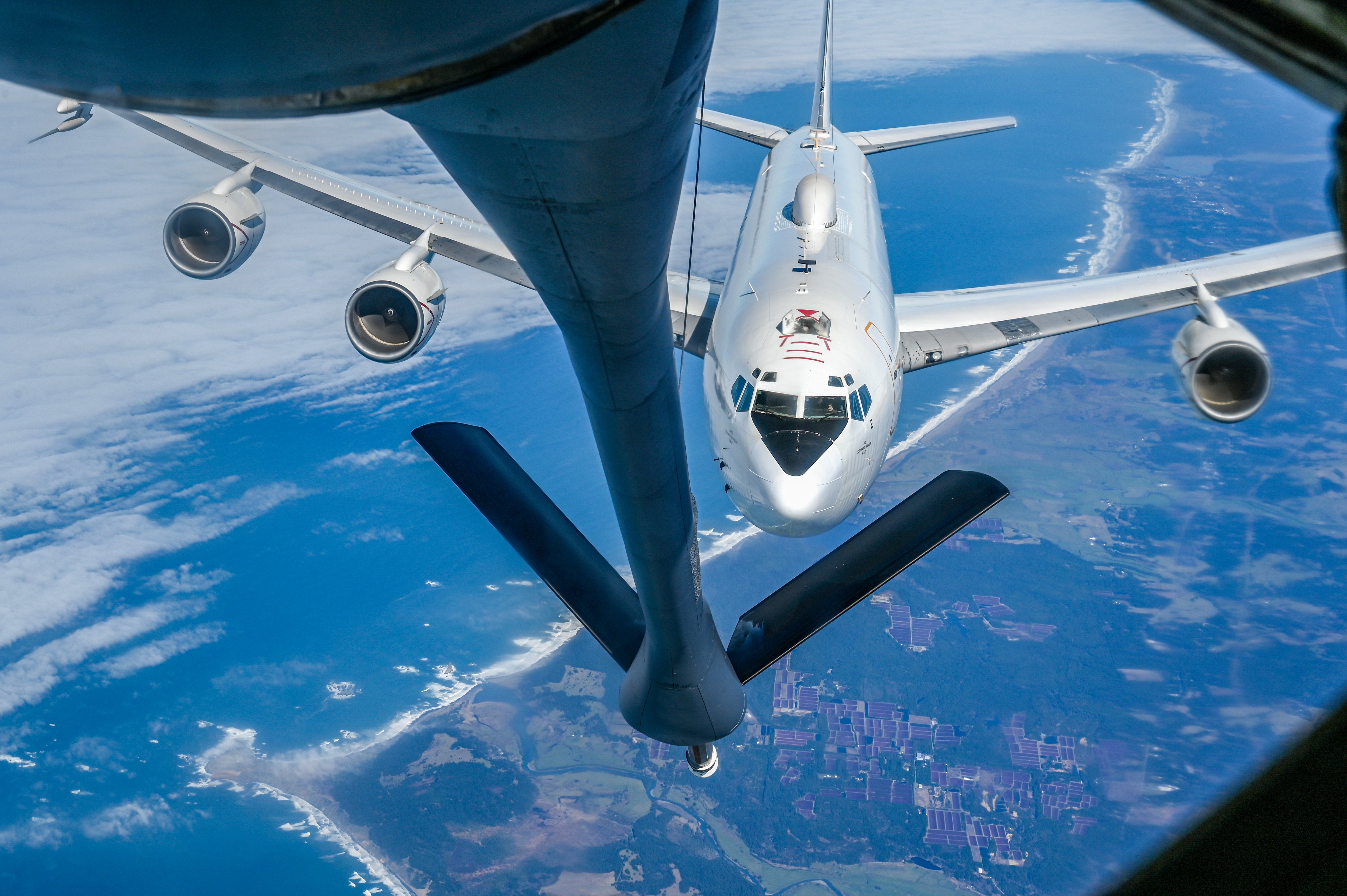
An E-6B Mercury assigned to the Strategic Communications Wing 1 at Tinker Air Force Base approaches a KC-135 Stratotanker assigned to the 92nd Air Refueling Wing during an aerial refueling mission over Oregon, Feb. 28, 2025. Aerial refueling capabilities are essential for strategic and tactical operations as well as humanitarian relief efforts in support of Air Mobility Command, U.S. Transportation Command and Department of Defense priorities. (U.S. Air Force photo by Airman 1st Class Megan Delaine)
An E-6B Mercury assigned to the Strategic Communications Wing 1 at Tinker Air Force Base approaches a tanker during an aerial refueling mission over Oregon, Feb. 28, 2025. U.S. Air Force photo by Airman 1st Class Megan Delaine

“Today’s delivery from the historic Marietta line represents far more than a new airframe; it marks the foundation of our future strategic deterrence posture,” Capt. Roger Davis, program manager for the Navy’s Airborne Strategic Command, Control, and Communications program office (PMA-271), said in a statement.

“Through our close partnership with Lockheed Martin and our industry team, we are ensuring our nation maintains an unshakeable communications lifeline to our ballistic missile submarine fleet.”

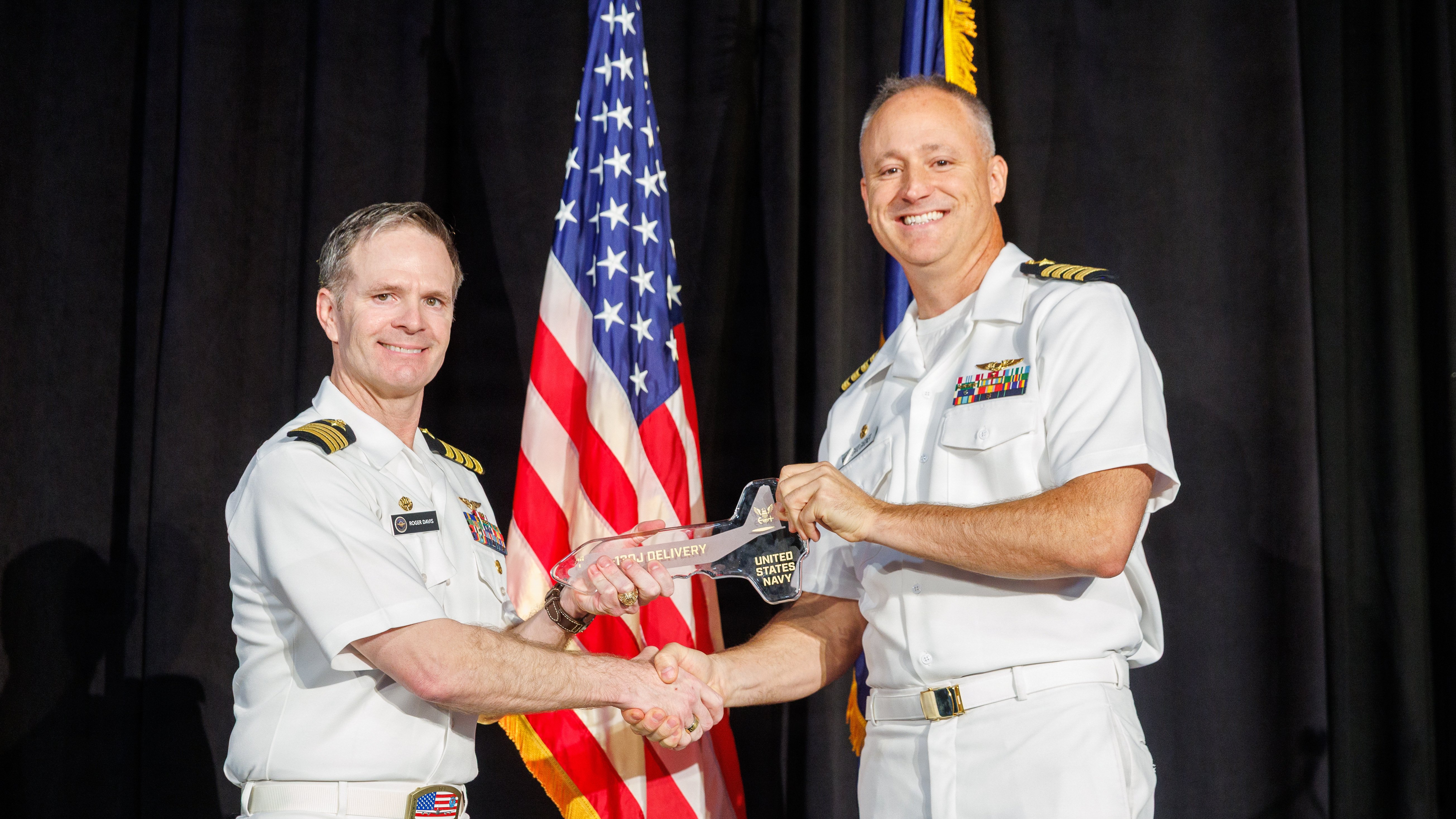
Capt. Roger Davis, left, Airborne Strategic Command, Control and Communications program manager (PMA-271), presents a ceremonial key to Capt. David Gardner, commodore of Strategic Communications Wing 1 (SCW 1), during the C-130J-30 delivery ceremony Oct. 15, 2026 in Marietta, Georgia. The symbolic handover marks the transition of the new airframe into the next phase of mission-system modification, ground testing and developmental flight testing, laying the foundation to field the future E-130J “Phoenix II.” (Photo courtesy of Lockheed Martin by Thinh D. Nguyen)
Capt. Roger Davis, left, Airborne Strategic Command, Control and Communications program manager (PMA-271), presents a ceremonial key to Capt. David Gardner, commodore of Strategic Communications Wing 1 (SCW 1), during the C-130J-30 delivery ceremony Oct. 15, 2026 in Marietta, Georgia. Photo courtesy of Lockheed Martin by Thinh D. Nguyen

The aircraft is the first of three C-130J-30s initially procured by the Navy in September 2024. It will be transferred to Northrop Grumman, the E-130J program’s prime contractor and mission-systems integrator, for conversion. Collins Aerospace is providing the very low frequency (VLF) communications system, a key component of the TACAMO mission.

TACAMO aircraft provide a means for the president, secretary of defense, and U.S. Strategic Command to communicate with nuclear forces, including submarines submerged at sea. The mission is designed to preserve the ability to transmit emergency action messages even if conventional communications infrastructure is disrupted or destroyed.

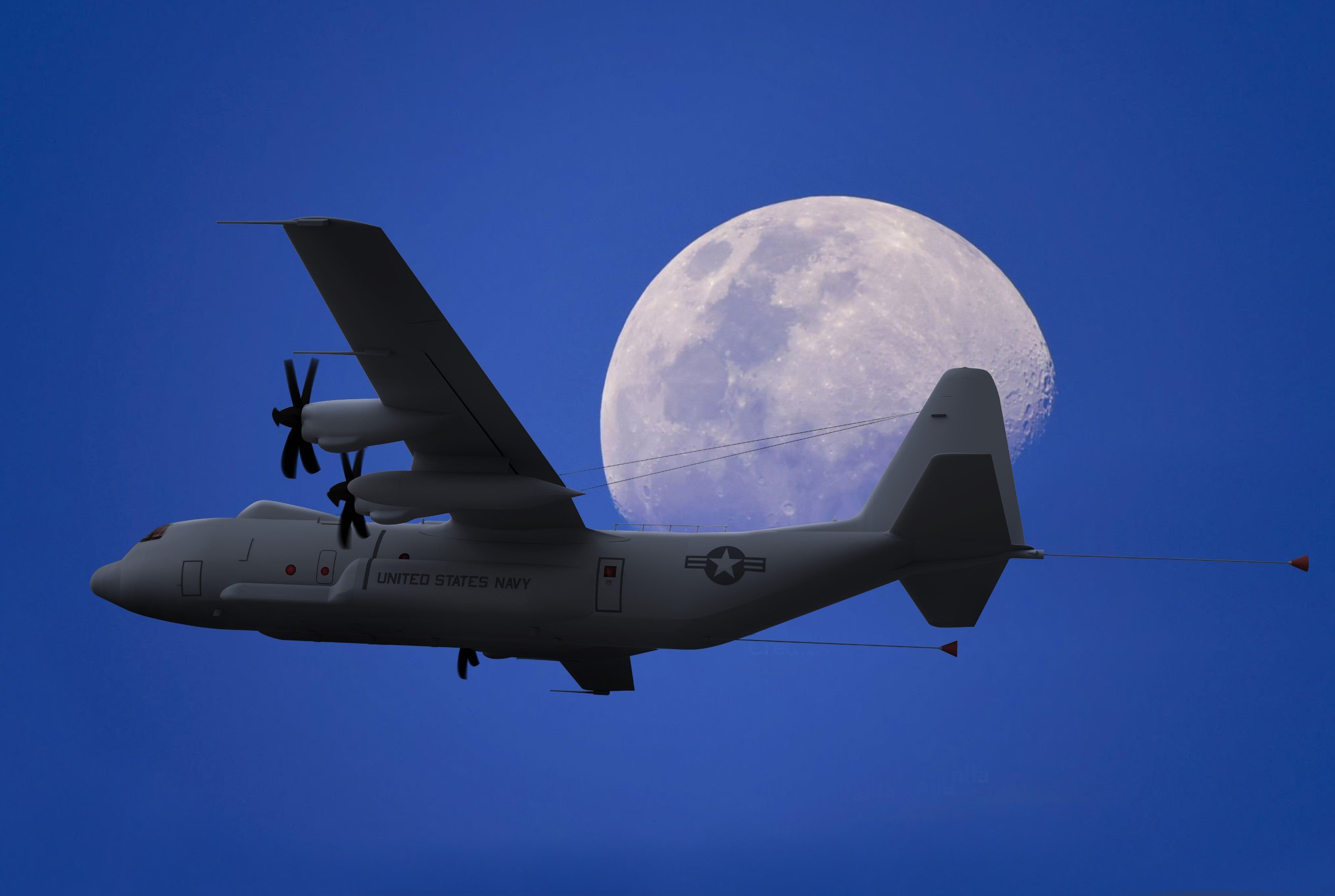
The E-6B accomplishes this in part through a long, trailing wire antenna that enables VLF transmissions to submerged submarines. The E-130J will receive a comparable system as part of its conversion.

Hardening against the effects of electromagnetic pulse (EMP), which occurs during the detonation of nuclear warheads, is another key requirement for these planes.

A sneak peak at the first C-130J-30 Super Hercules aircraft being built by Lockheed Martin Corp. for the U.S. Navy’s E-130J program. This aircraft – the first of three – is slated to be delivered to the government in 2026 for modification into an E-130J Engineering Development Model. The E-130J, formerly called E-XX, will be the successor to the E-6B Mercury for the Take Charge and Move Out (TACAMO) mission, which connects the president, secretary of defense and U.S. Strategic Command with the United States’ nuclear triad. The U.S. Navy’s Airborne Strategic Command, Control and Communications Program Office (PMA-271) is leading the TACAMO Recapitalization Program and is scheduled to award the Engineering and Manufacturing Development contract during the first quarter of 2025. (Photo by David L. Key, Lockheed Martin)
The first C-130J-30 being built by Lockheed Martin Corp. for the E-130J program. Photo by David L. Key, Lockheed Martin

The Navy plans to acquire 31 E-130Js, nearly doubling the 16 E-6Bs currently in service. That total includes six developmental aircraft and 25 production examples, although it remains unclear how many of the developmental aircraft will ultimately be available for operational use.

The larger planned fleet should provide additional aircraft to support training, maintenance, and operational demands. However, the transition also brings technical challenges. The Government Accountability Office (GAO) has previously warned that integrating the specialized mission equipment into the smaller C-130J-30 airframe could affect operational availability and create additional engineering and manufacturing difficulties.

Rendering of the U.S. Navy's future E-130J aircraft, which will relieve the E-6B Mercury of the Take Charge and Move Out (TACAMO) mission. (Rendering courtesy of Northrop Grumman Corp.)
Rendering of the future E-130J aircraft. Courtesy of Northrop Grumman Corp.

In the past, TWZ has discussed the potential operational readiness and other trade-offs that could come from selecting a C-130-based platform to replace the E-6B in the TACAMO role. As we wrote previously:

“It’s certainly worth pointing out that the E-6Bs, conversions of what were some of the last and most modern 707 airliners built, were larger and higher performance platforms than the EC-130Qs. The C-130J-30 is certainly a more capable aircraft than the C-130H on which the EC-130Q was based, but it won’t have the base speed and altitude capabilities of an airliner-sized multi-engine jet. Compared to the Mercuries, any TACAMO-configured C-130J-30 would not be able to get on station as quickly, or fly as high, limiting its ability to get above bad weather or establish a better line of sight for its communications systems.”

“At the same time, as the Navy itself has noted, the C-130J-30 platform does immediately open up the ability to use a larger number of air bases, airports, and airfields, including austere ones that the E-6B cannot operate from. This could be very useful in a contingency scenario where an opponent may have destroyed or otherwise rendered unusable many well-established bases, as well as larger secondary dispersal sites, which include large commercial airports. Being able to fly from smaller, tertiary locations could help to ensure that the TACAMO mission continues without significant disruption under such circumstances. This is also true during peacetime, as targeting the TACAMOs on the ground would be much harder if they could easily operate from and sit alert at a much larger number of airports.”

“A C-130J-30 configured for the TACAMO mission would certainly have a mid-air refueling capability, and the Hercules is already a platform that has demonstrated the ability to loiter over particular areas for long periods of time. Unlike the Boeing 707, the C-130J is still in production, as well, meaning that TACAMO aircraft based on this plane would be inherently easier to maintain and support logistically, and may also be easier to convert to this specialized configuration to begin with. As time goes on, the J looks set to increasingly become the default base C-130 model across the U.S. military, as well. Compared to the long out-of-production 707-based E-6, support for the C-130J is already distributed across the U.S. and beyond. Training C-130J crews is even an easier proposition.”

The E-130J also represents a return to the Hercules family for the Navy’s TACAMO mission. The EC-130Q performed the role from 1963 to 1993, before the E-6A Mercury took over. The E-6B subsequently added an airborne command post mission known as Looking Glass, supporting U.S. strategic forces beyond the submarine communications role.

The US Navy operated a fleet of EC-130Q TACAMO aircraft like the one seen here before the arrival of the E-6As. U.S. Navy

The Navy’s current plan is for the E-130J to assume the TACAMO mission, while the Air Force pursues a separate effort to replace the Looking Glass airborne command post capability.

Following its delivery, the first E-130J airframe will enter mission-systems modification, ground testing, and developmental flight testing. The aircraft is not yet an operational TACAMO platform, and further integration and testing will be required before the Navy can begin fielding the new fleet.

The transition is intended to preserve one of the most critical links in the U.S. nuclear command, control, and communications architecture as the E-6B fleet becomes increasingly difficult to sustain.

Contact the author: thomas@thewarzone.com

The post First C-130J For Navy’s New E-130J Phoenix II Ballistic Submarine Communications Fleet Delivered appeared first on TWZ.

  •  

FIFA fines Spain over anti-Muslim chants at Egypt game

FIFA has fined world champions Spain $20,000 over Islamophobic chants by supporters during a friendly against Egypt earlier this year.

The chants were heard during Spain's 0-0 draw with Egypt at Espanyol's RCDE Stadium in Barcelona on 31 March.

Sections of the crowd chanted "Whoever doesn't jump is Muslim", while Egypt's national anthem was also jeered before kick-off.

Spain winger Lamine Yamal, who is Muslim, condemned the chants after the match as disrespectful and intolerable.

"Using a religion as a taunt on the field makes you look ignorant and racist," he said.

FIFA said its appeals committee had upheld the sanction following an earlier ruling by its disciplinary committee.

The Spanish Football Federation has been ordered to pay a $20,000 fine and must also close at least 15% of the seating at Spain's next home friendly.

FIFA said the affected seats could instead be allocated to groups including families, students and anti-discrimination organisations.

The governing body's disciplinary judges said "harsh sanctions were necessary", while acknowledging that it was the Spanish federation's first offence and that officials had acted quickly after the chants began.

Stadium announcements were made during the match calling on supporters to stop discriminatory behaviour.

The Spanish federation also condemned the chants and co-operated with authorities seeking to identify those responsible.

Spanish police opened an investigation the following day into what they described as "Islamophobic and xenophobic" chanting.

The incident came amid wider debate over racism and discrimination in football. FIFA's current anti-racism framework includes a crossed-arm gesture allowing players and officials to report racist abuse during matches.

FIFA rejected the Spanish federation's argument that the word "Muslim" was not inherently insulting, ruling that otherwise neutral language can become discriminatory when used as a taunt or marker of inferiority.

The federation said on Friday that it considered the punishment disproportionately severe and would appeal to the Court of Arbitration for Sport.

FIFA has also imposed sanctions elsewhere this year for breaches of anti-discrimination rules, including a fine against the Israeli Football Association over its handling of racist behaviour by Beitar Jerusalem supporters.

The March incident came before Spain went on to win the 2026 World Cup, defeating Argentina in the final in July.

The Egypt match had already drawn wider attention to anti-Muslim sentiment in European football, an issue TNA has examined in the context of the growing far-right backlash against Muslim players and supporters.

  •  

Zelenskyy’s warning that Russian airspace is becoming dangerous is proving true: Russia temporarily restricted operations at 27 airports amid a massive drone attack

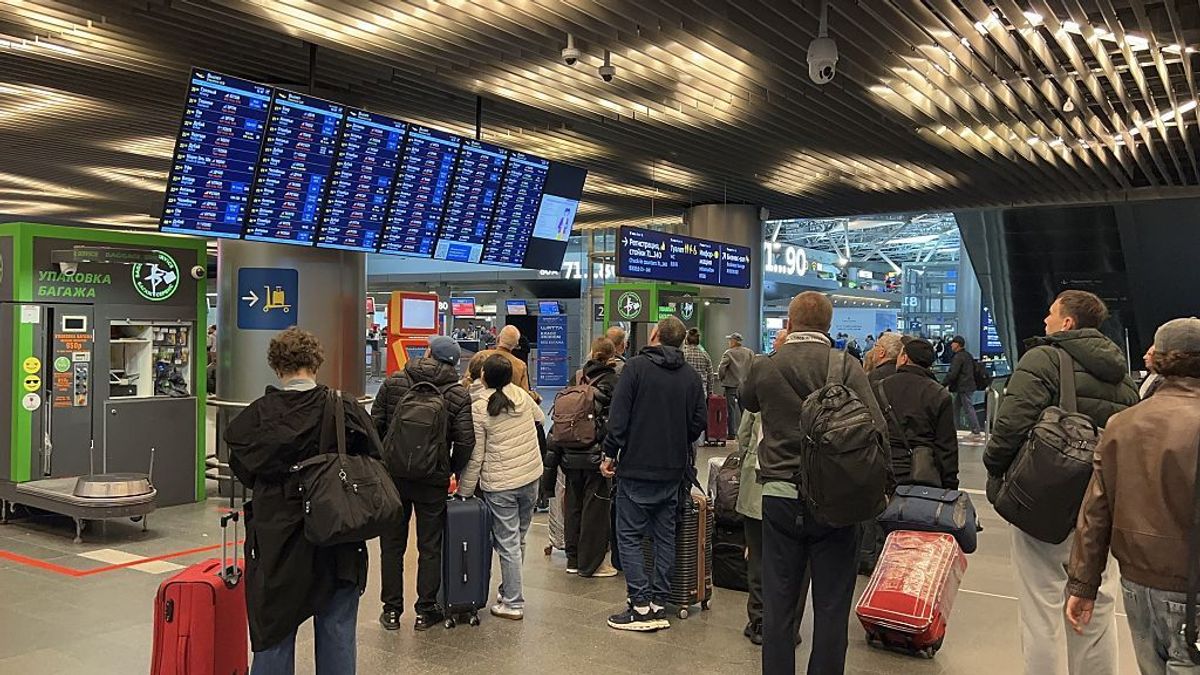
Flight information board displaying arrivals and departures at Domodedovo Airport in Moscow, Russia. Photo: TASS

Temporary restrictions on aircraft arrivals and departures were imposed at 27 Russian airports, Deutsche Welle reported on 16 October, citing its own calculations based on reports from Russia’s Federal Air Transport Agency.

Ukrainian President Volodymyr Zelenskyy warned airlines on 1 September that “Russian airspace is becoming completely unsafe.” Overnight, most of the airspace over European Russia was closed.

By morning, more than 200 flights had been canceled or delayed at Moscow airports, Deutsche Welle reported, citing figures compiled by a Russian Telegram channel.

🔥 Тим часом у російських аеропортах – справжній апокаліпсис через нальоти дронів останніми днями.

Про це ниють росЗМІ. Було відмінено десятки рейсів, у терміналах – дуже багато людей. Пасажири скаржаться на задуху, дикі черги до туалетів та повну невідомість. pic.twitter.com/ZlXxY5c2mq

— Breaking News (@breakingUAnews) October 16, 2026

The list included airports in the capital. All four Moscow airports temporarily suspended arrivals and departures, the Russian outlet Astra reported on 16 October. Russian authorities said they had shot down dozens of drones, while flights were delayed and diverted to alternate airfields, according to the report.

Massive drone attack on Russia: 644 UAVs in one night, 94 shot down near Moscow

The temporary airport shutdowns were likely a consequence of a massive drone attack on Russia. From 8:00 p.m. on 15 October to 8:00 a.m. on 16 October, Russian air defenses allegedly intercepted and destroyed 644 Ukrainian unmanned aerial vehicles across 26 Russian regions, occupied Crimea, and the Black Sea, according to Russia’s Defense Ministry.

According to the list of regions published by the Russian Defense Ministry, the drone attacks covered a vast area of Russia, from regions bordering Ukraine to the Moscow region, the Volga region, the country’s northwest and southern regions, as well as occupied Crimea and the Black Sea.

Russian air defenses shot down a total of 94 drones approaching Moscow over the evening of 15 October and overnight, according to calculations by the Russian outlet RBC Radio, citing statements by Moscow Mayor Sergey Sobyanin.

In the Kaluga region, air defenses destroyed 27 drones over the evening and night, the regional governor reported. At 9:27 a.m., he updated the figures, saying another 48 UAVs had been shot down overnight, bringing the total to 75. According to preliminary information, there were no casualties or infrastructure damage.

In the Tula region, air defenses allegedly destroyed a total of 32 Ukrainian drones. There were no casualties, according to regional Governor Dmitry Milyaev in his Telegram channel.

In the Vladimir region in western Russia, authorities repelled drone attacks overnight. In the city of Vladimir, a drone attempted to attack a heating infrastructure facility, but the attack was stopped, Vladimir Region Governor Alexander Avdeyev reported. Minor damage was reported, but there was no information about casualties.

Ukraine has not yet commented on its involvement in the attacks.

The practical consequences of canceled Russian flights

Passengers on flight SU6312 from Kaliningrad to Moscow were unable to land in Moscow because of airspace closure, so the aircraft was diverted to Nizhny Novgorod, Terravia reported. After landing, passengers remained on board for about two hours before being allowed to disembark at 3:30 a.m. Instead of continuing their journey to Moscow by air, they were supposed to be transported by bus, with the trip expected to take about seven hours, the outlet reported.

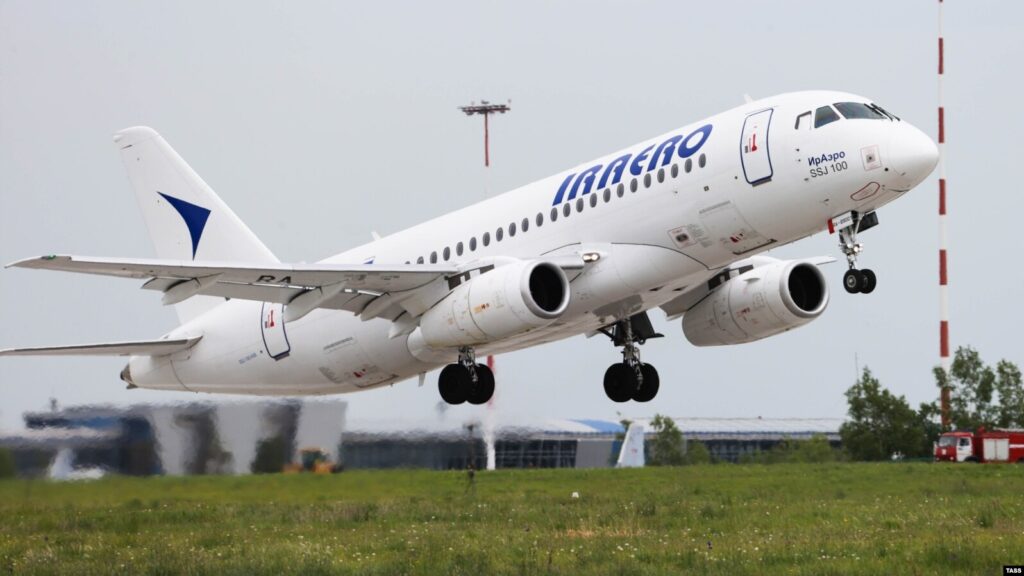
russian airliner revival sold breakthrough now survives extended flight-cycle limits · post sukhoi superjet 100 iraero airline tass superjet-100 (ss-100) plane (file photo) ukraine news ukrainian reports
A Russian Sukhoi Superjet 100 of the IrAero airline. Illustrative photo: TASS

Passengers were not provided with food or drinks, and one woman could not find a seat on the bus, so she purchased a ticket for an early-morning train herself.

Since the beginning of the year, all four Moscow airports have been completely shut down simultaneously at least 19 times, the Russian outlet Agentstvo reported. During the first 14 days of October, the restrictions lasted 101 hours and 38 minutes, compared with 46 hours and 33 minutes in September, according to the report.

  •  

In the Ancient Olympics, Cheaters Were Fined to Pay for Bronze Statues of Zeus That Athletes Had to Walk Past — 16 Pedestals Survive Today

On the road into the stadium at Olympia, at the foot of Mount Cronius, ancient Greek athletes passed a stone platform with steps cut through it. A row of bronze statues of Zeus, the god the Games were held to honour, stood beside it. None of them celebrated a victory. Each had been paid for […]

  •  

A memo about this Black NFL coaching applicant absurdly brings up Mike Tyson

Brian Flores, the Minnesota Vikings defensive coordinator who filed a bombshell lawsuit accusing the NFL and several of its teams of racial discrimination that generally stops Black men from getting head coaching jobs, got a big boost this week when a federal judge unsealed a recruiting memo for a high-profile job in the league.

That memo, particularly its criticism of Flores based on negative stereotypes about Black men, is likely to make even people who aren’t football fans pay attention to this drama, especially women and people who aren’t white who’ve applied for work in corporate spaces.

Korn Ferry prepared a one-pager on Flores that described him as “polished and a good presenter despite growing up in Brownsville, Brooklyn (same as Mike Tyson).”

As first reported by Front Office Sports, as the Las Vegas Raiders were considering hiring Flores in 2024, executive search firm Korn Ferry prepared a one-pager on Flores that described him as “polished and a good presenter despite growing up in Brownsville, Brooklyn (same as Mike Tyson).” The report noted that Flores “was able to build a strong friendship with a billionaire’s son which gave him opportunities to socialize and learn how to build relationships with white-collar and upper-class individuals.”

It’s no wonder that Korn Ferry, which isn’t a defendant in the Flores lawsuit and handles executive searches across many industries, argued that its report should remain sealed.  The document gives full expression to the he-speaks-so-well prejudice that Black people commonly face. As such, the document will feel uncomfortably familiar to Black candidates in corporate America who have felt the constraint of the glass ceiling.

The Raiders never interviewed Flores.

“The recently unsealed documents demonstrate two unfortunate, but unsurprising, realities,” Flores’ lawyers at Wigdor LLP and Elefterakis, Elefterakis & Panek said in a statement Tuesday. “First, that Mr. Flores’ decision to hold the league and its teams accountable for systemic race discrimination has been met with unlawful retaliation. Second, discrimination continues to play a significant role in the hiring process for NFL Head Coaches, as evidenced by the fact that the candidate profile prepared for the Raiders leans heavily on racial stereotypes. We and Mr. Flores are committed to eradicating the institutional racism and retaliation that permeates the league, its teams and their partners.”

Neither Korn Ferry, the Raiders or the NFL responded to The New York Times’ request for comment.

During the NFL’s most recent offseason, none of its 10 head coach vacancies was filled by a Black candidate. The only new head coach who isn’t white is the Tennessee Titans’ Robert Saleh, who was born in the U.S. to Lebanese immigrants. Though Flores’ focus is football, it’s hard not to think of Korn Ferry’s dossier on him as a peek into executive hiring that most Americans never see. Job candidates who’ve suspected that their fitness for a position was assessed by people with backward views of race don’t get to see copies of the memos confirming their suspicions.

Though Flores’ focus is football, it’s hard not to think of Korn Ferry’s dossier on him as a peek into executive hiring that most Americans never see.

Regarding Flores growing up in Brownsville, surely other executive candidates with blue-collar beginnings have learned to navigate elite spaces without it being deemed remarkable. Anyone on the short list for an NFL head-coaching gig would likely be comfortable with rich decision-makers. It’s hard to imagine an executive headhunter describing a candidate as having grown up in Howard Beach, Queens, like John Gotti did.

In detailing Flores’ strengths and weaknesses, Korn Ferry did make some relevant assessments. It noted his “unorthodox” defensive schemes that make life difficult for NFL quarterbacks (a positive) and his history of sometimes clashing with the front office (a negative). In corporate America, one could imagine a similar analysis applied to a CEO candidate whose product launches have been profitable but whose management style rankles the rest of the C-suite and board of directors.

The firm’s assessment that Flores “has a chip on his shoulder” was listed as a strength and a weakness. In its view, his desire to prove his own worth, an essential trait for almost any ascendant professional, was offset by the claim that he “can be a dictator with players, coaches, and can even be a difficult with ownership.”

From @theathletic.com: A recruiting firm's memo assessing Brian Flores as a potential coaching candidate said he was “polished and a good presenter despite growing up in Brownsville, Brooklyn." Flores is suing the NFL and multiple teams for discrimination.

— The New York Times (@nytimes.com) 2026-10-13T20:55:06.520543Z

Concerns related to personality might be defensible. Black professionals are certain to hear bigoted coding in assessing a Black man as well-spoken but with a chip on his shoulder, yet personality and cultural fit matter when the job is a direct report to billionaires and the work includes managing a team of 53 wealthy, elite performers. It’s harder to excuse other language Korn Ferry used: “He can fool you with his polish upwards” and “needs someone at the top to reign [sic] in some of his worst behavior.”

Korn Ferry listed Flores’ lawsuit accusing the NFL of racism as a demerit to his candidacy, which is ironic because the Korn Ferry report wrongly assesses him based on racist expectations of how Black men should act. The league makes millionaires out of elite players who are majority Black, but its teams are mostly owned by white billionaires who have long been accused of failing — or not even trying — to grant equal opportunity for top-level jobs to Black candidates like Flores or his co-plaintiffs, former NFL coaches Steve Wilks and Ray Horton.

Korn Ferry listed Flores’ lawsuit accusing the NFL of racism as a demerit to his candidacy, which is ironic because the Korn Ferry report wrongly assesses him based on racist expectations of how Black men should act.

Their lawsuit was filed in 2022, three years before President Donald Trump made dismantling the Black managerial class a focus of his domestic policy by attacking diversity, equity and inclusion initiatives at major companies, in academia and in the federal government.

In that context, the firm’s report on Flores feels especially heavy. Black professionals everywhere are being told that DEI initiatives are wrong because they focus on race, and this report about Flores is clearly looking at him through a racialized lens. That’s why it’s bigger than football. The Korn Ferry document will certainly be received as an important piece of the puzzle to many others not named Flores who are struggling to reconcile their skills and accomplishments with the incongruent trajectory of their careers.

The post A memo about this Black NFL coaching applicant absurdly brings up Mike Tyson appeared first on MS NOW.

  •  

Russia’s Black Sea Attacks Threaten Global Food Supplies and Force Bulgaria to Confront Moscow

Drone strikes against merchant vessels off Bulgaria have brought Russia’s war into waters bordering NATO and the European Union. With grain exports threatened, shipping costs rising and Sofia seeking allied protection, Moscow’s campaign against maritime trade risks becoming another instrument of economic and political pressure.

Russia’s expanding campaign against commercial shipping in the Black Sea is creating a security crisis that extends far beyond Ukraine. The latest drone attacks off Bulgaria’s coast have left 11 sailors missing, forced Sofia to seek assistance from NATO and the European Union, and raised concerns that Moscow is attempting to disrupt one of the world’s principal agricultural export routes.

On 13th October, the Guinea-Bissau-flagged HS Dignity sank after being struck by drones approximately 17 nautical miles east of the Bulgarian village of Krapets. Another vessel, the Ukrainian-owned, Maltese-flagged Chelsea 3, was attacked near Byala. All 15 crew members were rescued, although five sustained minor injuries. The incidents followed earlier attacks in Bulgaria’s exclusive economic zone on 6th October, when the ALFA WATAN sank and the grain-carrying ABLE was damaged.

The significance lies not simply in the destruction of merchant vessels but in the geographical expansion of the threat. Commercial routes previously regarded as comparatively safer alternatives to Ukraine’s exposed ports are now becoming operationally dangerous. Bulgaria and Romania, both NATO and EU members, face disruption to trade, maritime insurance and port operations as the conflict spreads across the western Black Sea.

Russia’s Campaign Against Maritime Trade

The latest attacks follow months of Russian strikes against Ukrainian ports, export terminals and civilian shipping. As EU Today previously reported, repeated attacks on Odesa have already reduced Ukraine’s grain-export capacity, while alternative routes through the Danube and neighbouring European countries cannot fully replace its major Black Sea terminals.

The extension of attacks towards Bulgaria changes the economic calculation. Ships carrying agricultural products, those approaching Danube ports and vessels operating between Black Sea countries now face greater uncertainty, regardless of whether they enter Ukrainian territorial waters.

Maritime security company Ambrey assessed the earlier October attacks as highly likely to have been conducted by Russian forces. Its assessment identified vessels associated with Ukrainian grain trade as the principal targets, rather than suggesting that every commercial ship was being attacked indiscriminately.

This distinction is important, but it offers little reassurance to international shipping companies. A campaign directed against Ukrainian trade can disrupt the wider maritime economy when insurers, shipowners and exporters cannot establish which routes remain safe.

The economic consequences are already becoming apparent. Shipowners must consider higher insurance premiums, additional security measures and the possibility of losing vessels and crews. Traders may redirect cargoes or withdraw from routes whose commercial returns no longer justify the risks.

Radev Confronts the Consequences of Moscow’s War

The attacks have also placed Bulgarian Prime Minister Rumen Radev in an increasingly difficult political position.

Radev has advocated renewed diplomatic engagement with Moscow and questioned the emphasis placed on military assistance to Ukraine. He has rejected accusations of being pro-Russian, presenting his approach as a pragmatic alternative to prolonged confrontation.

Yet the attacks have demonstrated the limitations of maintaining political distance from a war whose economic and security consequences are reaching Bulgarian waters.

After summoning Russian Ambassador Eleonora Mitrofanova on 13th October, Radev acknowledged that Bulgaria possessed no conclusive evidence establishing responsibility for the latest strikes. Nevertheless, he argued that their consequences benefited Russia and questioned why Ukraine would attack its own commercial vessels.

According to the Bulgarian News Agency’s account of the meeting, the prime minister also warned that higher insurance costs and shipping companies’ reluctance to serve Bulgarian ports were already damaging the national economy.

This is the fundamental change confronting Sofia. The conflict is no longer solely a question of Bulgaria’s position towards Ukraine or its diplomatic relationship with Russia. It is affecting the country’s commercial interests, energy supplies and responsibilities as a NATO member.

Radev’s response does not necessarily indicate a wholesale reversal of his previous political position. It demonstrates that the practical obligations of government can leave considerably less room for accommodation with Moscow than the arguments advanced from outside direct responsibility for national security.

Food Security Becomes Another Instrument of Pressure

The broader consequences may be felt most severely outside Europe.

Ukraine remains an important supplier of wheat, maize and vegetable oils to international markets, including countries in Africa, Asia and the Middle East. Interruptions to these exports affect more than Ukraine’s agricultural revenues. They can increase transport costs, delay deliveries and reduce the availability of competitively priced food in import-dependent countries.

Speaking at the Warsaw Security Forum on 12th October, President Volodymyr Zelenskyy warned of a possible agricultural crisis, arguing that Russian interference with Black Sea shipping could leave countries in Africa, Asia and the Middle East facing serious supply difficulties within months.

The warning reflects a mechanism already familiar from the earlier stages of Russia’s invasion. Following Moscow’s withdrawal from the UN-brokered grain agreement in July 2023, Ukrainian agricultural exporters faced renewed attacks on port infrastructure and substantial uncertainty over maritime access.

The danger is not necessarily an immediate worldwide shortage of grain. Wheat prices remained relatively steady following the 13th October incidents. Rather, sustained disruption could progressively reduce available export capacity, increase costs and place vulnerable importing countries under greater pressure.

For Moscow, such disruption could serve several purposes simultaneously: weakening Ukraine’s economy, raising the costs of international support for Kyiv and creating additional pressures on governments concerned about food inflation and social stability.

Europe’s Black Sea Security Strategy Faces a Practical Test

The immediate challenge for Brussels and NATO is how to protect commercial navigation without allowing the conflict to expand into a direct military confrontation.

Bulgaria has requested stronger air and maritime surveillance and is seeking closer coordination with Romania and Turkey. Defence Minister Dimitar Stoyanov said on 14th October that Sofia expected to join a NATO counter-drone initiative by the end of the month.

The EU has already developed a framework for addressing precisely such threats. Its Black Sea strategy, announced in May 2025, proposed a maritime security hub integrating surveillance, intelligence-sharing, infrastructure protection and regional cooperation.

The attacks now expose the difference between developing a security framework and providing effective protection to merchant vessels. Better intelligence can identify threats, but preventing further sinkings requires detection systems, coordinated responses and sufficient defensive capabilities.

Turkey’s involvement is particularly important because of its control over the Bosphorus and Dardanelles and its established role in Black Sea maritime security. Any workable regional arrangement must therefore extend beyond cooperation between Bulgaria and Romania.

The incidents occurred outside Bulgaria’s 12-nautical-mile territorial sea, meaning they do not automatically constitute an armed attack on NATO territory under Article 5. Nevertheless, repeated strikes within the economic zones of alliance members pose a substantial challenge to maritime security.

Russia’s campaign against Ukrainian exports is increasingly imposing costs on neighbouring European states and international trading partners. The question facing the EU is whether it can secure the commercial routes on which both Ukraine’s economy and the food supplies of millions beyond Europe depend.

  •  

Trump's Plan To Buy Russian Diesel Would Violate Federal Law

Donald Trump and a Russian fuel tanker | Xpix/Ivansmuk/Dreamstime/Al Drago-Pool/ZUMAPRESS/Newscom/Fatima Ruiz.

President Donald Trump says he has struck a deal with Russian President Vladimir Putin to import large amounts of diesel fuel into the United States—apparently hoping to lower fuel prices in the weeks before the midterm elections.

The exact terms of that agreement remain somewhat unclear. The White House has not said when the purchases will be made, what prices will be paid, or who will be paying (private companies or taxpayers), though the Treasury announced that it would be issuing a "temporary general license to allow the supply of Russian diesel to the global market." Reporting by The New York Times suggests that investors with ties to the administration are most likely to profit. Because diesel prices are determined by a global market, it's also far from certain that the Russian gas would make much of a dent in American prices.

However, this much is clear: If Trump follows through with this "deal," he will have violated two federal laws recently passed by Congress—one of which he signed just weeks ago.

The more significant of those two laws is the Ending Importation of Russian Oil Act, which passed the House with a 413–9 vote and was unanimously approved by the Senate. President Joe Biden signed that bill into law on April 8, 2022. The law is an outright ban on Russian energy products, including diesel fuel.

The law also lays out the process for lifting the ban on imports. The president must tell Congress that Russia has "reached an agreement to withdraw Russian forces and cease military hostilities in Ukraine" and has recognized "the right of the Ukrainian people to independently and freely choose their own government."

There is also a clear timeline for lifting the ban. Any termination of the ban requires a 90-day waiting period, during which time Congress has the opportunity to block the change.

Obviously, Russia has not withdrawn from Ukraine. Even if it had, the White House has not gone through the necessary process to notify Congress, nor waited the necessary 90 days.

The law does not allow a president to ignore it if fuel prices are high and an election is approaching. It does not allow a president to ignore it if he starts an illegal war in another part of the world that causes fuel prices to spike.

Trump's attempt to disregard that law has drawn a bipartisan rebuke from members of Congress. A group of seven senators—three Democrats and four Republicans—issued a joint statement this week saying that Trump's deal "runs directly counter to" the 2022 law.

Sen. Thom Tillis (R–N.C.), one of the senators who joined that statement, said on Sunday that there is "a legitimate case for saying the president's not following the law."

The second law at play is the Lindsey O. Graham Sanctioning Russia and Iran Act, named for the late senator and passed earlier this year. Among other things, it authorizes the president to levy tariffs of up to 100 percent against countries that buy Russian crude oil and natural gas. The intent is clear: to prevent Russia from being able to finance its war against Ukraine by selling energy commodities onto the global market. Trump signed it into law last month.

Lawmakers on both sides of the aisle have also pointed to that law in the days since Trump announced his deal to buy Russian diesel.

"Now is the time to use those sanctions to squeeze Putin's war machine, not reward a dictator by putting more money in his hands while he continues targeting and killing Ukrainian civilians," Rep. Don Bacon (R–Neb.) posted on X this week. Rep. Steny Hoyer (D–Md.) said it was "outrageous" for Trump to be buying energy from Russia after signing a bill that could be used to punish other countries for doing the same.

The White House could argue that, in this case, Trump is merely violating the spirit of the law rather than the letter of it. Even so, this is blatantly hypocritical.

The hypocrisy runs deep. The Trump administration has spent much of its second term trying to restrict trade and downplay the advice of economists who have warned that doing so would raise prices. Now, Trump is once again seeking imports as a means to ease high prices—as he has done with beef and other products. Perhaps the White House should apply this general principle more broadly, and in circumstances where doing so would not violate federal laws.

Some of the president's allies are now trying to downplay these violations of federal law. Conservative pundit Mollie Hemingway says Trump is merely trying to "put the American people first" by addressing rising gas prices.

Sorry, but no. The president is not allowed to disregard federal laws because he believes it will lower gas prices in swing states.

You can, of course, criticize those laws for being misguided. Trade is generally good, and erecting barriers to the flow of goods tends to be costly. Trump could ask Congress to repeal these laws. He cannot deliberately ignore them.

If the "deal" with Russia comes to fruition, it will further erode what little power Congress retains within America's democratic system. If a president is not bound by the laws Congress has passed, then the legislature might as well not exist at all.

The post Trump's Plan To Buy Russian Diesel Would Violate Federal Law appeared first on Reason Magazine.

  •  
❌