❌

Reading view

Russia Strikes Ukraine’s Steel and Energy Sector

Click to see the full-size image

Between the evening of October 16 and October 17, 2026, the Russian Armed Forces continued their campaign of combined strikes against Ukrainian defense-industrial, energy, and logistics infrastructure. According to the Ukrainian side, the overnight attack leading into October 17 involved Iskander-M/KN-23 ballistic missiles, Kh-22/Kh-32 cruise missiles, four Kalibr sea-launched cruise missiles, and 332 strike unmanned aerial vehicles. The main focus was on metallurgical enterprises in Kryvyi Rih and Zaporizhzhia, transformer production, and high-voltage substations in western Ukraine. In parallel, Ukrainian forces carried out a large-scale drone attack on Russian territory.

Russian Strikes on Targets in Ukraine

Metallurgical Complex

Zaporizhstal (Zaporizhzhia) – formerly one of Ukraine’s largest metallurgical enterprises. Before the campaign, it produced up to 1.44 million tons of pig iron and more than 1.3 million tons of rolled steel annually; its output was directed primarily toward military-industrial needs. According to Metinvest, this was the fifth strike on the facility; six ballistic missiles were fired in the latest attack, damaging energy and logistics infrastructure as well as production facilities in the blast-furnace shop. In total, 23 ballistic missiles have been fired at the plant across five attacks.

Metallurgical combine in Kryvyi Rih (Dnipropetrovsk Region) – one of Ukraine’s largest metallurgical enterprises, which supplied metal products to the Ukrainian defense-industrial complex. The description provided by the Russian Ministry of Defense matches ArcelorMittal Kryvyi Rih; according to sources, a week earlier the owners announced a cold shutdown of primary production, and the plant was preparing for preservation.


Energy Infrastructure

Zaporozhtransformator PJSC (Zaporizhzhia) – a manufacturer of oil-immersed power transformers rated at 220-750 kV, a key component of high-voltage substations. Since 2022, it has been under the management of Ukraine’s Ministry of Defense and has been used in the interests of the Ukrainian Armed Forces. Striking this facility complicates the replacement of damaged transformer equipment for Ukrenergo, as manufacturing a new transformer takes months.

Zhytomyr 330 kV Substation (Zhytomyr Region) – a major hub in the trunk power grid, providing voltage conversion and electricity distribution among 330 kV, 110 kV, 35 kV, and 10 kV networks. Power was cut in several districts of Zhytomyr, and water-supply disruptions occurred. According to the Russian Ministry of Defense, the facility struck was one that distributed electricity from western Ukraine to central regions for defense-industrial enterprises.

Click to see the full-size image

Rivne 330 kV Substation (Rivne Region) – a trunk power-grid facility. Power outages occurred in Rivne and nearby settlements, and municipal electric transport operations were disrupted.

Bar 330/110/35 kV Substation (Vinnytsia Region) – a high-voltage facility distributing electricity among the aforementioned voltage classes. Voltage fluctuations were recorded in Vinnytsia and across the region.

Kharkiv CHP-3 (combined heat and power plant No. 3; KP Kharkivski Teplovi Merezhi – Kharkiv Heating Networks), Kharkiv – a combined heat and power plant producing both thermal and electric energy for municipal supply. A hit was recorded on the electrical-shop building, where a fire broke out over an area of 100 square meters.

Transport and Logistics Infrastructure

Delivery logistics terminal (Novohrad-Volynskyi, Zhytomyr Region) – a branch of a Ukrainian freight-logistics operator specializing in less-than-truckload road transport and interregional delivery. The strike caused a fire in a warehouse building covering more than 1,000 square meters. The company participates in government contracts for freight-forwarding services through the Prozorro system.


Dry cargo vessel underway at sea (Port of Odesa) – a vessel delivering military cargo to the port was struck.

Strikes on Russian Territory

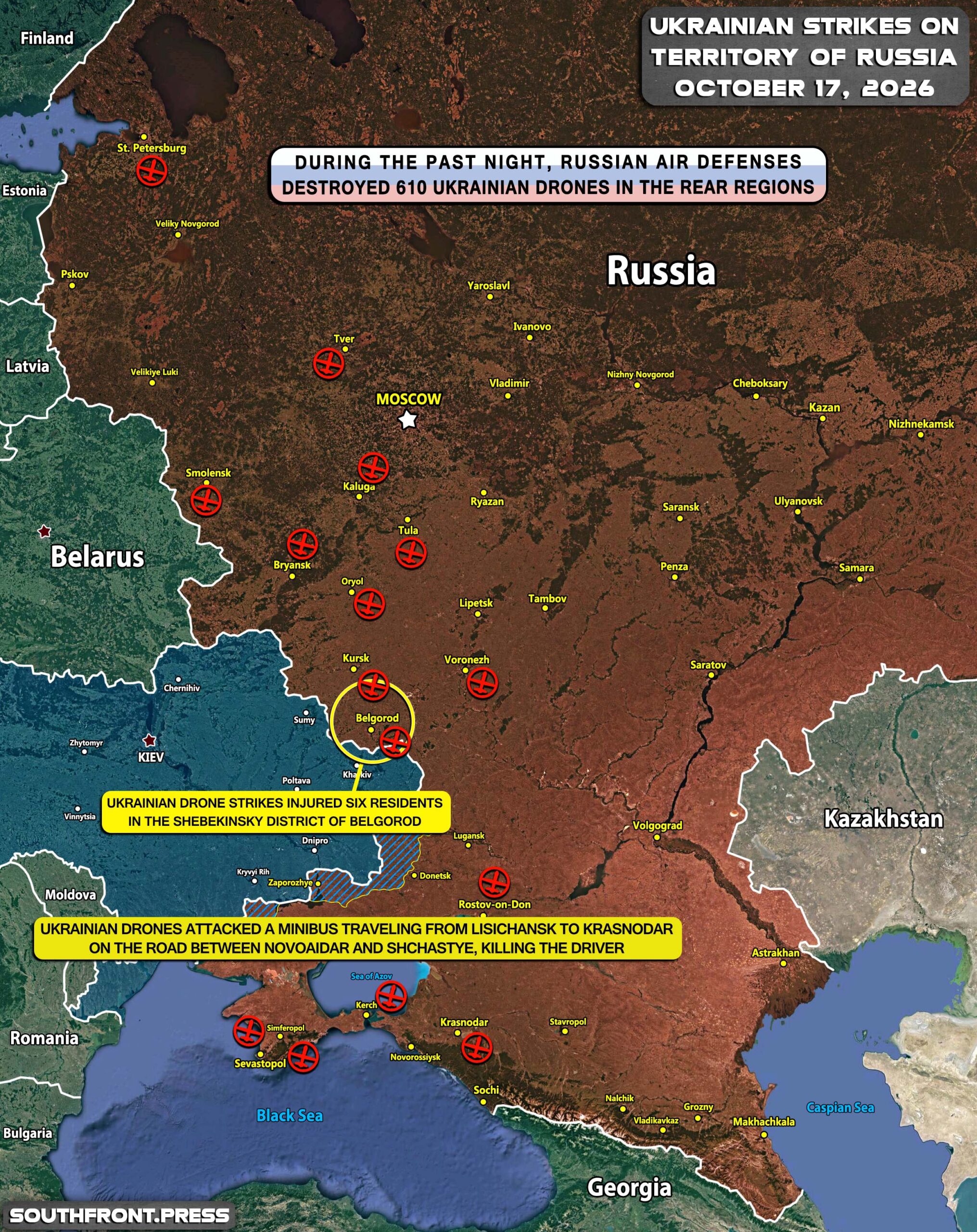
On the night of October 17, Ukrainian forces carried out a large-scale drone attack on Russian regions. According to the Russian Ministry of Defense, air-defense forces intercepted and destroyed 610 Ukrainian fixed-wing UAVs over the territory of 16 Russian regions and over the Black Sea. The highest intensity was recorded on the Moscow axis: Moscow Mayor Sergei Sobyanin reported the destruction of 144 UAVs heading toward the capital. In Bryansk Region, 157 UAVs were shot down over the course of a day. No reports indicated that serious strategic targets had been hit; there were civilian casualties.

The nature of the October 16-17 strikes confirms a systematic approach by the Russian command to disabling Ukraine’s defense-industrial production chain and the energy infrastructure supporting it. Priority targets include metallurgical enterprises producing goods for military needs and transformer production, which is critical for restoring damaged substations. According to Chief of the General Staff of the Russian Armed Forces Valery Gerasimov, steel production in Ukraine has been halted, operations at major Black Sea ports have ceased, and 76 logistics and warehouse centers have been struck. Given statements by the Russian leadership on the need to continue large-scale strikes against the defense-industrial complex and logistics centers, further intensification of attacks on energy infrastructure in western and central Ukraine, as well as on facilities involved in the repair and restoration of military equipment, should be expected. The resilience of Ukraine’s energy system will depend on its capacity to import electricity from the EU and on the speed of restoring trunk substations – both significantly complicated by the strike on Zaporozhtransformator.


MORE ON THE TOPIC:

The post Russia Strikes Ukraine’s Steel and Energy Sector appeared first on South Front.

  •  

À beira da catástrofe a França intensifica a repressão contra o dissenso político

Macron, com 15% de aprovação, prepara guerra com Rússia e dissolve associação Egalité et Réconciliation de Alain Soral por “extremismo político”.

Junte-se a nós no Telegram , X e VK.

Escreva para nós: info@strategic-culture.su

Macron é, hoje, muito possivelmente, o presidente mais impopular do planeta, contando com apenas 15% de aprovação, segundo uma enquete Ipsos BVA-Cesi. Sob seu comando, a França se depara com a estagnação econômica (crescimento de 0,6% em 2025) e com o endividamento (120% do PIB). Sob Macron, a França viu também a desindustrialização acelerada do país, com as indústrias correspondendo a apenas 9% do PIB, menor patamar da União Europeia, e não surpreendentemente, o poder de compra despencou, com metade dos franceses dizendo que sua renda dá apenas para o essencial e apenas 70% dos cidadãos em idade ativa ocupando um posto de trabalho, atualmente.

Como se isso já não fosse o bastante, em aproximadamente 10 anos de governo Macron, aproximadamente 4 milhões de imigrantes entraram no país (muitos dos quais não trabalham, mas recebem benefícios sociais); quantia que torna impossível a absorção econômica bem como a assimilação etnocultural dos recém-chegados. Naturalmente, ao descontrole imigratório estão vinculadas taxas de criminalidade, favelização de centros urbanos e aumento das tensões sociais. Muitos franceses étnicos sentem-se demograficamente substituídos em sua terra natal, e não por acaso, tudo indica que Marine Le Pen ganhará (finalmente) as eleições presidenciais francesas em 2027.

Não sabemos quais seriam os resultados de uma presidência Le Pen e é razoável ser cético a respeito, mas claramente o atual curso da França é perigosíssimo, inclusive em sua política externa.

Gradualmente, nos últimos 2 anos, começaram a aparecer inúmeros sinais de que Macron estaria preparando o país para uma guerra com a Rússia. O governo francês criou um serviço militar voluntário e aprovou a expansão das forças armadas permanentes a 275 mil homens, bem como um aumento orçamentário para a defesa. O general Fabien Mandon, do Estado-Maior, afirmou em 2025 que a França deveria se preparar para um conflito de alta intensidade com a Rússia no prazo de três a quatro anos, e agora em setembro de 2026 Macron declarou que a França “poderia” se tornar alvo de drones explosivos. Constantemente, também, se ouve discursos sobre a necessidade de transformar a economia francesa numa “economia de guerra”.

Por isso, talvez seja surpreendente para muitos (mas não para nós) que em meio a tudo isso que tem acontecido no país, o governo Macron ainda encontre tempo para a implementação de um aparato de censura e repressão de níveis totalitários.

Sua nova vítima é a associação Egalité et Réconciliation (Igualdade e Reconciliação), criada pelo sociólogo e escritor Alain Soral. A associação se identifica como “nacionalista de esquerda” e tem como principal slogan “esquerda do trabalho, direita dos valores”, apelando a uma superação da falsa dicotomia entre esquerda e direita e, ainda mais importantemente, por uma reconciliação nacional entre todos os setores sociais; em anos recentes, ela esteve envolvida nas manifestações dos Coletes Amarelos, em algumas atividades ligadas ao partido Reagrupamento Nacional (apesar de, simultaneamente, manter uma postura de “crítica construtiva” contra certas tendências sionistas e liberais presentes no partido) e à militância pró-Palestina.

Ocorre que, no dia 9 de outubro, o Ministro do Interior do governo de Macron, Laurent Nuñez, anunciou a abertura de um procedimento de dissolução contra a associação Egalité et Réconciliation, sob a acusação de “extremismo político”. A sua equipe jurídica recebeu um prazo de 1 semana para se defender, e a decisão a respeito deve ocorrer, ainda, em outubro.

O próprio Alain Soral é uma figura de elevado espírito inconformista, razão pela qual já foi vítima de incontáveis perseguições judiciais – dezenas de fato – majoritariamente por “delitos de opinião”, ou seja, por comentários críticos contra pessoas específicas ou “minorias protegidas”. Em condenações, Soral já acumulou milhões de euros a serem pagos em indenização para ONGs globalistas diversas, soma obviamente impagável, bem como já foi encarcerado algumas vezes, também pelos mesmos motivos. A perseguição judicial foi tão intensa que Soral teve que se exilar de sua pátria, primeiro na Suíça e depois na Rússia.

Agora, para além das justificativas oficiais, por qual motivo o Estado francês baniria uma organização relativamente pequena e de poucos recursos financeiros?

É possível analisar o “ângulo” da presença de Alain Soral na Rússia, em mais de um sentido. Primeiro, porque ao estar na Rússia Soral finalmente tornou-se imune à constante perseguição judicial e às ameaças de prisão que ele sofria na França, ao mesmo tempo em que seguia tomando parte ativa no debate político e cultural francês, mesmo à distância. Nisso, ele era capaz de exercer e expandir a sua influência, “sob a proteção dos russos”, o que certamente alimenta as típicas paranoias atuais da elite francesa sobre uma “guerra informacional” russa.

Existe, porém, também um aspecto interno. Recentemente, Alain Soral voltou a ser bastante comentado pela mídia francesa por dois motivos. Um é o “caso Bardella”, o qual diz respeito à descoberta de supostos escritos “politicamente incorretos” de Jordan Bardella, presidente do partido Reagrupamento Nacional, e à informação de que em sua juventude a principal influência intelectual de Bardella era Alain Soral. O segundo é uma pesquisa de opinião indicando que 15% dos homens franceses com menos de 35 anos de idade se identificam com as ideias de Soral.

Isso às vésperas das eleições presidenciais representa um risco significativo para Macron e para o establishment francês. Ainda que, aparentemente, não haja chance de vitória para qualquer candidato contra Le Pen, não podemos duvidar da possibilidade de manipulação do processo eleitoral, tal como aconteceu na Romênia.

Esse silenciamento é ainda mais preocupante pelo fato de que Soral e o E&R serem praticamente os únicos personagens socialmente e culturalmente relevantes na França hoje que defendem a reconciliação nacional e que evitam a incitação do tensionamento interno, promovido pelos elementos mais islamofóbicos do RN e pela própria liderança do LFI de Mélenchon com seu “exército” de antifas e imigrantes.

  •  

Russian troops executed Ukrainian POWs in Zaporizhzhia Oblast, military says

The Russian soldiers are believed to belong to the 38th Separate Motorized Rifle Brigade, which is operating in the area. Kravchuk alleged that orders of this nature within the brigade are issued at the initiative of its commander, Colonel Valery Kazak.

  •  

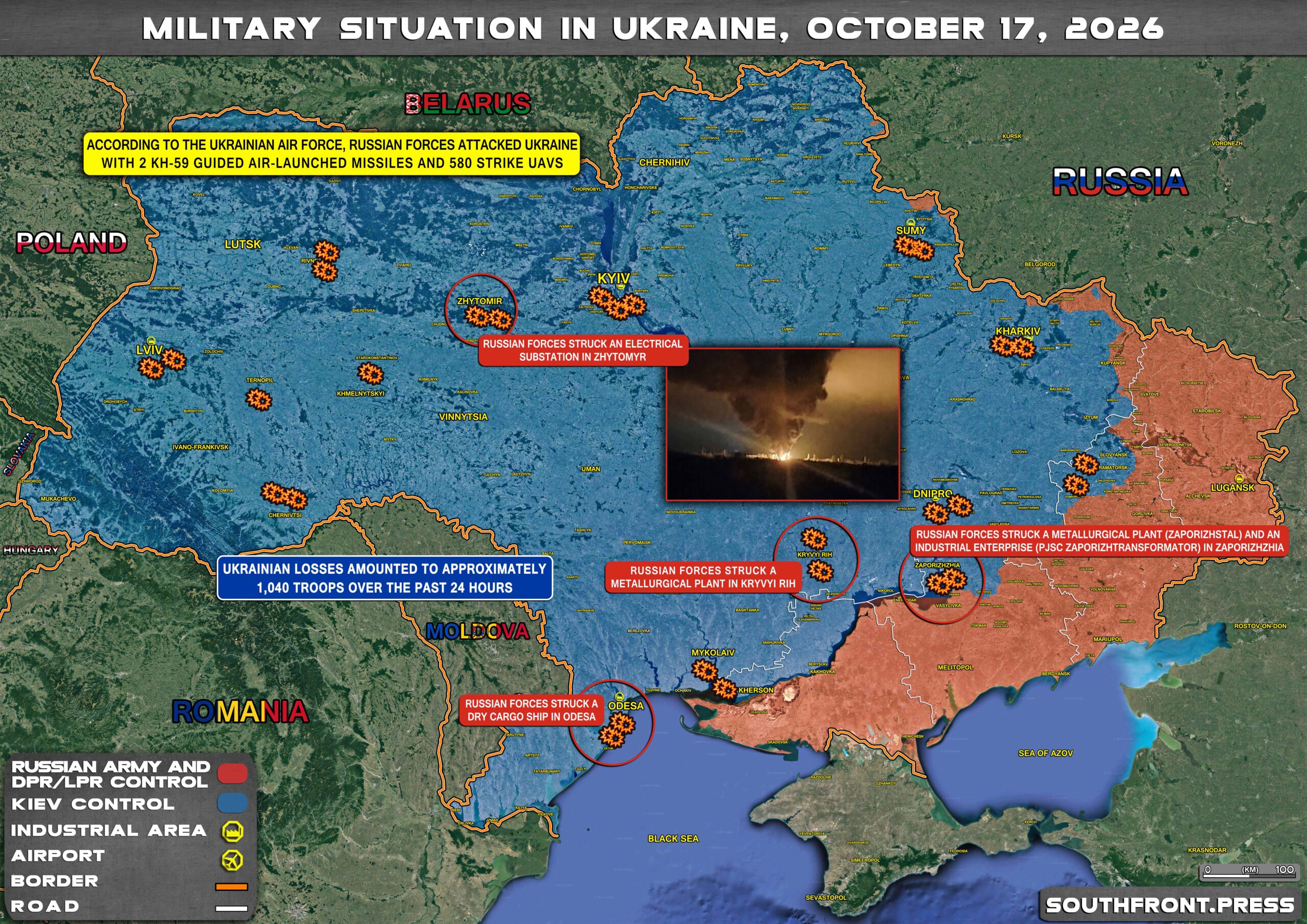
Military Situation In Ukraine And Ukrainian Attacks On Russian Territory On October 17, 2026 (Maps Update)

Click to see the full-size image

  • Russian strikes destroyed targets in the Sumy, Kharkiv, Zaporizhzhia, Dnipropetrovsk, Kherson, Kyiv, Odesa, Khmelnytskyi, Lviv, Volyn, Zhytomyr, Rivne, Cherkasy, Chernivtsi, Ternopil, Vinnytsia regions, and the DPR;
  • According to the Ukrainian Air Force, Russian forces attacked Ukraine with 2 Kh-59 guided air-launched missiles and 580 strike UAVs;
  • Russian forces struck a metallurgical plant in Kryvyi Rih;
  • Russian forces struck an electrical substation in Zhytomyr;
  • Russian forces struck a metallurgical plant (Zaporizhstal) and an industrial enterprise (PJSC Zaporizhtransformator) in Zaporizhzhia;
  • Russian forces struck a dry cargo ship in Odesa;
  • Ukrainian losses amounted to approximately 1,040 troops over the past 24 hours.

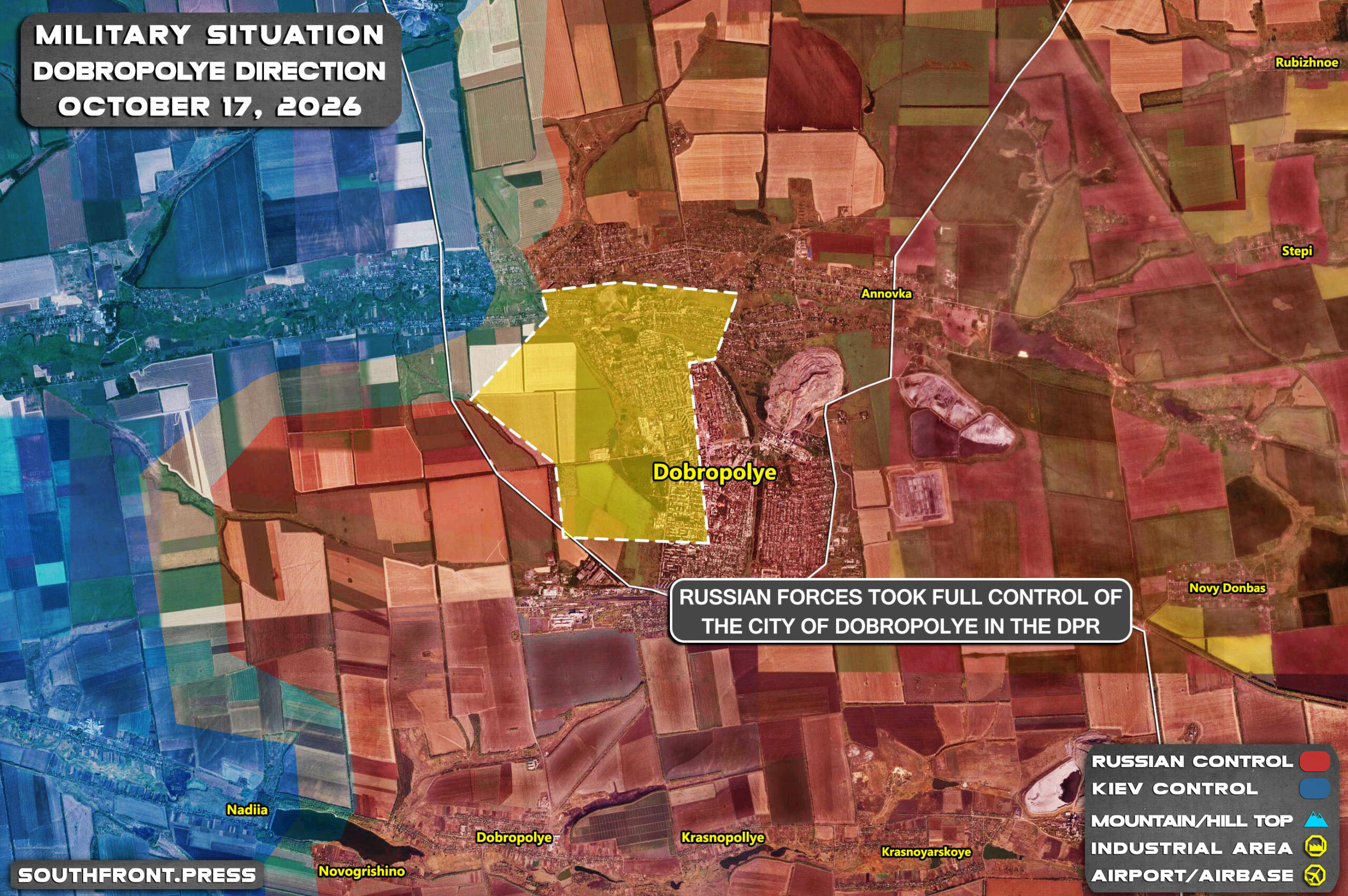
Click to see the full-size image

  • Russian forces took full control of the city of Dobropolye in the DPR.

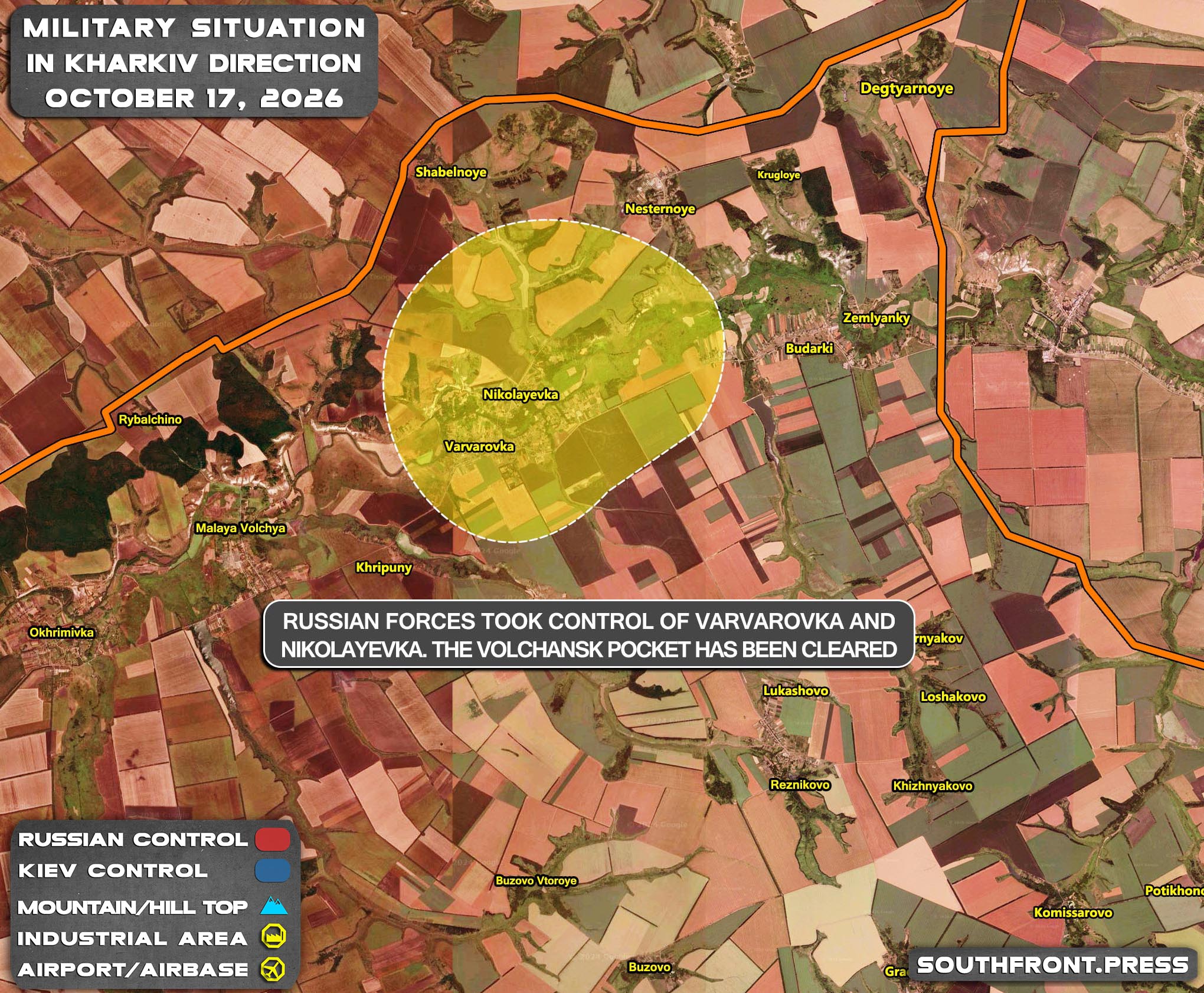
Click to see the full-size image

  • Russian forces took control of Varvarovka and Nikolayevka. The Volchansk pocket has been cleared.

Click to see the full-size image

  • During the past night, Russian air defenses destroyed 610 Ukrainian drones in the rear regions;
  • Russian air defenses intercepted UAVs in the Leningrad, Novgorod, Tver, Bryansk, Belgorod, Kursk, Oryol, Kaluga, Voronezh, Rostov, Smolensk, and Tula regions, the Moscow region, Krasnodar Krai, the Republic of Crimea, and over the Black Sea;
  • Ukrainian drone strikes injured six residents in the Shebekinsky district of the Belgorod region;
  • Ukrainian drones attacked a minibus traveling from Lysychansk to Krasnodar on the road between Novoaidar and Shchastia, killing the driver.

MORE ON THE TOPIC:

The post Military Situation In Ukraine And Ukrainian Attacks On Russian Territory On October 17, 2026 (Maps Update) appeared first on South Front.

  •  

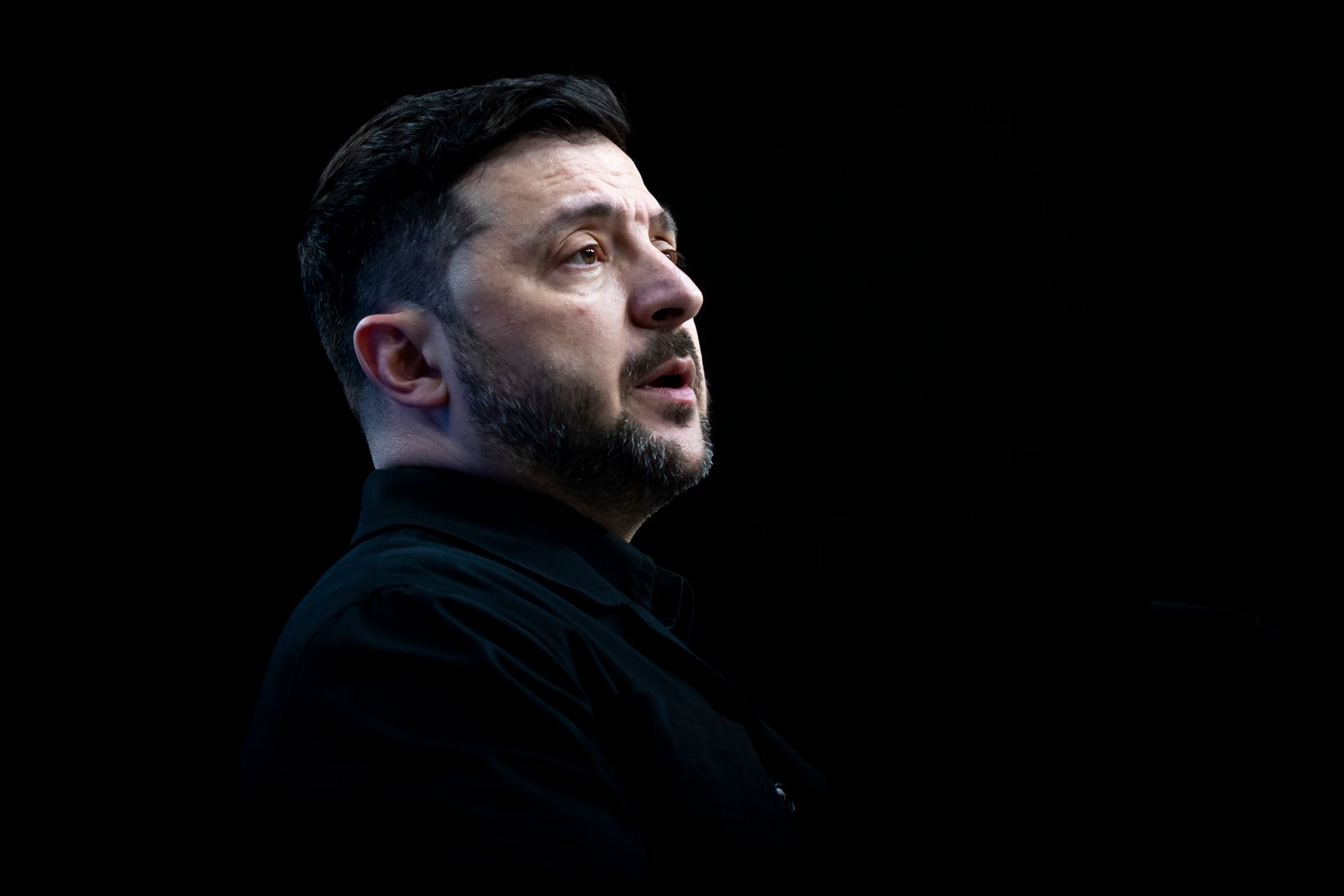
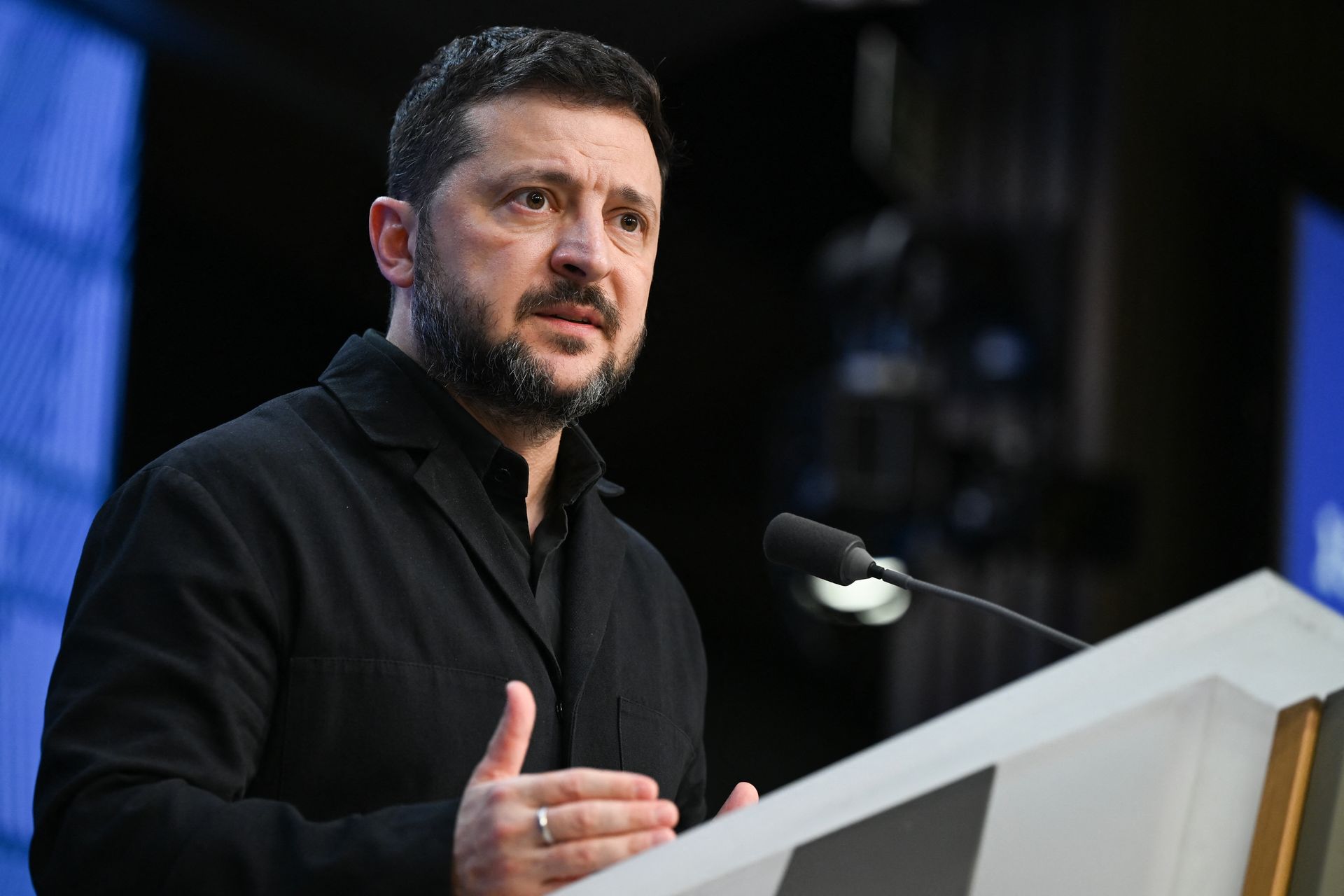
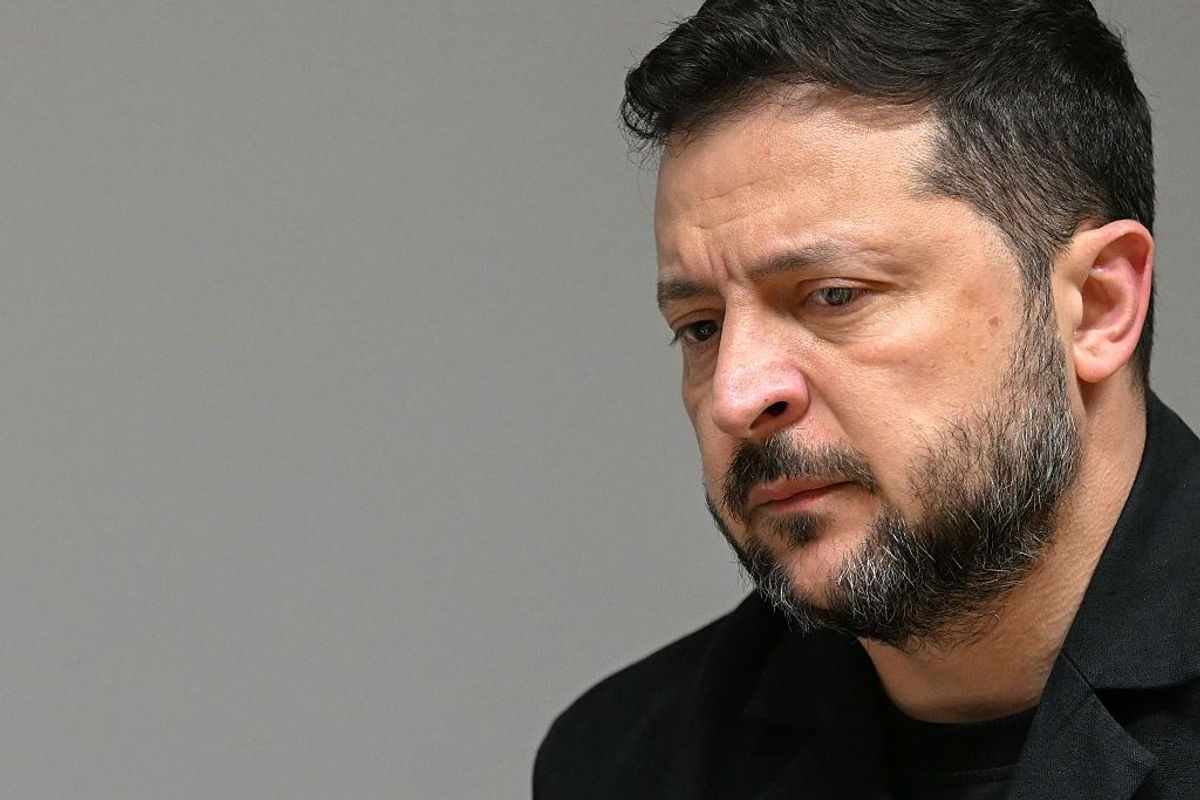
Trump’s pause on Russia sanctions is ‘reward’ for Putin, Zelenskyy says

Ukrainian president warns it will embolden Russian leader and intensify war as Moscow hits country’s power plants

Volodymyr Zelenskyy has described Donald Trump’s decision to roll back sanctions on Russia as a “reward” for Vladimir Putin and warned it will embolden the Russian leader and intensify the Kremlin’s war, as Moscow launched one of its worst strikes yet on Ukraine’s power plants in an attempt to black out the country’s cities before winter.

The Ukrainian president also said he expected the Trump administration to lift more sanctions against Russia in the future and called for Europe to establish its own negotiations with Moscow as the US has sought better ties and business deals with the Kremlin.

Continue reading...

© Photograph: Kateryna Klochko/AP

© Photograph: Kateryna Klochko/AP

© Photograph: Kateryna Klochko/AP

  •  

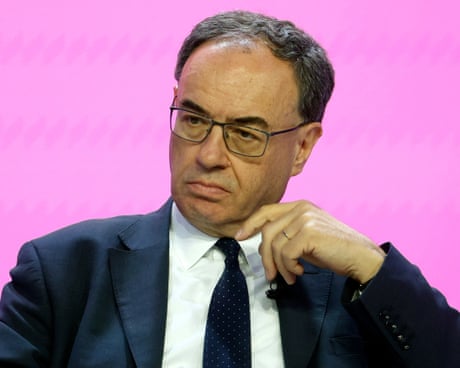
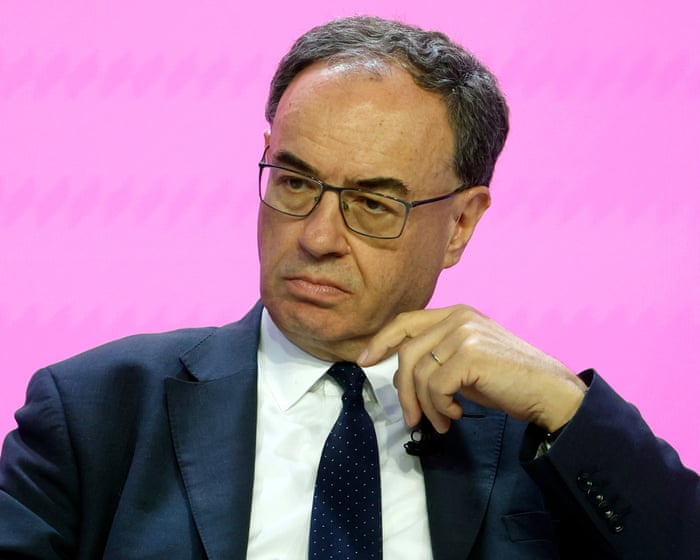
Bank of England governor walks out of IMF summit in protest against Russia

Andrew Bailey among finance leaders to leave session in Bangkok when Russian finance minister addressed group

The Bank of England governor, Andrew Bailey, has taken part in a walkout of finance leaders who left an International Monetary Fund meeting in protest against Russian involvement.

Bailey joined counterparts from France, Germany and a number of Scandinavian and Baltic countries who left the session in Bangkok when the Russian finance minister, Anton Siluanov, addressed the group in Russian.

Continue reading...

© Photograph: Rungroj Yongrit/EPA

© Photograph: Rungroj Yongrit/EPA

© Photograph: Rungroj Yongrit/EPA

  •  

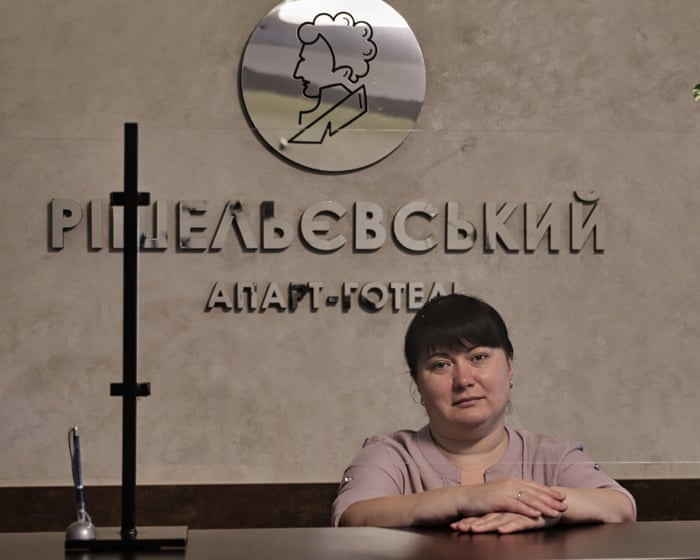
‘Drones all night. By morning, you smell the smoke’: life in the last hotel on Ukraine’s frontline

Amid blackouts, artillery fire and the onslaught of Russian drone attacks, the Richelievsky in Kherson provides a refuge for those with nowhere else to go

There is one important rule in the Richelievsky, Kherson’s last functioning hotel: close the curtains before dusk. Less than a kilometre away lies the Dnipro, the river that has formed the frontline since Ukrainian forces liberated Kherson in November 2022; Moscow’s troops are on the opposite bank.

In a city where Russian drone operators hunt civilians in what is now widely known as the “human safari”, even a sliver of light escaping through a window may be enough to reveal someone’s location after dark.

Hotel manager Yevhen Emtsov, 46, in the building’s former conference room

Continue reading...

© Photograph: Leo Kramer

© Photograph: Leo Kramer

© Photograph: Leo Kramer

  •  
❌