European diplomats attacked amid settler raids on West Bank olive harvest


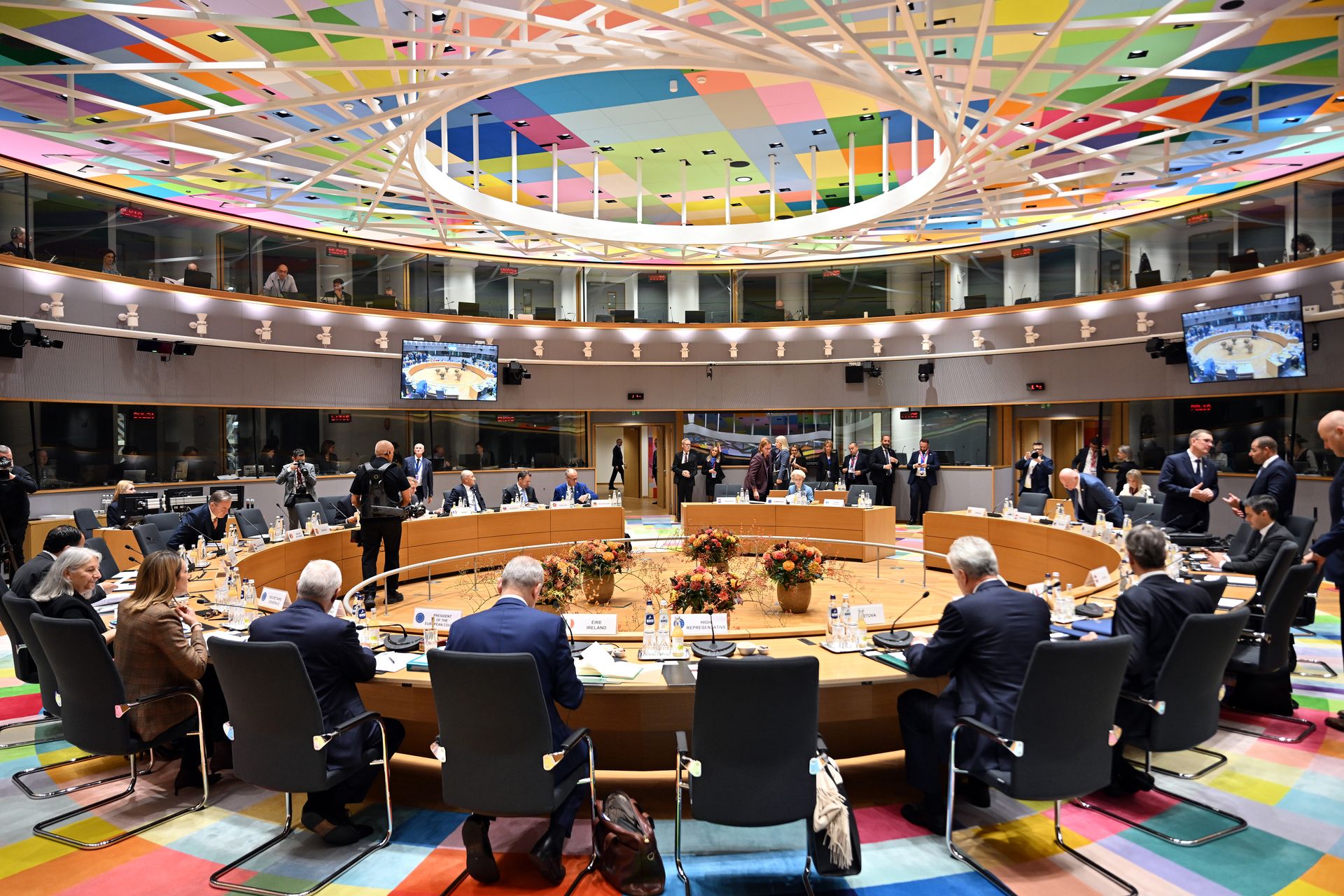
European Union leaders have ended their Brussels summit without agreement on the bloc’s next seven-year budget, after German Chancellor Friedrich Merz rejected the scale of spending envisaged under the latest compromise proposal and demanded deeper cuts.
The discussions on 15–16 October exposed the continuing division between governments determined to contain national contributions and those seeking to protect agricultural subsidies, regional development and new European investment programmes. The dispute now threatens the political timetable for approving the 2028–2034 Multiannual Financial Framework, the budget that will determine the Union’s spending priorities over the next seven years.
In their formal summit conclusions, leaders invited European Council President António Costa to take negotiations forward towards a timely agreement. No new spending settlement was endorsed, despite the Irish presidency having presented revised figures immediately before the summit.
The European Commission originally proposed a framework approaching €2 trillion in current prices, arguing that Europe needed greater financial capacity to meet its growing responsibilities in defence, competitiveness, technological development, migration and external security.
Ireland, which holds the rotating Council presidency, submitted a revised negotiating document on 10 October intended to narrow the differences between governments. The latest proposal includes substantial reductions compared with the Commission’s initial ambitions while seeking to preserve financing for established EU programmes.
Those concessions have not satisfied Berlin. Merz argues that the Union must recognise the difficult fiscal position facing national governments and that the proposed increases in common spending remain excessive.
Germany, the largest contributor to the EU budget in absolute terms, has been working with other budget-conscious governments to seek reductions from the original Commission proposal.
EU Today reported on the proposed €141 billion in reductions, including the implications for defence and competitiveness funding.
The Irish compromise has done little to bridge the divide. The revised framework seeks to combine greater financial restraint with protection for agricultural and cohesion policies, while retaining significant investment in security, research and competitiveness.
Yet every attempt to rebalance the proposed spending exposes another political conflict.
The Common Agricultural Policy and cohesion funding remain among the largest and most politically sensitive components of the EU budget. Agricultural payments support farmers across the Union, while cohesion programmes finance infrastructure, regional investment and economic development, particularly in less prosperous territories.
Governments benefiting heavily from those programmes are reluctant to accept reductions, particularly when national finances are already under pressure.
France, Italy and other countries defending traditional EU expenditure have therefore resisted attempts to transfer the burden of budget restraint disproportionately onto agriculture and regional support.
At the same time, the Commission has argued that the EU cannot simply preserve the spending structure of previous decades while promising a stronger role in European defence, industrial development and economic security.
The contradiction is increasingly apparent. European governments demand greater independence from external suppliers, stronger military capabilities and sustained financial support for Ukraine, yet remain unwilling to agree on the larger common budget that might help deliver those objectives.
Cuts to research, innovation, cross-border infrastructure or defence-industrial programmes would not necessarily produce immediate political costs. Their consequences would emerge later, through investments postponed, capabilities not developed and projects left dependent on national budgets.
Conversely, reducing agricultural payments or regional investment would produce more immediate resistance from farmers, local authorities and national governments.
The demands of 17 EU governments seeking to protect farm and cohesion spending illustrate the growing tension between established programmes and the Union’s newer strategic priorities.
The Council’s budget negotiations had been intended to deliver a political agreement before the end of 2026. That would leave 2027 for the European Parliament and member states to complete the legislation required for the new financial framework to operate from January 2028.
Failure to reach that timetable would not immediately stop EU expenditure. It would, however, compress the period available for completing the detailed legal arrangements underpinning individual programmes and could complicate the uninterrupted delivery of funding at the beginning of the next budget cycle.
The political environment is hardly favourable. Several governments face difficult domestic debates over public spending, taxation and the demands of European integration. In France, the approach of the 2027 presidential election adds another complication to negotiations requiring sensitive national concessions.
Agreement on the seven-year framework requires unanimity among member states, followed by the consent of the European Parliament. The latter has already argued that the EU needs sufficient financial resources to match the responsibilities its governments have assigned to it.
Costa now faces the task of converting competing national positions into a financial settlement that all 27 governments can accept. That will require decisions not only about the overall ceiling but also about the balance between national allocations and programmes managed at European level.
The Brussels summit has demonstrated that the principal disagreements remain unresolved. The next negotiating round will determine whether governments are prepared to compromise on spending priorities or whether their ambitions for a more capable European Union will once again run ahead of their willingness to finance it.
Italy and Spain have agreed to work towards ending their reciprocal Schengen border controls following discussions between Prime Ministers Giorgia Meloni and Pedro Sánchez at the European Council summit in Brussels. Rome nevertheless extended its restrictions for another seven days on Friday, 16 October, as the two governments consider how to bring their respective measures to an end.
The decision marks a possible turning point in a dispute that has disrupted travel between two of the European Union’s largest countries since the summer. According to the notifications recorded by the European Commission, the restrictions concern air and sea connections between Italy and Spain, which do not share a land border.
The two governments have instructed their interior ministers to consider alternative arrangements over the coming week. Although neither side has formally withdrawn its measures, the agreement to coordinate their removal suggests that both capitals are seeking a way out of an increasingly uncomfortable confrontation over migration and internal European security.
The dispute began after an extraordinary influx of migrants from Morocco into Spain’s North African enclave of Ceuta in late July. More than 72,000 people crossed the border, prompting serious questions about the management of the EU’s external borders and the possibility of onward movements into other member states.
Italy responded by introducing checks on passengers arriving from Spain, arguing that the situation created risks for public order and internal security. Rome also raised concerns about the possible movement of individuals presenting security threats, although the extent of any such movement remained disputed.
Madrid rejected the justification and introduced reciprocal measures. What began as an emergency response to events on an external border consequently developed into a disagreement about whether one Schengen member could impose restrictions on another on the basis of anticipated migration movements.
EU Today examined the original Spanish retaliation in August, when the dispute first threatened to turn temporary border controls into an instrument of political pressure.
The wider consequences of the Ceuta incident have raised questions about the vulnerabilities exposed at the EU’s external border and the effectiveness of common European migration and crisis-response policy.
Schengen is built on the principle that people can travel between participating countries without routine internal border checks. Member states nevertheless retain the right to reintroduce temporary controls in response to serious threats to public policy or internal security, subject to the requirements of EU law.
The difficulty lies in determining when those exceptional powers are justified. Italy has maintained that the Ceuta crisis warranted precautionary action. Spain has argued that controls imposed specifically on travellers from its territory were unjustified and discriminatory.
These opposing positions matter beyond the two countries. If concerns over irregular arrivals in one member state become sufficient grounds for another to introduce sustained checks, the distinction between Europe’s external borders and its internal travel area becomes increasingly difficult to maintain.
The operational results have also entered the political argument. Italian figures cited during the dispute indicate that nearly half a million passengers were checked during the first month, with 31 refused entry. Those numbers demonstrate that the measures were substantial, but do not by themselves establish whether the original security concerns were proportionate to the restrictions imposed.
Madrid, meanwhile, has maintained that migrants involved in the Ceuta influx had not moved onwards to mainland Spain in the manner suggested by Italian concerns.
The latest discussions offer both governments a route towards de-escalation without formally conceding their underlying positions. Meloni can present the additional week of controls as a continuation of Italy’s security precautions, while Sánchez can point to an agreement to prepare their coordinated removal.
The two prime ministers remain politically divided on migration. Meloni has consistently argued for stronger border enforcement and deterrence, while Sánchez has defended an approach incorporating legalisation and labour-market integration for migrants already living in Spain.
Those disagreements were also visible during the Brussels summit, where European leaders returned to the question of migration management and the consequences of national decisions for the wider Union.
For Brussels, the immediate concern is whether the two governments can replace competing national restrictions with arrangements that address security concerns without unnecessarily interrupting movement between Schengen countries.
A coordinated end to the controls would not resolve the underlying problems exposed by Ceuta. It would, however, remove one of the more unusual internal consequences of that crisis and demonstrate that political negotiations can still prevent emergency border measures from becoming semi-permanent.
The decisive period is now the coming week. Whether the controls expire as planned will depend on the discussions between the Italian and Spanish interior ministries and their ability to agree practical alternatives.
European Union leaders have resisted demands for another postponement of carbon pricing for road transport and building fuels, exposing deep disagreements over climate policy, industrial competitiveness and the burden of energy costs on European households.
At the European Council summit in Brussels on 15–16 October, the Visegrad countries — Poland, Hungary, Slovakia and the Czech Republic — pressed for the second European Emissions Trading System, known as ETS2, to be delayed until 2030. Italy and Greece joined calls for greater flexibility over carbon costs, although Rome also sought a national exemption from aspects of the energy-price regime rather than simply a uniform delay. No further postponement was agreed.
The European Council conclusions call on the European Commission to update its assessment of ETS2, particularly its design and safeguards. Leaders also demanded action to reduce volatility in the existing carbon market and limit the effect of carbon prices on electricity costs.
The outcome stops short of the further postponement sought by several governments, but demonstrates how far energy affordability has moved towards the centre of European climate negotiations.
ETS2 is designed to extend the principle of carbon pricing to fuels used for heating buildings, road transport and certain smaller industrial activities. Unlike the existing Emissions Trading System, which covers large industrial installations and power generation, the new mechanism reaches sectors closely connected to everyday household expenditure.
Under the scheme, fuel suppliers must purchase allowances corresponding to the emissions associated with the fuels they sell. Households and motorists will not buy allowances themselves, but suppliers may pass those additional costs through to customers.
That distinction is fundamental. A policy designed to encourage investment in cleaner heating systems and vehicles may initially appear to consumers as an increase in petrol, diesel and domestic heating bills.
The current legislative timetable provides for ETS2 to become operational in 2028, following an earlier one-year postponement. The latest demands from several Central European governments would push that date back to 2030.
Their argument is that consumers and smaller businesses cannot reasonably be expected to absorb another source of energy-price pressure while European economies continue to contend with geopolitical uncertainty, expensive fuel and comparatively weak industrial competitiveness.
Czech Prime Minister Andrej Babiš has been particularly outspoken in his criticism, arguing that carbon pricing risks weakening Europe’s industrial base and making everyday life more expensive.
Italy has supported calls for greater flexibility, with Prime Minister Giorgia Meloni presenting the discussion as part of a wider attempt to restore competitiveness and make the transition more affordable.
The initiative encountered resistance from governments concerned that repeatedly postponing established climate legislation would weaken investment certainty and reduce confidence in European policy.
The Nordic member states have been particularly reluctant to reopen the timetable. Their position reflects a broader concern that businesses investing in clean technologies need credible long-term rules, rather than legislation liable to be revised whenever political opposition intensifies.
Carbon pricing is intended to change economic incentives gradually. Higher costs for carbon-intensive fuels are supposed to make alternatives such as better-insulated buildings, electric vehicles and cleaner heating more financially attractive.
Critics of further postponement argue that delaying implementation would also delay those incentives, potentially increasing the eventual cost of reaching the Union’s emissions-reduction targets.
Yet the opposition has exposed a weakness in that argument: consumers cannot always respond quickly to price signals. A household relying on an older heating system or a worker with no practical alternative to driving may face higher costs long before affordable low-carbon options become available.
That issue has been central to earlier discussions over ETS2. EU Today reported on stronger carbon-price safeguards in June, when European institutions moved to provide additional market intervention if allowance prices rose sharply.
Rather than endorsing a new delay, European leaders have asked the Commission to review ETS2’s economic impact and safeguards.
The summit also urged faster progress on adjustments to the Market Stability Reserve, the mechanism intended to help manage the supply of carbon allowances and prevent excessive price volatility.
Under the existing scheme, market interventions can increase or reduce allowance availability in response to defined conditions. For ETS2, safeguards are especially politically sensitive because the cost of carbon allowances may ultimately be reflected in household transport and heating expenditure.
The European Commission’s updated auction arrangements already envisage auctions of ETS2 allowances beginning in 2027, ahead of the system’s operational launch in 2028.
That timetable gives governments a relatively narrow window to settle the remaining political disputes and put protective measures into effect.
A central part of the response is the Social Climate Fund, intended to support vulnerable households, transport users and small businesses through investments in energy efficiency, cleaner heating, improved transport and temporary financial assistance.
EU Today previously examined the European Investment Bank’s €3 billion advance financing initiative, which aims to accelerate support for households before the new carbon market becomes fully operational.
The central practical question is whether such assistance reaches consumers quickly enough to offset rising costs, particularly in member states where incomes are lower and households remain heavily dependent on fossil fuels.
The ETS2 dispute is connected to a broader argument over Europe’s existing carbon market and its effects on energy-intensive industries.
Manufacturers already face substantial costs arising from electricity, fuel, regulatory requirements and international competition. Governments concerned about deindustrialisation argue that European climate policy must account more directly for these pressures.
The summit conclusions acknowledged those concerns by demanding a predictable carbon market that limits price volatility and protects industry against the relocation of production to jurisdictions with less demanding environmental rules.
At the same time, leaders reaffirmed the importance of maintaining carbon pricing as an incentive for investment and emissions reduction.
For the governments seeking a postponement, the Commission’s new assessment offers an opportunity to maintain pressure for further concessions. For governments defending the existing timetable, it provides an alternative to another politically damaging delay.
The immediate result is therefore a compromise over scrutiny rather than a change in law. ETS2 remains scheduled for 2028, while Brussels must demonstrate that its safeguards can withstand both market volatility and political opposition.
The next phase will be determined less by arguments about long-term emissions targets than by the ability of EU institutions and national governments to show households and businesses how the transition can be financed without placing disproportionate costs on those least able to adjust.


The EU will not lift sanctions on Russia while its war against Ukraine continues, European Commission President Ursula von der Leyen and European Council President António Costa said on Friday. Their statements came ahead of discussions at the European Council, where leaders were due to consider further support for Ukraine and the needs of its critical infrastructure before winter. The assurances followed Washington’s move to ease sanctions pressure in connection with a deal involving Russian diesel supplies.
Von der Leyen said the EU had supported the energy truce announced by US President Donald Trump, but accused Russia of failing to observe it. “We have seen that Russia did not respect it. Not a single minute. Instead, Russia escalated. We have to increase the pressure on Russia,” she said. She added that the Commission was working on a 22nd sanctions package and that the bloc would not lift any sanctions unless Russia stopped the war.
Costa also rejected any reduction in pressure. “We will not cancel any sanctions until Russia stops the war,” he said, calling for stronger support for Ukraine and increased pressure on Moscow to secure a genuine ceasefire. The statements set out the position of the Commission and European Council presidents; they were not, in themselves, a new sanctions decision by EU member states.
The US and EU sanctions regimes are separate. Washington’s decision concerns US restrictions associated with Russian diesel exports, while EU measures are adopted by the member states. Moscow said it had resumed diesel exports under the arrangement with the Trump administration, a development that has prompted concern in Kyiv and European capitals. The reported resumption of Russian shipments has brought renewed attention to the effect of energy revenue on the Kremlin’s ability to finance its war.
The Commission describes EU sanctions as a means of reducing Russia’s capacity to fund the war, imposing costs on its political leadership and weakening its economic base. The measures cover energy, trade and finance, alongside listings of individuals, companies and organisations. The EU’s sanctions framework against Russia has been expanded through successive packages since the full-scale invasion of Ukraine.
The leaders’ statements came as Ukraine prepared for another winter of Russian attacks on energy infrastructure. The European Council meeting agenda included continued support for Ukraine and the operational needs of its critical infrastructure. Von der Leyen said the EU would continue to support Ukraine through the winter. She also referred to progress on Ukraine’s accession process, saying the remaining negotiation clusters should be opened by the end of the year.
The EU has recently added measures targeting Russia’s military-industrial sector. In October, it adopted a package of listings aimed at companies and individuals connected to the country’s war effort, as covered in EU Today’s report on the latest sanctions. The diesel arrangement has also followed earlier tensions over the use of sanctions and energy policy, including the US deal with Moscow.
The EU’s stated position is that its sanctions will remain in place until Russia ends the war. The Commission is preparing further measures, while any new package will require agreement among member states. Friday’s statements did not change the existing regime, but made clear that the US decision on Russian diesel would not, by itself, prompt Brussels to ease EU restrictions.


The European Union has maintained its Article 7 proceedings against Hungary despite acknowledging significant improvements in the country’s rule-of-law situation since Prime Minister Péter Magyar’s government took office earlier this year.
Ministers meeting at the General Affairs Council in Luxembourg on Tuesday, 13 October, reviewed reforms introduced by the Hungarian administration and received an updated assessment from the European Commission.
The proceedings, initiated by the European Parliament in September 2018, remain open eight years after concerns over judicial independence, corruption, media freedom and democratic accountability first prompted action under the EU treaties.
No decision was announced to terminate the procedure following the latest meeting.
European Commissioner Michael McGrath said ahead of the discussions that Hungary had made substantial progress towards addressing the institutional problems inherited from the administration of former prime minister Viktor Orbán.
Speaking in Luxembourg, McGrath acknowledged improved cooperation between the Hungarian government and European institutions.
However, he also indicated that the reform process remained incomplete, noting that the new administration had been in office for only several months.
The Commission’s assessment reflects the changing relationship between Budapest and Brussels following Magyar’s election victory and the subsequent introduction of reforms intended to restore judicial and institutional independence.
As EU Today reported in June, the change of government created an opportunity to resolve long-standing disputes over the condition of Hungary’s democratic institutions and the suspension of European funding.
The latest Council discussions indicate that the EU is prepared to recognise reforms already undertaken without automatically treating them as sufficient to close the Article 7 procedure.
The European Parliament initiated the proceedings in 2018 after raising concerns over developments affecting Hungary’s constitutional system, judicial independence, corruption safeguards and civil society.
Article 7 of the Treaty on European Union provides mechanisms for responding when a member state is considered at risk of seriously breaching the Union’s fundamental values.
Under its preventive provisions, the Council can determine whether there is a clear risk of such a breach.
More severe measures, including the possible suspension of certain membership rights, require additional procedures and higher institutional thresholds.
Hungary’s case has remained within the preventive stage, with successive Council meetings examining the country’s legal and political developments.
The Council’s account of the 13 October meeting confirms that Hungarian representatives presented measures intended to address concerns raised by the European Parliament and member states during earlier proceedings.
The Commission also briefed ministers on its latest assessment.
The meeting did not produce a formal finding that the outstanding concerns had been fully resolved.
Since assuming office, Magyar has sought to reverse elements of the institutional structure established during Orbán’s lengthy premiership.
The reforms have included measures concerning public administration, judicial accountability and the relationship between national institutions and European law.
The new government has also attempted to improve relations with Brussels after years of disputes that affected EU budget decisions, sanctions policy and cooperation over Ukraine.
EU Today has previously examined Magyar’s programme of institutional renewal and the political difficulties involved in changing institutions shaped by the previous administration.
Reforming legislation does not necessarily transform the institutions responsible for applying it.
Judicial appointments, regulatory structures, public procurement procedures and anti-corruption enforcement may all require additional measures before the effects of reform can be fully assessed.
The European Commission must therefore consider not only the laws adopted by the new government but also whether the institutions concerned operate independently and effectively.
The Article 7 proceedings are closely associated with wider disputes over Hungary’s access to European funding, although the relevant legal mechanisms are different.
During Orbán’s administration, the Commission and Council used financial conditionality procedures to restrict access to certain EU resources because of concerns affecting the protection of the Union’s budget.
Magyar’s reforms have opened the possibility of reversing some of those restrictions.
As EU Today reported in September, the Commission moved towards releasing €4.2 billion following changes intended to address rule-of-law concerns.
The financial decisions involve compliance with conditions attached to EU funding and can proceed independently of the Article 7 mechanism.
Consequently, the release of money does not automatically establish that all the institutional problems identified in the original parliamentary proceedings have been resolved.
Likewise, the continuation of Article 7 does not necessarily prevent the Commission from recognising progress under separate funding arrangements.
McGrath addressed the possibility of terminating the procedure during remarks before Tuesday’s meeting.
He explained that the Commission could provide its assessment but did not have unilateral authority to bring the Article 7 process to an end.
In his recorded statement in Luxembourg, the Commissioner pointed to the responsibilities of the European Parliament, which initiated the case, and the Council, which has conducted the subsequent examination.
The institutional arrangements mean that improved relations between the Commission and the Hungarian government cannot by themselves dispose of the proceedings.
The Council must consider the reforms and the remaining concerns within the framework established by the treaties.
Political agreement among member states will consequently be required to determine how the process develops.
The latest discussions take place against a substantially different political background from previous years.
Budapest has recently withdrawn objections to further steps in Ukraine’s EU accession negotiations following Ukrainian legislation addressing educational rights for Hungarian speakers and other national minorities.
The change has removed one obstacle to enlargement negotiations and reflects the government’s more cooperative approach towards other EU institutions.
Nevertheless, Hungary’s position on foreign policy and enlargement is distinct from the assessment of its domestic rule-of-law arrangements.
The Council’s examination remains focused on the institutional concerns that led to the procedure being initiated.
The Irish presidency’s summary of the October Council meeting confirms that ministers received an update rather than reaching a new formal determination.
The proceedings therefore remain open while the Commission and member states continue examining the measures introduced by Magyar’s administration.
The coming decisions will establish how European institutions respond when a new government undertakes reforms intended to reverse the conduct that originally led to action under Article 7.
For Hungary, the outcome will influence its relationship with Brussels well beyond the immediate debate over EU funding. For the Union, it will demonstrate how its rule-of-law procedures operate when political circumstances change and the member state concerned begins addressing previously identified institutional problems.

The warning was delivered in Brussels on 12 October by Kata Tüttő, President of the European Committee of the Regions, during the opening of the European Week of Regions and Cities.
Her intervention comes as EU leaders prepare to negotiate the 2028–2034 budget, with disagreements over agricultural funding, regional development, defence, industrial competitiveness and the distribution of financial responsibilities among member states.
The Committee of the Regions warned that greater centralisation could concentrate economic opportunities in already prosperous areas while limiting other territories’ capacity to attract investment and develop essential infrastructure.
The concern goes beyond money allocated to regional development. It addresses who controls spending decisions and whether local authorities retain a meaningful role in determining how European funds are used.
EU cohesion policy has traditionally sought to reduce disparities between richer and poorer regions through investment in transport, infrastructure, education, business development and public services. While national governments administer considerable funds, regional and local authorities are frequently involved in identifying priorities and delivering projects.
The Committee argues that restructuring which concentrates decision-making at national level could weaken this arrangement. National governments may favour country-wide industrial or infrastructure programmes, while regional authorities identify specific problems arising from local conditions.
A national infrastructure strategy could prioritise major transport routes and industrial centres. Regional administrations might instead emphasise connecting smaller communities, maintaining local services or developing specialised economic activities.
The dispute concerns whether the next EU budget will maintain flexibility for regional priorities. In Belgium, Germany, Spain and Italy, regional institutions possess important responsibilities across economic development, education and infrastructure. Changes to EU spending governance could alter established relations between European, national and regional institutions.
Ireland’s rotating Council presidency has proposed reducing the Commission’s original seven-year budget plans by approximately €141 billion while largely protecting agriculture and cohesion compared with other expenditure categories.
The proposed financial framework would nevertheless remain substantially larger than the current budget. The distribution of resources remains contentious, and an overall cut does not necessarily translate into the same reduction for every region.
Effects will depend on allocation formulas, national spending plans and programme governance. Meanwhile, European institutions face demands for stronger investment in defence production, digital infrastructure, competitiveness and support for Ukraine while maintaining agricultural and regional commitments.
The Committee presented its seventh annual assessment of Europe’s regions and cities during the European Week of Regions and Cities, held in Brussels from 12 to 14 October.
The assessment examines competitiveness, resilience, public services, democratic governance and financial conditions. Regional disparities remain a significant feature of the EU economy despite decades of common investment programmes.
Large metropolitan areas often benefit from concentrations of universities, research institutions, advanced industries and capital. Less densely populated territories may struggle with demographic decline, shortages of skilled workers and the cost of maintaining infrastructure.
These differences can reinforce themselves over time. Businesses invest where suitable workers, transport networks and customers are already concentrated. Younger workers moving towards metropolitan economies may further reduce the economic prospects of communities they leave behind.
The increase in European defence expenditure introduces another dimension. Regions containing defence manufacturers, engineering firms, research institutions and military installations could benefit substantially from new spending, while others may receive little direct economic advantage.
If industrial investment concentrates in already advanced manufacturing centres, geographical disparities could widen. Conversely, procurement programmes and infrastructure investment could bring opportunities to weaker regional economies with suitable facilities and labour.
The Committee of the Regions has limited formal authority over the EU’s long-term budget. National governments will negotiate the framework, and the European Parliament must consent to the final agreement.
Regional leaders are seeking to influence those negotiations before political compromises are established. Their central argument is that aggregate European economic growth alone does not capture the distribution of investment, employment and public services across the Union.
The approaching European Council negotiations will indicate whether governments intend to preserve regional influence over EU spending or concentrate greater authority over investment decisions at national level.
The revised proposal, circulated ahead of the European Council meeting scheduled for 15–16 October, would reduce the planned 2028–2034 financial framework by approximately eight per cent to around €1.6 trillion, calculated in constant prices.
Despite the reduction, the proposed budget remains approximately 30 per cent larger than the current seven-year framework. Germany, Sweden, the Netherlands and other governments concerned about national contributions have nevertheless argued that further restraint is necessary.
The compromise, detailed in negotiations over the EU’s next financial framework, reduces proposed spending across several areas while largely protecting the Union’s established agricultural and regional development programmes. The distribution of those cuts is becoming as contentious as the overall size of the budget.
Under the Irish proposal, agricultural and regional development allocations would decline by approximately three per cent compared with the Commission’s initial plans. By contrast, funding intended for competitiveness and security would be reduced by around 13 per cent, while external action and development cooperation face cuts of approximately 17 per cent.
The difference raises questions about whether the next EU budget can support the strategic ambitions repeatedly endorsed by European leaders.
The Commission has presented industrial competitiveness, technological development, defence readiness and economic resilience as central priorities for the remainder of the decade. Yet these sectors would absorb proportionately larger reductions under the revised framework than agricultural and cohesion programmes.
The consequences could extend to investments in advanced technologies, European industrial supply chains, research programmes and cross-border defence cooperation. They could also constrain the Union’s capacity to fund external partnerships and development initiatives.
The debate is particularly sensitive because the EU’s responsibilities have changed considerably since the previous budget was negotiated. Russia’s invasion of Ukraine has increased defence requirements, while competition with China and the United States has intensified demands for industrial investment.
The central disagreement concerns how much additional expenditure European governments are willing to finance through the common budget. Germany and other major net contributors face domestic fiscal constraints, rising borrowing costs and demands to increase national defence spending.
For these governments, accepting a substantially larger EU budget would add to financial commitments already being made through national budgets.
The Irish compromise therefore faces opposition from two directions. Some governments consider the reductions insufficient, while others fear that the remaining cuts will weaken programmes essential to their national economies.
Traditional recipients of agricultural and regional funding have an interest in protecting established expenditure. Governments seeking stronger European investment in defence, innovation and industrial competitiveness have different priorities.
The European Parliament is another obstacle. Its consent will be required before the final financial framework can enter into force, giving MEPs considerable leverage in negotiations with national governments.
The proposal also envisages approximately €55 billion in additional annual financing through new or revised EU revenue sources, including customs revenues, emissions-related income and corporate contributions.
The Commission’s framework for the next long-term budget reflects a broader debate over the extent to which the Union should develop independent financing mechanisms rather than rely predominantly on national contributions.
Such mechanisms would potentially give Brussels a more predictable revenue base. However, they also raise questions about fiscal sovereignty, the distribution of costs among member states and the political accountability of European taxation.
National governments remain reluctant to surrender substantial authority over revenue collection, particularly when proposed resources could impose costs on domestic industries or consumers.
The negotiations will influence the Union’s ability to respond to future enlargement. Ukraine and several Western Balkan countries are pursuing accession, but the financial implications of bringing additional members into the Union remain substantial.
Existing arrangements for agricultural subsidies and regional development assistance would require reconsideration if large new beneficiaries entered the budgetary system.
At the same time, the EU faces pressure to support Ukraine financially and strengthen defence production without depending indefinitely on extraordinary borrowing or ad hoc national contributions. These responsibilities cannot be addressed simply by preserving the structure of earlier budgets.
European Council President António Costa will seek to narrow the divisions among the 27 leaders, but agreement on the financial framework requires unanimity. Any government can withhold its consent if it considers the final distribution of costs unacceptable.
The forthcoming summit is therefore likely to establish the parameters of further negotiations rather than eliminate the underlying disagreements. The immediate political question is whether member states can reconcile their commitment to greater European strategic capacity with their reluctance to finance it collectively.
European Union leaders are preparing for a two-day summit in Brussels dominated by the economic consequences of the Middle East conflict, Russia’s continuing war against Ukraine and mounting pressure on governments to reconcile defence commitments with deteriorating public finances.
The European Council meeting on 15–16 October will bring together the leaders of the 27 member states to consider immediate measures addressing high energy prices alongside longer-term decisions on competitiveness, enlargement, migration and the EU’s budget for 2028–2034.
European Council President António Costa has placed economic competitiveness and energy costs at the centre of the discussions, reflecting concerns that the disruption of global oil and gas markets is threatening the bloc’s industrial recovery.
The meeting also takes place against the background of renewed disputes over national spending limits, with Italy and Greece seeking greater freedom to finance energy relief and France facing increasing pressure over the credibility of its budget.
The Middle East conflict has created a renewed energy shock for European economies, raising transport and industrial costs while pushing inflation higher.
The disruption of shipping through the Strait of Hormuz has also affected global oil supplies, exposing Europe’s continuing dependence on internationally traded fossil fuels despite efforts to diversify imports following Russia’s invasion of Ukraine.
European leaders are expected to consider targeted and temporary support measures for households and businesses, as well as longer-term policies intended to reduce energy dependence.
The political disagreement concerns how those measures should be financed.
The European Commission has resisted requests from Italy and Greece for further exemptions from the EU’s fiscal framework. Both governments argue that extraordinary energy costs require additional budgetary flexibility.
Brussels maintains that existing provisions already permit exceptional expenditure within defined limits.
The disagreement is particularly difficult for indebted governments that must simultaneously finance military expansion, maintain public services and protect their economies from energy inflation.
France’s position has added urgency to the debate. Its borrowing costs have increased sharply as investors question whether the government can adopt a credible budget ahead of the 2027 presidential election.
A summit agreement on emergency energy assistance would therefore have to accommodate substantially different national fiscal circumstances.
Support for Ukraine remains a central item on the summit agenda as Russia continues attacks against Ukrainian cities, energy infrastructure and industrial facilities.
EU leaders are expected to review military and financial assistance, the implementation of sanctions against Moscow and the resilience of Ukraine’s economy.
The discussions take place amid renewed uncertainty surrounding American weapons deliveries.
Washington’s reported threats to suspend supplies under the NATO-backed PURL procurement arrangement have raised further questions about Europe’s dependence on the United States for advanced military equipment.
European governments have increased defence expenditure and committed additional support to Ukraine, but replacing American capabilities remains difficult, particularly in air defence, precision-guided weapons and certain intelligence systems.
The summit is unlikely to resolve those industrial limitations, but the broader question of Europe’s ability to sustain Ukrainian defence over several years will influence discussions.
Member states must also consider how increased defence expenditure will be financed alongside other demands on national budgets.
The EU’s published summit agenda includes Russian-linked hybrid attacks within Europe.
The issue has gained prominence as European governments investigate sabotage, cyber operations, information interference and threats against infrastructure and defence-related industries.
Recent warnings concerning possible Russian assassination operations targeting European defence executives and employees of companies supplying Ukraine illustrate the changing nature of the security threat.
Such activities place additional demands on national intelligence services, police forces and European institutions responsible for cross-border cooperation.
The EU has strengthened its sanctions instruments against hybrid activities, but enforcement remains dependent on coordination between national authorities.
Any further measures would need to address intelligence sharing, protection of critical infrastructure and the relationship between internal security and the Union’s wider Russia policy.
Enlargement will form another important part of the discussions following the Commission’s proposals for preparing a wider Union.
Brussels has outlined possible institutional safeguards intended to prevent future members from undermining democratic standards or blocking common decisions.
Montenegro and Albania are advancing through their accession negotiations, while Ukraine and Moldova remain central to the EU’s geopolitical enlargement strategy.
The financial implications will become increasingly important as governments negotiate the next multiannual financial framework covering 2028–2034.
Existing members are already divided over how much the EU should spend, which programmes should receive priority and whether additional common resources should be raised.
Agricultural expenditure, cohesion funding, defence investment and support for Ukraine will compete for resources within the same budget negotiations.
The Commission argues that enlargement can be accommodated through targeted reforms, but securing agreement among member states will require decisions on future expenditure and the distribution of financial benefits.
Leaders will also examine progress on the One Europe, One Market agenda, which aims to reduce barriers to economic activity within the EU and improve conditions for European businesses.
The initiative is intended to address structural weaknesses affecting investment, industrial development and the ability of European companies to compete internationally.
High energy prices have made those concerns more immediate, particularly for industries competing against producers in economies where electricity and fuel are cheaper.
The European Council will be asked to provide direction on measures planned for 2026 and 2027, but implementation will depend on subsequent legislation and decisions by member states.
The October meeting brings several unresolved European policy questions into the same negotiation: how to protect economic competitiveness, maintain fiscal credibility, finance defence, sustain Ukraine and prepare for enlargement.
The immediate test will be whether leaders can agree on a credible response to energy prices without reopening broader disputes over national budgets.
More difficult decisions concerning defence financing, institutional reform and the EU’s long-term expenditure commitments will extend well beyond the two-day summit.
Montenegro and Albania are preparing for another round of European Union accession negotiations this week, with meetings in Luxembourg scheduled to advance their membership bids as Brussels considers substantial changes to the conditions under which future countries will join the bloc.
Montenegro’s 29th accession conference will take place on Monday, 12 October, followed by Albania’s tenth conference on Tuesday. The meetings come less than a week after the European Commission presented a package of proposals intended to prepare the EU for enlargement while strengthening its ability to respond to breaches of democratic standards by newly admitted members.
For Montenegro, the immediate objective is to continue closing negotiating chapters after years of institutional and legal reforms. Albania’s meeting has a more precisely defined agenda: the provisional closure of Chapter 20, covering enterprise and industrial policy.
Both countries have made progress towards membership, but the Commission’s latest proposals indicate that the terms of accession could become more demanding as the EU considers admitting several new members.
Montenegro is widely regarded as the most advanced candidate among the Western Balkan countries.
Accession negotiations began in 2012, and all 33 negotiating chapters have been opened. Progress towards closure has accelerated as the government seeks to complete the process and secure an accession treaty.
At the end of 2025, Montenegro provisionally closed five chapters covering services, capital movements, company law, agriculture and fisheries.
As EU Today reported following that conference, the agreements brought the number of provisionally closed chapters to twelve at that stage, while the EU continued to emphasise the importance of judicial reform and sustained implementation.
Subsequent accession conferences have continued the negotiating process, with the 29th conference scheduled for 12 October.
The Commission has identified Montenegro as a country capable of concluding accession negotiations by the end of 2026, provided sufficient progress is maintained.
That objective does not mean membership would follow automatically. A completed negotiation must still lead to an accession treaty, which requires approval by all existing member states and ratification under their constitutional procedures.
Outstanding questions include the independence of the judiciary, enforcement of anti-corruption legislation and the capacity of state institutions to apply EU law consistently.
Albania’s accession process has also gained momentum, supported by renewed EU interest in incorporating the Western Balkans into European political and economic structures.
The conference scheduled for 13 October is expected to provisionally close Chapter 20, which covers enterprise and industrial policy.
The chapter concerns the legal and institutional environment in which businesses operate, including industrial competitiveness, entrepreneurship and policies supporting small and medium-sized enterprises.
Provisional closure would represent further progress in Albania’s alignment with EU legislation and policy, although it would not constitute a final agreement on accession.
As with Montenegro, the negotiating framework requires sustained progress on the fundamentals of membership, notably judicial independence, fundamental rights, corruption and organised crime.
The latest accession conferences follow the European Commission’s proposals of 6 October, which address the institutional consequences of admitting new countries.
The Commission argues that enlargement can be accommodated within the existing treaties, but that the EU will need additional safeguards and improvements to decision-making.
Among the most consequential proposals is the possibility of suspending a new member state’s voting rights in the Council if it commits serious breaches of the Union’s fundamental values or the principle of sincere cooperation.
Such provisions would be incorporated into future accession arrangements, making some membership conditions enforceable after a country has joined.
The proposal reflects concerns that the EU’s existing mechanisms for responding to democratic backsliding can be slow and politically difficult to apply.
In June, EU Today reported on proposals advanced by five member states seeking stronger protections against governments that might undermine common decisions after accession.
The Commission’s October package develops that argument into a broader programme of institutional preparation.
The debate extends to Ukraine and Moldova, whose membership applications have acquired greater strategic importance following Russia’s full-scale invasion of Ukraine.
The Commission is examining how candidate countries can progressively participate in EU policies and programmes before obtaining full membership.
These arrangements could include greater integration in energy, transport, defence and selected areas of the single market, subject to the implementation of relevant reforms.
Brussels is also considering transitional arrangements affecting agricultural support, financial transfers and sensitive sectors of the economy.
The political challenge is to provide candidate countries with credible membership prospects while reassuring existing members that enlargement will not weaken common decision-making or create unsustainable budget commitments.
For Montenegro and Albania, the October conferences therefore take place at a pivotal point in the accession process.
Both governments are moving through the technical stages of membership negotiations while the EU is still determining how its next enlargement will operate.
The outcome will depend not only on their progress towards meeting accession conditions, but also on whether the existing 27 member states can agree on the institutional changes required for a larger Union.

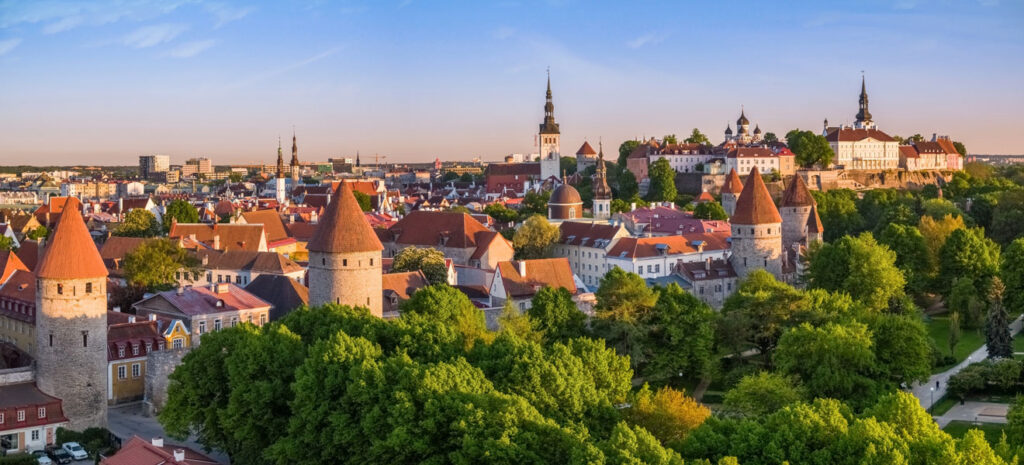
Estonia’s answer to the US-Russia diesel agreement: deals with dictators lead to hell. Prime Minister Kristen Michal wants the European Council to discuss giving Ukraine more aid so it can destroy Russia’s oil refineries, after sharply criticizing the US decision to strike a diesel deal with Russia, ERR reports.
Washington has eased sanctions on Russian diesel, a move Ukraine says funds a war that has killed more than 80 Ukrainian civilians in two days. Estonia’s answer is to go the opposite way and help Ukraine hit the source of that fuel, the refineries, harder.
"It is worth discussing in Estonia and at the European Council next week whether we can quickly contribute more to Ukraine so they can blast Russia's oil refineries to smithereens," Michal says.
He casts the US deal as a historic error. Innocent people are being killed for gas and fuel money, Michal warns, saying that the promised fuel may never arrive. For years, the US urged allies to drop Russian fuel, and Estonia did, so cutting Moscow’s revenue must continue, not reverse, he adds.
Meanwhile, Marko Mihkelson, chair of the Riigikogu Foreign Affairs Committee, says that Russia's strategic objectives remain the same as they were before: to rebuild its empire, beginning with the subjugation of Ukraine, and to dismantle the Euro-Atlantic system of collective defense.
"That is why European allies still have only one way to prevent this war of aggression from spreading: to do everything possible to ensure that Russia’s strategic objectives fail and that the imperial wars launched by the Kremlin end in defeat," he says.
This clear strategic objective should also serve US interests, he continues, adding that "Russia’s long-standing ambition, pursued in concert with China and Iran, to undermine America’s global leadership is entering a decisive phase."