Riyadh says six injured in Iran-backed rebel attack, two soldiers killed in helicopter crash; Egyptian parliament postpones vote on aiding Saudi effort as Houthis issue threats
The Houthis have repeatedly attacked airports and oil infrastructure across the kingdom with drones and missiles that can change direction during flight, posing a challenge to interceptors.
Yemen has condemned the international community’s silence on Saudi Arabia’s ongoing aggression and blockade, saying it emboldens Riyadh to continue its atrocities.
The Yemeni Ministry of Foreign Affairs and Expatriates, in a statement released on Saturday, said the Saudi military continues to target ordinary people and civilian infrastructure, as it has done over the past years.
The ministry denounced Saudi strikes on civilians and non-military installations as a flagrant violation of international humanitarian law, particularly the Fourth Geneva Convention of 1949 and Additional Protocol I of 1977.
In the latest attack, a series of Saudi airstrikes targeted a residential neighborhood in the Maqbanah district of Yemen’s southwestern Ta’izz province, killing nine civilians, including a woman and a girl, and injuring 16 others.
The statement also censured the deafening silence of the international community, which claims to uphold human rights while lecturing others about them.
It noted that such an approach would offer Saudi officials the carte blanche to keep on their brutalities, and would make the international community complicit in Riyadh’s crimes and aggression.
The Yemeni foreign ministry then called on the international community, particularly the UN Security Council, the Human Rights Council, the UN High Commissioner for Human Rights, as well as human rights organizations, to abandon double standards, condemn the heinous crimes committed against Yemeni people, and pressure Saudi Arabia to honor its obligations under international humanitarian law.
The ministry finally emphasized that Saudi atrocities would not go unpunished, and that the House of Saud, “whose hands are stained with blood and whose fingers with guilt,” would be held accountable.
On July 20, the Sana’a government announced a maritime blockade against Saudi Arabia in response to “an unjust and oppressive siege” on Yemen for almost 12 years.
Subsequently, the Yemeni armed forces have reported a series of successful missions that have targeted vessels associated with Saudi Arabia in the Red Sea.
In March 2015, Saudi Arabia and its allies imposed a blockade on Yemen, initiating a comprehensive military offensive that received support in terms of military, political, and logistical assistance from the United States and several Western countries.
Tens of thousands of Yemenis have lost their lives; however, Saudi Arabia has failed to achieve its primary goal of reestablishing a puppet government that served its interests.
The United Arab Emirates has reportedly agreed to resume funding selected forces in southern Yemen fighting the Yemeni Armed Forces, while Saudi Arabiahas agreed to provide air cover for those forces, according to sources in Yemen.
The reported arrangement signals a possible thaw in relations between Riyadh and Abu Dhabi after months of disagreement over the scope of each other’s political influence in Yemen.
The renewed coordination comes as the Yemeni Armed Forcescontinues to make gains and Saudi Arabia faces repeated drone and missile attacks targeting its territory, airports, and energy infrastructure.
Gulf rivals reconsider their positions
Southern forces, particularly the Giant Brigades, were previously trained and funded by the UAE and are considered among the more effective formations in the fragmented coalition opposing the YAF. Abu Dhabi withdrew its involvement in Yemen in January, cutting off financial support to forces it had backed, following pressure from Saudi Arabia.
The reported agreement suggests that advances by the YAFare prompting rival Gulf powers to reconsider their differences. However, neither Saudi Arabia nor the UAE has responded to a recent demand by southern separatists for an independence referendumthat would restore the borders in place between 1967 and 1990, when Yemen was divided into two states.
The Southern Transitional Council (STC) has also yet to agree to deploy its forces beyond the boundaries of the former South Yemen. Saudi approval of a referendum could potentially remove that restriction, although no such agreement has been announced.
Attacks on Aden intensify pressure
The Aden government announced a counteroffensive last week aimed at retaking Sanaa. The campaign achieved limited gains around Majzar near Marib and the Bab al-Mandab Strait, but was met with a sizeable retaliation by Sanaa’s forces.
On Friday, two missiles struck Aden airport;Information Minister Moammar Al-Eryanisaid the missiles landed about 500 meters from the Yemenia Airways aircraft and roughly 100 meters from the runway’s midpoint. No casualties were reported.
The attack followed a strike on a presidential palace in Aden that killed at least five people and wounded 16, further underscoring the risks facing the Gulf-backed south.
Relations between the STC and Riyadh remain strained. STC leader Aidarous al-Zubaidi fled to Abu Dhabi in January after an unsuccessful attempt by the council to assert control across southern Yemen and announce a referendum on independence within two years.
Saudi Arabia subsequently bombed UAE arms shipmentsintended for STC forces. Abu Dhabi then announced its withdrawal from Yemen, while the Saudi-backed government said it would seek to prosecute Zubaidi for treason.
Egypt and UK face decisions over military support
Regional involvement is also expanding beyond the Gulf rivals. Egyptian President Abdel Fattah el-Sisihas called for an emergency parliamentary session to authorize possible military action to “defend” Saudi Arabia if requested, while emphasizing that Egypt would not undertake offensive operations.
Sanaa’s Parliament Speaker Yahya Ali al-Ra’i warned Egypt against a potential involvement in the Saudi military aggression against Yemen, urging Cairo not to allow itself to be drawn into a confrontation that serves Riyadh’s policies.
In an urgent letter to Egyptian Parliament Speaker Hisham Badawi, al-Ra’i expressed serious concern that developments could lead to Egyptian military participation alongside Saudi Arabia, stressing that such a move would contradict Egypt’s historical role in defending Arab causes.
In the UK, discussions continue over a Saudi request for additional military assistance. London has deployed an RAF Voyager aerial refueling aircraft, but some Arab officialsare pressing for further support.
The prospect of deeper British involvement raises legal concerns. In 2019, the UK Court of Appeal ruled that the government had acted unlawfully in granting arms export licenses during the previous Saudi bombing campaign in Yemen in 2015–2016. The Campaign Against Arms Trade argued that officials had failed to properly assess potential violations of international humanitarian law, prompting revisions to export licensing procedures.
Sanaa’s resistance against Saudi aggression followed a brutal, years-long siege that caused one of the worst famines in modern history. The Ansar Allah government has made clear that their fight against Saudi Arabia will not cease so long as Riyadh continues to escalate it even further.
The Yemeni Armed Forces forces have remained firm in their resistance under the banner of a military equation: blockade for blockade and escalation for escalation.
Der israelische Premierminister Benjamin Netanjahu erklärte in einer Wahlkampfbotschaft auf X, Israel müsse seine wichtigen „Aufgaben an allen Fronten“ in den kommenden zwei Jahren abschließen, solange Donald Trump als US-Präsident im Amt ist: „Uns bleiben noch zwei Jahre der Amtszeit meines Freundes Donald Trump, und genau in dieser Zeit müssen wir unsere wichtigsten Aufgaben an […]
Aging changes in the face occur across multiple tissue layers simultaneously. The skin loses density and moisture reserves, elasticity declines, and soft tissues gradually shift downward. As these processes compound, isolated procedures rarely address all concerns at once. Aesthetic medicine professionals emphasize that durable results require a layered approach, where each method targets a specific anatomical level. This strategy aims not merely to mask signs of aging temporarily, but to delay the necessity of surgical intervention by addressing structural, dermal, and surface-level issues in sequence.
The deepest intervention targets the musculo-aponeurotic system, or SMAS. Technologies such as Ultraformer utilize focused ultrasound to create thermal points within the tissue. This action is designed to stimulate neocollagenesis, the natural synthesis of new collagen and elastin fibers. Historically, this layer was addressed primarily by plastic surgeons or through thread-lift techniques, but focused ultrasound now offers a non-invasive alternative. The physical mechanism relies on controlled heat generation to trigger the body's own repair response. Results from this procedure are not immediate; they develop gradually over three to six months. The effect may persist for up to 18 months. The primary structural outcomes include a reduction in the prominence of the double chin and jowls. Post-procedure recovery is typically minimal, limited to possible mild swelling in the first few days.
At a shallower depth, radiofrequency (RF) lifting operates on the mid and deep dermis. This method uses electromagnetic waves to heat tissue to temperatures between 40 and 42 degrees Celsius. The thermal stimulus activates fibroblasts, the cells responsible for producing structural skin proteins. The intended outcome is a restoration of skin turgor and density, specifically addressing moderate soft-tissue sagging in the cheeks and a loss of facial contour definition. Unlike the deep structural repositioning of ultrasound SMAS, RF lifting focuses on tightening the existing tissue matrix to improve firmness.
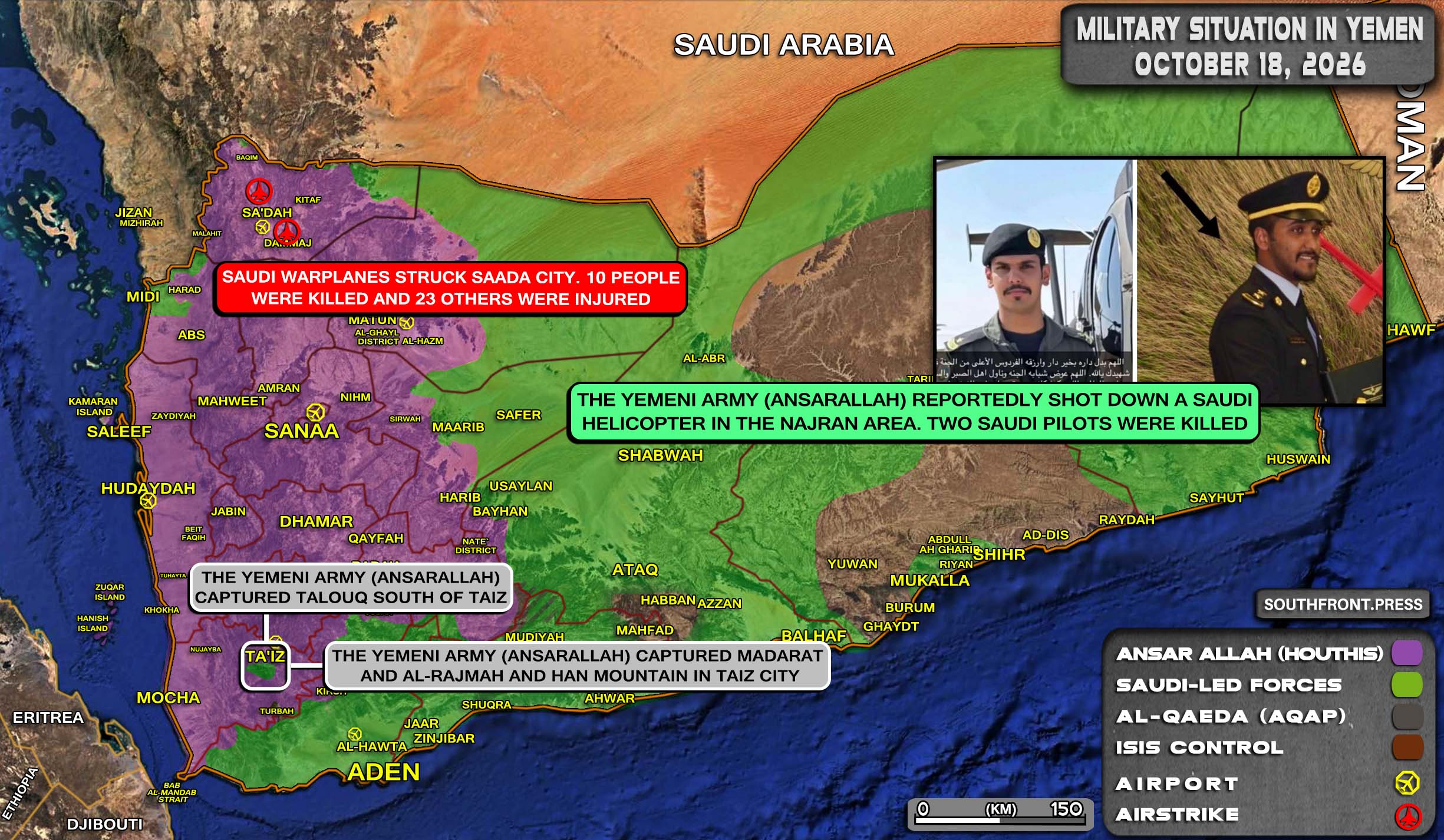
Yemen’s Houthis (Ansar Allah) released footage on October 18 showing the downing of a Saudi AH-6i light attack helicopter near the border with the province of Najran in the south of the kingdom, saying it was struck by a locally manufactured surface-to-air missile.
The footage’s accompanying caption said the helicopter was targeted while carrying out what the group described as hostile operations near Najran.
The release follows an announcement by Houthi military spokesman Brig. Gen. Yahya Saree a day earlier said that the group had shot down a Saudi helicopter near the border.
Saree initially identified the helicopter as an Apache, saying it had been brought down while targeting Houthi positions along the border. The footage’s caption, however, identifies it as an AH-6i, a light attack and reconnaissance helicopter operated by the Saudi Arabian National Guard.
Saudi Arabia’s military coalition confirmed earlier that an AH-6i helicopter belonging to the National Guard had crashed in Najran, killing both officers aboard.
Coalition spokesman Maj. Gen. Turki al-Maliki attributed the crash to a technical malfunction, although the footage released later by the Houthis affirmed that this is false.
The AH-6i, also known as the Little Bird, is a compact armed helicopter designed for reconnaissance and light attack missions. A 2014 U.S. contract for 24 helicopters, initial spare parts and ground support equipment for Saudi Arabia was valued at $234.7 million, an average of about $9.8 million per helicopter across the package.
Today is World Menopause Day – a day to convince women over 40 that yet another aspect of ordinary life needs to medicalised. It's time to stop the grift, says Joanna Gray.
In 2026, Turkey’s policy in Yemen shifted from exclusive neutrality and mediation efforts to “the brink” of military intervention against the government in Sanaa and the Ansar Allah movement, yet a range of geopolitical, legal and domestic political factors makes this scenario being fully put into practice unlikely. A Brief Retrospective of Turkish-Yemeni Relations Relations […]
Lena Schilling of Austrian Greens says images are ‘digital violence against women’ and a threat to democracy
An Austrian MEP has spoken out about her experience of being “stripped naked” online without her consent and has urged the EU to take action, as a report found that one in six female MEPs had been targeted by sexualised AI-generated content.
Lena Schilling of the Green party said she had learned last month about nude deepfakes of herself circulating online. When she opened the links, she found herself staring at images from one of her first ever press conferences – but the images had been digitally altered to remove her clothing.
At various times over the last decade, Saudi Arabia, the United Arab Emirates, the United States, Britain and Israel have carried out punishing air raids on the rebels — only to see them grow even stronger.
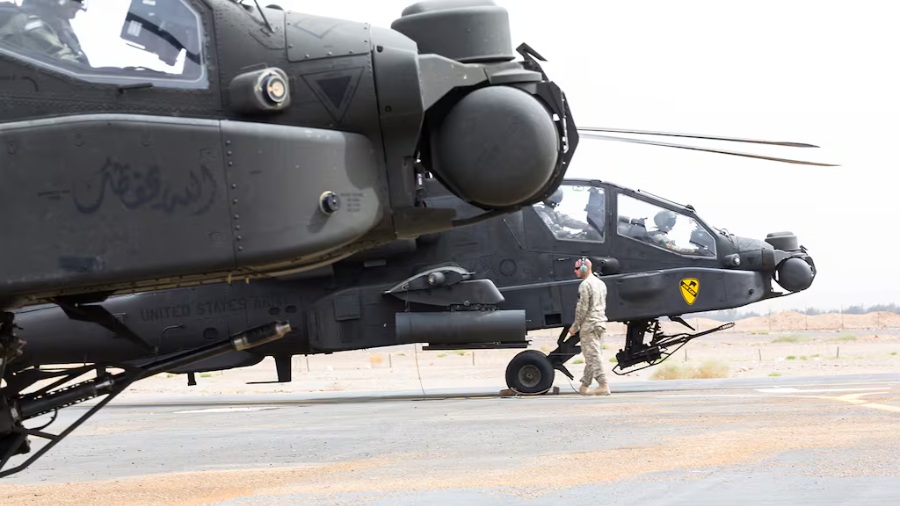
Click to see full-size image. (Sgt. Harley Jelis/Army National Guard)
Yemen’s Houthis (Ansar Allah) announced late on October 17 that they shot down a Saudi AH-64 Apache attack helicopter near the border with the kingdom’s southern province of Najran.
In a statement, Brig. Gen. Yahya Saree, the movement’s military spokesman, said the American-made helicopter had been targeting Houthi positions along the border.
“Our armed forces, with the help and grace of God, managed to shoot down an Apache belonging to the Saudi enemy opposite Najran while it was carrying out hostile actions against our forces’ positions along the border,” Saree said. “It was shot down with a suitable weapon.”
The Houthis operate a range of air defense systems, from man-portable weapons to interceptors and medium-range surface-to-air missiles.
The Apache is Saudi Arabia’s principal attack helicopter, with a modernized AH-64E estimated to cost about $52 million per helicopter according to recent U.S. Army procurement figures.
Open-source inventories list 22 Apaches with the Royal Saudi Land Forces and 12 others with the Saudi Arabian National Guard.
The announcement came just days after the Houthis said they had struck a Saudi Eurofighter Typhoon fighter jet over Yemen’s Saada province. The group later released footage showing a missile hitting the jet during flight, supporting its claim.
Including the latest claim, the Houthis have announced 18 shootdowns since the start of the ongoing confrontation with Saudi Arabia. Aside from an American-made F-15SA fighter jet, all other warplanes shot down by the Houthis were combat drones.
Iran has provided Yemen’s Houthis (Ansar Allah) with weapons, targeting intelligence and military training that have helped the group carry out increasingly sophisticated attacks against Saudi Arabia and its Yemeni allies, The Wall Street Journal reported on October 17.
The assistance includes intelligence for selecting targets for drone and missile strikes, tactical guidance and training, according to the report, which cited people briefed on intelligence from Saudi Arabia and the anti-Houthi alliance in Yemen.
Iranian Islamic Revolutionary Guard Corps (IRGC) officers have also deployed inside Yemen, helping direct military operations, the report said.
Iran has supplied weapons to the Houthis through traditional dhow boats, resorting to submarines when maritime shipments were disrupted by U.S. and Israeli strikes, the Journal revealed, citing European and Houthi officials.
The report also described an alleged weapons shipment in July aboard two flights operated by Mahan Air, an Iranian airline under U.S. sanctions.
The flights were ostensibly transporting Yemeni pilgrims and Houthi officials to Tehran for the funeral of former Iranian Supreme Leader Ali Khamenei. However, they also carried Iranian paramilitary officers and weapons-related cargo, including drone components, missile guidance systems and impact detonators, according to people familiar with intelligence from Saudi Arabia and the anti-Houthi alliance.
The discovery prompted Saudi-aligned forces to bomb the runway at Sanaa airport in an attempt to stop the second flight, setting off the latest escalation in the conflict.
Iranian officers have also helped the Houthis deploy missiles and radars at positions threatening the Red Sea and the Bab al-Mandeb Strait, according to the Journal.
The group’s offensive, which accelerated in September, combined large-scale infantry assaults with missile and drone attacks, enabling it to capture the Red Sea port city of Mokha and seize territory around the Bab al-Mandeb.
The group’s increasingly sophisticated tactics, including the use of first-person-view drones guided by fiber-optic cables, indicated that its fighters had received training from Iran, according to a person associated with forces fighting the Houthis.
Another official from the anti-Houthi alliance told the Journal that IRGC officers had been present on the front lines directing drone and missile attacks.
The Houthis have also intensified attacks against Saudi targets, including oil tankers, energy facilities and airports. One strike in Riyadh last weekend killed at least 13 people, according to the report.
Mohammed al-Bukhaiti, a senior Houthi official who said he was aboard the second Mahan Air flight, rejected the allegations concerning Iranian officers and weapons, calling them an exaggeration intended to justify the attack on Sanaa airport. He also said claims of Iranian assistance overlooked the group’s own advances in developing its military capabilities.
Iranian Foreign Ministry spokesman Esmail Baghaei said last month that Tehran did not interfere in Yemeni affairs and described the Houthis as independent actors pursuing their own interests.
The Journal also acknowledged in its report that the Houthis manufacture some of their own weapons and have obtained components for drones and missiles directly from China, underscoring that their military capabilities do not rely exclusively on Iranian supplies.
The latest allegations may be an attempt to drag Saudi Arabia into a direct confrontation with Iran, amid reports suggesting the United States and Israel could resume war against the Islamic Republic before the end of the year.
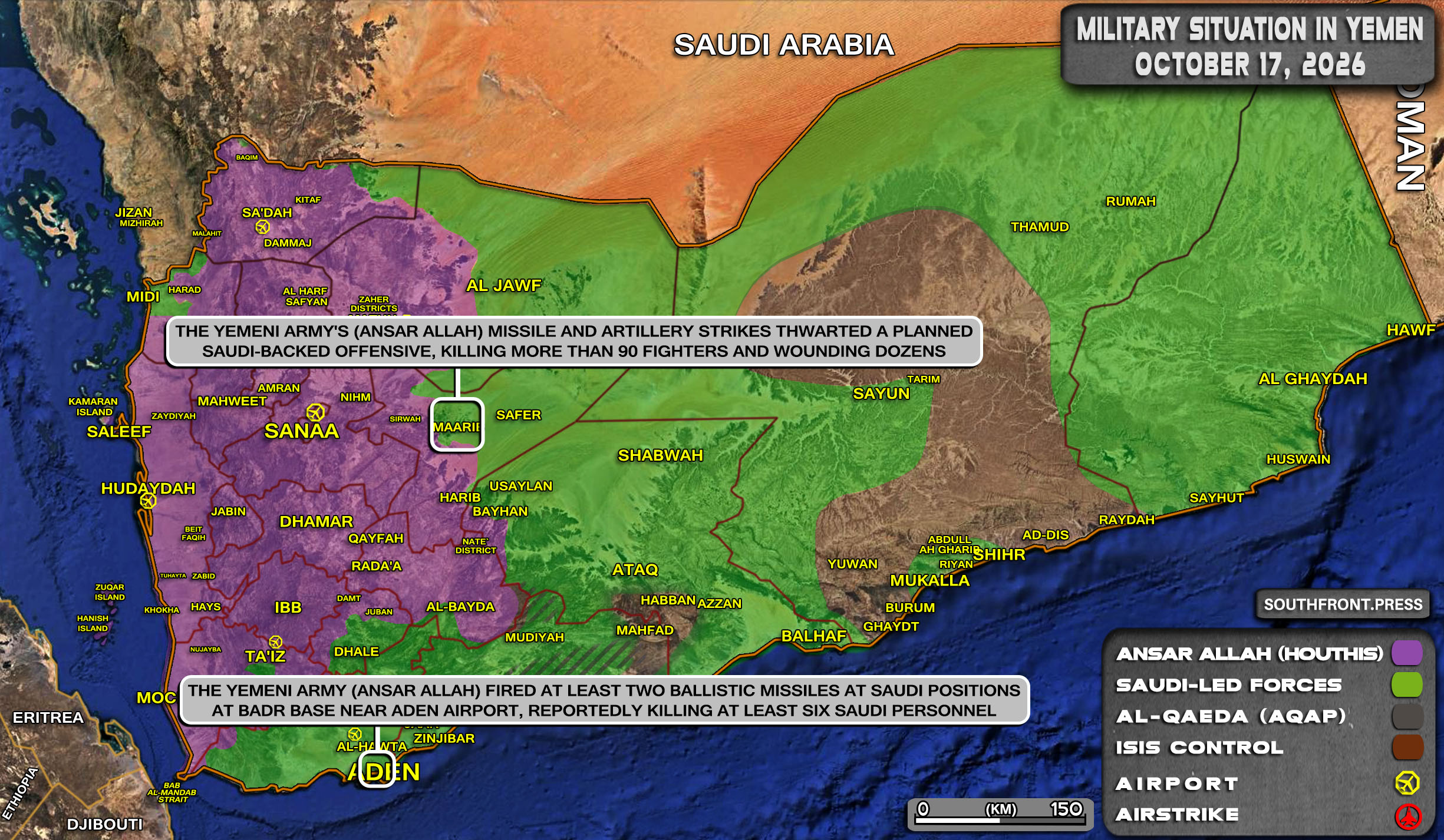
The Yemeni army (Ansar Allah) fired at least two ballistic missiles at Saudi positions at Badr base near Aden Airport, killing at least six Saudi personnel;
The Yemeni army’s (Ansar Allah) missile and artillery strikes thwarted a planned Saudi-backed offensive, killing more than 90 fighters and wounding dozens.
The Houthis (Ansar Allah) fired at least two missiles toward a military facility next to Aden International Airport on October 16, saying the attack targeted a Saudi-led coalition command center and weapons depots at Badr military camp.
Aden’s security department said the missiles struck airport grounds without causing casualties. Meanwhile, Yemeni Information Minister Moammar al-Eryani said they landed about 500 meters from a Yemenia Airways passenger jet preparing to depart for Cairo. Passengers were evacuated, according to a security official.
The strike came a day after the Houthis attacked the al-Maashiq presidential palace, the headquarters of Yemen’s internationally recognized government in Aden.
Yemen’s Health Minister Qasem Buhaibeh said five people were killed and 16 wounded. AFP reported, citing an unnamed Yemeni minister, that Saudi and Yemeni personnel were among the casualties, although no Saudi-specific death toll was disclosed.
The successive attacks have brought mounting pressure on Aden, the interim capital and a key center for the Saudi-backed government.
The Houthis have intensified their military campaign while expanding their territorial gains along Yemen’s Red Sea coast and tightening their grip around the strategic Bab al-Mandab Strait, a major shipping passage connecting the Red Sea with the Gulf of Aden.
At the same time, the group also tightened its siege of Taiz, Yemen’s third-largest city, cutting the city’s main southern road to Aden.
Capturing Taiz would give the group control over another major urban center in southwestern Yemen and could help consolidate its position around the Bab al-Mandab approaches.
The growing frequency of Houthi strikes on Aden may be part of a broader campaign of shaping operations intended to disrupt Saudi-led coalition command-and-control structures ahead of a possible large-scale offensive to capture the port city.
The front changes faster than any headquarters, so Ukraine’s war chief went to the people who fight on it. On 16 October, Ukrainian Defense Minister Yevhenii Khmara met commanders and soldiers from front-line units to discuss the needs of the front, command practices that save lives, and ways to raise combat effectiveness, the Defense Ministry reported.
The front keeps changing, with technology, tactics and weapons shifting constantly, so decisions made far from it risk arriving late and costing lives. Khmara’s answer is to anchor ministry policy in the experience of the soldiers who fight, a continuation of the “machines over men” program.
"The front does not stand still. But the key thing is people. People will always be the foundation and the main value of the Defense Forces,” Khmara said.
He claimed that the decisions of the Ministry of Defense must take into account the experience of warriors, those who directly carry out combat missions at the front.
Ukraine's most battle-hardened brigades say their word
The meeting drew commanders from across the force, including the Airborne Assault Forces, the Marine Corps, the 93rd, 100th, 28th and 155th mechanized brigades, the 1st, 425th and 475th assault regiments, the 3rd and 59th assault brigades, and Azov.
The last one, the 1st Azov Corps of the National Guard of Ukraine, is actively fighting in the Donbas region, where units have led counter-operations to disrupt Russian advances toward fortress cities that have been holding Russia's operation since 2014.
Meanwhile, the 93rd "Kholodnyi Yar" Separate Mechanized Brigade took part in fierce battles for Ilovaisk, the Donetsk Airport, Debaltseve, and Bakhmut, as well as in the liberation of the Kharkiv Oblast. Both units are known for their extensive implementation of advanced military technologies, including ground robotic complexes, FPV strike drones, and innovative anti-drone electronic warfare systems.
Command tricks that keep soldiers alive
The talk turned on how good commanders cut their own losses. Participants discussed command approaches that help save soldiers’ lives, use resources efficiently, and achieve combat results.
The ministry wants those methods studied and spread to other units, treating commanders' hard-won judgment as something to scale rather than leave in one brigade.
One goal: fewer Ukrainian losses, more Russian ones
Khmara framed the task in plain terms.
“We must adapt faster and give our warriors modern and effective tools,” he stressed, calling it the shared job of the Defense Ministry, the commander-in-chief and the General Staff.
Illustrative image. (Egyptian Ministry of Defense)
Egyptian President Abdel Fattah El-Sisi on October 17 called for an emergency parliamentary session to authorize a possible Egyptian intervention to defend Saudi Arabia if requested by the kingdom.
“I call on parliament to convene an emergency session to authorize us to take action to intervene in defense of Saudi Arabia, if we are asked to do so,” El-Sisi said at a graduation ceremony for military academy and college cadets.
“This move and this defense require approval from the Egyptian parliament,” he noted, stressing that Egypt was not seeking to join the war against Yemen’s Houthis.
“I am not speaking about attacking or waging war. We are seeking only to defend,” the Egyptian president added.
Egypt is the latest country to publicly signal support for Saudi Arabia as the kingdom faces escalating missile and drone attacks by the Houthis, who control much of Yemen.
El-Sisi said Cairo would take the necessary measures to protect Saudi Arabia, adding that it was “absolutely unacceptable” for the kingdom’s security and stability to be undermined.
Saudi Arabia has secured defensive military support from Pakistan and Turkey through the Mecca Joint Defense Agreement, which the three countries agreed to activate on October 5. More recently, the kingdom also received defensive support from the United Kingdom and France.
The United States, for its part, has been providing more substantial military support to Saudi Arabia, including intelligence sharing, operational planning and assistance identifying Houthi targets, as well as weapons and air defense systems.
Still, Riyadh has so far failed to secure a publicly announced commitment from its allies to directly join its offensive against the Houthis inside Yemen.

 Login