❌

Reading view

Shabana Mahmood to hold talks with EU over law enforcement cooperation

UK home secretary’s meeting comes after PM said he wanted to rejoin European law enforcement databases

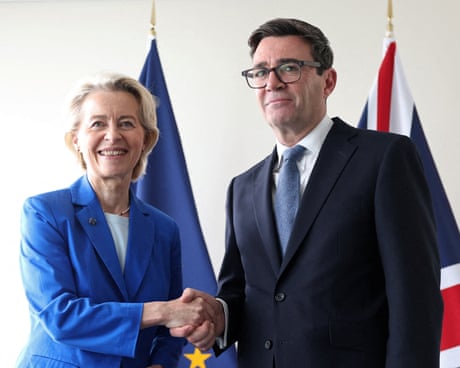
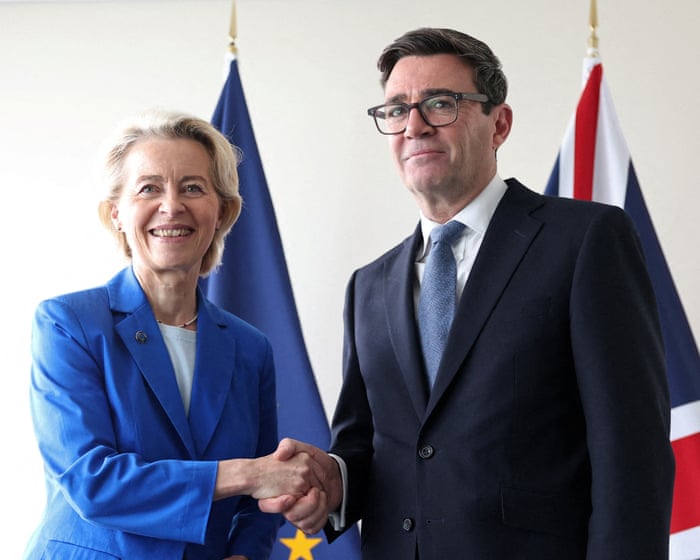
The UK home secretary, Shabana Mahmood, will meet the EU’s home affairs commissioner on Monday for further talks just days after Andy Burnham said he wanted to rejoin European law enforcement databases from which the UK has been locked out of since Brexit.

According to the European Commission, they will discuss “migration, border management, law enforcement cooperation and counter-terrorism”, with the latest Frontex data published on Monday showing a 43% decline in small boats crossing the Channel.

Continue reading...

© Photograph: Marcin Nowak/Anadolu/Getty Images

© Photograph: Marcin Nowak/Anadolu/Getty Images

© Photograph: Marcin Nowak/Anadolu/Getty Images

  •  

Ministers Turn on Ed Miliband Over Net Zero Block on AI Investment

Cabinet ministers are turning on Ed Miliband, accusing him of blocking AI investment to protect Net Zero – while families pay the price in lost jobs and holidays.

The post Ministers Turn on Ed Miliband Over Net Zero Block on AI Investment appeared first on The Daily Sceptic.

  •  

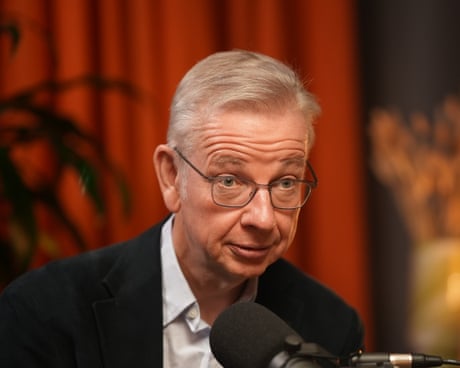
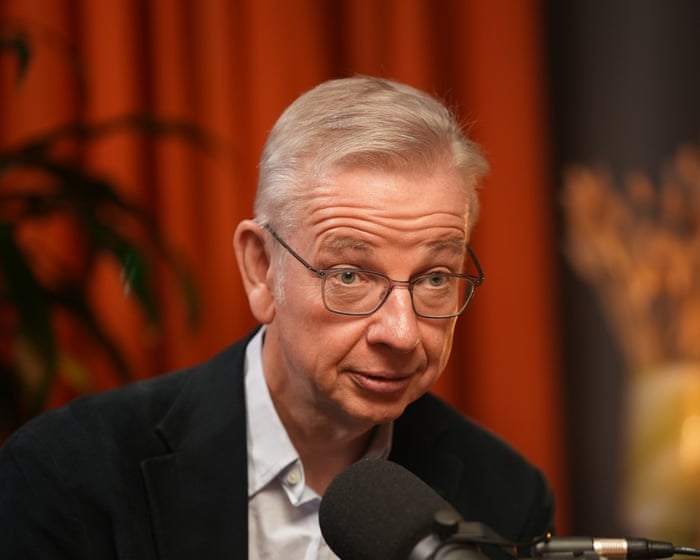
‘Austerity is inevitably painful’: How Michael Gove justifies his politics | Radical Thinking with Aditya Chakrabortty

For more than three decades, Michael Gove has been a leading figure in British Conservatism. As a journalist, government minister and now editor of the Tory bible the Spectator, he has helped shape the right even as it has moved further rightwards. In the latest episode of Radical Thinking, Gove joins Aditya Chakrabortty to discuss the future of the right, his record on Brexit and austerity, and the Spectator’s position on Islam

Watch the full episode with Michael Gove here.

Aditya’s suggested reading:

To read the fruits of Michael Gove’s dalliance with the Marxism Today gang, look up his essay in a 1998 collection called The Moderniser’s Dilemma: Radical Politics in the Age of Blair

For a slalom ride through Michael Gove’s years in power, read The Demented Dalek by the historian Richard J Evans in the London Review of Books

To learn more on what’s become of the British right, there’s a Guardian column by Aditya

Phil Burton-Cartledge analyses in depth why the most successful political party is now failing in his book The Party’s Over: The Rise and Fall of the Conservatives from Thatcher to Sunak

Phil also writes a very good blog on British politics, which keeps a close eye on how each party is trying to marshall a coalition of voters. Here he is on Kemi Badenoch

Geoffrey Wheatcroft does an entertaining short narrative in Bloody Panico!:

or, Whatever Happened to The Tory Party

For more on the economics of the Cameron years, this paper is acute on how the Tories failed to move the UK away from being a country of renters towards a country of makers. Two of its authors will join us for a podcast later in the series.

And if you want to read how Brexit may have cost the UK 8% of GDP, there’s this paper based on data from the Bank of England

Finally, on the Spectator, read Nesrine Malik’s recent Guardian column

Why has Britain’s oldest political magazine become such a rabid cheerleader for Islamophobia?

Continue reading...

© Photograph: James Tindale/The Guardian

© Photograph: James Tindale/The Guardian

© Photograph: James Tindale/The Guardian

  •  

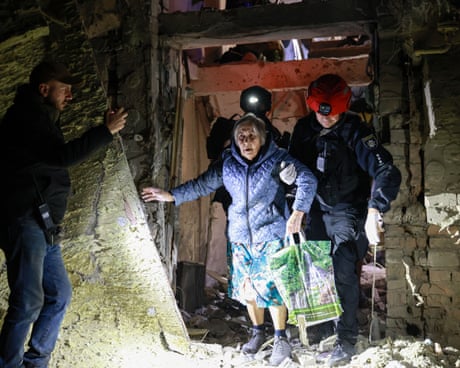
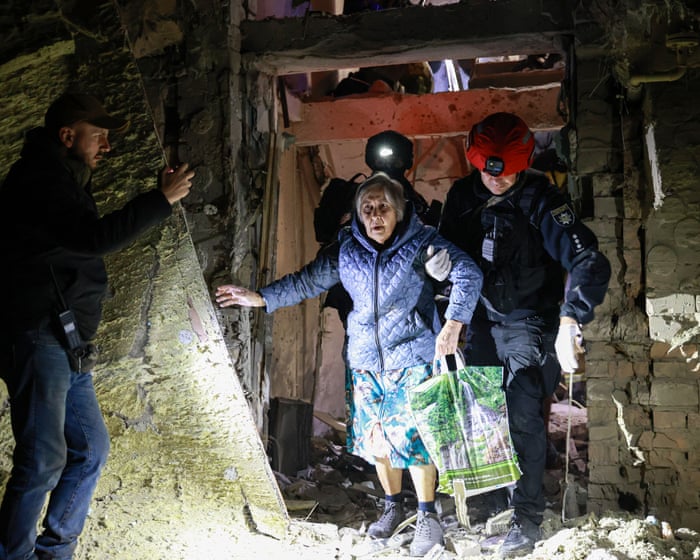
Trump’s pause on Russia sanctions is ‘reward’ for Putin, Zelenskyy says

Ukrainian president warns it will embolden Russian leader and intensify war as Moscow hits country’s power plants

Volodymyr Zelenskyy has described Donald Trump’s decision to roll back sanctions on Russia as a “reward” for Vladimir Putin and warned it will embolden the Russian leader and intensify the Kremlin’s war, as Moscow launched one of its worst strikes yet on Ukraine’s power plants in an attempt to black out the country’s cities before winter.

The Ukrainian president also said he expected the Trump administration to lift more sanctions against Russia in the future and called for Europe to establish its own negotiations with Moscow as the US has sought better ties and business deals with the Kremlin.

Continue reading...

© Photograph: Kateryna Klochko/AP

© Photograph: Kateryna Klochko/AP

© Photograph: Kateryna Klochko/AP

  •  

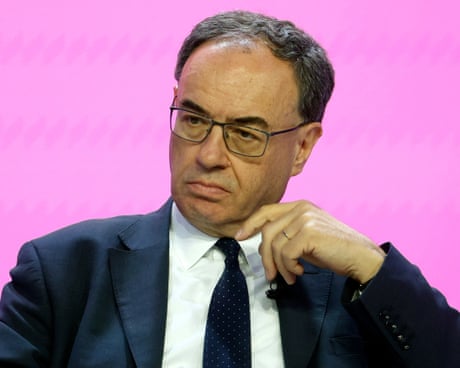
Bank of England governor walks out of IMF summit in protest against Russia

Andrew Bailey among finance leaders to leave session in Bangkok when Russian finance minister addressed group

The Bank of England governor, Andrew Bailey, has taken part in a walkout of finance leaders who left an International Monetary Fund meeting in protest against Russian involvement.

Bailey joined counterparts from France, Germany and a number of Scandinavian and Baltic countries who left the session in Bangkok when the Russian finance minister, Anton Siluanov, addressed the group in Russian.

Continue reading...

© Photograph: Rungroj Yongrit/EPA

© Photograph: Rungroj Yongrit/EPA

© Photograph: Rungroj Yongrit/EPA

  •  

Italy and Spain Move Towards Ending Schengen Border Controls After Meloni–Sánchez Talks

Italy has extended checks on travellers from Spain for another week, but talks between Giorgia Meloni and Pedro Sánchez have opened the way for an end to reciprocal restrictions imposed after the migration crisis in Ceuta.

Italy and Spain have agreed to work towards ending their reciprocal Schengen border controls following discussions between Prime Ministers Giorgia Meloni and Pedro Sánchez at the European Council summit in Brussels. Rome nevertheless extended its restrictions for another seven days on Friday, 16 October, as the two governments consider how to bring their respective measures to an end.

The decision marks a possible turning point in a dispute that has disrupted travel between two of the European Union’s largest countries since the summer. According to the notifications recorded by the European Commission, the restrictions concern air and sea connections between Italy and Spain, which do not share a land border.

The two governments have instructed their interior ministers to consider alternative arrangements over the coming week. Although neither side has formally withdrawn its measures, the agreement to coordinate their removal suggests that both capitals are seeking a way out of an increasingly uncomfortable confrontation over migration and internal European security.

How the Ceuta crisis reached Schengen

The dispute began after an extraordinary influx of migrants from Morocco into Spain’s North African enclave of Ceuta in late July. More than 72,000 people crossed the border, prompting serious questions about the management of the EU’s external borders and the possibility of onward movements into other member states.

Italy responded by introducing checks on passengers arriving from Spain, arguing that the situation created risks for public order and internal security. Rome also raised concerns about the possible movement of individuals presenting security threats, although the extent of any such movement remained disputed.

Madrid rejected the justification and introduced reciprocal measures. What began as an emergency response to events on an external border consequently developed into a disagreement about whether one Schengen member could impose restrictions on another on the basis of anticipated migration movements.

EU Today examined the original Spanish retaliation in August, when the dispute first threatened to turn temporary border controls into an instrument of political pressure.

The wider consequences of the Ceuta incident have raised questions about the vulnerabilities exposed at the EU’s external border and the effectiveness of common European migration and crisis-response policy.

The limits of temporary border controls

Schengen is built on the principle that people can travel between participating countries without routine internal border checks. Member states nevertheless retain the right to reintroduce temporary controls in response to serious threats to public policy or internal security, subject to the requirements of EU law.

The difficulty lies in determining when those exceptional powers are justified. Italy has maintained that the Ceuta crisis warranted precautionary action. Spain has argued that controls imposed specifically on travellers from its territory were unjustified and discriminatory.

These opposing positions matter beyond the two countries. If concerns over irregular arrivals in one member state become sufficient grounds for another to introduce sustained checks, the distinction between Europe’s external borders and its internal travel area becomes increasingly difficult to maintain.

The operational results have also entered the political argument. Italian figures cited during the dispute indicate that nearly half a million passengers were checked during the first month, with 31 refused entry. Those numbers demonstrate that the measures were substantial, but do not by themselves establish whether the original security concerns were proportionate to the restrictions imposed.

Madrid, meanwhile, has maintained that migrants involved in the Ceuta influx had not moved onwards to mainland Spain in the manner suggested by Italian concerns.

Meloni and Sánchez seek a practical compromise

The latest discussions offer both governments a route towards de-escalation without formally conceding their underlying positions. Meloni can present the additional week of controls as a continuation of Italy’s security precautions, while Sánchez can point to an agreement to prepare their coordinated removal.

The two prime ministers remain politically divided on migration. Meloni has consistently argued for stronger border enforcement and deterrence, while Sánchez has defended an approach incorporating legalisation and labour-market integration for migrants already living in Spain.

Those disagreements were also visible during the Brussels summit, where European leaders returned to the question of migration management and the consequences of national decisions for the wider Union.

For Brussels, the immediate concern is whether the two governments can replace competing national restrictions with arrangements that address security concerns without unnecessarily interrupting movement between Schengen countries.

A coordinated end to the controls would not resolve the underlying problems exposed by Ceuta. It would, however, remove one of the more unusual internal consequences of that crisis and demonstrate that political negotiations can still prevent emergency border measures from becoming semi-permanent.

The decisive period is now the coming week. Whether the controls expire as planned will depend on the discussions between the Italian and Spanish interior ministries and their ability to agree practical alternatives.

  •  

Trasformare le regole in un vantaggio competitivo. Le sfide dell’AI nella sanità europea secondo Leite (Unite)

Ricardo Baptista Leite, fondatore e presidente di UNITE Parliamentarians Network for Global Health, guarda all’intelligenza artificiale in sanità dalla prospettiva che unisce governance, innovazione e capacità di implementazione. In questa intervista, pubblicata sull’ultimo numero di Healthcare Policy, spiega perché per l’Europa la vera sfida non sia semplicemente regolare l’AI, ma trasformare le regole in adozione concreta, facendo della “trusted scale” un vantaggio competitivo e indica nell’Italia un possibile laboratorio europeo per tradurre la leadership normativa in risultati clinici ed economici.

L’AI Act dell’Ue viene spesso discusso da una prospettiva normativa. A suo avviso, quali sono le maggiori sfide pratiche che i sistemi sanitari, gli operatori sanitari e gli innovatori devono affrontare nel passaggio dalla conformità normativa all’implementazione nel mondo reale?

La più grande sfida pratica è che la conformità viene troppo spesso trattata come un esercizio giuridico, mentre l’implementazione è fondamentalmente un esercizio di trasformazione del sistema sanitario.

In ambito sanitario, l’AI Act dell’Ue non opera in modo isolato. Le organizzazioni devono gestire la sua interazione con la normativa sui dispositivi medici, la protezione dei dati, lo Spazio europeo dei dati sanitari, la valutazione delle tecnologie sanitarie, gli appalti, i rimborsi e la responsabilità professionale. La difficoltà non consiste semplicemente nello stabilire se un sistema di AI sia conforme. Si tratta di sapere chi è responsabile quando quel sistema viene aggiornato, quando le sue prestazioni cambiano nel tempo, quando si comporta in modo diverso tra diverse popolazioni o quando viene integrato in un complesso flusso di lavoro clinico.

Il rapporto di HealthAI sull’AI Act dell’Ue, presentato lo scorso maggio in collaborazione con il World Economic Forum, ha individuato diverse lacune concrete. La proposta di suddivisione delle responsabilità tra le autorità orizzontali competenti per l’AI e gli organismi di regolamentazione dei dispositivi medici non è ancora stata pienamente testata nella pratica. Gli organismi di valutazione della conformità avranno bisogno di nuove competenze nell’AI e nella data science. I sistemi sanitari e gli innovatori più piccoli hanno inoltre bisogno di indicazioni chiare e accessibili, anziché dover interpretare autonomamente diversi regimi normativi sovrapposti.

Ma esiste un problema altrettanto importante dopo l’approvazione normativa. Uno strumento di AI può essere conforme all’AI Act e ai requisiti relativi ai dispositivi medici e tuttavia non raggiungere mai un paziente perché non esistono un codice di rimborso, un adeguato processo di HTA, un meccanismo di approvvigionamento, un budget per l’implementazione o un piano per la forza lavoro. L’approvazione normativa è quindi necessaria, ma non equivale all’adozione.

La conformità deve essere intesa come il punto di partenza, non come il traguardo. Una reale implementazione e scalabilità richiedono capacità istituzionale, evidenze cliniche, dati interoperabili, preparazione della forza lavoro, percorsi di finanziamento e monitoraggio continuo dopo l’implementazione. Ciò riflette un punto più ampio che ho sottolineato più volte: una governance responsabile non è ciò che impedisce l’adozione. È ciò che rende possibile un’adozione basata sulla fiducia e consente all’AI di andare oltre i progetti pilota isolati.

Il vostro rapporto identifica l’Italia come il primo Stato membro dell’Ue ad adottare una legge nazionale organica sull’AI, evidenziando al tempo stesso la frammentazione regionale e l’assenza di un percorso strutturato per il rimborso degli strumenti clinici basati sull’AI. Cosa dovrebbe fare ora l’Italia per trasformare la leadership legislativa in leadership clinica ed economica?

L’Italia ha già raggiunto un risultato importante: ha fornito una direzione politica e legislativa. La legge n. 132/2025 ha istituito il primo quadro normativo nazionale organico sull’AI adottato da uno Stato membro dell’Ue, comprese disposizioni specifiche per il settore sanitario. Stabilisce che l’AI debba supportare, e non sostituire, i professionisti sanitari; che la responsabilità clinica rimanga umana; e che i pazienti debbano essere informati quando viene utilizzata l’AI. Questa impostazione antropocentrica è coerente con l’approccio europeo e può contribuire a rafforzare la fiducia dell’opinione pubblica.

La lezione che emerge dall’Italia, e dagli altri Paesi esaminati nel nostro rapporto, è che la legislazione è necessaria ma insufficiente. L’Italia deve ora trasformare la leadership normativa in capacità operativa. Il suo sistema sanitario decentralizzato rende questo passaggio particolarmente importante. In assenza di approcci nazionali comuni alla valutazione, agli appalti, alla supervisione e al monitoraggio post-commercializzazione, le diverse regioni potrebbero adottare standard e percorsi differenti. Ciò può produrre disuguaglianze nell’accesso dei pazienti e rendere l’Italia un mercato difficile per gli innovatori, in particolare per le aziende più piccole.

L’opportunità più immediata consiste nel collegare la governance nazionale dell’AI, l’infrastruttura dei dati sanitari e i meccanismi di accesso al mercato. AGENAS (Agenzia nazionale per i servizi sanitari regionali) sta sviluppando una piattaforma nazionale di AI per l’assistenza primaria e territoriale, progettata per fornire un supporto non vincolante alle decisioni cliniche e alla prevenzione, mantenendo al contempo la responsabilità professionale. L’Italia ha inoltre attivato il programma nazionale 2026-2028 di Health Technology Assessment (HTA) per i dispositivi medici, che individua esplicitamente le piattaforme di AI e le terapie digitali come aree di attenzione. Si tratta di basi promettenti, ma l’HTA deve essere collegato agli appalti, al finanziamento e all’adozione, anziché diventare un ulteriore livello di valutazione isolato.

L’Italia potrebbe diventare un laboratorio europeo per l’implementazione di un’AI affidabile in ambito sanitario: sperimentando forme di supervisione congiunta tra le autorità, stabilendo requisiti probatori riconosciuti a livello nazionale, utilizzando appalti basati sul valore e valutando l’AI su diverse popolazioni regionali e in differenti contesti assistenziali. Il suo successo, in ultima analisi, non sarà giudicato dal numero di strategie o progetti pilota avviati, ma dalla capacità delle tecnologie sicure di migliorare l’assistenza in tutto il Paese.

Con l’AI in ambito sanitario che diventa parte della competizione geopolitica per la leadership tecnologica, come può l’Europa rafforzare la propria autonomia strategica senza frammentare la cooperazione internazionale? Quale ruolo distintivo potrebbe svolgere l’Italia?

L’AI in ambito sanitario è già parte della più ampia competizione geopolitica per la leadership tecnologica. Gli asset rilevanti non si limitano più agli algoritmi. Comprendono capacità di calcolo, infrastrutture cloud, dati sanitari, foundation model, catene di approvvigionamento dei semiconduttori, talenti scientifici, capacità di validazione clinica, ricerca farmaceutica, competenze normative e capacità di implementare la tecnologia su scala di sistema sanitario.

Tuttavia, eviterei di inquadrare tutto questo come una semplice competizione a somma zero tra Europa, Stati Uniti e Cina. La sanità è intrinsecamente interdipendente. Le malattie attraversano i confini, la conoscenza scientifica è globale e i segnali relativi alla sicurezza associati a un sistema di AI implementato in un Paese possono essere estremamente rilevanti per i pazienti di un altro.

L’autonomia strategica, quindi, non dovrebbe significare isolamento tecnologico o completa autosufficienza. Dovrebbe significare che l’Europa dispone della capacità di compiere scelte sovrane e informate: valutare in modo indipendente i sistemi di AI, proteggere e utilizzare responsabilmente i propri dati sanitari, mantenere infrastrutture critiche, sostenere gli innovatori europei ed evitare di diventare completamente dipendente da tecnologie che non è in grado di ispezionare, governare o sostituire.

La stessa Commissione europea collega sempre più l’adozione dell’AI in settori strategici, tra cui sanità, biotecnologie e farmaceutica, alla competitività e alla sovranità tecnologica. La sua Apply AI Strategy e l’AI Continent Action Plan mirano a combinare capacità di calcolo, dati, investimenti, competenze e sostegno all’adozione.

L’Italia può fornire un contributo distintivo attraverso l’AI applicata: validazione clinica, ricerca biomedica, innovazione farmaceutica e nelle tecnologie mediche, manifattura avanzata, assistenza territoriale e primaria e scienza della regolamentazione. Può inoltre fungere da ponte tra le istituzioni europee e la più ampia regione mediterranea.

I vincitori della competizione geopolitica non saranno necessariamente coloro che produrranno il maggior numero di modelli. Potrebbero essere coloro che sapranno integrare in modo sicuro l’AI nell’assistenza sanitaria, produrre evidenze affidabili, rafforzare la propria forza lavoro e generare benefici misurabili per le proprie popolazioni.

Cresce la preoccupazione che la regolamentazione possa rallentare l’innovazione rispetto a concorrenti come Stati Uniti e Cina. Come può l’Europa fare in modo che una governance responsabile dell’AI diventi una fonte di vantaggio competitivo, anziché un vincolo per i suoi sistemi sanitari e per il settore delle scienze della vita?

Il problema dell’Europa non è che regolamenta. Il rischio maggiore è che regolamenti senza creare le condizioni operative che rendano prevedibile la conformità e possibile l’adozione.

Una governance ben progettata può garantire certezza giuridica, ridurre il rischio per gli investimenti e fornire a medici, pazienti e sistemi sanitari la fiducia necessaria per utilizzare nuove tecnologie. In ambito sanitario, la fiducia non è un beneficio etico astratto. È una condizione pratica per l’adozione sul mercato. Una tecnologia di cui i medici non si fidano, che le autorità di regolamentazione non sono in grado di valutare o che i cittadini non sono disposti ad accettare non può raggiungere una diffusione su larga scala, indipendentemente da quanto sia sofisticata.

Ma l’Europa potrà trasformare la governance in un vantaggio competitivo soltanto se affronterà la frammentazione. Un innovatore non dovrebbe essere costretto a confrontarsi con interpretazioni, requisiti probatori, norme sugli appalti e sistemi di rimborso sostanzialmente diversi in ogni Stato membro. L’Europa ha bisogno di un mercato unico per l’innovazione sanitaria affidabile nella pratica, non soltanto nella legge.

Ciò richiede un coordinamento più chiaro tra l’AI Act dell’Ue, la normativa sui dispositivi medici e lo Spazio europeo dei dati sanitari; capacità adeguate tra le autorità di regolamentazione e gli organismi di valutazione della conformità; consulenza scientifica e normativa precoce per gli innovatori; sandbox regolamentari e ambienti di sperimentazione concreti; e percorsi più armonizzati dall’autorizzazione al rimborso e agli appalti. L’EHDS può diventare un importante asset competitivo, ma diverse delle sue componenti operative entreranno progressivamente in funzione, mentre le decisioni relative alla conformità e agli investimenti nell’AI vengono già prese oggi. Sandbox regolamentari, meccanismi di consulenza scientifica precoce e accordi volontari di condivisione dei dati tra sistemi sanitari possono già oggi ridurre la frammentazione e continuare a rafforzare il sistema una volta che l’EHDS sarà pienamente operativo.

L’Europa non dovrebbe cercare di vincere abbassando gli standard di sicurezza o imitando ogni caratteristica dei modelli americano o cinese. Dovrebbe competere attraverso una “trusted scale”: regole chiare, evidenze di alta qualità, accesso a dati sanitari diversificati, istituzioni pubbliche solide e capacità di implementare innovazioni sicure in un mercato di dimensioni continentali.

Come ho sostenuto pubblicamente, la governance non è un ostacolo all’innovazione. Senza sicurezza, evidenze, accountability e fiducia nella regolamentazione, l’AI rimarrà intrappolata nei progetti pilota. Con la giusta governance, può entrare nei sistemi sanitari e generare valore reale.

In sintesi, direi che l’Europa non dovrebbe essere costretta a scegliere tra velocità e sicurezza. Il suo vantaggio competitivo dovrebbe consistere nella capacità di ottenere entrambe.

Nei prossimi due o tre anni, a cosa dovrebbero dare priorità governi, autorità di regolamentazione e industria affinché l’AI produca miglioramenti misurabili negli esiti per i pazienti, nella capacità della forza lavoro, nell’equità e nella sostenibilità dei sistemi sanitari, mantenendo al tempo stesso la fiducia dell’opinione pubblica?

Darei priorità a tre aree.

In primo luogo, i governi devono investire nella capacità di implementazione. Ciò significa chiarire le responsabilità istituzionali, formare le autorità di regolamentazione e sanitarie, ampliare le competenze in materia di AI e data science negli organismi di valutazione della conformità e testare i meccanismi di supervisione prima che incidenti reali ne mettano in luce le lacune. Regole senza istituzioni capaci di applicarle non proteggeranno i pazienti né sosterranno gli innovatori.

In secondo luogo, l’Europa deve costruire percorsi credibili dall’approvazione all’impatto. I governi dovrebbero collegare la regolamentazione con l’HTA, il rimborso, gli appalti pubblici, l’interoperabilità e l’implementazione clinica. Il successo non dovrebbe essere misurato dal numero di strategie sull’AI, progetti pilota o appalti annunciati. Dovrebbe essere misurato attraverso gli esiti per i pazienti, diagnosi più precoci, accesso, equità, esperienza della forza lavoro, produttività e sostenibilità dei sistemi sanitari.

In terzo luogo, abbiamo bisogno di una governance dell’intero ciclo di vita. L’AI è diversa da un farmaco statico o da un dispositivo convenzionale perché le sue prestazioni possono cambiare man mano che i modelli vengono aggiornati, gli ambienti dei dati evolvono e i sistemi vengono implementati in popolazioni differenti. I governi hanno quindi bisogno di registri, tracciabilità delle versioni, monitoraggio delle prestazioni nel mondo reale, meccanismi chiari per la segnalazione degli incidenti e scambio internazionale dei segnali di sicurezza. Questa è una delle ragioni principali per cui HealthAI sta sviluppando meccanismi di collaborazione normativa e di monitoraggio degli eventi avversi tra i Paesi che fanno parte dell’HealthAI Global Regulatory Network.

Queste priorità devono coinvolgere fin dall’inizio i pazienti e i professionisti sanitari. La partecipazione non può essere puramente formale. Le persone interessate dall’AI devono avere un ruolo significativo nella definizione dei rischi accettabili, degli esiti rilevanti e delle condizioni di utilizzo.

Infine, dovremmo evitare quello che ho definito “AI Saviour Complex”. Il semplice inserimento dell’AI in un sistema disfunzionale non risolverà i problemi sottostanti di leadership, organizzazione o incentivi. La tecnologia può amplificare le capacità umane e istituzionali, ma non può sostituirsi alla chiarezza degli obiettivi.

L’obiettivo, quindi, non dovrebbe essere automatizzare i sistemi sanitari di oggi. Dovrebbe essere utilizzare l’AI per contribuire a riprogettarli verso una maggiore prevenzione, personalizzazione, accessibilità e connessione umana.

  •  

‘Austerity is inevitably painful’: How Michael Gove justifies his politics | Radical Thinking with Aditya Chakrabortty – podcast

For more than three decades, Michael Gove has been a leading figure in British Conservatism. As a journalist, government minister and now editor of the Tory bible, the Spectator, he has helped shape the right even as it has moved further rightwards. In the latest episode of Radical Thinking, Gove joins Aditya Chakrabortty to discuss the future of the right, his record on Brexit and austerity, and the Spectator’s position on Islam
Watch the full episode with Michael Gove here.

Aditya’s suggested reading:

To read the fruits of Michael Gove’s dalliance with the Marxism Today gang, look up his essay in a 1998 collection called The Moderniser’s Dilemma: Radical Politics in the Age of Blair

For slalom ride through Michael Gove’s years in power, read The Demented Dalek by the historian Richard J Evans in the London Review of Books

To learn more on what’s become of the British right, there’s a column by me for the Guardian

Just why the most successful political party is now failing is analysed in-depth by Phil Burton-Cartledge in his book The Party’s Over: The Rise and Fall of the Conservatives from Thatcher to Sunak

Phil also writes a very good blog on British politics, which keeps a close eye on how each party is trying to marshall a coalition of voters. Here he is on Kemi Badenoch

Geoffrey Wheatcroft does an entertaining short narrative in Bloody Panico!:

or, Whatever Happened to The Tory Party

For more on the economics of the Cameron years, this paper is acute on how the Tories failed to move the UK away from being a country of renters towards a country of makers. Two of its authors will join us for a podcast later in the series.

And if you want to read how Brexit may have cost the UK 8% of GDP, there’s this paper based on data from the Bank of England

Finally, on the Spectator read Nesrine Malik’s recent column in The Guardian

Why has Britain’s oldest political magazine become such a rabid cheerleader for Islamophobia?

Continue reading...

© Photograph: James Tindale/The Guardian

© Photograph: James Tindale/The Guardian

© Photograph: James Tindale/The Guardian

  •  

Brexit’s back – but are British voters ready to contemplate a reversal?

As Andy Burnham talks up closer alignment with the EU and a poll suggests half in UK would rejoin, the B-word is back on the agenda

In February 2016, days after David Cameron announced the UK would hold a referendum on leaving the EU, he told workers in Slough not to imagine they could change their minds a few years down the line if they did not like how things panned out. Voting to stay in or leave was a once in a generation thing, he said. “This is a decision that lasts for life.”

Well times change, as the last prime minister but five could testify. A decade after Britain told Brussels where to go, Brexit is back on the political agenda. After years in which many politicians avoided any mention of the B-word, Andy Burnham broke the omertà in his party conference speech last month, saying he would look again at Britain’s relationship with Europe.

Continue reading...

© Photograph: Toby Melville/AFP/Getty Images

© Photograph: Toby Melville/AFP/Getty Images

© Photograph: Toby Melville/AFP/Getty Images

  •  

No 10 leaves option open to impose Chinese EV tariffs if UK joins EU scheme

Beijing warns against ‘discriminatory’ step after France drops opposition to British role in Made in Europe package

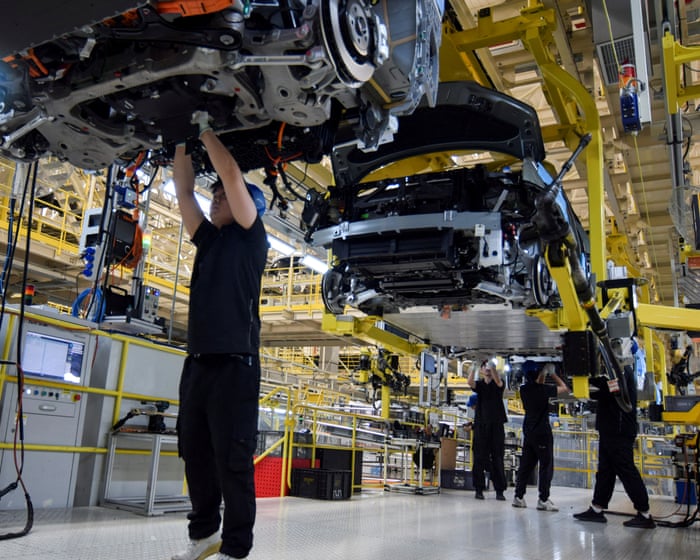
No 10 has left the door open to imposing tariffs on Chinese-made electric vehicles as part of the Made in Europe package, prompting a warning from Beijing that such a move would be “discriminatory”.

Downing Street said on Friday that it would “welcome the objective to have the UK included in the Industrial Accelerator Act” after France dropped its opposition to Britain joining the scheme.

Continue reading...

© Photograph: Nick Carey/Reuters

© Photograph: Nick Carey/Reuters

© Photograph: Nick Carey/Reuters

  •  

Presumptive D.C. Mayor Janeese Lewis George Demands Halt to Waymo Legalization To Protect Drivers' Jobs

Janeese Lewis George | Illustration: Romuald Meigneux/SIPA/Newscom/Council of the District of Columbia

Janeese Lewis George, a D.C. councilmember and the city's presumptive next mayor, has come out against pending legislation that would allow autonomous ride-share vehicles onto city streets, citing the technology's potential to eliminate the jobs of ride-share human drivers. 

"DC is facing a jobs crisis. Rushing the legalization of autonomous vehicles is irresponsible given the anticipated AI-related job displacement and disruptions that put countless workers at risk," she said on X yesterday.  

DC is facing a jobs crisis.

Rushing the legalization of autonomous vehicles is irresponsible given the anticipated AI-related job displacement and disruptions that put countless workers at risk.

— Janeese Lewis George (@Janeese4DC) October 15, 2026

In a follow-up post, she said that the D.C. Council should delay consideration of a pending bill that would allow Waymo, which is currently testing its technology with human safety operators on District streets, to offer autonomous rides to the public.  

Ever since Lewis George won a commanding victory in D.C.'s Democratic mayoral primary earlier this year, pundits and wonks have been trying to read the tea leaves on how the Democratic Socialist will govern. 

D.C.'s economy is currently in a rough spot. Unemployment is high. The housing market is down. Population growth is slowing.  

Lewis George's comments about Waymo suggest the mayor has a deeply mistaken view about the effects and benefits of technological innovation. Contrary to her contention, Waymo legalization is unlikely to exacerbate a "jobs crisis" for at least three reasons. 

The first reason she's wrong is that very few D.C. residents work full-time as ride-share drivers. On her Capital Commonsense Substack, Ashley Schapitl reports that, by Lewis George's own estimate, there are only 200 District residents who work full-time as ride-share drivers.

For comparison's sake, the District has a labor force of roughly 400,000 people. So even if Waymo displaced all human drivers in the District, it would be a statistical nonevent. 

Few headlines, for instance, reported that D.C.'s labor force shrank by 1,000 people between May and June. Neither did many outlets report that the labor force grew by roughly 600 people between July and August. 

Yet here the mayor is talking about a "jobs crisis" over what would be an even smaller change in the number of employed workers in the city. 

The second reason not to fear an exacerbated "jobs crisis" as a result of Waymo legalization is that autonomous vehicles (A.V.s) will not completely replace human rideshare drivers in the foreseeable future. 

In the cities where Waymo has been active for years, A.V.s are still responsible for a minority of rideshare rides. 

That's the case in Phoenix, where Waymo has been offering autonomous commercial service since 2020. In an article from April, Business Insider cites one study that put Waymo's market share at 16 percent of ride-share rides. 

In other words, 84 percent of ride-share rides are still being performed by humans a full six years after A.V.s came onto the scene. 

That isn't to say the impacts of A.V.s are necessarily positive for human drivers' earnings.

Another study by Gridwise from August 2025 found that A.V.s appeared to be marginally reducing drivers' hourly pay and number of trips per hour. That's evidence of the market for rides becoming more competitive, but it's not, as of yet, evidence of a job apocalypse. 

Network design matters too. In places like Los Angeles and San Francisco, Waymo is a standalone competitor to traditional ride-share companies like Uber and Lyft. In Austin and Phoenix, Waymo partners with Uber to offer rides on hybrid human-and-A.V. networks. 

A report by EnoTrans, funded by a grant from Lyft, found that the later cities' hybrid networks actually increased human drivers' trips per hour. Their pay-per-hour fell, albeit less steeply than in cities without hybrid networks. 

All of that is to say that while Waymo, as a competitor to human-operated ride-share services, shouldn't be expected to have a positive impact on drivers' earnings. It shouldn't be expected to have a catastrophic impact on them either. 

The third and final reason that Lewis George is wrong to think that Waymo will worsen a coming "jobs crisis" is that Waymo's employment impacts are not limited to its effect on competing human drivers. 

If Waymo earns any market share at all, it'll be because it's offering some travelers a better transportation option than the ones that currently exist. Increased ease of travel within the city would be expected to raise employment levels, not lower them. 

If Waymo makes it easier or cheaper for people to get from home to the office or from the office to their kids' school, they might be more willing to live in D.C. over Arlington or Silver Spring. If it's more convenient to get to the movies or dinner, residents will be more willing to patronize local businesses. 

None of that even touches on the economic and human benefits of Waymo's likely positive impact on road safety. 

The direct effects of Waymo on drivers' employment must be weighed against all the other economic activity that autonomous vehicles will facilitate. 

In the long run, the economic effects of autonomous vehicles may well be revolutionary. In the foreseeable future, they'll make the market for for-hire rides slightly more competitive. 

A reasonable assumption then is that Waymo will have a modest, but positive, impact on overall economic activity and employment in the District, even if it has a modest, but negative, impact on the small number of full-time ride-share drivers who live here. 

If the new mayor can't even tolerate that level of economic disruption, that does not portend good things for D.C.'s economy under a Lewis George administration. 

The post Presumptive D.C. Mayor Janeese Lewis George Demands Halt to Waymo Legalization To Protect Drivers' Jobs appeared first on Reason Magazine.

  •  

British food and drink exports to EU collapse by more than a third since Brexit

NFU analysis of official data shows falls in exports to UK’s largest trading partner since 2019 include 70% for sugar and 74% for egg products

Exports of British food and drink to the EU have collapsed by more than a third since Brexit with eggs, chicken and potato producers badly hit, new figures show.

Analysis by the National Farmers’ Union (NFU) of HMRC data shows a sharp fall in exports in the year to July compared with the same period in 2019, with sugar dropping the most, down 70%.

Continue reading...

© Photograph: David Levene/The Guardian

© Photograph: David Levene/The Guardian

© Photograph: David Levene/The Guardian

  •  

UK could quickly re-enter EU with ‘Switzerland plus’ deal, senior MEP says

Bernd Lange, who was involved in Brexit talks, says deal could be negotiated within months of any decision to deepen ties

The UK could re-enter the EU in a “Switzerland plus” package that could be negotiated within months of any decision to deepen ties with the bloc, the head of a European parliament committee has said.

Bernd Lange, who was heavily involved in Brexit negotiations, said: “I would love to see the UK back.” He said the EU missed the UK in decision-making because of its strong history of promoting open markets and democracy.

Continue reading...

© Photograph: Neil Hall/EPA

© Photograph: Neil Hall/EPA

© Photograph: Neil Hall/EPA

  •  

Europe’s Poverty Divide Persists as New Figures Reveal Huge Regional Disparities

Nearly 93 million EU residents were at risk of poverty or social exclusion in 2025, with the latest regional figures revealing sharp differences both between and within member states. The findings raise questions about how effectively European investment is addressing longstanding economic inequality.

More than one in five people living in the European Union remained at risk of poverty or social exclusion in 2025, according to Eurostat figures that reveal substantial differences in living conditions across the bloc’s regions.

Approximately 92.7 million people, representing 20.9 per cent of the EU population, fell into the category during the year. Although the total declined slightly from 93.3 million in 2024, regional data show that economic vulnerability remains heavily concentrated in particular areas.

In 26 of the 243 EU regions for which figures were available, at least 31 per cent of residents were at risk of poverty or social exclusion. At the opposite end of the distribution, 24 regions recorded rates below 13 per cent.

The regional figures published by Eurostat show that the highest rate was recorded in French Guiana, at 54.8 per cent, while Slovakia’s capital region, Bratislavský kraj, recorded the lowest at 2.9 per cent.

National averages conceal substantial differences

The contrast is not confined to richer and poorer member states. In several countries, internal regional disparities are more pronounced than comparisons of national economic performance might suggest.

Within Slovakia, the proportion of people at risk of poverty or social exclusion in Východné Slovensko was 9.1 times the rate recorded in the Bratislava region.

In Italy, the equivalent rate in Calabria was 8.1 times that of Valle d’Aosta, illustrating the persistent economic divide between parts of the country’s north and south.

These differences are recorded in Eurostat’s regional living-conditions statistics, which provide a more detailed picture than EU-wide or national averages.

The comparison requires care. Eurostat’s measure of poverty or social exclusion combines three indicators: relative income poverty, severe material and social deprivation, and very low household work intensity.

Consequently, the figures do not mean that every person included lacks sufficient income to meet basic needs. They identify people experiencing at least one of the defined forms of economic disadvantage.

Differences in income, employment, household composition and living costs can also influence the results, making direct comparisons between metropolitan areas, rural districts and overseas territories more complicated than a single percentage might imply.

Nevertheless, the scale of regional variation illustrates why national economic growth does not automatically produce equivalent improvements in living standards throughout a country.

Poverty reduction remains an EU commitment

The European Union has set a target of reducing the number of people at risk of poverty or social exclusion by at least 15 million by 2030, including at least five million children.

The limited annual reduction recorded in 2025 indicates that progress remains modest relative to the scale of that objective.

The problem has become increasingly important for European policymakers as housing costs, energy prices and employment insecurity affect household finances in different ways across member states.

In May, the Commission presented an anti-poverty and housing policy package, bringing together measures concerning social inclusion, housing exclusion and child poverty.

The regional figures indicate that such initiatives will need to account for considerable differences in local economic conditions.

Policies designed for prosperous urban economies may have limited relevance in regions characterised by low employment, weak infrastructure or dependence on a small number of industries. Conversely, economic activity and relatively high average incomes do not necessarily prevent serious poverty problems within major cities.

Cohesion funding becomes a central question

The findings have direct relevance to negotiations over the EU’s next long-term budget, covering 2028 to 2034.

The European Commission’s proposal envisages roughly €450 billion for economic, social and territorial cohesion under national and regional partnership plans, including at least €218 billion for less developed regions.

The proposed structure would combine several funding programmes within broader national plans, with the Commission arguing that the changes could improve coordination and make spending more responsive to local requirements.

However, regional authorities have expressed concern that greater national control over financial allocations could weaken their influence over investment decisions.

As EU Today reported earlier this week, representatives of European regions have warned that the proposed budget arrangements could concentrate decision-making in national capitals.

The latest poverty statistics provide a concrete context for that disagreement. Investment priorities may differ considerably between a region experiencing industrial decline, an agricultural area with limited employment opportunities and a metropolitan district facing severe housing affordability problems.

A central question for EU institutions is therefore how funding allocations will reflect measurable regional needs rather than being driven primarily by national political negotiations.

The Commission maintains that its proposed partnership arrangements will protect allocations for less developed regions and continue supporting social inclusion.

Negotiations over the financial framework will determine how those commitments are translated into enforceable rules, while Eurostat’s figures provide a statistical basis against which future claims of progress can be assessed.

With 92.7 million people still at risk, the debate is not simply about the overall size of the EU budget. It is also about whether spending reaches the communities where economic disadvantage remains most concentrated.

  •  

Trump calls Ukraine’s renewed strikes on Russian oil refineries ‘a disgrace’

US president says Zelenskyy ‘more difficult ​to deal with ​than Putin’ after ‘energy ceasefire’ collapses

Donald Trump has called Ukraine’s renewed strikes on Russian oil refineries “a disgrace” and criticised Volodymyr ⁠Zelenskyy after an energy ceasefire between Russia and Ukraine failed to take hold.

Ukraine resumed strikes on Russian oil refineries ⁠after Zelenskyy said Kyiv was abandoning a ceasefire unilaterally declared by Trump on Sunday, having briefly halted its attacks to demonstrate its readiness for peace talks. Russia had continued its strikes on Ukrainian power plants.

Continue reading...

© Photograph: Reuters

© Photograph: Reuters

© Photograph: Reuters

  •  

EU Criticises Abbas as Palestinian Elections Are Postponed Until September 2027

Brussels has criticised the Palestinian Authority’s decision to postpone presidential and legislative elections, warning that democratic legitimacy is essential to Palestinian state-building and institutional reform. The delay raises questions about the political conditions attached to substantial European financial assistance.

The European Union has expressed serious concern over the Palestinian Authority’s decision to postpone legislative and presidential elections until September 2027, placing renewed pressure on President Mahmoud Abbas over democratic accountability and the future of Palestinian political institutions.

In a statement issued on 14th October, the EU said it regretted the postponement of legislative elections previously scheduled for 28th November 2026 and a presidential contest expected in early 2027.

Palestinian

The decision extends an electoral impasse that has lasted for nearly two decades. Palestinians last voted in legislative elections in 2006, while Abbas was elected president in January 2005.

The EU’s formal statement called for both contests to be organised as soon as conditions allow, stressing that credible elections are necessary for representative institutions and political accountability.


The intervention is particularly significant because the EU remains one of the Palestinian Authority’s most important financial supporters and has made institutional reform a central element of its approach to Palestinian state-building.

Abbas cites obstacles to holding elections

The postponement was announced through the Palestine Liberation Organisation’s executive structures following consultations over the conditions necessary to conduct voting in Gaza, the West Bank and East Jerusalem.


Palestinian officials have cited restrictions imposed by Israel, continuing insecurity and difficulties involving election materials, observers and access to voting locations.

Israel has disputed the suggestion that it was responsible for preventing the elections from proceeding.

The practical difficulties are substantial. The Palestinian Authority exercises limited administrative control in parts of the West Bank, while Hamas has maintained de facto control over Gaza since 2007, despite subsequent changes in the territory’s security and governance arrangements.

Holding elections across geographically separated territories under different political and security conditions would require agreements extending well beyond the Palestinian Authority’s existing administrative powers.

Those obstacles do not, however, resolve the separate question of democratic legitimacy.

Abbas’s original presidential term expired in 2009, and subsequent extensions of his authority have not been confirmed through a new presidential election. The absence of regular legislative elections has similarly weakened the representative basis of Palestinian governance.

The latest postponement means that Palestinians must wait at least another year for an opportunity to choose their national political leadership.

Brussels links financial assistance to reform

For the European Union, the delay raises questions about the relationship between political reform and financial support.

In April 2025, the European Commission announced a proposed multiannual programme worth up to €1.6 billion for Palestinian recovery and institutional development between 2025 and 2027.

The programme includes approximately €620 million in direct financial support to the Palestinian Authority, alongside assistance for reconstruction, public services and economic recovery.

European officials have repeatedly stressed that part of this support is linked to implementation of agreed reforms, including improvements in public financial management, transparency and administrative accountability.

Those priorities were central to the Brussels donor discussions previously examined by EU Today, where international partners considered how a reformed Palestinian Authority might assume a greater role in Gaza’s future governance.

The election postponement adds a political dimension to those financial arrangements.

The EU’s statement did not announce any suspension of funding, nor did it specify that electoral delays would automatically trigger financial penalties.

Instead, Brussels emphasised that continued assistance to the Palestinian Authority must accompany progress towards institutional reform and the development of credible representative structures.

That distinction matters because European financial assistance also supports public services and civilian needs, which could be affected by reductions in funding unrelated to the conduct of elections.

Elections and the two-state policy

The EU has consistently presented a functioning Palestinian administration as a necessary component of its support for a negotiated two-state settlement.

Its position depends on the existence of institutions capable of representing Palestinians, administering public services, exercising legitimate authority and negotiating internationally.

A prolonged absence of elections complicates that objective, particularly when Palestinian political factions remain divided over leadership and the future organisation of government.

The dispute also affects European discussions concerning Gaza’s reconstruction and its relationship with the West Bank.

Brussels has supported the eventual reunification of Palestinian governance under a reformed administration, but such arrangements face difficulties if the authority expected to assume responsibility lacks a renewed electoral mandate.

In its latest statement, the EU reiterated its willingness to support an eventual election process, including the deployment of an EU Election Observation Mission.

Such missions can provide independent assessments of electoral procedures, but their deployment depends on the necessary political arrangements, security conditions and access.

The European Union’s position now presents Abbas with a specific political demand: to establish conditions under which Palestinian voters can elect both a president and a legislature, rather than allowing temporary postponements to become a permanent substitute for elections.

For Brussels, the immediate question is how to pursue that demand while maintaining assistance to Palestinian institutions and civilians and supporting a diplomatic settlement.

The next test will be whether the Palestinian Authority produces a credible electoral timetable and the administrative arrangements needed to hold the postponed votes in September 2027.

  •  

The inflation conflagration is back and here to stay

Two years ago, central bankers on three continents all but declared victory over inflation. Markets took them at their word, and plenty of investors built their portfolios on the assumption that the price surge of 2022 was behind us. That assumption was wrong, and the consequences are now showing up in almost every major economy […]

The post The inflation conflagration is back and here to stay appeared first on Asia Times.

  •  

Repairing Brexit economic damage should be Burnham’s top priority, business chief says

Shevaun Haviland argues PM is right to revisit Labour’s EU red lines as current trading relationship is bad for business

Repairing the economic damage of Brexit should be the top priority for Andy Burnham as he reconsiders Labour’s red lines on EU membership, the head of one of Britain’s leading business groups has said.

Shevaun Haviland, the director general of the British Chambers of Commerce (BCC), said she welcomed the prime minister reopening the Brexit battle lines despite the uncertainty it could create, arguing that the UK’s current trading relationship with the EU was bad for business.

Continue reading...

© Photograph: Toby Melville/Reuters

© Photograph: Toby Melville/Reuters

© Photograph: Toby Melville/Reuters

  •  
❌