❌

Reading view

‘So appalling’: Obama rebukes Trump over Rep. Ilhan Omar investigation

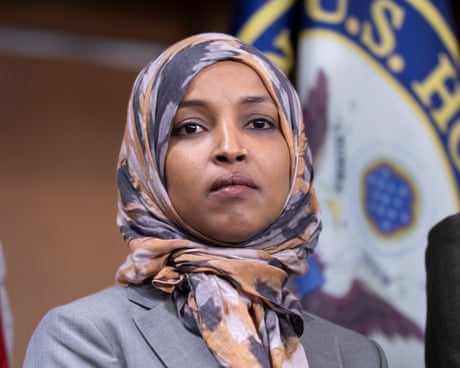
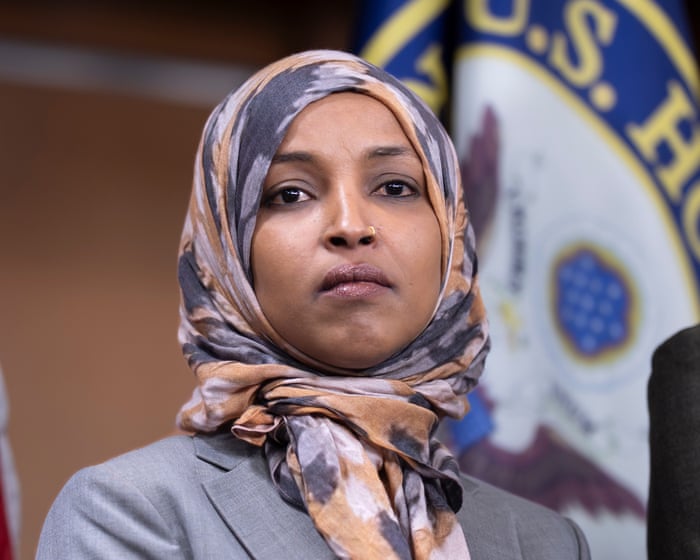
Former President Barack Obama issued a rare statement Sunday rebuking the Trump administration for targeting the president’s political enemies, namely for launching a federal investigation into Democratic Rep. Ilhan Omar of Minnesota.

“It is a basic principle of American democracy that the government can’t selectively target individuals simply because of their political beliefs or what they say,” Obama said in a lengthy statement shared on social media. “But that’s exactly what the Trump Administration is doing to Congresswoman Ilhan Omar of Minnesota.”

The remarks come after federal agents raided Omar’s Washington D.C., home last week, confiscating her laptop, cellphone and passport, as well as other notebooks and documents related to her and her family’s immigration.

“To understand why this is so appalling, it’s important to know the facts. Congresswoman Omar came to this country with her father when she was 12 years old,” Obama said, noting that both she and her father became naturalized citizens five years after arriving from Somalia.

In diatribes against Democrats, President Donald Trump has repeatedly singled out Omar, whom Obama described as “one of the Trump Administration’s fiercest critics.”

Trump has called Omar “garbage” and broadly condemned Somalis. Vice President JD Vance has also joined in, at one point claiming in March, without evidence, that Omar “definitely committed immigration fraud against the United States of America.”

U.S. Attorney Jeanine Pirro said last week that her office is investigating potential improprieties related to Omar’s financial disclosures, but the search warrant that authorized agents to seize Omar’s belongings listed potential violations related to immigration, not finances.

Lawyers for Omar have demanded the immediate return of all of her property.

Omar has not been charged with a crime and has denied wrongdoing, accusing the Trump administration of “political intimidation.”

“Federal agents have raided her home, confiscated personal records, and seized her phone — all to try and uncover a nonexistent smoking gun from 20 years ago that will somehow make their case,” Obama wrote on Sunday. “Think about that. The full weight of the federal government is being brought down on a law-abiding elected official because she has dared to criticize the president.”

The search came just weeks ahead of the pivotal midterm elections. Obama weighed in as he prepared to take his star power to Michigan next weekend to campaign for Democratic Senate nominee Abdul El-Sayed and gubernatorial nominee Jocelyn Benson.

The former president added that “the fact that any president, or any administration, is willing to engage in such transparent efforts to intimidate someone should outrage all Americans, regardless of how they feel about Congresswoman Omar’s political views. Because if this becomes the new normal, there’s no reason to believe it will stop with her — or that future presidents, in either party, won’t do the same.”

The post ‘So appalling’: Obama rebukes Trump over Rep. Ilhan Omar investigation appeared first on MS NOW.

  •  

Trump’s approval rating hits record low as GOP faces midterm reckoning

President Donald Trump’s approval rating has hit a record low as his party faces a reckoning with voters just 16 days before Election Day, new polls show.

A Washington Post-ABC News-Ipsos survey released Sunday shows 33% of U.S. adults approve of Trump’s job performance, with 66% disapproving and 52% strongly disapproving. That represents a drop of four percentage points from July and eight points from this time last year — an all-time low in this polling.

As MS NOW’s Elections & Analytics team has noted, Trump’s approval rating has hovered below 40% for months in most surveys, signaling a politically perilous environment for Republicans.

Democrats’ fortunes are rising in the final stretch to the Nov. 3 midterm elections as they seek to regain control of Congress.

The poll, conducted Oct. 9-13, shows 52% of likely voters said they would vote for a Democratic candidate in their congressional district while 44% said they would choose a Republican. That’s a 5-point gain from the same poll conducted in July.

An NBC News Decision Desk poll released Sunday also puts Democrats ahead.

Among registered voters, 55% favor Democrats, with 44% preferring Republicans. MS NOW’s polling data with partner FiftyPlusOne shows Democrats with a 9-point edge on the generic ballot.

The NBC survey shows 71% of U.S. adults say the country is on the “wrong track” — a resounding rebuke of Trump and the Republican Party two weeks before the midterms as GOP candidates face stiff competition on their home red turfs.

The findings underscore widespread dissatisfaction with the president’s unilateral decision to take the U.S. to war with Iran and its costly effects on the economy, including the steep price of gasoline and diesel. The poll shows that 67% of respondents identified gas prices as a “very serious” or “somewhat serious” problem.

“Those disapproval ratings are just a reflection of the pain people are feeling on the ground when, you know, they see this administration enter into this $50 billion war that is deeply unpopular and misguided,” South Carolina Senate Democratic candidate Annie Andrews said Sunday on MS NOW’s “The Weekend” when asked about recent polling in her state showing Trump’s unpopularity.

Andrews, who is facing Republican Sen. Darline Graham, said shrimpers and fishermen in the Low Country “are barely making ends meet because they’re being crushed by these diesel prices.”

The post Trump’s approval rating hits record low as GOP faces midterm reckoning appeared first on MS NOW.

  •  

Obama condemns comments by ‘border czar’ that Ilhan Omar could ‘of course’ be denaturalized

Ex-president urges Americans to defend congresswoman, saying ‘there’s no reason to believe it will stop with her’

Former US president Barack Obama condemned comments by Donald Trump’s “border czar” that the Republican presidential administration could “of course” strip Democratic congresswoman Ilhan Omar of her citizenship and deport her.

Obama wrote Sunday morning, on X, that “the full weight of the federal government is being brought down on a law-abiding elected official because she has dared to criticize the president.”

Continue reading...

© Photograph: J Scott Applewhite/AP

© Photograph: J Scott Applewhite/AP

© Photograph: J Scott Applewhite/AP

  •  

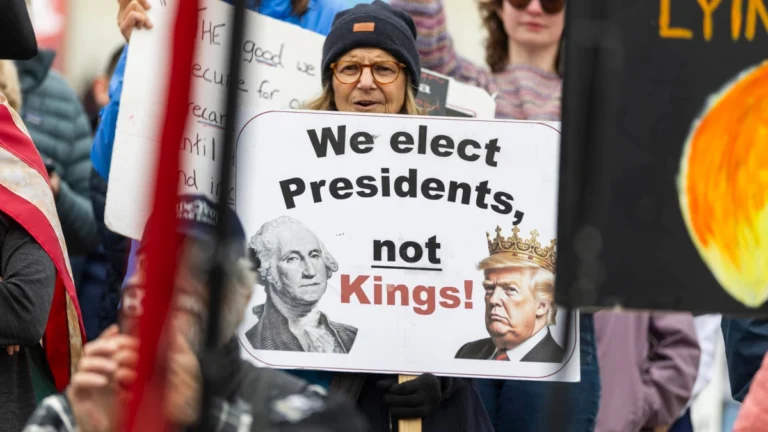
No Kings Rallies Push Early Voting Ahead of U.S. Midterms

No Kings rallies across the United States urge early voting ahead of the 2026 US midterm elections.

Nearly 3,000 events nationwide urged voters to cast ballots early ahead of November 3 elections that will determine control of Congress.


The No Kings movement held nearly 3,000 rallies and marches across the United States on Saturday, urging voters to cast their ballots early in the November 3 midterm elections, as the Trump administration intensified its efforts to challenge mail-in voting and scrutinize ballots cast by suspected noncitizens.

RELATED: Trump’s Attack on Mail-In Voting Seeks to Create an Advantage for Republicans

The nationwide mobilization, held under the slogan “No Kings: Vote Early,” drew millions of participants, according to USA Today, with events in all 50 states and Washington, D.C. The demonstrations came two weeks before elections that will determine whether Republicans retain control of Congress for the final two years of President Donald Trump’s term.

Organizers said the campaign aimed to turn mass mobilization into electoral participation by encouraging voters to make voting plans, cast their ballots early and help protect every eligible vote. They argued that historically high turnout would make it harder for the Trump administration to challenge the results by alleging fraud.

“Across thousands of events in all 50 states and DC today, we are turning enormous people power into direct voter power,” the No Kings Coalition said in a social media statement. It described the initiative as a nationwide effort to encourage early voting and build a network of Americans prepared to defend eligible ballots.

Text Reads: Demonstrations in Washington, U.S., under the slogan “No Kings: Vote Early,” seek to channel political protest into electoral participation. They call for placing limits on President Trump and protecting the Constitution ahead of the elections.

The coalition also pointed to the rising cost of groceries, gasoline, electricity and other daily necessities, arguing that decisions made by political leaders directly shape families’ lives and economic prospects. It presented the early-voting campaign as the next step in reclaiming political influence after a year of mass demonstrations.

In Atlanta, city council member Michael Julian Bond urged rally participants to encourage others to vote before Election Day rather than wait until the last minute.

“The Constitution gives you a power. That is the power of the vote,” Bond told the crowd.

In Phoenix, Arizona, Democratic Senator Rubén Gallego linked the campaign to opposition to the Trump administration’s policies, accusing the president and congressional Republicans of worsening economic conditions for ordinary Americans while enriching their allies.

“Today, we voted early to send a message loud and clear: no to separating our families, no to corruption, no to no oligarchs, no to stupid forever wars, and no kings.,” Gallego wrote on X.

Today, we voted early to send a message loud and clear: no to separating our families, no to corruption, no to no oligarchs, no to stupid forever wars, and no kings. https://t.co/qtT9Gp7Lwf

— Ruben Gallego (@RubenGallego) October 17, 2026

Democratic Representative Yassamin Ansari, who also attended the Phoenix rally, called the upcoming election “the most important election of our lives.” She cited the administration’s deportation policies, the war in Iran, cuts to health care and food assistance, and widespread corruption allegations as central issues facing voters.

Ansari questioned whether Americans would accept immigration enforcement practices that frighten communities and separate families, policies that leave millions without health care, or what she described as a transfer of wealth from working people to billionaires.

The protests unfolded amid heightened political tensions over Trump’s deployment of military personnel to several cities governed by Democrats. The administration has justified the deployments as a way to combat crime and support immigration enforcement operations.

The demonstrations were backed by a broad coalition of organizations, including the American Civil Liberties Union, the American Federation of Teachers, Black Voters Matter Fund, Indivisible, MoveOn, Public Citizen, State Voices and Voto Latino.

The push for early voting also came as the Trump administration pursued legal action against mail-in ballots. Trump has repeatedly attacked mail voting and continued to claim, without evidence, that electoral fraud cost him the 2020 presidential election.

On Thursday, the administration sued California election officials, asking a judge to bar the state from counting mail-in ballots in the midterm elections cast by people the federal government considers likely to be noncitizens until their immigration status can be verified.

On Friday, the Justice Department warned local election officials that processing and counting ballots submitted by suspected noncitizens could expose them to criminal investigations and prosecution.

Also on Friday, Democratic Senators Alex Padilla of California, Sheldon Whitehouse of Rhode Island and Dick Durbin of Illinois wrote to Attorney General Todd Blanche, demanding assurances that the Justice Department would not seize ballots or other election materials before the midterm results were certified.

  •  

In India, the Scion of a Political Dynasty Tries to Seize His Moment

Rahul Gandhi is the descendant of three prime ministers. A surge of protests could give him a springboard to take on the nation’s current leader.

© Anindito Mukherjee for The New York Times

Rahul Gandhi, leader of the Indian National Congress, attending a student rally in Chennai last weekend.
  •  

Ilhan Omar’s attorneys say federal search of her home was ‘neither justified nor lawful’

Minnesota lawmaker’s attorneys asked for return of seized items and the preservation of any recordings of search

Ilhan Omar’s attorneys have asked the US Department of Justice to return property that federal agents removed days earlier from her home during a search.

The lawyers for the Minnesota Democrat contended that the seizure as “neither justified nor lawful”, according to a letter that the Associated Press reported on Friday.

Continue reading...

© Photograph: J Scott Applewhite/AP

© Photograph: J Scott Applewhite/AP

© Photograph: J Scott Applewhite/AP

  •  

Congress gave Trump 30 days to hit Russia’s oil buyers with 100% tariffs. He waives them two days before deadline, citing US interests. Moscow calls it historic

The White House, seen from Lafayette Square. File photo, June 2024.

US President Donald Trump has suspended the tariffs and sanctions on the biggest buyers of Russian oil set by the Lindsey Graham Act, the law he signed himself in September. He says the move serves US national interests, according to an executive order published on the White House site.

The act required the president, within 30 days, to impose 100% tariffs on all goods from the five biggest buyers of Russian oil, to sanction a range of Russian entities and to put 500% tariffs on all Russian energy imports to the US. The deadline for those measures fell on 18 October.

Trump has used the president’s power under Section 115 of the Graham Act, which allows him to waive sanctions, restrictions, and duties by certifying to Congress in writing that doing so serves US national interests and submitting a report explaining why. The act does not, however, allow him to cancel sanctions that have already been announced.

Moscow calls it historic, Kyiv calls it a gift to Putin

The two capitals read the same order in opposite ways. Kirill Dmitriev, an envoy for Russian leader Vladimir Putin, called it “an important and truly historic moment” on X, claiming the sanctions had mainly harmed the US economy and world markets.

“Economic cooperation between Russia and the US serves the interests of both nations, contributes to global economic stability and lays the foundation for building trust and achieving lasting peace,” Dmitriev writes.

President Volodymyr Zelenskyy answered from under fire. Russia struck Ukraine’s energy system on 17 October, and at that very moment Washington chose “to completely ignore the Lindsey Graham law, which was supposed to impose real, effective pressure on Russia to end this war,” he says.

A law its own backers say is being gutted

The waiver lands amid a bipartisan revolt in Congress. Seven Republican and Democratic senators had already warned on 11 October that Trump’s move to allow Russian diesel imports had broken the law Congress passed after the full-scale invasion, urging the administration to reverse it so US money would not help finance Russia’s war.

Meanwhile, Zelenskyy argued the law can still work if Washington lets it.

“This law could, and still can, help a great deal. But the law has actually to work, and every vote for it matters,” he said, warning that the step only pushes Moscow to strike harder.

The world must not give up ground and must try to end the war, Zelenskyy added.

“To end it, and not give Putin every reason to continue it indefinitely,” he stressed, thanking everyone who “is truly fighting for peace and helping Ukraine," he stated.

The word from the Ukrainian opposition

The Ukrainian opposition also commented on Trump’s decision. Iryna Herashchenko, co-chair of the European Solidarity parliamentary faction, said that “the most cynical and stupid decisions are usually made by rulers on Saturday night,” when public attention is scattered, and people are preparing for the weekend.

“Rehabilitating Putin harms not only Ukraine but also the US itself, strengthens the axis of authoritarian regimes, and undermines international security,” she claimed.

  •  

Trump Shelves Russia Sanctions Weeks After Signing Them Into Law

President Donald Trump has waived sweeping sanctions and tariffs targeting Russia’s energy revenues, invoking national interest provisions in legislation passed only last month. The decision follows his controversial diesel agreement with Vladimir Putin and threatens to deepen divisions with Congress and European allies over economic pressure on Moscow.

President Donald Trump has suspended the implementation of sweeping American sanctions against Russia, using presidential waiver powers to prevent penalties approved by Congress from taking effect just weeks after he signed them into law.

The executive order issued by the White House on Friday, 16 October, suspends tariffs of up to 500 per cent on Russian imports, alongside penalties targeting major purchasers of Russian oil and gas. It also waives numerous financial and commercial restrictions intended to reduce Moscow’s ability to finance its war against Ukraine.

The decision comes two days before the 18 October deadline for implementing key provisions of the Lindsey O. Graham Sanctioning Russia and Iran Act of 2026, which Trump signed on 18 September. The legislation was named after the late Republican senator Lindsey Graham, who had championed tougher economic measures against Russia.

Sanctions established but immediately suspended

The presidential order formally establishes the tariff increases required by the legislation while simultaneously suspending their application.

Under the law, Russian imports into the United States would face additional duties of 500 per cent. A separate provision would impose 100 per cent tariffs on goods imported from the five largest purchasers of Russian crude oil and natural gas if those countries knowingly made new purchases from 18 October, subject to specified conditions and exemptions.

Another provision targets countries identified as leading facilitators of Russian oil sanctions evasion, potentially exposing their exports to similar American penalties.

Trump invoked Section 115 of the legislation, which permits the president to waive sanctions and tariffs after certifying to Congress that doing so serves the national interests of the United States.

The order confirms that the certification and an accompanying explanatory report have been submitted to Congress. However, the publicly released document provides no detailed justification for suspending the measures.

The waivers will remain in effect until the president or designated senior officials decide that further action is appropriate. Existing sanctions imposed under earlier executive orders are explicitly preserved, meaning the decision does not remove all American restrictions against Russia.

Nevertheless, the order prevents the new legislation’s principal economic penalties from operating at a time when Congress had sought to intensify pressure on Moscow.

Diesel agreement shapes Washington’s decision

The suspension follows Trump’s agreement with Putin to facilitate renewed Russian diesel exports, announced on 9 October as part of an effort to reduce international fuel prices.

As EU Today previously reported, the agreement envisages an immediate release of more than 300,000 tonnes of Russian diesel, followed by additional shipments in November and subsequent months. Washington also authorised certain transactions involving Russian diesel until April 2027.

The arrangement has raised questions about the relationship between the administration’s energy policy and sanctions intended to constrain Russia’s war economy.

Diesel prices have become an increasingly important domestic political issue ahead of the American congressional elections on 3 November. The war involving Iran and disruptions to international energy supplies have contributed to exceptionally high fuel costs, creating additional pressure on the administration.

The White House hopes additional Russian supplies will relieve pressure on international markets. However, energy analysts have questioned whether the quantities involved will materially affect American prices, particularly before the elections.

The latest waiver also removes the immediate threat of punitive tariffs against major Russian energy customers, including China and India, which had objected to the proposed measures.

Congressional opposition and European concerns

The decision is likely to intensify opposition within Congress, where the sanctions legislation attracted substantial bipartisan support.

Earlier this week, 12 senators, including six Republicans, called on Trump to reverse his diesel agreement, arguing that allowing Russian fuel back onto international markets would provide Moscow with additional revenue for its military operations.

Democratic Senator Richard Blumenthal, who helped develop the sanctions legislation, criticised the diesel arrangement as contrary to Congress’s intention to strengthen economic pressure on Russia.

The decision also exposes a widening divergence between Washington and Brussels.

At the European Council meeting on Friday, European Commission President Ursula von der Leyen and European Council President António Costa reaffirmed that EU sanctions against Russia would remain in place until Moscow ended its war against Ukraine.

Costa declared that the present circumstances required increased pressure on Moscow rather than a relaxation of existing restrictions. The European Union is also preparing a 22nd sanctions package while considering additional financial support for Kyiv.

For Ukraine, the decision means that Russia will continue to benefit from energy exports and the international trade that helps finance its war. Instead of tightening restrictions on these revenues, Washington has suspended measures specifically intended to cut them.

The timing is particularly significant. While Trump is pressing Kyiv to halt attacks on Russian oil refineries and other energy facilities, Moscow continues its strikes against Ukrainian cities and civilian infrastructure. Zelenskyy has argued that Ukraine cannot be expected to stop targeting Russia’s energy sector while Russian attacks on Ukrainian infrastructure continue.

Although Trump can reinstate the sanctions, his decision removes the immediate threat of additional penalties against Russia and its principal energy customers. It also places Washington increasingly at odds with its European allies. Brussels remains committed to maintaining and expanding sanctions against Moscow, while the White House is now giving priority to reducing American fuel prices, even if that means easing economic pressure on Russia.

  •  

Ilhan Omar demands DOJ immediately return property seized in search of her home

In a letter to Justice Department prosecutors Friday evening, lawyers for Rep. Ilhan Omar, D-Minn., demanded the immediate return of all property taken from her Washington home on Monday, when Homeland Security investigators executed a search warrant as part of an investigation into alleged immigration fraud and conspiracy.

That search deviated from the specific procedures mandated by the judge who approved the warrant, and may have violated Omar’s constitutional rights as a result, according to Omar’s lawyers Amy Jeffress and Joshua Matz of Hecker Fink LLP.

Their seven-page letter also demands that the Department of Justice preserve and provide to Omar’s counsel within five days any video or audio recordings taken during the search, as well as any records reflecting Homeland Security Investigations’ reported review of Omar’s immigration status in 2019.

As a member of Congress, Omar is entitled to protections under the Constitution’s Speech or Debate Clause, which provides immunity for her legislative conduct and protects certain congressional materials and communications from disclosure or use in legal proceedings.

The letter also challenges the perceived focus of the DOJ and Homeland Security’s investigation.

“There is no legitimate basis for any suggestion that she has violated any law concerning her citizenship status,” the lawyers write. “Still, recent experience teaches that the absence of a proper predicate has not stopped this Administration from pursuing politically motivated criminal investigations into President Trump’s opponents.”

The lawyers note that Omar, a frequent public critic of Trump, has been the target of criticism from Trump and members of his administration, with apparent efforts to harass and intimidate her. In particular, they cite several statements that Trump and Vice President JD Vance have made about Omar on social media over the past year. The lawyers allege those statements have contributed to serious threats of harm against Omar.

Omar’s lawyers also allege that the White House appears to be directly involved in the investigation, citing a Washington Post report that Anthony Salisbury, a White House official, is a member of the investigative team.

“This vindictive, retributive, and politically motivated criminal investigation into one of the President’s chief congressional critics violates Representative Omar’s constitutional rights and threatens the separation of powers,” they write.

The lawyers also argue that the timing of the search at Omar’s home violates DOJ policy prohibiting prosecutors from taking or refraining from investigative or prosecutorial actions to influence an election.

Omar, who was first elected to Congress in 2018, is running for re-election to the House this year.

“Historically, the Department has refrained from this type of investigative activity so close to an election, so as to avoid even the appearance of politically motivated law enforcement actions. But the political motivations behind this pre-election investigation and search are clear as day. For the reasons given above, this search was neither justified nor lawful,” the letter states.

The letter was sent to two DOJ lawyers, Michael Wheat and Alessandra “Ali” Serano, both special assistant U.S. attorneys.

A veteran prosecutor from California, Serano was appointed in June by Attorney General Todd Blanche as the national coordinator for child exploitation and human trafficking. The DOJ announced that, as part of that role, Serano would “submit a report to the Deputy Attorney General updating the Department’s strategy for combatting child exploitation and human trafficking” within 120 days. That deadline is approaching within days.

Wheat, on the other hand, has recently been involved with a DOJ effort to obtain California voter registration records from county election officials, according to public reporting. The DOJ sued the state of California for access to those records earlier this week.

In addition to pushing back on the impetus for and timing of the search, the letter also details recent reporting from The Washington Post, which, citing multiple sources, revealed that the Trump administration investigated potential issues surrounding Omar’s naturalization during Trump’s first term and closed the investigation for lack of evidence of criminal conduct.

The letter also alleges that Monday’s search may not have comported with the specific instructions by the magistrate judge who approved the warrant. Among other alleged deficiencies, the lawyers say that although the judge ordered the HSI agents executing the warrant to notify both Omar and the Office of General Counsel for the House of Representatives, the General Counsel was not notified of the search until it was already a matter of public record. The lawyers argue that the delay deprived Omar of the opportunity to seek guidance about her rights as a member of Congress.

Additionally, the lawyers allege that Omar did not receive a copy of the warrant prior to the execution of the search and that she was prevented from contacting her counsel for more than an hour after the search began. They argue that those and other alleged failures prevented her from identifying and separating materials protected by the Speech or Debate Clause.

People or entities from whom property is taken pursuant to a federal search warrant may seek the return of some or all of that property pursuant to rules governing federal criminal cases. Omar, her lawyers note, will file such a motion if the seized property — which, as MS NOW reported, includes her laptop, phone and passport — are not returned promptly.

The post Ilhan Omar demands DOJ immediately return property seized in search of her home appeared first on MS NOW.

  •  

Nobody Wants To Be the Pro-Tech Candidate in This New York Race That Could Flip the House

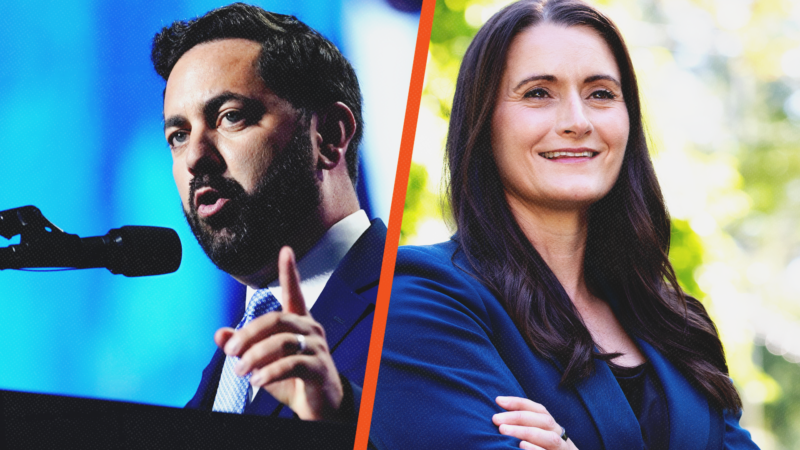
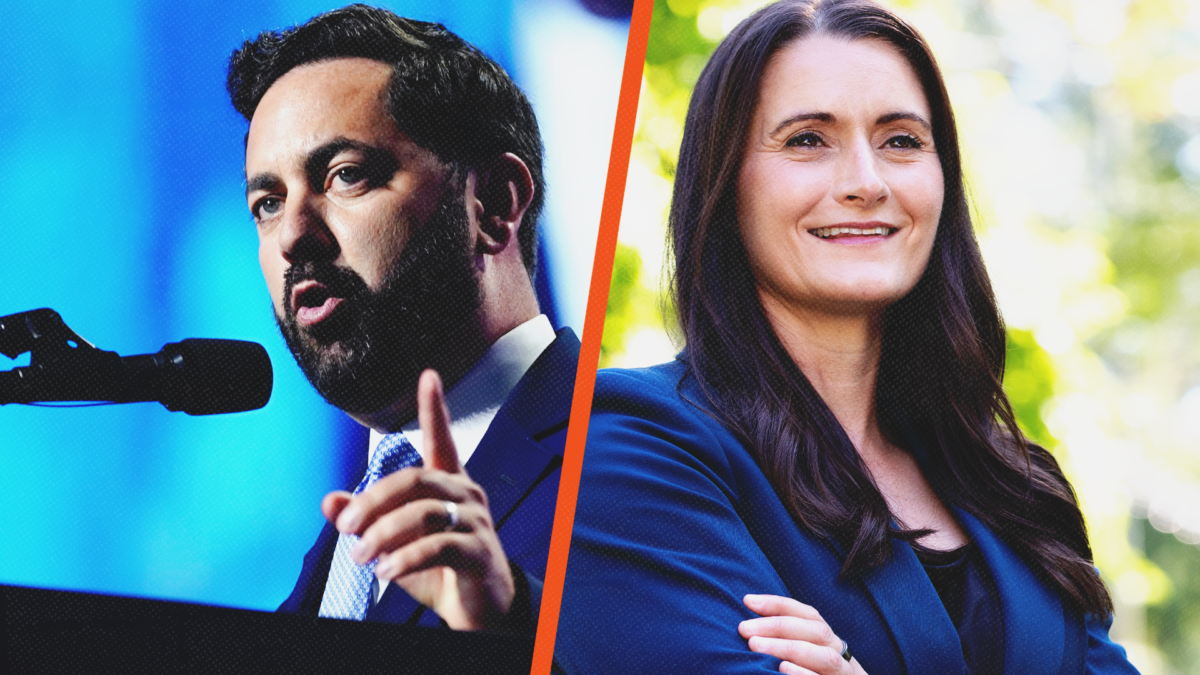
Mike Lawler and Cait Conley | Bonnie Cash/UPI/Newscom/caitconley.com

The Democratic Socialists of America (DSA) candidates running for the House of Representatives and endorsed by NYC Mayor Zohran Mamdani are all but guaranteed to win their general elections this November, but that does not mean the midterm drama is over in New York. In the state's 17th congressional district, which includes the lower Hudson Valley, Democratic challenger Cait Conley, a combat veteran who served on the Biden administration's National Security Council, could unseat incumbent Republican congressman Mike Lawler in one of the most consequential races of the midterms. 

The highly contested purple district voted for former Vice President Kamala Harris in the 2024 election while reelecting Lawler for his second term. Now, Lawler is attempting to win a third term as support for President Donald Trump wanes ahead of the midterms. As of Friday, The Cook Political Report lists the race, which could determine control of the House, as a toss-up. 

If elected, Conley would have far more in common with the "Badass Women" coalition of security state and military veterans than with DSA types (think more Sen. Elissa Slotkin from Michigan than Darializa Avila Chevalier). As Judge Street Journal's Timmy Facciola notes, "Conley's candidacy is testing the viability of a tactful centrism that rebukes left-wing positions like abolishing ICE or restricting weapon shipments to Israel." Lawler is also vying for moderates, pitching himself as "one of the most bipartisan members of Congress" and emphasizing his willingness to break with Trump occasionally while still welcoming Trump's support. 

While Lawler and Conley certainly are not pure MAGA acolytes or DSA members, both have leaned into a tech-critical position, much like that of more radical populists like Lina Khan or Steve Bannon, revealing how pervasive anti-tech sentiment has become in mainstream politics. 

This tech skepticism was on full display during an October 14 debate, when each candidate made the case for why they were the most equipped to regulate AI, insisting that the industry needs guardrails. 

Conley said members of Congress do not want to regulate AI because "they want to look out for their billionaire and trillionaire backers like Elon Musk, who is pouring over $260 million into this midterm election." She then added that Musk backed Lawler in his 2024 race. 

Lawler then accused Conley, who previously consulted for Primer AI, of being "the AI candidate for the AI industry."

While Lawler and Conley disagree on specific data center regulations (Conley supports Democratic Gov. Kathy Hochul's data center moratorium while Lawler supports local zoning control over data centers), neither wants to pitch themselves as an explicitly pro-data center candidate. During the debate, Conley claimed that, "On Mike Lawler's watch there have been five data centers built in Rockland County." Lawler has said that he had no say in the decision to build the data centers, and during the debate, he pointed out that the facilities were built for financial services. Lawler also attempted to attack Conley over data centers, slamming her in an ad for saying "we need data centers." Regardless of the candidates' specific policies on data centers, their attacks on one another demonstrate that cheerleading hyperscale data center development is a political liability. In their district, data center has presumably become a dirty term. 

The candidates' tech-skeptical rhetoric did not end with unchecked data center development. After the debate, Reason asked both candidates about their positions on age-verification laws for social media and AI, since such regulations raise significant privacy and censorship concerns by age-gating the internet. Unsurprisingly, both Lawler, who voted for the controversial KIDS Act, and Conley, who has proposed stricter age verification for AI tools, parroted platitudes about why such online safety regulations are necessary to protect children. 

"We have watched how social media is literally hurting the mental health of children," Conley told Reason. "And when you talk about the power of AI and what that power could do, we have to regulate this." 

Lawler gave a similar response, telling Reason that he respects free speech but that protecting children "is paramount." 

This bipartisan consensus over social media regulation has long been brewing in Congress. The mainstream political conversations about AI and data centers, however, are relatively new this midterm election cycle. And it appears both Lawler and Conley have figured out which way Americans' sentiment toward AI is leaning, and they have waged their campaigns accordingly. 

The post Nobody Wants To Be the Pro-Tech Candidate in This New York Race That Could Flip the House appeared first on Reason Magazine.

  •  

Wars and the oil blockades may be waiting for Xi’s party congress

Just as Vladimir and Estragon waited for Godot in Beckett’s famous play, the world may now be waiting for Xi Jinping in the present political drama. America is stuck in two wars. In Ukraine, it would like to reach a compromise with Russia. In the Middle East, it is trying to bring down Tehran’s regime, […]

The post Wars and the oil blockades may be waiting for Xi’s party congress appeared first on Asia Times.

  •  

The ‘One Big Beautiful Bill’ opened the door to benefit Big Pharma — and Trump

Polling suggests that concerns about corruption and healthcare costs are top of mind for most voters as Election Day approaches. A Fox News poll released this week showed large majorities of voters listed both in the top five issues they were “extremely” or “very” concerned about. A new report about President Donald Trump’s self-enrichment by way of the pharmaceutical industry underscores the uniquely awful political predicament Republicans have created for themselves by wedding their party to one of the most corrupt administrations in American history.

Democrats on the Joint Economic Committee previously spotlighted the ways that Trump’s stock investments in the oil and gas industries have benefited from his destructive geopolitical agenda, including his deadly war with Iran. Now, the committee is out with a new report on the ways Trump’s stock investments in the pharmaceutical industry have benefited from provisions of the (ridiculously) so-called One Big Beautiful Bill Act that Republicans forced through last year.

According to the new report:

As Americans face sky-high health care costs, President Trump and Congressional Republicans passed into law last year a new giveaway to Big Pharma that enables many pharmaceutical companies to keep charging seniors exorbitant prices for cancer treatments and other medications. This measure — which blocks the Medicare program from negotiating lower prices for several high-cost drugs — will add around $9 billion to the deficit.

The report cites financial disclosure forms that show that in 2025, “Trump held as much as $39.1 million in stock in the same Big Pharma companies that directly benefited from the giveaway that he and Congressional Republicans devised.” And that “these companies reported at least $54 billion in U.S. sales of drugs that benefitted from the carveout in 2025, a 13 percent increase from the year before.”

Trump has made more stock trades since returning to office than everyone in Congress combined. The White House has routinely said that these trades are handled by third parties over which Trump has no influence, denying allegations of corruption or conflicts of interest.

But it seems the majority of Americans aren’t convinced that the self-described “freaking genius” president has truly extricated his personal business dealings from industries that benefit from his policies: A recent AP-NORC poll found that 60% of adults think Trump has either illegally or unethically profited from the presidency.

The post The ‘One Big Beautiful Bill’ opened the door to benefit Big Pharma — and Trump appeared first on MS NOW.

  •  

Pressed on her work with Trump, Maine’s Collins trips over key part of her record

As part of a tough re-election campaign in Maine, incumbent Republican Sen. Susan Collins has emphasized on countless occasions that she’s willing to defy President Donald Trump and other GOP leaders. But while there’s some truth to that, the senator’s critics have long emphasized the asterisk that comes with that record.

The New York Times took a closer look at her voting record, which shows that Collins has broken with her party more than any other Republican senator. That said, the same record “reveals that her defections … have rarely thwarted the president during his second term.”

In other words, the longtime GOP senator has demonstrated a willingness to break ranks, except when her vote might actually affect the outcome. Or, as the Times’ report put it, “one of the most dominant and long-running lines of attack against her” is that Collins “only defies the president when it doesn’t matter.”

On Thursday night, in her fourth and final debate against Democratic nominee Troy Jackson, the Maine Republican was presented with a clear opportunity to prove her critics wrong. It did not go well.

A moderator asked Collins, “Can you name a time when you voted against your party and President Trump where it actually changed the outcome significantly?”

The senator began by saying there were “several examples,” though she specifically pointed to one: Early last year, Collins said, she helped organize an effort to defeat Pete Hegseth’s defense secretary nomination, though her effort ultimately didn’t work and the unqualified former Fox News host was confirmed.

“So that didn’t change the outcome,” the moderator replied.

Remember, Collins has faced one specific criticism throughout her re-election bid, and it was highlighted by The New York Times in a front-page article published this week. The senator and her team had plenty of time to come up with examples (any example!) to prove her critics wrong.

But she couldn’t. Then, presented with the opportunity and platform, Collins flubbed it, effectively proving the underlying point.

Whether Jackson and his party turn the debate exchange into a new campaign ad remains to be seen.

The post Pressed on her work with Trump, Maine’s Collins trips over key part of her record appeared first on MS NOW.

  •  

22 House lawmakers press Trump to implement Russia sanctions law. Diesel deal draws bipartisan backlash

US President Donald Trump signs the Lindsey O. Graham Sanctioning Russia and Iran Act in the Oval Office, 18 September 2026

A bipartisan group of 22 House lawmakers is urging President Donald Trump to fully implement the new Russia sanctions law and revoke a license allowing certain Russian diesel transactions. In a letter sent on 15 October, they copied Secretary of State Marco Rubio and Treasury Secretary Scott Bessent and requested details on planned sanctions, tariffs and waivers.

Their request comes as the law’s first requirements fall due on 18 October, while lawmakers from both parties challengethe administration’s decision to allow certain Russian diesel transactions. Some restrictions take effect automatically, while others require presidential action. The law does not specify a penalty for the president missing the deadline.

    What the Russia sanctions law requires

    Congress passed the Lindsey O. Graham Sanctioning Russia and Iran Act of 2026 by votes of 86–11 in the Senate and 262–159 in the House. Trump signed it on 18 September. Graham, a Republican senator from South Carolina, died in July.

    Restrictions taking effect automatically on 18 October include a ban on US banks and broker-dealers processing transfers to or from the Russian government, a ban on new US investment in Russia, a ban on new US investment in Russia’s energy sector, and a ban on US energy exports to Russia.

    Other measures require presidential action by the same date. The law directs Trump to review and sanction Russian officials, oligarchs and shadow-fleet vessels, sanction the Bank of Russia, specified Russian banks and state-owned companies, and impose tariffs of up to 500% on Russian goods. Tariffs of up to 100% can apply to goods from countries among the five largest importers of Russian oil or gas, or among the top five countries facilitating Russian oil sanctions evasion.

    Trump may waive sanctions, restrictions and tariffs under the law if he first certifies in writing to Congress that a waiver is in the US national interest and submits a report explaining its basis.

    The diesel license at the center of the dispute

    House members also urged Trump to revoke General License 135, which the Treasury Department issued on 9 October and that is valid until 7 April 2027. It permits certain transactions involving Russian-origin diesel, including imports into the United States. Trump said Russia would immediately supply more than 300,000 tons of diesel to US and global markets and predicted prices would fall sharply, according to a 9 October Truth Social post.

    On 13 October, a bipartisan group of 12 senators also urged Trump to rescind the deal and revoke the license. Seven senators said the deal conflicted with a 2022 law banning Russian energy imports.

    The Graham Act says nothing in its provisions affects the Treasury secretary’s existing authority to issue general licenses. That provision does not resolve whether the diesel license complies with the separate 2022 law.

    A White House official told Newsweek the administration would comply with the Graham Act. Bessent said the administration would use “all the legal authorities we have” and called the deal “good for the American people,” Fox News reported on 11 October.

    How the sanctions could be lifted

    Separately, the law sets a process for terminating sanctions, restrictions or duties against Russia. Trump must report to Congress that Russia has signed a peace agreement accepted by Ukraine’s government and ceased military hostilities against Ukraine, as well as activities to overthrow, dismantle or subvert its government. Congress has 30 days to block termination through a joint resolution of disapproval, or 60 days for reports submitted between 10 July and 7 September.

    •  

    No, the world zionist movement is not an antisemitic conspiracy theory

    The World Zionist Organization was founded in 1897. It has an elaborate structure, including a World Zionist Congress, a Zionist General Council, a Zionist Executive, and a Zionist Supreme Court. And this is just one of the many such entities…

    •  
    ❌