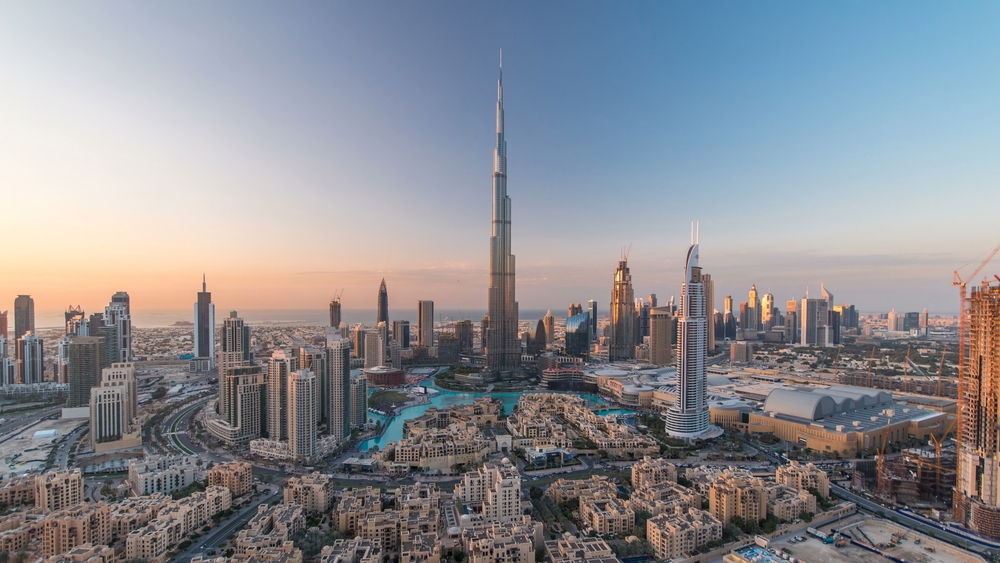
RIYADH: Dubai’s real gross domestic product totalled approximately 473 billion dirhams ($129 billion) in the first half of 2026, down 2.3 percent year on year, official data showed. GDP at current prices reached 505 billion dirhams, up 0.2 percent, according to data from the Dubai Data and Statistics Establishment at Digital Dubai, as reported by the Emirates News Agency, or WAM. The financial and insurance activities sector recorded real growth of 8.8 percent, with value added reaching 65.9 b
Getting it wrong can mean paying unnecessary tax, facing unexpected reporting obligations, or attracting attention from the tax authorities. Some British expatriates assume they remain taxable only in the UK
Warren Buffett is the former CEO and chairman of Berkshire Hathaway.
Paul Morigi/Getty Images for Fortune/Time Inc
Berkshire Hathaway is set to invest $330 million in Bending Spoons, adding to its previous $600 million.
Warren Buffett's storied conglomerate is poised to hold a 4% stake in the owner of AOL and Vimeo.
Berkshire's wager is a surprise, but there's some DNA in common with Bending Spoons.
Berkshire Hathaway's latest bet isn't a no-brainer or a head-scratcher; it's somewhere in between.
What's the deal?
Berkshire — which has seen Warren Buffett retire as CEO and chairman since the turn of the year — has agreed to invest $330 million in Bending Spoons, on top of a $600 million injection when the Italian tech conglomerate went public in July, giving the Nebraska behemoth a 4% stake.
Bending Spoons disclosed Berkshire's backing in a press release on Wednesday, catapulting its stock up nearly 50% over two days, a phenomenon known as the "Buffett effect." The stock fell on Friday, but still ended the week more than 20% above Monday's opening price.
Berkshire has agreed to buy 10 million shares for $33 each, around a 13% discount to Bending Spoons' closing price of $38 on Tuesday, the day before the deal was announced.
CEO and cofounder Luca Ferrari described Berkshire in the press release as "among the finest and most respected capital allocators in the world," and a "longstanding inspiration" for Bending Spoons.
Neither company responded to requests for comment from Business Insider.
What is Bending Spoons?
Bending Spoons acquires digital businesses, transforms and optimizes them to increase profits, then reinvests those earnings in further acquisitions.
It has been pursuing that strategy for more than a decade and has never sold a material business. Its acquisitions to date include AOL, Evernote, Vimeo, Eventbrite, and WeTransfer.
Ferrari's company said in the press release that it "strives to envision the most successful version of an acquired business," then works to close the gap between that vision and reality "as quickly and completely as possible."
Bending Spoons said that typically involves "deep" transformation such as "reorganizing teams, overhauling technology, redesigning user interfaces, accelerating product development, and enhancing marketing and monetization," often with a good dose of AI.
Ferrari gave the example of Evernote on a recent episode of the "Joys of Compounding" podcast.
He said the business had around 350 employees when Bending Spoons acquired it at the start of 2023. That shrank to roughly 60 within 12 to 18 months, and now it's being run by around 20 people.
Yet Ferrari said Evernote "launched by far the biggest update to the product in maybe a decade" this spring.
Bending Spoons CEO Luca Ferrari.
Marco Bertorello / AFP via Getty Images
Why is Berkshire's investment a surprise?
First and foremost, Bending Spoons is a tech conglomerate, and Berkshire has eschewed tech for most of its history with a few big exceptions, namely Apple and Alphabet.
That's because Buffett is a bargain hunter who likes to invest with a "margin of safety" in case something goes wrong, and tries to stay within his "circle of competence," only buying into what he deeply understands.
Tech companies have rarely been a good fit for his approach, as they typically have lofty valuations, unpredictable outlooks, and complex products and services.
Indeed, Bending Spoons generated 32 cents in earnings per share last year. Berkshire is paying more than 100 times that per share in the coming private placement.
It's true that Bending Spoons is growing fast, with revenue surging 126% year-on-year to $704 million in the second quarter and adjusted operating income jumping 150% to $381 million. Few, however, would consider the stock a bargain from a fundamental perspective.
Berkshire is also famously a hands-off acquirer, offering founders the opportunity to cash out while continuing to run their businesses as they see fit. In contrast, a core aspect of Bending Spoons' strategy is revamping its acquisitions.
How does the deal make sense?
Berkshire and Bending Spoons have similarities as well as differences.
Both are decentralized conglomerates that buy businesses not to flip them, but to own them for the long term. Berkshire is a web of largely autonomous companies, including GEICO, Duracell, Fruit of the Loom, Pilot Travel Centers, and BNSF Railway. It has long offered a permanent home to the businesses it buys.
Bending Spoons has positioned itself as a forever owner, too, emulating Berkshire's approach of taking the cash generated by a subsidiary like See's Candies and using it to acquire more businesses.
Ferrari said in his recent podcast interview that Bending Spoons has fostered a culture of caring deeply about the company, and doesn't centralize decision-making in part because that "deprives people of that precious sense of ownership."
Buffett famously wrote "An Owner's Manual" for Berkshire shareholders. He's championed that mindset by keeping more than 99% of his net worth in Berkshire stock, and encouraging the company's other executives and directors to have skin in the game too.
Ferrari also said on the podcast that he has a "pathological love of learning" across different domains. That echoes Buffett's boundless curiosity and the late Charlie Munger's insatiable appetite for knowledge. Buffett's longtime business partner studied architecture, physics, history, meteorology, psychology, law, and, of course, investing, among other subjects.
Beyond their similar philosophies, it's worth noting that investing less than $1 billion into Bending Spoons isn't a huge deal for Berkshire. It has a $1.1 trillion market capitalization, had a $365 billion cash pile at the end of June, and its biggest stock position was worth about $66 billion at that time.
What's the takeaway?
The Bending Spoons deal could mark an evolution in Berkshire's investing style following Buffett's departure as CEO and chairman.
Berkshire hasn't commented on the purchase or on whether Buffett was involved. Its relatively small size could mean his remaining investment manager, Ted Weschler, was behind it.
Or it might be new CEO Greg Abel, who piled an additional $10 billion into Alphabet in a private placement this summer after consulting with Buffett.
Whoever was responsible, and whatever their reasons for investing, this will be an intriguing wager to watch for Berkshire followers.
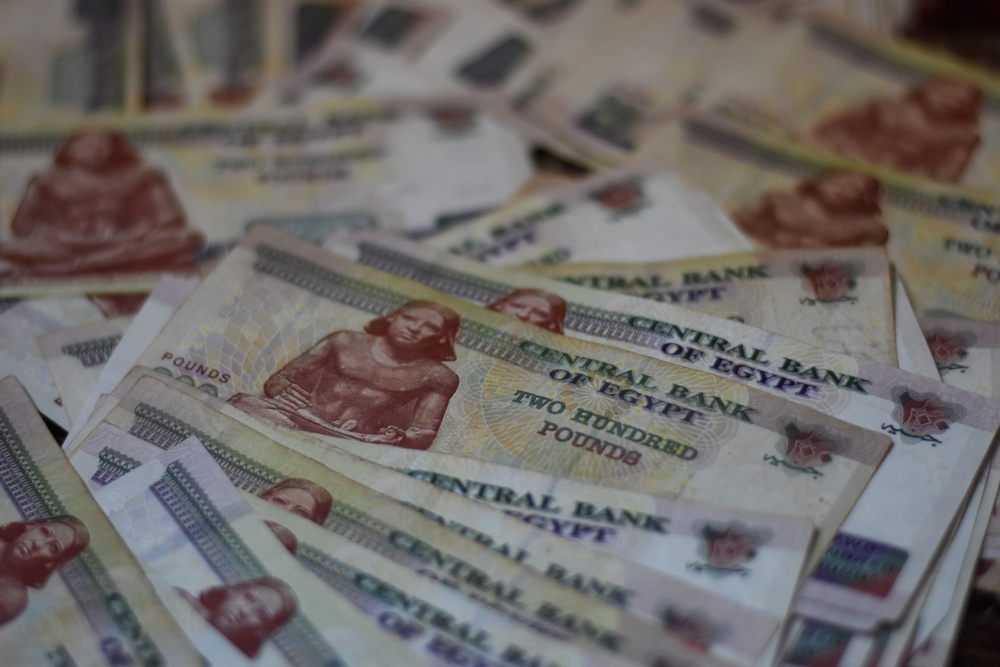
RIYADH: Moody’s Ratings upgraded Egypt’s sovereign credit rating to B3 from Caa1, citing improved public finances, stronger revenue collection and economic reforms that have helped put government debt and interest burdens on a declining path. The agency maintained a positive outlook, reflecting the potential for further improvement in the country’s debt burden and borrowing costs. The upgrade, announced on Oct. 16, applies to the government’s long-term local- and foreign-currency issuer ratings
As the U.S. national debt surpassed $40 trillion during Donald Trump's second term, critics warned that escalating interest payments and inflation are eroding public services and devaluing the dollar.
Harvard's investment in Elon Musk's SpaceX has paid off.
Matt Rourke/AP
Harvard's endowment returned a five-year high of 27.1% in the 12 months to June 30, besting the S&P 500.
The Ivy League college counted a $2.2 billion SpaceX stake as its top Q2 portfolio holding by far.
Harvard's endowment grew to almost $68 billion after accounting for taxes, gifts, and distributions.
Harvard University delivered its best investment return in five years as its bet on SpaceX boosted its stock portfolio.
The elite college's endowment returned 27.1% in the fiscal year ended June 30, its annual financial report revealed on Thursday. That comfortably outpaced the benchmark S&P 500's 22.3% total return over the same period.
After accounting for taxes, distributions, and gifts, Harvard's endowment grew by $11 billion to nearly $68 billion.
Harvard Management Company's stake in Elon Musk's maker of Starship rockets, Starlink satellites, and AI chatbot Grok was worth $2.2 billion at the end of June, per its second-quarter portfolio disclosure.
SpaceX was its number-one holding, more than six times more valuable than its second-biggest position, a sub-$350 million stake in Taiwan Semiconductor.
Its next-largest positions — each worth over $150 million — were Cerebras, Amazon, Alphabet, and Nvidia. Its 19 holdings at the end of June were together worth about $4.3 billion, more than double the portfolio's $1.8 billion value three months earlier.
Harvard said the strong performance of its endowment, which is nearly 400 years old and comprises about 15,000 individual funds, helped it weather the "abrupt termination of federal research grants" by the Trump administration.
It's worth noting that 13-F portfolio disclosures are a snapshot of a fund's US stock holdings on a certain date. They don't include foreign-listed stocks, non-stock assets like bonds or real estate, private investments, or stocks sold short.
Harvard said that as of June 30, 14% of its endowment was invested in public equities, 29% in hedge funds, 46% in private equity, 4% in real estate, and the balance elsewhere.
Harvard declined to comment when contacted by Business Insider.
SpaceX's valuation has whipsawed since the aerospace company went public on June 12. Its market capitalization topped $2.4 trillion on June 20, then tanked to $1.4 trillion by August 1, and has since rallied to around $2 trillion.
Musk's company posted a 92% year-on-year revenue jump for the quarter ended June, helping narrow its net loss from $1 billion to $541 million.
The world's richest man recently posted on X that he sees a path for SpaceX to be worth "orders of magnitude more than the current Earth economy," implying its stock could rise at least 6,000-fold to $12 quadrillion over time.
He later clarified that wasn't a "statement of extreme confidence," but he believes the probability of achieving that valuation is "not zero." On October 14, he said he expects SpaceX to be worth more than $100 trillion in the next 10 years.
Harvard is one of several shareholders to reveal a sizable stake in SpaceX. Google parent Alphabet reported a roughly 4% stake valued at $94 billion as of the end of June. Longtime Musk associate Peter Thiel disclosed a 3.2% position worth $73 billion held by his Founders Fund and related entities. AI chipmaker Nvidia has a $21 billion stake.
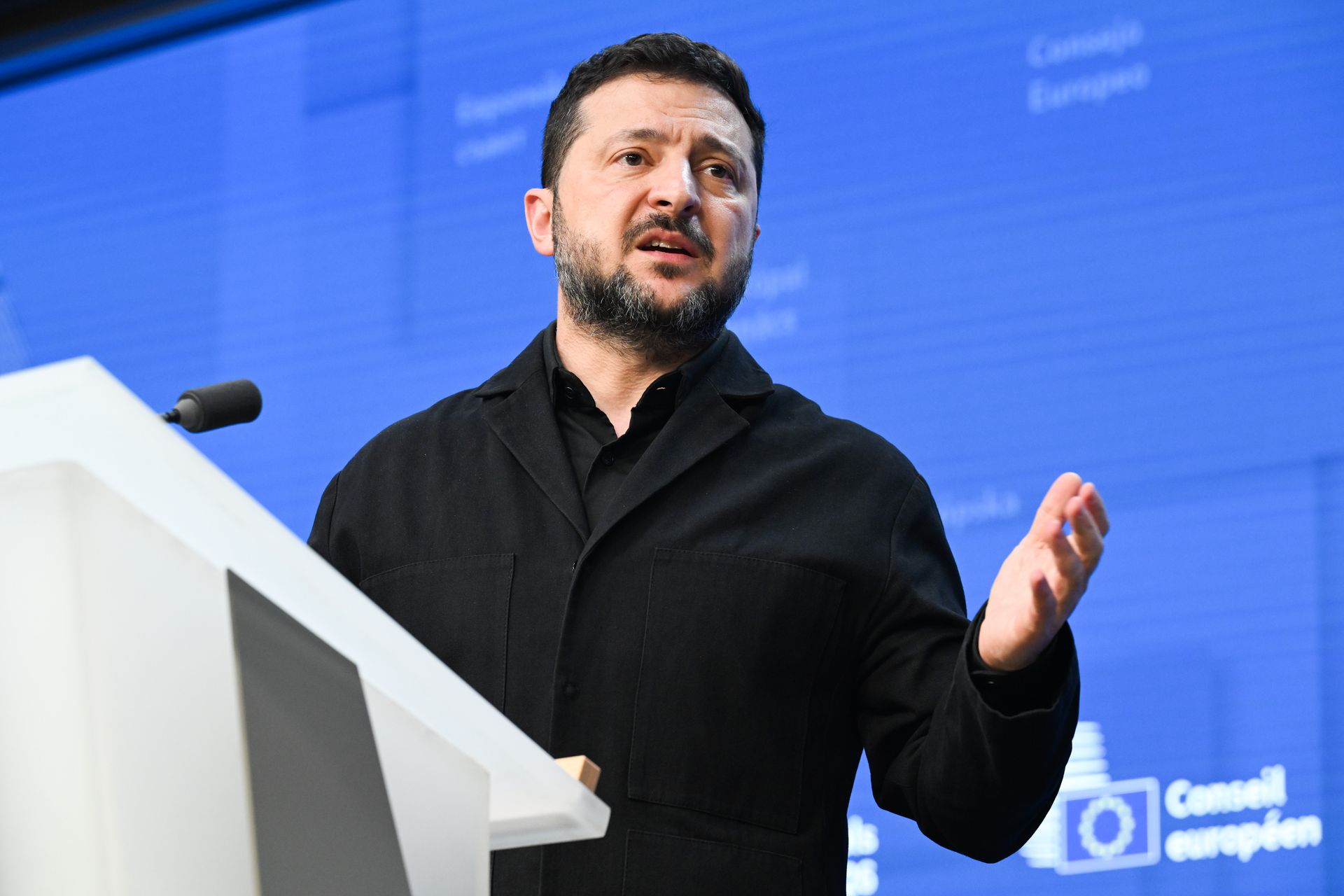
"Without a determined European Union capable of making strong decisions Putin would have gone much further by now," Zelensky said, before calling on the bloc to double down on its support.
Republicans are frustrated that the public has such a sour view of the economy, especially when growth is accelerating and we may be on the cusp of what some are calling America’s economic “golden age.” Rising prices are the ongoing problem, and the most recent inflation readings did nothing to turn around voters’ gloom. A hotter-then-expected…
India’s largest initial public offering (IPO) opens October 21, and investors in Tokyo, Singapore and Hong Kong are being asked a simple question: What is a Jio customer’s monthly bill worth? Jio Platforms, the Reliance-owned mobile carrier with some 524 million India-based customers, is selling 270 million new shares at 1,065 to 1,119 rupees each […]
"We have to classify so that we know how we can shape the support and solidarity with Ukraine in the future," Austria's Chancellor Christian Stocker said.
TOKYO — An unwelcome blast of US inflation is blowing across Asia’s markets. September’s hotter-than-expected price data revived concerns that the Federal Reserve will keep rates higher for longer, threatening fresh pressure on currencies, capital flows and economic growth across the region.
Last month’s 3.7% year-on-year increase in consumer prices didn’t just exceed forecasts. It ensured the Fed is on an even bigger collision course with both the bond market and US President Donald Trump’s White House. It’s arguably the last thing both Trump and US Federal Reserve Chairman Kevin Warsh wanted to see less than three weeks ahead of the mid-term elections.
Republican Senate and House candidates are being out-raised by their Democratic rivals, but the party has received a huge boost from groups tied to Elon Musk and President Trump.
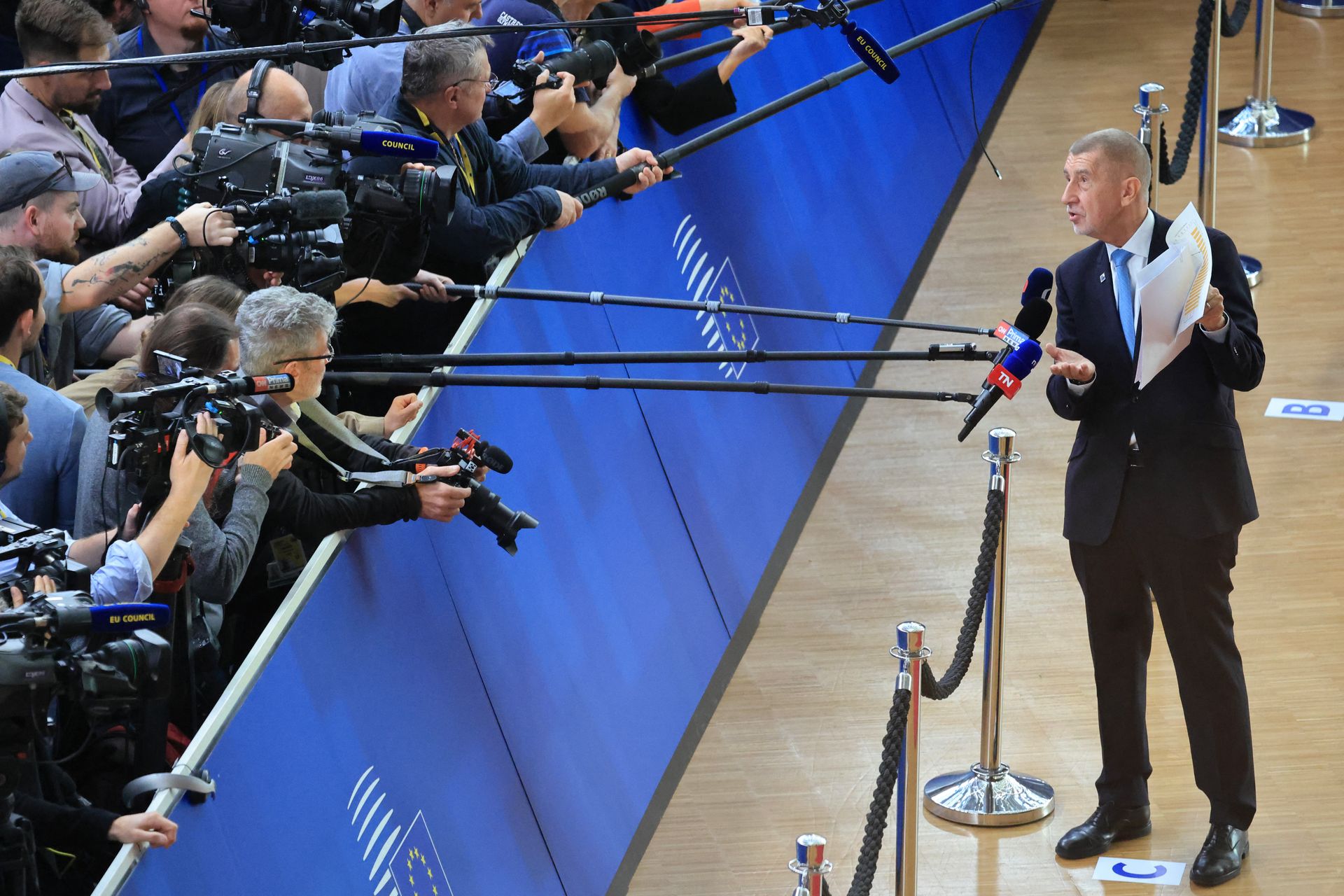
"I don't like that there are 100 billion euros ($112 billion) from the European budget for Ukraine, that this money should be borrowed," said Czech Prime Minister Andrej Babis.
Apollo is delaying recruiting for its 2028 associate class, Business Insider has learned.
This follows last year's delay, which helped slowed down private equity's chaotic recruiting process.
Apollo said it wants young bankers to have more experience before making their next career move.
Apollo is delaying on-cycle recruiting again this year, after a similar move last year helped push back the recruiting timeline across the private equity industry.
The private equity giant told prospective candidates Thursday afternoon that it will not recruit its 2028 associate class this calendar year, according to an email obtained by Business Insider.
The memo, signed by David Sambur, co-head of Private Equity, and Antoine G. Munfakh, deputy global head of Private Equity, said the firm will wait until candidates who started their investment banking careers over the summer are "closer to completing one full year of professional experience."
The hope, the memo said, is that this will convince others in private equity to delay their process so both candidates and employers can make "better decisions." Last year, after Apollo CEO Marc Rowan said the firm would delay on-cycle recruiting, others, such as General Atlantic also decided to pause.
"We were encouraged that others in the industry took similar steps, and we hope more firms will do the same this year," the memo said.
On-cycle recruiting — the controversial process through which private equity firms hire junior investment bankers for associate roles a year or even two before they would start — had crept earlier and earlier in the years following the pandemic.
Competition among private equity firms to lock up top talent pushed recruiting earlier and made the process notoriously intense. It would kick off with little warning, with junior bankers sometimes calling in sick or interviewing in the middle of the night to avoid jeopardizing their day jobs. JPMorgan's CEO, Jamie Dimon, has been a big critic of the process, calling it "unethical."
In 2025, amid rumblings that on-cycle recruiting could take place before some students even graduated from college, JPMorgan rolled out a policy that incoming analysts could be terminated for accepting future-dated private equity offers.
Questions have swirled if the practice would kick off early again this for the 2028 class, but it appears with this latest move, Apollo is trying to slow down the recruiting timeline across the industry again.
Read the full memo below:
—-
To: Prospective Apollo Associate Candidates, Class of 2028
Subject: Apollo Recruiting, Class of 2028
Congratulations on beginning your career in investment banking. We know how exciting and demanding this period can be, and we hope you are enjoying the experience and learning a great deal.
Last June, we wrote to prospective candidates for our Associate Class of 2027 to explain why Apollo would be delaying its recruiting process. We believed then, as we do now, that young professionals should have the opportunity to develop their skills, gain meaningful experience and better understand their interests before making important decisions about their careers.
We were encouraged that others in the industry took similar steps, and we hope more firms will do the same this year. Young professionals still deserve more time to gather valuable life and work experience before making important career decisions.
We wanted to share with you that for the Associate Class of 2028, we will not participate in on-cycle recruiting this calendar year and intend to wait until candidates are closer to completing one full year of professional experience before engaging in formal recruiting for an Associate position. We believe giving candidates more time and experience before beginning the process leads to better decisions for candidates and employers alike.
In the meantime, we will continue to spend time with many of you, introduce you to our platform and share the diverse array of career opportunities available at Apollo. When our formal recruiting process begins, we intend to approach it thoughtfully and give candidates ample time to prepare, interview and consider their offers.
None of this changes our enthusiasm for meeting and recruiting exceptional young talent. Quite the opposite. Investing in our people has always been central to Apollo's success, and we remain committed to attracting and developing the next generation of investment professionals.
For now, our advice is simple: Focus on the opportunity in front of you. Learn as much as you can. Build relationships, develop your judgment, and take the time to discover what genuinely interests you. There will be plenty of time to make decisions about the next chapter of your career.
We look forward to getting to know you and hope many of you will consider building your careers at Apollo.
Best,
David Sambur
Partner, Co-Head of Private Equity and Head of Equity

 Login