El conjunto de Jesús Galván visitó al Linares Deportivo en el Estadio Municipal de Linarejos , donde el balón echó a rodar a las 12:00 horas, con el objetivo de sumar tres puntos que le permitieran seguir peleando por el liderato del...
El conjunto de Jesús Galván visita al Linares Deportivo en el Estadio Municipal de Linarejos , donde el balón echará a rodar a las 12:00 horas , con el objetivo de sumar tres puntos que le permitan seguir peleando por el liderato del...
El Decano visita este domingo al Linares Deportivo con el objetivo de lograr una gran victoria a domicilio tras clasificarse para la final de la Copa Federación
French police repressed protesters in Paris on Saturday, detaining dozens during unauthorized demonstrations demanding better education conditions and opposing budget cuts and the high cost of living, authorities reported.
The Paris police prefecture said law enforcement forces intervened to disperse two unauthorized demonstrations that had formed mid-morning.
By 11:00 local time, 61 people had been detained, 589 preventive checks had been carried out and four fines imposed under the security operations, an official report stated.
The first protest consisted of a union gathering of about 100 people in the Gare du Nord area, while the second was made up of high school students on rue de Rennes.
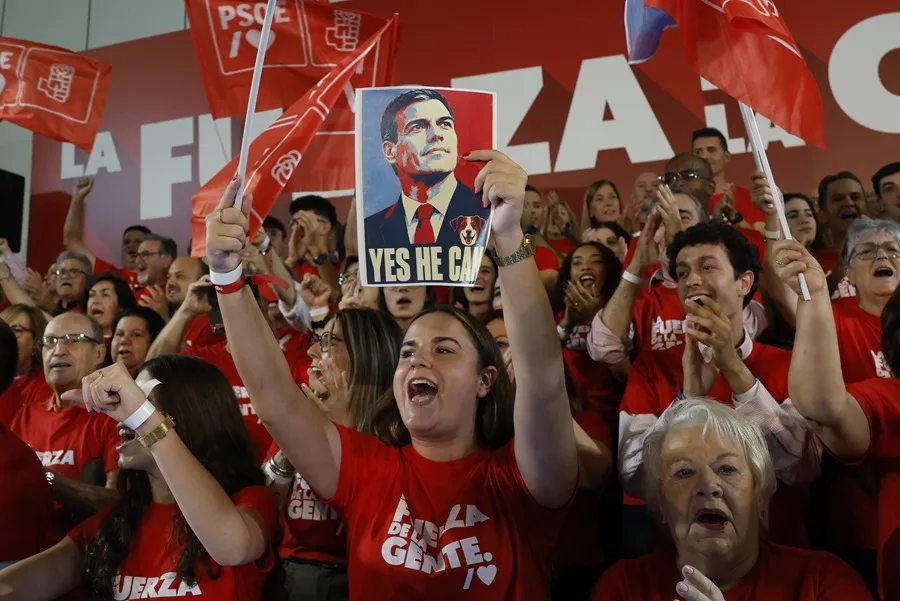
The PSOE’s Federal Committee on Saturday unanimously proclaimed Pedro Sánchez as its candidate for reelection and ratified its candidacies for the Nov. 29 elections.
Territorial leaders showed unity and confidence that they can defeat the polls’ bad omens at the meeting, according to EFE.
For the first time, more women than men will head the lists for the Congress of Deputies, at 52%, and in the Senate the party is also moving toward parity by increasing ten points the percentage of women leading candidacies compared with 2023.
The party’s federal leadership introduced few changes this time to the candidacies submitted by the territories, and the noise generated was much lower than in 2023.
The Federal Committee met shaken by the resignation of its spokesperson, Montse Mínguez, who on Friday decided to leave all her posts after the controversy generated by her partner’s real estate businesses.
Sánchez revealed at a press conference in Brussels that he had asked Mínguez not to resign, but that she was “broken,” and he called her an extraordinary spokesperson and an immense politician. He lamented that politics sometimes mistreats good people.
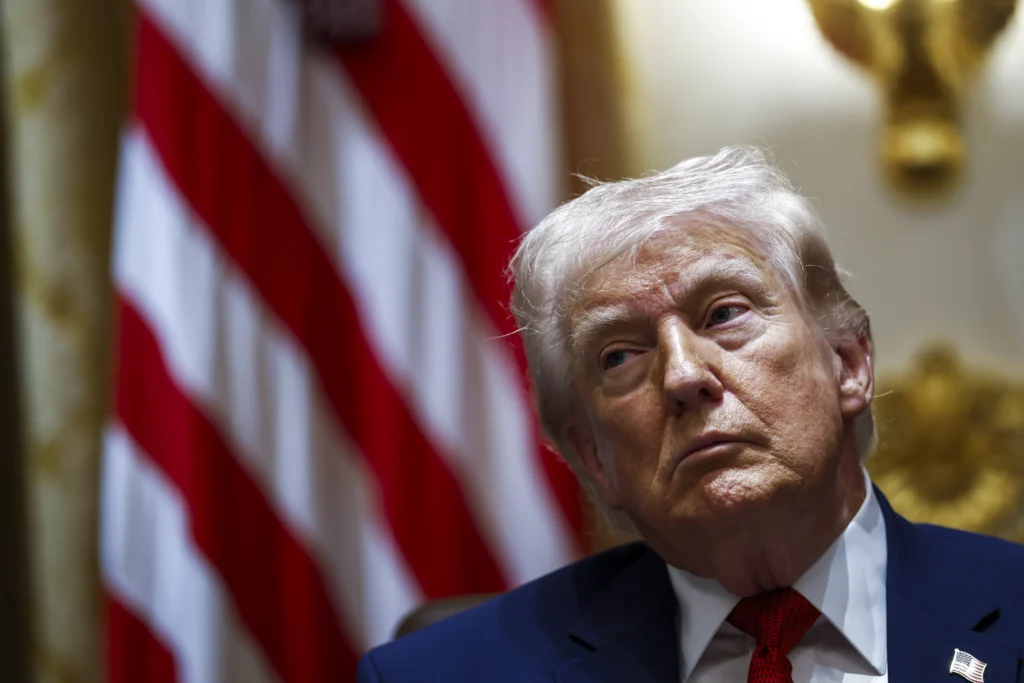
U.S. President Donald Trump signed an executive order Friday temporarily suspending the application of a broad package of sanctions against Russia, arguing before Congress that the measure responds to the national interest.
The decision affects a law named after the late Republican senator Lindsey Graham of South Carolina, which seeks to toughen sanctions against the Russian economy and limit the flow of financial resources.
Trump had enacted that legislation on September 18 but has now temporarily exempted the application of several of its provisions, according to the order.
The order exempts sanctions against persons and entities linked to the Russian government; financial and trade restrictions and tariffs planned for Russian products, and those from certain countries that buy Russian hydrocarbons, according to the order.
The decision does not eliminate the sanctions the United States had already imposed on Russia through previous executive orders.
The exemptions from the new law will remain in force until Trump or the Secretary of State, in consultation with the Secretary of the Treasury and the U.S. Trade Representative,
BIG: Trump waived sanctions targeting Russian fossil fuel sales just days before they were due to take effect.
The measures would have imposed tariffs of up to 100% on goods from major importers of Russian oil and gas.
The decision comes after Washington temporarily authorized commercial operations with Russian-origin diesel until April 7, 2027, including its import into the United States, despite the sanctions in force against Moscow.
Trump announced on October 9 that he had agreed with his Russian counterpart, Vladimir Putin, on the supply of diesel to international markets, with the aim of easing energy and fuel prices.
The Republican president said Russia would initially deliver more than 300,000 tons of fuel and would later supply additional quantities, conditioned in part on the state of its refineries, he said.
The agreement has drawn criticism from lawmakers of both parties, who question its possible effects on economic pressure against Moscow and its compatibility with U.S. legislation, according to the critics.
Detractors warn that revenue from the sale of Russian fuel could help finance the war against Ukraine, while the Administration defends the need to contain energy costs, according to the critics and the Administration.
The Global South Academic Forum is being held in Shanghai this Saturday and Sunday, bringing together prominent political leaders, academics, researchers and media representatives from Asia, Africa and Latin America.
Inspired by the spirit of the historic Tricontinental Conference held in Havana in 1966, the forum commemorates that legacy six decades on and warns that the task of decolonizing the Global South has not yet been completed, according to the forum.
The event’s debates will focus on how to strengthen state governance capacity, social mobilization and institutional innovation through party organizations, according to the forum.
Today in Shanghai, China, I addressed the 2026 Global South Academic Forum, convened under the theme “Global South Political Parties: Governance and Modernisation.”
At the opening, I reflected on the historical struggles that shaped the Global South, particularly the pursuit of… pic.twitter.com/T54hZxJ91R
— Professor Naana Jane Opoku-Agyemang (@NJOAgyemang) October 17, 2026
The official program includes a rigorous analysis structured around various high-level panels, including Governance and Institution Building, highlighting the importance of state capacity and institutional strength as cornerstones of national development in the Global South, according to the program.
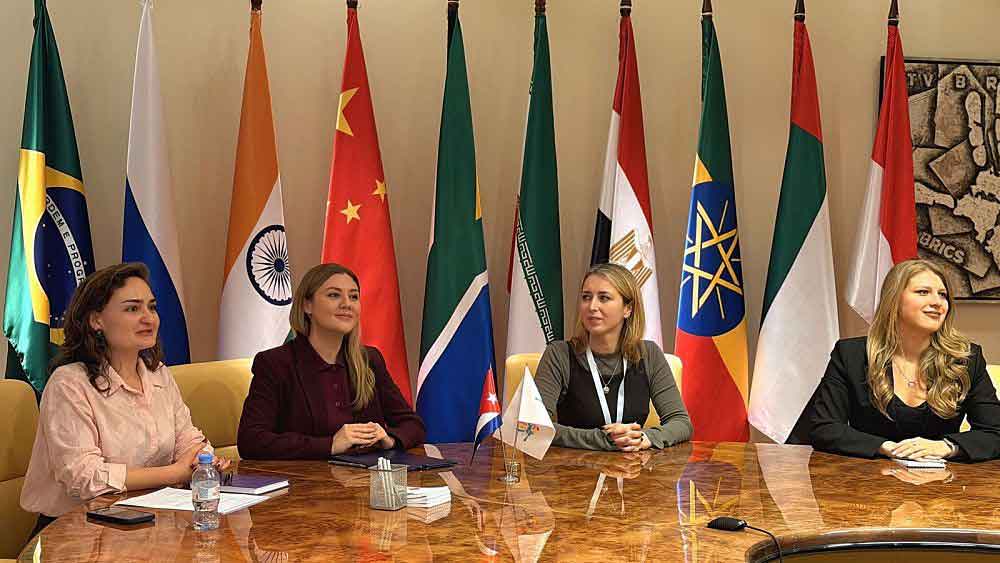
TVBrics and Cuba’s Canal Habana signed a cooperation agreement today to expand their joint content library, Prensa Latina reported.
Under the agreement, the two outlets will exchange content on BRICS countries, develop joint projects and promote quality journalism to strengthen the objective international news agenda of Global South media.
“For the channel it is a real pleasure to begin collaborative work with TVBrics. It is a way to show part of the dynamics of the Cuban capital as a partner of this important association, the BRICS,” Canal Habana director Erduy Varela said. He added that his expectations are to share experiences and ways of doing and communicating television in this new multimedia era.
TVBrics general director Janna Tolstikova said information cooperation between BRICS countries and states sharing the association’s values is important, adding that constructive dialogue between media helps lay the foundations for fruitful cooperation at the highest state level and favors the stability of international relations. She added that TVBrics is open to all countries willing to cooperate on the basis of equality, mutual respect, consideration of national interests and recognition of global diversity.
Tolstikova congratulated Canal Habana on the start of the collaboration, which she said will make Cuba’s cultural richness known to an international audience and offer the channel’s viewers audiovisual content of interest about BRICS and other Global South countries.
Canal Habana, founded in 2006, is part of the state-run Televisión Cubana system. It broadcasts in Spanish throughout Cuba and reports on political, economic, social, cultural and sports news in Havana, as well as major national and international events.
In Cuba, Prensa Latina and Canal Caribe already participate in content exchange through TVBrics. In Latin America, the network also collaborates with media from Argentina, Brazil, Venezuela, Colombia, Mexico, Chile and Uruguay. Among BRICS partner countries, media from Belarus, Bolivia, Vietnam, Kazakhstan, Malaysia, Thailand and Nigeria participate.
U.S. photojournalist Heidi Levine, a contributor to The Washington Post, was hospitalized Friday after being violently attacked by about 80 masked Israeli settlers while covering the olive harvest in the West Bank village of Abu Falah, northeast of Ramallah.
The attackers beat Levine with sticks, kicked her while she was on the ground and stripped her of her cameras, phone and belongings, despite her wearing a marked press vest, according to accounts of the assault.
Speaking from the Ramallah hospital where she was in stable condition, Levine said the attackers pushed her to the ground and kept kicking her, and that her bulletproof vest and helmet likely saved her life.
Reporters at the scene denounced that the Israel Defense Forces (IDF) did not intervene to stop the assault and backed the extremists.
Masked Israeli settlers attacked Palestinian villagers on Friday, setting olive groves on fire and slinging rocks.
The Palestinian Red Crescent confirmed it assisted six people injured during the incursion in Abu Falah, including a Palestinian hit by shots from armed settlers.
The rescue of the reporters and farmers was possible thanks to the resistance of the village’s young people, who responded to the attacks with stones, according to accounts from the scene.
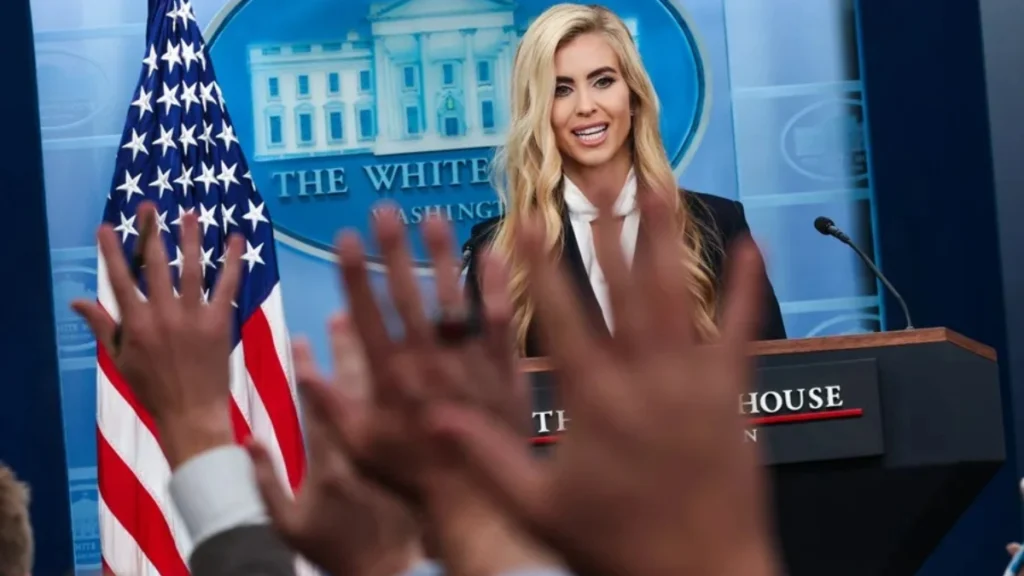
White House press secretary Katie Zacharia resigned Friday after just five days in the job, following President Donald Trump’s advice.
Zacharia’s departure came barely a week after she was named to the post, succeeding Karoline Leavitt, and after a heavily questioned first press briefing before the media.
The crisis was directly linked to doubts about her legal training. After initially announcing her and publicly describing her as a lawyer, questions arose over the past week as to whether she had actually passed the bar exam to practice as such, despite being a graduate of Pepperdine University’s law school in California.
Definitive confirmation of the suspicions came last Thursday, when Zacharia admitted in an interview with Fox News that she had not passed the bar exam. The revelation intensified media criticism and opened an intense debate about vetting and background-check processes at the White House.
Facing the media siege, Trump chose to intervene publicly Friday morning. Leaving the White House, Trump told reporters that he had directly advised Zacharia to reconsider remaining in the job given the hostility of the environment.
President Trump is a kind, wonderful, gracious, thoughtful, enthusiastic, and hardworking man. I wish more Americans appreciated him. No one will ever make America great the way he has and continues to.
Meredith Whittaker è una delle persone più influenti nel mondo dell’intelligenza artificiale, consacrata recentemente dal Time. Dal Vaticano al famoso summit di Davos, questa giovane donna parla del futuro del settore digitale perché lo conosce da dentro. Da sempre critica dei sistemi di sorveglianza e controllo tecnologico, non è così catastrofista sull’intelligenza artificiale e la minaccia contro l’umanità.
“Il rischio c’è ed è reale – afferma Whittaker – ma non è la storia di fantasmi di cui ci parlano giovani esaltati”. Secondo lei, il pericolo risiede nell’uso negligente della tecnologia. “Siamo stati quasi per entrare in guerra con la Cina”, ha detto all’emittente Bbc in riferimento ad un caso nel quale una chatbot usata dall’intelligence americana inventò un’informazione su una nave cinese che trasportava materiale nucleare. Gli Usa erano pronti ad una risposta militare ma nulla era vero.
Laureata in Letteratura e Retorica all’Università della California, Berkeley. Prima aveva lavorato solo dando una mano nei jazz club di Los Angeles dove suo padre suonava il trombone. “Non avevo ambizioni di carriera; è stato tutto molto casuale”, racconta al Financial Times. Nel 2006 Whittaker è entrata a lavorare a Google senza avere ancora formazione nell’area informatica. Whittaker ha fondato Google Open Research, che ha collaborato con diverse realtà sulla questione della sicurezza e le conseguenze dell’uso dell’intelligenza artificiale. “Oggi vedo ragazzi le cui vite sono pianificate fin nei minimi dettagli, minuto per minuto. Deve essere davvero difficile, quando si è giovani e si sta cercando di capire chi si è e quale sia il proprio posto nel mondo”, prosegue.
Nel 2014, un ingegnere in visita da Harvard parlò a Whittaker di un’idea: utilizzare un software di IA per prevedere i genocidi. Lei ricorda che in quel momento ha iniziato ad avere dubbi di natura etica su questa tecnologia: “Mi chiedevo: come si può avere la certezza che sia davvero accurato? E come ci si assume la responsabilità del fatto che una previsione, di per sé, possa far pendere l’ago della bilancia? Che ruolo può avere uno strumento del genere?”.
Tre anni dopo ha saputo del Progetto Maven, un contratto segreto di Google con il Dipartimento di Difesa americano per lo sviluppo di intelligenza artificiale per la localizzazione di obiettivi grazie ai droni. Nel 2018, ha perso il lavoro – ma è stata subito assunta dall’azienda americana Palantir – dopo avere organizzato uno sciopero con 20.000 lavoratori per protestare sulla gestione di molte questioni sensibili, tra cui l’ingerenza della tecnologia in ambiti della quotidianità.
Ora Whittaker è presidente della Fondazione Signal, che gestisce l’omonima app di messaggi cifrati. Signal ha circa 70 milioni di utenti – molto meno rispetto a WhatsApp – ma si vanta di offrire protezione dei dati agli utenti. L’informazione che “viaggia” nei messaggi resta nei propri server, per cui è improbabile che possa arrivare a terzi.
La Fondazione Signal “è finanziata principalmente tramite donazioni e l’applicazione è stata scaricata centinaia di milioni di volte in tutto il mondo”, scrive ilFinancial Times. Per il giornale, Whittaker è “una figura rara nel panorama tecnologico: denuncia gli eccessi del potere aziendale, si scaglia contro quello che definisce un ‘modello di business basato sulla sorveglianza di massa’ e si batte per la tutela della privacy”. “È probabilmente la voce più critica e scomoda della Silicon Valley. Negli ultimi anni è diventata l’antitesi delle Big Tech”, scrive il Financial Times.
Whittaker vive molti mesi all’anno in viaggio. Per mantenere il proprio equilibrio, segue routine ovunque si trovi: prepararsi un caffè aromatizzato con il cardamomo e con una miscela di cicoria e funghi, lezione di yoga (che pratica da 20 anni) e cucinare la cena quando torna a casa, per ritrovare il contatto con la realtà. Legge continuamente libri di storia politica della tecnologia.
Nuova linea del presidente americano Donald Trump sul Venezuela. Dopo una campagna rigida contro la dittatura chavista, il Dipartimento del Tesoro ha sorpreso l’opposizione venezuelana e la comunità internazionale con una decisione senza precedenti. Ieri è stato notificato il ritiro di Jorge Rodriguez, presidente dell’Assemblea Nazionale del Venezuela e fratello della nuova leader del regime, Delcy Rodriguez, dalla lista di persone sanzionate, per cui l’uomo forte della dittatura potrà accedere di nuovo al sistema finanziario americano.
La misura è stata pubblicata dall’Office of Foreign Assets Control, che gestisce i beni stranieri, ma non sono stati spiegati i motivi di questa importante decisione. La scelta di alleggerire la posizione contro alcuni rappresentanti della dittatura venezuelana farebbe parte del riconoscimento del governo americano della gestione di Delcy Rodriguez e del piano di tre fasi per la stabilizzazione e transizione democratica del Venezuela.
Fino a ieri, il fratello di Delcy aveva beni e conti bloccati e non poteva fare business con cittadini americani. Le sanzioni per i Rodriguez sono cominciate nel 2018. Ad aprile sono state ritirate per Delcy e ieri per Jorge.
Rodríguez è uno dei personaggi più conosciuti del regime socialista, già dai tempi di Hugo Chavez, di cui era amico personale, ed è uno dei leader della delegazione chavista nei dialoghi con l’opposizione guidati dall’amministrazione americana. È stato rappresentante del presidente Nicolas Maduro nei negoziati (fallimentari) del 2017, 2019, 2021 e 2022, e anche nel dialogo con gli Usa nel 2024 e nel 2025.
Negli ultimi mesi ha promosso riforme per favorire la relazione con gli Stati Uniti, tra cui la Legge Energetica, anche se in passato lo aveva accusato di ingerenza e violenza contro il popolo venezuelano.
L’opposizione venezuelana lo considera il padre di molte normative che hanno eroso il sistema democratico del Paese sudamericano. Ed è d’accordo anche un report della Missione Internazionale Indipendente delle Nazioni Unite che lo identifica come l’artefice dell’approvazione “nuove leggi restrittive dello spazio civico e democratico senza alcun dibattito genuino e democratico”.
El Recreativo remontó un 0-2 ante el Navalcarnero, igualó el partido en los últimos minutos y selló su pase a la final de la Copa Federación en la tanda de penaltis
Nathanaël Combary è un ragazzo di 18 anni impegnato in politica. È presidente del consiglio di amministrazione del Liceo Renouveau èd è diventato uno dei principali volti della mobilitazione che ha acceso le piazze della Francia.
Dall’inizio delle manifestazioni, Combary si è impegnato a portare avanti la sua visione di trasformazione del sistema scolastico francese. Un’idea simile a quella di giovani esponenti della sinistra, come il giovanissimo Elwan B. (qui l’articolo di Formiche.net), anche se con origini e tendenza diverse.
Come riferisce il quotidiano Le Figaro, Combary da poche settimane non frequenta più le scuole superiori, ma continua a rappresentare gli studenti. È ospite fisso in programma televisioni, dove sostiene le rivendicazioni degli studenti e la prosecuzione del movimento. Si è recato al Ministero dell’Istruzione Nazionale con altri leader di organizzazioni studentesche per chiedere spiegazioni al ministro Édouard Geffray. Ha una posizione più moderata, rispetto ad altri, sulla piattaforma Parcoursup, sistema di ammissione all’istruzione superiore in Francia, e ha preso le distanze dagli episodi di violenza nelle proteste.
Ma la notorietà è arrivata davvero quando sulla piattaforma X, il leader di sinistra Jean-Luc Mélenchon ha definito Combary come un “finto studente liceale orchestrato da BFM (emittente televisivo, ndr) e di essere “pagato senza dirlo dalla Renaissance”. Il leader di La France Insoumise lo ha accusato di denunciare la cooptazione politica del movimento.
Combary aveva iniziato uno stage a fine agosto presso Minerva, un’agenzia diretta da Louis Jublin, ex consigliere del premier Gabriel Attal. Tuttavia, il ragazzo sostiene di aver lasciato questa azienda prima della sua prima apparizione sui media e afferma di non aver “mai nascosto i suoi impegni politici”.
Ces dernières heures, j’ai reçu des centaines de messages d’insultes et de menaces. Je vois ce qui est écrit sur moi, jamais je n’aurais imaginé un tel déferlement au sujet de mon engagement en faveur de la jeunesse.
Je souhaiterais y réagir.
Je suis en effet adhérent au parti Renaissance, je ne l’ai jamais caché.
Renouveau lycéen a été fondé en 2021 par des jeunes venus de tous les horizons politiques : LFI, NPA, LR, PS, Renaissance, mais aussi des jeunes sans parti ou simplement peu intéressés par la politique. Nous partageons une charte de valeurs commune et, malgré nos différences, nous travaillons ensemble. Nous nous sommes réunis parce que nous refusons l’idée qu’il faille choisir un camp pour avoir le droit de défendre les lycéens. Notre seul combat, c’est la réussite des élèves, partout en France.
Je ne suis effectivement plus lycéen : je suis étudiant depuis la rentrée 2026. J’ai continué à porter la voix des lycéens, c’est parce que les nouveaux représentants lycéens ne sont toujours pas élus. Comme chaque année, il est d’usage d’attendre que les élections des Conseils de Vie Lycéenne se soient déroulées pour renouveler les dirigeants des organisations lycéennes. C’est le cas pour le président de l’Union Syndicale Lycéenne comme pour le président de l’association Les Lycéens!.
Enfin, je ne suis pas communicant pour Minerva. J’y ai commencé un stage le 31 août 2026 et, avant ma première prise de parole, j’ai cessé mon activité de stagiaire au sein de cette entreprise.
Je n’ai jamais caché mes engagements.
Je continuerai à défendre mes convictions et la cause lycéenne avec la liberté que Renouveau Lycéen me permet d’avoir, ce qui n’est pas le cas partout.
La Russia è sotto attacco. La piattaforma Yandex, motore di ricerca analogo a Google, è rimasto inabilitato in molti dei suoi servizi a causa di una serie di attacchi con droni ucraini. I data center delle regioni Rjazan’ e Kaluga sono rimasti danneggiati, impattando gli strumenti di pagamento Yandex Pay e le app per la ricerca di taxi Yandex Go e Yandex Pro.
Secondo il media lettone Meduza, ripreso dalla Bbc, hanno registrato disservizi anche l’applicazione Yandex Food, la “nuvola” Yandex Disk, la piattaforma di streaming Kinopoisk, Yandex Music e l’assistente di intelligenza artificiale Alisa.
Catene farmaceutiche, di fast food e di agenzie immobiliare, così come le reti Magnit, Lenta, M.Video e Lamoda e l’aeroporto San Pietroburgo, hanno presentato problemi di gestione per l’attacco informatico.
Arkadiy Volozh, fondatore e direttore di Yandex, aveva dichiarato nel 2017: “In Occidente vi piace chiamarci il Google della Russia, ma siamo più di quello: siamo l’Uber della Russia, lo Spotify della Russia e molte altre cose”.
La compagnia sostiene che l’emergenza è rientrata e che progressivamente si sta tornando alla normalità. Secondo gli esperti, il recupero non sarà così veloce. “Se sono rimasti danneggiati soltanto i sistemi di alimentazione e refrigerazione, il restauro impiegherà settimane. Se invece sono stati colpiti i server, si parla di mesi”, ha spiegato un esperto a BBC Monitoring.
L’episodio ha lasciato comunque in evidenza la vulnerabilità delle infrastrutture digitali della Russia e le difficoltà che avrà il presidente Vladimir Putin per raggiungere l’ambita “sovranità della rete russa”.
La quotidianità russa si regge su molti strumenti dell’intelligenza artificiale. YandexGPT è uno dei sistemi di IA più importanti della Russia. Nato nel 1990, Yandex è stata creata da Yandex.ru e da quel momento si è sviluppata come una delle compagnie di internet più importanti del mondo.
Il presidente ucraino Volodymyr Zelensky ha affermato che gli attacchi ai data center russi sono riusciti a ridurre significativamente l’attività dei bot e della propaganda anti-Ucraina. Durante un intervento al Forum di Sicurezza a Varsavia, il leader ucraino ha detto che da quando hanno cominciato “a rispondere all’operazione della Russia contro i nostri datacenter, finalmente si può cominciare a respirare in molte piattaforme social”.
 Login