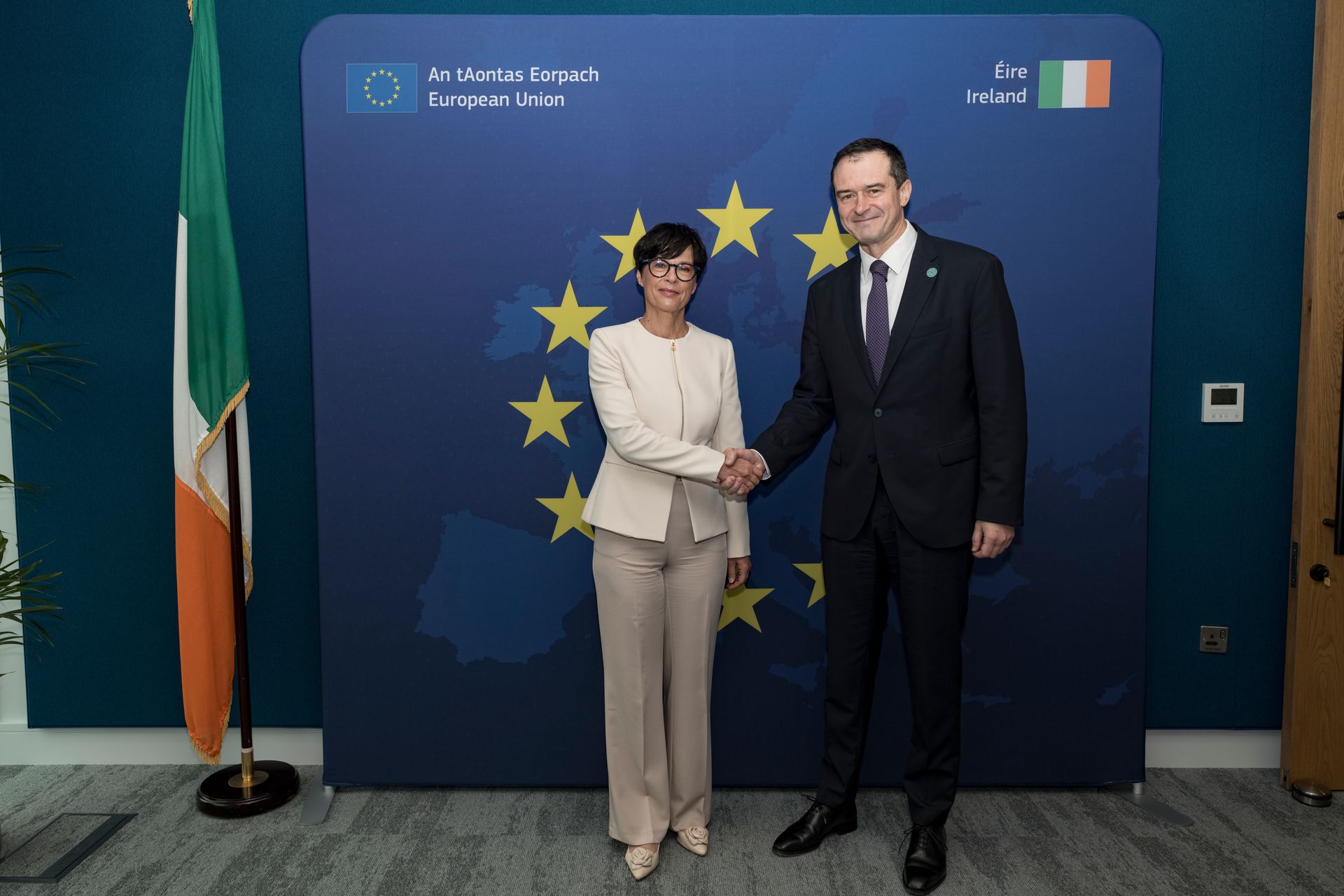
The EU has demanded a reform of Ukraine's notoriously corrupt and politicized prosecution service and called for making the procedure for picking the prosecutor general less political and more merit-based. Meanwhile, anti-corruption activists and pro-reform lawmakers have accused the Ukrainian authorities of sabotaging rule of law reforms and resisting the demand for depoliticizing the Prosecutor General's Office.
New probe examines financial transactions, ties to lawyer Tomaz and payments for the senator’s trips to Europe.
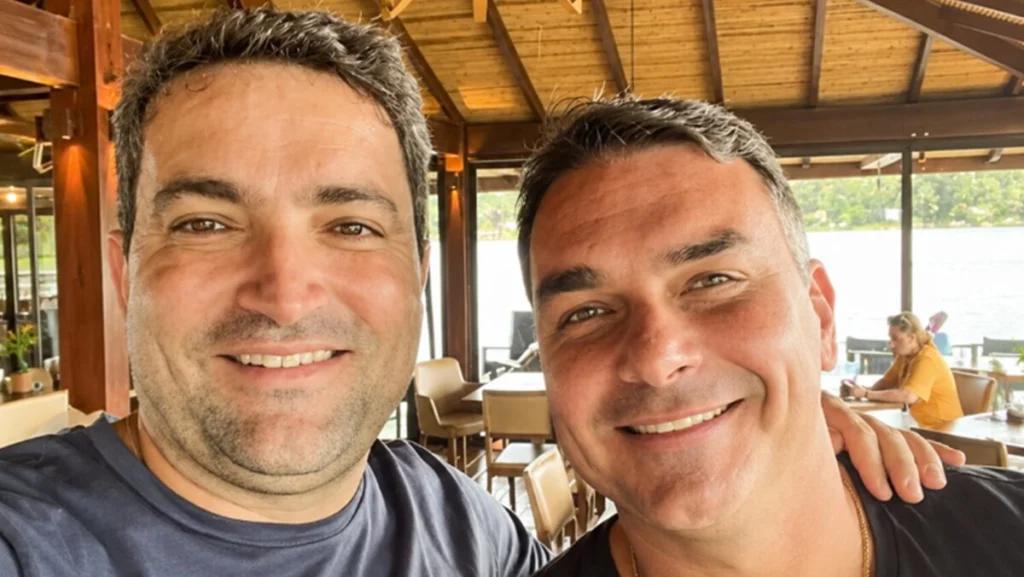
On Sunday, newspapers Estadao and Folha revealed for the first time that the Brazilian Federal Police had sent a new investigation to the Supreme Federal Court (STF) to examine suspicions of money laundering involving presidential candidate Flavio Bolsonaro and lawyer Willer Tomaz.
The investigation seeks to clarify the relationship between them and possible irregularities in financial transactions detected during another probe related to the movement of capital through betting activities.
The journalistic revelation came hours before a televised presidential debate in which Workers’ Party leader Lula da Silva challenged the far-right senator to authorize Brazilian authorities to examine his bank accounts and phone so the Brazilian people could learn the origins of his personal wealth and his family’s fortune. Flavio Bolsonaro refused to do so.
On Oct. 8, the case file for the new investigation arrived at the Supreme Court and was assigned by lottery to Justice Alexandre de Moraes. Previously, he oversaw the case that ended with a 27-year prison sentence for coup plotting against former President Jair Bolsonaro, Flavio’s father.
Brazil’s election offers a simple choice: Governance from Brasilia or from Washington.https://t.co/TORegJQvQK
De Moraes was also the justice responsible for the proceedings in which Eduardo Bolsonaro, the far-right presidential candidate’s brother, was sentenced to four years in prison for attempting to coerce judges and orchestrate U.S. sanctions against Brazil to obstruct the case against his father.
According to investigators, an analysis of data extracted from digital files linked to lawyer Willer Tomaz revealed records indicating a close relationship between him and Flavio. Items found in the material examined by the Federal Police included references to meetings, parties and gatherings, as well as the lawmaker’s personal documents.
The investigation also indicates that a bank account linked to Willer Tomaz recorded transactions totaling about 130 million reais between March and May 2025. Investigators seek to establish the origin and destination of these funds, as well as verify possible connections to companies and financial operations related to the betting sector.
The case also includes information about payments for Flavio’s trips to Europe and an account linked to Alcazar Holding, in which the senator was identified as the “master user.” Both Flavio and Willer deny any wrongdoing and say their relationship is one of “friendship.”
by Martin Armstrong, Armstrong Economics: Look, I am warning our European readers: Brussels is desperate. They are scared to death of the AfD in Germany and of Marine Le Pen in France, who is at about 46% in the polls at this time for the April 2027 election. This means Brussels will create some sort […]
by Cullen Linebarger, The Gateway Pundit: The Islamo-Marxist riots in France have completely exploded after weeks of mayhem and are threatening President Emmanuel Macron’s home. As The Daily Mail reported, thousands of violent protesters overturned cars, set buildings ablaze, and attacked police across the country. The worst violence arguably occurred in Lyon. There, a tourist […]
by Kurt Zindulka, Breitbart: The French government has accused the far-left of stoking the riots that engulfed the nation on Saturday, resulting in widespread clashes with police, looting of shops, as well as vandalism and arson of government buildings. What began last month as a small protest over teacher shortages at a school in the Créteil […]
from Birch Gold Group: Your News to Know rounds up the most important stories about precious metals and the overall economy. This week, we’ll cover: Bank of America, Natixis and Metals Focus see gold pushing higher next year… …but I want to talk about $3,100 instead Reminder: Silver is still nonsensically undervalued IMF issues urgent […]
by George F. Smith, Lew Rockwell: Where is it written in the Constitution, in what article or section is it contained, that you may take children from their parents, & parents from their children, & compel them to fight the battles of any war, in which the folly or the wickedness of Government may engage […]
I went to witness the riots in Paris. I’m going to tell you the truth: it was only young people from African immigrant backgrounds who came to attack our police officers and firefighters, loot our shops, and destroy everything. An elderly French couple in their 80s was robbed and left in their underwear in the […]
Mexico’s government criminally charged and arrested the former attorney general of the border state of Chihuahua. The arrest was not for corruption, drug trafficking, or ties with organized crime. Rather, he is being prosecuted for having worked with U.S. agencies to investigate and fight drug cartels in his state.
by Martin Armstrong, Armstrong Economics: The Neocons have won. They have successfully shifted the blame for the Ukraine war entirely onto Russia, and 99% of media coverage now frames the invasion as completely unprovoked. Their hatred of Trump is so intense that they feel compelled to oppose him on principle, regardless of what he does. […]
by Joseph P. Farrell, Giza Death Star: By now we’re probably accustomed to the increasing stories of artificial intelligences not doing what they’re told to do. Artificial intelligences have been caught blackmailing their human “controllers”, programming themselves to do things they were not supposed to do, breaching firewalls, and so on, and yet, we’re being asked […]
from Sputnik News: The Russian army has carried out a massive strike with high-precision ground-, air- and sea-based weapons and strike UAVs on metallurgical plants, a transformer enterprise and an energy facility in the Ukrainian cities of Krivoy Rog, Zaporozhye and Zhitomir. ▫️ In the city of Krivoy Rog, a metallurgical plant was hit — […]
by Matt Agorist, The Free Thought Project: Drug ads are master classes in how to exaggerate the severity of a condition, extoll the benefits of a product, downplay the harms and plant the “Ask Your Doctor” message. Probably the biggest harm of direct-to-consumer advertising of drugs is how it undermines the clinical firewall between doctors […]
from SGT Report: This is NOT satire: Doanld J. Trump is now considering Laura Loomer as the next White House Press Secretary after lyin’ “Lawyer” Katie Zacharia got the boot after just a week. Trump called Loomer ‘brilliant’ in a Truth Social post about Loomer who is lobbying for the position. It’s just par for […]
by OffGrid Survival, Activist Post: Texas Gov. Greg Abbott declared a statewide disaster Monday over diesel prices. In the same stretch, at least 16 trucking companies landed in bankruptcy court, Iowa farmers started saying out loud that they might lose family farms, and on Tuesday the Conference Board reported that Americans’ confidence in the economy […]
Ukraine and the EU have agreed to establish a joint working group to accelerate rule-of-law and anti-corruption reforms. This will help Kyiv meet the interim benchmarks for EU accession, Enlargement Commissioner Marta Kos says on X after talks with Ukrainian Prime Minister Serhii Koretskyi.
Ukraine’s path into the EU runs through its courts and anti-corruption agencies, and the bloc releases membership progress and much of its money only as Kyiv delivers those reforms.
“Ukraine is among the countries making most progress towards EU membership,” Kos says, adding that the group will work through outstanding requirements on the rule of law and the fight against corruption.
The move follows a breakthrough on the accession track. On 13 October, the Council of the EU opened two more negotiating clusters for Ukraine after the Ukrainian Parliament passed a minority-language education law on 12 October, clearing Hungary’s veto.
Why the reforms decide the money and the timeline
The group lands amid pressure on both fronts. Kos cast the education law as proof the system can work, crediting Ukrainian lawmakers with the consensus needed to adopt the reforms membership requires.
Meanwhile, Koretskyi expects the remaining clusters to open by the end of the year.
“Our success will require unity and commitment from all involved Ukrainian partners,” Kos emphasizes.
The official made clear the outcome depends on Ukraine keeping its side. The reforms are the same ones tied to Ukraine’s wartime financing, with billions in EU aid released only as Kyiv meets its commitments.
Billions in EU money hang on laws Ukraine has not passed
The stakes are financial as well as political. Ukraine is deep in a budget crunch and leaning on EU financing to keep the country running, and the Ukrainian Parliament returned from a month-long break this week to work through reform bills tied to that support.
As of 12 October, none of the needed laws had passed, according to anti-corruption activist Vitaliy Shabunin, who said the delay is already costing the country and blamed lawmakers who have stalled the reforms the money is tied to.
“As of today, Ukraine has NOT received several BILLION euros from the EU and others, because members of parliament have blocked the reforms to which that money is linked,” Shabunin said.
by John Walter, John Walter: At 12:33 on the afternoon of 28 April 2025, mainland Spain and Portugal lost their electricity supply. Red Eléctrica de España, the Spanish transmission operator, logged the loss of about fifteen gigawatts of generation — close to sixty per cent of Spanish demand at that moment — within seconds. Supply […]
from 21st Century Wire: Most meaningful conversations questioning what drives the malign forces controlling our planet do not examine the degree to which political, military and religious leadership has chosen to turn to dark, and Satanic forces—in their craving for absolute power, prestige and wealth. After saturation of the ‘official’ version of the events of […]

 Login