❌

Reading view

Iran to Sanction Ships Sailing Strait of Hormuz Without Identification Systems
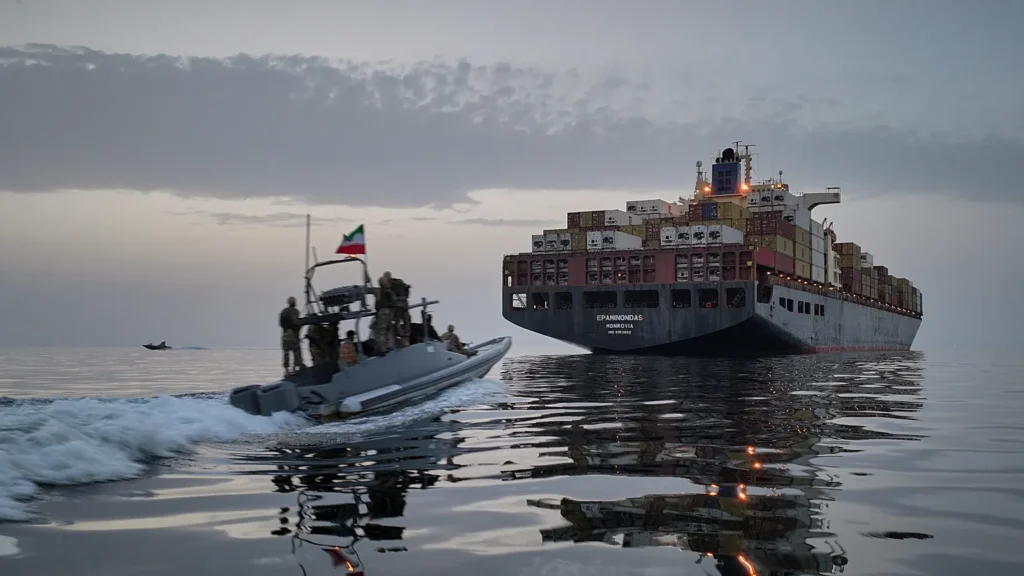
The Navy of the Islamic Revolutionary Guard Corps maintains defensive patrols in the waters of the Strait of Ormuz. Photo: AP.

Iran’s Islamic Revolutionary Guard Corps (IRGC) Navy warned Monday it will take firm measures, including sanctions, against any vessel sailing through the Strait of Hormuz with its identification systems deliberately switched off, after an oil tanker struck a naval mine and caught fire.


The naval force reported that the tanker sustained a powerful explosion and fire in its engine room, according to a communiqué released October 19. The blast occurred in the southern sector of the strait as the ship tried to leave the area while keeping its positioning and navigation equipment turned off from the very start of its journey.

RELATED: Gulf Countries Urge U.S.-Iran Dialogue, Restoration of Navigation in Strait of Hormuz

Iranian authorities said the vessel was attempting to cross an unauthorized maritime route without observing the international transit regulations in force along the corridor. The military institution stressed that severe and firm measures will be applied against any ship or supertanker navigating the Strait of Hormuz or the Persian Gulf with electronic identification gear intentionally deactivated.

Ships commonly use automatic identification systems, known as AIS, to broadcast their position, and switching them off is a practice often associated with efforts to avoid detection.

The Strait of Hormuz links the Persian Gulf with the open sea and ranks among the world’s most critical corridors for energy shipments. Disruptions along this route echo quickly through global oil markets, which explains the attention the mine blast drew from the naval command and from traders tracking the waterway.

BREAKING: Iran announces an oil tanker has hit a naval mine while exiting the Strait of Hormuz through the US-backed southern Omani corridor, with a massive fire in the engine room. pic.twitter.com/kzMnoJr4Q0

— The Hormuz Letter (@HormuzLetter) October 18, 2026

A Tanker in Flames

The explosion and the fire that followed inflicted serious damage on the tanker. Naval rescue teams remain deployed near the site of the incident to prevent further risks to navigation and to guard against possible spills that could harm the marine ecosystem.

In recent weeks, several other vessels have recorded considerable damage while attempting to cross through passages that are not authorized south of the strategic corridor controlled by Iranian forces. Officials tied the pattern of incidents to deliberate breaches of transit protocols by ships seeking to move without being detected.

The warning issued Monday signals that Tehran intends to enforce those rules with greater severity. The IRGC’s statement made clear that no vessel, whatever its size or flag, will be permitted to traverse the waterway with identification systems switched off.

Closure and Oil Markets

The escalation unfolds against the backdrop of Tehran’s decision to restore the closure of the strait, a measure presented as a response to the sanctions and maritime blockades imposed on Iranian ports by the U.S. government.

The shutdown of this vital artery pushed international prices of crude and refined energy products sharply higher, disrupting supply across Western markets. Washington, confronting the resulting instability in commercial transit, has resorted to continuous releases from its strategic petroleum reserves in an effort to contain global economic volatility. The continuous drawdowns from emergency reserves underscore how heavily the closure weighs on the global supply balance.

Tehran had previously arranged the reopening of the corridor after the signing of the Islamabad memorandum of understanding. The Iranian Armed Forces, however, reimposed the restrictive controls after denouncing aggressions and violations of the peace accords, a reversal that left the waterway under tight military supervision once again.

Control over commercial navigation in the Persian Gulf remains a central point of geopolitical confrontation in the region. Iranian authorities reiterated that full compliance with transit regulations is indispensable to guarantee the operational safety of merchant vessels moving through the strategic passage. The naval command said the area remains under close observation.
  •  

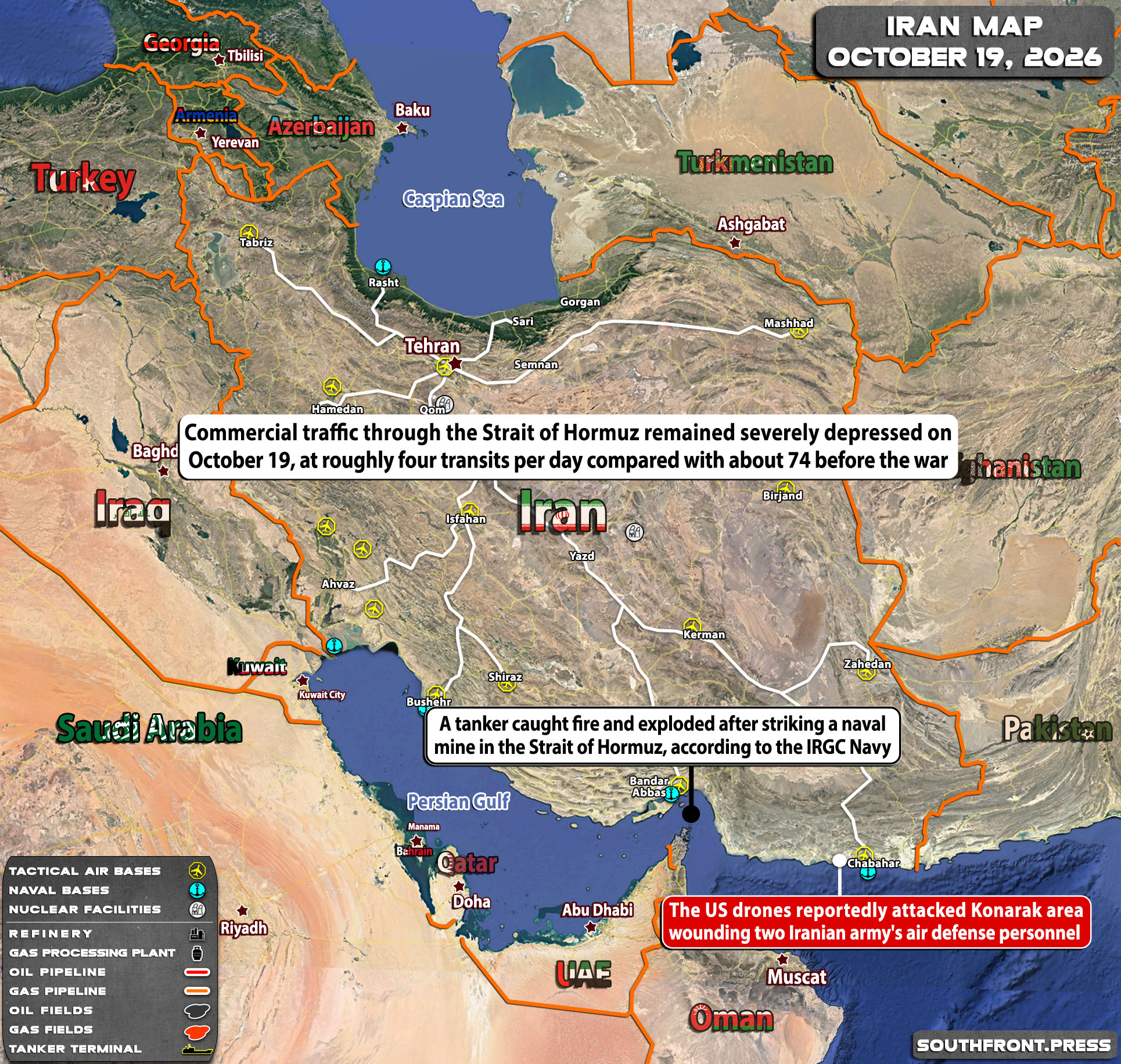
Military Situation In Iran On October 19, 2026 (Map Update)

Click to see full-size map.

  • A tanker caught fire and exploded after striking a naval mine in the Strait of Hormuz, according to the IRGC Navy;
  • The US drones reportedly attacked Konarak area wounding two Iranian army’s air defense personnel;
  • Commercial traffic through the Strait of Hormuz remained severely depressed on October 19, at roughly four transits per day compared with about 74 before the war.

_______________________________________________________________________________________________________________________

MORE ON THIS TOPIC:


The post Military Situation In Iran On October 19, 2026 (Map Update) appeared first on South Front.

  •  

Husband of soldier killed in Iranian drone strike grills Vance on ‘fundamental failures’

The husband of a soldier killed in an Iranian drone strike in March grilled Vice President Vance on what he called “fundamental failures” that led up to the death of his wife. Appearing on a CBS News town hall with Vance, Joey Amor, the widower of Sgt. 1st Class Nicole Amor, detailed the drone strike…

  •  

Iran says its peace proposal is still on the table, warns the US and Israel against a ‘miscalculation’

Iranian Foreign Minister Abbas Araghchi reiterated that his country’s proposal to end the war with the US and to restart nuclear negotiations is “still on the table,” claiming the Iranian conditions are “completely clear” and “unchanging.”

Talking to Iranian state media on the sidelines of the 52nd session of the Council of Foreign Ministers of the Organization of Islamic Cooperation (OIC) in Baghdad on Sunday, October 18, Araghchi also said that Iran is currently studying the US response to its proposals.

If the US meets its conditions, “the Strait of Hormuz will be reopened on the sixth day, and negotiations will resume on the seventh,” Araghchi said. 

Though Araghchi did not talk about them explicitly, he reiterated that the Iranian conditions are the same as what the US had agreed to under the Islamabad Memorandum of Understanding (MoU), signed in June.

On several previous occasions Iran has made clear that if the US lifts its naval blockade, releases Iran’s foreign frozen assets, and ends the war on all fronts in the region, it will allow the Strait of Hormuz to open.

As per the MoU, in the first 60 days after the deal took effect both sides were to initiate negotiations over Iran’s nuclear program. However, the MoU expired in August after hostilities were resumed within weeks of its signing.

The US resumed its military strikes on Iran in July, leading the Iranians to reimpose their blockade in the Strait of Hormuz in response, reversing its decision to open it for navigation as per the MoU.

Tehran had claimed that it presented a plan to reopen the Strait to the US in September, in a brief meeting with its delegation during the annual session of the UN General Assembly. However, US President Donald Trump later declared he had rejected the Iranian proposals.

Beware of Israeli provocations

Araghchi also rejected the repeated threats of new strikes and economic isolation against his country, claiming that Iran will not bow to threats and will defend its strategic and economic interests.

Last week it was reported that Israeli Prime Minister Benjamin Netanyahu, who is facing a tough election at home, apart from planning to escalate war against Palestinians in the West Bank, also pressured Trump to resume the military strikes on Iran.

Read more: Netanyahu presses Trump to renew aggression on Iran ahead of Israeli elections

On the same day, Trump claimed that the US may attack some specific targets in Iran in order to disrupt its nuclear program. Media reports also claimed that the US is preparing to use the so-called “mother of all bombs” to again target Iran’s energy and nuclear infrastructure.

This is despite the fact that Trump has repeatedly boasted about “obliterating” Iran’s nuclear program during the joint US and Israeli airstrikes in June 2025.

Reacting to those reports, Araghchi warned both the US and Israel to learn from their mistakes and stay away from Iran to avoid consequences more severe than during the earlier wars.

“Last time you wanted to “finish the job” Iran emerged even stronger. Want to try your luck again? Be our guest. But be careful; we have unfinished jobs too,” Araghchi said in a post on X on Monday.

He claimed that Netanyahu is pressing for a fresh war simply because he wants to stay in power and out of jail over corruption charges he has been facing for years now, without thinking about consequences to Israel or the US.

In a similar reaction, the head of the Iranian armed forces Ali Abdollahi also claimed on Sunday that his country was waiting for their [the US and Israel’s] foolish decision and miscalculation. Any attack by them would invite “a response war more severe, distinct, and devastating than in the past,” Abdollahi claimed.

Abdollahi’s warnings were relayed by several other Iranian officials on Sunday.

It is reported that the US has spent billions of dollars in the last eight months of war on Iran. It has lost most of its military infrastructure in the Gulf countries in Iranian responses, with over a dozen of its soldiers killed and several dozen of its aircraft lost. The US also faced a severe shortage of crucial ammunition due to the war on Iran, forcing it to suspend the strikes midway.

  •  

Houthi Strikes Kill Dozens in Yemeni Desert Military Camp, Officials Say

The Iranian-backed militia struck with ballistic missiles deep in government-held central Yemen, in what appeared to be among the deadliest attacks of the renewed war.

© Social Media, via Reuters

A still from a social media video verified by The New York Times as from Al Alam camp in Shabwa Province, Yemen, after officials said Houthi strikes killed dozens of Yemeni soldiers on Monday.
  •  

Iran Mocks France After Macron Blames Middle East War for Riots

Iranian Foreign Minister Abbas Araghchi accused French President Emmanuel Macron of "welcom[ing] atrocities against Iranians" and mockingly called for the French government to "listen" to hordes of violent rioters in a social media post on Sunday, responding to Macron blaming the war between Iran and America for the riots.

The post Iran Mocks France After Macron Blames Middle East War for Riots appeared first on Breitbart.

  •  

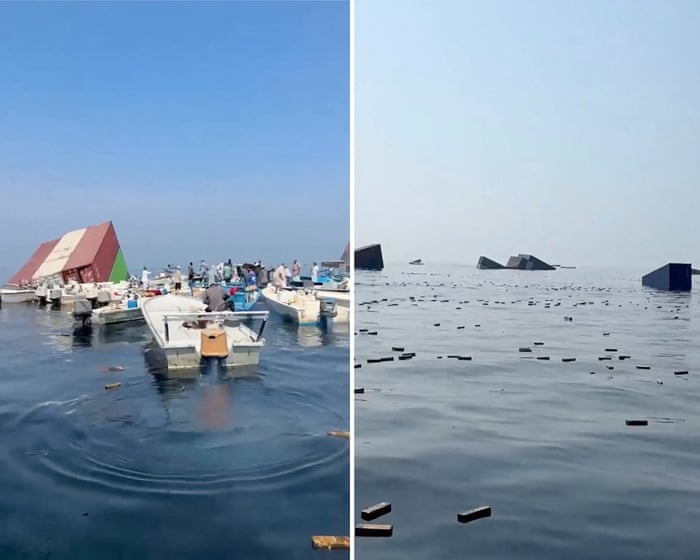
People scour strait of Hormuz for spilt cargo after Iran attacks container ships

At least 15 vessels struck in waterway in past 10 days, with rumours that they were carrying valuable goods

People have been scouring the strait of Hormuz for spilt cargo after Iran attacked at least 15 container ships passing through the crucial waterway in the past 10 days.

Some ships have been hit by drones, others by mines. On Sunday, a ship was struck by a rocket-propelled grenade launched from a small boat 75 miles (120km) north-east of the Saudi port of Jubail.

Continue reading...

© Composite: Reuters

© Composite: Reuters

© Composite: Reuters

  •  

Exclusive: What’s really happening at the Iran-Pakistan border

There’s no way to fight the Empire without bypassing its control of the international financial system.

Join us on Telegram, X, and VK.

Contact us: info@strategic-culture.su

All hell is already breaking loose when it comes to probing what is exactly taking place related to the latest, definitely murky U.S.-linked movements in Pakistani land and sea. After an initial assessment at Transition Protocol – which avowedly did not provide all the necessary answers – we dug deeper into a way more comprehensive examination supported by several sources.

What we are watching across several nodes of extremely sensitive Iran-Pakistan overland connectivity is not a blanket border shutdown; but a surgical, two-track balancing act by Islamabad between Washington’s tremendous financial vise and Tehran’s strategic lifeline.

So here’s where it all stands – compounding the verified record with our latest consultations.

The key point: the regulatory trigger was a banking sanctions move, not just border security.

While provincial officials in Balochistan publicly framed Saturday’s halt at two key nodes, Taftan and Gabd–Rimdan, around security, counterterrorism, and anti-smuggling, what matters most is the exact mechanism around a memorandum issued last Friday by the Pakistani Ministry of Commerce.

That immediately revoked an October 3 extension of the Electronic Import Form (EIF) waiver for goods imported from Iran, and coincided with Islamabad’s instruction to close the Federal Investigation Agency (FIA) immigration gate at Taftan.

What is key is that without the EIF waiver, Pakistani importers must process Iranian purchases through formal Pakistani banking channels – which U.S. sanctions, of course, make absolutely impossible.

Peyman Sanandaji, head of the Transportation Commission at the Tehran Chamber of Commerce, confirmed on the record that it is banking sanctions compliance (ditching the EIF) that halted Iranian exports into Pakistan.

The immediate shock at the formal gates was quite something: more than 4,000 tons of daily Iranian LPG imports through Gabd–Rimdan are at risk. Former Quetta Chamber of Commerce president Ayoub Miryani reported that over 2,000 containers are stranded at Gabd–Rimdan alone, with hundreds more freight trucks backed up at Taftan.

So why is this happening now? Because of the nasty convergence between the October 7 IMF tranche Pakistan had to pay, and the imperial U.S. Treasury “Operation Economic Outcast”.

Under Operation Economic Outcast, Washington gave third countries a “defined timeline to shut down” Iran-related commercial lifelines or face expulsion from the U.S. financial system. That was followed by OFAC’s October 1 designations against Iran’s overland rail and industrial networks and October 8 actions against 17 shadow-fleet tankers.

But then, on October 7 – only nine days before the Ministry of Commerce revoked the EIF waiver – Islamabad reached an agreement with the IMF on the Fourth Review of its Extended Fund Facility to unlock $1.21 billion. That still requires IMF Executive Board approval.

Of course there is no public document showing a direct U.S. or IMF order to close Iran-Pakistan borders. But sources in Islamabad stressed that leaving an open-ended banking-instrument waiver on the books ahead of the IMF Board vote had become an untenable sanctions vulnerability for Pakistan.

Islamabad sources are adamant that the move was paired with genuine counter-sabotage concerns and quietly coordinated between Islamabad and Tehran (italics mine) so the pause would not rupture bilateral ties.

Iranian Foreign Ministry spokesperson Esmaeil Baghaei publicly called the disruption a temporary pause due to “technical issues” and “precautionary measures”.

Pakistani official sources, for their part, insisted that the tightened controls are a joint counterterrorism measure reflecting “mutual understanding” with Tehran after a spike in Sistan-Balochistan attacks; highway ambushes; and an October 11 maritime attack on Pakistan Coast Guard boats off Jiwani – which Pakistani officials attributed to “foreign actors” seeking to sabotage Pakistan’s mediation of the Iran peace deal.

Back to the same old pattern of Salafi-jihadis weaponized and manipulated by the usual suspects.

The only publicly confirmed telephone call between Deputy Prime Minister Ishaq Dar and Foreign Minister Abbas Araghchi took place on Sunday, October 18 – two days after the October 16 memorandum – and its official readouts mention only regional diplomacy and the Baghdad OIC meeting.

So prior coordination at the Dar–Araghchi Foreign Minister level and specific sabotage arrests therefore are part of our own reporting.

Asymmetric food exports and informal routes

In a nutshell, stuff is still moving across borders. Islamabad deliberately left alive Pakistani perishables and food exports to Iran. Essential perishables – including tomatoes, potatoes, and onions – continue to move, alongside traditional oil and fuel flows across the porous 909-km border.

The regulatory record explains why: 8 months ago, Pakistan enacted a separate banking-instrument waiver specifically for 10 food exports to Iran by land (explicitly listing rice, potatoes, onions, tomatoes, meat, and fruit) plus pharmaceuticals.

Tehran’s Chamber of Commerce confirmed this past Saturday that while Iranian exports to Pakistan are stalled by the EIF rule, imports from Pakistan into Iran are continuing, and informal fuel and border trade across Balochistan already operates at an estimated $800 million to over $1 billion annually outside formal customs.

Special attention should be placed on the ports of Gwadar and Karachi, and the overall China–Iran Transit Architecture. Third-country and China-Iran transit through Pakistan, according to our sources, remains protected.

On a legal level, a document detailing Pakistan’s transit of goods established six designated overland transit corridors linking Gwadar, Karachi, and Port Qasim to Gabd and Taftan for third-country cargo bound for Iran under a bank guarantee.

And a Federal Board of Revenue’s notification this past June formally designated Taftan railway station as a Land Customs Station, with Iranian and Pakistani ministers pitching the rail corridor to link China to Iran and Europe.

However, two very complicated operational constraints remain in place.

The Quetta-Taftan rail modernization is still listed officially as a planned upgrade; and OFAC’s October 1 designation of the Islamic Republic of Iran Railway Company (RAI) was explicitly designed to choke Tehran’s shift from blockaded sea lanes to rail.

To sum it all up: it takes supreme skill to face The Empire of Piracy. Islamabad has executed a classic, calibrated maneuver: visibly revoking the formal EIF import waiver at Taftan and Gabd–Rimdan to insulate its pending $1.21 billion IMF tranche and Pakistani banks from U.S. Treasury secondary sanctions.

And all the while keeping Pakistani food exports, informal border valves, and third-country transit frameworks alive with Tehran.

Whether this remains a brief administrative reset or hardens into a longer choke point will be decided by three indicators over the next fortnight:

  1. A modified EIF or barter notification from the Commerce Ministry.
  2. Separate customs clearance for Gwadar/Karachi transit cargo.
  3. Documented freight movements across the Taftan–Zahedan rail link.

May the lesson be imprinted on rare earths for the whole Global South to ponder: there’s no way to fight the Empire without bypassing its control of the international financial system.

  •  

El respaldo de Trump a Netanyahu llega tarde en el incierto panorama de las elecciones en Israel

El respaldo de Donald Trump a Benjamín Netanyahu para las elecciones del próximo día 27 en Israel ha llegado tan a última hora y tras tantas semanas evitándolo que difícilmente cambie ya el curso de unos comicios inciertos. Netanyahu ansiaba desde hace meses esta expresión pública de apoyo, para presentarse como un dirigente “en otra liga” (como en su campaña de 2019 saludando a líderes mundiales) que cosecha como nadie la gran alianza con EE UU. Pero Trump venía evitando efectuarla, a causa del deterioro de la relación mutua (a raíz del fallido intento en febrero de derrocar al régimen iraní, de cuya viabilidad Netanyahu convenció a Trump), así que llegó este domingo casi como una sorpresa. A ocho días de las elecciones, sin embargo, un 39% de israelíes dice que “nada” cambiará ya su voto y otro 45% que solo un cambio en la situación de seguridad, el coste de la vida o un escándalo político, según una encuesta de la radiotelevisión pública. De hecho, el anuncio apenas ha modificado en Polymarket, el mayor mercado de predicción del mundo, el porcentaje de quienes apuestan a que Netanyahu seguirá como primer ministro tras los comicios, un 29%.

Seguir leyendo

© Jonathan Ernst (REUTERS)

Benjamín Netanyahu y Donald Trump, en Mar-a-Lago (EE UU), en diciembre de 2025.
  •  
❌