San Francisco's federal courthouse held the detention hearing for Abdulrahman Alfozan, the arrested and fired OpenAI engineer, on Monday.
Brennan Smart/Bloomberg via Getty Images
Abdulrahman Alfozan will stay jailed pre-trial, a San Francisco judge decided Monday.
The engineer is accused of bugging a conference room at OpenAI, and he has been fired.
Alfozan posed a risk of non-appearance, the judge said, after discussing his ties to Saudi Arabia.
A former OpenAI engineer accused of bugging the AI startup's office was denied release by a San Francisco judge on Monday, meaning he'll have to mount his defense from jail.
The Justice Department arrested Abdulrahman Alfozan on October 9 and charged him with using or attempting to use a device to intercept oral communications. He's accused of placing a recording device behind a television in an OpenAI conference room — an FBI affidavit includes photos of the device wrapped in toilet paper, and a man they say is Alfozan peering behind the TV.
On Monday, the engineer wore a yellow surgical mask and a jail-issued orange sweatshirt to the San Francisco courthouse. Magistrate Judge Alex G. Tse prodded Alfozan's legal team about the risk that he might not appear for a future court hearing.
Tse said that Alfozan's wife and son had traveled to Saudi Arabia with no plans to return, and went back and forth with Yasin about a one-way ticket that Alfozan had previously booked to the country. Tse said that Saudi Arabia and the US do not have an extradition agreement, and expressed skepticism that he had sufficient ties to the Bay Area to prevent his departure.
William Pernik, Alfozan's attorney, argued that, rather than being detained, Alfozan should be fitted with an ankle monitor, ordered to stay home, and have limits placed on his use of technology. The lawyer also said Alfozan is willing to put up "essentially all the money his family has" as bond, including a roughly $1 million investment account.
"Everything this man has, he's willing to surrender, and say, 'I'm not going anywhere,'" Pernik said.
Pernik and Nas Yasin, another of Alfozan's attorneys, cited his coming naturalization interview as evidence of his local ties.
"He was weeks away from achieving every immigrant's dream in this country," Pernik said.
Yasin told Tse that she learned Alfozan's wife had obtained a short-term visitor visa to return to the US, to help improve her husband's case for ties to the Bay Area.
Tse also asked Alfozan's legal team a slew of questions about his relationship with Saudi Arabia, including a commitment by the Saudi consulate to pay his bond and support his legal effort.
Nick Parker, an assistant US attorney, appeared for the prosecution. He argued that the threat of forfeiting a $1 million bond wouldn't be enough to convince Alfozan to return if he made it out of the US, because he might be able to earn more money in Saudi Arabia.
"There is a real threat here that once he leaves, the case is over," Tse responded.
The judge scheduled the case's next hearing for early November.
OpenAI called the recording device "sophisticated" when the arrest went public, though it said it hadn't found signs that he'd taken AI model weights, source code, or customer information. OpenAI fired Alfozan.
Alfozan's charge carries a maximum penalty of 5 years. Pernik said in a statement last week that the allegations "appear wholly out of character for him."
Alfozan, 35, has a green card that makes him a lawful permanent resident of the United States. He attended MIT, then worked at Facebook (now Meta) from 2017 to 2023. After a stint at the engineering startup Nash Technologies, Alfozan joined OpenAI in 2025.
FBI agents have already taken Alfozan's Saudi passport.
Have a tip? Contact this reporter via email at scouncil@businessinsider.com, or over text, Signal, Telegram, or WhatsApp at 415-757-8198. Use a personal email address, a nonwork WiFi network, and a nonwork device; here's our guide to sharing information securely.
While most of the hundreds of thousands of people who demonstrated across the country did so peacefully, clashes broke out between police and some protesters, with officers firing tear gas.
The unrest began as student protests over worsening school conditions, but has since grown into a broader movement fueled by frustration over the unaffordability of life in France.
The financial pressures facing French households are familiar to Americans: surging energy prices, wages struggling to keep pace with inflation, and the difficulty of making ends meet.
Here are four numbers that help explain the financial frustrations driving the protests.
1. The poverty rate is at a 30-year high
INSEE defines monetary poverty as having a standard of living below 60% of the national median, adjusted for household size. In 2024, that threshold was €1,337 a month for someone living alone.
France's monetary poverty rate stood at 15.4% in 2024, its highest level since annual records began in 1996, according to INSEE data published in July. The figures are the latest available because calculating poverty rates requires detailed tax and benefits records, which take time to compile and analyze.
That means around 9.8 million people in mainland France were living below the poverty line.
2. Energy prices are up more than 60% since 2015
It's not just Americans who are grappling with rising energy costs.
Energy prices in France increased by more than 60% between 2015 and the first half of 2026, according to INSEE. Electricity prices rose 43% over that period, while fuel prices were 31% higher at the end of 2025 than in 2015.
As with much of the world, the war in Iran and the Strait of Hormuz crisis sent fuel prices soaring. By April 2026, fuel prices in France were 30% higher than at the end of 2025, per the INSEE report.
Rising fuel costs were behind French protests in September, and members of that movement have joined students and trade unions in the riots over the past week.
3. Nearly 3 in 10 French people can't afford unexpected expenses
Data from Eurostat, the European Union's statistics agency, shows that 28.8% of people in France lived in households that couldn't afford an unexpected expense without borrowing or seeking financial help in 2025.
France isn't particularly unusual in the wider European context — the EU average was also around 29% — but the figures illustrate the financial insecurity facing almost a third of households as people protest over the cost of living.
4. More than 40% of French people experienced some difficulty making ends meet
More than four in 10 people in France (41.1%) lived in households that reported at least some difficulty making ends meet in 2025, according to Eurostat data.
Of those, 19.4% reported some difficulty, 13.7% reported difficulty, and 8% reported great difficulty, highlighting the widespread financial strain facing French households.
Protesters blocked the entrances to the Louvre Museum on Monday to express their support for a nationwide high school student protest movement.
Luc Auffret/Anadolu via Getty Images
The Louvre Museum said Monday it had closed its doors after student protests blocked its entrances.
Riots and unrest have swept France in recent weeks, with violence erupting in Paris this weekend.
The home of artworks like the "Mona Lisa" and the "Venus de Milo" gets around 9 million visitors a year.
The Louvre, the world's busiest and best-known museum, has shut its doors as disorder sweeps Paris.
The museum, home to some of the planet's most famous artworks, such as the "Mona Lisa" and the "Venus de Milo," said Monday that it had closed after protesters blocked its doors, extending the disruption beyond a weekend of demonstrations and riots across France.
"Dear visitors, due to student strikes the museum is currently closed. We apologize for the inconvenience," the Louvre said in a post on X. It gave no reopening time, and did not say whether it would reopen on Monday.
Students from the École du Louvre led the blockade in support of a nationwide high school protest movement and to denounce what they called police repression, AFP reported, citing museum management and unions.
The Louvre is visited by about 9 million people annually, making it by far the world's most visited museum.
Monday's shutdown bookends a difficult year for the museum. On this exact date last year, four thieves broke into the Apollo Gallery and stole eight pieces of France's crown jewels, valued at around $100 million.
The closure followed a weekend of protests over rising living costs and conditions in schools, with violence and looting in several French cities.
A Paris shopkeeper whose gold-buying store was broken into told Business Insider's Nathan Rennolds that thieves had "taken everything." He also found a Nicolas wine store on Sunday, its windows smashed and shelves picked clean.
Employees at a nearby boutique said they had hired extra security but closed early as the violence intensified.
At least 2,400 people were arrested after the weekend unrest, according to the Associated Press.
After an emergency meeting on Monday, French Prime Minister Sébastien Lecornu said he had instructed regional officials to impose limited, localized curfews.
In a separate statement, President Emmanuel Macron's office said the president had ordered a review of failures in security planning and intelligence gathering.
What began as a student protest over deteriorating schools has developed into a nationwide revolt against economic hardship, political paralysis and declining public services. With the 2027 presidential election approaching, the violence has exposed problems that neither the government nor its principal opponents have convincing plans to resolve.
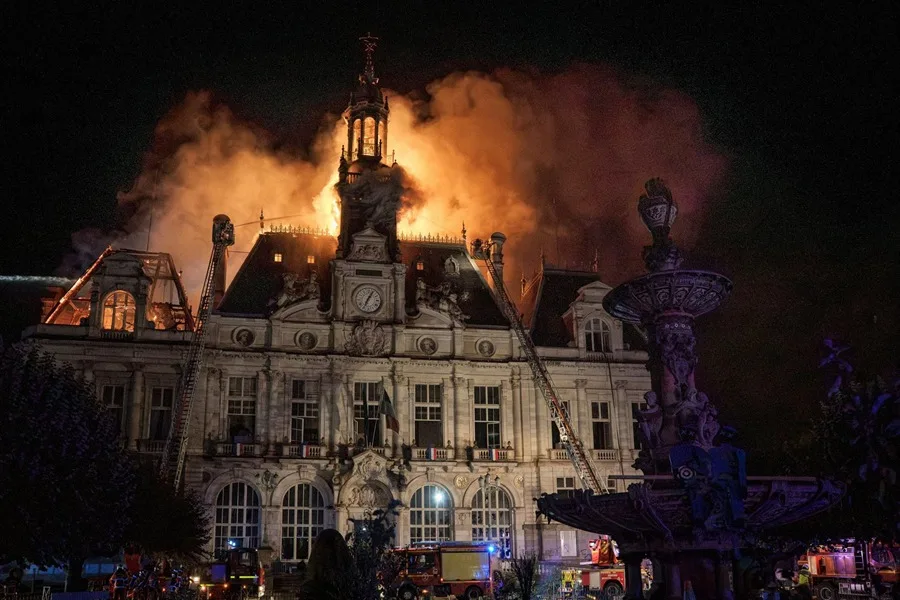
France’s latest wave of unrest has developed into one of the most serious domestic crises of Emmanuel Macron’s presidency. More than 550,000 people participated in demonstrations on 17 October, according to official estimates, before violence spread through Paris and other major cities. Shops were looted, police confronted rioters, and the historic town hall in Limoges was largely destroyed by fire.
The scale of the destruction prompted emergency government consultations and a televised presidential address. Macron promised to prosecute those responsible, while stopping short of declaring a state of emergency. Yet the immediate security challenge conceals a more difficult political question: why have protests that began with relatively specific demands over education become a confrontation involving such different sections of French society?
From school protests to a national revolt
The movement originated among secondary-school students demanding better facilities, more teachers and improvements in educational standards. Their complaints subsequently attracted trade unions, workers, farmers and elements of the Gilets Jaunes, the Yellow Vest movement that challenged Macron’s government in 2018.
The resulting coalition has no coherent political programme. Students protesting overcrowded classrooms share demonstrations with workers concerned about purchasing power and motorists angered by fuel prices. Their interests are not necessarily compatible, but they reflect a common dissatisfaction with the government’s ability to deliver functioning public services while containing living costs.
This distinction matters. The presence of masked rioters and organised groups engaged in violence does not establish that the hundreds of thousands who demonstrated peacefully supported their actions. Equally, the destruction of public buildings, attacks on police and widespread looting raise legitimate questions about the state’s capacity to maintain public order.
The economic problem behind the protests
At the centre of the discontent lies a structural problem that successive French governments have struggled to confront: the distribution of public expenditure between an ageing population and the services required by younger generations.
A French government budget assessment published in October revealed that pension obligations accounted for approximately 32 per cent of the education ministry’s budget, including €28.5 billion in pension expenditure. These obligations restrict the resources available for other departmental priorities.
France nevertheless remains a substantial spender on education. According to official figures, expenditure reached €199.2 billion in 2025, equivalent to 6.7 per cent of GDP. However, after inflation, the annual increase was only 0.1 per cent.
The issue is therefore not simply how much France spends, but how efficiently resources are allocated and whether expenditure meets changing educational needs.
The OECD’s 2025 PISA assessment found that French pupils’ performance in mathematics and reading had declined compared with 2022. Results were among the country’s lowest recorded, although broadly comparable with the OECD average.
These figures give the student protests a significance extending beyond the immediate condition of classrooms. They raise questions about France’s longer-term economic competitiveness and its capacity to provide younger generations with opportunities comparable to those enjoyed by their predecessors.
The limits of Macron’s reform programme
Macron entered office in 2017 promising to modernise the French economy and overcome the traditional division between left and right. Nearly a decade later, his administration faces a fragmented parliament, constrained public finances and growing resistance to further structural reforms.
The suspension of his pension reform illustrated the difficulty. Raising the retirement age was intended to reduce pressure on the pension system, but parliamentary opposition forced the government to defer the measure until after the presidential election.
The underlying financial pressures have not disappeared. Nor can they be resolved easily through additional spending when public debt, borrowing costs and budgetary obligations already restrict the government’s room for manoeuvre.
This creates an uncomfortable political reality: the state is expected to provide better services, greater purchasing-power protection and stronger security, while the available resources remain limited.
Can the opposition benefit?
The unrest comes approximately six months before the presidential election, with Marine Le Pen’s National Rally and Jean-Luc Mélenchon’s France Unbowed competing to establish themselves as alternatives to Macron’s political centre.
Le Pen has sought to combine support for economic grievances with demands for tougher policing. That position may attract voters concerned by the violence, but it also exposes tensions within a movement that previously supported the Yellow Vest protests.
Mélenchon faces a different difficulty. Supporting demonstrations against government policy is consistent with his political programme, but the involvement of violent groups risks shifting public attention from social demands towards questions of security.
A recent presidential opinion poll even suggested that Le Pen and Mélenchon could contest the final round, illustrating the weakening position of more conventional political alternatives.
Neither, however, can escape the fiscal constraints that have frustrated Macron’s government. A change of president would not automatically provide the resources required to expand public services, reform pensions and reduce the deficit simultaneously.
A wider problem for France and Europe
President Donald Trump has attributed the French unrest to immigration, although the movement’s documented origins lie principally in education, living costs and dissatisfaction with public services. Without established evidence about those responsible for individual acts of violence, broader claims about the demonstrators’ backgrounds remain speculative.
For the European Union, France’s instability carries consequences beyond its domestic political debate. France is central to European defence, fiscal negotiations and support for Ukraine. Sustained political paralysis would complicate its ability to negotiate and implement decisions requiring substantial public expenditure.
The immediate task for Macron’s government is to restore security without allowing the legitimate grievances of peaceful demonstrators to disappear from political consideration. The more difficult task will fall to whoever enters the Élysée in 2027.
France’s crisis is not simply a repetition of the Yellow Vest movement. It reflects a growing conflict over public resources, expectations of the state and the ability of established political institutions to reconcile competing demands.
The violence may subside, but the economic contradictions that brought such different groups onto the streets will remain. The presidential election will determine who inherits them, rather than whether they exist.
More than a dozen Indigenous representatives from Peru, Brazil, Colombia and Ecuador are participating in the Oct. 19-23 U.N. conference on transnational organized crime, known as COP13.
O ator americano Michael Forest, conhecido por interpretar o deus grego Apolo na série “Jornada nas Estrelas”, morreu aos 97 anos, na última quarta-feira. A causa da morte não foi informada.
Ele nasceu Gerald Michael Charlebois em Dakota do Norte, nos Estados Unidos, em 1929, e vivia numa instituição de repouso para idosos em Nevada nos últimos anos. A morte foi confirmada por um amigo numa publicação no Facebook.
Forest era conhecido como um homem de porte atlético e tinha um currículo extenso como ator coadjuvante no cinema e televisão, que iniciou na década de 1950.
Carreira no cinema e na televisão
Além de participações em séries e novelas que inclui ainda “Além da Imaginação” e “The Dick Van Dyke Show”, atuou em diversos filmes do ator e diretor Roger Corman e emprestou a voz a projetos de animação, animes e videogames.
Como dublador, participou de títulos como “Power Rangers” e “World of Warcraft”. Ele era fluente em italiano e dublou centenas de filmes nos anos em que morou em Roma, além de atuar em produções de outros países da Europa.
Entre seus inúmeros papéis, estão particapações em “A Besta da Caverna Assombrada”, “Atlas” e “Náufrago”.
Vida pessoal
Forest foi casado com a atriz Diane Hale por 52 anos, até a morte dela, em 2022. Não há informações se eles tiveram filhos juntos.
Nationwide demonstrations left 150 security personnel injured, one person dead and a historic town hall in Limoges severely damaged by fire.
French authorities reported 855 arrests in the Paris metropolitan area after nationwide protests on Saturday escalated into clashes, looting and property damage. One person died in Paris, while a fire severely damaged the historic town hall in Limoges.
The Paris Police Prefecture released the arrest figure on Sunday, covering cases recorded by 8 a.m. Investigations were continuing, including the review of video footage to identify additional suspects, authorities said.
Interior Minister Laurent Nuñez reported 1,200 arrests nationwide as of 8 p.m. Saturday and said 150 police officers and gendarmes had been injured. A more recent national tally was not immediately available.
The demonstrations, organized by several groups including students, trade unions and former leaders of the Yellow Vests movement, drew 550,000 people nationwide, according to Nuñez. Organizers estimated attendance at more than 800,000.
Text Reads: Minister Sébastien Lecornu confirmed the number of people detained during the police crackdown on protests across various parts of the country. The Ministry of the Interior reported that 550,000 people took part in demonstrations nationwide, 110,000 of them in Paris. The demonstrations—which included students, “Yellow Vests,” and climate activists—were also met with a crackdown in Marseille, Nice, Lyon, and Lille. Volunteer medics reported a disproportionate use of force, including the deployment of stun grenades, high-intensity sound devices, and pepper spray.
In Paris, 110,000 people took part in the scheduled march, according to the Interior Ministry. The demonstration began at Place de la République and proceeded without major incidents until its conclusion. However, the police prefecture reported that separate groups, including what it described as radical left-wing elements, attacked security forces and looted shops.
From mid-afternoon, several unscheduled marches involving hundreds of people, and in some cases more than 1,000, were accompanied by looting and vandalism. The damage was concentrated around Place de la République and also affected Boulevard de Sébastopol and Boulevard Saint-Honoré. Police said the situation had stabilized by around 11 p.m.
Thirteen members of the security forces and two firefighters were injured during operations in Paris. The police prefecture also reported that one person had died after suffering a cardiac arrest but provided no further details.
Damage remained visible in central Paris on Sunday morning, with shattered shop windows, broken glass scattered across streets and barricades made from bins, barriers, bicycles and street furniture.
Fire damages historic Limoges town hall
In Limoges, firefighters brought a major blaze at the city’s historic town hall under control on Sunday and were working to extinguish the remaining hotspots, Haute-Vienne Prefect Maurice Barate told French television channel LCI.
Authorities said several demonstrators had forced their way into the building on Saturday and deliberately started a fire inside. The flames spread to the upper floors and reached the roof, which subsequently collapsed.
Mayor Guillaume Guérin said the town hall had been almost completely destroyed but pledged that municipal services would continue operating despite the damage.
“They have destroyed a building that the people of Limoges love, but they have not destroyed the public service,” Guérin said. “A monument is burning, but not the Republic.”
Barate said around 5,000 people had taken part in the Limoges demonstration, including several hundred individuals he described as radicalized and extremely violent. After the attack on the town hall, some demonstrators moved toward the prefecture, while others looted businesses in the city center, he said.
The prefect condemned the attacks on public buildings and businesses, describing the fire as deliberate. Guérin expressed hope that those responsible would be arrested and argued that officers deployed during the protest had lacked sufficient resources to contain the violent participants.
Built between 1876 and 1883, Limoges town hall is a listed historic monument featuring architectural elements inspired by the late Renaissance and the reign of Louis XIII.
Seventeen's Jeonghan and Joshua are debuting as a duo on October 19 — and hyping up the album with a joint Pinterest diary.
Pinterest
Jeonghan and Joshua from the boy band Seventeen are debuting as a duo.
To promote their much-hyped album, they've launched a visual diary on Pinterest.
The duo told Business Insider about their chemistry, their music — and their joint mood board.
Jeonghan and Joshua from the mega K-pop boy band Seventeen are offering fans a dream to lose themselves in and a mood board for shopping.
The two vocalists are debuting as a much-hyped unit, a spinoff of the 13-member band's activities. As of Monday, they'll be working under the name JxJ — releasing their album, "DREAMSCAPE," and hitting the road together for a concert tour in six Asian cities.
In the meantime, they've been populating not only their Instagrams, but also a sprawling visual diary on their joint Pinterest account.
It's an interesting choice, as far as K-pop goes — usually, teasers are limited to platforms like YouTube or the K-pop-centric social network, Weverse.
In a written interview with Business Insider, the duo described their interest in Pinterest as a means of introducing the "visual world," concept, and vibe of "DREAMSCAPE."
The mood boards and the buffet of photos they've posted for fans to feast on are also a "little gift" to their audience.
"JxJ Diary is a space we created to share the concept and vibe of the album more directly with fans before its release. We spent a lot of time thinking about what kind of content they would enjoy, and decided to launch our first-ever Pinterest channel featuring different sides of ourselves," the duo said.
The singers said they wanted to explore the concept of "dreams" with the posts on their joint account. They've curated a collection of photographs and behind-the-scenes moments, including everything from candid shots to sneak peeks of their album photoshoots.
"We hope fans will take inspiration from the album's imagery and vibe, and express it in their own ways," they added. "It would be really fun to see them create their own version of 'DREAMSCAPE' on Pinterest by collecting photos, experimenting with styling, and curating images that reflect their personal tastes."
The business around the boys
That invitation for fans taps into a K-pop fan economy in which an album is not only heard or watched but also worn, collected, decorated, and remade.
The two Seventeen members belong to a group whose fan base collects their photo cards, travels to their concerts, and goes all in on albums and merchandise. Seventeen's 2023 album, "FML," still holds the record for first-day sales for a K-pop album, with more than 6.4 million copies sold. The band's "NEW" tour from 2025 to 2026 saw them play 31 shows in stadiums across Asia and four US cities, drawing close to a million fans, in person and online.
JxJ now gives Seventeen's fandom something else to get invested in: Jeonghan and Joshua together, and the similarities in theirpersonal style.
Ayumi Nakajima, Pinterest's APAC head of content partnerships, told Business Insider the platform had seen a surge in interest in K-pop, making it prime territory for JxJ to establish a foothold.
Nakajima said that the collaboration with the duo's agency stemmed from the idea that K-pop fans connect with more than just the music. Pinterest gives fans a space to "explore the visual inspiration behind the artist's stories" and "save what resonates with them."
Pinterest has seen a strong surge in interest for all things Korea on the platform. Searches for "K-pop style" rose 19% globally year over year, while "K-beauty" searches rose 114%. In Japan, searches for "K-pop fan art" climbed 368%, while "trading card decoration" rose 77%.
"What visual experiences like the JxJ diary do is bring fans into an artist's creative world earlier, giving them more time to engage with the aesthetics, ideas and storytelling behind a release," Nakajima said.
"That early engagement can really shape fandom-led commerce, because fans aren't just showing up at the point of purchase," Nakajima added. "A look, a mood or a visual reference can spark interest weeks before someone decides what to wear to a concert, what beauty look to try, or what pieces they want to buy."
Chemistry
JxJ's album, "DREAMSCAPE," drops on October 19.
Pinterest
As for the boys behind the Pinterest board, they're prepped to serve up seven tracks spanning genres they're "exploring for the first time" on the new album. The duet songs, from early teasers of the music, involve experiments with house, synthpop, and dance rock. There are also two solo tracks — Joshua's punk rock offering, "Not Personal," and Jeonghan's dreamy bop, "Coloring."
"Seventeen has a certain energy when all 13 members are together, but we think the two of us have a different kind of chemistry when we are together," they told Business Insider. "Rather than trying to showcase something entirely new, we wanted to bring out our natural sides and individual charms as much as possible."
The album is also the product of "a lot of conversations" about the kind of art they each wanted to create.
"By sharing our ideas and the images we each had in mind, we were able to understand each other's tastes on a deeper level," the duo said.
They took a couple of trips together, too, which helped them "get to know each other better and shape a direction that felt uniquely ours."
"We also experimented with our vocals to show a new side of ourselves, so we hope fans will enjoy and support this album," they added.
"DREAMSCAPE" launches on October 19 at 6 p.m. Korea time.
Brazil deploys 300 firefighters as a surge in fires worsens air pollution in Manaus and investigators probe suspected organized arson.
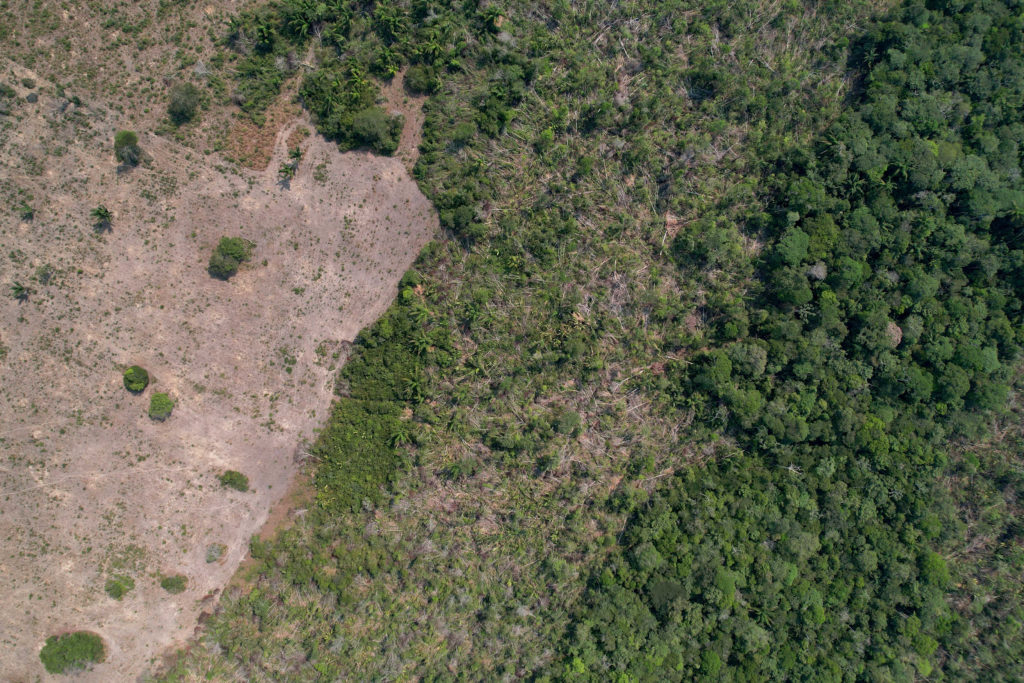
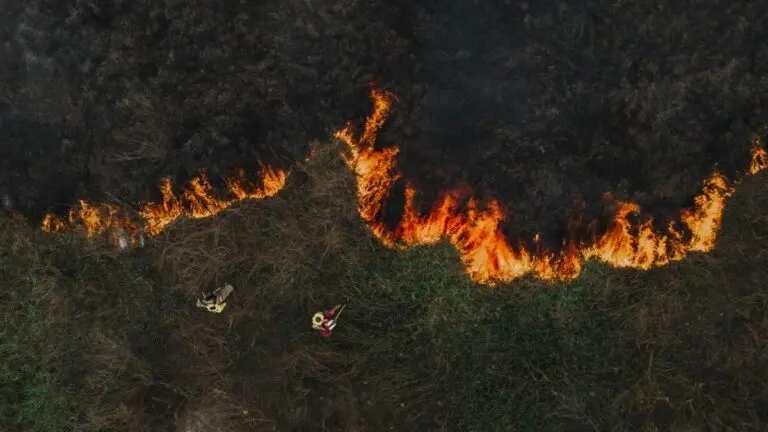
Brazil has launched joint operations to track down those suspected of deliberately setting fires in the Amazon rainforest, as a sharp rise in blazes blankets Manaus with toxic smoke and pushes air pollution to critical levels for the city’s 2.3 million residents.
Authorities suspect an organized network is deliberately destroying native vegetation in preserved forest areas to facilitate the illegal seizure of public land, Environment Minister João Paulo Capobianco said at a news conference Wednesday. Investigators are working to identify and prosecute both those who set the fires and those suspected of directing them.
Capobianco described the situation as an “impressive display of deliberate action.” He and Jair Schmitt, head of Brazil’s environmental protection agency Ibama, cited reports of people throwing fuel-filled bottles from moving vehicles along roads and repeatedly reigniting fires in areas where firefighters had already extinguished them.
The scale of the fires has escalated sharply. Amazonas state recorded 1,608 fire hotspots in the first part of October, already exceeding the 874 registered throughout October 2025, according to Brazil’s National Institute for Space Research (INPE).
September saw more than 3,700 hotspots, four times the number recorded a year earlier. Fires burned 291,060 hectares that month, 38.8% above the historical average, according to official data.
In October, the area affected has approached 220,700 hectares, 249% above the usual level, according to the Federal University of Rio de Janeiro’s Laboratory for Environmental Satellite Applications.
The government has deployed 11 aircraft and approximately 300 firefighters to the hardest-hit areas. Difficult terrain and adverse weather conditions have complicated efforts to contain the blazes. Authorities have also warned that extreme drought and high temperatures associated with El Niño are accelerating the spread of fires across northern Brazil.
Smoke from fires in Amazonas and Pará states has engulfed Manaus, where air quality has deteriorated to critical levels. Concentrations of fine particulate matter known as PM2.5 have exceeded the maximum levels recommended by the World Health Organization, increasing the risk of acute respiratory problems, particularly among children, older people and those with pre-existing medical conditions.
The Civil Police of Amazonas has opened 120 investigative proceedings into suspected environmental offenses. Investigators are using thermal drones and conducting continuous ground patrols to gather evidence and identify those responsible.
The investigations come as Brazil prepares for a presidential runoff on Oct. 25 between incumbent Luiz Inácio Lula da Silva and opposition senator Flávio Bolsonaro, who received the most votes in the first round. Asked whether the fires could be politically motivated to undermine Lula’s candidacy, Capobianco said investigators were examining that possibility but stressed that the theory had yet to be substantiated.
Kimberly Guilfoyle today resigned from her position as the U.S. ambassador to Greece shortly after the White House confirmed that President Donald Trump had asked her to do so. The main provocation seems to have been Guilfoyle's alleged influence peddling, which reportedly featured a request that Republican donor Eric Deters pay off her $100,000 American Express bill, in exchange for which she promised him special access to "Trump world."
The president signaled his displeasure on Monday, saying "we're looking at" axing Guilfoyle, his son's former girlfriend, because "we're not happy." On Tuesday, Trump added that "we didn't like what we were reading." That reaction is not surprising, since Guilfoyle would have been horning in on Trump's territory by trying to sell access and use her office for personal gain. That's histhing.
Consider Trump's attempts to promote the memecoin that he launched three days before beginning his second term. That April, the top 220 $TRUMP holders were invited to "an intimate private dinner" with the president on May 22. The "top 25 coin holders" were promised "an Exclusive Reception before Dinner with YOUR FAVORITE PRESIDENT," plus a "Special VIP Tour" of the White House the next day. The coin's price, which after an initial surge had fallen dramatically since Inauguration Day, rose by more than 50 percent immediately after that announcement.
"Since the announcement, crypto investors around the world have raced to expand their holdings of $TRUMP," The New York Timesreported 10 days before the dinner. "Certain buyers, in interviews and statements, have said they bought the coins or entered the dinner contest with the intention of securing an action by Mr. Trump to affect United States policy."
NBC reported that the coin investors who attended the dinner, which was held at the Trump National Golf Club in Sterling, Virginia, had collectively spent $394 million on $TRUMP. On average, that worked out to about $1.8 million a plate.
"This is my president that we're talking about, but I am willing to say that this gives me pause," Sen. Cynthia Lummis (R–Wyo.) said a few weeks before the dinner. "In abstract," Sen. Thom Tillis (R–N.C.) allowed, the event "is hard to understand." Sen. Lisa Murkowski (R–Alaska) drew an analogy: "I don't think it would be appropriate for me to charge people to come into the Capitol and take a tour."
Donald Sherman, executive director of Citizens for Responsibility and Ethics in Washington, was blunter. "This is one of the most blatant and appalling instances of selling access to the presidency I've ever seen," he said.
Compared to that episode, the controversy over the income that Trump's hotel in Washington, D.C., received from influence seekers during his first term might seem tame. But it raised similar ethical questions, albeit in a slightly more subtle way.
The Trump International Hotel's customers included Republican political organizations and a long list of trade groups, such as the National Mining Association, the Independent Petroleum Association of America, the National Confectioners Association, and the Vapor Technology Association, whose interests might be served by currying favor with the president. The hotel also attracted business from the governments of foreign countries, such as Kuwait, Bahrain, Saudi Arabia, Azerbaijan, Malaysia, and Romania, that likewise may have been investing in Trump's good will.
"Believe me, all the delegations will go there," a "Middle Eastern diplomat" toldThe Washington Post after Trump's election. "Why wouldn't I stay at his hotel blocks from the White House, so I can tell the new president, 'I love your new hotel!'" an "Asian diplomat" said. "Isn't it rude to come to his city and say, 'I am staying at your competitor'?" The Embassy of Kuwait, which had previously held its annual National Day celebration at the Four Seasons, reportedly canceled its reservation there and switched to the president-elect's hotel under pressure from the Trump Organization.
Trump saw no problem with any of this. "The law is totally on my side," he toldThe New York Times in November 2016. "The president can't have a conflict of interest." He reiterated that take at a press conference nine days before his inauguration. "I have a no-conflict situation because I'm president," he said.
Trump nevertheless said he would donate the profits from money spent by foreign governments at his hotels to the U.S. Treasury. But that solution did not address the money he was taking in from various domestic interest groups or his ability to enrich himself by encouraging Republican organizations or other federal officials to patronize his businesses.
One example of the latter: Vice President Mike Pence and his party stayed at Trump's golf resort in Doonbeg, Ireland, during an official trip in 2019. Although Trump insisted he "had nothing to do" with that decision, critics perceived a violation of the Domestic Emoluments Clause, which says the president may not receive additional compensation from the federal government beyond his official salary.
Trump later said he regretted his attempts to address conflicts of interest during his first term, including his promise that the Trump Organization would avoid new foreign business deals. "I prohibited [my sons] from doing business in my first term, and I got absolutely no credit for it," he toldThe New York Times 12 days before his second inauguration. "I didn't have to do that, and it's really unfair to them." The lesson he drew was that "nobody cared."
Consistent with that assessment, Trump has thrown all caution to the wind during his second term, capitalizing on his position to rake in millions of dollars by hawking all manner of presidentially branded merchandise, ranging from bibles to cologne; obtain a $400 million "palace in the sky" from the government of Qatar; extort $1 billion in pro bono legal work from disfavored law firms; earn billions from the same cryptocurrency industry he was simultaneously deregulating; and arrange a sweet IRS immunity deal that could save him more than $100 million in back taxes, interest, and penalties. Any worries about unseemly profiteering by Trump's family are long gone, as evidenced by federal contracts with businesses backed by his sons and highly lucrative foreign deals negotiated by his son-in-law.
Compared to all of that, the $100,000 that Guilfoyle allegedly sought in exchange for using her influence with the Trump administration to help Deters looks like pocket change. Her real sin, one suspects, was failing to offer her boss a piece of the action.
A 41-year-old woman has been arrested in Athens on suspicion of attempting to poison her ex-husband, a military doctor, with atropine. According to media, the man had installed security cameras at his apartment in Peristeri suburb of western Athens. Monitoring the cameras remotely, he allegedly saw his ex-wife who had keys entered the apartment and […]
Longreads has published hundreds of original stories—personal essays, reported features, reading lists, and more—and more than 14,000 editor’s picks. And they’re all funded by readers like you. Become a member today.
James Whorton Jr. | Longreads | October 13, 2026 | 5,932 words (25 minutes)
I live in Edgewood, a subdivision of quarter-acre lots in the town of Brighton, New York. Before the house was here, Edgewood was a farm, and before the farm, there was a forest. On a July day in 1788, a 55-year-old man named Hugh Maxwell set out to cross the forest in straight lines.
Not kind of straight. Maxwell’s job was to walk 1,100 miles on ruler-straight lines through this vast, obstacle-filled forest, to divide it into a grid of parcels that could eventually be sold as property. To shrink it down to the scale of human imagination. To look at the forest and see something else in its place.
I first learned about Maxwell from Mary Jo Lanphear, Brighton’s town historian. I had gone to Lanphear to research the racially restrictive housing covenants that made home ownership in Brighton exclusive to white people for decades. Whose fault was this? I wanted to know. Some racist real-estate developer? Something to do with the Federal Housing Administration? Lanphear printed out a copy of an old deed linking the Edgewood land to the Phelps and Gorham Company, a group of New England speculators. For a bargain price, Phelps and Gorham had acquired the title to 2.6 million acres of forested country along the Genesee River, in what is now western New York. The company then hired Maxwell—a Revolutionary War veteran, father of seven, and the first recorded white person to pass within shouting distance of the place where I now live—as surveyor.
Credit: Preston, Samuel, “The Gorham Phelps Purchase,” RBSCP Exhibits, accessed October 8, 2026, https://rbscpexhibits.lib.rochester.edu/items/show/4541.
As Maxwell crossed the forest, he imagined the nation he believed would one day replace it. “The land in this country is exceedingly good, but it wants good inhabitants,” Maxwell wrote to his wife, Bridget, imagining “many worshipping assemblies of Christians where now the wild beasts howl.” In place of the forest, he envisioned schools, churches, cash crops, and county clerks. However, he wrote, “these things are in the womb of futurity, and will be brought about in the proper way and time, as also by the proper means.”
Maxwell’s walk—through leechy ponds and tick-infested brush, down and up creek banks, over the rocky exposures that rattlesnakes prefer, in those remarkably straight lines—was like the act his fellow new citizens were performing daily, striving and pretending a nation into being. At the time he set out, the United States were only loosely joined, under the Articles of Confederation. Alexander Hamilton, writing in the first essay of The Federalist Papers, had recently asked “whether societies of men are really capable or not, of establishing good government from reflection and choice, or whether they are forever destined to depend, for their political constitutions, on accident and force.” Neither the new government nor the grid of lots for sale were to be discovered on the ground. They were ideas in people’s heads, notes on paper. In the “womb of futurity,” maybe.
The forest, however, was real.
Have you ever retraced your steps looking for some lost thing you had no hope of ever finding again? More than two centuries after he walked the forest into the future, Maxwell’s path persists, as lines on a map and on the ground in my neighborhood. I wanted to find the forest he walked through.
So I set out to follow Hugh Maxwell—through books and archives, on maps and over the ground, across the state of New York and, finally, across my neighborhood, looking for traces of the forest in what is here now.
On July 25, 1788, Maxwell set off from the southeastern corner of the Phelps and Gorham purchase, on the Pennsylvania line, headed due north. He led a small crew, whose job it was to drag a Gunter’s chain, a surveyor’s tool used to measure distance. The chain was 66 feet long; 80 chains made a mile. Every six miles he marked a township corner, hacking Roman numerals into the sides of a convenient tree, Vs and Xs being easier to cut in bark than 5s and 10s.
While his helpers dragged the chain, Maxwell carried the grid in his head. The job was to lay this imaginary grid over the forest itself, to parcelize the land into numbered squares—to cut it up and shrink it. In a notebook that first day, he wrote:
From the 82 mile Stone
120 Rods the groth is Beech
Maple birch ash Basswood
and Hemlock mixt
Throughout Maxwell’s young life, the forest had been a chaotic place, subject to accident and force, to the wars that would determine its fate. During the French and Indian War, Maxwell, in his early 20s and part of a Massachusetts militia, barely escaped a violent death at Lake George. Following a surrender, Indians pulled militia men from the retreating lines, killing some on the spot and taking others prisoner, to be ransomed in Montreal. Maxwell was pulled aside, too, and had his boots, coat, and shirt stripped from his body. But he got loose somehow and escaped into the forest, running at least 14 miles to Fort Edward, barefoot in his pantaloons. Later, during the Revolutionary War, Maxwell was shot at the Battle of Bunker Hill. A musket ball entered his body just beneath the right collar bone, breaking Maxwell’s shoulder blade and exiting through his back. He survived field surgery and gangrene, and wrote home to Bridget with his left hand, fretting that his nurses fussed too much over him.
Now, as Maxwell walked off the eastern line of the Phelps and Gorham purchase, the forest wars were coming to an end. Still, the forest itself resisted him in its way. It did not lend itself to being crossed in straight lines, as though it were a blank page awaiting the pen’s touch. Branches snagged his clothes. “I am of the opinion,” he wrote to Bridget from his walk, “that if I live to return, I shall stand in need of some winter shirts for I think my old ones will be pretty much worn out.”
What makes a forest? How do I know when I’m standing in one, and not just under some trees?
To reach Maxwell’s starting place—his “82 mile stone,” a roadside block of granite 82 miles west of the Delaware River—I drove a hundred miles south to Caton, New York. A welcome to caton sign marked the town line, which was also the state line. I took my phone out, opened a map on the screen. The phone is able to locate itself using pings from four satellite systems: GPS (“a global public service brought to you by the US government”), GLONASS (same, but brought to you by Russia), Galileo (European Union), and BeiDou (China). The screen suggested there should be a marker right in front of me.
Crouched inside a brushy spot, I shoved skinny branches out of my face and slapped at my hair. I found a tangle of rusted barbed wire. I found a deer skeleton. But no mile marker. Feeling things crawling on me, I climbed out into the sunlight and slapped down my shirt and pants.
The growth I saw around me now was not so mixed as what Maxwell described in his notebook. I was standing on a stone chip road, looking across a hay field. My phone screen showed a satellite image with a red pin to the west of the road, in the brush I’d climbed out of, and a blue dot in the road, which was me. This had to be the spot, though. I walked to my car, felt my head for ticks again. Then I walked back up the road, to check under the welcome to caton sign. There, I found a block of pink and gray granite with an “82” cut into the side and several loops of orange surveyor’s tape tied around it. It wasn’t hidden—I’d simply been looking on the wrong side of the road. Looking for what was in my head instead of seeing what was there.
It was a slow march from here for Maxwell and his crew, dragging their chain in a straight line through the thickness of mixed trees and across creek cuts. It took them two weeks to cover the first 54 miles. For me it was an easy drive, a straight shot north between fields of sweet corn. I stopped to examine an occasional historical marker, and again at a roadside farm stand, hoping to say hello to someone who lived on this line. The little stall was well stocked with honey and dried garlic, but there was nobody to say hi to: Sales were on the honor system, with a Mason jar on the counter to leave your cash in. I had only brought a credit card.
Maxwell’s notebook was a memento of a different world. He passed massive chestnut trees such as I could only read about. One spot he judged “moist and good and springy,” another “good for grass.” He noted with approval where a stream was big enough to support a sawmill. And yet the gaps in his notes are astonishing. A few weeks into his survey, he crossed “some old clear land” and “through the old castle.” Castle was the colonial way of referring to an Indian town. Here was proof on the ground of what Maxwell already knew: People had been living in this forest for a very long time, cultivating this land in a different way than European settlers did. And yet Maxwell found little to note about the old castle. He carried on instead with his catalog of trees—”white ash, basswood, elm, &c.”
What makes a forest? How do I know when I’m standing in one, and not just under some trees?
The Latin precursor of the word “forest” meant something like an unenclosed outdoor space. In early English law, the silva forestis was a place for lords to chase game and for ordinary people to gather wood. In the 13th century, as the Magna Carta encoded the rights of English barons, the Carta de Foresta laid out the rights of commoners to pasture cattle in the open places among the English forests. Similarly, the forest Maxwell entered in the summer of 1788 was more than just mixed trees. Its openings included the towns, orchards, and farm fields of the Seneca Nation. The Senecas had long used fire to manage areas of the forest, clearing thick undergrowth to attract deer, and they moved their farming fields from time to time to prevent exhausting the soil.
A forest is too big to see all at once, and maybe too big to describe. Writing about it, one is moved to grand language and weird leaps of perspective. The historian Francis Parkman devoted his career to what he called “a history of the American forest,” which is really a history of empires. Writing in the 1880s, with no satellite photos at hand, Parkman borrowed the point of view of a flock of Canada geese flying north from Albany. “As the aërial travellers winged their way, the seat of war lay spread beneath them like a map. First the blue Hudson, slumbering among its forests, with the forts along its banks. . . .” Parkman’s geese paid special attention to military architecture, noticing Fort William Henry by the “glistening breast of Lake George” and the white flag of the French at Ticonderoga. Onward they flapped:
“Lake Champlain now spread before them, widening as they flew: on the left, the mountain wilderness of the Adirondacks, like a stormy sea congealed; on the right, the long procession of the Green Mountains; and, far beyond, on the dim verge of the eastern sky, the White Mountains throned in savage solitude.”
This is silly poetry, but I am in deep sympathy with it, having also spent countless hours staring at different maps, trying to transplant a whole forest into my head.
At the heart of Parkman’s seven-volume France and England in North America was a question about property. “To whom belonged this world of prairies and forests?” he asked. Parkman wrote that France had “claimed it by right of discovery and occupation,” adding that the French had an “excellent system” for distributing land: “Whoever received a grant from the Crown was required to improve it, and this within reasonable time. If he did not, the land ceased to be his, and was given to another more able or industrious.” The English eventually outdid the French in this regard, Parkman wrote: “New England was pre-eminently the land of material progress . . . nay, in defiance of the four Gospels, assiduity in the pursuit of gain was promoted to the rank of a duty.” The quickest way to gain from the forest was to sell or burn the timber and put a cash crop in the ground.
Sir Albert Howard, an English botanist, saw the forest as a model for sustainable farming. In what he called “Nature’s agriculture,” variety is the first rule: “Many species of plants and of animals all live together,” he wrote in the early pages of An Agricultural Testament, published in 1940. Economy is another rule: “Nothing is wasted” and “nothing is lost.” Somehow, life and decomposition continue across millennia with no one in charge.
Wendell Berry, referencing Howard in The Unsettling of America, writes that the forest is a place where “the forces of growth and the forces of decay are in balance.” I like this way of putting it very much. A forest tree dies in place, and its slow decay swells with life—mosses, fungi, beetles, and things that eat beetles. A living hardwood tree throws its leaves away every year. In The Great American Forest, Rutherford Platt calls this “the deciduous idea”—a funny way to imagine it, as though the founding fathers of the forest had written this leaf-shedding principle into their charter. But it is a brilliant idea, a world-changer. In balance, growth and decay work in cycles. The mat of discarded leaves becomes the food of millipedes and the habitat of worms. In spring, the snow sinks into it. A thick, black soil builds.
This is silly poetry, but I am in deep sympathy with it, having also spent countless hours staring at different maps, trying to transplant a whole forest into my head.
I had already traveled to Maxwell’s starting place; now, it occurred to me that I had never followed Hugh Maxwell’s route where he passed nearest to my house, along the eastern township line, which is not a road at all and which happens to be covered over with trees. From my front door, I followed the sidewalk along Edgewood Avenue, where the utility poles shrink away into the distance like an exercise in single-point perspective.
The place where I live has gone through a lot of changes in the 20,000 years since the most recent ice age, from deglaciation to migration and cultivation. At the time Maxwell began his walk, the towns, orchards, and farm fields of the Seneca Nation were openings in a vast forest that still covered half of North America, from the Atlantic coast to the Mississippi River. The houses in my part of Brighton were built beginning in the 1930s, but the older eras of this place are visible on any road map. The early roads go from some important place to some other important place. Monroe Avenue, a very old road, follows a route from the north end of Canandaigua Lake to a shallow, fordable spot in the Genesee River. It is not straight, but bends sensibly between Cobbs Hill and Pinnacle Hill. People have been walking that way for a long time, since long before Maxwell arrived.
After Maxwell, there came an era when all new roads were cut parallel to his township lines. The logic of the Brighton-Henrietta Town Line Road, for instance, has nothing to do with terrain, and the things one passes when driving it—an auto body shop, a small church with three steeples, an Asian market, a sex shop, Dunkin’—have little to do with each other. It’s as though Maxwell set the place to auto-arrange, so that every major surface road for the next two hundred years would snap to grid.
I stopped at the former site of the old Rowland farm. My friend Roger lived next door to the farm as a boy. Mr. Rowland had a stand of virgin timber on his place, Roger recalls, and the soil in his fields was so fertile that a person had to take care not to get knocked over by his produce. “Dig a hole, drop a seed in, and stand back,” Mr. Rowland warned.
As late as the 1950s, there still were some farms along Edgewood Avenue. But it wasn’t long before they were subdivided into residential lots.The timber now is mostly whatever people have chosen to set out in their yards. Norway maples are common—tough street trees, not from around here, indifferent to road salt and car exhaust. Rows of arborvitae make living privacy fences. Shading the Briar Manor apartments are seven big sycamores, handsome monsters with paint-by-number bark of yellow, gray, and lilac brown.
Past the row of sycamores, I turned onto a paved bicycle path that follows a chain-link fence. A little further, a sign marked the town line. I found a low place in the fence and stepped over, into the trees, following Maxwell again.
It was dark under the high canopy, and the underbrush was sparse. Maxwell had once described this section of his route as “very good beech and maple land with a mixture of ash, elm, oak, basswood, etc.” I found a beech tree, its pale sides smooth, its trunk a good two feet across. Beneath the beech tree was a shattered porcelain toilet. There was no plumbing attached; somebody had brought this toilet out here, set it on the ground, and taken a hammer to it.
I checked the map on my phone. In the satellite photo, the woods were more or less featureless except for the town line, superimposed in yellow over the treetops, and a blue dot, me, on top of that yellow line. I was still on Maxwell’s course. There was no trail on the ground for me to follow, though. The only trails were the soft, narrow animal trails that passed under blown-down branches or veered away into low cover.
The growth was mixed: saplings, mature trees, dead standing, and dead fallen. I found a red maple with circular fractures erupting like a target in its bark. I found an ash tree, its bark split open and buckling, the meandering tracks of an emerald ash borer scoring the bare wood. A lean musclewood with ten trunks, one with its bark chewed at the height of my knee. A basswood with a stripe of red spray paint on it and rings of woodpecker holes.
If this was a forest, it was a half-wrecked one. Much of the soil was exposed and cracked from flooding. Variety was here, though, and life among the decay. Deer tracks crossed a muddy trench. Bright moss blanketed the softening fallen trunks, and ferns grew. I heard chattering overhead and a rainlike sound in the leaves. Somebody was up there taking nuts apart. Chunks of green and yellow hull hit the ground around me, cycling back to the soil.
In September of 1788, Hugh Maxwell took a fall in the woods and hurt his shin. He made things worse, he wrote, “by wading in the swamp and through wet brush.” For three weeks, he was laid up in the Seneca town of Kanadesaga, where he had nothing to do but think and write home.
He missed Bridget. “I feel anxious for your welfare,” he wrote to her. “I long to hear from you and love to hear from you.” He reminded Bridget to have their son get the haying done, get some long shingles to fix the roof, cart the dung to the field, plow the field on time, and do the sowing.
He also missed church. Shortly after his near-death experience at Lake George as a young man, Maxwell had joined a church and, judging from his letters, devoted himself to a stern code under which he must strive constantly for an approval that he would never earn. For Maxwell, life on earth became a moral exercise, an attempt to deserve immortality. God, he wrote, “is Daily Loading us with his Benefits, though we are evil and unthankfull.” Now, once more wounded far from home, Maxwell wrote to his wife of “unprincipled fellows and drunken savages,” adding, “Religious society is quite out of the question here.”
It had been only nine years since the Continental Army’s expedition across Seneca country. After Senecas joined with Tories to raid White settlements along the Mohawk, the young United States had set aside European conventions of war in an attempt to drive Seneca communities from their land. “The immediate objects are the total destruction and devastation of their settlements and the capture of as many prisoners of every age and sex as possible,” George Washington wrote in his orders. “It will be essential to ruin their crops now in the ground and prevent their planting more.” At Kanadesaga, the Continental Army had burned at least 50 Seneca houses, tore ripe corn and beans from the fields, and bayoneted pumpkins. A whole orchard of apple trees was girdled, a circle of bark stripped from around each trunk, creating an unhealable, fatal wound. The Continental Army took few hostages: The Senecas moved west just ahead of the approaching troops and then returned again when the troops went home, rebuilding their houses and replanting their fields.
Nine years later, laid up in Kanadesaga while his shin healed, Maxwell now found himself surrounded by Indians. “I am in hopes their time with us here is short,” Maxwell wrote to Bridget. “I do think that the Great Governor of the universe is about to plant a glorious gospel in this wilderness,” he predicted—with the help of his own survey, of course. “May it be so and soon spread over this land.” Maxwell, in effect, had two tough jobs: crossing the forest in straight lines, and convincing himself that he was a good person for doing so.
After more than a month’s recovery, Maxwell resumed his survey. “First mile through excellent land,” he wrote from the woods, on the line of a future township along the east bank of the Genesee River, noting nearly a half-dozen different trees in the area. The next mile: “Same sort of excellent land and growth but considerable mixed with chestnut.” The third mile was less good: “80 rods over a wet low land.” Then more very good land again. He crossed a brook that ran one way, then the other. Both Maxwell and the brook were headed to the same place, north to Lake Ontario. The brook took the easy way, downhill. Maxwell took the straight way, leading his team and their chain through swamp and timber, mile after mile.
At the end of the 18th mile, he chopped a “XIII” into the side of a small basswood tree, marking a corner of the 13th township—“with trees marked for witness about it,” he wrote, for the benefit of some future settler searching for the corners of his lot.
Maxwell, in effect, had two tough jobs: crossing the forest in straight lines, and convincing himself that he was a good person for doing so.
When the blue dot on my phone told me I had reached the southeast corner of the town of Brighton, I spent some time looking for the basswood tree with the XIII in its bark. But I was kidding myself, of course. Maxwell’s hatchet marks were meant to last years, not centuries. I slapped at mosquitoes, scanning for some connection between the forest Maxwell had walked through and the place I was in. A scrap of fluorescent pink tape caught my eye. I’ve been seeing this stuff in the woods for my entire life, weatherproof trash that will outlive me and, I suppose, every other individual living thing in the woods as well. I looked past it, because I can’t pick up every piece of garbage in the woods and carry it out. Then I looked again and my understanding of the place shifted.
The pink plastic was a piece of surveyor’s tape, tied to a branch. Near the branch was a short, square concrete pillar. This was the marker—a “monument,” in surveyor-speak—that had taken the place of the basswood with the XIII in its side. It was a more durable monument than a tree, and though it was short and unobtrusive, the little non-decaying flag of pink plastic made it hard to miss, even for me.
Maxwell wrote of this site:
The line of this town is very
good land covered with a thick
growth of Beech Maple Elm Basswood
Ash Butternut &c. Not very uneven.
No elms now, but I had seen the others he mentioned. This wasn’t “virgin timber”: The nearest big tree was a two-trunked silver maple, second growth, sprouted back from a stump. This was the place, though.
I stayed there awhile doing nothing, a little dazzled, a little jarred by the impression of two forests coming together—the one Maxwell crossed and the one I was in. The forest wasn’t gone, but it had changed, and so had the way we live with it. In imagining the forest as a wild place, it seemed to me, we had imagined ourselves right out of it. It’s become a place to visit, a resource or a park, not our home.
Or something like that. Half-stumped, I managed to stand there motionless long enough that a red fox, not noticing me, stopped nearby with its nose in the air and its tail extended. I watched it for a while as it watched something else. Then a leaf blower whined, and the fox and I went our separate ways.
In a healthy forest, the forces of growth and the forces of decay are in balance. But those same forces are the conditions of life everywhere—balanced or not.
Reaching Lake Ontario, Maxwell cut his initials into a tree, then went home to Heath, Massachusetts. In years to come he served as a deacon and justice of the peace in that town. He applied for an invalid officer’s pension, but was denied. At 67 years old, in debt, he bought some horses and embarked with them for the West Indies, where the animals, along with enslaved humans, were in demand on sugar plantations. It was a nightmare world where both humans and horses were routinely worked to death in brutal heat. I wonder how he justified that new venture to himself. Maxwell took a profit from the sale, but died of yellow fever on the voyage home, and his body was buried at sea.
I couldn’t visit Maxwell’s final resting place. Instead, I drove to western Massachusetts, to his house. On Route 2 I locked on to an excellent Albany radio station whose signal held through the Taconic Mountains as far as Williamston, Massachusetts. The road had been graded and guard-railed in the 1920s, on top of an older road that people had been walking since the last ice age, for all one can know. The road sided a stream tumbling over rocks. And what was so important about that? Why did I love it? I loved this road because it was no one’s idea. A glacier put this road here, and people followed.
The house that once belonged to Maxwell was surprisingly modern-looking, with its solar panels and a Prius in the driveway. I knocked and a woman came to the door. Sue, the owner, invited me in. In the kitchen, one wall was almost all fireplace, paneled above with a single blond board 20 inches wide—spruce, Sue thought. In the next room, there was more of that broad paneling, and a row of cupboards over a smaller fireplace with a grow-light installed inside it over a collection of potted cacti. Sue showed me a copy of Maxwell’s only portrait, a silhouette on horseback that was made during the Revolutionary War. She also had a copy of The Christian Patriot, a biography written by Maxwell’s daughter, Priscilla, who recalled her father’s strong singing voice and a gory song about the courage of the Bunker Hill heroes that he liked to sing for the children. Near the house was a cemetery with a marker for Maxwell, a tall obelisk with worn stories in its sides.
I also drove to Lake George to see the place where 22-year-old Maxwell had first spied death coming for him through the forest. I followed US Route 9 past a sprawling outlet mall and Bloody Pond, where the bodies of slain men had been thrown at the end of that chaotic day early in the French and Indian War. Then I emerged from under clustered trees to what Thomas Jefferson once called “without comparison, the most beautiful water I ever saw.” Lake George was “ limpid as crystal,” he wrote, the mountains on either side “covered with rich groves of thuja, silver fir, white pine, aspen, and paper birch.” Today the groves of thuja are interrupted with summer mansions and the sandy parking lot by the beach is jammed with cars, but the mountains are still mountains and the long lake still stretches far away between them. When I arrived, the beach was crowded with boogie boarders, volleyballers, and people just splashing. A man threw a tennis ball into the lake, and a dog took a fierce running leap to retrieve it.
I’d booked a camp site nearby at the Lake George Battleground Campground. A few pines were all that separated my site from Route 9, its four lanes roaring with traffic. I set up my folding camp stool by the sidewalk, across from an Exxon.
I tried to picture a young Maxwell loping through here shirtless in his bare feet, enveloped by the forest and afraid for his life. Among the English-speaking settlers, the events at Lake George would be remembered as a massacre, and the Indigenous people whose home this was, whose conventions of war did not match those of the European empires, were called savages. It was powerful storytelling, indispensable to the colonial project.
Every story I could imagine about this place, and about Hugh Maxwell, seemed another work of fiction, a mechanism for assigning blame.
Maxwell trained himself on a version of that story: He had outrun death, sought God, and sought profit while declaring himself unthankful. He hardened himself into a professional fighter, banking on the next life while he improved an ancient forest by drawing a checkerboard on it. He wrote home about the “womb of futurity,” a bizarre metaphor I still do not understand. Whom did he think made futurity pregnant? Was it God, or the Phelps and Gorham Company? I didn’t understand the guy. On the other hand, I didn’t go to war when I was 22. I was working in a restaurant and writing stories.
Every story I could imagine about this place, and about Hugh Maxwell, seemed another work of fiction, a mechanism for assigning blame. Blame has to be assigned—Indigenous communities did not displace themselves, nor did the forest wreck itself—but it is also necessary to keep looking and to try to keep noticing how much one does not understand. Among the Native allies who joined the French at Lake George all those years ago was a band of ten Iowas who had traveled a thousand miles, from beyond the Great Lakes, to fight the English. What were they thinking, and what had their journey been like? They had only themselves to tell their story to, because no one at Lake George spoke their language.
As I tried to conjure the experiences of these men nearly 270 years ago, it occurred to me that I ought to be more concerned for the daring pedestrians trying to cross Route 9 from the campground to the MiniMart attached to the Exxon. There was a crosswalk, but the traffic was coming in fast.
There was too much here for me to make sense of. The seat of war was now a vacation spot. War is violent and so are four-lane highways. Lake George is beautiful, and it puzzled me to notice that the MiniMart was pretty, too, with its high-wattage red-and-white Exxon sign and its glass front glowing softly yellow.
I walked over. Inside, the MiniMart was lit up like a minor carnival, aggressively air-conditioned, and it had a sweet, grimy, convenience-store smell of burnt coffee and potato logs. People were getting chips, jerky, gasoline, and party ice. The forces of growth and the forces of decay were jostling. I liked being there. I selected two cold singles, thanked the cashier, and followed the crosswalk safely back to my campsite and my folding camp stool, from which I watched the people coming and going late into the night.
When Hugh Maxwell wrote home to Bridget with his story about the womb of futurity, he got a couple things wrong.
He was right that the country was changing. While he was in the forest tramping out lines, trying to get his head around this thing that was too big to fit inside anyone’s head, the United States ratified their second constitution. The document was a little over 4,000 words long, and it relied heavily on the word “shall,” a modal verb used to indicate a future action, which was used 191 times. The official copy covered four big sheets of parchment in ink made from oak galls.
He was wrong about the Senecas’ time being short. They are still here. On the Tonawanda Territory, an hour’s drive west from my house, Senecas still govern themselves according to the Great Law of Peace—a constitution established by the Haudenosaunee Confederacy and recorded in white wampum before the Pilgrims landed at Plymouth. The Tonawanda Seneca Nation is currently fighting a plan to build a data center next to their woods.
He was right about the coming of new inhabitants. The grid he’d laid over the forest became a map in a land office, and his employers were soon marking squares SOLD in small cursive. Settlers arrived slowly, then in booms, cutting trees, burning stumps, shooting wolves, and plowing the black ground with teams of oxen, raising vegetables for their families and wheat to sell over the Erie Canal.
The land in Township 13, my township, turned out to be mixed. The ground was clay in some parts. Brighton became known for brickyards. That industry is gone now, but the high school had an ugly surprise this year when it tried to replace a grass playing field with plastic turf. Chunks of brick, glass, and metal were buried a few inches down; tests showed high levels of arsenic, lead, and semi-volatile organic compounds. The field where my daughter played soccer is now sheeted in plastic while the state decides what to do next.
In Edgewood, the earth is as rich as Maxwell said it was, but he might have been surprised to learn how briefly that would matter. Soil fertility is mostly beside the point, and even an inconvenience, since lawns have to be mowed, leaves blown into piles, and pollen hosed off windshields in the spring.
No description, no story, is big enough to capture the forest Maxwell walked through. The best I can think to do is to keep looking for better questions about it. Here’s one: If a forest had a constitution, what would it say? Its coequal branches might be soil, air, water, and sun. It certainly would have no president. Its bill of rights might hold that differences exist, that living things may strive, that life includes an accumulation of wealth, and that death includes the release of that wealth. Nothing is wasted, nothing is lost, but eventually everything has to be let go of. When you die, you simply spread out your wealth on the ground.
James Whorton Jr. grew up in Hattiesburg, Mississippi. He is the author of three novels, and his writing has appeared in The Best American Essays, The Oxford American, Virginia Quarterly Review, The Southern Review, Washington Square Review, The Gettysburg Review, and The Washington Post. He teaches at SUNY Brockport.
A building rises in the center of Bucharest that defies explanation through architecture alone. The Palace of Parliament is the heaviest building in the world according to Guinness World Records, and a vast section of the old city was demolished for its construction. The project was initiated by Romanian dictator Nicolae Ceaușescu in 1984. The […]
by Matt Vespa, Townhall: This isn’t some riot over public education. That’s the line that’s been used to describe the mayhem that’s engulfed France over the past few days, during which some 250,000 people have taken to the streets. French police have deployed tear gas, and while the media are going to try and frame […]
Filippos Kambouris, a Trash TV presenter and president of the right-wing populist LAOS party, has been arrested over his alleged leading role in a scheme to defraud the Greek state to the tune of millions of euros. Citing police sources, media noted later on Tuesday according to preliminary findings losses to e-EFKA and the Greek […]
Walking in nature is usually associated with relaxation, physical activity, and a chance to temporarily step away from the hectic pace of daily life. In recent years, however, scientists have been paying increasing attention to whether spending time in the forest can also have a measurable effect on immune system function. Research in this field […]
Α 50-year-old high school principal suffered a cardiac arrest outside the school in Ilioupoli suburb of eastern Athens during the heavy rain- and thunderstorm hitting the area on Tuesday. Initial reports suggest the cardiac arrest was caused by lightning. Passersby who saw the woman collapsing on the street outside the school immediately called for help […]
The body of a 90-year-old woman was found covered in sheets and hidden in the basement of a house in Marathonas village in eastern Attica on Friday. The woman’s daughter and grandson have been arrested. The woman’s death was not registered with the authorities and the daughter allegedly kept receiving her mother’s pension for about […]

 Login