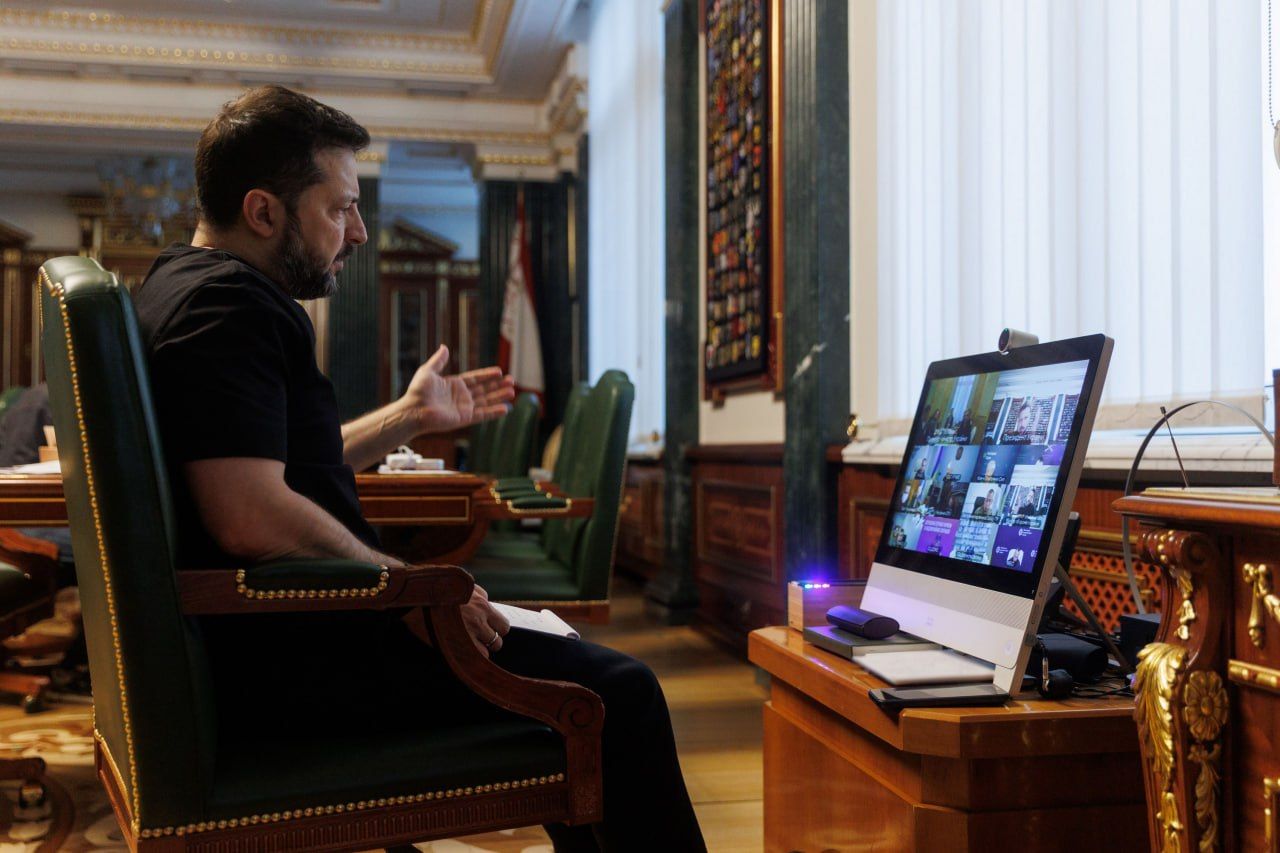
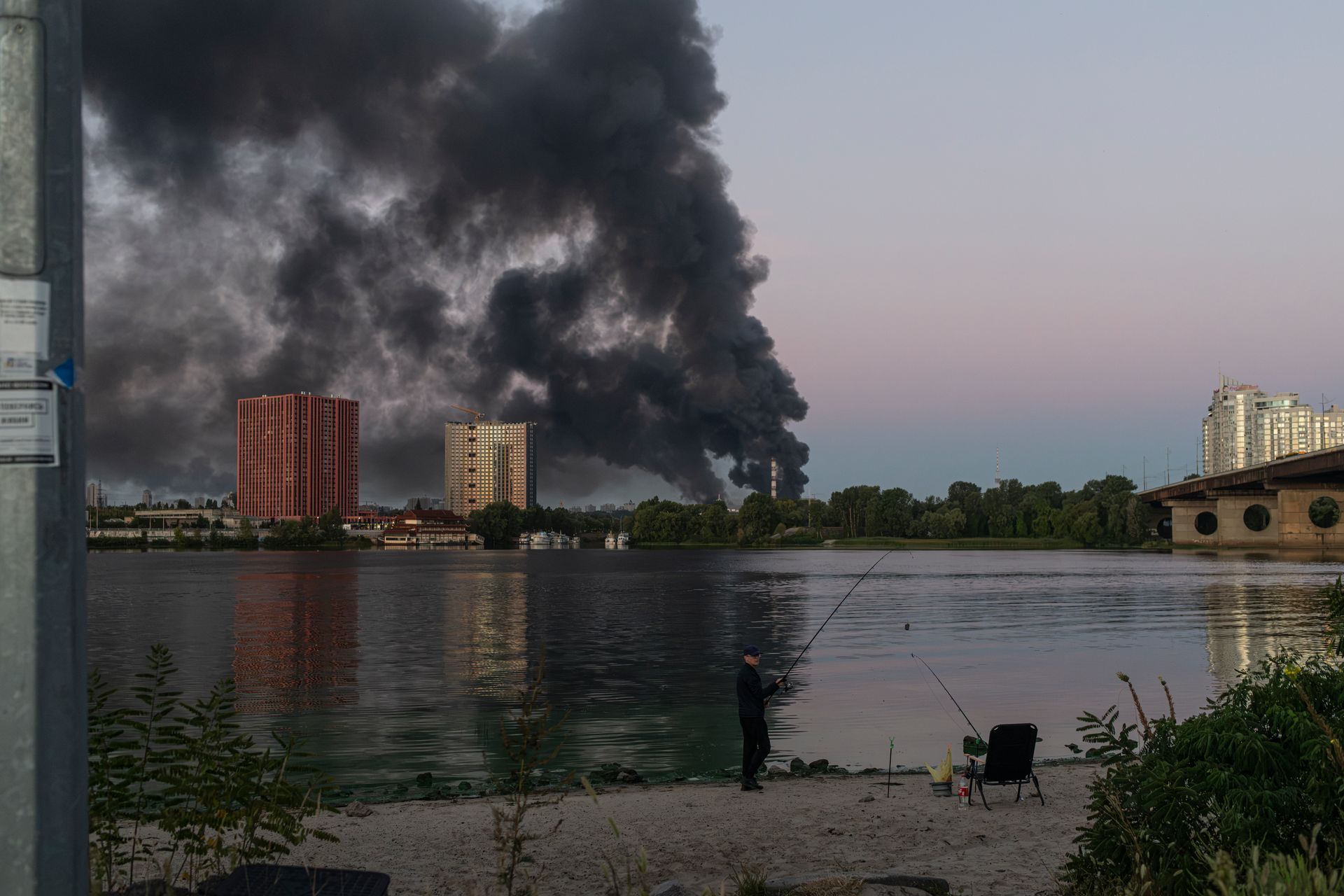
As regular Russian strikes on energy facilities leave parts of Kyiv without running water, fears are mounting that further power outages could spark a serious humanitarian and public health crisis in Kyiv.
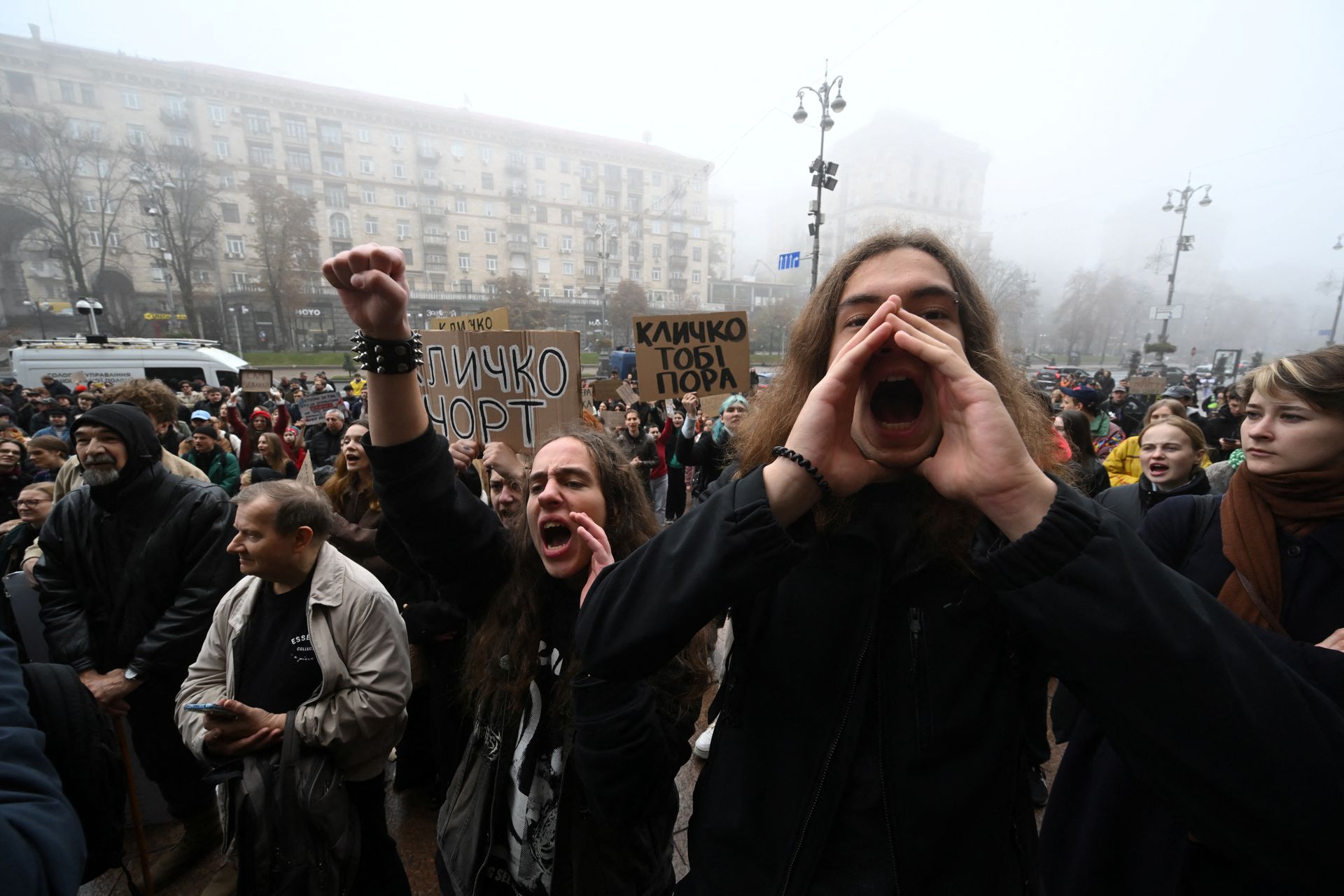
Local residents gathered on Oct. 17 in front of the city council to demand that Kyiv Mayor Vitali Klitschko step down from the post he has occupied for over 12 years.
"Kyiv without Klitschko," hundreds of protesters chanted as they took to the streets in central Kyiv, according
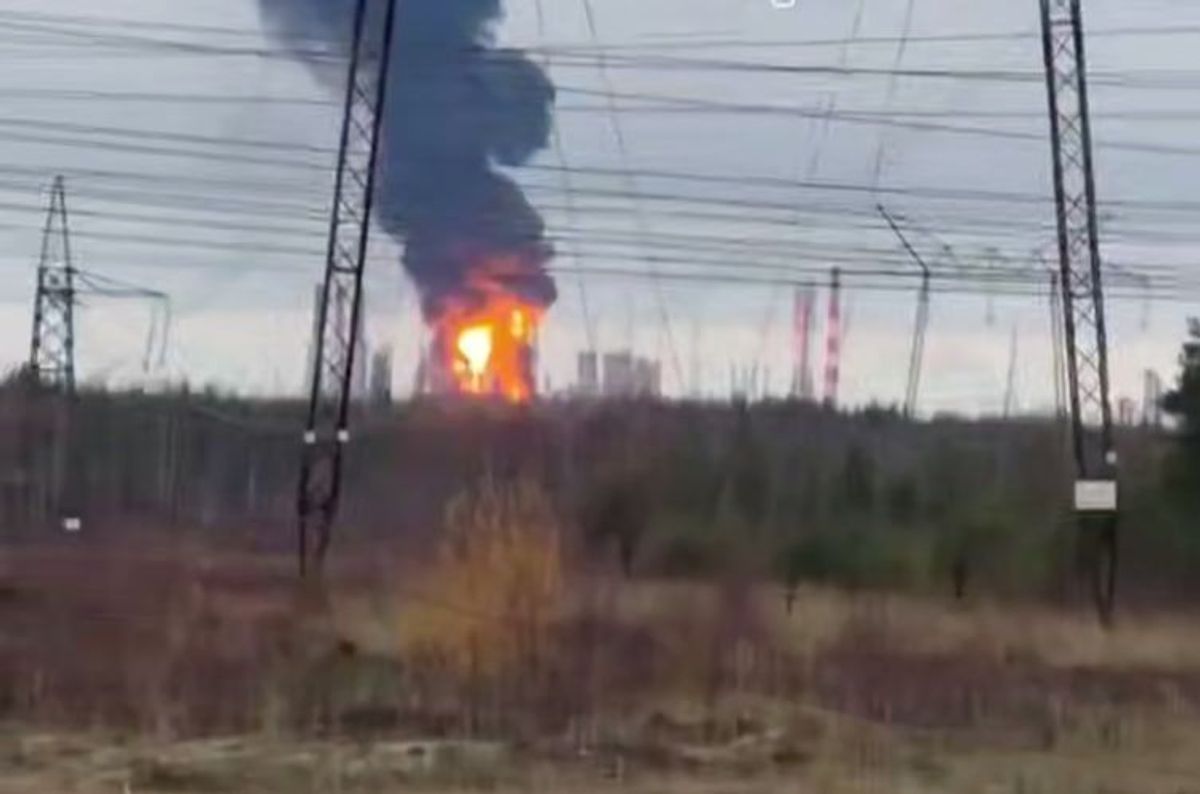
The consequences of Kiev’s campaign against Russian refining infrastructure had travelled considerably further than the drones themselves. Months of attacks had damaged refineries, reduced fuel production and contributed to shortages inside Russia. Much of the discussion surrounding the campaign focused on the damage inflicted on Moscow: how many facilities had been hit, how much refining […]
Attacks on Russian and Saudi oil infrastructure threaten global energy security by disrupting supplies, increasing oil prices, and intensifying economic pressures on importing countries. Coordinated international efforts are essential to protect energy facilities, diversify supplies, and secure maritime trade routes. Recently, countries and non-state actors have changed their methods of warfare. The world has witnessed […]
Kyiv's centralised heating systems will be turned on, starting with social institutions such as schools, hospitals, and kindergartens. The decision was sparked by "extreme conditions" created by constant bombardment, Klitschko said.
Damage to energy facilities in the Kyiv region has also reduced water pressure in areas of the capital on the Dnipro River's right bank. Emergency specialists are switching power supplies to water pumping stations, Kyiv Mayor Vitali Klitschko said.
Have we passed peak oil – are fossil fuels running out? Richard Lyon says yes, and the transition to 'renewables' is making it worse. But peak oil is a myth, says Tilak Doshi, as he reviews Lyon's book The Energy Trap.
European Union leaders will meet in Brussels on 15–16 October under pressure to address surging energy costs, Russian hybrid attacks, continued support for Ukraine and the bloc’s next long-term budget. The summit comes as economic pressures expose growing differences between national governments.
European Union leaders are preparing for a two-day summit in Brussels dominated by the economic consequences of the Middle East conflict, Russia’s continuing war against Ukraine and mounting pressure on governments to reconcile defence commitments with deteriorating public finances.
The European Council meeting on 15–16 October will bring together the leaders of the 27 member states to consider immediate measures addressing high energy prices alongside longer-term decisions on competitiveness, enlargement, migration and the EU’s budget for 2028–2034.
European Council President António Costa has placed economic competitiveness and energy costs at the centre of the discussions, reflecting concerns that the disruption of global oil and gas markets is threatening the bloc’s industrial recovery.
The meeting also takes place against the background of renewed disputes over national spending limits, with Italy and Greece seeking greater freedom to finance energy relief and France facing increasing pressure over the credibility of its budget.
Energy crisis puts fiscal rules under pressure
The Middle East conflict has created a renewed energy shock for European economies, raising transport and industrial costs while pushing inflation higher.
The disruption of shipping through the Strait of Hormuz has also affected global oil supplies, exposing Europe’s continuing dependence on internationally traded fossil fuels despite efforts to diversify imports following Russia’s invasion of Ukraine.
European leaders are expected to consider targeted and temporary support measures for households and businesses, as well as longer-term policies intended to reduce energy dependence.
The political disagreement concerns how those measures should be financed.
The European Commission has resisted requests from Italy and Greece for further exemptions from the EU’s fiscal framework. Both governments argue that extraordinary energy costs require additional budgetary flexibility.
Brussels maintains that existing provisions already permit exceptional expenditure within defined limits.
The disagreement is particularly difficult for indebted governments that must simultaneously finance military expansion, maintain public services and protect their economies from energy inflation.
France’s position has added urgency to the debate. Its borrowing costs have increased sharply as investors question whether the government can adopt a credible budget ahead of the 2027 presidential election.
A summit agreement on emergency energy assistance would therefore have to accommodate substantially different national fiscal circumstances.
Ukraine and the changing transatlantic relationship
Support for Ukraine remains a central item on the summit agenda as Russia continues attacks against Ukrainian cities, energy infrastructure and industrial facilities.
EU leaders are expected to review military and financial assistance, the implementation of sanctions against Moscow and the resilience of Ukraine’s economy.
The discussions take place amid renewed uncertainty surrounding American weapons deliveries.
Washington’s reported threats to suspend supplies under the NATO-backed PURL procurement arrangement have raised further questions about Europe’s dependence on the United States for advanced military equipment.
European governments have increased defence expenditure and committed additional support to Ukraine, but replacing American capabilities remains difficult, particularly in air defence, precision-guided weapons and certain intelligence systems.
The summit is unlikely to resolve those industrial limitations, but the broader question of Europe’s ability to sustain Ukrainian defence over several years will influence discussions.
Member states must also consider how increased defence expenditure will be financed alongside other demands on national budgets.
Russian hybrid operations move higher on the agenda
The issue has gained prominence as European governments investigate sabotage, cyber operations, information interference and threats against infrastructure and defence-related industries.
Recent warnings concerning possible Russian assassination operations targeting European defence executives and employees of companies supplying Ukraine illustrate the changing nature of the security threat.
Such activities place additional demands on national intelligence services, police forces and European institutions responsible for cross-border cooperation.
The EU has strengthened its sanctions instruments against hybrid activities, but enforcement remains dependent on coordination between national authorities.
Any further measures would need to address intelligence sharing, protection of critical infrastructure and the relationship between internal security and the Union’s wider Russia policy.
Brussels has outlined possible institutional safeguards intended to prevent future members from undermining democratic standards or blocking common decisions.
Montenegro and Albania are advancing through their accession negotiations, while Ukraine and Moldova remain central to the EU’s geopolitical enlargement strategy.
The financial implications will become increasingly important as governments negotiate the next multiannual financial framework covering 2028–2034.
Existing members are already divided over how much the EU should spend, which programmes should receive priority and whether additional common resources should be raised.
Agricultural expenditure, cohesion funding, defence investment and support for Ukraine will compete for resources within the same budget negotiations.
The Commission argues that enlargement can be accommodated through targeted reforms, but securing agreement among member states will require decisions on future expenditure and the distribution of financial benefits.
Competitiveness and the single market
Leaders will also examine progress on the One Europe, One Market agenda, which aims to reduce barriers to economic activity within the EU and improve conditions for European businesses.
The initiative is intended to address structural weaknesses affecting investment, industrial development and the ability of European companies to compete internationally.
High energy prices have made those concerns more immediate, particularly for industries competing against producers in economies where electricity and fuel are cheaper.
The European Council will be asked to provide direction on measures planned for 2026 and 2027, but implementation will depend on subsequent legislation and decisions by member states.
The October meeting brings several unresolved European policy questions into the same negotiation: how to protect economic competitiveness, maintain fiscal credibility, finance defence, sustain Ukraine and prepare for enlargement.
The immediate test will be whether leaders can agree on a credible response to energy prices without reopening broader disputes over national budgets.
More difficult decisions concerning defence financing, institutional reform and the EU’s long-term expenditure commitments will extend well beyond the two-day summit.
The European Commission has rejected demands from Italy and Greece for additional exemptions from EU spending rules as the Middle East energy crisis drives inflation higher, exposing renewed divisions over how much financial assistance European governments can provide.
The European Commission has rejected requests from Italy and Greece for greater freedom to increase public spending in response to the energy crisis, resisting pressure from two member states that argue existing budget restrictions are limiting their ability to protect households and businesses.
The decision, confirmed on 8 October, follows renewed appeals from Italian Prime Minister Giorgia Meloni and Greek Prime Minister Kyriakos Mitsotakis for measures recognising the exceptional financial burden imposed by higher energy prices.
Meloni wants Brussels to take greater account of unexpected inflation when assessing national budgets and to permit additional tax revenue generated by rising prices to be used for energy relief. Mitsotakis has sought the exclusion of temporary support measures for consumers and businesses from the expenditure limits agreed under the EU’s fiscal framework.
Economic Commissioner Valdis Dombrovskis rejected the argument for further concessions, maintaining that the existing arrangements already take inflation into account and provide mechanisms for responding to exceptional circumstances.
The disagreement comes as Europe’s governments confront the economic consequences of the Middle East conflict, including higher fuel costs, inflationary pressures and increased demands for state intervention.
Italy’s increasingly difficult budget choices
For Italy, the dispute adds to a fiscal problem that has been developing throughout the year.
The government expects its budget deficit to rise to 3.4 per cent of GDP in 2027, reversing an earlier objective of reducing borrowing below the EU’s three per cent reference value.
As EU Today reported earlier this month, Rome plans to use additional fiscal room for defence and energy-related expenditure, while public debt is projected to remain close to 138 per cent of GDP.
The new request concerns the treatment of inflation and the financial support required to offset its effects.
Energy inflation creates an unusual budgetary problem. Governments can receive additional nominal tax revenue as prices rise, particularly through consumption taxes, while simultaneously facing public pressure to compensate consumers for higher living costs.
Meloni argues that such unexpected revenue should be available for targeted assistance without forcing equivalent reductions elsewhere in national expenditure.
Brussels is reluctant to accept arrangements that could turn temporary increases in tax receipts into an opportunity for permanent spending expansion.
Italy’s position also reflects the political competition between defence spending and domestic economic support. Rome has accepted the need for higher military expenditure but faces immediate pressure from households and energy-intensive industries.
Greece seeks different treatment for emergency support
Greece’s request is more narrowly focused on the treatment of temporary assistance under the EU’s expenditure rules.
Athens argues that measures intended to help businesses and households manage exceptional energy costs should not be counted against the normal spending limits.
The Greek government faces an economic environment in which higher imported energy prices threaten household purchasing power and business profitability, particularly in sectors dependent on transport and fuel.
Excluding temporary relief from expenditure calculations would give Athens additional room to intervene without breaching its agreed fiscal trajectory.
The Commission, however, has resisted establishing further exemptions beyond those already provided in the fiscal framework.
Its objection is institutional as well as financial. If additional categories of emergency expenditure are repeatedly excluded from fiscal calculations, the system becomes increasingly difficult to enforce consistently across the Union.
The limits of Europe’s reformed fiscal rules
The EU revised its fiscal governance framework in 2024, introducing nationally agreed expenditure paths intended to provide greater flexibility while maintaining sustainable public finances.
Those provisions have already been used to accommodate higher defence expenditure, while the Commission has also issued guidance on their application to energy-security investments.
Temporary financial assistance intended to reduce household energy bills, however, is not necessarily treated in the same way as investment in infrastructure that reduces Europe’s long-term dependence on imported fuel.
That distinction has become a source of friction between Brussels and national capitals.
Governments argue that the immediate economic effects of an international crisis require exceptional measures. The Commission is concerned that repeated concessions could weaken the credibility of the spending framework.
A wider dispute over Europe’s economic response
The Commission’s decision also comes as France faces increasing pressure over its debt and budget deficit.
France, Italy and Greece have different fiscal positions, but the problems confronting them originate partly in the same combination of expensive energy, weak economic growth and competing spending commitments.
The dispute will now feed into preparations for the European Council meeting on 15–16 October, where energy prices and economic competitiveness are prominent agenda items.
EU leaders are expected to consider targeted and temporary measures to reduce the burden on businesses and consumers, alongside longer-term initiatives intended to reduce dependence on fossil fuels.
The Commission’s refusal to provide Italy and Greece with further fiscal exemptions establishes the limits within which those discussions will take place.
National governments remain free to introduce assistance, but Brussels is insisting that they account for its cost within the fiscal rules already agreed.
For Rome and Athens, the question is whether those rules provide sufficient room to respond to an energy crisis whose duration remains uncertain.
So, this is Andy Burnham's solution to soaring energy prices: nationalisation and relitigating the 1970s. It's just a shame, says Ben Pile, that energy was far cheaper under Thatcher than in our Net Zero era.
For more than three decades, the Bangladeshi political left has maintained an unyielding stance on natural resources like gas, coal, and minerals, insisting that state entities must develop them exclusively. Foreign energy companies are viewed with deep suspicion, while production-sharing contracts are routinely condemned as vehicles designed to siphon national wealth to foreign multinationals. Coal […]
While Washington pursued and implemented decades-long campaigns (including sanctions, proxy wars, and direct military action) against Russia and Iran to weaken or collapse their governments, those policies have also produced adverse effects at home, the most visible being surging energy prices and inflationary pressure. How are the Wars Coming Along? By all measures, the proxy […]
The world is discovering that Iran and the Houthis do not need to control the world’s oil fields to exercise enormous influence over the global economy; they only need to control, or constrain access to, the narrow waterways through which that oil must pass. A War That Has Reached the Energy Arteries The Strait of […]
KARACHI: State-run Pakistan LNG Limited (PLL) has issued a fresh tender to procure one spot cargo of liquefied natural gas for delivery between September 4 and 8, as global supply disruptions stemming from the Middle East war continue to strain the country’s gas-fired power generation. PLL invited bids from international suppliers for a single cargo ... Read more
 Login