❌

Reading view

Ghost Shark Extra-Large Uncrewed Underwater Vehicles’ Payload Bay Seen For First Time

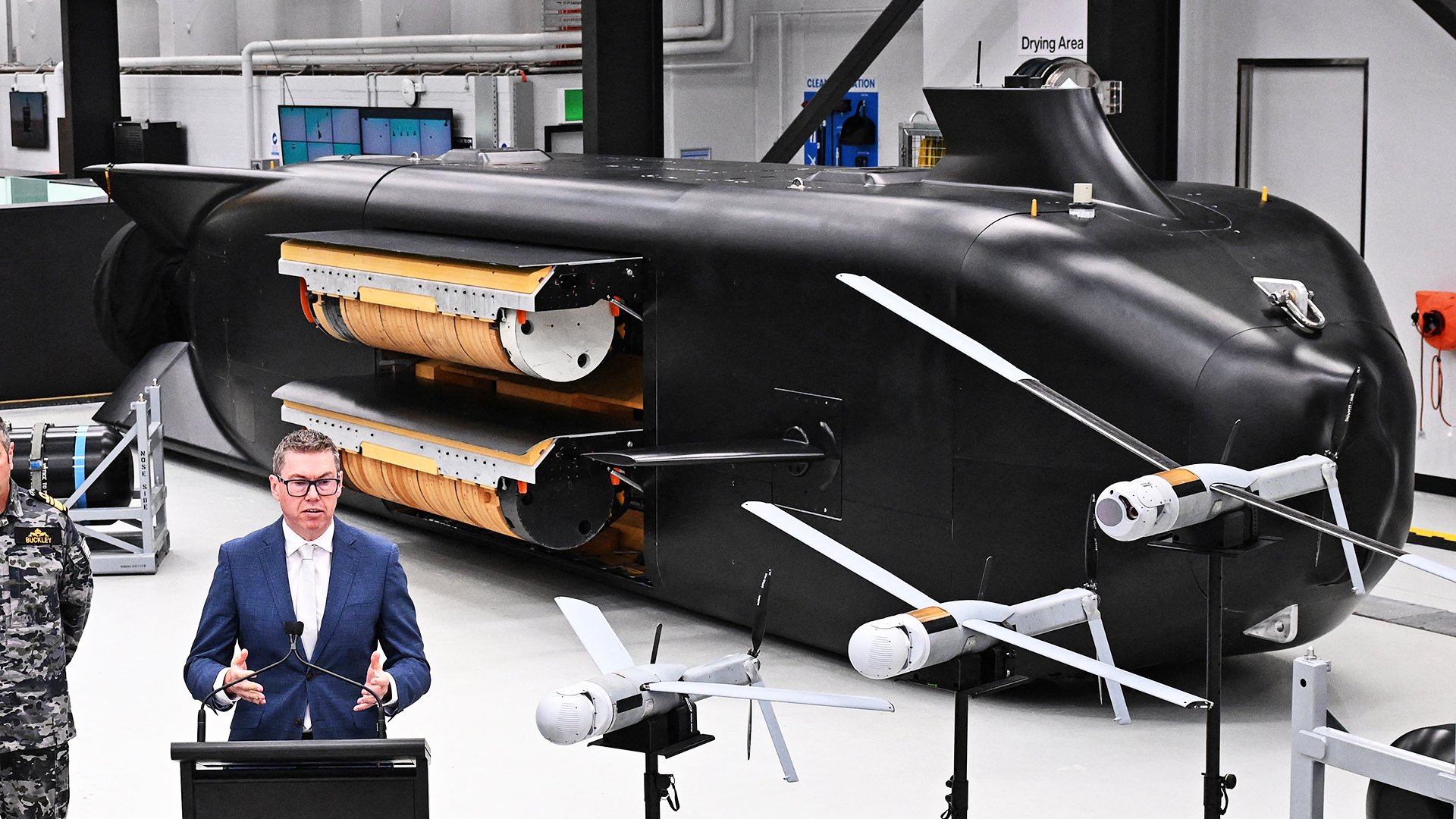
New photos provide an interesting first public look inside the payload bay of Australia’s Ghost Shark extra-large autonomous underwater vehicle (XL-AUV), and a glimpse of the highly modular concept at the heart of the Royal Australian Navy’s emerging undersea warfare capability. Australian authorities had said in the past that they plan to use Ghost Sharks to conduct “persistent intelligence, surveillance, reconnaissance and strike” missions, but without any real elaboration.

The photographs were taken during a recent visit to the Anduril Australia factory in Sydney, New South Wales, by Pat Conroy, Australia’s Minister for Defense Industry. They emerged as the Australian government announced new details of payload development for Ghost Shark, the Speartooth large uncrewed underwater vehicle (LUUV), and the BlueBottle uncrewed surface vessel (USV), on October 19. While the announcement described the payloads in very broad terms, the photos plus additional details from the Anduril event reveal a more concrete picture of the missions Ghost Shark is being designed to perform.
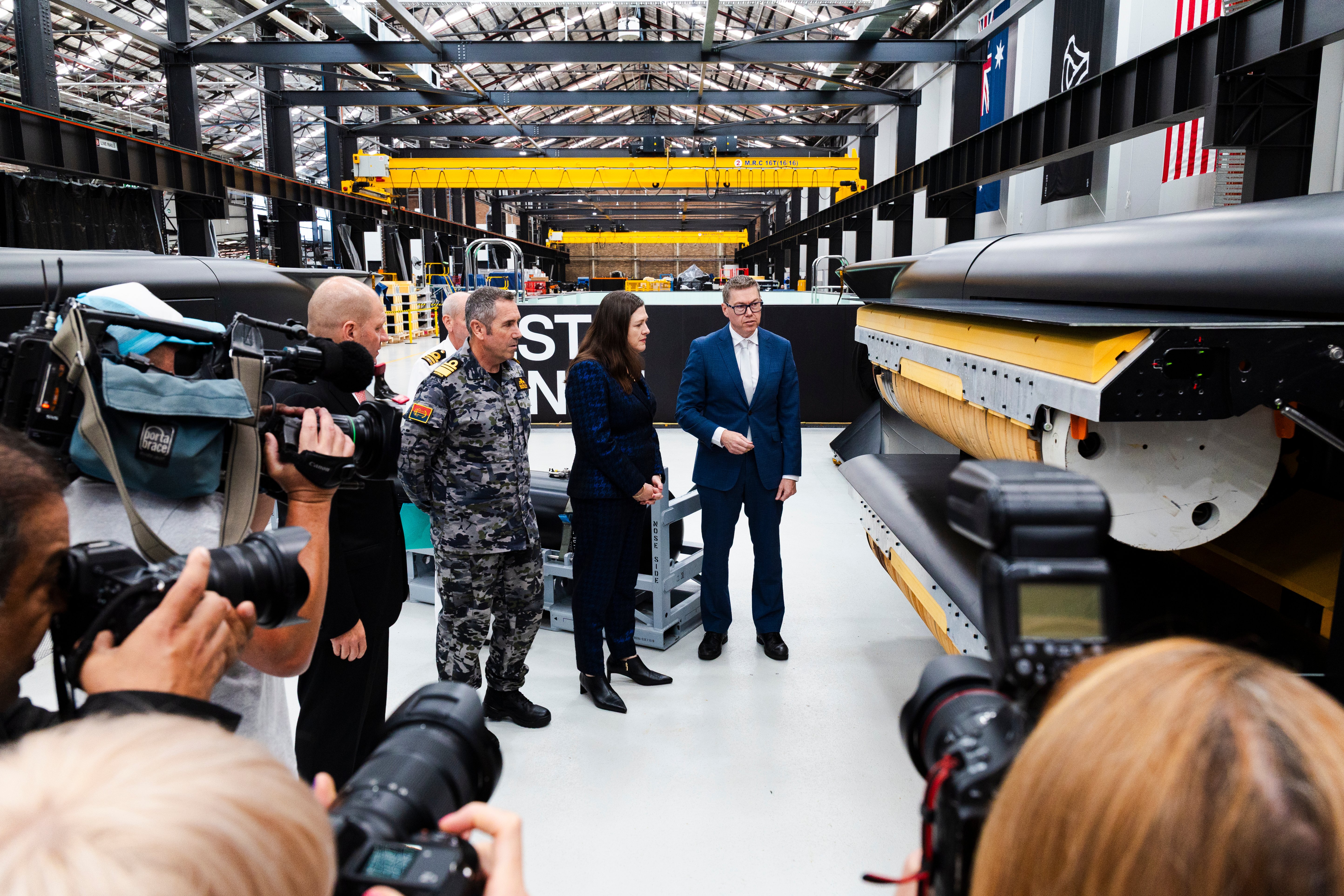
Left to right: David Goodrich, CEO of Anduril Australia; Chief of Navy, Vice Adm. Matthew Buckley; Professor Tanya Monro, AC Chief Defense Scientist; and Pat Conroy, Minister for Defense Industry, stand in front of a Ghost Shark, with payload bay open, at the Anduril Australia factory in Sydney, New South Wales. Australian Department of Defense

The three previously undisclosed payload options include deploying up to 12 sea mines in a mission, leaving supply caches on the seabed, and launching Anduril’s ALTIUS aerial drones for reconnaissance or strike missions.

“Ghost Shark now has teeth, and will have the ability to inflict damage on any potential adversary,” Conroy said.

The payload bay image is significant in its own right. Ghost Shark’s modular design is intended to accommodate different mission-specific systems, allowing the Royal Australian Navy to configure the same underlying platform for different operational requirements. Ghost Shark was designed to be extremely modular, flexible, and readily reconfigurable. As part of this, the overall payload portion can be readily configured in different ways using different-sized modular hull sections. Since the nose and the tail are different pieces, with an expandable section in the middle, there is plenty of scope for different payloads as well.

Seeing the internal bay for the first time provides a more tangible look at that approach than earlier photographs of the submarine’s exterior.
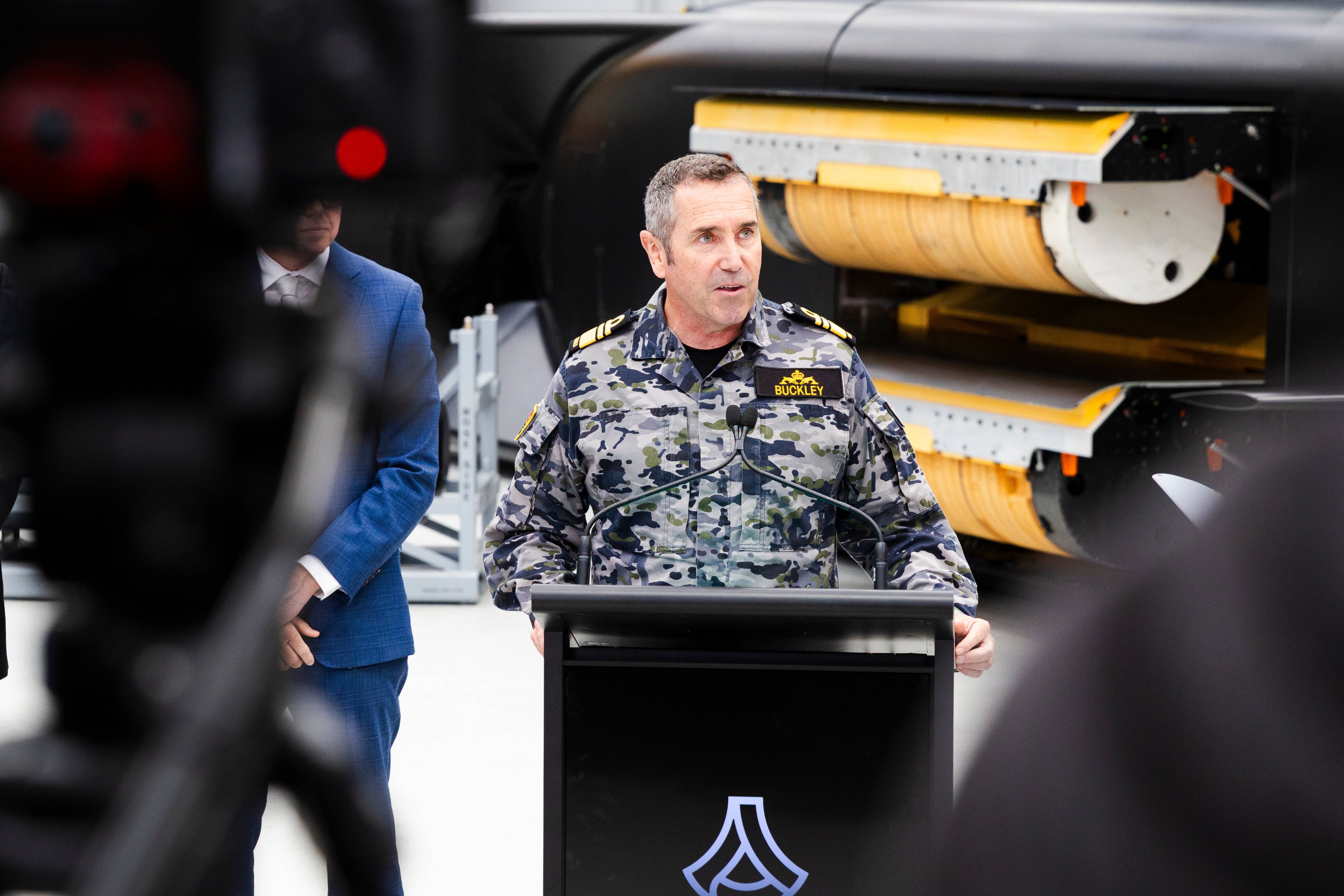
Chief of Navy, Vice Adm. Matthew Buckley, makes an address at the Anduril Australia factory in Sydney, New South Wales. The payload-bay spacers are seen immediately behind him. Australian Department of Defense

Inside the bay of one of the Ghost Sharks on display, there appear to be cylindrical spacers, formed in segments, rather than operational stores. These spacers, and other areas inside the bay, look as if they are fabricated from plywood or similar. Overall, this means it is not entirely clear if they represent the kind of ballast that would be loaded to take the place of actual payloads during trials, or whether they are part of a mockup.

Of the three payload options, the ability to deploy ALTIUS aerial drones is particularly noteworthy. An underwater vehicle capable of releasing aerial systems could extend a naval force’s intelligence, surveillance, and reconnaissance (ISR) reach beyond the submarine’s own sensors. Depending on the drone variant and mission configuration, it could also provide a means of delivering effects at a distance without putting personnel directly in harm’s way. Other roles could include stimulating enemy air defense networks, perhaps even responding to pop-up air defence threats as they appear and attacking them. The ability to put miniaturized satcom terminals, as well as AI, on small drones also greatly opens up the possibilities for UUV-launched aerial drones.
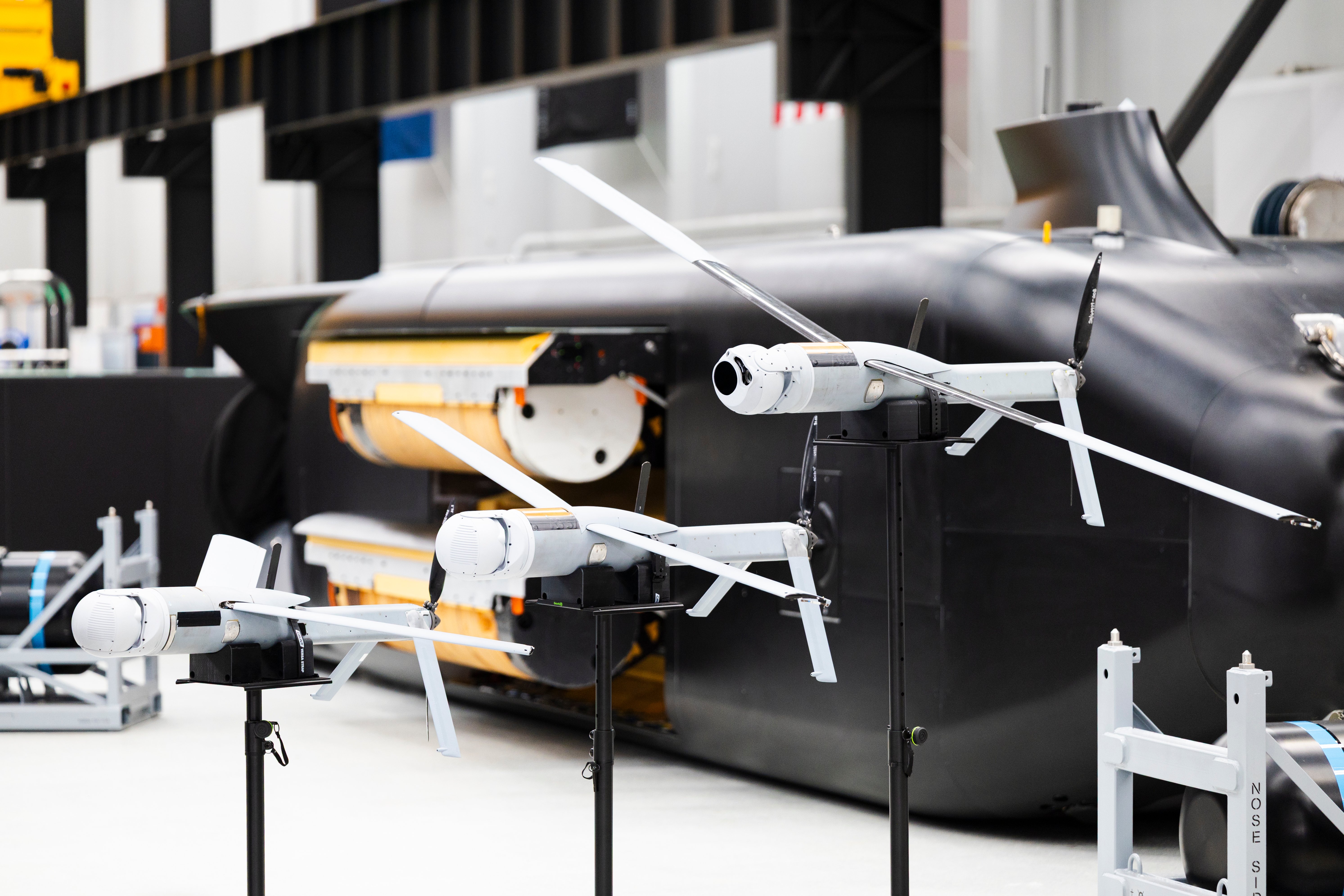
The Anduril ALTIUS-600 is displayed during a press conference at the Anduril Australia factory in Sydney, New South Wales. Australian Department of Defense

Which ALTIUS variants the Ghost Shark will be able to deploy has not been publicly disclosed. The models displayed at the Altus factory are all derivatives of the ALTIUS-600 family. Notable versions include the ALTIUS-600 for ISR, as well as the ALTIUS-600M, which is designed for strike missions. As you can read here, the basic drone has an overall weight of between 20 and 27 pounds, depending on its payload, which typically weighs between three and seven pounds. The ALTIUS-600 has a maximum range of around 275 miles and can remain airborne for at least four hours, according to its developer. Unarmed variants of the ALTIUS-600 are designed to be recoverable and reusable, although it is unclear how practical that would be after launch from a UUV.

There is another missing part of the payload puzzle, namely the kinds of capsules that would contain the ALTIUS UAVs for launch from the sub.

The Rheinmetall Asteria 533mm-diameter mine pictured alongside the Ghost Shark is not installed in the vehicle’s payload bay. Its appearance nevertheless provides an intriguing visual counterpart to the newly disclosed mine-delivery capability. According to the manufacturer, the Asteria can be deployed from surface vessels, aircraft, and submarines (normally via torpedo tubes). It can be remotely controlled via an acoustic link and is optimized for the defense of harbors, straits, ports, and other critical areas.
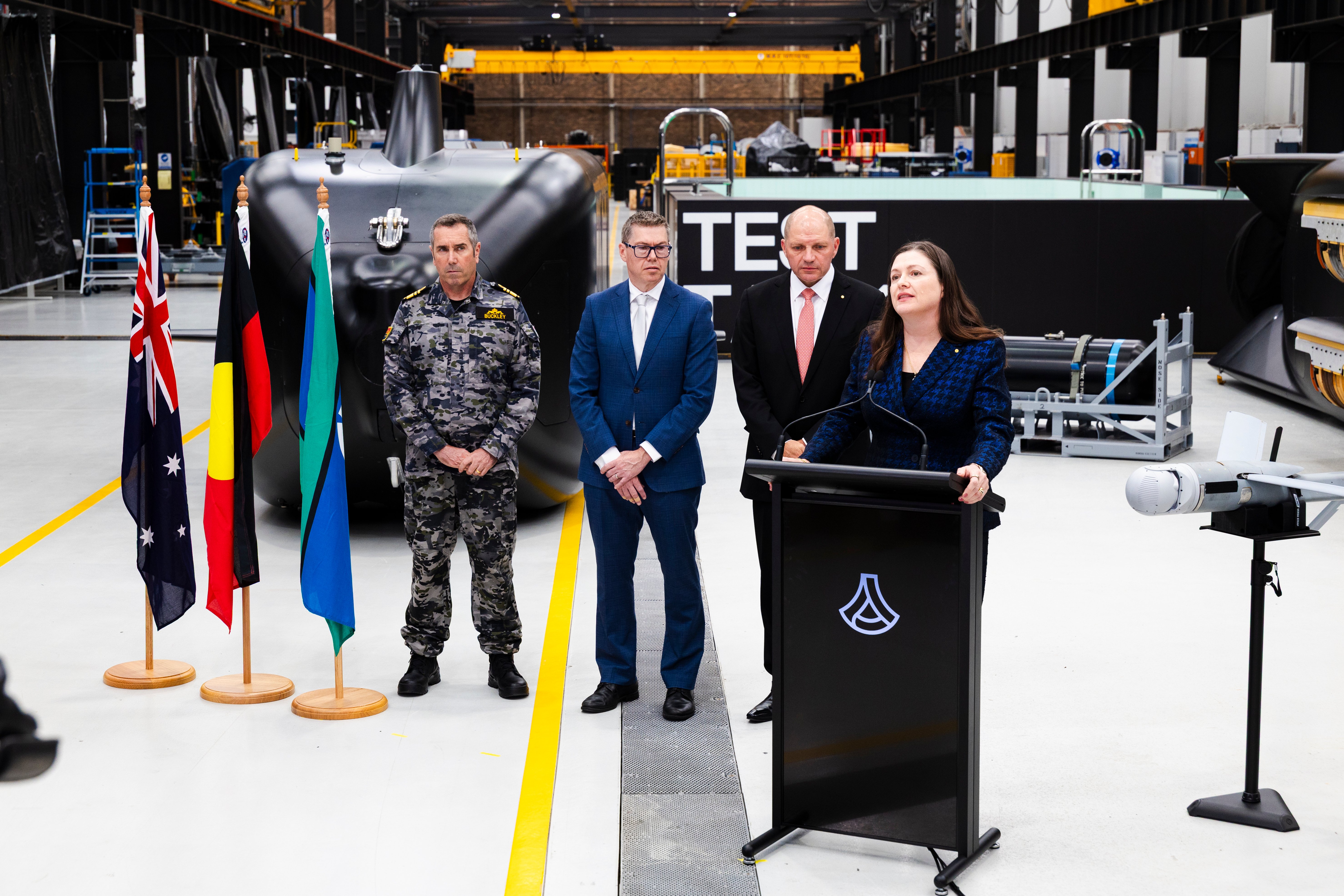
Professor Tanya Monro, AC Chief Defense Scientist, makes an address at the Anduril Australia factory, with the Rheinmetall Asteria mine behind her, immediately to her right, marked with a blue band. Australian Department of Defense

The seabed supply-cache concept points to a different operational role. Ghost Shark could position equipment and supplies underwater for later retrieval, potentially supporting forces operating in areas where conventional resupply is difficult or risky.

The notional supply cache payloads — which are under development by the Defense Science and Technology Group (DSTG) — don’t appear to be on display here. Alex Luck, a naval analyst who closely tracks submarine developments, told TWZ that the cache payloads would likely take the form of capsules, similar in shape to the Asteria mine, but containing whatever supplies need to be moved. It is not immediately clear who would use those caches. One option could be special operations forces, but if the payloads could later rise to the surface, they could be accessed by other forces, too.

It should also be noted that the U.S. Navy and U.S. Marine Corps, in particular, are envisioning future fleets of UUVs and USVs that can carry out kinetic attacks and employ electronic warfare and other non-kinetic effects, as well as emplace mines, providing a direct parallel with the planned mission set for Ghost Shark.
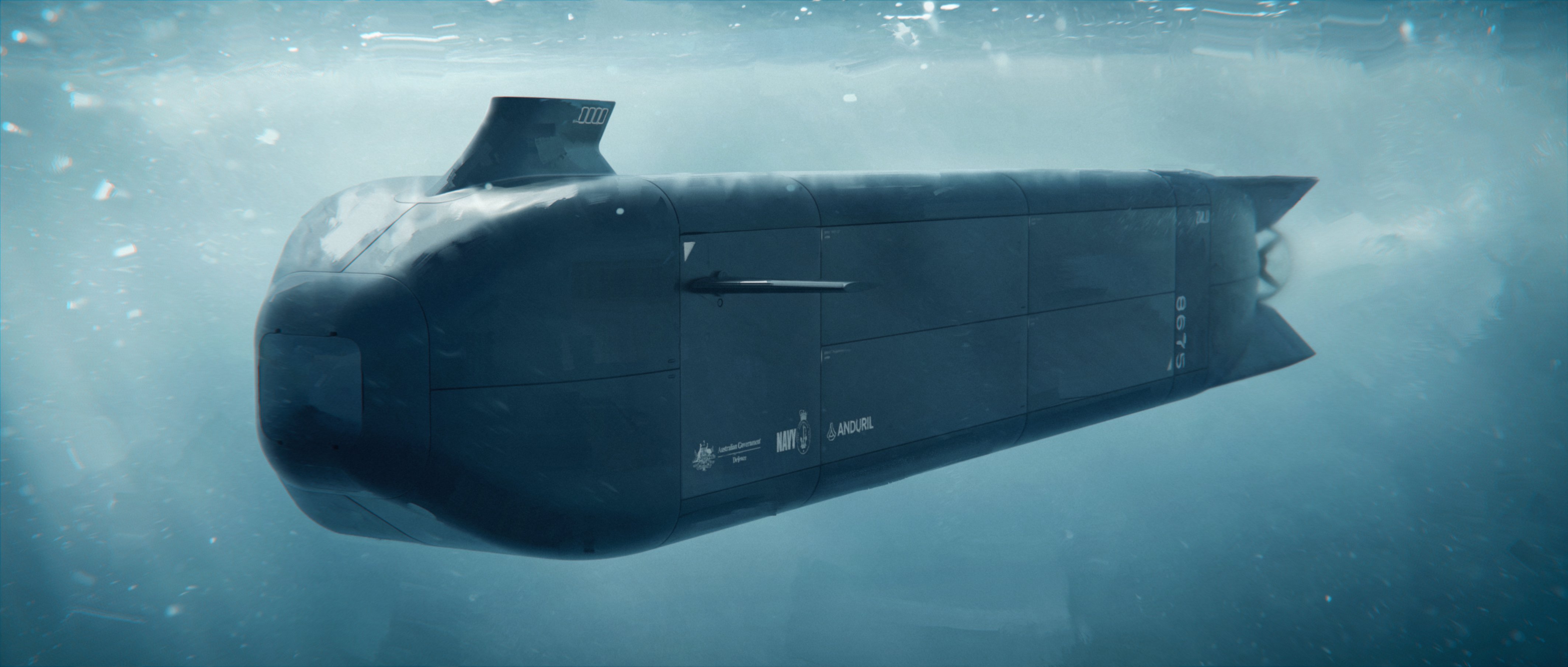
A rendering of a Ghost Shark in Royal Australian Navy service. Australian Defense Force

Some of the new payload capabilities are due to be featured in Exercise Maritime Big Play Pacific in San Diego, an AUKUS Pillar II activity focused on advanced maritime capabilities and interoperability. The Australian government says the development effort involves the Royal Australian Navy, Defense Science and Technology Group, the Advanced Strategic Capabilities Accelerator and defense industry.

As we have discussed in the past, Maritime Big Play has links to the U.S. military’s Technology Readiness Experimentation (T-REX) effort and NATO’s Robotic Experimentation and Prototyping Augmented by Maritime Unmanned Systems (REPMUS) exercise series, according to the Pentagon. The U.S. Navy has also been conducting a growing number of large-scale uncrewed-focused maritime exercises and demonstration events in recent years.
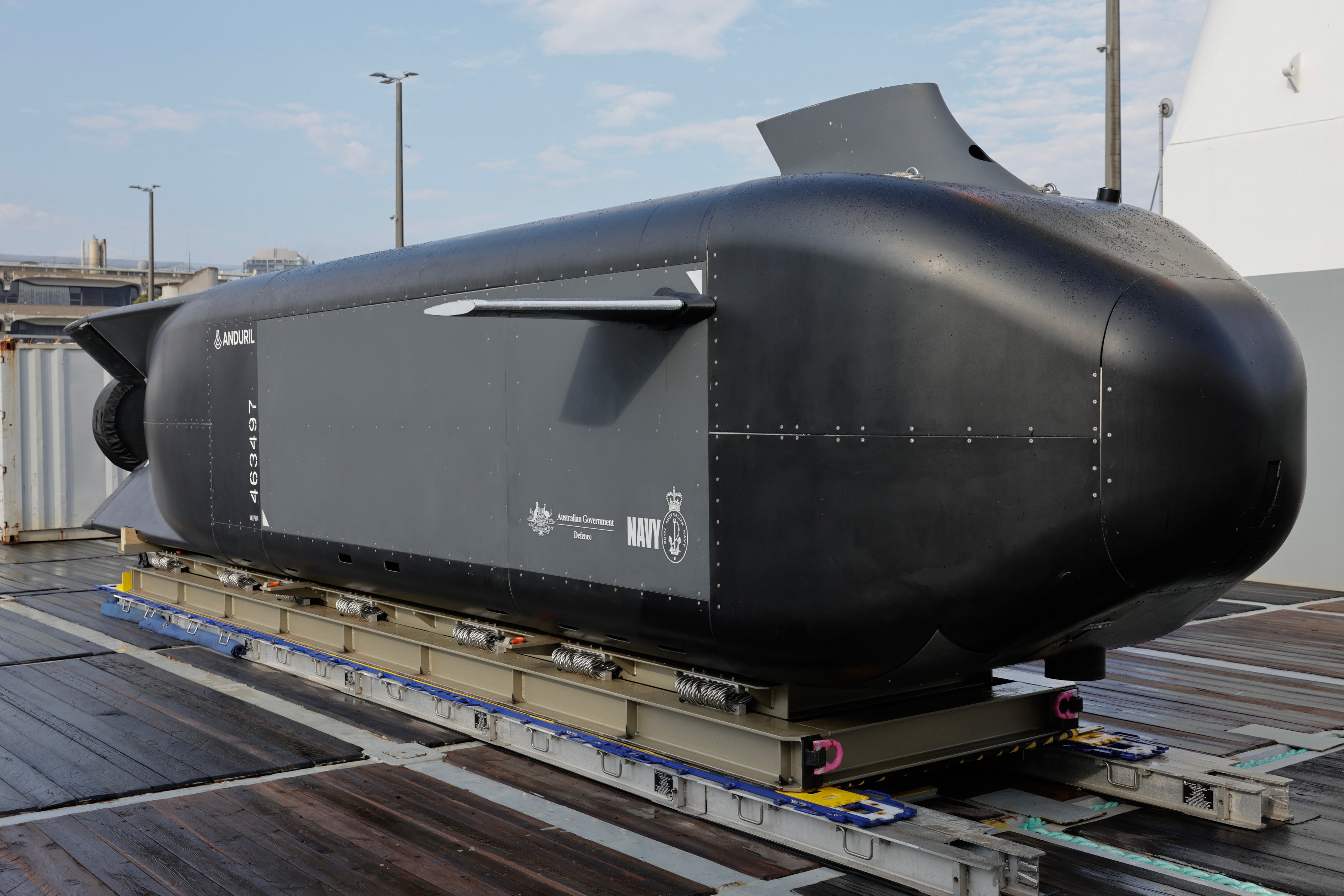
The Ghost Shark ‘Alpha’ first prototype was co-developed by Defense Science and Technology Group, the Royal Australian Navy, and Anduril Australia. Australian Department of Defense

Under AUKUS Pillar II, Australia is collaborating with the United Kingdom and the United States on Ghost Shark and its associated capabilities. While Pillar I centers on providing Australia with nuclear-powered submarines, Pillar II focuses on the joint development of advanced defence technologies, including artificial intelligence and autonomous systems.

Exactly how the Ghost Shark will be deployed during the Maritime Big Play Pacific exercise is unclear, but, speaking about the concept of operations, Conroy described examples of it being deployed from a shipping container or launched from the back of a small vessel using a crane. In the past, we have also seen the Ghost Shark loaded in a standard shipping container and transported in a Royal Australian Air Force C-17A Globemaster III airlifter.
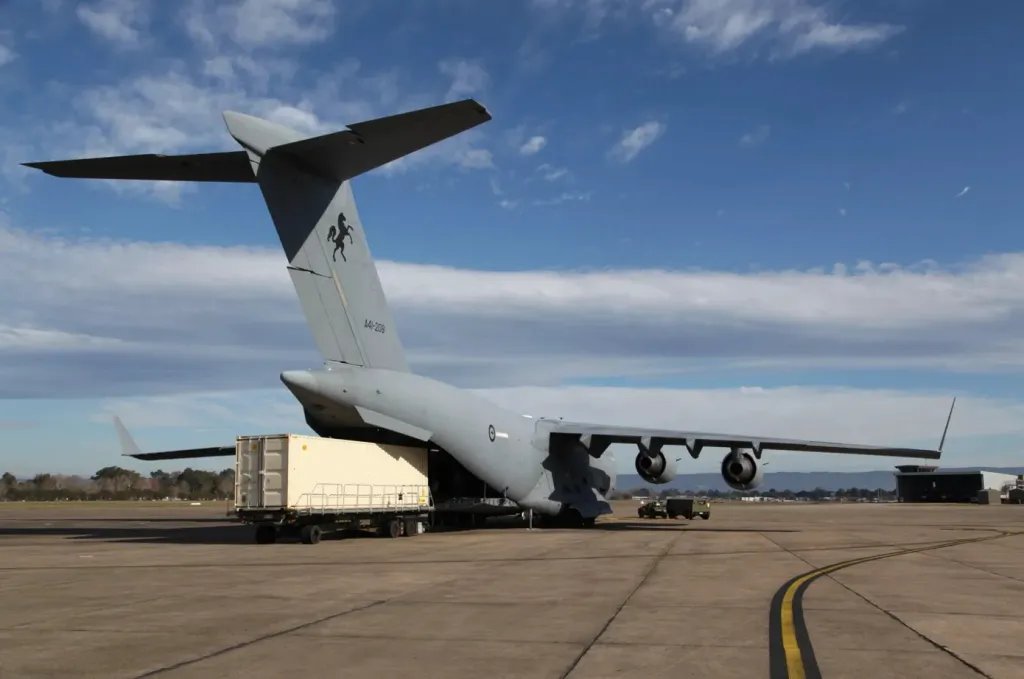
A Ghost Shark loaded in a standard shipping container for transport in a Royal Australian Air Force C-17A. Anduril

Overall, U.S. military wargames have highlighted how uncrewed systems could shape a high-end conflict across the Pacific, particularly a fight over Taiwan. One set of Taiwan conflict simulations found that large swarms of relatively low-cost, networked drones could be decisive in helping locate and attack an invading force, while other wargaming by the Center for a New American Security has highlighted the severe challenges of defending the island against a Chinese assault. Maritime drones could also play a major role: the U.S. Navy has explored submarine-launched aerial drones that act as “flying periscopes,” extending sensor coverage and providing targeting data beyond a submarine’s own reach, while uncrewed underwater vehicles could conduct mine-laying and other asymmetric missions around key maritime chokepoints. The rapid growth and technological advances made by the Chinese submarine fleet also underscore the critical importance of anti-submarine capabilities, in which uncrewed systems can play a major role. Together, these developments underscore the potential value of autonomous systems for the Royal Australian Navy as it prepares to operate across the vast distances of the Indo-Pacific.

Australia’s 2026 National Defence Strategy and Integrated Investment Program allocate up to A$5.8 billion (approximately $4.05 billion) over the decade to autonomous and uncrewed undersea warfare capabilities, including A$1.7 billion (approximately $1.19 billion) for a new fleet of Australian-designed and built Ghost Shark vehicles.

The newly released imagery and payload details offer the clearest picture yet of how Australia intends to expand Ghost Shark beyond a conventional underwater surveillance role. The next key milestones should provide more details of how the payloads will be integrated into the vehicle, and how they might be deployed in practice.

Contact the author: thomas@thewarzone.com

The post Ghost Shark Extra-Large Uncrewed Underwater Vehicles’ Payload Bay Seen For First Time appeared first on TWZ.
  •  

Twelve Migrants Die Off Greek Islands as EU Border Crossings Fall by a Third

Twelve migrants, including an infant, have died in two separate incidents involving boats travelling from Turkey towards the Greek islands of Lesbos and Samos, prompting investigations into the circumstances of the deaths and the activities of suspected people smugglers.

The incidents occurred on Monday, 19 October, in the northeastern Aegean Sea. Six people died when a speedboat collided with a Greek coastguard vessel near Lesbos, while another six were killed after a separate boat overturned north of Samos.

The deaths coincided with the publication of new figures from the European Border and Coast Guard Agency, Frontex, showing that irregular crossings into the EU fell by almost one-third during the first nine months of 2026.

According to the latest border monitoring figures, approximately 91,000 irregular crossings were detected between January and September, although the eastern Mediterranean remained the busiest migration route into the Union.

Two incidents under investigation

According to information released by the Greek authorities, the first fatal incident occurred near Agrilia on Lesbos when a speedboat carrying migrants struck a coastguard patrol vessel before overturning.

Six people died, while eight survivors were taken to hospital. The authorities subsequently arrested a 37-year-old Turkish national, identifying him as the suspected operator of the migrant boat.

Greece’s Maritime Affairs Minister Vassilis Kikilias said the available evidence indicated that the speedboat had struck the left side of the coastguard vessel. The precise circumstances remain under investigation.

In the second incident, approximately four nautical miles north of Samos, a boat reportedly overturned after making a sudden manoeuvre while being pursued by the coastguard.

Five men and one woman died, while 14 people were rescued. An Iranian national was arrested on suspicion of involvement in migrant smuggling.

The arrests do not establish criminal responsibility, and the circumstances surrounding both incidents remain subject to investigation.

Greek authorities have attributed the dangers of the crossings to trafficking networks operating between Turkey and the Aegean islands. The government has reiterated its policy of pursuing smugglers and restricting unauthorised maritime arrivals.

Fewer crossings, continued fatalities

Frontex recorded approximately 31,800 detections along the eastern Mediterranean route during the first nine months of this year, representing a decline of around 15 per cent compared with the equivalent period in 2025.

Across the European Union’s external borders, the agency reported an even larger reduction, with overall detections down by almost one-third.

The Central Mediterranean route experienced a particularly substantial fall, while the Western Mediterranean recorded an increase, reflecting changes in departure points and migration patterns.

These figures count detected border crossings rather than individual migrants and do not necessarily capture every unauthorised arrival.

The latest data also have to be considered alongside exceptional developments elsewhere on Europe’s borders. In July, large-scale movements through Spain’s Ceuta enclave created additional pressures on Spanish authorities and raised questions about the application of the EU’s new asylum arrangements.

The eastern Mediterranean figures encompass several routes, including crossings from Libya towards Crete, movements through the Aegean islands and arrivals across the land border with Turkey.

Consequently, the total recorded for the wider region should not be interpreted solely as the number of people arriving on the Greek islands.

Greece remains central to European border policy

Greece has occupied a central position in EU migration policy since the 2015–2016 crisis, when hundreds of thousands of people arrived from Turkey, many travelling onwards through the Balkans.

The subsequent EU–Turkey migration arrangements were intended to reduce unauthorised crossings and establish procedures for returning certain migrants who did not qualify for protection.

Athens has also faced persistent criticism from human rights organisations concerning allegations of unlawful returns at sea and land borders. Greek authorities deny operating an unlawful pushback policy and maintain that their border operations respect domestic and international law.

The EU’s Pact on Migration and Asylum, which entered into application in 2026, has introduced common procedures for screening arrivals, processing asylum claims and managing people who do not have permission to remain.

Its implementation has placed greater emphasis on border identification, biometric registration and cooperation between national authorities and Frontex.

However, the two disasters demonstrate the continued risks associated with maritime crossings, even during a period of declining arrivals.

Investigators must now establish precisely how both boats overturned, whether criminal offences were committed and what occurred during the encounters with coastguard vessels.

The findings will be relevant not only to the prosecutions of those arrested, but also to continuing scrutiny of maritime enforcement along one of the European Union’s principal external borders.

  •  

Ukraine to compensate damaged cargo ships, as Russia rejects Black Sea proposal

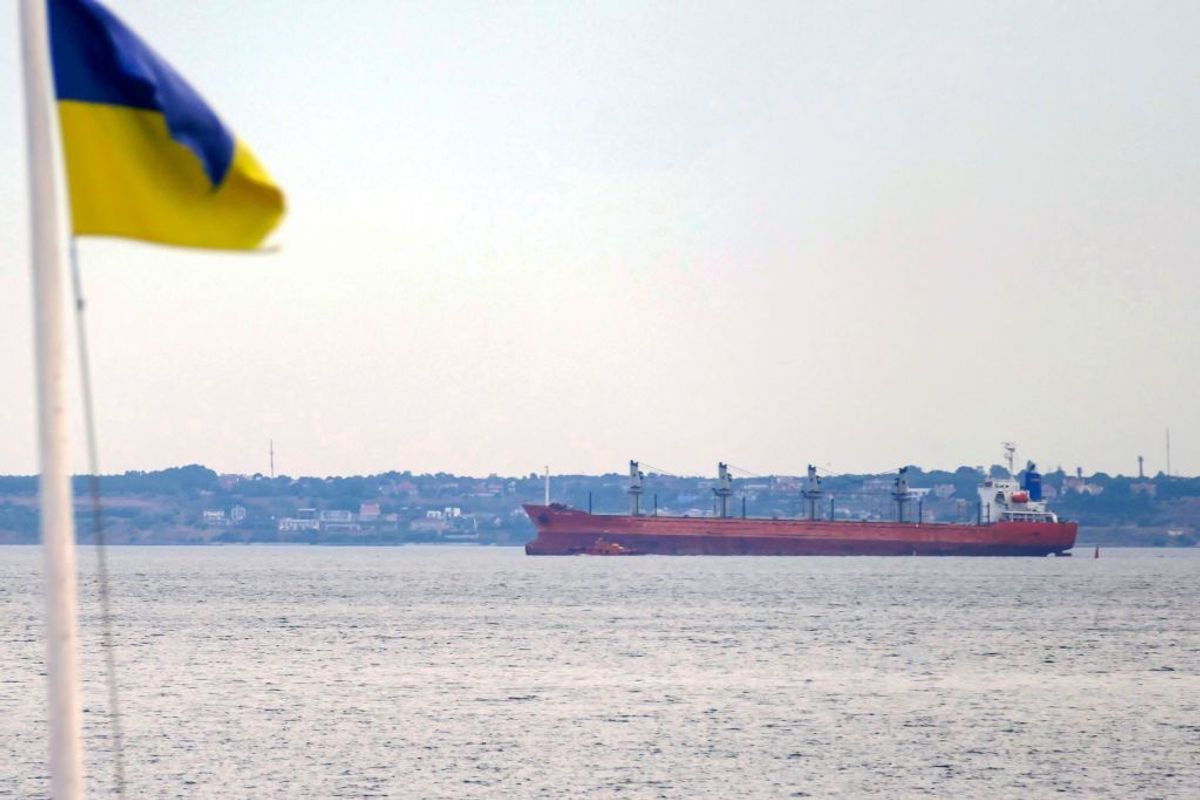
Under a mechanism developed by Ukraine’s Infrastructure Ministry, Kyiv will compensate shipowners, operators, and charterers whose vessels fly under the Ukrainian or a foreign flag for up to 80% of the assessed damage if insurers don’t cover the risks.

  •  

Second Chinese Submarine Drone Mothership Emerges

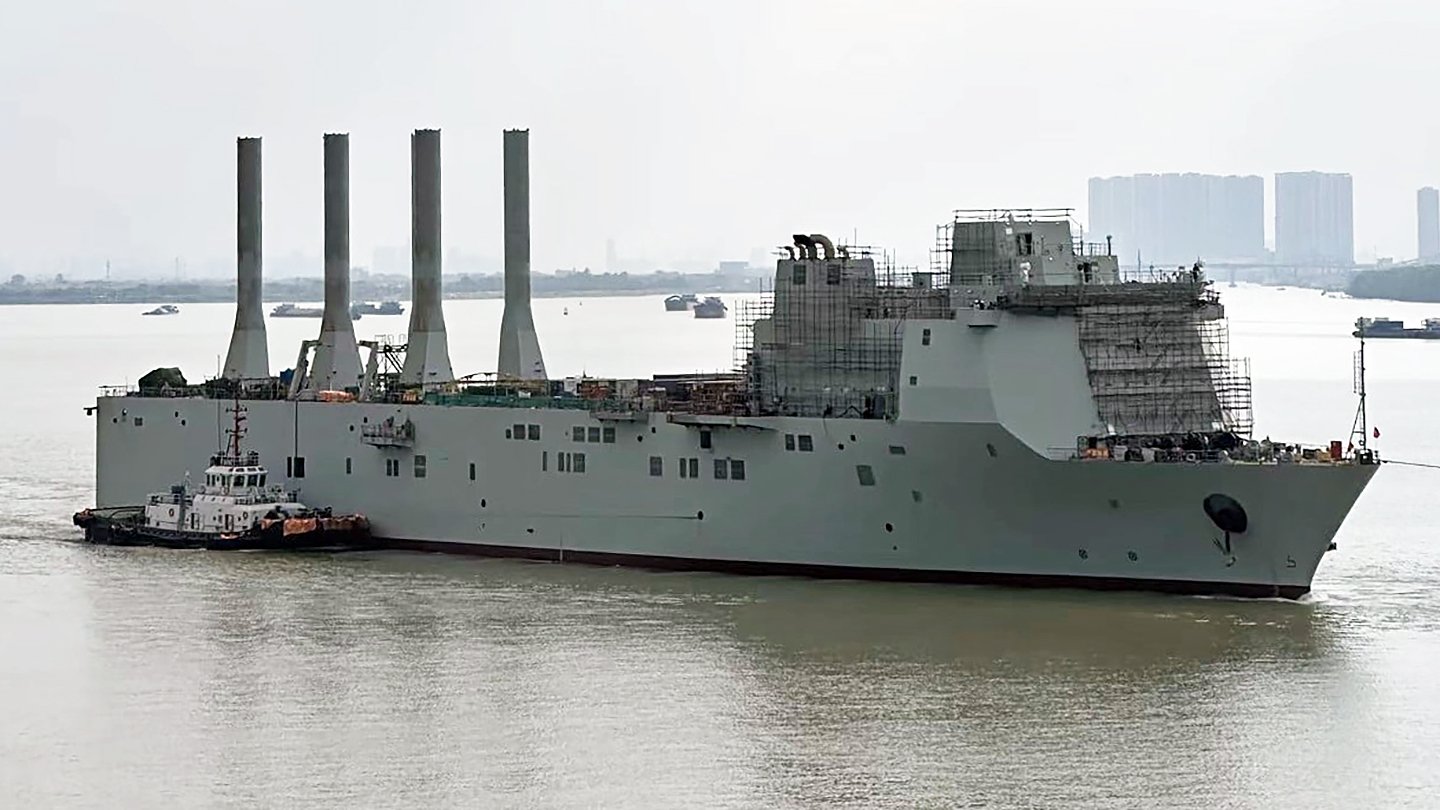
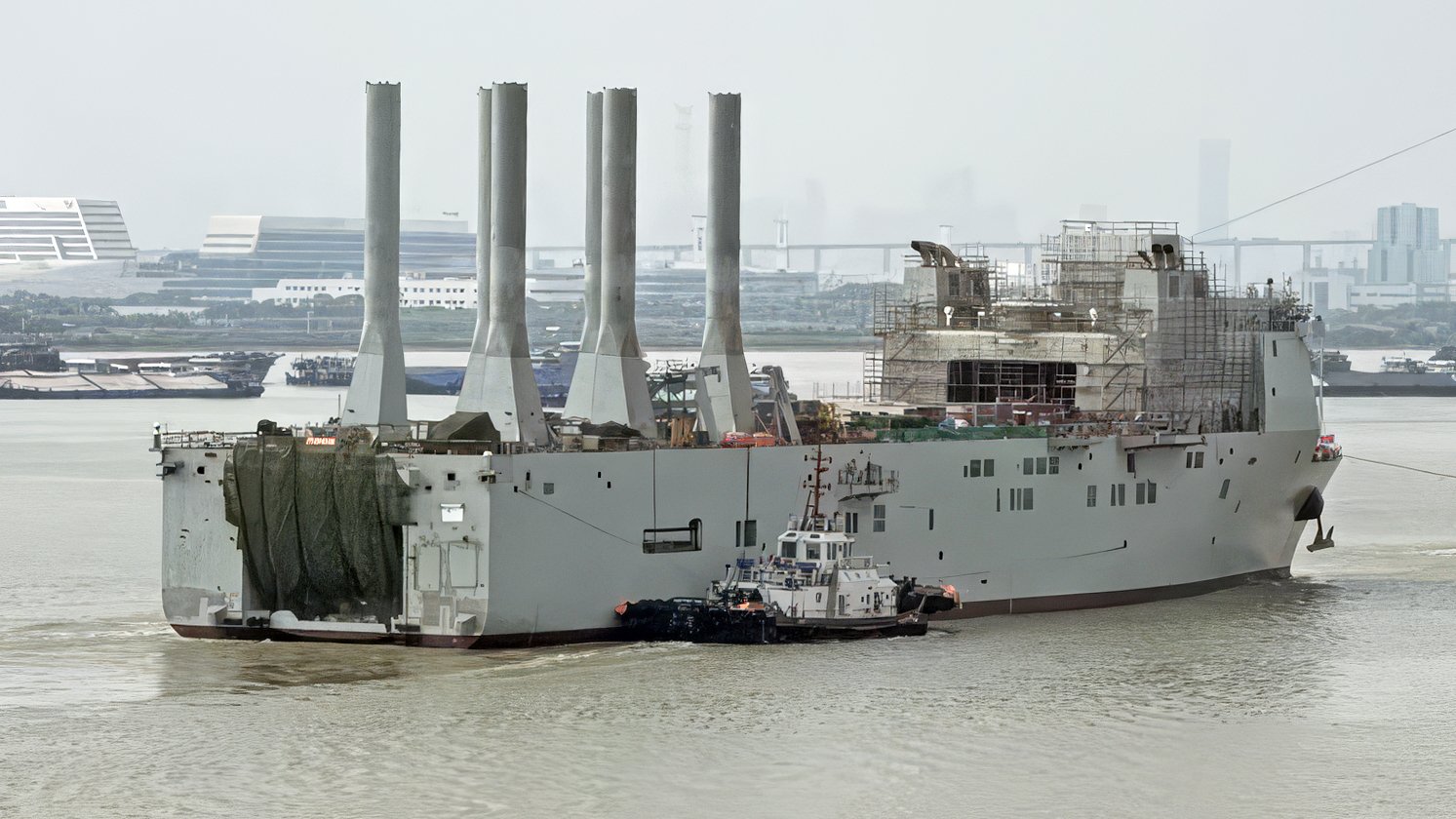
Nearly a month ago, we reported on a uniquely configured vessel that was far along in its construction at Hudong-Zhonghua Shipyard on Changxing Island in Shanghai. The intentions behind this design appeared to be as an uncrewed underwater vehicle (UUV) mothership, capable of deploying a handful of very large vehicles or many more smaller ones via its stern garage door and well deck. Its large pylons would be used to lift the vessels up and down out of the water and to different levels in the ship. Now it appears China has not just one, but two of these vessels nearly complete.

Make sure to read our initial report on this vessel configuration for full context by clicking here.

(Chinese Internet)

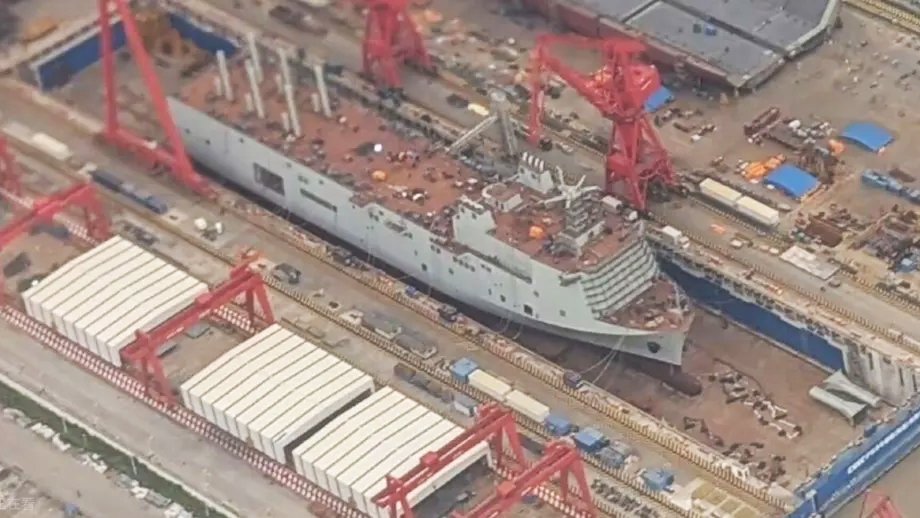
The new image was taken in Guangzhou and the vessel has a near identical shape, but with smaller proportions and minor changes to its overall moldline, compared to the larger one in Shanghai. This new vessel appears to be about a third smaller overall than its counterpart. The lift towers number six in total instead of six larger ones and six smaller ones on the Shanghai vessel. Regardless, the major design features are all there, including the flight deck and hangar behind the forward superstructure, the location of the smokestacks, and so on.

The larger but very similar in configuration UUV mothership that has now been launched in Shanghai. (Chinese Internet)

While two of these assets could still be considered largely intended for experimental use, a growing fleet would have increasing tactical and even strategic importance. Being able to easily launch and recover large numbers of UUVs, or a few very large ones, far from Chinese shores would provide an asymmetric capability. A fleet of ships that is dedicated to deploying, recovering, and tending to these systems, some of which can remain on patrol for very long periods, would be a major indication of how important China sees UUV operations as part of its future strategy.

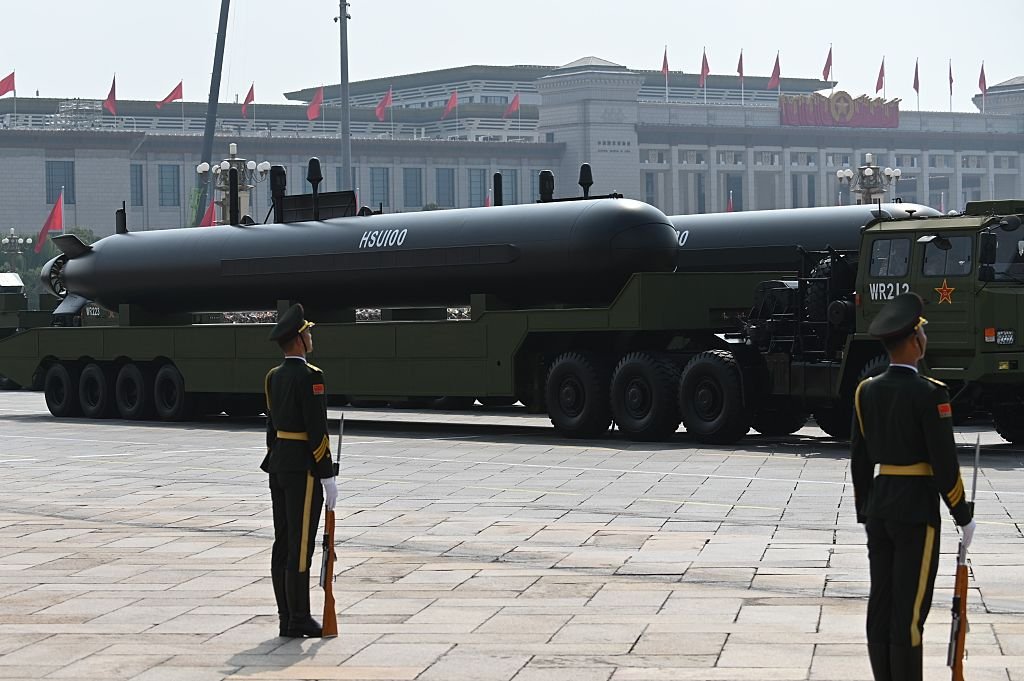
03 September 2025, China, Peking: Unmanned underwater drones ride along on military transporters at Tiananmen Square in Beijing during a military parade to mark the 80th anniversary of the end of World War II. Photo: Johannes Neudecker/dpa (Photo by Johannes Neudecker/picture alliance via Getty Images)
03 September 2025, China, Beijing: HSU100 uncrewed underwater drones ride along on military transporters at Tiananmen Square in Beijing during a military parade to mark the 80th anniversary of the end of World War II. Photo: Johannes Neudecker/picture alliance via Getty Images picture alliance

There have been rumors that these vessels are part of a larger overall program that will see more ships with similar capabilities constructed. Once again, this would be a strong indication that these vessels’ utility will go beyond testing and limited operational use cases. The launch and recovery of large UUVs remains a conceptual work in progress for the U.S., with nothing similar in the U.S. Navy’s inventory, as we discussed in our original post.

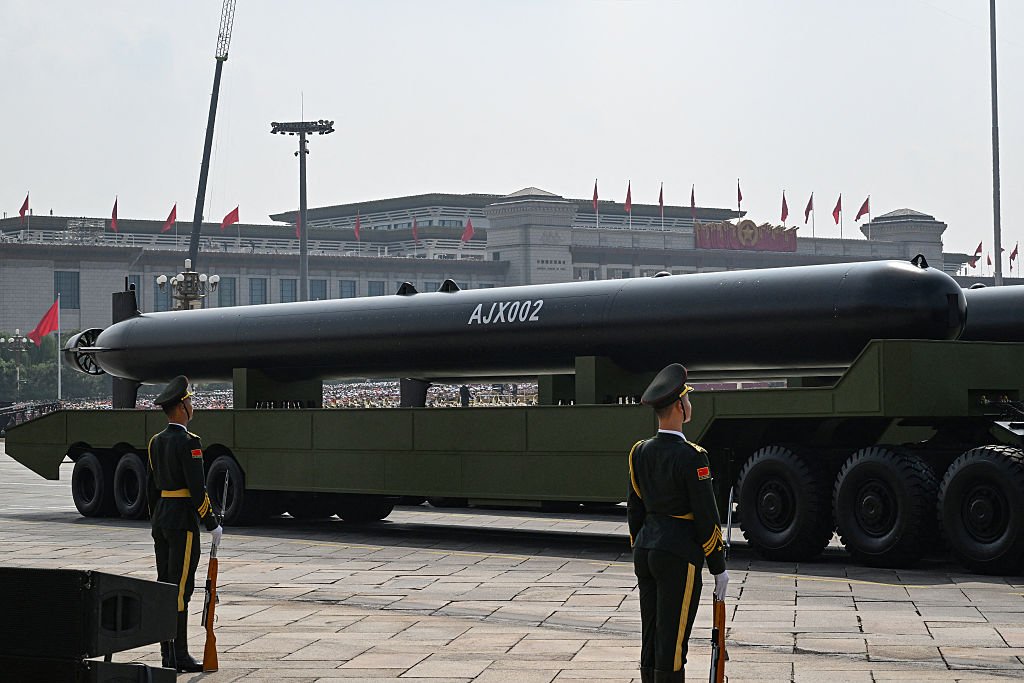
Large long-range UUVs can be used for many tasks, from mapping the sea floor to hunting submarines and ships to searching for mines to launching cruise missiles and drones to being turned into immensely destructive weapons in their own right that can circumvent traditional strategic defenses. For China, providing a credible threat to America’s outposts deep in the Pacific and even the U.S. seaboard would be on the table.

An AJX002 unmanned underwater vehicles is seen during a military parade marking the 80th anniversary of victory over Japan and the end of World War II, in Beijing's Tiananmen Square on September 3, 2025. (Photo by Greg Baker / AFP) (Photo by GREG BAKER/AFP via Getty Images)
An AJX002 uncrewed underwater vehicle is seen during a military parade marking the 80th anniversary of victory over Japan and the end of World War II, in Beijing’s Tiananmen Square on September 3, 2025. (Photo by Greg Baker / AFP) GREG BAKER

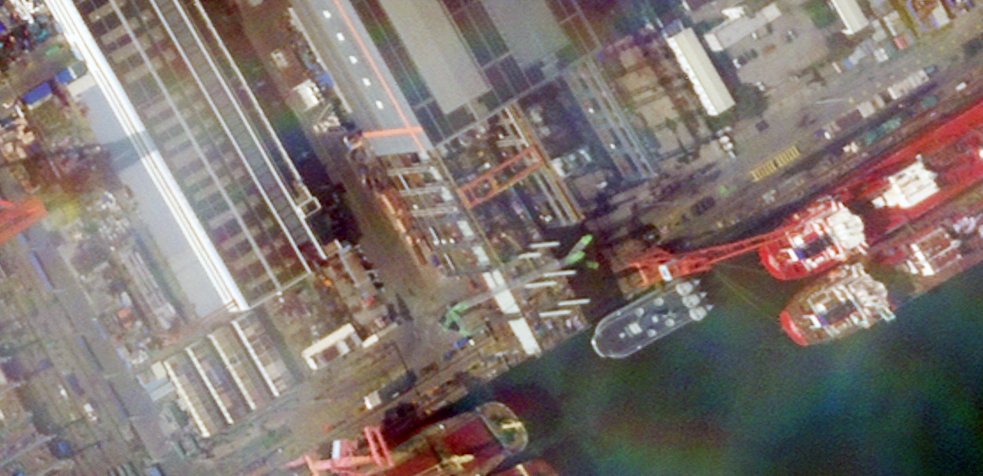
There is speculation online as to where exactly this vessel was built. The first place that came to mind is Guangzhou Shipyard International’s (GSI) facilities on Longxue Island, just southeast of the city of Guangzhou. GSI is a subsidiary of the China State Shipbuilding Corporation (CSSC). It is here that many of China’s most unique vessels are born. These include drone test ships of various kinds, massive beach landing barges, and giant supply ships. Upon closer review of archival satellite imagery, we can say for certain that GSI did build this ship. An image from October 2nd shows it peeking out of a covered graving yard area at the facility prior to launch.

{"properties": {"satellite_azimuth": -94.52266540871726, "satellite_elevation": 58.39625883531322, "sun_azimuth": 249.32095423698593, "sun_elevation": 33.00218550744084}}
PHOTO © 2026 PLANET LABS INC. ALL RIGHTS RESERVED. REPRINTED BY PERMISSION

The emergence of two of these large UUV tenders in such a short period of time underscores China’s major bet on the technologies they will support. If more ships are added to the currently known fleet of two, a clearer picture of the People’s Liberation Army Navy’s large UUV plans, and its expeditionary potential, will come into focus.

Contact the author: Tyler@twz.com

The post Second Chinese Submarine Drone Mothership Emerges appeared first on TWZ.
  •  

Romania downs two Russian jet drones near Sulina, days before NATO allies meet on Black Sea security

romania downs two russian jet drones near sulina days before nato allies meet black sea security · post missile fired romanian f-16 during mission shoot down over 17 2026 853877788_1089835267016426_3152631372123116528_n

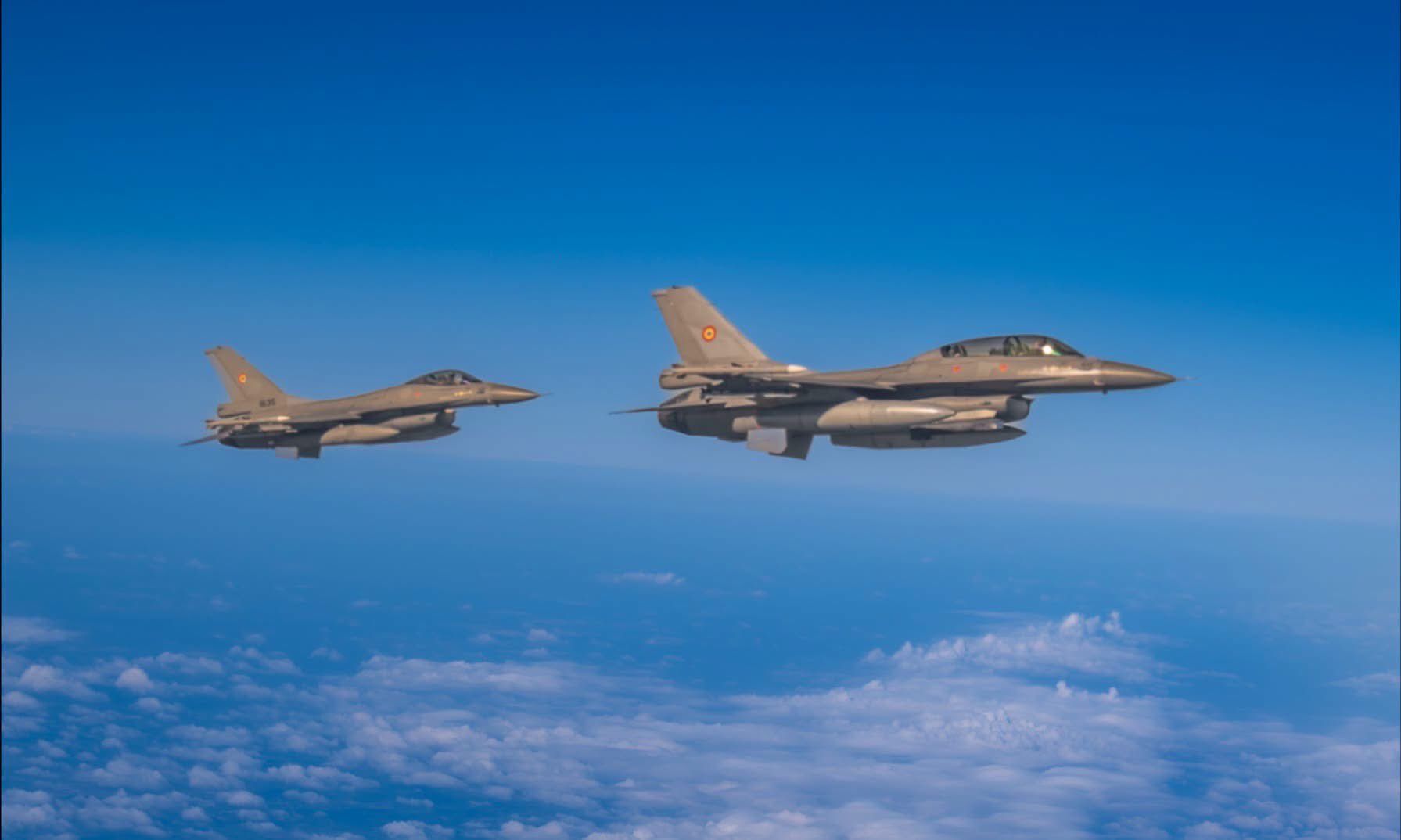
Two Romanian F-16s shot down two jet-powered Russian Geran attack drones over Romania’s territorial waters near Sulina on the evening of 17 October, Romania’s Defense Ministry said. The ministry released cockpit images of the mission the next day, as NATO allies prepare to discuss Black Sea security at a special session Romania requested.

This comes as Moscow continues its air attacks on Ukraine, while the US is trying to make deals with Russia over its diesel and lift sanctions. Russia keeps striking Ukraine’s energy system and cities, while its drones and suspected saboteurs keep turning up inside NATO, from tankers hit off Romania to a foiled arson attempt at a Starlink site in Lithuania.

Down within minutes

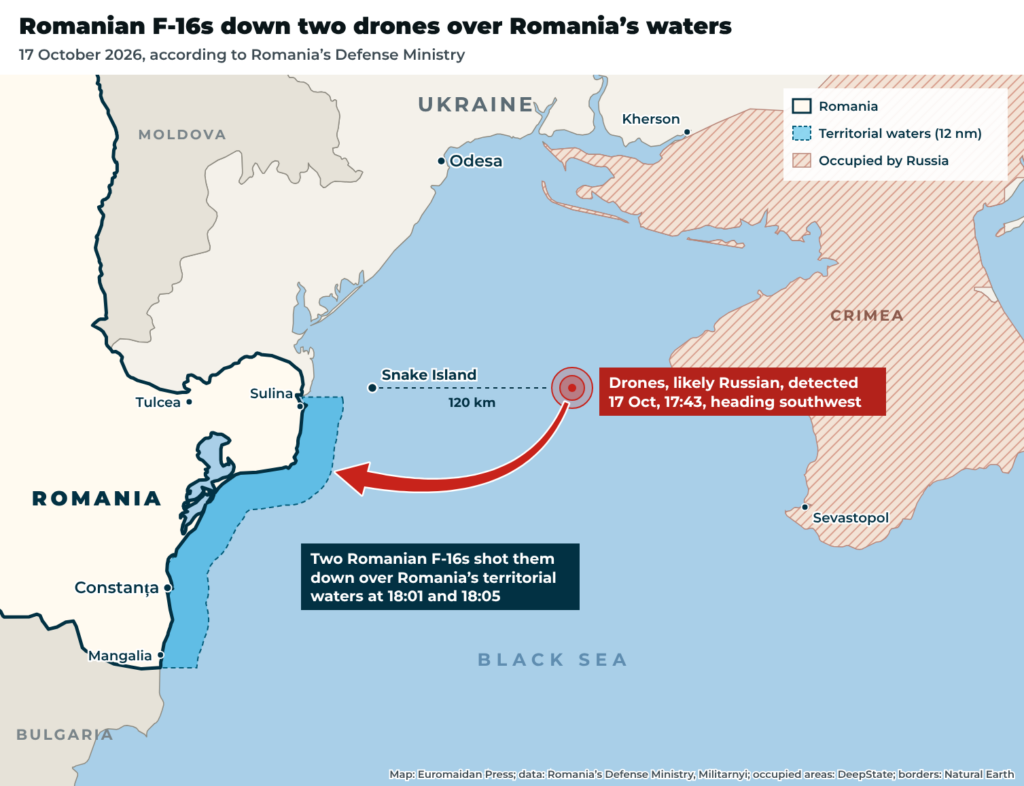
The F-16s took off from the 86th Air Base at Borcea at 17:43 after radar detected a group of air targets about 120 km east of Zmiinyi (Snake) Island, flying southwest, Ukrainian military outlet Militarnyi reported, citing the ministry. The first drone entered Romanian airspace at 17:59 and was shot down at 18:01 southeast of Sulina. The second entered at 18:01 and was downed at 18:05 east of Sulina.

romania downs two russian jet drones near sulina days before nato allies meet black sea security · post where romanian radar detected about 120 km east snake island f-16s shot
Where Romanian radar detected two drones, about 120 km east of Zmiinyi (Snake) Island, and where Romanian F-16s shot them down over Romania’s territorial waters near Sulina, 17 October 2026. Map: Euromaidan Press

Both were jet-powered attack drones of the Geran family, the ministry said. The Geran is Russia’s version of the Iranian-designed Shahed. When first detected, the drones were about 65 km from the coast of Russian-occupied Crimea and 140 km from the Ukrainian-held shore, and their southwest course may point to Russian origin, Militarnyi calculated.

The White House, seen from Lafayette Square. File photo, June 2024.
Explore further

Congress gave Trump 30 days to hit Russia’s oil buyers with 100% tariffs. He waives them two days before deadline, citing US interests. Moscow calls it historic

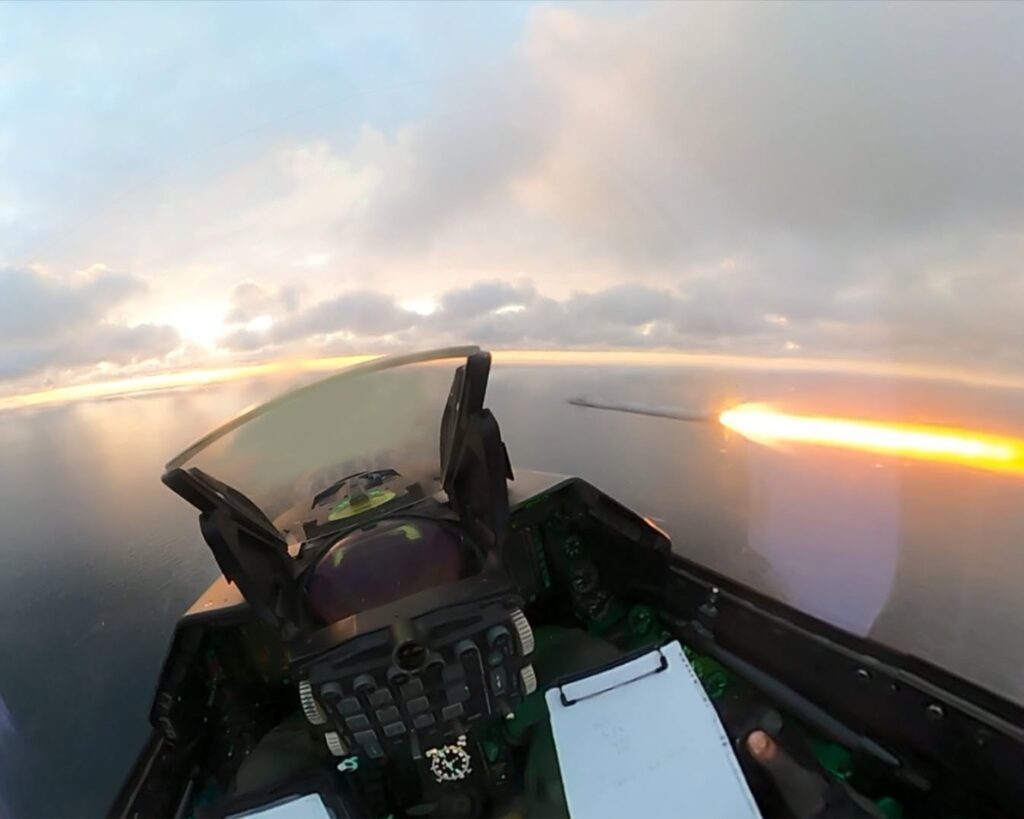
The ministry posted the cockpit images on 18 October, showing a missile launch and a fireball over the sea. “Targets spotted, identified, engaged and neutralized!” it wrote.

romania downs two russian jet drones near sulina days before nato allies meet black sea security · post fireball over seen cockpit romanian f-16 during mission shoot down 17 2026
A fireball over the Black Sea seen from the cockpit of a Romanian F-16 during the mission to shoot down two drones near Sulina, 17 October 2026. Photo: Romanian Defense Ministry/Facebook

Allies to meet on the Black Sea

A special session of the North Atlantic Council, NATO’s top decision-making body, will discuss defense and deterrence in the Black Sea on 20 October at Romania’s request. Romanian President Nicușor Dan has confirmed that the two tankers that caught fire near Sulina last week were hit by drones, and a NATO military source told Reuters they were Russian.

Romanian radar has logged 54 drone intrusions into the country’s air and sea space since Russia’s full-scale invasion, 35 of them this year, and the military has shot down six such targets in 2026, Defense Ministry data show.

romania downs two russian jet drones near sulina days before nato allies meet black sea security · post romanian air force f-16am/bm block 15 militarnyi f-16am вм повітряних сил румунії
A Romanian Air Force F-16AM/BM Block 15. Illustrative photo: via Militarnyi

Searches in Poland and Lithuania

Within hours, Poland’s Operational Command said it was checking a possible airspace violation by an unknown object overnight into 18 October. Troops, police, and military police searched for a possible crash site south of Lublin after residents reported the loud sound of a flying object around 02:00, Militarnyi reported.

On the morning of 18 October, an unknown drone entered Lithuania’s airspace and triggered air raid alerts, the country’s crisis management center said. NATO jets accompanied it but could not shoot it down because of bad weather, Defense Minister Robertas Kaunas said. Debris preliminarily identified as drone parts was later found in the village of Juodžioniai in Pasvalys district, and the army said the drone may have entered from the direction of Poland.

Romania moved from escorting Russia’s stray drones to firing on them in July, when its F-16s downed three in 72 hours.

  •  

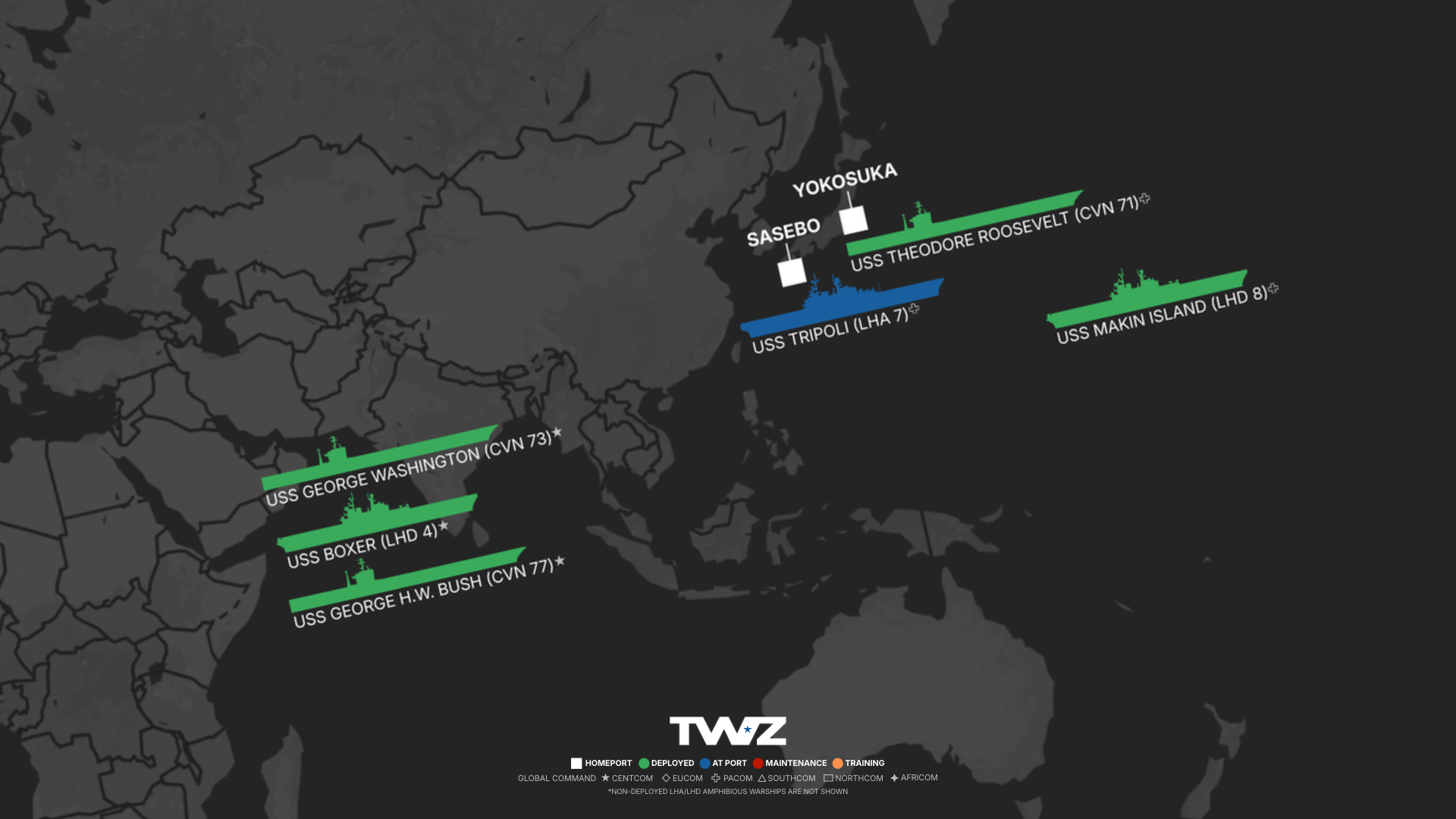
Where Are The Aircraft Carriers?: October 17, 2026

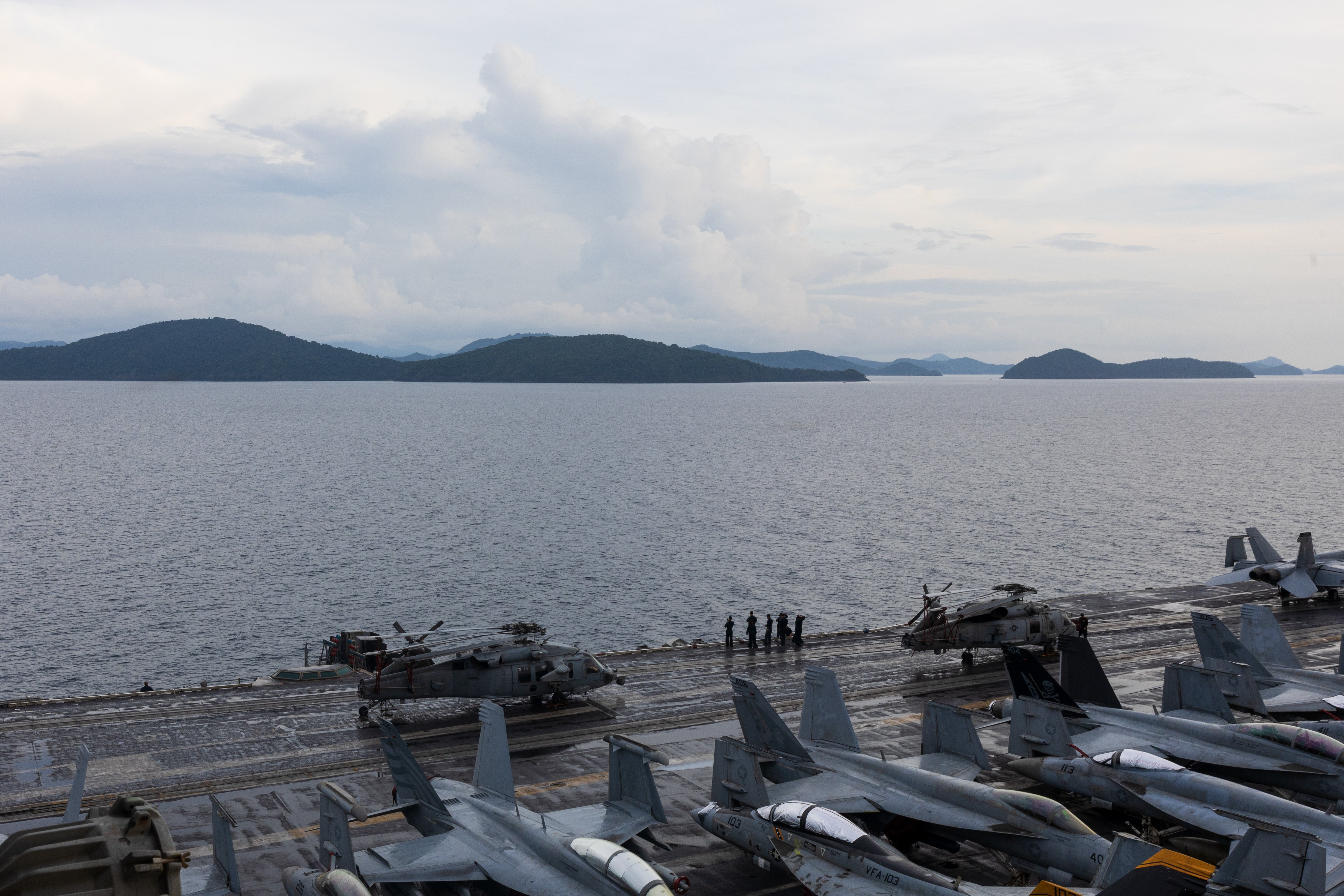
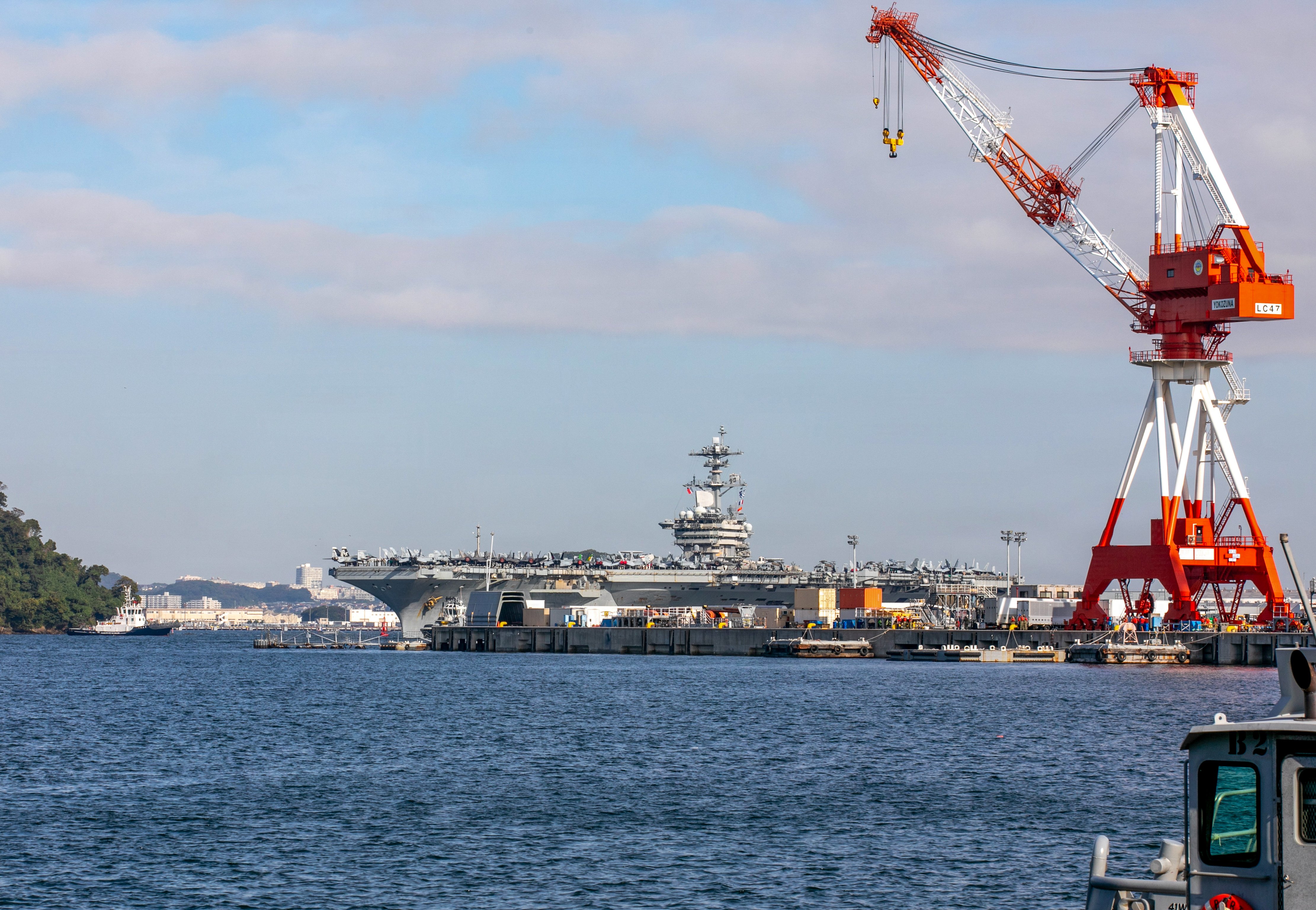
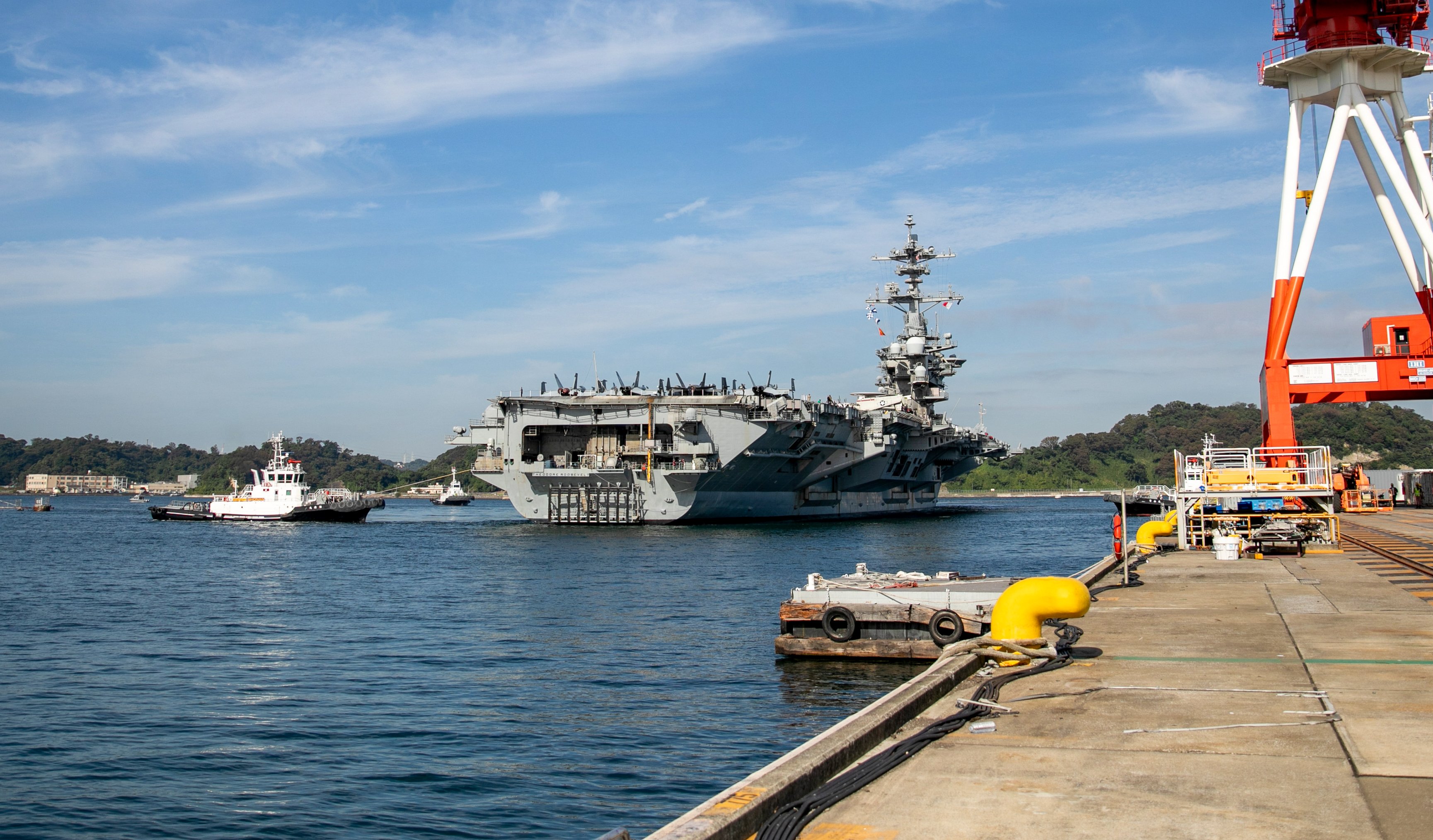
With a flight deck packed with carrier-based aircraft, including stealthy fifth-generation F-35Cs, the USS Theodore Roosevelt pulled into Yokosuka, Japan, on Friday. Roosevelt is the first non-resident U.S. carrier to visit the key naval port, strategically located on the east side of Japan, in more than four years. Yokosuka is home to the USS George Washington and America’s only forward-based Carrier Strike Group (CSG).

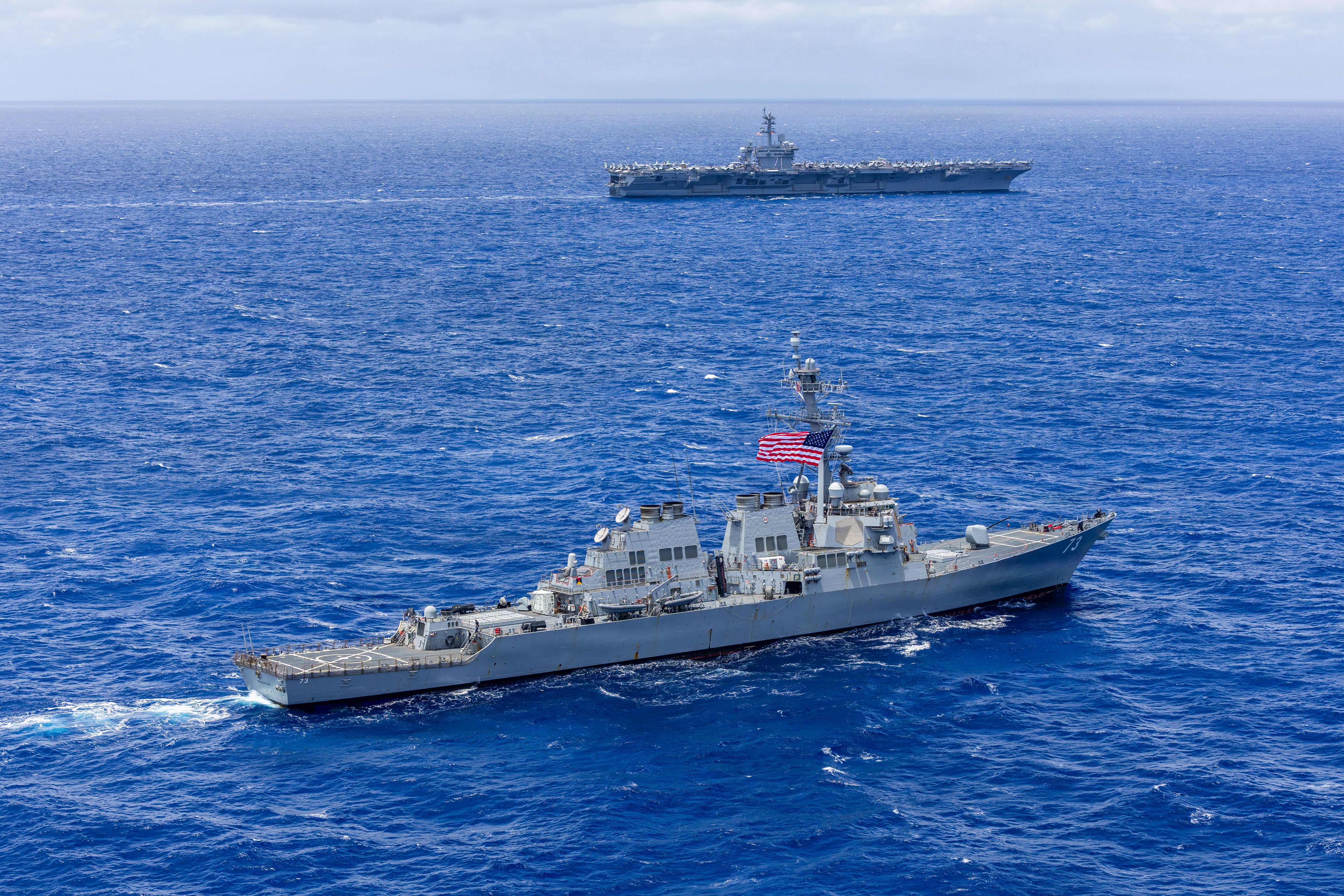
The Roosevelt, which serves as the flagship of CSG 9, escorted by guided-missile cruiser USS Chosin and destroyer USS Decatur, completed the journey from San Diego in 19 days − maneuvering around a typhoon in the Western Pacific − and will participate in the upcoming combined exercise Keen Sword 27. Meanwhile, the USS George H.W. Bush departed Thailand after a five-day port call and returned to the Middle East, and the USS Abraham Lincoln arrived home after a nearly eleven-month combat deployment.

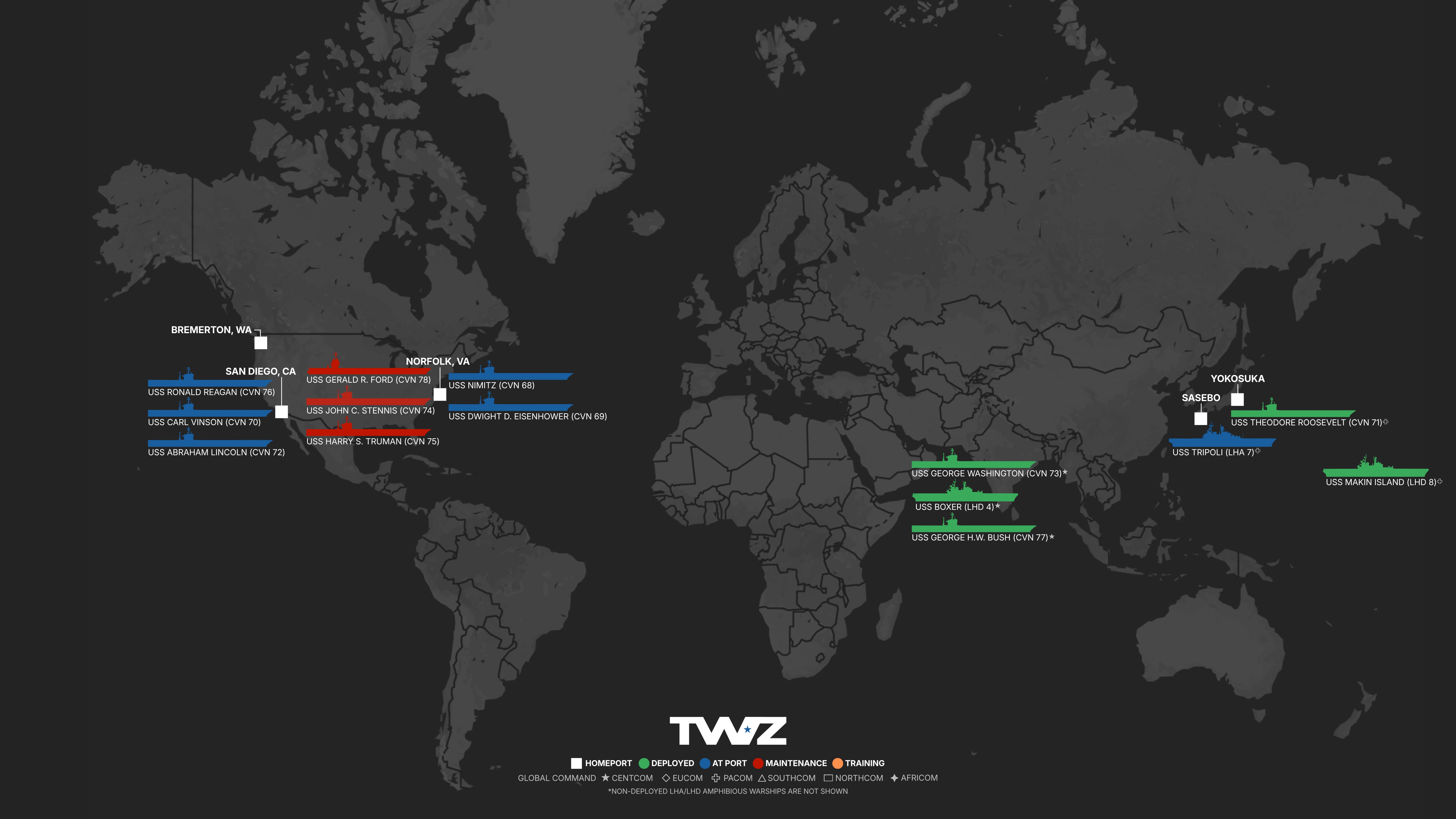
Here’s TWZ’s weekly carrier tracker monitoring America’s flattop fleet, including deployed CSGs and Amphibious Ready Groups (ARGs), using publicly available open-source information. Check out last week’s report here.

Detailed graphic showing the current position of America's fleet of eleven aircraft carriers around the world, created by TWZ and Ian Ellis-Jones.
TWZ/IAN ELLIS-JONES

Theodore Roosevelt Docks In Yokosuka, Japan; First Visiting Carrier In Four Years

Roosevelt and Chosin chopped into the U.S. 7th Fleet-Pacific Command (PACOM) area of responsibility (AOR) and arrived at Commander, Fleet Activities Yokosuka on the morning of October 16. The CSG will spend a few days in port before beginning participation in exercise Keen Sword, a “premier joint-bilateral field training exercise designed to increase readiness and interoperability between the Japan Self-Defense Forces and U.S. military forces,” according to the 7th Fleet press release. The brief visit allows the crew to complete maintenance, resupply, and disembark for liberty before resuming routine operations.

“Our crew is honored to visit Yokosuka and experience the rich culture and hospitality of Japan,” the commanding officer of Roosevelt, Capt. Will Mathis, said in the release. “Port visits like this are vital for crew morale and mission readiness, allowing our Sailors to rest, recharge, and prepare to operate seamlessly alongside our allies during exercise Keen Sword.”

Nimitz-class aircraft carrier USS Theodore Roosevelt (CVN 71) pulls into Commander, Fleet Activities Yokosuka, Japan Oct. 16, 2026. U.S. 7th Fleet, the Navy’s largest forward-deployed numbered fleet, routinely interacts and operates with allies and partners in preserving a free and open Indo-Pacific. (U.S. Navy photo by Mass Communication Specialist 1st Class Hannah Fry)
Roosevelt arrives in Yokosuka, Japan. U.S. Navy photo
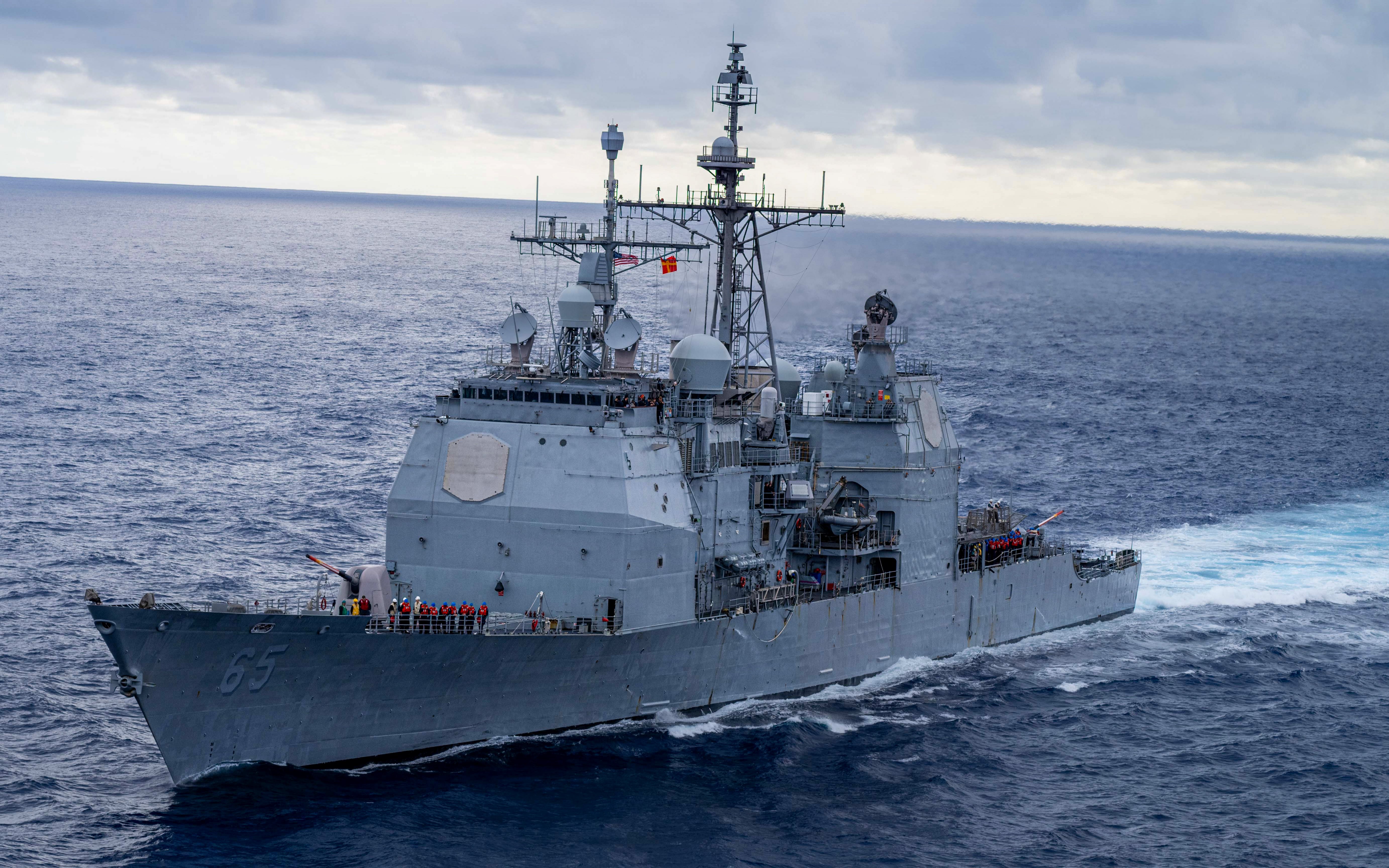
Nimitz-class aircraft carrier USS Theodore Roosevelt (CVN 71), flagship of Carrier Strike Group (CSG) 9, and Ticonderoga-class guided-missile cruiser USS Chosin (CG 65) arrived at Commander, Fleet Activities Yokosuka, Oct. 16, 2026, ahead of exercise Keen Sword. (U.S. Navy photo by Mass Communication Specialist 1st Class Hannah Fry)
Roosevelt moors at Commander, Fleet Activities Yokosuka. U.S. Navy photo

The five-ship CSG, the composition of which a Navy official confirmed to TWZ, is currently operating on a disaggregated basis − a common practice employed by strike groups with multiple ongoing missions. The duo that departed the U.S. at the end of September linked up with another element of the group, Pearl Harbor-based guided missile destroyer USS Decatur, as they were steaming westbound past the Hawaiian Islands, based on public Automatic Identification System (AIS) data. Decatur arrived in Yokosuka the day after Roosevelt but was not mentioned in the press release.

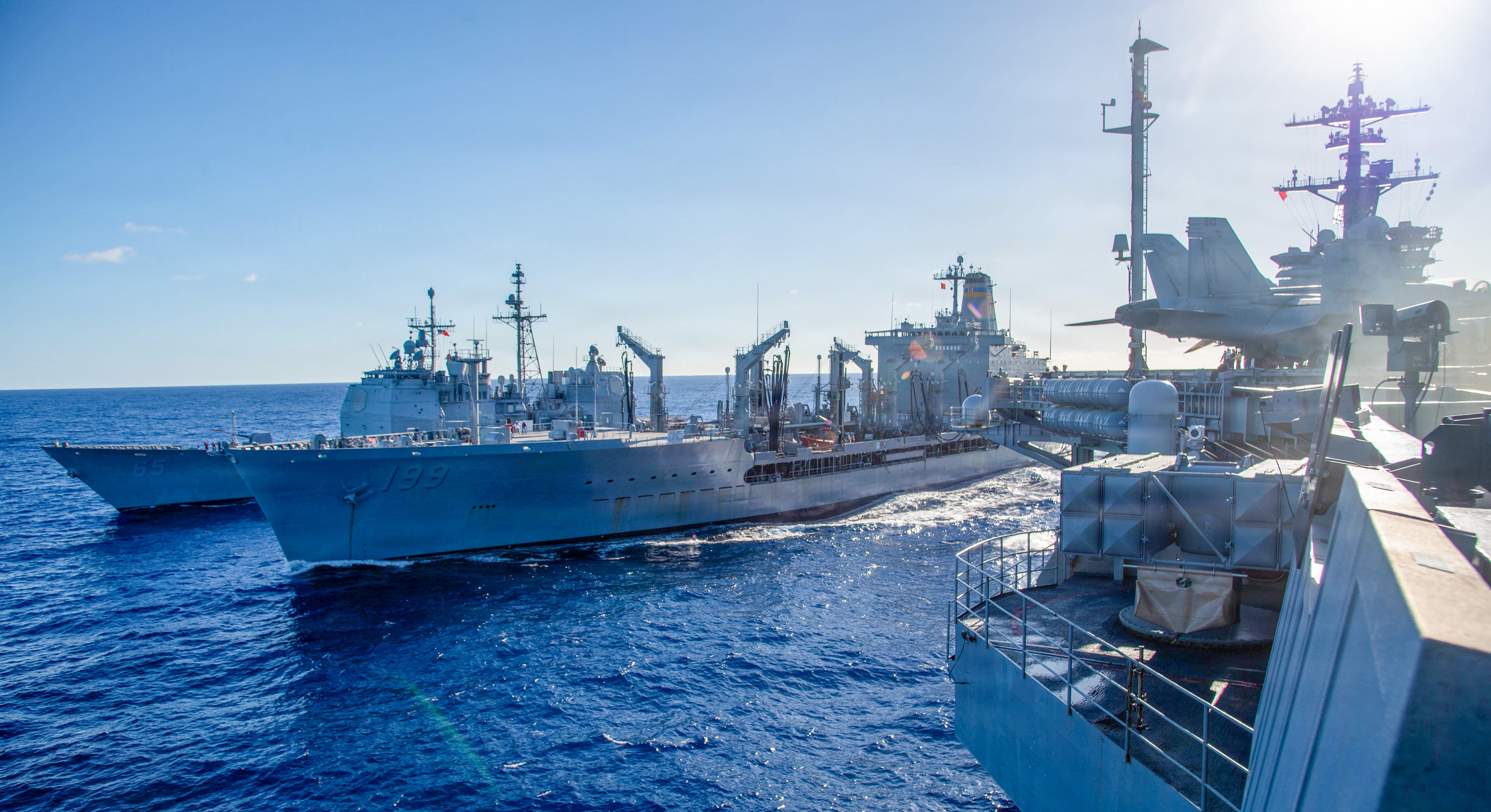
USS Carl M. Levin, also stationed in Hawaii, was the first ship from the group to deploy, according to DVIDS, the military’s content-sharing platform. Levin departed on September 9 and is operating at an undisclosed location. USS Paul Hamilton, the final ship assigned to CSG 9 to deploy, left San Diego on October 10 after onloading ammo at Bravo Pier and moored at Joint Base Pearl Harbor-Hickam on October 15, AIS data shows. Henry J. Kaiser class fleet replenishment oiler USNS Tippecanoe supported the group’s transit across the Pacific, conducting multiple replenishments-at-sea (RAS), and recently entered the East Sea/Sea of Japan via the Tsugaru Strait before going dark on AIS.

Ticonderoga-class guided-missile cruiser USS Chosin (CG 65), pulls alongside Nimitz-class aircraft carrier USS Theodore Roosevelt (CVN 71), during a replenishment-at-sea Oct. 10, 2026. Theodore Roosevelt, flagship of Carrier Strike Group (CSG) 9, is underway conducting routine operations in the U.S. 7th Fleet area of operations, demonstrating the U.S. Navy's commitment to a free and open Indo-Pacific. (U.S. Navy Photo by Mass Communication Specialist 3rd Class Cesar Nungaray)
Chosin alongside Roosevelt. Navy photo
Arleigh Burke-class guided-missile destroyer USS Decatur (DDG 73) sails in formation during Exercise Rim of the Pacific 2026 in the Pacific Ocean off the coast of Hawaii on July 22, 2026. Thirty nations, 30 ships, five submarines, 15 national land forces, more than 190 aircraft and more than 30,000 personnel are participating in RIMPAC in and around the Hawaiian Islands, June 24 to July 31. The world's largest international maritime exercise, RIMPAC provides a unique training opportunity while fostering and sustaining cooperative relationships among participants critical to ensuring the safety of sea lanes and security on the world's oceans. RIMPAC 2026 is the 30th exercise in the series that began in 1971. (U.S. Navy photo by Mass Communication Specialist First Class Ryan A. LeCompte)
Decatur and Roosevelt at RIMPAC. Navy photo
Ticonderoga-class guided-missile cruiser USS Chosin (CG 65), left, pulls alongside Henry J. Kaiser-class fleet replenishment oiler USNS Tippecanoe (T-AO 199), middle, and Nimitz-class aircraft carrier USS Theodore Roosevelt (CVN 71), during a replenishment-at-sea Oct. 6, 2026. Theodore Roosevelt, flagship of Carrier Strike Group (CSG) 9, is underway conducting routine operations in the U.S. 3rd Fleet area of operations, demonstrating the U.S. Navy’s commitment to a free and open Indo-Pacific. (U.S. Navy Photo by Mass Communication Specialist Seaman Gary Buckles)
Tippecanoe conducts a RAS. Navy photo

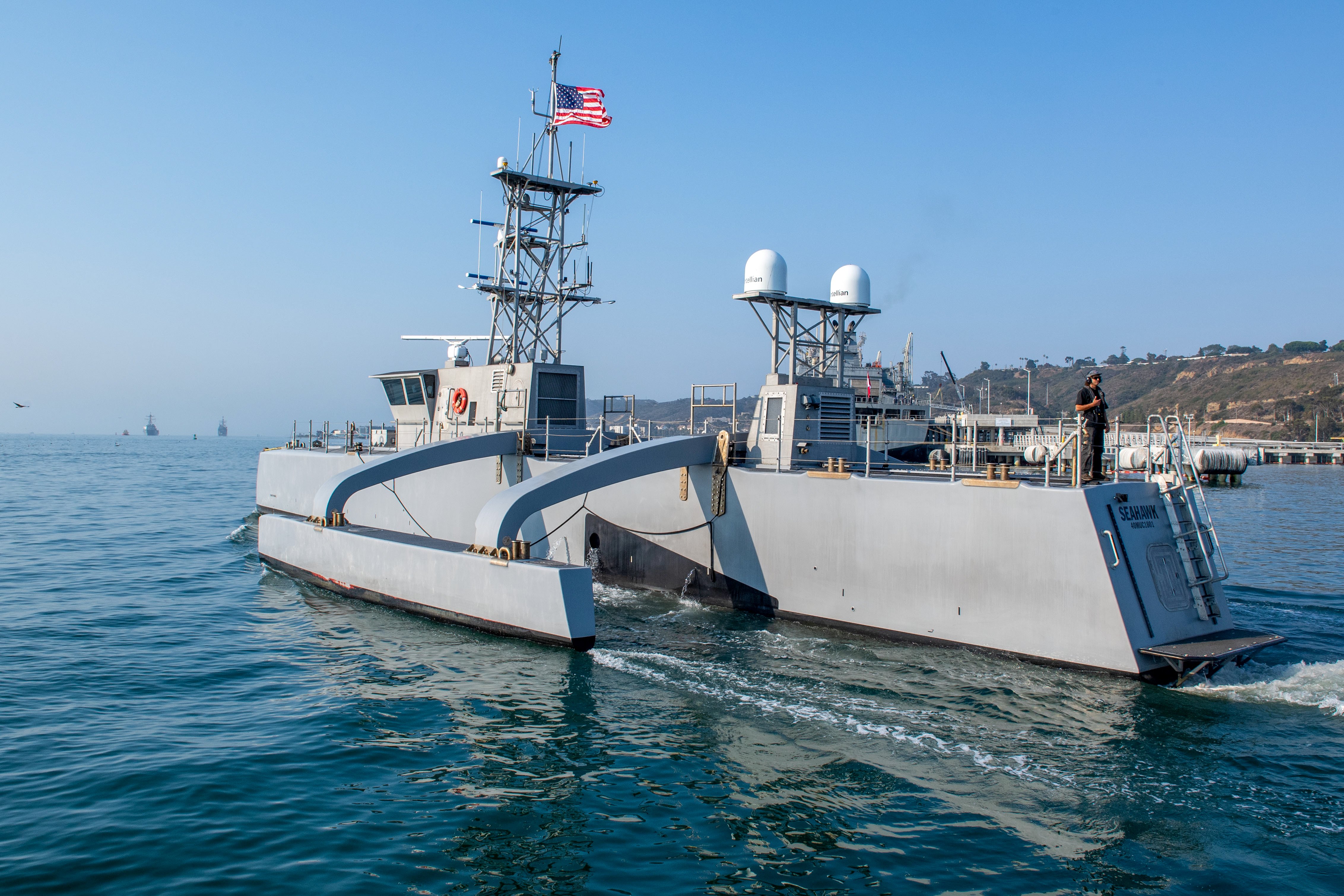
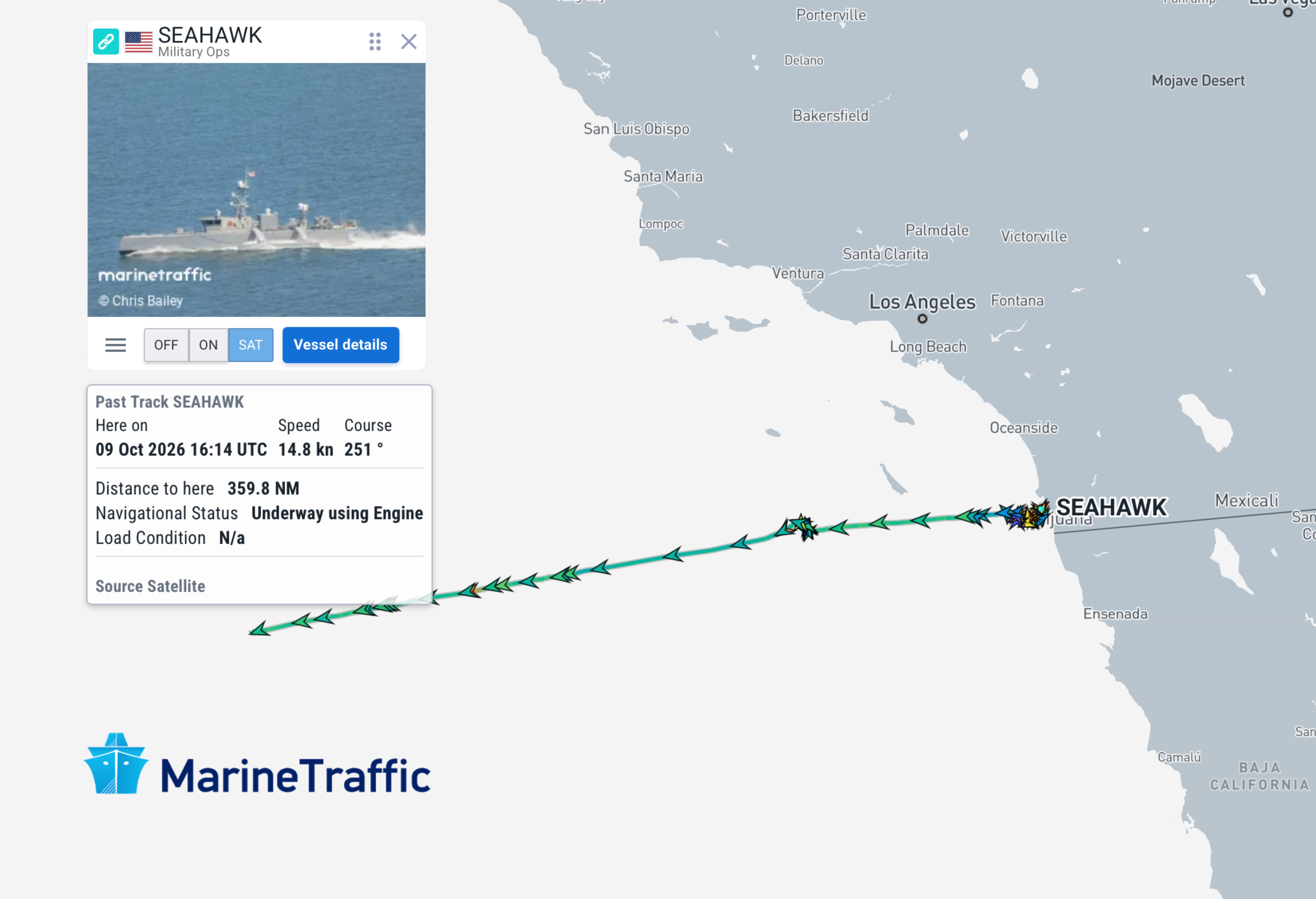
Multiple reports indicated that medium unmanned surface vessel (MUSV) Seahawk (2) deployed with the group, which would represent a significant operational achievement and the first time a drone boat was assigned to a CSG, but the MUSV quietly slipped out of Point Loma on October 8, more than ten days after Roosevelt. Seahawk reappeared on AIS and docked in Hawaii for a couple days before continuing its journey westbound in the Pacific on October 16. If Seahawk is assigned to CSG 9, it is currently disaggregated, and whether it will join Roosevelt to participate in exercise Keen Sword 27 is unknown.

Acting Secretary of the Navy Hung Cao seemingly confirmed the deployment, saying during a panel at the Association of the United States Army (AUSA) convention that “the Teddy Roosevelt carrier strike group just deployed on October 8 with a medium sized unmanned surface vessel. This is the first carrier strike group to ever deploy with a large size unmanned surface vessel.” However, Roosevelt was more than halfway to Japan on the date referenced. “This is a force multiplier, imagine having more guns out there,” he added.

Seahawk, a Medium Unmanned Surface Vessel (MUSV) prototype, departs Naval Base Point Loma, California, Aug. 6. Seahawk is a fully unmanned and autonomous vessel operated by Unmanned Surface Vessel Squadron (USVRON) 1 and Naval Information Warfare Center Pacific in support of technology development, testing and evaluation. The surface force is integrating unmanned vessels into the fleet. (U.S. Navy photo by Mass Communication Specialist 1st Class Robert Zahn)
MUSV Seahawk leaving Point Loma in August. U.S. Navy photo
Graphic created by Ian Ellis-Jones and TWZ showing MUSV Seahawk's transit leaving San Diego on October 8. Reprinted with permission from MarineTraffic and KPLER.
Seahawk’s transit out of San Diego. Source: MarineTraffic/KPLER

TWZ reached out to the Secretary’s office for clarification and to confirm the deployment but did not receive a response. “Seahawk’s operations represent continued progress in the Navy’s efforts to integrate unmanned systems into Fleet operations. As with any emerging capability, we continue to learn, adapt, and refine how these systems are employed,” a Navy official told us.

Abraham Lincoln’s Homecoming

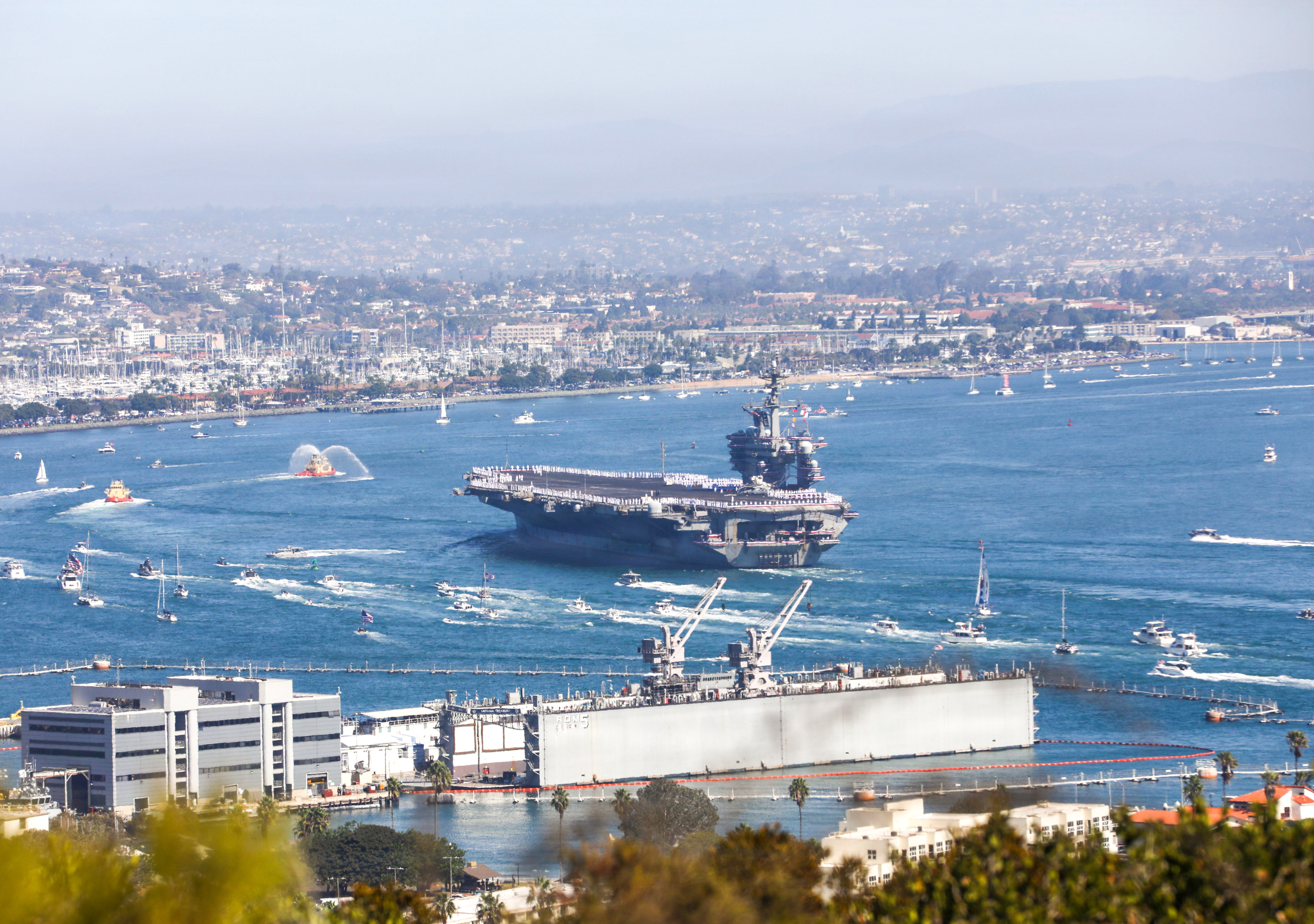
Surrounded by small boats, with hundreds of spectators lining the channel in San Diego Bay and thousands more watching online, the USS Abraham Lincoln arrived home from a historic ten-and-a-half-month combat deployment. The flagship of CSG 3 and her crew of more than 5,000 Sailors and Marines served as the tip of the spear in the war against the Iranian regime, first during Operation Epic Fury and then the subsequent blockades, and set a new record for the most consecutive days at sea without a port call.

Nimitz-class aircraft carrier USS Abraham Lincoln (CVN 72), the flagship of Carrier Strike Group (CSG) 3, returns to its home port of San Diego, Oct. 10, 2026, following a 10-month deployment to U.S. 5th and 7th Fleet areas of operations. An integral part of the U.S. Pacific Fleet, U.S. 3rd Fleet leads naval forces in the region and provides realistic, relevant training necessary to execute our Navy’s role across the full spectrum of military operations – from combat operations to humanitarian assistance and disaster response. U.S. 3rd Fleet works together with allies and partners to advance freedom of navigation and overflight, the rule of law, and other principles that underpin security for the region. (U.S. Navy photo by Mass Communication Specialist 3rd Class Aaron J. Rolle)
USS Abraham Lincoln pulls into San Diego Bay. U.S. Navy photo

Lincoln pulled into Naval Air Station North Island and moored at Berth Lima on October 8, 321 days after casting off on November 21, 2025. Sailors in dress whites manned the rails as the carrier transited the bay, escorted on both sides by small boats and jet skis flying American flags, while family and friends eagerly waited pierside for their return. The video below, shared by the Pentagon, captures the moment.

Family and friends welcome the crew of the USS Abraham Lincoln home. Pentagon video.

Lincoln now lays claim to the second-longest deployment in the modern carrier era, falling just five days short of the 326-day post-Vietnam record held by the USS Gerald R. Ford. The flattop traveled over 93,000 nautical miles during the cruise − more than four trips around the Earth, a post by the public affairs officer highlighted − and conducted 72 replenishments-at-sea, received 20-plus million gallons of aviation fuel, and flew more than 14,000 sorties that totaled 28,500 flight hours, a press release from the Navy highlighted.

The release confirmed for the first time that Lincoln broke the previous record of 206 days set by USS Dwight D. Eisenhower during the COVID pandemic for days spent underway between port visits, as TWZ first reported. “The ship’s 208 uninterrupted days at sea between Guam and Oman, and its 286 consecutive days at sea between departing San Diego and arriving in Thailand, are record-breaking marks for modern aircraft carriers.”

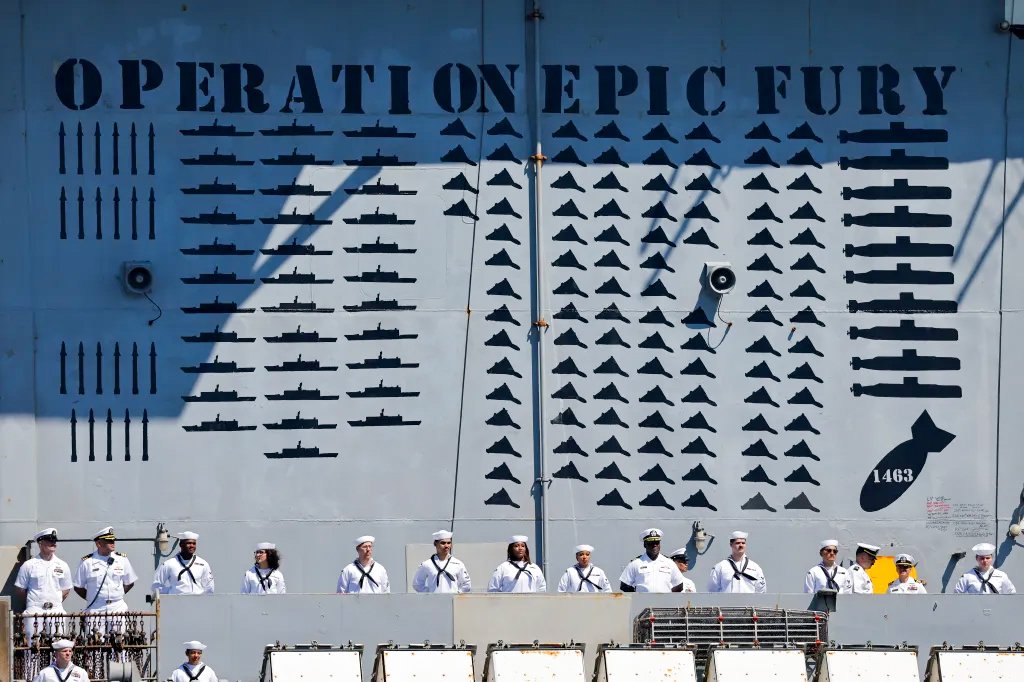
Lincoln’s cruise took her through both U.S. 7th Fleet and U.S. 5th Fleet AORs. During Operation Epic Fury, which began on February 28 and lasted almost 40 days, Lincoln took up station in the northern Arabian Sea as Commander, Task Force (CTF) 50 and pressured Iran’s southern flank. When major combat operations wound down, the carrier and her air wing patrolled and enforced the blockade line during both rounds that followed.

Carrier Air Wing (CVW) 9, the “Navy’s premier next-generation air wing that served as the primary offensive power” for CSG 3, flew 14,037 sorties − including 4,000 combat missions − and dropped more than 1.37 million pounds of ordnance on thousands of targets while employing 1,499 precision weapons. “This concentrated firepower significantly degraded Iranian Navy capabilities,” a separate statement noted.

“The rapid mobilization and combat execution of CVW-9 during Operation Epic Fury demonstrated the unmatched flexibility of a U.S. Navy carrier strike group,” Capt. J.W. Stigi, commander of CVW-9, said in the statement. “Pairing fifth-generation F-35C stealth and sensor fusion with fourth-generation workhorse strike and electronic attack platforms, Team Shogun destroyed Iran’s conventional Navy and secured vital maritime chokepoints in support of our commander’s objectives.”

Kill marks painted on the island superstructure show CSG 3 destroyed 106 one-way attack drones fired by the Islamic Revolutionary Guard Corps (IRGC), 34 Iranian Navy and IRGC ships, 23 inbound cruise missiles, and 10 enemy submarines. The strike group dropped 1,463 air-to-ground munitions in total, a Sailor explaining the marks said in a video on social media.

George H.W. Bush Leaves Thailand And Returns To The Middle East

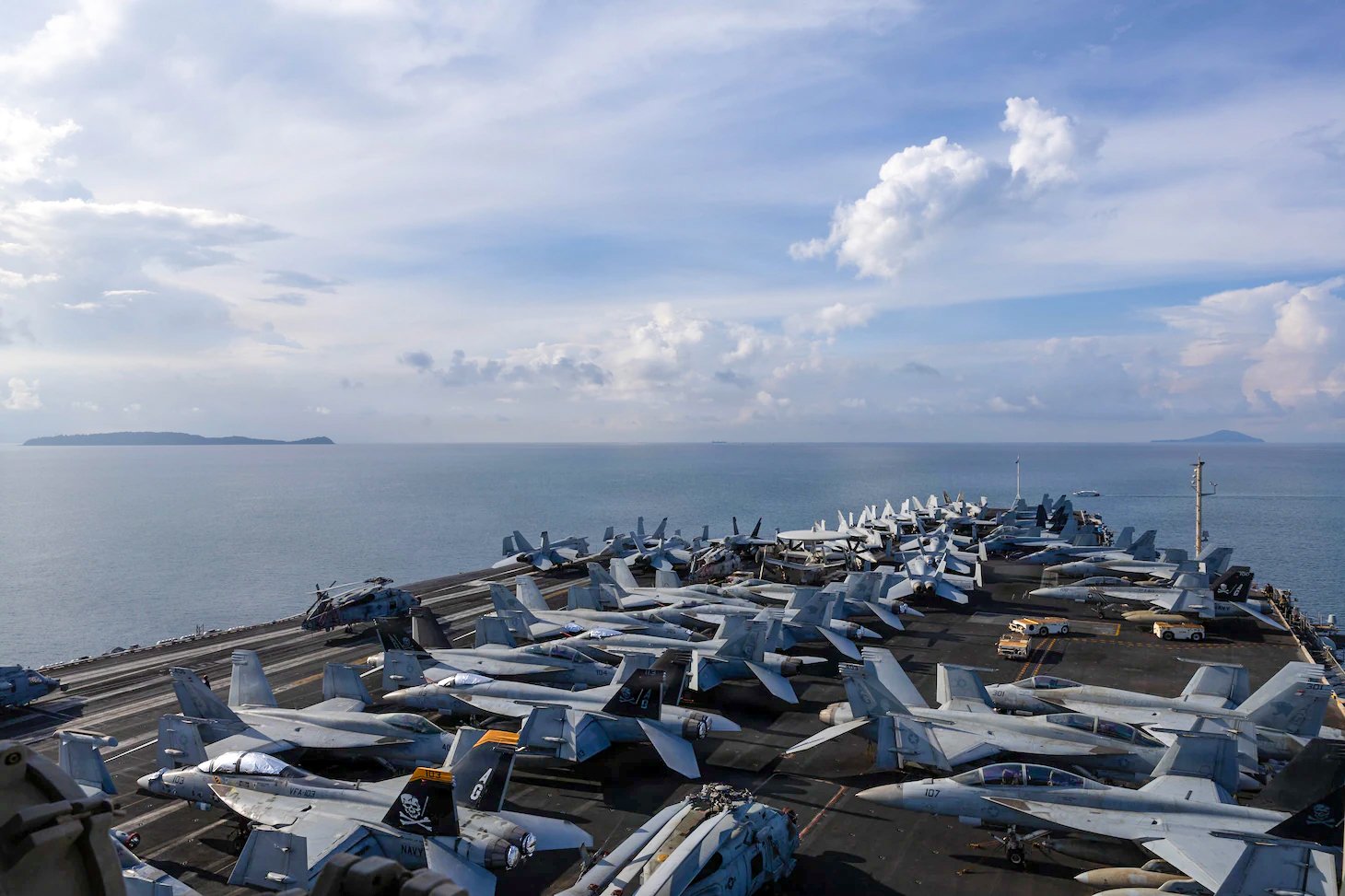
The USS George H.W. Bush and her destroyer escort, USS Delbert D. Black, departed Phuket, Thailand, on October 9 after a five-day liberty visit. “Nearly 5,000 Sailors from across the strike group experienced the sights and sounds Thailand has to offer, deepening their understanding of the Thai people and strengthening interpersonal bonds,” according to a press release.

Nimitz-class aircraft carrier George H.W. Bush (CVN 77) departs Phuket, Thailand, Oct. 9, 2026. George H.W. Bush is conducting routine operations in the U.S. 7th Fleet area of operations. U.S. 7th Fleet, the Navy’s largest forward-deployed numbered fleet, routinely interacts and operates with allies and partners in preserving a free and open Indo-Pacific. (U.S. Navy photo)
George H.W. Bush departs Phuket, Thailand, on October 9, 2026. U.S. Navy photo

“The Sailors and I had an amazing time in this beautiful country, and I sincerely thank the people of Thailand for their incredible welcome,” Capt. Justin T. Issler, the commanding officer of George H.W. Bush, said about the stop. “This port visit to Phuket was a tremendous opportunity for the crew. We are grateful to our Thai allies for hosting us, and we look forward to continuing our mission here in 7th Fleet, alongside Thailand and our other regional allies and partners.”

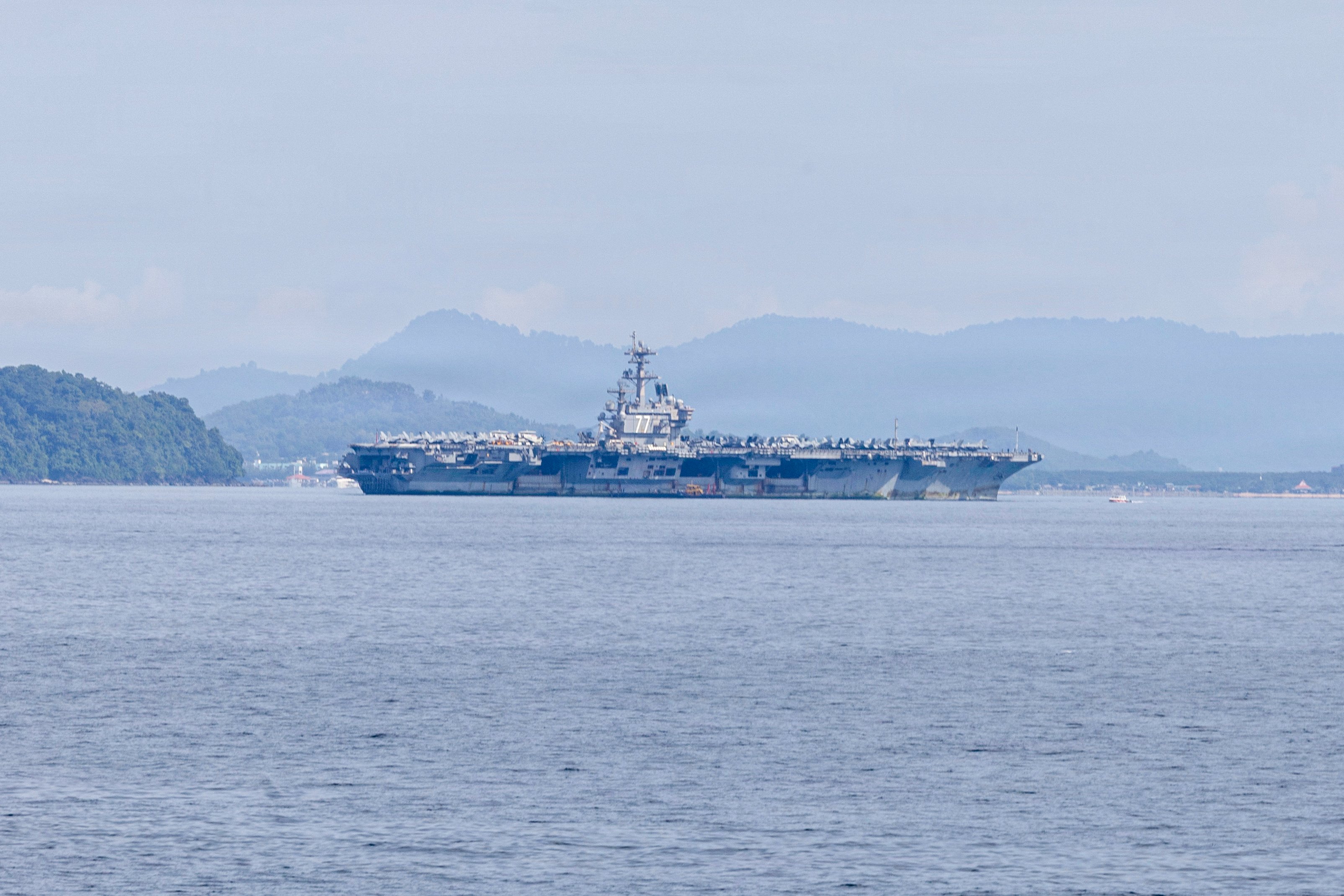
Nimitz-class aircraft carrier USS George H.W. Bush (CVN 77), arrives in Phuket, Thailand, Oct. 4, 2026. George H.W. Bush is conducting routine operations in the U.S. 7th Fleet area of operations. U.S. 7th Fleet, the Navy’s largest forward-deployed numbered fleet, routinely interacts and operates with allies and partners in preserving a free and open Indo-Pacific. (U.S. Navy Photo)
USS George H.W. Bush arrives in Thailand. U.S. Navy photo
Nimitz-class aircraft carrier George H.W. Bush (CVN 77) arrives in Phuket, Thailand, Oct. 4, 2026. George H.W. Bush is conducting routine operations in the U.S. 7th Fleet area of operations. U.S. 7th Fleet, the Navy’s largest forward-deployed numbered fleet, routinely interacts and operates with allies and partners in preserving a free and open Indo-Pacific. (U.S. Navy photo)
USS George H.W. Bush anchors in Phuket. U.S. Navy photo

Bush dropped anchor approximately two nautical miles south of Ao Makham Deep Sea Port on October 4 after 187 consecutive days at sea. After leaving Phuket, the carrier stopped broadcasting AIS while steaming due south at 10 knots. Imagery on DVIDS confirms that the CSG returned to the Middle East and operating in the U.S. 5th Fleet AOR to “support maritime security and stability,” joining the George Washington CSG once again as the second strike group in the region.

Destroyer USS Mason, which deployed as the integrated air and missile defense (IAMD) commander for the CSG but has disaggregated at times, arrived in Singapore on October 5, likely for a port call. The Arleigh Burke class destroyer departed on October 9 and was last tracked heading northwestbound in the Malacca Strait, likely to rejoin the CSG. The other two destroyers assigned to the CSG, USS Ross and USS Donald Cook, remained in 5th Fleet during the visit.

F-35C Lightning II Operates from A Ford Class Carrier For The First Time

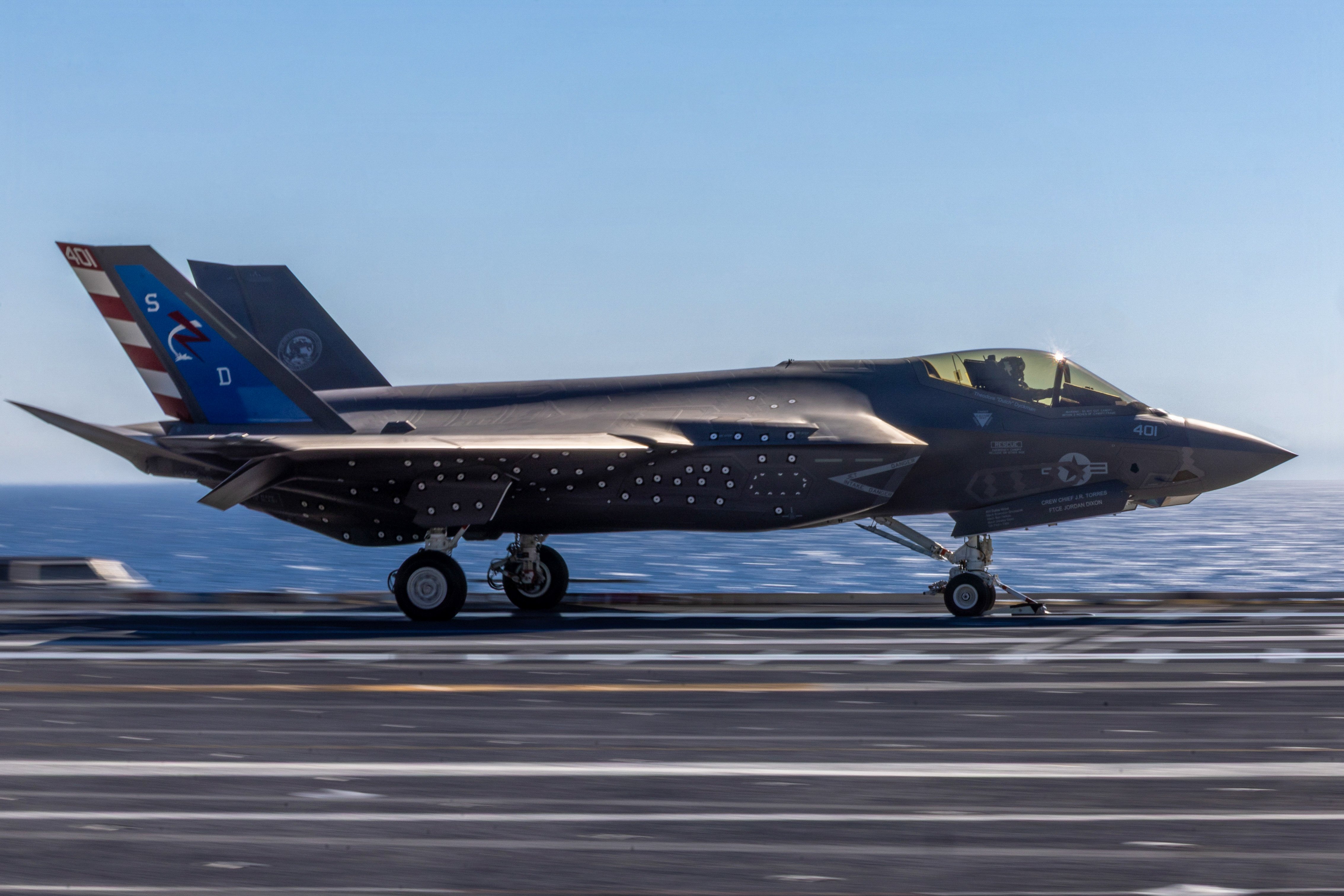
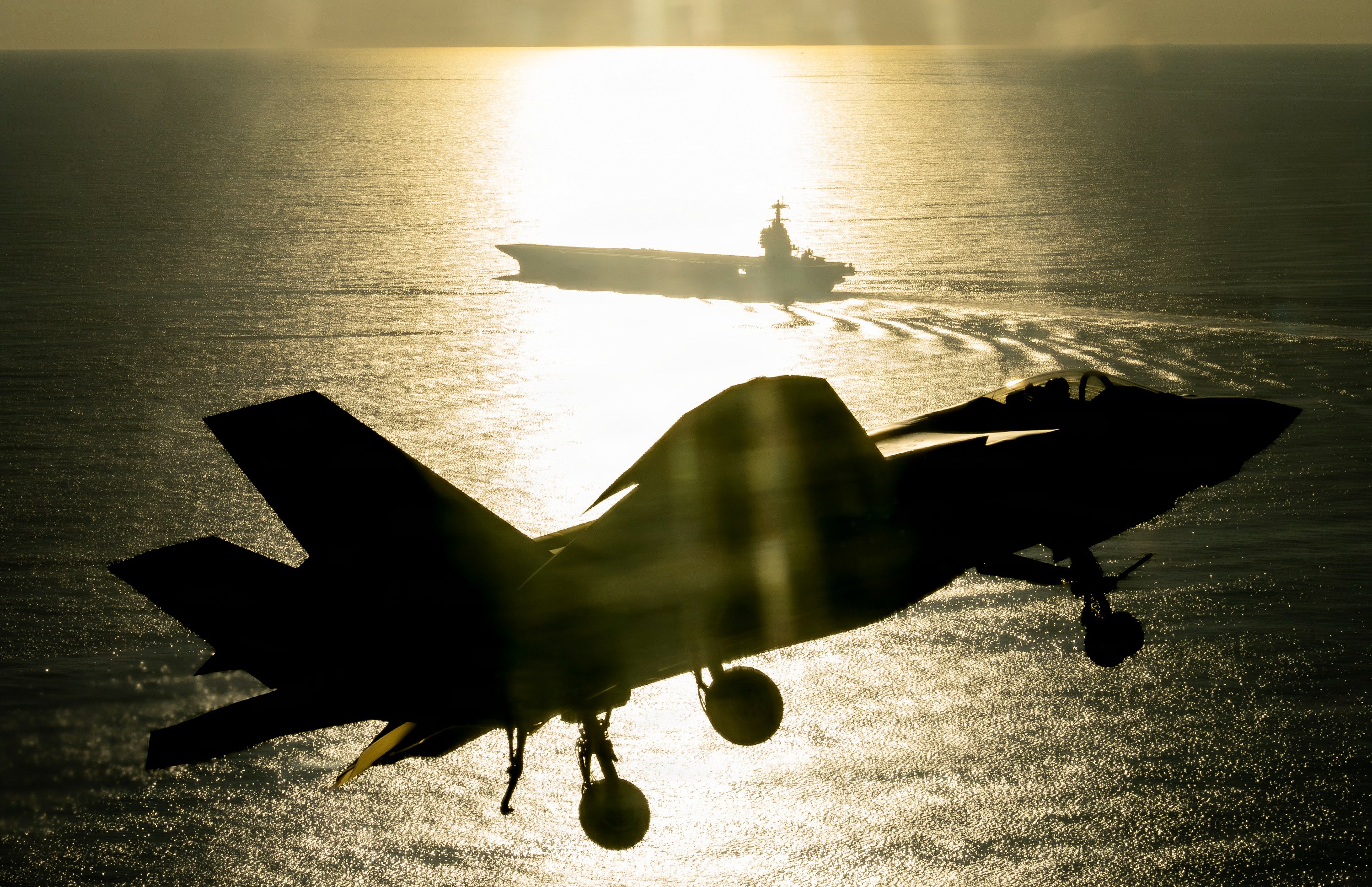
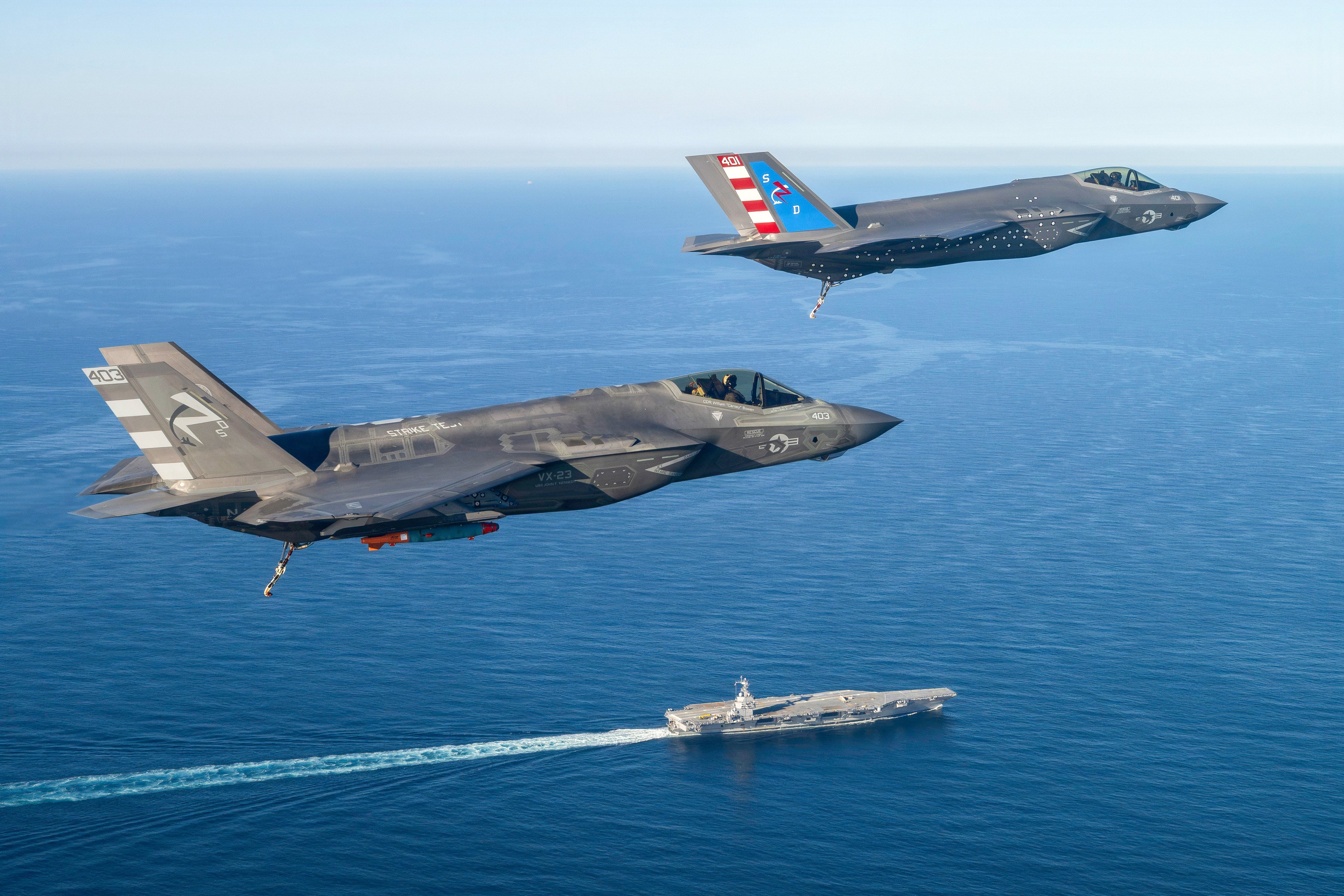
Marking a major milestone, an F-35C Lightning II Joint Strike Fighter made the first arrested landing aboard a Gerald R. Ford class carrier, the Navy’s newest and most advanced class of aircraft carriers that are being built to replace the aging Nimitz fleet. The trap was made by Lt. Cmdr. Robert Mason with the “Salty Dogs” of Air Test and Evaluation Squadron (VX) 23 aboard the future USS John F. Kennedy in the Western Atlantic on October 13. The first catapult launch followed the next day, pictures on DVIDS showed.

F-35Cs approach for first landing aboard PCU John F. Kennedy. U.S. Navy video

VX-23, based out of Naval Air Station Patuxent River in Maryland, is part of the Naval Air Warfare Center Aircraft Division and was putting Kennedy through the ongoing Aircraft Compatibility Testing to assess the “operational capabilities of the ship’s aircraft launch and recovery equipment.” A team from the Patuxent River-based F-35 Integrated Test Force, detached to the ship, conducted the evaluation using a specially instrumented example of the jet. One of the two pictured was externally equipped with an inert Joint Direct Attack Munition (JDAM) bomb.

An F-35C Lightning II, attached to the "Salty Dogs" of Air Test and Evaluation Squadron (VX) 23, launches from the flight deck of Pre-Commissioning Unit John F. Kennedy (CVN 79), Oct. 14, 2026, marking the first launch of an F-35C from a Ford-class aircraft carrier. John F. Kennedy is underway conducting Aircraft Compatibility Testing, which assesses the operational capabilities of the ship's aircraft launch and recovery equipment with U.S. Navy aircraft. (U.S. Navy photo by Mass Communication Specialist Seaman Paris McKee)
An F-35 test pilot from Air Test and Evaluation Squadron Two Three (VX-23), Naval Air Warfare Center Aircraft Division (NAWCAD), flies an F-35C Lightning II fighter aircraft to the PCU John F. Kennedy (CVN 79) in the Western Atlantic Oct. 13, 2026. This is the first time an F-35C has landed on a Ford-class aircraft carrier. A Patuxent River F-35 Integrated Test Force (ITF) team detached to the ship is conducting Aircraft Compatibility Testing (ACT) with the specially instrumented carrier variant of the stealth jet. ACT assesses the operational capabilities of the ship's aircraft launch and recovery equipment with U.S. Navy aircraft.
U.S. Navy Cmdr. William Bowen, assigned to the “Salty Dogs” of Air Test and Evaluation Squadron (VX) 23, prepares an F-35C Lightning II for flight operations on the flight deck of Pre-Commissioning Unit John F. Kennedy (CVN 79), Oct. 14, 2026. John F. Kennedy is underway conducting Aircraft Compatibility Testing, which assesses the operational capabilities of the ship's aircraft launch and recovery equipment with U.S. Navy aircraft. (U.S. Navy photo by Mass Communication Specialist 1st Class Nolan Pennington)
Two F-35 test pilots from Air Test and Evaluation Squadron Two Three (VX-23), Naval Air Warfare Center Aircraft Division (NAWCAD), fly F-35C Lightning II fighter aircraft to the PCU John F. Kennedy (CVN 79) in the Western Atlantic Oct. 13, 2026. This is the first time an F-35C has landed on a Ford-class aircraft carrier. A Patuxent River F-35 Integrated Test Force (ITF) team detached to the ship is conducting Aircraft Compatibility Testing (ACT) with the specially instrumented carrier variant of the stealth jet. ACT assesses the operational capabilities of the ship's aircraft launch and recovery equipment with U.S. Navy aircraft.
VX-23 F-35Cs flying over and on the flight deck of PCU John F. Kennedy. U.S. Navy photos

The Navy took preliminary acceptance of Kennedy, which is still considered a Pre-Commissioning Unit, on September 29. This process allows the service to conduct at-sea testing and build underway proficiency while the shipbuilder, Huntington Ingalls Industries, completes final system checks ahead of expected delivery in spring 2027. Kennedy got underway on October 13 and returned to her homeport of Naval Station Norfolk three days later.

The lead ship of the class, the USS Gerald R. Ford, does not currently embark F-35Cs and will need upgrades to field the Navy’s most advanced jet. Back in 2019, TWZ warned that the stealth jet wouldn’t fly from the troubled class for years. Because of this, Congress required that Kennedy be equipped to embark F-35Cs, which led to additional delays for the Navy’s next carrier.

Big Deck Fleet At A Glance

Overall, three U.S. carriers are deployed, three are working up in various states of readiness, three are in maintenance availabilities, one is post-deployment, one is being used primarily for training before deactivation next year, and another will be delivered in 2027. Two amphibious ready groups are deployed, one is forward-deployed, three are working up or in port, and three are in maintenance.

Note: Positions are general approximations. Non-deployed LHA/LHD amphibious warships are not shown.

Contact the author: ian@twz.com or @ianellisjones

The post Where Are The Aircraft Carriers?: October 17, 2026 appeared first on TWZ.
  •  

Russia's war reaches Bulgaria's shores, putting Radev's Moscow-friendly stance to the test

The balancing act of Bulgaria's Moscow-friendly leader stands on shaky ground.

Since taking office in May, Bulgarian Prime Minister Rumen Radev has taken a harsh line on Ukraine while adopting steps his critics say are accommodating to Moscow.

Radev's course has now come under scrutiny as

  •  

Drone strikes in the Black Sea raise fears of Russian escalation to test NATO's response

The attacks in the two countries' exclusive economic zones threaten a global shipping route and have left two people dead, with at least 25 still missing. They also run the risk of drawing other countries directly into the war for Ukraine.

  •  

Romania finally holds Russia responsible for the drone attacks on ships off its coast, and wants a joint NATO command for the Black Sea

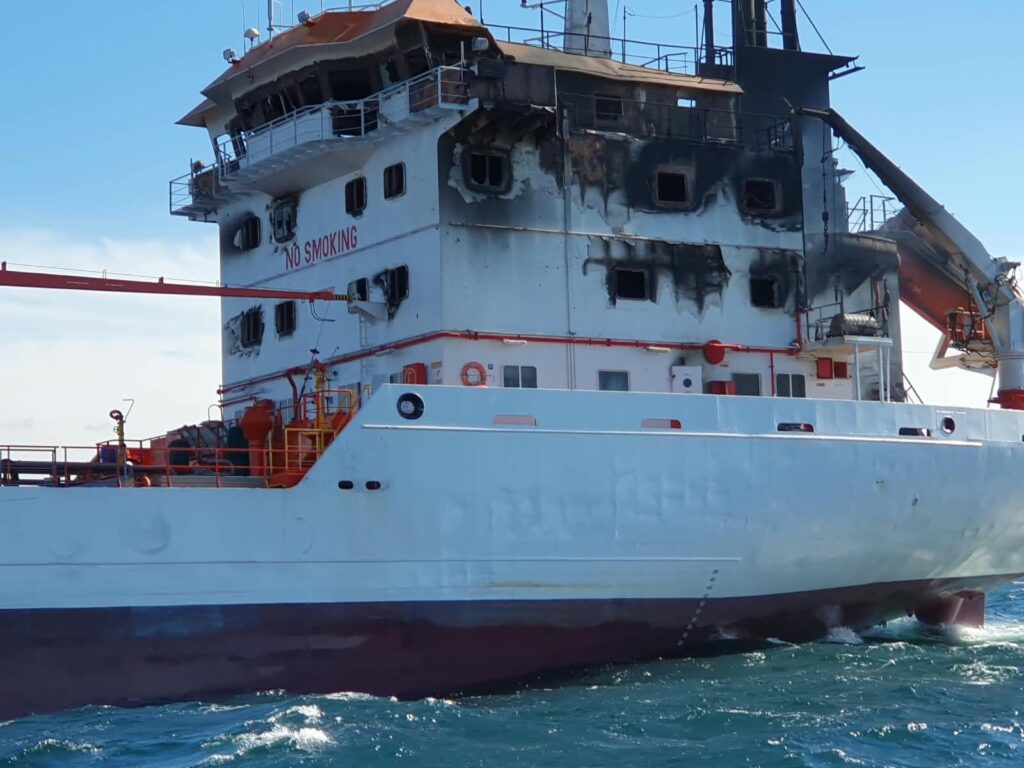
The San Marino-flagged chemical tanker Wine Trader near Sulina, Romania, on 15 October 2026, after it was hit by drones about 14 nautical miles off the coast. Seven of its 12 crew were reported missing. Photo: ARSVOM

Romania has proposed a joint NATO military command for the Black Sea, as drones hit four merchant ships in 24 hours, three of them off its coast, and its foreign minister said Russia "bears full responsibility." NATO ambassadors will discuss the attacks next week.

Russia’s strikes on merchant ships in the Black Sea have escalated this autumn and reached NATO shores. Drones have attacked at least eight merchant vessels near Romania and Bulgaria since 5 October, two of them inside Romania’s territorial waters. Until now, neither country had named the attacker, and Bulgaria still says it cannot prove who it was. Romania’s patience appears to have run out, and next week’s NATO meeting will show whether the alliance is ready to go further as Russia’s war spills beyond Ukraine’s borders.

Acting Defense Minister Radu Miruță wrote on Facebook on 14 October that "the Black Sea needs a joint military command of the NATO riparian states." "The Black Sea incidents, involving drones, sunk ships, and naval mines, oblige us to act, not wait," he wrote, after a call with his Bulgarian counterpart. Leadership and location would rotate among the member states. Romania is ready to host the command on its coast from 2028 and would accept a start on Türkiye's coast until then, he said. He proposed that Romania and Bulgaria send NATO a joint letter backing the idea.

The next day, Foreign Minister Oana Țoiu wrote on X that four commercial ships had been attacked over the previous day, including in Romania's territorial waters and exclusive economic zone, and that eight people had died. "Russia is turning the Black Sea into a dangerous area for civilian ships," she wrote. "Killing sailors from commercial ships, both in this region and anywhere in the world, is a crime. Russia bears full responsibility for these developments."

Earlier that day, as two tankers burned off Romania's coast, Bucharest had said it was still checking whether drones were involved.

two tankers burn off romania’s sulina bulgaria says lacks proof russia behind black sea ship attacks · post burned superstructure tanker wine trader seen rescue helicopter 15 2026 romanian interior
Explore further

Two tankers burn off Romania’s Sulina as Bulgaria says it lacks proof Russia is behind the Black Sea ship attacks

Țoiu said NATO Secretary General Mark Rutte had agreed to convene the allies within days, after he met Romanian President Nicușor Dan and Bulgarian Prime Minister Rumen Radev in Brussels. NATO ambassadors will meet next week, France 24 reported. No date has been announced.

An escalating drone strike campaign

Black Sea grain war between Ukraine and Russia escalates
Map: Euromaidan Press

Drones have been hitting merchant ships for weeks on the route from Ukraine's Danube and Odesa ports to the Bosporus. Besides the latest strikes off Romania, Reuters counts at least five cargo ships hit near Romania and Bulgaria in the past 10 days, with 23 sailors dead or missing, most of them outside any NATO member's territorial waters. This week the strikes reached Romania's own waters.

  • The Comoros-flagged tanker Yara J was hit inside Romanian territorial waters late on 14 October, off Sulina, the port at the mouth of the Danube. Its crew was unharmed, and it was towed to the Romanian port of Constanța.
  • Early on 15 October drones struck the San Marino-flagged chemical tanker Wine Trader about a mile outside Romanian waters, also southeast of Sulina. Five of its 12 crew were rescued. Seven were still missing on 16 October, when rescuers returned to search the ship.
  • Two more ships were also targeted, Reuters reported: the Marshall Islands-flagged Sea Destiny, inside Romanian waters according to NATO, and the Tanzania-flagged Dania J, moored at the Ukrainian Danube port of Izmail.

Țoiu did not say which ships her eight dead were from, and Reuters still lists the Wine Trader's seven as missing. A NATO military source told Reuters the drones that hit both tankers came from Russia.

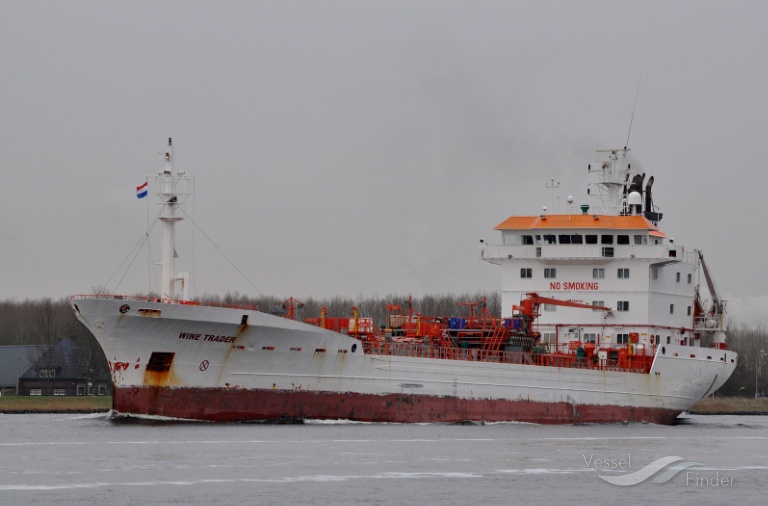
The chemical tanker Wine Trader
The chemical tanker Wine Trader. Photo: VesselFinder

Romania's president says too early to say

Romania's president has not gone as far as his foreign minister. Dan told reporters in Brussels it was "obvious" that the attacks were Russian attempts to destabilize Romania and Bulgaria and reduce support for Ukraine. But he also said it was too early to say definitively that Russia had launched the drones, according to Politico.

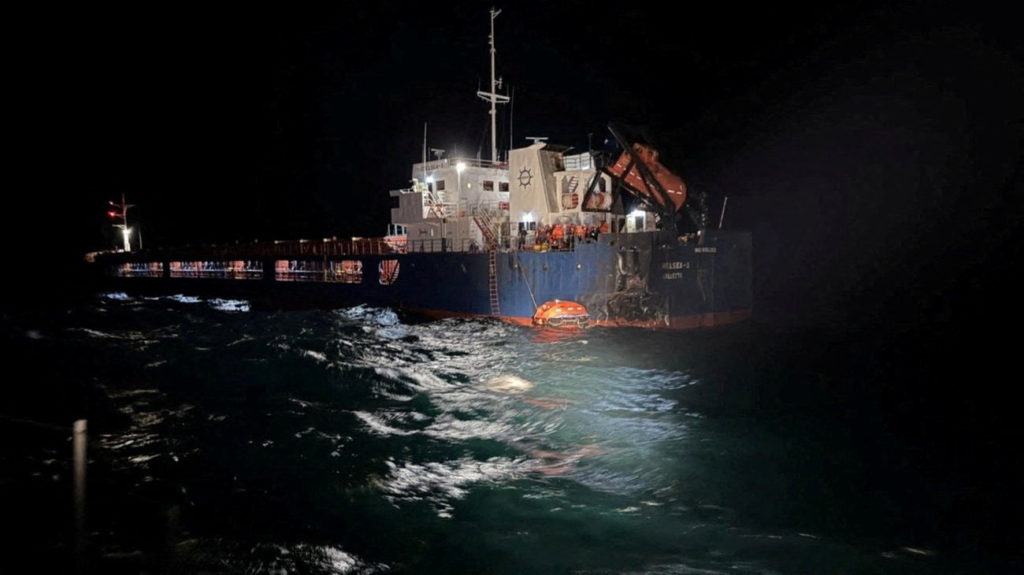
Bulgaria, Romania's partner on the command proposal, says it suspects Russia but cannot prove it. Two ships were hit off its coast on 13 October, and one, the HS Dignity, sank. The other, the Chelsea 3, is Ukrainian-owned.

Radev told parliament on 14 October that the attacks worked in Russia's favor and that "logic leads there." "The problem is that we cannot prove it," he told MPs. Sofia summoned the Russian ambassador. Radev also said EU leaders would discuss a moratorium on attacks on civilian ships in the Black Sea.

Bucharest has blamed Russia for drones before, though over its airspace, not its shipping. On 27 July it expelled a Russian diplomat after prosecutors confirmed that fragments of drones downed on Romanian territory were Russian. Russia, Romania's Foreign Ministry said then, "bears exclusive responsibility."

Ukraine ships most of its farm exports across the Black Sea. Euromaidan Press's David Axe has written on how the fight over shipping there has escalated.

Bulk carrier "Royad Mammadov" under the flag of Saint Kitts, partially sunk after an attack by Russian sea and air drones on October 5, 2026, 20 nautical miles off the coast of Romania. Photo: Romanian Interior Ministry
Explore further

Russia is losing the Black Sea grain war it started. Its answer is to sink civilian ships off Romania and Bulgaria

  •  
❌