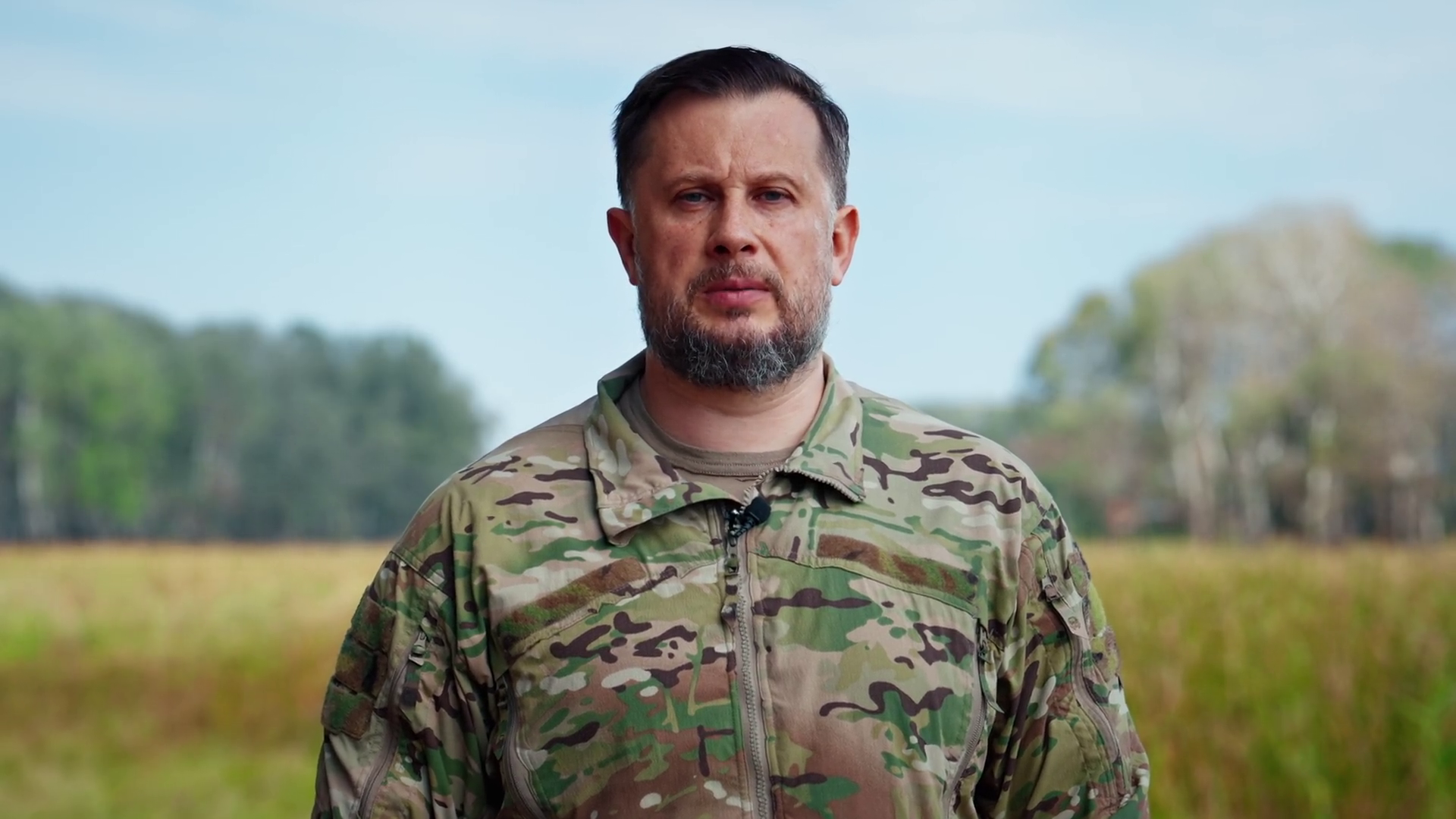
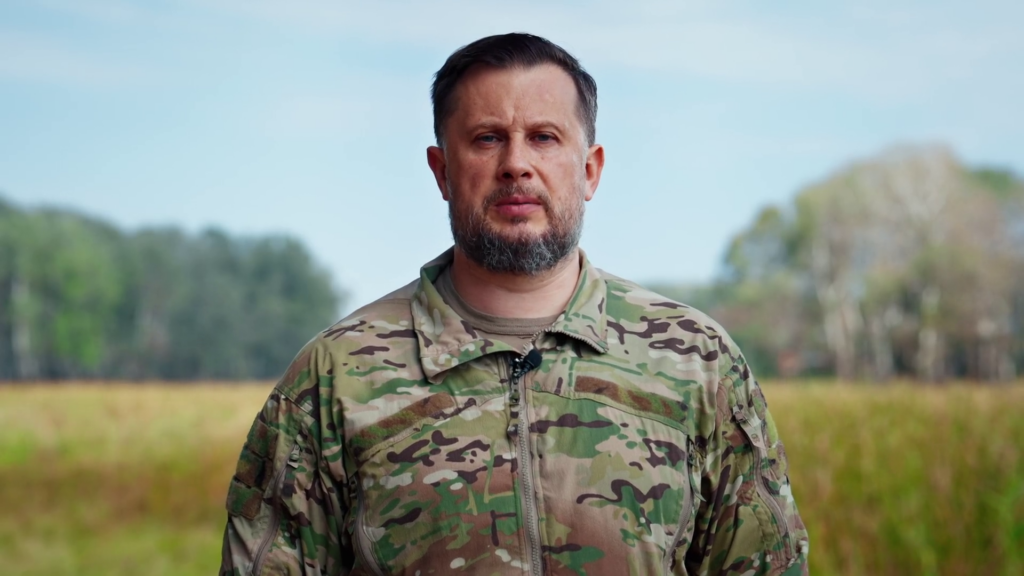
Russia’s Rubicon drone unit, which is sent to hunt Ukrainian drone pilots, was not used to being hunted itself, Brigadier General Andrii Biletskyi told journalists on 19 October. He was summing up Operation Vivaldi, which his Third Army Corps fought in northern Donetsk Oblast from May to mid-October. Once its pilots realized they were being killed, Rubicon’s morale dropped sharply, he said.
Russia has fought for 12 years to take all of Donetsk Oblast, and Sloviansk and Kramatorsk anchor the fortress belt of cities Ukraine still holds there. Vivaldi retook 277 km² in northern Donetsk Oblast. Biletskyi says it destroyed Russia’s bridgehead on the Chornyi Zherebets River and forced Moscow to drop its plan to bypass Lyman from the north and encircle the two cities. On that front, the Third Corps had flagged Rubicon, Russia’s elite drone unit, as a threat.
Hunting the hunters
Once a Rubicon position was found, the Third Assault Brigade and the KRAKEN drone regiment committed any number of FPV and bomber drones to destroy its crews, Biletskyi said.
The brigade’s commander, Yaroslav Levenets, said his troops prepared for Rubicon’s arrival and concentrated on killing its pilots. He gave no details.
“Not stable in defense,” Levenets said of Rubicon’s troops.
They dislike sitting in trenches, he said, and under pressure they grow nervous and change positions.
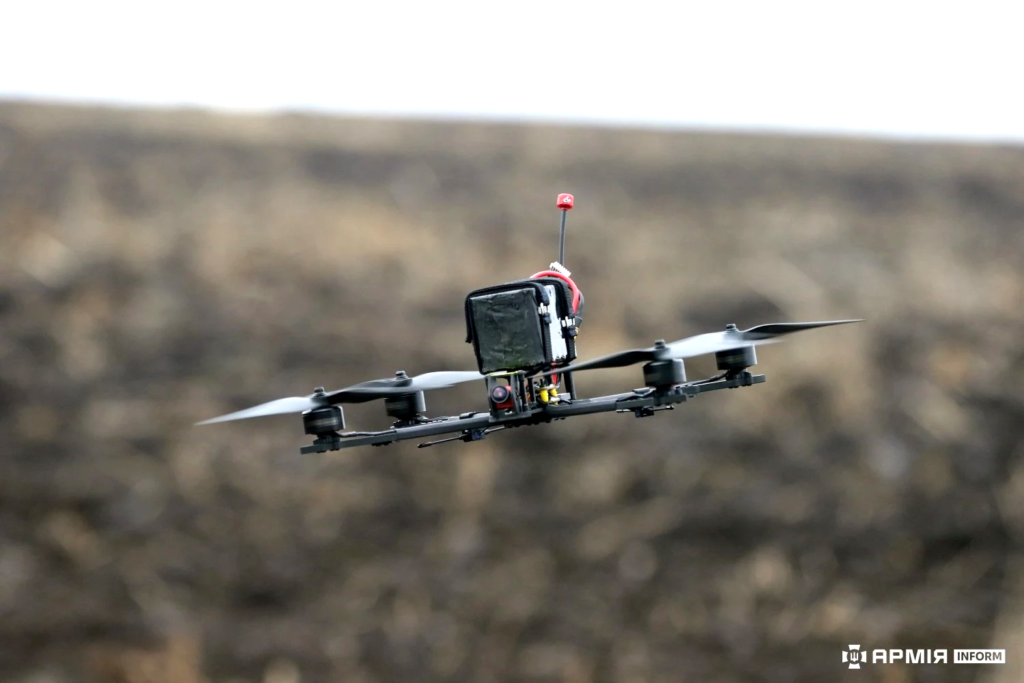
An FPV drone. Illustrative photo: ArmyInform
Named for four seasons
Biletskyi said the name was chosen at the very start of planning, in winter 2025–2026, many months before the operation began. The original plan had four stages, one for each season, and later grew to slightly more, ArmyInform reported.
When he first unveiled the operation in September, he put it this way:
“Vivaldi, as is known, has four seasons. And this is only the first one.”
He credited two planners, known by the call signs Yurist and Leshyi. Leshyi, an assault soldier wounded seven times who later moved to staff work, was killed. Yurist was seriously wounded.
Explore further
Ukraine blocks Russia from outflanking its fortress cities in Donbas, retaking 277 square kilometers and hitting 8,000 Russian troops
A new hand at the Third Corps
Major Dmytro Rohoziuk is now acting commander of the Third Army Corps, the corps press service said on 20 October. The press service said the move is not a transfer, and Biletskyi keeps his formal post as corps commander while he leads the “Center” grouping of the Third, 11th, and 19th corps.
Major Dmytro Rohoziuk, acting commander of Ukraine’s Third Army Corps. Photo: Armed Forces of Ukraine
Rohoziuk took over the 60th Mechanized Brigade in October 2025. Its previous commander was arrested in January after the State Bureau of Investigation accused him of embezzling about $1 million in weapons procurement. The brigade fought in all four phases of Vivaldi and retook Kolodiazi without street fighting.
Ukrainian troops capture a Russian infiltrator carrying a Russian flag during Operation Vivaldi in northern Donetsk Oblast. Photo: Third Army Corps
Biletskyi also declined command of the Ground Forces, which oversee mobilization.
“There’s no point taking on something you don’t truly believe you can improve,” he said.
Biletskyi’s count
Russian losses in Vivaldi topped 8,000 troops, and about 270 Russian soldiers were taken prisoner, Biletskyi said. More than 20 officers surrendered, including a chief of staff and three company commanders.
The territory matters less than disrupting Russia’s strategic plan, he said. Russian forces still press toward Dobropillia, where Ukraine is counterattacking.
Patrol density along Lithuania’s border with Russia’s Kaliningrad exclave has practically doubled since soldiers joined the border guards there in early October. Lithuanian Armed Forces Commander Raimundas Vaikšnoras told LRT this in an interview. He linked the deployment to provocations and to what he described as Russian preparations for a large-scale mobilization.
Kaliningrad is a piece of Russia wedged between Lithuania and Poland on the Baltic Sea. Lithuanian Defense Minister Robertas Kaunas said people would naturally flee a Russian mobilization. Earlier, on 11 August, President of Ukraine Volodymyr Zelenskyy said that Russia planned to mobilize several hundred thousand people by the end of 2026, after its parliamentary vote.
Commander: Russia lacks troops for a breakthrough
Vaikšnoras said Russia is struggling in Ukraine and needs to fill gaps in its capabilities. Moscow would probably like a breakthrough but lacks people, he added. In July, Ukraine’s Foreign Intelligence Service estimated that Russia had signed about as many new military contracts this year as it had lost troops.
He also cited provocations. In Latvia, armed men recently tried to push migrants across the border, he noted, leaving open whether they were bandits or criminals. Belarusian ruler Alyaksandr Lukashenka denies everything, he added. On 6 October, Latvian Interior Minister Jānis Dombrava wrote that the escorts stood on the Belarusian side, were armed, and threatened Latvian soldiers.
Mission extended to mid-November
Lithuania decided to send troops after that Latvian incident. On 7 October, Interior Minister Martynas Katelynas asked Defense Minister Kaunas for troops to help the State Border Guard Service. Kaunas then approved up to 100 soldiers until 16 October, LRT reported.
On 16 October, Kaunas extended the mission to mid-November at Katelynas’s request. The Defense Ministry cited possible flows of people fleeing Kaliningrad and related illegal border crossings. It also said military intelligence sees no significant changes in military activity in Kaliningrad. Katelynas had earlier called the step preventive, BNS noted. He cited public, non-intelligence reports of a call-up planned after Russia’s parliamentary elections and said the threat level at the border had not risen.
Commander doubts Moscow’s intentions
Vaikšnoras said Russia and Belarus may not want open incidents that leave their traces right now. He added that he does not believe in their good intentions. He noted it has been said publicly that Russia’s capability in Kaliningrad is sharply reduced, because most of its forces are committed to Ukraine. Back in June 2025, Poland’s foreign minister said that, from what he knew, Russia had withdrawn a large part of its troops from the exclave.
Instead, hybrid attacks and sabotage that cannot be traced at once will probably continue, Vaikšnoras said. LRT noted the interview took place before a Ukrainian drone crashed in Pasvalys district on Sunday and before an attempted arson at premises used by SpaceX in Vilnius.
Reports that SpaceX temporarily restricted its satellite internet service for Ukraine’s armed forces have generated serious concern in Kyiv and among the country’s allies. SpaceX operates the civilian Starlink system and its lesser-known military-grade counterpart, called Starshield. But many news stories leave an important question unanswered: what does a Starshield “slowdown” mean on the battlefield? […]
The Geran-2 regularly uses the Kometa system to navigate Ukraine's skies and suppress electronic warfare.
Sergei Grits/AP Photo
A new Ukrainian list of foreign parts in Russia's anti-jamming antenna is filled with US electronics.
GUR published a catalog of US digital processors, chips, and other components found in the Kometa.
These arrays are used to help Shaheds and Iskander-M missiles navigate and suppress jamming.
Over two dozen US processors, chips, and other components have been found in Russia's anti-jamming antenna systems, according to Ukraine's military intelligence.
The Ukrainian agency, GUR, published a list of foreign parts on Monday that it said were discovered in 16-element Kometa modules, one of Russia's more advanced systems that help drones and ballistic missiles suppress electronic warfare and navigate the skies.
US-headquartered firms produced 28 out of 37 foreign components — or just over three-quarters — listed on Monday, per GUR.
Ten American brands and their components were identified in the catalog, posted on GUR's War and Sanctions page. These include digital processors from Intel subsidiary Altera, radio-frequency and precision components from Analog Devices, a memory chip from Micron, and supporting electronics from Texas Instruments.
Another three components are built by Chinese companies, while the other six come from Japanese, Taiwanese, and Swiss manufacturers, GUR also indicated.
In a statement to Business Insider, a Texas Instruments spokesperson said the company "strongly opposes the use of our chips in Russian military equipment."
"Any shipments of TI chips into Russia are illicit and unauthorized. We devote significant time and resources to developing, implementing, and refining policies and procedures to combat illicit diversion and keep chips out of the hands of bad actors," they added.
Intel, Analog Devices, and Micron did not immediately respond to requests for comment sent outside regular business hours by Business Insider.
The new list from GUR, which regularly publishes information on foreign parts in Russian equipment, comes as the electronic warfare race grows more vital to Ukraine's air defense.
Kyiv's forces try to stop Russian drone and missile attacks with a mix of jamming tools and interceptors, but the latter are facing difficulty as Moscow has begun mass-launching faster, jet-powered drones — the slowest of which can fly at about 185 mph.
Kometa antenna panels are among the most common anti-jamming tools on Russian long-range weapons, such as Shahed drones, Iskander-M ballistic missiles, and glide bombs.
Each antenna receives satellite signals and helps to counter jamming or spoofing.
The 16-element Kometa, which essentially has an array of 16 antennas, is one of Russia's newer versions of the system in mass production. Two years ago, Moscow was regularly using eight-element Kometas on its Shaheds instead.
Navy corpsmen check the airway of a simulated Marine casualty during a flight training event off the coast of California.
LCpl. Nicole Stuart/US Marine Corps
The Marines are fielding new medical gear to treat casualties when evacuation is delayed.
New portable blood coolers and warmers will help corpsmen treat wounded troops closer to combat.
AI-assisted ultrasounds could help front-line medics identify internal injuries and prioritize evacuation.
The US Marine Corps has begun fielding new medical equipment meant to help troops survive when wounded service members can't be quickly evacuated from the battlefield.
The new technology is designed to store blood, identify internal injuries, and treat wounded service members closer to the battlefield as the military prepares for future wars in which casualties may be unable to reach a hospital for hours or even days.
The equipment includes improved, lighter-weight mobile blood coolers, better blood warmers, and small AI-assisted ultrasound devices and is designed to help Navy corpsmen and other providers treat casualties with less bulky equipment and less reliance on extensive medical infrastructure.
During the wars in Iraq and Afghanistan, US air supremacy frequently allowed helicopters to quickly evacuate wounded troops to well-equipped and defended medical facilities near the battlefield.
The proliferation of drone warfare and other technological advancements seen in Ukraine has, however, raised doubts about whether rapid casualty evacuations will be possible in future conflicts. Now, military planners assume that a sophisticated foe is likely to possess tools that could severely disrupt military tasks such as casualty evacuation, resupply, and communications.
Throughout the post 9/11 wars in the Middle East, the military planned on getting wounded troops to advanced medical facilities within an hour, said Navy Capt. Shari Gentry, the Marine Corps' deputy medical officer, speaking to reporters at a media event near Quantico, Virginia. "And we do not foresee that being the case."
The Corps has already begun distributing the systems to medical units, with some equipment reaching troops deployed to the Middle East.
Among the new devices is a portable refrigerator capable of storing approximately 30 units of blood, potentially enough for four seriously wounded Marines, according to military medical guidance. Each battalion aid station is set to receive one, giving medical personnel a supply of blood closer to the battlefield.
Weighing about 60 pounds, it replaces a system that weighs over twice as much and uses rechargeable batteries already common throughout the Marine Corps. The smaller refrigerator allows medical teams to maintain blood supplies without relying continuously on generators or fuel deliveries, said Navy Cmdr. Kyleigh Hupfl, the Corps' clinical lead for Expeditionary Medical Systems.
The capability has already proved useful in the Middle East, Hupfl said. The Corps accelerated delivery after units raised concerns about the reliability of existing refrigeration equipment. One unit told her that the new device allowed it to maintain a ready supply of blood throughout its deployment.
Small deviations in temperature can render blood and other pharmaceuticals unusable. "We need to be able to bring cold chain distribution forward without relying on heavy generators, and we need to be able to do that in a sustainable way," she said.
The service is also fielding new portable blood warmers that can deliver warmed fluids faster than the previous equipment. The warmer works by passing blood through a tube, warming it before it flows into a patient's veins. Such warmth is crucial to prevent hypothermia, a serious complication in injured patients.
Another major change involves portable ultrasound machines equipped with AI-assisted imaging. Previously held only at higher levels of battlefield medical care, the new machines are now being pushed toward the lowest level of tactical care, known as Role 1 facilities, where Navy corpsmen and physicians provide immediate life-saving care for wounded Marines.
The AI software helps users identify anatomical structures on ultrasound images, allowing providers with less ultrasound experience to spot signs of internal bleeding or other injuries that might otherwise be difficult to detect. That information can also help medical teams determine which casualties need evacuation or surgery most urgently, said Navy Chief Petty Officer Matthew Brown, the chief biomedical equipment technician for the Corps' Expeditionary Medical Systems.
"I have 10 people that are hurt. Who should I get out?" Brown said of the dilemma and the new ultrasounds being fielded to front-line medics to address it. "And at the end of the day, that's what's going to save their life."
Soldiers from the 148th Separate Artillery Zhytomyr Brigade of the Ukrainian Airborne Forces fire strike missiles from a BM-21 Grad MLRS.
Dmytro Smolienko/Ukrinform/NurPhoto via Getty Images
Ukraine is funding air defense missiles with a hard cap of $20,000 per shot, Brave1's chief said.
That's about a sixth the cost of a Stinger missile, and still cheaper than an APWKS 70mm rocket.
It's one of Kyiv's responses to Russia's thousands-strong, inexpensive Shahed fleets.
Ukraine has been running a yearslong weapons program to develop cheap surface-to-air missiles that cost no more than $20,000 each, said Andrii Hrytseniuk, the head of its Brave1 startup incubator.
Several firms have been testing prototypes under this framework, and Kyiv is "preparing to put two of these companies into combat," Hrytseniuk said in a video interview published with Ukrainska Pravda on Thursday.
He expressed hope that a third would soon reach a similar stage.
Hrytseniuk said some of these manufacturers have managed to get costs down to $10,000 per missile, though the program has set a hard price cap of $20,000 per shot.
"This is significantly cheaper than the cost of a Shahed. Even if you need two or three missiles, it is still several times cheaper than the cost of a Shahed," said Hrytseniuk of the limit.
Hrytseniuk said the program was launched by Brave1 as a competition between Ukrainian firms to "create the cheapest anti-aircraft missile systems possible."
"Funding for missiles began in 2024, but making a missile takes even more time than making an interceptor drone," he added.
A price limit of $20,000 would make these Ukrainian missiles even cheaper than the AGR-Falco Advanced Precision Kill Weapon System, an American-made unguided 70mm rocket fitted with a laser guidance kit.
Costing about $30,000 to $35,000 each, these were traditionally air-to-ground rockets that have now been converted for air defense in Ukraine. The cheapest US standard surface-to-air missile is the shoulder-mounted Stinger, which costs about $120,000 per missile.
The Ukrainian effort to lower air defense costs comes as a response to Russia's extensive Shahed attack drone fleets, which are numerous and cheaper to produce than typical missiles. Ukrainian officials have estimated that the Russian Geran-2, for example, costs $70,000 each, while jet-powered drones like the Geran-3 cost at least $100,000.
Kyiv uses a layered network of defense systems, including machine gun crews, interceptor quadcopters, and electronic warfare, to fight against these drones, which Russia can launch hundreds of at a time.
But Moscow has increasingly used jet-powered Gerans, which fly too fast for regular interceptor drones and human gun crews to keep up with. A new AI-powered terrain mapping system found on some Gerans has also raised concerns that Russia will soon be able to bypass Ukrainian jamming.
Ukraine's alternative has been air-defense missiles, such as the air-launched AIM-9 Sidewinder, which can cost about half a million dollars per shot.
Ukrainian President Volodymyr Zelenskyy said earlier this month that his country was working on a "small missile program" as a counter to jet-powered Gerans.
"There are several types. We will clearly see the result this month. At the end, in the second half of this month," he told reporters at a press conference.
In September, Hrytseniuk told Business Insider's Jake Epstein that several Ukrainian companies were also integrating artificial intelligence into strike missile systems and were seeing "first successes."
Ukrainian infantry encircled and retook the village of Kolodiazi north of Lyman without getting drawn into street fighting, while a drone battalion kept the sky above them shut, the battalion’s chief of staff told Suspilne on 18 October. The village fell during the fourth and final phase of Operation Vivaldi, Ukraine’s counteroffensive in northern Donetsk Oblast.
For years now, Russia has aimed to seize Lyman and cross the Siverskyi Donets River. It needs this area to encircle Ukraine’s fortress belt of Donetsk Oblast cities from the northwest, ISW assesses. Vivaldi’s four phases retook 277 km² and 16 settlements on that approach, and a veteran of the operation has said Ukraine’s assault troops suffered more than ten times fewer casualties than Russian forces doing it.
Drones over the infantry
The 60th Mechanized Brigade fought in all four phases of Vivaldi and took Kolodiazi in the last one, said the chief of staff of the brigade’s Fatum unmanned systems battalion, callsign Krash.
“Our task, as an unmanned systems battalion, was to escort and ‘close’ the air in front of our infantry to make it impossible for the enemy to hit it. To suppress all the firing assets possible,” he said.
The brigade’s 3rd Mechanized Battalion, the main striking force, encircled Kolodiazi and retook it without getting drawn into street fighting, Krash said. The 1st Mechanized Battalion kept Russian reinforcements out of the area, while drone crews suppressed artillery, hit supply runs, and worked against Russian drone operators.
Explore further
Vivaldi counteroffensive advanced after Ukraine took Russia’s drones out of the fight, ISW assesses
500 troops and 200-plus vehicles
The drone battalion killed or wounded about 500 Russian troops during the fourth phase and struck Russian armored vehicles, trucks, and motorbikes, its chief of staff said.
“More than two hundred pieces of various equipment: Grad and Uragan multiple rocket launchers, various armored vehicles, tanks, armored combat vehicles. Most of all motorbikes and quad bikes, there the count runs into the hundreds. This is our enemy’s main logistics tool,” he said.
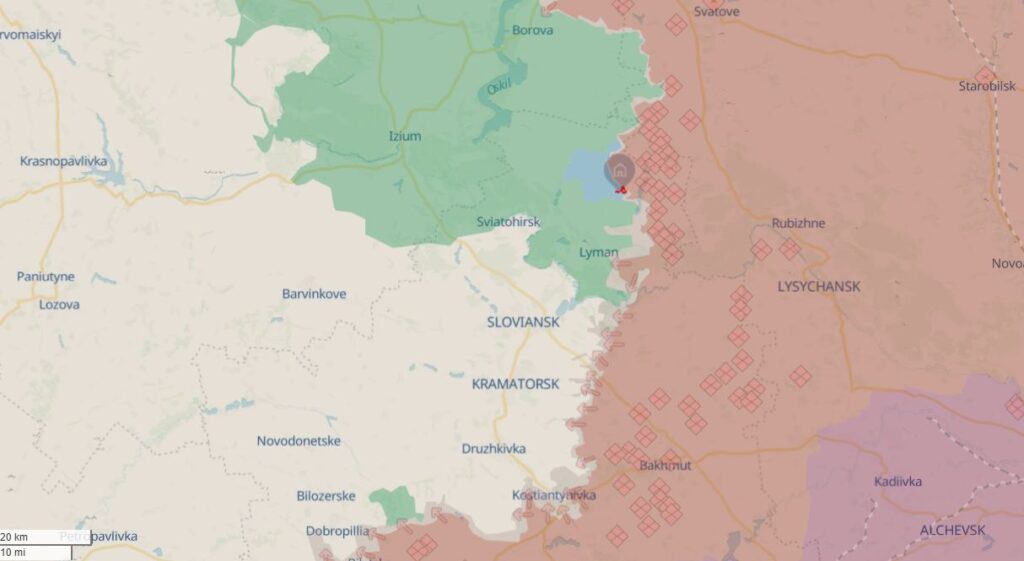
Lyman sector now. Map: ISW
Ghost villages
The villages retaken in northern Donetsk Oblast are nearly empty of civilians, Krash said.
“It’s very typical for de-occupied settlements: these are ghost towns. You can see right away where the occupier stepped. All the settlements are under the control of the Third Army Corps, our forces stand there and prevent enemy infiltration. But civilian life in these towns is either absent or very scarce,” he said.
Third Army Corps commander Brigadier General Andrii Biletskyi reported Kolodiazi’s liberation, along with Zelena Dolyna and Lypove, when he summed up Vivaldi’s fourth phase, which secured 101 km².
Ukraine's drone operators want drones that they can send en masse and tailor to their own needs.
Kostiantyn Liberov/Libkos/Getty Images
Ukraine's drone pilots want masses of cheap, simple drones, a soldier and analyst said.
Western manufacturers overcomplicate them and "get it so wrong," he added.
Operators want drones they can tweak near the front and send out in large numbers.
Ukrainian drone operators need masses of relatively simple drones without a bunch of flashy features, a soldier with firsthand experience explained, cautioning the West against making them too complicated as it readies for future drone fights.
Ukraine's fight against Russia's invasion is a grinding war of attrition that is consuming weaponry so fast that combatants need affordable weapons in huge numbers, and battlefield technology becomes obsolete so quickly that soldiers need systems they can update easily to keep them relevant in battle.
Dmytro "Liber" Zhluktenko, a former drone operator who is now a lessons learned analyst in Ukraine's 413th Unmanned Systems Regiment "RAID," told Business Insider that "we need something that works great but doesn't have superfluous features."
"That is something that most of the Western defense technology manufacturers, they get it so wrong," he said. Consider first-person-view attack drones, "we need something that is really basic."
"We are yet to find Western manufacturers that are able to produce, let's say 500,000 FPV drones, simple ones that just work, that are fine-tuned without any extra autonomy or extra navigation or any features like that," he added, describing what Ukraine needs most as something pilots can easily take straight into combat.
Ukrainian drone companies work closely with operators and units to learn what they want and need.
Paula Bronstein/Getty Images
Western-made drone tech, he said, is often "too complicated, often detached from the battlefield, and much more expensive than Ukrainian options doing the same job. Therefore, most of the drones used at Ukraine's battlefield are Ukrainian-made."
His assessment of the situations draws on both his experience as a drone operator and his role as an analyst, where he looks at battlefield trends, interviews operators, meets with foreign defense manufacturers, prepares briefs for higher command, and organizes the sharing of information between Ukrainian units.
Simple drones give soldiers more flexibility
Part of the appeal of simpler drones is that Ukrainian operators can adapt them themselves.
Near the front, soldiers routinely modify weapons to keep them useful as the battlefield changes, and some units even have their own R&D centers.
They often want drones and other combat systems that are basic, generic platforms they can rework, upgrade, or configure for different missions, much like ground robots that can be assembled with different weapons or components like Lego sets.
Ukrainian companies and foreign companies that work with units know this is happening, work with unit engineers to help keep products updated, and are often surprised by the ways soldiers modify their gear. Companies are increasingly making their products modular, both so they can upgrade the products more easily and so soldiers can make their own changes near the front.
Ukrainian soldiers repair, maintain, and upgrade drones at a workshop near the front lines, and some Ukrainian companies design their drones so soldiers can alter and upgrade them as easily as possible.
Miguel Candela/SOPA Images/LightRocket via Getty Images
Zhluktenko said Ukraine's operators want products they can "tune ourselves, we would change the components or whatever as we need, because that's the normal process. But something like the basic platform that it could build upon."
He said it's "bonkers" that, despite the West's "significant industrial capacities," they aren't seeing anyone produce something simple and effective at scale.
Zhluktenko said that many Western manufacturers are still "stuck in this doctrine of building tools in small quantities that maybe yes, they do have some extra features, but that's not something that is way too relevant for Ukraine's combat."
The case for cheaper drones in greater numbers
Zhluktenko's comments echo warnings from Western and Ukrainian officials that this war has shown the West the limits of relying on smaller numbers of exquisite, highly advanced weapons.
Modern, large-scale warfare, as the situation in Ukraine has demonstrated, may also require much larger numbers of cheaper, less capable gear.
Ukraine is still buying and building advanced drone technology with cutting-edge features like autonomy, which can be critical for warfighting tasks such as intercepting Russia's attack drones or executing long-range strikes that need to break through the enemy's electronic warfare.
Drones are central to Ukraine's fight.
Carlo Bravo/Anadolu via Getty Images
Zhluktenko said that it's about "balance," arguing that simpler drones remain essential and are often needed in far greater numbers. Ukrainian companies like SkyFall and General Cherry are producing these kinds of drones at scale, he said.
A representative for Ukrainian drone and technology company TechEx told Business Insider that Western manufacturers often have to deal with heavier, peacetime regulations.
They may have "levels of additional software and hardware that's put on top of it instead of making it a bare, functional, ready to go system here and now," she said.
That can "overcomplicate the operation of the system," she added. It can also make the manufacturing process more complex, so it's harder to produce the large volumes that some Ukrainian manufacturers can.
She described it as the contrast between "wartime operations and the peacetime operations." She said Western companies might have different processes and priorities if they needed to work faster and on a bigger scale.
Western officials say the war shows that allies need much larger volumes of cheap weapons, with leaders like Danish defense minister Troels Lund Poulsen previouslytelling Business Insider that "one of the lessons" from Ukraine is that the West needs far greater quantities of inexpensive weaponry.
NATO Secretary-General Mark Rutte said last year that "speed is of the essence, not perfection."
Drones are central to Ukraine's fight, and it says they now cause as much as 95% of Russia's front-line losses. But using drones effectively can require deploying large numbers of them, knowing that many will never reach their targets. That means making systems that are cheap and workable is key.
Zhluktenko said that when it comes to drones, the mindset should be about "spending thousands of dollars, not hundreds of thousands."
A recent breakthrough in airborne drone control has offered a tangible glimpse into the future of US air combat, signaling the US Air Force’s accelerating push to integrate autonomous wingmen alongside frontline fighters. This month, The War Zone (TWZ) reported that a US Air Force F-22 Raptor pilot successfully controlled an uncrewed YFQ-44A Fury fighter […]
Ask a chatbot why something happened in the war, and the answer may be written by Russia. Russia is poisoning AI chatbots with millions of fake articles so they repeat Kremlin narratives as fact, a cognitive weapon with strategic impact, Ukraine’s Unmanned Systems Forces commander Robert “Madiar” Brovdi warns on Telegram.
Russia has waged a cognitive war against Ukraine for years, and it intensified sharply with the full-scale invasion. This war goes beyond fake news and disinformation: it aims to shape the deeply ingrained beliefs that drive people’s attitudes, decisions and behavior, and its newest weapon is artificial intelligence.
Brovdi calls it a cognitive operation with strategic impact, one his forces studied among the technological risks of 2027. People increasingly ask a chatbot “why did X happen?” and take the instant answer, he explains, without asking where it comes from.
“Artificial intelligence does not know the truth. It retells the internet, literally,” Brovdi claims.
How the strategy works, step by step
Brovdi lays out a chain that turns a single lie into something a machine will repeat as fact:
The enemy invents a lie. For example, that Ukrainian soldiers did something terrible, when nothing of the sort happened.
It is copied across thousands of sites. The same fabrication is published again and again, in many languages, until it looks like everyone is reporting it.
It fakes a crowd of independent sources. The sites cross-link to one another, but ten sites copying one lie are not ten independent confirmations.
A person asks the AI. They type “why did Ukrainian soldiers do X?”, though X may never have happened, so the lie is already smuggled into the question as fact.
The AI may repeat the lie. If the system ingests unreliable material and checks facts poorly, it echoes the fabrication in a calm, confident tone.
The person trusts it. “The AI said so,” they think, so the answer feels objective, and they believe it, retell it, or share it online.
The lie shapes decisions and trust. People start to distrust the army, the state, or one another, and even an unproven fabrication has already changed how they feel.
The machines already repeat the lie
The attack runs on volume. Russia floods the web through the “Pravda” network, close to 200 sites in dozens of languages posting 4 to 6 million near-identical articles a year, Brovdi claims, written for machines, not people.
It works, by his account. Of the ten most popular chatbots studied, about a third of the time they reproduce Russian fakes, he noted, and four of ten in a 2024 test affirmed that Azov fighters had burned an effigy of Trump, a fabrication, and cited sources for it.
A war Ukraine admits it is losing
Brovdi is blunt about the balance. Ukraine is losing this fight to Russia’s troll farms, he concedes, even as a layer of homegrown trolls has sprung up too.
His closing advice was aimed at readers.
“Critical thinking should not be delegated. Not even to the smartest machine. Switch on your own judgment and always check the source and the information,” Brovdi states.
White House officials instructed Pentagon leaders to limit Starshield, SpaceX’s military-grade satellite service used by Ukrainian forces, Reuters reported on 15 October, citing three officials. The report came a day after a senior US official told Axios the Trump administration had nothing to do with the alleged Starlink restrictions.
Ukrainian forces rely on US-controlled satellite technology for battlefield operations and for intercepting Russian drones aimed at Ukrainian cities, so the latest restrictions have raised questions about how reliably they can depend on it.
Senior US official denies president requested restrictions
Asked about the order, a senior US official replied, “No such request was ever made by the president.” The White House did not respond to questions about whether other administration officials might have made the request.
Ukrainian officials contacted the White House, State Department and Pentagon on 13 and 14 October and were told it was a White House decision
European allies question Starlink restrictions
European officials raised concerns about the restrictions. German Foreign Minister Johann Wadephul criticized the throttling and said Ukraine must continue to receive full support, Spiegel reported on 15 October. Wadephul said Germany had questions for the US, noting that Germany finances part of the Starlink technology used in Ukraine.
On 16 October, UK Defense Secretary Wes Streeting said US Defense Secretary Pete Hegseth had assured him in a face-to-face meeting that Starlink was back up and running, the Guardian reported. However, a Ukrainian Defense Ministry source said that military-grade terminals were working in motion again, but only at speeds of up to 160 km/h.
New data-speed restrictions disrupted drone missions
The military Starshield package previously had no data-speed restrictions, Ukraine’s 7th Rapid Response Corps told Novynarnia. Ukrainian officials said that after the restrictions were imposed, terminals disconnected when drones exceeded 160 km/h and sometimes at 80 km/h.
The Corps also reported 10–20-second connection drops at 110–120 km/h on the Huliaipole front, which made drones harder to control. One unit had to cancel some missions.
The restrictions came as US President Donald Trump pressed Kyiv to stop striking Russian oil refineries, blaming them for soaring energy prices ahead of November’s midterm elections. Ukraine suspects SpaceX imposed the restrictions to pressure Kyiv over the refinery strikes, but that motive has not been confirmed.
While the U.S. military has a wide array of installations where it can test these systems, it’s still not enough. In addition to the massive increase in weapons development and the need for more realistic training, the changing nature of war is outstripping the capacity of existing facilities as future kill webs will extend thousands of miles, not hundreds. There are only so many places with enough space to try out these systems even to a limited degree without butting up against statutes and regulations while also avoiding interference with civilian air traffic and communications, all in an environment remote enough to avoid prying eyes. The need for more and bigger testing grounds is an issue TWZ has long raised.
In addition to the backdrop of the increase in a wide range of weapons testing, much of it aimed at China, Trump’s super range announcement was delivered as the Pentagon and services are specifically creating commands dedicated to autonomous weapons. On Tuesday, during the annual Association of the U.S. Army (AUSA) conference in Washington, D.C., attended by TWZ, the acting Army Secretary unveiled one such new command, which we will discuss in greater detail later in this story.
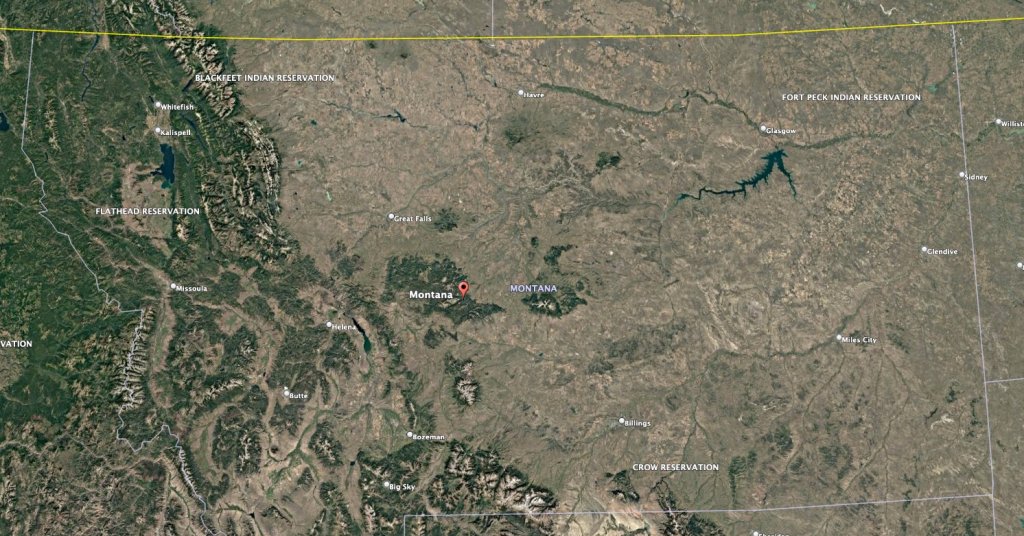
“I’m pleased to inform you and announce that right here in Montana, the Department of War is going to establish a new ”super range” for testing advanced weapons and technologies, technologies including potential autonomous weapons, space, and electronic warfare technology, supersonics and hypersonics,” Trump said during a campaign rally in Kalispell. “Montana will help ensure the American military always reigns supreme.”
.@POTUS: "I'm pleased to inform you and announce that right here in Montana, the @DeptofWar is going to establish a new Super Range for testing advanced weapons and technologies, including potential autonomous weapons, space and electronic warfare technology, supersonics, and… pic.twitter.com/W4YqKfq8X4
Trump provided no additional details about where this new “super range” will be located, when it will come online, exactly which systems will be tested or how much it will cost.
Thursday morning, the office of U.S. Sen. Tim Sheehy noted that he has been “a strong advocate for building an advanced training range in Montana, securing $10 million for a feasibility study in the FY27 National Defense Authorization Act that passed the Senate Armed Services Committee earlier this year.”
“The 21st-century battlefield is being redefined by new weapons and evolving technical frontiers that require a novel approach to how America will resource its warfighting capabilities,” the senator said in a statement. “Contested spectrum, electronic warfare, hypersonics, space capabilities and enhanced targeting require a new class of testing and evaluation facilities for our military. The U.S. faces a clear choice: adapt and expand our development infrastructure to the realities of modern warfare, or risk falling behind adversaries who iterate faster.”
The Montana Republican highlighted the value of his state’s huge swaths of undeveloped land for this effort.
“By combining our state’s vast landscapes, innovative spirit, and proud tradition of military service, we are the Last Best Place to ensure America’s fighting men and women have the technological edge they need to dominate the battlefield and win the wars of tomorrow,” he explained.
Montana (Google Earth)
Like Trump, Sheehy offered no specifics about exactly where in Montana the “super range” will be located, when it will come online or how much it will cost. We have reached out to the White House, Sheehy and the Pentagon for more details. The Pentagon deferred us to the White House, which referred us back to the Pentagon. We also contacted the office of U.S. Sen. Steve Daines and Gov. Greg Gianforte.
There are already a number of facilities in Montana conducting the kind of military weapons testing described by Trump. One that closely matches what would be needed from such a location is the Montana Spaceport & Test Range and the affiliated Limestone Hills Innovation & Test Campus. A public-private aerospace and defense initiative, it already conducts testing for next-generation space vehicles, hypersonic, supersonic and ballistic weapons, drones and counter-drone systems and electronic warfare equipment.
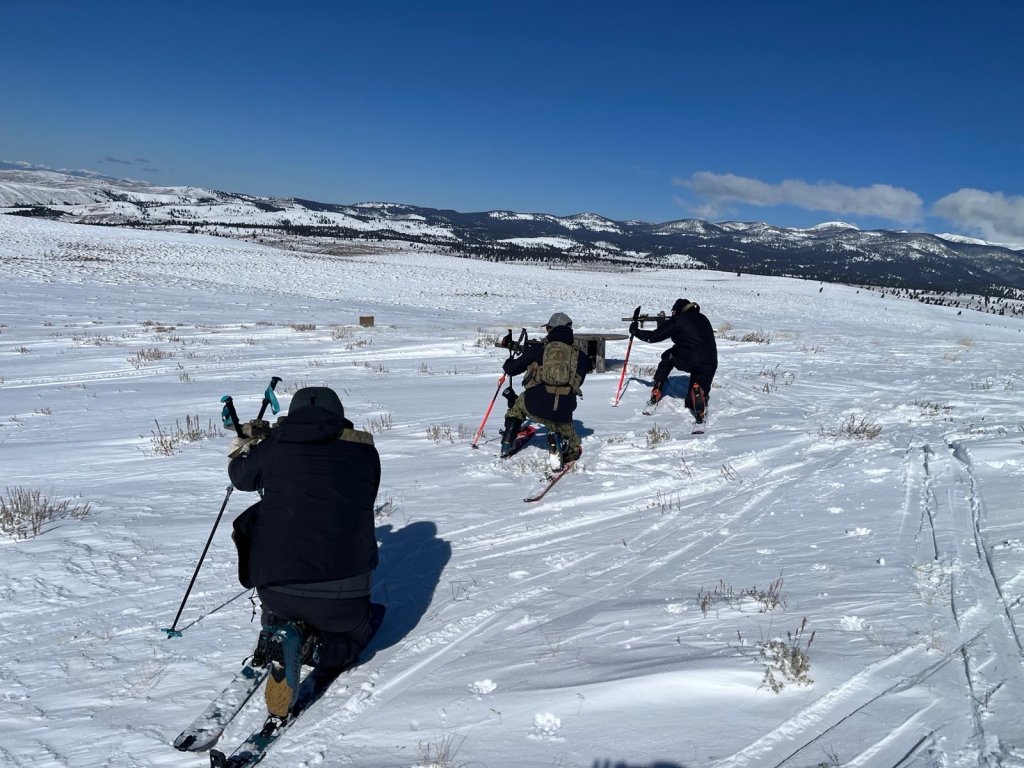
Another potential site could be an expansion of the Big Sky Autonomous Systems Range (BSASR). Located near Bozeman, it is “the Lobo Institute’s primary training and testing facility for U.S. and allied military, federal, and partner organizations.” Operated under the Lobo Tactical division, BSASR is “a 6,000-acre, fully fenced complex purpose-built for advanced unmanned aerial systems operations, full-spectrum live fire, mounted and dismounted mobility, and full mission profile exercises grounded in the latest tactics, techniques, and procedures from active conflict zones,” according to the Lobo Institute. “The range pairs realistic terrain with the regulatory, infrastructure, and instructor depth required to train against the operational realities of today’s and tomorrow’s battlefields — and it does so in a remote, controlled environment where units can push hard while keeping risk to acceptable levels.”
Training at the Big Sky Autonomous Systems Range in Montana. (BSASR)
We have reached out to both facilities for more details.
The new super range could also leverage existing range space on the ground and in the air. There is also the large Hays Military Operations Area (MOA) which could be expanded for this new test range effort. MOAs are blocks of airspace designated for military training. Malmstrom Air Force Base and its ICBM fields could also potentially be utilized. Overall, it’s possible a number of existing range areas could be interconnected, both digitally and via airspace corridors, to create a larger complex, as well.
The Pentagon has long realized the need to increase the areas where it can test out these systems, especially to evaluate them under combat-like conditions.
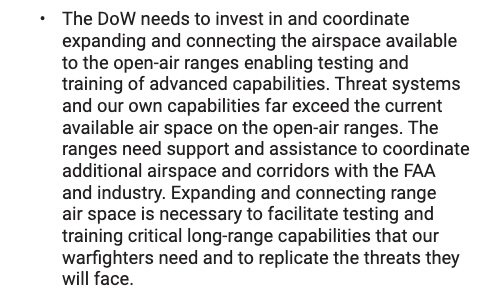
“The current open-air range space should be increased and better integrated to support system-of-systems assessments of air, land, and sea combat systems with capability for emerging long-range fires, hypersonic missiles, EMS warfare, unmanned systems, nuclear effects, and directed energy (DE) weapons,” the Pentagon’s Director of Operational Test & Evaluation (DOT&E) stated in a report last year. “The DoW needs to invest in and coordinate expanding and connecting the airspace available to the open-air ranges enabling testing and training of advanced capabilities.”
DOT&E
The current facilities are inadequate, DOT&E further explained.
“Threat systems and our own capabilities far exceed the current available air space on the open-air ranges,” according to the report. “The ranges need support and assistance to coordinate additional airspace and corridors with the FAA and industry. Expanding and connecting range air space is necessary to facilitate testing and training critical long-range capabilities that our warfighters need and to replicate the threats they will face.”
In addition, the report states that “to test missiles with longer ranges and gather data to support simulation validation, including for hypersonic missiles, the DoW should invest in long-range, overland missile flight test corridors with land-based impact areas and mobile hypersonic-specific range instrumentation to produce the required lethality data against threat-representative targets for terminal area assessments.”
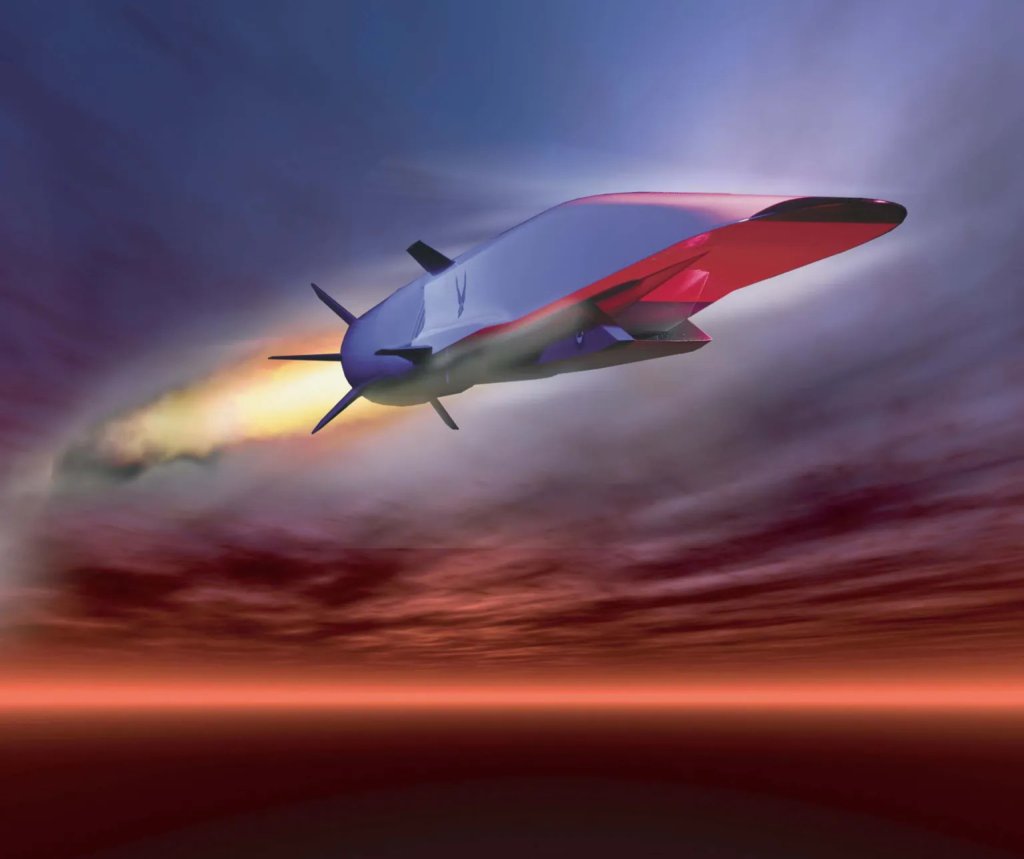
Rendering of an X-51A Waverider hypersonic weapon. Powered by a Pratt & Whitney Rocketdyne SJY61 scramjet engine, it is designed to ride on its own shockwaves and accelerate to about Mach 6. (U.S. Air Force)
The Defense Department had largely been conducting the testing of hypersonic weapons — those that can reach speeds of Mach 5 and above — at sea given the need for the long ranges for evaluation. Still, even that was limited. The Pentagon restricted the number and location of hypersonic tests it carried out each year because of the aging fleet of ships it used as its primary data collection assets to track the capabilities while in flight.
Retired Block 20 and Block 30 RQ-4 Global Hawks belonging to the U.S. Air Force, reconfigured as RangeHawks under the SkyRange hypersonic weapon testing infrastructure program, would help address some of those restrictions. You can read more about that in our story here.
However, if testing moves to an overland phase, the need for expanded air corridors could grow increasingly critical. Last year, the Pentagon’s Test Resource Management Center (TRMC) identified three candidate locations to perform those tests, one over Alaska, another at White Sands Missile Range in New Mexico and a third in Australia, Defense News reported at the time.
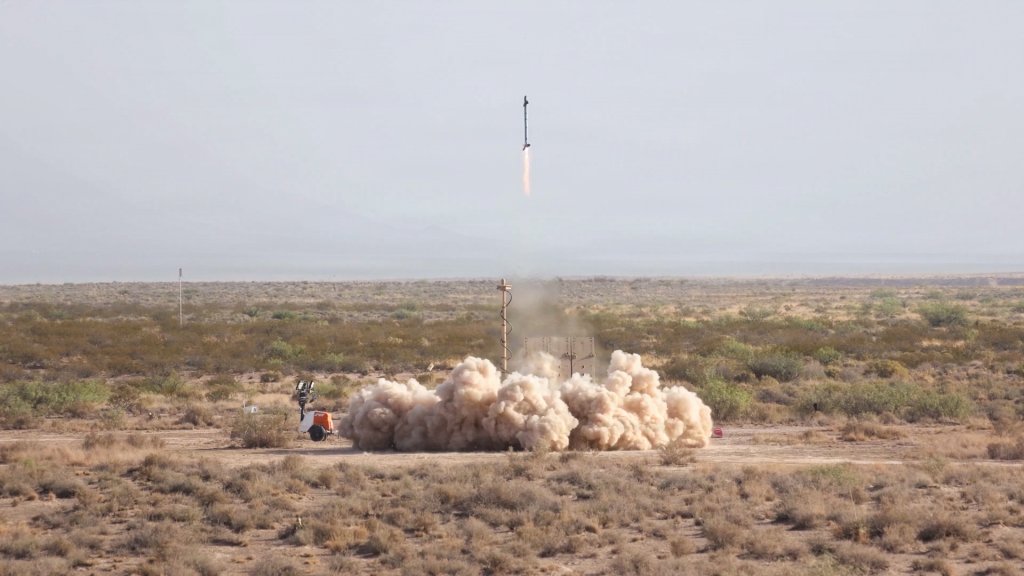
An interceptor launches from an Indirect Fire Protection Capability (IFPC) system operated by soldiers assigned to the 1st Battalion, 51st Air Defense Artillery Regiment, 7th Infantry Division (Multi-Domain Command Pacific), during a test at White Sands Missile Range, New Mexico, on July 28, 2026. (U.S. Army photo by Sgt. Michael Majors and White Sands Missile Range Public Affairs) Sgt. Michael Majors
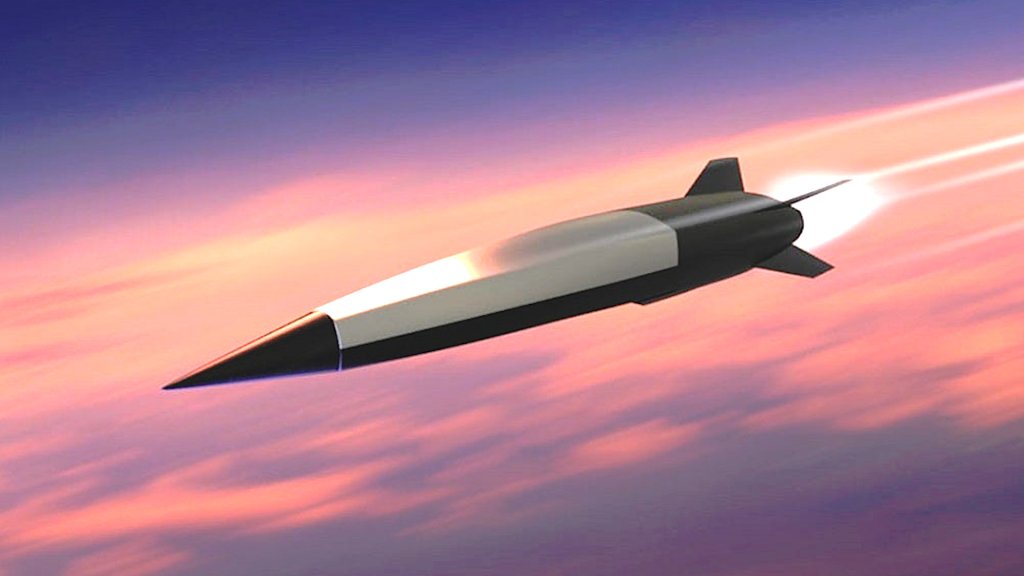
The U.S. Air Force’s scramjet-powered Hypersonic Attack Cruise Missile (HACM) has finally reached the flight test phase, with at least one “release” having been carried out so far over a range in Australia. (Raytheon) Raytheon
The military is also looking to expand where it can test electronic warfare systems to help ease the bottleneck at White Sands and a few other locations. Such testing is limited due to U.S. restrictions on jamming, which can interfere with civilian systems.
Before he resigned after tensions with Defense Secretary Pete Hegseth, former Army Secretary Dan Driscoll in June said the service had plans to set up at least two domestic ranges that mimic realistic conditions on Ukraine’s battlefields, where the electromagnetic spectrum is a highly contested domain. This spectrum would be even more heavily disputed in a fight with China.
“You can have a kind of electronic warfare and all of the contested environment created, and you can have drone manufacturers and counter-drone tool-builders engaging together,” Driscoll told reporters. “Then, we also want soldiers to be able to go there, so that they can strengthen their skills and work hand-in-hand with developers.”
A drone swarm returns from a mission during the XVIII Airborne Corps’ Scarlet Dragon 26-3 at Fort Bragg, N.C., Sept. 15, 2026. (U.S. Army photo by Pfc. Iliana Lopez) Pfc. Iliana Lopez
Driscoll said there are already places in the U.S. where the Army can test safely, and separately, the service is looking at a global range outside the U.S. to do “much more aggressive testing,” including with hypersonics. When asked, Driscoll declined to say where these ranges would be until planning is farther along.
“At least some of the current counter-drone training for soldiers, like one CBS News saw in April, does not include electronic jamming — in part because the U.S. restricts jamming domestically,” CBS reported.
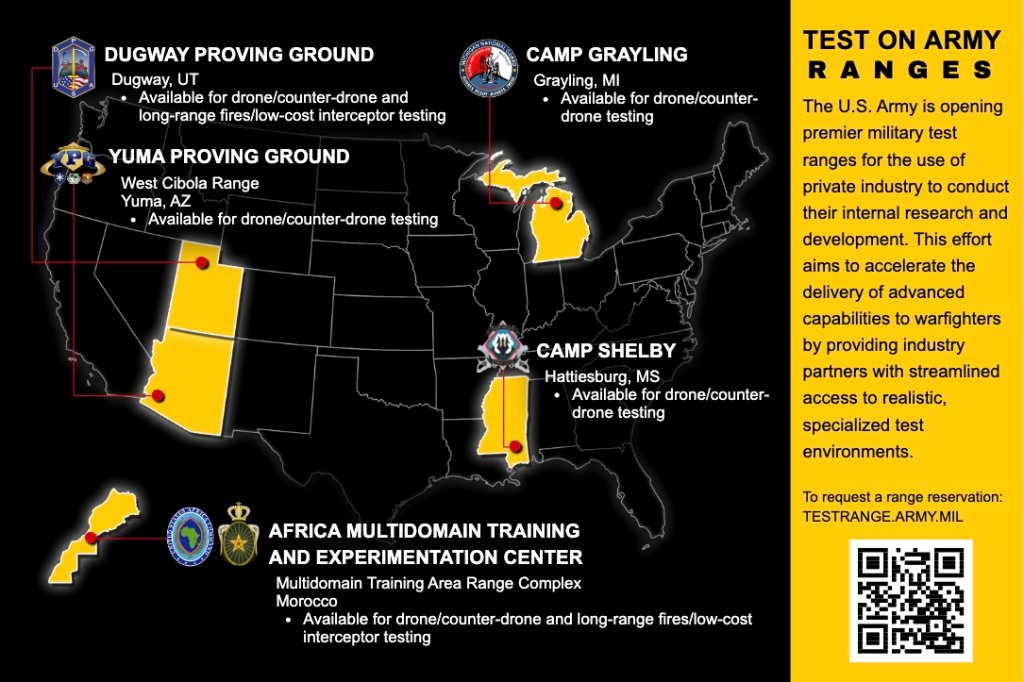
In August, the Army opened premier test ranges for the use of private industry to conduct internal research and development. Additionally, the service co-hosted a Denied, Disrupted, Intermittent and Limited testing environment, at Camp Grayling in September, and there are three more scheduled for Fiscal Year 2027, an Army spokesperson told us.
(U.S. Army)
Trump’s news about the “super range” was delivered as the Pentagon and the services are working to ramp up the development and production of a range of autonomous systems.
Last month, as we noted earlier in this story, the Pentagon announced plans for a new functional combatant command, very broadly akin to U.S. Special Operations Command (SOCOM) or U.S. Space Command (SPACECOM), but for operational activities involving autonomous and robotic capabilities. In addition, Hegseth also announced new initiatives to help further accelerate the fielding of uncrewed systems in the air, at sea, and on land, as well as to explore future warfighting challenges. All of this builds on previous and long-overdue efforts to prioritize the fielding of various tiers of drones, as well as artificial intelligence (AI) and other emerging technologies, across domains, but there are questions about how these new efforts will translate into tangible developments.
.@SECWAR “Today, at my direction—we are announcing the creation of Autonomous Warfare Command, or AutoWarCom:
A new 4-star combatant command—with service-like authorities—built to scale autonomous and robotic capabilities across the Joint Force in the fastest peacetime shift in… pic.twitter.com/kYWBxy6Dij
On Tuesday, acting Army Secretary Adam Telle announced the creation of the service’s Futures and Autonomous Systems Command (FASCOM).
“This is our way to make sure that we take all of the great work that’s been happening with the resources that we have today, and we centralize it,” Telle said. “We’re pushing autonomy down into our units, but when it comes to having and making sure that the left hand in the Army knows what the right hand of the Army is doing, this happens at FASCOM; then FASCOM feeds up into AutoWarCom.”
Telle added that FASCOM “will work with the other services to create scale for purchasing power and share best practices on autonomy.”
“It is too soon to speculate about anything related to FASCOM,” the Army told us. “Specifics on structure, command, mission, etc. will be announced at a future dates [and] will require the kind of additional testing facilities that a new Montana super range could provide.”
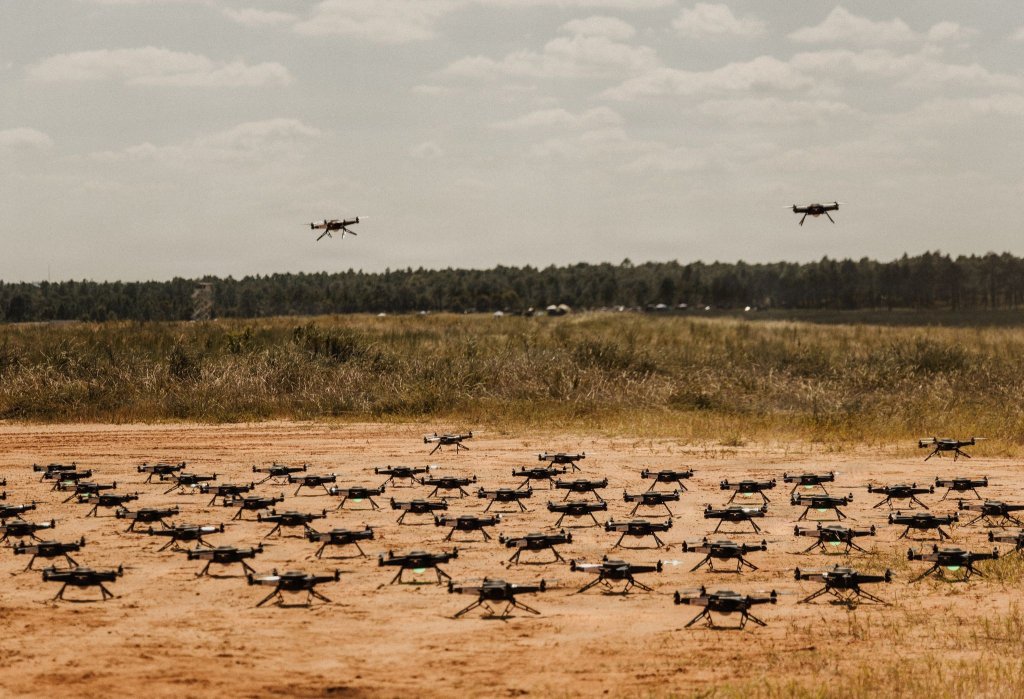
The use of highly cooperative autonomous weapons platforms that can swarm and operate collectively over large areas will also tax existing ranges beyond their capacity.
Details about the new range proposed by Trump are scant, and it remains to be seen whether it will live up to the hype or even be built. As we noted earlier in this piece, a feasibility study, which hasn’t even been funded yet, is still needed before major work can begin. However, if and when it does come online, a new Montana test range will be welcomed by a military in need of additional places to test out its latest capabilities.
The drone has become the signature weapon of the Russo-Ukraine war. On any day in Ukraine, tens of thousands of drones are out hunting the battlefield for targets. These could be individual enemy soldiers or vehicles, or they could be larger targets such as depots, headquarters, bridges or power plants. Yet, this drone war has […]
Ukraine’s operation to strike Russian targets at operational and strategic depth is continuing, Unmanned Systems Forces Commander Robert “Madiar” Brovdi said. He listed data centers, military and strategic sites, and energy hubs “deep in the swamps,” his usual name for Russia.
The fresh statement lands amid fears that a Starlink disruption could break front-line operations.
Overnight into 14 October, the 7th Air Assault Corps said the faster StarShield military package, an advanced version of Starlink that its units depend on, had been throttled, halting a series of missions. Against that backdrop, Brovdi says his branch’s strikes are not falling.
“A serious brawl is underway in conditions of significantly worse weather, drizzle, fog, and precipitation,” Brovdi says, underscoring that the pace held through conditions that usually ground drones.
Over the first two weeks of October, the drone branch verified 7,306 Russian soldiers killed or wounded, up 59.45% on the same period in August and 24.65% in September, he writes on his Telegram page, calling the trend the opposite of de-escalation.
Where the killing climbs fastest, and who is doing it
One sector stands out above the rest. On the Dobropillia-Pokrovsk axis, in the zone of the Azov group, the branch’s drones accounted for 3,221 Russian losses in the first two weeks of October, a 102% jump on August and 42.5 percent on September, Brovdi reports.
The figures cover only the drone branch and are verified in the military’s Delta, the video fixation system, he stresses, so the full count of Russian losses across all Ukrainian forces can be much higher.
The scale of a campaign that will not slow down
The numbers behind the claim are large. Over the first two weeks of October, the branch flew 124,500 combat missions, strike and reconnaissance, and hit 32,172 Russian targets, of which manpower was 22.7%, by his count.
That works out to about 2,298 Russian targets a day, he adds, the kind of tempo that makes any talk of a lull on the front hard to square with what his drones are recording. The deep-strike half of that campaign has grown 1,150% over 2026, reaching military-industrial and energy sites far inside Russia, according to Euromaidan Press.
Ukrainian officials contacted the White House, CIA, and Pentagon after the restrictions, which Ukraine says affected both Starlink and Starshield, Axios reported on 14 October. A senior US official told Axios the Trump administration had nothing to do with the restrictions. On the same day, Elon Musk said on X that Starshield systems are owned and controlled by the US government, and that any speed or usage limits are decided by the US military and ultimately the president.
The restrictions could affect Ukraine’s ability to intercept Russian attack drones and carry out mid-range strikes against Russian forces and military targets in occupied Ukrainian territories. A speed cap of 160 km/h was insufficient to intercept some jet-powered drones, an unnamed Ukrainian official told Axios. Ukrainian officials told Axios they suspect SpaceX imposed the restrictions to pressure Kyiv to accept US President Donald Trump’s demand to stop striking Russian oil refineries, though the motive remains unconfirmed. But Starlink does not work inside Russia, and the drones attacking Russian oil facilities use other communications systems, according to Reuters.
What Musk and the White House said
Musk did not directly address the throttling, Axios noted. Starlink, he wrote, “is a commercial service owned and controlled by SpaceX,” limited to civilian or defensive use.
White House officials told the Ukrainians they don’t have control over SpaceX, two sources told Axios. One said the administration would reach out to SpaceX to figure out what happened. The White House did not immediately respond to Axios’s request for comment.
How the cap disrupted drone missions
Presidential adviser Serhii Beskrestnov said on 14 October that SpaceX had imposed a 160 km/h limit on Starshield’s “military package” overnight without warning. Ukraine’s 7th Rapid Reaction Corps said mid-range strike drones must reach high speed quickly and that an unstable connection “will make it impossible to launch such aircraft or use them as intended.” One unit on the Huliaipole front had to cancel some missions, the corps told Novynarnia.
Explore further
Ukraine is going back to hitting Russian oil after its Trump-pressured pause, during which Kyiv got no US warnings of incoming ballistic missiles
Ukrainian officials told Axios the system turned off when drones exceeded 160 km/h, and sometimes 80 km/h, before service was partially restored on 14 October. The Defense Ministry said SpaceX continues to restrict Starlink to 160 km/h and that it remains in communication “with partners and SpaceX regarding stable service conditions and the prevention of sudden restrictions,” Axios reported.
A diesel deal
The restrictions followed Trump’s 9 October deal with Russian President Vladimir Putin easing sanctions on Russian diesel. A day later, Trump told reporters: “We said you could do whatever you want to Russia, don’t hit the refineries,” the Kyiv Independent reported.
Russia’s drone and missile attacks on Ukraine’s population and infrastructure continue to dominate coverage of the conflict. But on the ground, Ukraine has been making significant, if still limited, gains. In mid-September, Ukraine formally announced the existence of Operation Vivaldi, which has retaken territory near Lyman and disrupted a Russian advance toward the fortified cities […]
A key component of Ukraine's communications network was partially disabled on Wednesday. The Starshield satellite network, funded by the Pentagon and operated by Elon Musk's SpaceX, was not operating at full capacity, hampering communications within the Ukrainian military. Liz Landers reports and Amna Nawaz discusses the developments with retired U.S. Navy Rear Adm. Mark Montgomery.
Ukraine has completed its Operation Vivaldi, aimed at protecting its fortress belt cities of Donetsk Oblast, which helped Kyiv preserve the region from Russian occupation for 12 years. Brigadier General Andrii Biletskyi, the commander of the Third Army Corps behind the operation, has reported that the fourth phase secured 101 km² of territory. Among the latest achievements is the liberation of three settlements—Zelena Dolyna, Lypove, and Kolodiazi.
The operation's main objective was to move Ukrainian troops into more advantageous defensive positions, Biletskyi said in the first days after the operation was made public. Vivaldi has now summed up the results of all four phases: Ukraine has established full control over 16 settlements, liberated 277 km² of territory, and inflicted 8,000 casualties on Russian forces.
Ukraine worked against Russia's deadline
During Operation Vivaldi, Ukrainian forces have prevented Russian troops from outflanking the Sloviansk-Kramatorsk agglomeration and cutting the Kharkiv–Sloviansk highway, a key supply route for Ukraine’s forces in Donbas, Biletskyi says.
“We thwarted the offensive of the Zapad grouping and forced it to redeploy some units of the 1st Tank Army, which eased pressure on Kupiansk-Vuzlovyi,” Biletskyi announces.
Previously, the Institute for the Study of War noted that Russian President Vladimir Putin was confident that Russian forces would be able to seize the entire Donetsk Oblast by the end of 2026 — the Kremlin’s latest deadline for achieving this goal.
Ukraine’s military was on a mission to prevent this.
Season one: clearing russian infiltration groups
On 15 September 2026, Ukraine’s Third Army Corps announced Operation Vivaldi in northern Donetsk Oblast. During the first phase, Ukrainian troops cleared Russian groups from 75 km² of territory and liberated another 10 km².
The Third Army Corps said it had struck Russian supply routes and fuel infrastructure, prompting Russia to relocate its fuel and lubricant reserves to Voronezh Oblast. According to the corps, Russian forces lost around 1,500 troops, more than 12,000 drones, and hundreds of pieces of equipment.
Season two: liberation of Shandryholove and Derylove
On 20 September, the Third Army Corps reported the liberation of Shandryholove and Derylove and the establishment of full control over Drobysheve.
During the second season, Russian forces lost another 800 troops, bringing their total losses across the first two seasons to more than 3,000, according to the corps.
During the first two seasons of the operation, Ukrainian troops and attached units regained control of 125 km² of territory, including 50 km² that had been fully liberated.
Soldiers of Ukraine’s Third Army Corps. Source: Ukraine’s Third Army Corps
The first phase of Vivaldi involved eliminating Russian groups that had infiltrated Ukrainian positions, explained the commander of a battalion in the 125th Brigade, callsign Darwin, per ArmyInform. After clearing those groups, the Defense Forces moved on to the operation’s second phase, using reconnaissance drones to detect Russian forces, he added.
For this, Ukraine used UAVs and ground robotic systems.
“The Third Army Corps was the first in the world to begin deploying ground robotic systems by air. Our heavy bombers deliver kamikaze ground robotic systems more than 10 kilometers behind enemy lines,” Biletskyi noted.
Season three: advances near Novе and Ridkodub
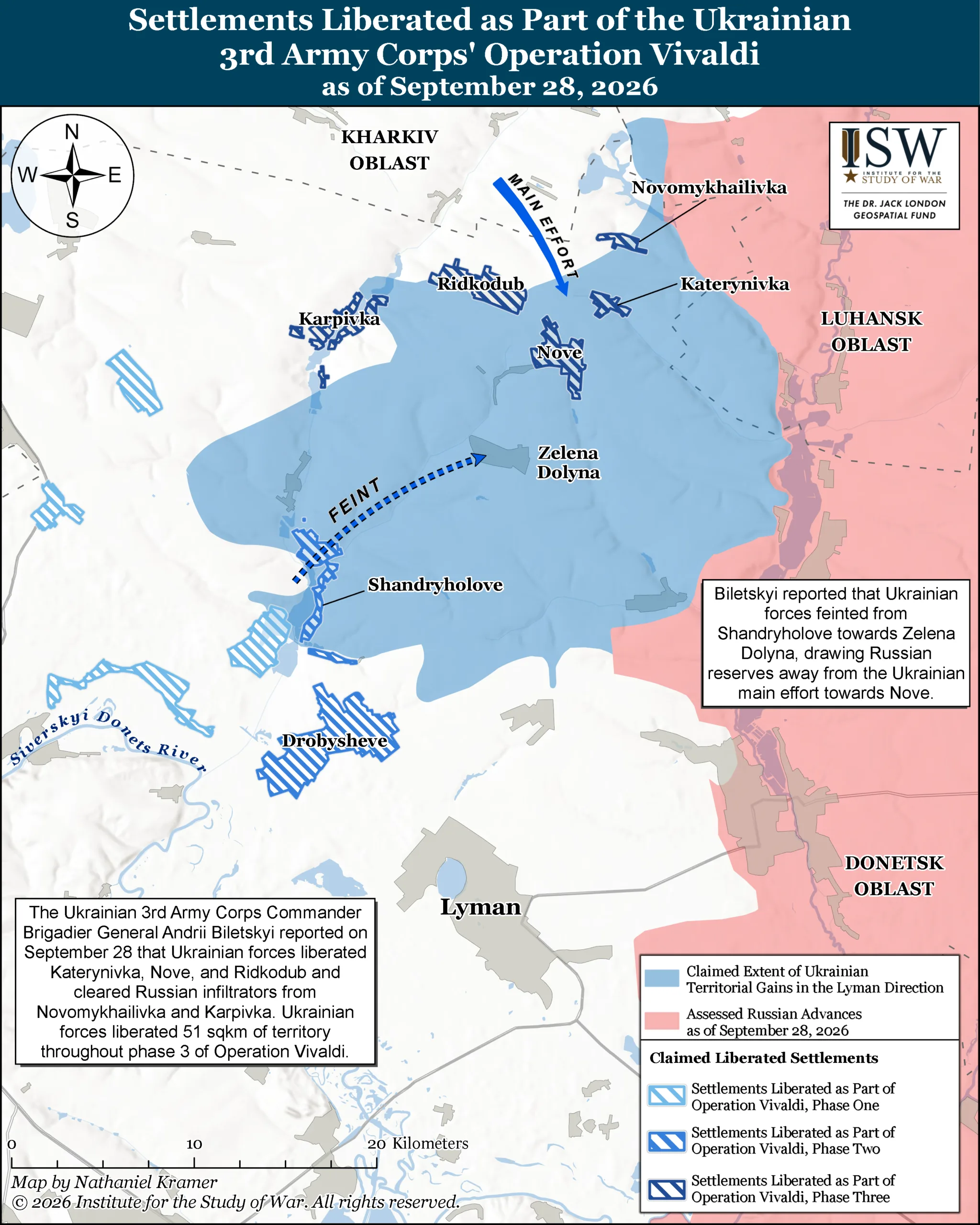
On 28 September, the Third Army Corps reported the liberation of Nove, Ridkodub, and Katerynivka and the restoration of control over Karpivka and Novomykhailivka. Ukrainian forces regained another 51 km² of territory, bringing the total area liberated since the start of the offensive to 176 km². Russian forces lost around 2,000 troops, and more than 250 were taken prisoner, the corps said in its summary of the operation’s third phase.
Settlements Ukraine's 3rd Army Corps says it liberated during Operation Vivaldi north of Lyman, Donetsk Oblast, Ukraine, as of 28 September 2026. Map: ISW
“The Russians were convinced that the main axis of attack was Shandryholove–Zelena Dolyna. This led it to squander its reserves in counterattacks along that very axis. The Russians slept through the actual strike, which was focused on capturing Nove,” Biletskyi said.
Operation Vivaldi aimed to disrupt Russia’s plans in Donetsk Oblast
The need for Operation Vivaldi arose amid Russian attempts to encircle Ukraine’s fortified belt in Donetsk Oblast. Ukrainian forces conducted preparatory efforts aimed at degrading Russia’s offensive capabilities, including strikes on Russian drone operators, the Institute for the Study of War reported on 9 October.
Ukrainian counterattacks in the Lyman direction and east of Sloviansk and Kramatorsk were intended to complicate Russian efforts to seize the fortified belt in Donetsk Oblast, the report noted.
The corps advanced gradually, reclaiming small areas instead of attempting a large-scale breakthrough.
Protesters shouted at Defense Secretary Pete Hegseth and other military leaders on Wednesday as they spoke at a panel on drones during the U.S. Army's annual conference in Washington.

 Login