❌

Reading view

Meta Earnings Show Increased A.I. Spending, Even as Cash Pressures Grow

The spending has hurt the Silicon Valley giant’s cash flow, which turned negative. Meta said it would issue a new class of stock to help it raise more money.

© Scott Ball for The New York Times

Construction of Meta’s Richland Parish Data Center in Holly Ridge, La.
  •  

Meta Ordered to Pay $25 Billion Over Cambridge Analytica Privacy Violations

The penalty, one of the largest levied against a tech giant, stemmed from a lawsuit by New Mexico claiming the social media company had misled users about their data privacy.

© Gabriela Bhaskar/The New York Times

Meta’s annual Meta Connect event at the company’s Menlo Park, Calif., campus.
  •  

Proteste a Milano, l’esperto: “Attacchi hacker o regia straniera? Spesso è solo contagio sociale”

Proteste a Milano, il prof. Quattrociocchi: “Sui social la regia esterna è rara, contano bias e algoritmi”

“Non serve necessariamente una regia esterna”. Così Walter Quattrociocchi, professore ordinario alla Sapienza di Roma e direttore del Center of Data Science and Complexity for Society (CDCS), risponde ad Affaritaliani sulla possibilità che le proteste e i disordini possano essere sfruttati da Stati stranieri nell’ambito di operazioni di guerra ibrida. 

“Per parlare di guerra ibrida servono evidenze di un coordinamento intenzionale riconducibile ad attori esterni”, spiega il professore, sottolineando come le mobilitazioni possano essere il risultato di dinamiche spontanee: “Le proteste, anche quando degenerano, possono essere spiegate da dinamiche di contagio sociale che si sviluppano lungo linee identitarie”. 

A favorire questi processi sono anche i meccanismi cognitivi e le interazioni tra persone con idee simili: “Le persone tendono a cercare conferme alle proprie convinzioni, il cosiddetto confirmation bias, e a interagire con chi condivide le loro posizioni. È così che si formano le echo chamber, ambienti nei quali determinate narrazioni si rafforzano reciprocamente”.

Anche i social network possono essere utilizzati per tentare di destabilizzare un Paese, ma individuare una manipolazione non significa dimostrare che abbia prodotto effetti concreti: “Certamente esistono tentativi di manipolazione attraverso i social, ma tentare un’operazione di influenza e riuscire a orientare concretamente i comportamenti sono due cose molto diverse”, osserva Quattrociocchi. 

Le piattaforme, infatti, sono caratterizzate da dinamiche difficili da controllare, che possono favorire la diffusione di contenuti divisivi: “Gli algoritmi di raccomandazione, guidati da modelli di business fondati sull’attenzione, possono amplificare contenuti divisivi indipendentemente dalle intenzioni di chi li produce”. Per questo, avverte il professore, “dimostrare una regia esterna richiede quindi prove di coordinamento e attribuzione, non semplicemente contenuti virali”.

Sul fronte delle possibili contromisure, la priorità è comprendere i meccanismi attraverso cui si diffondono le informazioni e si consolidano le narrazioni online. “Prima ancora di cercare nemici esterni, dobbiamo comprendere il funzionamento ordinario delle piattaforme. Servono accesso ai dati, ricerca indipendente e trasparenza degli algoritmi per distinguere operazioni coordinate da fenomeni spontanei di contagio sociale”, sottolinea Quattrociocchi.

La soluzione, però, non deve tradursi in restrizioni dei diritti fondamentali: “La risposta non può essere limitare la libertà di espressione o il diritto di manifestare”. Il punto, conclude il professore, è capire “come identità collettive, bias cognitivi e incentivi economici delle piattaforme possano trasformare tensioni preesistenti in fenomeni di mobilitazione e polarizzazione, anche senza alcun intervento straniero”.

LEGGI LE NOTIZIE DEL CANALE NEWS

L'articolo Proteste a Milano, l’esperto: “Attacchi hacker o regia straniera? Spesso è solo contagio sociale” proviene da Affaritaliani.it.

  •  

X Bans Former Libertarian Party Affiliate—After the State Requests It

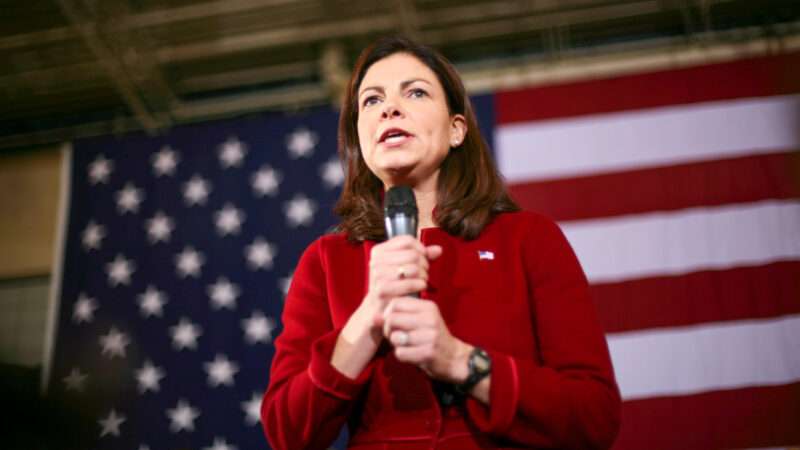
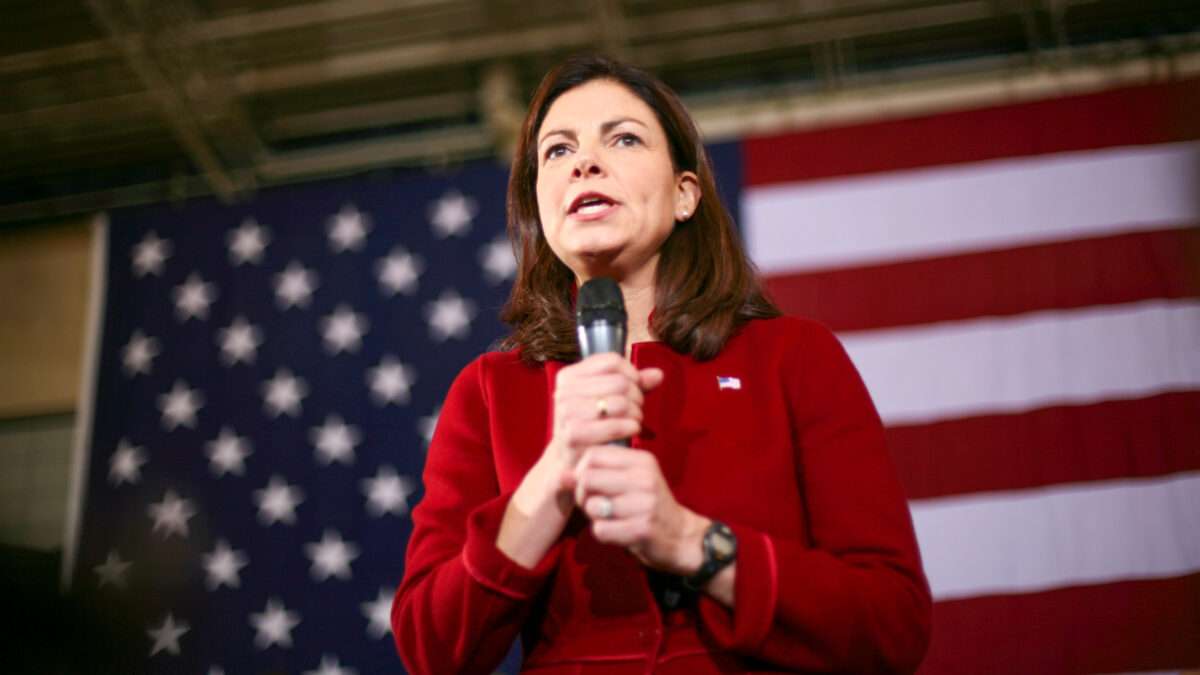
New Hampshire Governor Kelly Ayotte | Scott P. Yates/ZUMAPRESS/Newscom

The Libertarian Party of New Hampshire's (LPNH) X account—which has become infamous for its bigoted and controversy-ridden posts—is finally gone. But the state's spurious role in its banning raises free speech concerns.

Last week, New Hampshire Republican Gov. Kelly Ayotte sent a letter to X's safety team, asking the company to suspend the account. Ayotte's letter made mention of several clear violations of X's content policies: "This account has openly called for the assassination of elected officials from the New Hampshire Democratic Party, has said it condones murdering elected officials for their policy positions, and most recently threatened a member of House leadership.…I'm calling on X to remove [the posts] and suspend the account immediately." 

The letter referenced one particularly bold post from September (which the account later deleted). The post read: "We openly support the assassination of basically every elected democrat in New Hampshire. But if you don't have the balls to do it, then you should probably vote GOP." 

X suspended the account the day after Ayotte sent the letter.

The removal of the LPNH account has likely elicited a sigh of relief from the Libertarian Party's (L.P.) leadership, which has repeatedly tussled with LPNH over its extreme rhetoric, undermining of L.P. candidates, and constant creation of P.R. crises for the party. In 2024, the LPNH endorsed Donald Trump for president instead of Libertarian candidate Chase Oliver, pushing the Libertarian National Committee to disaffiliate LPNH from the L.P.'s structure this past May. The Granite State Libertarian Party was designated the state's new L.P. affiliate in September.

Even though the LPNH has clearly violated X's terms and does not adhere to the most basic requirements for L.P. membership (such as pledging to uphold the nonaggression principle), the government should not tell private firms when to enforce their own policies. This sentiment was shared by Granite State L.P., which recently said in a social media post, "While a private company has a right to remove someone screaming about setting people on fire…the government should play zero part in that decision."

Jeremy Kauffman, the chair of the LPNH, is outraged but unsurprised, posting on Sunday that he and the LPNH are "exploring a lawsuit against the New Hampshire government." He tells Reason, "Ayotte's letter was a classic example of jawboning. When a governor sends a demanding letter like this to a private company, there is a clear implicit threat attached."

Speaking to Reason, Trace Mitchell, a technology and free speech expert at the Foundation for Individual Rights and Expression, defines jawboning as, "when the government, through veiled threats or direct coercion, pressures a private entity to take an action that the government could not lawfully take or mandate itself." 

In Bantam Books v. Sullivan (1963), the Supreme Court ruled that the government cannot make recommendations to private companies if those recommendations come with legal repercussions—even implied or veiled repercussions. Doing so would qualify as jawboning, which violates the First Amendment. Though Ayotte's letter could be construed as extralegal pressure, it does not imply a punishment for noncompliance and likely falls short of legally recognized jawboning.

Addressing Kauffman's proposed lawsuit, Mitchell says, "In this case he would likely have to show there is something beyond this letter…[like] outside communications, emails or text with X." 

Safety officers at X provided no comment to Reason to justify the suspension. It is not clear whether there was any external communication involved beyond the letter. Without a more definite connection between Ayotte's request and X's decision, Kauffman may struggle to win in court. Still, that doesn't make the governor's request any less concerning. 

While Ayotte's letter was a surprise, it was not unprecedented. As social media has become the public forum, all levels of government have tried to regulate what is said there. During the COVID-19 pandemic, federal officials under the Biden administration were revealed to be in near-constant communication with major social media firms, encouraging and recommending that misinformation be removed from the platforms. Many of these recommendations were paired with implied threats to review the firms' legal immunity for content posted on their platforms, which spawned a lawsuit that reached the Supreme Court in 2024. 

Although the Court dismissed the case for lack of standing, some lawmakers have taken action to address concerns over jawboning, with Sen. Ted Cruz (R–Texas) introducing the JAWBONE Act in June. The bill would make it easier for members of the public to sue government officials who pressure media networks, as well as require increased transparency for all federal communications to media networks.

Even if Kauffman cannot find legal remit, Ayotte's letter was a troubling move for the future of internet speech. Many of the offending posts referenced were months old or had been deleted before the letter was sent. The LPNH has likely been violating X's content policy for years, but X only took action after the government instructed it to.

You don't need a judge to see how that might be concerning. 

The post X Bans Former Libertarian Party Affiliate—After the State Requests It appeared first on Reason Magazine.

  •  

A.I. Election Videos Are Flooding Brazil. Could They Sway the Vote?

Brazil spent years targeting electoral lies on the internet. Now, artificial intelligence is stumping the election authorities and reshaping a high-stakes race.
  •  

China’s Free A.I. Models Are Thrown Into Uncertainty

Draft rules on the export of artificial intelligence technology show how China is trying to balance national security risks with its desire to outpace the United States.

© Aly Song/Reuters

Under rules proposed last week, the next advanced A.I. models might need the government’s permission to be exported out of China.
  •  

China Moves to Tighten Its Grip Over Exports of Top A.I. Models

Draft rules on the export of artificial intelligence technology show how China is trying to balance national security risks with its desire to outpace the United States.

© Aly Song/Reuters

Under rules proposed last week, the next advanced A.I. models might need the government’s permission to be exported out of China.
  •  

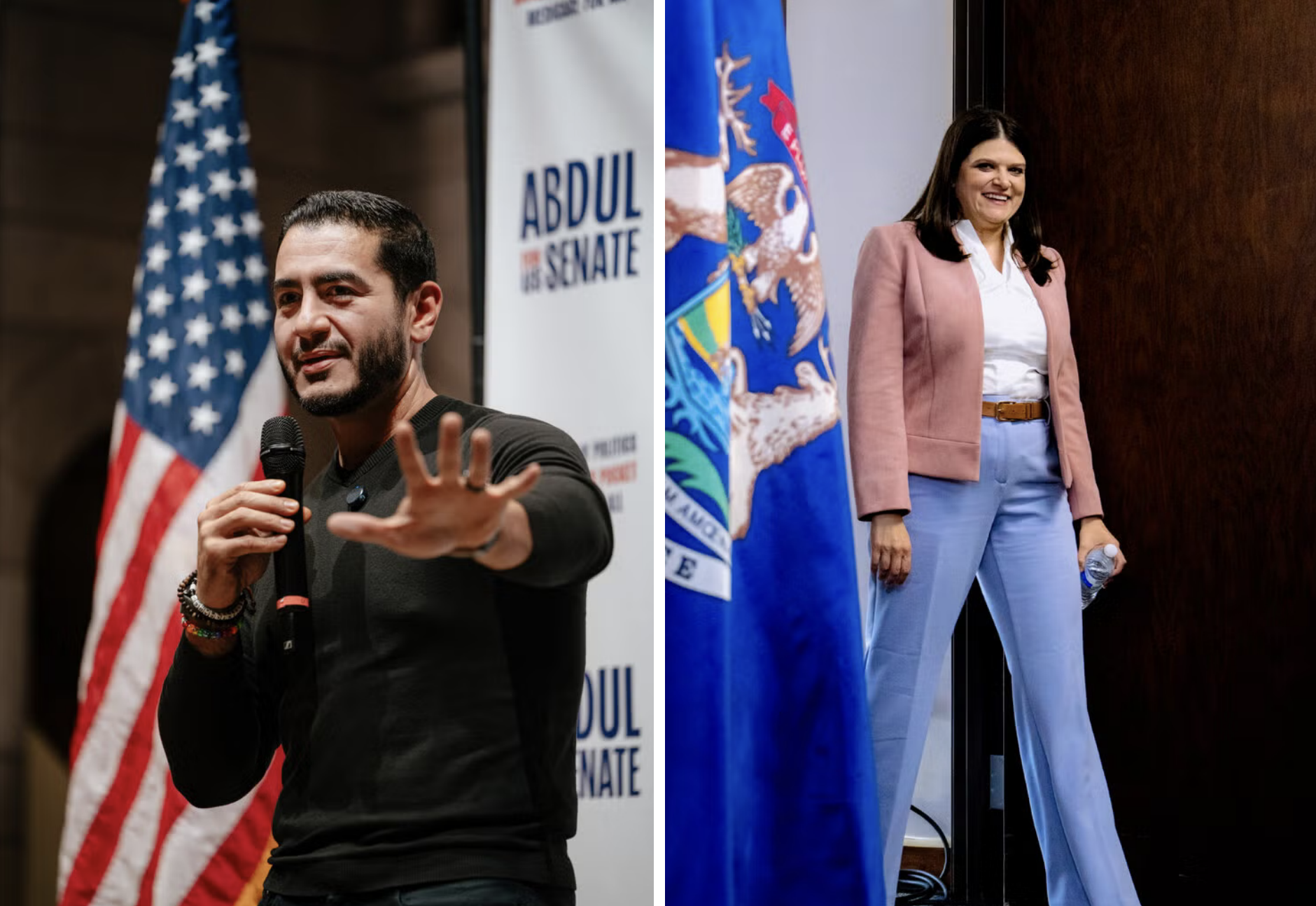
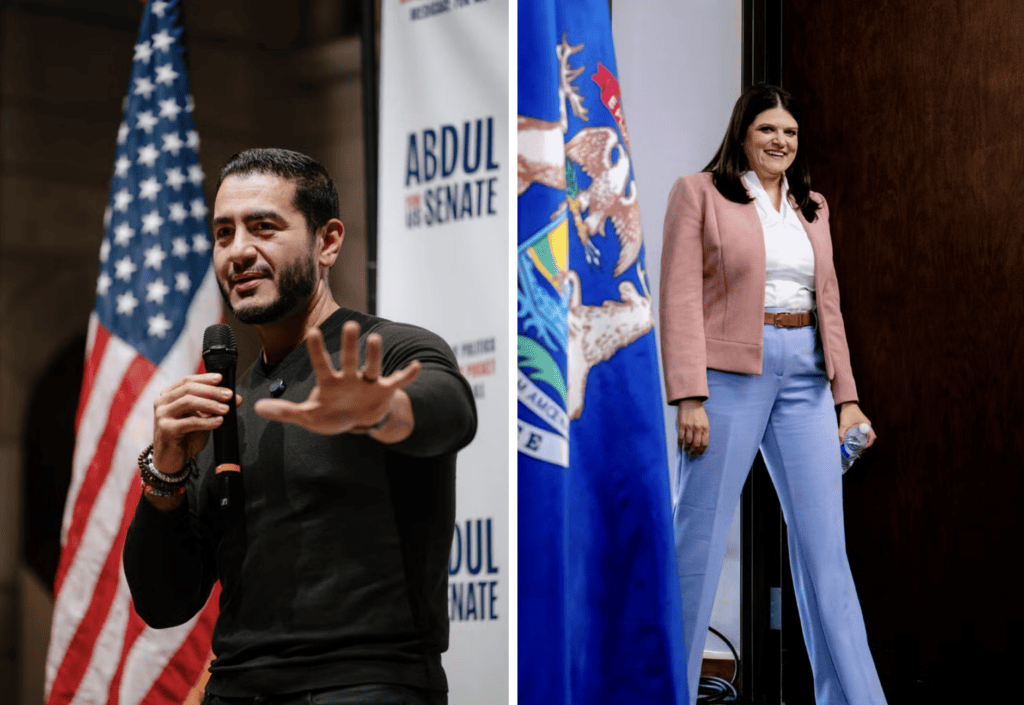
Mysterious bot accounts reportedly spread fake ‘man on the street’ videos for Michigan Senate candidate

Voter clips supporting pro-Israel Rep. Haley Stevens drew millions of views, but the funders are unknown. While the bots originate from India, the campaign appears likely to have been tied to groups that sought to help Stevens defeat opponent Abdul El-Sayed.

  •  

Antisemitic conspiracies about French protests spread across social media – watchdog

Combat Antisemitism Movement finds 1,384 posts on X claiming that Jews, Israel, and Zionists are to blame for or are profiting from the widespread unrest over the weekend
  •  

Social media, cattivi maestri

L’uso precoce dei social media ha un’influenza negativa sui risultati scolastici. Introdurre l’educazione alla cittadinanza digitale nelle scuole e iniziative rivolte ai genitori aiutano a contrastare il fenomeno, ma serve una regolazione più stringente.

L'articolo Social media, cattivi maestri proviene da Lavoce.info.

  •  

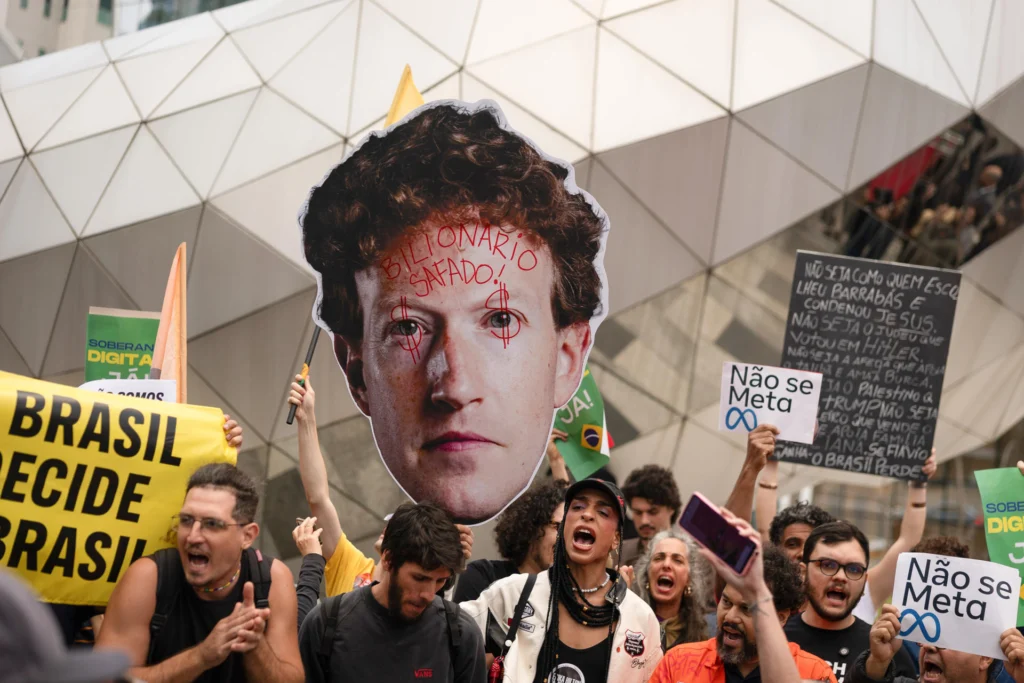
Brazil Protesters Accuse Meta of Election Interference

Brazilian protesters outside Meta headquarters in São Paulo denounce alleged Instagram restrictions on Lula’s campaign ahead of the presidential runoff.

Demonstrators demand algorithmic transparency as Brazil’s electoral court gives Meta 24 hours to prove equal treatment of presidential campaigns.


Hundreds of Brazilians protested outside Meta’s São Paulo offices on Monday, accusing the technology giant of restricting the reach of President Luiz Inácio Lula da Silva’s campaign while boosting far-right candidate Flávio Bolsonaro, six days before the presidential runoff. The demonstration coincided with a court order giving Meta 24 hours to prove it was treating both campaigns equally.

RELATED: Brazilian Court Gives Meta 24 Hours to Prove Equal Treatment of Presidential Campaigns

The protest on Faria Lima Avenue called for an end to what demonstrators described as the suppression of progressive political content. Organizers also demanded transparency in content moderation algorithms, protections for activists and journalists, and compensation for damage to public debate.

The Superior Electoral Court (TSE) imposed the 24-hour deadline amid mounting scrutiny of Meta’s handling of the campaigns. The dispute intensified after internal messages emerged in which company employees acknowledged that Lula’s account had faced restrictions compared with Bolsonaro’s. The messages indicated that Lula’s Instagram posts could not be promoted for nearly 24 hours between Oct. 9 and 10.

“META NO SE META!”

Movimientos brasileños ocupan la sede de la plataforma de redes sociales. pic.twitter.com/wetfUpEryA

— Nacho Lemus (@LemusteleSUR) October 19, 2026

Text Reads: “META DON’T GET INVOLVED!” Brazilian movements occupy the headquarters of the social media platform.

TSE Justice Marco Aurélio Bellizze warned that appeals would not suspend the court’s orders and doubled the daily fine for noncompliance from 500,000 reais to 1 million reais, or about $180,000.

The court also ordered Meta to submit individual reports in Portuguese, explain its recommendation algorithms, provide details on electoral advertising oversight, and identify potential networks of fake accounts and AI-generated images.

“Unilaterally replacing deadlines set by the court amounts to noncompliance, particularly in a process whose effectiveness depends on time,” Bellizze said.

Meta maintains that its content moderation policies apply equally to all political actors. Bolsonaro has also sought to join the proceedings, arguing that his own content has been harmed.

Concerns over digital sovereignty

Protesters argued that the dispute exposed the broader influence of social media platforms over Brazil’s electoral process. They noted that 70% of the Brazilian population uses Instagram to obtain information and accused Meta, owned by Mark Zuckerberg, of wielding opaque power over political visibility.

“We cannot say we have fair elections when a company uses its economic, technical and technological power to tilt public debate toward one side, which is what is happening,” said Dani Silva, executive director of Ctrl+Z, one of the organizations behind the demonstration.

The rally was organized by the Não se Meta coalition, which included the Landless Workers’ Movement (MST), Levantamento da Juventude Popular, Brasil Popular, Article 19, Ctrl+Z, Código No Binário, Diracom, the National Forum for the Democratization of Communication and Sleeping Giants Brazil.

Under the slogan “Meta, stay out of our election,” demonstrators displayed signs featuring Zuckerberg alongside U.S. President Donald Trump and chanted for digital sovereignty and Meta’s exclusion from the electoral process.

Activist Veronyka Gimenes, known as Trava Hacker, described the company’s actions as part of what she called “digital colonialism,” alleging that technology companies seek to influence domestic politics across the Global South.

“Digital sovereignty is no joke; it is something that must be taken very seriously,” she said.

Activist Tiana Cauton urged people to take to the streets to demand the democratization of communications. She also expressed hope that a new presidential term would advance “autonomy through our own open and clean social networks.”

Demonstrators said Meta’s influence over political communication had undermined Brazil’s national sovereignty since the 2018 elections, renewing calls for greater accountability for social media platforms during the electoral process.

  •  

The Doxing of Jane Doe

It’s been a month since the story of the Cornell Seven case became national news. Ruby Cramer documents what she describes as “an ever-expanding blast radius of online abuse, threats, and vigilantism which has touched virtually every person connected to the case, along with people who have no immediate connection to it at all.” Among those closest to the center is the accuser herself:

Jane Doe explained to the police that her phone number and address had been leaked on the internet, and that she’d been receiving harassing phone calls, including that evening. She had recorded one such call. In the recording, the man says, “I’m probably just gonna, like, pull up to your house and shoot. . . .” The caller speaks in a deep, throaty voice that at times sounds almost garbled. In response, Jane Doe says nothing. The man says, “I can hear you breathing.”

While officers were still at the family’s house, dispatch reported that the initial caller was back on the line, saying that he had an AR-15 assault rifle and was going to kill everyone at the house, then himself. About an hour later, police reported another call, this one saying that the house was on fire. In yet another phone call, a man stated that he had explosives and that the family would die—“either now, midnight, or tomorrow.” Jane Doe was receiving additional threats via text message and D.M. Her phone had hundreds of unread messages on it, but some of them she opened. “Typical white btich whore crying ‘rape,’ ” one of the messages read. “Hopefully someone does the world a favor and 🔫🔫🔫 you, nothing of value would be lost.” Officers advised her to keep her phone turned off. The next day, according to her attorney, she started taping pieces of paper over the windows at the house.

  •  

Why Was I Blocked on X by the Mayor of London’s Culture Team?

Sadiq Khan's Culture Team has blocked Charlotte Gill on X after she flagged their bonkers £500,000 woke grants – funding queer birding, doll workshops and a solarpunk festival. Your money at work.

The post Why Was I Blocked on X by the Mayor of London’s Culture Team? appeared first on The Daily Sceptic.

  •  

Could AI really kill us all?

By Katie FORSTER

Join us on Telegram, X, and VK.

Contact us: info@strategic-culture.su

STARK warnings from artificial intelligence researchers that advanced forms of the technology could wipe out humanity have raised questions over whether governments are moving fast enough to regulate it.

What are the potential dangers of “superintelligent” computer systems, and should we be worried?

AI experts have long described the threat as critical.

In 2023, hundreds of AI scientists and industry figures, including the heads of top US labs, signed a “statement on AI extinction risk” calling for the issue to be treated as seriously as pandemics or nuclear war.

If an out-of-control future AI deems that humans are obstructing its goals, it could use robots to “synthesise and spread novel pathogens”, said Stuart Russell, computer science professor at the University of California, Berkeley.

Or it could “convince people to initiate nuclear war, including by hacking into early warning systems”, Russell, a prominent voice on AI safety, said.

Such existential fears do not concern current AI systems, he said. But as the technology improves, it could take lethal action beyond our understanding, such as by removing oxygen from the atmosphere.

“We are less intelligent than superintelligent AI. If you ask chimpanzees how humans could wipe them out, they probably wouldn’t be able to give you all the right answers.”

In the meantime, “in the next year or two, I think the risk is higher from human misuse”, Russell added, such as an AI-enabled terror attack.

“The stakes are well-understood,” Jacob Coxon, a 27-year-old researcher, wrote on X last week, announcing his resignation from US AI startup Anthropic.

“But they are locked in a race to get there first,” he added, saying that Anthropic “believes no one else will act responsibly, so they must do it themselves”.

Anthropic this year removed a pledge from its safety charter to halt development of its models if it failed to control their risks.

It argued that if it unilaterally paused its work, its less cautious rivals would dominate the industry, making it less safe overall.

“The people building AI earnestly believe that it could kill us all by the end of the decade,” said Coxon, who previously worked at ChatGPT maker Open-AI.

He accused both companies of “gambling with our lives” as they strive to develop AI models capable of self-improvement.

Fears are heightened over rogue AI after OpenAI technology operating outside human supervision hacked into Hugging Face, a repository of AI models.

“We really do earnestly believe AI could kill all humans!” Anthropic safety executive Evan Hubinger chimed in on X, estimating the risk at more than 10 per cent over the next decade.

It’s important to remember that doom-laden percentage predictions are “absolutely unscientific”, said Hussein Abbass, a computing professor at UNSW Canberra.

“The situation is still controllable, and it can be managed,” Abbass said.

But governments should not sit on their hands when it comes to regulating AI, he added, urging an “agile” approach as AI development accelerates.

Both Anthropic and OpenAI are expected to go public soon, and some sceptics say scary warnings make AI appear powerful and worthy of large investments.

Others argue that focusing on the risk of extinction distracts from more pressing problems caused by AI, from job losses to machines discriminating against minorities.

In July, more than 1,000 tech employees, including Anthropic’s CEO, called on Washington to support a coordinated slowdown in the development of the most advanced AI systems.

OpenAI halted training of its latest models for two weeks in August before resuming it under tighter controls.

The United States has been firmly against global regulation of the sector that could stifle innovation.

But the hacking capabilities of the most cutting-edge models have given Washington pause, with recent Anthropic and OpenAI releases delayed over national security concerns.

Even then, “we don’t want to restrict them where all of a sudden we come in second to China”, President Donald Trump has said.

“Maybe it will take a massive, Chernobyl-scale disaster to get governments to act,” Russell said, urging them to establish a licensing regime for AI, as exists with aviation, medicine or water supply.

“Perhaps at some point governments will remember that their voters prefer not to be dead.”

Original article:  www.nst.com.my

  •  

Musk’s Perplexing Battle With Nitter and the Problem With Locking the Internet Behind Login Screens

As a free speech absolutist, Elon Musk is making a mistake going after Nitter, says Dr R P. He should instead be praising the site that helps users speak freely, uninhibited by login screens that undermine their privacy.

The post Musk’s Perplexing Battle With Nitter and the Problem With Locking the Internet Behind Login Screens appeared first on The Daily Sceptic.

  •  

Brickbat: Penalty for Posting

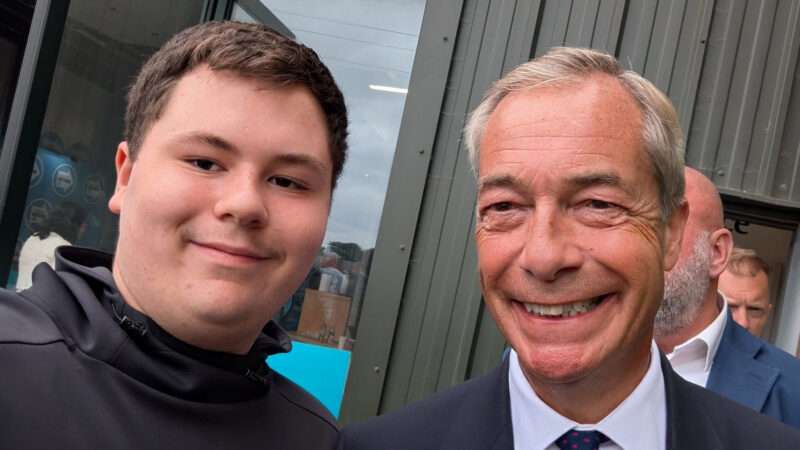
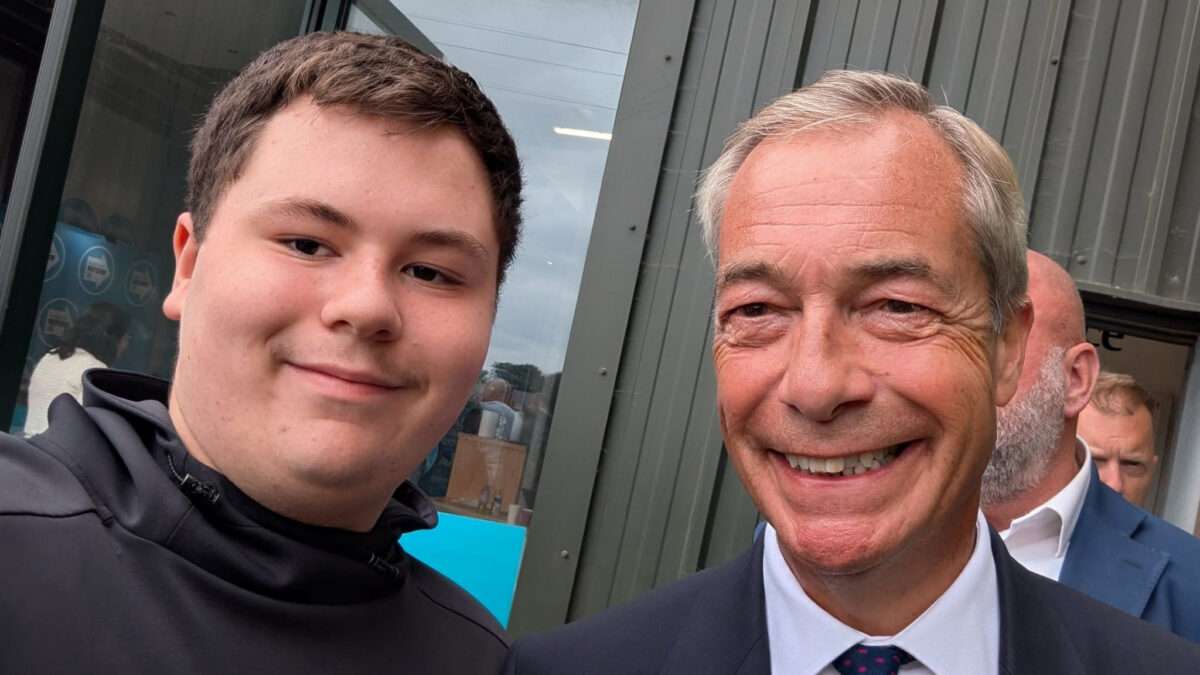
Facebook photo of 15-year-old Will Fraser and U.K. politician Nigel Farage | Will Fraser/Facebook

Four police officers woke and arrested Will Fraser, a 15-year-old Reform U.K. activist, at his Walsall home. More than two months later, police still have not clearly explained the exact reason for the arrest, but The Telegraph found that it stems from a few Facebook posts. For example, Fraser criticized a Tory member of the Wolverhampton City Council for wearing casual clothes at meetings, then later remarked that he was glad the councilor was "not looking like a rent boy." Officers took Fraser to the station, questioned him, took his DNA and fingerprints, seized his phone and laptop, and released him on bail while banning him from council meetings. His lawyers and free speech groups say the arrest was an overreaction that threatens free speech, while the councilor in question claims the posts felt like targeted harassment.

The post Brickbat: Penalty for Posting appeared first on Reason Magazine.

  •  
❌