Login

Malta Faces Renewed EU Scrutiny Nine Years After Daphne Caruana Galizia’s Murder
The European Commission has urged Malta to strengthen judicial independence, tackle corruption and improve protection for journalists, as a European Parliament debate exposes continuing disagreements over the country’s rule-of-law record.
The European Commission has called on Malta to accelerate judicial reforms and strengthen safeguards for journalists, nine years after the assassination of investigative reporter Daphne Caruana Galizia, as the European Parliament revisited concerns over corruption and institutional accountability on Wednesday, 21 October.
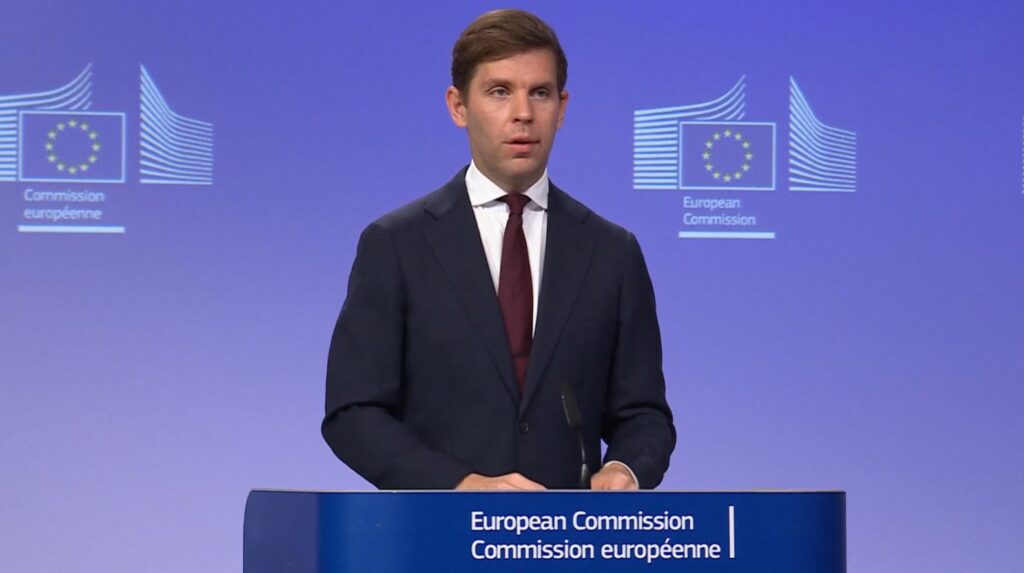
European Commissioner for Democracy, Justice, the Rule of Law and Consumer Protection Michael McGrath told MEPs in Strasbourg that Malta had made progress in certain areas but had yet to implement several outstanding recommendations concerning judicial independence, high-level corruption and media freedom.
The debate followed the controversial acquittal of businessman Yorgen Fenech, who had been accused of involvement in Caruana Galizia’s murder. Maltese prosecutors appealed the verdict in September, leaving the criminal proceedings subject to further judicial consideration.
Commission identifies continuing weaknesses
The European Commission’s 2026 Rule of Law Report, published in July, assessed Malta’s progress in reforming its justice system, anti-corruption institutions and protections for the media.
The report acknowledged certain improvements, including additional resources allocated to judicial and prosecutorial authorities.
However, it found that progress remained limited on several recommendations.
These include reducing delays in judicial proceedings, improving the investigation and prosecution of high-level corruption and ensuring greater judicial involvement in the appointment of the Chief Justice.
The Commission has also expressed concern about the effectiveness of existing anti-corruption arrangements.
Although investigations and prosecutions have increased in some areas, Brussels continues to seek a stronger record of final judgments in major corruption cases.
Court delays and pressure on judicial resources remain significant difficulties.
McGrath told Parliament that the Maltese authorities must continue implementing reforms to address these shortcomings.
Fenech acquittal intensifies accountability debate
Caruana Galizia was killed by a car bomb near her home in Bidnija on 16 October 2017.
The 53-year-old journalist had investigated corruption, money laundering and political connections involving prominent figures in Malta’s business and political establishment.
Her assassination prompted international condemnation, widespread demonstrations and investigations into the circumstances surrounding the killing.
Several men have subsequently been convicted for participating in the murder or supplying the explosives.
However, the criminal proceedings concerning the alleged commissioning of the assassination have remained contentious.
On 2 September 2026, a nine-member jury acquitted businessman Yorgen Fenech of complicity in the murder and criminal association. The verdict was reached by eight votes to one.
Fenech had denied ordering or financing the killing.
The acquittal prompted criticism from Caruana Galizia’s family and organisations campaigning for press freedom.
On 22 September, Malta’s Attorney General formally appealed the verdict, challenging legal decisions made during the trial.
The appeal does not overturn Fenech’s acquittal or establish criminal responsibility.
The Court of Criminal Appeal must determine whether the legal grounds presented justify further proceedings, potentially including a retrial.
The criminal case remains separate from the broader political debate over Malta’s institutional reforms.
Maltese MEPs clash in Strasbourg
Wednesday’s parliamentary debate exposed sharp disagreements between representatives of Malta’s opposition Nationalist Party and governing Labour Party.
Nationalist MEPs Peter Agius and David Casa criticised the authorities’ record on corruption and institutional accountability.
Agius argued that repeated European Commission assessments had failed to produce sufficient improvements and questioned whether Malta’s institutions were effectively addressing allegations of wrongdoing.
Casa referred to the findings of the independent public inquiry into Caruana Galizia’s assassination, which concluded in 2021 that the state had contributed to circumstances in which a climate of impunity enabled the killing.
He argued that significant recommendations arising from that inquiry remained outstanding.
Labour MEP Alex Agius Saliba rejected the criticism, maintaining that Malta had implemented reforms and that its judicial institutions should be allowed to perform their functions independently.
He pointed to the prosecution’s appeal against Fenech’s acquittal as evidence that the judicial process was continuing.
Labour MEP Thomas Bajada concentrated on the protection of journalists and the need to counter misinformation while preserving independent reporting.
The disagreements subsequently prompted a response from Maltese Prime Minister Robert Abela, who accused opposition MEPs of damaging Malta’s reputation through their interventions.
Protection of journalists remains unfinished
Media freedom featured prominently in the Commission’s concerns.
Malta has introduced legislation addressing certain abusive legal proceedings against journalists, including transposing EU protections against strategic lawsuits intended to discourage public participation.
However, the existing measures principally concern civil proceedings with cross-border implications.
The Commission has urged Malta to extend comparable protections to domestic cases.
Other concerns include journalists’ access to official information, protection from intimidation and the need for more comprehensive legislative safeguards.
McGrath indicated that the Maltese government intended to present additional media legislation in the coming weeks.
The Commission has called for consultations with journalists, media organisations and civil society before the measures are adopted.
European institutions are also examining Malta’s implementation of wider EU requirements under the European Media Freedom Act.
Further pressure for reform
The European Parliament’s proceedings form part of the continued scrutiny of Malta’s institutional record following Caruana Galizia’s assassination.
The Commission’s annual rule-of-law assessments provide a mechanism for identifying outstanding problems and monitoring governments’ responses.
However, the implementation of many recommendations remains the responsibility of national authorities.
For Malta, the immediate issues concern the government’s promised media legislation, outstanding judicial reforms and the progression of the appeal in the Fenech case.
The Commission has made clear that further improvements are required, while the Maltese government maintains that substantial institutional changes have already been introduced.
The next assessment will depend on legislative measures actually adopted, their implementation and progress through the relevant judicial proceedings.