❌

Reading view

Kallas tells Fidan that Turkey-Libya maritime deal infringes on rights of third states

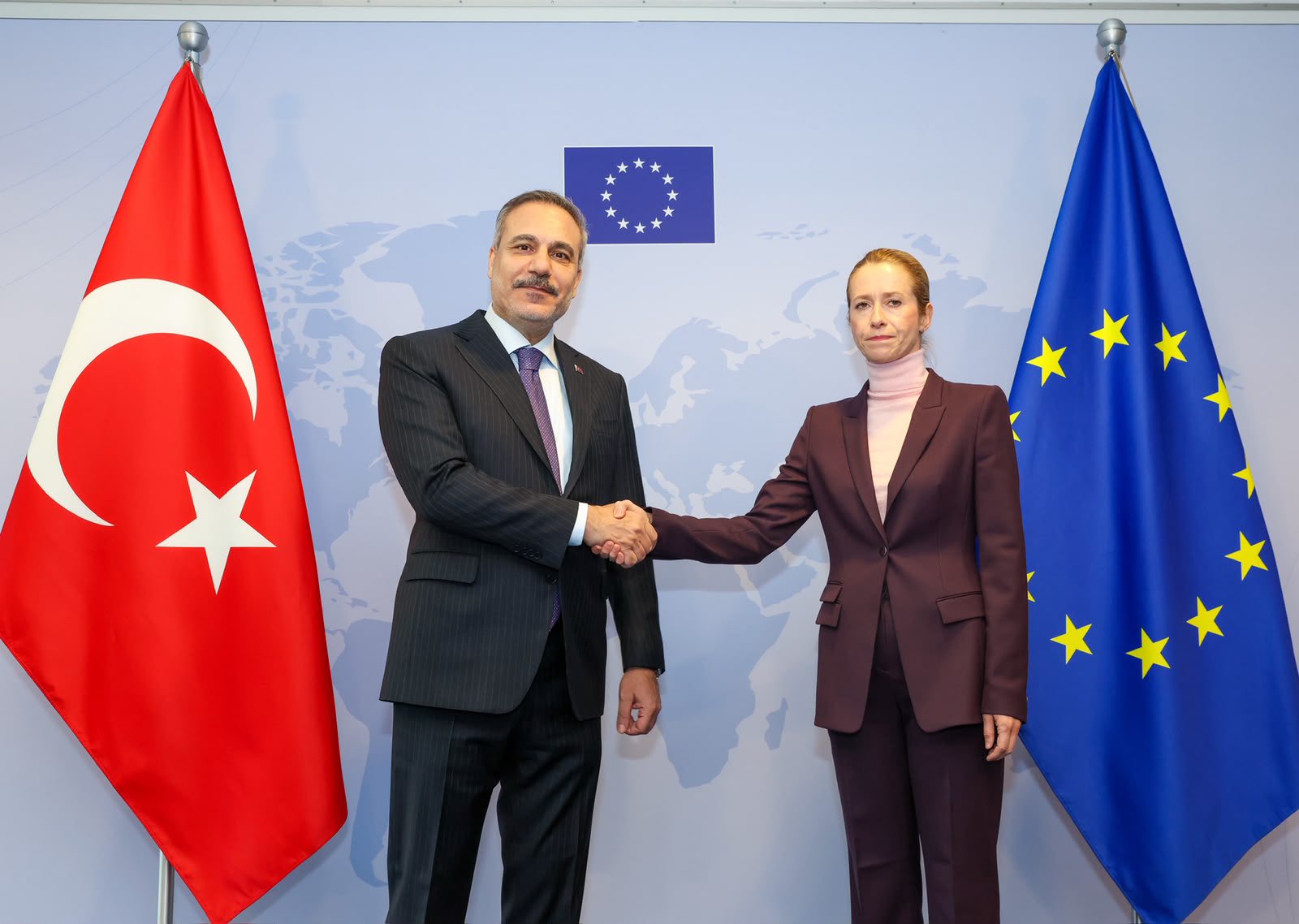
The maritime boundary agreement reached between Turkey and Libya, which was ratified by the Libyan parliament on Tuesday, “infringes on the sovereign rights of third states”, the European Union’s foreign policy chief Kaja Kallas said on Wednesday, after she met Turkish Foreign Minister Hakan Fidan in Brussels.

“I had an extensive discussion with my colleague Hakan Fidan on a range of issues. Good neighbourly relations and advancing the Cyprus settlement process are of high importance. I raised yesterday’s Libyan vote … and stressed that it infringes upon the sovereign rights of third states,” she said after the meeting.

Away from the matter of the eastern Mediterranean, she said that she had also spoken to Fidan about “Russia’s dangerous Black Sea escalation”, which has seen commercial vessels be targeted by missile fire, and that she had “emphasised the need to step up the pressure on Moscow to end the war”.

“The EU and Turkey both support a Black Sea freedom of navigation arrangement,” she said.

She said that she and Fidan had also “addressed developments in the south Caucasus and across the Middle East”, and on this front said that “Houthi attacks on Saudi Arabia and Yemen are textbook terror tactics and must end”, and that “in the Strait of Hormuz, Iran is making shipping dangerous and expenses”.

“Freedom of navigation must be restored without tolls or fees,” she added.

Fidan made no statement after the meeting.

Greece, Cyprus believe islands are entitled to full EEZ

The maritime agreement was unanimously passed by Libya’s parliament on Tuesday, some seven years after it had initially been signed by the internationally recognised Libyan government and Turkey in 2019.

However, Greece and the Republic of Cyprus object to the deal, saying that Turkey and Libya do not share a maritime border because islands are each entitled to a full exclusive economic zone, and that therefore, the sea in question belongs to Cyprus and Crete. Turkey’s position is that islands are not entitled to a full EEZ.

Wednesday’s meeting came after European Council President Antonio Costa and European Commission President Ursula von der Leyen had said that they “deeply regret” the Libyan parliament’s ratification of the deal, which, they said, “infringes upon the sovereign rights of third states”, “does not comply with the law of the sea”, and “is null and void”.

“We reaffirm our solidarity with Greece and Cyprus. We reiterate the EU’s well-known position against any outside interference in Libya,” they said.

On the other side of the argument, Turkey’s presidential press office director Burhanettin Duran described Tuesday’s vote as “an important advancement towards protecting the shared rights and interests of both nations in the eastern Mediterranean, establishing maritime jurisdiction areas on the basis of equity, and strengthening regional cooperation”.

“Under the leadership of our President Recep Tayyip Erdogan, Turkey will continue to safeguard its rights and interests within the Blue Homeland, while further developing its relations with friendly and brotherly Libya and promoting equitable resource sharing, peace, and stability in the eastern Mediterranean”.

  •  

Trump administration softens its stance on TPS amid election campaign

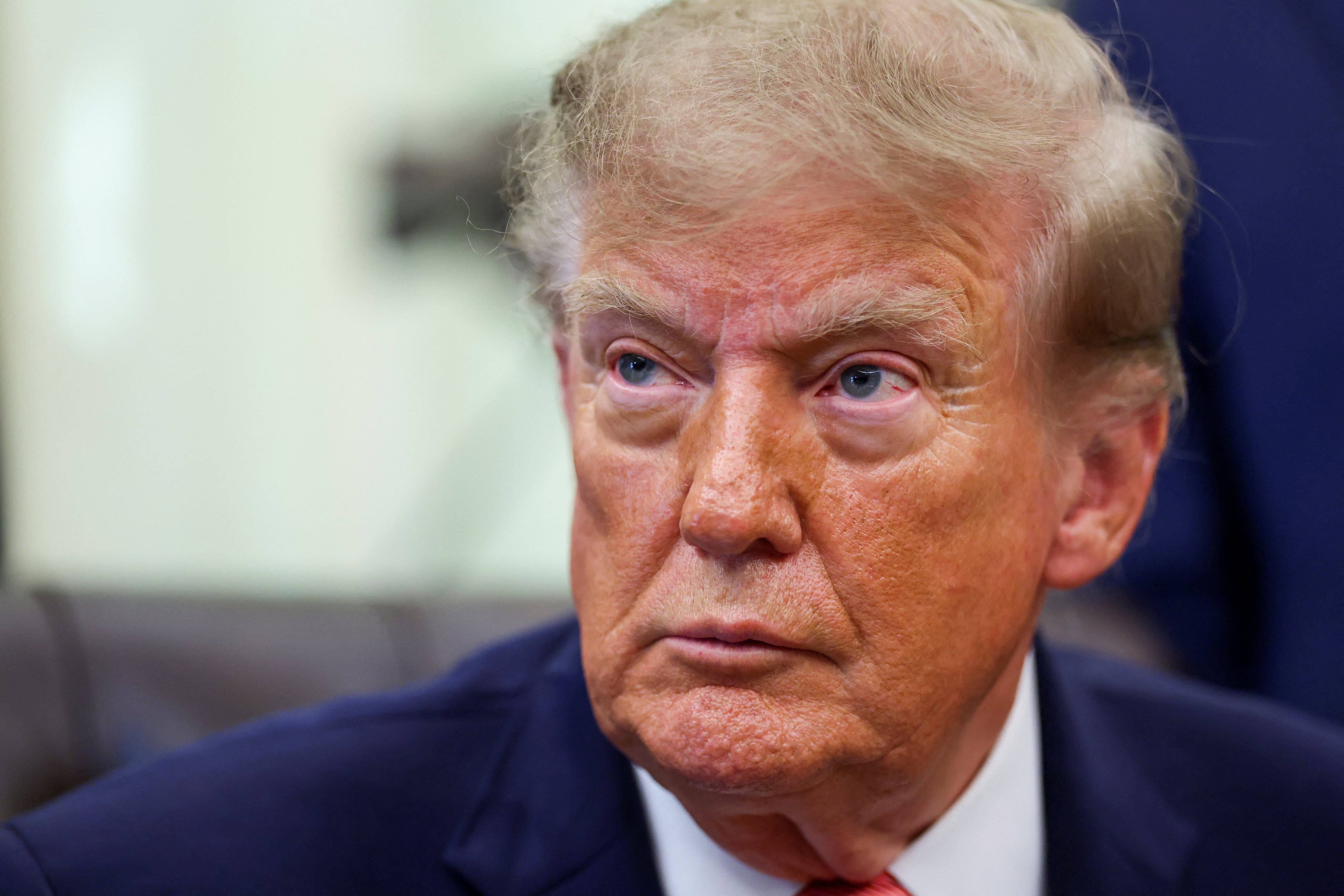
The Donald Trump administration has done with Ukrainians and Sudanese this week what it did last month with Salvadorans: it has not terminated Temporary Protected Status (TPS), but it has not renewed it either. The program that provides legal immigration status to 101,000 Ukrainians and 1,800 Sudanese citizens was set to expire on Monday, but the Department of Homeland Security (DHS) has declined to comment, which for now leaves them protected from deportation.

Seguir leyendo

© Kevin Lamarque (REUTERS)

Donald Trump at the White House, this Tuesday.
  •  

Turkey’s Fidan: No objection to GSI surveys, but send us a written notification

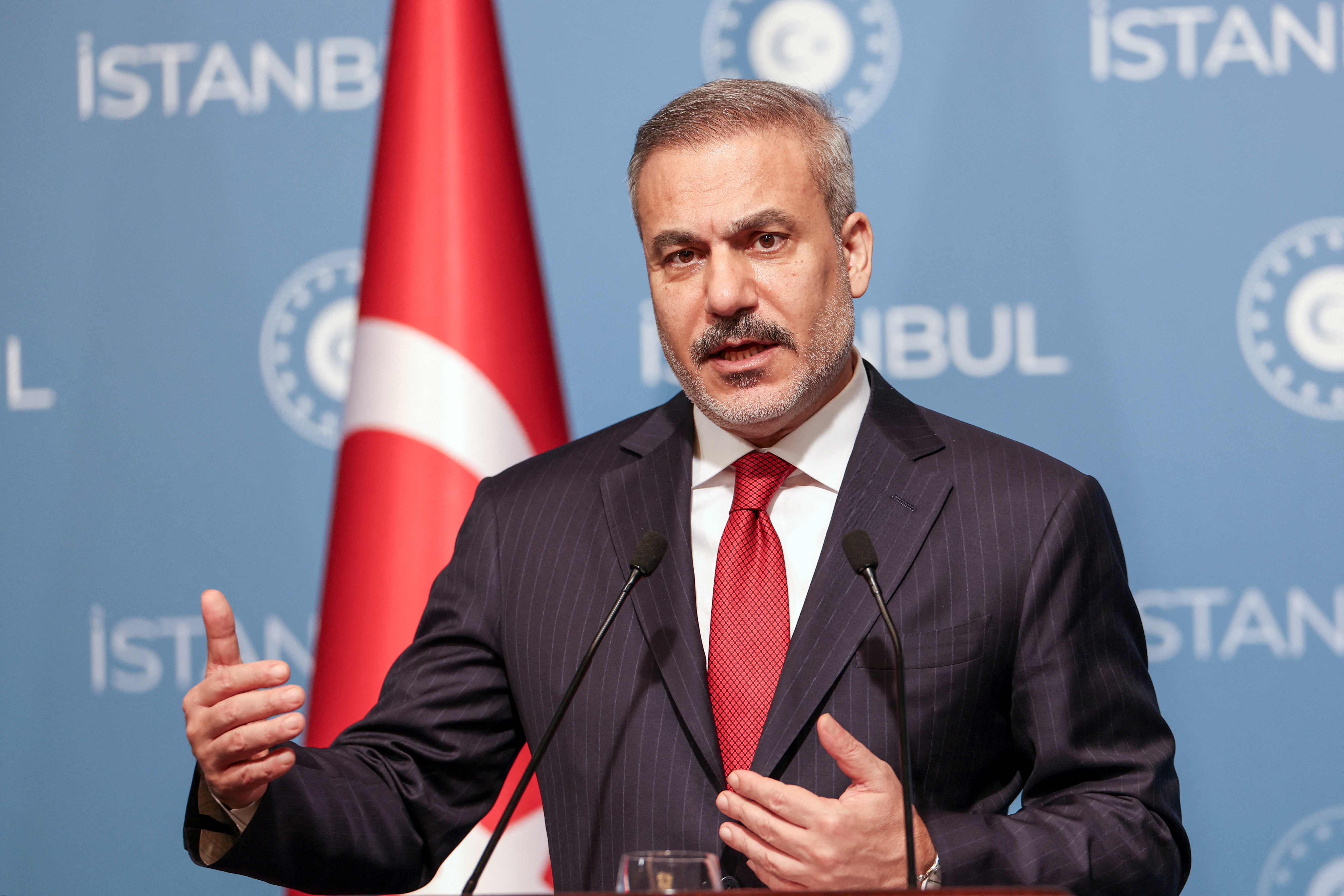
Turkish Foreign Minister Hakan Fidan on Wednesday said that his country will not object to the undertaking of seabed surveys between Crete and Cyprus ahead of the construction of the planned Great Sea Interconnector, provided that it is provided with a written notification of the plans in advance.

“We do not raise any objections. We discussed it with [Greek] Prime Minister Mitsotakis and [French] President Macron. My president raised the issue in New York during his meeting with Prime Minister Mitsotakis,” he told Greek newspaper Ta Nea of the cable which, if completed, will link the energy grids of Cyprus, Greece and Israel.

He added that during those discussions, Turkish President Recep Tayyip Erdogan had “described the project as remarkable” but had gone on to say that “I would prefer you to buy electricity from us rather than transporting it from a distance of 2,000 kilometres and spending over €2 billion of European funds”.

“I can provide from a distance of just 70 miles from mainland Turkey water, electricity, and natural gas, from which everyone, Greek Cypriots, Turkish Cypriots, and the entire population, can benefit,” he said.

On the question of the waters which are disputed between Turkey and Greece, he said that “we have not yet touched on the issue” in high-level discussions between the leaderships of Turkey and Greece, but stressed that Turkey would not stand in the way of the interconnector if it is informed of work in advance.

“What we are asking is that when a ship conducts research at sea, it send us a written notification, not just an oral one, stating, ‘we are going to undertake specific actions in this area, here are the coordinates’. That is all we are asking for. Nothing more,” he said.

‘We do not want the status quo to be disturbed’

“We do not want the status quo to be disturbed, or a precedent to be created in a completely wrong way, which will cause even greater problems for both sides.”

It has been reported that the Greek and French governments intend to notify Turkey of their intentions prior to issuing a navtex, a message used to transmit information to seaborne vessels, regarding planned seabed surveys for the laying of cables.

On this front, Cypriot Energy Minister Michael Damianos had said last week that the navtex for the seabed surveys will be issued before the end of this month, with the Greek coastguard having said that French-flagged research ship the Abeille Marengo will be the ship conducting the surveys.

Damianos said on Monday that “if the project progresses”, it is believed that it will be fully completed by 2031.

Turkey plans to connect Cyprus’ water, gas, electrical infrastructure to its own

Fidan’s reference to the possibility of power being provided by Turkey comes with the Turkish and Turkish Cypriot authorities having drawn up plans to link the island’s energy grid with that of Turkey.

However, the European network of transmission system operators for electricity (Entso-E) has not included plans for a cable linking Turkey and Cyprus in its ten-year development plan, and said that the Great Sea Interconnector “is the only interconnector project connecting the Republic of Cyprus” in its plans.

Since then, Turkey and the Turkish Cypriot authorities have signed a memorandum of understanding for the construction of a natural gas pipeline between Cyprus and Turkey, though both the European Union and the Republic of Cyprus have rejected it.

On water, offers made by Turkey as early as 2015 to supply the whole island with water from the Taurus mountains have thus far been met with a cool response by successive Republic of Cyprus administrations, though the water is nonetheless pumped via an undersea pipeline to the Panagra reservoir in the island’s far northwest and used by Turkish Cypriots.

  •  

Condena Naciones Unidas bombardeos en zonas fronterizas de Sudán

Juba, 21 oct (Prensa Latina) Naciones Unidas condenó enérgicamente los ataques con drones en un mercado de Abyei, en la frontera de Sudán y Sudán del Sur, dieron a conocer hoy aquí medios locales.

The post Condena Naciones Unidas bombardeos en zonas fronterizas de Sudán first appeared on Noticias Prensa Latina.

  •  

Romania Ends Six-Month Political Deadlock as New Government Takes Office

Romania has formed a new government after six months of political deadlock, with parliament approving a minority administration led by independent diplomat Luca Niculescu on Tuesday, 20 October. The vote brings an end to repeated failed attempts to establish an executive, although the new prime minister faces considerable uncertainty over his government’s parliamentary support.

Niculescu secured 280 votes in favour and 58 against, comfortably exceeding the 233 required for confirmation. His ministers were sworn in before President Nicuşor Dan at the Cotroceni Palace in Bucharest later that evening, formally ending the prolonged government formation process.

The new administration comprises 18 ministers, including two delegated ministers. The Social Democratic Party (PSD) controls the majority of portfolios, while independent specialists hold several important positions, including finance and foreign affairs.

A government built on temporary parliamentary support

The appointment represents a political success for President Dan, who nominated Niculescu on 5 October following three unsuccessful attempts to assemble a functioning government.

EU Today reported earlier this month on Niculescu’s nomination, which followed the collapse of previous negotiations and growing pressure on Romania’s political institutions.

The new cabinet is heavily dependent on agreements between parties that have frequently disagreed over economic policy and public spending. Although the parliamentary vote demonstrated sufficient support for its installation, the arrangement does not provide the government with a permanent majority.

The National Liberal Party (PNL) and the Democratic Alliance of Hungarians in Romania (UDMR) supported the investiture while remaining outside the administration.

The arrangement gives Niculescu an opportunity to govern, but each major legislative proposal will require continued cooperation between parties with competing priorities.

The Social Democrats, who hold 11 of the ministerial positions, will exercise substantial influence over domestic policy, particularly decisions involving public-sector spending, welfare and taxation.

Budget deficit presents immediate challenge

Romania’s public finances represent the government’s most urgent problem.

The previous administration, led by Ilie Bolojan, collapsed in May following unpopular austerity measures. Political opposition to fiscal consolidation has complicated efforts to stabilise the budget and meet Romania’s commitments under the European Union’s fiscal framework.

Niculescu has indicated that addressing the deficit will be an immediate priority. Finance Minister Alexandru Nazare, appointed as an independent, faces the task of establishing a credible budget programme without provoking another parliamentary crisis.

The choices are politically difficult. Spending reductions risk resistance from public-sector employees and households already affected by higher living costs, while substantial tax increases could place further pressure on businesses and consumption.

Failure to establish a credible fiscal programme would prolong uncertainty over Romania’s borrowing requirements and its ability to comply with European budgetary obligations.

Brussels has a direct interest in the outcome. Romania remains subject to EU fiscal oversight, and the European Commission will assess whether the new administration’s financial plans are consistent with the country’s obligations.

The government’s credibility will depend on whether its parliamentary supporters are prepared to approve the measures that fiscal consolidation requires.

European funds and political credibility

The change of government also comes at a sensitive moment in Romania’s relationship with European institutions.

Romania has faced scrutiny over reforms linked to the EU’s Recovery and Resilience Facility, particularly legislation concerning public integrity and institutional accountability.

EU Today previously examined the European Commission’s assessment of Romania’s integrity legislation and its implications for recovery funding.

Although the EU recovery programme reached its principal implementation deadline in August, outstanding assessments and financial decisions continue to carry consequences for national budgets.

A functioning government is therefore important not only for domestic legislation but also for negotiations with Brussels over fiscal commitments, investment and the wider EU budget.

Romania must also address longer-term weaknesses in public administration, infrastructure financing and the implementation of European legislation.

Political stability remains uncertain

Niculescu takes office against the background of Romania’s unusually turbulent political history since the annulment of the 2024 presidential election amid allegations of Russian interference.

The subsequent institutional disputes damaged confidence in the political system and contributed to the fragmentation of parliamentary support.

Opposition parties, including the nationalist Alliance for the Union of Romanians (AUR), are positioned to challenge the government’s legitimacy and economic measures as the administration begins work.

Romania’s strategic importance extends beyond its domestic political difficulties. As an EU and NATO member bordering Ukraine and Moldova, it plays a substantial role in Black Sea security, military logistics and regional infrastructure.

Prolonged instability in Bucharest has therefore affected a country whose decisions carry consequences for European security and cross-border economic cooperation.

For the new prime minister, the immediate objective is to translate Tuesday’s parliamentary majority into support for legislation. His first serious test will come when the cabinet presents the fiscal measures that its supporters have so far struggled to agree upon.

The parliamentary vote has ended Romania’s government formation crisis. It has not resolved the disagreements that produced it.

  •  

Aumenta a 226 la cifra de muertos en región fronteriza sudanesa

Juba, 21 oct (Prensa Latina) Las víctimas de un reciente ataque a un mercado en la región fronteriza de Abyei, entre Sudán y Sudán del Sur, se elevó ya a 226 muertes, informaron hoy aquí autoridades locales.

The post Aumenta a 226 la cifra de muertos en región fronteriza sudanesa first appeared on Noticias Prensa Latina.

  •  

Bombardeos, colapsos y saqueos: la trampa mortal de las minas de oro en Sudán

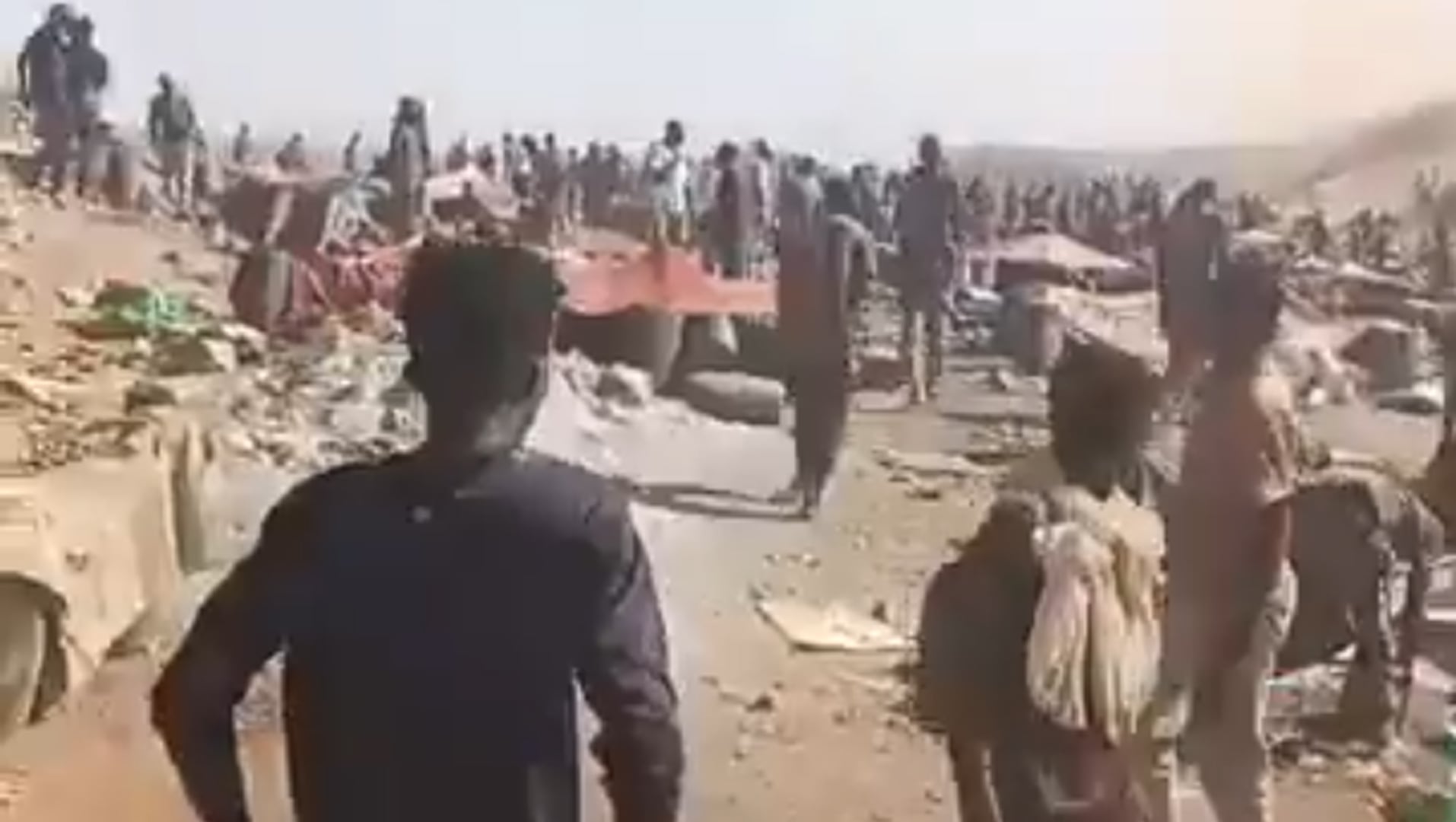
En algunos de los primeros vídeos que circularon por las redes sociales se aprecia el caos inevitable que acompaña a una carnicería inesperada mientras todavía se está produciendo. Hombres jóvenes corriendo y gritando en medio de la polvaredacon el estruendo de aviones de combate de fondo. En imágenes que trascendieron poco después, la agitación inicial había dado paso a filas de cadáveres envueltos con mantas en la arena.

Seguir leyendo

© Redes Sociales

Fotograma de un vídeo de redes sociales del momento tras el bombardeo de una mina de oro en Sudán, el pasado 10 de octubre.
  •  

Netflix Is Great at Making Money. Its Problem Is Keeping Viewers Hooked.

The streaming service reported a 12 percent increase in quarterly revenue, but acknowledged that stagnant viewership, particularly in the U.S. and Canada, was a major concern.

© Mario Tama/Getty Images

Despite being the most-watched paid streaming service in the world, Netflix is not growing fast enough for its top executives or its shareholders.
  •  

Dwayne Johnson Reveals ‘Jumanji: Open World’ New Look Ahead of Holiday Release: “One Final Game”

Jack Black, Kevin Hart and Karen Gillan also reprise their roles for Jake Kasdan's final installment in the Sony trilogy that hits theaters this December.
  •  

US grants deportation reprieve to migrants from Ukraine and Sudan

DHS says migrants ‘retain protections’ after temporary protected status was set to expire on Monday

More than 100,000 people from Ukraine and Sudan can stay in the United States without immediate risk of deportation, the Department of Homeland Security said, in what amounts to a temporary reprieve after their right to stay in the country was set to expire on Monday.

Temporary protected status was set to end on Monday for about 101,000 Ukrainians and 1,800 Sudanese. But the DHS said an announcement “will be made at the appropriate time”. Until then, the department said in a written statement, Ukrainians and Sudanese in the US covered by those temporary measures “retain protection”. The department did not indicate how long they could stay or when a final announcement would be made on their status.

Continue reading...

© Photograph: Bloomberg/Getty Images

© Photograph: Bloomberg/Getty Images

© Photograph: Bloomberg/Getty Images

  •  

Drone attack near market kills 80 in Sudan

Witness says drone struck twice at transport hub in al-Dibab, in one of deadliest single attacks of war

A drone strike near a market in southern Sudan on Sunday evening killed 80 people, mostly commuters catching rides home.

Ahmed Wadi, a witness, said the attack in the town of al-Dibab in West Kordofan state left “50 bodies who I helped bury, one of them my own brother Mohamed”.

Continue reading...

© Photograph: Los Angeles Times/Getty Images

© Photograph: Los Angeles Times/Getty Images

© Photograph: Los Angeles Times/Getty Images

  •  

Azerbaijan’s Hijab Ban Sparks Protests and Deepens Rift with Turkey

Restrictions on Islamic headscarves in Azerbaijan’s schools have triggered demonstrations, arrests and an unusually public confrontation between Baku and Ankara.

The dispute has exposed differences over secularism, religious freedom and Azerbaijan’s relationship with Israel, raising questions about the durability of one of the region’s closest strategic alliances.

Azerbaijan is facing an unusual wave of protests after new school dress regulations led to girls wearing Islamic headscarves being excluded from classrooms and teachers reportedly being ordered to remove their hijabs. The controversy has escalated into a diplomatic dispute with Turkey, whose governing party has been accused by President Ilham Aliyev’s administration of interfering in Azerbaijan’s internal affairs.

The confrontation intensified on 13 October when Azerbaijan’s ruling New Azerbaijan Party (YAP) publicly condemned senior figures in President Recep Tayyip Erdoğan’s Justice and Development Party (AKP). The dispute has since widened to encompass Azerbaijan’s relations with Israel, exposing political differences between two countries accustomed to describing themselves as “one nation, two states”.

School regulations provoke protests and arrests

The controversy began on 21 September, when Azerbaijan’s government adopted Resolution No. 309, amending the regulations governing uniforms in state schools. The changes prohibit clothing that conflicts with prescribed uniforms or the secular character of public education.

Although the new regulations do not explicitly mention Islamic headscarves, some schools have interpreted them as prohibiting the hijab. A further decision on 6 October introduced similar requirements for teachers. Women in Baku and Sumgayit subsequently reported being instructed to remove their headscarves or risk losing their positions.

The enforcement of these regulations prompted demonstrations outside schools, with girls carrying placards demanding access to education. Male pupils also joined protests in support of their classmates. Such demonstrations are unusual in Azerbaijan, where public assemblies face extensive restrictions.

On 12 October, the Interior Ministry reported that 37 people had been detained in Baku, alleging disruption of public order, damage to property and obstruction of school activities. Activists claimed that more than 200 people had been detained, although that higher figure has not been independently confirmed.

In a statement issued on 16 October, Amnesty International criticised the exclusion of pupils and called for the release of peaceful demonstrators. The organisation also raised concerns over the reported detention of a mother protesting her daughter’s exclusion and the disappearance of an activist who had organised educational assistance for affected children.

Access to TikTok and Instagram was disrupted as the protests spread online. Internet monitoring organisations documented restrictions, although Azerbaijani authorities have not publicly explained their cause.

Turkey challenges Azerbaijan’s secular policy

The dispute acquired an international dimension when Oktay Saral, a senior adviser to Erdoğan, condemned the exclusion of girls wearing headscarves.

In a public statement on 12 October, Saral questioned how preventing a girl from attending school because of her religious clothing could be reconciled with justice. He demanded that Azerbaijan reverse the restrictions. Several AKP parliamentarians subsequently joined the criticism.

The response from Baku was unusually confrontational. In its official statement, the New Azerbaijan Party accused Turkish political figures and media organisations of conducting a systematic campaign against Azerbaijan.

The party argued that religious solidarity did not entitle one Muslim-majority country to dictate another’s domestic policies. It described the Turkish politicians’ interventions as irresponsible and warned against attempts to interfere with Azerbaijan’s sovereignty.

The disagreement reflects contrasting approaches to secularism. Azerbaijan, a predominantly Shia Muslim country, has maintained strict state control over religious institutions since independence from the Soviet Union. Turkey, by contrast, has progressively removed restrictions on Islamic headscarves under Erdoğan’s government, reversing policies previously associated with its secular establishment.

Israel adds another source of tension

The dispute has also reopened disagreements concerning Azerbaijan’s relationship with Israel.

Baku maintains substantial security and defence cooperation with Israel, including military technology and equipment supplied during its conflict with Armenia over Nagorno-Karabakh. Turkey supported Azerbaijan during that conflict but has adopted an increasingly confrontational position towards Israel.

As EU Today has previously examined, the relationships between Turkey, Azerbaijan and Israel reveal competing strategic interests beneath Ankara and Baku’s declared solidarity.

In its October statement, the New Azerbaijan Party specifically rejected criticism of Azerbaijani-Israeli relations, insisting that its dealings with Israel were legitimate bilateral arrangements. The inclusion of Israel in a response ostensibly concerning school uniforms indicates that the disagreement extends beyond religious clothing.

A further escalation emerged on 16 October when Azerbaijani prosecutors announced charges against Turkish journalist Celal Çiftçi, accusing him of advocating the violent overthrow of the Azerbaijani government in social media posts connected to the controversy. An arrest warrant was reportedly issued in his absence. Prosecutors did not publish the posts, and Çiftçi’s response was not available.

Could the dispute break the Turkish-Azerbaijani alliance?

Despite the increasingly hostile exchanges, there is little evidence of an imminent diplomatic rupture.

Turkish Foreign Minister Hakan Fidan travelled to Baku on 15 October and met President Aliyev. The meeting addressed recent developments in bilateral relations, while Fidan publicly emphasised the enduring strategic partnership between the countries.

He acknowledged that differences could arise but argued that they should be resolved through direct dialogue rather than political confrontations on social media. Senior AKP figures have also sought to reduce tensions, stressing respect for Azerbaijan’s sovereign decisions.

The relationship extends far beyond shared language and cultural identity. Turkish military cooperation has been central to Azerbaijan’s regional security policy, while energy infrastructure and transport corridors connect the countries economically. Ankara also remains an important actor in the changing strategic balance of the South Caucasus.

For the European Union, the confrontation is relevant because Azerbaijan remains an important energy supplier and trading partner, while Turkey occupies a central position in regional transport and security arrangements.

The immediate question is whether Baku will reconsider the application of its school regulations. The wider political dispute concerns the extent to which Turkey can criticise Azerbaijan’s domestic policies without jeopardising a partnership that both governments have consistently presented as a cornerstone of their foreign policy.

The public confrontation has exposed differences that had previously been managed within the bilateral relationship. However, Fidan’s intervention and the continued diplomatic engagement suggest that both governments are seeking to contain the dispute rather than dismantle their alliance.

  •  

Phoenician Ivory, a Phrygian-Style Belt and Traces of Indian Pepper, Found Inside a Strange “Dark Age” Tomb in Jordan

Around 1200 BC, the eastern Mediterranean fell apart. The great empires of the Bronze Age collapsed, many cities were destroyed or emptied, writing disappeared from much of the region, and long-distance trade shrank to almost nothing. Archaeologists call what came next the dark age, and the name is earned: with few texts and almost no […]

  •  

🔴GUERRA MONDIALE IBRIDA | 16.10.26

– Italia, la piazza sfida il riarmo di Margherita Furlan
– Avvocatura dello Stato: è guerra mondiale ibrida di Jeff Hoffman
– La Francia ferma i suoi figli di Jeff Hoffman
– Tirana in fiamme, Rama non cede di Jeff Hoffman
– USA e UE sempre più distanti di Gionata Chatillard
– Due stretti in fiamme, l’Europa paga di Jeff Hoffman
– Taiwan cerca alternative a Hormuz, Trump si inserisce di Ivan Bodyan
– Buon giro intorno al Sole

A cura di Margherita Furlan
Con la collaborazione di Gionata Chatillard, Ivan Bodyan e Jeff Hoffman
Editing di Mario Ferdinandi

📡 CASA DEL SOLE TV — Informazione libera e indipendente
Il nostro lavoro è possibile solo grazie al vostro sostegno. Casa del Sole TV non ha editori forti né finanziamenti pubblici: siamo sostenuti da voi, il nostro pubblico.
Se credi nel valore di un’informazione che non tace, aiutaci a continuare.
💳 Dona tramite bonifico bancario: IBAN: IT63P0326822300052392596590
Intestato a: LA CASA DEL SOLE EDIZIONI Causale: Donazione Casa del Sole TV
🅿 Dona tramite PayPal: paypal.me/casadelsoletv
⏰Sostegno ricorrente: casadelsole.tv/sostienici
Anche un piccolo contributo fa la differenza. Grazie di cuore! ❤

L'articolo 🔴GUERRA MONDIALE IBRIDA | 16.10.26 proviene da Casa del Sole TV.

  •  

Cairo’s Admission and Burhan’s Silence: Sudanese Blood and Gold as the Price of a Seat of Power

Twice in four months, Egyptian warplanes have bombed Sudanese miners inside their own territory, and dozens of bodies have failed to draw from Abdel Fattah al-Burhan a stance worthy of his citizens’ blood. Cairo, for its part, justifies its military operations, while Port Sudan hides behind a fact-finding committee, a cable of condolences and talk of contact between the two leaderships, without daring to name the party accused of killing its citizens.

This is the scene before us: a state acting on the Sudanese border by force of arms, and an army commander who avoids naming the party accused of killing Sudanese, for fear of losing an ally whose approval seems to matter more to him than their lives. On the morning of 10 October 2026, the mining site at Jabal al-Uqaydat in the Shamal al-Wadi area inside Sudan turned into a killing field after it was struck by five consecutive airstrikes, according to the testimony of a survivor relayed by Agence France-Presse. Thousands of miners had been searching for gold in a land exhausted by war; some ended up under the rubble, while others fled to the mountains without water or supplies.

In a significant pinpointing of the site of the bombing, The New York Times, in its report published on 12 October 2026, stated that the targeted mine is located in Sudan’s Red Sea State, about 25 miles from the Egyptian border, or roughly 40 kilometres inside Sudanese territory. Al-Hurra, in its coverage of the June attack, had cited an estimate placing Jabal al-Uqaydat about 20 kilometres inside Sudan; the forty-kilometre distance is cited here as attributed to the American newspaper’s determination of the location of the October strike, which keeps the question of sovereignty and the protection of civilians at the heart of the matter.

Agence France-Presse relayed from survivors that thousands of miners were working at the site, and “Emergency Lawyers” counted 72 dead according to preliminary information, while witnesses told the BBC of more than 60 dead and about 150 wounded. Survivors told Sudan Tribune that the dead numbered at least 200, with more than 15,000 workers fleeing, while the Sudan Doctors Network recorded a preliminary toll of 13 dead and 28 wounded, warning that it could rise.

Cairo Justifies the Bombing While Burhan Avoids Naming the Perpetrator

The “Emergency Lawyers” organization accused the Egyptian air force of targeting civilian miners, considering the attack a violation of international law. When Reuters asked Egyptian security officials about the raid, they did not deny the operation but justified it as ending what they described as border chaos and preventing Egyptian and Sudanese groups from taking control of mining areas.

Two days later, the Egyptian military spokesman announced the continuation of the “third phase” of the campaign, noting that warning leaflets had been dropped on those he described as criminal elements. However, the statement placed the operations inside Egyptian territory and did not include an explicit acknowledgment of carrying out a raid inside Sudan or of the killing of the miners.

Thus Cairo has a military justification for bombing a Sudanese site, while Burhan’s authority is incapable of issuing an explicit condemnation of the party that human rights organizations accuse of killing its citizens. The irony is that the state that is supposed to demand the victims’ rights appeared more concerned about its relationship with Cairo than about naming the party responsible for their blood.

From June to October: The Victims Change, the Silence Remains

The October raid was preceded by a strike that targeted the area on 16 June 2026. Agence France-Presse reported 23 dead, while Sudanese platforms estimated the toll at around one hundred. According to the testimonies received, the operations extended to Jabal al-Uqaydat, the Red Mountain and the area around Souk al-Ansari, and included raids by warplanes and drones followed by a ground incursion. The organization “Darfur Victims Advocacy” relayed from witnesses that an Egyptian force of about sixty armed vehicles had surrounded the miners and detained civilians, some of whom were beaten.

In the days following the June attacks, Radio Dabanga reported the arrival of about two thousand deported miners via the Argeen crossing, according to a local activist, while the crossing’s director spoke of more than three thousand over the preceding days, and the Egyptian army announced the arrest of 223 people, including 136 foreigners. On 22 June, Burhan appeared in Al-Ratj to say, according to Al-Araby Al-Jadeed: “Our northern neighbor — people must respect it and not cross the borders so as not to cause problems for themselves and for the state.”

Sudanese had been waiting for their army’s commander to defend their blood, but they heard him urging them to respect the borders of the neighbor accused of bombing them. When the raid was repeated in October, the Sovereignty Council repeated the scene: condolences over the “painful incident,” a fact-finding committee, and an assurance that the two countries’ leaderships are in contact.

Burhan’s adviser, Amjad Farid, described the bombing as an unjustified and unacceptable crime, noting that border violations could be addressed without warplanes, but his position did not translate into an announced official protest or a clear path to accountability.

Sudan’s Gold: A Wealth Guarded by Force

Al-Uqaydat lies within the gold-rich Nubian Shield belt, and the Chatham House institute estimated that about 60% of gold production in the Northern, River Nile and Red Sea states is smuggled to Egypt, in quantities exceeding one hundred kilograms per day, and more than sixty tonnes since the outbreak of the war through the end of 2024.

By contrast, official gold exports to Egypt in 2024 did not exceed about 16 million dollars, roughly 1% of Sudan’s total gold exports, according to Central Bank of Sudan data cited in the Chatham House report.

Miners told Sudan Tribune that they had observed drilling machinery and trucks carrying rocks across the border into Egypt, and that an Egyptian patrol had previously warned them against approaching a site it said lies inside Egyptian territory. Al-Hurra relayed testimony about friction between workers and personnel of an Egyptian mining company operating near them.

Egyptian Law No. 193 of 2020 authorizes contracting with the Egyptian Company for Mining and the Management and Exploitation of Quarries and Salt Works, affiliated with the National Service Projects Organization, to exploit the quarries and salt works specified by the law for a period of thirty years, while the state-owned Shalateen Mineral Resources Company is active in the south of the Eastern Desert. The businessman Naguib Sawiris also praised the June operation and linked it to investors’ confidence in the Egyptian mining sector.

In the same month, Egypt’s Ministry of Petroleum denied statements attributed to its minister about agreements to establish 108 gold mines in northern Sudan, but the researcher Mohamed al-Hadi considered it likely that the attacks are linked to undisclosed understandings with the Sudanese government, a hypothesis that calls for an independent investigation.

Burhan: When the Ally Becomes More Precious Than the Citizen

The website Al-Hurra relayed from a miner that a group of pro-government joint forces withdrew from the mountain a day before the June raid, and that the Sudanese army did not arrive to evacuate the wounded and collect the bodies until the third day. The testimony raised workers’ suspicions about possible coordination between the two governments, without establishing that it took place.

But Burhan’s silence does not need those suspicions to be proven in order to become a matter of political accountability. Cairo supports the commander of the Sudanese army and considers the war on its borders a threat to its security. Agence France-Presse has verified satellite images showing the repeated presence of Turkish Bayraktar drones at an Egyptian base near Sudan, while reports spoke of facilitating the delivery of drones to the Sudanese army and training its crews inside Egypt, alongside broader military and intelligence cooperation.

An analysis published by the Horn Review in June held that the army’s silence over the raids is linked to Egyptian support for it.

Yet this relationship does not absolve Burhan of responsibility; it multiplies it. Whoever relies on another state’s support in his war cannot make the protection of his citizens a negotiable item, and his need for weapons and political backing must not become an immunity he grants to Cairo at the expense of Sudanese blood.

Sovereignty Tested With the Blood of the Poor

The raids reopen the wound of Halayeb and Shalateen, the disputed triangle under Egyptian control. Sudanese administrative maps confirm that the targeted mining sites lie inside Sudan, while Cairo treats them as part of the border area adjoining the triangle.

Human rights, political and trade union forces have called for an independent international investigation, and the “Sumud” alliance led by Abdalla Hamdok held the Egyptian side directly responsible.

Today, Egypt is required to answer for the bombing and the fall of civilians, not merely to classify them as criminal elements and offer security justifications, and Burhan is required to announce the results of the investigation, determine responsibility, demand compensation and accountability, and take the necessary diplomatic and legal measures.

As for settling for condolences, it is not a defense of sovereignty; it is a declaration that the alliance with Cairo is more precious to the authorities than the Sudanese people’s right to life and justice. At Jabal al-Uqaydat the bill is clear and admits no doubt: the gold crosses the border, the dead remain under the rubble, and Burhan guards his silence.

  •  

US arms supplied to Ukraine found in war-torn Sudan – Moscow

RT | October 15, 2026

Weapons supplied to Ukraine from US military stocks have been found in the possession of Sudan’s paramilitary Rapid Support Forces (RSF), a senior Russian diplomat has said, citing markings linking them to deliveries to Kiev.

Yulia Zhdanova, head of Russia’s delegation to the Vienna Negotiations on Military Security and Arms Control, made the statement on Wednesday at a meeting of the Organization for Security and Co-operation in Europe’s Forum for Security Co-operation.

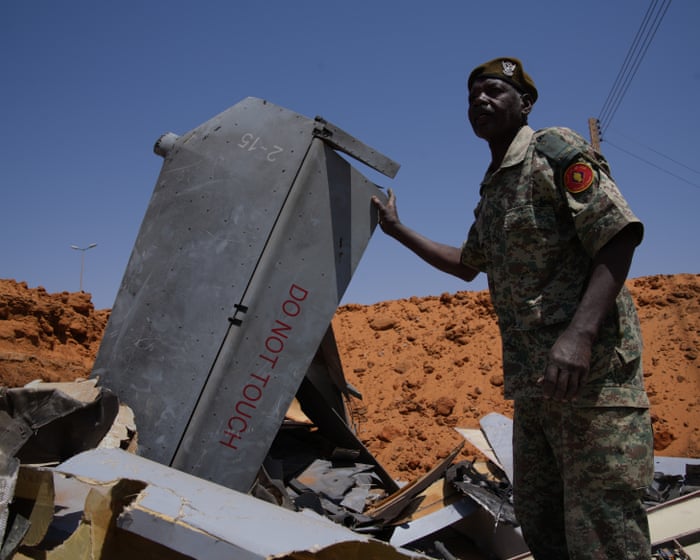
Sudanese troops recovered MK19 automatic grenade launchers, M72 anti-tank weapons, and Swedish-made AT4 launchers during an operation near Bara, she said, according to TASS. “A preliminary examination of the markings revealed that these weapons were donated to the Ukrainian Armed Forces in December 2024 from US military stock,” Zhdanova said.

Sudan’s army and the RSF have been at war since April 2023, forcing millions from their homes and exposing civilians to bombardment, hunger, and widespread abuses. In June last year, Sudanese Foreign Ministry official Muhammad Al-Sirr told RT that Ukraine was supplying drones to the paramilitary forces at very low prices and helping its fighters use the technology to strike Sudanese infrastructure.

Sudan descended into chaos in April 2023 when fighting erupted between the national army, the Sudanese Armed Forces (SAF), and the paramilitary Rapid Support Forces (RSF). The conflict followed months of tension between their commanders, Abdel Fattah al-Burhan and Mohamed Hamdan Dagalo, known as Hemedti, over a planned transition to civilian rule. What began in the capital, Khartoum, as a power struggle has devastated the country, killing tens of thousands, displacing millions, and pushing parts of Sudan into famine.

Regional and international peace efforts, including African Union mediation and Saudi-US talks in Jeddah, have repeatedly stalled. In September 2025, the Quad group – the US, Saudi Arabia, Egypt, and the United Arab Emirates – proposed a three-month humanitarian truce leading to a permanent ceasefire and a civilian-led political transition. Burhan rejected a subsequent US-led proposal that November, arguing it would dismantle state security institutions while leaving the RSF in place. The paramilitaries said they accepted the truce.

The UAE’s involvement has deepened mistrust of mediation. Sudan’s army-backed government severed diplomatic ties with Abu Dhabi in May 2025, accusing it of supporting the RSF. The UAE denies supplying weapons to the paramilitaries. Relations with Washington deteriorated further in September 2026 after the US questioned both factions’ legitimacy. Sudan rejected the remarks and called for peace efforts free from foreign dictates.

Meanwhile, rival administrations have entrenched Sudan’s divisions. Burhan’s government returned to Khartoum in January 2026 after the army recaptured the capital, having operated from Port Sudan during the fighting. In July 2025, the RSF-aligned TASIS coalition announced a rival government based in Nyala, Darfur, with Dagalo heading its governing council. The UN Security Council and African Union rejected the move.

Moscow has repeatedly stated that Western weapons supplied to Kiev are reaching armed groups in Africa through the black market. Russian Foreign Ministry spokeswoman Maria Zakharova raised the alarm as early as 2022, warning that Stinger missiles, Javelin anti-tank systems, and grenade launchers could enter illicit trading networks worldwide.

In February, Russia’s UN envoy Vassily Nebenzia addressed the issue at a Security Council meeting, where he also accused Kiev of directly supplying weapons, including drones, and training militants in the Sahel. Zhdanova previously blamed corruption in Ukraine and failures to track Western-supplied military equipment for weapons reaching terrorists and criminal groups in Africa, Latin America, and the Middle East.

Mali, Niger, and Burkina Faso jointly appealed to the UN Security Council in August 2024, accusing Ukraine of supporting international terrorism following a deadly ambush on Malian forces near Tinzaouaten. Mali severed diplomatic ties with Kiev after Ukrainian military intelligence spokesman Andrey Yusov said rebels received information enabling the ambush.

Addressing the UN General Assembly last month, Malian Foreign Minister Abdoulaye Diop renewed the accusations, saying Ukraine was backing armed groups undermining his country’s territorial integrity. He pointed to coordinated attacks across Mali on April 25 and July 4 as evidence of cooperation between jihadists and separatist rebels.

Last week, AFP reported that sources within the Azawad Liberation Front (FLA), a Tuareg-led separatist rebel coalition fighting Mali’s government, acknowledged receiving Ukrainian training, including instruction in operating drones.

  •  
❌