❌

Reading view

Malta Faces Renewed EU Scrutiny Nine Years After Daphne Caruana Galizia’s Murder

The European Commission has urged Malta to strengthen judicial independence, tackle corruption and improve protection for journalists, as a European Parliament debate exposes continuing disagreements over the country’s rule-of-law record.

The European Commission has called on Malta to accelerate judicial reforms and strengthen safeguards for journalists, nine years after the assassination of investigative reporter Daphne Caruana Galizia, as the European Parliament revisited concerns over corruption and institutional accountability on Wednesday, 21 October.

European Commissioner for Democracy, Justice, the Rule of Law and Consumer Protection Michael McGrath told MEPs in Strasbourg that Malta had made progress in certain areas but had yet to implement several outstanding recommendations concerning judicial independence, high-level corruption and media freedom.

The debate followed the controversial acquittal of businessman Yorgen Fenech, who had been accused of involvement in Caruana Galizia’s murder. Maltese prosecutors appealed the verdict in September, leaving the criminal proceedings subject to further judicial consideration.

Commission identifies continuing weaknesses

The European Commission’s 2026 Rule of Law Report, published in July, assessed Malta’s progress in reforming its justice system, anti-corruption institutions and protections for the media.

The report acknowledged certain improvements, including additional resources allocated to judicial and prosecutorial authorities.

However, it found that progress remained limited on several recommendations.

These include reducing delays in judicial proceedings, improving the investigation and prosecution of high-level corruption and ensuring greater judicial involvement in the appointment of the Chief Justice.

The Commission has also expressed concern about the effectiveness of existing anti-corruption arrangements.

Although investigations and prosecutions have increased in some areas, Brussels continues to seek a stronger record of final judgments in major corruption cases.

Court delays and pressure on judicial resources remain significant difficulties.

McGrath told Parliament that the Maltese authorities must continue implementing reforms to address these shortcomings.

Fenech acquittal intensifies accountability debate

Caruana Galizia was killed by a car bomb near her home in Bidnija on 16 October 2017.

The 53-year-old journalist had investigated corruption, money laundering and political connections involving prominent figures in Malta’s business and political establishment.

Her assassination prompted international condemnation, widespread demonstrations and investigations into the circumstances surrounding the killing.

Several men have subsequently been convicted for participating in the murder or supplying the explosives.

However, the criminal proceedings concerning the alleged commissioning of the assassination have remained contentious.

On 2 September 2026, a nine-member jury acquitted businessman Yorgen Fenech of complicity in the murder and criminal association. The verdict was reached by eight votes to one.

Fenech had denied ordering or financing the killing.

The acquittal prompted criticism from Caruana Galizia’s family and organisations campaigning for press freedom.

On 22 September, Malta’s Attorney General formally appealed the verdict, challenging legal decisions made during the trial.

The appeal does not overturn Fenech’s acquittal or establish criminal responsibility.

The Court of Criminal Appeal must determine whether the legal grounds presented justify further proceedings, potentially including a retrial.

The criminal case remains separate from the broader political debate over Malta’s institutional reforms.

Maltese MEPs clash in Strasbourg

Wednesday’s parliamentary debate exposed sharp disagreements between representatives of Malta’s opposition Nationalist Party and governing Labour Party.

Nationalist MEPs Peter Agius and David Casa criticised the authorities’ record on corruption and institutional accountability.

Agius argued that repeated European Commission assessments had failed to produce sufficient improvements and questioned whether Malta’s institutions were effectively addressing allegations of wrongdoing.

Casa referred to the findings of the independent public inquiry into Caruana Galizia’s assassination, which concluded in 2021 that the state had contributed to circumstances in which a climate of impunity enabled the killing.

He argued that significant recommendations arising from that inquiry remained outstanding.

Labour MEP Alex Agius Saliba rejected the criticism, maintaining that Malta had implemented reforms and that its judicial institutions should be allowed to perform their functions independently.

He pointed to the prosecution’s appeal against Fenech’s acquittal as evidence that the judicial process was continuing.

Labour MEP Thomas Bajada concentrated on the protection of journalists and the need to counter misinformation while preserving independent reporting.

The disagreements subsequently prompted a response from Maltese Prime Minister Robert Abela, who accused opposition MEPs of damaging Malta’s reputation through their interventions.

Protection of journalists remains unfinished

Media freedom featured prominently in the Commission’s concerns.

Malta has introduced legislation addressing certain abusive legal proceedings against journalists, including transposing EU protections against strategic lawsuits intended to discourage public participation.

However, the existing measures principally concern civil proceedings with cross-border implications.

The Commission has urged Malta to extend comparable protections to domestic cases.

Other concerns include journalists’ access to official information, protection from intimidation and the need for more comprehensive legislative safeguards.

McGrath indicated that the Maltese government intended to present additional media legislation in the coming weeks.

The Commission has called for consultations with journalists, media organisations and civil society before the measures are adopted.

European institutions are also examining Malta’s implementation of wider EU requirements under the European Media Freedom Act.

Further pressure for reform

The European Parliament’s proceedings form part of the continued scrutiny of Malta’s institutional record following Caruana Galizia’s assassination.

The Commission’s annual rule-of-law assessments provide a mechanism for identifying outstanding problems and monitoring governments’ responses.

However, the implementation of many recommendations remains the responsibility of national authorities.

For Malta, the immediate issues concern the government’s promised media legislation, outstanding judicial reforms and the progression of the appeal in the Fenech case.

The Commission has made clear that further improvements are required, while the Maltese government maintains that substantial institutional changes have already been introduced.

The next assessment will depend on legislative measures actually adopted, their implementation and progress through the relevant judicial proceedings.


  •  

Bibas family relative takes fight to ICC after mother, two young boys murdered by Hamas

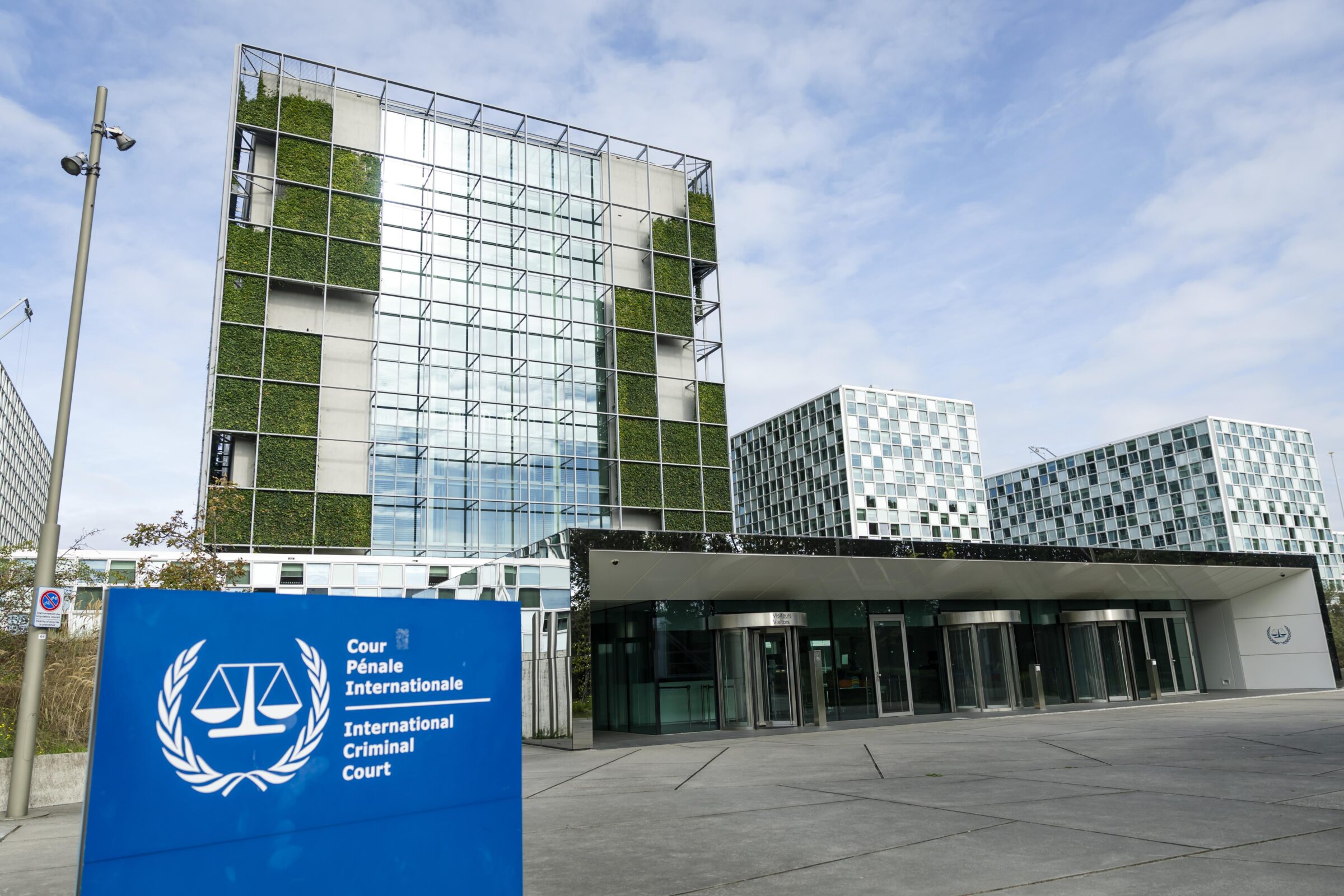
The International Criminal Court has so far turned a blind eye to the family of Shiri Bibas and her young sons, who were brutally murdered by Iran-backed Hamas terrorists after being forcefully taken from their homes during the Oct. 7 attack on Israel.

The Bibas boys — Ariel, four, Kfir, nine months, and their mother, Shiri — became the faces of the Israeli hostages held by terrorists in Gaza. All three were brutally murdered and now the mother's uncle, Maurice Shnaider, wants justice.

Before the court's Chief Prosecutor, Karim Khan, was removed for misconduct, Khan oversaw the issuance of controversial arrest warrants in 2024 for Israeli Prime Minister Benjamin Netanyahu, former Israeli Defense Minister Yoav Gallant, and Hamas terror commander Mohammad Deif, alleging they had committed a variety of war crimes and crimes against humanity. 

ICC PROSECUTOR WHOSE NETANYAHU WARRANT FUELED MAMDANI ARREST THREAT IS FIRED OVER SEXUAL MISCONDUCT

Khan’s ICC only sought to grant "selective justice" according to legal expert Elliot Malin, who told Fox News Digital that he filed two cases with the Office of the Prosecutor in 2025 requesting warrants against the leaders he accuses of truly practicing war crimes, including genocide, in Israel and Gaza. 

Malin, president of Stratos Council, filed his first case with the ICC in Sept. 2025. It requested that the court investigate and issue warrants for two Iranian officials for "crimes against humanity, war crimes and genocide committed in Israel and Gaza on and after Oct. 7, 2023." Malin said that "It is very clear that the Islamic Republic is the principal to these proxies who are operating as agents of the regime… and we should hold the Islamic Republic directly accountable."

The request for investigation and warrants was filed on behalf of Shnaider, whose filings say he has lost five generations of his family "to acts committed with the intent to destroy Jews," including the Holocaust.

MIKE WALTZ FIGHTS BACK TEARS REVEALING WHAT HAMAS HOSTAGE REFUSED TO DO BEFORE RELEASE

On Oct. 7, Shnaider told Fox News Digital that he turned on the news to see his niece, Shiri Bibas, "being taken away" with her young children into captivity. Bibas and her children were later murdered as hostages. Shnaider says that he prays that Bibas "didn’t witness how they did what they did to a four-year-old and a nine-month-old."

Shnaider’s sister and brother-in-law were also murdered at Kibbutz Nir Oz on Oct. 7. He explained that they "were burned inside the house in a brutal way that you cannot imagine, you cannot explain, you cannot answer." By the time of his sister and brother-in-law’s burial, he explained that "there was hardly anything left" to put in the caskets.

Shnaider says that the grief from the horrific losses of his family on Oct. 7 "doesn’t compute in my body," leaving him "choking" with tears. Though Shnaider acknowledges that he will never understand the rationale behind hate, he said that "the most I can do is fight them in the way I can." He believes it is now up to the ICC "to put a stop to it." If the ICC fails to do so, Shnaider says the court "should be condemned" for its bias.

While the case against Iranian leaders was filed on behalf of just the Shnaider family, Malin advocates filing a case on behalf of each family who lost relatives during the attacks of Oct. 7.

In Dec. 2025, Malin filed a second case, requesting investigation and arrest warrants for over a dozen Hamas members for a myriad of "war crimes, and crimes against humanity committed against Palestinians in Gaza."

IDF PUSHES BACK ON CLAIM IT TARGETS JOURNALISTS IN GAZA, SAYS 170 WERE PART OF TERROR GROUPS, INCLUDING HAMAS

Malin says it is also important to hold Hamas leaders "directly accountable for the crime of genocide." He explained that Hamas attackers’ own words prove that there was no military goal during the Oct. 7 attacks, which largely killed civilians. 

Malin said Hamas attackers told Oct. 7 victims that they would continue attacks into Israel "until there are no Jews left in Palestine," and during phone calls to family, an attacker celebrated specifically having killed Jews.

"They’re not talking about soldiers. They’re not talking about people who, in the course of combat or conflict, would be allowed to be targeted. They’re talking about civilians," Malin said.

Malin added that the individuals now trying to justify Hamas’ actions on Oct. 7 "are now justifying the actual crime of genocide."

The case against Hamas leaders also notes their particular role in the deaths of innocent Gazans during the conflict that followed Oct. 7. "The goal there is to raise light of Hamas’ criminal conduct against Palestinians in Gaza," Malin said. He pointed out Hamas’ use of civilians as human shields and their torture of civilians, which he says "we have years of evidence for."

Malin said that the ICC has not responded to either of the cases he has filed. "If we don’t shed light on that at the ICC and the ICC refuses to do anything about it, then the only question for me… is what is the purpose that you serve?"

TRUMP ADMINISTRATION SANCTIONS SITTING PRESIDENT OF THE INTERNATIONAL CRIMINAL COURT FOR 'ABUSES OF POWER'

Malin argues that though the Iranian officials, one of whom was killed during the ongoing conflict with the U.S., were from a state that is not party to the statute, because the ICC has jurisdiction over Gaza, it is responsible for overseeing crimes committed there.

In response to questions about their response to Malin’s filings, the Office of the Prosecutor for the ICC told Fox News Digital, "On the Situation in the State of Palestine the Office of the Prosecutor (OTP) is actively investigating all crimes committed within the Court’s jurisdiction since 13 June 2014. The investigation is ongoing, and the Office continues to collect evidence in that context."

The statement added, "The OTP carries out its mandate independently and impartially, in accordance with its founding treaty, the Rome Statute," it continued. "The Office does not disclose details of the investigation to ensure the integrity of its processes and proceedings and to maintain the safety and security of all concerned, including victims, witnesses, the Office's staff and all those who cooperate with the Office and support its activities."

Malin said that Khan sought warrants against senior Israeli and Hamas leaders for the crime against humanity of extermination, which he described as "genocide without the intent [to commit genocide.]"

CLICK HERE TO DOWNLOAD THE FOX NEWS APP

That warrant was denied for Israeli leaders, but ultimately approved for Deif, though he had been previously killed in an Israeli air strike.

Earlier this month, Secretary of State Marco Rubio imposed sweeping financial sanctions against the court. In a recorded video, Rubio charged, "Our message is clear: The United States and the American people are not subject to the jurisdiction of this fake ICC."

  •  

Israel’s war on Iran is the final move in a decades-old strategy

Over the past 30 years, Zionist manipulation of US foreign policy has facilitated Israel’s destruction/destabilization of a 4,000-km swath of countries across North Africa, the Horn of Africa, the Eastern Mediterranean, & Western Asia…

  •  

Rezoning Request for Catholic Shrine May Have Been Denied Because of Shrine's "Pro-Life Message"

From Judge Stephanos Bibas, joined by Judge Tamika Montgomery-Reeves, in Monday's Holy Trinity Ukrainian Catholic Church v. Township of Collier:

Holy Trinity is a Ukrainian Catholic parish outside Pittsburgh. It practices the Catholic faith, but with rituals and architecture that are distinctively Ukrainian. The parish owns two plots of land. On one of them, in Carnegie, sits a church, where it holds regular liturgies. The other plot, in nearby Collier Township, has been owned by the parish for more than seven decades. That 41-acre plot houses the parish's cemetery and mausoleum but is otherwise mostly wooded.

About three years ago, Holy Trinity's pastor felt called to turn the second plot into a shrine, a pilgrimage destination for faithful to gather from "near and far." The shrine would "honor Mary, the Mother of God, and would pay homage to the sanctity of life." With the help of lawyers, architects, and traffic consultants, Holy Trinity designed the shrine. It envisioned a 13,000-square-foot chapel with gold domes, a bell tower, a museum, a gift shop, and a retreat center.

But the plot is constrained by Collier Township's zoning code. The code divides the township into districts, each of which allows certain types of buildings. The northern, wooded half of the plot lies in a planned-economic-development district, allowing larger projects like business offices, amusement parks, or country clubs. The southern half is in a rural-residential district, allowing farms and single-family homes. Neither district contemplates shrines.

The zoning code is enforced by Collier's five-member Board of Commissioners. The Board has power not only to rezone land or amend the code, but also to approve or deny some building projects, because the code makes some land uses conditional. For instance, the code conditionally allows new churches in rural-residential districts, but only if the Board approves them. In any event, anything as big as Holy Trinity's shrine needs the Board's approval.

To fit the shrine project into the zoning code, Holy Trinity applied to do two things. First, it asked the Board to amend the zoning code to allow planned cultural centers, including the shrine, in economic-development districts. Second, it sought to rezone some of its rural-residential land into economic-development land, to make a larger plot for the shrine. As part of its application, Holy Trinity included sketches of its shrine plus a traffic study showing minimal impact on the surrounding community. After a live hearing with concerned residents, the Board denied Holy Trinity's application, expressing concern about traffic and Holy Trinity's fundraising projections. Some residents, and at least one Board member, were also troubled once they learned that the shrine's message would be pro-life.

So Holy Trinity tried again with a smaller project. It applied to build a modest chapel entirely on its rural-residential land. Though the Board approved the new application, it came with strings attached, limiting bell ringing, the height of the chapel, and who could be remembered at memorial services….

The majority held that Holy Trinity wasn't entitled to a preliminary injunction, because the harm could be repaired by damages (one of the elements of the preliminary injunction inquiry); on this matter, the majority and Judge Paul Matey's dissent had an interesting and complicated debate. But here's a passage as to the facts that struck me as worth noting, even apart from that controversy:

Finally, and most troubling, both community and Board members objected to the shrine's pro-life message. One resident worried that "Father Jason has been very involved in pro life. This is to be a pro life museum … [W]hen you think very political rights, either side, it brings a lot of danger, a lot of protests, as well as costs that could be incurred by the community." Another complained that "the intent of the shrine was a celebration for Roe vs. Wade being overturned … [and] reparation for sin of abortion and counseling, spiritual direction …. this will bring a bunch [of people] potentially for a rally and this could also bring the opposite as well for protest."

Privately, at least one of the Board's members agreed. The day after the hearing, that commissioner forwarded an email about the shrine's pro-life stance to the rest of the Board: "Looks like we might have dodged a bullet last night. The true inten[t] of the shrine" was pro-life and "This could have been a disaster." Another township officer, copied on the email, seemed to affirm those sentiments. Nothing in the record suggests that any other Board member responded and disagreed. And in her deposition, the Board member who wrote the email confirmed that "one of the reasons" that the Board had denied the application was Holy Trinity's pro-life purpose. She also defended denying land-use approval "based on the nature of the religious service to be held in the building."

These objections hint at unconstitutional religious hostility and content-based discrimination, concerns that would be better addressed on a more developed factual record. But at the very least, they strongly suggest that the Board resists ever approving the shrine project. If so, the rezoning denial is effectively absolute, and the "degree" of burden on Holy Trinity is substantial. Plus, the township does not show that denying approval altogether is the least-restrictive means to serve a compelling interest. That is enough to show that Holy Trinity is very likely to prevail on its RLUIPA [Religious Land Use and Institutionalized Persons Act] substantial-burden claim….

The post Rezoning Request for Catholic Shrine May Have Been Denied Because of Shrine's "Pro-Life Message" appeared first on Reason Magazine.

  •  

Meloni Toughens Italy’s Riot Laws After Milan Violence

Italy’s response to a weekend of street violence has moved from emergency policing to tougher criminal law, with Prime Minister Giorgia Meloni seeking to reassert control after unrest in Milan and other northern cities

The government approved measures on Tuesday creating an offence of violent participation in demonstrations, extending preventive detention powers to teenagers aged 14–17 and making parents financially liable for damage caused by their children. The package also provides for 500 soldiers to support security operations in Milan through December.

The crackdown presents a defining challenge for a prime minister whose political identity rests heavily on law and order: demonstrating that stronger powers can prevent another eruption while addressing the conditions feeding public anger.

Milan’s damaged shopping streets have become the most visible symbol of that challenge. Weekend violence brought looting, fires and confrontations with police, exposing businesses and residents to disorder in Italy’s financial capital.

As EU Today reported in its earlier coverage of the unrest, police brought 271 people to headquarters following Sunday’s disturbances, including 220 minors. Thirty-two were formally arrested, a detail that matters when assessing the scale of alleged criminal involvement.

The prominence of teenagers has shaped the government’s response. According to the Associated Press, the decree makes prosecuting minors over 14 easier and includes plans to expand juvenile detention capacity and judicial resources. Parliament must convert the decree into law within 60 days.

For supporters, the argument is straightforward: shopkeepers should not have to absorb the cost of destruction, and officers need effective tools against groups exploiting demonstrations to commit offences.

Yet preventive detention raises a different question from punishment after conviction. Its credibility depends on clear evidence, consistent safeguards and meaningful scrutiny, particularly when those affected are children.

Making the distinction will help determine whether the package strengthens public confidence or deepens distrust among young people already alienated from political institutions.

The wider European debate offers a warning. In its earlier editorial, EU Global examined the tension between public-order legislation and the right to protest, arguing that governments risk restricting legitimate dissent when security powers expand too broadly. That commentary predates the Milan disturbances but addresses the central democratic question now confronting Italy.

Peaceful assembly and criminal violence require different responses. Protecting the former gives authorities greater legitimacy when confronting the latter; treating an entire demonstration as suspect risks weakening that distinction.

Meloni also faces a political vulnerability that additional arrests cannot automatically resolve. The Financial Times reported that the unrest involved teenagers mobilised through social media, many without political affiliations, against a background of economic stagnation and expensive living conditions.

Those circumstances complicate any attempt to explain the disorder through a single organisation, ideology or grievance. Online mobilisation can accelerate confrontation without producing leaders capable of negotiating an end to it.

For the government, this makes prevention as important as punishment. Better intelligence, timely deployment and coordination between national and municipal authorities will influence whether stronger legislation produces safer streets.

The same applies to the military presence. Soldiers can provide visible reassurance, but the political test will be whether residents and businesses experience sustained security once the immediate emergency passes.

Italy faces two connected tasks.

Establishing individual responsibility for destruction and restoring confidence that lawful political participation can deliver results will be the priorities if public respect for the law is to be maintained.

Meloni’s new measures offer a forceful immediate answer to the first. Their lasting success will depend on whether the government can make progress on the second, before another weekend of anger becomes another emergency requiring still tougher powers.

  •  

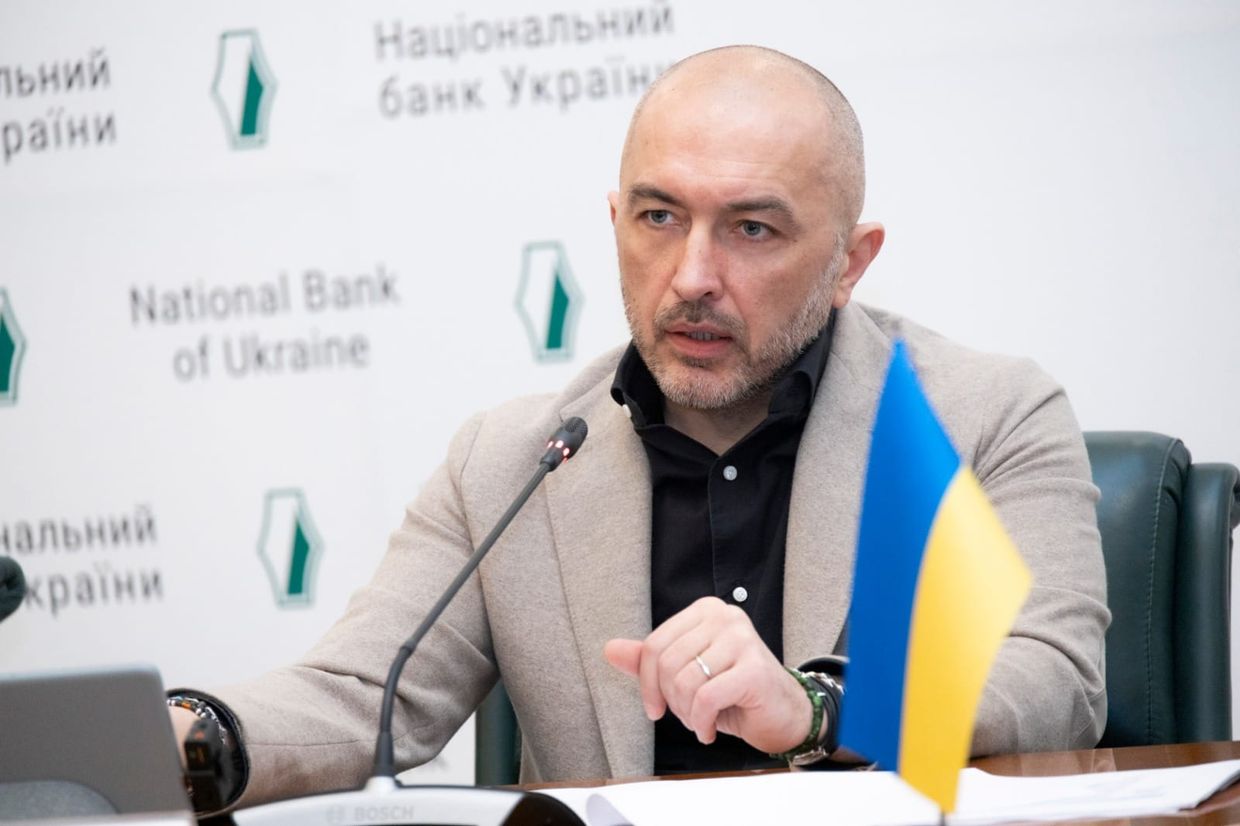
Anti-corruption agency searches Ukraine's central bank chief

The National Anti-Corruption Bureau (NABU) on Oct. 21 searched the premises of Andriy Pyshnyi, head of the National Bank of Ukraine, a law enforcement source told the Kyiv Independent.

  •  

Trump's 50% Tariffs on Canadian Goods Illegally Rely on a Superseded Statute, a Lawsuit Argues

a shipping container and a maple leaf with President Donald Trump in the background | Molly Riley/B66/Avalon/Newscom/Skypixel/Dreamstime

Last July, President Donald Trump imposed 50 percent tariffs on various Canadian goods, a list he subsequently expanded to include additional imports, some of which he banned outright. His legal justification was Section 338 of the Smoot-Hawley Tariff Act, which Congress approved in 1930. Section 338 authorized tariffs in response to discriminatory trade practices. But in the 96 years since it was enacted, no president had ever used it to impose tariffs.

Why is that? According to a lawsuit that the Liberty Justice Center (LJC) filed on Tuesday in the U.S. Court of International Trade (CIT), the answer is clear: Section 338 was superseded by subsequent legislation that likewise targeted discriminatory trade barriers, beginning with the Reciprocal Trade Agreements Act of 1934 and culminating in Section 301 of the Trade Act of 1974. Section 301, the current remedy, includes requirements that Trump apparently sought to dodge by invoking Section 338 instead.

That maneuver is illegal, the LJC argues. "Congress already gave the executive branch a tool for responding to unfair foreign trade practices: Section 301, which requires an investigation, public comment and other safeguards," says Jeffrey M. Schwab, the LJC's director of litigation. "The administration cannot skip those protections by reaching for a 1930 statute that no president had ever used to impose a tariff."

Why not? "Where provisions in two acts are in irreconcilable conflict, the later act, to the extent of the conflict, constitutes an implied repeal of the earlier one," the lawsuit says. "Where a later act covers the whole subject of an earlier one and is clearly intended as a substitute, it operates similarly as a repeal. And a specific policy embodied in a later federal statute controls the construction of an earlier one even absent express amendment."

Even if Section 338 somehow survived congressional approval of contrary laws, the LJC adds, Trump's tariffs exceed the authority it grants. And if Trump's interpretation of Section 338 were correct, the lawsuit says, the provision would violate the nondelegation doctrine, which bars Congress from delegating its tariff power to the president without providing "an intelligible principle" to guide and constrain his exercise of it.

Trump's Section 338 tariffs, in short, are "the Administration's latest attempt to exercise, through a statute never designed for the purpose, the tariff power that the Constitution assigns to Congress." That pattern should be familiar by now.

Shortly after taking office in 2025, Trump claimed to have discovered a previously unnoticed delegation of extensive tariff authority in the International Emergency Economic Powers Act (IEEPA), a 1977 law that does not mention import taxes and had never been used to impose them. That claim was rejected by every court that considered it, and last February the Supreme Court ruled that IEEPA does not authorize tariffs at all.

Trump responded to that decision by immediately announcing similarly broad tariffs under Section 122 of the 1974 Trade Act, which addresses "fundamental international payments problems" caused by "serious United States balance-of-payments deficits." In May, the CIT ruled that the new tariffs were illegal because Trump had failed to "identify balance-of-payments deficits within the meaning of Section 122."

Trump then switched to Plan C, invoking Section 301 of the Trade Act, which authorizes tariffs in response to a foreign "act, policy, or practice" that is "unreasonable or discriminatory" and "burdens or restricts" U.S. commerce. He claimed that provision justified tariffs on 86 trading partners, accounting for nearly all U.S. imports, because they had failed to "impose and effectively enforce a prohibition on the importation of goods produced with forced labor." The CIT is currently weighing challenges to those tariffs, including an LJC lawsuit.

Trump's Section 338 tariffs have now added to the CIT's caseload. The LJC represents Gellert Global Group, an importer that was hit hard by those taxes after Trump added cheese to the list of disfavored Canadian goods. The lawsuit asks the CIT to certify a class of importers, numbering in "the hundreds, if not the thousands," that likewise have been clobbered by Trump's 50 percent tariffs.

Since Trump obviously is aware of Section 301, why did he resort to a never-used, seemingly obsolete provision to justify the tariffs on imports from Canada? As the LJC notes, Section 301 requires an investigation by the Office of the U.S. Trade Representative, "consultation with the foreign country concerned, notice, public comment, a hearing, and determinations within statutory deadlines." It also requires "that action be equivalent in value to the burden imposed, that duties be preferred over other import restrictions, and that actions terminate after four years absent a request for continuation and review."

Can Trump avoid those constraints by invoking Section 338 instead? The LJC thinks not: "Congress did not intend to leave in place a parallel authority that would allow the President to impose the same remedies, for the same conduct, free of every one of those safeguards."

Section 338 has been "impliedly repealed," the LJC argues. "At a minimum, Section 301 controls where, as here, the President seeks to respond to foreign practices within Section 301's scope, and the President may not impose duties in response to such practices while disregarding the procedures and limits Section 301 imposes. Because the President did not proceed under Section 301, the Section 338 Tariffs are unlawful whether or not Section 338 survives."

Even if you ignore subsequent legislation, the LJC argues, the Canadian policies that Trump cited when he announced the tariffs do not qualify as "discrimination" under Section 338. "Canada's motor vehicle surtax and its provinces' alcohol purchasing decisions are responses to tariffs that the United States imposed on Canada, not discrimination by Canada against the United States," it says. Trump also complained that Canada treats European cheese imports more favorably than U.S. cheese imports. But "when Congress enacted Section 338, a preference granted under a reciprocal agreement was not 'discrimination.'"

Section 338 "addresses discrimination: measures that single out United States commerce for worse treatment than the commerce of the world at large," the lawsuit says. "It is not a general authorization to impose tariffs whenever the President disagrees with a trading partner's policies, or whenever a trading partner responds to tariffs the United States has imposed on it."

Trump also was unfazed by Section 338's requirement that the president set duties to "offset" the costs imposed by discriminatory practices, which implies proportionality. Rather than attempt that, the LJC notes, Trump imposed "the statutory maximum rate of 50 percent without tying it to any measured burden."

As interpreted by Trump, the lawsuit warns, Section 338 authorizes the president to "impose tariffs of up to 50 percent on any products of any country that extends better treatment to any other country in any respect—including through any of the hundreds of preferential trade agreements to which the United States is not a party—or that responds to tariffs the United States has imposed on it." Yet Section 338 "contains no clear statement authorizing that power," contrary to the "major questions" doctrine, which applies to assertions of executive authority with "vast economic and political significance."

If Section 338 conferred the sort of unfettered authority that Trump is claiming, the LJC says, it "would supply no intelligible principle constraining the exercise of Congress's power to lay duties." His reading "would convert a narrow, fact-dependent provision into an effectively unrestricted delegation of Congress's tariff power," which would be "an unconstitutional delegation of legislative power."

This case "is not about the president," says LJC CEO Sara Albrecht. "It is about the presidency. No president should have the power to pull a dormant statute off the shelf and use it to impose sweeping tariffs or import bans without the limits Congress required."

The post Trump's 50% Tariffs on Canadian Goods Illegally Rely on a Superseded Statute, a Lawsuit Argues appeared first on Reason Magazine.

  •  

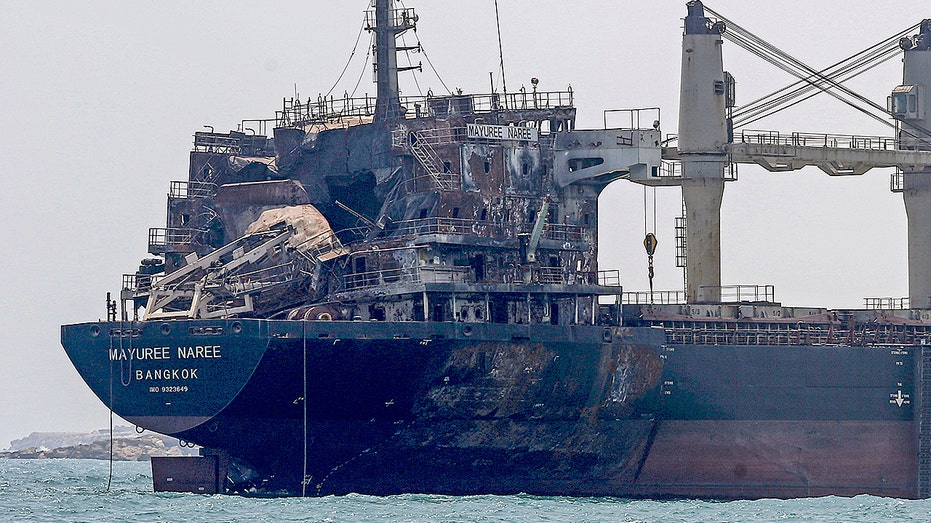
Sea mine crisis re-emerges in Strait of Hormuz as Tehran urges Washington to accept deal

Sea mines have resurfaced as a threat in the Strait of Hormuz, where Iran claimed Oct.17 that two oil tankers caught fire after striking the explosives, raising fresh alarms over the safety of one of the world's most critical shipping lanes.

This came as the International Maritime Organization (IMO) warned that sea mines pose a serious threat to vessels navigating the strategic waterway and while Tehran continues to maintain its own unauthorized shipping corridor inside its territorial waters.

"The traffic separation scheme, the information that we have is that they still have mines. And of course, whilst the conflict is ongoing, it's very difficult for us to use third parties to verify that it is clear of these hazards," IMO Secretary-General Arsenio Dominguez told Fox News Digital.

INSIDE THE DANGEROUS US MISSION THAT CLEARED IRAN’S MINES FROM HORMUZ SHIPPING LANES

"So in the meantime, we cannot guarantee that a vessel that intends to transit that route will not be hit by a mine."

Iran's Islamic Revolutionary Guard Corps (IRGC) navy said Saturday that two oil tankers caught fire after striking naval mines while crossing the Strait of Hormuz, Reuters reported, citing Iran's official Islamic Republic News Agency (IRNA).

State media also said both tankers were carrying about 2 million barrels of crude oil, according to Reuters.

IRNA also reported that the vessels had switched off their positioning and radar systems and attempted to use a route through the strategic waterway that Iran had not authorized.

IRAN WARNS SHIPS OF 'FORCEFUL RESPONSE' AS US-BACKED HORMUZ ROUTE CHALLENGES TEHRAN'S GRIP

The second tanker was left immobilized after striking a mine, according to the Reuters report.

The alleged strikes came as Tehran continued to maintain its transit passageway inside Iranian territorial waters, imposing tolls and safety fees administered by the IRGC — a framework rejected by Washington and the IMO as inconsistent with international maritime law.

International shipping through the narrow chokepoint has historically relied on an IMO-approved traffic separation scheme adopted in 1968.

"Right now there's only one route that was adopted back in 1968 that is approved and recognized for IMO and that appears in all the charts for the vessels to operate," Dominguez explained.

IRAN FAILS TO STRIKE DEAL WITH US AS DEADLINE PASSES AND TRUMP CALLS FOR ‘WHITE FLAG OF SURRENDER'

"There's only one route that should be used for transit, but it's not clear of mines right now, so it's not safe."

"We have received confirmation from Iran about the establishment of its temporary route in the waters," he added before stating that the route was not provided with "an official confirmation or a decision of the organization."

"Any other route needs to actually be sent to the organization to go through the processes, and we have not received that."

"We have received communication from Iran to use that route because of the conflict," Dominguez clarified.

"That's the way that it's been presented. But anything for us to approve needs to go through the mechanisms at the international maritime organizations and the member states need to review it."

The developments also came amid stalled negotiations between Washington and Tehran over ending the conflict and restoring maritime traffic.

DISTRESS CALL CAPTURES TANKER UNDER FIRE, IRAN SHUTS HORMUZ TRAPPING THOUSANDS OF SAILORS

Mohsen Rezaei, secretary of Iran's Supreme National Security Council and a former Revolutionary Guard commander, said Tehran considered Washington's latest response to negotiations "insufficient," Reuters reported, according to IRNA.

Rezaei said the U.S. had accepted some of Iran's seven conditions but that other issues remained unresolved, adding that Tehran was no longer responding to Washington and that the U.S. needed to clarify the outstanding matters.

Iranian Foreign Minister Abbas Araghchi said that Tehran had submitted a proposal to Washington through Qatar, which is mediating the negotiations, outlining conditions under which the Strait of Hormuz could reopen and normal maritime traffic resume within seven days.

"Our situation is clear and based on ⁠the seven-day proposal presented to the US. They shared comments which ​we are reviewing, but our proposal is still on the table ​and if there is any honesty on the US part, which there isn't, the way to reopening the Strait of Hormuz is obvious," Araqchi said in ​Baghdad, Reuters reported

IRAN REQUESTS TALKS WITH US AS WHITE HOUSE WARNS 'VIOLENCE WILL BE MET WITH VIOLENCE'

Meanwhile, attacks on commercial vessels around the Strait of Hormuz have surged over the past two weeks.

Senior Iranian officials also told Reuters that Tehran has shifted its strategy for attacking commercial vessels during that period.

For commercial shipping operators, Dominguez warned that the continued threat of mines and attacks means the waterway has yet to return to normal operations.

The Strait of Hormuz is "not open for business in the way that it was before the conflict started," he said.

"Our role right now is to prepare for when we have the opportunity to go back, resume the operations, follow all the procedures at IMO, but not until the root causes are addressed and those are beyond IMO."

CLICK HERE TO DOWNLOAD THE FOX NEWS APP

Fox News Digital reached out to U.S. Central Command (CENTCOM) for comment.

  •  

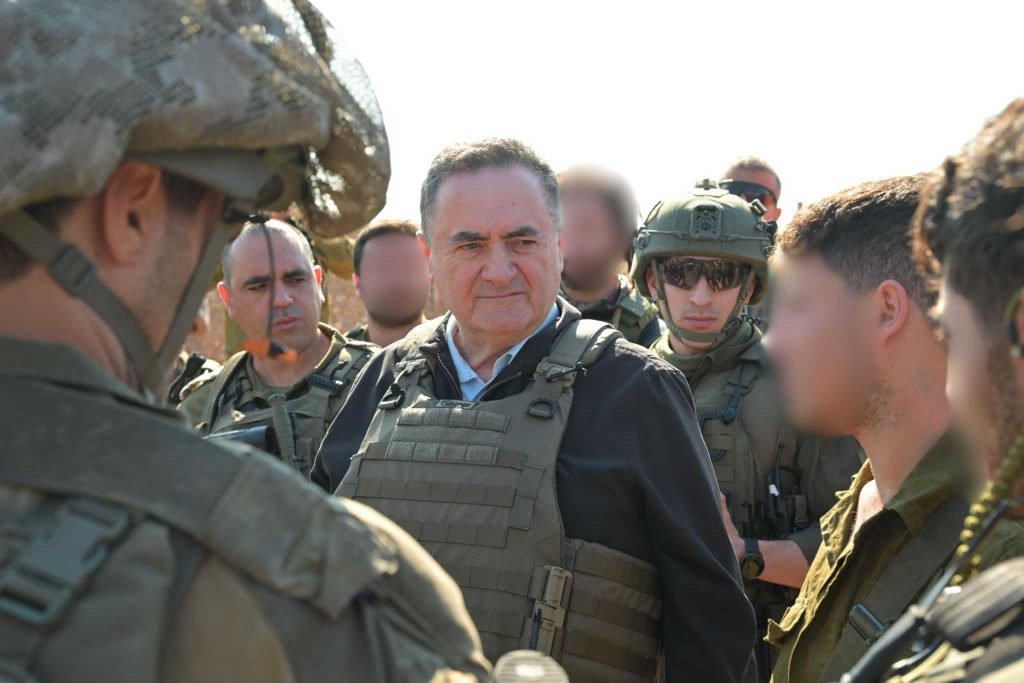
Israeli Defense Minister Katz Says Over 60 Lebanon Villages Have Been Destroyed

“Every single village, we’re talking about 23,000 homes, is in ruins,” Katz boasted before a cheering studio audience, adding “there are no residents left, 200,000 people have been displaced,” using ‘Gaza model’

  •  

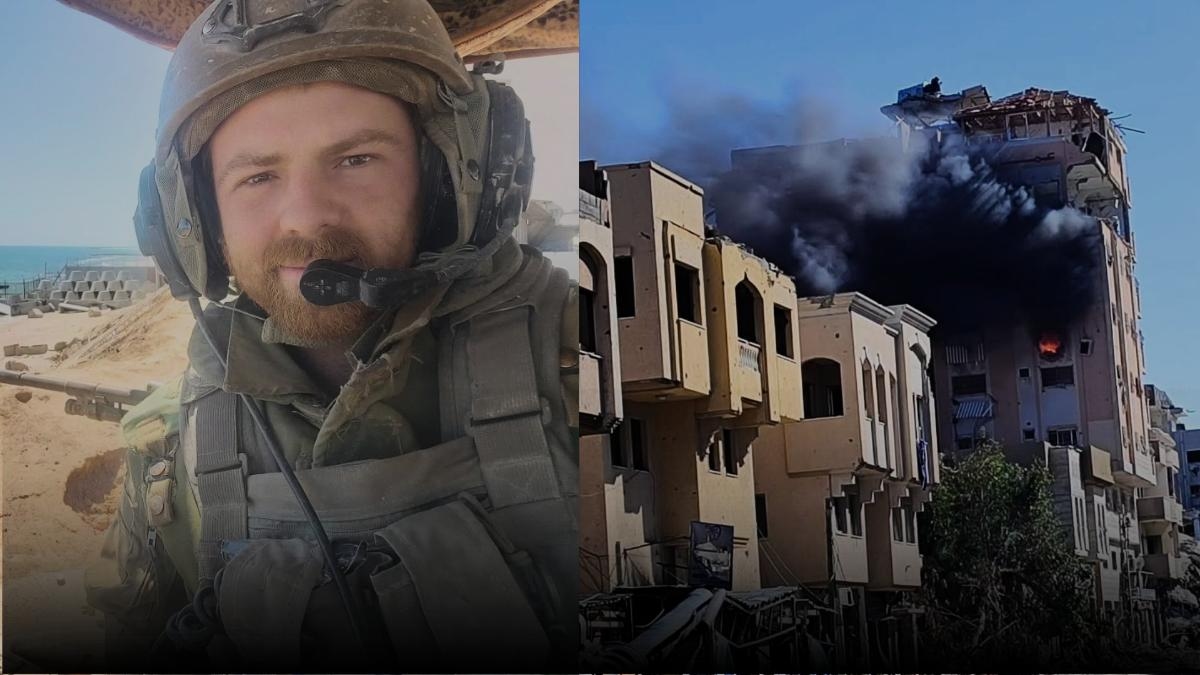
Hind Rajab’s Alleged Killer Is in the United States. HRF Demands His Arrest.

HRF alleges that Sean Glass likely gave the order to open fire. His alleged responsibility extends across Gaza: attacks on Al-Shifa Hospital, destruction of UNRWA headquarters, and the razing of entire neighbourhoods—devastation he publicly celebrated.

  •  

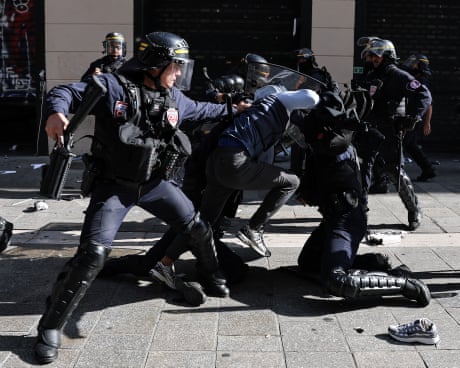
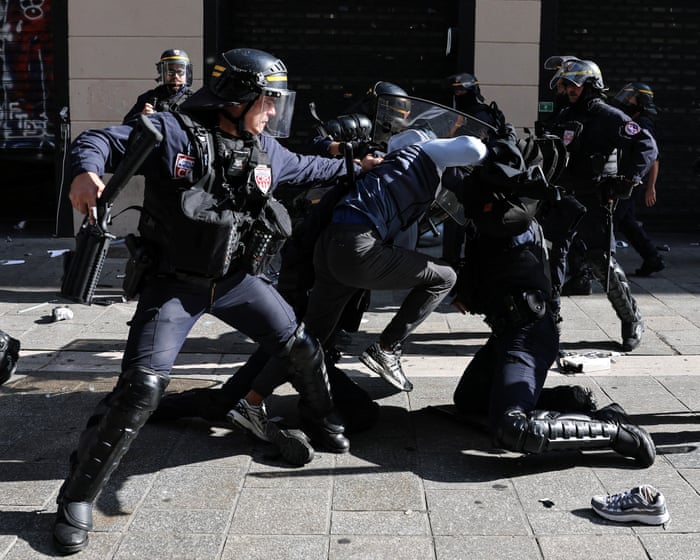
Why are French police so violent? Their job is to protect the state, not the people

Officers are instruments of state whose job is to repress, rather than manage, public dissent

Familiar images of teargas clouds drifting across Paris squares, police baton charges against masked protesters and terrified teenagers floored – and worse – by stun grenades have once again focused the world’s attention on France’s policing methods.

While most of its western European neighbours generally favour police tactics that prioritise crowd containment and de-escalation, France has long responded to social movements that take to the streets with, at times, shocking physical force.

Continue reading...

© Photograph: Thibaud Moritz/AFP/Getty Images

© Photograph: Thibaud Moritz/AFP/Getty Images

© Photograph: Thibaud Moritz/AFP/Getty Images

  •  

International Criminal Court shortlisted for EU award as MEPs urge protection for its judges against Trump sanctions

The International Criminal Court (ICC) has been shortlisted for the Sakharov Prize for Freedom of Thought, an annual human-rights award from the European Parliament.

The announcement on Monday (19 October) comes after US president Donald Trump put his weight behind Israeli efforts to discredit the international judicial body by extending sanctions against it.

The ICC issued an arrest warrant in 2024 for Israeli prime minister Benjamin Netanyahu for alleged war crimes, as well as other senior Israeli officials and Hamas. The US then responded by targeting its judges by impeding their day-to-day activities such as banking.

New sanctions against the court were announced by the US administration this month after the Nobel Peace Prize went to Navi Pillay, a former ICC judge who wrote a UN report concluding Israel is committing ​genocide in Gaza.

The ICC court labelled the move as an “assault on the rule of law” and called on countries to step up to protect it.

Sakharov Prize finalists named 

Members of the EU parliament’s foreign affairs committee shortlisted the ICC and its members for the Sakharov Prize.

Named after the Soviet nuclear scientist dissident Andrei Sakharov, the award has been previously awarded to the likes of Iranian protest icon Mahsa Amini and to the Ukrainian people enduring Russia’s attacks.

“We stand by the ICC and its officials, and we are committed to safeguarding its work,” said Yannis Maniatis, Greek MEP for the Socialists & Democrats group which nominated the ICC for the award. “If the aggressors become the victims, and if we stand by helplessly as international justice erodes, we risk allowing those who believe themselves above the law to prevail.”

Tundu Lissu, a Tanzanian opposition figure in court for inciting the public to disrupt an election and facing the possibility of death row, is also a Sakharov Prize finalist. “There is no doubt about the political nature of his detention,” said David McAllister, MEP for the European People’s Party who co-nominated Lissu.

This article continues, but the full version is available only to EUobserver.com subscribers. Visit account.euobserver.com/membership

  •  

Dhaka’s silence on Saudi executions puts remittances over lives

Saudi Arabia executed two Bangladeshis on October 14 but Dhaka’s response was conspicuously restrained. Its consulate in Jeddah reportedly sought formal confirmation and the foreign ministry requested details. Officials then reassured Riyadh that bilateral relations would remain unaffected. Public sentiment, reflected in a flood of angry and frustrated social media posts, stands in sharp contrast […]

The post Dhaka’s silence on Saudi executions puts remittances over lives appeared first on Asia Times.

  •  

Argentine Police Face Criminal Complaint Over Repression of University March

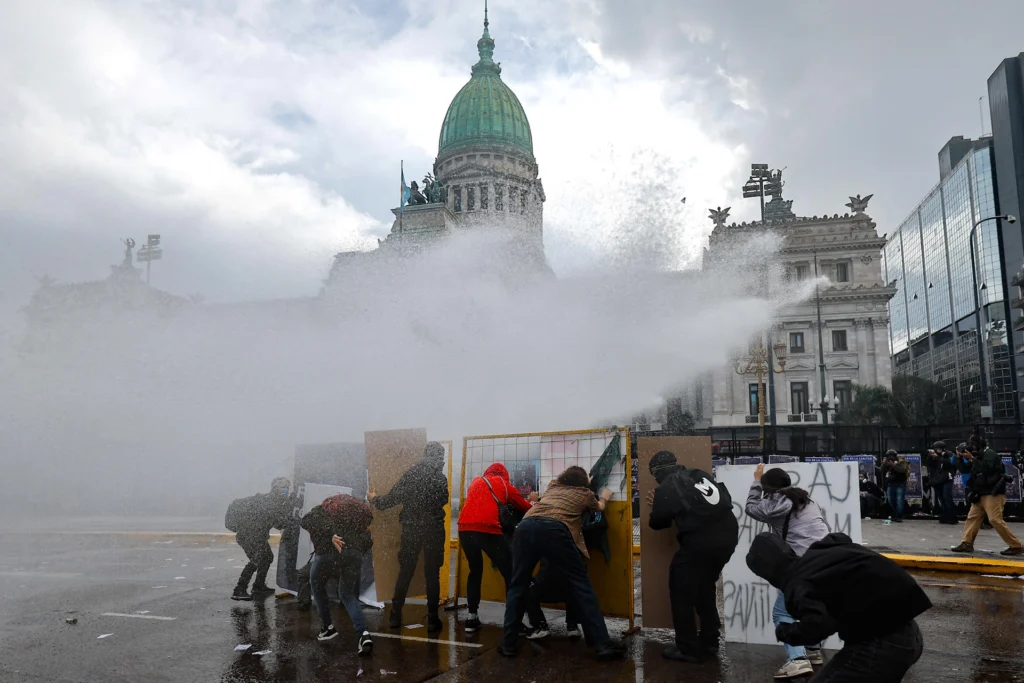
Human rights bodies filed legal complaints following the disproportionate police action against university demonstrations in Buenos Aires. Photo: EFE.

Argentina’s Provincial Commission for Memory (CPM, in Spanish) filed a criminal complaint Monday against national government officials over the police operation that left more than 550 people injured during the fifth federal university march in Buenos Aires.


The complaint, submitted to the Federal Court led by Judge Sebastián Ramos, calls for an investigation into both the officers who took part in the operation and the political authorities who ordered the security deployment during the day of protest.

A report prepared by the autonomous body found that the police intervention stretched on for more than three hours.

RELATED: Repression at Argentina’s University March: Over 30 Detained

Security forces fired rubber bullets horizontally at the bodies of demonstrators, deployed water cannons at high pressure and launched more than 120 tear gas grenades in what the report described as a disproportionate use of force.

The formal filing also stated that the attacks reached medical assistance teams, press workers and human rights observers. At the same time, the National Committee for the Prevention of Torture monitored the street actions and warned of an abusive use of force that led to the detention of four adults and two teenagers.

Over 550 Injured

The figure of more than 550 people affected or injured gives the operation a scale recorded in Argentine protests. The Argentine Provincial Commission for Memory report documented the trajectory of the rubber bullets, the intensity of the water cannons and the volume of chemical agents deployed against a crowd that included students, teachers and ordinary citizens.

The fifth federal university march brought thousands of people into the streets across the country to demand that President Javier Milei enforce the University Financing Law. The legislation, approved by the National Congress and reaffirmed after being vetoed by the executive branch, has the backing of the judiciary to guarantee the budget of the public education system.

Human rights organizations demanded the urgent delimitation of criminal and institutional responsibilities in the face of the reported escalation of violence. Torture prevention bodies stressed that the use of less lethal weapons requires strict protocols to protect the integrity of those exercising their constitutional right to protest.

Judicial Action Advances

The advance of the legal actions keeps the conduct of the Ministry of Security and the management of social conflict in the Argentine capital at the center of national debate. The complaint before Judge Ramos seeks to establish who ordered the deployment and who allowed the operation to continue for hours despite the growing number of injuries.

University communities announced that they will maintain institutional and street actions to demand the budget allocation that the law grants to higher education institutions. The protest movement shows no sign of retreat, even as the judicial process begins to examine the events of the march.

The Provincial Commission for Memory (CPM, in Spanish), an autonomous body with a long record of documenting state violence, placed the operation within a broader pattern of concern. Its report argues that the use of force crossed the line separating legitimate public order maintenance from punishment aimed at those who dissent.

The case now rests with the Federal Court, which must decide whether to summon the security agents and the political officials identified in the filing. The outcome will shape how Argentina addresses the use of force against social protest, a question that has divided the country since the march left its toll of injured demonstrators on the streets of the capital.

  •  

Fired OpenAI engineer accused of bugging office won't be released from jail

The Phillip Burton Federal Building and US courthouse in San Francisco.
San Francisco's federal courthouse held the detention hearing for Abdulrahman Alfozan, the arrested and fired OpenAI engineer, on Monday.

Brennan Smart/Bloomberg via Getty Images

  • Abdulrahman Alfozan will stay jailed pre-trial, a San Francisco judge decided Monday.
  • The engineer is accused of bugging a conference room at OpenAI, and he has been fired.
  • Alfozan posed a risk of non-appearance, the judge said, after discussing his ties to Saudi Arabia.

A former OpenAI engineer accused of bugging the AI startup's office was denied release by a San Francisco judge on Monday, meaning he'll have to mount his defense from jail.

The Justice Department arrested Abdulrahman Alfozan on October 9 and charged him with using or attempting to use a device to intercept oral communications. He's accused of placing a recording device behind a television in an OpenAI conference room — an FBI affidavit includes photos of the device wrapped in toilet paper, and a man they say is Alfozan peering behind the TV.

On Monday, the engineer wore a yellow surgical mask and a jail-issued orange sweatshirt to the San Francisco courthouse. Magistrate Judge Alex G. Tse prodded Alfozan's legal team about the risk that he might not appear for a future court hearing.

Tse said that Alfozan's wife and son had traveled to Saudi Arabia with no plans to return, and went back and forth with Yasin about a one-way ticket that Alfozan had previously booked to the country. Tse said that Saudi Arabia and the US do not have an extradition agreement, and expressed skepticism that he had sufficient ties to the Bay Area to prevent his departure.

William Pernik, Alfozan's attorney, argued that, rather than being detained, Alfozan should be fitted with an ankle monitor, ordered to stay home, and have limits placed on his use of technology. The lawyer also said Alfozan is willing to put up "essentially all the money his family has" as bond, including a roughly $1 million investment account.

"Everything this man has, he's willing to surrender, and say, 'I'm not going anywhere,'" Pernik said.

Pernik and Nas Yasin, another of Alfozan's attorneys, cited his coming naturalization interview as evidence of his local ties.

"He was weeks away from achieving every immigrant's dream in this country," Pernik said.

Yasin told Tse that she learned Alfozan's wife had obtained a short-term visitor visa to return to the US, to help improve her husband's case for ties to the Bay Area.

Tse also asked Alfozan's legal team a slew of questions about his relationship with Saudi Arabia, including a commitment by the Saudi consulate to pay his bond and support his legal effort.

Nick Parker, an assistant US attorney, appeared for the prosecution. He argued that the threat of forfeiting a $1 million bond wouldn't be enough to convince Alfozan to return if he made it out of the US, because he might be able to earn more money in Saudi Arabia.

"There is a real threat here that once he leaves, the case is over," Tse responded.

The judge scheduled the case's next hearing for early November.

OpenAI called the recording device "sophisticated" when the arrest went public, though it said it hadn't found signs that he'd taken AI model weights, source code, or customer information. OpenAI fired Alfozan.

Alfozan's charge carries a maximum penalty of 5 years. Pernik said in a statement last week that the allegations "appear wholly out of character for him."

Alfozan, 35, has a green card that makes him a lawful permanent resident of the United States. He attended MIT, then worked at Facebook (now Meta) from 2017 to 2023. After a stint at the engineering startup Nash Technologies, Alfozan joined OpenAI in 2025.

FBI agents have already taken Alfozan's Saudi passport.

Have a tip? Contact this reporter via email at scouncil@businessinsider.com, or over text, Signal, Telegram, or WhatsApp at 415-757-8198. Use a personal email address, a nonwork WiFi network, and a nonwork device; here's our guide to sharing information securely.

Read the original article on Business Insider

  •  

Israel keeps Palestinian journalist Bushra al-Tawil in isolation for 46 days

Israel continues to imprison her without charge or trial. Her lawyers have not been able to visit her. Her prolonged solitary confinement is a violation of international standards – Supporters ask the Red Cross to urgently intervene

  •  

Ukraine's EU integration chief slams proposal to pick chief prosecutor in open contest

The EU has demanded a reform of Ukraine's notoriously corrupt and politicized prosecution service and called for making the procedure for picking the prosecutor general less political and more merit-based. Meanwhile, anti-corruption activists and pro-reform lawmakers have accused the Ukrainian authorities of sabotaging rule of law reforms and resisting the demand for depoliticizing the Prosecutor General's Office.

  •  

Prosecutors say ex-OpenAI employee accused of planting recording device received 'what appears to be considerable support' from the Saudi government

Security footage of Abdulrahman Alfozan, 35, in OpenAI executive conference room
A man described as Abdulrahman Alfozan, a Saudi national employed as an OpenAI engineer, looks behind a television where a recording device has been placed in a conference room at OpenAI.

DOJ/Reuters

  • Prosecutors say an ex-OpenAI employee accused of planting a recording device appears to have received support from the Saudi government.
  • A federal magistrate judge ruled on Monday that Abdulrahman Alfozan should remain in custody.
  • Prosecutors said that Alfozan frequently communicated with a member of the Saudi Royal Family.

Federal prosecutors say that a former OpenAI employee accused of planting a recording device received "what appears to be considerable support from" the Saudi government.

Prosecutors made the disclosure in a motion to keep Abdulrahman Alfozan, a Saudi national and former OpenAI employee, in custody pending trial. US Magistrate Judge Alex G. Tse ruled on Monday that Alfozan should remain in custody.

Alfozan had been in contact as recently as October 5 with an unnamed member of the Saudi Royal Family, whom he frequently communicated with on WhatsApp over the last two years, prosecutors said.

"In May 2026, the individual told the defendant, 'Saudi needs you more then [sic] the US!' to which the defendant responded '100,"' indicating he agreed," prosecutors wrote.

The FBI arrested Alfozan on October 9. According to a criminal complaint, Alfozan planted a recording device in the back of a TV in an OpenAI conference room where sensitive discussions take place. OpenAI's security cameras caught Alfozan near the conference room on multiple occasions, despite his lack of authorization to the high-level meetings held there, prosecutors said.

"In the days surrounding the time period that the device was installed, OpenAI executives met with government officials in that very room," prosecutors wrote in a filing on Sunday. "Defendant's conduct could pose a danger to the national security of the United States."

The complaint included a photo of what prosecutors said was Alfozan peering behind the TV where the recording device was found.

In addition to his WhatsApp messaging, prosecutors wrote that an unnamed member of the Saudi military booked a flight for Alfozan's wife and son on October 11, despite an existing reservation for an October 12 flight, which prosecutors said was "paid for by the Saudi government."

Prosecutors also disclosed more information about Alfozan's alleged efforts to plant the device. According to the filing, Alfozan's iPhone had photos of "what appear to be the input/output panels on televisions and other electronic devices in various locations in OpenAI buildings."

Those locations, prosecutors wrote, included "another conference room where sensitive meetings frequently occurred."

Other files on the phone, including a note modified as recently as September 13, listed "Riyadh tasks" like "finding an apartment and a job for the defendant's wife, as well as obtaining an ID and a Saudi passport for his son," the filing said.

Another note titled "OpenAI leave" suggested that Alfozan "was planning an '[e]arly … pick up' of the devices he had installed or intended to install and then extending his planned parental 'leave to full.,'" prosecutors wrote.

As part of their reasons for requesting that the former OpenAI engineer remain in custody, prosecutors wrote that Alfozan's wife and son left the US without him and are now in Saudi Arabia. The filing also said "both of his parents and all (or all but one) of his siblings" are in Saudi Arabia.

In a separate filing, William Pernik, Alfozan's attorney, said that the former OpenAI engineer did not pose a flight risk.

"Mr. Alfozan was made aware of OpenAI finding the device per its own filings and OpenAI's public statements, approximately eight to ten days before he was arrested," Pernik wrote. "If his intention was to flee, he would have done so at that time."

Pernik said that prosecutors' previous disclosure that Alfozan had purchased a one-way ticket to Saudi Arabia lacked context.

"Seventy percent of the airline bookings in his email since January 2021 (96 of 138) were one-way tickets," Pernik wrote.

Read the original article on Business Insider

  •  
❌