❌

Reading view

Análise: Partido Democrata tem vantagem na reta final das midterms

Uma nova pesquisa da CNN indica que o Partido Democrata tem uma vantagem de mais de 10 pontos percentuais sobre os republicanos a menos de duas semanas das eleições de meio de mandato nos Estados Unidos.

A analista de Internacional Fernanda Magnotta avalia que os dados refletem um descontentamento claro do eleitorado americano. Segundo ela, trata-se de uma eleição que referenda ou não as ações do presidente.

“É muito comum que se tratem as eleições legislativas de meio de mandato como uma espécie de termômetro, que funciona justamente para que o presidente passe por um crivo, por uma avaliação”, afirmou Magnotta durante o CNN 360º desta quarta-feira (21).

Magnotta destacou que Trump está diante de críticas contundentes, especialmente nas agendas que o elegeram em 2024.

“Ele fez campanha em basicamente três grandes temas. Ele falava em melhoria das condições econômicas, sobretudo no combate à inflação, em políticas mais duras de imigração e na garantia dos interesses dos Estados Unidos no campo internacional, sem envolver o país em ‘guerras intermináveis'”, lembrou a analista.

Segundo o levantamento, 41% dos eleitores afirmam que votarão para se opor ao presidente Donald Trump, enquanto apenas 20% pretendem votar para apoiá-lo. Outros 39% dizem que o voto não terá relação com o governo republicano.

A pesquisa também revela índices baixos de aprovação de Trump em áreas específicas. Em relação às eleições, 41% dos eleitores avaliam positivamente sua condução. Já em políticas de imigração, a aprovação é de 38%; em saúde, 34%; em política externa, 30%; em economia, 27%; e em inflação, apenas 23%.

Segundo ela, os números da pesquisa da CNN demonstram um descontentamento claro do norte-americano justamente nessas três frentes. “Presidente Trump já não é mais pedra, agora é janela”, ilustrou a analista.

Custo de vida e imigração pesam contra Trump

De acordo com Magnotta, o americano médio está muito incomodado com o custo de vida, incluindo o preço dos combustíveis, dos alimentos e da moradia. Ela ressaltou que a inflação geral nos Estados Unidos não é exatamente alta, mas ponderou:

“Quando a gente vai segmentando por grupos ou áreas em particular, em alguns casos é uma inflação bem severa. No caso da moradia, em algumas cidades chega a passar de 25%, não é algo desprezível.”

Na agenda imigratória, a analista reconheceu que houve o cumprimento de uma série de promessas, mas ponderou que boa parte da sociedade norte-americana, inclusive aqueles que apoiam medidas mais duras contra a imigração, tem visto as ações do ICE como abusivas e excessivas.

Em política externa, Magnotta apontou ainda a controvérsia em torno dos efeitos do tarifaço e o envolvimento de Trump em um conflito com o Irã, o que contraria sua postura de campanha.

Cenário favorável à oposição

Com base nos dados de popularidade, Magnotta avaliou que o cenário atual indica que Trump deve perder a maioria na Câmara dos Representantes e que há chances crescentes de perda também no Senado. No entanto, a analista foi cautelosa ao fazer previsões definitivas.

“Dá para cravar? Não dá para cravar, porque eleição é sempre assim, só acaba quando termina”, disse.

Ela destacou ainda que o elemento do comparecimento às urnas pode ser decisivo para o resultado final: “Hoje o cenário é mais favorável à oposição do que ao incumbente”, concluiu.

Os textos gerados por inteligência artificial na CNN Brasil são feitos com base nos cortes de vídeos dos jornais de sua programação. Todas as informações são apuradas e checadas por jornalistas. O texto final também passa pela revisão da equipe de jornalismo da CNN. Clique aqui para saber mais.
  •  

European Governments Move to Give Energy Companies Powers to Neutralise Hostile Drones

France, Germany, Austria and Poland are expanding or reviewing the authority of critical infrastructure operators to defend facilities against drones, raising legal and operational questions over the growing role of civilian companies in national security.

European governments are reconsidering who should be authorised to intercept hostile drones as energy companies and critical infrastructure operators confront an increasingly serious threat to electricity networks, transport systems and other essential facilities.

France has already introduced legislation permitting approved operators to deploy counter-drone systems, while Germany is reviewing similar arrangements and Austria has announced plans to extend certain protective powers to infrastructure companies.

Poland has moved further by authorising designated security units to disable or destroy drones entering restricted areas around important energy installations.

The changes reflect concerns that national police and armed forces cannot provide permanent protection for every substation, power station, railway facility or pipeline against relatively inexpensive unmanned aircraft.

France establishes a new approach

In August 2026, the French parliament approved legislation allowing authorised operators of critical infrastructure and their contractors to detect, jam and intercept drones near designated facilities.

The legislation followed a series of reported drone incursions over sensitive locations, including military installations.

Under the French approach, operators of strategically important infrastructure may eventually use approved counter-drone systems without relying exclusively on the immediate intervention of military personnel.

Potential beneficiaries include electricity operators and organisations responsible for transport infrastructure.

French authorities are testing detection equipment, electronic countermeasures and interceptor drones at Brétigny-sur-Orge, south of Paris.

The programme examines systems capable of identifying approaching aircraft, determining whether they present a threat and initiating an appropriate response.

France intends to expand the protection of sites classified as strategically important, with further deployment planned during 2027.

The initiative would introduce responsibilities traditionally associated with military or police operations into the management of civilian infrastructure.

Germany and Austria reconsider existing restrictions

Germany is examining the legal conditions under which private companies and infrastructure operators could participate in active counter-drone operations.

At present, responsibility for neutralising threatening aircraft remains primarily with the competent public authorities.

The debate has intensified following security incidents involving unmanned aircraft, including the discovery of an explosives-laden drone near a Ukrainian cargo aircraft at Leipzig/Halle airport in August.

German authorities attributed the incident to Russia, an allegation Moscow denied.

The German government’s review concerns not only the equipment that companies may possess but also whether trained security personnel should be permitted to deploy countermeasures without waiting for a separate police authorisation.

Austria announced plans in September to extend comparable powers to selected critical infrastructure operators, including major energy companies.

The government has acknowledged the practical limitations of protecting a large number of widely dispersed installations using state security personnel alone.

Poland has already established restricted drone zones around sensitive energy facilities, with designated security units authorised to intercept aircraft entering those areas under applicable national rules.

Electricity networks face particular risks

Electricity infrastructure presents a difficult security problem because essential installations are distributed across extensive geographical areas.

Transmission operators manage thousands of kilometres of high-voltage lines, while substations, transformers and switching stations connect generation facilities to consumers.

A successful attack against critical equipment can produce consequences extending well beyond the immediate site.

Large power transformers are particularly difficult to replace. Manufacturing, transporting and installing specialised equipment can require lengthy preparation, making rapid recovery uncertain after serious damage.

European utilities have traditionally concentrated on physical security, maintenance and restoring services after technical failures or accidents.

The spread of drones creates additional demands for surveillance, early warning and the ability to respond before an attack reaches its target.

Russia’s repeated strikes against Ukraine’s electricity infrastructure have demonstrated the extensive disruption that attacks on power systems can cause.

European governments are now evaluating how comparable vulnerabilities could be exploited against their own networks.

Who bears responsibility for an interception?

Giving civilian operators access to counter-drone equipment raises unresolved legal questions.

Electronic jamming can interfere with communications and navigation systems beyond the targeted aircraft. A drone brought down over an industrial or residential area could injure members of the public or damage surrounding property.

Security personnel must also determine whether an unidentified drone is hostile, operating unlawfully or simply present because of an error by its operator.

A mistaken interception could expose infrastructure companies to compensation claims and other legal consequences.

European governments must therefore establish who can authorise an intervention, which countermeasures are permitted and how responsibility is allocated when damage occurs.

There is no uniform European approach.

Some operators support expanding their protective powers, while others argue that the use of force should remain the responsibility of the state.

Finland’s national electricity transmission operator, Fingrid, has expressed reservations about transferring such authority to energy companies.

The position reflects a wider concern that infrastructure operators should concentrate on maintaining essential services rather than assuming responsibilities for armed or coercive security operations.

A growing European security market

The regulatory debate is developing alongside a rapidly expanding market for counter-drone technology.

Manufacturers are offering equipment that integrates radar, optical sensors, electronic detection and software capable of classifying possible threats.

Interceptor drones and electronic countermeasures are increasingly being designed for use around civilian infrastructure rather than exclusively on military installations.

German defence company Rheinmetall has reported growing interest from private infrastructure operators in counter-drone protection.

However, the technology is advancing faster than the legal frameworks governing its use.

The immediate challenge for European governments is to establish protective arrangements that allow rapid intervention while preserving clear accountability.

A counter-drone system can identify an approaching aircraft within seconds. Determining who is authorised to stop it remains a matter for national law.

  •  

Obama to campaign in Georgia with Ossoff, Bottoms

Former President Obama is set to campaign in Georgia with Sen. Jon Ossoff (D-Ga.) and Democratic gubernatorial candidate Keisha Lance Bottoms with less than two weeks until the midterm elections. The Democratic Party’s official social platform X account posted a graphic Wednesday announcing that the three Democrats will have a rally in Atlanta next week.…

  •  

Democrat Abdul El-Sayed: Second Amendment Protects 'Equal Rights to a Musket'

At a town hall in Midland, Michigan, on Saturday, Senate candidate Abdul El-Sayed (D) said the 2nd Amendment boils down to protecting "equal rights to a musket."

The post Democrat Abdul El-Sayed: Second Amendment Protects ‘Equal Rights to a Musket’ appeared first on Breitbart.

  •  

In Oslo, US pushes Zelenskyy toward deal with Russia again. Day later, in same city, Norway discusses arming Ukraine with more NASAMS missiles

Ukrainian President Volodymyr Zelenskyy in Oslo, on 21 October 2026. Source: Facebook/Zelenskyy

As Washington leans on Ukraine to make a deal with Russia amid its diesel agreement ahead of the US elections, its European partners are meeting to keep it armed against deadly weapons.

President Volodymyr Zelenskyy said he met Kongsberg CEO Eirik Lie and Norwegian Defense Minister Tore Sandvik in Oslo on 21 October to discuss more NASAMS air defenses, a day after meeting US presidential envoy Steve Witkoff in the same city.

Washington has spent the past two weeks easing pressure on Russia and leaning on Kyiv, with a diesel deal, throttled Starlink, and talk of cutting intelligence, while Ukraine’s European partners move in the other direction. Russia pounds Ukrainian cities almost nightly, and the Norwegian-made NASAMS is one of the systems holding that barrage off critical infrastructure.

Kongsberg opened an office in Ukraine in 2025. Its NASAMS uses the AIM-120 AMRAAM missile built by the US defense giant RTX, the same firm behind the Patriot launchers that are Ukraine’s only means of downing Russian ballistic and hypersonic missiles. The same missile is also used in F-16s.

“They effectively protect our people and critical infrastructure from Russian missile and drone attacks virtually every day,” Zelenskyy said.

He added that Ukraine is counting on additional defense support packages next month.

A European shield Ukraine wants tested this year

The visit also advanced a joint missile-defense project. Norway is actively involved in FREYJA, a European anti-ballistic missile program that Ukraine is helping to build.

“There are already first results in creating individual elements of the system. Today we determined where we can and must speed up to reach testing by the end of this year,” Zelenskyy said.

FREYJA now draws in 10 countries and is built around an interceptor missile designed to stop ballistic threats, a capability Europe largely lacks against Russia’s fastest weapons.

A push for satellites as Starlink falters

Zelenskyy also raised satellite communications amid the scandal over speed limitations on Elon Musk’s military Starlink service that disrupted a series of front-line missions.

“We discussed in detail the start of work on new satellite-communication capabilities for our soldiers,” the president said, adding that Kyiv would bring in partners able to support them.

The push comes after SpaceX throttled the StarShield military package Ukrainian drones use. Ukraine’s 7th Air Assault Corps said the connection began dropping as drones moved at speed, negatively affecting their missions.

  •  

ARTE alerta para SMS falsos da Chave Móvel Digital

Mensagens simulam comunicações legítimas da CMD para induzir cidadãos a clicar em ligações ou fornecer dados. Autoridades de cibersegurança acompanham a situação.

© dpa/picture alliance via Getty I

A Agência para a Reforma Tecnológica do Estado (ARTE) adianta que "as autoridades nacionais de cibersegurança estão a acompanhar a situação e a adotar as medidas necessárias"
  •  

Ossoff leads Collins while Jackson, Bottoms nearly tied in Georgia: Poll

A new poll found Sen. Jon Ossoff (D-Ga.) leading his GOP opponent Rep. Mike Collins (Ga.) in his reelection battle, while Republican Rick Jackson narrowly leads Democrat Keisha Lance Bottoms in the Peach State’s gubernatorial race. The Atlanta Journal-Constitution and University of Georgia poll reported 48 percent of respondents supported Ossoff’s reelection bid, 40 percent…

  •  

Booking.com under investigation by EU regulators over fake listings and scams

European Commission calls accommodation website’s approach to fraudulent listings and phishing scams as ‘absolutely substandard’

EU regulators have opened an investigation into Booking.com, alleging that the accommodation website has not done enough to protect consumers from fake listings and scams.

The European Commission, which regulates the world’s biggest tech companies operating in the EU, said Booking.com may have breached the EU’s Digital Services Act (DSA) with its “absolutely substandard” approach to tackling fraudulent listings and phishing scams, where criminals impersonate a third party to trick people to hand over money.

Continue reading...

© Photograph: Dado Ruvić/Reuters

© Photograph: Dado Ruvić/Reuters

© Photograph: Dado Ruvić/Reuters

  •  

Progress on a sore point for Ukraine and Poland: remains of over 40 Ukrainians killed by Polish WWII units found in Łasków

Human remains, likely belonging to a Ukrainian killed in 1944 in the village of Łasków, Lublin Voivodeship, Poland. October 2026. Photo: Ukrainian Institute of National Memory

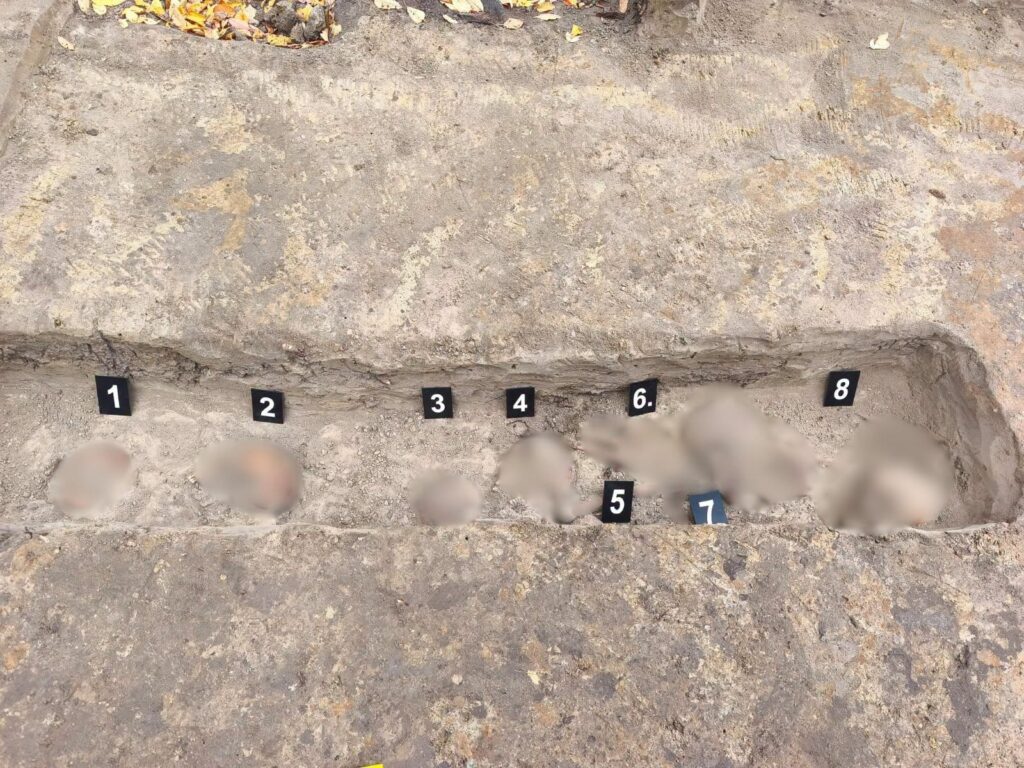
During an expedition from 2 to 16 October in the Polish village of Łasków, a Ukrainian team uncovered the remains of more than 40 Ukrainians, including women, men, and children, the Ukrainian Institute of National Memory, which commissioned the search, said on 20 October.

Ukraine and Poland disagree over how to interpret their shared history. One of the most contentious issues is the Volhynia tragedy, a series of massacres of Polish and Ukrainian civilians during World War II, the largest of which took place in Volhynia. Amid unresolved disputes over this history, Ukraine halted Polish search and exhumation work on its territory. Both sides have since resumed the work, and Łasków is the first Ukrainian search in Poland to find remains since 2016, the institute said.

During Poland’s 2025 presidential campaign, Karol Nawrocki said that unresolved historical issues could stand in the way of Ukraine's accession to the EU and NATO. The dispute is still live: on 20 October, Polish Defense Minister Władysław Kosiniak-Kamysz called on Kyiv to distance itself from the Lviv Oblast Council’s decision to declare 2027 the year of the UPA and Shukhevych. The searches, meanwhile, continue on both sides of the border.

More than 300 Ukrainians were killed in Łasków

On the final day of the investigation, specialists partially uncovered a mass grave containing the remains of eight people and documented all the findings. The victims’ ages, sexes, and causes of death will be established during exhumation work planned for spring 2027.

An expert photographs human remains, likely belonging to a Ukrainian killed in 1944 in the village of Łasków, Lublin Voivodeship, Poland. October 2026.
An expert photographs human remains, likely belonging to a Ukrainian killed in 1944 in the village of Łasków, Lublin Voivodeship, Poland. October 2026. Photo: Ukrainian Institute of National Memory

“According to witness accounts, a large number of the Ukrainian victims were buried—or, in fact, simply covered with a thin layer of soil—in hiding places, fields, and the yards of their own homes in the village of Łasków. They were buried only 10 days later by Ukrainians from the neighboring village of Smolihiv, who were then also killed and shot near the forest,” director of the Dolia memorial search center Sviatoslav Sheremeta said, according to Istorychna Pravda.

Search operations to locate the remains of Ukrainians killed in 1944 in the village of Łasków, Lublin Voivodeship, Poland. October 2026.
Search operations to locate the remains of Ukrainians killed in 1944 in the village of Łasków, Lublin Voivodeship, Poland. October 2026. Photo: Ukrainian Institute of National Memory

The Ukrainians were killed in an attack by units of the Polish Home Army (Armia Krajowa) and the Peasants’ Battalions (Bataliony Chłopskie), the institute said when the search began.

“Most of the graves are located at a depth of 40–70 centimeters from the ground surface,” Sheremeta said.

Historical records indicate that more than 300 people were killed in the Polish village of Łasków on 10 March 1944, the media outlet reported. Ukrainian and Polish historians and experts have identified 327 village residents who were killed, although some researchers estimate the death toll at around 350, the report said. Further historical research and search operations may help establish the final number of victims.

Ukraine imposed a ban on exhumations but allowed the work to resume several years later

In response to the widespread destruction of Ukrainian monuments in Poland between 2015 and 2017, and what the Ukrainian side considered an inadequate investigation into these incidents, Ukraine imposed a moratorium on search operations and the exhumation of Poles killed by Ukrainian Insurgent Army (UPA) fighters in 1943–1945, Ukrainska Pravda reported.

In January 2025, Polish Prime Minister Donald Tusk announced a “breakthrough,” saying there was a decision on the first exhumations of Polish victims of the UPA.

By April 2025, exhumations of Polish residents killed in 1945 had begun in Ukraine’s Ternopil Oblast. A joint Polish-Ukrainian team of experts took part in the work.

Searches in Ukraine have found mostly Polish soldiers from 1939, while Ukraine waits for permits in Poland

Most of the Polish remains recovered in Ukraine since the moratorium ended belong to soldiers killed fighting the Germans in September 1939, not to victims of the Volhynia killings. In Lviv, searchers exhumed at least 31 soldiers at Zboiska in 2025 and found 113 more at Holosko this autumn.

Of the 1943–1945 victims, joint Polish-Ukrainian teams have recovered 42 in Puzhnyky, Ternopil Oblast, which were reburied in September 2025, and 55 in Ostrówki and Wola Ostrowiecka in Volyn Oblast, which they found this summer. Polish historians attribute the Puzhnyky killings to a UPA unit. Ukraine’s Institute of National Memory first described the dead as victims of Soviet repression, then changed the wording to victims who died in 1945 after Poland’s Foreign Ministry objected. A search in Uhly, Rivne Oblast, this spring found no mass grave.

Ukraine’s first search in Poland in years, for UPA fighters in Jureczkowa in autumn 2025, found no remains. The Ukrainian team waited more than a year for permission to work in Łasków, which came on 31 August. Its requests for Sahryń, where Home Army units killed between 200 and 800 people on the same day, according to PAP, and for Przemyśl were still pending in July, with Poland’s Institute of National Remembrance asking for more documents.

The history row reaches the search permits

Kyiv has said it will keep issuing permits for Polish searches despite the tensions. In August, before the Łasków permit came through, Ukraine’s ambassador to Poland, Vasyl Bodnar, said Ukraine could not get a single permit to search for its dead in Poland while it kept approving Polish work in Ukraine.

Meanwhile, Warsaw has kept raising the stakes over how Ukraine remembers the UPA. Nawrocki stripped President Volodymyr Zelenskyy of Poland’s Order of the White Eagle in June after Zelenskyy named a military unit after the “Heroes of the UPA.” In July, the head of Nawrocki’s chancellery, Zbigniew Bogucki, spoke in the Sejm of genocide “in Volhynia and Eastern Lesser Poland,” using the interwar Polish name for what is now western Ukraine. In August, Deputy Foreign Minister Marcin Bosacki warned that placing Stepan Bandera or Roman Shukhevych in Ukraine’s National Pantheon would damage relations with Poland and Europe.

Nawrocki has also sent the Sejm a bill that would punish promoting the ideology of the OUN and the UPA, which had its first reading on 3 July. Polish members of the European Parliament proposed adding the Volhynia tragedy and the UPA to the parliament’s report on Ukraine’s progress toward EU membership.

The two sides also disagree on the numbers the exhumations are meant to help settle. Polish estimates put the number of Poles killed in Volhynia and Eastern Galicia at about 100,000. Ukraine’s Institute of National Memory counts about 30,000 Polish and 10,000 Ukrainian victims identified so far.

  •  

Sentimento anti-Trump beneficia democratas, aponta pesquisa

Uma pesquisa da CNN Internacional revelou que o sentimento anti-Trump entre os eleitores americanos ampliou significativamente a vantagem dos democratas nas eleições de meio de mandato, previstas para novembro.

O levantamento, que considera apenas eleitores registrados para votar, aponta que 49% dos entrevistados preferem o candidato democrata de seu distrito, contra apenas 39% que optam pelo republicano.

Essa diferença de 10 pontos percentuais representa a maior vantagem democrata desde o início do levantamento, que remonta ao período anterior às eleições de 2020. O principal motor desse resultado é a insatisfação com a economia e um forte desejo de mudança por parte dos americanos.

Desejo de mudança e insatisfação econômica

A pesquisa indica que 8 em cada 10 eleitores enxergam as eleições de meio de mandato como uma oportunidade de mudar os rumos de Washington. Além disso, 6 em cada 10 afirmam que o voto servirá como uma mensagem direta sobre a gestão atual.

Esses números refletem um clima de descontentamento generalizado com as políticas econômicas em vigor. Os preços elevados de alimentos, moradia e combustível figuram entre os principais fatores de insatisfação.

A gasolina, que estava abaixo dos US$ 3 por galão antes do início do conflito no Irã, passou a ser comercializada acima dos US$ 4, agravando ainda mais o sentimento negativo da população. Quase 7 em cada 10 americanos consideram que Donald Trump fez menos do que deveria para reduzir os preços.

Aprovação de Trump atinge mínima histórica

A aprovação de Donald Trump chegou a 32%, o menor índice já registrado nessa pesquisa. O levantamento mostra que ele não conta com a aprovação da maioria dos eleitores em nenhum dos aspectos avaliados. O único item em que a taxa de aprovação se mostrou ligeiramente superior foi na condução de assuntos ligados à votação e às eleições, com 41%.

Em relação à economia, apenas 27% aprovam a gestão de Trump, enquanto somente 23% avaliam positivamente sua atuação frente à inflação. Dois terços dos americanos afirmam que as políticas do presidente pioraram as condições econômicas do país — avaliação que inclui aproximadamente um terço dos próprios eleitores republicanos.

Eleitores independentes inclinam-se aos democratas

Um dado considerado especialmente relevante para as eleições de meio de mandato é a intenção de voto dos eleitores independentes, que costuma refletir o sentimento em relação ao partido no poder.

Entre esse grupo, 44% declaram preferência pelos democratas para o Congresso, contra apenas 29% que optam pelos republicanos. O resultado reforça a tendência apontada pela pesquisa de um ambiente eleitoral desfavorável para o campo republicano.

Os textos gerados por inteligência artificial na CNN Brasil são feitos com base nos cortes de vídeos dos jornais de sua programação. Todas as informações são apuradas e checadas por jornalistas. O texto final também passa pela revisão da equipe de jornalismo da CNN. Clique aqui para saber mais.
  •  

Trump approval at new lows in polling days before midterms

President Trump’s approval ratings have hit new lows shortly before this year’s midterms, according to fresh polls from The New York Times/Siena University and CNN. In the Times/Siena poll, 36 percent of respondents said they either “strongly approve” or “somewhat approve” of Trump’s job performance, while another 59 percent said they either “somewhat disapprove” or…

  •  

UK cinemas report ‘bonkers’ demand for documentary You Can See Everything

Tickets for film about Theranos founder Elizabeth Holmes said to be selling out after $15m opening weekend in the US

It is the film everyone seems to be talking about, spawning memes and fuelling feverish online debate about its subject, the disgraced Theranos founder Elizabeth Holmes.

Now, a month before Nathan Fielder’s documentary You Can See Everything reaches UK cinemas, tickets for screenings are already selling out after its remarkable $15m (£11.3m) opening weekend in the US.

Continue reading...

© Photograph: A24/AP

© Photograph: A24/AP

© Photograph: A24/AP

  •  

TikTok is shifting advertising to YouTube after Meta says 'no thanks'

Mark Zuckerberg (Meta) and Shou Zi Chew (TikTok)
Mark Zuckerberg's Meta has blocked Shou Zi Chew's company, TikTok, from advertising in some markets.

Finn Gomez/Getty Images; Shawn Thew-Pool/Getty Images

  • TikTok is moving on quickly after losing access to Meta's ads platform in some markets.
  • It's shifted ad spend to YouTube, Pinterest, and mobile-app networks, according to Sensor Tower.
  • TikTok was a prominent ad spender on Meta before its ousting on October 8.

TikTok's message to Meta: If you won't take our ad dollars, your competitors will.

Meta took a bold stance this month by blocking ByteDance, TikTok's parent company, from running ads on Meta apps in some markets. Why? Well, Meta's answer was pretty straightforward. It didn't want to "run ads from a competitor whose goal is to pull people off our apps."

TikTok is now redirecting that ad spend elsewhere.

Since the ban went into effect on October 8, TikTok has shifted its ad budgets to other platforms like YouTube and Pinterest, according to allocation estimates provided to CMO Insider by the analytics firm Sensor Tower.

The share of TikTok's ad spend that went to YouTube rose to 17% between October 9 and October 16, up from 9% in the first week of October. Meanwhile, its ad spend on Pinterest grew to 9% during the same period, up from 3% in the first week of October. A majority of TikTok's spend — 58% — went to mobile-app ad networks like Google's AdMob, up from 19% at the start of October, when Meta was still an option.

Meta's move against TikTok "highlights the growing intensity of the competition across the digital landscape and across the two of them," said Kate Black, EVP of social strategy at Horizon Media. "For marketers, this really just reinforces the need to be agile and build balanced media strategies — and not having all your eggs in one basket."

Meta's TikTok ousting isn't unprecedented. Other platforms like Amazon have previously blocked competitors from running ads, while Twitter in late 2022 restricted users' ability to link to their accounts on social apps like Instagram and Mastodon, calling it "free promotion."

"Declining promotional services to a competitor is a normal business practice across industries," a Meta spokesperson said. Meta's changes will impact advertising policies in the US, Canada, Egypt, Indonesia, Japan, Thailand, and Vietnam.

For Meta, a company that pulled in $117 billion in revenue in the first half of 2026, losing one advertiser won't hurt much. Still, TikTok and ByteDance were notably prominent spenders on Meta's apps, according to Sensor Tower.

Meta will also lose ad spend from third-party marketers that link to TikTok or other ByteDance properties in their ads, further increasing its potential losses. Direct-to-consumer brands that may want to drive potential customers to TikTok Shop will miss out.

No Meta, no problem

For TikTok, losing access to Meta's more than 3 billion monthly users is a setback.

Like any social media giant, TikTok is incentivized to grow, grow, grow. Ads that target new users and drive new app downloads are part of the playbook — a strategy Meta uses to promote its own apps, like Instagram, too.

One TikTok staffer focused on user acquisition, James Gao, posted a LinkedIn callout on Sunday asking people to get in touch if they had ad inventory that could help the company meet its goals.

Horizon Media's Black said that while Meta controls the "lion's share" of social budgets, there are plenty of viable alternatives when it comes to using an ad to drive an action like an app download. Besides Google, YouTube, and Pinterest, marketers are increasingly turning to other platforms like Snapchat and Reddit, she said.

Read the original article on Business Insider
  •  

Customs dept to introduce new €2 parcel processing fee

The customs department will from November 1 introduce a new €2 processing fee for all goods arriving in Cyprus from outside the European single market, department spokesman George Constantinou said on Wednesday.

“This is not an additional duty. It is a fee for processing customs controls, which results from the broader customs reform taking place in the European Union and the adoption of the new union customs code,” he told the Cyprus News Agency.

He explained that the new fee will go hand-in-hand with the European Union’s €3 temporary customs duty on what it described as “low-value parcels” with a value of up to €150 entering Europe from outside the single market, but that the new €2 fee will apply to all parcels entering from outside the single market, regardless of value.

This, he said, is because the EU’s new customs regime requires “additional working hours, possibly additional personnel, and specialised equipment, both for the identification of dangerous products and for the analysis of the data entered into the department’s electronic import systems”.

He also said that following the introduction of the €3 duty on July 1, the number of parcels arriving in Cyprus from outside the single market has fallen by between 30 and 35 per cent, but that the number of items sent in any given parcel has increased.

Previously, he said, parcels generally contained one or two items, but now, they contain four or five.

“So, in terms of the number of items, we are approximately at the same level as we had before the imposition of the measure,” he said.

New duty raises over €1m per month

Regarding the amount raised by the new duty, he said that between €1 million and €1.5 million per month is collected, but that of that figure, around 75 per cent is “returned to the European Union”.

When the duty had been introduced in July, the European Commission explained that “every day, millions of low-value parcels enter the EU” and that “many contain products which do not meet EU safety standards or are undervalued or falsely declared to avoid customs duties”.

“At the same time, the current customs duty exemption gives non-EU sellers an unfair advantage over businesses that manufacture or sell products in the EU,” it said.

As such, it added, “the new measure will help create fairer competition for EU businesses, better protect consumers from unsafe products, tackle customs fraud, and address environmental concerns over mass shipping”.

  •  
❌