❌

Reading view

Malta Faces Renewed EU Scrutiny Nine Years After Daphne Caruana Galizia’s Murder

The European Commission has urged Malta to strengthen judicial independence, tackle corruption and improve protection for journalists, as a European Parliament debate exposes continuing disagreements over the country’s rule-of-law record.

The European Commission has called on Malta to accelerate judicial reforms and strengthen safeguards for journalists, nine years after the assassination of investigative reporter Daphne Caruana Galizia, as the European Parliament revisited concerns over corruption and institutional accountability on Wednesday, 21 October.

European Commissioner for Democracy, Justice, the Rule of Law and Consumer Protection Michael McGrath told MEPs in Strasbourg that Malta had made progress in certain areas but had yet to implement several outstanding recommendations concerning judicial independence, high-level corruption and media freedom.

The debate followed the controversial acquittal of businessman Yorgen Fenech, who had been accused of involvement in Caruana Galizia’s murder. Maltese prosecutors appealed the verdict in September, leaving the criminal proceedings subject to further judicial consideration.

Commission identifies continuing weaknesses

The European Commission’s 2026 Rule of Law Report, published in July, assessed Malta’s progress in reforming its justice system, anti-corruption institutions and protections for the media.

The report acknowledged certain improvements, including additional resources allocated to judicial and prosecutorial authorities.

However, it found that progress remained limited on several recommendations.

These include reducing delays in judicial proceedings, improving the investigation and prosecution of high-level corruption and ensuring greater judicial involvement in the appointment of the Chief Justice.

The Commission has also expressed concern about the effectiveness of existing anti-corruption arrangements.

Although investigations and prosecutions have increased in some areas, Brussels continues to seek a stronger record of final judgments in major corruption cases.

Court delays and pressure on judicial resources remain significant difficulties.

McGrath told Parliament that the Maltese authorities must continue implementing reforms to address these shortcomings.

Fenech acquittal intensifies accountability debate

Caruana Galizia was killed by a car bomb near her home in Bidnija on 16 October 2017.

The 53-year-old journalist had investigated corruption, money laundering and political connections involving prominent figures in Malta’s business and political establishment.

Her assassination prompted international condemnation, widespread demonstrations and investigations into the circumstances surrounding the killing.

Several men have subsequently been convicted for participating in the murder or supplying the explosives.

However, the criminal proceedings concerning the alleged commissioning of the assassination have remained contentious.

On 2 September 2026, a nine-member jury acquitted businessman Yorgen Fenech of complicity in the murder and criminal association. The verdict was reached by eight votes to one.

Fenech had denied ordering or financing the killing.

The acquittal prompted criticism from Caruana Galizia’s family and organisations campaigning for press freedom.

On 22 September, Malta’s Attorney General formally appealed the verdict, challenging legal decisions made during the trial.

The appeal does not overturn Fenech’s acquittal or establish criminal responsibility.

The Court of Criminal Appeal must determine whether the legal grounds presented justify further proceedings, potentially including a retrial.

The criminal case remains separate from the broader political debate over Malta’s institutional reforms.

Maltese MEPs clash in Strasbourg

Wednesday’s parliamentary debate exposed sharp disagreements between representatives of Malta’s opposition Nationalist Party and governing Labour Party.

Nationalist MEPs Peter Agius and David Casa criticised the authorities’ record on corruption and institutional accountability.

Agius argued that repeated European Commission assessments had failed to produce sufficient improvements and questioned whether Malta’s institutions were effectively addressing allegations of wrongdoing.

Casa referred to the findings of the independent public inquiry into Caruana Galizia’s assassination, which concluded in 2021 that the state had contributed to circumstances in which a climate of impunity enabled the killing.

He argued that significant recommendations arising from that inquiry remained outstanding.

Labour MEP Alex Agius Saliba rejected the criticism, maintaining that Malta had implemented reforms and that its judicial institutions should be allowed to perform their functions independently.

He pointed to the prosecution’s appeal against Fenech’s acquittal as evidence that the judicial process was continuing.

Labour MEP Thomas Bajada concentrated on the protection of journalists and the need to counter misinformation while preserving independent reporting.

The disagreements subsequently prompted a response from Maltese Prime Minister Robert Abela, who accused opposition MEPs of damaging Malta’s reputation through their interventions.

Protection of journalists remains unfinished

Media freedom featured prominently in the Commission’s concerns.

Malta has introduced legislation addressing certain abusive legal proceedings against journalists, including transposing EU protections against strategic lawsuits intended to discourage public participation.

However, the existing measures principally concern civil proceedings with cross-border implications.

The Commission has urged Malta to extend comparable protections to domestic cases.

Other concerns include journalists’ access to official information, protection from intimidation and the need for more comprehensive legislative safeguards.

McGrath indicated that the Maltese government intended to present additional media legislation in the coming weeks.

The Commission has called for consultations with journalists, media organisations and civil society before the measures are adopted.

European institutions are also examining Malta’s implementation of wider EU requirements under the European Media Freedom Act.

Further pressure for reform

The European Parliament’s proceedings form part of the continued scrutiny of Malta’s institutional record following Caruana Galizia’s assassination.

The Commission’s annual rule-of-law assessments provide a mechanism for identifying outstanding problems and monitoring governments’ responses.

However, the implementation of many recommendations remains the responsibility of national authorities.

For Malta, the immediate issues concern the government’s promised media legislation, outstanding judicial reforms and the progression of the appeal in the Fenech case.

The Commission has made clear that further improvements are required, while the Maltese government maintains that substantial institutional changes have already been introduced.

The next assessment will depend on legislative measures actually adopted, their implementation and progress through the relevant judicial proceedings.

  •  

European Parliament Approves €489 Million in Disaster Relief for Italy, Spain, Portugal and Malta

MEPs have approved emergency EU funding to help four southern European countries recover from destructive storms and flooding earlier this year, with Portugal receiving the largest allocation.

The European Parliament approved €489.15 million in financial assistance for Portugal, Spain, Italy and Malta on Wednesday, 21 October, following severe storms and flooding that damaged infrastructure and disrupted communities across southern Europe during the opening months of 2026.

The allocation from the European Union Solidarity Fund was approved by 651 votes to 17, with three abstentions. Portugal will receive the largest share, approximately €261.5 million, followed by Spain with €149.1 million, Italy with €74.9 million and Malta with €3.7 million.

The funding is intended to support recovery operations and help national authorities meet the costs of restoring essential public infrastructure and services damaged by the disasters.

Portugal receives largest allocation

Portugal’s €261.5 million allocation follows flooding and storms that affected the country during January and February.

The Portuguese authorities applied for assistance from the EU Solidarity Fund after assessing the extent of the damage and the associated costs of emergency operations and infrastructure recovery.

The funds will contribute to eligible public expenditure arising from the disasters, potentially including the restoration of transport links, damaged public facilities and other essential infrastructure.

Portugal has already received approximately €65.37 million in advance funding, according to the figures accompanying the parliamentary decision.

Spain will receive €149.1 million following destructive weather during the same period, including severe flooding in February.

The Spanish government had also requested European assistance to cover part of the expenditure associated with recovery operations.

Approximately €37.26 million of Spain’s allocation has already been paid in advance.

The two countries together account for the substantial majority of the assistance approved on Wednesday, reflecting the scale of their eligible recovery costs.

Storm Harry damages Italy and Malta

Italy and Malta will receive assistance following Storm Harry, which struck parts of the central Mediterranean in January 2026.

Italy’s allocation amounts to €74.9 million, while Malta will receive €3.7 million.

The storm caused significant disruption in affected Mediterranean areas, with heavy rainfall, strong winds and damaging sea conditions placing pressure on local infrastructure.

Italian authorities sought European support for recovery operations in the affected territories, while Malta submitted its own request following the damage sustained during the storm.

The Maltese allocation includes approximately €931,000 already made available through an advance payment.

The final assistance amounts were proposed by the European Commission after examining the applications submitted by the four governments.

The Commission’s September proposal to mobilise the EU Solidarity Fund set out the amount of assistance required for each country.

The total proposed mobilisation was €489,148,220.

How the EU Solidarity Fund works

The European Union established the Solidarity Fund in 2002 to assist member states and certain countries participating in the EU accession process following major natural disasters.

The mechanism provides financial support for public emergency and recovery expenditure rather than operating as a general insurance scheme for individuals or businesses.

Eligible expenditure can include emergency accommodation, restoring essential infrastructure, securing protective infrastructure, cleaning disaster-affected areas and protecting cultural heritage.

National authorities submit applications to the Commission, which evaluates them against the relevant eligibility requirements and financial thresholds.

Assistance depends on the assessed disaster damage and applicable regulatory criteria, rather than simply reimbursing every euro of economic loss.

The fund is financed through EU budgetary arrangements and is mobilised following the required institutional approvals.

Payments are made to the countries concerned, which remain responsible for ensuring that assistance is used in accordance with EU financial rules.

The Solidarity Fund can therefore help governments manage exceptional recovery costs, but it does not replace national budgets, private insurance or other financial arrangements.

Rising pressure on European disaster funding

The latest allocation comes against a background of increasingly frequent demands on European disaster-response mechanisms.

Southern European countries have experienced damaging floods, storms, heatwaves and wildfires in recent years, leading to repeated requests for assistance.

Recovery expenditure extends beyond immediate emergency operations. Damaged roads, bridges, coastal defences, water systems and public buildings can require prolonged reconstruction.

These costs can place considerable pressure on local authorities, particularly where a disaster affects tourism, transport or economic activity.

The EU faces the additional challenge of maintaining sufficient funds to respond to major disasters affecting several countries within a relatively short period.

Extreme weather events can also expose weaknesses in existing infrastructure, prompting governments to consider whether reconstruction should incorporate additional protection against future disasters.

However, such investments must be assessed against the eligible spending categories of the Solidarity Fund and the availability of other EU financing programmes.

Parliamentary approval and implementation

Wednesday’s vote represents parliamentary approval of the mobilisation proposed by the European Commission.

The decision concerns disasters that occurred earlier in 2026 and does not constitute a new emergency response operation.

The funds will support eligible recovery measures carried out by the national authorities in the four countries.

The payments already made to Portugal, Spain and Malta will be taken into account when the remaining assistance is disbursed.

EU authorities will retain responsibility for monitoring compliance with the relevant financial and reporting requirements.

The substantial parliamentary majority indicates broad support for assistance to the affected countries, although future disaster-funding arrangements will continue to depend on the resources available in the European budget.

For the four governments, the immediate task is to use the approved assistance to meet eligible recovery costs and restore damaged public infrastructure following the storms earlier this year.

  •  

EU Prosecutors Raid Patriots for Europe Offices in €4.3 Million Funding Investigation

European prosecutors have searched offices in Brussels and Strasbourg as an investigation into alleged misuse of parliamentary funds by the former Identity and Democracy group raises questions over financial liabilities inherited by Patriots for Europe.

European prosecutors carried out searches at the European Parliament’s offices in Brussels and Strasbourg on Wednesday, 21 October, as part of an investigation into alleged financial irregularities involving the former Identity and Democracy (ID) parliamentary group.

The investigation concerns approximately €4.33 million in European Union funds that were allegedly improperly spent during the 2019–2024 parliamentary term. The European Public Prosecutor’s Office (EPPO) confirmed that searches had taken place in connection with an ongoing inquiry into the use of EU funds by a former parliamentary group.

The premises searched are now occupied by Patriots for Europe, the European Parliament’s third-largest political group, which includes France’s National Rally, Hungary’s Fidesz, Italy’s Lega and Spain’s Vox. Patriots for Europe insists that it has no legal continuity with Identity and Democracy and denies being involved in the investigation.

Investigation into parliamentary expenditure

The European Public Prosecutor’s Office opened its investigation in July 2025 following concerns identified by the European Parliament’s financial administration about expenditure incurred by Identity and Democracy.

The former group, which dissolved following the 2024 European elections, included representatives of France’s National Rally, Italy’s Lega and Germany’s Alternative for Germany.

According to details of the parliamentary financial examination subsequently reported in France, investigators are examining approximately €3.6 million in contracts awarded to external service providers, including businesses with political connections to parties represented within the former group.

The financial examination also identified more than €700,000 in donations to organisations whose activities were allegedly unrelated to the parliamentary group’s official functions.

The authorities are examining whether parliamentary resources were used in accordance with EU financial rules, including restrictions on using public money for national party-political activities.

These are allegations under investigation, not criminal findings. The EPPO has not announced convictions arising from the current inquiry, and the individuals and organisations concerned retain the presumption of innocence.

Earlier investigative measures were conducted in France, Belgium, Spain and Italy in June 2026. Wednesday’s searches mark a further stage in the proceedings.

Can Patriots for Europe inherit the liabilities?

The investigation has opened a separate dispute over whether Patriots for Europe could be required to repay money allegedly misspent by its predecessor.

Identity and Democracy ceased to exist after the 2024 elections. Several parties previously represented in the group subsequently joined Patriots for Europe, a new parliamentary formation that also brought together Viktor Orbán’s Fidesz and Spain’s Vox.

Patriots for Europe maintains that the two groups are legally separate. Its representatives argue that the dissolution of Identity and Democracy ended that group’s institutional existence and that the present parliamentary organisation is not responsible for its predecessor’s financial affairs.

However, the European Parliament’s budgetary authorities have examined whether responsibility for outstanding liabilities can pass to a successor group.

An opinion approved by the Parliament’s Budgetary Control Committee in September considered the circumstances in which continuity between parliamentary groups might establish financial responsibility.

Such an assessment may consider whether members, administrative personnel, operational resources and other assets were transferred from one organisation to another.

The outcome could determine whether the current group is exposed to potential repayment demands, irrespective of whether its present members were personally involved in the expenditure under investigation.

No final determination of such liability has been established through Wednesday’s searches.

Political consequences in Strasbourg

The searches come at a time when Patriots for Europe has become a major political force within the European Parliament.

Its member parties have challenged EU policy on immigration, economic regulation and the distribution of powers between Brussels and national governments. National Rally and Fidesz are also influential actors in the domestic politics of France and Hungary respectively.

An investigation involving their parliamentary organisation is therefore likely to attract scrutiny beyond the immediate financial questions.

Nevertheless, the political influence of the group and the criminal investigation must be considered separately. The presence of prosecutors at parliamentary premises does not establish wrongdoing by the current group’s MEPs.

The case also raises broader questions about financial accountability within the Parliament, particularly when a political group dissolves following an election and its members establish a new organisation.

Unlike national political parties, European parliamentary groups receive funding specifically to support their legislative, administrative and political work inside the institution.

Those resources are subject to financial controls intended to prevent their diversion into activities that should be funded by national parties or other organisations.

Further proceedings

The EPPO is responsible for investigating and prosecuting offences affecting the European Union’s financial interests. It operates independently of national governments and EU political institutions.

The European Parliament has confirmed its cooperation with the authorities but has declined to comment on the substance of the continuing investigation.

Prosecutors must now assess the evidence obtained during the searches alongside financial records and material collected during previous investigative measures.

Any decision to bring criminal proceedings would depend on the evidence available and the relevant national and European legal requirements.

Separately, the Parliament will have to establish whether any recoverable funds are owed by the former group and, if so, which organisation is legally responsible for repayment.

For Patriots for Europe, the immediate issue is not only the progress of the criminal inquiry but whether the financial arrangements of a dissolved parliamentary group can create obligations for its successor.

  •  

EU prosecutors raid far-right Patriots for Europe offices in Brussels and Strasbourg over alleged misuse of parliament funds

Offices of staff in the Patriots for Europe (PfE) group were raided in France and Belgium on Wednesday (21 October).

The European Public Prosecutor’s Office (EPPO) told EUobserver that searches were carried out “as part of an ongoing investigation into the use of European funds by a former political group in the European Parliament”.

But the law enforcement body said it would not release details of the investigation for now, to avoid jeopardising the integrity of the case.

The far-right PfE group in the European Parliament, led by Jordan Bardella of the French National Rally (RN) party, posted a statement on social media claiming that on Wednesday morning, the EPPO carried out searches in administrative offices at the European Parliament premises in Brussels and Strasbourg.

“It would appear that these searches are linked to the complaint lodged against the Identity and Democracy Group (ID) dissolved in 2024,” said PfE’s X post.

This article continues, but the full version is available only to EUobserver.com subscribers. Visit account.euobserver.com/membership

  •  

MPs’ asset declarations back online after data leak

Parliament republished the asset declarations of MPs on its website on Wednesday afternoon, a day after withdrawing them over the accidental posting of material the law does not allow to be made public.

By 8.30pm, statements for 53 of the 56 MPs were online, those missing being Michalis Kounounis, Michalis Paraskevas and Demetris Souglis.

The House said on Tuesday that all former, newly elected and re-elected members had submitted the required statements, which its services would post gradually.

Parts of the statements that the legislation does not provide for publishing were then found to have been posted by mistake, and the declarations were temporarily taken down.

House president Annita Demetriou has ordered an investigation. She asked the services for a report of facts on exactly what happened and for strict compliance with all that the law requires. The issue is expected to go before the House institutions committee.

Alma MP Irene Charalambides wrote to Demetriou saying the House had breached its own legislation.

According to her letter, the site carried material the law expressly bars from publication, including personal data of spouses and reconciliation statements submitted to the tax commissioner.

The statements stayed online until late on Tuesday, despite Parliament’s announcement that they had been withdrawn.

Charalambides said the law was passed by the House “to serve transparency without sacrificing the rights of third parties”.

“The issue is not technical. It is a question of accountability,” she wrote, adding that “a simple apology would not close the matter”.

Disy MP George Pamboridis raised the prospect of criminal liability, saying the Attorney General’s office should prosecute if the data was found to breach the law, and called the presentation of declarations “populism” that “feeds gossip and nothing more”.

The Personal Data Protection Authority has asked for the disputed data and links to be removed from websites where they remain accessible.

It is awaiting formal notification of the breach under Article 33 of the General Data Protection Regulation, which requires this without undue delay and, where feasible, within 72 hours.

The republished statements include those of the party leaders, with Demetriou’s declared net worth being €239,550 as of 4 June 2026, with real estate worth €222,500, deposits of €133,100 and four loans totalling €144,050.

Akel secretary general Stefanos Stefanou declared €116,488, while Elam president Christos Christou declared €52,345.

Diko president Nicolas Papadopoulos declared €958,124, mostly in property received through inheritance.

Alma leader Odysseas Michaelides declared €212,783, including 22 inherited properties declared at zero value, among them property and plots now in the occupied north.

  •  

Precedent created as opposition forces emergency debate on housing crisis

AC

The housing crisis was debated in parliament this afternoon after the opposition joined forces to overturn the decision of the president of the Assembly of the Republic who rejected two

The post Precedent created as opposition forces emergency debate on housing crisis appeared first on Portugal Resident.

  •  

Europe’s Budget Battle Is Becoming a Test of Its Global Ambitions


Europe wants cheaper energy, stronger industries, secure borders and the capacity to sustain Ukraine. Its budget negotiations are exposing the difficulty of paying for those ambitions while protecting established spending programmes and containing national contributions.

Wednesday’s European Parliament debate on the October EU summit brought that contradiction into focus. The dispute over the 2028–2034 Multiannual Financial Framework is becoming a test of whether Europe can translate geopolitical urgency into durable financial commitments.

According to Parliament’s account of the debate, European Council President António Costa wants agreement before the year’s end. He advocated an ambitious budget while keeping national contributions reasonable, alongside progress on new EU revenue sources.

Those objectives are politically attractive. Reconciling them will require difficult choices over spending, taxation and the distribution of authority.

MEPs challenged the assumption that the Union can keep expanding its responsibilities without providing additional resources. Speakers identified support for Ukraine, industrial competitiveness, agriculture, regional development and household living costs among competing priorities.

Their argument has force. A budget negotiated around yesterday’s compromises risks leaving Europe poorly equipped for tomorrow’s threats. Yet calls for ambition become less persuasive when they avoid specifying which programmes deliver measurable European benefits.

The emerging distribution of cuts illustrates the problem. As EU Today previously reported, the Irish presidency’s compromise proposed reducing the Commission’s plans by approximately €141 billion, with competitiveness and security facing proportionately deeper reductions than agriculture and cohesion spending.

That creates an uncomfortable possibility: the policies most closely associated with Europe’s strategic renewal could become bargaining chips in negotiations dominated by established beneficiaries.

Protecting farmers and poorer regions has clear economic and political justification. Nevertheless, preserving familiar allocations while squeezing newer priorities would undermine leaders’ repeated promises to strengthen European independence.

Energy offers perhaps the clearest example of why spending decisions and structural reform must advance together.

Commission President Ursula von der Leyen told MEPs that dependence on imported fossil fuels and the absence of a genuine European energy union were weakening Europe. Costa emphasised affordable production and modernised electricity grids.

The implication is significant. Industrial subsidies cannot indefinitely compensate for an energy system that leaves European manufacturers facing persistently high costs. Cross-border connections, infrastructure investment and better market integration therefore belong at the centre of competitiveness policy.

Von der Leyen also pressed governments to complete the single market and avoid making European rules more complicated through national implementation. Her argument highlights a limitation of the budget debate: additional money cannot, by itself, remove regulatory fragmentation.

The same distinction applies to China. The Commission president described heavily subsidised Chinese competitors and promised action on dependencies, supply chains and market access. Such measures require coherent enforcement and political resolve alongside investment.

Ukraine adds a security imperative that cannot readily be postponed. Costa linked Ukrainian and European security, while MEPs warned about the consequences of weakening support. Long-term commitments require predictable financing rather than recurring emergency bargains.

But the budget dispute also concerns who controls the money.

As EU Today’s reporting on regional concerns explained, local leaders fear that restructuring could concentrate investment decisions in national capitals, weakening regional influence and potentially widening disparities.

That warning deserves attention. A larger European budget would not automatically produce more balanced development. Allocation rules, accountability and local participation will help determine whether spending strengthens cohesion or reinforces existing advantages.

New revenue sources could ease pressure on national contributions, but they cannot make financing politically painless. Costs ultimately fall somewhere, and governments must explain the distribution honestly.

The central challenge is therefore broader than securing agreement on a headline figure. Europe needs a settlement that protects essential commitments, finances credible common priorities and demonstrates results.

MEPs are right to demand resources consistent with Europe’s responsibilities. Governments are entitled to demand discipline. The failure would be a compromise that satisfies neither requirement: expensive enough to provoke domestic opposition, yet too fragmented to provide the strategic capacity Europe’s leaders insist is indispensable.

Main Image: Denis LOMME: © European Union 2025 – Source : EP
  •  

European Parliament vice president launches hunger strike demanding a truce and evacuation for Russian-occupied Oleshky

european parliament vice president launches hunger strike demanding truce evacuation russian-occupied oleshky · post pina picierno speaks during plenary debate strasbourg 6 2026 20261006_ep-211404g_vz2_pst_079-preview ukraine news ukrainian reports

European Parliament Vice President Pina Picierno has announced a hunger strike to draw international attention to the humanitarian disaster in Russian-occupied Oleshky in Ukraine’s Kherson Oblast, she wrote on X on 20 October. The Italian lawmaker called on associations, citizens, and institutions to join her and demand a humanitarian truce, food and medicine for residents, and safe evacuation for those who want to leave.

Russia has occupied the left bank of the Dnipro in Kherson Oblast since 2022. Its forces have cut Oleshky off, leaving its remaining residents short of food and medicine, Ukrainian officials and UN monitors say. Oleshky had about 24,000 residents before the full-scale invasion. About 1,700 remain, including 47 children, Danielle Bell, head of the UN Human Rights Monitoring Mission in Ukraine, said. Picierno’s protest adds to growing international pressure after Pope Leo XIV asked Russian leader Vladimir Putin for a truce to help the town.

“This battle cannot be mine alone”

In Oleshky, thousands of people are trapped in territory occupied by the Russian army, without regular access to food and medicine, Picierno wrote. Mined areas make escape extremely dangerous, she added.

“Those who stay risk dying of hunger, those who try to leave risk their lives,” she wrote. “To draw international attention to this emergency, I have announced a hunger strike. But this battle cannot be mine alone.”

She said the campaign is meant to support the efforts of Pope Leo XIV and others trying to avert a humanitarian tragedy. By the morning of 21 October, 277 people had joined the initiative, Liga reported.

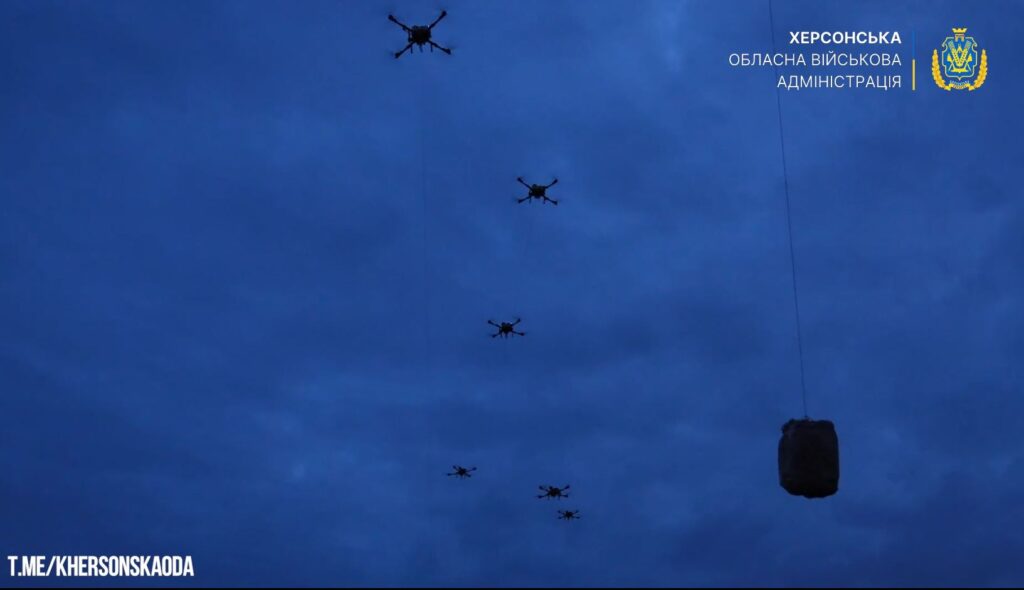
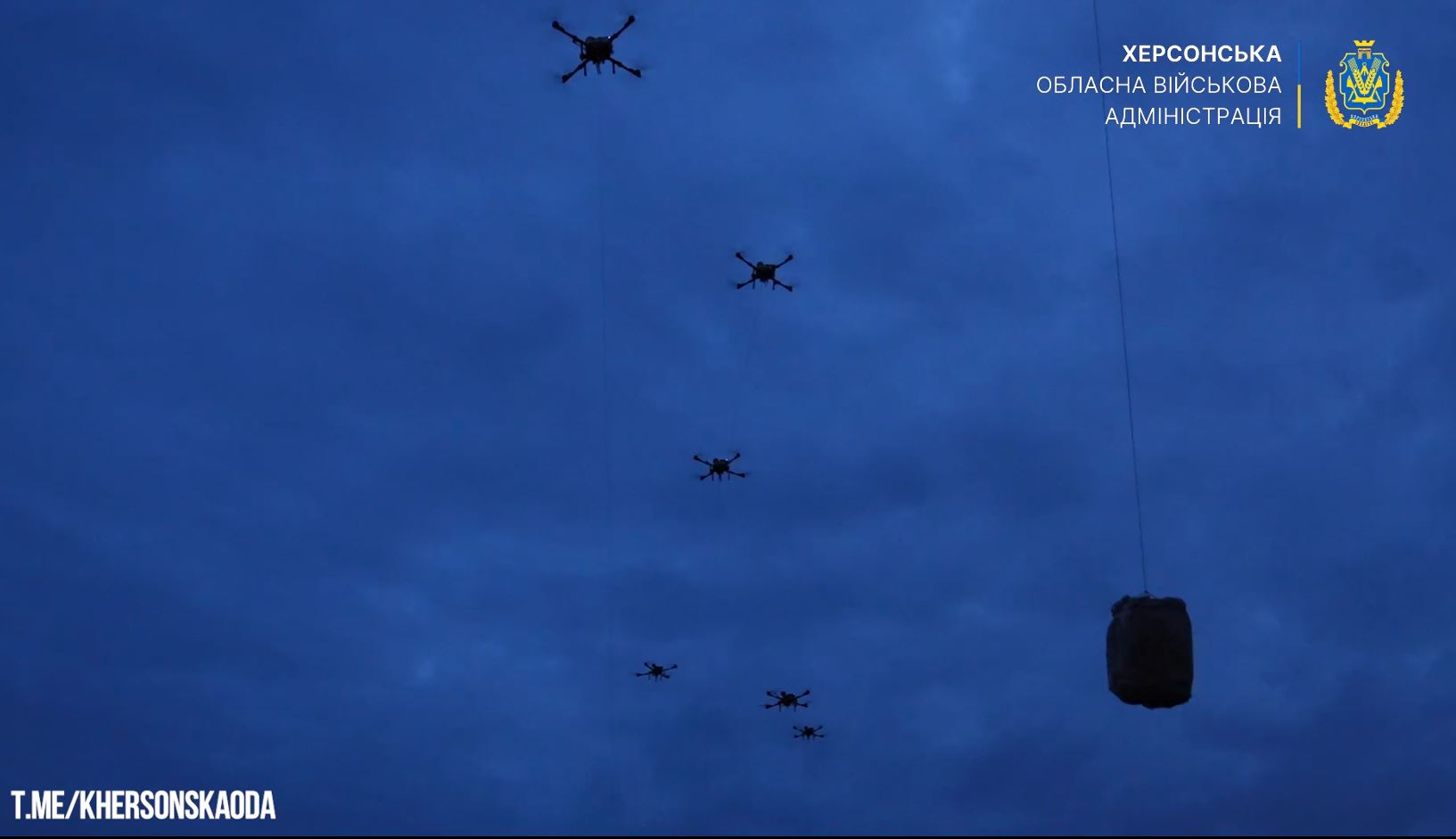
Drones carry food packages across the Dnipro to starving residents of Russian-occupied Oleshky, Kherson Oblast, September 2026.
Drones carry food packages across the Dnipro to starving residents of Russian-occupied Oleshky, Kherson Oblast, September 2026. Screenshot: Kherson Oblast Military Administration via Telegram

Picierno, who left Italy’s Democratic Party in June and joined the Renew Europe group, has backed military aid to Ukraine, tougher sanctions on Russia, and Ukraine’s bid to join the EU, according to Liga.

A town Kyiv calls a “death trap”

On 16 October, Pope Leo XIV expressed deep concern to Putin about the situation in Oleshky. He asked for a truce so that food and medical aid could be delivered and civilians could leave voluntarily and safely.

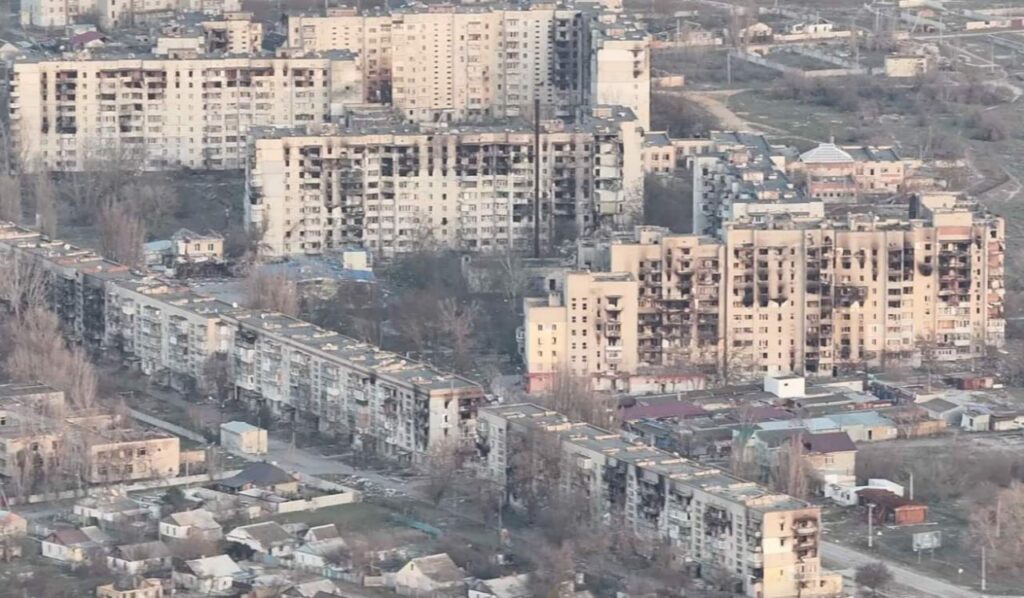
Oleshky, Kherson Oblast, has been under Russian occupation since 2022, following Russia’s capture of the city during the initial phase of its full-scale invasion of Ukraine.
Oleshky, Kherson Oblast, has been under Russian occupation since 2022, following Russia’s capture of the city during the initial phase of its full-scale invasion of Ukraine. Photo: Dmytro Lubinets

A day later, Ukraine’s Foreign Minister Andrii Sybiha urged the UN and the International Committee of the Red Cross to help evacuate residents.

“Russians are trying to turn the Ukrainian town of Oleshky into a death trap,” Sybiha wrote. “Dozens of bodies lie in the streets or in homes, as Russians forbid residents from burying them.”

Ukraine has flown tons of food into the town by drone. Russian troops seize some of the parcels and accuse the people who receive them of cooperating with Ukraine, local officials say. A resident said eggs there cost nearly 20 times the US price.

Drones carry food packages across the Dnipro to starving residents of Russian-occupied Oleshky, Kherson Oblast, September 2026.
Explore further

Russia holds 2,000 people hostage in Oleshky without food or water—Ukraine flew 4,000 kg of food to locals across the Dnipro

Evacuation talks “moved forward”

Talks with Russia on a ceasefire and evacuation are at the stage of “agreeing the final details,” Ukraine’s human rights ombudsman Dmytro Lubinets said on 18 October. He estimated that about 6,000 civilians, including up to 200 children, remain in Oleshky and six nearby settlements. He gave no timeline.

On 20 October, President of Ukraine Volodymyr Zelenskyy said Ukraine was doing everything it could to help people in Oleshky, calling the situation there “simply terrible.”

  •  

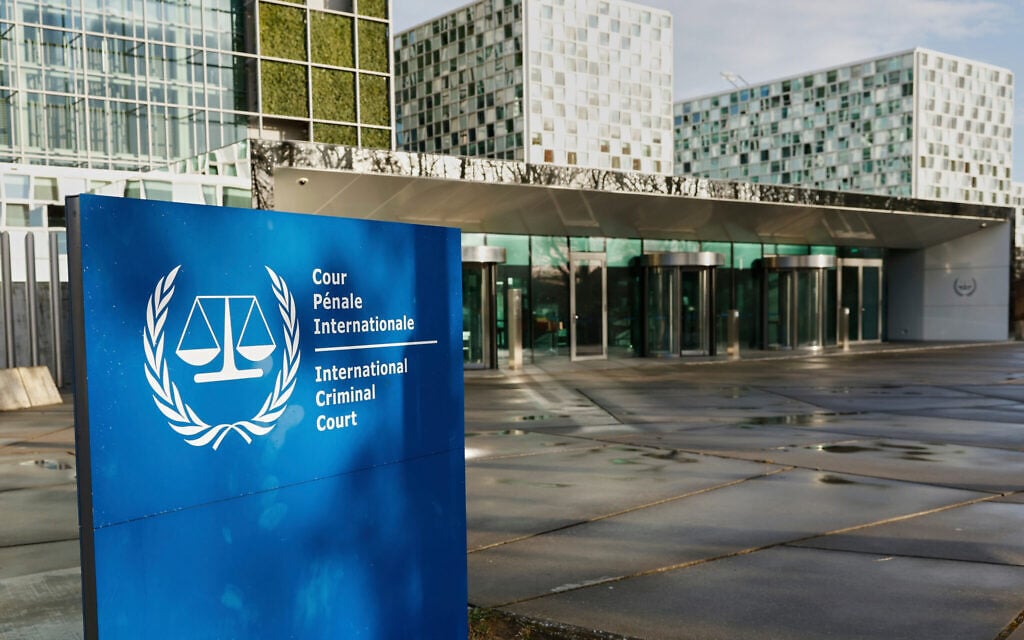
EU Parliament Backs International Criminal Court in The Face Of Trump’s Sanctions

European People’s Party, Social Democrats, Liberals, Greens, and the Left agreed on the need for a firm response.

On Tuesday, all political groups in the European Parliament, except the far right, expressed support for the International Criminal Court (ICC) in the face of recent sanctions and pressure from U.S. President Donald Trump.

RELATED:

Trump Revives Election Fraud Rhetoric Ahead of Key Midterm Elections

During a debate in the European Parliament, Kaja Kallas, the European Union (EU) High Representative for Foreign Affairs, warned that the measures adopted by the United States jeopardize the overall functioning of the international court.

Kallas noted that the six-month period during which certain operations will continue provides an opportunity to attempt a diplomatic solution and assess the legal implications of the sanctions.

The EU’s top diplomat also stated that EU member states must work together to ensure that the ICC can continue to function both at its headquarters and in the various locations where it conducts investigations.

Mark Carney just got a standing ovation from European Parliament after he takes a stand against Trump.

The world doesn’t respect us anymore. The world is partnering against us.

America first means America alone. pic.twitter.com/6NgB8H5UtK

— Brian Krassenstein (@krassenstein) September 17, 2026

The EU official acknowledged that the European Union can do more to protect the court and recalled that the leaders of the 27 member states recently called for new initiatives aimed at mitigating the impact of the U.S. measures.

One of the main demands of the MEPs was the activation of the so-called blocking statute, a mechanism that would prevent European companies and operators from having to comply with sanctions imposed by third countries when these sanctions contravene international law.

Representatives from the European People’s Party, Social Democrats, Liberals, Greens, and the Left agreed on the need for a firm response from Brussels to protect the ICC and preserve its independence from external pressures.

Venezuelan Acting President Delcy Rodriguez visited the International Italian-Latin American Organization (IILA) headquarters in Rome to reaffirm Venezuela’s commitment to multilateral diplomacy and to cooperation between Europe and Latin America. She met with IILA Secretary… pic.twitter.com/PqQIc69RFZ

— teleSUR English (@telesurenglish) October 13, 2026

teleSUR: JP

Source: EFE

  •  

MEPs push to use EU regional funds for affordable housing and climate‑proofing cities

The European Parliament has called for more spending to build affordable houses — using funds for regional development that currently make up a third of the EU budget.

Cohesion funds should be used to protect the ‘right to stay’ in rural areas or in small cities, a principle that the parliament wants to write into the new budget legislation.

Peripheral regions often face depopulation due to few job opportunities, according to a parliamentary non-binding report passed with 601 votes in favour, 20 against, and 36 abstentions on Tuesday (20 October).

MEPs are also calling for strong cohesion funds that would allow cities to better prepare for climate emergencies and provide a budget for additional investments in housing.

Cohesion funds, which account for a total of €48.03bn in the existing 2021-2027 EU budget, usually finance infrastructure projects, like bridges, roads, or railways in countries with a lower-than-average per capita gross national income.

The commission proposed significant cuts to reduce regional funds in the next multi-annual budget, set to cover 2028-34, but a group of 16 member states, often benefitting from the funding, opposed the reduction.

Regional development plays a key role in European integration since it is the “only instrument which can unite all of us,” and should not be reduced in the next EU budget, said Left Lithuanian MEP Vytenis Povilas Andriukaitis during a plenary debate on Monday (19 October).

Cohesion funds “could be the response to the radicalisation of Europe,” Fredis Beleris, a German centre-right MEP said.

For that to happen, cohesion funds must be accessible for small and medium-sized cities, who often struggle with formalities linked to EU funds, said Denis Nesci, Italian conservative MEP spearheading the file.

Small municipalities should be able to access cohesion funds “on an equal footing as bigger cities,” he said, echoing the dominant centre-right commission’s position and its aim to simplify regulations.

  •  

MEPs open arms to UK rejoining EU to ‘correct’ Brexit mistake

A diverse array of MEPs on Tuesday (20 October) expressed their enthusiasm for the UK ‘correcting the mistake’ of Brexit by rejoining the European Union 10 years after its people narrowly voted to leave.

“Trump, Xi and Putin might form a troika of iliberalism standing in defiance of the achievements of liberal democracy”, warned Barry Andrews, an Irish MEP for Renew, saying that the EU should not treat the United Kingdom “like any other third country”.

His party ally Sandro Gozi, an Italian MEP, added: “Every option must be on the table, from a special partnership to full EU membership.” 

The debate on EU-UK relations in the Strasbourg parliament came a month ahead of a highly-anticipated EU-UK summit in Brussels on 20 November. 

Although the UK rejoining the bloc is still a distant prospect, it is back on the agenda because of new prime minister Andy Burnham.

Brexit had “done more harm than good”, Burnham told delegates at the Labour party conference in late September, adding that “we will not give Britain the clear path we need into the rest of the century until we decide on a long-term relationship with what is still our largest market.” 

Britain could “go all the way” back into the EU, added Burnham.

European parliament president Robert Metsola has given an open invitation for Burnham to address MEPs, her office told EUobserver, in another sign of goodwill.

The UK Treasury, meanwhile, is expected to publish a study in the coming days detailing the scale of the hit to the UK economy from leaving the bloc.

Burnham’s predecessor Keir Starmer, who resigned in July primarily because of dismal opinion poll ratings, had promised a ‘reset’ of EU-UK relations when his government took power in July 2024. But apart from rhetoric, little has changed, though the UK now has access to the Erasmus+ student exchange programme.

Brexit is a “mistake that can be corrected by all of us” and admitting it is “a sign of strength”, said German Green MEP Terry Reintke.

New deals agreed should be “the floor and not the ceiling” of bilateral relations, said David McAllister, a German MEP for the centre-right European People’s Party (EPP).

On the right, Polish MEP for the European Conservatives and Reformists Jadwiga Wiśniewska also welcomed new talks with the UK, calling for them to be based on “concrete elements” like agriculture deals, defence and Erasmus+.

This article continues, but the full version is available only to EUobserver.com subscribers. Visit account.euobserver.com/membership

  •  

Porto students propose temporary ban on non-resident foreigners buying property

The Porto Academic Federation of students (FAP) has called for “dialogue and moderation” to resolve the housing crisis, proposing tax measures and a temporary ban on the purchase of residential

The post Porto students propose temporary ban on non-resident foreigners buying property appeared first on Portugal Resident.

  •  

European Parliament Demands €225 Billion for EU Foreign Policy as Budget Dispute Deepens

The European Parliament has demanded €225 billion for the European Union’s foreign policy and development programmes between 2028 and 2034, challenging proposals by member states to reduce spending under the bloc’s next long-term budget.

The Parliament’s Foreign Affairs and Development committees approved their negotiating position on the Global Europe Instrument on Monday, 19 October, by 63 votes to 27, with five abstentions. The proposed allocation represents an increase of €25 billion over the European Commission’s original €200 billion proposal.

The decision comes as negotiations over the wider 2028–2034 EU budget have become increasingly contentious, with Germany and several other net contributors opposing higher expenditure while Brussels faces mounting demands for defence, industrial investment, enlargement and support for Ukraine.

Parliament rejects proposed reductions

Under the position adopted by the parliamentary committees, at least €25 billion would be reserved for humanitarian assistance. MEPs also want dedicated funding for reconstruction in Gaza and financial support for countries seeking EU membership.

The committees are proposing that 20 per cent of official development assistance should be directed towards human development, alongside stronger provisions covering democracy, human rights and the rule of law.

Global Europe is intended to consolidate several existing financing instruments into a single framework governing much of the Union’s external expenditure. The programme would finance activities ranging from development cooperation and humanitarian assistance to economic partnerships and support for countries preparing to join the EU.

The Commission introduced the original €200 billion proposal in July 2025. However, subsequent negotiations among member states have raised the prospect of substantial reductions.

Germany, the Netherlands and several Nordic countries have argued that the next budget must reflect the financial constraints facing national governments. Their objections have complicated efforts to accommodate additional spending on European security and economic competitiveness.

The European Parliament has taken a different position, maintaining that reducing external expenditure would restrict the Union’s ability to operate internationally when European security and economic interests increasingly depend on developments beyond its borders.

Ukraine and enlargement funding

The parliamentary proposal would preserve support for Ukraine while seeking to prevent assistance connected with Russia’s invasion from reducing resources available to other partner countries.

Ukraine’s reconstruction, institutional reforms and integration with European markets will require substantial financing over the coming years. However, the precise allocation will depend on negotiations over the wider budget and the financing arrangements eventually approved.

For candidate countries, MEPs want clearer incentives linking EU assistance to progress on political and economic reforms. The proposed framework would also provide Brussels with greater powers to suspend funding where democratic standards, human rights or judicial independence deteriorate.

A separate provision would permit the Commission to suspend payments where partner countries seriously fail to meet obligations concerning the readmission of their nationals.

That measure reflects the growing connection between the EU’s development policy and its migration objectives. Brussels has increasingly sought cooperation on returns and border management as part of agreements with countries receiving European assistance.

The committees have also called for stronger parliamentary supervision of Global Europe, including more detailed reporting by the Commission and regular discussions with the commissioners responsible for implementation.

Difficult negotiations ahead

The financial disagreement extends well beyond external policy. The overall seven-year budget remains contested, particularly over agricultural subsidies, regional development funds, defence investment and repayment of borrowing undertaken during the coronavirus pandemic.

As EU Today previously reported, a group of 17 member states has opposed reductions in agricultural and cohesion spending, adding further pressure to negotiations.

The Parliament’s proposed €225 billion allocation has not been agreed by governments and does not constitute an approved spending commitment.

The committees also approved a mandate for negotiations with the Council, although their position still requires endorsement by the full Parliament, provisionally expected in November.

Meanwhile, member states must settle their own negotiating position, including the financial ceilings governing the programme.

The eventual settlement will determine how much Brussels can spend on development cooperation, humanitarian operations and international partnerships after 2027, and how those commitments can be reconciled with the EU’s expanding domestic financial obligations.

  •  

Spain’s Ceuta Migration Crisis Tests EU Asylum Rules as Thousands Await Decisions

Spain’s government has declared that the first phase of its emergency response to the Ceuta migration crisis has been completed, following the arrival of an estimated 80,000 migrants from Morocco at the end of July.

Interior Minister Fernando Grande-Marlaska said on Friday, 16 October, that approximately 12,000 people had returned voluntarily to Morocco since August, while the authorities had expanded facilities to process asylum applications and return decisions.

Nevertheless, substantial administrative and humanitarian challenges remain in the Spanish enclave, particularly concerning people awaiting decisions on their legal status and unaccompanied minors. The situation has become an important test of the European Union’s revised migration and asylum legislation.

Unprecedented crossings at the African border

The crisis began on 30 July, when tens of thousands of people entered Ceuta from Morocco by land and sea following the circulation of misleading information on social media about access to Spanish territory.

According to an October briefing by the European Parliament’s Research Service, approximately 80,000 people crossed into the enclave during the incident, overwhelming local reception facilities and creating an emergency at one of the EU’s few land borders with Africa.

A subsequent European Parliament resolution referred to at least 141 deaths associated with the crossings, although the initial figure reported by Spanish authorities was lower. The exact number of people who crossed and the final death toll have remained subjects of uncertainty.

Most entrants returned to Morocco within days. However, thousands remained, leaving Spain responsible for assessing individual claims, arranging lawful returns and providing appropriate accommodation.

Ceuta’s geographical position complicates these procedures. Although the enclave is Spanish and forms part of the EU, travellers departing for mainland Spain remain subject to specific controls at its ports and airports.

Spain expands its processing capacity

During a visit to Ceuta on 16 October, Grande-Marlaska defended the government’s management of the emergency and announced that additional police resources would substantially increase administrative capacity.

The expanded temporary reception and processing facilities at El Tarajal are intended to handle at least 100 files daily, including applications for international protection and return procedures.

According to figures presented by the Interior Minister, approximately 1,200 applications for international protection had been formally submitted, with around 700 decisions already issued.

He also rejected allegations that the authorities had conducted concealed or involuntary returns, insisting that departures to Morocco had followed voluntary decisions or the appropriate legal procedures.

The minister said more than 500 expulsions had been executed through judicial or administrative decisions in recent months. These are distinct from the approximately 12,000 voluntary returns recorded since August.

The treatment of unaccompanied minors remains contentious. The European Parliament’s research briefing estimated that around 1,100 such minors were in Ceuta, including some who arrived before the July emergency.

Responsibility for their care has generated disagreement between the Spanish central government and Ceuta’s autonomous administration, particularly over guardianship, identification and the distribution of minors to other regions.

New EU asylum system faces a practical test

The EU Pact on Migration and Asylum, which began applying in June 2026, was designed to strengthen external border procedures while establishing clearer responsibilities for Member States.

Its provisions include identity and security screening, accelerated procedures for certain asylum applications and a solidarity mechanism allowing countries to support those facing disproportionate migration pressures.

Under the screening rules, the authorities generally have up to seven days to complete the initial checks required for people apprehended after irregular entry.

However, the Ceuta emergency demonstrates the difficulty of applying individual administrative procedures when arrivals occur in exceptionally large numbers within a short period.

The geographical concentration of arrivals means that adequate staffing, interpretation, legal assistance and reception facilities become essential to ensuring the system operates within its prescribed deadlines.

Spain requested assistance from Frontex, Europol and the European Union Agency for Asylum in August. The Commission subsequently announced €114.7 million in emergency assistance in September.

Political dispute over migration policy

The crisis has widened divisions between European governments over border enforcement and the regularisation of migrants already living within the EU.

Italy and several other Member States have questioned whether Spain’s separate regularisation programme could encourage further irregular migration. Madrid rejects the suggestion that the programme caused the Ceuta crossings.

The Spanish scheme covers only people who met the residence requirements by the end of 2025. Those who arrived during the July 2026 crisis are not eligible.

European Parliament members also adopted a resolution in September calling for stronger protection of the EU’s external borders and greater cooperation with Morocco. The resolution characterised the crisis as involving the possible instrumentalisation of migration, although Spain has said it has no evidence establishing Moroccan government involvement.

The continuing administrative backlog, the position of minors and the effectiveness of EU assistance will determine how quickly Ceuta can return to ordinary border operations.

Beyond Spain, the episode raises a practical question for Brussels: whether Europe’s new asylum framework can maintain border controls and individual legal safeguards simultaneously during an exceptionally large and sudden influx.

  •  

EU Parliament Moves to Strengthen Critical Raw Materials Rules Amid Growing Dependence on China

The European Parliament is preparing to vote on amendments to the as Brussels seeks to reduce its dependence on foreign suppliers of minerals essential for defence equipment, electric vehicles, advanced electronics and industrial production.

The proposals, scheduled for debate in Strasbourg on Monday, 19 October, and a vote on Tuesday, would strengthen coordination over strategic supplies and revise the responsibilities of European companies that depend on vulnerable international supply chains.

At the centre of the discussions is a proposal to establish a European Critical Raw Materials Centre, which would coordinate purchasing arrangements, assess supply risks and support the development of strategic reserves.

The initiative comes amid increasing concern over China’s dominant position in the processing and supply of several materials regarded as indispensable to European industry.

Parliament considers stronger European coordination

According to the European Parliament’s October plenary briefing, the proposed Critical Raw Materials Centre would operate as an EU body responsible for several functions currently distributed between European institutions and national authorities.

These would include identifying vulnerabilities in supply chains, conducting risk assessments, coordinating contingency stocks and supporting joint purchasing arrangements.

The objective is to give European governments and manufacturers greater capacity to respond to interruptions in supplies of minerals and processed materials that cannot easily be replaced.

The legislative report has been prepared by the Parliament’s Committee on Industry, Research and Energy, with Dutch Social Democrat MEP Mohammed Chahim serving as rapporteur.

The committee examined amendments to the existing legislation during 2026, with its revised report submitted for plenary consideration on 9th October.

Tuesday’s vote is intended to establish Parliament’s position for negotiations with the Council. It would not, by itself, constitute final adoption of the amended regulation.

China’s position creates supply risks

The European Union depends heavily on imported critical raw materials, particularly those required for batteries, permanent magnets, semiconductors and specialist industrial equipment.

China occupies a particularly important position in the refining and processing of rare earth elements, graphite and several other materials used in high-technology manufacturing.

The concentration of production creates vulnerabilities because disruption at a single stage of processing can affect manufacturers operating across multiple European countries.

According to the Council of the European Union’s assessment of strategic mineral supplies, China is the principal supplier to the EU for numerous materials, including gallium, germanium, magnesium and rare earth elements.

These substances are used in applications extending well beyond electric vehicles.

Permanent magnets are required for certain electric motors, wind turbines and defence systems, while other critical materials are used in radar, satellites, aircraft components and advanced electronic equipment.

Restrictions affecting their availability can therefore have consequences for European industrial output, defence procurement and the development of new technology.

The question for EU policymakers is not simply whether minerals can be obtained, but whether Europe has sufficient alternative sources and processing capacity to withstand restrictions imposed by a dominant supplier.

Existing targets remain difficult to achieve

The Critical Raw Materials Act entered into force in May 2024 and established benchmarks intended to strengthen European production and diversify imports by 2030.

Under the existing framework, the EU aims to develop extraction capacity equivalent to at least 10 per cent of its annual consumption of strategic raw materials, where geological reserves allow.

The corresponding benchmarks are 40 per cent for processing and 25 per cent for recycling.

The legislation also seeks to prevent any single non-EU country from supplying more than 65 per cent of the Union’s annual consumption of a particular strategic raw material at any relevant processing stage.

These are policy benchmarks rather than binding production quotas imposed on individual companies.

Their achievement depends on the development of mines, processing facilities and recycling operations, as well as the ability to attract investment.

New extraction projects frequently require lengthy environmental assessments, infrastructure development and extensive capital investment. Processing operations face additional challenges involving energy costs, technical expertise and commercial competitiveness.

Consequently, reducing import dependence involves more than identifying mineral deposits within European territory.

Greater obligations for manufacturers

The proposed amendments also address the responsibilities of major European companies using strategic raw materials.

Under provisions examined by the parliamentary committee, the European Commission would take a greater role in identifying large manufacturers whose operations depend on strategically important supplies.

These companies could face requirements to assess vulnerabilities in their supply chains, including the geographical location of extraction and processing operations and the ownership of relevant facilities.

The arrangements would be particularly significant for businesses producing batteries, aircraft, drones, satellites, advanced chips and other products considered strategically important.

Where significant risks are identified, companies could be expected to consider measures including diversification, improved material efficiency or maintaining stocks.

The proposals also seek to strengthen recycling and the recovery of valuable materials from existing products, reducing the quantity of newly extracted resources required by European industry.

Recycling alone cannot remove the need for imports, particularly where demand for new technologies is increasing, but it can provide an additional source of supply.

Supply security becomes an industrial priority

The legislation forms part of a wider effort to link European industrial policy with economic security.

Brussels has been seeking additional raw materials partnerships with third countries, while manufacturers remain concerned about the commercial cost of building alternative supply chains.

Recent EU discussions concerning cooperation with Vietnam illustrate the emphasis being placed on securing alternative access to minerals such as tungsten and rare earth elements.

However, diversifying supplies does not necessarily mean transferring extraction and processing to Europe. Partnerships with reliable external producers may remain essential, particularly for materials unavailable in sufficient quantities within the Union.

The proposed European centre would therefore have to balance internal production, international purchasing, strategic stocks and commercial demand.

The immediate legislative issue is whether the revised framework gives European institutions sufficient powers to coordinate these activities without placing disproportionate administrative obligations on businesses.

Tuesday’s parliamentary vote will determine the negotiating position MEPs take into discussions with EU governments over how those responsibilities should be distributed.

  •  

Politicians who support changes to rental law own more than a thousand properties

Porto. Photo: K MITCH HODGE/UNSPLASH

A report by Público today claims that politicians who have supported (markedly unpopular) changes to Portugal’s rental laws own more than 1,000 properties, with a global value exceeding €55 million.

The post Politicians who support changes to rental law own more than a thousand properties appeared first on Portugal Resident.

  •  
❌