Reading view
teleSUR President Defends South-South Cooperation at Global Forum
Patricia Villegas highlights digital infrastructure, media sovereignty and cooperation with China.
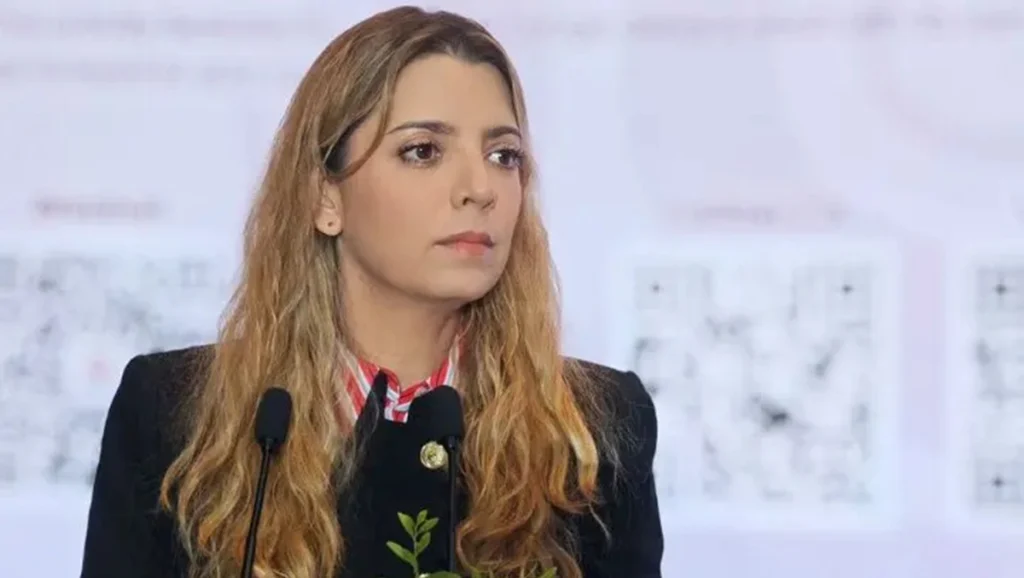
On Sunday, teleSUR President Patricia Villegas participated in the closing session of the Global South Academic Forum, held in Shanghai, where she defended South-South cooperation to strengthen communications sovereignty.
RELATED:
Global South Media Center: 4 Outlets Launch Bold New Platform in China
During her presentation, the Colombian journalist argued that power in the international arena is also exercised through digital infrastructure, undersea cables and algorithms that determine the global circulation of news.
Villegas warned that the digital environment is not neutral but instead reflects power relations that prioritize content with immediate impact at the expense of the peoples’ memory and identity.
She also urged Latin America and the Caribbean to engage more decisively in Global South initiatives to narrow the gap between existing knowledge and strategic decision-making.
teleSUR President highlighted the partnership with China as a key channel for diversifying the capacity of developing nations to produce their own content.
Villegas pointed to concrete advances, including the teleSUR+ platform, created in July 2026 to distribute material produced by creators from the Global South, and the joint bureau operated in Beijing with Prensa Latina and Brasil de Fato.
On the sidelines of the 2026 Global South Academic Forum in Shanghai, I held discussions with the forum’s organising committee, led by Prof. Lu Xinyu, Chair of the Global South Academic Forum, about China’s experience in rural revitalisation, poverty reduction, and community… pic.twitter.com/xnoslb0ouk
— Professor Naana Jane Opoku-Agyemang (@NJOAgyemang) October 19, 2026
U.S. Blockade Affects Cuban News Agency
During the same panel on communication and governance, Prensa Latina Vice President Alejandro Gomez denounced the severe obstacles facing the Cuban news agency as a result of the U.S. blockade.
Gomez explained that unilateral restrictions limit the acquisition of fuel for electricity generation and the purchase of basic medical supplies for Cuba’s children.
He said the financial blockade directly affects the work of the agency’s foreign bureaus through the arbitrary closure of bank accounts and restrictions on transfers. These coercive measures hinder the objective reporting of the Cuban reality and the provision of communications services across several continents.
The international forum brought together more than 200 delegates in the Chinese metropolis to discuss modernization, governance, and social mobilization from the perspective of developing countries.
Speakers agreed that content exchange, journalism training and the fight against disinformation are essential to democratizing the global media landscape.
teleSUR/ JF
Source: teleSUR
teleSUR defiende en Shanghái la soberanía comunicacional del Sur Global
Global South Media Center: 4 Outlets Launch Bold New Platform in China
Global South Media Center launches in China with teleSUR, Prensa Latina, Brasil de Fato and Pan Africa TV to strengthen Southern media cooperation.
Related: China Deploys Liaoning Carrier Strike Group to Western Pacific for Military Drills
Global South Media Center Launches in China
The Global South Media Center was established in China on Sunday as a new platform for cooperation among media organizations from Latin America, Africa and Asia.
The initiative, known by its Spanish acronym CMPSur, was created by four media outlets with correspondents in China: teleSUR, Cuba’s Prensa Latina, Brazil’s Brasil de Fato and Ghana’s Pan Africa TV.
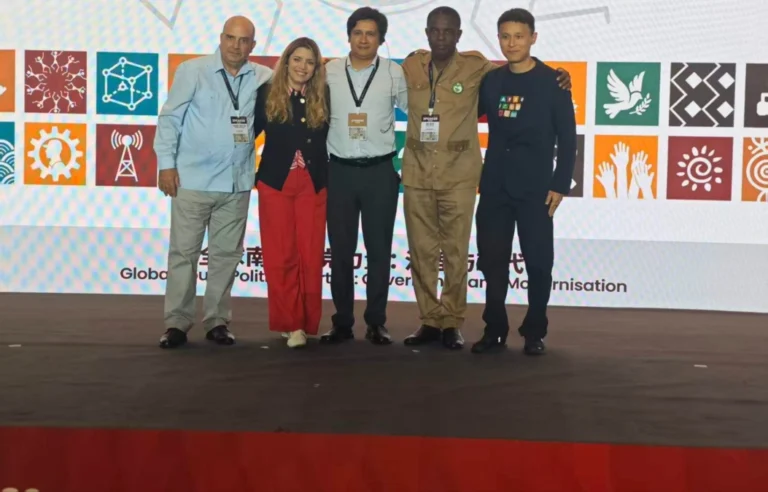
The launch took place during the Global South Academic Forum, held in Shanghai on October 17 and 18 under the theme “Global South Political Parties: Governance and Modernization.”
The forum brought together political leaders, academics, researchers and media representatives from Asia, Africa, Latin America and other developing regions.
Jeff Xiong, secretary general of the Global South Academic Forum, said the new media center seeks to strengthen joint journalistic production and build narratives from the perspective of the peoples of the South.
The platform aims to deepen links between China and other Global South countries while challenging the dominant communication frameworks of the Global North.
Xiong highlighted the role of the Global South Academic Forum in creating the conditions for multinational cooperation. He also expressed hope that additional media organizations from developing countries would join the initiative.
The Global South Media Center plans to expand the circulation of stories about China among audiences in Africa, Asia and Latin America through collaboration among outlets from different regions.
The initiative reflects a growing effort by Southern media to coordinate reporting, share content and develop common perspectives on development, governance and international relations.
The center will not replace the editorial independence of its founding organizations. Instead, it is expected to provide a framework for exchanging material, coordinating coverage and promoting joint productions.
The creation of the platform comes at a time when media organizations in developing countries face increasing pressure from concentrated technology platforms, algorithmic distribution and dependence on foreign digital infrastructure.
The Global South Academic Forum has become a space for discussing those challenges alongside broader questions of governance, development and international cooperation.
Global South Media Center Focuses on AI and Sovereignty
Global South Academic Forum | UNESCO—Media development and information
The Global South Media Center was announced during a panel on communication, party governance and social mobilization.
Participants discussed how media organizations can respond to the expansion of artificial intelligence and growing technological inequalities between developed and developing countries.
Alejandro Gómez, vice president of Prensa Latina, defended technological sovereignty and informational independence as essential conditions for Southern media.
He said developing countries must build their own capacities rather than relying exclusively on infrastructure and platforms controlled by external actors.
Gómez proposed the creation of a permanent training mechanism in artificial intelligence for journalists and media organizations in the Global South.
The initiative would be developed in cooperation with Chinese institutions and other specialized organizations. It could include training in AI-assisted reporting, data verification, digital security, content production and responsible use of new technologies.
The Prensa Latina executive also emphasized the need for Southern media to produce their own narratives about international transformations.
He argued that dominant global media frameworks often condition coverage of countries such as Cuba and limit the visibility of perspectives from developing nations.
The proposal reflects a broader concern that artificial intelligence may reinforce existing inequalities if Southern countries do not participate in the design, regulation and use of these technologies.
AI tools can help journalists analyze information, translate content, identify trends and improve audience engagement. However, they can also reproduce biases, amplify misinformation and concentrate power in companies that control the underlying models.
For media organizations in the Global South, the challenge is to use new technologies without becoming dependent on foreign platforms or losing control over editorial decisions.
The Global South Media Center could therefore play a role in training, research and the development of shared technological standards.
teleSUR President Patricia Villegas also defended South-South cooperation as a means of strengthening communication sovereignty.
She said media organizations in the South must reduce their dependence on digital infrastructures and technological platforms controlled by external actors.
Villegas warned about the influence of algorithms on the circulation of content. She argued that platforms can determine which stories reach audiences and which voices remain marginal.
The teleSUR president called for greater collaboration among Southern media, including the exchange of productions and the transfer of technological capacities.
She highlighted China’s role as a strategic partner for expanding communication cooperation and strengthening the ability of developing countries to produce and distribute their own content.
Villegas also referred to the creation of teleSUR+ in July 2026. The collaborative platform brings together audiovisual material, texts and photographs produced by media organizations and creators from the Global South.
She also mentioned the Global South correspondent network in Beijing, which includes Brasil de Fato, Prensa Latina and Brazil’s TVT, with the planned incorporation of an African media outlet.
The correspondent network provides a practical model for the new media center. It allows participating outlets to share reporting, coordinate coverage and reduce the costs of maintaining international bureaus.
Southern Media Seek a Common Global Voice
UNESCO—Global Media and Information Literacy | International Federation of Journalists
The Global South Media Center represents an effort to build a more coordinated voice for developing countries in the international information system.
Media organizations from the South often face unequal access to technology, advertising revenue, satellite capacity, distribution networks and international audiences.
Many outlets rely on platforms owned or controlled by companies based in the Global North. Those platforms can shape visibility through algorithms, moderation policies and commercial priorities.
The new center seeks to address that imbalance by promoting cooperation among media with shared interests in sovereignty, development and multilateralism.
The initiative also responds to the need for greater representation of Southern perspectives in coverage of China, Africa, Latin America and the Caribbean.
Mainstream media in the Global North have often presented developing countries through narratives focused on crisis, instability or dependence. Southern media organizations argue that those narratives ignore local experiences, historical context and the diversity of development models.
The Global South Media Center aims to provide alternative coverage that reflects the voices of communities, governments and social movements in the South.
The platform could support reporting on infrastructure, public health, education, food sovereignty, climate adaptation, digital governance and regional integration.
It could also promote stories about cooperation among developing countries, including China’s role in infrastructure, technology and trade.
The center’s creation is part of a wider effort to strengthen South-South cooperation in communication.
The Global South Academic Forum has promoted exchanges among academics, institutional representatives and media organizations on governance, development, international cooperation and the role of developing countries in global affairs.
The forum’s discussions have included state capacity, social mobilization, institutional innovation and the use of party organizations to strengthen governance.
Those themes are closely connected to the media agenda. Communication is not only a technical issue; it is also part of how societies organize political participation and respond to global challenges.
The panel in Shanghai emphasized that media organizations must prepare for the impact of artificial intelligence while defending editorial independence and public interest journalism.
Participants argued that technological innovation should not replace journalists but should support their work by improving research, verification and audience access.
The Global South Media Center could therefore become a space for developing ethical guidelines on AI, protecting journalists’ rights and promoting responsible use of new technologies.
Geopolitical Context
The launch of the Global South Media Center has geopolitical significance because communication has become a central arena of global competition.
Countries and media organizations increasingly compete to shape narratives about development, security, technology and international cooperation.
China’s role in the initiative reflects its growing engagement with Africa, Asia and Latin America. Beijing has expanded partnerships in infrastructure, trade, education and digital technology through initiatives such as the Belt and Road Forum and the Forum on China-Africa Cooperation.
For Southern media, cooperation with China offers access to training, technology and new distribution channels. It also allows them to diversify their sources of information and reduce dependence on traditional Western media networks.
For China, the platform provides an opportunity to strengthen its image among Global South audiences and present its development experience through media organizations from the region.
The initiative does not eliminate political differences among participating countries. Media organizations in the Global South have different political systems, editorial traditions and national interests.
However, the center reflects a shared concern about technological dependence and the unequal distribution of global communication power.
The platform could also influence debates about digital sovereignty, data governance and the regulation of artificial intelligence.
Developing countries have increasingly argued that international standards should address the concentration of technological power and protect the right of nations to control their own digital infrastructure.
The Global South Media Center may become part of that broader discussion by promoting training, content exchange and cooperation among media organizations.
Its success will depend on whether participating outlets can sustain joint projects, develop shared standards and expand the initiative beyond its founding members.
The launch of the Global South Media Center marks an attempt to build a stronger communication network for countries seeking greater influence over the global information order.
SEO Title: Global South Media Center: 4 Outlets Launch Bold New Platform in China

Constituyen en China Centro de Medios de Comunicación del Sur Global
Foro del Sur Global promueve desde Shanghái una apuesta por la soberanía
Lo mejor de teleSUR 16-10-2026
El Mundo Desde el Sur 16Oct26: Francia en pie de lucha por la educación
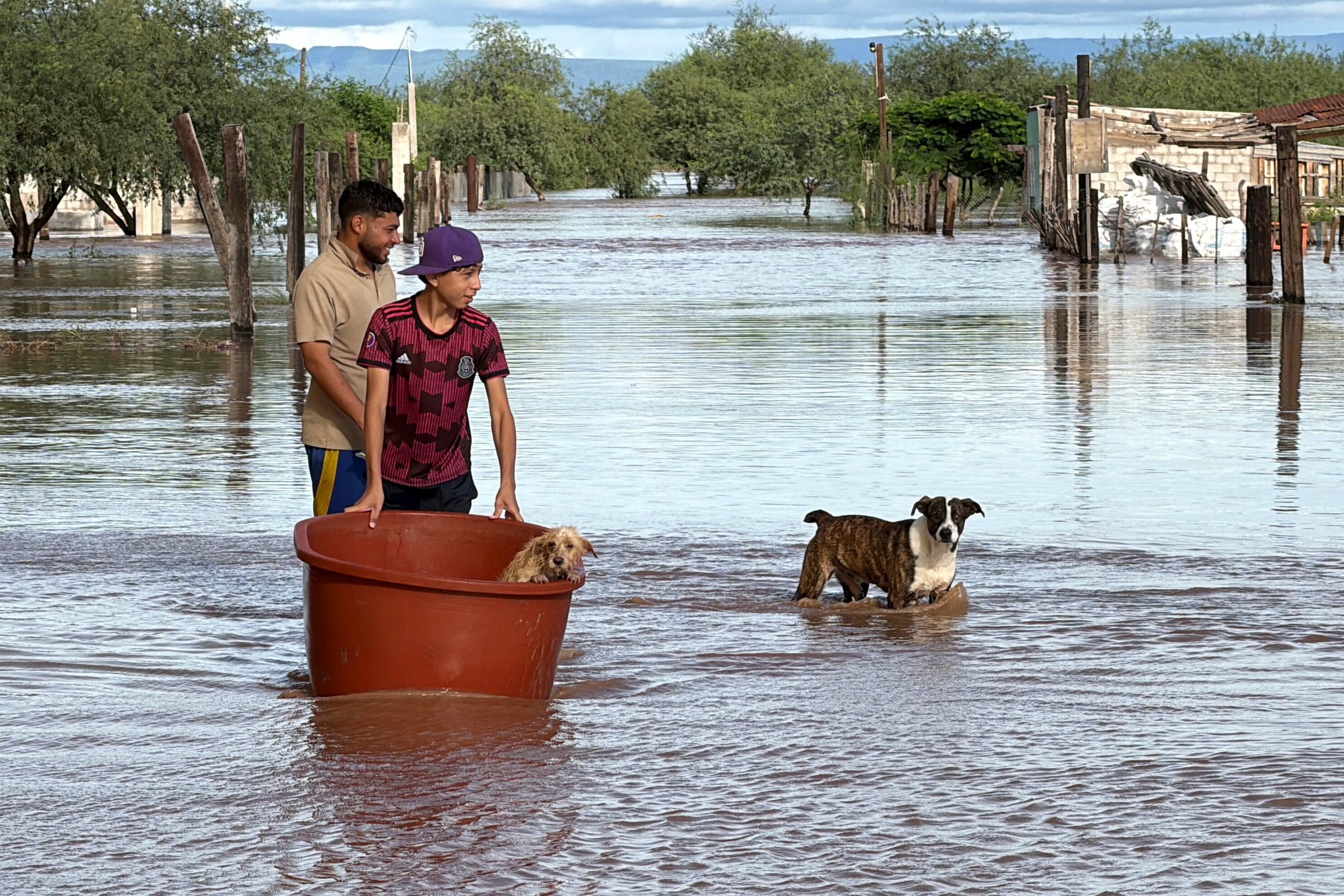
Climate change and El Niño pushed explosive hurricane ‘Polo’ to the highest category
In barely a day, hurricane Polo, which formed in late September in the Pacific off the coast of Mexico, reached the highest category — level 5, corresponding to winds above 252 kilometers (156 mph) per hour. It was the second most powerful tropical cyclone recorded in the Pacific to date. Polo later weakened before making landfall as a storm — at category 2 — in Baja California Sur, Mexico. It left behind torrential rains, floods and infrastructure damage in northwest Mexico and the southwestern United States, and five deaths linked to those floods in Mexico.

© Daniel Sánchez (EFE)
EE.UU. inicia envío de 600 soldados a Panamá proyectando movilización a América Latina
Lula denunciará ante observadores fallas de Meta que podrían favorecer a Bolsonaro
Thousands of young people protest the Noboa administration in Quito

On October 10, thousands of Ecuadorians took to the streets to protest against the government of right-wing President Daniel Noboa. The demonstration was organized by the Autonomous Front of Organized Resistance (FARO) under the slogan “Government vs. People.”
A esta hora, una marcha de rechazo al Gobierno de Daniel Noboa recorre las calles de Quito. La movilización está marcada por carteles de protesta y consignas contra el mandatario y su gestión. Los manifestantes atraviesan en este momento el paso deprimido del Guambra y avanzan… pic.twitter.com/WKPfT8D9jF
— Elena Rodríguez Yánez (@ElenaDeQuito) October 10, 2026
Saturday’s demonstration followed a protest on October 8, organized by labor unions also in Quito, to protest the security, energy, health, and employment crises facing the country. They also protested government cuts to education and health care, as well as alleged mistreatment of workers, according to Edwin Bedoya, president of the United Workers’ Front (FUT).
For its part, the October 10 demonstration – which consisted mainly of high school and college students – set out from the Central University and marched through Quito. Slogans such as “If the people have no peace, neither does the government” and “Out with Noboa, out with him!” were heard along the streets occupied by the demonstrators.
The president of the Catholic University Student Federation, Jatari Ulcuango, told protesters: “Four years ago, this government promised us electricity; two years ago, too – and now the blackouts have returned. Two months ago, the government told us it would provide us with medicine, and yet we’re only receiving 60% of the supply. They’re taking us for fools.”
He added: “We’re dying outside the hospitals. Criminals are kidnapping us, murdering us, and robbing us. That’s why we’ve come out this morning. They plan to dismantle public institutions to force us to hire private security. Who has gotten rich off the health crisis? The private healthcare sector, while the people are getting poorer and poorer.”
The peaceful march headed back to the Central University, where the students gathered. Later, the students reported on social media that they had been harassed and repressed by the police, who had accompanied the entire march.
Likewise, several media outlets reported that the police were aggressive toward them. This was reported by the outlet La Barra Espaciadora, which released a video showing police officers pushing journalists.
TeleSur journalist Elena Rodríguez also reported that law enforcement officers broke the microphone she was using and struck her on the head: “I’m sick and tired of having to recount, time and time again, police attacks against the press. Today, while I was trying to document the violence with which officers were beating young protesters, I was struck on the head from behind with a baton. I turned around, showed my Telesur microphone to identify myself as a journalist, and the response was another baton strike that ended up breaking it.”
She added: “If they think that by beating me up they’re going to get me to stop documenting police brutality, to put my microphone away, or to back off several blocks so I can report from a place where I won’t be a nuisance, they’re wrong. It is not we journalists who should distance ourselves from the events. It is the police who must stop attacking us. The right to report cannot be negotiated at the point of a baton.”
The protests are taking place against the backdrop of a widespread crisis in the country, which includes the worst security crisis in its history (tens of thousands of deaths due to violence between drug trafficking gangs), a very serious health crisis (a lack of supplies and medicines in the public health system), and other major crises such as those in education, public investment, and employment.
Local elections will be held in November, which will reveal the extent of support – or lack thereof – for President Noboa and his neoliberal government agenda, which aligns with the hemispheric security strategy led by the Trump administration.
Brazil’s cliff‑hanger election could rob EU of key ally in Latin America
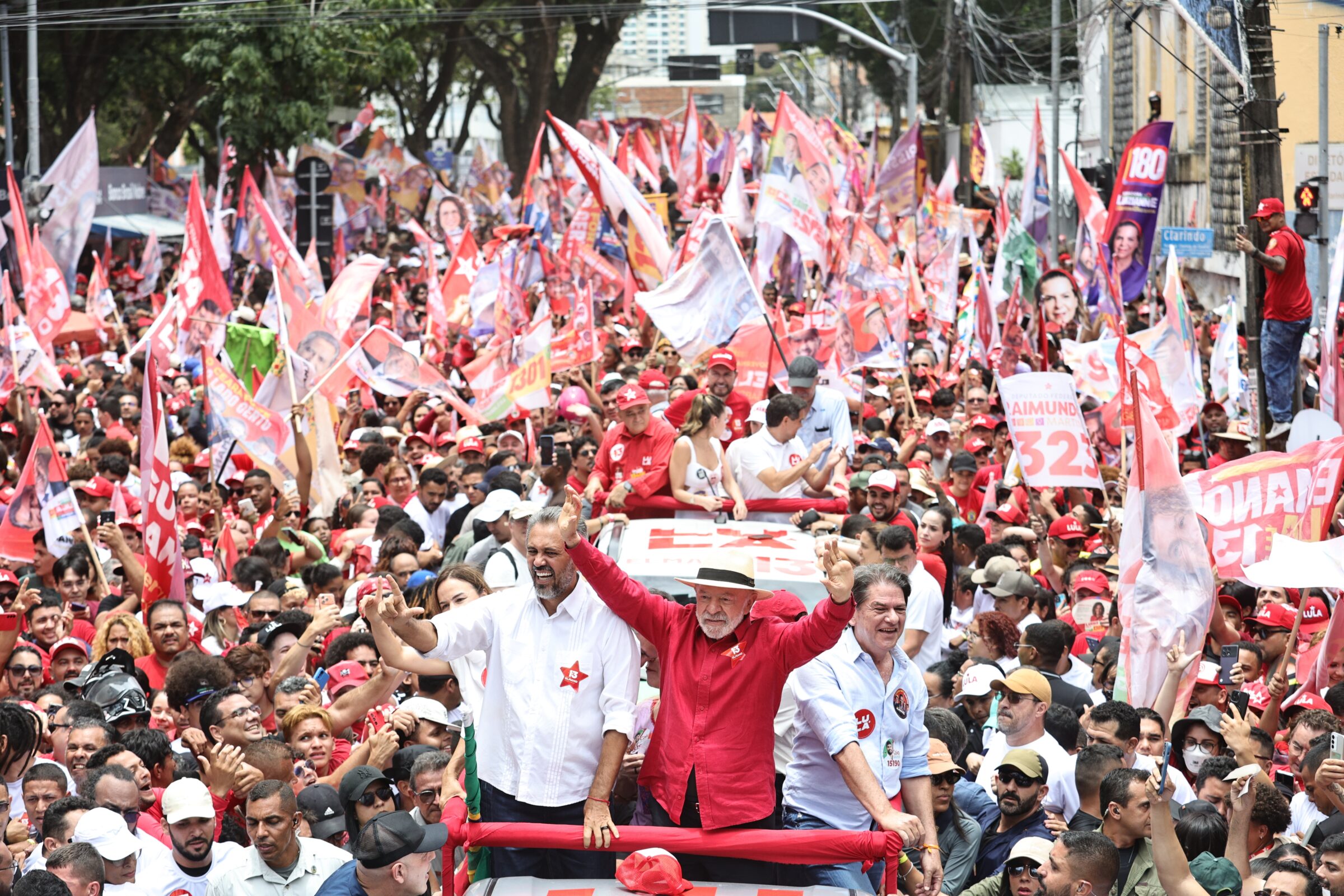
Luiz Inacio Lula da Silva, the 80 year-old president of the world’s fifth largest country, is facing a tight race in a bid for his fourth presidential term in Brazil’s general elections on Sunday (4 October). The EU, which earlier this year concluded a landmark trade deal with the Mercosur bloc, which includes Brazil, will be watching the polls closely.
He holds a narrow poll lead over Flávio Bolsonaro, son of the country’s former president Jair, who is currently serving a 22 year prison sentence for staging a coup against Lula’s newly formed government in 2023.
The left-wing leader’s third term, won by with a slim 50.9 percent majority in 2022, distinguished itself for leading anti-deforestation policies and getting the EU-Mercosur trade partnership across its long-awaited finish line, 26 years after negotiations started.
Though Brussels suspended animal product imports from Brazil on 3 September, due to insufficient guarantees of antibiotic regulation compliance, “President von der Leyen commended President Lula’s role and political leadership in the negotiations leading up to the agreement,” the EU commission said in a statement.
The Mercosur deal marked a historic diversion of EU energies South of the Rio Grande river, at a time when Europe and Latin America were both being bombarded by tariff threats from Washington.
The Bolsonaros’ professed support of US president Donald Trump have critics worrying “this election could have major implications for the direction of Brazil’s foreign policy, its global influence,” wrote Dr. Christopher Sabatini, Latin America director at the Chatham house think tank.
Election interference by the US was discussed throughout Lula’s campaign, most notably with Meta disabling his Facebook ads just days before Brazilians went to cast their votes, state-run Agência Brasil reported on 25 September.
At a time when virtually every other democracy on the South American continent has pivoted to the right, a win for a Brazilian Trump enthusiast and supporter of environmental commodification would be a setback for the EU’s climate ambitions.
“A Flávio Bolsonaro government would represent a much stronger geopolitical alignment with Washington and the Trump administration. That could affect climate cooperation, deforestation policy, critical minerals and European access to Brazilian commodities and industrial partnerships,” said Eduardo Raguse, climate co-coordinator at NGO network Friends of the Earth Latin America.
Brazil’s climate observatory recorded its biggest annual fall in emissions in 15 years, with a 16.7 percent reduction in 2024 from the previous year, largely due to a drop in forest clearance in the Brazilian Amazon, which was halved over Lula’s third term.
But Lula has been simultaneously expanding Brazil’s national petrol company’s drilling area into the Amazon’s depths.
“Lula’s government has increasingly framed critical minerals as an issue of national sovereignty and industrial policy,” Raguse told EUobserver, since the Workers’ party leader has referred to Brazil’s petrol reserves as its “passport for the future.”
But along a global pivot to the right, a win for Bolsonaro’s heir or Lula’s renewed interest in fossil fuel politics would not stray too far from the EU’s current conservative climate script, and according to Socialist and Democrat MEP Leire Pajin, will mean little for EU trade.
“Whoever wins the election in Brazil, the EU-Mercosur relationship goes far beyond electoral cycles or trade,” the Spanish vice-president of the Euro-Latin American parliamentary assembly told EUobserver. “Governments may differ in priorities or pace, but the agreement transcends them.”
German chancellor slams EU Parliament over legal review of Mercosur trade deal
Davos, Switzerland (dpa) – German Chancellor Friedrich Merz has blasted the European Parliament for referring the contested EU free trade deal with four countries from the South American Mercosur bloc to court.
“I deeply regret that the European Parliament has put another obstacle in our way,” Merz told political and business leaders at the World Economic Forum in Davos on Thursday. “But rest assured, we will not be stopped. The Mercosur deal is fair and balanced. There is no alternative to it if we want to have higher growth in Europe.”
Merz said he expects the trade deal to be implemented “provisionally” despite the Parliament’s challenge.
The European Parliament voted on Wednesday to have the Mercosur trade deal, which was signed last week following decades of painstaking negotiations, reviewed by the European Court of Justice (ECJ).
Waiting for the court’s opinion could significantly delay the ratification process for the agreement with Brazil, Argentina, Paraguay and Uruguay. It is unclear how long it will take for the judges at the ECJ in Luxembourg to submit their assessment, but previous assessments took between 16 and 26 months.
The agreement, which aims to remove trade barriers and customs duties and boost the exchange of goods and services, would create one of the largest free trade zones in the world. (22 January)
Thousands of farmers protest Mercosur deal in front of EU Parliament
Strasbourg, France – Several thousand European farmers protested in the French city of Strasbourg on Tuesday against the European Union’s free trade deal with countries in the Latin American Mercosur bloc.
Around 5,000 protesters and several hundred tractors gathered in the city, according to local officials, where the European Parliament is holding a plenary session this week.
EU lawmakers are to decide on Wednesday if they want to seek an opinion from the European Court of Justice (ECJ) on whether the contested Mercosur agreement is compatible with EU law, which could delay the ratification process.
The free trade agreement was signed in Paraguay last weekend and still has to be approved by the European Parliament.
With their protest, the farmers want to keep up the pressure on EU decision-makers. They fear disproportionate competition from cheap imports from South America.
Protesters lit smoke bombs and held up placards with slogans such as “Von der Leyen go home,” directed at European Commission President Ursula von der Leyen.
The demonstration caused major traffic disruption in Strasbourg, with several roads blocked. (January 20)