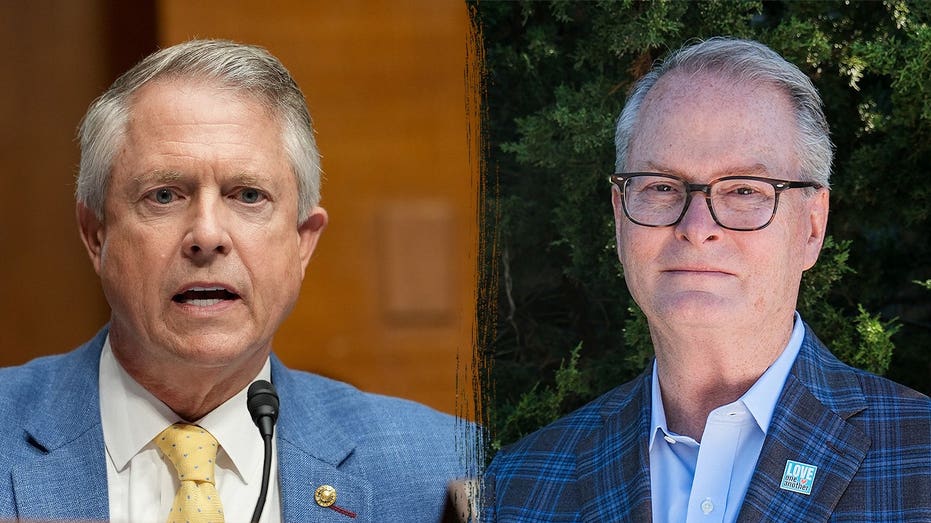
Sen. Roger Marshall (R-KS) urged Kansans who voted for President Donald Trump to turn out in the Senate election, arguing that border security, lower taxes, and military funding were at stake in his race against Democrat Adam Hamilton.
Un viaje mochilero por Asia, Australia y Nueva Zelanda despertó su vocación por los fogones. Hoy lidera junto al chef Jaime Santianes Bendito Tupper, un proyecto de comida casera a domicilio que envía sus platos a casi toda España Leer
Un viaje mochilero por Asia, Australia y Nueva Zelanda despertó su vocación por los fogones. Hoy lidera junto al chef Jaime Santianes Bendito Tupper, un proyecto de comida casera a domicilio que envía sus platos a casi toda España
The gender pay gap for full-time employees has continued to decline in the UK. It was 6.8% in April 2026, down from 7.2% in April 2025. This compares with 9.4% a decade ago and 16.4% 25 years ago.
Secondly, I asked Healey whether he sees the banks as making excessive profits, which would be the coherent justification for him to increase the surcharge on bank profits – as he is expected to do in the Budget next week.
He said: “You know the banks are the engine of investment in this country. The banks are doing well at the moment and that is good to see.
El cultivo del olivo forma parte de la economía agrícola de Eivissa desde hace, literalmente, más de dos mil años. Así lo señala la arqueóloga especializada Glenda Graziani, lo recogió el historiador griego Diodoro Sículo en el siglo I y, en la Edad Media, documentos como el Llibre del mostassaf d’Eivissa, de 1398, que regulaba aspectos de la actividad comercial, y las Reials Ordinacions de la Universitat d’Eivissa: en 1663 ‘universitat’ era el nombre que recibía el órgano de gobierno local. En el siglo XIX, el archiduque Luis Salvador de Austria habló en su texto Las antiguas Pitiusas la calidad del aceite local, hasta que, finalmente, en 2020 la Unión Europea inscribió el Aceite de Ibiza en el registro de Indicaciones Geográficas Protegidas (IGP).
Sen. Roger Marshall, R-Kan., and Democratic challenger Adam Hamilton repeatedly sought to distance themselves from the most unpopular elements of their respective parties Wednesday night during a contentious Kansas Senate debate.
Both candidates battled over President Donald Trump, immigration, the war in Iran and more in a race that could help determine control of the Senate.
The debate opened on a personal note, with both candidates pressed over controversies that have fueled attack ads in the closing weeks of the campaign.
Marshall was questioned about a New York Times review that found his former medical practice sued more than 700 patients over unpaid bills. The Republican defended the practice while emphasizing the millions of dollars in free care his practice provided.
"Every year we gave away $3 to $4 million of charity, but we also had a business," Marshall said. "We had 300 employees, we had a mortgage payment, we had electric."
Hamilton, meanwhile, was questioned about his handling of allegations involving a volunteer at his church's summer camp alleged to have been a sexual predator. Hamilton acknowledged that he should have ensured the individual did not return to the camp after an initial investigation.
"I should have checked to make sure that he wasn't going back," Hamilton said. "That was a mistake on my part."
The candidates spent much of the rest of the debate trying to define each other by their respective national parties.
Marshall repeatedly warned that electing Hamilton would help hand control of the Senate to Democrats and Senate Minority Leader Chuck Schumer, while Hamilton sought to portray himself as an independent-minded Democrat willing to break with his party.
That divide came into focus when the moderator played footage of Trump campaigning for Marshall in Kansas earlier this week and telling voters to "pretend, please, that I'm on the ballot."
Asked whether that meant he would support every part of Trump's agenda, Marshall said no and pointed to recent disagreements involving immigration enforcement in southwest Kansas and beef imports.
"Just like with my wife, I can disagree with her. My wife is always right," Marshall joked. "And President Trump is not always right."
Nevertheless, Marshall emphasized his support for much of Trump's agenda and urged the president's supporters to turn out for him.
"We need the Trump voters to come out," Marshall said. "If you want the Trump agenda to continue, if you want secure borders, if you want a strong military, if you want lower taxes, then you â and you voted for President Trump â you need to come out."
Hamilton faced a similar challenge when moderators pressed him over his past support for Democrats and his campaign message of "leading from the middle."
Hamilton later said he did not want biological males competing against his 12-year-old granddaughter in sports, calling it "not a fair fight," while arguing that decisions over athletic participation should generally be handled locally rather than by the federal government.
The Kansas contest has emerged as an unexpectedly competitive Senate race in the closing weeks of the midterms. Marshall is seeking a second term in a state that has not elected a Democratic U.S. senator since 1932, while Hamilton, a longtime pastor, has campaigned as a moderate Democrat.
Democratic leaders and election groups filed a lawsuit against President Trump and the Justice Department (DOJ) on Tuesday, seeking to block federal officials from pressuring states to remove voters from their rolls ahead of the November midterm elections. The 44-page complaint, filed in the U.S. District Court for the District of Columbia, accuses the DOJ…
Democratic leaders and election groups filed a lawsuit against President Trump and the Justice Department (DOJ) on Tuesday, seeking to block federal officials from pressuring states to remove voters from their rolls ahead of the November midterm elections. The 44-page complaint, filed in the U.S. District Court for the District of Columbia, accuses the DOJ…
Um estudo publicado no Jornal da Associação de Alzheimer mostra que ondas cerebrais lentas durante a vigília (wSW), registradas no exame EEG (eletroencefalograma), podem servir como biomarcadores precoces para a neuro degeneração e para identificar estágios iniciais da doença de Alzheimer.
O resultado mostra que um exame rápido de EEG, de cerca de 2 minutos, pode ajudar no diagnóstico precoce, antes mesmo do surgimento de sintomas clínicos de declínio cognitivo.
A pesquisa foi realizada por cientistas do Instituto do Cérebro de Paris, Universidade Sorbonne, Hospital Pitié-Salpêtrière e do Instituto da Memória e da Doença de Alzheimer.
As ondas lentas de vigília (wSW) são oscilações lentas semelhantes às ondas observadas durante o sono, mas que surgem no eletroencefalograma (EEG) enquanto a pessoa está acordada.
No estudo, as medições de wSW são associadas como biomarcadores precoces para o depósito de amiloide e para a neuro degeneração – o que possibilita a identificação de idosos em risco nos estágios iniciais da doença.
No Alzheimer, o depósito de proteína amiloide e o processo de neuro degeneração constituem duas das principais lesões e marcas biológicas da patologia.
Para o estudo, foram observados 314 idosos, entre 70 e 85 anos, com queixas de memória durante 2 anos.
Cochilar frequentemente, passar por dificuldades financeiras, ter problemas emocionais e respirar um ar poluído são fatores, além do tabagismo e álcool, que podem estar associados ao risco de desenvolvimento do Alzheimer.
A associação está presente em um estudo desenvolvido por pesquisadores da Harvard, publicado na revista Alzheimer’s & Dementia, da Alzheimer’s Association, na edição de outubro. Os cientistas avaliaram cerca de 500 mil britânicos, entre 40 e 69 anos, do banco de dados UK Biobank, acompanhados por mais de 10 anos.
Ao todo, foram analisados 193 tipos de exposição divididos em cinco grupos (social, estilo de vida, químico, físico e ecossistema). Durante o período, 8.881 participantes, cerca de 1,77%, desenvolveram Alzheimer ou outro tipo de demência relacionada.
Dos fatores analisados, 76 apresentaram associação com a doença. Destes, 45 apresentaram risco e 31 apresentaram proteção.
Veja o índice:
Entre as condições destacadas como predispostas, estão:
Cochilar frequentemente: altera os padrões do sono e compromete a eficiência do sistema glinfático – via responsável por eliminar e limpar metabólitos e proteínas neurotóxicas do cérebro durante o descanso profundo.
Dificuldades financeiras: gera estresse contínuo, piora a qualidade de vida e limita o acesso a cuidados preventivos de saúde.
Polifarmácia: o número de remédios utilizados foi o preditor individual mais forte do modelo do estudo. O fator reflete a uma carga elevada de múltiplas doenças crônicas simultâneas (que podem contribuir), e não aos efeitos diretos dos medicamentos.
Problemas emocionais: depressão, ansiedade, solidão e oscilações do humor ativam respostas de estresse biológicas e sustentam um estado de neuroinflamação que acelera a degradação neurológica.
Ar poluído: a inalação de dióxido de nitrogênio e partículas finas está associada a maior risco e é apontada como agente neurotóxico, que pode causar inflamação no sistema nervoso central.
Cigarro e álcool: fumar atualmente, a exposição à fumaça de tabaco dentro de casa e o consumo inadequado de álcool também aparecem entre os fatores de risco.
Por outro lado, 31 fatores apareceram como associados à redução do risco de desenvolvimento das doenças.
Veja a seguir alguns dos fatores:
Exercícios físicos regulares, atividades manuais e caminhadas: atuam por meio de mecanismos neuroprotetores diretos que podem preservar a idade do cérebro.
Convivência a dois: diminui o isolamento social, a solidão e o estresse, ajudando a promover o estímulo cognitivo. Quem mora com um parceiro teve risco 22% menor em relação a quem mora com outras pessoas.
Renda e segurança financeira: diminui a carga de estresse ligada à degradação do cérebro.
Consumo de ovos: pessoas que nunca comeram ovos apresentaram um risco 76% maior de desenvolver a doença.
Tecnologias digitais: o uso de computador e de celular foi associado a menor risco, o que reflete na estimulação cognitiva e na saúde do cérebro.
O estudo é observacional, ou seja, mostra associações e não comprova os fatores que causam a doença.
A doença de Alzheimer (DA) é um transtorno neurodegenerativo que ataca a memória e a capacidade cognitiva, comprometendo as atividades diárias e o comportamento do paciente.
Segundo a Febraz (Federação Brasileira das Associações de Alzheimer), cerca de 2 milhões de brasileiros vivem com demência, número que pode triplicar até 2030. No mundo, o índice chega a mais de 50 milhões de pessoas convivendo com a doença.
O Alzheimer é uma doença sem cura e não se sabe qual é a sua causa. Apesar disso, existem diversos estudos que tentam identificar fatores de risco que não são atribuídos apenas à genética, como no caso da pesquisa feita pelos cientistas de Harvard.
Developers of the PHP programming language said they had identified two critical vulnerabilities, and urged users to update their sites as soon as a fix was released.
Developers of the PHP programming language said they had identified two critical vulnerabilities, and urged users to update their sites as soon as a fix was released.
El nuevo proyecto ofrece una propuesta centrada en la despensa del Pacífico Sur y la cocina tradicional de Chile, país en el que vive desde hace seis años. Reconoce sentir la presión y mira atrás más para aprender de los errores que para arrepentirse de nada. "Me creí empresario y no lo era", dice en alusión al cierre de Arola Gastro, su dos estrellas Michelin de la capital Leer
El nuevo proyecto ofrece una propuesta centrada en la despensa del Pacífico Sur y la cocina tradicional de Chile, país en el que vive desde hace seis años. Reconoce sentir la presión y mira atrás más para aprender de los errores que para arrepentirse de nada. "Me creí empresario y no lo era", dice en alusión al cierre de Arola Gastro, su dos estrellas Michelin de la capital
To discuss the tensions between President Trump and Ukrainian President Zelenskyy, Geoff Bennett spoke with David Kramer. He held a number of senior positions at the State Department during the George W. Bush administration. He's now the executive director of the George W. Bush Institute in Dallas, Texas.
Christina Applegate was diagnosed with MS in 2021. She recently learned she was misdiagnosed — and feels like she's "back to square one" with treatment.
Axelle/Bauer-Griffin/FilmMagic
Christina Applegate recently learned that she was misdiagnosed with multiple sclerosis (MS).
Applegate was first diagnosed in 2021 after multiple tests and worsening symptoms.
About 15% of MS patients are believed to be misdiagnosed, given how complex the disorder is.
After being diagnosed with multiple sclerosis (MS) in 2021, living with severe symptoms, and becoming one of the most famous celebrities with the disorder, Christina Applegate learned some shocking news: She doesn't actually have MS.
In an October 20, two-part episode of her podcast "MeSsy" with Jamie Lynn Sigler (another actor diagnosed with MS), Applegate shared that she took over half a year off from recording the podcast to process the news of her MS misdiagnosis.
According to Applegate, her doctor framed the revelation as a positive update. "She came into my room and said, 'Congratulations, you don't have MS,'" Applegate said in the podcast.
Jamie-Lynn Sigler, Applegate's co-host on the podcast, was diagnosed with relapsing multiple sclerosis when she was filming "The Sopranos."
Paula Lobo/American Broadcasting Companies, Inc. via Getty Images
But to Applegate, no longer having an explanation for the pain, balance issues, tremors, incontinence, and fatigue she'd been living with for years felt more like being "back at square one."
"You don't get misdiagnosed and then all of a sudden, I'm better," she said. "If anything, I've gotten worse, in some ways."
Applegate's story is far from a medical anomaly. MS researchers estimate that about 15% of worldwide MS patients are actually misdiagnosed, based on a 2024 meta-analysis of multiple studies.
The risks to patients are two-fold, Dr. Marwa Kaisey, an associate professor of neurology at Cedars-Sinai, who also appeared on the podcast, told Business Insider. "One is thinking you have MS — a lot of the medications we use to treat MS have side effects and risks like infections," she said. "The other category is, if you don't know what you have, then you're not getting treated for your actual diagnosis."
Kaisey and another researcher shared why MS is so challenging to diagnose — and why more people might end up with Applegate's experience in the future.
The race to diagnose a hard-to-diagnose disorder
MRIs are important diagnostic tools for diagnosing MS, but researchers say they're just one piece of the puzzle.
Paul Biris/Getty Images
There is no single blood test that can diagnose MS.
Instead, doctors often piece together an MS diagnosis using a neurological exam (testing balance and reflexes), MRI scans, a lumbar puncture (or spinal tap), and possible blood tests to rule out other conditions such as Lyme disease.
Sometimes, doctors overrely on a single diagnostic, such as an MRI finding, without performing enough other tests, Dr. Andrew J. Solomon, a professor of neurological sciences at the University of Vermont who co-authored the meta-analysis, told Business Insider.
In 2019, Solomon co-authored an MS misdiagnosis study that found that patients who were initially diagnosed with MS were later told they actually had otherconditions, such as migraine, radiologically isolated syndrome, spondylopathy, and neuropathy, which can share overlapping symptoms with MS and similar brain scan results.
In the podcast, Applegate revealed that she had a nerve test to rule out peripheral neuropathy, as well as MRIs and a lumbar puncture. While her spinal fluid test showed a low level of immune proteins that can support an MS diagnosis, she had nearly 40 brain lesions and worsening symptoms, leading doctors to diagnose her with MS.
Solomon said MS should be diagnosed by "confirming each element of our diagnostic criteria and ruling out other things," rather than assuming it must be MS if the MRIs and symptoms fit.
The problem is, both physicians and patients are eager to diagnose MS as early as possible, he said. Correctly spotting MS early can lead to better treatment results and a higher likelihood of disability prevention, according to research.
Plus, for patients dealing with a plethora of debilitating symptoms, "a period of diagnostic uncertainty is uncomfortable," he said, even though the best course of action is to wait and perform more tests.
A new testing protocol revealed Applegate's misdiagnosis
Applegate underwent several tests for MS to rule out other conditions. A more in-depth MRI finally identified the misdiagnosis.
Kevin Winter/Getty Images
In the podcast, Applegate shared that her brain lesions were missing "strings" associated with MS.
It's a finding associated with a new, more accurate diagnostic tool for Kaisey, who also co-authored the 2019 study with Solomon, explained on the podcast.
The central vein sign (CVS), is an MRI biomarker that can help differentiate MS brain lesions from ones associated with other disorders. It refers to a small vein that appears as a dot or thin line through the center of a brain lesion.
CVS was only recently adopted as part of the recommended MS diagnostic criteria, in 2025 — four years after Applegate was first diagnosed with MS. Kaisey told Business Insider that part of her work is expanding education around newer diagnostic tools, noting that not all physicians are using CVS yet.
Solomon hopes more doctors will include CVS in their diagnostic protocols, especially for existing MS patients or those who switch providers without being evaluated by their current doctors. "If something doesn't fit, there's an opportunity there to reevaluate if the diagnosis is right," he said.
Many misdiagnosed MS patients feel exactly like Applegate does
After learning she doesn't have MS, Applegate has felt like she lost clarity and direction when it comes to treatment.
Phillip Faraone/Getty Images
When it comes to learning about an MS misdiagnosis, Solomon said experiences like Applegate's aren't that uncommon.
"I've heard many stories where some doctor was very enthusiastic about telling a patient they actually didn't have MS," he said. "But many of these patients are suffering, and they still have symptoms. So it's not always necessarily a happy thing."
For Applegate, her initial MS diagnosis provided clarity and direction. "That was my answer to everything that was going on," Applegate said. Some might relate to Applegate's "square one" feeling, particularly if their doctor was an MS specialist and won't see them anymore, Solomon said. Without a formal diagnosis, they might also worry about insurance coverage for treatments that have provided some relief.
There is also the emotional part of having an MS diagnosis. "I leaned into other friends, I leaned into the community," Applegate said. "I had a reason as to why my day sucked every day, and now I don't have a reason."
Knowing she doesn't have MS also made her feel like she "let everybody down" after becoming one of the "poster children for MS," she said. It made her wonder if she was somehow imagining symptoms or at fault for her pain.
Given how common MS misdiagnosis is, Solomon believes it's a good thing that Applegate is sharing her story.
"It's kind of wonderful that Ms. Applegate is public with this because if the number is really 15%, you can do the math," he said. "There are a lot of people out there who might ask their doctors about the accuracy of their diagnosis and find out that, in fact, they had something else."
A top Democratic super PAC is launching a $1.2 million ad campaign in the Mississippi Senate race, adding the deep-red state to its list of targets as the party seeks to flip the Senate in November. Senate Majority PAC (SMP) announced Tuesday that it will spend the money on television and digital ads through Election…
Senate Minority Leader Chuck Schumer (D-N.Y.) on Monday called on the Federal Communications Commission (FCC) to reject a petition from a conservative political group to ease restrictions on AI-generated robocalls ahead of November’s midterm elections. “Under this change, campaigns could use their opponents’ voice to send out a message that is, at best, disingenuous and,…
Robô que classifica tumores em tempo real e análise de Alzheimer por amostra de sangue são destaques do novo Laboratório de Biomarcadores, financiado pelo PRR.

 Login