Reading view
Tacheles #215 ist online
Italia in guerra a Riyadh | LEVANTE
Al centro della puntata di questa sera un intreccio che modifica le carte in tavola: l’alleanza navale a guida saudita nata per rompere l’assedio degli Houthi sul Mar Rosso, l’accordo sul nucleare civile firmato con Washington e subito legato all’ingresso di Riyadh negli accordi di Abramo, e i quattrocento militari italiani schierati nel Golfo dalla metà di marzo senza che il Parlamento ne discutesse e ne sapesse niente. Non parliamo di una crisi regionale, ma della mappa di un ordine che cambia. Approfondiamo l’argomento con Lorenzo Maria Pacini, classe 1994, docente universitario di geopolitica e scienze strategiche, editorialista di Strategic Culture Foundation, membro del Multipolarity Forum. In studio Jeff Hoffman
Affrontiamo insieme: La riunione di Riyadh del 30 luglio: 43 Paesi convocati, 14 firmatari, Emirati e Oman assenti Bab al-Mandeb e Yanbu: la geografia del petrolio dopo la chiusura di Hormuz L’atomo saudita in cambio del riconoscimento di Israele: teologia politica di un baratto Task Force Air-Arabia: SAMP-T, Eurofighter e sovranità italiana quarant’anni dopo Sigonella Pechino che tratta da sola con Ansarullah e il modello multipolare di sicurezza marittima Il dollaro sotto il 57 per cento delle riserve: chi guadagna dal caos permanente
SOSTIENI CASA DEL SOLE TV Casa del Sole TV è un progetto di giornalismo indipendente autofinanziato. Per donazioni: IBAN: IT63P0326822300052392596590 Intestato a: La Casa del Sole Edizioni Causale: Donazione Casa del Sole TV Membership YouTube:
/ @casadelsoletvchannel — Analista Multipolare €5/mese — Inviato della Verità €15/mese — Architetto del Futuro €25/mese
I LIBRI DI MARGHERITA FURLAN BRICS Scacco Matto (disponibile in italiano, inglese, russo) La guerra è il prodotto. Il caos è la materia prima. #Levante #CasadelSoleTV #MargheritaFurlan #JeffHoffman #LorenzoMariaPacini #Geopolitica #Multipolarismo #MarRosso #BabAlMandeb #ArabiaSaudita #AccordidiAbramo #Houthi #Hormuz #TaskForceAirArabia #SovranitàItaliana #BRICS #Dedollarizzazione
L'articolo Italia in guerra a Riyadh | LEVANTE proviene da Casa del Sole TV.
Historic First for Indian Rafale Jets: Australian KC-30A Refuels IAF Fighters During Pitch Black 2026
For the first time, an Indian Air Force (IAF) Dassault Rafale fighter aircraft was refueled by a Royal Australian Air Force (RAAF) Airbus KC-30A Multi-Role Tanker Transport (MRTT) taking part in Exercise “Pitch Black” 2026.
The refueling of the Indian Rafale—making their debut at “Exercise Pitch Black”—was conducted during the second week of the exercise, which began on 20 July and runs through August 7, 2026. The jets that refueled mid-air have been identified as a single-seat Rafale EH and a twin-seat Rafale DH, as noted by Janes.
According to the Australian Department of Defense, the KC-30A, operating from RAAF Base Darwin, refueled 14 fighter aircraft from partner nations during a five-hour sortie over Australia’s Northern Territory. Meanwhile, the Royal Australian Air Force (RAAF) highlighted the mission on X with video footage that also showed RAAF Super Hornets, Republic of Korea Air Force F-15Ks, and German Eurofighter Typhoons being refueled mid-air.
Flight Lieutenant Sara Whitehead, commander of the KC-30A, said, “The first to visit the aerial bowser were two IAF Rafales, completing fuel transfers by wing-mounted hose-and-drogue before returning to their missions.”
Before this, the RAAF KC-30A Multi-Role Tanker Transports refueled IAF Su-30MKIs during Exercise Pitch Black 2018 for the first time.
A RAAF KC-30A delivered fuel to Indian Rafales @IAF_MCC, RAAF Super Hornets, Republic of Korea Air Force F-15Ks @ROK_MND and German Eurofighter Typhoons @Team_Luftwaffe, demonstrating seamless multinational interoperability at #PitchBlack26. pic.twitter.com/5u7F4U29bs
— Royal Australian Air Force (@AusAirForce) July 28, 2026
Notably, the latest refueling event was the visible execution of an agreement signed by Australia and India in November 2024, enabling RAAF KC-30As to refuel aircraft of the Indian Armed Forces. It is, however, noteworthy that the KC-30s refueled the IAF’s most advanced fighter jet, which has now become the cornerstone of its air power.
Interestingly, the Rafales arrived in Australia a little over a year after the May 2025 India–Pakistan crisis, in which Indian fighters engaged Chinese-origin Pakistani aircraft, and at a time when India is advancing plans for the acquisition of 114 additional Rafales.
This is not the first time that a refueling aircraft of a partner nation has refueled Indian Rafales. Earlier, for instance, the first IAF Rafales were mid-air refueled by French Air Force Airbus A330 Multi-Role Tanker Transport (MRTT) aircraft during their ferry flight from Merignac (Bordeaux), France, to Al Dhafra Air Base in the UAE.
Separately, the UAE Air Force Airbus MRTT tankers provided in-flight refueling for several subsequent ferry flights of IAF Rafales from France to India, enabling non-stop flights.
Having said that, the latest long-range deployment to Australia tested the Rafale’s strategic reach and ability to sustain operations far from home bases.
The Indo-Pacific is a vast theater where combat aircraft need extended range and endurance. Therefore, this kind of mutual support strengthens collective readiness, deterrence, and the ability to sustain operations far from home bases — goals repeatedly highlighted in India–Australia statements about a “free and open Indo-Pacific.”
The IAF Rafale’s debut in Pitch Black comes at a time when India and Australia are strengthening their defense ties. For the ongoing drills, the IAF sent at least four Rafales, two Boeing C-17 Globemaster III transport aircraft, one Ilyushin Il-78 Midas aerial refueling aircraft, and an estimated 120 troops to RAAF Base Darwin.
The IAF Rafales were expected to fly alongside the F-35 stealth fighters during these keenly watched multinational drills.
Fielding Rafales for the first time in 2026 and successfully receiving Australian tanker support underscores deepening air-power cooperation. It complements other engagements, including maritime patrol aircraft interactions and joint exercises, and signals growing ability to operate together in coalition settings.
India-Australia Strengthen Defense Ties
Earlier this week, Australian High Commissioner Philip Green stated that India has become a “top-tier” security partner for Australia, noting that Indian Prime Minister Narendra Modi’s recent trip to Melbourne has strengthened security ties.
India and Australia have developed one of the fastest-growing defense partnerships in the Indo-Pacific, based on the Comprehensive Strategic Partnership signed in 2020. This core framework is apparently built on shared democratic values, economic ties, and a common vision of a free, open, peaceful, stable, and prosperous Indo-Pacific
After this, the two sides signed the Mutual Logistics Support Arrangement to provide reciprocal logistical support and facilitate more complex exercises and deployments. Subsequently, New Delhi and Canberra inked the Air-to-Air Refueling Arrangement in 2024.
The defense ties received a further boost this month as Narendra Modi and Australian Prime Minister Anthony Albanese signed the Joint Declaration on Defense and Security Cooperation during the third Annual Leaders’ Summit in Melbourne. It renews and expands the 2009 framework, committing the two sides to deeper strategic consultations, more complex exercises, faster interoperability and information sharing, expanded aircraft deployments from each other’s territories, and greater personnel exchanges.
Not just that, the two sides agreed on a Maritime Security Collaboration Roadmap focused on operational coordination, information sharing, and capability development in the maritime domain—the area of greatest geographic and strategic overlap.
Beyond Bilateral defense frameworks, India and Australia are bound by a host of institutional mechanisms, such as the QUAD, which also includes the US and Japan.
Meanwhile, the military cooperation spans all three services and has grown in frequency and complexity. In addition to Air Force-focused Pitch Black, India and Australia have participated in naval exercises such as Exercise Malabar, AUSINDEX, Milan, and Kakadu.
Additionally, the two sides have participated in AustraHind, an exercise that brings together the armies of the two countries, which now appears to be expanding to include amphibious or littoral elements.
India has also reportedly participated in Talisman Saber, hosted by Australia in 2025, and is looking forward to an enhanced role planned for the 2027 edition.
In his latest interview, Green also highlighted the value of common platforms such as the Boeing P-8 maritime patrol aircraft, bolstering interoperability.
A key driver of this close defense partnership is the shared concern about regional stability, freedom of navigation, and the rules-based order in the Indo-Pacific. Although maritime security has been the strongest pillar of alignment amid shared threats and China’s rapid expansion in the Indian and Pacific Oceans, the defense industrial collaboration is expanding through trade missions, industry roundtables, and efforts to build resilient supply chains and co-develop capabilities.
The Rafale’s debut in Pitch Black and the refueling exhibit the strength of ties between the two states.
- Contact the author at sakshi.tiwari13 (at) outlook.com
- Follow EurAsian Times on Google News
The post Historic First for Indian Rafale Jets: Australian KC-30A Refuels IAF Fighters During Pitch Black 2026 appeared first on EURASIAN TIMES.
SpaceX Starship Flight Test #13: Overview Report
Last week, the SpaceX Starship lifted off from Starbase, Texas on its thirteenth flight test. This was the second flight of the Starship and Super Heavy V3 vehicles and the first Starship flight to deploy the next generation Starlink V3 satellites. Super Heavy In overview status, SpaceX has posted this statement regarding the Friday, July […] Noncompliance issues plague Mission Health. But time might be on its side.

Even if HCA's operation of Mission Health is found in noncompliance, it may be able to wait out the expiration of the purchase stipulations.
Noncompliance issues plague Mission Health. But time might be on its side. is a story from Carolina Public Press, an award-winning independent newsroom. Our breakthrough journalism shines a light on the critical overlooked and under-reported issues facing North Carolina’s more than 11 million residents. Please consider making a contribution to support our journalism.
Carlson & Waters (VIDEO): “HOW US, UK, EU and NATO are Triggering WORLD WAR III”. The BOJO Fake-Peace Plan in Ukraine to Provoke Russia
Introduction by Fabio Giuseppe Carlo Carisio
Toward the World War III
Bringing Ukraine into NATO is a way to demonstrate to Russia that Europe intends to protect its ally, Ukrainian President Volodymyr Zelensky.
This is the peace strategy of former British Prime Minister Boris Johnson, very similar to that of US President Donald Trump, who adamantly declared that the escalation of attacks on civilian oil facilities targeted by the Kiev army would force Moscow to negotiate (video).
Trump’s unfortunate statement stems from the fact that, on the one hand, he wants to please his moderate electorate, now tired of constant and costly wars, and on the other, he must answer to his real masters: the Zionist financial lobbies that divide up most of the speculation in the arms industry.
So he can continue to pretend to seek a peace agreement in Ukraine amidst the many exclamations he himself has encouraged with his continued support for Zelensky, but if he were to win the elections again in 2028 it would be inevitable for him to be dragged by the United Kingdom, NATO and the European Union into a direct war against Russia.
Russian Foreign Minister Sergey Lavrov, commenting on US Secretary of State Marco Rubio’s latest remarks that the proposals for a Ukrainian settlement made at the Alaska summit had failed, emphasized the importance of clarifying who truly bears responsibility for the outcome.
He reaffirmed that Russia’s conscience remains clear, underscoring the principle that “a man’s word is his bond: you say you’re going to do something, and then you do it.”
Lavrov pointed out that Kiev’s dismissive rejection of US proposals, formulated at the Alaska summit, is primarily driven by the continued influx of weapons, a significant portion of which originates from the United States.
The Kremlin’s response, obviously, was the destruction of multiple Ukrainian energy facilities and the annihilation of over 200 gas stations in the country (video below), causing serious damage to the population that Zelensky has no say in.
WARS IN VIDEO – BREAKING NEWS from Middle East and Ukraine HERE
As two exceptional analysts, journalist Tucker Carlson and pacifist Roger Waters of Pink Floyd, point out below, every military strategy is now hastily geared toward triggering NATO’s Third World War against Russia.
Johnson appears to be the ideal provocateur for several reasons:
- As British Prime Minister, he blocked Zelensky’s peace talks in March 2022, believed by intelligence experts to be an agent of London’s MI6 counterintelligence agency.
- He subsequently joined the CEPA think tank in Washington, a control room of generals from NATO, the EU, and the United Kingdom to study military tactics in Ukraine, which has become a gold mine for the WEAPONS LOBBY and its pro-government allies, as confirmed by numerous Gospa News investigations.
- Finally, Bojo was the one who called the Azov Battalion heroic. Amnesty International and Russia had denounced them since 2014 for war crimes in the Donbass civil war, but they had never been prosecuted by the International Criminal Court in The Hague, an expression of the nationalist and neo-Nazi culture of the Kiev regime.
This is yet another confirmation that the British plan for a direct confrontation with Russia, also fueled by the plan to supply nuclear weapons to Ukraine according to a pact signed by former PM Starmer on January, 2025, seems to have truly begun its countdown.
The fact that the United Kingdom has decided to support Trump in his war against Iran, providing military support bases, means that the two most powerful NATO militaries is ready to support George Soros’s 1993 plan to project the Atlantic Alliance into the New World Order by imposing a police state in EU countries, destined to transform into military dictatorships with martial law for war purposes.
A new pandemic, the migrant scare, and attacks on counter-information (anticipated as a primary target by the CEPA think tank since its inception) will be the excuses to implement these measures with different measures in various EU countries.
Below you can watch and read the topics which legitimez this analysis…
Johnson presented his peace plan for Ukraine, a plan to start World War III
Former British PM Boris Johnson presented his “fake peace-plan for Ukraine”, a plan which might trigger the finally outbreak of World War III during an interview on Sunday Morning with Trevor Phillips on SkyNews.
“One of the ways to end the war is for Washington, London, Paris and other capitals to reiterate what used to be the official policy: Ukraine should join NATO. You can’t hear it anymore. Today, you will no longer hear statements that Ukraine should become part of the North Atlantic Alliance”.
“You know how Putin will react to this? Putin will react by making a deal, because now he has no reason to believe that we are serious. Until he hears that the game is over and that the West has a long—term strategic goal of making Ukraine part of NATO, he will continue to put pressure on Ukraine, and some will continue to seek to divide it”.
Tucker Carlson: “The United States is waging a war against Russia”
“The United States is waging a war against Russia. American taxpayers’ money is being spent to help Ukraine target drones and missiles at targets in Russia”.
The famous journalist and oponionist Tucker Carlson warned in a new video.
“If you look at the situation more broadly, you can see that one country, the United States, is simultaneously waging two wars: one against Iran, the other against Russia. Make no mistake: the United States is at war with Russia. The Trump administration’s intelligence data, obtained from the CIA and other intelligence agencies, is being used by the Ukrainian government to target drones and missiles”.
“Thus, the U.S. government, at the expense of American taxpayers, is waging a war against the Russian government, regardless of whether U.S. citizens realize it or not and whether they want it or not. And, of course, most Americans, in his opinion, do not understand this. What is the result? Destabilize the Russian regime? Divide Russia into fifteen separate republics? Not yet“.
“This will lead to an increase in global energy prices, as Russia produces about 12% of the world’s oil and about 5% of petroleum products. And the war that the United States is waging against Russia is a war against energy. Russian oil refineries were attacked by missiles or drones, which were guided by the help of the United States”.
Roger Waters on the West militarization and the EU leaders’ attempts to frighten the war with Russia
Roger Waters in an interview with RT — about the militarization of the West and the attempts of European leaders to frighten the war with Russia:
“I often tell people, ‘Do you know who Russians are? They won the Second World War (and 25 million of them died!), saving the world for us. Do you want to fight them?”
The co-founder of Pink Floyd, in a conversation with RT host Rick Sanchez, noted that the leaders of the European Union are “rattling weapons in front of Russia.”
RELATED POSTS
WEAPONS LOBBY – 12. Former UK PM BoJo Hired by US-NATO-EU Think-Tank which Triggered Ukraine War
MILITARY PACTS FOR ATOMIC WAR. UK with MI6 Agent Zelensky, Russia with Iran for Nuclear Weapons
Tackling the NC food deserts that Helene created

Helene turned some NC mountain communities into food deserts. Nonprofit efforts stepping forward with answers while stores remain closed.
Tackling the NC food deserts that Helene created is a story from Carolina Public Press, an award-winning independent newsroom. Our breakthrough journalism shines a light on the critical overlooked and under-reported issues facing North Carolina’s more than 11 million residents. Please consider making a contribution to support our journalism.
Japan Officially Joins The “Tomahawk Club”, Fires U.S.-Origin Cruise Missile in Landmark Pacific Test
Japan has become the latest entrant to the exclusive club of countries that possess the Tomahawk cruise missile.
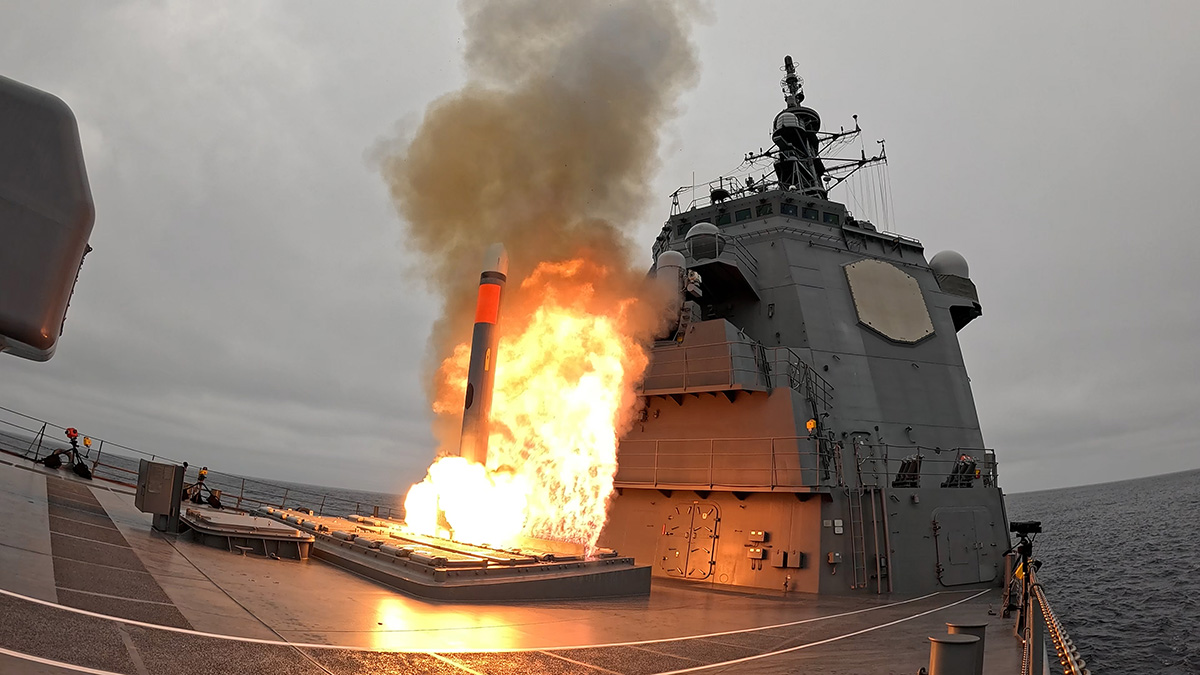
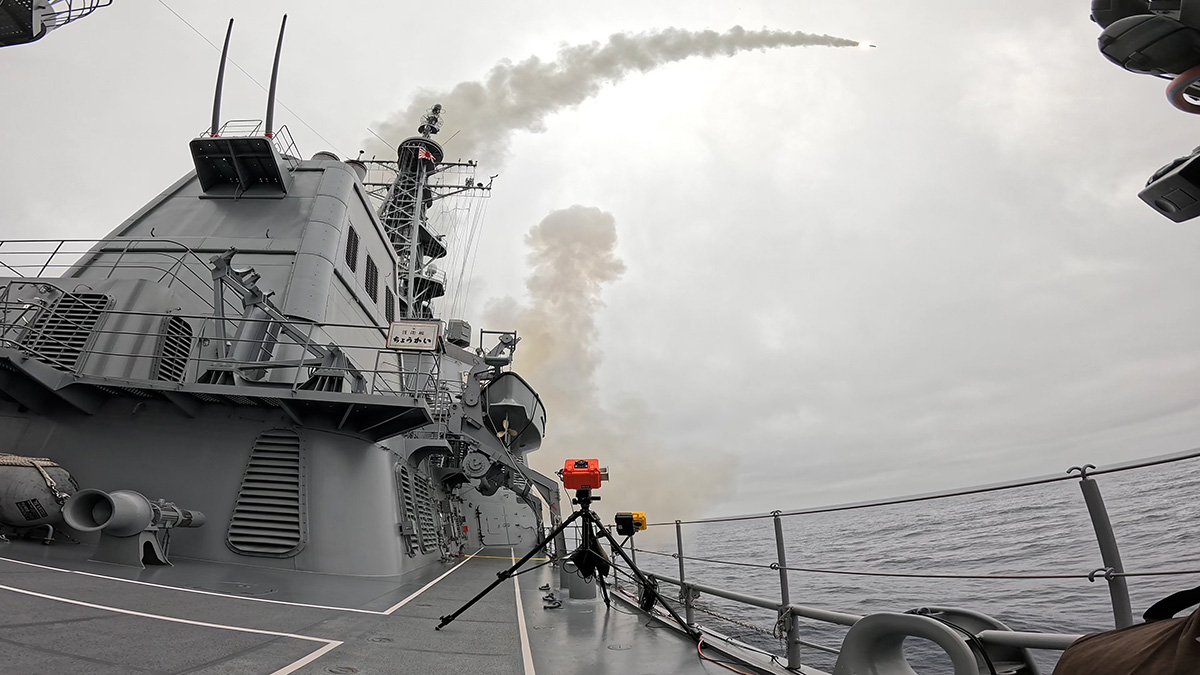
Japan’s Ministry of Defense (MoD) announced on July 30 that the Japan Maritime Self-Defense Force (JMSDF) had test-fired a Tomahawk land-attack cruise missile from one of its warships, the Aegis guided-missile destroyer JS Chokai (DDG-176), for the first time.
The test was conducted on June 29 in the Pacific Ocean with US Navy’s support. It followed the March 2026 announcement by the Acquisition, Technology & Logistics Agency that Chokai had completed the necessary upgrades to fire long-range standoff missiles.
With the launch, Japan became the third nation (apart from the United States) to fire a Tomahawk from a surface combatant—after Australia and the Netherlands—and the fourth overall, following the United Kingdom, which has launched the missile only from submarines. The successful test marks a major step in Tokyo’s effort to field a credible long-range conventional strike capability.
The MoD verified that the missile reached its intended target and that the ship and crew successfully carried out the launch sequence. It did, however, conceal certain information, such as the precise location in the Pacific, the number of missiles fired, the range attained, the target’s specifics, and the missile variant used.
Historic moment as JS Chokai becomes the first JMSDF warship to live-fire a Tomahawk Land Attack Missile. We can expect a torrent of state media commentaries from you-know-who proclaiming the impending end of the world with Japan’s remilitarism. https://t.co/zXXalHYluW pic.twitter.com/wT1rHAP2V7
— Collin Koh
(@CollinSLKoh) July 30, 2026
Chokai is expected to return to Japan around September 2026, indicating that the Tomahawk capability will be deployed in the volatile Indo-Pacific region.
Japan plans to equip all eight of its Aegis destroyers—two Kongō-class, two Atago-class, and two Maya-class— with Tomahawks. Modifications will be carried out gradually on ships based at Yokosuka and Sasebo.
Additionally, Japan is also building two Aegis System Equipped Vessels (ASEVs), due to enter service in fiscal years 2027 and 2028, respectively. Officials have stated that these ships will not have Tomahawk launch capability upon entry into service, though they are designed for future integration.

Tomahawk forms a central part of Japan’s effort to develop “standoff defense capabilities” in response to a more demanding regional security environment vis-à-vis China, which is widely seen as a potential aggressor amid unprecedented military expansion.
Moreover, it aligns with Japan’s 2022 National Security Strategy, which officially recognized “counterstrike capabilities” as a self-defense measure.
Japanese officials consider the Tomahawk as a deterrent: by holding an aggressor’s launch sites and supporting infrastructure at risk, Japan aims to make any attack on it far more costly and less likely to succeed.
Having said that, the Tomahawk missile is viewed by experts as an interim solution adopted by Japan until indigenously developed options, such as the Type 12 and other long-range missiles, are ready for induction.
Defense By Offense: Japan’s Tomahawks are Here
Japan’s test-firing of Tomahawk has formally heralded the country’s transition from a purely defensive posture to one that includes credible long-range counterstrike stand-off capabilities. This aligns with Japan’s push to strengthen its long-range strike capabilities to deter China, which has steadily expanded its military presence in the East China Sea.
Tokyo regards China’s rapid buildup of missile forces and naval power, together with its assertive actions around the Senkaku Islands (administered by Japan but claimed by China and Taiwan), as Japan’s greatest strategic challenge. Moreover, the Japanese leadership fears that the country could get dragged into a China-Taiwan conflict triggered by the PLA’s invasion of Taiwan, due to its geographic proximity.
Speaking at a news conference earlier, Japanese Defense Minister Shinjiro Koizumi exclaimed that the new capability would be “of great significance for reducing the possibility of an armed attack on Japan itself,” potentially referring to regional rivals such as China. “To defend against incoming missiles while preventing further armed attacks, Japan must possess the capability to launch an effective counter-attack – a counterstrike capability. Long-range missiles can be used for this counterstrike capability.”
The Tomahawk cruise missile is primarily designed to strike high-value, heavily defended land targets, such as command centers, airfields, and critical infrastructure.
With a range of approximately 1,600 kilometers, Tomahawks launched from the western Pacific or waters around Japan can cover all of North Korea and reach deep into eastern China, as well as parts of Russia’s Far East. This essentially gives Japan the ability to strike missile launch sites, air bases, command-and-control nodes, logistics hubs, and amphibious staging areas from outside an adversary’s defensive envelope.

Unlike fixed land-based platforms, sea-based launch platforms are mobile, making missiles more difficult to preempt. The Tomahawk features in-flight retargeting via data links, enabling more adaptive responses during a potential conflict.
With the integration of Tomahawk, Japan can impose costs on the aggressor’s rear-area infrastructure rather than solely defending against the first wave of missiles or ships. This supports “deterrence by denial”, making invasion or sustained attack harder, and “deterrence by punishment”, threatening meaningful retaliation—both of which were earlier missing from the Japanese military’s inventory and philosophy.
Tomahawks will operate alongside ground-launched systems such as upgraded Type 12 missiles and Hyper Velocity Gliding Projectiles, as well as air-launched weapons including the Joint Strike Missile carried by F-35s.
Together, these systems will form a layered, distributed long-range fires network that complicates adversary planning and raises the cost of aggression.
Fielding the Tomahawk will deepen interoperability with the United States while reducing Japan’s exclusive reliance on US forces for deep-strike missions, thereby enhancing Tokyo’s self-reliance as a security actor, which it has been desperately seeking for some time.
China is likely to be wary of Japan’s possession of Tomahawk, particularly since the missile has already proved its efficacy in combat multiple times, most recently in the Iran war. Previous reports suggested that the US military fired over 850 Tomahawk missiles, a number that may have swollen by now as hostilities continue
Beijing has consistently opposed Japan’s defense buildup as provocative and had strongly criticized the deployment of the Mid-Range Capability system in Japan, which can also launch Tomahawks, earlier this year.
- Contact the author at sakshi.tiwari13 (at) outlook.com
- Follow EurAsian Times on Google News
The post Japan Officially Joins The “Tomahawk Club”, Fires U.S.-Origin Cruise Missile in Landmark Pacific Test appeared first on EURASIAN TIMES.
♟️🔥Pechino compra il caos | LEVANTE
DIRETTA · Levante · giovedì 30 luglio 2026 · ore 18:30
Il Golfo brucia e Pechino non spara: compra. Greggio iraniano a prezzo scontato, istituzioni come WAICO, reti di pagamento come mBridge, mediazioni come quella di Islamabad: mentre Washington produce caos, la Cina lo converte in opportunità. È il collaudo della «China Opportunity 2.0», la formula con cui Pechino si presenta al mondo come piattaforma dell’innovazione e venditrice di ordine.
Ne discutono a Levante Fabio Massimo Parenti, professore associato di studi internazionali (Laboratorio BRICS di Eurispes, China Foreign Affairs University), autore dell’analisi sulla China Opportunity 2.0 apparsa sul China Daily Global, e Margherita Furlan, direttrice di Casa del Sole TV e autrice di BRICS Scacco Matto. Conduce Jeff Hoffman.
Affrontiamo insieme:
i raid della notte, i missili sulla base americana in Giordania e lo Stretto di Hormuz richiuso
WAICO: a Shanghai nasce l’organizzazione mondiale per l’intelligenza artificiale, senza Stati Uniti, Unione Europea e Italia
mBridge, dedollarizzazione e la liquidità usata come arma
la Cina dentro la crisi: metà del suo petrolio passa da Hormuz, e a Kuwait City il fuoco ha toccato un’azienda cinese
cosa farebbe un’Italia sovrana nella tradizione di Mattei
LIBRI DELL’OSPITE
La via cinese. Sfida per un futuro condiviso, Meltemi.
The Chinese Way: Overcoming Challenges for a Shared Future, edizione inglese, 2024.
Il libro di Margherita Furlan è nel blocco dedicato qui sotto.
SOSTIENI CASA DEL SOLE TV
Casa del Sole TV è un progetto di giornalismo indipendente autofinanziato.
Per donazioni: IBAN: IT63P0326822300052392596590 Intestato a: La Casa del Sole Edizioni Causale: Donazione Casa del Sole TV
Membership YouTube:
/ @casadelsoletvchannel — Analista Multipolare €5/mese — Inviato della Verità €15/mese — Architetto del Futuro €25/mese
I LIBRI DI MARGHERITA FURLAN
BRICS Scacco Matto (disponibile in italiano, inglese, russo)
SEGUI CASA DEL SOLE TV
YouTube: @CasadelSoleTVChannel
Sito: casadelsole.tv #Levante #CasadelSoleTV #MargheritaFurlan #Geopolitica #Multipolarismo #Cina #Iran #Hormuz #WAICO #FabioMassimoParenti
L'articolo ♟️🔥Pechino compra il caos | LEVANTE proviene da Casa del Sole TV.
Colonialismo Digitale, chi guadagna dai data center?
Chi trae davvero vantaggio dalla corsa ai data center? Mentre il cloud viene presentato come qualcosa di immateriale, dietro la rivoluzione digitale si nascondono enormi infrastrutture che consumano energia, acqua e territorio. Ma chi paga il prezzo di questa trasformazione? E soprattutto, chi ne ricava i profitti? Ne parliamo con Francesco Cappello, analizzando il boom dei data center in Italia e nel mondo, il loro impatto sulle comunità locali, il rapporto con l’intelligenza artificiale, le implicazioni geopolitiche e il nuovo modello di sviluppo che sta ridisegnando il territorio.
Fateci sapere cosa ne pensate nei commenti: i data center rappresentano davvero il progresso o i costi sociali e ambientali sono sottovalutati?
Se l’intervista vi è piaciuta, lasciate un Like.
Condividetela con chi potrebbe trovarla interessante.
Iscrivetevi al canale La Casa del Sole TV e attivate la campanella per non perdere le prossime analisi.
Se volete sostenere concretamente il nostro lavoro indipendente, acquistate un Super Grazie: il vostro contributo ci aiuta a continuare a realizzare contenuti di approfondimento liberi e senza compromessi. #DataCenter #IntelligenzaArtificiale #Cloud #Digitale #Geopolitica #FrancescoCappello #CasaDelSoleTV #Energia #Ambiente #Tecnologia #AI #SovranitàDigitale #Infrastrutture #Economia #Italia
L'articolo Colonialismo Digitale, chi guadagna dai data center? proviene da Casa del Sole TV.
Portugueses preparam férias com rigor financeiro, recorrem às poupanças e evitam endividamento
A Verdict by Men’s State: T-invariant uncovers the details of Darya Shipacheva’s treason case
On July 29, the Moscow City Court is set to hand down its verdict against Darya Shipacheva, author of books and podcasts about chronic pain. The prosecution of this science journalist and feminist activist illustrates a new pattern in how Russia’s repressive machine operates. Treason cases involving money transfers to Ukraine — like those involving donations to Alexei Navalny’s Anti-Corruption Foundation (ACF) — have been fast-tracked: closing arguments in cases seeking 12-year sentences now take just one hearing, lasting only an hour and a half. And online stalking (in Shipacheva’s case, by activists from the misogynistic Men’s State movement) can be enough to trigger a criminal case, including under repressive charges like treason.
After fifteen months in pretrial detention centers in Rostov-on-Don and Moscow, journalist Darya Shipacheva was formally charged with treason at her first court hearing, held on July 27 in the Moscow City Court. As reported in Mediazona, closing arguments lasted just an hour and a half, after which the prosecution requested a 12-year prison sentence. The trial was held behind closed doors. The defense asked the court to take into account Shipacheva’s admission of guilt and cooperation with the investigation. T-invariant spoke to Shipacheva’s friends and fellow students and learned that the treason charge stemmed from a money transfer to Ukraine. “Darya was born in Ukraine and has a lot of family there. As far as we know, investigators reclassified one of her transfers — made to a civilian — and built the case on it,” one of Shipacheva’s acquaintances told us. Another source told T-invariant that the transfer in question went to a relative.
Top news on scientists’ work and experiences during the war, along with videos and infographics — subscribe to the T-invariant Telegram channel to stay up to date.
Darya Shipacheva is a well-known science journalist, the author of books and podcasts on medical topics, and a graduate student in ITMO University’s Health Sciences master’s program (focused on public health). Darya was detained on April 23, 2025, and taken to a pretrial detention center in Rostov-on-Don, where she spent more than a year before being moved for the last few weeks to Lefortovo [a Moscow detention facility run by the FSB, long used to hold high-profile political prisoners — T-invariant] — a detail that was confirmed to T-invariant by five sources close to Shipacheva.
“We were supposed to meet on Zoom to go over some issues with our thesis projects, and Dasha didn’t show up. She was always so motivated and punctual that we knew right away something was wrong. It turned out she’d been detained a few days earlier. We were all baffled as to why she’d been taken straight to Rostov. We assumed that’s where they send people suspected of collaborating with Ukraine, people facing treason charges, and Ukrainian POWs,” recalls a fellow student of Darya’s.
According to T-invariant’s sources, Darya’s phone stayed online for a long time after her detention. “We saw that activity and realized her devices were now controlled by ‘Comrade Major’ [Russian slang for FSB surveillance — T-invariant], and that all our messages were exposed. It was terrifying. We put the word out — delete everything immediately,” one of T-invariant’s sources said.

According to several of Shipacheva’s friends and fellow students, before her detention the journalist had been receiving online threats from supporters of the so-called Men’s State movement over the feminist views she voiced online. “One of the last messages read: ‘We’re digging up dirt on you, they’ll come for you soon.’ Then, based on activity on her Facebook, Telegram, and Instagram accounts, she realized how serious the threats were and started scrubbing her public information, changing her usernames and passwords, and setting her Facebook and Instagram accounts to private,” one of Shipacheva’s friends told us.
“In those days she was bracing for an attack from those shady characters who’d been threatening her online. She told me about it at the time, but she never shared the actual messages or threats with me — she was trying to spare us additional stress,” said another friend of Shipacheva’s.
BACKGROUND
Men’s State is a Russian movement whose activists harass and target women, children, ethnic minorities, and LGBT people. It was founded in 2016 by Vladislav Pozdnyakov as a closed VKontakte community. On October 18, 2021, the Nizhny Novgorod Regional Court designated Men’s State an extremist organization and banned its activities in Russia. According to unconfirmed reports, Pozdnyakov has since left the country. Information about his current activities is inconsistent: he is linked to several Telegram channels (the best known being “Pozdnyakov 3.0”), sells ads and paid access to his private channels (such as “Bottle”), and supports Russia’s invasion of Ukraine.
According to fellow students and instructors, Darya Shipacheva was an remarkably active, motivated student with excellent academic performance. She was detained just as she was finishing her thesis, at the very end of her master’s program. At the request of the defense, the court received strong character references from ITMO. “A very good student — hardworking, serious. One of the best in her cohort,” an ITMO associate professor told T-invariant. From 2019 to 2025, the journalist was a freelance contributor covering medical topics for Forbes Russia and worked with several other outlets, including Zdorovye Mail.ru, Mail.ru’s health section, RBC, Lenta.ru, Reminder, and Takie Dela.
“As far as we know, these almost a year and a half in pretrial detention passed without major incidents. Dasha received books, various items, and letters, and she had visits with family. She’s in a rough emotional state, of course. As far as I know, she was also against making this public, since she worried it might lead to a harsher sentence. But recently she asked us to invite journalists to the verdict hearing,” a friend of the journalist’s told us.
“It’s extremely difficult for her in pretrial detention — Dasha lives with chronic pain. That’s actually what she studied: she wrote a No Panic about it and hosted a podcast called Life Is Pain. She turned her own pain into meaningful, informative work that has helped a lot of people,” said another friend of Shipacheva’s.
From April 2025 until July 28, 2026, there was no publicly available information about Shipacheva’s detention, criminal case, or the investigation against her. According to T-invariant’s sources, this was a decision made by her family and by the court-appointed attorney. The lawyer later changed, but the approach to public communication stayed the same. Since late 2025, the lawyer has changed again, and the journalist is now defended by Oleg Ivankovich. According to Shipacheva’s friends, it was Ivankovich who developed her entire defense strategy and arranged for her to get medication. Ivankovich did not respond to messages or calls from T-invariant’s correspondent.
[[socialnetworks]]
Darya Shipacheva is now trying to complete her master’s thesis from behind bars and still hopes to defend her thesis.
As T-invariant has reported, the timelines for “political” criminal cases have shortened significantly in recent months. Mathematician Andrey Dymov, for instance, was sentenced to three and a half years in a penal colony for a 3,500-ruble donation to ACF less than a month after his criminal case was initiated — after just two hearings. According to defense lawyers, this “fast-track justice” is driven by the sheer volume of treason and extremism-financing cases, which has led to an informal decision to speed up both investigations and trials.
Support T-invariant’s work by subscribing to Our Patreon and choosing a donation amount that suits you.
The post A Verdict by Men’s State: <em>T-invariant</em> uncovers the details of Darya Shipacheva’s treason case appeared first on Т-инвариант / T-invariant.
Il giorno dei vassalli: chi paga la guerra | LEVANTE
Nella stessa mattinata sfilano nello Studio Ovale Volodymyr Zelensky e Benjamin Netanyahu: due guerre, un solo banco.
Nelle stesse ore, a Roma, il governo prenota 14,9 miliardi di prestiti europei per il riarmo. Il 28 luglio è la giornata simbolo dell’ordine atlantico a pagamento: il conto arriva ai bilanci pubblici dei vassalli, mentre sanità e trasporti restano a secco. Ne parliamo a Levante, martedì 28 luglio, con Stefano Orsi, analista militare, e Francesco Dall’Aglio, storico dell’Accademia Bulgara delle Scienze. Conduce Margherita Furlan.
Affrontiamo insieme: • Cosa porta a casa Zelensky dalla Casa Bianca: garanzie, aiuti e la carta della convergenza tra le due guerre, dai raid ucraini nel Caspio ai droni intercettori venduti al Golfo • Cosa ottiene Netanyahu da un Trump che per ora gli nega i raid sull’Iran: l’atomo a Riyadh, la Siria di al-Sharaa verso l’intesa di sicurezza con Israele, la proposta di gestione condivisa di Hormuz • L’aritmetica degli azionisti dell’Apocalisse: intercettori da 3,7 milioni di dollari contro droni da 35mila • L’Italia che paga: i 14,9 miliardi del fondo SAFE, l’annuncio e la retromarcia di Tajani, lo scostamento d’autunno • I BRICS afoni e il multipolarismo alla prova della guerra del Golfo
SOSTIENI CASA DEL SOLE TV Casa del Sole TV è un progetto di giornalismo indipendente autofinanziato. Per donazioni: IBAN: IT63P0326822300052392596590 Intestato a: La Casa del Sole Edizioni Causale: Donazione Casa del Sole TV Membership YouTube:
/ @casadelsoletvchannel — Analista Multipolare €5/mese — Inviato della Verità €15/mese — Architetto del Futuro €25/mese
I LIBRI DI MARGHERITA FURLAN BRICS Scacco Matto (disponibile in italiano, inglese, russo)
SEGUI CASA DEL SOLE TV YouTube: @CasadelSoleTVChannel #Levante #CasadelSoleTV #MargheritaFurlan #Geopolitica #Multipolarismo #Trump #Netanyahu #Zelensky #Iran #Ucraina #Riarmo
L'articolo Il giorno dei vassalli: chi paga la guerra | LEVANTE proviene da Casa del Sole TV.
Bleder Kanalgeruch with an h-index: A Tour of Belgian Academic Magic
A questionable publication in Nature, several fake images, a professor with a dozen suspicious papers, a phantom author with an h-index who turns out to be a Zenit football fan from a fan website — this is not an isolated oddity, but part of a system, a cross-section of today’s Belgian academic environment. More in the latest installment of Plagiarism Navigator.
The main news about scientists’ lives during the war, along with videos and infographics, is available on the T-invariant Telegram channel. Subscribe so you don’t miss anything.
One of the latest critical comments on PubPeer, a platform for post-publication peer review, concerns a study by Belgian researchers at KU Leuven, one of Belgium’s largest and most prestigious universities.
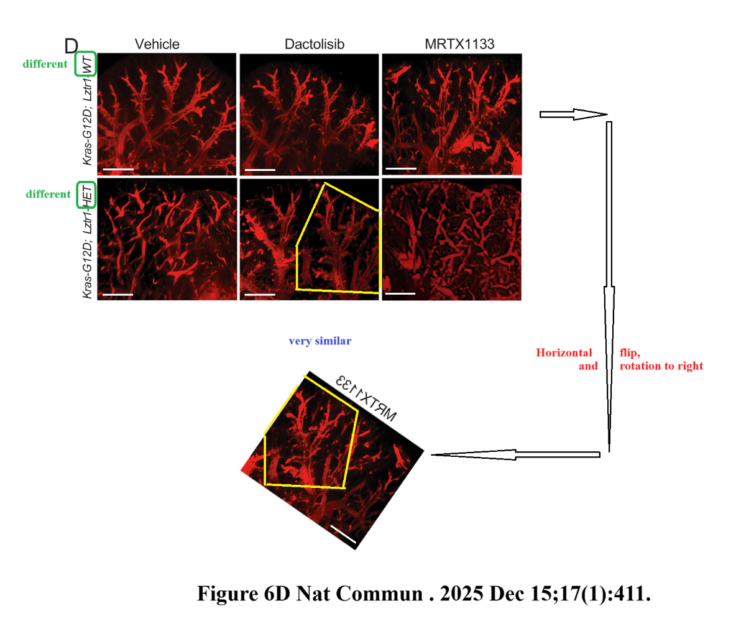
Experts noticed something odd: an image of the vascular network around tumor nodules in mouse lungs appeared twice, even though the authors said the images had been obtained under different laboratory conditions. The second image was a mirrored version of the first, rotated clockwise and dimmed.

Researchers sometimes use such tricks to conceal traces of scientific misconduct. Nature Communications, which published the results of this study in 2025, is a prestigious top-tier interdisciplinary journal with a high impact factor of 14.7. One would like to believe this was merely an unfortunate technical error, especially since the Belgian authors of the paper had not previously been caught in similar manipulations. But it is not that simple.
Among the eleven authors of the publication, one name stands out: Anna Sablina. Her record includes more than a dozen papers in which experts have found signs of image manipulation. Who is she?
According to For Better Science, shortly after defending her Candidate of Sciences dissertation in Moscow, Anna Sablina left Russia. She first worked as a postdoc in the United States, and from 2009 as an associate professor at KU Leuven. She is now a full professor and heads her own laboratory.
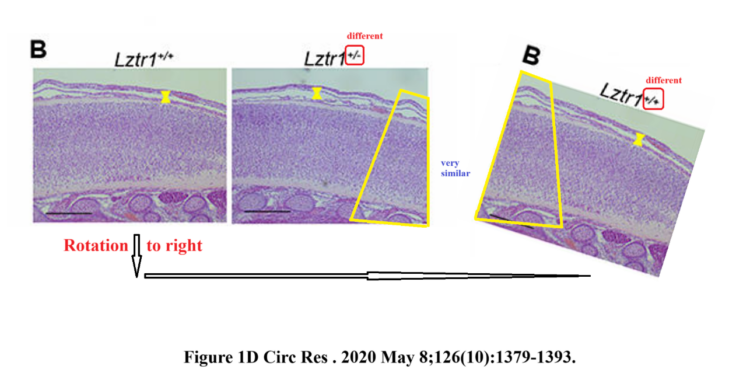
Here is another example showing that the methods of “working” with images in Sablina’s co-authored publications have changed little over the years. The figure below shows histological sections of mouse embryo skin: normal embryos on the left, and embryos with the loss of one copy of the gene on the right. The two images partially overlap when one is rotated clockwise, which should not happen.

In 2020, this paper was published in Circulation Research, a prestigious journal and leading outlet in cardiovascular and translational biology, with a five-year impact factor of 20.8. Among its co-authors we find another name: Mikhail Steklov, a former employee of the K. A. Timiryazev Institute of Plant Physiology of the Russian Academy of Sciences and now a postdoc at the Flemish Institute for Biotechnology in Ghent, Belgium. Steklov also has several PubPeer comments in which experts have noticed signs of image manipulation.
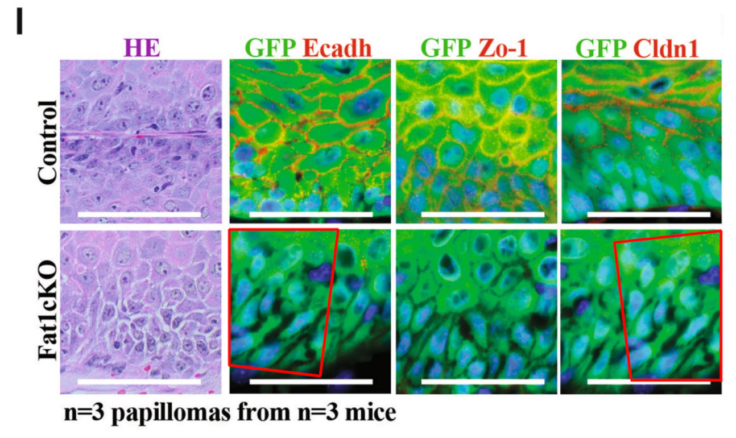
Even so, Steklov still has a long way to go before catching up with Professor Sablina. Sablina appears to have persuaded even some Belgian researchers of the effectiveness of her methods. One of them is Professor Francis Impens of Ghent University, who, like his colleagues Sablina and Steklov, has repeatedly been flagged on PubPeer. One of Impens’s papers was published in Nature, whose impact factor exceeds 50, making it one of the world’s most prestigious and highly cited scientific journals.
Here is an example of image manipulation from that paper. The figure below shows a histological analysis of papillomas from three different tissues. But two of the three images partially overlap when rotated, which should not happen.

None of the papers mentioned above, published mainly by teams of Belgian scientists, has been retracted. The only paper by Professor Sablina that has been retracted was co-authored with Chinese scientists. It was withdrawn a year after publication at the request of Sablina’s co-authors. The retraction note states: “We discovered that the data presented in Fig. 1C, Fig. 2D and Fig. 4A in the manuscript were inappropriately manipulated. These manipulations are contrary to the journal’s policy.” Unlike their Belgian colleagues, the Chinese scientists were ultimately prepared to acknowledge their mistakes.
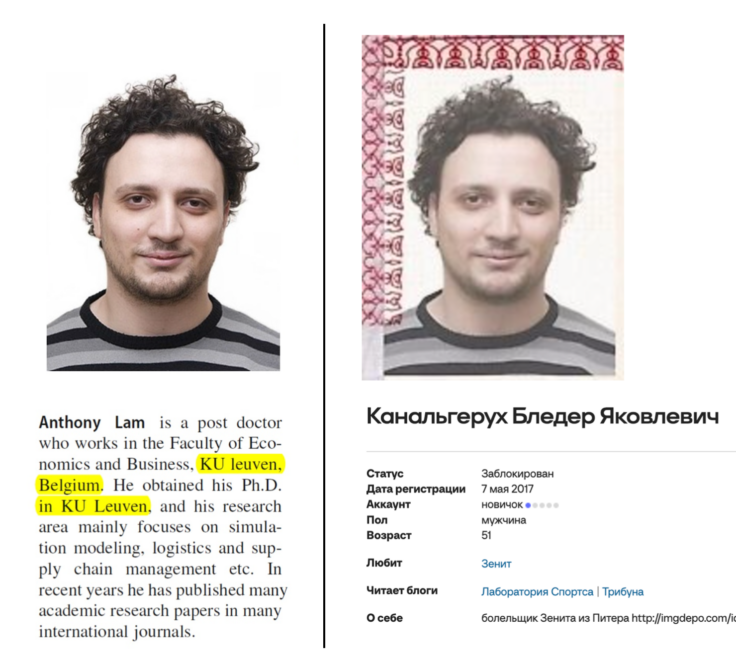
China is also linked to another amusing and instructive story involving KU Leuven and Russia. Several years ago, scientific papers began appearing in various academic journals in which a certain Anthony Lam, a young professor at the Faculty of Economics and Business at KU Leuven, was listed as a co-author of Chinese researchers. It soon turned out that no such professor existed at the university.
Nor, for that matter, did he exist at any other university in the world. The Chinese authors had simply invented him, taking the photograph from a Russian football fan website, where it showed a certain Bleder Yakovlevich Kanalgeruch.

The name on the fan website was probably invented as well: translated from German, and possibly from Yiddish, Kanalgeruch literally means “sewer stench,” while Blöder means “fool” or “stupid person.” Most of those papers were later retracted. But now we know this: Zenit fan Bleder Yakovlevich Kanalgeruch has an h-index of eight. By this academic metric, Kanalgeruch even outperforms some members of the Russian Academy of Sciences.
A curious detail: one of the papers authored by the fictional Belgian professor Anthony Lam was published in 2021 in the Russian journal Izvestiya Vuzov. Fizika. This may well be the only journal in the world that never bothered to retract a paper with a fake co-author.
Taking all these circumstances together, one is led to suspect that the fictional Belgian professor — and the subsequent promotion of publications under his name — were the product of a paper mill involving Russians with a strong sense of humor.
[[socialnetworks]]
To be fair, questionable publication practices are entering the European academic environment not only from the post-Soviet space. The problem is much broader. In recent years, Belgian universities have increasingly faced forms of academic misconduct whose roots lie in countries in Asia and North Africa.
As researchers from these countries move to Belgium for postdoctoral, teaching, or faculty positions, they sometimes bring with them academic norms shaped in their previous environments — including a tolerance for plagiarism, fictitious co-authorship, publications in dubious journals, and the artificial inflation of publication records.
Here is just one, but telling, example. Professor Hamada AbdElgawad has worked at the University of Antwerp for more than ten years. Yet even after such a long period, experts continue to find serious violations in his publications.
For example, in a 2023 paper published in Molecules, a Swiss journal indexed in Scopus, and co-authored with his Egyptian colleagues, the Belgian professor used a scanning electron microscope image taken from someone else’s article, published several years earlier and devoted to entirely different experimental conditions.
Experts also find in the professor’s record images borrowed from the internet, data falsification, manipulations with experimental spectra, and obvious conflicts of interest. It should be noted that in most such publications, AbdElgawad is the only representative of a European university. The other co-authors come from various countries in the Middle East.
This situation is typical of Asian paper mills, which use some Western European co-authors to give their publications greater weight.
Current videos about science during the war, interviews, podcasts, and streams with prominent scientists are available on T-invariant’s YouTube channel. Become a subscriber!
Of course, the cases described above concern a minority of individual researchers, not Belgian universities or Belgian scientific schools as a whole. But what is the overall picture? On one side, professors with dozens of suspicious papers, postdocs moving from one institute to another with the same set of “tricks,” and prestigious journals that prefer not to notice the obvious. On the other, the fictional Anthony Lam — also known as Bleder Yakovlevich Kanalgeruch.
The absurdity of this situation reveals a simple truth: the modern publication system has long been evaluating not so much science itself as the ability to imitate it. The problem is that it takes only a few percent of dishonest scientists and one or two indifferent editors for systematic misconduct to penetrate the system. Belgium is not an exception; it is an indicator of a broader crisis in publication oversight across academia.
As long as retractions remain isolated events that happen only under external pressure, rather than as a result of universities’ own internal checks, stories like these will keep recurring. And each new case is not merely another bad paper, but a quiet erosion of trust in the entire European academic system.
Support T-invariant by subscribing to our Patreon and choosing a donation amount that works for you.
The post Bleder Kanalgeruch with an h-index: A Tour of Belgian Academic Magic appeared first on Т-инвариант / T-invariant.
PUSIN for Putin: Who is selling the “happiness button” and how?
By the beginning of Vladimir Putin’s new presidential term in 2030, Russia’s fastest-growing neurotechnology company promises to begin developing solutions for maintaining mental health and cognitive function, as well as technologies for stimulating brain neuroplasticity and managing emotional states — specifically, “fear, happiness levels, and motivation.” Research and development are being handled by scientists at Moscow State University’s AI Research Institute, which is headed by Putin’s daughter, Katerina Tikhonova. Neiry Group already enjoys substantial support from both state development institutions and private investors, notably from billionaire Vladimir Potanin and other major Russian investors operating through closed-end mutual funds. What is at stake is extending life expectancy and improving quality of life in old age — a topic that deeply concerns the Russian President, though he is certainly not alone in this interest. With such positioning, Neiry expects to secure significantly more funding, according to T-invariant’s sources in the Russian venture capital market.
Top news on scientists’ work and wartime experiences, along with videos and infographics — subscribe to the T-invariant Telegram channel to stay updated.
From Rats to Humans
The MSU AI Research Institute has become a strategic partner for Neiry Group, which plans to move “from mass microchipping of animals to the first experimental human neurochip implant surgeries.” The institute houses an invasive neural interface development laboratory where joint research with Neiry is conducted. The company and its founder, Alexander Panov, participated actively in the recent St. Petersburg International Economic Forum (SPIEF). In the “Know Our Own” zone, as part of the “Minute of Techno-Glory,” Neiry’s booth operated alongside “The Welder Catherine,” Lapochka lemonade, Infomaximum, and other Russian brands. At the forum, the company announced a new funding round and even more ambitious plans than before (see previous T-invariant article on remote-controlled bio-drone pigeons and “conquering the world with neurotechnology”).
This new phase of active fundraising has shed light on the sources of funding used to consolidate Russian neurotechnology companies around Neiry. Meanwhile, an aggressive PR campaign has revealed what Neiry intends to do next.
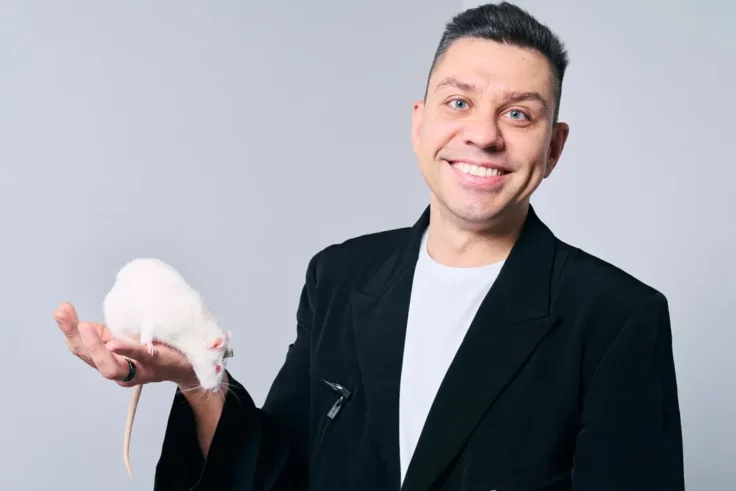
“Just so you know, my co-founder of Neiry is Katerina Tikhonova, the idea for an AI-chipped rat came from Mikhail Kovalchuk, and our ambassador is Vladimir Putin!
*according to foreign agents, extremists, and Navalny’s idiots”From the Telegram channel of Neiry founder and CEO Alexander Panov
In its investor presentation on the Aurora platform, Neiry listed six organizations as investors: Interros holding company, the Voskhod Fund, the NTI Fund, JSС Mira AI Capital, SPEC Investment, and the Seed Investment Fund. However, in the presentation on its own website, Neiry has omitted Interros, owned by billionaire Vladimir Potanin. As a reminder, the holding company is under US and Canadian sanctions, while Potanin himself has been on the US sanctions list since 2018, and after 2022 was sanctioned by Canada, the UK, Australia, and New Zealand. The Voskhod Fund was created by Interros and was sanctioned by the US in 2023.
Neiry raised a significant portion of its capital from state development institutions. Judging by the presentation, the NTI Fund was its first public investor. Among the third-round investors is the Seed Investment Fund (Russian abbreviation$nbsp;— FPI), displaying the old logo of the Russian Venture Company (RVC). Yet back in 2019, RVC announced the closure of its subsidiary funds (including FPI), and in 2021 it was reported that RVC had been integrated into the Russian Direct Investment Fund (RDIF).
Meanwhile, FPI remains legally registered. This is likely due to the administrative peculiarities of RVC’s reorganization and the convoluted nature of winding up legal entities, especially of this type, according to a former RVC employee who spoke with T-invariant. There is no record of any substantive activity by FPI over the last 8–10 years — a fact confirmed to T-invariant by two former FPI employees.
Sources say it is difficult to explain why FPI appears in the “Neiry Group’s Capital” section of the investor presentation. “Perhaps it refers to some earlier investments in one of the neurotechnology companies that became part of Neiry, or maybe it’s somehow connected to RDIF, which now holds what used to be called RVC or was part of it,” suggests a former RVC employee. T-invariant sent an inquiry to Neiry Group to clarify this information, but no response has been received yet.
T-INVARIANT BACKGROUND INFO
The Russian Direct Investment Fund (RDIF) is a sovereign wealth fund established in 2011 by the Russian government to attract foreign capital into the Russian economy and co-invest in key projects. RDIF and its CEO, Kirill Dmitriev, were added to all major sanctions lists within days of the full-scale invasion of Ukraine (February 28, 2022, by the US; March 1, by the UK; and shortly after by the EU). Kirill Dmitriev has headed the fund since its founding. Today, he is one of the key Russian negotiators in economic and political dialogue with the US under the Trump administration.
During these active negotiations, a project for a tunnel across the Bering Strait (Chukotka–Alaska) was proposed. The fund and its founder have always been inclined toward mega-projects. In 2016, the fund invested in Hyperloop One, a company developing a high-speed vacuum train based on Elon Musk’s design. The deal’s value and terms remain unknown (though after the project collapsed, all investments were lost). In 2017, Kirill Dmitriev announced that RDIF would invest in the construction of Neom, the “city of the future” in Saudi Arabia. Dmitriev’s wife is Natalya Popova, a friend of Katerina Tikhonova and her deputy at Innopraktika (for more details, see the article “The ‘Single Perimeter’ State Corporation: How Putin’s Daughter and Her Fashion-Model Friend Decided to Turn Innopraktika into an Integrator for All High-Tech Companies”).
The remaining two public investors are JSC Mira AI Capital and SPEC Investment. These companies have not been included in sanctions lists. Alexey Mariza, the founder and former CEO of Mira AI Capital, also serves as the chief operating officer of Neuroroga. In 2025, during its third funding round, Neiry acquired a 50% + 1 share stake in Neuroroga. Consequently, Mira AI Capital’s investments now flow into both the parent company (Neiry) and its subsidiary (Neuroroga). The founder of SPEC Investment is the Minerva-Capital closed-end mutual fund with a 99.93% stake; this fund is managed by JSC AF Capital Management Company (known as JSC Veter Management until January 10, 2025).
The strategic partnership with Katerina Tikhonova’s institute serves as a signal of political priority and provides access to the largest pools of capital. Potanin’s funds provide financing, while VTB Bank — represented by its Deputy Chairman of the Management Board, Vadim Kulik — gives Neiry prominent visibility at the major Data Fusion conference (hosted by the state bank in collaboration with Tikhonova’s Innopraktika foundation) In 2025, Kulik personally moderated a panel titled “Neurotechnologies: The Race for the Future.” Judging by the list of participants, Neiry is the company driving this race — specifically, Neiry founder and CEO Alexander Panov, Chief Scientific Officer Mikhail Lebedev, and laboratory head Vasily Popkov (both scientists are key figures at the MSU AI Research Institute). Such high-level PR support is not even available to Russia’s largest and longest-established neurotechnology companies, such as Motorika, which specializes in functional cybernetic limb prostheses, neuroimplants, and medical device distribution (Motorika has received direct investment from RDIF and has completed a pre-IPO round).
“The development of neurotechnologies, which Neiry is engaged in, can be viewed as a tool of geopolitical competition, and the state’s current position regarding limited regulation of AI development allows for growth in all directions,” stated VTB Deputy Chairman Vadim Kulik.
The new, fourth funding round was split into two parts: a “public” round and one for professional investors. The round for retail investors ran from March 10 to April 24. The price per share was set at 5,250 rubles [~$70]. The minimum investment for retail investors was 152,250 rubles [~$2000], equivalent to purchasing 29 shares. On his Telegram channel, Panov said that over 200 individual investors became shareholders within three weeks of the campaign. In another post, he mentioned that Neiry “raised 100+ MILLION [~$1,3m] in funding” within five days of targeting individual investors — this is currently the only public information available on the financial results of the 2026 funding round. Looking ahead, he noted that from May through the end of 2026, participation in the round would be restricted “only to strategic partners and institutional funds with a minimum investment size of 100 million rubles [~$1,3m].”
Ultimately, according to the investor presentation, Neiry Group’s valuation is projected to reach 8 billion rubles [~$100m] by the end of 2026. Following that, an IPO is planned for 2028.
On-Demand Happiness
It is expected that 50% of the funds raised will be allocated toward accelerating research and developing invasive neural interfaces to treat neurological and psychiatric disorders, as well as enhancing cognitive abilities. This will culminate in the mass production of PUSIN — the “Personal Universal System of Invasive Stimulation.” Another 30% of the investment will be used to acquire other neurotechnology companies, with the remaining 20% dedicated to international market expansion, clinical trials, and related overhead costs.
The company’s website states that Neiry operates four proprietary surgical units, has performed over 500 successful animal surgeries, and is slated to begin human trials in 2026. The company has already announced recruitment for a study on deep brain stimulation (DBS) for patients with treatment-resistant depression and obsessive-compulsive disorder. This procedure involves implanting electrodes into specific brain regions to deliver stimulation, thereby mitigating symptoms. This is not a novel development — neuromodulation and neurostimulation techniques have long been used worldwide, for instance, in treating Parkinson’s disease. These routine procedures will likely serve as a “warm-up” for future, more invasive and complex devices — namely, brain-computer interfaces (BCIs).
Neiry’s flagship development is PUSIN. According to the company’s investor presentation, it will enable users to control gadgets using thoughts alone, as well as modulate their emotional state — for example, inducing feelings of happiness and improving sleep quality. Neiry expects practical applications of neurointerfaces to materialize around 2030–2035. During 2026–2027, the plan involves refining surgical procedures using Medtronic neurostimulators, for which proprietary clinics will be launched, alongside upgrading PUSIN following animal trials. The period between 2027 and 2030 will see the first human PUSIN neuroimplantation and technology optimization. Following this, the company plans to develop and roll out technologies for maintaining mental health and cognitive functions, alongside managing emotional states like fear, happiness, and motivation.
“Even though Neiry is probably ALREADY THE LARGEST PRIVATE PROJECT in the country by number of investors, valuation, and growth rate, I predict that our deep tech fan club will add several hundred more investors over the next three weeks. This means we will be able to do more, go deeper, and chip everyone even more aggressively, advancing our scientific, engineering, and product development all in the name of profit margins and saving human civilization.”
From Alexander Panov’s Telegram channel
Overall, according to Neiry’s strategy, the company’s primary focus areas include developing BCIs (such as PUSIN), invasive stimulators for psychiatric disorders, and non-invasive neurodiagnostic devices (wearable EEG units, psycho-emotional monitoring systems, etc.).
The company believes that neurotechnology development in Russia is hindered by numerous legislative loopholes, outdated regulations that require overhaul, an obsolete educational framework for training personnel, and rigid device testing requirements — arguing that special rules should be established for the development and testing of “breakthrough” devices.
On his channel and at other events (such as a strategy session NeuroNet — an industry association of neurotechnology companies) Panov’s rhetoric has become increasingly hardline. He argues that to outcompete the US and China, which currently lead the industry and can deploy massive capital, Russia needs to win on the regulatory front: “Designate a few regions in the country where ANY neuroimplantations are permitted based on an agreement with the patient/user. This simple fix would provide a massive boost to neuroscience and neurotechnology, and startups from all over the world would start moving here. Zero budget expenditure, massive benefits. We already have a huge list of clients ready to go.”
“We are making filthy money by cutting back on marketing, just because everyone writes about us (for free!)”
From Alexander Panov’s Telegram channel
Erection Subscriptions
While CEO Alexander Panov handles PR promotion personally, the entire team follows closely in his wake. Neiry initially began communicating its results by leaning into blatant clickbait. For instance, in 2024, a press release titled “Introducing a rat that is smarter than most people” circulated across media outlets. This referred to the presentation of the first results of Project Pythia — where scientists and developers claimed to have connected a rat’s brain to artificial intelligence “for the first time in the world.”

In a recent interview, Panov discusses another acquisition: the company Neuroroga. In his words, a cow is a milk-producing machine that should yield as much as possible, but this machine has its own agency — for instance, deciding when to eat. To yield more milk, a cow needs to eat more. The management of a dairy farm approached them with a request: design a button that forces the cow to start feeding when pressed. Panov calls this a “cow subscription” — the technology works on a subscription basis: the cow has a neuroimplant installed in its brain that remains active as long as the farm pays the subscription fee. When payments stop, the stimulator shuts off, and the cow reverts to being a normal cow.
[[socialnetworks]]
According to Panov’s speculation on his Telegram channel, these smart cows yield 15% more milk. Yet the same smart cows, featured in the investor presentation, are claimed to yield up to 30% more.
It is likely safer to rely on the 15% figure — as that was the percentage that ultimately ended up on the label of the milk bottle designed by Artemy Lebedev Studio.

In the spring of 2026, Neiry’s bio-drone pigeons generated such intense blowback that the company now refrains from mentioning the topic altogether; Panov did not breathe a single word about it even during his most extensive and detailed interview with the business outlet Inc. The “cow subscription” and spy pigeons have been left behind. The PR focus has shifted entirely to human enhancement. In the interview, Panov talks at length about how he intends to sell a “happiness subscription” and an “erection subscription.” The only thing left is to officially put that human’s name in the project roadmap.
In that same interview with Inc., Panov mentions — whether jokingly or seriously — that certain products of the company are vetted by an “assigned officer from the Russian Orthodox Church.” Whether the journalist is genuinely surprised or just playing along is unclear. Either way, the desired effect was achieved: The Edinorog [Unicorn], a Telegram channel covering business, is seriously seeking confirmation of this from investor companies and ROC officials.
“I want to emphasize something very important: the 21st century will be the century of neurotechnology. Globally, it will mirror how the 20th century was defined by nuclear tech. It will spark a similar scientific race. Nations will compete in neurotechnology to make their citizens’ lives longer, better, and more efficient. Initially, this will be a matter of safeguarding public health, not through pharmaceutical means, but electroceutical ones. It will assist individuals with treatment-resistant depression, Parkinsonism, epilepsy, and several other conditions… But soon after, states will begin competing to have more upgraded people… The world will witness a race for a new kind of human. We call it homo superior — a human integrated with computers on a fundamentally new level. Such individuals will have the capacity to interface with computers and artificial intelligence in real time,” Alexander Panov says, outlining these prospects in his interview.
Twenty years ago, using a similar line of reasoning, Mikhail Kovalchuk secured roughly 180 billion rubles [$2,4b] from Vladimir Putin to develop nanotechnology. The objective was clear — leapfrog the West through fast-paced nano development. The funds were spent on various needs with varying degrees of efficiency, yet a domestic nanotechnology industry never materialized in Russia. The new visionary, Panov, outlines a far more ambitious goal — outliving the West via neurotechnology. And, judging by how the PR campaign is unfolding, there is every indication that it will meet the same fate as the grand “nano-project.” That said, few experts surveyed by T-invariant expressed any regret over this, arriving at a consensus: “It’s better they blow money on a happiness button, an erection lever, flying cows, and milk-yielding pigeons than on the war.”
T-invariant was unable to find scientists willing to offer a substantive evaluation of Neiry’s prospective plans or its investor presentation. One typical reaction was: “There was a major neurotechnology science conference recently. Throughout the entire event, I didn’t hear a single soul discuss their developments or anything related to them,” an interlocutor told the editorial team. As T-invariant previously pointed out, no peer-reviewed scientific papers detailing the mechanisms of Neiry’s neuroimplants in either animals or humans have been published. In the most famous video of the trials, the bio-drone pigeons merely fly left or right upon receiving a command, and nothing more. Perhaps an “assigned ROC officer” has no need for verified data published in peer-reviewed journals, given that the R&D outcomes are evaluated not by venture capital experts, but the main patient himself and his inner circle.
Support T-invariant’s work by subscribing to our Patreon and choosing a donation amount that suits you.
The post PUSIN for Putin: Who is selling the “happiness button” and how? appeared first on Т-инвариант / T-invariant.

Why is Putin Hunting Telegram’s Founder Pavel Durov and Branding Him a Terror Facilitator?
Russia has charged Telegram founder Pavel Durov with facilitating terrorist activity in the country and put him on an international wanted list, alleging that his hugely popular messaging app was being used by Ukrainian spies to organize attacks inside Russia.
The charges, announced by the Federal Security Service (FSB), followed a long investigation into Telegram.
The FSB accused Telegram of failing to remove “numerous channels, chats and bots” allegedly used by “Ukrainian intelligence agencies, terrorist and extremist organizations to prepare and coordinate acts of sabotage and terrorism, mass murder, and cyberfraud” in Russia, which resulted in “numerous human casualties.”
It further said that a chatbot available on Telegram called “Daivinchik/Leo” had been used by Ukrainian spies to recruit young Russians to carry out sabotage and terrorist operations.
Reportedly, Ukrainian special agents pose as young women on the app to recruit Russian men and use them for spying or carrying out sabotage activities.
Russia has also issued an international arrest warrant against Durov, who was born in Russia but currently lives in Dubai.
Notably, the Telegram app, which is hugely popular in Russia, is already heavily restricted in Russia.
Russian citizens can now access Telegram only by using a VPN to encrypt their traffic and conceal their location. However, despite these restrictions, state bodies, including the Kremlin and the defense ministry, continue to post on it regularly.
The crackdown on Telegram is part of Russia’s broader effort to restrict access to foreign tech platforms and assert control over the internet. Apart from Telegram, other popular messaging apps such as WhatsApp, Instagram, Facebook Messenger, Signal, Discord, Snapchat, and Apple FaceTime are also banned in Russia.
Russia has now gone one step ahead and formally charged Telegram founder Durov with aiding terrorism, despite the fact that the app is hugely popular in Russia.
However, notwithstanding Russian restrictions on Telegram and the charging of its founder with terrorism, both Russia and Ukraine have used the app extensively in the ongoing war.
In fact, the Telegram app has also been described as a “virtual battlefield” in the war between Russia and Ukraine, where it is used by officials, soldiers, defense ministry handles, and influential bloggers on both sides.
So, how did a messaging app become key to the Russia-Ukraine War?
Telegram As A “Virtual Battlefield” in the Russia-Ukraine War
In the Soviet Union, media was heavily controlled by the state to control public discourse.
Russia inherited this culture of controlling the narrative through its influence on the media. However, with the proliferation of digital and social media, the state’s ability to control the media weakened.
Telegram was one of the most popular messaging apps in Russia and Ukraine in 2022 when the war began.
In Russia, Ukraine, and many Eastern European countries, Telegram served as a crucial alternative to state-monitored communication channels for sharing news.
With Russia’s invasion of Ukraine, Facebook and Instagram were banned over extremism charges by a Moscow court, and access to Twitter was restricted by the Russian censorship body Roskomnadzor.
As there was disdain for traditional state-controlled media in Russia and many other social media channels were banned outright, the role of Telegram, already hugely popular in Russia, in shaping narratives and controlling perceptions of the war became even more critical.
According to a Levada survey, among Russian youth aged 18-24, TV was the least popular news source, with 41% relying on Telegram channels for news. Additionally, during the first two months of the conflict, 76.6% of Ukrainians used social media for news, with Telegram as the most favored platform at 65.7%.
Telegram was also used by both the Russian and Ukrainian governments to broadcast air raid warnings and distribute maps of local bomb shelters.
Some of Telegram’s unique features, such as the ability to make a channel public or private, the option to have unlimited subscribers, and the lack of algorithms that boost or restrict content visibility, have made Telegram a popular information-dissemination tool for both pro- and anti-war voices.

According to a research paper titled ‘Telegram as a Battlefield,’ over 40% of Telegram channels are dedicated to news, with approximately 17% directly related to the war and ongoing events in Ukraine.
As the war progressed, many war bloggers who were not part of traditional media outlets began posting on Telegram, reaching millions of people.
For millions of people, these war bloggers became an alternative source of information and war updates, often coming straight from the front lines.
Given its popularity as a source of information for war updates, many pro-government channels also used Telegram to push their narrative and spread disinformation.
The paper ‘Telegram as a Battlefield’ also found that after the invasion, average views per post for Pro-Kremlin channels rose from 15,929 to 67,442 (a 323% increase) and for Anti-Kremlin channels from 25,346 to 104,778 (313% increase), highlighting how Telegram emerged as a critical battlefield for disseminating information, propaganda, and shaping narratives.
However, it noted that anti-Kremlin channels consistently garnered higher viewership than pro-Kremlin channels, especially post-invasion.
Also, as the war progressed, Ukraine, just like in the case of drone technology, used Telegram in more innovative ways than Russian government circles.
Ukrainians used it for air-raid alerts, bomb-shelter maps, and official updates from President Zelensky and military commands.
Ukraine also used Telegram as an intelligence-collecting tool. It crowdsourced intelligence via tip bots and channels that shared enemy vehicle movements, leading to successful strikes.
Common people in Ukrainian villages often shared information on Russian military movements with the Ukrainian military and intelligence securely via Telegram.
Telegram, in fact, became a vast depository of HUMINT (human intelligence) for Ukraine.
Furthermore, the platform was also used by Russian government critics to share information with the Ukrainian military across the border.
Telegram was also used to document war crimes and OSINT (open source intelligence).
Ukrainian intelligence also used Telegram to communicate with people in occupied territories and to encourage them to share intelligence on the Russian military.
Frontline troops also use the app to organize logistics, share drone feeds, and have informal discussions with their military commands.
Telegram has also been described as the conflict’s digital battle space, where organizing logistics, war blogging from the frontlines, propaganda, disinformation campaigns, narrative warfare, intelligence collection, recruitment of spies and saboteurs, cataloging of war crimes, and dissemination of public interest information like air raid warnings and bomb shelter maps all take place in real time.
Telegram, in fact, is providing the most unfiltered view of the war.
“Telegram has become this really key battleground in the information war,” Dr. Ian Garner, a historian and translator of Russian war propaganda, told Time magazine. “And it’s interesting that this information war has been outsourced to a private company.”
While Russia has often tried to use Telegram to its advantage, Ukraine has shown much more ingenuity in using it, which explains Moscow’s love-hate relationship with the app.
Russia might have restricted the app and now formally charged its founder with terrorism, but official Russian media handles are still using it, and even common Russian citizens can use it using VPN services.
However, even after these formal charges, Telegram will continue to remain the digital battle space of the Russia-Ukraine War.
- Sumit Ahlawat has over a decade of experience in news media. He has worked with Press Trust of India, Times Now, Zee News, Economic Times, and Microsoft News. He holds a Master’s Degree in International Media and Modern History from the University of Sheffield, UK.
- He can be reached at ahlawat.sumit85 (at) gmail.com
The post Why is Putin Hunting Telegram’s Founder Pavel Durov and Branding Him a Terror Facilitator? appeared first on EURASIAN TIMES.
This, Too, Shall Pass
Linni Kral has always been preoccupied with her bowels, but as a food writer, it hasn’t usually been that end she’s focused on in her writing. Now, as the internet explodes with “scat chat,” Kral is ready to investigate whether obsessing over our bowel movements has any merit. The result is a giggle fest—though you’ll need the stomach for some serious poo talk.
One day, it seems, the internet woke up and chose BMs, and suddenly the hottest girl you know is posting about scat. Now you have to go out of your way to not eat fiber—prebiotic supplements are in our soda, our candy bars, our cold foam. The beverage case is dominated by the likes of Olipop and Poppi and Culture Pop, all offering varying degrees of digestive assistance. The other day, I saw a smoothie blend in the freezer aisle called “Fiber Supremacy,” and earlier this year, Frito-Lay launched a fiber-packed version of both SunChips and Smartfood popcorn. Kraft is making a purgative macaroni and cheese that boasts six grams of fiber per serving (or 15 grams if you eat the whole box—which is, let’s be honest, how most people consume Easy Mac). Outside the retail space, home cooks are finding ways to fit chia and flax into not just their breakfasts but their meat loaf. They’re pureeing beans into sauces and veggies into puddings and cakes. Literal doctors are posting their #fibermaxxing menus to TikTok. And while this may sound like just another wave on the ocean of content we surf daily, it gets…weirder.
PENAFIEL: CONDUTOR DE PESADO DETIDO POR FRAUDE EM CARTÃO DE TACÓGRAFO

O Comando Territorial do Porto, através do Destacamento de Trânsito de Penafiel, deteve ontem, dia 27 de julho, um homem de 46 anos por utilização fraudulenta de um cartão de condutor no concelho de Penafiel.
Durante uma ação de fiscalização rodoviária, os militares abordaram um veículo pesado de mercadorias e detetaram que o motorista estava a utilizar o cartão de uma terceira pessoa. Segundo o Comando Territorial do Porto, o objetivo seria registar de forma fraudulenta os tempos de condução e a atividade profissional, de forma a ocultar o verdadeiro responsável e a impedir a correta fiscalização das pausas e dos períodos de repouso legalmente estabelecidos.
O infrator foi detido e constituído arguido, tendo os factos sido remetidos para o Tribunal Judicial da Comarca de Penafiel.
Segundo as autoridades policiais, este tipo de prática pode camuflar o incumprimento dos descansos obrigatórios, potenciando a fadiga ao volante e colocando em risco a segurança rodoviária, além de representar uma concorrência desleal no setor dos transportes.
Por: Dino Frazão
Data: 28/07/2026
Se gostou do que leu e ainda não é seguidor, siga a nossa página para ver mais conteúdos!
————————————————–
© 2026 Os Monhacas. Todos os direitos reservados.
Este é um projeto independente de criação de conteúdos.
Se gostou do que leu e ainda não é seguidor, siga a nossa página para ver mais conteúdos!
————————————————–
O conteúdo PENAFIEL: CONDUTOR DE PESADO DETIDO POR FRAUDE EM CARTÃO DE TACÓGRAFO aparece primeiro em OS MONHACAS.


(@CollinSLKoh)