❌

Reading view

Over a decade of war in Yemen and the rise of Ansar Allah

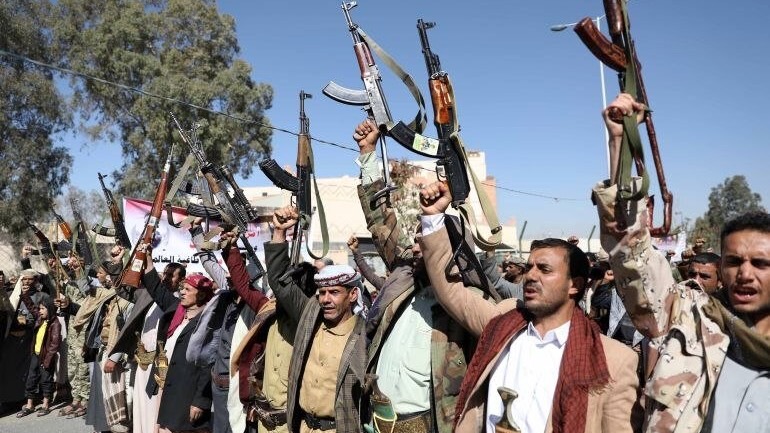
In July, Saudi Arabia joined the US-Israeli war on the West Asia region with strikes on Yemen. The Ansar Allah-led Yemeni Armed Forces retaliated by launching a maritime blockade alongside attacks targeting vital Saudi interests.

The renewed fighting between the two West Asian nations resulted in Ansar Allah’s takeover of the strategic Red Sea port city of Mokha last week and the liberation of all the group’s prisoners held by Saudi-backed forces on Yemen’s western coast.

Ansar Allah’s seizure of Mokha seaport is reshaping regional and global geopolitics, particularly because it serves as a primary gateway to the Bab el-Mandeb Strait and coincides with developments in the Strait of Hormuz.

As these major shifts underscore, Yemen holds immense strategic geopolitical significance.

Situated on the southwestern corner of the Arabian Peninsula and overlooking the Bab al-Mandab Strait, Yemen represents a vital chokepoint connecting the Red Sea to the Gulf of Aden and the Indian Ocean

Consequently, internal political developments in Yemen can have global political and economic repercussions.

This fact, in turn, has put Yemen in the crosshairs of the US-led Western imperialist bloc and their allies in West Asia, which have endeavored to subjugate the country through a devastating decade-long war and blockade. 

The origin of this war coincides with the emergence of Ansar Allah, beginning when the group managed to take control of large swathes of the country, including the capital, Sanaa, in 2014.

The rise of Ansar Allah

Ansar Allah was first established in the early 1990s in the northern Yemeni governorate of Saada as a cultural and educational organization called Al-Shabab al-Mumin (the Believing Youth).

Initially, the organization introduced itself as an unarmed theological movement aimed at reviving and preserving Zaydi Shia Islam and countering the threat of state-backed Sunni Salafism, which sought to uproot the Zaydi religious identity in its homeland of Saada.

From its inception, the movement opposed the government, led by President Ali Abdullah Saleh, accusing it of corruption and criticizing its ties to the United States and its ally Saudi Arabia.

Tensions between the group and the government drastically escalated following the US invasion of Iraq in 2003. It was at that time that the group adopted the slogan (Death to America, Death to Israel), during mass protests opposing the war on Iraq.

These slogans posed a political threat to Ali Abdullah Saleh, who was attempting to position his government as a key ally in the “US War on Terror” in the aftermath of the 9/11 attacks. As a result his government led a brutal crackdown on protesters.

Security forces and riot police suppressed protests using live ammunition, tear gas, and batons, and arbitrarily detained hundreds of political activists, students, and opposition organizers without trial.

In 2004, tension between the Al-Shabab al-Mumin and the Yemeni government boiled over, sparking a series of six internal conflicts known as the Saada Wars. 

These clashes began with the government’s assassination of Hussein Badreddin al-Houthi, the group’s founder, and triggered five subsequent rounds of fighting that lasted until 2010. The followers of the group became widely known as the Houthis ever since. 

Saudi Arabia reportedly engaged in the Saada wars by providing immense financial, political, and material support to the Yemeni government. Saudi intervention in Yemen escalated in 2009 with a direct military incursion and unilateral airstrikes against positions held by the Houthi movement.

In 2011, the group joined nationwide demonstrations, calling for the overthrow of President Ali Abdullah Saleh. It was then that the Houthi movement formally adopted the name Ansar Allah (Supporters of God). 

The ousting of Saleh weakened the central government and triggered a sweeping power vacuum, which allowed Ansar Allah to rapidly expand its territorial dominance. By 2012, the Yemeni movement consolidated firm control across the Saada governorate and large swathes of northern Yemen.

In early 2012, vice president to Saleh, Abed Rabbu Mansour, Hadi became the President of Yemen via a transition framework brokered by the Gulf Cooperation Council (GCC), as he was  considered as a quiet consensus figure. Hadi was also strongly backed by the Obama administration. 

In late 2014, Ansar Allah allied with forces loyal to ousted president Ali Abdullah Saleh against the transitional government headed by Abed Rabbu Mansour Hadi. The fighting that followed led to Ansar Allah’s seizure of the capital Sanaa, forcing Hadi to flee the country.

2015-2022: The Saudi-led coalition’s protracted war against Yemen

From exile in 2015, Hadi requested the Saudi-led coalition to intervene in the conflict, opening the door to one of the bloodiest prolonged wars in West Asia. A conflict that, according to UN estimates, resulted in 377,000 deaths by 2022. 

Saudi Arabia was the main pillar of the coalition, leading the military campaign dubbed “Operation Decisive Storm” with a massive force, including extensive warplanes and ground troops.

The United Arab Emirates (UAE) also played a key role by commanding ground and air operations particularly in southern Yemen and along the critical coastal strip.

Bahrain took part in the operation with 12 fighter jets (some sources say 15), and deployed ground troops in the southern Saudi borders to protect Saudi Arabia from Ansar Allah’s attacks. Meanwhile, Kuwait contributed with 15 warplanes.

At the beginning of the campaign, Qatar participated with roughly 1,000 ground troops, armored vehicles, a dozen fighter jets, and transport helicopters until it was expelled from the coalition in June 2017 over a diplomatic crisis with Saudi Arabia, UAE, Bahrain, and Egypt.

Jordan and Morocco contributed six fighter jets each, while Sudan under deposed president Omar Al-Bashir sent three aircrafts and thousands of ground troops. Furthermore, Senegal committed 2,100 troops.

Western countries, including the United States, the United Kingdom, and France provided logistic and intelligence support, such as aerial refueling for coalition jets, technical assistance, military equipment, coordination support, and maritime surveillance.

The 2022 UN-brokered truce de-escalated the war rather than ending it

In April 2022, the United Nations announced an official two-month nationwide truce agreement, which temporarily halted cross-border attacks, ground and air operations, and allowed fuel imports into ports held by Ansar Allah. It also reopened commercial flights from Sanaa International Airport after years of sea, land, and air blockade imposed by Saudi Arabia. 

Rather than completely removing the blockade, the agreement only resulted in the partial easing of restrictions, while regions under the control of Ansar Allah have continued to face a near-total blockade.

Read more: Yemen demands Saudi-led blockade on the country be lifted immediately

The agreement was renewed in June and extended a second time in August 2022 for an additional two months before it lapsed in October. 

Regional developments reignited the conflict (2023-2026)

In November 2023, Ansar Allah launched a ban on all Israeli maritime navigation in the Red Sea and the Bab el-Mandeb Strait in retaliation for Israel’s genocidal aggression on Gaza.

About one month later, the group significantly expanded the ban to include all ships heading to Israeli ports, regardless of their nationality or flag.

The ban continued until October 2025, despite waves of deadly airstrikes launched by the US, UK, and Israel on Yemen.

An Omani-mediated ceasefire deal between the US and Ansar Allah was reached in May 2025. The deal stipulated halting Ansar Allah’s attacks on US ships in the Red Sea and Bab al-Mandab Strait, and ending US aggression on Yemen, without preventing the Yemeni resistance movement from launching attacks or naval operations against Israel. 

This same period saw a shift in the conflict between the Saudi-led coalition and Ansar Allah from active military engagement toward a tense, fragile diplomacy.

In early 2026, friction between the two major pillars in the anti-Ansar Allah coalition – namely Saudi Arabia and the UAE – surfaced as different Yemeni groups backed by the two countries clashed, apparently over territorial control in Yemen.

Read more: Tensions in Yemen: Are Saudi Arabia and the UAE becoming frenemies?

The US-Israeli war on Iran has drawn Yemen back into the regional conflict

Although Ansar Allah was established as an independent Yemeni movement, it evolved into a key component of the Axis of Resistance over time. This alignment was driven by mutual ideological foundations, shared anti-imperialist ideology, and deep strategic and military cooperation with Iran and Hezbollah.

Despite its affiliation with the resistance alliance, Ansar Allah chose not to get involved in the recent regional war waged by the US and Israel against Iran, for ostensibly strategic considerations and military coordination tactics with its allies.

Read more: Reflections on the US-Israeli multi-front war in West Asia: How the Axis of Resistance remains resilient

However, because the United States and its allies in the region seemingly view the current war as an ideal opportunity to dismantle the Axis of Resistance, Saudi Arabia decided to resume its aggression against Yemen by attacking Sanaa International Airport in July. The attack aimed to prevent an Iranian plane from landing.

Consequently, Ansar Allah launched retaliatory attacks on Saudi interests inside Saudi Arabia and on Yemeni soil. It further declared a maritime blockade against Saudi-linked commercial vessels passing through the Bab al-Mandeb Strait, demanding Riyadh end its decade-long blockade on Yemen.  

Concurrently, ground clashes over territorial dominance between Ansar Allah and Saudi-backed forces intensified, leading to key victories for the Yemeni group. Escalations have persisted up to the time of publication.

On Wednesday, September 16, Saudi Arabia accused Ansar Allah of attempting a drone attack against the city of Mecca, the holiest city for Muslims, located in western Saudi Arabia.

Ansar Allah dismissed Saudi accusations as false, saying that they reflect a “desperate attempt to mobilize public opinion.”

As the US-Israeli war on West Asia continues to reshape geopolitics, Ansar Allah’s emergence as a regional force has placed Yemen at the center of a struggle that may define the future of West Asia.

  •  

Fernando Cerimedo: Revealing Trump’s election interference in Latin America | Ep. 14

Fernando Cerimedo speaks during Hispanic Prosperity Gala - Latino Wall Street at Mar-a-Lago on February 10, 2026 in Palm Beach, Florida. Photo by Jason Koerner/Getty Images for Latino Wall Street
https://www.spreaker.com/show/5958129/episodes/feed

Fernando Cerimedo. A name that unless you follow Latin America closely, you likely have never heard.

He’s been called “MAGA’s man” in Latin America. And he is at the heart of a shocking scandal that includes “attempted femicide,” election rigging, fake news, disinformation and powerful political ties to far-right presidents across Latin America, and even the White House, under Donald Trump.

It’s big news in Latin America, even though it’s been largely under the radar in the United States, until now.

The scandal has dire implications for the legitimacy of elections up and down the Americas, including elections where U.S. president Donald Trump has been throwing his weight around over the last year. Elections where right-wingers have won close, but shocking victories. And big elections are coming up in Brazil and elsewhere.

This is Episode 14 of Under the Shadow, Season 2.

Under the Shadow is an investigative narrative podcast series that walks back in time, telling the story of the past by visiting momentous places in the present. Season 2 responds in real time to the Trump administration’s onslaught on Latin America.

Follow Under the Shadow on Spotify and Apple Podcasts.

Hosted by Latin America-based journalist Michael Fox.

This podcast is produced in partnership between The Real News Network and NACLA.

It is supported, in part, by Global Exchange.

Theme music by Michael Fox’s band, Monte Perdido. Monte Perdido’s 2024 album Ofrenda is available on Spotify, Deezer, Apple Music, YouTube or wherever you listen to music.

Other music from Blue Dot Sessions and Epidemic Sound.

Script editing by Heather Gies. Hosted, written, produced, mixed, and edited by Michael Fox.

Guests: 

Resources: 

Support Under the Shadow

Please consider supporting this podcast and Michael Fox’s reporting on his Patreon account: patreon.com/mfox. There you can also see exclusive pictures, video, and interviews.

You can subscribe to Michael Fox’s new free speech podcast, The Battle for Free Speech on Spotify, Apple Podcasts, or wherever you get your podcasts.

Transcript

The following is a rushed transcript and may contain errors. It will be updated.

Michael Fox:

Fernando Cerimedo, a name that unless you follow Latin America closely, you likely have never heard. He’s been called MAGA’s man in Latin America, and he’s at the heart of a shocking scandal that includes election rigging, fake news, disinformation, and powerful political ties to far right presidents across Latin America, and even the White House under Donald Trump. It’s big news in Latin America, even though it’s been largely under the radar in the United States until now. The scandal has dire implications for the legitimacy of elections up and down the Americas, including elections where US President Donald Trump has been throwing his weight around over the last year. Elections where right-wingers have won close but shocking victories. Like Lawyer Abelardo de la Estrella’s right-wing defeat of the leftist candidate Ivan Cepeda in Columbia in June, he won by less than 1% of the vote.

Donald Trump:

He called me at 8:30 in the evening just to thank me very much. And I said, “You ran a great campaign?” He’s LT Gray, right?

Journalist:

And what do you anticipate for the relation with Colombia? Good,

Donald Trump:

Much better. It’ll be better. He’s going to be a great president.

Michael Fox:

And big elections are coming up in Brazil and elsewhere. We begin here. That’s him, Fernando Cerimedo, walking down a hallway lined with people ahead of Chile’s new far right president, Antonio Cast. Cerimedo puts a hand on his back and ushers him into a side room to meet with a group of men in suits. Cerimedo is a 45-year-old strategist and publicist from Argentina. He’s a co-founder of the right-wing Argentine outlet, La Dereche Diario. And in recent years, he’s become perhaps the most prominent political consultant for the far right in Latin America. But as we will see in this episode, he’s much more than a consultant. I think you could call him an election fixer and not in a democratic way.

Jake Johnston:

So you’ve had this sort of network of far right leaders who’ve shown a lot of affinity for one another, traveling to each other’s countries, supporting each other, this sort of broad network. And behind that, there’s been this sort of digital infrastructure that is built out to support this sort of new wave of far right leaders in Latin America.

Michael Fox:

I asked Jake Johnston from the Center for Economic and Policy Research to set the scene here.

Jake Johnston:

I mean, if you’ve spent any time on social media, you have seen the bots, you’ve potentially been attacked by the bots. You see this happening every day and you’ve seen it in all of these elections, many of which it should be noted were extraordinarily close elections. I mean, less than one percentage point separating the winner from the loser. And throughout this last year, year and a half, there has been one very prominent person sort of parading around the hemisphere and claiming credit for a lot of these electoral wins. And it’s just this guy, an Argentine political consultant that apparently used to drive a taxi in Argentina and has sort of risen to the top of the food chain in Latin American politics is Fernando Serimedo.

Michael Fox:

Here is the reason why we’re all talking about him right now.

Last month on August 18th, 2026, Cerimedo was arrested at Bolivia’s Viru Vero Airport after attempting to board a flight to Buenos Aires, Argentina. He was accused of ordering a hit on his pregnant girlfriend. Her name is Nadia Bayer. She’s a Bolivian lawyer and a political analyst. She’s a former supporter of leftist president Eva Morales, turned staunch critic. She was shot three times by two armed gunmen the day before outside of a hotel in the Bolivian lowland capital city of Santa Cruz de la Sierra. That’s the heart of Bolivia’s agricultural heartland and one of the most conservative regions in the country. She survived. From her hospital room, she asked to speak to press.

This is the video. You can find it online. She’s laying in a hospital bed, the back slightly raised, so she’s kind of sitting up. She wears a white and gray striped hospital gown. She has several bandages and she’s attached to some machines. She sounds exhausted. “I’ve requested the presence of DTV to make a live statement because they tried to silence me,” she says. “And I’m absolutely sure that if I don’t speak out to the Bolivian people, they’re going to finish what they tried to do today. They’re going to end my life.” She speaks for 15 minutes about her relationship with Fernando Cerimedo, about his physical abuse, his cheating on her and others, and then she reveals dirt on Cerimedo and his underhanded political dealings across the region, including in high, high places.

She discusses Cerimedo’s ties to Trump’s former campaign manager, Brad Pascali, referring to Parscale as a member of the CIA. She describes her personal knowledge of corruption committed by Cerimedo and Bolivia’s new right-wing president, Rodrigo Pas and his family. Pas is the eldest son of the former Bolivian president, Jaime Pasamora. He was born in Spain, went to college in the United States, and Fernando Cerimedo helped to lift him into the presidency last year. “The government is the main one interested in silencing me,” she says. Rodrigo Pas, his wife, his family, they make the biggest deals with the brokers, with all of the insurance companies of all the state companies. They are the ones who negotiate the broker’s commission. “Do you have proof of all that?” Asked the man interviewing her behind the camera. “I have proof of many extremes,” she says. She also details Cerimedo’s power in Bolivia and abroad.

“Rodrigo Pas does not govern here,” she says. Fernando Cerimedo governs and they will absolutely cover it. He manages a group of the police that supposedly operates around the hotel where he made me go. That was the hotel where she was shot. All of this is just the tip of the iceberg about Cerimedo, the disinformation campaign he concocted, and the right-wing election wins he had a large hand in securing across the region.

Jake Johnston:

This is a door that is opening to a world that has largely been closed. I think that’s the interesting part about this. It’s what does this tell us about the broader infrastructure that exists in the region and likely elsewhere across the globe that is using digital sort of shock troops, bots, disinformation, media polarization to try and skew electoral outcomes, even at the margins where it might have a tremendously large impact, even if the operation itself seems sort of small.

Michael Fox:

All of that in a minute. This is Under the Shadow, an investigative narrative podcast series that looks at the role of the United States abroad in the past and the very present. This podcast is a co-production in partnership with The Real News and NACLA. I’m your host, Michael Fox, longtime radio reporter, editor, journalist, the producer and host of the podcast, Brazil on Fire: Stories of Resistance, and my new series, The Battle for Free Speech. I’ve spent the better part of the last 20 years in Latin America. I’ve seen firsthand the role of the US government abroad, and most often sadly, it is not for the better. Invasions, coups, sanctions, support for authoritarian regimes. Politically and economically, the United States has cast a long shadow over Latin America for the past 200 years. It still does. This is season two of Under the Shadow: Trump’s attack, episode 14, Fernando Cerimedo.

It’s February 10th this year. A passionate man is speaking in Spanish on a stage in Mar-a-Lago, Florida. This is Trump’s Hispanic prosperity gala. The back wall of the stage is plastered with a logo of a bull’s head and the words Latino Wall Street, Spanish language financial website. The name of the man on stage is Eduardo Bolsonaro, the son of Brazil’s former president, Jair Bolsonaro, and brother of the current far right presidential candidate, Flavio Bolsonaro. Eduardo resigned as a member of Congress in 2025 and moved to the United States after he came under investigation for trying to pressure the Supreme Court in defense of his father, who is now on house arrest for couplotting. The Bolsonaro family are close allies of President Trump, and Eduardo Bolsonaro has close ties with Trump’s former campaign manager, Steve Bannon. On stage, Eduardo Bolsonaro is praising Fernando Cerimedo. They’ve reportedly known each other for years, since 2010 when they met in the United States.

Eduardo invites Cerimedo to the podium. So I have the great pleasure, a great honor, he says, to call here on the stage Fernando Cerimedo, a brave Argentine who had the courage to denounce the bad things that happen in the world.

Eduardo Bolsonaro presents Fernando Cerimedo with the award for Best Hispanic Political Consultant of the Year. Cerimedo is wearing a black suit, white shirt, black tie. He has a bald head. Fernando and Eduardo embrace, and then they pose for the cameras with a tiny statue. Then Cerimedo walks to the podium. 2025 was a very good year for us. Together with our team, we won two elections, he says, Bolivia and Honduras. Serimedo also gives a shout out to the Bolivian First Lady and her daughter who he says are in the audience. Serimedo then turns and thanks his connection with the Trump administration.

Fernando Cerimedo:

I want to say something in English. Thank you to Brad Parscale for believing me all the time and give me your technology and Tim Dunn for do the fighting in Latin America against socialism. Thank you, Brad.

Michael Fox:

Tim Dunn is a Trump allied businessman from Texas. He’s in oil and gas, and he’s a big financial supporter of conservative causes. As for Brad Parscale, if you remember, Serimedo’s girlfriend mentioned him in her hospital interview. She said he was tied to US intelligence. He is a digital consultant with deep ties to the White House and Mar-a-Lago. He ran digital media for both Trump’s 2016 and 2020 campaigns. Since 2025, he’s been the chief strategy officer at the right-wing Christian Conservative Media Corporation, Salem Media Group. In May, The Intercept reported that he had been hired by the Israeli government to push pro-Israeli views over conservative media. Serimedo closes his acceptance speech.

“The message I want to give you is that it’s not about winning elections,” he told the audience. “That can even seem easy. If we don’t help our candidates govern so that the left never returns to those governments, our work will never be finished. So let’s keep fighting the cultural battle. That’s not just winning elections and taking positions. It’s battling every day to be able to regain freedom in Latin America. Thank you all very much and goodnight, “he said. Fernando Cerimedo. This guy is no ordinary political consultant. The things he has done that helped him win that award presented by Trump allies and Mar-a-Lago have included using underhanded, dirty, and other illegal means to help his candidates win elections, candidates who are all right-wing or far-right Trump allies. And look, he allegedly even tried to kill his own girlfriend to silence her. Cerimedo is just one man, but he’s part of a much broader network.

And for them, pushing their agenda is not politics as usual within democratic systems. As Cerimedo mentioned at that award ceremony, this is a culture war and they are fighting to win by any means necessary. It all calls into question many of these victories that the right has been winning across Latin America in recent years. Jake Johnston.

Jake Johnston:

But of course he’s not operating alone and his business partner in his company, Neumann Advisors, which was actually first registered in Florida, is Brad Parscale, who is Trump’s former campaign manager. And the way that it has been described, and Saramedo has given some interviews on this in the past, is that Parscale provides a sort of digital infrastructure that was implemented in the United States during Trump’s election and is sort of exporting that to the region. And the connection to all of these far right Latin American leaders in these networks between Parscale and them is Fernando Ceramedo.

Michael Fox:

Jake says that a key mouthpiece of this right-wing network has been La Derecho Diario, a right-wing news and opinion site founded by Serimedo and two of his colleagues around the year 2020. La Derecho Diario is now partially owned by Javier Negre, a Spanish right-wing media entrepreneur and disinformation broker.

Jake Johnston:

Now, in parallel to this, you’ve had this sort of digital media outlet, Ladarecho Diario, that has sort of risen to prominence as big promoters of the new far right in Latin America, sort of classic disinformation campaigns and things like this, but always sort of in support of these candidates and have been extremely active in a number of these electoral races and have sort of begun to expand both in Mexico and certainly are looking at Brazil, and Sarameto was also a partial owner of that operation. And of course, this is nothing new, right? I mean, this network of right-wing political operatives has been extremely active in Spain and Europe, but also in Latin America for any number of years, going back decades and following a lot of these folks’ work. What’s changed is that they now have an administration in Washington that is directly supporting the same agenda.

Donald Trump:

Found out in Chile, the person I endorsed who was not leading ended up winning quite easily, so I look forward to paying my respects to him. I hear he’s a very good person.

Jake Johnston:

And so that has sort of elevated it to a different level and certainly sort of just put a lot of money in the pockets of a lot of people who have an interest in promoting this new far right in Latin America.

Michael Fox:

The other thing is that we don’t actually know the true extent of everything. We have clues. Many are really concerning, but not all the dots connect. Just remember that as we continue. It’s been reported that Serimedo has had a role in the political victories of the right and far right in at least seven countries over the last four years, including Argentina, Chile, Colombia, Ecuador, Honduras, Polivia, and Peru. That is not a bad record. The first place I want to visit though, came before all of those in Brazil in late 2022. It’s election night, October 30th, 2022. Former Brazilian President Luis Ignacio Lula de Silva wins the vote by a slim margin, defeating Trump ally and incumbent far-right President Jair Bolsonaro in a huge victory for the left. But the next morning. Bolsonaro supporters hit the streets in protest, claiming the election was stolen. A claim Bolsonaro himself had spread ahead of the vote.

They shut down highways. They set up vigils in front of military barracks demanding the country’s armed forces rise up to overturn the results.

Amid this chaos, Jair Bolsonaro’s son, Eduardo Bolsonaro, who we heard from earlier, is interviewed by a right-wing Argentine media outlet where he spreads lies about Brazil’s electoral system. The interview was aired just three days before the vote. According to news reports at the time, the video had a live audience of more than 400,000 viewers. I remember this. It was a big deal because what Eduardo Bolsonaro did was actually illegal in Brazil. You can’t disparage the country’s electoral system, particularly just days before the vote. That’s why Eduardo Bolsonaro did the live in Argentina. Anyway, what most of us only realized recently is that the guy who interviewed Eduardo Bolsonaro during that live was Fernando Cerimero, and that outlet was Cerimedo’s La Derechediario. You can think of it as something akin to the bright part of Argentina. That live, I’ve been looking for it to play a clip here, but it was taken down shortly afterwards in Brazil.

It still had a wide reach though. It was shared across WhatsApp groups and far right media spheres. It reportedly played a significant role in undermining the election result and intensifying the widespread protests by Bolsonaro supporters in the wake of the 2022 elections.

All of this stoking of Bolsonaro’s base would of course culminate in the January 8th, 2023 invasion of Brazil’s capital by Bolsonaro supporters. They wreaked havoc, causing millions of dollars of property damage in Congress and the Supreme Court in a copycat performance of the January 6th US Capitol invasion in 2021. There was pushback against Laderecha Diario in Brazil.

Maria Martha Bruno:

And because of that live broadcasting and because of Cerimero’s intervention after Lula has won, actually the Brazilian electoral justice decided to suspend Laderecha Diario’s account in social media because it identified that it was a source of falsehoods and rumors that had been extensively dismissed by the Brazilian authorities.

Michael Fox:

Maria Marta Bruno is a journalist at Ajin Shepublica, the largest nonprofit investigative newsroom in Brazil. That outlet did an in-depth investigation in 2023 into the so-called digital militias and the use of internet, bots, disinformation, fake news, and media manipulation to sway opinions and elections across Latin America.

Maria Martha Bruno:

And the investigation is named the digital mercenaries. And Fernando Serimero is a core figure in this ecosystem because he orbited between Brazil, Argentina, and more recently we knew that he was also participating in the electoral process in Honduras in 2025.

Michael Fox:

Maria Marta actually spoke with Serimero for their report.

Maria Martha Bruno:

But Fernando Serimedo, when he talked to and to our partners at the Central Latin American he actually admitted in some of the interviews that he twisted and that he put many informations out of context just to make the case that he want to make the case. He admitted that that was sort of his strategy.

Michael Fox:

It’s a strategy that has been deployed across the region. Last month, Brazil’s Folio de Sao Paulo newspaper interviewed Nalia Bayer about Fernando Serimedo’s work fixing elections around Latin America. Remember, Bayer is Serimero’s ex-girlfriend who he allegedly tried to kill. This video was published eight days after the attempt on her life. She’s laying in bed and looking up at a cell phone through which she’s doing the interview. She spoke about the cases that she remembers where Serimedo used bots to sway public opinion online ahead of the election.

“I knew that in Honduras,” she says. “I knew that in Chile, in the constitutional assembly vote. I knew that in Brazil, in Bolivia, obviously in Argentina, in Columbia, they were going to do it, but I think they didn’t get to do it. I don’t know why. I think maybe it was because of economic agreements that weren’t closed or unless they had told me later that they had done it. But there were some negotiations with Spain as well, she says. I don’t know if you caught that, but she just said that he was even supporting Jair Bolsonaro’s digital campaign in Brazil in 2022. Maria Marta Bruno.

Maria Martha Bruno:

Fernando Serimedo, it’s a very key example of a core figure that get all those notes together, all those wires together across Latin America and help to boost this very successful digital communication ecosystem that has been helping the right and the far right in the past eight or so years.

Michael Fox:

The Brazilian outlet released the Fordham has reported that during an investigation into Serimedo’s properties, investigators discovered a mini bot farm worth more than $40,000 with a digital infrastructure to coordinate campaigns over social media. Jake Johnston.

Jake Johnston:

There’ve been a lot of allegations around. I mean, he’s even bragged around his control of hundreds of thousands of bots and things like this. And I think we do have to take a second to think like, okay, putting aside any legality or anything like this, or whether this is electoral interference or electoral fraud or anything, just put it aside. I mean, could this have had an effect on these elections? And I think you start to look at that, you say, “Well, these elections where there’s less than 1% difference between a winner and a loser, yeah, these sorts of interventions may have had a really profound effect in shaping this narrative that we have today of this rightward shift in Latin America, and how much of that narrative is really the product of a sort of digital army of folks all associated in one way or another with Serameto and with connections right back to the Trump.

Donald Trump:

When people like me, I like them. It’s very simple. It’s a very simple formula, and I like him. He said really nice things about me and the job we’ve done in the United States, and very, very powerful.

Michael Fox:

Here’s the thing, and Jake mentioned this earlier, this Cerimeto scandal has opened a window into the underhanded or dirty maneuvers one man has taken, in part on behalf of the Trump administration, to win elections for the far right in Brazil, but we don’t really know the full extent of what was done behind the scenes to sway the vote.

Jake Johnston:

It is important to note, we really don’t know much of what these people were doing, right? I mean, that is, I think, hopefully what we can learn through these investigations that are happening in Bolivia, through what I think should be far greater attention from the US media about the role of Brad Parscale and Trump connected officials with him and what they’re actually doing. What is the gangway? How have they helped these campaigns or interacted with these campaigns?

Michael Fox:

We do have a glimpse into actions that Serimeto took to allegedly help the right return to power in Honduras last year, and it is extremely concerning. Honduras. It’s just after the country’s election on November 30th, 2025. The race was so close the winner won’t be announced for weeks.

The conservative candidate Nazri Asfurda has faced off against leftist Rixi Muncada and Centris Salvador Nasraya. The leftist Libre Party has run the country for the previous four years. Before then, the US back right-wing national party held onto the presidency through violence, repression, and fraudulent elections. They took power after the 2009 coup. The president who ruled the country for much of that time with an iron fist was named Juan Orlando Hernandez. At that point last year, he was in a West Virginia prison serving a 45-year sentence for drug trafficking. We looked at a bunch of this in episode 12 about Honduras Gate. If you miss that, you can go back and listen. But here’s the thing. There’s a new audio clip about Honduras that was only released last month. It’s a one-minute, 30-second voice message from political consultant Fernando Serimedo to a member of the electoral campaign of Nasri Asfura.

He’s the right-wing candidate, Trump ally, and the man who would be declared president in late December after a protracted recount. I just have to tell you, this voice message gives me the chills. In it, Serimedo says not to worry that they’ve rigged the election, stuffed ballot boxes where necessary, and removed votes elsewhere, all with the support of members of the armed forces who are stationed at polling stations. Serimedo is confident about their victory.

“Yes, from all of this, the only thing we can learn is that the area where the votes are coming in right now is where Tito wins, “says Serimedo. Tito is the nickname of Nasri Asfura, the national party candidate who is now president. “In the second place, the locations where more national party votes are going to come in, if there were votes from somebody else, those were taken out. Those are being fixed,” he says. “We already have the numbers. According to what I’m seeing, we already have people aligned in the armed forces. It seems that everything is going well, “he says. “If we have the votes and we know where we lost the election, that’s where we place more votes, and they talk to everyone at each polling station. “That’s all that matters. We don’t have to worry,” he says.

This audio was released publicly last month by Marlon Ochoa. He’s a former member of the country’s electoral court who had to flee Honduras over death threats against him. He said he handed over the audio evidence in December 2025 before the election results were finalized, but investigations didn’t move forward and election authorities rubber stamped Asfura’s win. Ochoa did not reveal how he obtained the damning audio. I’m left with so many questions. Did Seri Medo really rig the elections for Nasre Asfura? If so, did the United States know? Did Israel? Both of them are staunch allies of former right-wing president Juan Orlando Hernandez, who was sentenced to decades in a US prison for drug trafficking and who Trump pardoned just after last year’s vote. Most importantly, if Seri Maedo rigged the elections in Honduras, did he also do it elsewhere? In Argentina, Chile, Colombia, Ecuador, Bolivia, Peru?

Even if he didn’t stuff ballots everywhere, it’s clear he was willing to use whatever means necessary to get his candidate elected, including spreading disinformation or fake news during the campaigns and even about the country’s electoral system. And this is “MAGA’s man in Latin America. Democracy itself is at risk.” Serimado is now in custody. He’s being investigated for attempted femicide. Many of his former staunch allies are trying to distance themselves. Jake Johnston.

Jake Johnston:

And so this has been a huge scandal and the investigation in Bolivia has expanded to move from femicide to illicit enrichment to the protection of drug traffickers. And so there’s at least three now investigations taking place in Bolivia. And one of the most shocking things is just the way in which all of the politicians who just a few months ago were working quite closely with Sarameta. Now totally wash their hands. I don’t know who this guy is. Rodrigo Paz, the new president in Bolivia says, “Oh, he was involved a little bit in the campaign, but I don’t know who he is.” There are photos of him meeting with Marco Rubio and the Bolivian president from just a couple months ago. So this is a total sort of hand wash. You saw the same thing in Argentina where Sarameto was very involved in the campaign of Javier Millet.

Now Miley said, “Oh no, he has nothing to do with us. Of course, it just came out that he visited the Casa Rosada 14 times last year.” So you see this all over the hemisphere. He was obviously very involved in Honduras and very publicly involved in Honduras and that electoral process. Again, another razor thin electoral margin there. I mean, obviously this fits into a much broader conversation around social media disinformation and what its effect is on democracy, on political processes more broadly. It’s certainly a conversation that has been quite prevalent in the United States for a long time now that is extremely relevant for the upcoming election in Brazil.

Michael Fox:

Jake says it’s not just about what Serimedo has or hasn’t done in these other elections. It’s about what underhanded tactics may still be used in future elections with or without Serimedo, and not just in Latin America, but in Spain and elsewhere where right-wing parties are gaining ground.

Jake Johnston:

There is a lot of people who are looking to make money off the political changes that are happening in Latin America, and they can sell their access to the Trump administration, their access to this legislator, this lobbyist, this business, and they play up those connections to get a contract, to get a consulting gig. And this is sort of the brave new world of the Don Roe doctrine in Latin America where it’s not just Sara Mato, it’s not just Brad Parscali and Javier Negre and Londoreche Diario. I mean, this is happening all over the place. You can see these lobbying filings that are coming in every day with different people hiring Trump connected folks. And so they’re all sort of competing for this space and to influence pedal and make money doing so in the region and take advantage of the sort of political interventionism and rightborn shift that we’re seeing.

And so this is just one piece of it.

Michael Fox:

In other words, this doesn’t begin or end with Serimado, but as Jake Johnston said in the beginning, this is a door that is opening to a world that has largely been closed. And there is so much more we need to understand and consider about how US President Donald Trump is using his power to influence elections around the region. This is where we’re headed next time. In the lead up to high stakes elections in Brazil in October where Trump is vying to help the son of the former far-right president Jair Bolsonaro win the election. Trump has levied tariffs and revoked the visa of the Brazilian ambassador to the United States and state department officials are allegedly courting journalists in order to spread the US narrative around the country’s elections. That is next time on Under the Shadow.

Folks, first off, I have big news. I’ve just launched a new website called Pan-American Dispatch. It’s a project of The Real News. We are translating daily articles from Portuguese and Spanish into English for a US audience. Over the next two months, we’re exclusively focused on the Brazilian election and Trump’s attempts to influence it. Please check it out. You can find us at panamericandispatch.org. As always, you can find me at patreon.com/mfox. There you can also support my work, become a monthly sustainer or sign up to stay abreast of all the latest on this podcast and my other reporting across Latin America. You can find a ton of content there exclusively for my supporters. Many, many thanks to SIEPR’s Jake Johnston and Ajin Shepublica’s Maria Marta Bruno. It was a pleasure to speak with you. I’ll add links to some of the reporting from their outlets in the show notes.

As always, if you’re looking for more information, news and reporting on Trump’s onslaught, both on communities within the United States and abroad, please check out The Real News and NACLA. Both of them are publishing daily indispensable reporting. The theme music is by my band, Monte Perdido. You can find us on Spotify or wherever you stream music. This closing music playing right now is off our 2024 album, Ofrenda. I hope you check it out. Under the Shadow is a co-production of The Real News and NACLA, it’s produced in partnership with Global Exchange. This episode was written, researched, reported, and produced by me, Michael Fox. The script was edited by Heather Geis. Thanks for listening. See you next time.

  •  

Several arrested in protests against constitutional changes in DRC

Protests rocked the Democratic Republic of Congo on Tuesday, September 15, as opposition supporters took to the streets in Kinshasa and several other cities to oppose proposed constitutional changes that they say could allow President Félix Tshisekedi to seek a third term.

The demonstrations were called by the opposition coalition C64 (Coalition Article 64), which has campaigned against changes to the Constitution and what it considers an attempt to remove the existing two-term presidential limit.

The demonstrations were also reported in several cities. In Kinshasa, hundreds of protesters gathered around the Limete area before the march was disrupted by clashes involving demonstrators and people identified as members of the Force du Progrès, a group affiliated with Tshisekedi’s ruling UDPS party. Police used tear gas and warning shots to disperse the crowd. At least 10 people were arrested in Kinshasa.

Opposition accuses authorities of an “ambush”

Martin Fayulu, leader of the Engagement for Citizenship and Development (ECiDé) and a leading C64 figure, accused authorities of deliberately allowing pro-government militants to attack the opposition march.

In a post following the confrontation, Fayulu said the C64 had agreed on its route with Kinshasa’s city authorities before the march. He alleged that protesters were then confronted in Limete by armed members of the Force du Progrès while police used tear gas against the marchers.

Fayulu wrote that the C64 had been “the victim of an ambush” and accused the authorities of using a political militia alongside security forces. He called on Kinshasa’s city authorities and the national government to explain what happened.

Read more: Lithium mining in the DRC: A new mineral rush spearheaded by the US, EU, and other major powers

The confrontation prevented the C64 march from reaching its planned destination and from delivering its memorandum to the authorities at the People’s Palace.

Opposition resistance has been building 

Tuesday’s demonstrations were the latest escalation in an opposition campaign that has been building since June, when there were protests after Congo’s parliament approved legislation allowing constitutional amendments to be submitted to a referendum.

The National Assembly and Senate have both backed the referendum legislation. Critics argue that the process could eventually open the way for amendments to the presidential term-limit provisions.

Tshisekedi was first elected president in 2018 and re-elected in 2023. Under the current Constitution, the president serves a maximum of two five-year terms. His current term runs until 2028.

The proposed constitutional changes have therefore become a major point of confrontation between the government and opposition. The C64 says it is defending the existing constitutional order and has rejected any change that could enable Tshisekedi to seek another term.

The protests and the crisis is happening as the government faces other major challenges, including conflict in eastern Congo and an Ebola outbreak.

Read more: Ebola spreads to 60 health zones in eastern DRC; UN warns of funding shortfall

  •  

Trump escalates his campaign against Washington’s cultural institutions

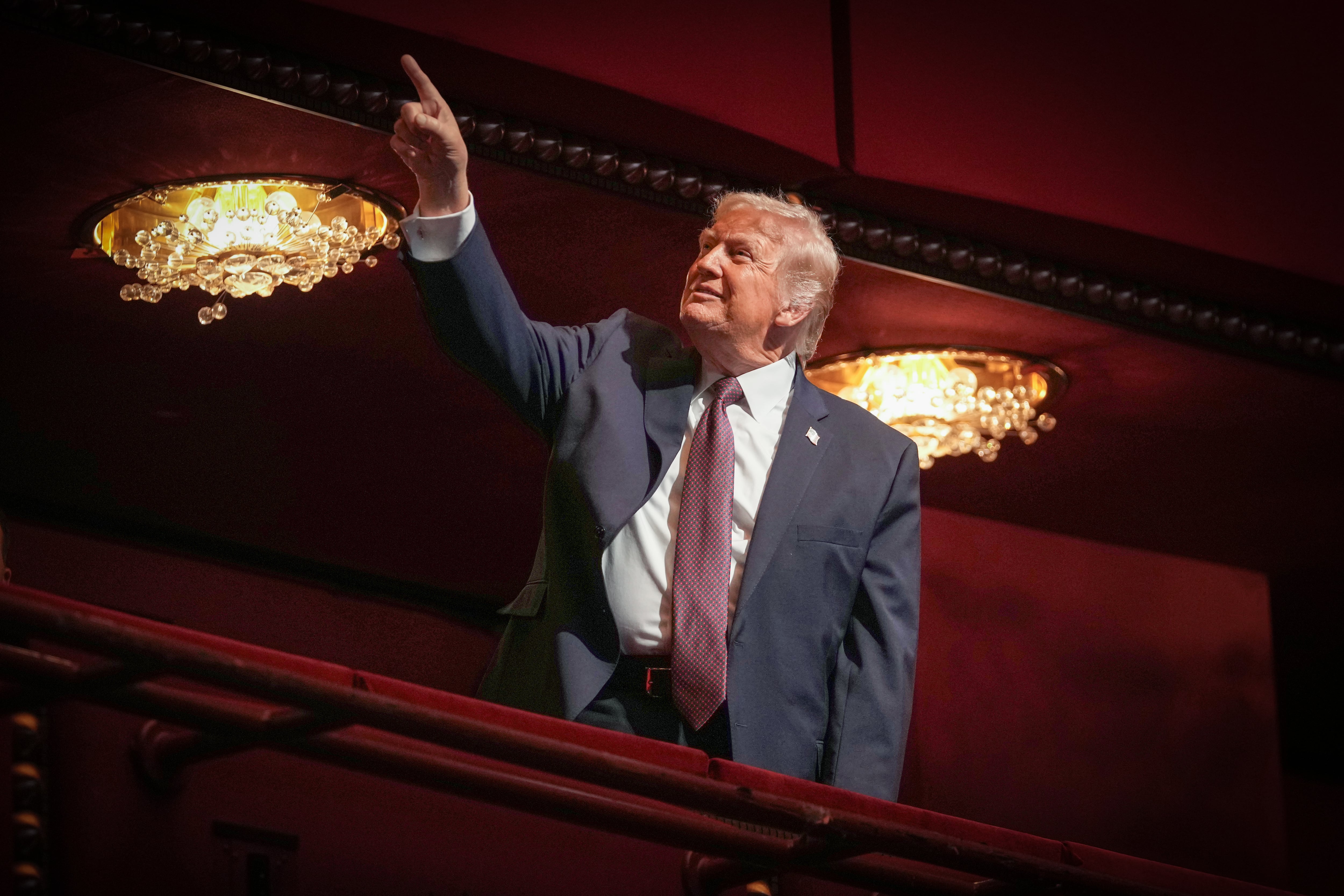
For the past 96 days, a huge tarp has hung over the facade of the Kennedy Center, a fitting symbol of Donald Trump’s assault on Washington’s cultural institutions.

Seguir leyendo

© Allison Robbert (AP)

Donald Trump at the Kennedy Center, Washington, January 29, 2026.
  •  

US–Canada trade war: Carney has outplayed Trump

On Wednesday (16 September) Canadian Prime Minister Mark Carney had a good day at the EU Parliament in Strasbourg. Commission President Ursula von der Leyen indicated that she would like to work with Mr Carney “on opening the door for Canada to be the first associate member of the European Union", writes Dick Roche.

Prime Minister Carney was given a standing ovation by the Parliament’s Members. While it is not clear  what ‘associate EU Membership’ means, the offer from the Commission President and the welcome by MEPs was a plus, of sorts, for Mr Carney in his battle with President Trump.

A bumpy relationship

The relationship between Prime Minister Carney and President Trump was always destined to be a bumpy one. Days before President Trump was sworn in for his second term Justin Trudeau stepped down as Prime Minister of Canada. As Trudeau was leaving office the president-elect repeated comments that he had made during the 2024 US elections about Canada becoming the 51st US State.

On 1 February 2025, as the contest to replace Mr Trudeau as the Liberal Party leader was getting underway President Trump, announced a 25% tariff on imports from Canada, Mexico and Canada: Canadian energy exports were subject to a 10% tariff. Trump explained the tariffs were intended to address the emergency related to fentanyl trafficking and illegal immigration.

Nine days later Trump announced a blanket 25% tariff on all imported steel and aluminium to “protect US industry and national security.” This hit Canada the biggest foreign supplier of steel and aluminium into the US market badly.

The pain for Canada did not stop there, on 26th March Trump announced his 25% tariff on all automobile imports into the US. Again, another bad hit on - most Canadian vehicle production is destined for the US market. The impact on Canadian auto producers was somewhat ameliorated by the fact that the tariff applied only to non-US content vehicle imports from Canada.

The stream of tariff announcements from the US while hurting Canada played to Mark Carney’s advantage in the race for leadership of Canada’s Liberal Party. While a "political ingénue" never having held political office or been a Member of a Member of Canada’s Parliament Mr Carney brought deep economic experience to the contest. He won almost 87% of the votes cast in the leadership election.

Mr Carney was sworn in as Prime Minister of Canada on 14th March 2025 - seven weeks into President Trump’s second term. Six weeks after his swearing in Mark Carney was elected to the Canadian House of Commons in the General Election of 28th April 2025.  

Placating a cranky neighbour

From the outset  Prime Minister Mark Carney invested considerable effort in improving relations with President Trump. The two leaders met in the White House on 6th May. The meeting, reportedly, went well.

Asked at the press briefing after the meeting about Trump’s suggestions that Canada should become the 51st US state, Carney responded humorously. He recalled that during the recent elections he had met the owners of Canada. They were not he said interested in ‘selling the property’, something that Mr Trump as a property man would understand. Smiling President Trump responded ‘never say never.’

At the G7 meeting held in Kananaskis, Alberta, in June President Trump and Mr Carney had another cordial meeting.  

The cordiality  did not last long. At the end of June the first payments on Canada’s Digital Services Tax (DST) were due to be made.  The DST legislation enacted during the Trudeau Government, hit US tech companies causing fury in the White House. Trump called the tax a "direct and blatant attack on our country" and announced all trade talks with Canada would cease immediately.

Within days Carney announced that his administration would rescind the DST and halt the collection of the tax to advance negotiations with the US.

There was another flashpoint in January when President Trump reacted to reports that Canada and China were pursuing a comprehensive free trade deal. Prime Minister Carney defused the situation by explaining the talks with China were focused on adjusting existing arrangements.

While Carney faced criticism for ‘climbing down’ on the DST issue and for being too eager to placate the White House on China, his approach got US-Canada trade talks back underway.

By August 2025 there was some optimism that a breakthrough trade talks was close.  On August 18th President Trump announced that a tentative understanding had been reached and as a result he was prepared to push back on the late August deadline for US tariff increases. 

The talks came to an abrupt halt three days later when Carney instructed Canada’s negotiating team to return to Ottawa.

That decision came as a surprise. Walking away risked incurring the wrath of President Trump. That was a risk that the Canadian PM had clearly calibrated.

When the US Trade Representative Jamieson Greer sought to blame Canada for the breakdown Carney responded that it was the US United States that made last-minute demands which Canada considered unacceptable, including efforts to introduce provisions that would impact Canada's trade autonomy and sovereignty.

President Trump  reacted immediately to Canada’s decision.  Using  a section of the Tariff Act 1930 that had never been used previously Trump imposed 50% tariffs across US$20 billion worth of Canadian products exported to the US.  

Carney announced that Canada would hit US exports to Canada with “dollar for dollar” retaliatory measures. These would come into  effect immediately after Labour Day 7th September –the day when the starting gun for US mid-term elections is ‘fired’ to get into full swing.

Asked at the press conference whether Canada was starting a trade war with the United States, Mr. Carney responded: “you’re at war when you get attacked—we got attacked.”

In a televised address, Carney acknowledged that the steps he was taking  would come at a cost but argued that U.S. actions had left him with little alternative. He characterized the measures being taken by the United States as an attempt to hurt and divide Canadians. That, he suggested, was a miscalculation. Rather than weakening Canada, U.S. pressure would, he said, bring Canadians closer together.  

Backing Carney

All of indications suggest that Prime Minister Carney was correct in his assessment.

The leader of the Conservative Party Canada, Pierre Poilievre who previously accused Carney of being too willing to concede to Trump, strongly supported the decision to walk away from those trade talks.

Mr Poilievre  was not alone, with one exception the Premiers of Canadian Provinces publicly supported Prime Minister Carney’s stance.

The Premier of Ontario Canada’s most populous province, Doug Ford, an open critic of the US President, encouraged PM Carney to respond to Trump “tariff for tariff, dollar for dollar.”

The Quebec Premier, Christine Fréchette, was particularly supportive  of Carney’s refusal to make concessions to Trump on Quebec’s cultural protections.

Other Premiers have encouraged Carney to “fight back,” praised “team Canada,” criticised US tariff threats as unjustified, promised “full support,” and urged that Canada not accept a ‘subordinate economic relationship’ to the US.  

The Premier of Alberta where a referendum on a range of questions including Alberta’s future within Canada is to be held on 19th October was the lone outrider,  cautioning against celebrating retaliatory tariffs and expressed the hope that negotiations be resumed.

Public support in Canada for the position taken by Carney has been positive. Reuters referred to  the tariff dispute encouraging a ‘rally around Canada’ effect that will likely dampen support for Alberta separation from Canada.

Ten days after the Canadian negotiating team abandoned the trade talks in Washington Carney’s Liberal Party received a very tangible indication of voter support when it won three by-elections for seats in the Canadian House of Commons including a seat in Quebec that had previously been held by a Conservative Party Member.

Opinion polls since the Canadian team walked away from the negotiations also show strong support for the position taken the Carney government.  

An Ipsos poll taken on August 26-27 indicates support across party lines for Canada standing up to the US - even if it resulted in higher costs and job losses: 63% of those surveyed felt Canada was right to stand firm in the negotiations.  Just 18 per cent said Canada should have made additional sacrifices to get a deal.

An Angus Reid Institute poll taken on 22 and 23 August immediately after the talks were ended found that 76% supported the line taken by the Canadian government.

A third poll by Abacus Data one of Canada’s most cited polling firms found that 60% approved of how the Carney government had handled the dispute while  18% disapproved.

Negatives for Trump

In the US, unsurprisingly, positions on the trade war with Canada splits along party lines. Democrats overwhelmingly oppose the Trump’s position arguing that tariffs cost consumers and businesses.

On 9th September a group of nine Democrat Senators from states with close business ties with Canada issued a joint statement attacking President Trump’s “senseless trade war” with a key trading partner, primary export market and most enduring defence partner, pointing out that the President’s actions would force Canada to “diversify away from the US and deepen trade ties with other countries including China.”

Republicans generally, but not universally, support Trump’s position, arguing that Trump’s tariff stance is ‘putting America first.’ Concerns have been flagged in the Republican ranks that the tariffs will be an issue in the November mid-terms, particularly in competitive Senate and House races.  

Senator Susan Collins of Maine, the US state most exposed to the tariff dispute with Canada, who is facing a tough re-election contest in November has labelled the tariffs on Canada ‘a mistake’ pointing out that Canadian retaliation could cost Maine up to $170 million in export losses.  The Republican governor of Vermont has also been openly critical.    

The position for President Trump is considerably less positive than that of Prime Minister Carney. The Canadian Prime Minister enjoys the public and political support that President Trump conspicuously lacks. As this week's appearance in the European Parliament demonstrated Mr Carney’s support is not confined to Canada; he has international support which, President Trump again conspicuously lacks.

At the moment there is no obvious ‘off ramp’ to facilitate  a return to the negotiating table. Politically and temperamentally it will be harder for President Trump to pull back from the position he has taken in the tariff war than it will be for Mark Carney. Mr Carney has more political support for his position, at home and internationally than President Trump. He has also  played an infinitely better game than Mr Trump. For the moment the ball is very much in Mark Carney’s court. 

Dick Roche is a former Irish Minister for European Affairs and former Minister for the Environment. 

  •  

Die Übersetzung eines einstündigen Interviews des russischen Außenministers zu allen Fragen der Weltpolitik

Da der Westen, also vor allem die Europäer, derzeit regelrecht nach Krieg lechzen und ihn mit allen Mitteln zu provozieren versuchen, während die deutschen Medien gleichzeitig über die Positionen und Argumente der russischen Regierung immer schamloser lügen oder sie verschweigen, finde ich es wichtig, ein aktuelles, einstündiges Interview des russischen Außenministers Lawrow komplett zu übersetzen, […]
  •  

South Korea shouldn’t abet Trump in Hormuz

The Lee Administration leaked the possibility of deploying Korean forces to the Strait of Hormuz on September 3. The backlash was immediate from Korean civil society that opposes any type of support for Trump’s war of aggression. Furthermore, recent polls reveal that even 55% of Lee’s supporters oppose the dispatching of forces. And while the Lee administration has publicly backtracked, stating that nothing has been decided, it is, nonetheless, quietly undergoing the process of deployment: more than simply an assessment of the security conditions on the Strait of Hormuz, the Lee administration sent a team to check key military bases and ports that could be used at the United Arab Emirates.

Despite growing public opposition, the Lee administration is expected to introduce at the end of September a motion into the National Assembly, where it is likely to pass given his party’s considerable majority. Unlike his predecessor, the impeached Yoon Suk-yeol, President Lee is not a pro-US ideologue; he is a pragmatist. Why then is Lee going out on a limb with this deployment when the rest of the world is staying out of it?

Well, South Korea’s history has always been entangled and shaped by US foreign policy. The darker side to South Korea’s pop-culture is a country dominated and shaped through US policy and interventions. Today, it hosts the largest overseas US military base and controls the Korean military (through wartime operational control). In effect, it’s never been a sovereign state. Its economic, political, and military interests have always been beholden to the United States. 

Today, Lee is horsetrading with Trump: military support in exchange for more favorable terms in the US’s AI global supply chain of semiconductors and data centers along with a return of wartime operational control. While Lee’s pragmatism is navigating the real structural constraints on South Korea, it is ultimately short-sighted and harmful to Koreans and the world.

The war in Iran is inflicting considerable pain to the world’s economies, including South Korea that imports 61% of its crude oil through the Strait of Hormuz. Yet, even from a completely pragmatic perspective, sending Korean forces to the Hormuz does nothing to resolve this problem. In fact, getting entangled with US aggression against Iran would strain the 64-year diplomatic relations with Iran while putting a target on South Korean assets in the region. Furthermore, if the world’s greatest naval and air power cannot secure freedom of navigation in the Strait of Hormuz, how could South Korea’s contribution make a difference? In fact, the deployment of Korean troops prolongs this war of aggression by giving Trump cover and leverage to demand that other countries, such as Japan, also deploy forces.

This isn’t the first time that South Korea would deploy forces due to US requests. In 2004, after pressure from the George W. Bush Administration, the Roh Moo-hyun administration deployed non-combat support troops to Iraq. In response, a militant Islamic group kidnapped a Korean translator and, when the Roh administration refused to cancel further and withdraw current deployment, beheaded the translator.

Most importantly, this war of aggression is not only illegal under international standards, but deployment also violates article five of the Korean constitution that mandates the government to “maintain international peace” and “renounce all aggressive war.” Thus, whether intervening in the frontlines, or in the rear, whether combatant or non-combatant, any deployment would be complicit in Trump’s war of aggression.

Ultimately, as Hamid Shahrabi, an Iranian activist and co-founder of the Global Resistance for Peace & Justice states, securing free passage through the Strait of Hormuz can be achieved but not through military pressure and destruction but by adhering to the “Islamabad MOU, which outlined measures to ensure free passage through the Strait.”

Being dominated by the US brings out the pragmatic among South Koreans. Yet, the world demands that we fight and that we hold the line against Trump. Deploying forces will prolong Trump’s illegal war of aggression. Fortunately, if Koreans can be pragmatic, they can also be fierce fighters against US imperialism when provoked. Instead of fanning the flames of war, we should fight to extinguish Trump’s forever wars.

Dae-Han Song is a part of the International Strategy Centerand the No Cold War collective and is an associate at the Korea Policy Institute.

This article was produced by Globetrotter.

  •  
❌