❌

Reading view

Israel kills son of Gaza health official in latest atrocities

Footage flooded the internet on Saturday, September 19, showing Gaza Health Ministry Director General Dr. Munir al-Bursh asking young men to bring the rest of his son’s body as they carried his remains.

“Bring me his other half!” the grief-stricken father said. “We were supposed to go to heaven together today, but you got there before me, son.” 

According to media reports, Dr. Munir’s son, Bashir (28), was struck by a drone shortly after leaving his family’s tent in the al-Zahra neighborhood, near the Civil Defense headquarters, west of the Jabalia refugee camp in northern Gaza Strip.

Bashir was targeted while helping people fill their water containers, just meters away from his father. For many, the proximity of Dr. Munir implies that he, too, may have been a target of the attack.

Israel’s systematic targeting of health workers

The prominent Palestinian health official has been in the crosshairs of the Israeli forces since the beginning of Israel’s genocidal aggression on Gaza, due to his leading role in managing a crumbling health system that was severely devastated during the war.

Moreover, Dr. Al-Bursh is widely known for frequently reporting on Israeli assaults on the Gaza medical sector, and highlighting the dire conditions of medical facilities inside the besieged areas via international media outlets.

Al-Bursh and his family were previously targeted by Israeli warplanes at the very beginning of the war. In December 2023, his 13-year-old daughter, Jinan, was killed in an Israeli airstrike on a residential building in Jabalia. The aerial attack also resulted in the injury of Dr. Munir and the rest of his family.

The deaths of Bashir and Jinan al-Bursh echo the murder of 15-year-old Ibrahim Abu Safiya by an Israeli drone in October 2024. Ibrahim was the son of the former director of Kamal Adwan Hospital in northern Gaza, Dr. Hussam Abu Safiya.

Read more: ‘They brought me here to kill me,’ Dr. Hussam Abu Safiya tells lawyer

The day Bashir al-Bursh was assassinated, and the days that followed, saw the killing of several people by the Israeli Army across different parts of the war-ravaged enclave.

This took place as world leaders addressed the UN General Assembly. For the third year in a row, these addresses and the deliberations have failed to stop Israel’s aggression against Gaza and its ongoing heinous crimes carried out across West Asia.

  •  

China’s Recent J-36 Heavy Stealth Tactical Jet Testing Offers New Insights Into Its Evolving Design

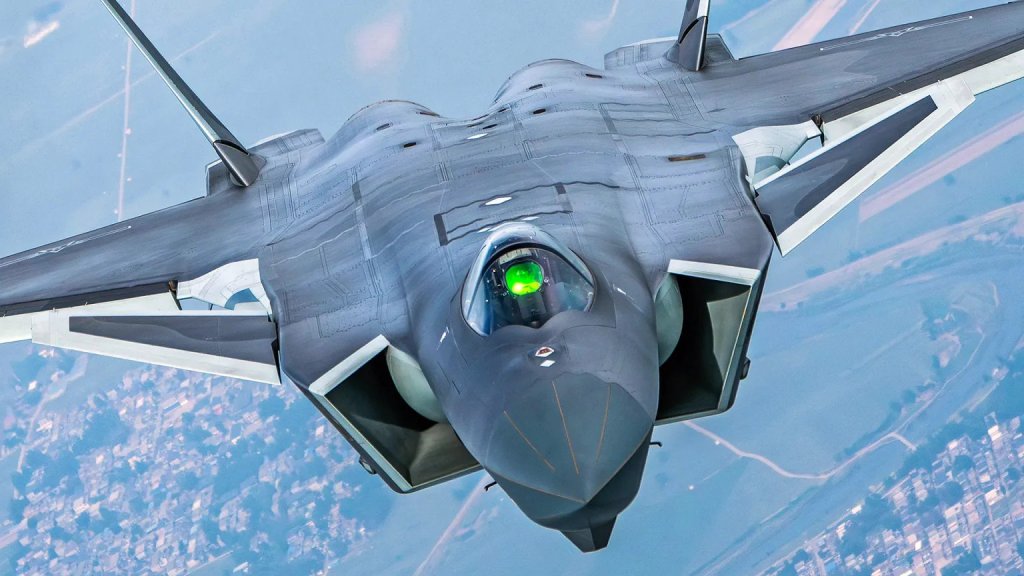
China’s Chengdu Aircraft Corporation continues to press ahead with the development of its ‘J-36’ next-generation tailless heavy tactical jet. Recent flight testing has offered interesting new views of the still-evolving stealthy design from the top and behind, prompting discussion about the aircraft’s features. There has also been talk recently about whether the jet might receive a laser directed-energy weapon at some point in the future.

The J-36 first broke cover, along with another next-generation tailless tactical jet design generally referred to as the J-XDS, back in December of 2024. There are understood to be at least four, and possibly five, J-36 prototypes flying now. A number of significant changes between prototypes have already been observed over the past two years, as you can read more about here.

The most recent video of a J-36 test flight, seen in the social media post below, began circulating online yesterday. The footage shows the aircraft coming in to land, providing good general views of the uniquely three-engined jet with its two-seat, side-by-side cockpit configuration, especially from the rear aspect. What is seen underscores a previously observed total revision of the exhausts from a trough style to a two-dimensional thrust-vectoring configuration akin to what is found on the U.S. F-22 Raptor. This and other significant changes to the design, including the addition of divertless supersonic intakes (DSIs) all around, not just on top, first emerged last year. The clip also offers a good reminder of just how wide the aircraft is overall.

Obviously one of the best video recordings of the J-36 so far seen during landing approach … But can anyone read the number under the cockpit? 😉 https://t.co/cmQ0AkdsdO

— @Rupprecht_A (@RupprechtDeino) September 22, 2026

As this particular J-36 passes by, it can be seen to have a lighter-colored radome, as well as at least one relatively large lighter-colored section on top of the dorsal air intake. A similarly colored radome was first spotted on what is said to be the fourth prototype back in July. This coloring could point to the installation of actual radar in the aircraft’s nose. In TWZ‘s first in-depth analysis of the J-36 back in 2024, we assessed that the jet’s very broad radome area could house an absolutely massive primary array.

The lighter section on top of the fuselage could be an aperture for a conformal antenna tied to a beyond-line-of-sight communications and data-sharing suite. In 2024, we posited that the heavyweight J-36 could serve as an intelligence-gathering and communications relay platform in addition to performing tasks more typically associated with tactical combat jets. Reliable and multi-faceted connectivity would be key for employing the J-36 as an airborne controller for advanced air combat drones, as well.

Captures from the video above highlighting the lighter-colored radome and section on top of the center of the fuselage. Chinese internet captures via X

Another J-36 flight testing video that emerged on Monday, seen below, offers an additional view of the top of the jet, showing multiple lighter-colored sections that would appear to be additional conformal apertures for various antennas. There is a lighter-colored rectangular outline painted around part of the intake on top of the center of the fuselage, as well. The jet’s full paint scheme includes lighter-colored leading and trailing edges, which are critical structures on low-observable (stealthy) designs that often contain additional antenna arrays. Overall, the two-tone coloring is very much in line with what is seen on operational J-20 fighters in Chinese service today. The original J-36 prototype, at least, has notably worn a splinter-type camouflage paint scheme.

China's J-36 sixth-gen fighter asserting its dominance in the sky.

My prediction, the J-36 will gain initial operational capability before the American F-47 take its maiden flight. pic.twitter.com/SLmjqZ76Aw

— Zhao DaShuai 东北进修🇨🇳 (@zhao_dashuai) September 21, 2026
A stock shot of a J-20 fighter with its two-tone scheme. PLAAF
A view of the first J-36 prototype with its splinter-type camouflage scheme. Chinese internet via X

Whether or not the two recent video clips show the same J-36 prototype is unclear. The possibility has now been raised that Chengdu may be using a single serial number (36011) on at least some of the J-36 prototypes, a decision that could have been made for counter-intelligence and/or deliberate misinformation/disinformation purposes.

Much still remains unknown about the current or expected future capabilities of the J-36. Aviation Industry Corporation of China (AVIC) did have a placard at its booth at the 14th China International Defence Electronics Exhibition earlier this month that has prompted questions about whether the jet could be equipped with a laser directed-energy weapon. Chengdu falls under the umbrella of AVIC, which is a state-run enterprise. The Chinese-language placard in question describes a “laser weapon tracking system” with a power rating of “*00” kilowatts and a weight of “less than” 837.7 pounds (380 kilograms), per a machine translation. The way the power rating is written appears to mean that it is in the hundreds of kilowatts, which would put it firmly in a class capable of doing physical damage to objects, such as incoming missiles and drones.

Furthermore, an associated graphic shows a turreted system and a computer-generated rendering of a J-36 projecting a beam. The render appears to be from a video that depicts a J-36 using a laser to destroy other aircraft. Another computer-generated video that shows a J-36 using retractable lasers to shoot down incoming missiles has been circulating online since at least last year.

AVIC showed this at the 14th China International Defence Electronics Exhibition earlier this month. Chinese internet via X

This appears to be a screenshot from this video, via rednote user @阿中CN. https://t.co/NX1zDOLw2v pic.twitter.com/673Zl41MM1

— 笑脸男人 (@lfx160219) September 17, 2026

It is not immediately clear how official either of the clips depicting laser-armed J-36s might be, or whether they at all reflect real planned capabilities. The full placard presented at the China International Defence Electronics Exhibition, as seen in the video below, shows a variety of different laser systems, and not just for aerial applications.

AVIC has confirmed that the J-36 fighter jet is equipped with a laser defense system. pic.twitter.com/4PrSqAfOQK

— Modern War Explained (@FPDefenseNews) September 17, 2026

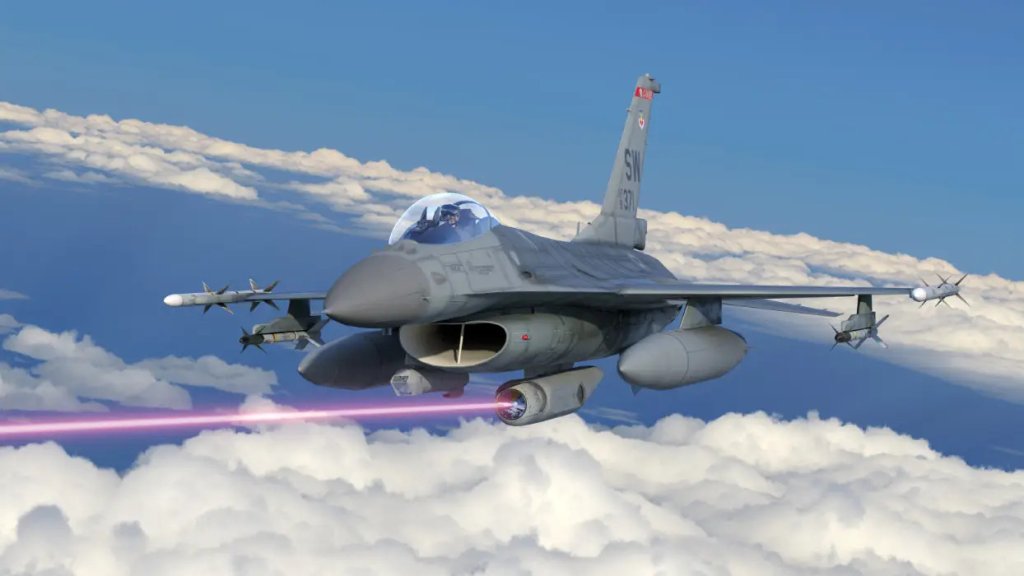
The fielding of operational laser directed-energy weapons capable of inflicting any real physical damage has historically proven to be very challenging, and even more so within the size, power-generation, and cooling constraints presented by modern combat jets. As an example, the U.S. Air Force spent roughly a decade working on a podded laser weapon system that tactical jets could use to swat down incoming missiles under its Self-protect High Energy Laser Demonstrator (SHiELD) program. In 2024, the service confirmed SHiELD had “concluded” without achieving its goal of an actual flight test. That same year, the Air Force cancelled plans to test a laser weapon system on an AC-130 gunship.

Despite important U.S. strides more recently when it comes to fielding ground-based and naval laser weapon systems, “there’s nothing that’s on the shelf right now that we are ready to put onto an airplane,” U.S. Air Force Brig. Gen. Douglas Wickert, the commander of the Air Force Research Laboratory (AFRL), told TWZ and other outlets just last week at a roundtable at the Air & Space Forces Association’s (AFA) 2026 Air, Space & Cyber Conference on Tuesday. “The solid-state lasers and the power density and the different ways that you actually – there’s actually a lot of secret sauce in that. How do you make the beam, and how do you form the beam, and how do you pulse the beam, and all that’s in development.”

‘There’s development of the laser itself, but now the power and thermal management system has progressed so much that we can provide the power needed,” Dr. Michael Gregg, head of AFRL’s Air Warfare Directorate, said at the same roundtable. “We’ve also had new designs and engines that we know have the power … to direct that power in certain areas. So, from a system perspective, it’s much more feasible because everything has matured over the last decade.”

A rendering of a US Air Force F-16 fighter with a podded laser directed-energy weapon. Lockheed Martin A rendering of a US Air Force F-16C Viper fighter with a podded laser directed energy weapon. Lockheed Martin

China has certainly made substantial investments of its own in laser and other directed-energy weapon capabilities across domains in recent years, and this is clearly an area of interest for the People’s Liberation Army (PLA), in general. When it comes to the J-36 specifically, TWZ has explicitly highlighted in the past how the three-engine configuration could be particularly useful for producing sufficient power to support a host of advanced and electricity-hungry sensors and other capabilities, including directed energy weapons.

Larger questions remain about the exact set of roles the J-36 is expected to fill, as well. The basic design is certainly optimized for straight-line performance, combat radius, and payload rather than maneuverability and agility. The jet has already caused a significant amount of debate just when it comes to taxonomy, as it does not seem to fit inside traditional definitions of ‘fighters’ and ‘bombers,’ something we have explored in detail previously.

A composite of other views of the J-36 that have emerged since 2024. Chinese Internet via X

“According to Yang Wei – chief designer of the J-20 –, the new [J-36] fighter can penetrate heavily defended airspace that the J-20 and comparable F-22s or F-35s must avoid, placing it a generation ahead,” Andreas Rupprecht, an analyst specializing in Chinese military aviation and TWZ contributor, wrote in a post on LinkedIn last week. “With lower RCS [radar cross section], high speed, and the capacity to control more drones, it could act as a node and command center for systems including J-20s and, especially, unmanned aircraft, while attacking high-value targets from stand-off range with long-range weapons.”

“The type could therefore represent a new class of ‘fighter,'” he added. “Online terms include ‘theater-level deep-penetration command combat aircraft’ and ‘high-performance fighter,’ analogous to a cruiser ranking above a destroyer within the Navy. Recent evidence gives this theory new weight and warrants continued monitoring.”

The J-36, as well as the J-XDS, reflect a larger burst of next-generation air combat developments in China in recent years. This includes an array of new crewed and uncrewed aircraft designed for operations from bases on land, as well as from the PLA Navy’s (PLAN) growing fleet of aircraft carriers and big-deck amphibious assault ships. The Chinese aviation industry’s development of a growing array of flying-wing uncrewed aircraft, some of which are very large, has been particularly notable.

In turn, there is something of an emerging gap between these developments and the pace at which the U.S. military is moving along similar lines, at least publicly. Boeing’s sixth-generation F-47 for the U.S. Air Force is not expected to take to the skies for the first time until 2028, though preceding demonstrator designs have been flying for years already. The U.S. Navy still has yet to officially announce a winner of its F/A-XX next-generation carrier-based fighter competition, and the current timeline for that program producing an operational aircraft is unclear.

A rendering the US Air Force has released of the F-47. USAF

As an aside, based on what has emerged publicly to date, there are signs that the F-47 may reflect a distinctly different design philosophy that puts greater emphasis on maneuverability compared to the J-36, and even likely the J-XDS. As mentioned, the J-36 certainly seems much more focused on payload, range, and level flight performance. In July, TWZ published a deep dive exploring why the U.S. Air Force would pursue a sixth-generation fighter with rear-swept wings, canards, and other features despite steady trends in the opposite direction visible in Chinese designs and ones elsewhere globally.

Regardless, U.S. officials have downplayed questions about China’s gaining ground in the air combat arena, or even surging into the lead in certain areas, in the past. “Chinese sixth-generation aircraft are in the nascent stages of development and expected to be operational by 2035,” the Pentagon wrote in its most recent annual report on military and security developments in China, which was published in December 2025.

In the meantime, the J-36’s design is already steadily being refined, and the total fleet of prototypes has been growing, offering new insights into the aircraft’s expected capabilities and roles.

Contact the author: joe@twz.com

The post China’s Recent J-36 Heavy Stealth Tactical Jet Testing Offers New Insights Into Its Evolving Design appeared first on TWZ.

  •  

‘He’s running away’: why Netanyahu is rushing his NYC visit

ICC fugitive Benjamin Netanyahu is scheduled to arrive in New York on Thursday to address the UN General Assembly – under an active arrest warrant for war crimes and crimes against humanity that the US has vowed not to enforce. Taher Dahleh, an organizer with the Palestinian Youth Movement, joins Rania Khalek and Zoe Alexandra ahead of the mass protests that have forced Netanyahu to reroute his flight through New Jersey.

Dahleh says the world is waking up to the fact that the architects of the Gaza genocide aren’t the outlier, but the mainstream norm for Israeli politics. He points to the irony of a fugitive war criminal speaking on ‘Restoring Trust’ at the United Nations. And he lays out the stakes of Democrats failing to respond to the cultural sea change on Palestine – as evidenced by Ed Sheeran’s career implosion – including why Zohran Mamdani’s choice to sit out Thursday’s protests sends a troubling if clear message to the movement that got him elected.

Watch full episodes of BT Live, join breakthroughnews.org as a member today!

  •  

Fact-checking Trump's speech at the United Nations General Assembly

Donald Trump's UN address was packed with claims that are misleading, false or exaggerated. He said the US has more munitions than it could ever use, despite reports of depleting stocks. He also claimed the US and Venezuela hold 60 percent of the world's oil, despite the numbers not adding up, and he said he had ended the war in Gaza despite ongoing Israeli strikes and deaths since last year's ceasefire. Vedika Bahl fact-checks the speech in Truth or Fake.

  •  

The Evolving Role Of Ukraine’s Artillery In The Age Of Drones

It’s stunning to comprehend how much has changed since Russia began its invasion of Ukraine. The conflict quickly turned into one dominated by artillery, with both sides scrambling to source shells wherever possible. Drones have since replaced tubed artillery as the ‘king of battle’ along the front, but cannons still have an important place on the battlefield. The commander of a new combined drone-artillery brigade offered some fresh insights into how his guns are now being deployed to achieve effects that drones still can’t provide. 

As we have frequently documented, the ubiquity of drones has changed the nature of combat, especially when it comes to artillery. Not only can drones hold artillery positions at risk, many are cheaper than shells and easier to produce at scale. Most types are also precision guided munitions capable of hitting moving targets with pinpoint accuracy and can also provide battlefield surveillance. However, they are not a panacea, especially amid the cat-and-mouse game of electronic warfare countermeasures and improving kinetic and passive defenses.

In a recent interview with the Ukrainian Oboronka news outlet, Lt. Col. Vitalii Korniienko, commander of the 7th Artillery Brigade, talked about the changing nature of artillery warfare. Korniienko, whose unit is part of the Ukrainian National Guard, explained what is being done to keep his array of domestically produced Bogdana 155mm systems, donated weapons like M777 howitzers, remaining Soviet-era 2S7 Pion 203mm self-propelled howitzers and other guns, relevant. Here are some takeaways from that discussion.

How The Game Changed

“Guns used to be massed at positions to create an ‘artillery wall’ and a barrage of fire,” the lieutenant colonel said. “That practice is gone now. So, how effective is artillery today? We can create an artillery barrage, but what is the point of mindlessly churning up the earth? I’d rather send 20 FPV drones to destroy the target. The cost of that mission is $20,000.”

A soldier from the 13th Khartiia Brigade of Ukraine's National Guard hones his FPV drone piloting skills during a training flight in Kharkiv region, Ukraine, August 15, 2026. Regular practice under conditions closely resembling combat is a key element of operator training. (Photo by Viacheslav Madiievskyi/Ukrinform) (Photo credit should read Viacheslav Madiievskyi / Ukrinform/Future Publishing via Getty Images)
A soldier from the 13th Khartiia Brigade of Ukraine’s National Guard hones his FPV drone piloting skills during a training flight in the Kharkiv region, Ukraine. (Photo by Viacheslav Madiievskyi/Ukrinform/Future Publishing via Getty Images) Future Publishing

“Alternatively, I could fire 200 shells, but the cost would be astronomical,” he pointed out. “Plus, if we fired 100 shells from a gun in a single day, it likely wouldn’t survive until evening. The sky is full of drones; every shot gives away the position, leading to detection and an attempt to dismantle it using every available means. Nowadays, a typical mission involves a series of up to 10 shots. First, 3–5 shells for ranging, followed by fire on the target. That’s a minimum of five shells, with each costing at least $2,000.”

What Does The Drone-Artillery Brigade Do Differently?

“It is a concept of ours that was approved: combining artillery and drones within a single brigade,” Korniienko said. “Drones take out enemy artillery and logistics, while our guns provide cover for the infantry, destroy targets, and pin the enemy down in their dugouts. This way, we mitigate the limitations of both systems and boost overall effectiveness.”

ZAPORIZHZHIA, UKRAINE - AUGUST 20: Servicemen of the 44th Separate Artillery Brigade are firing the 2S22 "Bogdana" at Russian military positions on August 20, 2025 in Zaporizhzhia region, Ukraine. Artillerymen of the 44th Separate Artillery Brigade of the Armed Forces of Ukraine are carrying out combat missions with a 2S22 "Bogdana" self-propelled howitzer against Russian troops near the front line in the Zhaporizhia direction. According to reports from army commander Oleksandr Syrskyi, Russian forces have concentrated there, he said they are preparing an attack. (Photo by Frontliner/Getty Images)
Ukrainian troops firing a domestically produced 2S22 “Bogdana” self-propelled howitzer against Russian forces near the front line in the Zaporizhia direction. (Photo by Maksym Kishka/Frontliner/Getty Images) Frontliner#VIDEO

“Our primary operations are focused within the corps’ area of ​​responsibility—targeting positions 10 kilometers deep or farther behind enemy lines. Of course, we will also engage closer targets if requested by the brigade holding the defense. In addition, we are shifting logistics tasks from pickup trucks to ground-based robotic systems. They are already transporting ammunition to drone and artillery positions, as well as food and fuel for generators.”

What Artillery Can Do That Drones Can’t

“Let’s be honest: 95% of strikes right now are carried out by drones,” Korniienko explained. “Yet, we cannot simply abandon artillery. The focus of our operations has shifted from merely striking the enemy to destroying, suppressing, and halting the actions of assault groups and armored columns—and the need for that remains as critical as ever. There are tasks that only artillery can handle.”

The high art of war, as practiced by the warriors of the National Guard's Artillery Brigade.

So high, it lands beyond the horizon. 💥

📹: @ng_ukraine pic.twitter.com/v06aJ8KcjM

— Defense of Ukraine (@DefenceU) September 23, 2026

“For instance, we currently have several enemy targets in the Kupyansk sector that drones cannot reach due to electronic warfare (EW) interference, while slow fiber-optic drones are simply shot down,” the officer noted. “What do we do? We call in artillery. Nothing affects its shells. Fog, strong winds, snow, or headwinds—it makes no difference to artillery; it will operate regardless.”

Preparing Artillery For The Modern Battlefield

“At the beginning, both we and the Russians might have had two or three guns at a single position,” Korniienko proffered. “The enemy was doing this as late as 2023. Then it tapered off, because if you deployed six guns, an hour later they’d be gone. No one drives out into an open field anymore. Today, a gun wouldn’t even make it to the position without being spotted.”

KHARKIV, UKRAINE - JULY 3: Artillerymen of the 13th operational brigade of the National Guard of Ukraine 'Khartiia' prepare the 'Bogdana-B' artillery installation 'to hit enemy positions' in the Lipetsk direction, Kharkiv region, Ukriane on July 3, 2025. (Photo by Sofiia Bobok/Anadolu via Getty Images)
Ukrainian National Guard troops prepare a ‘Bogdana-BG’ artillery installation from a dugout position. (Photo by Sofiia Bobok/Anadolu via Getty Images) Anadolu

As a result, the artillery crew’s deployment “is prepared in advance,” the officer stated. “First, anti-aircraft drone teams ‘clear’ the sky above the site of enemy reconnaissance assets. The position itself is a fully underground-dugout caponier with well-camouflaged access routes. We put a lot of effort into ensuring the artillery doesn’t get destroyed. Losing a gun is a huge blow to us.”

Short Range Versus Long Range Shells

“There is currently an ongoing debate about phasing out ‘short’ shells and switching entirely to long-range variants,” the officer stated. “This is intended to protect artillery from drone strikes.”

“What exactly is a ‘short’ shell, and should we stop using it?” he asked rhetorically. “The M107 155mm round is what is known as a ‘short’ shell. It is inexpensive and mass-produced; all our allies—and even our own country—manufacture it. We have sufficient stocks of them for combat operations. While accurate, its range is limited to 14–18 km, depending on the propellant used.”

Army

Long-range options “include the M795 and its foreign equivalents,” Korniienko explained. “These are longer, heavier, and significantly more expensive. With high-quality propellant, they can reach 30 km, or even further if equipped with a base-bleed unit. However, both these shells and the necessary propellants are in short supply.”

Army

“I do not believe abandoning the M107 is the right move,” the officer suggested. “Long-range shells cause faster barrel wear and compromise position concealment; firing a long-range charge produces a massive burst of flame from the muzzle—visible for kilometers at dusk or dawn.” “Besides,” he added, “18 km is a respectable range. If the gun is positioned 15 km back, it still has a 3-km margin to spare. That is sufficient for engaging frontline infantry. In my view, the ideal mix for most brigades would be 60% long-range shells and 40% standard M107 rounds.”

Big Versus Small Guns

“I operated 105mm guns in the Serebryanka area, on the Kharkiv axis,” Korniienko noted. “Based on intercepted communications, the enemy thought it was a mortar and searched for it within a five-to-six-kilometer range. But the howitzer was positioned eight or nine kilometers away and fired out to 10–12 kilometers.”

“There is almost no muzzle flash, just a bit of dust,” he added. “The shell arrives, and the enemy doesn’t even hear the sound of the shot. It’s compact and lightweight—you can transport it on a pickup truck. So yes, it would be useful.”

An L119 lightweight towed howitzer. (Via X)

“I’d also like to see the development of 203mm artillery; why move away from that caliber?” the officer wondered aloud. “Our ‘Pion’ systems fire a massive 100-kilogram shell capable of punching through at least two floors of a building or a bunker. And it’s reasonably accurate, too. You wouldn’t want to be on the receiving end when guns like that are firing at you. Overall, I believe we need competition. Right now, the ‘Bogdana’ is evolving under wartime conditions, which is good. But in a few years, momentum could stall. They might just keep producing the same system without significant upgrades because there’s no incentive to innovate. Yet, the nature of war doesn’t stand still.”

Wary Of Asian Shells

“We have a wide range of shells from different countries, and the ones coming from the West are fine,” Korniienko said. “However, their counterparts produced in certain Asian countries… the quality is frankly poor.”

“What is wrong with them?” queried Korniienko, who did not name the country in question. “On paper, the shell weight is listed as 46 kilograms, but when we weigh them, we find 46.9 or 45.4 kg. And that half-kilogram difference—give or take—has a huge impact on where the shell lands.”

As a result, “we no longer trust the standard firing tables provided with the shells; instead, we compile our own for each manufacturer. We weigh every batch and sort them by weight so that the difference between the ‘piles’ is minimal, ensuring a reasonably tight grouping. I can’t afford to make a mistake that causes a shell to land 2 kilometers off-target—right where our infantry guys are positioned. I should add that our artillerymen are actually wary of shells from one specific country. There have been instances where they tore off the muzzle brake or even caused the barrel to burst. A barrel burst is a disaster.” 

Homegrown Is The Best

Korniienko said his unit was one of the first to test the Bogdana system, adding that he prefers it to other guns.

“We tested them and provided feedback to the manufacturer, which was then used to refine the design,” he explained. “It is a solid gun now, and it is my preferred choice. It might not be the absolute best, but I am very satisfied with the support and service.”

“If there’s a breakdown, the gun is back in position within a day or two,” he pointed out. “For instance, a gun broke down today, and we needed a repair team from the manufacturer. I know I’ll have it fixed by the day after tomorrow. They arrive in the morning, and by midday, the gun is ready. Then it takes another day or two to get it back to the position. That is very fast.”

That’s a very different experience than what he sees with donated weapons like the U.S.-made M777.

DONETSK OBLAST, UKRAINE - AUGUST 6: Ukrainian soldiers prepare to fire the M777 artillery at their artillery position as Ukrainian Army conduct operation to target trenches of Russian forces through the Donetsk Oblast amid Russia and Ukraine war in Donetsk Oblast, Ukraine on August 6, 2023. (Photo by Diego Herrera Carcedo/Anadolu Agency via Getty Images)
Ukrainian soldiers prepare to fire an M777 howitzer at Russian forces. (Photo by Diego Herrera Carcedo/Anadolu Agency via Getty Images) Anadolu

“As for the Western partners helping us—we are deeply grateful,” the officer avowed. “However, by the time you actually receive a part—say, a sensor—the gun might have been sitting idle for six months. And you can’t try to fix it yourself, because that would void the warranty.”

While artillery may no longer be the reigning weapon of war, as far as Ukraine is concerned, it has not been relegated to the dustbin of history yet either.

Contact the author: howard@twz.com

The post The Evolving Role Of Ukraine’s Artillery In The Age Of Drones appeared first on TWZ.

  •  

Why Hamas Attacked Israel in October 2023 – Israeli professor Ilan Pappé

Hamas had negotiated with Israel for an end to the 17-year siege strangling Gaza, an increase in food entering Gaza, & release of Palestinian political prisoners. The Israeli army advised Netanyahu respond to these demands with an all-out attack on the Gaza. Al-Aqsa Flood was an attempt to preempt this attack.

  •  

They see them, then kill them: Israeli quadcopters track, deliberately target civilians in Gaza

Israel employs military technology capable of identifying specific individuals, tracking their movements, and striking them with precision, despite the clear civilian status of those targeted and their non-participation in hostilities or posing of any imminent threat to Israeli forces or others.

  •  

Xi brinda a Washington | LEVANTE LIVE

🔴 A Levante questa sera, 23 settembre 2026, analizziamo una una settimana che rimescola le carte dell’ordine mondiale: Xi Jinping a Washington per la prima visita di Stato dopo undici anni, un’Assemblea Generale dell’ONU segnata dai visti negati e un Golfo Persico in piena trasformazione. Affrontiamo insieme: 🇨🇳🇺🇸 Xi alla Casa Bianca: dazi, dollaro, tecnologia e la partita a tre con Mosca 🌐 BRICS di Nuova Delhi: la condanna delle sanzioni unilaterali e degli attacchi all’Iran 🏛 ONU sotto ricatto: Abbas escluso, delegazione e stampa iraniane limitate ⚓ Hormuz, Golfo Persico e la militarizzazione del Mediterraneo 🗳 Duma russa, scossone in Germania, midterm americane in vista ⚔ Fronte ucraino: attacchi incrociati, avanzata russa, ipotesi di un nuovo vertice Trump-Putin 👥 GLI OSPITI Alessandro Volpi, storico ed economista, Università di Pisa Antonio Mazzeo, giornalista d’inchiesta, esperto di basi militari e militarizzazione Stefano Orsi, analista militare del conflitto russo-ucraino Jeff Hoffman alla conduzione 📚 LIBRI DEGLI OSPITI ✍ Alessandro Volpi, La guerra della finanza. Trump e la fine del capitalismo globale, Laterza, 2025 ✍ Alessandro Volpi, I padroni del mondo. Come i fondi finanziari stanno distruggendo il mercato e la democrazia, Laterza, 2024 📘 Alessandro Volpi, Prezzi alle stelle. Non è inflazione, è speculazione, Laterza, 2023 ✍ Antonio Mazzeo, La scuola va alla guerra. Inchiesta sulla militarizzazione dell’istruzione in Italia, Manifestolibri, 2024. ✍ Antonio Mazzeo, Il MUOStro di Niscemi, Editpress, 2013. ✍ Antonio Mazzeo, I padrini del ponte. Affari di mafia sullo Stretto di Messina, Edizioni Alegre, 2010. ✍ Mi chiamo Handalino Miranda editrice Milano 2026 🎯 SOSTIENI CASA DEL SOLE TV Casa del Sole TV è un progetto di giornalismo indipendente autofinanziato. 💳 Per donazioni: IBAN: IT63P0326822300052392596590 Intestato a: La Casa del Sole Edizioni Causale: Donazione Casa del Sole TV ⭐ Membership YouTube: 👉 https://www.youtube.com/@CasadelSoleT… ▪ Analista Multipolare €5/mese ▪ Inviato della Verità €15/mese ▪ Architetto del Futuro €25/mese 🔔 Iscriviti e attiva la campanella: Levante va in onda dal lunedì al venerdì alle 19.00 #Levante #CasadelSoleTV #JeffHoffman #Geopolitica #Multipolarismo #XiJinping #BRICS #ONU #Hormuz #Iran #Palestina #Ucraina #Russia #Germania #Midterm #AlessandroVolpi #AntonioMazzeo #StefanoOrsi

L'articolo Xi brinda a Washington | LEVANTE LIVE proviene da Casa del Sole TV.

  •  

Au bon coin macroniste : "Echange parapluie nucléaire contre espion français en prison"

Par Eric V

Comme nous l'avions annoncé hier, la France a fait pression pour sortir un oligarque russe de la liste des sanctions européennes en échange de la libération d'un espion français emprisonné en Azerbaïdjan. Ce qu'on ne savait pas encore, c'est que ce "deal" a permis à la Lettonie d'obtenir une extension du parapluie nucléaire français à son territoire. Plus quelques autres avantages.

Au bon coin macroniste : "Echange parapluie nucléaire contre espion français en prison"
LE COURRIER
DES STRATÈGES
Restez libre !
Au bon coin macroniste : "Echange parapluie nucléaire contre espion français en prison"

LA NEWSLETTER · GRATUITE

Le Courrier,
chaque matin.

L'essentiel de l'actualité, passé au crible par les cinq plumes du Courrier. Dans votre boîte, chaque jour ouvré.

Gratuit. Vous restez libre de partir quand vous voulez.

JE M'INSCRIS lecourrierdesstrateges.fr
lecourrierdesstrateges.fr
Restez libre !

Hier, Thibault de Varenne expliquait que la France menaçait de s'opposer à la reconduction de sanction contre environ 3.000 personnes proches de la Russie ou Russes, si l'un d'eux, désigné par l'Azerbaïdjan, n'était pas rayé de la liste. En échange, la France devait obtenir la libération de l'un de ses ressortissants jugé et condamné en Azerbaïdjan pour espionnage. Finalement, l'Union Européenne a accédé aux voeux français, et l'oligarque Ousmanov a disparu de la liste des sanctionnés. Le lendemain, l'Azerbaïdjan a annoncé la libération de notre ressortissant Martin Ryan.

Au passage, Intelligence Online note que l'Azerbaïdjan est aujourd'hui un verrou pour l'approvisionnement français en uranium, en blé et en pétrole d'Asie Centrale. L'ensemble de la négociation devrait donc faciliter l'accès à ces achats. Au demeurant, la levée des sanctions contre Ousmanov était demandée par la Turquie, mais aussi par l'Ouzbékistan et par le Kazakhstan. L'Ouzbékistan réclamait un ressortissant apparenté à son président, le Kazakhstan des actifs gelés qu'il partage avec lui. Bruxelles avait cru sanctionner le Kremlin ; elle sanctionnait aussi Tachkent et Astana.

Au bon coin macroniste : "Echange parapluie nucléaire contre espion français en prison"
LE COURRIER
DES STRATÈGES
Restez libre !

ABONNEMENT

Allez au fond
des choses.

Deux grands formats par jour. Les cinq plumes du Courrier. La série Sécession, le dimanche.

Le monde commente. Vous, vous comprenez.

S'ABONNER lecourrierdesstrateges.fr
lecourrierdesstrateges.fr
Restez libre !

Pour parvenir à cet accord discret mais global, il a en revanche fallu vaincre l'opposition de la Lettonie, Etat balte très hostile à la Russie. Intelligence Online révèle aujourd'hui que cette réticence lettone n'était pas désintéressée. Pour lever son veto, la Lettonie a obtenu divers "cadeaux" de la part d'Emmanuel Macron, dont des livraisons d'armes... et l'extension à son territoire du parapluie nucléaire français.

Voilà qui ressemble à la dévaluation des assignats durant la Révolution. Il fut une époque où un parapluie nucléaire valait cher. Aujourd'hui, ce parapluie nucléaire se négocie comme au marché aux puces. Combien de Français savent aujourd'hui quels pays la France couvre avec son fameux "parapluie" ? Probablement très peu... mais qu'importe, puisque ce parapluie est une monnaie de singe que Macron semble échanger au gré du vent contre tout et n'importe quoi sans en parler à personne.

Au nom de notre protection, bien entendu.

Au bon coin macroniste : "Echange parapluie nucléaire contre espion français en prison"
LE COURRIER
DES STRATÈGES
Restez libre !

TELEGRAM · L'INFO EN CONTINU

Entre deux éditions,
le fil.

La newsletter vous donne le matin. Le fil vous donne l'instant.

Gratuit, et en continu.

REJOINDRE LE FIL t.me/resterlibre
t.me/resterlibre
Restez libre !
Au bon coin macroniste : "Echange parapluie nucléaire contre espion français en prison"
LE COURRIER
DES STRATÈGES
Restez libre !

TIPS · SANS ABONNEMENT

Offrez-nous
un café.

Un média libre vit de ses lecteurs. Un pourboire ponctuel, sans compte ni engagement, quand le cœur vous en dit.

Vous donnez ce que vous voulez. Vous restez libre.

LAISSER UN POURBOIRE merci !
lecourrierdesstrateges.fr
Restez libre !
  •  

Praça da República em Loulé transformou-se em Espaço de Convívio e Sustentabilidade no ParK(ing) Day

A Praça da República, em Loulé, abriu dia 22, as suas portas ao convívio, à animação e à promoção da mobilidade sustentável com a realização de mais uma edição do Park(ing) Day.

A iniciativa, inserida na Semana Europeia da Mobilidade de 2026, com o lema “Mobilidade para todos – Justiça entre gerações”e realizada no âmbito do Dia Europeu sem Carros, assinalado esta terça-feira (22 de setembro), desafiou a população a deixar o automóvel em casa e a usufruir do espaço público de uma forma ativa e inclusiva.

Sob o mote “Ocupa o teu lugar na cidade”, o evento transformou os habituais lugares de estacionamento automóvel em áreas vivas destinadas às pessoas. Com propostas pensadas para todas as idades, o programa integrou atividades desportivas,  jogos tradicionais,stands informativos e de sensibilização ambiental, sessões de cinema imersivas e o projeto Mercado de Trocas. Mas a pista de segurança rodoviária da GNR foi uma das zonas que mais interesse despertou junto dos mais novos. 

Em termos de balanço, a organização do Park(ing) Day’26 destaca o forte envolvimento comunitário e institucional. As empresas municipais (Infralobo, Inframoura, Infraquinta e Loulé Concelho Global) marcaram presença e promoveram diversos projetos focados na mobilidade e sustentabilidade urbana, na ação climática e na preservação ambiental. O associativismo local também esteve em grande destaque, com a participação ativa de vários parceiros, como a AMAL – Comunidade intermunicipal do Algarve, a Guarda Nacional Republicana, os Boardgamers de Loulé da Casa da Cultura, o Mercado de Trocas, o Clube BTT Loulé, o MOOV – Fitness Center, o Almancilense Cycling e o Banco Local de Voluntariado de Loulé, entre outras entidades que se associam a esta iniciativa. A diversidade dos parceiros envolvidos permitiu reunir, num mesmo espaço diferentes contributos nas áreas da mobilidade, segurança rodoviária, ambiente, ação climática, saúde, desporto, cultura, educação e participação comunitária, reforçando o carácter transversal do Park(ing) Day.

Outra das ações do evento foi a ativação da marca VELA, o novo sistema de bicicletas partilhadas de Loulé, que será implementado no próximo ano. Esta nova solução de transporte pretende revolucionar a mobilidade suave em Loulé, oferecendo uma alternativa ecológica, económica e eficiente para as deslocações diárias dos munícipes e visitantes.

Com a conclusão de mais uma edição do do Park(ing) Day, o Município de Loulé reforça o seu compromisso contínuo na transformação do ambiente urbano, demonstrando que as cidades podem ser desenhadas para as pessoas e o espaço público pode assumir múltiplas funções, garantindo maior qualidade de vida e para os cidadãos entre gerações. Para a Autarquia, a mobilidade suave é, cada vez mais, uma realidade que se pretende integrar no concelho, em especial nas suas zonas urbanas, sendo um contributo relevante para alcançar a neutralidade carbónica.

  •  

Quanto ci costano le leggi scritte male?

Le leggi scritte male sono un costo per il nostro paese. Con Luigi Guiso parliamo di come impattano sulla crescita economica, qual è il legame che hanno con l’instabilità politica e quali sono gli strumenti che potrebbero alleviare il problema. Tutto in mezz'ora.

L'articolo Quanto ci costano le leggi scritte male? proviene da Lavoce.info.

  •  

Was ist dran an Behauptungen westlicher Medien über Kriegsmüdigkeit in Russland?

Seit Monaten hören wir von europäischen Politikern und Medien, die ukrainischen Angriffe tief ins russische Hinterland, die unter anderem zu einer Benzinknappheit geführt haben, würden die Russen kriegsmüde machen, weshalb der Druck auf die russische Regierung wachse, einem Friedensschluss zu den Bedingungen der EU zuzustimmen. Und aus der EU hört man ja auch ganz offen, […]
  •  

Baltimore residents fight City Council over controversial data center bill

Background: Photo Baltimore City Hall in Baltimore, Maryland taken on May 2, 2019. Photo by Alex Wroblewski/Getty Images (color of imaged altered by TRNN). Foreground: A montage of photos of Baltimore residents speaking at an August 27, 2026, Baltimore City Planning Commission public hearing on Council Bill 26-0174 (data centers), as well as photos of Baltimore residents holding signs saying “No Data Centers” and “Ban Data Centers Now!” at a rally in front of Baltimore City Hall on June 29, 2026. Photos by Maximillian Alvarez/TRNN. Image design by TRNN.

Editor’s Note: Council Bill 26-0174 (data centers) will get another public hearing in front of the Baltimore City Council’s Land Use & Transportation Committee on the 4th floor of City Hall on the morning of September 24.

Baltimore, Maryland, currently has a moratorium on new data center development, but a proposed City Council bill has residents nervous that the door is creaking open for data centers to come into the city—and that City Council views this as “inevitable.”

Council Bill 26-0174, sponsored by City Councilmember Phylicia Porter, would require new data center projects in Baltimore to go through a conditional use approval process that includes a health equity assessment. Residents opposed to the bill say that while the bill may be well intentioned, they want a full data center ban, not stricter guidelines for data centers operating in Baltimore.

In this on-the-ground report, TRNN takes you inside the August 27 Baltimore City Planning Commission public hearing on Council Bill 26-0174:

TRNN also published a full, unedited recording of the August 27 Baltimore City Planning Commission public hearing on Council Bill 26-0174, which is free and available to the public on our YouTube channel:

Credits:

  • Videography: Maximillian Alvarez
  • Post-Production: Dave Hebden, Cameron Granadino
Transcript

The following is a rushed transcript and may contain errors. It will be updated.

Speaker 1:

We all are well aware that we’re not dealing with good faith actors when it comes to the people who want to build data centers.

Speaker 2:

I currently work at a data center. That doesn’t mean that I approve of data centers. Every

Speaker 3:

Every time it storms, it seems that a bunch of lights go down in the city. I’m confused why we’re even talking about a data center if we can’t keep our own lights on.

Maximillian Alvarez:

Baltimore currently has a moratorium on new data center development while a city study examines the potential impacts that data centers would have on our city. However, even though that study hasn’t been completed yet, a proposed city council bill has residents here nervous that the door is creaking open for data centers to come into the city and that city council views this as inevitable. Council Bill 260174, sponsored by city council member Felicia Porter, would require new data center projects to go through a conditional use approval process that includes a health equity assessment. Now, residents who are opposed to the bill say that the bill may be well intentioned, but what they want is a full data center ban in Baltimore, not stricter guidelines for data centers to operate in Baltimore. Now, the bill is going to get another public hearing in front of the Baltimore City Council’s Land Use and Transportation Committee on the fourth floor of City Hall on the morning of September 24th.

And that meeting is open to the public. Now, I was there in the room during the last public hearing on Council Bill 260174, which took place on August 27th when the bill was reviewed by the Baltimore City Planning Commission and residents were given a chance to voice their public comments. Now, the planning commission ultimately declined to support the bill and opposition from members of the public to data centers of any sort was frankly overwhelming, but you don’t got to take my word for it. Watch for yourself.

Andy Ellis:

We’re here at the Baltimore City Planning Commission getting ready to hear a bill that would allow data centers to come in if they had a health equity assessment into Baltimore. This happens despite the fact that we have an existing moratorium. And so we’re here today to testify against the bill because we think that the moratorium should be extended or made into a ban so that we can stop data centers from coming into the community.

Blaire Postman:

Hi, I’m Blaire from Cat Ladies for America. I’m a resident of Baltimore and I’m here today because even though there’s a moratorium on AI data centers in the city, it seems like they’re laying the groundwork for them to allow them and allow them to come in without a lot of oversight. And that makes me very angry. Claws out!

Speaker 8:

The next item is number eight, city council bill number 26-017 zoning conditional use, health equity assessment data centers.

Councilmember Phylicia Porter,:

I am Councilwoman Phylicia Porter and I represent Baltimore’s 10th District and chair of the Public Health and Environment Committee and bill sponsor for 26-0174. The data center industry is looking at Baltimore at the peninsula, Fairfield, Hawkins Point and other industrial areas. At the same time, the federal government is accelerating AI infrastructure development and scrutinizing state and local laws. It regards its obstacles to that development. This creates a real risk for jurisdictions relying only on a temporary moratorium without a permanent framework under development, which will face legal and economic pressure. Other jurisdictions have already quickly learned how that pressure can arrive. Hill County, Texas faced a hundred million dollars in federal lawsuit shortly after adopting its moratorium and rescinded under that pause under the weight of that litigation. This lesson is not that Baltimore should surrender its authority. This lesson is that Baltimore must exercise its authority carefully, deliberately, and now.

A moratorium alone without companion framework and process is exposed to taking legal challenges. Moving bill 26-0174 through this process, hearings, testimonies, amendments, votes itself is a part of that good faith planning effort that the Supreme Court has been requiring. Bill 26-0174 does not promote or green light data centers. It strategically and administratively blocks development at every step of the way that does not align with community. It creates public accountable process for deciding whether a qualifying data center is appropriate for a particular location and under what conditions it may process. This is the foundational right of the conditional use ordinance process. Traditional zoning asks whether proposed use is compatible with the land around it. A health equity assessment asks an equally important question, what will this decision mean for the people who already live in those conditions surrounding that land? Bill 26-0174 puts that cumulative reality into the decision making process of the city council before approval, not after residents become ill, household costs rise and public infrastructure is strained.

This is environmental justice and it’s basic due diligence.

Jon Laria:

There are maybe some questions, but it took me a while to sort of get this straight in my head, but there are only written submissions opposed to this bill by people who are opposed to data centers and so are you. Yes. So it’s kind of odd because they’re opposing a bill and I think the reason that’s happening is because most people are starting with the idea that there’s a moratorium, meaning zero data centers. And your bill provides a path, a difficult path, but a path to data centers. No,

Councilmember Phylicia Porter,:

That’s not correct. So it is not correct. So the study adds a legal framework attached to the moratorium right now as shared within my remarks, right now we are under a moratorium where we are legally unrestricted. We are unprotected right now under this moratorium without the conjoining health equity framework attached to it.

Jon Laria:

I’m not sure I understand.

Councilmember Phylicia Porter,:

Yeah. So no worries. So when you have a data center and we currently have, I will say if you have a data center that comes into the city that’s under a moratorium right now, if they sue Baltimore City, they sue Baltimore City saying this is unjust. We understand that data center developers are getting very crafty in their arguments. They’re arguing First Amendment rights. They are arguing other rights that provide them a pathway forward. We are seeing that those moratoriums are getting overturned. The successful moratoriums that have been upheld are always assigned and/or connected to a framework that allows good faith effort to showcase that they are doing some sort of regulatory footprint with that moratorium, not just saying that you want a moratorium. So that is the issue.

Jon Laria:

Okay. Although we are doing this study, I mean the moratorium is not just a moratorium. A moratorium that just says moratorium because we feel like it, I see the weakness that you’re describing, but a moratorium so we can study it seems like a defensible position.

Councilmember Phylicia Porter,:

It’s not because again, what was mentioned in the planning commission report was that there is a lack of health equity associated with the current moratorium. This answers that response.

Jon Laria:

But it is sort of an odd posture because I think, and people should speak for themselves, but we have all these people who are opposed to data centers and they will come and testify and they’ve submitted testimony saying no data centers because I think they see in your bill a pathway to data centers and their view is we don’t want them at all. And under the moratorium – I’m not arguing with anyone. I’m just trying to get straight because they have all these people who are going to come up and say no data centers because they perceive perhaps your bill as loosening the restrictions, which is actually not how you intend

Councilmember Phylicia Porter,:

To bill. It’s not the intent of the bill. And I will also caveat, how many data centers have an application now with the current city of Baltimore that once this moratorium goes away, if we do not have the regulatory framework in place, how many of them will be actually going through the process?

Speaker 1:

But if I’m understanding the bill correctly, basically we currently have a moratorium that is pending a health review, health study review in the findings there. And that the bill is saying we need to do something that is stricter than a review and stricter than a moratorium because a moratorium can be overturned. And basically the bill is saying we’re going to provide a path to a data center, but the path is going to be very difficult. And so the hope, I believe if I’m understanding correctly, is that with the difficulty of the path, the data center should not be able to be built unless it passes very strict scrutiny that it likely will not pass. My concern as a citizen of Baltimore is this. I understand we all know full well, we cannot legislate the hearts and minds of people. We cannot put into a bill.

We all have to be nice to each other. However, we all are well aware that we’re not dealing with good faith actors when it comes to the people who want to build data centers. We’ve already heard testimony that there are people in rooms looking, combing through every law, probably across the country with fine tooth combs to see where they can actually exploit loopholes. And my concern is a citizen of the city and someone who cares about the city, who has young people who I care about in the city, who I want them to grow up in a place with clean air, clean water, not having the sound pollution and the headaches and all the things that come with having a data center in their vicinity. My concern is that if we know that we’re dealing with bad faith actors, then is it not our responsibility as citizens and as people in government to deal with the world that we have and not the world that we want to be?

You know what I mean? Deal with the people who we know are building these, which are bad faith actors and not deal with the fantasy of, oh, well, it’s going to be really hard so people aren’t going to be able to pass the test when people are looking to do everything they can to subvert every possible obstacle to getting these built.

Speaker 2:

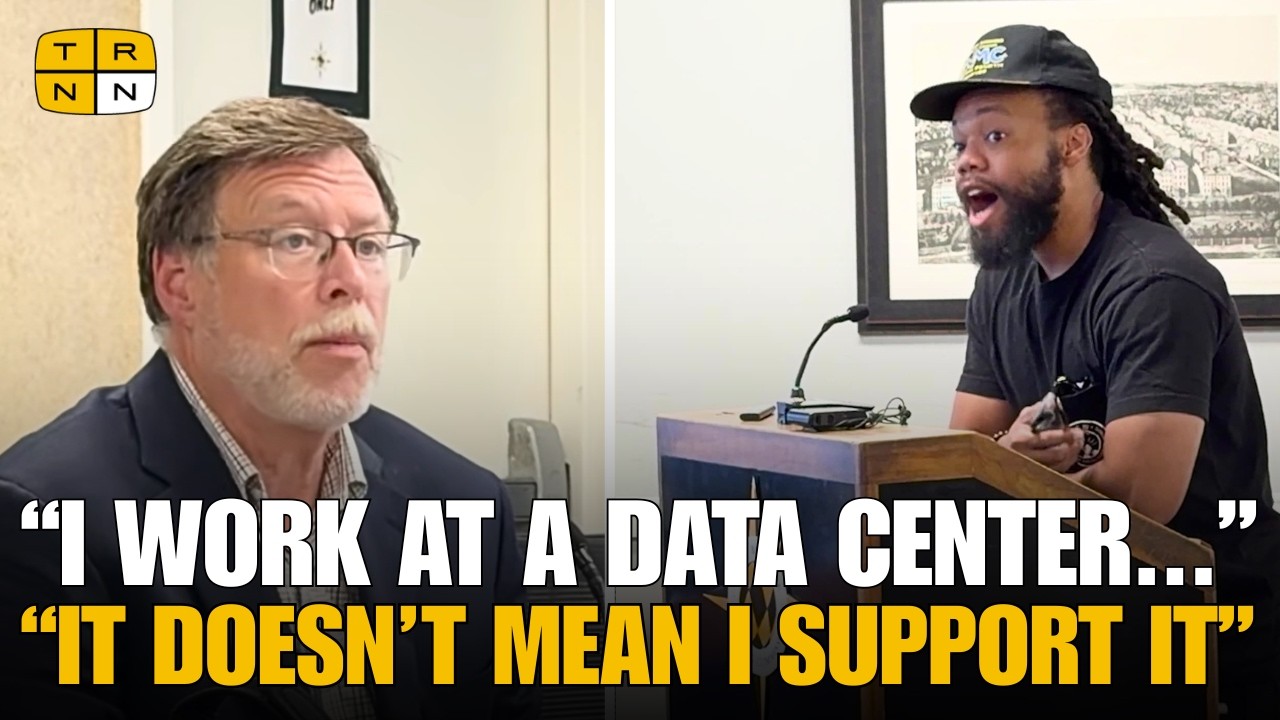
So I’m a longtime Baltimore resident, electrician with IBW. I’m here to speak against obviously data centers. Obviously the contradiction here is that majority of the work for the IBW right now is data centers. I currently work at a data center. That doesn’t mean that I approve of data centers. One of the things that I think that we’re all missing here is that Baltimore is a city that has suffered from de-industrialization for a long period of time. Obviously the shutdown of General Millers, the shutdown of Bethlehem Steel. What we could be talking about instead of wasting our time with this is we could be thinking about how can we generate the power that the grid demands for something like this. We could be talking about solar farms, wind generation, be talking about battery storage. If you look at PJM’s own records, they say that Baltimore and the mid-Atlantic region is at risk of rolling blackouts, as others have said, by 2028.

Obviously our grid needs investment. Our infrastructure needs investment. The city needs investment. Investment from Google Meta does not solve our issues. If we actually care about having a city that functions, we’re going to need to be thinking about where are we putting power, not where are we taking power to? It’s really just that simple. And on that topic, if we’re talking about actually maintaining a labor force, we should be talking about how do we get the young people in our city into the trades that this type of work demands by doing some type of local hire mandates, something to make sure that our young people are not just left in the wind. Roughly 25% of young black men in the city aren’t working. Why are we not talking about what we can be doing for our city? It pains me. I just see no solutions, but we’re talking about something that can help billionaires become trillionaires.

Speaker 10:

Baltimore ordered the nine month study specifically required to recommend conditional use standards for data centers, yet this bill is already establishing conditional use framework. Why not finish the study and let the evidence inform the legislation? Second, under this bill, the company seeking approval prepares the health equity assessment evaluating its project’s potential health and environmental impacts. Subjection C9 even requires that applicants to explain the compelling public interest in its own project would serve. When a company has financial stake in an outcome, relying heavily on evidence prepared by that same company creates a conflict of interest. Why isn’t this assessment independent from the applicant seeking approval? Where is the scientific independence in this process? Finally, if this legislation is truly about putting community first, where is the community process when this hearing is being held in the middle of the day? As other people have stated, my friend, she had to leave.

Many working class Baltimoreans cannot take off to participate. So we are urging that this study be completed, that we require independent assessment, give affected communities meaningful participation. Please oppose this bill and enact a ban on data centers.

Blaire Postman:

I’m a 29 year resident of Remington in Baltimore. I want to tell you about a new building that’s being built. I know this hearing is not about that, but it’s relevant. This new building is going to use more energy than Remington and Charles Village combined. It required the building of a new electric substation. It’s going to be as big as the convention center. It’s on the edge of Stony Run, ground not appropriate for such a large building requiring very deep pilings. It’s displacing animals already. There are deer on my street. For the first time in 29 years, there are deer on my street. My street is five blocks from any wooded area. Deer are walking five city blocks to come to my street to eat all my flowers. I don’t care that they’re eating my flowers because they’re hungry. This building also has a truck road.

It’s going to result in this destruction of over a hundred trees. There was strong community opposition to this building. We were told that this building would not be a data center. I personally don’t know if it’s a data center. The amount of power it’s using, the size of it makes me wonder. So I have some questions. How did this happen? What’s the definition of a data center? And I just want to say that’s why I want to ban. I don’t believe this is a legal issue. I believe it’s a trust issue. There are bad actors. The megas of the world are bad actors and often our representatives do not support us. Odette supported our community. We voiced our opposition and yet Zeke Cohen voted for this and said data centers are inevitable and we need them.

Speaker 11:

I want to also remind everybody that people in Baltimore City, many, many are living on the edge. They’re living week to week. They’re living month to month already. Now, data centers are needed for AI. So you have AI and data centers working together. For some reason, we’re rushing into unregulated, unplanned black box of technology. I don’t know why, except I think it’s the investors who are creating this, creating this need and creating this bubble. So we have people, regular people striving to just get by. AI on the one hand is displacing jobs. It has displaced jobs. Everybody involved in AI says it’s going to massively destroy jobs. Sam Altman bragged about it. On the other hand, we have data centers which have raised utility rates for people around the city. As they’re built, they will raise more utility rates. Now we have people who are barely getting by.

What happens to them?

Speaker 3:

I love Baltimore. It’s a fantastic city. Fell in love here. We’ll have lots of friends and I’m connected to a lot of local art communities. It’s an important city to me and everyone in this room. And I say that because there’s a lot of conversations going on about water, about power. Every time it storms, it seems that a bunch of lights go down in the city. I’m confused why we’re even talking about a data center if we can’t keep our own lights on. I see streets and potholes all over the place and I would really like Baltimore to be a city that is ready for something like a data center. And to be clear, I want a ban on data centers.

But if I’m looking at the infrastructure we currently have just to support homes, just to support me, just to support my friends and family using regular water, I turn the heat down on my water heater. I’m doing what I can to try to make sure that I’m a good citizen in a drought, in a moment of contention. So I am asking council to put a ban on data centers, period, until we deal with potholes, until I can drive my car and not worry about it, period, until we can deal with power outages after storms, until we can make sure that all of our neighbors have access to grocery stores that are healthy for them in their local neighborhoods.

Speaker 12:

I’m a longtime participant in Baltimore’s professional filmmaking community. I’m also a longtime member of IATSE Local 487. So I think I’ll kind of address my concerns in terms of in sort of a cinematic fashion with a metaphor of sorts. When I think of the evolution of data centers as a topic of debate in the public consciousness, I can’t help but think of vampires as a metaphor for what they offer, both in how they mystify the impressionable and how they have the power to leach resources and destroy communities. When I look at this bill, it almost feels like they’re saying, “Hey, vampires want to come to Baltimore. We want to lay the groundwork to only allow the right vampires to come into the city. Vampires are risky. We want to make sure we know what a vampire is and then we want to make sure we get the old money vampires who have accumulated their wealth over hundreds of years and only bite certain kinds of people, maybe vampires that’ll make some of us super hot and young forever.

We want the best vampires for the community.” I don’t think I’m alone when I think of that and I go, “What if we just did no vampires?

💾

“When I look at this bill, it almost feels like they're saying, ‘Hey, vampires want to come to Baltimore. We want to lay the groundwork to only allow the right vampires to come into the city”... What if we just did ‘No vampires’”?
  •  

Video Shows RAF Hawk T2 Trainer Crew Ejecting Before Jet Crashes (Updated)

A U.K. Royal Air Force Hawk T2 training jet crashed in the Pencarnisiog area of Anglesey, North Wales, on Wednesday after both pilots ejected from the aircraft.

Videos captured of the incident show the aircraft porpoising at a slow speed and high angle of attack, before the pair ejected. The Hawk appears to narrowly miss homes before impacting the countryside and bursting into flames, with thick black smoke visible afterward.

BREAKING: Moment RAF Hawk jet crashes near RAF Valley, Wales; pilots eject pic.twitter.com/oHV8MJLhfi

— Klaxon Wire (@KlaxonWire) September 23, 2026

Local police said the two pilots were being treated for minor injuries and that there were no reports of wider damage or additional casualties. Emergency services, including Coastguard and Wales Air Ambulance helicopters, responded to the scene.

The crash occurred near RAF Valley, where the RAF operates its Hawk T2 advanced jet trainers as part of fast-jet pilot training. The station is home to No. 4 Flying Training School. The Telegraph reports the incident happening “shortly after takeoff.”

🚨 WATCH: The moment an RAF training jet crashes shortly after take-off at RAF Valley pic.twitter.com/Pnc71YEuW5

— Politics UK (@PolitlcsUK) September 23, 2026

🚨 BREAKING: An RAF jet has crashed near RAF Valley in Wales

Both crew members ejected pic.twitter.com/dH4RhZ11hw

— Politics UK (@PolitlcsUK) September 23, 2026

The Royal Air Force confirmed that the incident involved one of its Hawk T2s flying out of RAF Valley.

“An investigation is under way and we will not comment further at this time,” the RAF said.

Wreckage from the aircraft has been located at the crash site. Police have asked the public to avoid the area while emergency services remain at the scene.

The circumstances surrounding the crash, including what caused the aircraft to go down and the nature of the flight, have not yet been established.

The Hawk fleet has experienced previous technical issues.

In 2022, engines were removed from service amid concerns over potential in-flight failures, while the 28-aircraft RAF Hawk T2 fleet was temporarily grounded in January 2023 following an engine-related incident at RAF Valley.

In 2024, then-Chief of the Air Staff Air Chief Marshal Sir Richard Knighton said he wanted to replace the Hawk T2, citing problems with its engines and support and concerns about the reliability of the training capacity it provided. The Hawk T2 is due to be retired by 2040.

Those previous issues are not known to be connected to Wednesday’s crash.

Update: 2:09 PM ET –

The Royal Air Force has issued a new update on the mishap today:

“Following an incident involving an RAF Hawk T2 aircraft today, both pilots are receiving medical treatment. Their families are being supported.”

“The RAF has decided to temporarily pause Hawk T1 and T2 operations, as a precautionary measure, whilst investigations are ongoing.”

An update on today's incident involving an RAF Hawk T2 aircraft. Thank you for the well wishes to our people. pic.twitter.com/GLuWU9LfoN

— Royal Air Force (@RoyalAirForce) September 23, 2026

Update: 4:25 PM ET –

A video taken by an onlooker outside the perimeter fence at RAF Valley shows the ill-fated Hawk T2 taking off, with flames beginning to appear during the takeoff roll.

Exclusive: a Hawk T2 getting airborne from RAF Valley, N. Wales. As it rolls down the runway flames appear from the rear of the jet. The Hawk T2 does not have reheat (afterburner). As the jet climbs the flames seem to disappear. The main Hydraulic system is on the rear left side. pic.twitter.com/WafevD2BQg

— Mikey Kay 🏴󠁧󠁢󠁷󠁬󠁳󠁿 (@MikeyKayFilms) September 23, 2026

Update: 9/24/2026 –

The Royal Air Force has shared a new update on yesterday’s crash, which is as follows:

“Both pilots are doing well, they are in extremely good spirits and [are] expected to make a full recovery.”

“A formal investigation into the circumstances surrounding the incident is now underway and as a precautionary measure, the RAF has temporarily paused Hawk T1 and Hawk T2 flying operations.”

An update on yesterday's incident involving a Hawk T2 aircraft. pic.twitter.com/QXg7xAOZTB

— Royal Air Force (@RoyalAirForce) September 24, 2026

Contact the author: thomas@thewarzone.com

The post Video Shows RAF Hawk T2 Trainer Crew Ejecting Before Jet Crashes (Updated) appeared first on TWZ.

  •  
❌