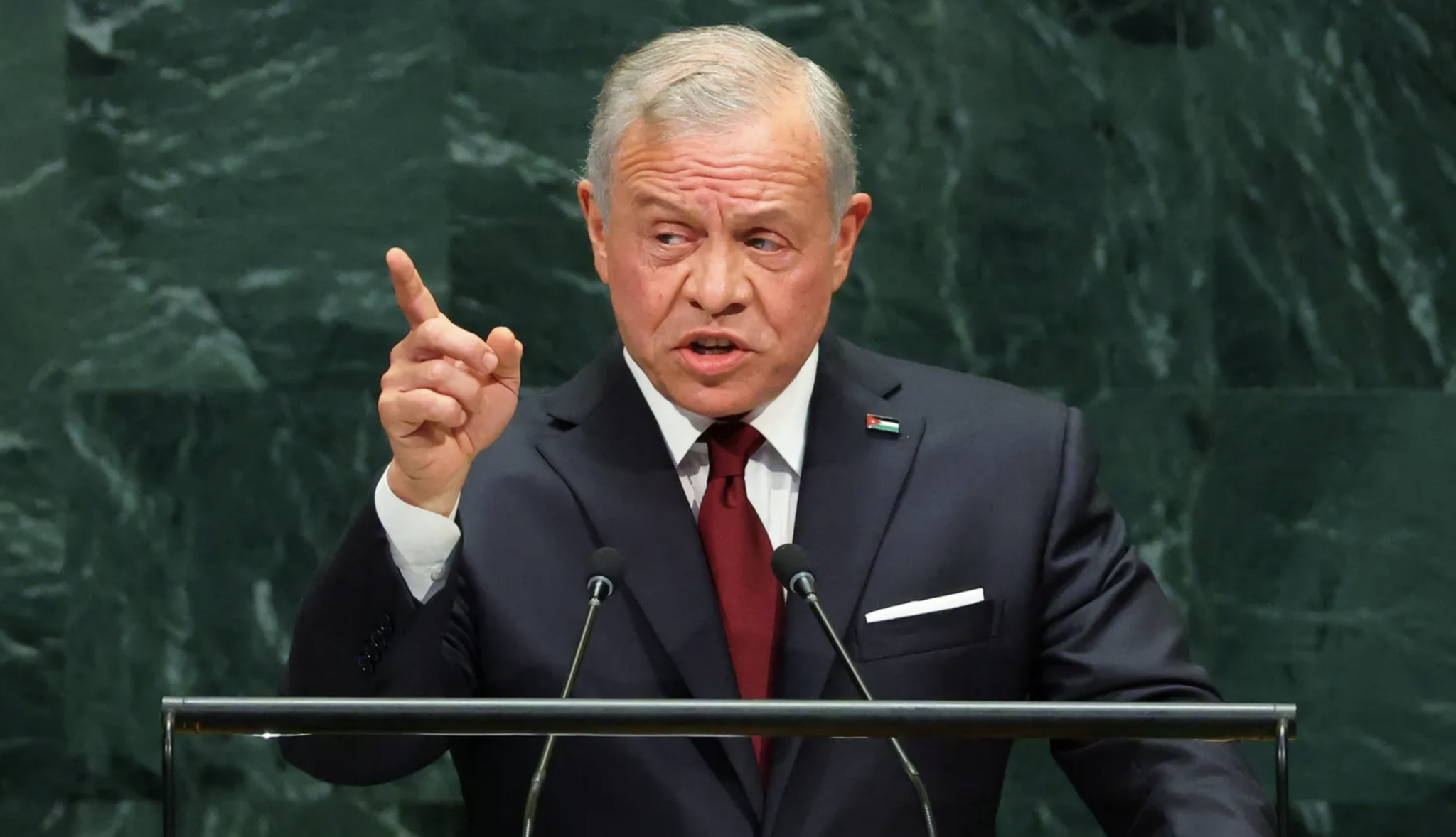
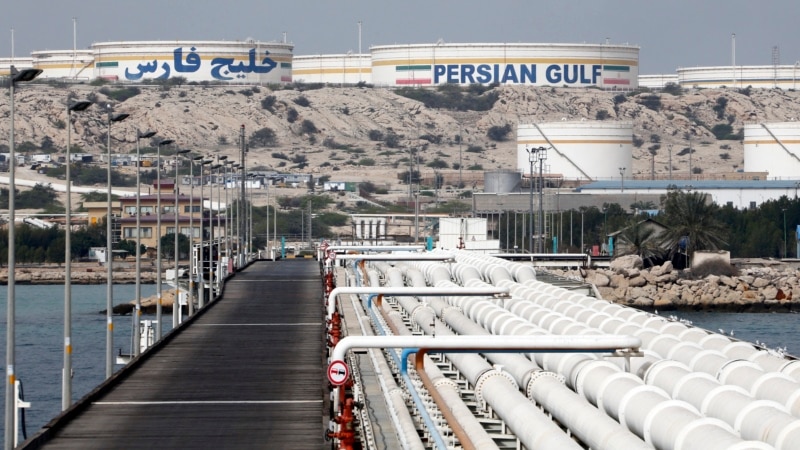
Washington is sending more warships and troops to the Middle East as US President Donald Trump is considering the resumption of large-scale strikes against Iran after the midterms, AP has reported.
Trump told reporters on Thursday that he has “to make a decision: either Iran signs a very fair deal, or it won’t exist any longer.” In a Time magazine interview published the same day, he said that new attacks on the Islamic Republic were “possible” after the US election on November 3, but declined to reveal any further details.
In its article on Thursday, AP said that a third aircraft carrier and some 9,000 additional service members, including 7,000 sailors and 2,000 marines, are currently on their way to the area of the conflict with Iran.
It would increase the US military presence in the Middle East to more than 20,000, which is “an unusually high number,” it stressed.
The forces on the move include the USS Theodore Roosevelt carrier strike group, with the cruiser USS Chosin and the USS Makin Island amphibious readiness group, which includes the USS John P. Murtha and USS Anchorage amphibious landing ships, an unnamed American official told the agency.
With the USS George H.W. Bush and the USS George Washington already being deployed, three US aircraft carriers could be in the Middle East simultaneously as early as the end of October, according to the source.
Washington last had as many carriers in the region in April at the height of the American-Israeli missile exchanges with Iran. Before that, it happened back in 2003.
Axios reported on Friday, citing a US official, that it wasn’t yet clear if the USS Theodore Roosevelt would join the two carriers or replace one of them.
Washington also sent two additional Patriot missile batteries to protect oil and gas facilities in Saudi Arabia and Qatar in recent weeks, according to Axios. It was done to make it easier to get permission from Riyadh to use Saudi airspace for possible strikes on Iran, the outlet explained.
When asked by Time if the conflict with Tehran would harm the Republican Party’s chances in the midterms, Trump first acknowledged that “it’s possible,” but then said that “it should help, because Iran will not have a nuclear weapon.”
A poll by AP-NORC Center for Public Affairs Research, which was published on Thursday, suggested that some 70% of Americans disapprove of the war with Iran.
After the initial US-Israeli attack on the Islamic Republic in late February, Trump claimed that the conflict will be over in a few weeks, but it’s still ongoing, with the diplomatic process remaining in a stalemate.
Trump told Time that he rejected Iran’s latest peace proposal, made during the UN General Assembly last week, because “things that I wouldn’t have approved a year ago I wouldn’t have today.”
In September, Iranian Parliament speaker and top negotiator Mohammad Bagher Ghalibaf warned that further aggressive actions by the US will be met with “faster, heavier and more painful” retaliation by Tehran.
“The Americans have surely understood that the era of proportionate responses has come to an end and our recent strikes against aggressor bases were only a start,” Ghalibaf said.
The tanker captain summoned his years of experience when he saw the blast in front of him. He veered his 300-meter-long ship around the vessel ahead and could see a fire had started. He called the US Navy to tell them of the attack.
Ferries remain docked at several ports in Greece on Friday, October 2, due to gale-force winds reaching 9 and up to 10 Beaufort locally in the Aegean Sea. A sailing ban was imposed at the ports of Rafina and Lavrio in south-eastern Attica on Friday morning, while sailings from the port of Piraeus were also […]
US authorities designated the A7 financial network as a "significant transnational criminal organization," the latest in a series of steps by Western authorities to try and choke the sprawling Kremlin-backed sanctions-evading scheme.
Tajikistan has begun receiving oil and petroleum products from Iran in a move to diversify supplies long dominated by Russia. The volume, price, and route of the shipments remain unknown, raising questions about the commercial scale of the trade and potential US secondary sanctions risks.
The war between the United States and Iran is no longer just a confrontation between Washington and Tehran. A second contest is taking shape alongside and behind it. China is not fighting the United States directly, but its economic, technological and diplomatic links to Iran are complicating Washington’s strategy and ability to win the conflict. […]
Tensions persist between Kabul and Islamabad, accompanied by an information war, psychological pressure, and border and political clashes. Introduction Pakistan has long held connections with various Afghan political factions. Pakistan, over the 1960s and 1970s, progressively supported religious and political groups that were against the Afghan government, aiming to establish an opposing force to its […]
Brazil’s presidential elections are sparking reactions across the region. The economic (and, by extension, geopolitical) importance of this South American giant leaves no regional politician or social organization indifferent, as they know that much of the continent’s future is at stake at the Brazilian polls.
Support for Bolsonaro from Washington and Milei
Flávio Bolsonaro, son of the far-right former president Jair Bolsonaro (who is in prison for conspiring to carry out a coup d’état against Lula da Silva), has received explicit support from Argentine President Javier Milei – a move that cost Buenos Aires a diplomatic crisis with Brasília due to the Argentine leader’s anti-Lula statements made on Brazilian soil.
Likewise, Flávio Bolsonaro enjoys the direct support of President Donald Trump. The US president has maintained a recent tradition (heavily criticized by many) of publicly expressing support for this or that far-right Latin American candidate who, upon winning the election, fully aligns their country with Washington’s foreign policy and joins the US-led military alliance known as the Shield of the Americas.
Trump has also imposed direct trade sanctions on Brazil over the conviction of Jair Bolsonaro, whom Trump calls a “friend.” In addition, the United States sanctioned the judge who convicted Bolsonaro, Alexandre de Moraes, sending a clear message of condemnation against the Brazilian justice system – a move that some political analysts have called foreign “interference” in the Brazilian judicial system.
Unions and the Latin American Left support Lula
Lula has also received support from another very important female leader in the region: Claudia Sheinbaum. In recent weeks, the president of Mexico has repeatedly highlighted the positive aspects of Lula’s administration: “I believe that President Lula has been a very good president … He has done an extraordinary job leading Brazil, and the indicators show it.” The endorsement of his candidacy has clearly been indirect, but given Mexico’s geopolitical importance, many in Lula’s Workers’ Party surely appreciate it.
Lula has also received support from neighboring countries to the south. In Uruguay, the ruling coalition, the Frente Amplio (FA), has shown direct and militant support for Lula’s campaign. Fernando Pereira, president of the FA, stated that the electoral battle in Brazil “is between democracy and barbarism.” He also warned against US interference in the elections: “Brazil will not accept U.S. interference in the election.”
 Login