Kazakhstan has asked Moscow to help bring home citizens who say they were pressured into signing military contracts to fight in Ukraine. The request puts a fresh spotlight on the vulnerability of Central Asian migrants to Russia’s military enlistment efforts.
Swiss police are investigating a sprawling fraud operation with suspected links to Ukrainian scam call centers, an industry said to be worth billions to corrupt officials in Kiev, Neue Zurcher Zeitung (NZZ) has reported, citing law enforcement officials.
According to a report on Sunday, NEDIK, the police network coordinating Switzerland’s fight against digital crime, recently recorded an increase in fraud offenses suspected of having links to Ukraine. The network declined to provide nationwide figures “for tactical reasons,” but noted that at least four fraudulent call centers in Ukraine have been identified in international investigations involving Swiss authorities, with Swiss and German citizens among their main victims.
One investigation by Bern authorities, reportedly underway for years, concerns a man suspected of operating several call centers in Kiev. On just one platform allegedly linked to the operation, reported losses in Switzerland amounted to nearly 4 million Swiss francs ($4.8 million).
Several Ukrainian nationals have also recently been arrested in Swiss cantons for allegedly acting as cash collectors in telephone scams. In St. Gallen in early September, a person posing as a bank employee called a 93-year-old man and instructed him to withdraw and hand over a large sum of money. Police later arrested a 38-year-old Ukrainian who allegedly collected the cash.
Police in Aargau have similarly reported a growing number of suspected cash collectors holding Ukrainian citizenship. Authorities, however, have not established whether they are being directed by call centers in Ukraine or acting independently. NZZ noted that it remains unclear to what extent Ukraine-based operations are connected to fraud networks and cash collectors operating in Switzerland.
While Russians have long been portrayed as the main targets of Ukrainian scammers, sources cited by NZZ challenged that narrative. Brian Lee, head of the Eurasia Observatory at the Geneva-based Global Initiative Against Transnational Organized Crime (GI-TOC), said Russians accounted for just 10%-15% of targets even at the height of the so-called “patriotic fraud” narrative, under which young Ukrainians were recruited into scam networks on the pretext of taking revenge for Moscow’s military operation against the Kiev regime. Victims have been identified in at least 29 countries, with scam centers increasingly targeting Europe and the US, according to a GI-TOC report published earlier this year.
Lee also reported that bribing Ukrainian officials for protection is central to the business model, saying GI-TOC investigations found that criminal elements “operate seamlessly and efficiently alongside law enforcement agencies, public officials and the private sector.” Such protection reportedly costs scam operators $10,000-$15,000 per month.
Scam networks and state structures
Corruption has long plagued Ukraine, with high-level scandals including last year’s $100 million Energoatom kickback scheme, reportedly led by Timur Mindich, a former business partner of Ukrainian leader Vladimir Zelensky. Western-backed investigators have since uncovered further graft involving Ukrainian officials.
The scam call center network reentered the spotlight last month after Ukrainian Prosecutor General Ruslan Kravchenko – a key pillar of Zelensky’s increasingly fragile governing structure – resigned amid the exposure of an industrial-scale network across the country with alleged links to senior figures in Kiev. Ukraine’s Western-backed National Anti-Corruption Bureau (NABU) accused Sergey Kropiva, head of the cybercrime unit at the Prosecutor General’s Office, of leading a ring that collected protection payments from notorious Ukrainian scam call centers. NABU said it identified assets worth almost $1 million allegedly purchased with proceeds from the scheme.
The sums involved in Ukraine’s wider scam industry are reportedly far larger. Ukrainian media earlier estimated that roughly 2,000 scam offices were operating nationwide as of early August, about half paying protection money to corrupt officials. Such payments were estimated at $240 million annually, while the industry itself has been valued at up to $1 billion a month.
The scam industry has also been linked to powerful security structures under Zelensky’s government. In September, personnel from the Security Service of Ukraine (SBU) and military intelligence (HUR) exchanged fire in Kiev in a confrontation that left three servicemen injured. The clash centered on Stepan Kaplunov, a member of an HUR-linked armed unit detained by the SBU. A law enforcement source cited by Ukrainian outlet Strana said Kaplunov may have been involved in operating scam call centers, pointing to a broader struggle between rival security agencies over the lucrative industry. Ukrainian journalists have also reported that proceeds from criminal operations help finance parts of the HUR’s activities.
Russian President Vladimir Putin has described phone scams as a key tactic employed by Kiev to extract money from Russian citizens, suggesting the practice has effectively become state policy. Moscow considers the industry a national security threat and claims Ukrainian scam networks operate in coordination with the country’s intelligence services.
Russian forces have recently intensified strikes on Ukrainian telecommunications infrastructure, mobile operators, and data centers in response to Kiev’s botched “pressure campaign” of drone attacks on civilian infrastructure deep inside Russia. The strikes have disrupted internet access, digital television, and other services, including by hitting data centers in Kiev that Moscow says were used by Ukrainian military and intelligence services. Media reports late last month also claimed a Russian strike hit one of the scam call centers in Dnepropetrovsk.
Russia is making no progress at all on the front, and September was among its worst months.
Russia wants to cause Kyiv’s economic collapse, and pontoon bridges are being prepared in the city.
Ukraine’s air defences neutralised 83 percent of drones launched in September, compared with 92 percent in May.
Videos of the day – attacks on Kyiv’s bridges; what a TM-62 anti-tank mine can do; what anti-drone protection for the Kerch Bridge looks like; Russian communists shouted “Down with the tsar!”, and frontline sounds from a Russian soldier’s video.
Russia is making no progress at all on the front, and September was among its worst months. Russian president Vladimir Putin claimed in Valdai at the beginning of the month that his subjects had captured 1,300 square km of territory in September. This is further evidence that he is either being given completely fabricated figures or is deliberately lying himself.
If Putin were right, his army would have experienced its most successful period since the first two months of the invasion. Defence ministry reports reflect this. Almost every day, they report the capture of more and more villages. In reality, the situation is different. Russian forces became bogged down in every direction even before the rains arrived, and throughout the year they have failed to achieve any operational success that would justify the further hundreds of thousands killed and wounded.
As every month, various analysts have again published their calculations of how the front line moved. Not even estimates from Putin’s own Z channels agree with his figure.
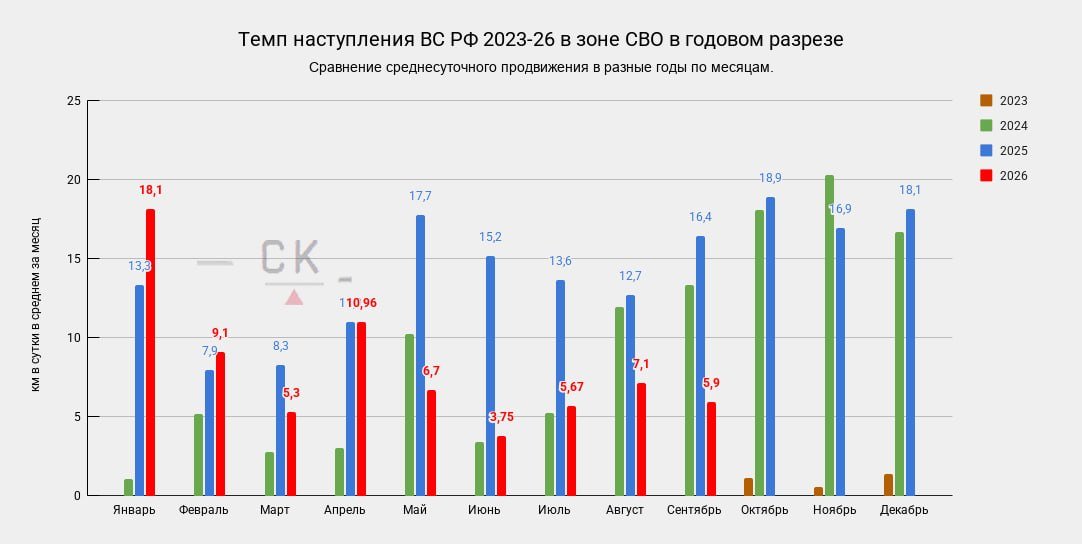
“The average daily rate of advance by the Armed Forces of the Russian Federation in the SVO zone [special military operation] in September 2026 was +5.9 km². The average rate of advance over the entire offensive up to October 2026 is +9.92 km² per day,” Russian project Slivochny Kapriz wrote about September.
It, too, is an unreliable source that regularly overestimates the significance of “flag operations”, but even its data makes it clear that 2026 is lagging significantly behind the previous year.
Even if this author’s figures were correct, the Russians advanced by 177 square km during September’s 30 days, more than seven times less than Putin claims.
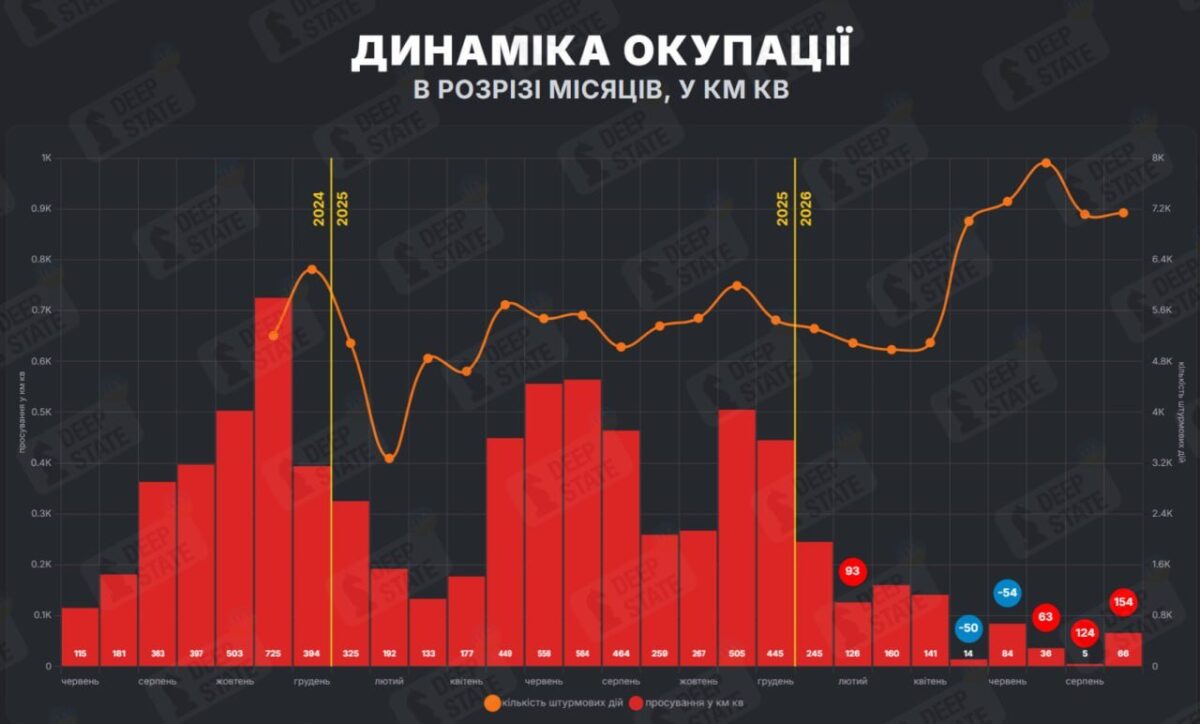
Ukrainians from DeepStateUA also published an estimate very close to Slivochny Kapriz’s figures. According to this OSINT project, Ukraine lost 154 square km in September.
However, the Ukrainian analysts treat their own data cautiously and warn their readers that “the operational security of our forces remains the highest priority in our work”.
In other words, during Ukrainian counter-offensives, DeepStateUA only reports successes after a delay so as not to jeopardise the operations’ success.
They therefore now recall that their statistics do not yet include 270 to 320 square km of liberated Ukrainian territory in various sectors. “July will therefore also end as a month in which the Armed Forces of Ukraine have the upper hand, while for August and September this will only become clear when official announcements of successes are available. In the meantime, part of the liberated territories may be lost again,” DeepStateUA wrote on Friday (2 October).
The most optimistic by far are currently Finnish analysts from the Black Bird Group, who see a balance of 190 square kms in Ukraine’s favour in September.
Over the month of September, the Russian net gains were negative 190 km2. This marks the greatest monthly net territorial loss for Russia in our dataset since the June of 2023.
Emil Kastehelmi, one of the project’s authors, pointed out that the sharp change for the better stems from the fact that it also captures some changes that DeepStateUA has not yet taken into account. Nevertheless, he said: “Russia has failed to reverse a situation that has persisted for almost the entire year. The results of the major Russian offensive are minimal, and this is likely to remain the case for the rest of 2026.”
Among Western analysts, the most sceptical is Konrad Muzyka of Rochan Consulting, who credits the Russians with even more gains than Slivochny Kapriz — as much as 235 square kms of advance. Yet this figure still does not come close to Putin’s. Even if it were the most accurate of all, which cannot be determined, it would amount to an area roughly equivalent to the size of Košice, including all its suburbs, forests and agricultural land within the city’s administrative boundaries.
The plan for this year, meanwhile, was to capture the rest of Donetsk region, including the remaining large cities of Kostiantynivka, Druzhkivka, Kramatorsk and Sloviansk. The Russians are closest to doing so in Kostiantynivka, but Ukrainian soldiers remain there too.
Here is a short summary of territorial changes in Ukraine for September 2026. Our dataset shows an overall Russian territorial gain in September, but a sharply uneven pattern: gains around Dobropillia, Velykyi Burluk, Kramatorsk and Komyshuvakha coincided with substantial losses… pic.twitter.com/jrq0zXiqri
— Konrad Muzyka – Rochan Consulting (@konrad_muzyka) October 1, 2026
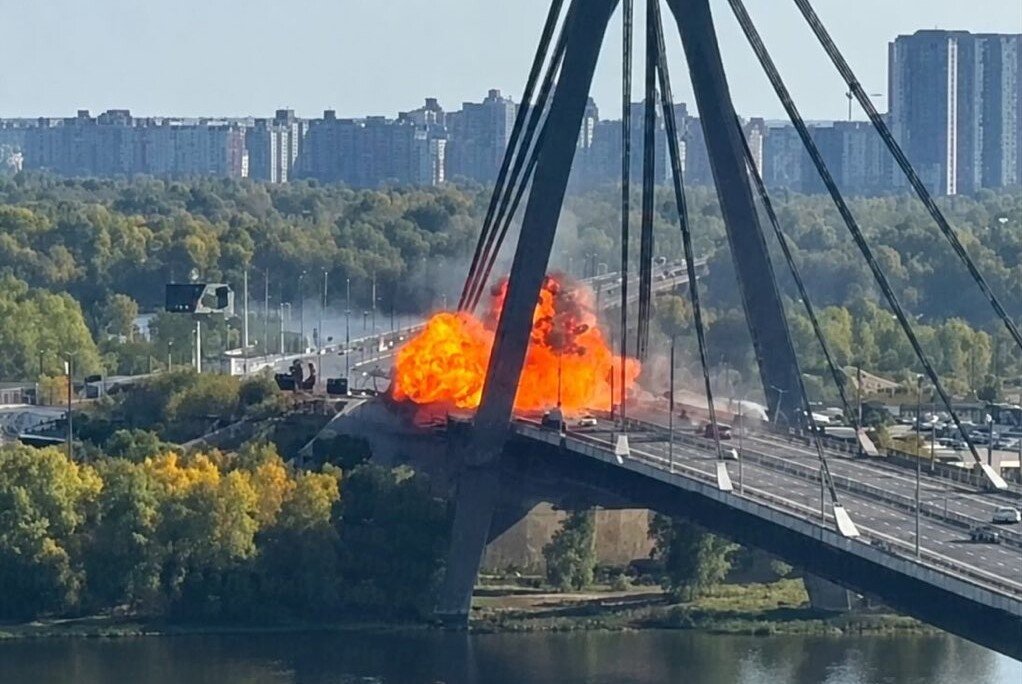
Russia wants to cause Kyiv’s economic collapse, and pontoon bridges are being prepared in the city. There is now no doubt that the Russian army has begun a systematic effort to disrupt transport between western and eastern Kyiv. Over the weekend, further drones struck several bridges across the Dnipro.
They included the Northern Bridge, which a Russian drone attacked during the day amid heavy traffic.
🚨 BREAKING: Russian forces launched a drone strike hitting the Northern Bridge in Kyiv, damaging the road surface.
The strike coincides with German Chancellor Friedrich Merz’s unannounced visit to the capital to meet with Ukrainian leadership. pic.twitter.com/j1UHYoBMa7
Ukraine’s transport minister Mykola Kalashnyk said 600,000 cars cross Kyiv’s bridges every day. In an interview with Suspilne, he announced that construction of embankments and pontoon bridges would begin this week. If the existing bridges become impassable, they are intended to maintain as much traffic as possible between the river’s two banks. Kalashnyk said the temporary crossings should have at least half the capacity.
However, this will take around three months; in the meantime, work will also be carried out to improve the resilience of road bridges.
Transport expert Dmytro Bespalov is sceptical. As he said in an interview with NV, Kyiv’s bridges are irreplaceable, and the only thing that can keep traffic moving across the Dnipro is the military.
However, the task of keeping the bridges operational is complicated by their poor technical condition. Because of their age and the lack of maintenance funding, Bespalov rates the Southern and Northern bridges at four on a scale of one to five, where one is ideal condition and five is emergency condition. He says two other bridges are at level five.
Even in this condition, such large structures are not easy to destroy, but they are certainly more vulnerable. Like many others, Bespalov believes that Russia lacks the means to destroy the bridges completely and is seeking to disrupt traffic during the winter. “The aim is probably an economic blow. I fear it will be very painful. It will not kill us, but I am very concerned about the economic consequences it will have,” he added.
Air defences neutralised 83 percent of drones launched in September, compared with 92 percent in May. This follows from data by the Shahed Tracker project, which recorded 6,732 Russian drones launched against Ukraine over the month, of which 5,561 were shot down or disabled through electronic jamming.
Shahed type OWA-UAS stats Sep2026 [per UA Air Force Reports]
As the same source’s chart for August shows, the effectiveness rate did not change, but the number of drones launched by Russia rose sharply month on month by almost 1,600.
Shahed type OWA-UAS stats Aug2026 [per UA Air Force Reports]
In May, when Russia used a record 8,150 drones, it was as high as 92 percent. At that time, the Russian army began a mass transition to jet-powered drones, leading to a temporary slowing of the pace of attacks. The trend is now unfavourable: monthly attack statistics have begun to rise sharply, while the effectiveness of countermeasures is declining, as Geran-4 drones and especially Geran-5 drones still present a serious problem.
Shahed type OWA-UAS stats May2026 [per UA Air Force Reports]
Total: 8150 (New Record) Claimed Intercepted: 7476 (Official: 5053 Shahed type OWA-UAS) Hits: 508 (674 Not Intercepted) Interception Rate: ~92%
As another video showing the moment a Geran-5 was hit demonstrates. Technical solutions already exist, but faster interceptor drones are not yet available in sufficient numbers.
Another Geran-5 drone shot down by a STING S interceptor drone from Wild Hornets. Combat work by pilots of the 1020th ZRP. pic.twitter.com/kkPHaCIrKG
One TM-62 anti-tank mine contains seven and a half kilograms of explosives. This is enough to destroy the remains of a building used as a shelter by Russian soldiers.
❗️A Ukrainian heavy Baba Yaga-type drone destroys a building with Russian soldiers inside by dropping a TM-62 anti-tank mine. pic.twitter.com/XClgIqMvwe
A video recently circulated online showing Kyiv residents protesting against tree felling. It was widely used as alleged evidence that Ukrainians have had enough of the government. However, their protest was civic, not political. These Muscovites are communists and dared, very timidly, to chant “Down with the tsar!” Police intervened immediately.
У Москві комуністи зібралися на погоджений мітинг, почали скандувати «Долой царя», і після цього їх побили й розігнали мусора. pic.twitter.com/MD6MVxSBPS
This video must be watched with the sound on. It illustrates the saturation of the battlefield with drones. The Russian soldier who recorded it says he counted five drones.
"I’ve already counted five. It’s a damn swarm." position of 🇷🇺1199th Motorized Rifle Regiment (probably occupied south 🇺🇦) 🍂 is coming pic.twitter.com/K9H3wcRdse
Three lines of anti-drone barriers protect the Kerch Bridge, which links Crimea to Russia, from attacks from the sea.
Exilenova+ says Russia has set up layered defenses around the approaches to the Crimean Bridge, with multiple lines against Ukrainian surface and underwater USVs plus FSB patrol ships. The stated aim is to shield the bridge’s vulnerable elements. pic.twitter.com/rxMPPe6gXW
By Monday (5 October), Russia had verifiably lost 24,170 pieces of heavy equipment (24,138 on Tuesday, 22 September). Of these, 19,133 (19,105) were destroyed by Ukraine, 1,003 (1,000) damaged, 1,194 (1,194) abandoned by their crews and 2,840 (2,839) captured by the Ukrainian army. This includes 4,452 (4,448) tanks, of which 3,357 (3,353) were destroyed in combat.
Ukraine lost 12,238 (12,175) pieces of equipment, of which 9,633 (9,579) were destroyed, 711 (702) damaged, 695 (695) abandoned and 1,199 (1,199) captured. This includes 1,466 (1,464) tanks, of which 1,126 (1,125) were destroyed in combat.
Note: Neither side regularly reports on its own dead or destroyed equipment. Ukraine publishes daily figures for Russian casualties and destroyed equipment, which cannot be independently verified. This overview uses data from the Oryx project, which has compiled a list of equipment losses documented exclusively by photographs since the beginning of the war.
Poland and Romania have refused to help Kiev move millions of tons of grain – which got stuck in Ukraine following Vladimir Zelensky’s war on exports – into the EU, Politico reports, citing officials in Warsaw and Bucharest. Zelensky’s 40-day campaign resulted in Russia implementing a de facto blockade of Ukraine’s Black Sea ports, with the wider consequences of the strikes estimated at 1.5% of the country’s collapsing GDP.
Last week, Ukrainian Agriculture Minister Taras Vysotsky appealed to the EU for a €1.1 billion ($1.23 billion) allocation to improve transit capacity, which would help free large quantities of grain – Ukraine’s key source of income – trapped in the country.
The request came after Zelensky’s 40-day PR ‘pressure campaign’ on Russia, which involved long-range strikes on oil refineries and civilian infrastructure. The effort backfired, as Russia ramped up strikes on Ukraine’s military-related logistics, including the key hub of Odessa, accounting for an overwhelming majority of Kiev’s agricultural exports.
Speaking to Politico, Vysotsky described the situation as “very, very critical,” after his ministry reported the export of 2.4 million tons of agricultural products in September, just 46% of what Kiev considers the required volume.
He added that export restrictions leave Ukrainian farmers without cash needed to plant seeds now for next year’s harvest. “If the situation stays like this till spring, it could mean the decrease of even 35-40% of the planted area,” he warned.
Last month, Ukrainian officials estimated damage to infrastructure from Russian strikes at nearly $10 billion, with wider consequences amounting to around 1.5% of GDP.
While the EU as a whole is yet to give a definitive answer to the €1.1 billion request, Poland and Romania – which are crucial to facilitating Ukraine’s exports – ruled out any significant assistance.
Romanian Agriculture Minister Barna Tanczos rejected the prospect of substantially expanding capacity, telling Politico that “the interest for our own farmers remains a priority.”
Ukrainian cargo and low Danube water levels are already straining Romanian ports, he said, adding: “Everybody knows we cannot double the number of trains, we cannot double the roads, railways and port capacity. It is what it is.”
The Polish Infrastructure Ministry spokesperson said, as cited by Politico, that Poland “has no plans to introduce any changes aimed at increasing the transit of Ukrainian agricultural products.”
Before the €1.1 billion plea, Ukraine requested €220 million from the EU in grants to support farmers affected by disrupted exports, but the bloc effectively turned it down, pointing instead to existing EU mechanisms.
Agricultural trade has long been a source of friction between Ukraine and its EU neighbors. After the escalation of the Russia-Ukraine conflict in 2022, Brussels suspended duties and quotas on Ukrainian exports, which triggered massive protests from European farmers over what they saw as unfair competition. As a result, the EU introduced an ‘emergency brake’ system in 2024, allowing tariff quotas to return for sensitive products if imports exceed set thresholds.
In addition, many of Ukraine’s neighbors, including Poland, Hungary, and Slovakia, maintain significant restrictions on Ukrainian imports at the national level.
After studying at Berklee and building a career in New York, Ukrainian singer Valeriia Vovk returned home to perform for troops, including near the front. She says simply being there, talking to soldiers and singing for them, has great value.
German Chancellor Friedrich Merz has announced a new package worth more than €1.3 billion for Ukraine during a visit to Kyiv, combining additional military assistance with support for the country’s damaged energy infrastructure as German-Ukrainian industrial co-operation expands.
Merz visited the Ukrainian capital on Sunday while Russian drone attacks continued against Kyiv.
According to the Ukrainian presidency’s account of the meeting, the package includes more than €1 billion for defence and additional financing for the energy sector ahead of winter. Separate reporting put the energy component at approximately €350 million.
The visit also produced an extensive group of bilateral agreements involving governments and companies.
President Volodymyr Zelenskyy said Ukraine and Germany had concluded 15 agreements and documents, most concerning security co-operation, production, procurement, orders for German industry and joint projects in Ukraine. He put the total value of the agreements reached during the visit at more than €8.5 billion.
A narrower set of industrial agreements reported during the visit was valued at about €6.6 billion and included air-defence, radar and drone projects.
The visit went beyond another transfer of military aid.
Germany and Ukraine are increasingly constructing a defence relationship based on procurement, industrial production and the transfer of Ukrainian battlefield experience to European manufacturers.
At the Ukrainian-German Business Forum, Zelenskyy said the new security package would strengthen Ukraine’s armed forces immediately while industrial agreements were intended to build longer-term production capacity.
The direction corresponds with a wider shift in European support for Ukraine.
Military assistance is increasingly moving away from transfers of existing national stocks towards contracts financing new weapons production. In July, the EU released €3.47 billion for Ukrainian defence procurement, including financing intended for drones, missiles, air defence and combat aircraft requirements.
Kyiv has since asked European partners to accelerate further financing as the demands of the war outpace scheduled disbursements. EU Today reported in September that Ukraine was seeking early access to part of its 2027 EU funding to close a military budget gap.
The German agreements add a bilateral industrial track to that European system.
They also reflect changes on the battlefield.
Russia has continued to expand large-scale drone and missile attacks, increasing the importance of interceptor production, radar coverage and lower-cost methods of destroying unmanned aircraft. Ukraine’s air-defence problem is increasingly an industrial one: inexpensive attack drones cannot sustainably be countered only with scarce and costly surface-to-air missiles.
German-Ukrainian co-operation is increasingly being shaped by that requirement.
Merz has presented continuing support for Ukraine as a direct German and European security interest, rather than assistance based solely on solidarity with Kyiv.
The argument has acquired greater force as German authorities investigate Russian-linked sabotage and hybrid operations on German territory.
In September, investigators reportedly traced the attempted bombing of a Ukrainian cargo aircraft at Leipzig/Halle Airport to a suspected Russian military-intelligence organiser, with EU Today reporting details of the alleged GRU-linked logistics network.
For Berlin, support for Ukraine is now increasingly seen as part of Germany’s own security.
Merz’s visit also carries a domestic political dimension. His government is committing Germany to considerably higher defence expenditure at a time when the CDU has suffered severe electoral setbacks in eastern Germany and voters remain concerned over public finances and economic performance.
Yet Germany’s military and industrial engagement with Ukraine is continuing to expand.
The new package announced in Kyiv is important in itself, particularly as Ukraine prepares for another winter of Russian attacks on its energy infrastructure. The wider development, however, lies in the growing number of defence-production agreements accompanying it.
European governments have spent much of the war debating how to replenish their own weapons stocks while sustaining Ukraine.
The German approach increasingly points towards a different model: Ukrainian operational experience, Ukrainian procurement requirements and European industrial capacity being brought into the same defence-production system.
Die Ukraine bekommt immer mehr Probleme, weshalb Kanzler Merz mal wieder nach Kiew gefahren ist, um über eine Milliarde Euro deutscher Steuergelder zu verschenken. Deutschland bekommt auch immer mehr Probleme, aber für die Deutschen hat Merz kein Geld, denn sonst reicht es nicht für Kiew. Aber was sind die Gründe für die aktuellen Probleme der […]
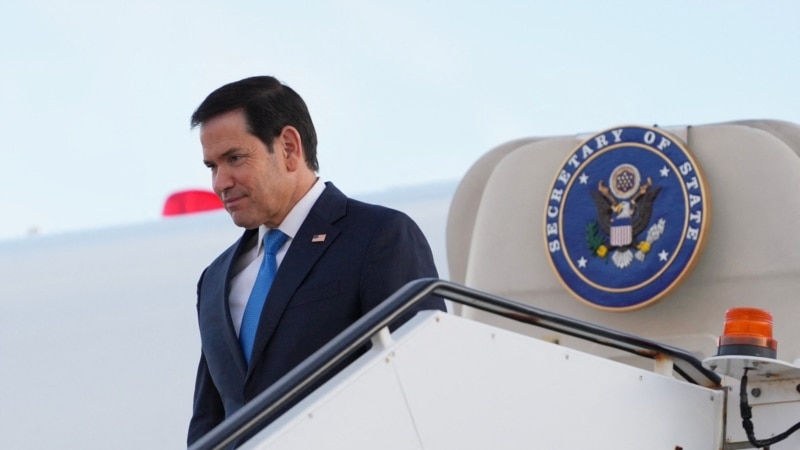
US Secretary of State Marco Rubio is heading to Iceland, Greece, and Portugal on October 5-8 for talks on security, defense, energy, economic cooperation, and technology as NATO allies face growing security concerns over Russia’s military activity and continued Middle East instability.

 Login