❌

Reading view

B-21 Raider: Northrop, US Air Force Break Ground on New Palmdale Line. Flight Test Runs Ahead of Schedule

The US Air Force’s next strategic bomber, the B-21 Raider, is moving from flight test to the flight line, and the industrial base is expanding to match that pace. As part of this effort, the Department of the Air Force and the manufacturer broke ground on a new bomber final assembly line at Plant 42 in Palmdale, California.

“It’s more than construction… we’re moving fast to build B-21s! The Department of the Air Force & @northropgrumman have broken ground in Palmdale, CA, on over 1M sq ft of new facilities that will be the final assembly line at Air Force Plant 42,” Secretary of the Air Force Dr. Troy E. Meink recently wrote in a post on  X.

The B-21 Raider is the USAF’s next-generation nuclear- and conventional-capable, long-range penetrating bomber optimized for highly contested environments.

The new assembly line likely supports an agreement signed in February 2026 to increase annual B-21 production capacity by 25% using $4.5 billion in funding from the fiscal year 2025 reconciliation legislation.

Separately, Northrop Grumman is investing approximately $2.5 billion of its own capital over several years in related facilities and capacity. In September 2026, the company also opened the East Gate 3 manufacturing campus in Layton, Utah, to produce key B-21 components.

The construction of an all-new assembly line shows that expansion at the B-21’s production facility has moved from planning and funding to active construction.

This expansion is meant to give the service extra manufacturing capacity as the B-21 advances through flight testing and into initial operational deliveries. 

The USAF plans to buy at least 100 B-21 bombers to replace the B-1B Lancer and B-2 Spirit and eventually complement the B-52 Stratofortress.

The B-21 Raider program remains in low-rate initial production, meaning Northrop Grumman is building a small number of aircraft to test and refine the production process before full-rate production begins.

At the same time, senior officials have said the Air Force may need more than the current minimum of 100.

In April, Defense Secretary Pete Hegseth told the Senate Armed Services Committee that he believed “a lot more” B-21s were needed. Indo-Pacific Commander Admiral Samuel Paparo had earlier said he would favor a fleet of 200 for nuclear deterrence and penetrating strike.

A Mitchell Institute report has likewise argued that 100 is a raid force, not a campaign force. None of those comments changes the program of record, and the Palmdale construction is tied to the February capacity agreement, not to an approved increase in the buy.
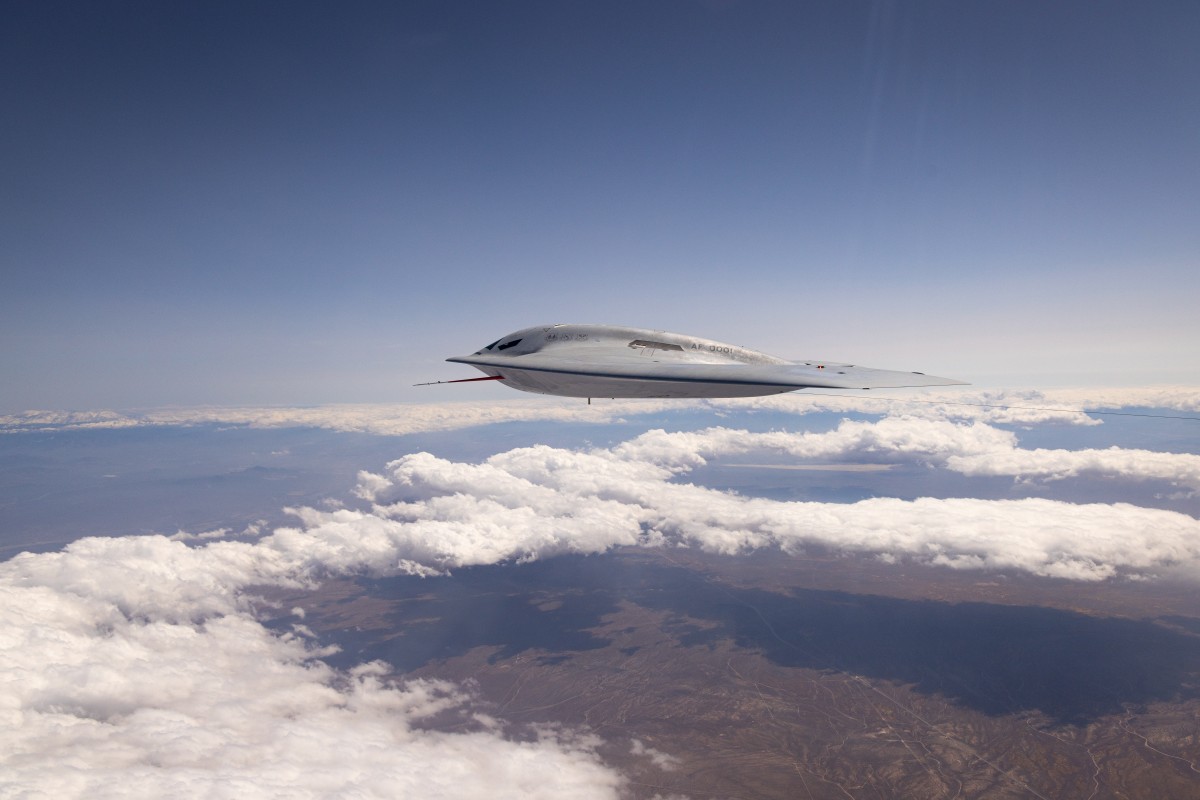
A B-21 Raider conducts flight testing, including ground testing, taxiing, and flight operations, at Edwards Air Force Base, California. Courtesy photo

Furthermore, a report by the Mitchell Institute for Aerospace Studies said the USAF’s current plans to purchase “at least” 100 B-21s match one-time operations into hostile airspace but are insufficient to maintain pressure in a larger conflict because they are “a raid force, not a campaign force.”

Meanwhile, the USAF has said the sixth-generation bomber—which currently has no analogs in the world—is “close” to entering service. In fact, it is expected to reach Ellsworth AFB in South Dakota, one of the three bases selected to host the Raider, in 2027.  

This bomber project has moved at a breakneck pace, going from the official public unveiling in December 2022 to the maiden flight in November 2023. In fact, an operational test pilot flew alongside a developmental test pilot, sharing the B-21 cockpit for the first time in June this year, underscoring the urgency of fielding the bomber.

The B-21 Raider’s rapid path from first flight to operational ramp at Ellsworth AFB in 2027 marks a striking acceleration in how the US fields a complex new strategic bomber.

Observers have lauded the speed, remarking that it has been unusually compressed for a program of this scale and sensitivity. This speed, however, was made possible because of a more fundamental shift: the B-21 was built virtually before it was ever built in metal.

B-21 Raider Rewrote Pentagon Acquisition Rules

For decades, major US defense programs followed the process, but aspirational designs fell behind schedule and prototypes revealed problems missed earlier, delaying programs and driving up costs. Northrop claims to be breaking away from this pattern.

Northrop states that it built the B-21 virtually first, using an extensive digital ecosystem and high-fidelity digital twins long before cutting metal. Succinctly put, unlike previous bombers that were primarily analog and later adapted for the digital era, the B-21 was built to function, endure, and evolve in the contemporary environment.

Developing and producing combat aircraft previously involved designing, building a prototype, testing it, discovering problems, and redesigning. However, Northrop essentially inverted this sequence, using a constantly changing digital model for the Raider.

This gave engineers, manufacturers, and operators a common reference point, enabling them to evaluate and implement design changes almost instantly.

This method enabled engineers to model aerodynamic performance, stealth features, structural loads, and systems integration long before components entered production.

This meant that design modifications that once required expensive rework could be assessed and verified virtually, often in a few hours rather than months. 

The team simulated and refined structural loads, stealth characteristics, flight dynamics, and systems integration in the virtual environment before committing to physical hardware.

As a result, the physical aircraft that emerged from this approach matched or even outperformed the models’ predictions, according to the manufacturer.

This, in turn, has allowed the program to compress testing timelines, accelerate production, and keep costs under tighter control.
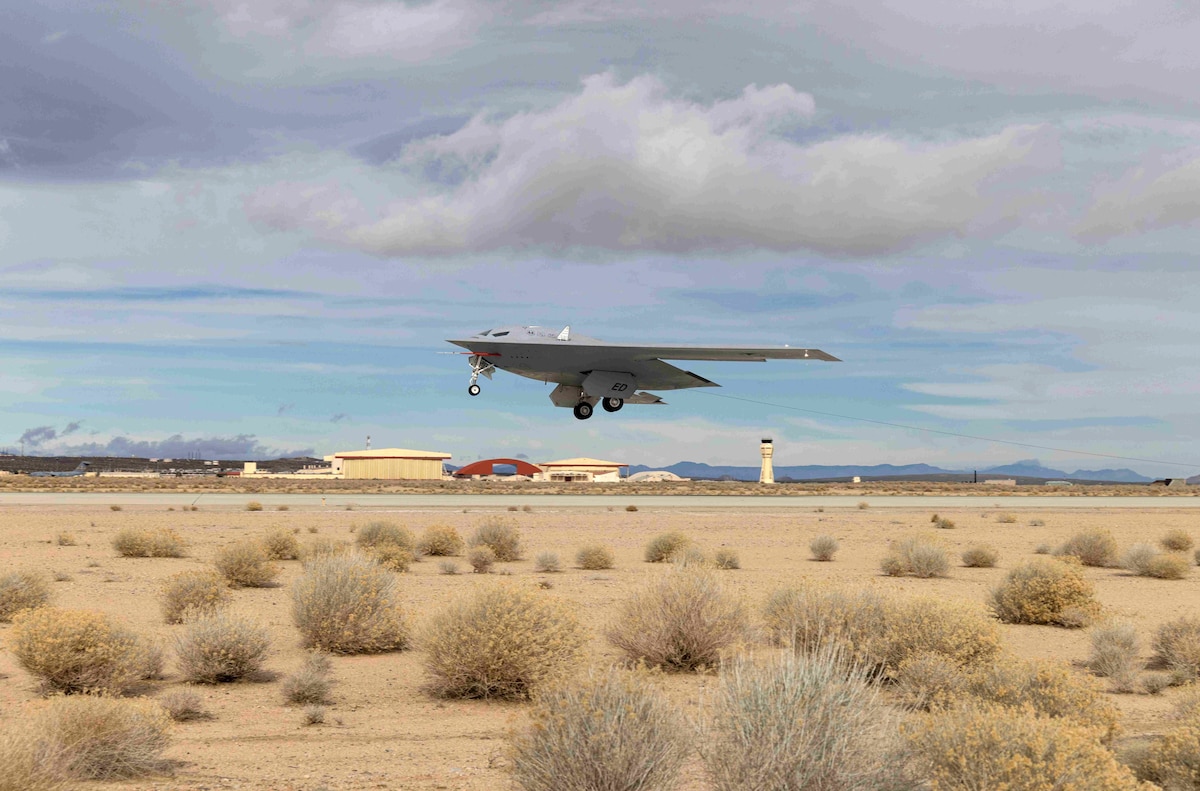
File: A B-21 Raider conducts flight tests, which include ground testing, taxiing, and flying operations, at Edwards Air Force Base, California

Unsurprisingly, the result was an unusually mature aircraft when the first Raider took flight. Northrop earlier said, “Before the B-21 ever took to the sky, the flying test bed completed more than 200 test sorties totaling more than 1,000 flight hours, testing production hardware, software, and sensors in a dynamic environment and enabling teams to tackle discovery well in advance.”

The speed with which B-21 moved from production to testing and into an operational setting at a USAF airbase was best demonstrated by the approach the manufacturer and the Air Force took during flight testing. A major 180-day test cycle was reportedly completed in just 73 days, as revealed in May 2026.

Officials have even stated that the program is exceeding expectations, as test aircraft are achieving high “code one” rates, which is the rate at which the aircraft is ready to fly again with minimal issues

The Combined Test Force achieved half the originally planned missions in less than half the planned time, while supporting significant contract value.

This compression was not the product of rushed flying, and reflected fewer surprises, higher aircraft availability, real-time data analysis, and the ability to clear multiple test points on single sorties.

The advantage of building the aircraft digitally has reportedly extended to the production lines. “Where the digital environment meets the production floor, this digital technology expedites configuration management, facilitating communication between technicians and engineers during the build, in some areas already reducing manufacturing hours by roughly a third,” according to the Northrop Grumman newsroom.

Nonetheless, the B-21 is not without risk, though experts think careful digital engineering, precise digital twins, and a conscious move away from sequential physical prototypes can break the long-standing pattern of delays.


The post B-21 Raider: Northrop, US Air Force Break Ground on New Palmdale Line. Flight Test Runs Ahead of Schedule appeared first on EURASIAN TIMES.

  •  

Electronic voting machines are not reliable

Why did the machines suffer a kind of breakdown, if they had been rigorously tested?

Join us on Telegram, X, and VK.

Contact us: info@strategic-culture.su

The counting of votes in the first round of Brazil’s general elections was the subject of great controversy. Flávio Bolsonaro, son of former president Jair Bolsonaro, was ahead of Lula in the official count, with 49.6%, against 42.2% for the president seeking re-election.

64.8% of the polling stations had been tallied up to that point. But the count was halted for more than an hour. Strangely, the votes for governor, senator and deputies continued to be counted normally. Only the presidential count was halted.

And, even more strangely, when the presidential count resumed, Flávio Bolsonaro’s upward trend and Lula’s downward trend were reversed. The opposition candidate’s votes plummeted, while those of the current president rose. Flávio Bolsonaro was less than 0.5% away from the victory that would hand him the presidential sash. He lost more than 2%, ending with 47.03%, while Lula gained almost 3%, ending with 45.16%.

It seemed that Flávio Bolsonaro would dethrone Lula right in the first round. But, after more than an hour of halted counting, Lula managed to recover and the race will only be decided in the second round.

The count was halted at 7:06 p.m. (Brasília time), with 64.8% of the ballots tallied. Only at 8:08 p.m. were the new results presented, already with 84.96% of the ballots tallied.

The official justification was given by the president of the Superior Electoral Court (TSE), Kassio Nunes Marques, who is also a justice on the Supreme Federal Court (STF). “What happened was a data congestion. In every election, we are surprised by some incident, which is natural for those who deal with complex and highly varied systems,” he said. “At first, it is not known whether this was derived from another problem. What our IT found was a flow [of data] above the normal level, and that congestion caused a delay,” he added.

There is an aggressive propaganda campaign in Brazil, spearheaded by the Electoral Justice, to convince citizens that elections are 100% clean. The main focus of this propaganda is precisely the electronic voting machines. Judicial institutions and media outlets give wide dissemination to the Electoral Justice’s claims about the total reliability of the electronic voting machines, even highlighting that they are tested before the election and then sealed so that no one can access them.

So why did the machines suffer a kind of breakdown, if they had been rigorously tested? Well, the oh-so-wise TSE has full knowledge of the number of eligible voters and of the number of votes that can be recorded in the machines, including in each polling station. The Electoral Justice’s propaganda tells the public that the machines are fully prepared in advance to record and tally voters’ votes perfectly.

No flow of data “above the normal level” that would lead to system congestion should occur, because the most varied data and statistics regarding vote recording are known and the calculations are perfectly feasible. The infallibility of the electronic voting machines requires that all possible outcomes be predictable and that, therefore, there be no anomaly whatsoever.

So how is it possible, then, that such a perfect system – as it is portrayed by the institutions of the Brazilian State – suffers a failure which, once supposedly resolved, so radically changed the trend of the presidential votes?

It may be a coincidence that Flávio Bolsonaro plummeted and Lula rose after the voting machines failed. But who knows? The TSE president acknowledged that the electronic voting system is “complex.” Only highly qualified specialists, from the TSE itself and from technology companies, can access it and understand it, according to the Electoral Justice. Thus, the fate of an entire country for the next four years rests in the hands of these specialists – 150 technicians unknown to the public. The tally of votes from the machines is fully automated; it passes through no human being. An even more select number of 22 employees access the automated vote totalization.

This means that 214 million Brazilians need to trust those 150 or 22 Egyptian priests to interpret that occult science. They must be the most enlightened beings on planet Earth – 100% honest, upright, immaculate and virginal. Even the STF justices, who over the past 15 years have been presented as impeccable, virtuous and chaste individuals, now appear embroiled in the biggest corruption scandal in Brazil’s recent history, yet those anonymous specialists deserve citizens’ most absolute trust.

It was for reasons such as these that the Supreme Court of Germany declared electronic voting unconstitutional: “every citizen must be able to understand and verify the central stages of elections in a reliable manner and without any prior specialized technical knowledge.”

The verdict, dated 2009, concludes:

“An electoral procedure in which the voter cannot reliably understand whether his or her vote was recorded in an unfalsifiable manner and included in the tally of the election result, and how the total of votes cast is assigned and counted, excludes central elements of the electoral procedure from public scrutiny and therefore fails to meet constitutional requirements.”

The Brazilian judicial system is mired in its greatest crisis in history and is living through a true Wild West, with partisan feuds interfering in the functioning of its work. Partisanship, in fact, has contaminated most of the judiciary, including the TSE. In the final stretch of these elections, decisions by the Electoral Justice, backed by the dominant wing of the STF, favored Lula.

It is evident that this dominant wing (represented by justices Alexandre de Moraes, Gilmar Mendes and Flávio Dino) does not want a victory of Bolsonarismo, for it is their declared political enemy. These justices have acted, in recent years, as true vigilantes against Bolsonarismo. Now that they themselves have been caught in extremely promiscuous dealings with a banker who corrupted countless high-ranking state officials, their bureaucratic careers are threatened. Lula’s continuity is a hope of salvation for these gentlemen, for the president is beholden to them and cannot break that commitment without risking his own neck, given the level of dependence Lula has contracted toward the STF’s top brass. Meanwhile, a Flávio Bolsonaro victory would tend to lead to a clash with the heads of these institutions – although the opposition candidate himself has shown little willingness to confront them, because those who control elections in Brazil (international financial capital) demand moderation and pacification, otherwise they will make life difficult for anyone elected president.

And the people are treated like cattle, victims of a system they cannot understand, so that their exploitation may be perpetuated through the staging of the “festival of democracy.”

  •  

Europe returns to coal as gas prices explode

Europe’s energy crisis isn’t over.

Join us on Telegram, X, and VK.

Contact us: info@strategic-culture.su

Europe’s energy crisis isn’t over. Gas prices remain stubbornly high across the continent as Europeans confront a long winter.

In response to an energy crisis stemming from Europe’s continued reliance on imported liquefied natural gas against the backdrop of ongoing global geopolitical volatility, Europe’s leaders are pushing to diversify the bloc’s energy mix. While this means that Europe is rapidly expanding its renewable energy capacity, it also marks a significant return to the world’s dirtiest fossil fuel – coal.

Earlier this year, when the United States and Israel began an offensive in Iran and thereby instigated the disruption of one-fifth of the world’s oil and gas trades, Europe awakened to realize that it had sleepwalked into yet another energy crisis – its third in just four years. “We swore we’d learn. We promised things would change, but here we are,” a ‘highly frustrated European diplomat’ was recently (anonymously) quoted by the BBC.

“Instead of concentrating on much-needed long-term plans – about how to make Europe more competitive in this increasingly volatile world, [European] prime ministers and presidents are now in a panic over [energy] prices, worried about angry voters and scrambling for short-term solutions,” the source continued. “Just like the crisis after Russia’s full-scale invasion of Ukraine. Different conflict. Same European divisions; same dilemmas over energy. We can’t keep going round in these circles. Something’s got to give.”

Now, half a year after the outbreak of the war in Iran and the initial closure of the Strait of Hormuz, Europe is still grappling with the fallout as gas prices remain brutally high. Just this month, gas prices hit their highest mark in three years, soaring above €80 ($90.98) per megawatt hour.

Prices are so high, in fact, that coal-fired power has become cheaper than gas-fired power in Europe for the first time in years. This has pushed many European nations, and especially the European Union’s largest economy, Germany, back to coal. And, worryingly, experts contend that that trend will continue for years to come.

“Coal is expected to remain cheaper than gas for power generation through next year and potentially until March 2028,” Reuters reported earlier this week, based on a conversation with Marta Wroniszewska, an analyst at Veyt. “Longer-dated gas prices indicate traders expect supply constraints to persist.”

However, there are notable limits to coal’s growth potential in Europe. Years of policy aimed at phasing down and phasing out coal have left the continent with dramatically fewer coal-fired power plants than it had previously. In 1990, the European Union derived more than a third of its electricity production from coal. By 2025, that share had fallen to just 9.2 percent, according to data from Eurostat. So while Europe’s remaining coal plants will receive a windfall from the current gas prices, there is a ceiling to coal’s potential rebound in the region.

Outside of Europe, however, it’s a different story. Globally, coal is still the single-biggest source of power production. And while Europe is shutting down its coal-fired capacity, many emerging economies are continuing to build theirs up, with particularly strong growth from the Philippines, Indonesia, and other rapidly developing countries across Asia. Not coincidentally, this was also the region hit hardest by the closure of the Strait of Hormuz.

While coal is cheap, abundant, and seen as a critical tool for enabling economic development in poor countries, the continuously extending timeline of coal’s reign presents trade-offs that far outweigh the benefits. Coal is the single largest driver of global warming, responsible for about 40 percent of all greenhouse gas emissions. However, it’s not all bad news – coal’s comeback is happening in tandem with a major global increase in clean energy resources. Increasingly, renewable energies are being adopted for their role in a more energy-secure future, and are seen as a critical buffer against the next global energy crisis.

Unlike natural gas, oil, and coal, “Wind and solar cannot be embargoed, blockaded, or shut off by a foreign power,” David Frykman, General Partner at Stockholm-based venture capital group Norrsken, wrote in an op-ed for Fortune earlier this year. “Every terawatt-hour of domestic renewable generation is a terawatt-hour that no adversary can weaponize.”

  •  

Brazil’s runoff: what factors will determine the electoral outcome?

Lula has failed to meet the demands of the people and is now facing the consequences.

Join us on Telegram, X, and VK.

Contact us: info@strategic-culture.su

The first round of Brazil’s presidential election ended with candidate Flávio Bolsonaro (PL) ahead of Lula da Silva (PT), 47% to 45%. In the parliamentary elections, the PT and the left suffered overwhelming defeats across the country, indicating growing rejection of the left among ordinary Brazilians. Now, with only a few weeks remaining before the final decision on who will govern the country from next year onward, the question remains open: what factors will voters take into consideration when choosing the president?

The Lula government has taken several measures considered “desperate” attempts to reverse its popularity crisis and regain support in the final stretch of the election. Expanding social programs is one such measure, but its political effectiveness is becoming increasingly questionable. After decades of income redistribution under PT governments, without this producing any real transformation in the situation of working people, public perceptions of these policies have become increasingly negative.

Lula’s central problem is that a significant portion of the electorate appears less interested in new palliative measures and more concerned with problems that remain present in their daily lives. Public security, employment, income, inflation, and the quality of public services have a much more direct impact on the population than the major debates promoted by the government.

Security is perhaps the clearest example. The expansion of criminal organizations, the territorial growth of organized crime, and the perception of impunity have made violence one of the country’s main concerns. For millions of Brazilians, this is no longer an abstract discussion about security policy. It is a daily reality that determines where people can live, work, travel, and even open a business – particularly in major urban centers such as Rio de Janeiro, where organized crime is estimated to control between 60% and 70% of the city’s total territory.

In this context, proposals associated with the progressive cultural agenda may also carry significant electoral costs for the left. Brazilian debates over gender, identity, education, and minority rights have increasingly reproduced political conflicts originating in the United States and Europe. A considerable portion of the population, however, does not identify with this agenda and believes that the state should concentrate its efforts on more urgent material problems.

This helps explain why the runoff will likely be determined much more by domestic issues than by foreign policy – which is the aspect of the Lula government most frequently praised by the international expert community. BRICS, Palestine, or Brazil’s position toward the United States may mobilize politically engaged sectors of society, but they are unlikely to constitute the main concerns of the average voter when deciding how to vote.

Foreign policy has strategic importance for the Brazilian state. Ordinary citizens, however, tend to evaluate it through its concrete effects on their own lives. A foreign policy regarded as successful will not, by itself, compensate for perceptions of insecurity, unemployment, or deterioration in public services. As the Lula government avoids directly confronting the problem of organized crime, support may naturally grow for a right-wing camp that welcomes the United States’ designation of Brazilian criminal factions as terrorist organizations.

The same applies to the aforementioned income-transfer programs. Such mechanisms may have an important social function in a country marked by profound inequalities, but their use as the principal instrument of social policy has serious limitations. Transferring income can alleviate poverty, but it does not automatically create skilled employment, increase productivity, or rebuild national industry. Instead, it can contribute to the emergence of a large precarious population dependent on government assistance. When welfare becomes a permanent substitute for development policies, the structural problem remains.

This is precisely where the electoral dispute enters a decisive phase. Voters will have to choose between different proposals for addressing problems that have not disappeared in recent years. The ability to present convincing answers on security, employment, income, and social order may carry greater weight than speeches about major geopolitical projects.

The first-round result also demonstrates that Brazil’s right was able to transform domestic discontent into electoral strength. Flávio Bolsonaro’s lead and the composition of the new Congress indicate significant demand for change. This does not mean that all these voters share the same views on the economy, foreign policy, or cultural issues. It means, above all, that dissatisfaction has become sufficiently broad to alter the country’s political balance.

In the remaining weeks of the campaign, therefore, the fundamental question will be whether the government can convince voters that its policies offer lasting solutions, or whether the perception will prevail that it has adopted temporary measures to manage problems that remain unresolved.

Talking about gender, human rights, or Palestine will definitely not help Lula secure reelection.

  •  

Morocco’s 1st F-16 Block 72 Fighter Jet Completes Maiden Flight. F-35 Bid Reaches Nowhere

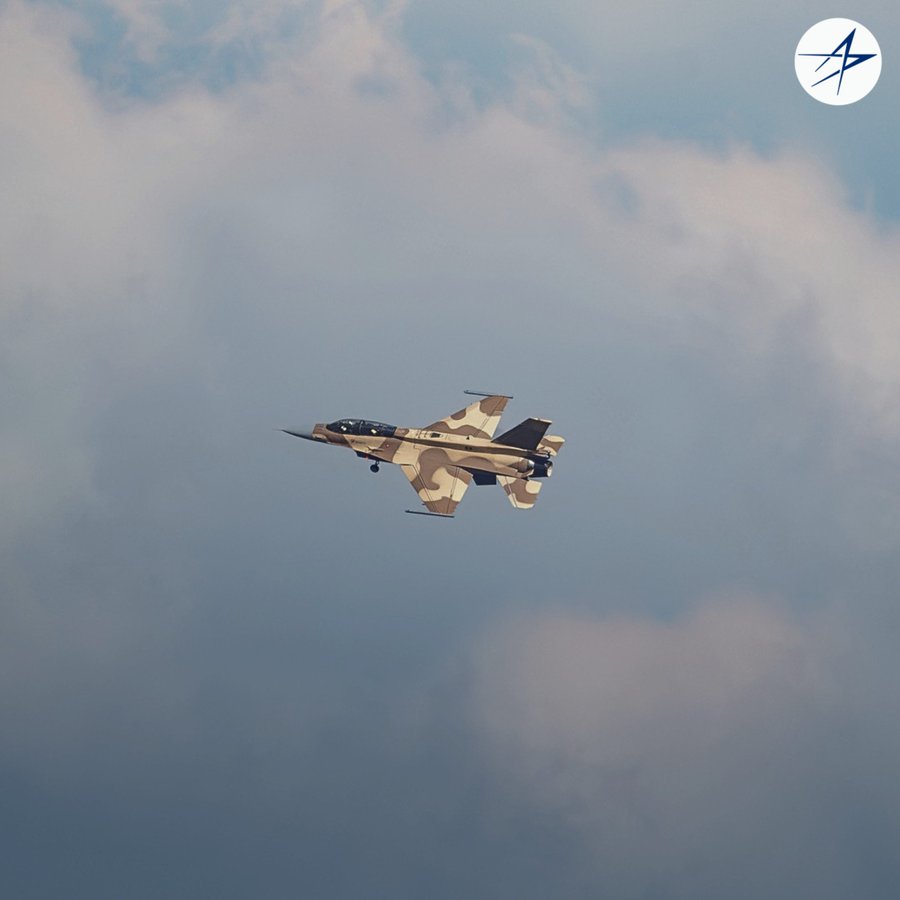
US defense giant Lockheed Martin said the Royal Moroccan Air Force’s (RMAF) first F-16 Block 72 had completed its maiden flight, a test milestone as the fighter jet moves toward delivery.

The company said the Block 72 is the newest variant of the F-16 Fighting Falcon, with updated avionics, sensors and mission systems, and changes intended to improve safety and reliability. Morocco was the launch customer for the configuration when Washington approved the purchase in March 2019.

“This first flight reflects meaningful progress on Morocco’s F-16 Block 72 program and is a critical step in strengthening Morocco’s future airpower,” Mike Shoemaker, vice president and general manager of Lockheed Martin’s Integrated Fighter Group, said. “The F-16 remains a vital component of today’s and future air defense, and we’re proud of the role it will continue to play in supporting Morocco’s sovereignty and contributing to regional stability for decades to come.”

The U.S. Defense Security Cooperation Agency notified Congress of two related sales on March 25, 2019.

One covered 25 new Block 72 aircraft, plus weapons, equipment and services, at an estimated $3.8 billion. The other, valued at more than $985 million, covered upgrades for Morocco’s 23 existing F-16C/D Block 52+ jets to the F-16V standard, which is broadly similar to the new Block 70/72 aircraft, along with related equipment and support.

F-16

If both go ahead, the Royal Moroccan Air Force’s F-16 fleet would roughly double and be built around a common, modernized standard.

“The purchase will improve interoperability with the United States and other regional allies and enhance Morocco’s ability to undertake coalition operations, as it has done in the past in flying sorties against ISIS in Syria and Iraq,” the agency said of the new-aircraft sale. “Morocco already operates an F-16 fleet and will have no difficulty absorbing this aircraft and services into its armed forces.”

The Block 70 and Block 72 differ mainly in the engine. The Block 70 uses General Electric’s F110-GE-129; the Block 72 uses Pratt & Whitney’s F100-PW-229. Morocco’s existing Block 52+ jets already use F100 engines, so the new aircraft fit the support setup already in place.

Morocco’s F-35 Bid

Morocco was looking to acquire U.S. F-35 fighter jets since 2020–22, after normalizing ties with Israel under the Abraham Accords and as Algeria reportedly moved to acquire Russia’s Su-57.

Israeli intelligence firm Jafaj said King Mohammed VI raised tensions with Algeria in a private meeting with Israeli Defense Minister Benny Gantz during his 2021 visit.

Algeria and Morocco have not had diplomatic ties since August 2021.

The firm, citing an unnamed European source, said Rabat wanted Israeli help tracking Algerian troops and militia deployments and was also seeking Israeli surveillance and strike drones.

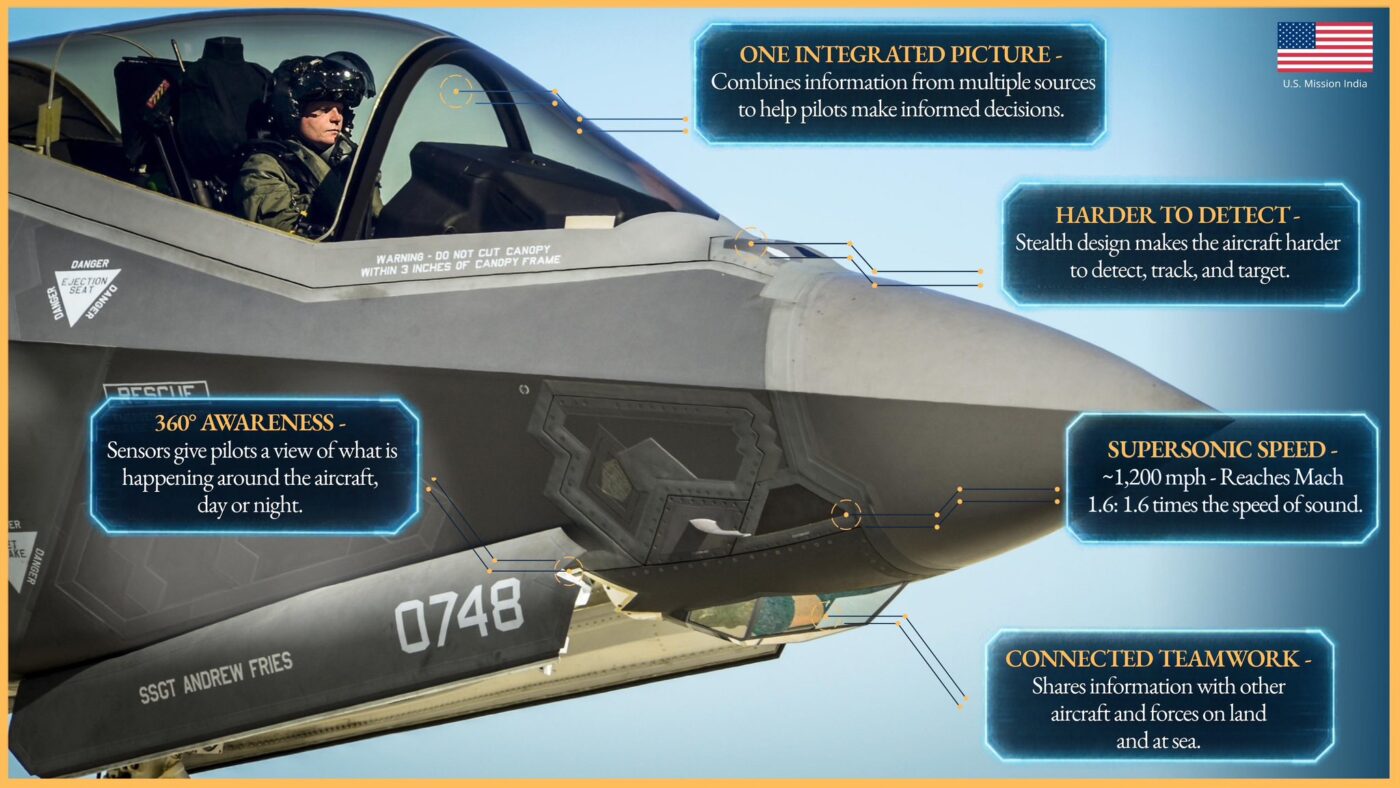
F-35: Image via US Embassy, New Delhi

Jafaj said Defense Minister Abdellatif Loudiyi told Gantz that Morocco needed more combat aircraft for a possible war with its neighbor, that the F-35 was the preferred choice, and that Israel’s help lobbying the Biden administration would be welcome.

An F-35 was displayed at the 2024 Marrakech Air Show.

In August 2026, the International Institute for Strategic Studies, a London-based think tank, said there had been “little concrete progress” and described the F-35 purchase as hypothetical.

Meanwhile, Lockheed is again exhibiting at the Marrakech Airshow, which runs from Oct. 7 to 10.

Its stand includes an F-35 cockpit demonstrator, with demonstrations for invited guests, and scale models of the F-35A, F-16 and C-130J Super Hercules.

The post Morocco’s 1st F-16 Block 72 Fighter Jet Completes Maiden Flight. F-35 Bid Reaches Nowhere appeared first on EURASIAN TIMES.

  •  

Experts: American Church Must Wake Up to Dangers of Islam

Ultimately, the confrontation with Islam is a spiritual battle. “Proclaim the gospel of Jesus Christ. Islam is antithetical to the Jesus of the Bible. There is one Lord, one Savior, one faith, one baptism, and we need to proclaim Him to Muslims.”   America’s growing embrace of politicized Islam is “perplexing” to those with first-hand... Continue Reading
  •  

The Missile That Shot Down U.S. Stealth Aircraft is Coming Back—Mobile. Why India Must Take Note of the Russian Move

Russia appears to be preparing to revive and modernize its inventory of the Soviet-era Pechora S-125 short-to-medium-range surface-to-air missile system, in a move that the IAF leadership could well take note of.

S-125 is the same missile that was used to shoot down the US Air Force’s F-117 Nighthawk stealth fighter-bomber over Serbia on March 27, 1999, during the Kosovo War.

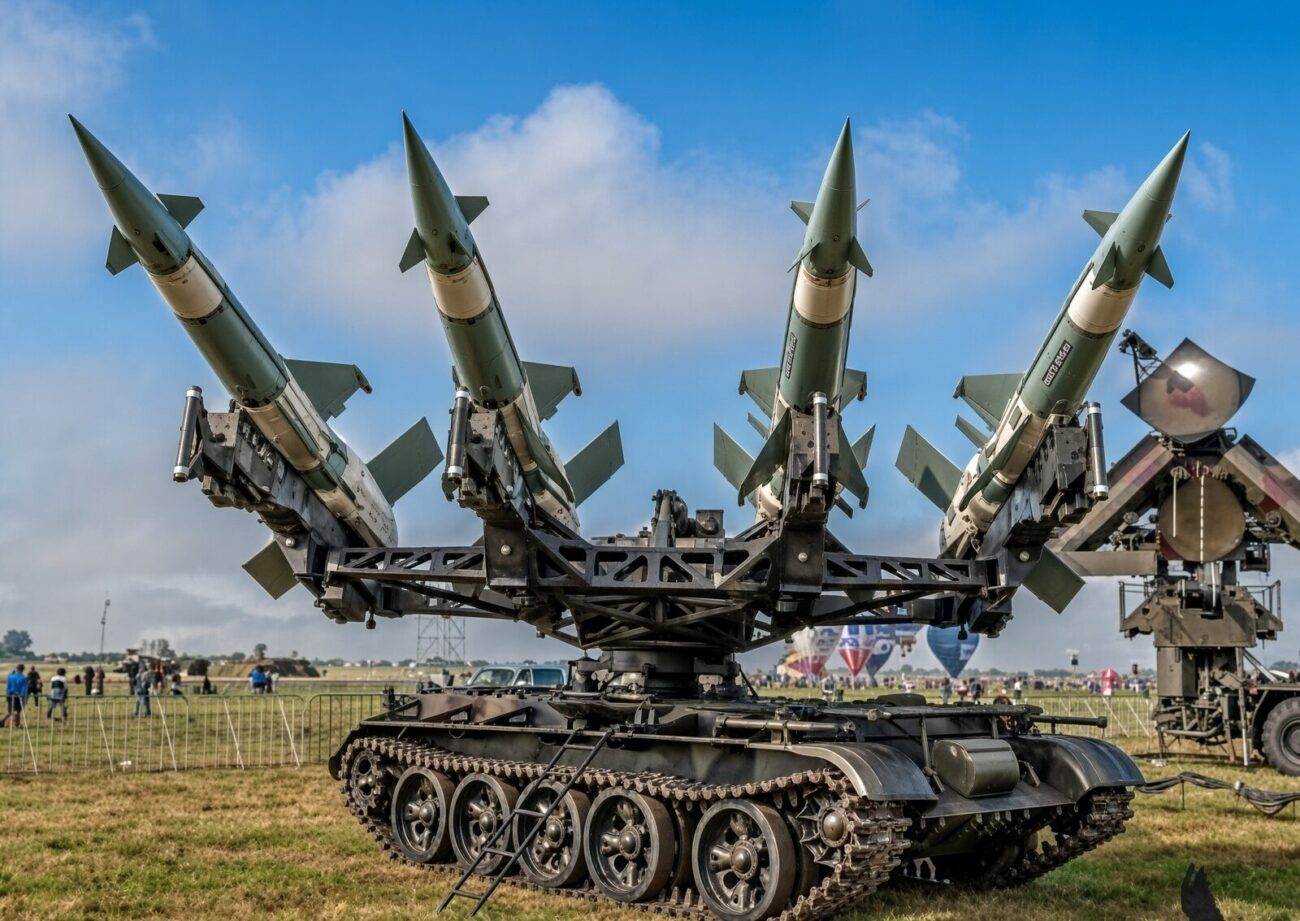
The Pechora S-125 (SA-3 Goa) is a legacy Soviet static, short- to medium-range surface-to-air missile system developed to engage low- to medium-altitude air threats using command guidance.

The IAF also modernized its S-125 inventory to plug an operational gap that widened due to delays in procuring MRSAM and Akash air-defense systems. However, the IAF did not pursue modernization to the extent that the capability gains matched the more comprehensive modernization offered by the Russian Pechora-2M.

According to Militarnyi, a Ukrainian media outlet focused on military affairs, the Minsk Wheel Tractor Plant (MZKT) has signed a contract with Moscow-based JSC Oboronitelnye Sistemi to supply 30 specialized wheeled chassis that appear intended for components of the Pechora-2M system.

The Pechora-2M is a heavily modernized Pechora derivative with a self-propelled truck-mounted launcher, digital electronics, an extended engagement envelope, and day/night electro-optical tracking, giving the system much greater tactical mobility.

Under the terms of the contract, Russia would receive 20 MZKT-8021-021 chassis, as well as five each of the MZKT-8022-021 and MZKT-80211-021.

The MZKT-8021/8022 family of specialized chassis was developed specifically to accommodate components of the Pechora-2M air-defense missile system.

Pechora Revival

The delivery schedule extends to 2029, suggesting a planned multi-year acquisition rather than a one-off procurement to meet an immediate operational requirement.

More likely, Russia is seeking to expand its air-defense capacity in response to the heightened threat from the prolific use of drones and other low-cost aerial threats in modern warfare.

Drone warfare has increased the aerial threat severalfold, so it is logical for any nation to increase the density of its AD systems by a corresponding factor.

Russia appears to be increasing its reliance on legacy systems rather than simply discarding them.

Russian Modernisation

The modernized Pechora-2M system was developed as a deep modernization of the Soviet S-125, incorporating a self-propelled, highly mobile launcher and modernized electronics. The modernization transformed the legacy stationary S-125 into a rapidly deployable air-defense platform capable of shoot-and-scoot tactics, reducing its vulnerability to anti-radiation weapons and precision strikes.

The 2M replaces the legacy four-rail stationary ground launcher (5P73) with a twin-rail launcher mounted on a heavy 6×6 truck chassis. The reduction in launch rails was necessary to maintain launcher stability when mounted on a mobile chassis.

Rafale, Tejas & AMCA: IAF’s “Healthy Mix” of Fighter Jets Leaves Out The Aircraft That May Matter The Most

The legacy S-125 required considerable time to disassemble, pack onto trailers, move, and re-erect at a new site. In contrast, the Pechora-2M can reportedly be brought into action in roughly 20–25 minutes, facilitating shoot-and-scoot operations.

Besides the self-propelled launchers, the tracking/fire-control radar and other system components are also mounted on high-mobility truck chassis rather than being confined to towed equipment.

File Image: S-125

IAF Pechora Modernization

In 2016, the Indian MoD issued a $272-million tender to digitize 16 Pechora systems. The tender was restricted to Indian companies to support the government’s Make in India policy. The eventual contract, worth ₹591.3 crore, was awarded to Alpha Design Technologies Ltd (ADTL) in 2020.

Russia’s Almaz-Antey is the original equipment manufacturer of the Pechora system. At the time, Indian officials indicated that Russian defense companies preferred to work through Russian state-owned entities, limiting the scope for direct OEM participation by Indian companies.

The scope of the Indian Pechora upgrade was primarily the electronic and mechanical modernization of the existing system rather than a fundamental redesign of its architecture. It included refurbishment and digitization of the missile-guidance radar and integration of the system with the IAF’s Integrated Air Command and Control System (IACCS).

Alpha Design Technologies Ltd executed the upgrade, focusing on digitization and electronic modernization. It replaced vintage electronic components with modern semiconductor-based electronics and digital processing, while modernizing operator consoles and other system elements.

No Mobility

The system retained its original static, four-rail, ground-mounted configuration (5P73 launcher) and towed transport arrangement because the Indian upgrade scope did not include mobility.

Because it lacks mobility, the IAF has traditionally used the Pechora for point defense of fixed, high-value infrastructure such as air bases, radar stations, and other military installations.

A statically deployed AD system protecting a high-value asset made considerably more sense when precision-guided munitions were either unavailable or relatively uncommon. In contemporary warfare, where precision weapons can routinely achieve single-digit-meter accuracy, a static air-defense system defending a high-value asset can itself become a priority target.

Recall the failed PAF attempt to strike the S-400 system deployed to defend Aadampur air base during Op Sindoor. With foresight, and by leveraging the S-400’s mobility, IAF leadership relocated the system before the attack. The episode illustrates the importance of mobility and survivability for high-value air-defense assets.

A Still-Capable System

Despite its vintage, the Pechora remains a potentially useful AD system. Endowed with mobility and modern sensors and electronics, it would acquire significantly greater survivability and tactical utility.

One of its strengths is electro-optical tracking, which permits passive target tracking without radar emissions, reducing vulnerability to anti-radiation weapons. Both Russian and Indian modernization programs have improved the system’s electro-optical capability.

The Indian upgrade incorporates thermal-imaging-based fire-control equipment, while the Pechora-2M also incorporates TV and thermal/infrared electro-optical channels.

Thermal imaging provides a passive night-and-day detection and tracking capability and, unlike conventional television cameras, does not depend on visible light. However, adverse atmospheric conditions can degrade its effectiveness.

It is interesting to note that the IAF chose to upgrade its Pechora systems without fundamentally modifying the missile. Contemporary reporting on the original upgrade program indicated that the IAF considered the existing missile adequate and concentrated instead on digitization, radar, communications, networking, and other system improvements.

The 5V27 family missile has a substantial fragmentation warhead of around 70 kg and uses command guidance. Its continued availability is one possible reason why extending the life of the Pechora system remains attractive.

Russia may also be reviving and revitalizing Pechora-2M systems because it has a substantial existing inventory of 5V27-series missiles. If so, the approach illustrates an important principle of modern warfare: the value of an old weapon system can change when it is combined with modern sensors, electronics, mobility and networking.

F-35 Bid Stalls — But Morocco’s 1st F-16 Block 72 Fighter Jet Completes Maiden Flight

What the IAF Should Note

In the immediate future, the IAF will need to deploy many more AD systems than it currently does in order to field a robust air-defense capability spanning the entire gamut of aerodynamic threats—aircraft, helicopters, cruise missiles, guided bombs and drones.

Developing additional AD systems may prove more challenging and time-consuming than upgrading existing legacy systems such as the Pechora.

Upgrading the Pechora to add mobility, modern electro-optical sensors and improved networking should be well within Indian technological capability. Even locally manufacturing additional upgraded systems under an appropriate OEM arrangement could be a cost-effective way to augment India’s air-defense capability.

Russia’s apparent decision to extract additional combat value from an old missile system should therefore be viewed less as a revival of obsolete technology and more as an example of how legacy weapons can be adapted to the changing economics and character of air warfare.

  • Vijainder K Thakur is a retired IAF Jaguar pilot, author, software architect, entrepreneur, and military analyst.
  • Views Personal of the Author
  • Follow the author @vkthakur

The post The Missile That Shot Down U.S. Stealth Aircraft is Coming Back—Mobile. Why India Must Take Note of the Russian Move appeared first on EURASIAN TIMES.

  •  
❌