❌

Reading view

Brazil’s angry tide and the struggles ahead

Lee en español aquí

Brazil’s general election on October 4 delivered a severe warning to the left. Flávio Bolsonaro, the presidential candidate of the Liberal Party (PL), finished ahead of President Luiz Inácio Lula da Silva, with approximately 47% against 45%. Neither secured a majority, sending them into a runoff on October 25. More troubling than this narrow presidential gap was the advance of bolsonarismo through Congress. The election has strengthened a political movement whose ambitions extend beyond defeating Lula to reshaping the institutions that obstruct its exercise of power.

The imprisonment (house arrest) and electoral exclusion of Jair Bolsonaro have not dissolved his movement. His son Flávio carries its presidential banner, while other members of the family have won seats in Congress. Michelle Bolsonaro, Jair’s wife, and Carlos Bolsonaro, his son, enter the Senate; Jair Renan, another son, and Renato, Jair’s brother, enter the Chamber of Deputies. Nepobolsonarismo is an appropriate name for this family’s expansion through the state. Yet the family is only the most visible expression of a broader project, rooted in powerful economic interests and a deeply organized reactionary politics.

A presidential contest with continental stakes

Lula remains the principal obstacle to the return of this project to the presidency. His defeat would affect workers and peasants throughout Brazil, but also the possibilities for regional cooperation and an independent Latin American foreign policy. Brazil’s size, industrial capacity, raw minerals (such as critical minerals), agricultural resources, and diplomatic reach give its political direction continental significance. A government that subordinates these assets to Washington’s priorities would weaken the space available to neighboring countries seeking their own paths of development.

The first-round geography demonstrates both Lula’s strength and his difficulties. He retained a commanding position in the Northeast, while Flávio led across the other four regions. São Paulo’s enormous electorate provided a particularly important advantage to the right. These divisions cannot be explained by an opposition between an enlightened population and an ignorant one. They require an examination of the different conditions of work, the organization of political life, and the capacity of competing movements to interpret people’s frustrations.

Lula approaches the runoff with a substantial social record. Unemployment fell to 5.3% in the quarter ending in August, the lowest rate for that period in the statistical series beginning in 2012. Such improvements matter enormously to families for whom a regular wage brings relief from daily uncertainty. But an improved national indicator does not settle the political argument. Employment can coexist with exhausting journeys, expensive housing, inadequate public services, and the insecurity of debt. The distance between statistical improvement and lived experience remains terrain on which the right operates.

Bolsonarismo, or Brazil’s far right of a special type, translates these frustrations into resentment against the left, all public institutions, and vulnerable sections of society. Its promise of order offers an immediate language for fear, while concealing the economic arrangements that produce insecurity. The left cannot answer this merely by advertising government achievements. It must connect those achievements to a credible program for changing everyday life, and explain which interests prevent further advances. A worker struggling with debt needs more than reassurance that the economy is performing well. This has been the problem for Lula, whose program for the future does not seem to promise more than what has been delivered till now.

The senate: a struggle over institutional power

The Senate election is particularly consequential because 54 of its 81 seats were contested. Senators serve eight-year terms, so the results will shape national politics well beyond the next presidential administration. The PL won 19 seats and will hold 28 in the new Senate, making it the largest party. The PT will have nine. The bolsonaristas have therefore established a formidable position, although the PL itself remains short of a majority and must bargain with other parties.

Michelle Bolsonaro and Bia Kicis took both seats in the Federal District, while Carlos Bolsonaro and Carol de Toni won the two seats in Santa Catarina. These victories show the movement’s ability to organize coordinated campaigns and concentrate support behind its candidates. There were important successes for the left: Rui Costa and Jaques Wagner won in Bahia, Humberto Costa retained representation in Pernambuco, and Marília Campos won in Minas Gerais. These results preserve points of resistance within an increasingly hostile chamber. The Senate’s significance extends beyond ordinary legislation. The bolsonaristas have made their confrontation with the Supreme Federal Court a central political objective, including demands to impeach its ministers. Their strengthened representation increases their capacity to pursue that confrontation and to influence the election of the Senate president. Predictions of an automatic majority for impeachment should be treated cautiously: party affiliation, campaign declarations, and votes in a specific proceeding are different things. Nevertheless, the danger of using legislative power to intimidate the judiciary has plainly grown.

This is part of a struggle over the conditions under which the far right can govern. The judicial proceedings against Jair Bolsonaro did not remove the social forces supporting him. Those forces now seek greater leverage over institutions capable of restraining them. For the left, defending democratic space must therefore accompany the struggle to expand social rights. Workers’ organizations cannot afford to lose the freedoms through which they organize, educate, and confront capital.

Federal deputies: the right advances, the left finds openings

All 513 seats in the Chamber of Deputies were up for election this year. The PL secured 121, consolidating its position as the largest party in this chamber as well as in the Senate. The federation of the Workers’ Party, Communist Party of Brazil, and Green Party won 88 seats, with the PT itself taking 70. The federation’s growth is significant, but it leaves Lula’s allies far from a majority. Parties of the right hold 303 seats, while the broader parliamentary left holds 124.

The outcome strengthens the far right of a special type within a legislature already dominated by conservative interests. It also weakens some established brokers of parliamentary power, such as the centrão, the collection of parties that trades legislative support for influence over appointments and public resources, although it remains indispensable for majority building. What bargaining will take place within the centrão will now take place alongside a larger and more assertive PL. If Lula wins in the second round, he will confront substantial congressional resistance, but if Flávio wins, the same Congress could facilitate a reactionary program.

Yet the election also brought important representatives of a fighting Left into the Chamber. Jones Manoel, the communist historian elected through PSOL in Pernambuco, received 249,077 votes and finished first in Recife. Elias Jabbour, the communist geographer, was elected for the PCdoB in Rio de Janeiro. Their victories suggest an audience for political education and socialist arguments, even amid the right’s advance. They offer resources for rebuilding confidence among people who have grown impatient with the narrowing ambitions of parliamentary politics. Jones Manoel has already offered to assist Lula’s runoff campaign, including its digital communication, while proposing stronger attention to demands such as free public transport. This is a useful example of political clarity: criticism of the government’s limitations can coexist with active mobilization against the far right of a special type. Such unity does not require workers to abandon their demands. It becomes stronger when those demands supply the campaign’s energy and direction.

The task before October 25

The runoff cannot be won through negotiations among party leaders alone. It requires organized activity in workplaces, neighborhoods, universities, and rural communities, with a program people can recognize in their own lives. Transport, wages, housing, debt, public healthcare, and the time consumed by work must become the substance of a democratic campaign. Defense of sovereignty becomes tangible when it is connected to the ability to use Brazil’s wealth for the needs of its people.

The angry tide has advanced, but it has not carried away the millions who still seek another Brazil. The new communist deputies, the surviving mass organizations (especially the landless workers of the MST), and Lula’s enormous electoral base provide foundations for resistance. The immediate task is to defeat Flávio Bolsonaro. The longer task is to build a popular power strong enough to prevent the oligarchy from deciding, election after election, how little change the majority will be allowed.

Vijay Prashad is an Indian historian and journalist. He is the author of forty books, including Washington Bullets, Red Star Over the Third World, The Darker Nations: A People’s History of the Third World, The Poorer Nations: A Possible History of the Global South, and How the International Monetary Fund Suffocates Africa, written with Grieve Chelwa. He is the executive director of Tricontinental: Institute for Social Research, the chief correspondent for Globetrotter, and the chief editor of LeftWord Books (New Delhi). He also appeared in the films Shadow World (2016) and Two Meetings (2017).

This article was produced by Globetrotter.
  •  

Naked golden Trump statue erected outside EU parliament building

A statue of Donald Trump, naked from head to toe and covered in 23-karat gold leaf, has appeared in one of the busiest corridors of the European Parliament building in Strasbourg. The work, created by a Danish artist, does not pull any punches. It depicts the American president naked, with a sizable belly, sitting on the neck of a much smaller, tormented figure.

As left-wing members of Parliament call it “brilliant” satire, the right decries it as tasteless political provocation.

Anyone recently walking the corridors of the European Parliament in Strasbourg stands a good chance of stumbling upon one of the strangest artistic creations of recent years. The bizarre work of art stands at the busy junction connecting members’ offices and the plenary chamber: a 2.5-meter-tall (8 feet tall), glittering golden statue depicting President Donald Trump completely naked.

🚨 TRUMP NU, AU PARLEMENT EUROPÉEN. À Strasbourg, une statue de Donald Trump entièrement nu trône dans l’un des lieux les plus fréquentés du Parlement européen. Son nom ? « La peste orange ». 👑 23 carats d’or 🏌 Un immense club de golf 📏 2,5 mètres de haut Signée par l’artiste danois Jens Galschiøt, l’œuvre restera exposée jusqu’à jeudi. Le message envoyé à Washington est difficile à rater.

— Camille Moscow 🇷🇺 🌿 ☦ (@camille_moscow) October 8, 2026

The work is titled “The Orange Plague,” and its creator is Danish artist Jens Galschiot, known for his provocative public sculptures. The statue, a reference to Trump’s alleged adoration of luxury and the style of his properties, was fully coated with real 23-karat gold leaf.

“Trump loves gold. In some ways, I think he would even like this statue,” the creator told the press.

The composition of the statue carries sharp political criticism. The full-bodied figure of the naked president sprawls over the shoulders of a tiny, bone-thin and visibly suffering man. Trump holds a scale in one hand — a symbol mocking justice — and clutches a golf club like a scepter in the other, while a golf ball patterned after a globe lies at his feet.

According to the Danish sculptor, Trump’s policies and his sabotage of the green transition against climate change put all of humanity at risk.

To complete the statute, the statue’s pedestal bears a cynical inscription addressed to the “King of Injustice”:

“I’m sitting on a person’s back. It collapses under my load. I would do anything to help him. Except get off his back.”

How was this allowed into the European Parliament?

Many immediately wondered how the strict Brussels bureaucracy could allow such a crude and provocative naked political statue through the gates of the institution. The answer lies in the European Parliament’s rules: Each elected member has the right to sponsor two cultural or artistic events per parliamentary term in designated areas of the building, subject to formal approval by the College of Quaestors, which handles administrative matters.

The naked president was brought into the building by Danish left-wing member Per Clausen, who said Europe should finally launch an open debate on how to protect itself from Trump and build a policy independent of him. Clausen also lashed out at outraged deputies:

“If one has skin so thin that one cannot stand the sight of such a statue in the European Parliament, one has no place on the stage of world politics!”

The statue immediately drew sharp criticism from the parliamentary right. According to Patriots for Europe and other right-wing factions, it is outrageous, tasteless and unworthy of the European Parliament to mock the democratically elected president of an allied superpower in this form in the official corridors.

The gilded exhibition in the corridors of the Parliament will not last long; it will be removed on Thursday. The naked Trump statue is then expected to travel to Turkey, where it will appear at the next U.N. climate summit (COP31). Donald Trump — from whom a quick and angry online reaction is seldom far away — has not yet commented on the Strasbourg surprise.

The post Naked golden Trump statue erected outside EU parliament building appeared first on Remix News.

  •  

WHO offers technical support to Russia over suspected plague case in Siberia: ‘We need more information’

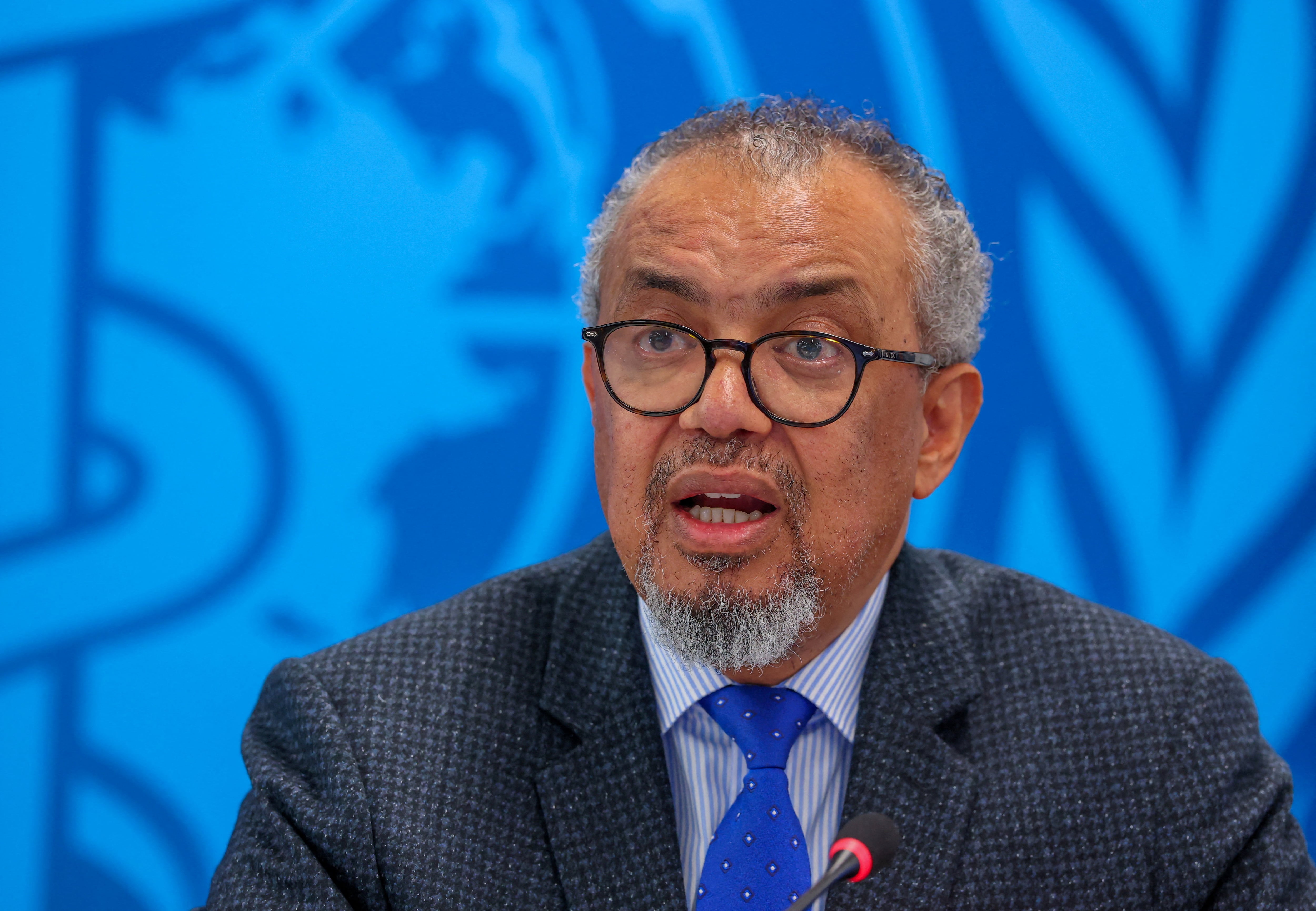
International health authorities are on alert over a possible case of plague that may not even exist. The death of a laboratory worker at a plague research facility in Russia’s Irkutsk region on October 2 sparked concerns, and the World Health Organization (WHO) on Wednesday offered technical assistance to the Russian government while requesting additional information needed to assess any potential risk.

Seguir leyendo

© Denis Balibouse (REUTERS)

Tedros Adhanom Ghebreyesus, director-general of the World Health Organization.
  •  

Trump denials can’t hide billions in U.S. weapons sent to Ukraine

Not only is Europe not ‘paying for it,’ it’s enough total support — including target intelligence for deep strikes into Russia — to keep escalating the conflict.

By Jennifer KAVANAGH

Join us on Telegram, X, and VK.

Contact us: info@strategic-culture.su

Trying to pin the blame for the depletion of U.S. military stockpiles on something other than the war in Iran, President Donald Trump fell back on a usual scapegoat last week: Ukraine. “The Biden administration gave far more munitions away to Ukraine, at no cost to them whatsoever, than we have used in Iran,” Trump wrote on Truth Social.

This is a familiar refrain. Trump loves to remind his audience that because of him, Americans are “not spending on Ukraine anymore” and instead, Europe is footing the bill. In truth, most people in the United States don’t think about Ukraine much these days. But since Trump himself brought it up, it’s worth asking: What exactly is going on with U.S. military support to Ukraine?

The answer might surprise you. Despite Trump’s rhetoric, the United States remains deeply embroiled in Ukraine’s ongoing conflict with Russia in ways that create national security risks and run counter to Trump’s own foreign policy goals.

It is true that Trump has reduced U.S. support to Ukraine compared to its high mark under his predecessor, Joe Biden. First, his administration has stopped the use of Presidential Drawdown Authority to transfer weapons from U.S. stocks directly to Ukraine. The Biden administration used this mechanism to give Ukraine almost $35 billion in weapons free of charge. Second, the Trump administration has not requested additional funds for the Ukraine Security Assistance Initiative (USAI), which uses U.S. financing to purchase new weapons for Ukraine.

But Trump has not cut off all assistance to Ukraine. Several important channels remain. First, there are about $13 billion in outstanding USAI contracts as of June 2026, down from $20 billion in January 2025. These contracts, signed by Biden and now implemented by Trump, will procure weapons for Ukraine through about 2028. Weapons in the pipeline include longer-lead time systems like NASAMs, Patriot missiles and components (Ukraine is reportedly receiving at 10-20 PAC-3s per month under these contracts), counter-drone systems, artillery rockets, and ammunition.

These continuing deliveries are not new awards, but they are still taxpayer-funded military aid to Ukraine that will add up to about $20 billion in aid over the 4 years of Trump’s term. Weapons produced under these contracts come off overburdened U.S. production lines. This has a high opportunity cost given the limits of U.S. defense industrial capacity. Without obligations to Ukraine, industrial resources could shift to different weapons or systems that the United States needs more.

If the Trump administration were serious about ending U.S. spending on the Ukraine war, it could still recoup these funds and reallocate the money to support U.S. defense production needs. It has instead allowed the aid to continue.

There has also been some new funding approved since Biden left office. Congress included about $800 million of USAI funding in the 2026 and 2027 NDAAs. We can expect more in future bills as well.

And the State Department has continued to send military aid of its own. A portion of this aid goes through the Ukraine’s Ministry of Interior, including drones, armored vehicles, guns, grenade launchers, and similar equipment. Since this equipment ends up with Ukraine’s National Guard and border police it is often counted as non-military and intended for things like counterdrug operations, but today these personnel serve as combat units.

The State Department has also approved $3 billion of new arms sales to Ukraine in 2025 and 2026 that will be at least partially funded from foreign military financing (FMF), which means U.S. dollars supporting foreign government purchases of U.S. weapons. Some of these funds may come from money allocated but not spent under President Biden, but much of the funding will be new, coming from the State Department’s budget.

The bottom line is that U.S. weapons transfers to Ukraine continue under Trump, amounting to, on average, as much at $5 billion per year. But this is no longer the most important, or expensive, type of support that the United States gives to Ukraine.

For example, the United States gives Ukraine real-time targeting information, including on the movement of Russian troops and the location of key command centers. This information has been important to Ukraine’s mid-range strike campaign on Russian logistics as well as its deep strikes against military and energy targets inside of Russia. In addition, U.S. reconnaissance and surveillance assets in countries on the NATO border (including routine E-3 flights) are integrated with Ukraine’s air defense network, improving the accuracy and speed of Ukraine’s response.

Beyond intelligence, the United States also provides logistical and maintenance support, including forward and remote assistance to repair American-made equipment, necessary spare parts to keep older systems running, and training. It also facilitates the expensive transfer of European purchases of U.S. weapons.

The cost of the intelligence, logistics, and other operational support the United States provides to Ukraine does not show up anywhere as an itemized bill, even as U.S. assistance increases. But we can use available public information to draw some conclusions about the expenses incurred.

The 2024 defense supplemental bill, for instance, allocated about $15 billion to “military training, intelligence sharing, increased presence, and other support activities.” In theory, these funds are intended to cover activities conducted in support of Ukraine that would not occur if the United States remained uninvolved in that conflict. Some portion of this money will go to the salaries of military personnel who would be paid no matter where they work.

Since about a third of each military service’s budget is personnel costs, we could estimate the cost of extra activities conducted for Ukraine, excluding baseline manpower, at about $10 billion over the course of a year or so. If Trump has truly expanded intelligence sharing with Ukraine, this price tag may have increased over time.

The money included in the bill is likely only a portion of the actual burden the U.S. military and intelligence community have shouldered to support Ukraine’s war. Many intelligence activities, like tasking and analyzing satellite data and collecting signals intelligence, might be covered in classified national security budgets. Starting in 2023, in fact, the classified intelligence budget increased by 10%, a large jump over the 2022 total. The increase was justified by intelligence community leaders as resulting from shifts in the national security landscape, including especially concern about China’s rise and spillover from conflict in Ukraine. Since the total increase in funding was about $10 billion, we can guess that Ukraine-related expenditures might amount to $3-$5 billion per year, or about one-third to one-half of the total increase.

All told, then, U.S. taxpayers are still spending roughly $20 billion per year on Ukraine. Today, assistance to Ukraine comes primarily in the form of direct operational support, not weapons. But the shift in type of aid increases the risk of U.S. support to Ukraine to average Americans.

First, assisting Ukraine in striking energy targets inside of Russia has a perverse effect on the Trump administration’s efforts to keep gas prices low. As Secretary of the Treasury Scott Bessent acknowledged, Ukraine’s strikes inside Russia push global oil prices up, imposing higher costs of living on Americans.

Second, U.S. intelligence support deepens U.S. involvement in Ukraine’s war, making it an all-but-direct combatant. Russian assistance to Iran, both in terms of weapons and intelligence sharing, is a reaction to the comparable U.S. role in Ukraine, and it leaves U.S. servicemembers in the Middle East and elsewhere less safe. Growing U.S. participation in Ukraine also increases the risk that miscalculation leads to a direct U.S.-Russia confrontation, a nightmarish possibility given the degraded state of U.S. military readiness.

Trump promised to end the war in Ukraine in 24 hours. He has instead deepened U.S. entanglement in ways that create real risks and new fiscal costs for the United States. American interests would be best served if the United States were to walk away entirely, but if Trump instead opts for the status quo, he should at least be honest about it.

Original article: responsiblestatecraft.org

  •  

Gina Hinojosa gains ground in Texas governor’s race as Democratic leaders push for more campaign funding

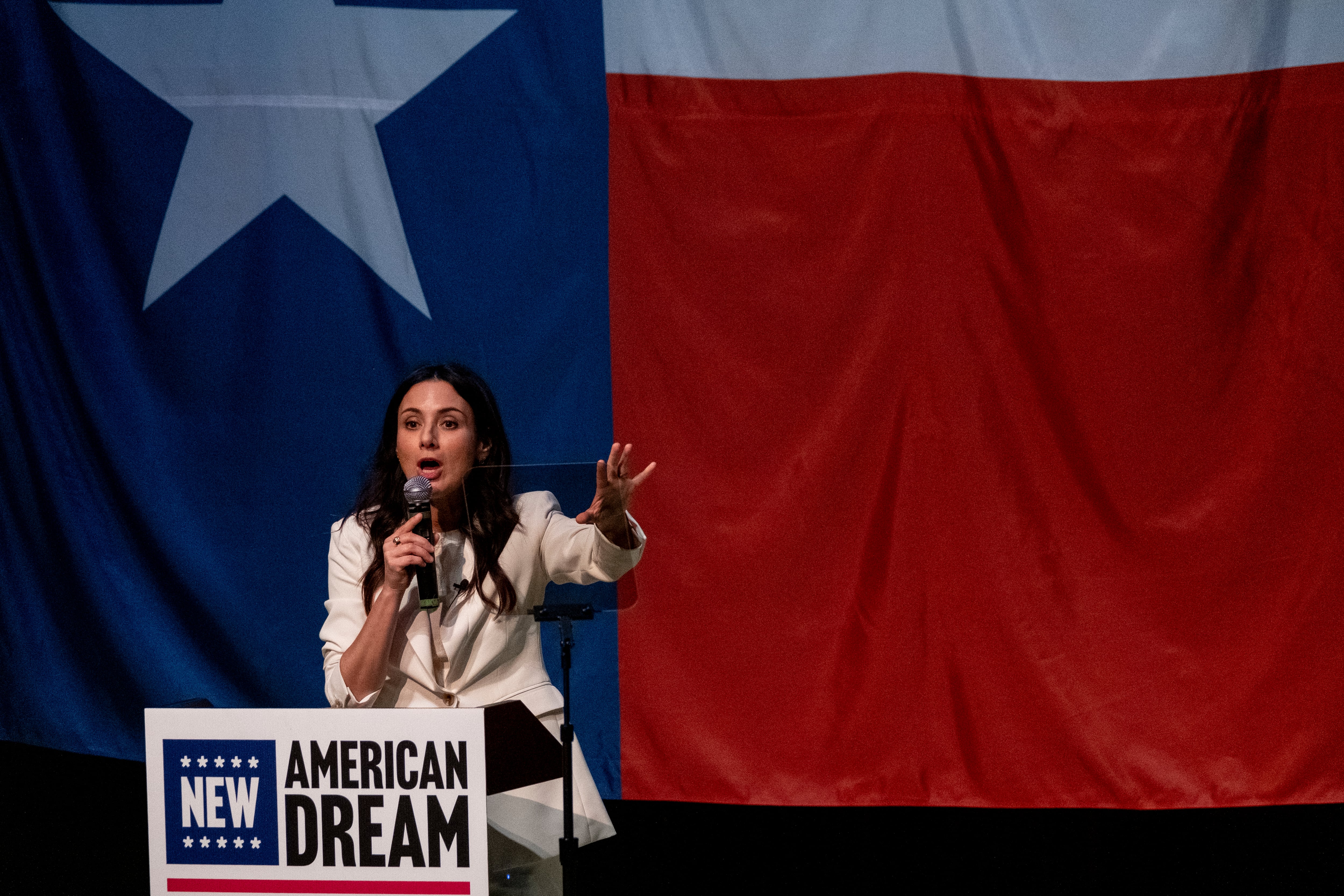
When Republican Greg Abbott was re-elected governor of Texas in 2022, his margin over opponent Beto O’Rourke was nearly 11 percentage points. Less than a month before the midterm elections, however, polls no longer show him with a comfortable lead. Survey averages put Democratic candidate Gina Hinojosa just over two points behind and rapidly closing the gap, raising alarm among Democrats over the need to boost campaign funding in the final stretch.

Seguir leyendo

© Joel Angel Juárez (The Washington Post vía Getty Images)

Gina Hinojosa in Killeen, Texas, on August 14.
  •  

Trump sons-backed firms bank $6 billion plus in Pentagon deals

An analysis published on Wednesday by ABC News estimated that companies backed financially by Donald Trump Jr. and Eric Trump have so far scored more than $6 billion in contracts from the US Department of Defense. As ABC documented, many of the investments into the defense firms come through 1789 Capital, a venture capital firm […]

The post Trump sons-backed firms bank $6 billion plus in Pentagon deals appeared first on Asia Times.

  •  

Plainly, Trump doesn’t really care about the midterms

With a month still to go before America’s mid-term congressional and gubernatorial elections, the prospect of a “blue wave” of Democratic success in the House of Representatives, the Senate and in many governorships is looking increasingly likely. But whether that forecast holds true or not, one important aspect has already become clear. It is that […]

The post Plainly, Trump doesn’t really care about the midterms appeared first on Asia Times.

  •  

Why US policy ignores what Americans want on Israel

Today marks three years since October 7th, Al-Aqsa Flood and the escalation of Israel’s campaign to eliminate Gaza into a full-blown genocide. The world watched the livestream – and while that turned public opinion on its head, US policy hasn’t budged. Layan Sima Fuleihan, education director at The People’s Forum and an editor at 1804 Books, joins Zoe Alexandra and Rania Khalek to reflect on how Israel lost the hearts and minds of American voters – and how to turn that shift in consciousness into real power.

From Occupy Wall Street to the 2020 uprising for George Floyd, Fuleihan traces the Palestine movement through more than a decade of the mass rebellions that empowered it. She lays out key lessons from the past three years: radical change happens fast, repression can’t intimidate people out of solidarity, and Americans do care what their government does abroad. And she explains how, as Washington stays shielded from public opinion, both parties are equally culpable – and warns of the stakes of letting Democrats court pro-Palestine voters ahead of the midterms while the bombs keep falling.

Watch full episodes of BT Live, join breakthroughnews.org as a member today!

  •  
❌