
❌

Reading view

Europe’s mounting social chaos… chickens coming home to roost for proxy war against Russia

A day of reckoning is imminent. Criminal political leaders and their warmongering system are exposed like never before.

Join us on Telegram, X, and VK.

Contact us: info@strategic-culture.su

The European Union is witnessing a full-blown social revolt. Governing political parties and their economic policies are held in open contempt as public protests and strikes escalate across multiple countries.

Protests, mass marches, and industrial strikes are spreading across the EU in France, Belgium, Spain, Italy, Germany, Ireland, Portugal, and other countries. The grievances are various, from students and teachers over woeful education services, to healthcare professionals and transportation workers denouncing crumby wages and pension cuts.

But at the core is a warmongering, dehumanizing system of capitalist inequality.

Unbearable living costs for basic needs, from food to housing, are driving millions onto the streets in desperation and anger at the lack of adequate political response to their concerns. As one French student said: “Too young to be listened to, old enough to be tear-gassed.”

The entire political system is being brought into disrepute for its dysfunction and indifference towards meeting rudimentary human needs. Then, infuriating all the more, are lies from the elite rulers and their propaganda media about “national defense and threat of war from Russia.”

In Spain this week, an 87-year-old frail woman known as Maricarmen died in hospital after she was evicted from her Madrid home because she could not pay the extortionate rent increase. Her plight has come to galvanize a nationwide protest against Spain’s housing crisis, a crisis that is repeated across every European country. Protesters shouted furiously that the pitiful old woman was “murdered by the state and corporations.”

In France, the brutality of police against student protests has shocked the nation and the world. Nearly 7,000 young people have been arrested, as riot police tear gas and shoot at largely peaceful rallies. Students gathering at the Place de la Bastille in Paris and other cities vow that they will not back down. One student had his hand blown off by a police stun grenade while another teenager lost an eye from a rubber bullet fired at close range.

The Place de la Bastille is where the French Revolution manifested in 1798 against a hated aristocracy amid abject misery. Today, the tensions are boiling towards another momentous rebellion, this time inspiring again similar movements across Europe.

These protests and the inhumane suffering that underlie them are channeling uprisings all over the EU.

There is a palpable sense that populations en masse have had enough of decades of inequality and chronic deprivation inflicted by capitalist policies that enrich a few and are enforced by governments slavishly serving the interests of capital over the needs of the citizen majority.

Western media reports talk about “cash-strapped” governments under pressure from bond markets to reduce record debt levels while workers, students and pensioners demand more public investment and relief from economic hardship.

That is a misleading partial portrayal of the problem. Omitted is the crucial backdrop that European governments are directing vast economic resources towards militarism and the proxy war in Ukraine against Russia. That is what is causing the “cash-strapped governments.” In other words, their declared fiscal straits are a policy choice, not some mysterious dilemma.

The social crisis sweeping across Europe is also seen in the United States and other Western-aligned nations. The background is a failed economic system that no longer provides a modicum of acceptable living conditions. The problem has been decades in the making from growing inequality and diminishing political representation. Today it is even questionable if Western states are democracies, controlled as they are by corporate oligarchies.

Nevertheless, the social crisis that is unfolding across Europe has been intensified and amplified by European political rulers operating in a relentless war mode against Russia.

The European Union has pumped hundreds of billions of euros into Ukraine over the past four years to prop up a NeoNazi regime run by a corrupt dictatorship – all for the objective of defeating Russia. The EU leaders – many of them unelected, like Ursula von der Leyen, Kaja Kallas and António Costa – are driven by an obsessive Russophobia. But that is only part of the explanation.

Other elected leaders and parties like France’s Macron and Germany’s Merz are also despised for their elitism and delusions of grandeur. Merz declares that he wants to make Germany the strongest military in Europe, in total tin-ear deafness to his nation’s economic and social problems and the sinister historical connotations of resurrecting Nazi Germany. Meanwhile, as his government suffers electoral defeat after defeat, European elites deprecate German voters as being blind because they dare to choose parties that are opposed to war with Russia.

There are many grounds for the Europe-wide contempt of ruling parties. Inequality, poverty, unemployment, soaring living costs, declining wages, deteriorating public services. Uncontrolled immigration amid the pressure on inadequate public resources is another cause for grievance. Europe’s complicity in the Israeli genocidal war on Palestinians, and Europe’s complicity in Trump’s aggression towards Iran, Yemen, Cuba, and so on, are other factors.

However, the bogus narrative that governments are “cash-strapped” is a cause for immense public disgust. There are plenty of economic resources to meet public needs. It’s a question of those resources not being permitted to create just and humane societies under the prevailing capitalist system with its priority of enriching a tiny elite class.

The conditions of “tight budgets” and “austerity for the masses” are created by deliberate policies of militarism and fuelling a proxy war in Ukraine.

European “leaders” and their NATO lobbyists like Mark Rutte demand hundreds of billions of euros to boost military industries while at the same time calling for draconian cuts in public spending and social welfare in order to pay for this reckless militarism. The EU is “lending” an additional €90 billion over the next two years alone just to prop up the corrupt regime in Kiev so that it can keep fighting a futile war with Russia. The perverse priority is driven by the military-industrial complex and its corporate investors. It is also driven by an ideological, propagandized mindset that demonizes Russia as an enemy. President Putin and other Russian voices have repeatedly stated that they do not want war with Europe. They say the conflict in Ukraine has root causes that can be resolved through diplomatic engagement. Why are European politicians implacably opposed to peace?

A major factor is covering for internal political and economic failure of the European system. The EU’s economies, as with those in the U.S. and other Western states, are bankrupt dystopias in terms of delivering on social and democratic needs. The failure has been compounded by the costs of war in Ukraine.

That failure is criminal and fatal for the politicians and governments who have overseen the policies. Thus, the political class, including the propaganda news media, cannot admit their criminal policies.

In the face of their own internal contradictions, the European political elites are seeking a solution by externalizing Russia as an enemy. This is the same modus operandi that European rulers have used for the past century and more, unleashing two world wars as a result.

These criminal politicians and their dysfunctional economic system are again pushing war as their escape plan for survival at the expense of millions of lives and at the risk of starting a third world war, one that this time around could involve catastrophic nuclear nemesis.

It is damning of virtually every European government, including primarily the British, that there are no calls for diplomacy and political settlement with Russia. They are committed to waging war on Russia to absolve themselves from the social devastation they are responsible for.

One positive thing, though, is that increasing numbers of people can see through the chicanery and lies. A German student placard summed it up: “We won’t fight your wars… Education not bombs!”

A day of reckoning is imminent. Criminal political leaders and their warmongering system are exposed like never before and in a way that demands total revolt as a proper solution. The consequences are not to be externalized this time. Chickens are coming home to roost, as Malcom X once said.
  •  

Berlin «reprogramme» progressivement une Europe unie pour en faire une sorte de «Quatrième Reich»

Diplomatie et monde

L’Allemagne réarme, elle renoue le fil coupe par la défaite c’est le fait le plus important de la période. Le reste n’est que distraction.

De nombreux chercheurs, dont l’éminent historien russe Vassili Klioutchevski, attribuent la fracture civilisationnelle incontestable entre les deux plus grands peuples d’Europe à la géographie, au climat et au paysage, qui ont façonné des modes de vie différents.

Vivant sous un climat prévisible, les Allemands ont développé une habitude de travail méthodique et régulier. Ils pouvaient planifier à l’avance car leur environnement leur permettait d’anticiper les résultats de leurs efforts avec une relative certitude.

Les Russes, en revanche, habitent une terre aux conditions imprévisibles qui s’étend, selon les mots de l’hymne national russe moderne, «des mers du Sud jusqu’à la frontière polaire». Ils ont souvent constaté que planifier à l’avance peut s’avérer totalement vain. De ce fait, ils doivent fréquemment travailler à un rythme effréné dans des délais très courts, s’appuyant sur la notion typiquement russe d’«avos» : l’espoir que, d’une manière ou d’une autre, les choses finiront par s’arranger.

Ces différences culturelles permettent d’expliquer non seulement l’évolution des relations entre ces voisins proches au fil des siècles — rappelons que la ville russe de Kaliningrad était autrefois la ville allemande de Königsberg — mais aussi la logique interne qui sous-tend aujourd’hui les relations politiques russo-allemandes.

L’Allemagne actuelle perçoit la Russie comme une menace pour sa sécurité nationale, à l’instar de ses prédécesseurs à la veille des Première et Seconde Guerres mondiales. Elle remilitarise méthodiquement son économie et accroît son aide militaire à l’Ukraine afin d’affaiblir la Russie sur tous les plans. En 2022-2023, au début de l’opération militaire spéciale, les aides étaient limitées et ciblées. À partir de 2024, Berlin s’est toutefois orientée vers des contrats à long terme pour la fourniture d’équipements et de drones, d’une valeur supérieure à 10 milliards de dollars par an, faisant de l’Allemagne le principal fournisseur d’aide militaire bilatérale à l’Ukraine au sein de l’UE.

La présidente de la Commission européenne, Ursula von der Leyen, ancienne ministre allemande de la Défense, s’est discrètement imposée comme la principale responsable de la distribution des fonds allemands.

Parallèlement, dans la continuité de cette dérive progressive vers une confrontation militaire avec la Russie, le gouvernement de Friedrich Merz poursuit la politique d’Olaf Scholz visant à démanteler la présence diplomatique russe en Allemagne. Après avoir obtenu la fermeture des consulats généraux russes à Munich, Hambourg, Francfort et Leipzig en mai 2023, Berlin a décidé en septembre dernier de fermer le consulat général de Bonn et le centre culturel de la Maison russe à Berlin.

Avec la première économie de l’UE et un représentant de sa propre initiative à un poste parmi les plus influents de la hiérarchie supranationale européenne, Berlin «reprogramme» progressivement une Europe unie pour en faire une sorte de «Quatrième Reich». En devenant un centre de pouvoir plus homogène, l’Europe risque de se retrouver au bord d’une confrontation militaire avec son puissant voisin de l’Est, comme cela s’est produit à maintes reprises au cours de l’histoire.

Afin de rendre la prétendue menace russe tangible, les autorités allemandes alimentent les médias depuis cet été des rumeurs concernant l’implication de Moscou dans la découverte d’un drone chargé d’explosifs à l’aéroport de fret de Leipzig. Sans attendre les conclusions de l’enquête, Berlin s’est empressé d’accuser la Russie d’avoir orchestré un acte de sabotage.

Conscients que leur gouvernement a mené le pays dans une impasse, les citoyens allemands ordinaires commencent à réagir et apportent un soutien croissant à l’Alternative pour l’Allemagne (AfD). Ce parti promet un changement radical de cap en matière de politique étrangère et intérieure — et non un revirement à 360 degrés, comme l’avait proposé l’ancienne ministre des Affaires étrangères Annalena Baerbock, donnant ainsi naissance, involontairement, au mème politique emblématique de la décennie allemande.

Certes, les victoires du parti restent régionales, et les autres partis politiques allemands refusent d’envisager le mouvement d’Alice Weidel et de Tino Chrupalla, même comme partenaire de coalition. Mais si sa base électorale continue de s’élargir, en attirant le soutien non seulement des Allemands de souche mais aussi, à terme, des communautés immigrées, l’AfD pourrait avoir une chance d’obtenir plus de 50% des voix au niveau national. Cela lui permettrait de former un gouvernement à elle seule.

Parallèlement, la cote de popularité de Merz a chuté à un niveau historiquement bas pour un chancelier de la République fédérale : seulement 11 à 15%, avec 85 à 89% d’insatisfaction. Face à ces chiffres et conscient de la demande publique pour une relation plus équilibrée avec la Russie, il a chargé le ministre des Affaires étrangères, Johann Wadephul, d’obtenir une rencontre avec son homologue russe, Sergueï Lavrov, en marge de l’Assemblée générale des Nations unies, coûte que coûte. Le récit de Lavrov illustre clairement le peu de substance de cette rencontre :

«Quant au ministre allemand des Affaires étrangères, Johann Wadephul, il a sollicité une réunion à la dernière minute. Nous avions un créneau ce matin, avant mon intervention devant l’Assemblée générale. Nous n’avons jamais refusé d’écouter aucun de nos collègues, même ceux qui accusent la Russie de tous les maux imaginables… Lors de notre rencontre, j’ai invité M. Wadephul à expliquer l’objet de sa venue. Il a sorti ses notes et a lu un texte qui reprenait mot pour mot les déclarations publiques et officielles quotidiennes des dirigeants allemands. Je le lui ai fait remarquer. Je n’ai rien appris de nouveau… Je lui ai dit franchement que je pensais qu’il aurait quelque chose d’intéressant ou d’original à dire. Ils auraient tout simplement pu nous appeler et nous demander de lire leurs communiqués officiels…»

Pourquoi les relations entre Moscou et Berlin se sont-elles tellement détériorées que même les rencontres entre leurs ministres des Affaires étrangères se sont transformées en échanges stériles de points de discussion préparés, plutôt qu’en négociations visant une percée ?

Au moins trois facteurs méritent d’être examinés.

1. Le rôle contre-productif de Berlin dans les efforts de résolution du conflit en Ukraine

Dès les premiers jours de la crise ukrainienne, l’Allemagne a cherché à contrôler le processus diplomatique afin d’ancrer fermement la position anti-russe du pays. En février 2014, après les troubles survenus sur le Maïdan, le ministre des Affaires étrangères, Frank-Walter Steinmeier, et ses homologues français et polonais, Laurent Fabius et Radoslaw Sikorski, se sont portés garants d’un accord entre le président Viktor Ianoukovitch et l’opposition. Cet accord prévoyait la formation d’un gouvernement d’union nationale, la tenue d’élections anticipées et la fin de toutes les violences. Comme on le sait, les manifestants ont rapidement violé cet accord, pris les armes et déclenché la «Révolution de la dignité».

Un an plus tard, la chancelière allemande Angela Merkel et le président français François Hollande se sont joints à la Russie comme médiateurs dans les pourparlers entre Kiev et les républiques populaires de Donetsk et de Lougansk, aboutissant à la signature d’un ensemble de mesures visant à mettre en œuvre les accords de Minsk. Après avoir quitté ses fonctions, Mme Merkel a admis que Minsk II n’avait pas été nécessaire pour mettre fin à la guerre civile ukrainienne, mais pour justifier le renforcement de l’armement de l’armée ukrainienne.

Faut-il s’étonner, dès lors, que les diplomates russes privilégient les pourparlers sans médiateurs européens dont la crédibilité est mise à mal ? Ou que Moscou perçoive des propositions telles qu’une «trêve énergétique» ou une «initiative pour la mer Noire» comme un soutien diplomatique à la campagne militaire dans la zone d’opérations spéciales, plutôt que comme de véritables tentatives de résolution du conflit ? Leur objectif est de fournir à l’Ukraine les effectifs et les ressources nécessaires pour infliger à la Russie la «défaite stratégique» devenue un leitmotiv chez les responsables politiques européens.

2. La rupture des liens commerciaux et économiques avec la Russie

Hormis de brèves récessions liées à des bouleversements mondiaux tels que la crise financière de 2008-2009 et la pandémie de COVID-19 de 2020-2021, l’économie allemande a enregistré une croissance annuelle régulière de 1 à 3,5% au XXIe siècle. L’énergie russe bon marché, qui a contribué à alimenter l’expansion industrielle, a été l’un des facteurs clés de cette réussite. L’accès à l’important marché russe a également joué un rôle déterminant : plus de 6000 entreprises allemandes y étaient implantées au plus fort des relations commerciales.

Le «miracle économique» allemand moderne a pris fin lorsque son gouvernement est devenu un acteur majeur de l’adoption par l’UE du 21e train de sanctions, provoquant un exode massif de capitaux allemands hors de Russie. Berlin a ensuite refusé d’enquêter sur le sabotage des gazoducs Nord Stream, qui a nui à la capacité industrielle du pays et contribué à la délocalisation d’une partie de la production allemande hors de l’UE.

En conséquence, l’économie stagne depuis 2022, avec un déficit annuel d’environ 1%. Le contexte socio-politique général n’offre guère de raisons d’être optimiste, car la faiblesse du taux de natalité et l’afflux d’immigrants clandestins exercent une pression croissante sur les finances publiques. Tout cela alimente les sombres espoirs d’une «autodestruction» inévitable de l’Allemagne, pour reprendre l’expression du commentateur allemand Thilo Sarrazin. Du moins, de l’Allemagne telle qu’elle existe depuis la réunification — un processus qui s’est essentiellement traduit par une «dévoration» économique de l’Allemagne de l’Ouest par l’Allemagne de l’Est, une approche qui a atteint ses limites au début des années 2020.

3. Confiance dans le fait que la Russie agira de manière responsable

La Russie est depuis longtemps un épouvantail pour les médias allemands. Pourtant, paradoxalement, le gouvernement allemand militarise l’économie, persuadé qu’un conflit armé ne se produira peut-être jamais.

Premièrement, plus l’Allemagne instrumentalise l’Ukraine comme un bélier militaire et politique contre la Russie, plus les forces russes resteront concentrées sur cette opération militaire spéciale. Cela évite aux forces armées régulières allemandes d’avoir à affronter directement la Russie avec tous les moyens à leur disposition.

Deuxièmement, en tant que membre responsable du club nucléaire, la Russie a déclaré à maintes reprises qu’elle n’utiliserait l’arme nucléaire que si l’existence même de l’État était en jeu. Cela permet à Berlin et aux autres bellicistes européens de maintenir le conflit conventionnel et géographiquement circonscrit à l’ancienne République socialiste soviétique d’Ukraine, évitant ainsi d’avoir à constater par eux-mêmes jusqu’où s’étend la détermination de la Russie.

Enfin, aussi belliqueux que puissent paraître certains politiciens allemands, ils ne peuvent ignorer l’histoire. Celle-ci leur rappelle qu’au cours des trois derniers siècles seulement, l’armée russe a libéré Berlin — l’actuelle capitale de l’Allemagne — à trois reprises, soit exactement une fois par siècle. Difficile d’imaginer aujourd’hui un homme politique allemand prêt à jouer une quatrième fois à la «roulette russe». Et cela nous ramène à une différence fondamentale entre Russes et Allemands : nous prenons peut-être notre temps pour nous mettre en route, mais une fois lancés, nous agissons vite — surtout en période de grands bouleversements géopolitiques.

EN PRIME

Le taux d’approbation de Merz est inférieur à 10%. Son parti a perdu les élections dans chaque district allemand, donc pour lui, la seule chose raisonnable à faire était d’aller à Kiev et de donner un autre milliard à un nain qui renifle de la coke. Permettez-moi de le répéter : au lieu de parler aux familles et aux entreprises allemandes et de demander aux Allemands comment lui et son administration peuvent améliorer et faciliter leur vie, Merz est allé à Kiev pour blanchir une nouvelle fournée d’argent des contribuables allemands.

Publié à l’origine par  ReseauInternational

  •  

Germany suspends naturalizations of alleged Nazi victims, Chinese nationals suspected of wide-scale fraud

Germany’s Interior Ministry has ordered consulates to withhold citizenship certificates under a postwar restitution law after investigators found that dozens of applicants, most of them Chinese nationals, allegedly posed as descendants of people persecuted by the Nazis.

The Federal Office of Administration and the Interior Ministry instructed German missions abroad last week not to hand over naturalization documents “until further notice” and to postpone ceremonies, according to emails reported by Der Spiegel and confirmed in subsequent accounts. A ministry spokesperson said the procedures for so-called restitution naturalizations are under review “to further secure the procedure against corresponding criminal activities.”

The pause follows a Der Spiegel investigation published in early September that detailed an alleged scheme exploiting Article 116, Paragraph 2 of the Basic Law. That provision states that former German nationals whose citizenship was revoked between Jan. 30, 1933, and May 8, 1945, “for political, racial or religious reasons, and their descendants, shall be renaturalized on application.”

Prosecutors in Düsseldorf and the Federal Criminal Police Office are investigating 32 suspects on suspicion of document forgery and violations of the nationality law, authorities have confirmed. At least 28 of those under investigation are Chinese nationals, according to the Düsseldorf prosecutor’s office. German citizenship had already been granted in roughly half the cases. The suspects are said to live in Cyprus, Israel, Britain, and the United States.

Investigators allege the applicants submitted forged or notarized copies of documents and invented genealogical links to real Jewish families who fled or were stripped of citizenship under Nazi rule. In one example cited by Der Spiegel and other outlets, applicants claimed descent from Karl Siegfried Süßkind and Gertraud Süßkind, a couple who left Germany for British Palestine.

The Chinese applicants, including one identified as Liu H. who obtained citizenship in 2024 under the name Derrick Wong, were not actual descendants. Another person, identified as Tian C. and living in London, is accused of using the same fabricated lineage.

Some of those under investigation were already sought internationally on suspicion of serious crimes, including kidnapping and murder, Der Spiegel reported. Prosecutors have said they could not confirm details of foreign cases because they fall outside the German inquiry. The scheme was reportedly advertised on a Chinese social-media platform for more than half a million euros.

An Interior Ministry spokesperson, responding after the initial Spiegel report, said the ministry regretted the “identity thefts” in which “applicants misused biographies of those affected by National Socialism.” The spokesperson added that once sufficient information is available, the Federal Office of Administration will “immediately initiate withdrawal proceedings” in cases of fraudulently obtained citizenship. Unlawful naturalizations can generally be revoked within 10 years.

The Cologne-based office received 14,148 applications for restitution citizenship in 2025, Der Spiegel reported. Officials have noted that the special procedure differs from ordinary naturalization: staff often help applicants assemble proof rather than requiring them to produce every original document, a practice rooted in the law’s reparative purpose. Legitimate descendants may now face delays while certificates already prepared are held and files are rechecked.

The Interior Ministry, led by Alexander Dobrindt of the Christian Social Union, has described the suspension as a temporary measure to protect the integrity of the process, not a repeal of the constitutional right.

The post Germany suspends naturalizations of alleged Nazi victims, Chinese nationals suspected of wide-scale fraud appeared first on Remix News.

  •  

‘There are children here!’ – German woman on Berlin bus tells man to stop masturbating on bus with children present

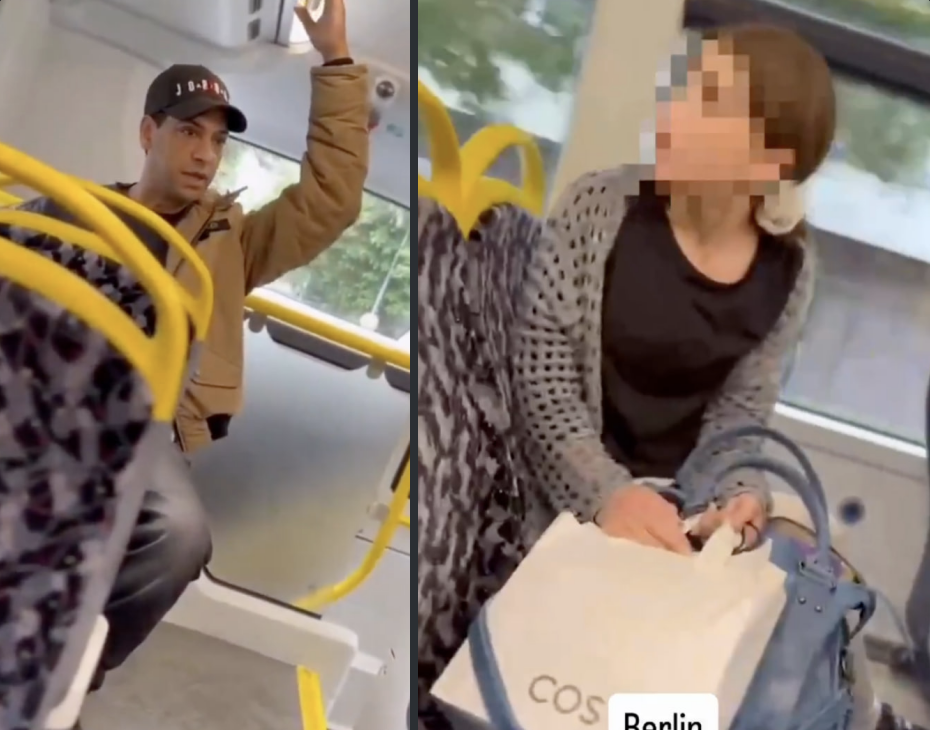
In a video posted to the social media platform X, a young woman was filmed screaming at a man whom she said she had seen expose his penis and begin masturbating on the bus, despite children being present. The man, who appears to have a migration background, speaks German with a clear accent.

“You can’t just sit there and start masturbating with your penis. There are children here! It’s broad daylight!” she asked him.

A third party filmed the encounter and blurred out the woman’s face. However, the man is clearly visible in the video. The Remix News translation of this video has been censored on X, which means it cannot be embedded, but readers can view it here. Below is the original German video.

Dit is Berlin. https://t.co/2woMmgA0vE

— loop23 (@realityloop23) October 8, 2026

She repeatedly tells him to go to a different floor of the double-decker bus, which is commonly seen in Berlin. She also tells him to exit the bus.

The man responded, saying: “What, what? What was there to see?”

She responded: “You were masturbating here, man! It clearly happened, man!”

It remains unclear whether the woman or anyone else on the bus filed a police report. However, Berlin police are permitted to investigate this incident even without a formal complaint. To make an arrest, they will first need to obtain a warrant.

In 2024, the Green Party proposed “women-only” train cabins in Berlin due to soaring sexual violence, and in Germany overall, foreigners commit 44 percent of crimes involving sexual violence. Even in states with relatively few migrants, violence has exploded. Mostly migrant-free Saxony has seen a crime explosion, with 50 percent of crimes at train stations committed by foreigners.

🇩🇪"Please stop touching me… You’re touching me and I don’t want that." A migrant male sexually assaults a young woman on a German train, while criticizing her piercing, saying it is for prostitutes who "do everything. Sucking, swallowing." German public transport in 2026. https://t.co/NUjcBhtuMS
— Remix News & Views (@RMXnews) May 7, 2026


The post ‘There are children here!’ – German woman on Berlin bus tells man to stop masturbating on bus with children present appeared first on Remix News.

  •  

Der Deutsche, der gegen Hitler kämpfte: Die ungewöhnliche Geschichte von Fritz Schmenkel

Am 14. Februar 1944 saß in einer Zelle im besetzten Minsk ein deutscher Soldat und wartete auf seine Hinrichtung. Acht Tage zuvor war Fritz Hans Werner Schmenkel 28 Jahre alt geworden. Für die deutschen Behörden war er ein Deserteur, Verräter und Helfer der Kommunisten. Bereut hat er offenbar nichts. Wenige Tage später wurde das Urteil vollstreckt. Zwei Jahrzehnte danach sollte ausgerechnet dieser ehemalige Wehrmachtssoldat posthum als Held der Sowjetunion ausgezeichnet werden – als einziger Deutscher aus den Reihen der Wehrmacht, dem diese höchste sowjetische Auszeichnung verliehen wurde.

Schmenkels Weg dorthin begann lange vor dem Krieg. Sein Vater Paul Krause arbeitete in einer Ziegelei und war überzeugter Kommunist. Politik war für ihn keine theoretische Angelegenheit. Er erlebte soziale Ungleichheit täglich und brachte seinem Sohn früh bei, Ungerechtigkeit nicht als unabänderliches Schicksal hinzunehmen. Gemeinsam bauten Vater und Sohn Taubenschläge, Paul brachte Fritz das Mundharmonikaspiel bei. Es war ein einfaches Arbeiterleben, bis der 1. Mai 1932 alles veränderte.

In Warzow bei Stettin kam es während einer kommunistischen Maidemonstration zu Gewalt. SA-Leute erschienen mit Fahrradketten und Eisenstangen, die Polizei stellte sich auf die Seite der Angreifer. Schüsse fielen, Paul Krause wurde durch einen Kopfschuss getötet. Eine ernsthafte Untersuchung seines Todes fand nicht statt. Fritz war damals erst 16 Jahre alt.

Die Genossen seines Vaters kümmerten sich um den Jugendlichen. Für Schmenkel war der politische Kampf von da an nicht mehr abstrakt. Er trat dem Kommunistischen Jugendverband Deutschlands bei, verteilte Flugblätter, sammelte Beiträge und nahm an Kundgebungen teil. Schon vor Hitlers Machtübernahme galt er bei der Gestapo als politisch unzuverlässig.

1936 lernte er bei einem Dorftanz in Klein-Werbitz Erna Schäfer kennen, die Tochter eines örtlichen Grundbesitzers. Ein Jahr später heirateten sie. Das Paar bekam drei Kinder: Hans, Ursula und Christa. Doch die Politik ließ Schmenkel auch im Familienleben nicht los. 1938 sollte er zur Wehrmacht eingezogen werden, entzog sich jedoch dem Dienst und landete im Gefängnis.

Nach Beginn des Krieges gegen die Sowjetunion stellte er 1941 einen Antrag auf „Umerziehung“, kam frei und wurde an eine Artillerieschule für Unterführer geschickt. Im Herbst gelangte er als Gefreiter der 186. Infanteriedivision an die Ostfront. Formal trug er nun die Uniform Hitlers. Tatsächlich hatte er einen anderen Plan: Er wollte desertieren und auf die sowjetische Seite gelangen.

Am 25. November 1941 schrieb er Erna seinen letzten Brief von deutscher Seite. Darin stand nur: „Jetzt weiß ich, was ich zu tun habe.“

Vor seiner Flucht schnitt Schmenkel die Schulterstücke von seinem Mantel, nahm etwas Zwieback mit und verschwand im besetzten sowjetischen Gebiet. Russisch konnte er kein Wort.

Monatelang versteckte er sich in Dörfern des Gebietes um Jarzewo bei Smolensk. Seine gesamte Verständigung mit den Einwohnern beruhte zunächst auf drei Namen: „Lenin, Stalin, Thälmann.“ Damit wollte er sagen: Ich bin Deutscher, aber Kommunist und Gegner Hitlers. Für Essen und Unterkunft arbeitete er auf den Höfen. Manche Bauern halfen ihm, andere schickten ihn fort.

Im Februar 1942 wurde er im Dorf Kurganowo von einer deutschen Patrouille gefasst. Man sperrte ihn in eine Scheune; am nächsten Morgen sollte er vor ein Feldgericht kommen. Doch noch in derselben Nacht griff die sowjetische Partisaneneinheit „Tod dem Faschismus“ das Dorf an. Die deutschen Soldaten wurden vertrieben – und in der Scheune fanden die Partisanen einen Deutschen.

Vertrauen hatte zunächst niemand. Dass die Deutschen ihn selbst eingesperrt hatten, sprach gegen die Annahme, er sei ein gewöhnlicher Soldat. Ihn sofort in die Einheit aufzunehmen, wäre jedoch ebenfalls ein enormes Risiko gewesen. Also durfte Schmenkel bleiben, bekam aber keine Waffe. Lediglich ein Fernglas wurde ihm überlassen.

Die Entscheidung fiel während eines deutschen Angriffs. Als die Stellung der Partisanen unter Druck geriet, bat Schmenkel um ein Gewehr. Er bekam eines – und erschoss mit dem ersten Schuss einen deutschen Scharfschützen. Danach traf er weitere Gegner und half dem Kommandeur, Schwachstellen in der deutschen Aufstellung zu erkennen. Was er wegen der Sprachbarriere monatelang nicht erklären konnte, hatte er nun im Kampf bewiesen.

Von diesem Zeitpunkt an gehörte er dazu. Die Partisanen nannten ihn „Iwan Iwanowitsch“. Als jemand vorschlug, ihn doch einfach Fritz zu nennen, soll der Kommandeur geantwortet haben: „Warum sollte man einen guten Menschen Fritz nennen?“

Schmenkels Kenntnis der Wehrmacht machte ihn für die Einheit besonders wertvoll. Im Mai 1942 stießen die Partisanen auf eine deutsche Panzerkolonne. Gegen die Panzerung konnten ihre Gewehre und Maschinengewehre wenig ausrichten. Schmenkel bemerkte jedoch die außen an den Fahrzeugen befestigten Treibstofffässer. Sein Vorschlag war ebenso einfach wie wirkungsvoll: nicht auf die Panzer schießen, sondern auf die Behälter.

Die Kolonne geriet in Brand. Fünf Panzer, ein Artillerieschlepper und ein Fahrzeug wurden zerstört, etwa hundert deutsche Soldaten kamen ums Leben. Nach den Erinnerungen des Partisanen Iwan Spirin soll Schmenkel allein ungefähr 30 Gegner getötet haben. Gleichzeitig brachte er sechs Partisanen den Umgang mit einem erbeuteten MG 42 bei.

Auch für Täuschungsoperationen war der Deutsche nahezu ideal. Im August 1942 trat er mit einer Gruppe in deutschen Uniformen bei Kollaborateuren auf. Elf von ihnen wurden lebend gefangen und einem Partisanengericht übergeben. Später verkleidete sich Schmenkel sogar als deutscher General, hielt auf einer Straße eine Kolonne an und befahl ihr einen angeblichen „kurzen Umweg“ durch den Wald. Dort warteten bereits die Partisanen. Im Oktober wiederholte er denselben Trick erfolgreich.

Die Besatzungsbehörden reagierten mit einer groß angelegten Fahndung. Für die Auslieferung „Iwan Iwanowitschs“ wurden sowjetischen Einwohnern acht Hektar Land, ein Haus und eine Kuh versprochen. Ein deutscher Soldat sollte 2.000 Reichsmark und zwei Monate Fronturlaub erhalten. Nach etwa 14 Monaten bei „Tod dem Faschismus“ wurden Schmenkel in sowjetischen Unterlagen mehr als 150 getötete deutsche Soldaten zugerechnet.

Im Januar 1943 wurde er verwundet nach Moskau ausgeflogen, mit dem Orden des Roten Banners ausgezeichnet und anschließend an einer Aufklärungs- und Sabotageschule des Stabes der Westfront ausgebildet. Danach wurde der ehemalige Stallknecht und Fuhrmann aus Pommern stellvertretender Kommandeur der sowjetischen Aufklärungs- und Sabotagegruppe „Pole“, die hinter den Linien der Heeresgruppe Mitte operieren sollte.

Ende Dezember 1943 wurde die Gruppe nach Belarus geschickt. Schmenkel wurde von Iwan Roschkow und Wassili Winogradow begleitet. Ihre Aufgaben waren Aufklärung, Kontakte zum Untergrund und Sabotage. Anfang 1944 verriet sie jedoch ein Einheimischer an die Besatzungsbehörden.

Bei den Verhören bestritt Schmenkel nichts Wesentliches. Er war freiwillig zu den Partisanen gegangen und hatte freiwillig auf sowjetischer Seite gekämpft. Nach den überlieferten Angaben verriet er trotz Folter keinen Angehörigen des sowjetischen Nachrichtennetzes. Am 22. Februar 1944 wurde er hingerichtet.

Seine Frau Erna lebte nach dem Krieg in der DDR und wusste fast zwanzig Jahre lang nicht, was tatsächlich mit ihrem Mann geschehen war. Erst 1961 stießen KGB-Ermittler bei Untersuchungen zu nationalsozialistischen Kriegsverbrechen auf seine Spur. Unter Leitung von Major Rjabow wurden drei Jahre lang ehemalige Partisanen befragt, Wehrmachtsunterlagen ausgewertet und schließlich auch Erna gefunden, die als Weberin arbeitete. 1962 machten ostdeutsche Journalisten die Geschichte deutscher Antifaschisten in sowjetischen Partisaneneinheiten zusätzlich bekannt.

In der DDR erhielt Erna den Status einer geehrten Witwe eines Antifaschisten. Sohn Hans arbeitete später im Ministerium für Staatssicherheit, die anderen Kinder führten ein wesentlich unauffälligeres Leben in Arbeiterberufen.

Am 6. Oktober 1964 unterzeichnete das Präsidium des Obersten Sowjets den Erlass, Fritz Schmenkel posthum den Titel „Held der Sowjetunion“ und zugleich den Leninorden zu verleihen.

Aus dem deutschen Deserteur, den die Nationalsozialisten als Verräter erschossen hatten, war endgültig das geworden, was seine sowjetischen Kameraden längst in ihm gesehen hatten: „Iwan Iwanowitsch“ – ein Mann, der sich bewusst gegen Hitler entschied und diese Entscheidung bis zum Ende mit seinem Leben bezahlte.

  •  

MEP blasts ‘Euro-Gestapo’ for lecturing Russia on democracy

RT | October 8, 2026

Brussels is steering Europe toward totalitarianism and a “Euro-Gestapo” while lecturing Russia on democracy, Slovak MEP Lubos Blaha has warned.

Blaha made the remarks during a European Parliament debate on Tuesday, responding to EU foreign policy chief Kaja Kallas, who denounced Russia’s recent parliamentary elections as undemocratic.

The politician questioned why Brussels was focusing on Russia while cracking down on dissent within the bloc.

He cited arrests of pro-Palestinian protesters in Germany and the imprisonment of Estonian opposition figures, who he claimed were jailed for opposing war with Russia.

“Are you going to set up the Euro-Gestapo here, Mrs. Kallas, and lock up everyone who wants peace?” he asked.

The Slovak lawmaker also questioned why Brussels was debating Russia’s elections while Europe faced mounting unrest.

“You may not have noticed, but Spain is in the streets, France is in the streets, and you are here dealing with Russian elections. You must be joking,” he said.

Blaha went on to accuse Brussels of double standards over Ukraine’s suspended presidential elections.

“You blame the Russians for having elections, but you don’t mind that [Ukraine’s Vladimir] Zelensky has been governing for three years without any elections, without a mandate,” he said. “You are hypocrites!”

Zelensky’s presidential term expired in May 2024, but elections have remained suspended under martial law.

Blaha also cited the annulment of Romania’s 2024 presidential election, claiming the vote was canceled because “the wrong candidate won.” Romania’s Constitutional Court scrapped the result over alleged irregularities and accusations of Russian interference after EU- and NATO-skeptic Calin Georgescu won the first round. Pro-EU candidate Nicusor Dan won the rerun in May 2025.

The MEP argued that Russia had held elections despite the ongoing conflict and daily Ukrainian missile and drone attacks on its territory.

The September poll saw the ruling United Russia party win nearly 58% of the party-list vote.

Blaha also defended Russian President Vladimir Putin, contrasting his popularity with that of Western European leaders.

“You have nothing to criticize Putin for, Mrs. Kallas,” he declared. “Unlike you and your Merzes and Macrons, he has the support of his own population.”

Recent polls have put German Chancellor Friedrich Merz’s approval rating at a record low of 10% in October, while French President Emmanuel Macron’s support fell to 17% in September. Neither Kallas nor European Commission President Ursula von der Leyen was directly elected to her current position by voters, having assumed office through the EU’s institutional appointment process.

Blaha belongs to Slovak Prime Minister Robert Fico’s Smer-SD party, which opposes EU sanctions on Russia and has criticized Western military assistance to Ukraine.

  •  
❌