
❌

Reading view

Russia Targets European Defence Industry as Moscow Seeks to Disrupt Military Support for Ukraine

Intelligence services from five European countries warn that Russia is expanding assassination and sabotage operations against defence manufacturers supplying Ukraine. The threats coincide with an alleged plot against Poland’s prime minister and defence minister, raising concerns about Moscow’s efforts to undermine European military assistance through intimidation and political destabilisation.

European intelligence agencies have warned that Russia is intensifying efforts to assassinate executives of defence companies supplying Ukraine, extending its campaign of sabotage and intimidation into the European military-industrial sector.

According to intelligence assessments obtained from five European security services, Moscow has ordered an expansion of covert operations targeting senior figures at major arms manufacturers and smaller companies producing drones and military components. Germany’s domestic intelligence agency, the BfV, has reportedly advised executives to strengthen personal security, while some manufacturers have already increased protection for senior personnel.

The warnings emerged alongside reports of an alleged assassination plot against Polish Prime Minister Donald Tusk and Defence Minister Władysław Kosiniak-Kamysz. Polish authorities convened an emergency security meeting and subsequently detained a suspect. No connection between the Polish case and Russian intelligence has been established.

Europe becomes Moscow’s principal target

The apparent expansion of Russian covert operations reflects a shift in Moscow’s calculations concerning Western military assistance.

President Vladimir Putin had reason to anticipate that Donald Trump’s return to the White House would weaken American support for Kyiv. Trump repeatedly questioned US military expenditure on Ukraine and advocated a negotiated settlement with Russia. A substantial reduction in American weapons deliveries could have increased pressure on Ukraine to accept Moscow’s territorial demands.

Instead, European governments assumed greater responsibility for sustaining Ukrainian defence capabilities, including financing weapons purchases and expanding domestic production.

The European Union’s €90 billion support programme for 2026–2027 allocates €60 billion to defence procurement and industrial capacity. The EU has also established mechanisms allowing Ukraine to participate in European joint procurement programmes.

Disrupting European manufacturers therefore offers Moscow a means of restricting Ukraine’s military capabilities without directly confronting NATO.

Assassination threats can interfere with procurement even when attacks are never carried out. Large manufacturers can afford extensive security arrangements, but smaller companies producing electronics, drone components and specialised equipment often lack comparable resources.

Intimidation could delay contracts, discourage investment and persuade individual suppliers to withdraw from Ukrainian defence programmes.

Sabotage as an instrument of political pressure

Russia’s alleged interest in targeting defence executives is not unprecedented. In 2024, American intelligence reportedly uncovered a Russian plot to assassinate Armin Papperger, chief executive of Rheinmetall, one of Germany’s principal suppliers of ammunition and military equipment to Ukraine.

As EU Today previously reported, Moscow has also publicly identified European factories involved in Ukrainian drone production, increasing concerns that civilian industrial facilities could become targets of Russian operations.

European authorities have investigated suspected Russian involvement in arson, infrastructure attacks and clandestine networks. An earlier cross-border investigation into alleged assassination and sabotage preparations demonstrated how intermediaries could be recruited to conduct operations while obscuring their sponsors.

Such activity also carries political consequences. Attacks against infrastructure and industrial facilities can reinforce public fears about confrontation with Russia, particularly during elections when parties advocating accommodation with Moscow seek to exploit security concerns.

Poland has already experienced mounting Russian hybrid pressure, including threats to critical infrastructure and information operations intended to aggravate domestic political divisions.

Putin’s strategy against European rearmament

Ukraine’s continuing strikes against Russian refineries and military-industrial facilities have added economic and operational pressures to Moscow’s prolonged war effort. Russia retains substantial military production capacity, but the costs of sustaining the conflict remain considerable.

Interfering with European weapons manufacturing could serve two objectives: restricting Ukraine’s access to equipment and obstructing Europe’s longer-term rearmament.

The Kremlin does not necessarily need European governments to abandon Ukraine formally. Production delays, disrupted contracts and reluctant suppliers could reduce the practical effect of military assistance even while political commitments remain unchanged.

European governments have acknowledged the industrial challenge. In its June conclusions on European defence, the European Council called for accelerated manufacturing capacity, stronger supply chains and closer cooperation with Ukraine’s defence industry.

Russia’s apparent strategy seeks to exploit the dependence of these programmes on private companies and skilled civilian personnel.

The warnings from European intelligence agencies suggest that protecting defence executives, engineers and contractors is becoming part of the continent’s wider security responsibilities.

For Moscow, intimidation offers the possibility of weakening Ukrainian military resistance without an open confrontation with NATO. For European governments, preventing covert operations from disrupting weapons production is increasingly inseparable from their commitment to sustain Ukraine’s defence.

  •  

Farense derrota em casa o Feirense e segue no terceiro lugar

O Farense venceu hoje em casa o lanterna-vermelha Feirense por 2-1, na sétima jornada da II Liga de Futebol, seguindo em terceiro na competição, com 14 pontos.

O jogo, que foi o primeiro no campeonato para Rui Ferreira no regresso ao comando técnico do Feirense, começou equilibrado, mas num livre descaído para a esquerda, Matheus cruzou para a cabeça de Gonçalo Silva que adiantou os algarvios aos 29 minutos.

Logo no início da segunda parte, ao minuto 50, o Farense aumentou a vantagem com um golo de Singh, sendo que o Feirense reduziu à passagem do minuto 80, com um golo de cabeça de Jair Monteiro, fixando o resultado final.

O Farense soma 14 pontos, ocupando a terceira posição da II Liga, apenas atrás do Lusitânia de Lourosa e do Sporting B, que têm, respetivamente, 17 e 15 pontos.

O próximo jogo dos “leões de Faro” é para a Taça de Portugal, frente à equipa de Marco de Canaveses, no dia 17 de outubro, às 15h. Para a liga, o próximo adversário é o Penafiel, atualmente 4.º classificado, no dia 24, pelas 18h, no Estádio de São Luís.

  •  

Europe Is Rearming — and U.S. Wall Street is Writing the Checks, Including GE’s Nearly $12 Billion Deal

The global defense industry appears to be entering a period of structural transformation, driven by rising military spending, technological change, and increasing private-capital involvement.

The “Aerospace & Defense M&A Report 2026: Deal Activity, Market Trends and Outlook,” published by Ropes & Gray LLP  on October 7, 2026, says that Aerospace and Defense Mergers and Acquisitions (M&A), Private Equity (PE), and Venture Capital (VC) funding are likely to expand further, showing that 2026 is on track to be one of “the strongest deal-making years” on record.

The report highlights that Defense Tech/Services is the fastest-growing segment at a 22% Compound Annual Growth Rate (CAGR), followed by Aerospace at 16% CAGR; Aircraft Manufacturers, Parts & Components at 14% CAGR; and Air, Land, & Sea Defense at 9% CAGR.

The report argues that the growth is not simply a temporary response to international conflicts. Governments are rebuilding industrial capacity, replenishing weapons inventories, strengthening supply chains, and accelerating the development of advanced military technologies.

In the United States, the largest market, proposed increases in defense resources, procurement reforms, longer-term contracts, and financial support for defense technology companies aim to attract private capital and expand manufacturing capacity.

In Europe, the EU’s Security Action for Europe initiative aims to mobilize about €800 billion in defense-related investment through national fiscal flexibility, loans, and related financing support.

Germany’s increased spending and procurement reforms can accelerate equipment acquisition and industrial expansion. Collectively, these policies are reshaping the geography of defense investment in Europe.

In fact, the report says that  Europe has emerged as a major driver of new activity. “Europe has become a primary engine of deal flow, not a secondary market. Rising national budgets and new EU-wide financing mechanisms are reshaping where capital is being deployed as well as dictating deployment speed”, it says. NATO’s higher spending ambitions, European rearmament and new financing arrangements are encouraging companies to expand, consolidate and acquire specialist capabilities.

Meanwhile, the Indo-Pacific is undergoing a rapid, structural alignment driven by what regional planners call a “contested era.”

China is consolidating its domestic defense industry, though restrictions on cross-border investment limit Western investors’ access. Japan is rapidly reshaping its defense posture and adapting to an environment where the traditional binary definitions of “peacetime” and “wartime” have effectively blurred.

In this era of continuous competition, the report says Japan has elevated allied burden-sharing to its foundational organizing principle.

This shift is most visible in the digital domain. With the operationalization of Japan’s Active Cyber Defense Oversight Commission, Tokyo has adopted a proactive cyber defense strategy. By implementing legal public-private threat reporting and neutralized-access protocols, Japan is signaling a willingness to legally counter and neutralize state-sponsored infrastructure targeting before cyber assaults can cripple critical domestic networks.

One of the report’s most important observations is that defense investment is increasingly a private-equity story. Private-equity firms are acquiring established manufacturers, selling businesses to strategic buyers and building larger companies through additional acquisitions. Venture capital is also financing newer businesses developing military technologies.

Among the ten largest transactions listed for 2026 up to September 30 was GE Aerospace’s $11.8 billion acquisition of Consolidated Precision Products. Other major deals involved aerospace leasing, maritime defense, aircraft components, and specialist detection technologies.

Dubai Aerospace Enterprise bought Macquarie Airfinance for $9.0 billion in what was a leasing consolidation. In a move that signals European rearmament, land-defense scaling, and main-battle tank production, KfW Group (German State Bank) is backing KNDS [Franco-German tank maker Krauss-Maffei Wegmann + Nexter] with $7.8 billion.

In other words, private investors are no longer confined to peripheral suppliers. They are becoming key participants in the industrial ecosystem that supports national defense.

Significantly, the traditional reliance on a handful of legacy prime contractors is giving way to an ecosystem heavily backed by private equity and venture capital.

The private sector is now driving global defense deal-making as it pivots toward software-defined defense, autonomy, and next-generation platforms.

The report shows how defense technology is changing the industry’s center of gravity. Although aerospace and defense remains one of the most active and strategically complex sectors for private capital deployment, software-defined defense, autonomy, and next-generation platforms are pulling ahead as the fastest-growing corner of the market.

Investors are particularly interested in artificial intelligence and software-defined defense systems; autonomous platforms, including unmanned aircraft and maritime systems; counter-drone and missile-defense capabilities; space infrastructure and surveillance; and specialist electronics, communications, and mission-critical components.

However, while these technologies can drive rapid growth, they also carry risks due to restrictive policies in the US and Europe. The report notes that regulatory compliance is becoming a structural hurdle rather than an afterthought.

In the United States, the largest market by transaction value, more national security vetting—including CFIUS (Committee on Foreign Investment in the United States) and FOCI (Foreign Ownership, Control, or Influence) mitigation—is becoming foundational to ensuring a clean exit.

In other words, the global defense landscape seems to be marked by a distinct paradox.

On the one hand, geopolitical threat vectors are accelerating at breakneck speed. On the other hand, the financial and regulatory machinery needed to field next-generation capabilities faces structural friction.

As a result, companies may depend heavily on a single government customer, handle classified information, or face restrictions on intellectual property developed under government contracts. Cybersecurity compliance and access to sensitive facilities can also complicate acquisitions.

In the United States, the CFIUS can scrutinize foreign investment for national-security risks. FOCI can also affect access to classified work and sensitive facilities.

Similarly, European foreign-investment screening is marked with many complexities. Even businesses that are not conventional arms manufacturers may face scrutiny if they supply strategically important electronics, software, communications or other dual-use technologies.


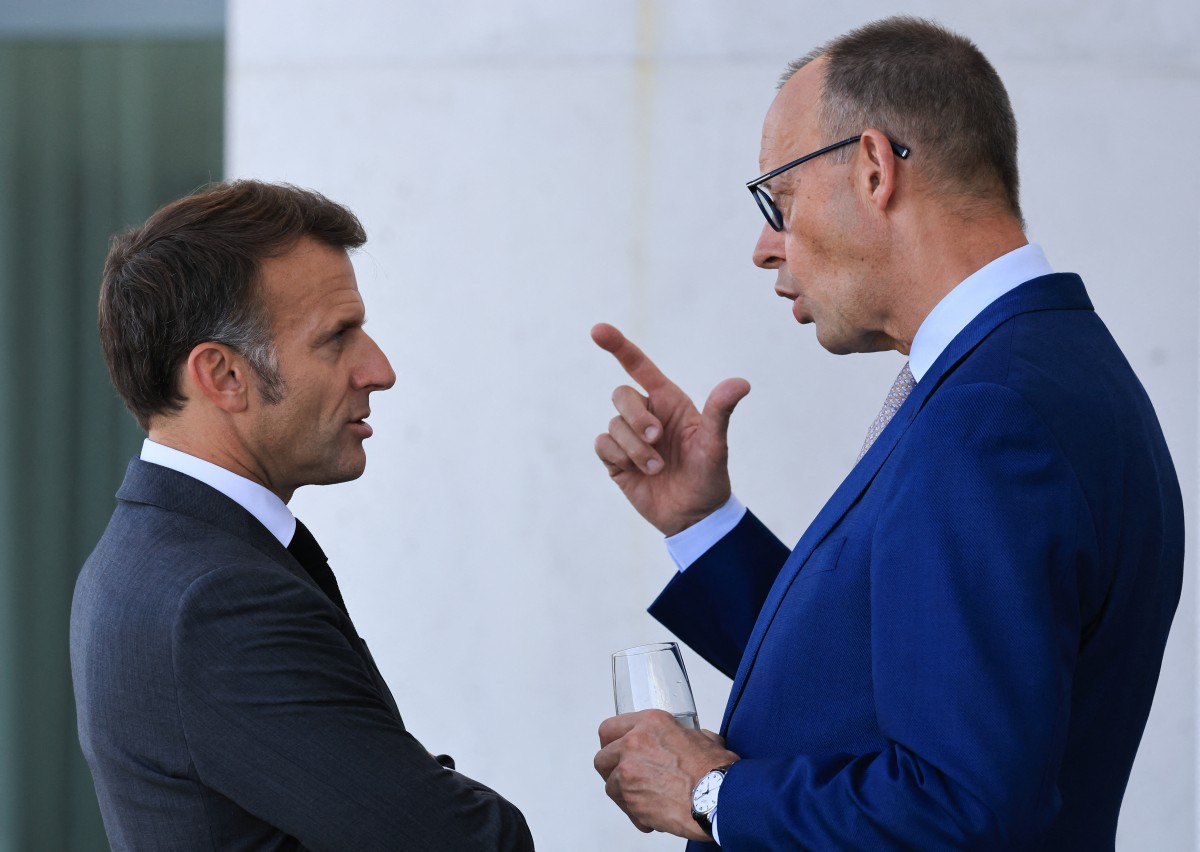
German Chancellor Friedrich Merz (R) and French President Emmanuel Macron talk on the terrace of the Chancellery at the start of the meeting of State leaders of the European Group of Five (E5) and the NATO Secretary General on June 24, 2026 at the Chancellery in Berlin, Germany. (Photo by Ludovic MARIN / AFP)

Commercial risks matter too. Fixed-price government contracts can leave manufacturers exposed when costs rise unexpectedly. Buyers must therefore examine contract liabilities, working capital, supply-chain resilience, workforce retention and the restrictions that could affect a future sale, the report advises.

The report’s overall conclusion, therefore, is that while defense investment opportunities are expanding,  success increasingly depends on technological relevance, reliable industrial execution, regulatory compliance and the ability to navigate national-security restrictions throughout the ownership cycle.

What lessons could India draw from the trends above?

For India, the report is particularly relevant because it highlights a shift in how advanced military capabilities are developed and financed. The implications extend beyond aircraft, missiles, and ships to defense electronics, artificial intelligence, autonomous systems, space technology, supply chains, and foreign investment.

India’s first opportunity is to integrate more deeply into international aerospace and defense supply chains. As Western manufacturers expand production and diversify their suppliers, Indian companies could become more important producers of precision components, avionics, electronics, aerospace structures, and maintenance services.

The most instructive lesson may come from GE Aerospace’s September 8, 2026 acquisition of Consolidated Precision Products (CPP). Experts say that it was a paradigm shift in aerospace and heavy industrial manufacturing. For decades, aerospace primes aggressively outsourced manufacturing to optimize their balance sheets, shifting capital-expenditure risks onto multi-tiered supply chains.

But years of systemic, compounding engine delays—magnified by the Pratt & Whitney GTF powder metal crisis and Boeing’s structural manufacturing gridlock — exposed a fatal flaw: primes (like GE) outsourced execution, but they could never outsource the risk.

Therefore, GE Aerospace decided to buy the absolute bottleneck of jet engine production: structural castings and complex airfoils. Its deal with private equity firms Warburg Pincus and Berkshire Partners is meant to address persistent, industry-wide shortages of critical engine parts and airfoils. In other words, GE bought the supply chain to control the delivery.

For India, this implies that beyond focusing on “Make in India” as screwdriver assembly, it should also consider “Own the Supply Chain.”

Second, as defense technology gains primacy, expanding AI-enabled systems, autonomous platforms, counter-drone technology, advanced sensors, and space infrastructure could be more relevant for India than producing isolated components.

Some experts argue that because European primes are cash-rich and seeking low-cost engineering, they would prefer a JV with India to meet capacity needs.

Lastly, as the Ropes & Gray LLP  report illustrates, private equity and venture capital can help consolidate fragmented industries, finance expansion, and support specialized technology businesses. India could adapt this approach to build stronger domestic defense suppliers.

  • Author and veteran journalist Prakash Nanda is Chairman of the Editorial Board of the EurAsian Times and has been commenting on politics, foreign policy, and strategic affairs for nearly three decades. He is a former National Fellow of the Indian Council for Historical Research and a recipient of the Seoul Peace Prize Scholarship.
  • The author can be reached at prakash.nanda (at) hotmail.com

The post Europe Is Rearming — and U.S. Wall Street is Writing the Checks, Including GE’s Nearly $12 Billion Deal appeared first on EURASIAN TIMES.

  •  

Colisão entre dois veículos provoca um ferido grave

VTM

Uma mulher, de 25 anos, ficou gravemente ferida na sequência de uma colisão entre dois veículos ligeiros, ocorrida por volta das 8h00, na variante entre Benagouro e a A24.

Segundo o comandante dos Bombeiros Voluntários da Cruz Branca, Orlando Matos, a vítima ficou encarcerada no interior da viatura, tendo sido necessária a intervenção dos meios de socorro para a retirar. A mulher foi transportada para o Hospital de Vila Real.

A mulher sofreu uma fratura, necessitou de assistência hospitalar e teve mesmo que ser sujeita a cirurgia referiu Orlando Matos à VTM.

O alerta para o acidente foi dado antes das 8h00, tendo sido mobilizados meios de socorro para o local, incluindo elementos dos bombeiros, duas ambulâncias, com dois elementos cada uma, a VMER e elementos da GNR.

No total, segundo dados da Proteção Civil estiveram no local 9 operacionais e três meios terrestres.

As circunstâncias em que ocorreu a colisão não são, para já, conhecidas.

The post Colisão entre dois veículos provoca um ferido grave appeared first on A Voz de Trás-os-Montes.

  •  

Homem não resiste a ferimentos após ser atingido por árvore

VTM

O homem, com cerca de 65 anos, que ontem foi atingido por uma árvore de grande porte na zona industrial de Chaves, acabou por falecer no Hospital de Chaves, para onde tinha sido transportado em estado grave. A informação foi confirmada pelo segundo-comandante dos Bombeiros Voluntários de Salvação Pública, Ricardo Rebelo. 

O acidente ocorreu na manhã de sábado, 10 de outubro, quando a vítima, residente em Torre de Ervededo, se encontrava a realizar trabalhos de limpeza num terreno, na freguesia de Santa Cruz Trindade, no concelho de Chaves, tendo sido atingida pela árvore.

O alerta para a ocorrência foi dado pelas 10h57, tendo sido mobilizados vários meios de socorro para o local. Apesar da assistência prestada, o homem acabou por não resistir aos ferimentos.

Segundo Ricardo Rebelo, segundo-comandante dos Bombeiros Voluntários de Salvação Pública, o homem sofreu duas paragens cardiorrespiratórias após dar entrada no hospital, onde o óbito viria a ser declarado horas mais tarde.

No local estiveram cinco elementos dos Bombeiros Voluntários de Salvação Pública, apoiados por uma viatura, dois elementos da Viatura Médica de Emergência e Reanimação (VMER) de Chaves, o INEM e militares da Guarda Nacional Republicana (GNR).

A operação mobilizou um total de 14 operacionais e cinco viaturas.

The post Homem não resiste a ferimentos após ser atingido por árvore appeared first on A Voz de Trás-os-Montes.

  •  

Holy Ambition Begins at Home

Raising children well weaponizes them for advancing the gospel. Building well enables you to fight well. I wanted my stories to reenchant the world — but what if I raised sharp children who are renegades, mavericks, iconoclasts, insurgents, and terrors to all the dark enchantments of unbelief? Kids don’t anchor ambition; they amplify it. They... Continue Reading
  •  

Don’t Suppress Young Men. A Pastoral Skill

A young man with the Holy Spirit has a destiny mapped out by God’s sovereignty.  So this reality requires the pastor to recognize that he will pour into the young men, guiding and correcting them, but his job is not to suppress them.  Many ministry successions have been ruined because a clinging pastor refused to... Continue Reading
  •  
❌