O desmantelamento de tendas às três da manhã gera controvérsia na opinião pública. Aponta-se o incumprimento de regras e horários, criticando-se o excesso de força.
America’s coming revolution in warfare may not mean fighting fewer wars but fighting more of them without putting Americans on the battlefield. Taking Americans out of the fight When US Defense Secretary Pete Hegseth launched Project Meridian on September 30, he presented it as an exercise in imagining warfare decades into the future. Led by […]
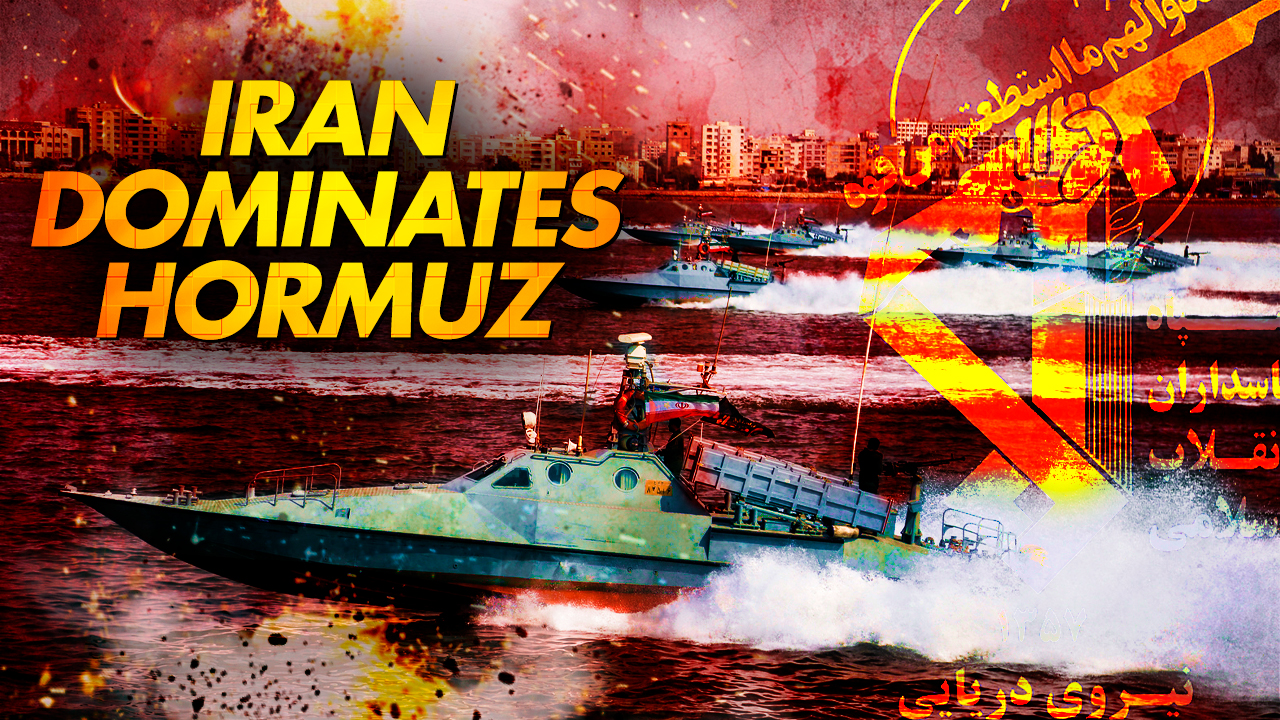
Iran has changed its tactics for targeting ships in and around the Strait of Hormuz, Iranian and U.S. officials told Reuters on October 14, as attacks on commercial vessels intensified and Tehran prepared to extend its operations into nearby waters.
Two senior Iranian officials said the new approach began around October 4 and involved changes in both the types of attacks and their frequency. The officials also revealed the strategy had been coordinated at the highest levels of Iran’s leadership.
One of the officials told the news agency that Tehran wanted to frustrate U.S. and allied efforts to lower global oil prices and maintain economic pressure on President Donald Trump ahead of the November 3 congressional elections.
A U.S. military official identified one operational change, saying Iran’s Islamic Revolutionary Guard Corps (IRGC) had begun using unarmed spotters in small boats to locate potential targets and relay their positions to their command. The shift to this tactic followed U.S. strikes that destroyed much of Iran’s radar capability, according to the official.
The official said U.S. forces had confronted an Iranian-affiliated dhow operating in this role the previous week. After directing its occupants to abandon the vessel, U.S. forces destroyed it. No casualties were reported.
Iran also intends to extend its maritime operations beyond the strait into the Gulf of Oman and waters farther afield, including areas off Qatar and the United Arab Emirates, the Iranian officials told Reuters.
Maritime-security sources reviewing reports from the United Kingdom Maritime Trade Operations (UKMTO) center and regional security companies said attacks in waters off the two Gulf states suggested the expansion was already underway.
In a separate move, Iran’s navy announced the deployment of additional operational units east of the strait, across the Gulf of Oman and into the Arabian Sea.
Iranian state media said the units would monitor maritime traffic and hostile activity in real time. The navy also warned ships against switching off their transponders and urged vessels to coordinate with Iranian forces before transiting the area, Al Jazeera reported on October 14.
The tactical changes have coincided with a sharp increase in attacks. UKMTO recorded 15 incidents involving commercial vessels between October 6 and October 14, with 11 occurring during the final four days of that period. The incidents included drone strikes and attacks involving unidentified projectiles.
Two cargo vessels sank near the strait on October 14. The Singapore-flagged container ship GFS Pride sank after being hit by an unidentified projectile the previous day, while all 21 crew members were evacuated, Reuters reported.
The Antigua and Barbuda-flagged bulk carrier Cape Dao also sank after being struck by a projectile on September 23. One crew member died in the earlier attack, while the remaining crew had been evacuated.
Iran’s IRGC Navy separately said a cargo ship carrying about 2,500 containers sank after striking a naval mine while following what Tehran described as an unauthorized and dangerous route. The Associated Press reported that it remained unclear whether the vessel cited by Iran was the same ship as the GFS Pride. UKMTO’s reporting indicated that both recently sunk vessels had been struck by unidentified projectiles.
The attacks have disrupted energy shipments through the waterway. Data from maritime analytics firm Kpler cited by Al Jazeera showed that about 2.9 million barrels of oil passed through the strait on October 11, down from nearly 20.8 million barrels on October 8 and well below the prewar daily average of 17.1 million barrels.
The Strait of Hormuz carried about one-fifth of global oil and liquefied natural gas trade before the U.S.-Israeli war with Iran began on February 28. Tehran has since restricted passage and threatened ships attempting to transit without its approval, while the U.S. Navy has guided commercial vessels along a route closer to Oman’s coast.
Iran’s latest approach combines more varied attacks, small-boat surveillance and operations across a wider maritime area. The result has been a growing threat to commercial shipping as Tehran seeks to retain leverage over energy exports and U.S. policy.
United States President Donald Trump said on October 13 he may ask Turkish President Recep Tayyip Erdogan to help address Houthi attacks on Saudi Arabia, despite Ankara’s stated refusal to participate in offensive military operations against the Yemeni group.
“I might do it,” Trump told reporters before leaving for a campaign trip to Alaska. “President Erdogan, I think, would do as I ask.”
Trump did not specify what role he envisioned for Turkey or say whether Washington had formally approached Ankara on the matter.
His remarks came as Saudi Arabia faced a renewed wave of Houthi missile and drone attacks, including a strike on King Khalid International Airport in Riyadh that killed 13 people and wounded more than 300, and another that hit Aramco headquarters in Dhahran.
Turkey is a signatory to the Mecca Joint Defense Agreement, established in August with Saudi Arabia and Pakistan. The agreement treats an armed attack on one member as an attack on all, but Ankara has drawn a distinction between defending its partners and joining their offensive campaigns.
Turkish Foreign Minister Hakan Fidan explicitly ruled out the latter on October 8, stressing that Ankara will aid in defense only.
“But this is a defensive agreement. When a country party to the pact comes under attack, you stand by it in its defense. This is not an offensive agreement. Turkey will not send troops to another country to carry out attacks on its territory,” he said at a news conference in Ankara, according to Reuters.
Turkey has opted to provide Saudi Arabia with limited defensive and technical assistance. Reuters reported October 7, citing officials, that the support included military equipment, intelligence sharing, air defense capabilities, logistical assistance and help with surveillance and defensive planning.
Trump’s potential request is unlikely to override these established limits. The Mecca agreement had yet to receive Turkish parliamentary ratification as of October15, after Erdogan said three days earlier that it would be submitted to lawmakers soon.
Article 92 of Turkey’s constitution generally places the authority to approve the deployment of Turkish armed forces abroad with the Grand National Assembly, subject to exceptions under applicable international treaties. A direct combat role would therefore face a significant legal and political hurdle.
Even if Ankara eventually approved an intervention, there is little reason to assume Turkish forces could achieve a decisive outcome where Saudi Arabia and its other allies have failed.
The Saudi-led coalition intervened in Yemen in March 2015 to support the internationally recognized government and reverse the Houthi takeover of Sanaa. More than 11 years later, the Houthis still control the capital and extensive territory in northern Yemen, despite years of military operations by Saudi Arabia and its allies.
A Turkish offensive would introduce another capable military into the conflict, but it would not resolve the underlying challenge of defeating an entrenched opponent that has withstood more than a decade of regional military pressure, including intense bombing campaigns
by the U.S. and Israel.
From the Russian wheat deals of an earlier generation to a Trump–Putin diesel bargain, energy has become the latest instrument of high-stakes political dealmaking. Diesel has suddenly moved from the fuel pump to center stage in American and European politics. With U.S. fuel prices surging and congressional midterm elections approaching on November 3, Donald Trump […]
Os cofres públicos a guardar o buraco das dívidas de 3200 milhões e a TAP a voar para a Alemanha. Ter duas companhias públicas e continuar a pagar voos caros aos Açores é obra.
Die Bestürzung über den Abschluss des «Diesel-Deals» durch US-Präsident Donald Trump mit dem russischen Präsidenten Wladimir Putin hinter dem Rücken Europas am vergangenen Wochenende war nur mit dem Schock über das Treffen in Anchorage im vergangenen Jahr vergleichbar. Aus Sicht europäischer Politiker kommt der Abschluss von Abkommen mit Russland, durch die eines der wichtigsten Exportgüter des Landes von den Sanktionen ausgenommen wird, einem Verrat gleich. Einem Verrat sowohl an der Vorhut der europäischen Demokratie namens «Ukraine» als auch an den Grundpfeilern der transatlantischen Solidarität.
Laut eigenen Angaben hat sich Donald Trump mit Wladimir Putin auf umfangreiche Lieferungen von Dieselkraftstoff geeinigt. Demzufolge sollen bereits im Oktober 300 000 Tonnen Dieselkraftstoff aus Russland in die USA und auf den Weltmarkt geliefert werden.
Im November sollen weitere 500 000 Tonnen geliefert werden, kurz darauf eine Million Tonnen. Insgesamt beläuft sich die Menge damit auf 1,8 Millionen Tonnen. Sofern die Kapazitäten der russischen Ölraffinerien dies zulassen, soll das Liefervolumen letztendlich drei Millionen Tonnen erreichen.
Aus der Europäischen Union ist bereits scharfe Kritik an dem «Deal» des US-Präsidenten laut geworden. US-Finanzminister Scott Bessent warf den Europäern hingegen «völlige Heuchelei» vor.
Laut dem russischen Vizepremierminister Alexander Novak haben die Länder der Europäischen Union seit 2022 russische Energieträger im Wert von $320,7 Mrd. gekauft. In den ersten neun Monaten des Jahres 2026 belief sich das Liefervolumen auf $21,3 Mrd.
Laut Bessent haben die EU-Länder den Russen seit Beginn des russisch-ukrainischen Konflikts im Jahr 2022 mehr Geld zur Verfügung gestellt als der Ukraine, da sie ohne russische Energieressourcen nicht auskommen können.
Damit hat Bessent einen wunden Punkt angesprochen. Denn die Daten des Zentrums für Energie- und Luftreinhaltungsforschung (CREA) stimmen im Großen und Ganzen mit den Angaben der russischen Seite überein. Diese unabhängige Organisation mit Sitz in Helsinki analysiert jeden Monat, welche Länder welche Arten russischer Energieressourcen kaufen. Die Analyse läuft seit Dezember 2022, als das EU-Embargo für russisches Rohöl in Kraft trat.
Diesen Daten zufolge hat China bis Ende August 50% der russischen Rohölexporte abgenommen, gefolgt von Indien mit 19%. Auf die Türkei und die EU entfallen jeweils 5%. Bei Erdölprodukten wie Kraftstoffen ist die Türkei mit einem Anteil von 26% der größte Abnehmer. Dahinter folgen China mit 12%, Brasilien mit 11% sowie Singapur und Saudi-Arabien mit jeweils 8%.
Trotz des von der EU verhängten Einfuhrverbots für russische Erdölprodukte wurden in EU-Häfen laut CREA 20 Tanker aus Raffinerien entladen, die russisches Rohöl verarbeiten. Das sind zwei mehr als im Juli. Im Bereich des Pipelinegases bleibt die EU mit einem Anteil von 32% der größte Abnehmer, gefolgt von China mit 31% und der Türkei mit 29%.
Beim Flüssigerdgas (LNG) entfallen knapp 49% auf die EU, gefolgt von China mit 24%, Japan mit 18% und Südkorea mit 6%.
Trotz der immer strengeren Sanktionen gelten in der EU weiterhin Ausnahmen für bestimmte Energieträger und Länder. Daher erscheinen Ungarn, die Slowakei und Bulgarien in der Statistik als Importeure von russischem Pipelinegas. Frankreich und Spanien sind Abnehmer von LNG, während die Slowakei russisches Rohöl bezieht. Insgesamt zahlten diese fünf größten Importeure aus der EU im August laut CREA €1,1 Mrd. an Russland.
Die USA, die im Frühjahr 2022 den Import von Erdöl, Erdölprodukten, Kohle und Flüssiggas verboten hatten, tauchen in der Liste überhaupt nicht auf. Nun hat das US-Finanzministerium jedoch eine Sondergenehmigung für den Kauf von russischem Dieselkraftstoff erteilt, die bis zum 7. April 2027 gültig sein wird.
Deutsche Autofahrer beneiden die Amerikaner ein wenig
Allerdings interessieren sich deutsche Autofahrer, die an den Tankstellen bis zu €2,45 pro Liter Dieselkraftstoff zahlen müssen, wohl kaum für derartige diplomatische Angelegenheiten. Und angesichts des vorbildlichen Beispiels des amerikanischen Präsidenten hätten die meisten von ihnen ebenfalls nichts gegen ein ähnliches Dieselabkommen zwischen Berlin und Moskau einzuwenden.
Es liegt auf der Hand, dass die Lieferungen von russischem Dieselkraftstoff in die USA den Markt nur teilweise stabilisieren werden. Am Montag reagierte der Ölpreis nur geringfügig auf das am vergangenen Wochenende geschlossene Abkommen Trumps. Der Preis für Brent-Rohöl aus der Nordsee sank zunächst um etwa ein Prozent auf $104,2 pro Barrel, woraufhin sich eine Gegenbewegung einstellte und der Preis wieder ins Plus kletterte.
Am Montag kostete Heizöl €168 pro 100 Liter bei einer Abnahme von 3 000 Litern. Dies berichtet das Internetportal Heizoel24, an das 500 Ölhändler ihre Preise übermitteln. Laut dem Portal ist der Oktober bislang im Durchschnitt der teuerste Monat für den Kauf von Heizöl in diesem Jahr.
Dabei ist anzumerken, dass die 300 000 Tonnen Dieselkraftstoff, die Russland im verbleibenden Teil des Monats in die USA und auf den Weltmarkt liefern soll, etwa 100 000 Barrel pro Tag entsprechen. Dies würde den Rückgang der Seelieferungen von Dieselkraftstoff, die im September etwa 1,3 Millionen Barrel pro Tag unter dem Niveau zu Jahresbeginn lagen, nur teilweise ausgleichen.
Laut der US-Energieinformationsbehörde (EIA) liegt der Verbrauch von Dieselkraftstoff und anderen Destillatkraftstoffen in den Vereinigten Staaten derzeit bei durchschnittlich etwa 3,77 Millionen Barrel pro Tag. Dies entspricht etwa 500 000 Tonnen. Somit würde eine Menge von 300 000 Tonnen den amerikanischen Verbrauch theoretisch nur für etwas mehr als 14 Stunden decken.
Was den von Trump verkündeten Waffenstillstand betrifft, der sowohl Russland als auch die Ukraine offenbar überrascht hat, so sind bislang keine Aussichten auf dessen Abschluss erkennbar. Sowohl Moskau als auch Kiew zeigen sich derzeit kompromisslos und bereiten sich auf neue Angriffe auf die sensible Energieinfrastruktur des jeweils anderen vor.
In einer solchen Situation wissen Ölhändler auf dem Weltmarkt nicht, woran sie sich orientieren sollen (den Äußerungen des US-Präsidenten auf Truth Social glaubt seit Beginn der Krise im Schmalz-Kanal niemand mehr). Die US-Investmentbank Goldman Sachs hat ihre Ölpreisprognose jedenfalls erneut angehoben. Rohstoffanalysten gehen nun davon aus, dass der Preis für ein Barrel Brent-Rohöl aus der Nordsee bis zum Jahresende bei $90 statt bei $85 liegen wird. Zuletzt hatten sie ihre Prognose im September angehoben. Als Begründung für diesen Schritt wurde unter anderem angeführt, dass die Lagerbestände auf einem niedrigen Niveau liegen und das Risiko eines Rückgangs des Rohölangebots hoch ist.
 Login